Normal view

Medellín mayor draws criticism over M-19 book launch ban 

1 May 2026 at 23:24

Medellín, Colombia – Medellín Mayor Federico Gutiérrez prompted outrage last week after “censoring” a new book on M-19 guerrilla history at a public library.

Gutiérrez cancelled a talk of the book on April 21, saying that it glorifies terrorism and has no place in a public library.

The cancellation has drawn widespread criticism, with many observers citing the hypocrisy of the move one month after UNESCO designated Medellín as its 2027 World Book Capital.

Shortly before an event for the book at a public library on April 21, Gutiérrez announced on X: “This event will be cancelled. In Medellin, there will never be room for the glorification of terrorism. The M-19 was not a ‘romantic tale’: it was a terrorist armed group that left victims, pain, and death in Colombia.”

Attendants at the packed auditorium were visibly opposed to the measure, according to newspaper El País. Although staff removed microphones and speakers and the police surrounded the building, spectators remained in their seats.

Promotional e-pamphlet of book launch
Image source: Federico Gutiérrez via X.

“Our city respects the memory of the victims; no to propaganda for those that wielded weapons. This event has an obviously political character, and no public entity can host it,” the mayor continued. 

But the book’s author, sociology professor Jaime Rafael Nieto, insisted that the government should not be able to censor events like the one last week: “This is not a space for government officials, but for writers, artists and citizens,” he told Spanish newspaper El País via phone call. 

The April 19th Movement (M-19) guerrilla was founded in the early 1970s and became a violent urban actor, perpetrating kidnappings and killings in cities as well as symbolic crimes including the theft of libertador Simon Bolívar’s sword from its resting place and the Palace of Justice siege which left over 100 dead. 

Incumbent leftist Colombian President Gustavo Petro – who has routinely publicly clashed with rightist Gutiérrez – was an M-19 militant, operating under the nome de guerre “Aureliano”. 

He joined in the criticism of Gutiérrez’s move, writing on X: “The M-19 after making peace, was a legal movement with legal status. What you’re doing is censorship. Those who censor books end up burning them, and then they end up burning humans at stakes. Don’t censor; let minds and thoughts be free.”

Medellín’s history of books: a reformed city 

Colombia’s second-largest city has seen a 542% rise in bookstores over the past seven decades, and is home to over 110 bookstores and 25 libraries – many of which were transformed from former prisons and police facilities, as per UNESCO. 

“Medellín has become an international reference for urban and cultural transformation, where books and libraries play a crucial role in bringing positive social change. [Its] designation as World Book Capital 2027 is a powerful message on how culture can build peace and social cohesion,” noted Khaled El-Enany, UNESCO director-general. 

The city’s literary turn is thus inseparable from its broader reinvention. Having been named the world’s “murder capital” in 1991, when 16 people were murdered daily on average, it has spent decades recasting itself through culture and education. 

In 2004, then-mayor Sergio Fajardo – now a presidential candidate for the upcoming May 31, 2026 election – deployed a plan to combat structural violent patterns, investing in the city’s poorest neighborhoods. Libraries, metrocables and cultural centers were planted in the hillside of comunas, once the most dangerous neighborhoods in the Americas. 

Over a 15-year period, Medellin built 60 cultural facilities in areas with the highest poverty, historic violence and population densities, and by 2024, the city recorded 300 homicides per 100,000 people – the lowest since 1942. 

The result is a city that has made literary culture central to its identity. Every September, the Fiesta del Libro y la Cultura (Celebration of Books and Culture) – backed by $9 billion Colombian pesos ($2.5 million USD) from the mayor’s office – draws hundreds of national and international guests to its botanical gardens, parks and cultural centers. 

The city also hosts an annual edition of the Hay Festival, the prestigious Welsh literary gathering. 

Banned in the city of books 

Regardless of Mayor Gutiérrez’s disapproval, the event on April 21 continued, with organizers stressing they consulted with the attendees what they believed should be done. 

“There were three options: cancelling the event, going someplace different, or reaffirming our condition of citizens which occupy the city’s public space,” they said. Meanwhile, Nieto confirmed that the launch had been scheduled a month prior, and that the decision to go ahead in spite of the mayor’s outrage was an “act of civil resistance.” 

“[The book is about] interpreting how the M-19 emerged and what its characteristics were. It isn’t about justifying its actions, because then the investigation would take on a partisan bias, and that’s not the case,” the M-19: From War to Politics author added

The M-19 has become a contentious subject in Colombian politics since the election of Petro in 2022 as the country’s first leftist president, although the group demobilized in 1990. 

Petro joined the urban guerrilla at 17 years old, but not as a combatant. As per Colombian news outlet La silla vacía, he was arrested by armed forces in 1985, and spent 18 months in prison, where he directed the jail library. 

One of Petro’s greatest feats as an M-19 militant, in fact, was promoting the peace process that saw the group’s turn to peace and legality from 1989 to 1990. Most recently, the head of state celebrated his birthday on the anniversary of the armed group’s founding.

Nieto believes that studying M-19 history is imperative to understanding Petro’s government, and his book’s thesis: the M-19 was the Colombian armed actor that best knew how to combine war with politics.

“Every act of war produced political effects. And that made it a political actor,” he told El País.

Featured image: Federico Gutiérrez via X.

The post Medellín mayor draws criticism over M-19 book launch ban  appeared first on The Bogotá Post.

Ugly Americans? Colombia Expels Americans, Others Deemed Undesirable For Behavior & Vice Accusations

13 April 2026 at 22:01

Enhanced enforcement seeks to promote family-friendly tourism & unwelcome sex & vice-oriented tourism.

Migración Colombia, Colombia’s immigration agency, has executed the expulsion of two US citizens from Medellín following separate investigations into activities deemed a risk to public security and peaceful coexistence. The administrative measures targeted Steve Newland, a digital content creator known as “Chill Capo,” and Samuel McVey, a former teacher from New York. Both individuals were transported to the Aeropuerto Internacional José María Córdova in Rionegro and placed on a flight to Miami, Florida.

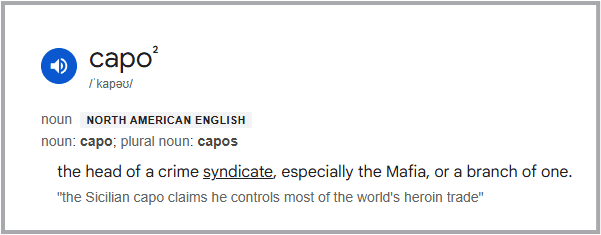
Definition of "Capo" according to Google.

Definition of “Capo” according to Google.

The actions come amid a broader strategy by the Colombian government to address concerns regarding sex tourism and the presence of foreign nationals with outstanding legal issues in their home countries. According to Paola Salazar, the Regional Director of Migración Colombia, the agency has adopted a stricter posture to ensure that Colombia is not utilized as a refuge for individuals linked to fraudulent or illicit activities.

The Case of Steve “Chill Capo”Newland

Steve Newland, a 42-year-old US citizen born in Willingboro, New Jersey, had been residing in Medellín since 2022. Operating under the digital brand “Chill Capo,” Newland promoted luxury lifestyle experiences and nightlife events. However, an investigation by Migración Colombia determined that Newland used his digital platforms to promote encounters with alleged purposes of sexual exploitation.

“Lo están esperando y lo capturan, (they are waiting for them and they will capture them)” stated Federico Gutiérrez, the Mayor of Medellín, referring to the coordination with US authorities regarding the return of the individuals.

The agency reported that Newland’s content included advice on how to evade immigration controls at the airport, such as using false medical certificates or simulating injuries to bypass rigorous inspections. His publications also mentioned accommodations linked to historical criminal figures, specifically the penthouses de Pablo Escobar, and provided instructions on how to avoid being targeted with escopolamina during social outings. Following the investigation, authorities confirmed Newland was in an irregular migration status. He has been banned from reentering Colombia for a minimum of five years.

Newland has publicly denied the allegations via his social media channels. He asserted that his primary objective was to educate visitors on safety and help them avoid dangerous situations. Newland claimed that his events were legal, safe, and conducted in collaboration with established Colombian businesses in the Parque Lleras district. He further contended that his visa had been renewed multiple times since 2022, suggesting that any illegal activity would have prevented such renewals. Newland challenged authorities to present specific evidence or identify victims related to the claims of exploitation.

🔴 #Noticia | Influenciador estadounidense que promovía turismo con fines de explotación sexual en Medellín, fue deportado por Migración Colombia.
El extranjero no podrá ingresar al país en los próximos cinco años, luego de este tiempo tendrá que solicitar una visa. pic.twitter.com/9QhZKJ7C8X

— Migración Colombia (@MigracionCol) April 11, 2026

Samuel McVey: School Incidents and US Warrants

Samuel McVey crazy man

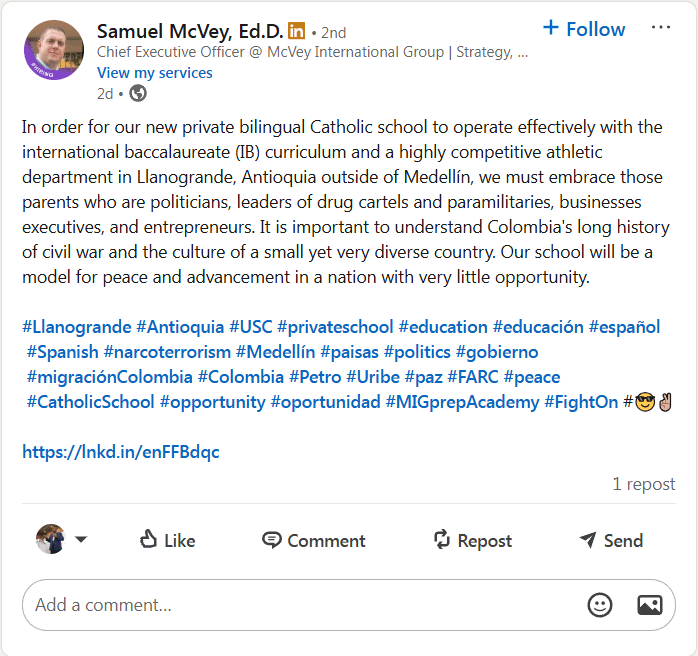
On LinkedIn, McVey claims to have a new private school in Llanogrande, Antioquia, that embraces “leaders of drug cartels and paramilitaries” among others.

In a separate incident, 46-year-old Samuel McVey, who was fired as a primary school teacher but styles himself as “Chief Executive Officer @ McVey International Group” on LinkedIn, was expelled following a series of disturbances at educational institutions in the Valle de Aburrá (Metro Medellín) and the city’s eastern Antioquia bedroom community of Rionegro. On April 8, 2026, McVey reportedly entered at least three schools in the wealthy Las Palmas sector of Medellín, where he allegedly initiated confrontations and made threats against staff and students. He subsequently traveled to Rionegro, where he attempted to gain entry to the Colegio Monteluna in Llanogrande by posing as an English language instructor.

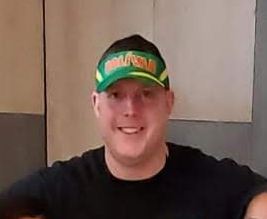
When denied access, McVey reportedly directed threats toward students, prompting school officials to contact the Policía Nacional. He was apprehended by units from the Estación Llanogrande near a local strip mall. Manuel Villa Mejía, the Secretary of Security and Coexistence of Medellín, described McVey as a risk to the community and confirmed that the individual was in a state of high agitation upon his detention.Samuel McVey (photo from LinkedIn)

Investigation into McVey’s background revealed that he is a fugitive from New Rochelle, New York. In the United States, McVey faces charges of aggravated harassment in the second degree, a misdemeanor. The charges stem from an investigation by the New Rochelle Police Department involving threats made against Dr. Corey W. Reynolds, the Superintendent of the City School District of New Rochelle. McVey, a former Spanish teacher at Isaac E. Young Middle School, was terminated in early 2026. New Rochelle authorities had issued two bench warrants for his arrest after he failed to appear for court proceedings on March 26 and April 1, 2026.

Despite the outstanding warrants, the New Rochelle Police Department noted that they do not typically extradite individuals for misdemeanor offenses. Consequently, Colombian authorities processed his departure as an immediate expulsion based on his conduct within Colombia. McVey has been prohibited from entering Colombia for ten years.

Regional Enforcement Trends and Peak Travel Season Operations

The expulsions of Newland and McVey come after a larger enforcement effort during the 2026 Semana Santa (Easter Week) season. Migración Colombia reported that enhanced controls at airports and land borders resulted in the detection of numerous foreign nationals with irregular status or criminal backgrounds.

Specific cases identified by the agency during this period include:

  • In Leticia, Amazonas, a Peruvian citizen was detained at a hotel; the individual was the subject of an Interpol Red Notice for alleged crimes against public health.
  • In Ibagué, a Venezuelan citizen wanted by Peruvian authorities under an Interpol Red Notice for aggravated theft was arrested in a joint operation with the Policía Nacional.
  • In Facatativá, another Venezuelan national was apprehended for an Interpol Red Notice involving charges of human trafficking for sexual exploitation and membership in criminal organizations.
  • In Bogotá, two Dominican citizens were expelled after attempting to fraudulently obtain Colombian passports to travel to Europe.
  • At the Aeropuerto Internacional José María Córdova, a man and a woman from the Dominican Republic were intercepted while attempting to travel to Peru and Argentina using fraudulent Colombian documentation.

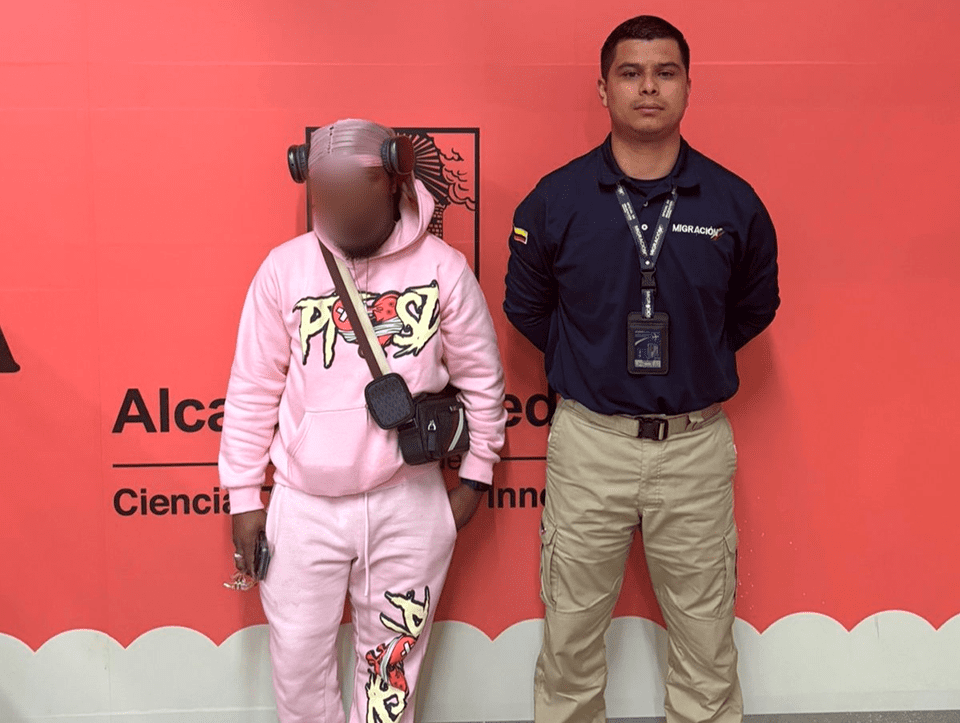
    Inadmitted (photo courtesy Migración Colombia)

    Inadmitted (photo courtesy Migración Colombia)

Statistical Overview of Inadmissibility in 2026

In the first quarter of 2026, Migración Colombia has denied entry to over 600 foreign nationals. The primary reasons for inadmissibility include state sovereignty and security risks (153 cases), lack of required visas (133 cases), and insufficient documentation (104 cases). Additionally, 89 individuals were rejected for providing false information during immigration interviews, while 34 had documented criminal records.

The agency also noted a specific focus on preventing the Explotación Sexual Comercial de Niños, Niñas y Adolescentes (ESCNNA). Through cooperation with international intelligence agencies and the Angel Watch platform, 471 individuals have been denied entry since 2016 for reasons associated with sexual offenses. At the Rionegro terminal alone, 31 inadmissibility cases have been recorded so far in 2026 related to potential sex tourism risks.

The Director General of Migración Colombia, Gloria Esperanza Arriero, emphasized that while the country remains open to international travel and investment, visitors are required to comply with the Constitución Política de Colombia and national laws. Under Decreto 2136 de 2021, the immigration authority maintains the power to deny entry or order the immediate return of any foreign citizen who poses a risk to national security or public order.

The main nationalities of those denied entry in early 2026 include citizens from the United States (76), the Dominican Republic (64), Ecuador (55), and Venezuela (52).

Montage of deportees Samuel McVey and Steven “Chill Capo” Newland

Video footage courtesy Migración Colombia

History Channel Premieres Documentary Highlighting Medellin Social Intervention Program

6 April 2026 at 23:37

Media partnership showcases urban social investment strategies in Colombia.

The History Channel is scheduled to premiere a new documentary titled Parceros on April 29, 2026. The 43-minute production, developed in collaboration with the Alcaldía de Medellín, examines the social challenges facing youth in the city’s communes and the state-led initiatives designed to mitigate the influence of criminal structures.

The documentary focuses on the Parceros program, an initiative managed by the Secretaría de Seguridad y Convivencia of Medellín. The program provides psychosocial support, academic training, and employment pathways for children, adolescents, and young adults at risk of recruitment by organized crime. According to municipal data, approximately 350 criminal groups operate within Medellín, involving an estimated 6,000 to 12,000 individuals. The program has served over 9,000 participants between 2024 and 2025, with a target of reaching 15,000 individuals by the end of the current four-year term.

“When the public sector works hand in hand with social organizations and media with global reach, the impact is multiplied.” — Federico Gutiérrez, Mayor of Medellín.

Federico Gutiérrez, the Mayor of Medellín, stated that the partnership with international media outlets aims to increase the visibility of the city’s social transformation. He noted that the collaboration between the public sector and global organizations facilitates a broader impact for regional infrastructure and social programs. The documentary features Argentine actor and producer Michel Brown, who serves as the primary narrator and interacts with participants to document their transition from informal or illegal activities toward stable employment and entrepreneurship.

The production follows the individual trajectories of three participants: Marcela, Alejandro, and Juan Sebastian. These accounts detail the transition from situations involving homelessness, illegal activities, and exploitation toward roles in municipal security management, private business ownership, and the local tourism sector. Paulina Patiño, director of the Parceros program, indicated that the initiative focuses on building human capital and providing alternatives to the economic incentives offered by local criminal organizations.

Produced by A+E Networks (NYSE: DIS) in association with Loso Producciones and co-produced by Lulo Films, the project reflects a trend of utilizing high-production-value media to document ESG-related social investments in Latin America. Cesar Sabroso, Senior VP of Marketing at A+E Networks Latin America, emphasized the company’s objective to distribute these narratives across the region to highlight successful intervention models.

Medellín continues to be a focal point for international observers due to its ongoing social transformation and its status as a hub for the global creative economy. The documentary intends to provide a technical look at how targeted social spending and public-private partnerships can alter the demographic trajectory of urban centers in Colombia and the broader US interest area.

Headline photo of Medellín’s Comuna 13 (photo © Loren Moss)

American Airlines Flight Attendant Found Dead Following Disappearance in Medellín, Colombia

28 March 2026 at 17:55

The search for Eric Fernando Gutiérrez Molina, a 32-year-old US flight attendant reported missing since March 22, concluded Friday following the discovery of a body in rural Antioquia, about two and a half hours south of Medellín. Medellín Mayor Federico Gutiérrez confirmed that the remains were located between the municipalities of Jericó and Puente Iglesias, stating there is a very high probability they belong to the American Airlines (NASDAQ: AAL) employee.

Gutiérrez Molina, a Salvadoran-American national who lived in Texas, arrived in Medellín on a commercial flight via José María Córdova International Airport. He was last seen alive on Sunday, March 22, after visiting commercial establishments in the El Poblado neighborhood. Investigations by the Secretaría de Seguridad y Convivencia suggest the victim was targeted by criminals using scopolamine, a sedative that can be used to incapacitate victims for robbery. According to witness statements, Gutiérrez Molina and another flight attendant were approached at a nightclub by individuals who lured them to another venue in Itaguí, a southwestern suburb of Medellín. While the companion flight attendant was able to make it back to her hotel, ill and disoriented, Gutiérrez Molina remained missing for five days.

“We have very clear leads on those responsible,” stated Mayor Federico Gutiérrez. “I have requested that justice be served and that the perpetrators be sought for extradition to the United States if necessary.”

The body was spotted by residents of Puente Iglesias floating in the Río Piedra ravine. The Instituto Nacional de Medicina Legal y Ciencias Forenses is currently conducting formal identification and an autopsy in Medellín. Mayor Gutiérrez reported that he has personally informed the victim’s father, the US Ambassador to Colombia, and the Consul General at the US Embassy in Bogotá regarding the development. The mayor stated that investigators have identified alleged perpetrators and expressed his intent to seek their extradition to the US.

‼Tengo que dar una triste noticia.
Desde el pasado Domingo, estamos en la búsqueda de Eric Gutiérrez un ciudadano Estadounidense que se encuentra desaparecido.
Lamentablemente acaba de ser encontrado un cuerpo sin vida, entre el municipio de Jericó y Puente Iglesias.
Existe…

— Fico Gutiérrez (@FicoGutierrez) March 27, 2026

This problem is not new. Criminals have been using scopolamine to prey on both Colombians and foreigners for years. Just last week, the Alcaldía de Medellín (Medellín Mayor’s Office) announced the capture of two women, aged 19 and 34, accused of drugging and robbing foreigners in Parque Lleras. The Policía Nacional and the Fiscalía General de la Nación  (Colombia Attorney General’s Office) conducted raids in the Caicedo and Villa Hermosa neighborhoods to dismantle the operation. The suspects reportedly offered escort services as a facade to move victims to tourist accommodations, where they administered benzodiazepines such as clonazepam to facilitate the theft of high-value belongings and cash.

Manuel Villa Mejía, Secretary of Security and Convivencia, stated that the captured women had extensive judicial records for aggravated robbery. During the operations, authorities seized mobile devices, identification documents belonging to other women, and a firearm. Villa Mejía emphasized that the city is utilizing intelligence and focused operations to close pathways for those who instrumentalize tourism for criminal purposes. These actions are part of a broader strategy to weaken the financial operations of networks that continue to target international visitors in El Poblado.

Finance Colombia has also reported on the capture of the Queen of Scopolamine, who led a network dedicated to drugging and robbing tourists in Parque Lleras. Despite prior law enforcement successes against structures like Las Barbies and The Ghetto, predatory crime remains a concern for the international investment community and business travelers.

Also read: Don’t Be A Victim! Six Rules For Safety When Visiting Colombia

photo of Mr. Gutierrez from social media

Cristina Zambrano Restrepo of ACI Medellin Unpacks the Colombian City’s Surge With Over $400 Million USD in Foreign Direct Investment

18 March 2026 at 21:55

Medellín, Colombia’s second-largest city, is often cited globally as a textbook example of urban transformation. Central to this evolution is ACI Medellín, the city’s specialized Agency for Cooperation and Investment. By fostering a unique “triple helix” collaboration between the public sector, private enterprise, and academia, the agency has managed to maintain a stable environment for capital even during periods of national political volatility.

In this exclusive interview, Loren Moss, Executive Editor of Finance Colombia, speaks with Cristina Zambrano Restrepo, the Executive Director of ACI Medellín. They discuss how the city nearly tripled its investment attraction over the past year, reaching over $400 million USD, and the strategies used to reassure international investors during a complex electoral landscape in Colombia.

Finance Colombia: I’m here with Cristina Zambrano Restrepo, the Executive Director of ACI Medellín. It’s always a pleasure to be with you. Thank you for the invitation. I know you’re extremely busy, so thank you for making the time to speak with Finance Colombia. How have you been?

Cristina Zambrano Restrepo: Very well, thank you very much. Truly happy to be here with you. Thank you for accepting this invitation. Without a doubt, we work to bring good and positive news to this city, and thank you for being here and for sharing and conveying all of these good things.

Finance Colombia: Yes, today you talked about the successes that ACI Medellín and the city have had this year in attracting investment. Tell us a bit about some of those successes. I think it’s going to be another large business hotel, and tell us a little about how you’ve kept busy.

Cristina Zambrano Restrepo: Of course. A major focus for us is job creation through investment attraction. So, what did we achieve this year? We went from USD 150 million generated last year to more than USD 400 million this year. As I’ve mentioned, this is reflected in the creation of more than 11,500 formal, high-quality jobs generated by this investment attraction. We have major allies and players here, such as Renault-Sofasa, Rivana Business Park, SoftServe, and POMA. A great deal of companies, some already established, others newly arriving in the region. TaskUs too, which is also extremely important and has made major commitments to us. These are the companies that manage to generate that employment.

Finance Colombia: Excellent, that’s fascinating. I have a history with Colombia of about 20 years, and here in Medellín of about 11 years, and it’s truly wonderful to see how the city has grown—not only in population, but in investment and innovation. However, we’re living in a time of high uncertainty around the world—not just in Colombia, not just in the United States, but globally. Especially when we talk about the sector, not in general terms, but politically and economically. Has this made attracting investment more difficult or more challenging over the past year? How has this affected efforts to attract FDI, like, foreign investment, and what strategies have you used to overcome this challenge?

Cristina Zambrano Restrepo: Here, clearly, the political landscape affects and directly impacts confidence, right? The stability of a region, how we present ourselves to the world and to those very large capital investments, showing that we are a stable region, that we believe in them, and that we will support them. So, what strategies do we have? Without a doubt, it has been very challenging. We would like, for example, to be able to offer a range of benefits, extensions, fast-track processes in permitting and such, but in that sense we depend heavily on the national government. But we don’t stop there. We work from the regional level and have a firm commitment locally, focusing on what we ourselves can support, contribute, and manage from this area, the private sector. Which also helped sustain the region during the previous administration, and the academic sector, all the universities, and that ecosystem, which have been fundamental. And now the public sector as well, we are all working together specifically from this region to demonstrate that we are a region that inspires confidence, offers stability, and has all the right conditions for investment to continue to arrive.

Finance Colombia: One thing you’ve mentioned that’s very important, and something Medellín is known for, is the collaboration between the private and public sectors. In many other places, without naming names, it’s an endless war. But in Medellín it has always felt like it’s everybody. That’s why Medellín has always had the Metro and continues to have major projects here, because the private sector has a strong sense of civic ownership. People talk about the GEA, but from a foreign perspective, what I’ve seen is that companies like Grupo Argos, SURA, Bancolombia, and more recently Nutresa, and many smaller ones that aren’t international names, have a sense of belonging and work hand in hand with the government. Speaking of that, for example, Mayor Federico Gutiérrez has traveled to the United States and other places to maintain those good relationships, despite what may be happening in Bogotá or at the Casa de Nariño. What is the importance of the efforts made by the metropolitan government and the city government of Medellín, not only at the ACI level, but also at the level of Alpujarra? How important is this in maintaining a long-term course so that foreign investors continue to see Medellín as a destination, no matter how much may be happening 400 kilometers away?

“We went from USD 150 million generated last year to more than USD 400 million this year… reflected in the creation of more than 11,500 formal, high-quality jobs.” — Cristina Zambrano Restrepo

Cristina Zambrano Restrepo: I think what you’re pointing out is fundamental, and it’s specifically how we’ve achieved this model in Medellín. In a way, when we go out into the world and explain how we work hand in hand, as you said, there are cities and countries that react like, “Why do we need to sit at the same table? I’m very clear about my purpose, and you’re very clear about yours.” Here, the real history of what this city lived through 40 years ago made all of us sit at the same table, and we realized that the efforts of the three actors are always aligned toward the same goals. What always matters to us is citizens’ well-being, quality of life, economic and social development, many things. So when we were going through our hardest moments, we managed to set aside egos, agendas, and competing visions. We sat down, we talked, and we’ve continued to work under that model ever since.

As for what’s happening and what lies ahead in the future: clearly, having a political leader like Federico Gutiérrez, with those strategies and international connections, matters greatly. Countries trust leaders who have demonstrated stability and very clear commitments throughout their governing trajectory, and that’s what our mayor has done. Because of that, they continue to seek us out as a region and want to work with us as a region. As we were just discussing, the investment world is very accustomed to government cycles, more than people might think. They know how to manage political and public-sector issues and how to make bold bets at certain moments. We work on this, and together with the mayor we focus on those countries where we need them to keep believing in us and trusting us. The United States is Colombia’s partner par excellence, that is not going to change. It is the largest market in the world. So the mayor’s strategy of being very close to that government, of working with a binational chamber like AmCham Colombia, which always helps us continue attracting investment and fostering exchanges, is exactly how we work hand in hand.

Finance Colombia: Well, you’ve been very generous with your time. Just two more questions. One is that in the United States, we have a saying: “Nothing happens before the elections.” That big companies are always waiting to see what’s going to happen, what’s going to unfold. Is it the same here in Colombia? I know in Colombia, even more than in the U.S., there’s a law—well, speaking of public contracting, where nothing can really happen. But aside from that, not talking about selling food to a school or something like that—do investors or multinational companies see this as a challenge? Are they ready to sign contracts, or are they waiting to see what happens?

Cristina Zambrano Restrepo: Of course, without a doubt it’s a challenge. And it’s not a minor one. It’s a challenge that forces us to work even harder to demonstrate, from the regional level, just how stable we can continue to be so that investment keeps coming. There are many companies that make their decisions regardless of the electoral period we’re in, largely because, as I mentioned, they know how to manage political risk. But there are certainly many others that are on pause, waiting to see what happens in the upcoming elections. So yes, in that sense, it does present significant challenges. Even so, we are still projecting USD 400 million for next year despite the elections, and we continue to work toward and commit to that goal. And regarding what you mentioned about contracting, specifically public-sector contracting; a city cannot come to a halt just because there is a law on guarantees, right? All of that is already anticipated. Contracts need to be signed and put in motion ahead of time. Everyone here knows how to operate during a six-month guarantees-law period, so everything has to keep moving and functioning.

Finance Colombia: The last question, I’ve known ACI, even from before I was living in Colombia. I’ve now been in Colombia for 12 years, and I’ve known Juan since I was living in Miami. They were always calling me, saying, “Look, come see what we have in Medellín. Come, let us show you something beautiful we have, or an investment opportunity here.” And that was truly a big part of why, when I was living in Bogotá, I decided to move to Medellín. It was exactly like that, maybe not as a major investor, but that attitude, that paisa pride.

Cristina Zambrano Restrepo: Paisa pride, yes, I was just going to say.

Finance Colombia: Exactly, exactly. Like my wife, who’s paisa, when we’re abroad and someone asks her, “Are you Colombian?” she says, “I’m paisa.”

Cristina Zambrano Restrepo: More than Colombian, I’m paisa.

Finance Colombia: What is the “secret hogao” of ACI Medellín? Because regardless of the government in power, regardless of what happens under your leadership, and even looking at the long term, what is the secret sauce behind the success ACI has had as an investment promotion agency? You have a strong global reputation in the FDI space, Foreign Direct Investment. You, as director, as someone who knows how the internal plumbing works, what is the key to the success ACI has achieved?

Cristina Zambrano Restrepo: Well, I think without a doubt it’s our long-term planning. It’s a vision we have for the city, a vision for the territory—a clearly defined commitment. Every time we come in, there’s no need to reinvent things; we need to keep working on what already works. We have a technical team, and this is something I really want to highlight: this is a highly technical organization. While it does, of course, depend on electoral and government cycles, it has a well-trained staff that has been working in these areas for many years, and thanks to them we’ve been able to maintain the stability this institution has. So I would emphasize that, in addition to what you mentioned about paisa pride—which is an identity that characterizes all of us from Medellín. We truly like to see our city doing well; we fight for it, we defend it, we work for it. That paisa pride ensures that everyone who passes through this institution clearly understands the vision and works toward it, regardless of how long they remain here.

Finance Colombia: Yes, it’s true—you have a world-class team, so I know they make your job much easier. Thank you very much for your time; it’s always an honor to see you and to speak with you, and know you can always count on Finance Colombia for anything.

Cristina Zambrano Restrepo: Thank you as well, truly, for being here and for always supporting ACI Medellín. Indeed, you and Finance Colombia have been great partners for us in continuing to share and convey all the news that’s happening.

Finance Colombia: We will, thank you.

❌