
Reading view

iPhone Fold Production Pushed Back, But Fall 2026 Launch Still on Track

Production on the iPhone Fold is behind schedule, but the device is still slated to launch in fall 2026, reports DigiTimes. The site says that production has been pushed back by "roughly one to two months," but Apple has not communicated any launch delays to suppliers. Apple is still planning for a 2026 launch, which suggests a tighter production schedule.
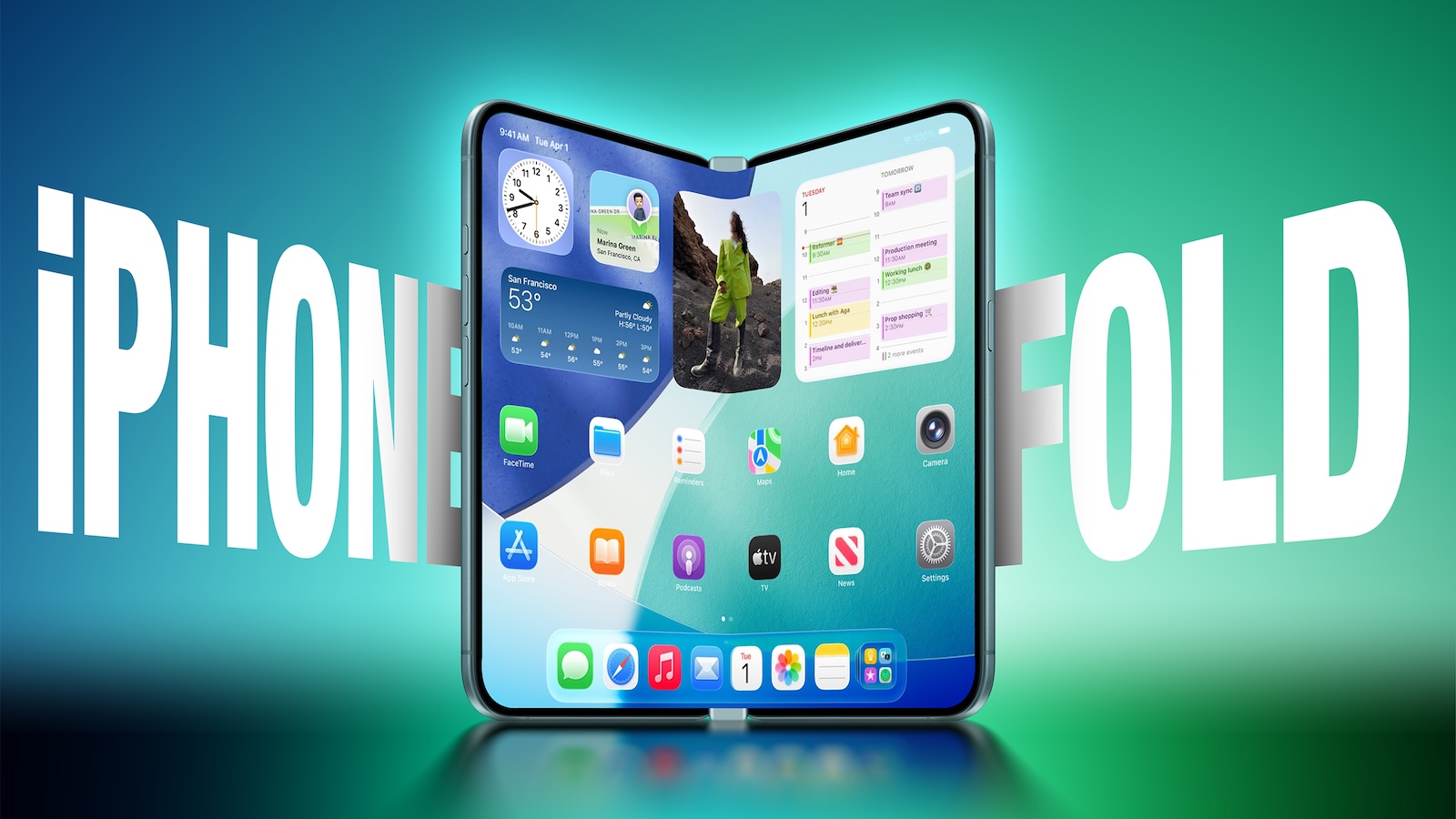

Apple planned to begin ‌iPhone Fold‌ mass production in June 2026, but mass production has now slipped to early August. Some rumors have suggested that Apple is having more manufacturing problems than expected with the Engineering Validation Test phase that the ‌iPhone Fold‌ is in right now, but other rumors suggest that won't lead to delays.

Last week, Japanese site Nikkei said that the engineering delays could cause Apple to delay the launch of the ‌iPhone Fold‌ until 2027, but Bloomberg's Mark Gurman said the ‌iPhone Fold‌ remains on track to launch "around the same time" or "soon after" the iPhone 18 Pro models in September 2026.

DigiTimes' report reconciles the two separate launch timing rumors, indicating that there is indeed a delay in the test phase, but Apple may be able to make up ground during the mass production phase. Prior to mass production, the ‌iPhone Fold‌ will still need to go through Design Validation Testing and Production Validation Testing.

A delay in the mass production timeline could cause serious supply chain shortages, and ‌iPhone Fold‌ availability is likely to be constrained. When we hear rumors about launch issues this early in an iPhone cycle, it typically leads to severe launch shortages and a device that sells out in minutes during pre-orders.

The ‌iPhone Fold‌ is expected to cost between $2,000 and $2,500. It will be Apple's first foldable device, with a 5.5-inch display when closed and a 7.8-inch display when open. More about the device can be found in our iPhone Fold roundup.
Related Roundup: iPhone Fold

This article, "iPhone Fold Production Pushed Back, But Fall 2026 Launch Still on Track" first appeared on MacRumors.com

Discuss this article in our forums
  •  

American Airlines Now Supports iOS 26's Revamped Wallet Boarding Passes

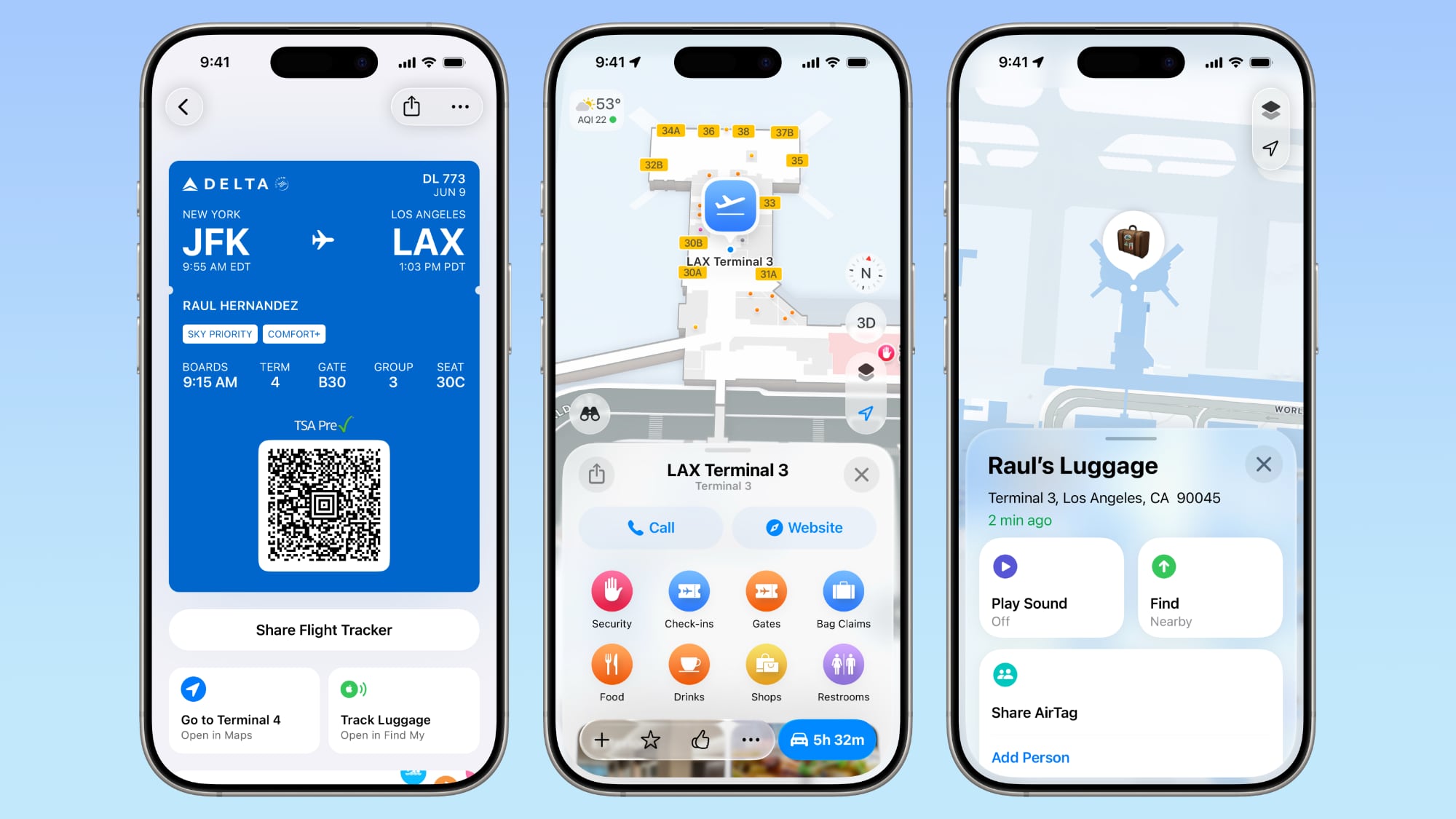
American Airlines is now supporting the enhanced boarding pass feature that Apple added in iOS 26. The app's latest update says boarding passes in the Wallet app feature an updated look with Apple Maps integration, destination guides, and luggage tracking capabilities.


Apple revamped boarding passes in ‌iOS 26‌ to make them more useful to passengers who are using their iPhones for flights in lieu of a paper boarding pass. Boarding passes have maps for navigating through airports, an option to tap into Find My to track items equipped with AirTags, and tools for reporting missing bags to airlines. From American Airlines:
Your boarding pass has a new look with more at your fingertips, like Apple Maps, destination guides, and quick shortcuts to the app. You can also track your luggage and open Find My right from your pass.

Airlines need to opt in to the new boarding passes and update their apps with support. United Airlines, Air Canada, and Southwest already have the enhanced boarding passes. Delta briefly added support, but removed it shortly after.

Apple also implemented Live Activities support for airlines so users can get real-time updates on a flight in ‌iOS 26‌, but it is not clear if American Airlines is supporting that feature based on the app's release notes.

Back in June 2025, Apple said American Airlines was one of the airlines that would add support for the refreshed boarding passes. Other airlines listed included Air Canada, Delta Air Lines, JetBlue, Jetstar, Lufthansa Group, Qantas, Southwest Airlines, United Airlines, and Virgin Australia.

American Airlines has also supported the ‌Find My‌ lost luggage tracking feature since February 2025. In iOS 18, Apple worked with airlines to make it easier for airline employees to locate lost baggage using AirTags.
Related Roundups: iOS 26, iPadOS 26
Related Forum: iOS 26

This article, "American Airlines Now Supports iOS 26's Revamped Wallet Boarding Passes" first appeared on MacRumors.com

Discuss this article in our forums
  •  

Apple Maps Ads Move Closer to Launch With iOS 26.5 Beta 2

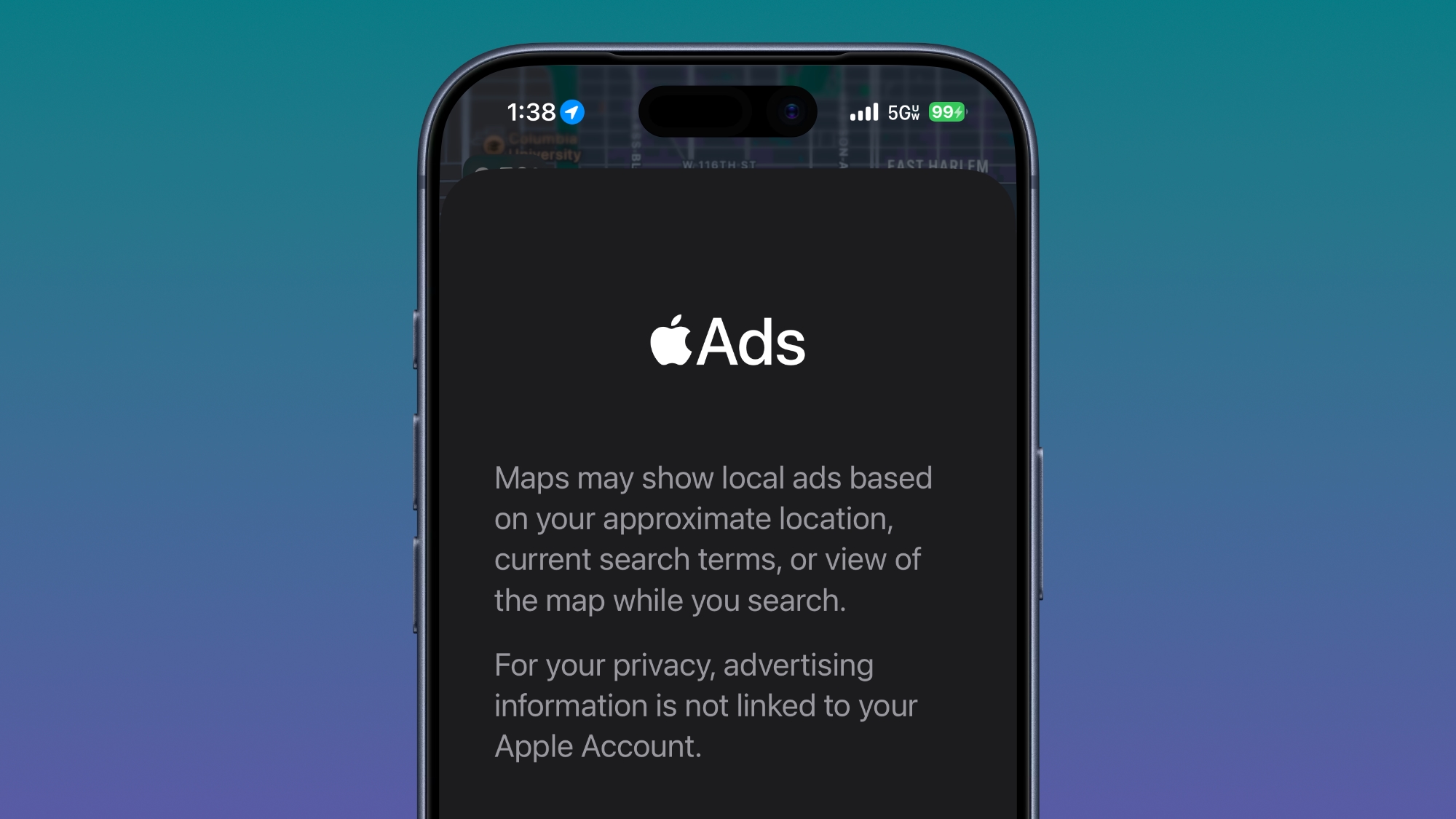
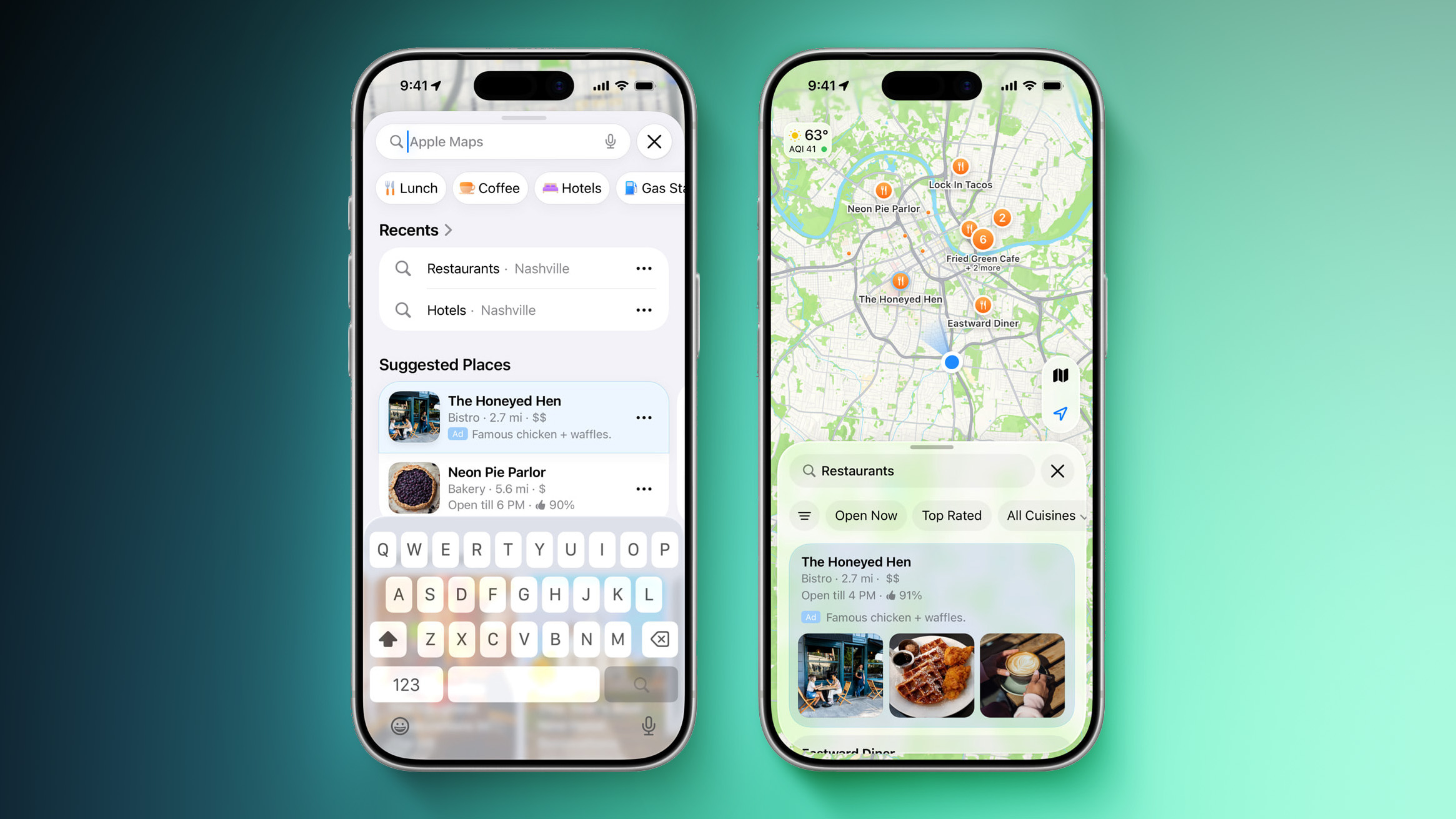
With the second beta of iOS 26.5, Apple is continuing to prepare for ads in the Apple Maps app. There's a new splash screen in the app that says it will display ads based on approximate location, current search terms, or a view of the map when searching. Ads will also be shown in the "Suggested Places" section that was added in the first beta.


Apple says that advertising information is not linked to an Apple Account to preserve user privacy, so ads viewed and interacted with will not be associated with an Apple Account. Data is not collected or stored by Apple and not shared with third parties, according to Apple.

Signs of ads in the Maps app were spotted in the first beta, but iOS 26.5 testers could start seeing ads with the second beta. It's not yet clear if Apple has just implemented the splash screen, or if ads are going to begin showing up in the near future.


Apple announced plans to introduce ads for the Maps app back in March, with ads set to roll out to the public "this summer." Apple plans to include ads in the Maps app on iPhone, iPad, and Mac in the United States and Canada.

Ads in ‌Apple Maps‌ will have an "Ad" label, much like ads in the App Store.
Related Roundups: iOS 26, iPadOS 26
Related Forum: iOS 26

This article, "Apple Maps Ads Move Closer to Launch With iOS 26.5 Beta 2" first appeared on MacRumors.com

Discuss this article in our forums
  •  

Apple Seeds Second iOS 26.5 and iPadOS 26.5 Betas to Developers

Apple today seeded the second betas of upcoming iOS 26.5 and iPadOS 26.5 updates to developers for testing purposes, with the software coming two weeks after Apple released updated first betas.


Registered developers can download the betas from the Settings app on the iPhone or iPad by going to the General section and selecting Software Update.

iOS 26.5 and iPadOS 26.5 do not include new Siri capabilities, suggesting any ‌Siri‌ updates are being held until iOS 27. The Maps app has a Suggested Places feature for recommending locations to visit nearby based on trends and recent searches, plus Apple is laying the groundwork for ads in the Apple Maps app.

Apple is continuing to test end-to-end encryption (E2EE) for RCS messages between iPhone and Android users. Apple included the feature in the iOS 26.4 beta, but removed it before the update launched to the public.

In the European Union, Apple is testing proximity pairing, notification forwarding, and Live Activities for third-party wearables like earbuds and smartwatches. The functionality will allow third-party wearables to have many of the same features as the Apple Watch and AirPods.

More detail on what's new in iOS 26.5 can be found in our iOS 26.5 beta features guide.
Related Roundups: iOS 26, iPadOS 26
Related Forum: iOS 26

This article, "Apple Seeds Second iOS 26.5 and iPadOS 26.5 Betas to Developers" first appeared on MacRumors.com

Discuss this article in our forums
  •  

Second macOS Tahoe 26.5 Beta Now Available for Developers

Apple today provided the second beta of an upcoming macOS Tahoe 26.5 update to developers for testing purposes, with the update coming two weeks after the first beta.


Developers can download the ‌macOS Tahoe‌ 26.5 update by opening up the System Settings app, selecting the General category, and then choosing Software Update. Beta Updates will need to be enabled, and a free developer account is required.

No new features were found in the first ‌macOS Tahoe‌ 26.5 beta, and it's likely the update primarily focuses on bug fixes and performance improvements.
Related Roundup: macOS Tahoe
Related Forum: macOS Tahoe

This article, "Second macOS Tahoe 26.5 Beta Now Available for Developers" first appeared on MacRumors.com

Discuss this article in our forums
  •  

Apple Releases Second watchOS 26.5, tvOS 26.5 and visionOS 26.5 Betas

Apple today provided developers with the second betas of upcoming watchOS 26.5, tvOS 26.5, and visionOS 26.5 betas for testing purposes. The software comes two weeks after Apple released the first betas for each platform.


The software updates are available through the Settings app on each device, and because these are developer betas, a free developer account is required.

There's no word on what's in the software as of yet. watchOS, tvOS, and visionOS often get few features in each new beta, with updates primarily focusing on bug fixes and performance improvements. Nothing new was found in the first betas.

This article, "Apple Releases Second watchOS 26.5, tvOS 26.5 and visionOS 26.5 Betas" first appeared on MacRumors.com

Discuss this article in our forums

  •  

The Latest Foldable iPhone Rumors: What's Changed and What We Know Now

Rumors about Apple's first foldable iPhone are picking up now that the device has entered a new testing stage that precedes mass production. If you've been having trouble keeping up with what's new, we've recapped the latest iPhone Fold rumors that have come out over the last few weeks.


Naming


One rumor claims Apple will call its foldable iPhone the "iPhone Ultra," which doesn't seem out of the question. We've been referring to it as the ‌iPhone Fold‌ during the rumor cycle, but it's unlikely Apple will actually use that name.

Samsung already has the Galaxy Fold, and that would be too similar for Apple's tastes. Apple already uses the Ultra naming for the Apple Watch and for the version of CarPlay that more deeply integrates with in-car systems.

Given the $2,000+ pricing of the foldable iPhone, "Ultra" could make sense.

Design


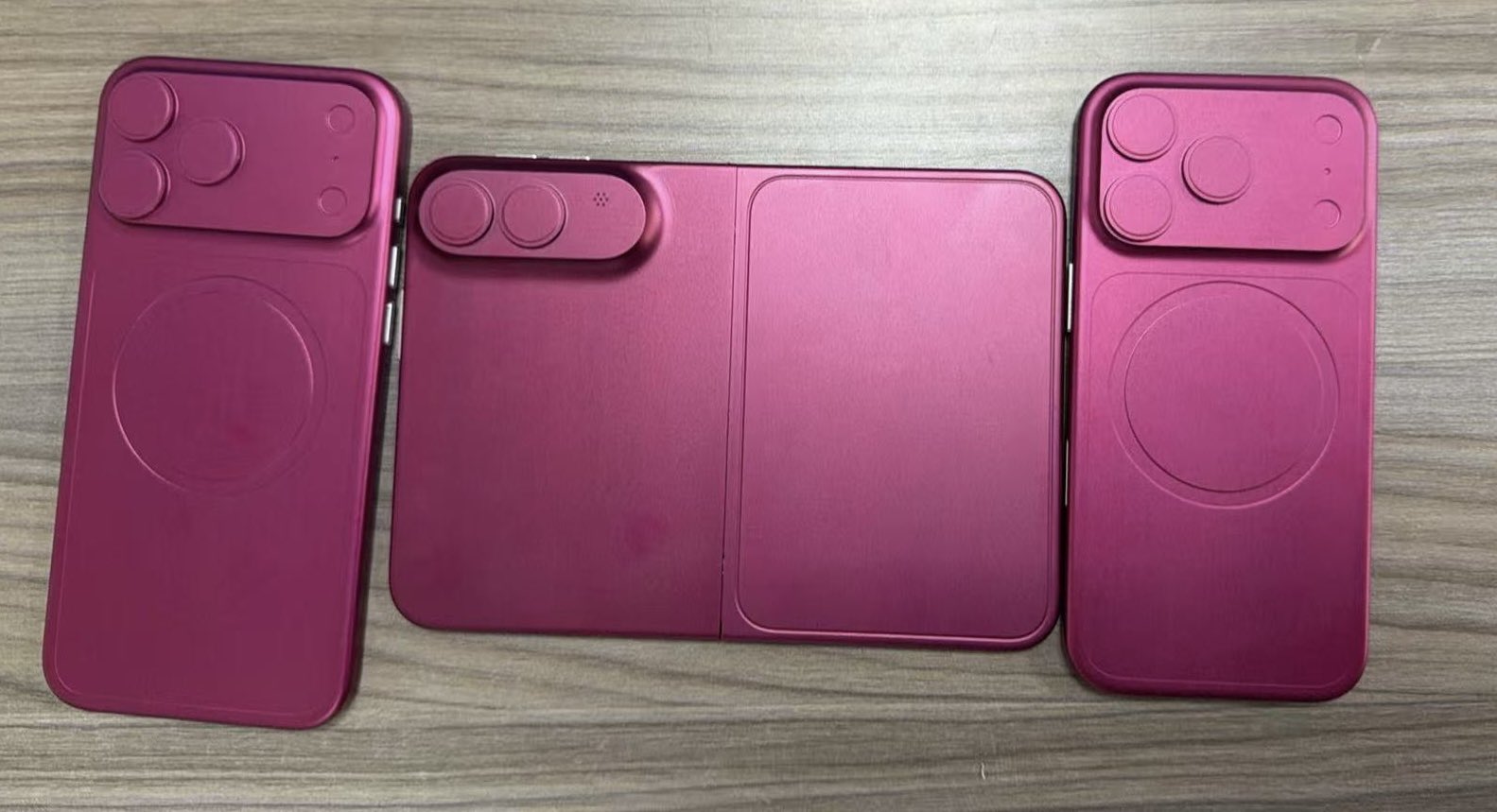
We've heard plenty of rumors about the ‌iPhone Fold‌'s design, but the first alleged dummy models came out this week. We don't know if these are reflective of the ‌iPhone Fold‌'s actual design, but it has all of the design features that have been rumored, and the right sizing.


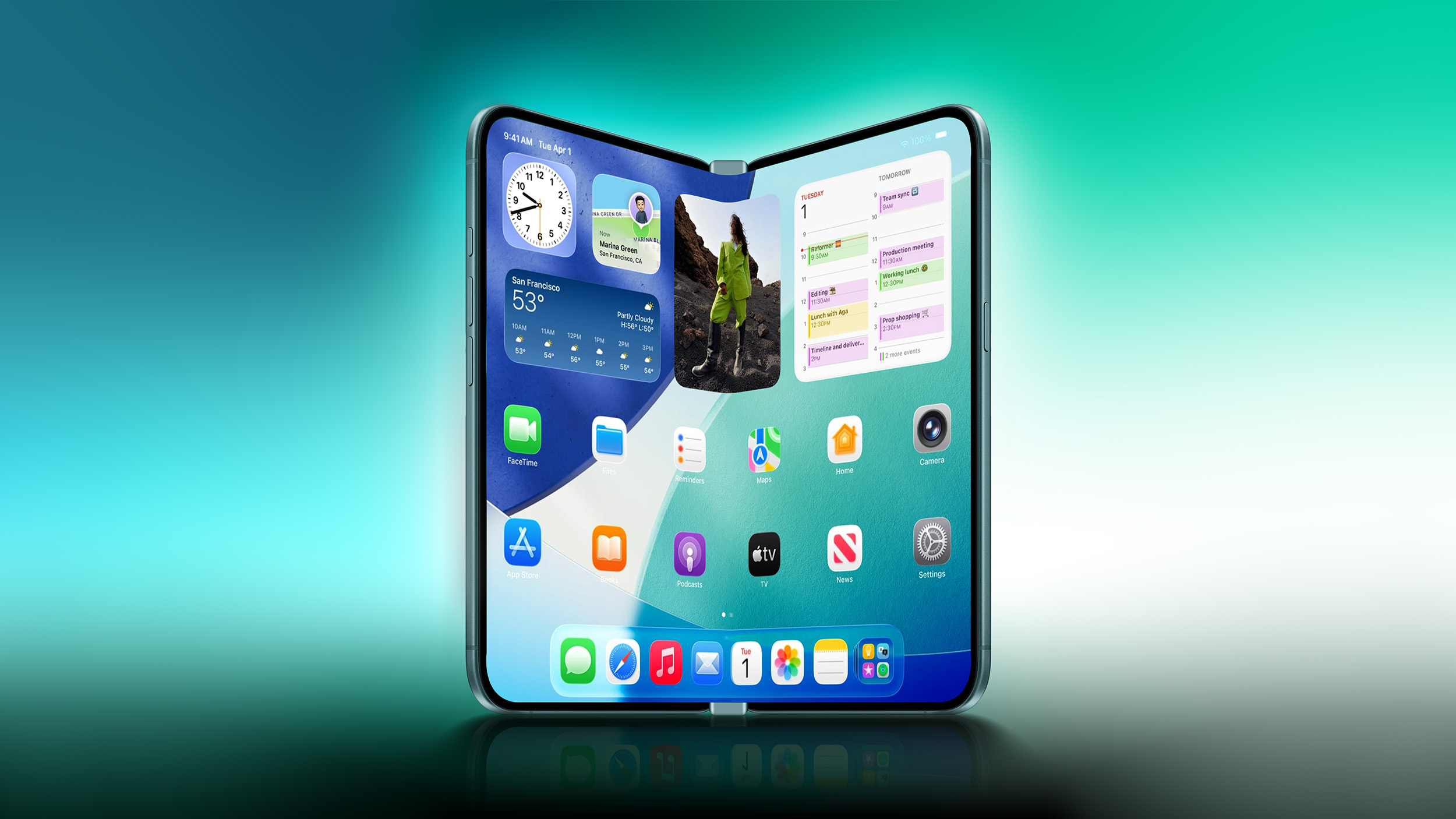
The foldable iPhone will have a ~5.5-inch display when closed, making it Apple's smallest current-generation iPhone. When open, it will be around 7.8 inches, so about a half-inch smaller than the iPad mini. It will have a wider 4:3 aspect ratio like an iPad, which is a design that will set it apart from other foldable smartphones on the market. Most foldable smartphones are taller, but Apple is going in a different direction.

There is a raised camera bump that does not span across the entire back of the device, which is expected. It has a two-lens camera system, and a thin chassis. Rumors suggest the ‌iPhone Fold‌ will be as thin as 4.5mm when open, which limits space for the camera. It's so thin that Apple won't be able to use the TrueDepth camera system, and it's going to have Touch ID instead of Face ID.

Release Timing


We've heard a lot of back and forth rumors on release timing over the last two weeks. Some rumors have suggested the ‌iPhone Fold‌ will be delayed past September because of late stage production issues, while others suggest it's on time for a September launch.

In March, a Barclays analyst suggested the ‌iPhone Fold‌ could be introduced in September alongside the iPhone 18 Pro, but launch later, perhaps as late as December.

Japanese site Nikkei said this week that Apple is running into so many issues that the ‌iPhone Fold‌ might be pushed until 2027, but Bloomberg's Mark Gurman said the report is "off base." Gurman believes the ‌iPhone Fold‌ will be available for sale "around the same time" or "soon after" the ‌iPhone 18 Pro‌ models.

If the ‌iPhone Fold‌ does launch in September alongside the ‌iPhone 18 Pro‌ models, it's likely it will be in short supply. Reports agree that the device is complex and manufacturing isn't smooth sailing. In December, Apple analyst Ming-Chi Kuo said production challenges could cause supply shortages into 2027.

Pricing


Apple's foldable iPhone will "cross the $2,000 threshold," according to Gurman. It is not clear if $2,000 will be the starting price point, or if it will come with a lower price tag but have some higher-end configurations that exceed $2,000.

Most rumors have suggested that the ‌iPhone Fold‌ will start around $2,000, though there have been outliers that put the starting price upwards of $2,300.

Read More


There are plenty of other rumors about the foldable iPhone, including details about Apple's work on the hinge, the materials it'll be made of, what camera technology it will use, and more. We have a full iPhone Fold roundup with all of the rumors we've heard so far.
This article, "The Latest Foldable iPhone Rumors: What's Changed and What We Know Now" first appeared on MacRumors.com

Discuss this article in our forums
  •  

Apple Continues Promoting iOS 26 and macOS 26 Liquid Glass With Updated Design Gallery

Apple is continuing to highlight the Liquid Glass aesthetic that it introduced in iOS 26, iPadOS 26, and macOS 26. The company has shared an updated Liquid Glass Design Gallery that shows off Liquid Glass in third-party apps.


The visual gallery features several iPhone and iPad apps, with screenshots that show the difference between app design in iOS 18 and ‌iOS 26‌.
In the latest edition of our new design gallery, find out how teams of all sizes are taking advantage of the new design and Liquid Glass to create natural, responsive experiences across Apple platforms.

Apps included in the gallery have adopted Liquid Glass for elements like tab bars, navigation buttons, bottom toolbars, and more. Apple also highlights pop-out menu interfaces and the separate search buttons that some apps have implemented, both of which are Liquid Glass design elements that Apple has added to its own apps.

AllTrails, Carrot Weather, Fantastical, Kroger, SketchPro, Trello, and Le Monde are among the apps featured.

Apple previously shared a Liquid Glass gallery after the ‌iOS 26‌ launch, and that gallery provides more Liquid Glass design examples.

Since debuting Liquid Glass, Apple has made small changes like adding a slider bar to the Lock Screen clock for adjusting the Liquid Glass level, but no major updates have been introduced. Rumors suggest that iOS 27, iPadOS 27, and macOS 27 will continue to feature the Liquid Glass aesthetic with little change, but Apple could also add a system-wide slider bar for Liquid Glass opacity adjustments.
Related Roundups: iOS 26, iPadOS 26, macOS Tahoe
Related Forums: iOS 26, macOS Tahoe

This article, "Apple Continues Promoting iOS 26 and macOS 26 Liquid Glass With Updated Design Gallery" first appeared on MacRumors.com

Discuss this article in our forums
  •  

Some iPhone Apps Receive Mysterious Update 'From Apple'

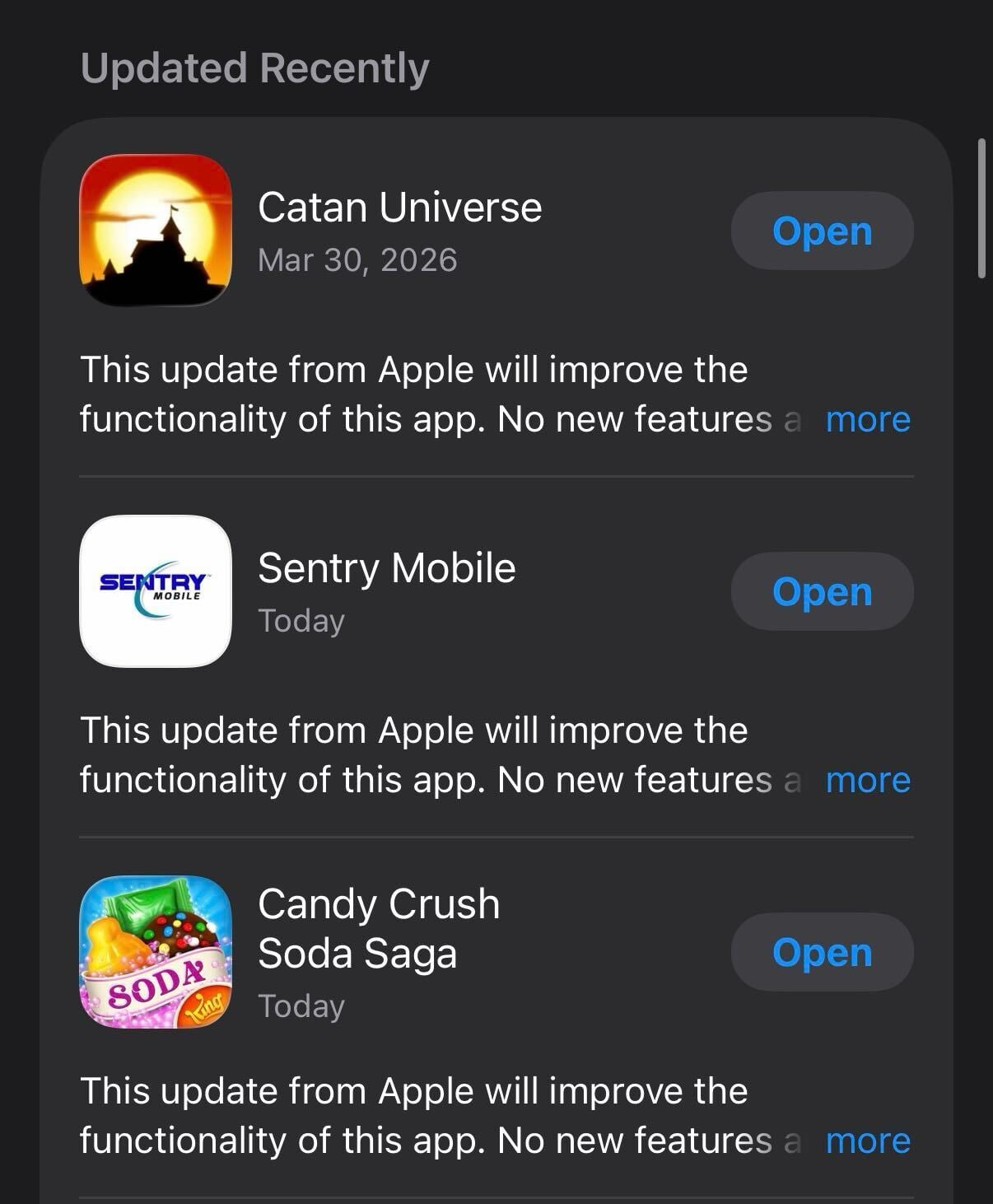
Apple appears to be quietly updating some apps, based on curious new update notes that have appeared on the App Store.


Over the last week, some app updates have included notes that suggest the update is coming from Apple rather than an app developer. "This update from Apple will improve the functionality of this app. No new features are included," reads the description.

Some of the apps that have been updated include Candy Crush Soda Saga, Sentry Mobile, Catan Universe, Bluetti, Mortal Kombat, Duet Display, VLC, and many more.


It's not clear what functionality Apple is improving with each app update, if any. One developer on Reddit said that Apple inserted the text into an app update that had the same version number and content as a prior update.

The update text is appearing on apps that have not been updated in some time, as well as apps that received recent updates, so it's not clear what the apps have in common. When analyzing the code of one of the apps that received an Apple update, MacRumors could not find what had changed.
This article, "Some iPhone Apps Receive Mysterious Update 'From Apple'" first appeared on MacRumors.com

Discuss this article in our forums

  •  

iPhone Fold Enters Trial Production Phase Ahead of 2026 Launch

Apple partner Foxconn has started trial production on the iPhone Fold, according to Chinese leaker Instant Digital. Trial production comes before mass production, which Apple plans to start in July as long as no issues come up during the earlier testing stage.


So far, Apple remains on track to launch the ‌iPhone Fold‌ in 2026, though the latest rumors suggest that it's not going to come out in September. Instead, it could launch sometime after the iPhone 18 Pro, debuting as late as December. Apple is likely to announce the iPhone 18 Pro models and the ‌iPhone Fold‌ at the same time at its September iPhone event, but the following launch sounds like it will be split.

The ‌iPhone Fold‌ will be Apple's first foldable, and it's expected to feature a ~5.5-inch screen size when closed and a larger ~7.8-inch size when open. Apple plans to use a wider 4:3 aspect ratio, so it will be similar in shape to an iPad, with a wider, shorter size than many competing foldable smartphones on the market.

Apple plans to make the ‌iPhone Fold‌ as thin as 4.5mm when it's open, and that thin design requires compromises. There won't be a triple-lens camera setup so no Telephoto lens, and Apple also can't use Face ID because the TrueDepth sensor doesn't fit. Rumors suggest the ‌iPhone Fold‌ will have an iPad-style Touch ID side button instead. Apple is supposedly focused on minimizing the crease, and has achieved a design with a nearly invisible fold down the middle when the device is open.

For more on what to expect from Apple's first foldable iPhone, we have a dedicated iPhone Fold roundup.
Related Roundup: iPhone Fold

This article, "iPhone Fold Enters Trial Production Phase Ahead of 2026 Launch" first appeared on MacRumors.com

Discuss this article in our forums
  •  

Apple Asks Court to Pause App Store Fee Fight While It Petitions Supreme Court in Epic Games Case

Apple plans to ask the United States Supreme Court to weigh in on the App Store fee restrictions and contempt of court ruling levied against it in the ongoing Epic Games vs. Apple legal battle.


In a filing on April 3 (via TechCrunch), Apple asked the Ninth Circuit Court of Appeals to hold off on a plan that would see the U.S. Northern District of California decide on a reasonable commission for Apple to charge developers for purchases made from a link in an app. Apple is concerned that the district court will decide on a fee, only to have the Supreme Court then reverse the ruling in its entirety.

Apple says that it does not want to make multiple major changes to its ‌App Store‌ fee structure. Instead, Apple proposes that the current no-commission setup remain in place until Apple hears back from the Supreme Court. Developers can currently include links to non-App Store purchase options in their apps and Apple charges no fee from purchases made using those links. Apple wants to continue fee-free links and hold off on the long legal battle to determine a fee for the time being.

Apple has not petitioned the Supreme Court to hear the case yet, and there is no guarantee that the Supreme Court will do so. Back in 2024, both Apple and Epic Games asked the Supreme Court to make a ruling in their ongoing dispute, but the Supreme Court denied the request. Apple is going to ask the Supreme Court to hear the contempt aspect of the case, and there's a non-zero chance the Supreme Court will agree.

Back in April 2025, Apple was found to have violated a 2021 injunction requiring it to let developers direct customers to third-party purchase options on the web with in-app links. The injunction stemmed from the ‌Epic Games‌ legal battle, which Apple won almost entirely. Apple was not found to have a monopoly, but the judge overseeing the case, Yvonne Gonzalez Rogers, ordered Apple to relax its "anti-steering" link rules.

Apple implemented new App Store rules, but only slightly lowered its fees. Apple charged a 12 to 27 percent commission instead of a 15 to 30 percent commission for purchases made via a web link, and the high fee combined with third-party payment fees meant almost no developers opted to add links. ‌Epic Games‌ accused Apple of charging "unjustified fees," and asked the court to decide whether Apple was complying with the injunction. The court found that Apple was in "willful violation," and Gonzalez Rogers banned Apple from collecting any fee on links at all.

Apple immediately appealed the ruling, but dropped link fees in April 2025. Apple argued that the ruling was unconstitutional and that it should receive compensation for its technology. In December 2025, the U.S. Court of Appeals handed down a mixed ruling, agreeing that Apple violated the injunction, but questioning the severity of the response. The appeals court suggested Apple should be able to charge a reasonable fee, and tasked the district court with deciding what the fee should be.

Apple is hoping the Supreme Court will do what the appeals court did not, and vacate the district court's ruling entirely. Apple plans to challenge the contempt ruling and the scope of the injunction, which Apple argues should not extend to all developers nationwide, instead applying only to developers connected to ‌Epic Games‌. Apple is questioning the civil contempt ruling and the court's ruling that Apple violated the "spirit" of the injunction rather than the direct text. Apple says that it should not be held in contempt because the injunction had no specific wording about commissions. It's possible the spirit vs. plain text dispute will catch the Supreme Court's attention.

If the appeals court agrees to Apple's plan, the fee calculation hearing in the district court will be put on pause until the Supreme Court makes a decision. After an appeals court ruling, the Supreme Court is the last stop. If the Supreme Court decides not to hear the case, the appeals court ruling will stand and the district court will be able to proceed with deciding on a fee.

Should the appeals court not grant Apple's request for a stay, the district court will start the fee calculation process while Apple simultaneously petitions the Supreme Court and waits to hear back.
This article, "Apple Asks Court to Pause App Store Fee Fight While It Petitions Supreme Court in Epic Games Case" first appeared on MacRumors.com

Discuss this article in our forums
  •  

Netflix Launches Free Kids Gaming App to Compete With Apple Arcade

Netflix today launched a new Netflix Playground app designed for kids who are eight and under. Playground offers a selection of games with popular characters from shows like Sesame Street and Peppa Pig, with no ads and no in-app purchases.


Playground is included in all Netflix memberships, and it is an expansion of the existing gaming options that Netflix offers. Netflix has had games available since 2021, but now there is a dedicated space for games aimed at children. Netflix Playground is a standalone app that users can sign into with a Netflix account, and it is available on the iPhone and iPad.

With Netflix Playground, Netflix will compete with Apple Arcade, which is Apple's subscription gaming service. Like Playground, ‌Apple Arcade‌ games have no ads, fees, or in-app purchases, with one monthly fee unlocking all content. Apple has hundreds of titles, and it does not have an all-in-one subscription option with both streaming content and gaming access like Netflix does.

Apple does have an Apple One bundle that combines Apple TV, iCloud+, Apple Music, and ‌Apple Arcade‌ for $19.95 per month, but the ad-supported Netflix plan that includes TV shows, movies, and games for adults and children is cheaper at $8.99 per month. Ad-free Netflix is about the same price as ‌Apple One‌ at $19.99 per month.

Netflix's children's app launches as multiple countries have introduced stricter app restrictions for minors and age verification requirements for app users. The renewed focus on content that children are exposed to has likely pushed parents to look for simple, kid-friendly content like Netflix is making available.

The new Netflix Playground app is available in the U.S., Canada, UK, Australia, Philippines, and New Zealand today, and it is launching worldwide on April 28. [Direct Link]
This article, "Netflix Launches Free Kids Gaming App to Compete With Apple Arcade" first appeared on MacRumors.com

Discuss this article in our forums
  •  

New Apple TV Waiting for Siri: Here's What's Coming When It Launches

We're long overdue for an Apple TV update, and there have been rumors about an imminent refresh since late last year. It's now sounding like we're not going to get a new version for several months because of Siri delays. If you're holding out for a new model, here's a recap on what to expect when it eventually comes out so you can decide whether to continue to wait, or buy now.


Design


‌Apple TV‌ design updates are few and far between, and that's not changing in 2026. The next ‌Apple TV‌ is going to have the same squircle shape as the current model, and it'll continue to be made from a black plastic material.

We're expecting the 2026 ‌Apple TV‌ to be indistinguishable from the existing ‌Apple TV‌ on the exterior.

New Chip


A new A-series chip will be the main ‌Apple TV‌ update, and rumors suggest that it will get the A17 Pro chip that Apple first used in the iPhone 15 Pro models.

Compared to the A15 Bionic in the current ‌Apple TV‌, the A17 Pro is a big update, and it's a good reason to hold off on buying the current model. The A17 Pro is built on a 3-nanometer process for faster speed and better efficiency, and it has hardware-accelerated ray tracing for higher-quality graphics in games.

Given that Apple has held the ‌Apple TV‌ update for so long, it's entirely possible it'll get an even newer chip like the A18 or A19. A RAM update is possible too, especially if the ‌Apple TV‌ has any kind of Apple Intelligence support.

Apple Intelligence and Siri


The next ‌Apple TV‌ is supposedly ready to launch at any time, but new ‌Siri‌ features are the holdup. Apple wants to debut the ‌Apple TV‌ with the smarter version of ‌Siri‌ that's in the works, and it's not ready to go.

Bloomberg's Mark Gurman says the Apple TV is linked to "new artificial intelligence features" that Apple has postponed until September 2026. Apple intended to launch the ‌Apple Intelligence‌ ‌Siri‌ features in spring 2026, but the company was still experiencing issues with ‌Siri‌. At this point, we're not going to see new ‌Siri‌ capabilities until iOS 27, which also means a delay for all the devices that Apple is holding.

Along with the ‌Apple TV‌, the rumored home hub and a next-generation version of the HomePod are waiting on ‌Siri‌.

Updated ‌Siri‌ features will likely require more RAM and a faster chip, so if you want the smarter ‌Siri‌ on the ‌Apple TV‌, that's another reason to wait before making a purchase.

Wi-Fi


The ‌Apple TV‌ could get Apple's N1 networking chip with Wi-Fi 7 support. Wi-Fi 7 works with the 6GHz band offered by newer routers.

6GHz connectivity is faster and less congested, which you generally want for a device designed for streaming content.

Bluetooth


The ‌Apple TV‌ 4K could get Bluetooth 6 for connecting devices like controllers and earbuds.

Pricing


There might be a cheaper version of the ‌Apple TV‌ available because there have been rumors of a price drop.

Apple could release two models, one that's higher-end and one that has lower specs and a lower price tag, or it could keep the existing ‌Apple TV‌ around as a low-cost option.

Launch Date


If the new version of ‌Siri‌ has been pushed to ‌iOS 27‌ and the ‌Apple TV‌ is tied to that update, we're not going to see the ‌Apple TV‌ refreshed until September 2026 or later.
Related Roundup: Apple TV
Tag: Siri
Buyer's Guide: Apple TV (Don't Buy)

This article, "New Apple TV Waiting for Siri: Here's What's Coming When It Launches" first appeared on MacRumors.com

Discuss this article in our forums
  •  

Apple Releases First iOS 26.5, iPadOS 26.5 and macOS Tahoe 26.5 Public Betas

Apple today provided public beta testers with the first releases of upcoming iOS 26.5, iPadOS 26.5, macOS Tahoe 26.5, watchOS 26.5, and tvOS 26.5 updates for testing purposes. The public betas come four days after Apple provided the betas to developers, though Apple seeded updated iOS 26.5 and iPadOS 26.5 betas to developers earlier today.


After signing up for beta testing on Apple's beta site, public beta testers can download the updates using the Software Update section of the Settings app on each device.

iOS 26.5, iPadOS 26.5, and ‌macOS Tahoe‌ 26.5 include a new Suggested Places feature for recommending nearby locations to visit, and Apple is also gearing up to start showing ads in Maps.

Apple is testing end-to-end encryption for RCS messages between iPhone and Android users again, and there are proximity pairing, notification forwarding, and Live Activities for third-party wearables in the EU.
Related Roundups: iOS 26, iPadOS 26, macOS Tahoe
Related Forums: iOS 26, macOS Tahoe

This article, "Apple Releases First iOS 26.5, iPadOS 26.5 and macOS Tahoe 26.5 Public Betas" first appeared on MacRumors.com

Discuss this article in our forums

  •  

Happy Birthday, iPad: Apple's Tablet Turns 16

Today marks the 16th anniversary of when Apple released the first-generation iPad. After Steve Jobs announced the ‌iPad‌ on January 27, 2010, it launched a few months later on April 3, 2010.


Apple's original ‌iPad‌ looked like a larger version of the iPhone, featuring thick bezels, a 9.7-inch multitouch display with a 1,024 x 768 resolution, a Home Button, and a 30-pin dock connector. The ‌iPad‌ was the first device that Apple released with a custom-designed chip, the Apple A4.

The concept of a tablet device like the ‌iPad‌ actually predated the iPhone, and Apple had a prototype project in the works in 2004. Then-Apple CEO Steve Jobs wanted to prioritize the iPhone, so the ‌iPad‌ was put on hold until after the iPhone was established.

Apple priced the ‌iPad‌ at $499, and Jobs called it a "magical and revolutionary device at an unbelievable price." Like the iPhone, the ‌iPad‌ dominated the tablet space, and it still continues to do so today. Apple sold a million iPads in the first month, and while competitors like Microsoft and Samsung quickly came out with competing tablets of their own, the ‌iPad‌ has no match.

Apple has led the global tablet market for over a decade and no competitor comes close to matching its tablet market share. As of the fourth quarter of 2025, Apple's market share was 44.9 percent, with Samsung the next closest at 14.7 percent.

Apple has expanded its ‌iPad‌ lineup over the years, and we now have multiple sizes at multiple price points. The 11-inch ‌iPad‌ is available for those who want a low-cost option, while the 11-inch and 13-inch iPad Air are mid-range products with a Mac chip. The 8.3-inch iPad mini is available for those who want a smaller-sized tablet, and for those who want top-of-the-line performance with Apple's latest Mac chip, the 11-inch and 13-inch iPad Pro models are available.
This article, "Happy Birthday, iPad: Apple's Tablet Turns 16" first appeared on MacRumors.com

Discuss this article in our forums

  •  

iFixit AirPods Max 2 Teardown: Same Design, Same Repairability Issues

Repair site iFixit today shared a teardown of Apple's new AirPods Max 2 headphones, and as expected, there are few changes. iFixit says the ‌AirPods Max 2‌ are "basically the same" as the original AirPods Max headphones that came out in 2020.


A comparison of the internal components of the ‌AirPods Max 2‌ and the USB-C AirPods Max indicate the headphones are identical, and opening them up requires the same steps. The only difference is the updated H2 chips inside each earcup.

Apple hasn't addressed the common failure points in the AirPods Max, such as condensation that builds up in the earcups in humid environments, and Apple doesn't have parts or repair manuals available.

iFixit suggests that if Apple made instructions and components available through its self-service repair program and made the battery and USB-C port more accessible, the AirPods Max would be repairable and could have a much longer lifespan.

With no updates to the ‌AirPods Max 2‌ design, the headphones are no more repairable than the prior-generation models. iFixit gave the prior version a repairability score of 6/10.
Related Roundup: AirPods Max 2
Buyer's Guide: AirPods Max (Buy Now)
Related Forum: AirPods

This article, "iFixit AirPods Max 2 Teardown: Same Design, Same Repairability Issues" first appeared on MacRumors.com

Discuss this article in our forums
  •  

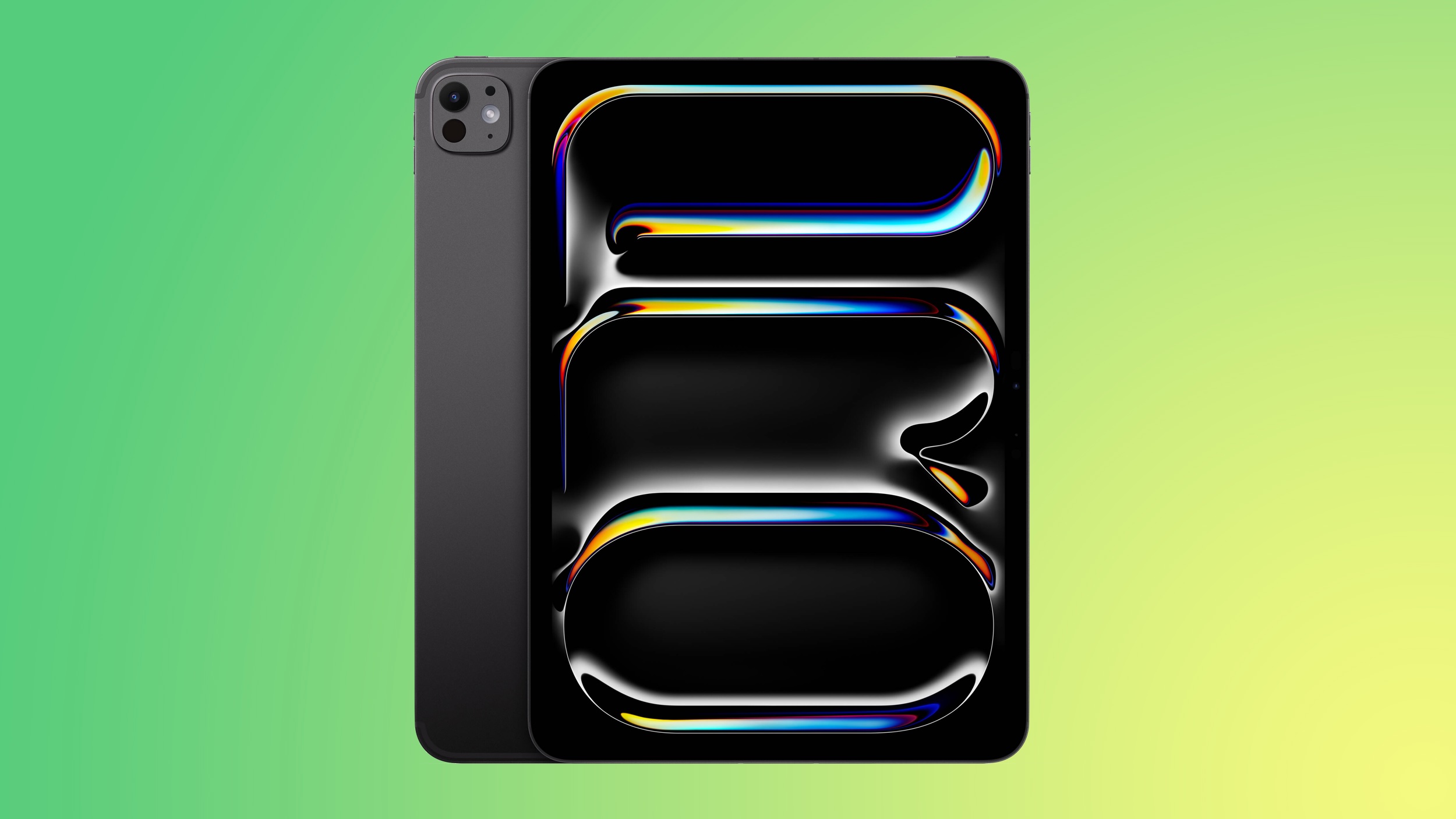
Apple Now Sells Refurbished M4 iPad Pro Models Starting at $759

Apple is now selling M4 iPad Pro models in its online store for refurbished products, allowing customers to purchase like-new models at a discounted price.


There are both 11-inch and 13-inch options available, in multiple storage configurations. Apple is offering Wi-Fi and Cellular refurbished models, and silver and black color options.

Pricing on the 11-inch M4 ‌iPad Pro‌ starts at $759, down from the original $999 price. The 13-inch model is priced starting at $1,019, down from the original $1,299 price. Entry-level models are Wi-Fi only with 256GB of storage.

Apple released the M4 ‌iPad Pro‌ models in May 2024, but this is the first time that refurbished models have been available for purchase. Apple discontinued the M4 ‌iPad Pro‌ models with the launch of the M5 ‌iPad Pro‌ in October 2025.

Apple sells refurbished devices with the same one-year warranty that comes with a new Apple product. Refurbished iPads feature all manuals and accessories, plus Apple has a testing, repair, repackaging, and cleaning process to make sure that refurbished products are identical to new devices. Refurbished products are eligible for AppleCare+ protection.
Related Roundup: iPad Pro
Buyer's Guide: iPad Pro (Neutral)

This article, "Apple Now Sells Refurbished M4 iPad Pro Models Starting at $759" first appeared on MacRumors.com

Discuss this article in our forums
  •  

Apple Seeds Revised iOS 26.5 and iPadOS 26.5 Betas to Developers

Apple today seeded revised first betas of upcoming iOS 26.5 and iPadOS 26.5 updates to developers for testing purposes, with the software coming four days after Apple seeded the initial betas.


Registered developers can download the betas from the Settings app on the iPhone or iPad by going to the General section and selecting Software Update. It's not clear why Apple has seeded new beta updates, but there may be a bug fix that couldn't wait for the second beta.

iOS 26.5 and iPadOS 26.5 do not include new Siri capabilities, suggesting any ‌Siri‌ updates are being held until iOS 27. The Maps app has a Suggested Places feature for recommending locations to visit nearby based on trends and recent searches, plus Apple is laying the groundwork for ads.

Apple is again testing end-to-end encryption (E2EE) for RCS messages between iPhone and Android users. Apple tested the feature in iOS 26.4, but removed it before the update launched.

In the European Union, Apple is testing proximity pairing, notification forwarding, and Live Activities for third-party wearables like earbuds and smartwatches.

More detail on what's new in iOS 26.5 can be found in our beta 1 features guide.
Related Roundups: iOS 26, iPadOS 26
Related Forum: iOS 26

This article, "Apple Seeds Revised iOS 26.5 and iPadOS 26.5 Betas to Developers" first appeared on MacRumors.com

Discuss this article in our forums
  •  

Apple Sending WWDC 2026 Invites to Special Event Lottery Winners

Students and developers who won the lottery to attend the WWDC 2026 Special Event at Apple Park on June 8 have started receiving their invites.


Apple is holding a WWDC keynote viewing at ‌Apple Park‌, but space is limited so invites were done on a lottery basis. Apple accepted submissions from those interested in attending until Monday night, and winners are now being notified.

Developers and students who won a spot will take part in an all-day event. The day will begin with the keynote viewing at 10:00 a.m. Pacific Time, followed by the Platforms State of the Union, ‌Apple Park‌ tours, and a dinner. Attendees will be able to connect with Apple engineers and experts.

Current Apple Developer Program members, Apple Developer Enterprise Program members, Apple Entrepreneur Camp alumni, and Swift Student Challenge winners from 2024 to 2026 were eligible to apply, with attendees chosen by random selection.

Apple does not charge a fee for the ‌Apple Park‌ special event, but the company does not cover transportation or lodging. Out-of-state attendees will need to purchase airfare, hotel accommodations, and transportation to ‌Apple Park‌.

‌WWDC 2026‌ will take place from June 8 to June 12. Developers and students not selected to attend the ‌Apple Park‌ event can follow along with WWDC through Apple's developer website and app. Apple plans to share 100+ WWDC sessions that walk through all of the new features, and developers can attend interactive group labs and get one-on-one help from Apple engineers.
Related Roundup: WWDC 2026

This article, "Apple Sending WWDC 2026 Invites to Special Event Lottery Winners" first appeared on MacRumors.com

Discuss this article in our forums
  •  

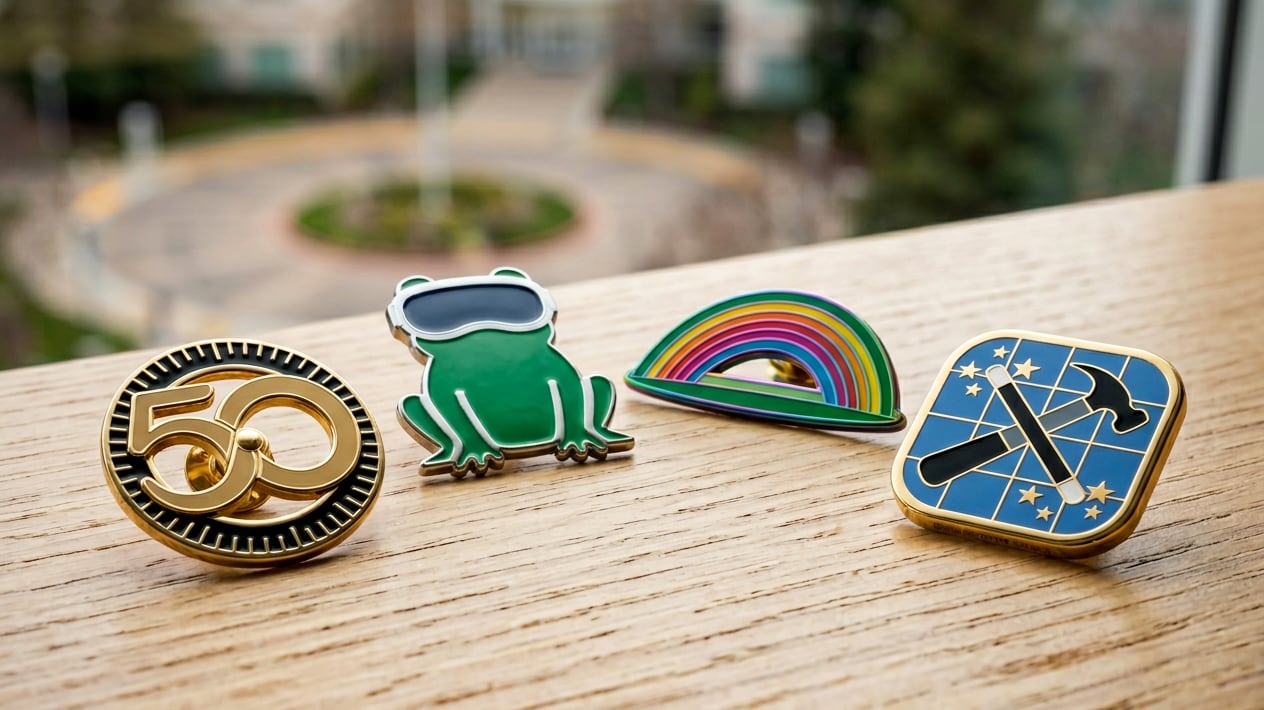
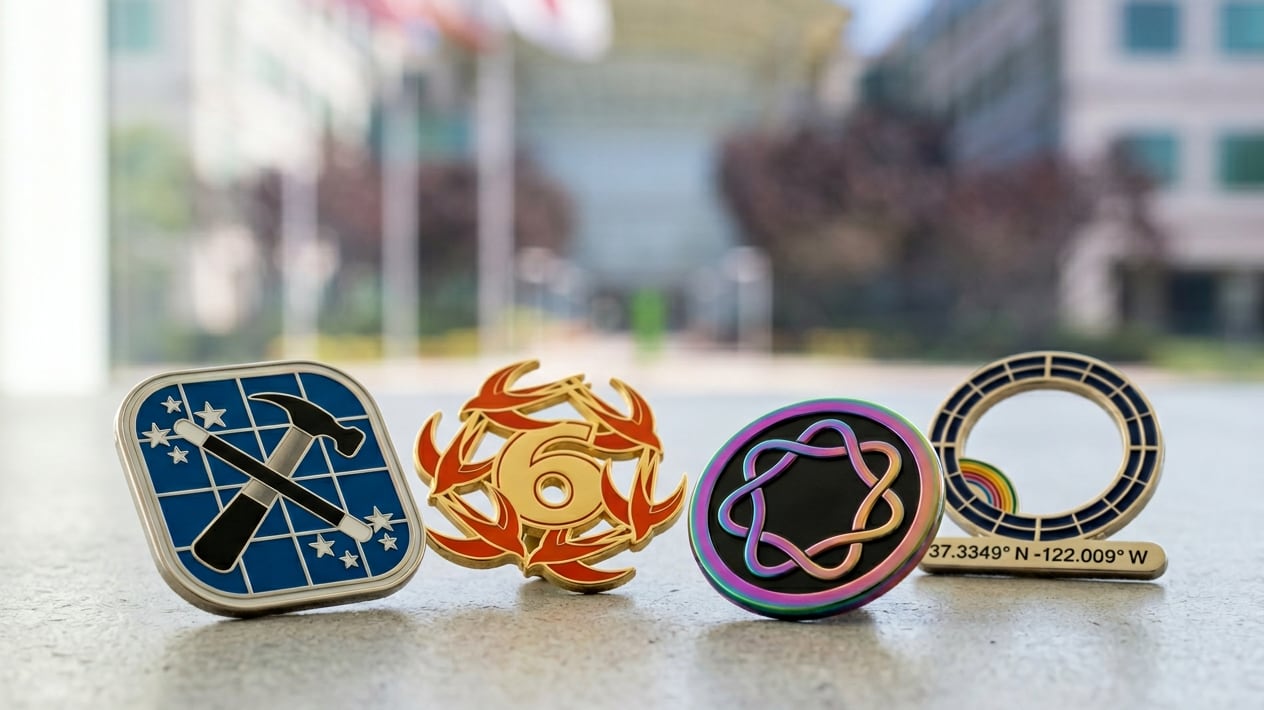
Apple Fan Creates Unofficial WWDC 2026 and 50th Anniversary Enamel Pins

App developer Clément Sauvage has designed a set of enamel pins for Apple fans who want to commemorate WWDC 2026 and Apple's 50th anniversary. Sauvage is offering the pins on Kickstarter, and plans to start shipments in May ahead of WWDC.


The pins feature the Apple developer logo, the Apple Intelligence icon, Apple's "spaceship" and rainbow at the Apple Park campus, the entrance to Apple's Infinite Loop campus, the Swift logo, and more. A single pin is available for 10 euros, while a full set of eight WWDC-themed pins is priced at 45 euros.


Sauvage has done enamel pin sets in 2021 and 2024, so this is his third offering. There are some add-on pins from prior years available as well.

Apple often designs its own WWDC pins that are given to developers that attend the WWDC Special Event, but the pins are not available for general purchase.
Related Roundup: WWDC 2026

This article, "Apple Fan Creates Unofficial WWDC 2026 and 50th Anniversary Enamel Pins" first appeared on MacRumors.com

Discuss this article in our forums

  •  
❌