Login
Login
iPhone 17 vs. iPhone 16 Wi-Fi Speeds: New Study Reveals the Winner
A new study has revealed that the iPhone 17, iPhone 17 Pro, iPhone 17 Pro Max, and iPhone Air achieve significantly faster average Wi-Fi speeds compared to the iPhone 16 series, thanks to Apple's custom-designed N1 chip.

The study was conducted by Ookla, the company behind the popular Speedtest website and app. It said the results are based on global, crowdsourced Speedtest user data collected from September 19 to October 29 of this year.
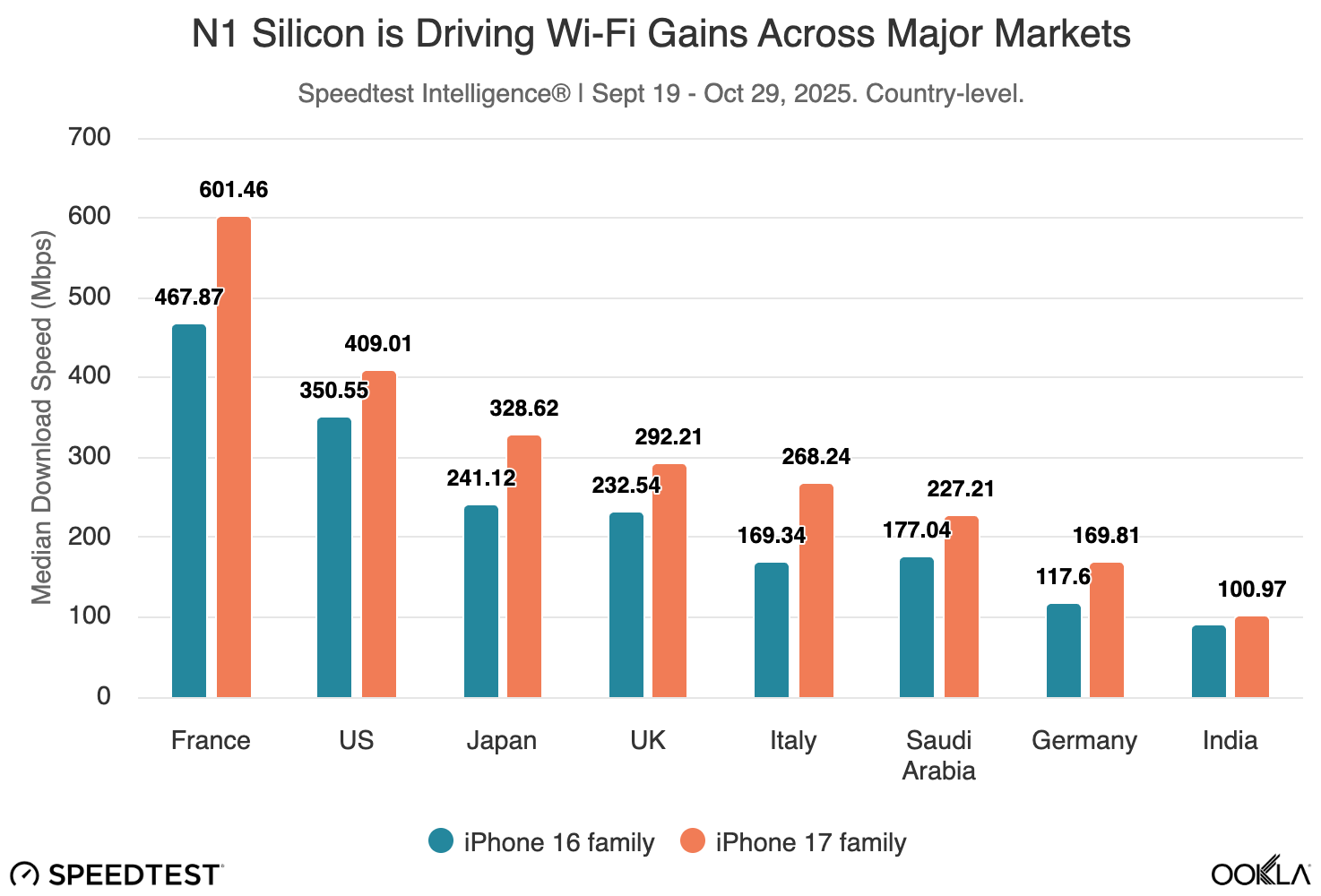
Ookla said Apple's N1 chip is a "substantial upgrade," with up to 40% faster average download and upload speeds compared to Broadcom's Wi-Fi chip in the iPhone 16 series. The study found that speeds were faster across every country it analyzed, including the United States, France, Italy, the United Kingdom, India, Japan, and others.
The study found that the N1 chip "lifts the floor" for Wi-Fi performance, more than "raising the ceiling." Based on the results, Ookla said the N1 chip often delivers more consistent performance in challenging Wi-Fi conditions.
In the United States in particular, Ookla said the iPhone 17 and iPhone Air series achieved a median average Wi-Fi download speed of 409 Mbps, compared to 350 Mbps for the iPhone 16 series. That is a nearly 17% increase.
Head over to Ookla's website for more charts.
A few months ago, we reported that the N1 chip supports up to 160 MHz channel bandwidth for Wi-Fi 7, short of the standard's 320 MHz maximum. This limitation means the devices cannot achieve the peak theoretical speeds possible with Wi-Fi 7, but we said this was a non-issue for most customers, and the study backs that up.
Ookla said the results show the 160 MHz limitation "does not materially affect performance in real world use for most people."
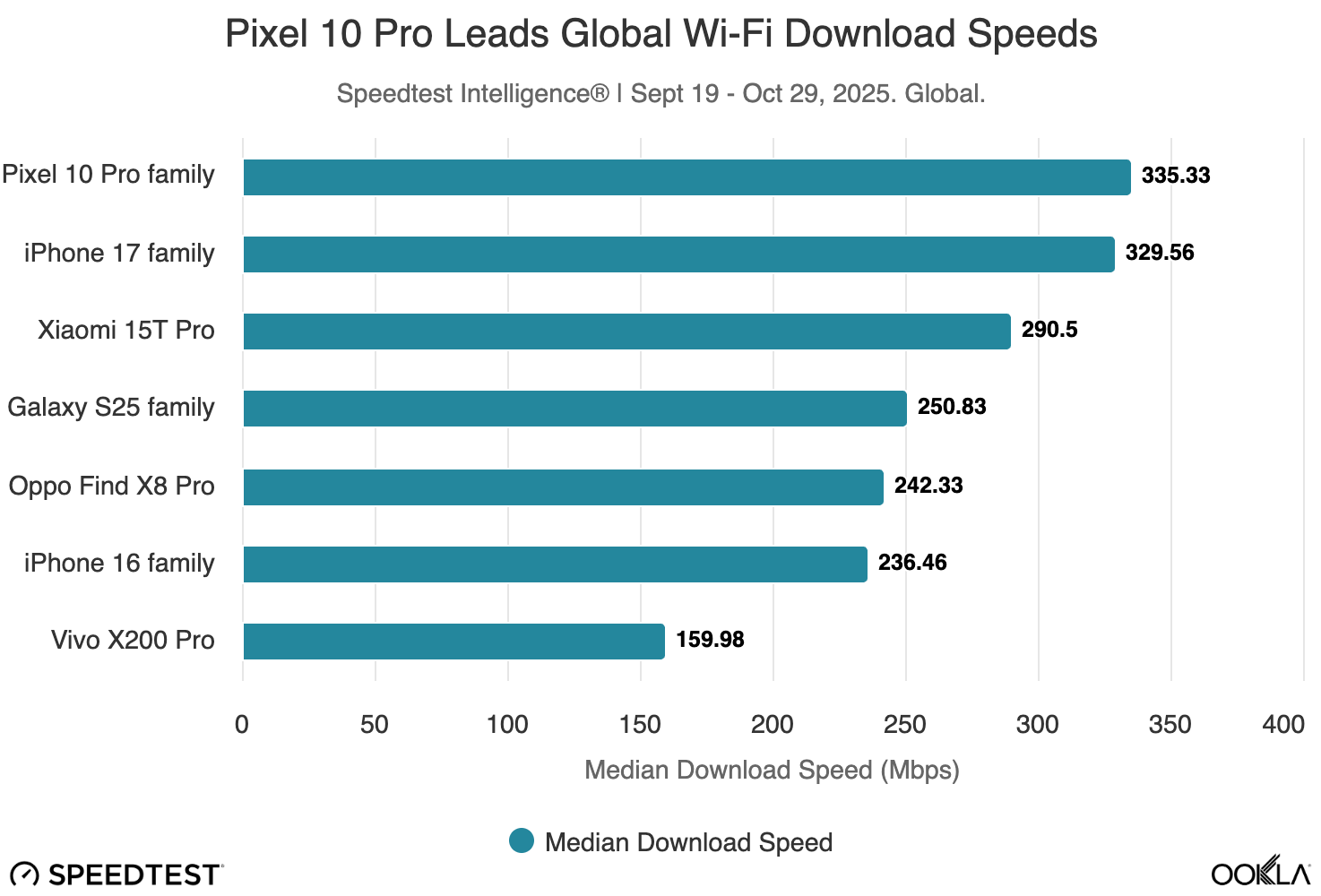
While the study found the iPhone 17 and iPhone Air series tops the iPhone 16 series in terms of average global Wi-Fi download speeds, Ookla said the Google's Pixel 10 Pro series was even faster, but only by a slim margin.
The Pixel 10 Pro came in at 335 Mbps, edging out the iPhone 17 series at 329 Mbps.
All in all, the study reveals that the N1 chip is an upgrade, not a downgrade. If you are considering purchasing any of the iPhone 17 or iPhone Air models, it looks like you can be confident that Wi-Fi performance will not be an issue.
This article, "iPhone 17 vs. iPhone 16 Wi-Fi Speeds: New Study Reveals the Winner" first appeared on MacRumors.com
Discuss this article in our forums
The study was conducted by Ookla, the company behind the popular Speedtest website and app. It said the results are based on global, crowdsourced Speedtest user data collected from September 19 to October 29 of this year.
Ookla said Apple's N1 chip is a "substantial upgrade," with up to 40% faster average download and upload speeds compared to Broadcom's Wi-Fi chip in the iPhone 16 series. The study found that speeds were faster across every country it analyzed, including the United States, France, Italy, the United Kingdom, India, Japan, and others.
The study found that the N1 chip "lifts the floor" for Wi-Fi performance, more than "raising the ceiling." Based on the results, Ookla said the N1 chip often delivers more consistent performance in challenging Wi-Fi conditions.
In the United States in particular, Ookla said the iPhone 17 and iPhone Air series achieved a median average Wi-Fi download speed of 409 Mbps, compared to 350 Mbps for the iPhone 16 series. That is a nearly 17% increase.
Head over to Ookla's website for more charts.
A few months ago, we reported that the N1 chip supports up to 160 MHz channel bandwidth for Wi-Fi 7, short of the standard's 320 MHz maximum. This limitation means the devices cannot achieve the peak theoretical speeds possible with Wi-Fi 7, but we said this was a non-issue for most customers, and the study backs that up.
Ookla said the results show the 160 MHz limitation "does not materially affect performance in real world use for most people."
While the study found the iPhone 17 and iPhone Air series tops the iPhone 16 series in terms of average global Wi-Fi download speeds, Ookla said the Google's Pixel 10 Pro series was even faster, but only by a slim margin.
The Pixel 10 Pro came in at 335 Mbps, edging out the iPhone 17 series at 329 Mbps.
All in all, the study reveals that the N1 chip is an upgrade, not a downgrade. If you are considering purchasing any of the iPhone 17 or iPhone Air models, it looks like you can be confident that Wi-Fi performance will not be an issue.
Related Forum: iPhone
This article, "iPhone 17 vs. iPhone 16 Wi-Fi Speeds: New Study Reveals the Winner" first appeared on MacRumors.com
Discuss this article in our forums