Reading view

Authors boycott Cartagena literature festival in protest of María Corina Machado’s attendance 
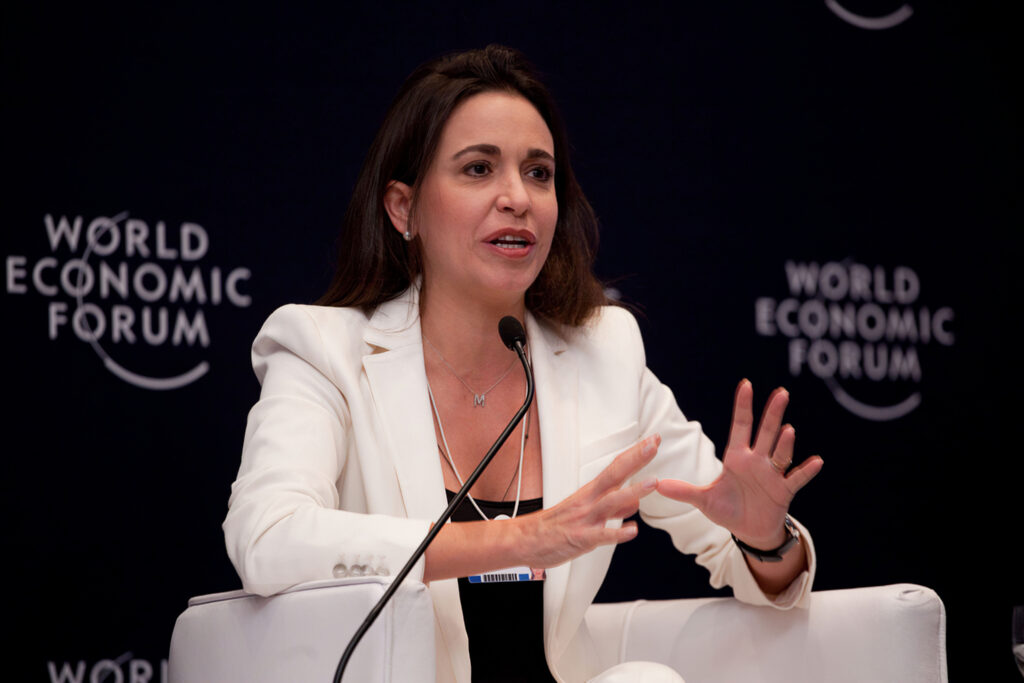
Maria Corina Machado via World Economic Forum. Image credit: Bel Pedrosa

A handful of Colombian and Latin American authors this week said they will not attend an upcoming literature festival in Cartagena due to the planned presence of Nobel Peace Prize winner and Venezuelan opposition leader María Corina Machado.

Author Laura Restrepo was the first to announce her decision not to attend Hay Festival, which takes place in Cartagena from January 29 through February 1, 2026. The author cited Machado’s pro-U.S. intervention stance in Venezuela as her reason for boycotting the festival. 

“The reason is the attendance of Ms. María Corino Machado, an active supporter of U.S. military intervention in Latin America,” Restrepo wrote.

Since September, the U.S. military has gathered a mass of warships off the coast of Venezuela, blowing up small boats it alleges are ferrying drug traffickers in the Caribbean and eastern Pacific Ocean. U.S. President Donal Trump has said President Nicolás Maduro’s days are numbered and authorized the CIA to conduct clandestine operations in the country in an apparent effort to oust the dictator. 

Restrepo sent a letter withdrawing her participation to Hay Festival Director Cristina de la Fuerte. She said that while she understands the festival’s philosophy of fostering debate from diverse perspectives, with Machado, “a line was crossed.”

“One cannot give a platform or facilitate an audience for someone who, like Ms. Machado, promotes positions and activities in favor of the subjugation of our peoples and against the sovereignty of our countries. Imperialist intervention is not something to be debated, but rather rejected outright,” said the author and former journalist. 
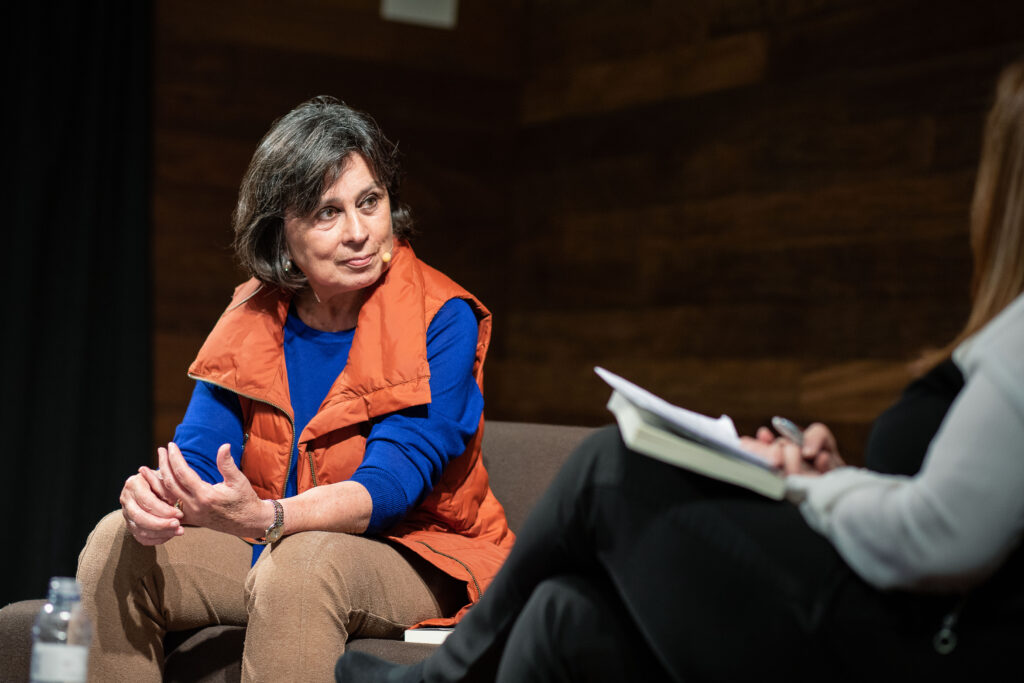
Author Laura Restrepo via Wikimedia Commons.

Colombia’s former Culture Minister, Juan David Correa, shared Restrepo’s letter on X, expressing his solidarity with those who withdrew from the festival. “And for all those who believe that one thing is freedom of expression, and another is inviting the denial of national sovereignty,” he wrote.

Restrepo’s boycott was soon joined by poet and writer Giuseppe Caputo, who made his public statement through his Instagram account:

“In the face of the serious situation of escalating imperial violence, it is better to cancel participation in a festival taking place in front of the bombarded waters of the Caribbean Sea, one that has chosen to invite someone who dedicated a peace prize to the fascist responsible for these crimes,” he wrote.

Machado, who received the 2025 Nobel Peace Prize on December 10, has expressed her support for the Trump administration and its military actions.

In a recent interview on CBS’ Face the Nation, she showed her support for U.S. interventionism in the country. “I absolutely support President Trump’s strategy,” she said in response to the oil tanker seizure and apparent economic blockade by the U.S. She added that, as Venezuelan people “are very grateful to him.”

In addition to Colombian authors, other Latin American writers have expressed their discontent with Machado’s attendance. Dominican activist Mikaelah Drullard and Bolivian psychologist María Galindo have also declined to attend the festival. 

In response, the Hay Festival issued an official statement asserting that, as a non-profit foundation, it provides spaces for reflection and plural conversation, reflected in the “voices coming from different backgrounds, traditions, and positions,” featured in its programming.

“We reaffirm our conviction that open, plural, and constructive dialogue remains an essential tool for addressing complex realities,” the statement read.

The organization also stated that the festival does not align with or endorse the opinions, political positions, or statements of its invited guests.

“We respect the decision of those who have chosen not to take part in this edition, because we understand culture and thought as territories where dissent, critical reflection, and respectful listening are fundamental to citizenship.”

The Hay Festival began in Hay-on-Wye, Wales, United Kingdom in 1987 and has expanded to global editions in Colombia, Mexico, Peru, Spain and the U.S. The festival focuses on literature, music, journalism, current affairs, philosophy, film, theater, and related fields. Its website says the festival “celebrates and inspires different opinions, perspectives, and points of view.”
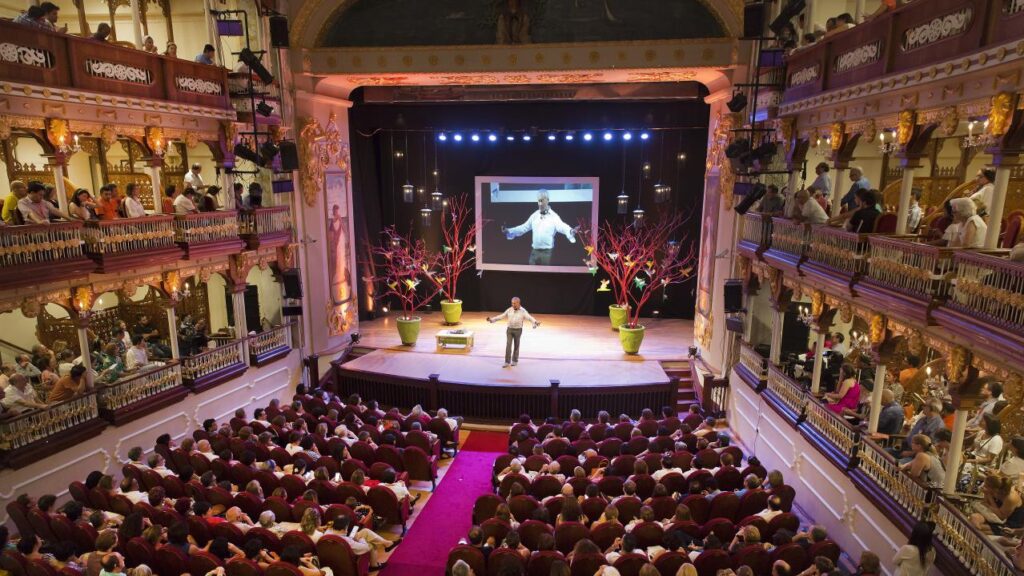
Image credit: Hay Festival Colombia.

The post Authors boycott Cartagena literature festival in protest of María Corina Machado’s attendance  appeared first on The Bogotá Post.
  •  

Petro said Colombian state complicit in 1928 ‘Banana Massacre’ at commemoration event

Gustavo Petro speaking in Ciénaga, Colombia to commemorate the 1928 “Banana Massacre”. Image credit: Cristina Durado Suaza

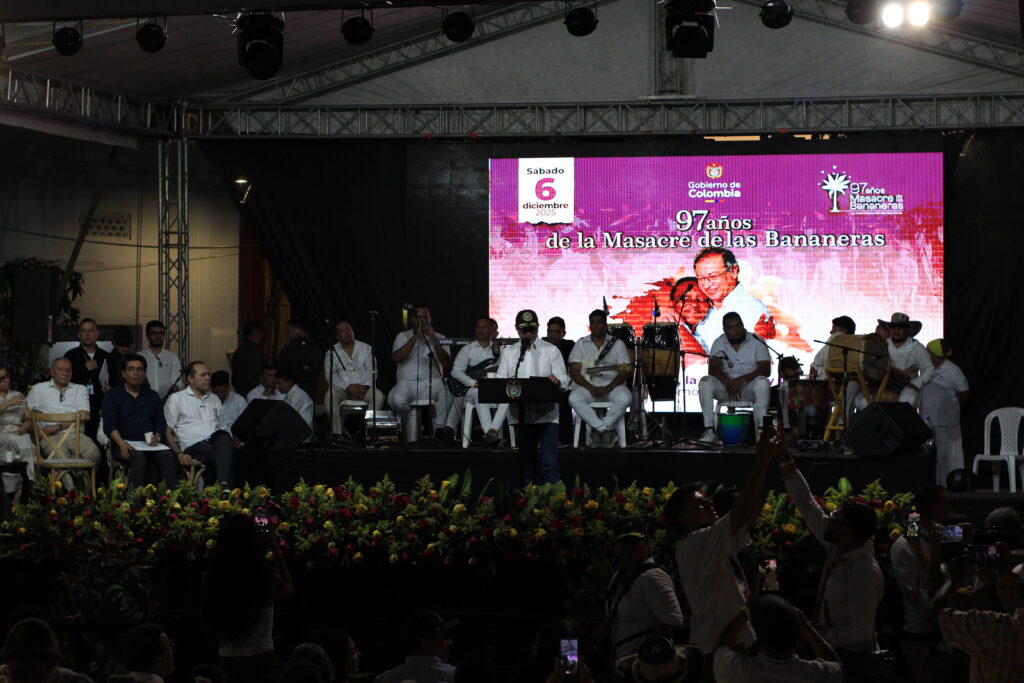
On December 6, during a speech to commemorate the 1928 “Banana Massacre,” President Gustavo Petro recognized Colombian state complicity in the massacre, which has become a milestone of the labor rights movement in the country. 

“The president at the time [Miguel Abadía Méndez] ordered General [Carlos] Cortés Vargas to fire upon the bodies of thousands of unarmed people. The United States ambassador at the time [Jefferson Caffery] stated in a cable that at least one thousand people were killed (…) History was unable to determine the exact number,” said Petro.  

On December 5 and 6, 1928, workers on the United Fruit Company banana plantation in the Caribbean coastal town of Ciénaga were striking poor conditions when Colombia’s national army – in collusion with the U.S. fruit company – killed workers in an attempt to quell the strike.

“I have the honor to report that the Bogotá representative of the United Fruit Company told me yesterday that the total number of strikers killed by the Colombian military exceeded 1,000,” wrote then-U.S. Ambassador to Colombia Jefferson Caffery. United Fruit Company is known today as Chiquita Brands International. 

The president also reflected on what he deemed similarities between U.S.-Colombia relations 97 years ago and today. 

“It seems that much of what happened then is happening today,” said Petro. “There was a threat of invasion of Colombia by the United States. They threatened that if the national government at that time, led by the conservative Miguel Abadía Méndez, supported the banana workers, there would be an invasion.” 

He went on to mention that it “seems that things are similar today” with the threat of a U.S. invasion “within our own country, if the president doesn’t say or do what they want.” 

In addition to calling Petro a drug trafficker and sanctioning him, the Trump administration has killed at least 95 people – some of them Colombian – in boat strikes off the Pacific and Caribbean coasts, and has even threatened to strike drug installations within Colombian territory. 

Remembering the Banana Massacre, nearly 100 years on 

This year’s remembrance event featured a pop-up museum about the massacre; floral offerings for victims; and a lot of music, including a performance of “Las Bananeras” by Leo Infante.

Discussion and community forums were also organized by the Ministry of Labor, the Escuela Nacional Sindical (National Union School), and the CONARE, which is the committee created to represent the union movement in the collective reparation process as a victimized group in the Colombian armed conflict.

The Bogotá Post sat in on some of the sessions where participants discussed memory, lived experiences, reparations, and violence.

On the main stage, President Petro and members of his cabinet listened to various speakers, including Mildreth Maldonado Pava, representing the descendants of victims and survivors of the massacre. Her grandfather was a survivor.

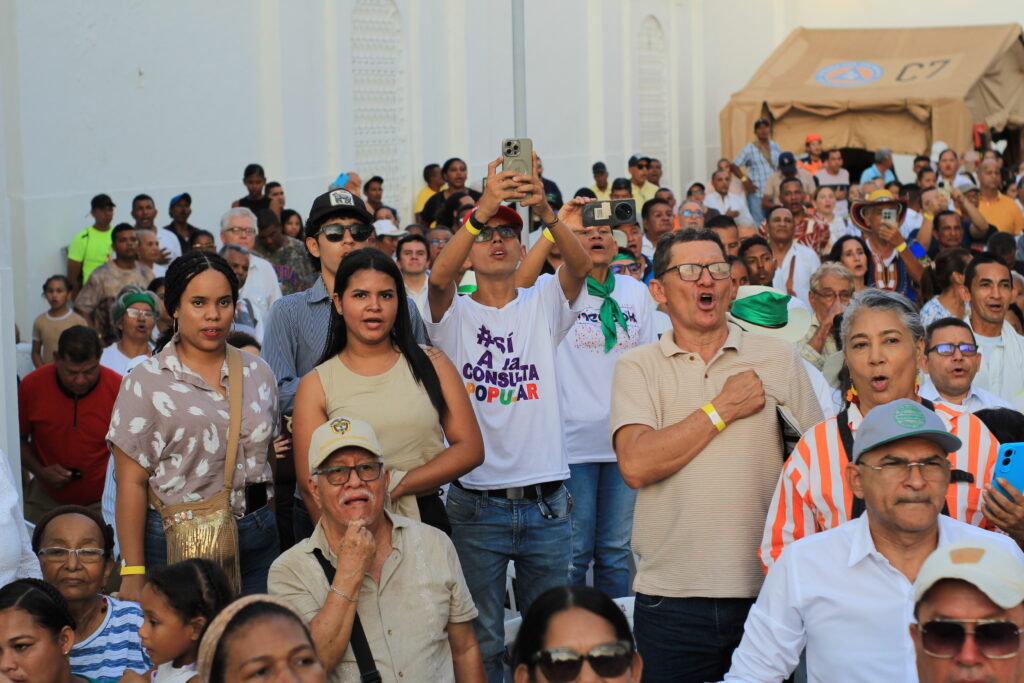
Colombians gathered in Ciénaga to commemorate the 97th anniversary of the “Banana Massacre”. Image credit: Cristina Dorado Suaza.

“It is difficult, but not impossible, to know the truth,” said Maldonado. “I am here fulfilling a dream that has been waiting for nearly 100 years – a dream that hurts, but that has patiently endured amid so many other pains.”

When it was his turn to address the crowd, President Petro called on security forces to respect the Constitution and human dignity.

“The public armed forces of any country in the world obey their president only as long as the Constitution is respected; but when an order from a president – whoever that president may be, anywhere in the world – goes against the Constitution of their own country or goes against the Constitution of humanity itself … no member of the military should obey such orders.”

Over Dorado Cardona, general secretary of The Central Union of Workers (CUT) and a spokesperson for the union and workers movement, highlighted the importance of reparation of the union movement as a collective victim as a key commitment for the current government.

“We, as the union movement, say, ‘we only die when we are forgotten,’” Dorado bellowed.

Towards collective reparation

Colombia remains one of the most dangerous countries in the world for labor activists. There have been 15,481 registered acts of violence against Colombian trade unionists between 1970 and 2021, according to Sinderh, a database from Colombia’s National Union School.

Strikingly, 63% of all trade unionist murders worldwide between 1971 and 2023 occurred in Colombia, according to the Ministry of Labor with figures provided by the International Labor Organization (ILO).

In Colombia, Collective Reparation processes – distinct from reparations to individual victims of the internal conflict – constitute a comprehensive route to remedy the harms suffered by groups affected by the armed conflict. 

Many in the country argue that given all the anti-unionist violence suffered, there remains an outstanding debt to the union movement as a whole. Petro’s Government was the first to recognize the movement as a subject of Collective reparation in 2023. 

“The union movement has been deeply harmed,” Nadiezhda Natazha Henríquez Chacín, a magistrate for the Special Jurisdiction for Peace (JEP), Colombia’s transitional justice mechanism, told The Bogota Post

“These years of war have almost completely destroyed it down to its foundations (…) Union struggles have won labor rights, yet the movement has been persecuted and stigmatized,” the Ciénaga-born judge added.

For the union movement, the difficulties with the entities arising in the collective reparation process contradict the significant effort the government has made through its social reforms.

“It is not understood that the reparation of the union movement must go beyond administrative measures (…) The essential Collective Reparation Plan must be guaranteed as a public policy that extends beyond any single Government and becomes a State policy,” Dorado Cardona, the union leader, stated.

“It is necessary to rebuild, to transform; this work of memory is essential, but it is also a form of transformative reparation,” the magistrate remarked.

The post Petro said Colombian state complicit in 1928 ‘Banana Massacre’ at commemoration event appeared first on The Bogotá Post.

  •  
❌