
❌

Reading view

PSA: Apple's Podcasts App Could Be Enabling Malicious Content Delivery

Security researchers have identified suspicious activity in Apple's Podcasts app that could be used to deliver malicious content to users, based on a report by 404Media's Joseph Cox.

Cox's report describes some odd experiences with the Podcasts app that certainly suggest something untoward is going on across both iOS and macOS versions. He says that over recent months, the app has automatically launched and displayed unusual podcasts without his input. On Mac and iPhone, the app has opened religion, spirituality, and education podcasts for no apparent reason, in some cases even launching themselves the moment Cox unlocked his device.

The podcasts in question often feature strange titles containing code fragments, URLs, and in some cases, attempts at cross-site scripting attacks.

Objective-See security expert Patrick Wardle told Cox he was able to replicate similar behavior, but in his case via a website. "Simply visiting a website is enough to trigger Podcasts to open (and load a podcast of the attacker's choosing), and unlike other external app launches on macOS, no prompt or user approval is required," Wardle told 404 Media.

One particularly concerning podcast apparently includes a link that redirects to a site attempting an XSS attack – a technique in which attackers inject malicious code into otherwise legitimate-looking websites. When visited, the site displays a pop-up acknowledging the XSS attempt.

Wardle notes that while this behavior isn't immediately dangerous on its own, it creates an effective delivery mechanism if vulnerabilities do exist within the Podcasts app. "The level of probing shows that adversaries are actively evaluating the Podcasts app as a potential target," he said.

The situation bears similarities to reports of Google Calendar spam from several years ago, where bad actors would add unsolicited events containing links or promotional content to users' calendars.

Apple did not respond to Cox's multiple requests for comment about the issue. Has the Podcasts app exhibited similar unusual behaviour in your experience? Let us know in the comments.
This article, "PSA: Apple's Podcasts App Could Be Enabling Malicious Content Delivery" first appeared on MacRumors.com

Discuss this article in our forums

  •  

Apple TV Pulls 'The Hunt' Show Over Plagiarism Claims

Apple TV has pulled its upcoming French thriller series "The Hunt" just days before its scheduled December 3 debut, after allegations emerged that the show plagiarized a 1973 novel and its film adaptation.


Production company Gaumont confirmed the postponement in a statement, saying it is "conducting a thorough review to address any questions related to our production." The company added that it takes "intellectual property matters very seriously."

Creator and director CΓ©dric Anger is accused of copying the plot from late author Douglas Fairbairn's novel "Shoot" and the 1976 film of the same name. French media journalist ClΓ©ment Garin was first to make the allegations, according to Variety.

The similarities between the two stories look fairly substantial. Both narratives follow a group of hunters who encounter rival hunters in the wilderness, leading to violent consequences. In each story, one hunter is shot and the attacker is killed in retaliation. The survivors then return home while keeping the incident secret, but they soon grow paranoid about the potential for revenge.

"The Hunt" was set to premiere with two episodes on December 3, followed by weekly releases through December 31, but Apple has since removed all promotional materials for the series from its website. Apple has yet to comment on the controversy.

It's the second time this year Apple TV has pulled a completed series at the last minute. Jessica Chastain's "The Savant" was postponed days before its September premiere and still has no release date.
This article, "Apple TV Pulls 'The Hunt' Show Over Plagiarism Claims" first appeared on MacRumors.com

Discuss this article in our forums
  •  

Orion Browser Brings WebKit Speed and Privacy Focus to Mac Users

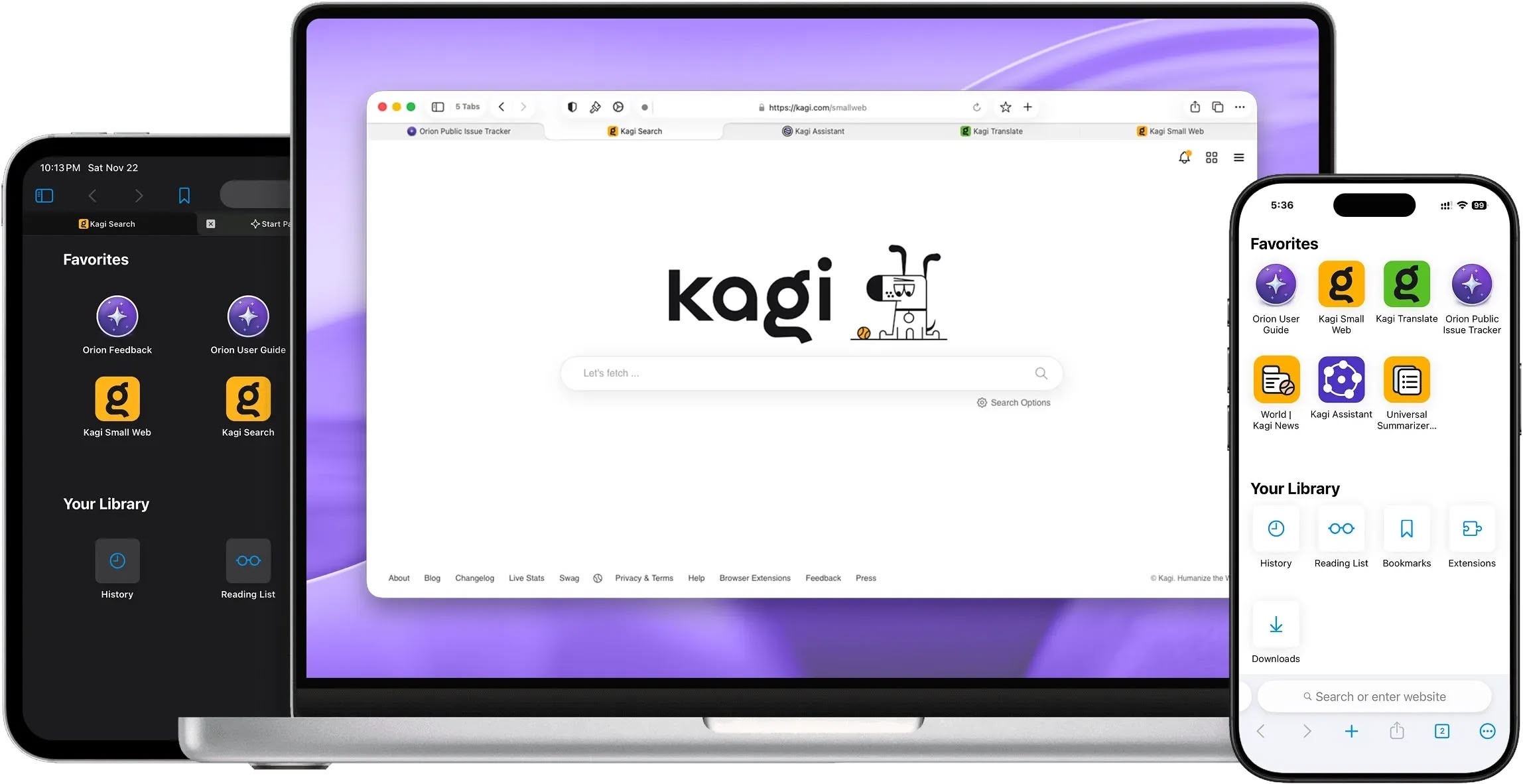
Kagi, best known for its telemetry-free search engine, has released version 1.0 of Orion, its privacy-focused browser for Mac. After a long beta period, the WebKit-based browser is aimed at users who want Safari's speed without the data collection that comes with most other options.


For users who want an alternative to Chromium browsers like Chrome, Edge, and Brave, without sacrificing speed or extension support, Orion could be worth a look. Moreover, unlike some recent browser launches, there's no integration of AI features, and Kagi says it collects no telemetry or usage data of any kind.

For a browser claiming zero-bloat, there are some notable features, too. Focus Mode strips away the browser interface to turn any website into a distraction-free app, while Link Preview lets you peek at links from mail or notes without actually opening a new tab. You can set up separate profiles that keep work, personal browsing, and everything else completely isolated. Not only that, the browser also works with Chrome and Firefox extensions.

Orion is free to download and use, and also comes with 200 free searches on Kagi's premium search engine, while an optional Orion Plus subscription at $5 per month unlocks floating windows that stay on top of other apps, custom icons, and offers early access to new features.

Kagi's six-person team developed Orion over five years (the first two years handled by a single developer). The company plans to expand documentation and add new features over the coming year. You can grab it over on the Orion website, while iPhone and iPad versions can be downloaded from the App Store.
Tag: WebKit

This article, "Orion Browser Brings WebKit Speed and Privacy Focus to Mac Users" first appeared on MacRumors.com

Discuss this article in our forums
  •  

iPhone Air Flop Sparks Industry Retreat From Ultra-Thin Phones

Apple's disappointing iPhone Air sales are causing major Chinese mobile vendors to scrap or freeze their own ultra-thin phone projects, according to reports coming out of Asia.


Since the β€ŒiPhone Airβ€Œ launched in September, there have been reports of poor sales and manufacturing cuts, while Apple's supply chain has scaled back shipments and production.

Apple supplier Foxconn has reportedly dismantled all of its production lines for the β€ŒiPhone Airβ€Œ, while Luxshare, another supplier, stopped production at the end of October.

As a result of the device's poor reception among consumers, rival smartphone manufacturers including Xiaomi, Oppo, Vivo, and others have either canned or adjusted their development plans for Air-style models, and reallocated eSIM solutions intended for the devices to other production lines.

Xiaomi reportedly planned a "true Air model" to rival Apple's offering, while Vivo targeted thinness within its mid-range S series. Both companies are now said to have halted related projects but have yet to officially comment.

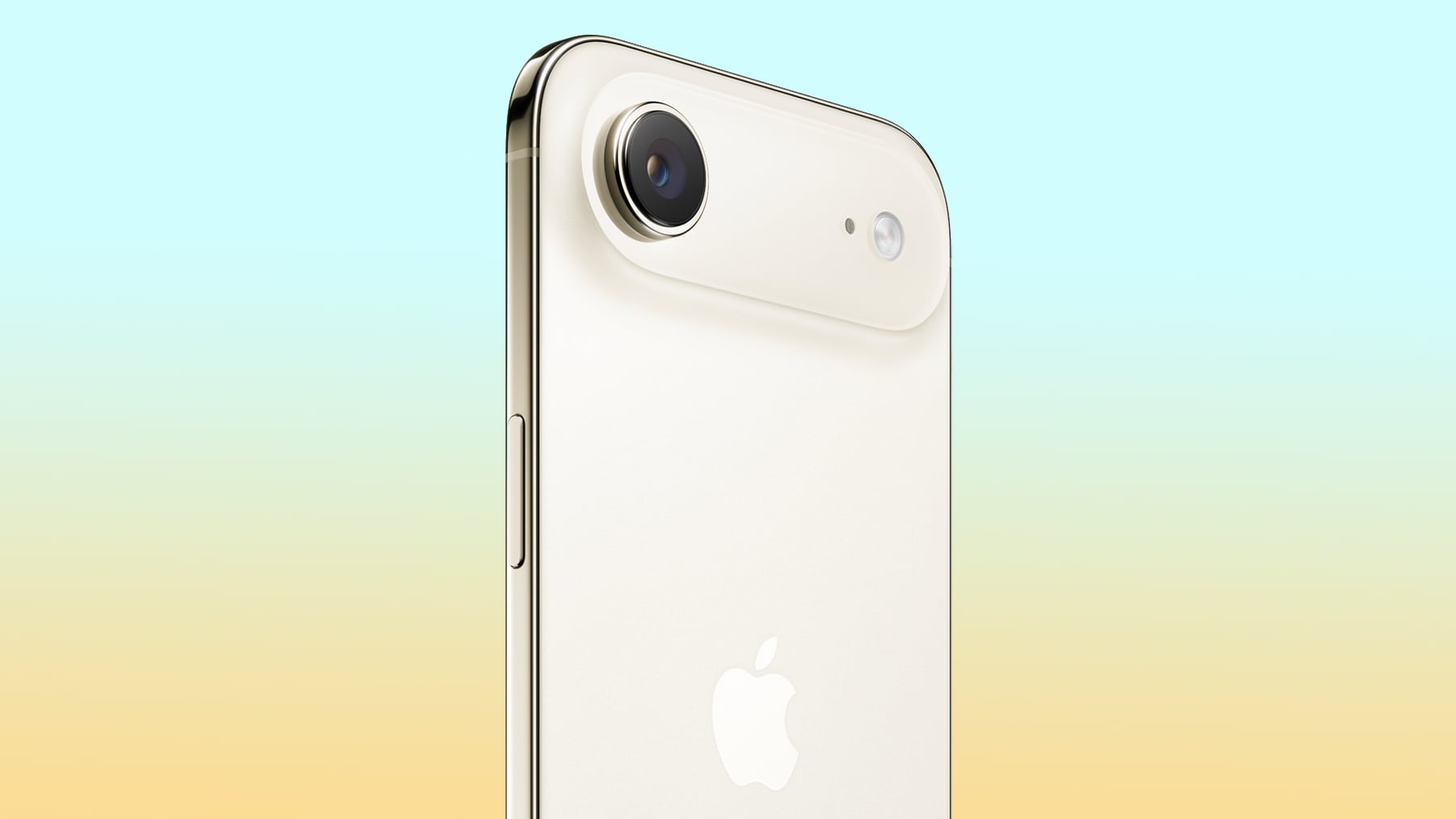
Apple relied on the iPhone Air's new look to generate excitement – it's the first major redesign of the iPhone since the iPhone X introduced Face ID and an all-display front in 2017. However, achieving a super-thin 5.6 mm profile required trade-offs. The iPhone Air uses a smaller battery and a single rear camera, yet still carries a premium price.

Starting at $999, it seems too expensive for what many buyers view as style over substance. It sits only $100 below the $1,099 iPhone 17 Pro, which offers a triple-lens camera system and far better battery life.

The tepid consumer response is also said to have forced Apple back to the drawing board: a report from The Information claims Apple has delayed the second-generation iPhone Air while it redesigns the device to potentially fit in a second camera and improve battery life.

Apparently it's been a similar story for Samsung's Galaxy S25 Edge, the Korean company's equivalent ultra-thin offering. Samsung has reportedly cancelled the Galaxy S26 Edge and halted the production of the Galaxy S25 Edge, owing to poor sales.

(Via DigiTimes.)
This article, "iPhone Air Flop Sparks Industry Retreat From Ultra-Thin Phones" first appeared on MacRumors.com

Discuss this article in our forums
  •  

New Spotify Feature Lets You Transfer Playlists From Other Services

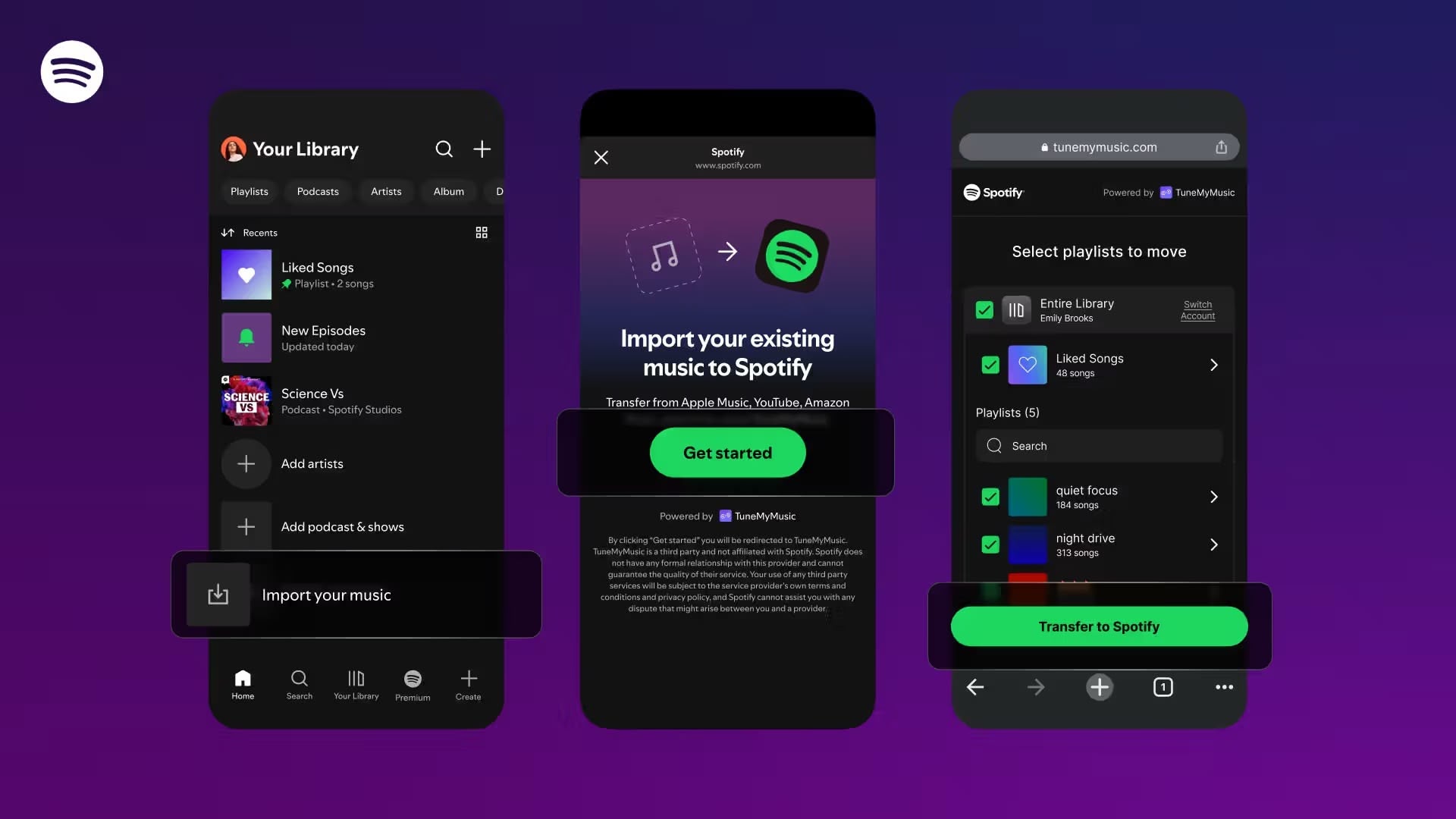
In case you missed it: Spotify has been rolling out a new built-in playlist-transfer feature for its mobile app, so now you can import playlists from other streaming services directly, without the need for third-party tools.


Announced by the company a week ago, the feature is powered by TuneMyMusic, and it supports all the major services including Apple Music, Amazon Music, SoundCloud, TIDAL, Pandora, and Deezer. Spotify said the tool would roll out to all users "over the coming days."

You should be able to find the new tool in the "Your Library" section of the Spotify app – swipe to the bottom of the list, then tap on the new option to "Import your music" and follow the prompts to connect with the service.

You can then choose the platform you'd like to transfer playlists from. Missing tracks can still happen when services' catalogs don't align, but for most users the process now takes only a few taps.

The rollout removes one of the biggest barriers to switching platforms. Until now, users had to rebuild playlists manually or rely on third-party apps to do so. It's a nice bonus too, since the online version of TuneMyMusic only lets you transfer 500 tracks for free – unlimited transfers require a paid plan.

Apple Music rolled out its own transfer tool globally in September, allowing users to import their playlists and libraries from competing services.
Tag: Spotify

This article, "New Spotify Feature Lets You Transfer Playlists From Other Services" first appeared on MacRumors.com

Discuss this article in our forums

  •  

Apple's Founding Papers Return to Auction, Could Fetch Up to $4 Million

Christie's is preparing to auction off the original partnership contract that created the Apple Computer Company on April 1, 1976, valuing it in the region of $2-4 million.


The original three-page document served as the contract among Steve Jobs, Steve Wozniak, and Ron Wayne. The agreement established initial shares at 45% for Jobs, 45% for Wozniak, and 10% for Wayne.

Additional papers documenting Wayne's withdrawal as a partner just 12 days after the company was formed are also included in the auction package. Wayne initially received $800 for his 10% share of the company, and later received an additional $1,500 payment.

Wayne later stated he withdrew because he knew the venture would be a "roller coaster" and that the high-stakes ride was not for him.

If Wayne's original 10% stake had somehow remained untouched, it would be worth about $409 billion today based on Apple's $4 trillion valuation. That's only a playful comparison, mind, since decades of stock splits, new share issuances, and structural changes mean that early 10% slice has no realistic connection to Apple's modern share count!

Christie's will offer the founding contract and Wayne's withdrawal agreement as a single lot on January 23, 2026.


In the early 1990s, Wayne sold the physical copy of the founding contract for $500. Apple's founding corporate papers were last sold at auction by Sotheby's in December 2011. That lot also included Wayne's withdrawal, and it was sold to a private collector for nearly $1.6 million.

(Via Arirang TV.)
This article, "Apple's Founding Papers Return to Auction, Could Fetch Up to $4 Million" first appeared on MacRumors.com

Discuss this article in our forums

  •  

ChatGPT Voice Mode Now Works Inside Your Existing Conversation

OpenAI has updated the voice feature in its ChatGPT app so that voice conversations now happen directly inside an ongoing chat instead of forcing users into a separate voice-only session.


The change means responses now appear in real-time with text – plus any visuals like images and maps – as you speak, making switching between voice and text smoother while preserving chat history and context.

Previously, when you used "Advanced Voice Mode," voice chats opened in their own window, which would exit your current conversation and knock you out of your workflow. The update means voice and text interactions are now integrated in one seamless conversation thread.

Users who prefer the old separate voice mode, characterized by the floating orb, can easily revert back to it via Settings ➝ Voice Mode ➝ Separate mode. The option is available on both ChatGPT for web and mobile apps updated to the latest version.

You can now use ChatGPT Voice right inside chatβ€”no separate mode needed.

You can talk, watch answers appear, review earlier messages, and see visuals like images or maps in real time.

Rolling out to all users on mobile and web. Just update your app. pic.twitter.com/emXjNpn45w

β€” OpenAI (@OpenAI) November 25, 2025

The update is part of a batch of recent improvements to ChatGPT including group chats, the rollout of OpenAI's new GPT-5.1 model, and a shopping research feature for holiday gift finding.
Tag: ChatGPT

This article, "ChatGPT Voice Mode Now Works Inside Your Existing Conversation" first appeared on MacRumors.com

Discuss this article in our forums

  •  
❌