
Reading view

Apple Turns Off Payments in Russia

As of April 1, payment processing is no longer available for purchases made across the App Store and other Apple services in Russia, according to Apple.

In a new support document, Apple said new purchases, in-app purchases, and subscription renewals are no longer available in Russia unless a user already has funds in their Apple Account balance, which can continue to be used.

This change affects the following services and items:

  • Apple Arcade

  • Apple Fitness+

  • Apple Music

  • Apple Podcasts subscriptions

  • Apple One

  • App Store purchases and subscriptions

  • Apple TV purchases and subscriptions

  • iTunes Store purchases

  • iCloud+

  • Ringtone & Tone purchases
Apple said apps and content that users previously bought will remain available, and it ensured that iCloud data will remain accessible after an iCloud+ subscription ends. More details are available in Apple's support document.

Apple reportedly took this action in response to an order from the Russian government, which allegedly hopes that the lost services revenue from Russian users will pressure the company to add some popular Russian apps back to the App Store, after those apps were removed due to sanctions arising from Russia's war with Ukraine. The order would presumably end if Apple were to make those apps available again.
This article, "Apple Turns Off Payments in Russia" first appeared on MacRumors.com

Discuss this article in our forums
  •  

Apple Made Nearly $900 Million From Generative AI Apps Last Year

Apple collected nearly $900 million in App Store fees from generative AI apps in 2025, according to data from analysis firm AppMagic, covered by The Wall Street Journal ($).


The overwhelming majority of Apple's AI app commission revenue came courtesy of ChatGPT downloads leading to subsequent subscriptions, which alone accounted for around 75 percent of the above total. Elon Musk's Grok app came a distant second, making up just 5 percent of the revenue.

Apple is now said to be on course to earn $1 billion in generative app revenue this year. Given how behind the company is in the AI race, highlighted by the sluggish progress of its enhanced Siri rollout, it's a tidy sum indeed.

Of course, the reason Apple benefits from the popularity of AI apps built by other companies is that the iPhone remains the smartphone market leader. Most AI apps still have to go through its App Store, where Apple takes a commission of up to 30 percent on subscriptions. As the report notes:

"Its Siri chatbot is still weak by modern AI standards. What Apple does have that the other AI players don't is a dominant position making devices. However fancy OpenAI, Google, Anthropic and xAI make their chatbots, iPhones are still a primary way to deliver them to consumers."
The revenue stands in contrast to Apple's relatively modest AI spending compared to rivals like Microsoft, Amazon, and Meta, all of whom have poured tens of billions into AI infrastructure, with little to no profit yet to show for it. Meanwhile, Apple's capital expenditures have remained comparatively flat, thanks to its prioritization of investment in on-device AI over large data centers filled with GPU processors.

The strategy won't enable a more capable Siri, but Apple appears to be happy to lean on Google to provide the necessary AI infrastructure for that. The two companies announced in January that Gemini will power a revamped version of Apple's virtual assistant, coming later this year. The financial terms of the partnership haven't been disclosed, but Bloomberg reported last year that the deal would be around $1 billion annually. That will give Apple access to a 1.2 trillion parameter model that dwarfs its in-house capabilities.

Perhaps the deeper irony is that Google already pays Apple around $20 billion per year to remain the default search engine on iPhones, so now money is flowing in the other direction too, albeit at a drastically lower rate.

Still, some investors see the App Store approach as a more viable long-term strategy. Charles Rinehart, chief investment officer of Johnson Asset Management, told WSJ that if Apple "can act as a toll road for providers of AI, then they'll probably end up looking good long-term."
This article, "Apple Made Nearly $900 Million From Generative AI Apps Last Year" first appeared on MacRumors.com

Discuss this article in our forums
  •  

Apple Now Blocks 18+ App Downloads in Australia, Brazil, and Singapore Without Age Assurance

Apple today provided an update on its age assurance tools for developers in Brazil, Australia, Singapore, Utah, and Louisiana. Developers in these areas will face new age assurance and parental consent obligations, and Apple's APIs will help them meet these upcoming requirements.


As of February 24, Apple is blocking users in Australia, Brazil, and Singapore from downloading apps rated 18+ unless they have been confirmed to be adults through an App Store age confirmation process that uses "reasonable methods." Age confirmation is done automatically through the ‌App Store‌, but developers may also need to independently confirm their users are adults with the Declared Age Range API.

In Brazil, apps that have loot boxes will have their age rating adjusted to 18+ in the Brazilian storefront, as Brazil's new age-related app store laws prevent apps from offering loot boxes to children. Developers can see a user's age group when the user or user's parent opts to share it, with Apple including a new signal about the method of age assurance.

In Utah and Louisiana, there are upcoming regulations that require developers to establish a user's age with the Declared Age Range API to restrict children from downloading apps that are not age appropriate. Apple has updated the API to help developers determine whether age-related regulatory requirements apply to a user, and whether the user is required to share age range. There's also a new notice if an app is required to get a parent or guardian's permission for significant app updates for an app downloaded by a child.

In some cases, developers are required to inform parents when apps receive a major update with new functionality, and the parents have to provide permission for the child to use the app, even if permission was previously granted.

Utah's ‌App Store‌ Accountability Act requirement starts on May 6, 2026, while Louisiana's House Bill 570 begins on July 1, 2026, and both laws are applicable only to new Apple Accounts.

Several countries and U.S. states have started implementing strict child protection laws, some of which require app store operators like Apple to confirm user age and obtain parental consent before minors are allowed to download apps.

Developers can face fines for not complying with age assurance requirements. In Utah, for example, parents can recover damages of up to $1,000 per violation, while Louisiana can fine developers up to $10,000 per violation after a 45-day grace period.

Apple could also be fined millions of dollars for non-compliance in Brazil, Australia, and Singapore, where there are now platform-level requirements.

Apple fought against platform-level legislation because of the privacy issues raised by the age verification process. Apple does not want to verify age through methods like ID submission due to data collection concerns, and the company also does not want to share age information from every user with developers.
This article, "Apple Now Blocks 18+ App Downloads in Australia, Brazil, and Singapore Without Age Assurance" first appeared on MacRumors.com

Discuss this article in our forums
  •  

Apple to Show More Ads in App Store Starting in March

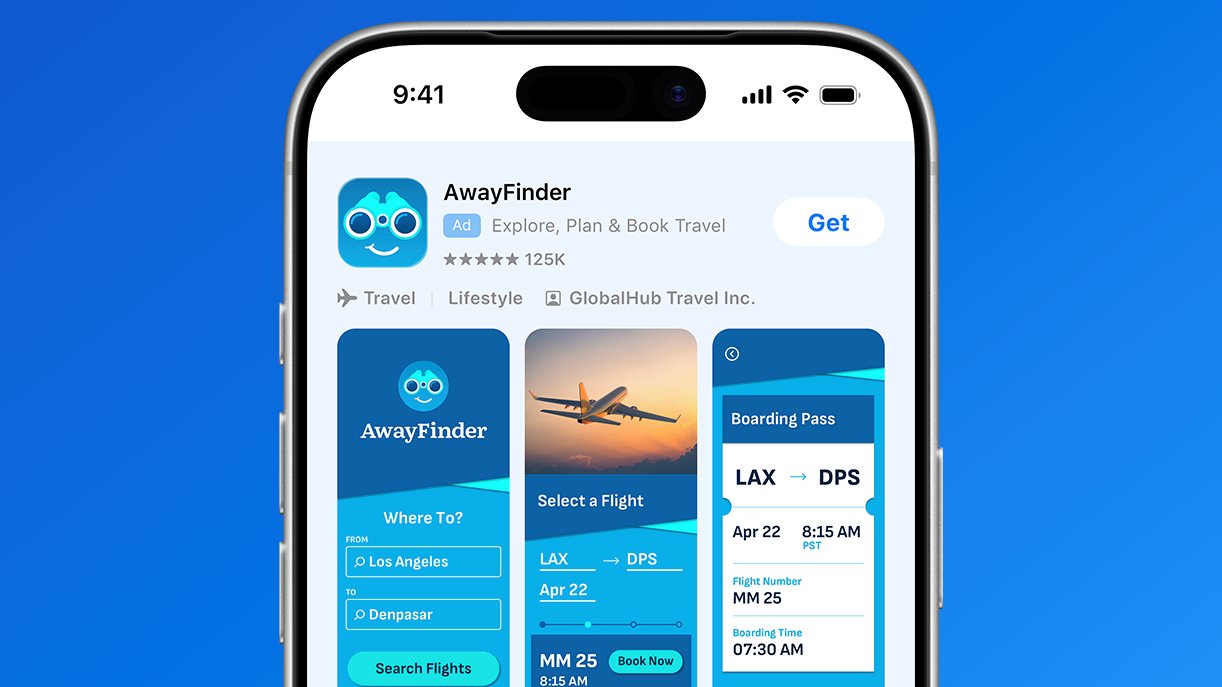
In an email to developers this week, Apple indicated that it will begin showing additional ads in App Store search results starting Tuesday, March 3.


The extra ads will first appear in the App Store in the U.K. and Japan, followed by other markets like the U.S. by the end of March, according to Apple.

Apple first announced that it would be expanding the number of ad slots in the App Store search results last month, but it had not provided an exact date for the change until now. Currently, developers can only pay to have an app appear in a single slot at the top of the search results, but Apple said there will now be multiple slots further down.

Apple shared more details on its website:
Search is the way most people find and download apps on the App Store, with nearly 65 percent of downloads happening directly after a search. To help give advertisers more opportunities to drive downloads from search results, Apple Ads will introduce additional ads across search queries. The additional ads will roll out in phases, appearing across all markets by the end of March. You don't need to change your campaign in order to be eligible for any new positions. Your ad will run in either the existing position — at the top of search results — or further down in search results. If you have a search results campaign running, your ad will be automatically eligible for all available positions, but you can't select or bid for a particular one.
Additional ads equals additional services revenue for Apple.

The extra ad slots will be visible on iPhone and iPad devices running iOS 26.2 or iPadOS 26.2 and later. Apps with paid placement have an "Ad" label.

Ads are also shown in the App Store's "Today" tab, in a "You Might Also Like" section at the bottom of individual app listings, and in the search tab's "Suggested" section. Apple rebranded its "Search Ads" business as "Apple Ads" last year, as it reportedly prepares to begin showing ads in more places, such as Apple Maps.
This article, "Apple to Show More Ads in App Store Starting in March" first appeared on MacRumors.com

Discuss this article in our forums
  •  

App Store Search Results to Show More Ads Next Year, Says Apple

Apple will next year introduce more ads in the App Store "to increase opportunity" in search results, the company has announced.


According to an update to Apple's Ads website, additional ads will appear across search queries, appearing at the top as well as further down in App Store results, and existing campaigns won't need to do anything to be eligible.
Search is the way most people find and download apps on the App Store, with nearly 65 percent of downloads happening directly after a search. To help give advertisers more opportunities to drive downloads from search results, Apple Ads will introduce additional ads across search queries. You don't need to change your campaign in order to be eligible for any new positions. Your ad will run in either the existing position — at the top of search results — or further down in search results. If you have a search results campaign running, your ad will be automatically eligible for all available positions, but you can't select or bid for a particular one.
Apple explains that the ad format will remain the same – a default or custom product page, and an optional deep link. Advertisers and developers won't see a change in their billing, which will remain based on Apple's cost-per-tap model, so developers only pay when a user taps on an ad. Apple displays ads based on a combination of bid amount and an app's relevance to the search query, with ad matching done automatically.

The new App Store ads will appear on devices running iOS 26.2 and later from the beginning of 2026. For further details, check out Apple's Ads website.

(Via 9to5Mac.)
This article, "App Store Search Results to Show More Ads Next Year, Says Apple" first appeared on MacRumors.com

Discuss this article in our forums
  •  

How Apple is Helping Apps Comply With Australia's Social Media Ban for Kids

Australia's new social media law goes into effect on December 10, 2025, and ahead of that date, Apple is sharing information on developer tools that are designed to help social media apps adhere to the law.


Children under the age of 16 will no longer be allowed to use Facebook, TikTok, Instagram, Reddit, YouTube (except for YouTube Kids), Snapchat, X, Twitch, Threads, and Kick in Australia, and those apps have to take "reasonable steps" to remove underage users from their platforms starting Wednesday. Apps will also need to prevent new signups from users under the age of 16, and there is a one-year transition period before penalties will begin.

To assist developers, Apple provides the Declared Age Range API, which gives developers access to the age range of users. Other tools available include an option for an age suitability URL that provides more information on the app and its age-related content, app description pages that indicate age restrictions, and tools for setting higher minimum age ranges.

Platforms that don't deactivate accounts created by children will face serious fines. Australia may also add more apps to its banned list over time, depending on the apps that kids adopt after not being able to access their current favorites.

Australia is the first country to implement a total social media ban for children.

More information is available on Apple's developer website.
This article, "How Apple is Helping Apps Comply With Australia's Social Media Ban for Kids" first appeared on MacRumors.com

Discuss this article in our forums
  •  

Apple Names 2025 App Store Awards Finalists Across iPhone, iPad, Mac, and More

Apple today shared its 2025 App Store award finalists, recognizing 45 standout apps and games selected by the App Store editorial team.


"We're thrilled to celebrate the App Store Award finalists, a diverse and talented group of developers from around the globe," said Carson Oliver, Apple's head of App Store Worldwide. "Their commitment to excellence is an inspiration, resulting in experiences that empowered users to tap into their creativity, achieve more through technical innovations, and discover new adventures through the world of gameplay."

Apple selected top games and apps for each of its platforms, along with the best Apple Arcade titles. There's also a category recognizing apps that had a cultural impact by fostering greater understanding and giving users more ways to interact with their communities. Finalists are listed below.

iPhone App of the Year


iPhone Game of the Year


iPad App of the Year


iPad Game of the Year


Mac App of the Year


Mac Game of the Year


Apple Arcade Game of the Year


Apple Vision Pro App of the Year


Apple Vision Pro Game of the Year


Apple Watch App of the Year


Apple TV App of the Year


Cultural Impact Finalists


The winner in each category will be announced in the coming weeks. More information about each app can be found on Apple's website.
This article, "Apple Names 2025 App Store Awards Finalists Across iPhone, iPad, Mac, and More" first appeared on MacRumors.com

Discuss this article in our forums
  •  

Apple Calls Out EU for Contradictory App Store Rules Under DSA and DMA

Apple recently sent a letter to the European Commission (EC), criticizing recent inquiries into whether the App Store complies with the Digital Services Act (DSA) amid the separate Digital Markets Act requirements that Apple has been required to put in place.


The Commission asked Apple for information on how it locates fraudulent content, what it does to reduce the risk of financial scams in apps, and how it verifies the identity of businesses. It separately requested details on the policies Apple has in place to protect minors. Both requests were part of an inquiry into whether companies are complying with Digital Services Act requirements.

Apple's response, penned by Apple VP of Legal Kyle Andeer, answers all of the EC's questions and includes the relevant information to satisfy the request, but also points out the hypocrisy of questioning ‌App Store‌ consumer protections while requiring Apple to support sideloading functionality that isn't subject to those protections.

Andeer says that it is "difficult to square" the DSA investigations with the EC's "aggressive interpretation and application of the Digital Markets Act," and that the probe into Apple's ‌App Store‌ safeguards "defies all logic" in light of the DMA requirements. He also argues that the European Commission needs to enforce the DSA and DMA as a whole, rather than as separate policies.
It does not make sense for the Commission to press Apple to protect users, including minors, from fraud within the App Store while at the same time requiring Apple to create functionalities like link-outs and web views that increase the risk of fraud without necessary safeguards.

The Commission cannot both prohibit Apple from taking the steps it has found essential in mitigating the risk of scams and fraud on the App Store while simultaneously scrutinizing Apple for not providing even more measures to mitigate these risks on the App Store. It does not make sense for one EU law to encourage Apple to mitigate as much as possible the risk of exposing consumers to fraud or minors to potentially harmful apps through the App Store, only for another EU law to prevent Apple from using those same measures to mitigate the same type of risks just because they exist outside of the App Store. This paradoxical situation creates a regulatory structure that endorses leaving iOS and iPadOS users at risk if they choose not to use the App Store, when developers choose to use link-outs, or when users opt to use third-party products to interoperate with iOS or iPadOS. [...]

If the Commission does not consistently prioritise protecting consumers from online harms like fraud, or minors from online harms like pornography or other unsafe apps, in all enforcement contexts, including the DMA, nor use the tools it has at its disposal to resolve these fundamental frictions, the objectives of the DSA will be underachieved, no matter how sufficient Apple's measures are to comply with this specific regulation.
For context, the Digital Services Act requires very large online platforms like Apple to offer protection against disinformation or election manipulation, cyber violence against women, and harms to minors online. It also has provisions to counter fraud and mitigate dissemination of illegal content, among other requirements.

The separate Digital Markets Act requires Apple to support alternative app marketplaces and adhere to interoperability rules that Apple has continually argued weaken privacy and security. Andeer says that the Digital Markets Act "exposes users to fraud and scams" on third-party platforms, and the EC has been warned that the DMA enforcement is "reckless and even dangerous."

Apple's App Review team removed 37,000 apps for fraudulent activity in 2024, rejected 115,000 apps for unsafe experiences, and rejected 320,000 app submissions that copied other apps, were found to be spam, or misled users in some way. Further, 139,000 developer enrollments were rejected, and 146,000 developer accounts were terminated due to fraud concerns.
This article, "Apple Calls Out EU for Contradictory App Store Rules Under DSA and DMA" first appeared on MacRumors.com

Discuss this article in our forums
  •  

Apple Loses UK Antitrust Lawsuit Over App Store Fees, Faces £1.5 Billion in Damages

Apple engaged in anticompetitive behavior by charging App Store developers "excessive and unfair prices" for app distribution services, the UK's Competition Appeal Tribunal (CAT) ruled today [PDF] (via Reuters).


The Tribunal found that Apple abused its market power by overcharging developers from October 2015 through the end of 2020. Developers were forced into using Apple's in-app purchase system and had no alternative to paying up to a 30 percent commission during that time period. The excessive fees ultimately led to higher prices for consumers.

According to the CAT, Apple had a monopoly over iOS app distribution and in-app payments. Apple's argument that Android and other platforms were viable alternatives for consumers and developers was rejected. The Tribunal also did not accept Apple's argument that its rules and fees were required for user security and privacy.

The end of 2020 in the UK's timeline corresponds with the launch of the App Store Small Business Program that saw Apple reduce ‌App Store‌ fees for independent developers and small business owners. The program reduced the commission that Apple collected from developers earning under $1 million per year to 15 percent, down from 30 percent. It's also when Apple began implementing other ‌App Store‌ changes in response to cases like Epic Games v. Apple.

The class action lawsuit was first filed in 2021 by Kings College London academic Dr. Rachael Kent, and the claim seeks up to £1.5 billion in damages. The period between 2015 and 2020 was selected in order to determine how much Apple will need to pay to UK consumers.

A damages trial is scheduled for November. Apple said it will appeal the ruling.
This article, "Apple Loses UK Antitrust Lawsuit Over App Store Fees, Faces £1.5 Billion in Damages" first appeared on MacRumors.com

Discuss this article in our forums
  •  

Apple Details App Store Changes to Comply With Texas Age Verification Law

Apple today outlined changes that it is making to the App Store for users and developers located in Texas to comply with the state's ‌App Store‌ Accountability Act (SB2420).


Starting on January 1, 2026, Apple users located in Texas will need to confirm whether they are 18 years or older when creating an Apple account. Apple Accounts for users under 18 will be required to join a Family Sharing group, and parents will need to provide consent for all ‌App Store‌ downloads, app purchases, and in-app transactions.

Developers will also need to make changes to their apps to comply with the law. To assist developers, Apple plans to update the Declared Age Range API to provide the required age categories for new account users in Texas. Apple is also creating APIs that will let developers invoke a system experience to allow the user to request that parental consent be re-obtained. Parents will also be able to revoke consent to prevent a minor from using an app.

Apple has been fighting against age assurance requirements in Texas and other states like Utah and Louisiana, because of the data collection required to determine user age. Apple says that SB2420 will force users to share personally identifiable information to download apps.
While we share the goal of strengthening kids' online safety, we are concerned that SB2420 impacts the privacy of users by requiring the collection of sensitive, personally identifiable information to download any app, even if a user simply wants to check the weather or sports scores. Apple will continue to provide parents and developers with industry-leading tools that help enhance child safety while safeguarding privacy within the constraints of the law.

Apple CEO Tim Cook reportedly contacted Texas Governor Greg Abbott to ask him to veto the legislation, but Abbott was not persuaded and he signed the act into law in May.

In an attempt to head off child protection laws that vary from state to state, Apple introduced new child safety measures at the beginning of 2025. Apple created an updated age rating system, added a simpler way for parents to set up child accounts, made changes to what kids see on the ‌App Store‌, and developed the Declared Age Range API to provide a privacy-focused way for developers to confirm the age range of app users.

Apple's Declared Age Range API prevents apps from having specific information about children, such as their date of birth. Apple has continually said that it does not want to collect information like date of birth at the ‌App Store‌ level because all users would need to hand over that information regardless of whether they want to use an age limited app.

SB2420 requires app store platforms to "use a commercially reasonable method of verification" to determine a user's age during account creation. Texas does not define what a commercially reasonable method of verification entails, and Apple hasn't specified how age verification will work.
This article, "Apple Details App Store Changes to Comply With Texas Age Verification Law" first appeared on MacRumors.com

Discuss this article in our forums

  •  

Apple Says App Store Changes Go Too Far in New Epic Games Appeal Filing

The court order that required Apple to collect no fees from developers who link to purchases outside of the App Store is unconstitutional, Apple said today in a reply brief directed at Epic Games and filed with the Ninth Circuit Court of Appeals. Apple argues that it has been stripped of its rights to be compensated for its intellectual property in a ruling that sets a dangerous precedent for all companies.


Judge Yvonne Gonzalez Rogers, who has been overseeing the Apple vs. ‌Epic Games‌ lawsuit, first ordered Apple in 2021 to let developers add in-app links directing customers to third-party purchase options on the web. Apple didn't have to implement the changes until 2024, and when it did, Apple charged a 12 to 27 percent fee for purchases made through links in an app. ‌Epic Games‌ went back to the judge and said Apple was charging "unjustified fees" and should be held in contempt of court.

Gonzalez Rogers agreed with Epic and said that Apple was in "willful violation" of the original order. In April 2025, Apple was given a much more specific mandate to allow linking with no fees and no control over how links are presented in an app, which was a win for ‌Epic Games‌ and for other app developers unhappy with paying fees to link out to the web. Apple implemented the changes, but appealed the ruling.

According to Apple, the 12 to 27 percent fee that it was charging and the rules that it had implemented around link design complied with the original order. The April ruling [PDF] forcing Apple to implement ‌App Store‌ changes said that Apple had not followed the "spirit of the injunction" and had instead used a "dubiously literal interpretation," a point that Epic emphasized in its own filing with the court. In response, Apple argues that this is a weak argument that led to the injunction being expanded beyond what is permissible by law.

The new injunction imposes, in meticulous detail, new design and formatting rules and dictates the messages that Apple may convey to its own users on its own platform. These requirements represent an improper expansion and modification of the original injunction—rather than an attempt to enforce compliance with the original injunction—and violate the First Amendment by forcing Apple to convey messages it disagrees with. Epic doubles down on the district court's emphasis on the "spirit" of the original injunction and Apple’s supposed bad faith, but civil contempt turns on whether a party has violated the actual terms of an injunction—which Epic does not meaningfully try to show


Apple argues that it should be able to ask for compensation for its IP protected technologies, and that the court should have forced compliance with the original injunction instead of rewriting the injunction with new terms that prohibit Apple from collecting fees.

The district court's sweeping new zero-commission rule also is not tailored to Epic's claimed harm, improperly imposes a punitive sanction, and effects an unconstitutional taking.


Should the Ninth Circuit Court find the updated injunction lawful, Apple suggests that the recent Trump v. Casa Supreme Court ruling [PDF] needs to be considered. The ruling said courts do not have the authority to issue universal injunctions that are "broader than necessary to provide complete relief" to the plaintiffs in the case. ‌Epic Games‌ is the only plaintiff in the case, so Apple also argues that the injunction changing the ‌App Store‌ rules for all developers is too broad. Apple says that the injunction should be tailored to Epic and Epic's interests alone.
Epic has never demonstrated how requiring Apple to permit all manner of linked-out purchases from any developer—and prohibiting Apple from collecting any commission on such purchases—is necessary to remedy Epic’s full harm, particularly for linked-out transactions that do not involve Epic. Just the opposite, Epic has lined up amici to describe how they wish to steer on the back of Apple's IP-protected technologies at zero cost to themselves, and not to the Epic Games Store.

... Requiring Apple to permit linked-out transactions to Spotify, Microsoft, or Amazon does not benefit Epic in any way and is not necessary to remedy any harm suffered by Epic.
Apple wants the new injunction vacated, and the original injunction reconsidered to determine whether it is too broad.

As of right now, Apple is required to allow all developers in the U.S. to provide links to external websites with no restrictions on link design and no fees. If the appeals court rules in Apple's favor, Apple could change its ‌App Store‌ rules again to reimplement fees.
This article, "Apple Says App Store Changes Go Too Far in New Epic Games Appeal Filing" first appeared on MacRumors.com

Discuss this article in our forums

  •  

Apple's App Store Under Investigation in Colombia

Colombia's competition authority has opened a formal antitrust investigation into Apple, alleging that the company has abused its dominant position in the distribution of apps and purchases on iOS and iPadOS.


The Superintendence of Industry and Commerce (SIC) announced the probe yesterday (via MobileTime), stating that its Delegation for the Protection of Competition had reached a preliminary conclusion that Apple may have engaged in exclusionary practices that restrict free competition in the Colombian market.

The SIC case is focused on two primary concerns. First, the agency alleges that Apple contractually prevents developers from creating or operating alternative app stores on iPhones and iPads, ensuring that all software distribution takes place exclusively through the App Store. This restriction, regulators say, is designed to exclude potential competitors and preserve Apple's market dominance. The SIC noted that such clauses may amount to an abuse of a dominant position under Colombian law.

The second issue involves Apple's handling of in-app purchases. The SIC said developers are compelled to use Apple's proprietary In-App Purchase system, which applies commissions of 15% to 30% on each transaction. Apple also allegedly prohibits developers from informing users of cheaper alternatives outside the app, a practice known as anti-steering. In its announcement, the agency said these restrictions may result in "unjustified excessive costs" for Colombian consumers and create "artificial barriers" that deter new developers from entering the market.

The investigation will now proceed with evidence collection and analysis of Apple's conduct in Colombia. If the SIC determines that Apple has violated antitrust rules, the company could face sanctions of up to 10% of its turnover in the country, in addition to possible orders to amend its practices.

The Colombian probe reflects the growing international scrutiny of Apple's ‌App Store‌. Earlier this year, the European Commission fined Apple €500 million under the Digital Markets Act for preventing developers from directing consumers to alternative payment methods. In the United States, a federal court recently found Apple in contempt of a previous antitrust ruling and prohibited the company from collecting commission on certain web-based purchases. Regulators in Brazil, Japan, and South Korea have also pressed the company on similar issues.
This article, "Apple's App Store Under Investigation in Colombia" first appeared on MacRumors.com

Discuss this article in our forums

  •  

Y Combinator Files Brief Supporting Epic Games, Says App Store Fees Stifle Startups

Startup accelerator and venture capital firm Y Combinator (YC) today filed an amicus brief supporting Epic Games in Epic's continued legal fight with Apple. Y Combinator says that Apple's "anti-steering restraints" have long inhibited the growth and development of technology companies that monetize goods and services through apps.


The company calls on the court to deny Apple's appeal and uphold the order that required Apple to change its App Store linking rules in the United States.

Back in April, Apple was found to be violating a 2021 injunction that required it to let developers direct customers to third-party purchase options on the web using in-app links. Apple had implemented a system for developers to link to external websites in their apps, but it charged an up to 27 percent fee to do so.

Apple was found to be in "willful violation" of the anti-steering injunction, and it was ordered to allow developers to freely link to purchase options outside of the ‌App Store‌ with no fees or restrictions on link format. Apple implemented those changes, but also filed an appeal, so there is potential for the decision to be walked back. ‌Epic Games‌ and now Y Combinator are aiming to prevent Apple from being able to revert to its old ‌App Store‌ rules around linking.

Y Combinator says that it has "long been hesitant" to support app-based businesses subject to "the Apple Tax" because they were poor investments.
A 30% revenue share can easily be the difference between a company that can afford to scale, hire new employees, and reinvest in its product, and one that is perpetually struggling to stay afloat. Understood in this light, the 30% Apple Tax protected from erosion by Apple's anti-steering restraints is not merely a cost of doing business, it is a profound and often insurmountable barrier to entry that stifles competition and innovation at its source.

The enforcement order that's currently in place has already created renewed investor interest in app-based business models that were previously not feasible, according to Y Combinator. The company believes that Apple adds minimal value for the fees that it collects.

Y Combinator suggests that the court end Apple's anti-steering restraints permanently to promote innovation and to allow tech startups to freely compete.


This article, "Y Combinator Files Brief Supporting Epic Games, Says App Store Fees Stifle Startups" first appeared on MacRumors.com

Discuss this article in our forums

  •  
❌