Best Buy's March Madness TV sale is almost over, so I've rounded up the 9 best deals, including clearance prices on best-selling 4K, QLED, and OLED TVs.
The startup ecosystem in Medellin has long been a leading success story for both Colombia and Latin America. In recent weeks, the progress of Medellin’s evolution into a knowledge-based economy and hub for innovation has gained even more traction.
Globally, Medellin currently ranks at #145, according to the StartupBlink Ecosystem Index, and holds 5th place regionally in South America. On a national level, the strength and diversity of Medellin’s startup ecosystem is second only to Bogota.
Now, the launch of a new official district-level ranking designed to measure local performance in science, technology, and innovation promises to strengthen the innovation sector in Medellin even further. The “CTi Ecosystem Pulse” (Pulso Ecosistema CTI) is an initiative from the Mayor of Medellin and Ruta-N will provide local organizations with granular data on their performance set against an official innovation benchmark.
The benchmark being rolled out with the CTi Ecosystem Pulse initiative will support organizations in Medellin’s innovation ecosystem to benchmark themselves, make more strategic decisions, and strengthen their national and international positioning.
In addition, Ruta-N also announced that Medellin has been included in the World Economic Forum’s (WEF) Network of Innovation Ecosystems, a platform that connects 17 cities across the Americas, Europe, and Asia to promote collaboration, shared learning, and the development of innovative solutions.
Here, the WEF recognized the role Ruta-N has played as orchestrator of the innovation ecosystem, connecting companies, academia, the public sector, and civil society to strengthen entrepreneurship. The organization has also been ranked 1st among the country’s public open innovation ecosystems in the 2025 Open Startups 100 ranking.
It’s also interesting to note how quickly Medellin has been able to climb through the rankings in a short span of time. In 2025/2026, the city climbed 17 spots in global rankings and is recognized for having the highest growth among startup ecosystems in South America.
The data, coupled with the new CTi Ecosystem Pulse initiative, suggests that Medellin is expected to continue with this impressive upward trajectory on a national, regional and global scale.
However, this success story has been made possible by three central pillars of innovation: Academia, conferences and local investors. Let’s take a closer look at how these play out across the city.
University Support Nurtures Innovation in Medellin
First of all, universities and academic institutions represent a core pillar of Medellin’s innovation economy.
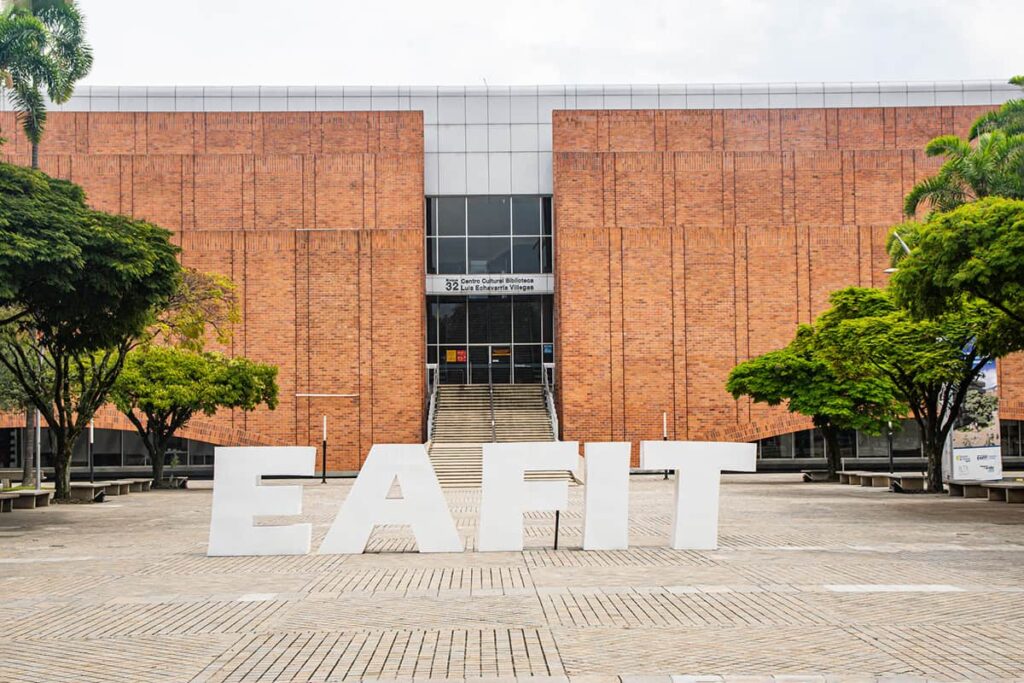
EAFIT’s Impact Entrepreneurship Center is one academic unit that has played an active role in boosting entrepreneurship in the city. In 2021, EAFIT University’s president, Claudia Restrepo found that less than 5% of the most impactful startups in Colombia had EAFIT alumni as founders.
In response to the data, the university decided to take entrepreneurship out of its academic silo and connect it with the real-world ecosystem by creating the Impact Entrepreneurship Center, known as On.going.
Four years after the initial survey, the center has incubated nearly 190 initiatives. In addition, 40% of these are now formalized ventures, showing why nurturing entrepreneurship in Medellin pays dividends in short time frames.
Under the leadership of Director Tomás Ríos, On.going joined forces with EAFIT, Fundación Fraternidad Medellín and Universidad EIA to establish U Ventures, the first VC fund in Colombia designed to invest in university talent.
“Out of every thousand ideas, maybe four grow and scale,” Ríos explained in an interview with Ana Herazo of Contxto. “To have 40 large companies in the future, you need 10,000 ideas today.”
Medellin conferences boost international collaboration
Events and conferences represent another central pillar within most innovation strategies, and Medellin has also spurred collaboration on an international scale through this channel.
One example of a homegrown initiative can be found with Starter Company, today one of the largest startup events in Latin America. In 2025, Starter Company brought together 13,000 attendees from 20 countries, 340 startups, and more than 160 investment funds.
According to CEO Juan Gabriel Arboleda, part of the reason why Starter Company has found such success is that they don’t try to mimic models from other parts of the world. Instead, they have built something from the ground up that works for entrepreneurs in the region.
Mike Hoey
We can see numerous examples of public-private collaborations that support the rise of tech innovation in Medellin and bring international attention to the city. For example, TECH SPHERE was organized by software development enterprise Source Meridian, 360 Health Data and the Pascual Bravo University Institution. Mike Hoey founded Source Meridian and is one of the city’s leading international tech entrepreneurs.
The conference highlighted Medellin’s role as a catalyst for AI research in Latin America and brought together business execs, researchers, entrepreneurs, and professionals from across sectors and backgrounds to explore how AI can be practically applied to solve real challenges and scale impactful solutions.
While local initiatives play an important role, we can also see the rise of international events choosing to host conferences in Medellin and South America and the region continues to be recognized for its contributions to innovation.
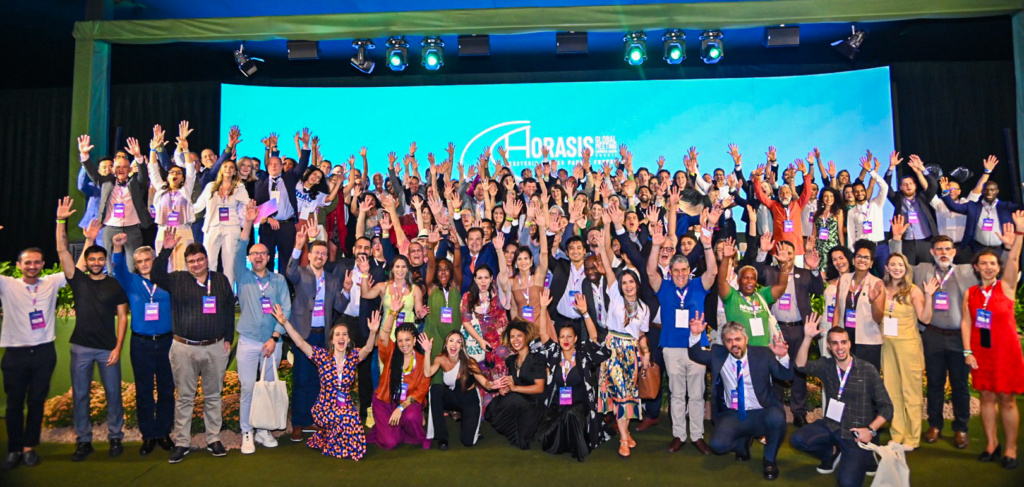
Horasis, a global think tank headquartered in Zurich led by Frank-Jürgen Richter, held the Horasis Global Summit 2025 in Brazil. The event represented the largest meeting the organization has held to date, bringing together 1000 speakers from 50 countries, a testament to the draw of the region.
Horasis Global Meeting in Brazil
Local entrepreneurs and investors solve real-world problems
The final pillar to this success story lies in the presence of eager local entrepreneurs and investors from Medellin. Both the innovator and the investor are integral to the ongoing success of Medellin’s innovation ecosystem.
Its platform, Coralia Health, translates medical knowledge and resources into Spanish through tech-powered automations, meaning physicians in the region now have rapid access to up-to-date, reliable, and relevant information.
Without more support and funding systems like U Ventures to sustain ideas from the earliest stages, the pipeline collapses before it can produce results.
Meanwhile, local innovators have a keen understanding of the gaps in the market and the solutions can drive the most impact.
As Medellin continues to rise through the global innovation rankings, it’s likely to encourage more entrepreneurs to stay and encourage more investors to back high-tech ideas.
After testing United’s latest upgrades, from Starlink Wi-Fi to its new “Elevated” cabins, a clearer strategy emerges: a push toward a more connected, consistent airline experience that increasingly echoes Apple’s ecosystem approach ahead of its 100th year.
United Airlines’ new Relax Row will turn three economy seats into a lie-flat bed offering extra screens, power, and comfort, and potentially a more affordable long-haul upgrade when it launches in 2027.
United Airlines’ new Relax Row will turn three economy seats into a lie-flat bed offering extra screens, power, and comfort, and potentially a more affordable long-haul upgrade when it launches in 2027.
Playa Blanca, near Tierra Bomba Island. Credit: David Shankbone via Flickr
According to the United Nations (UN), the world is in an era of “global water bankruptcy.” In Latin America alone, the OECD finds that 17 million people still lack access to safe drinking water. Among those affected are the residents of Tierra Bomba, a small Caribbean island located off the coast of Colombia which faces persistent challenges in obtaining drinking water.
The island, home to an estimated 9,000 people, lacks access to clean water, with residents relying almost entirely on supplies brought in by boat from the mainland.
However, water filtration startup Vital Lyfe and Amigos Del Mar, a local NGO, recently made a breakthrough for the island’s water supply; in November last year, they successfully tested a decentralized water system, which can turn seawater into treated filtered water. So far, 40 families in the area have been helped by the project, benefitting from stable water production with minimal maintenance.
“Everyone knows that water is extremely expensive here,” Marta Maldonado, a Tierra Bomba local, told The Bogotá Post. “One gallon costs three thousand pesos. As a family, we have to buy four gallons of water every single day just to start the day. Many times, the water arrives with a little bit of salt in it, and that has even made us sick.”
For Maldonado, Vital Lyfe and Amigos Del Mar’s work has made drinking water more accessible. “Drinking the water filtered by Tierra Bomba’s technology is something special. It makes me realize that good water has finally arrived here. We have the sea right in front of us, and now, with these machines, clean water becomes possible. For us, it is something essential,” Maldonado said.
Making seawater drinkable
As an island, Tierra Bomba faces significant challenges. For instance, there is a lack of running water and sewage systems, issues with gas access, and inefficient trash collection that can make life difficult for residents.
“One of the biggest problems that we see in Tierra Bomba is clean water access. The water comes by boat, and it can be expensive, inconsistent, and sometimes of questionable quality. The water gets to the island, and people have to go and buy it in one place, making it really hard for some people to carry water to their homes,” Pedro Salazar, president and founder of Amigos Del Mar, told The Bogotá Post.
Amigos del Mar, established in 2015, decided to collaborate with Vital Lyfe to see if there was a way to create more reliable water access for the island. “Water is life. It brings health when a lot of the unsanitary water in the area carries diseases that people have been consuming. The quality of life for the people of Tierra Bomba can become much better, as we have already seen with this pilot, when they have access to good quality water for everything in their lives, from drinking to cleaning to cooking,” Salazar said.
Under the hood
The project uses a portable filtration system built by Vital Lyfe, which offers a high-efficiency purification engine that combines mechanical innovations such as low-cost reverse osmosis membranes, and smart power management to deliver clean water without the industrial footprint normally associated with purification. The device can adapt to the water that is available, using the lowest energy, and implementing the most efficient treatment pathway for that specific source.
This approach enables the system to process naturally occurring water sources, including brackish water, seawater, and freshwater, to eliminate salts and biological contaminants so the water can be made into drinkable, filtered water.
“The project was a great success, with the technology working immediately, providing filtered water for around 40 families in the area. Many more became aware of the system and expressed interest as well, providing a need for more of this kind of tech. The mission achieved field validation for us as well, proving that the technology could work in remote environments with little knowledge or maintenance needed from the local community,” Jon Criss, CEO and co-founder of Vital Lyfe told The Bogotá Post.
Criss notes that the local community assisted with the rollout, unloading and positioning equipment before installation began. The project means that rather than having to rely on a fragile supply chain which is vulnerable to changing weather conditions, community members can enjoy sustainable access to clean water that’s local and scalable.
“For us, this wasn’t just a one-off deployment. It was proof that communities like Tierra Bomba don’t have to stay dependent. There’s real potential here to expand the impact and build something long-term that strengthens resilience and lowers cost at the same time,” Criss said.
While the pilot looks promising, it also remains to be seen if the equipment can sustain prolonged use. In addition, there is more research to be done, to demonstrate that such a filtration solution could provide filtered drinking water to more populated areas.
 Login
Login