Reading view

iFixit Tears Down the iPhone 17e, Discovers MagSafe Upgrade Path for iPhone 16e Owners

Repair site iFixit today took apart the iPhone 17e, which is the new low-cost iPhone that Apple launched last Wednesday. The ‌iPhone 17e‌ is almost identical to the iPhone 16e in design, but it does include a MagSafe back panel that supports ‌MagSafe‌ and faster Qi charging than the iPhone 16e.


When disassembling the ‌iPhone 17e‌, iFixit found that the ‌MagSafe‌ panel for the device is the same size as the panel for the 16e, and the two are interchangeable. You can take a back panel from an ‌iPhone 17e‌ and put it on an iPhone 16e, adding ‌MagSafe‌ to an iPhone 16e.

That could be good news for iPhone users who bought an iPhone 16e and don't want to upgrade just to get ‌MagSafe‌. iPhone 16e customers may be able to get their hands on an ‌iPhone 17e‌ back panel to make a ‌MagSafe‌ swap, which iFixit says is a big win for repairability. There was a downside with the ‌MagSafe‌ swap because the iPhone 16e doesn't have the built-in software that recognizes ‌MagSafe‌ accessories to provide animations, and it's not yet clear if it charges at the full 15W.

"Cross-compatibility matters," said iFixit. "It makes repairs easier, parts easier to source, and upgrades cheaper."

Apple made day one manuals available for the ‌iPhone 17e‌, so iFixit knew the front and back panels both come off. The battery can be swapped without having to go through the display, though there's still adhesive to deal with. The ‌iPhone 17e‌ continues to use adhesive for the battery that can be removed with an electrical pulse, which makes battery replacements simpler.
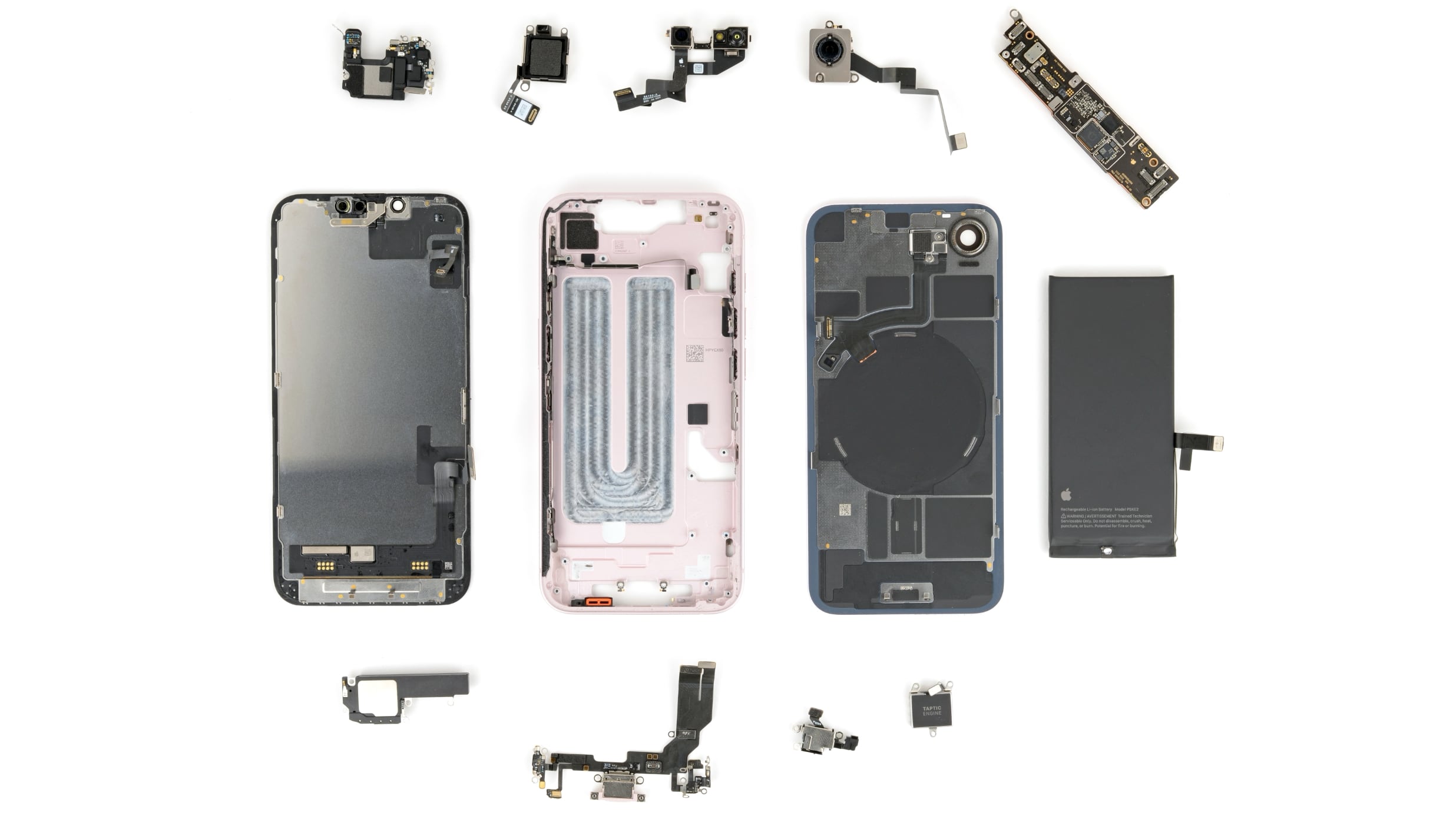

Aside from the ‌MagSafe‌ update, the other notable change in the ‌iPhone 17e‌ is the A19 System on Chip that replaces the A18. Apple also swapped out the C1 modem for the new, faster C1X modem, and there's more starting internal storage at 256 GB.

iFixit found that like the ‌MagSafe‌ module, almost all components inside the ‌iPhone 17e‌ and iPhone 16e were interchangeable. It's possible to take an iPhone 16e logic board and put it into an ‌iPhone 17e‌ chassis, with almost no issues registering parts. The TrueDepth camera for Face ID didn't work when swapped from iPhone to iPhone.

While iFixit was happy with the dual entry design and the battery adhesive that releases electrically, the site found the USB-C port was too buried behind components, which will make DIY repairs daunting for people. Apple fixed the USB-C accessibility issue in its main flagship models, but has not made the port easier to get to in the "e" models.

Despite these issues, iFixit awarded points for the parts interchangeability because there's more salvage value and more refurbishment potential. iFixit gave the ‌iPhone 17e‌ a provisional repairability score of 7 out of 10. That's the same score the iPhone 16e got last year, and the same score the iPhone 17 earned.
Related Roundup: iPhone 17e
Buyer's Guide: iPhone 17e (Buy Now)
Related Forum: iPhone

This article, "iFixit Tears Down the iPhone 17e, Discovers MagSafe Upgrade Path for iPhone 16e Owners" first appeared on MacRumors.com

Discuss this article in our forums
  •  

Apple Studio Display XDR Hands-On: Better Than the Pro Display XDR in Almost Every Way

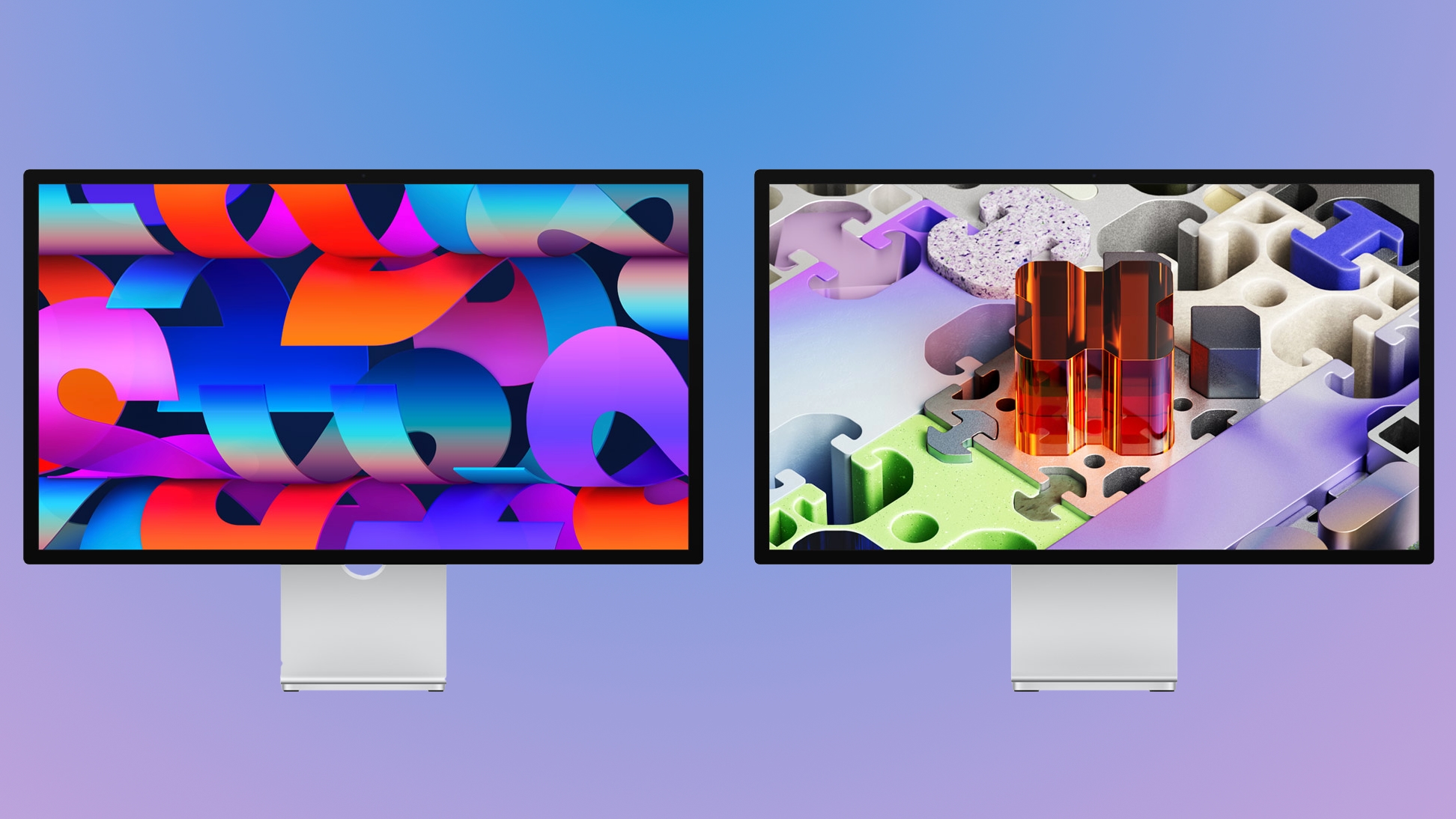
Apple replaced the $4,999+ Pro Display XDR with the better, more affordable Studio Display XDR, so we thought we'd pick one up to test out and compare to the now-discontinued Pro Display XDR.


The ‌Studio Display‌ XDR is the same size as the ‌Studio Display‌ at 27 inches, and it has the same 5K resolution. It's smaller than the 32-inch Pro Display XDR that had a 6K display, and that's probably going to be a major downside for people who prefer larger display sizes. A 32-inch display size works well for a single monitor setup, but 27 inches feels comparatively smaller and is better for multi-display setups.

Apple designed the Pro Display XDR with the same perforated, vented back panel that it used for the Mac Pro, and in comparison, the ‌Studio Display‌ XDR is plainer because it adopts the ‌Studio Display‌ look.

With those downsides out of the way, almost every other ‌Studio Display‌ XDR feature is an improvement over the Pro Display XDR. It uses a mini-LED panel with 2,304 local dimming zones (the Pro Display XDR was limited to 576 local dimming zones). It's brighter than the Pro Display XDR, with deeper blacks, better contrast, and improved HDR. The display is bright enough to match the mini-LED MacBook Pro, and it's really the only display that pairs well with Apple's high-end notebook.

The ‌Studio Display‌ XDR also supports a variable refresh rate from 47Hz to 120Hz, which Apple calls Adaptive Sync. It's not as noticeable as it is on a smaller display, but you can tell a difference when gaming, scrolling quickly, or using the ‌Studio Display‌ XDR next to another display that doesn't support a 120Hz refresh rate.

While the Pro Display XDR didn't come with a camera or speakers, the ‌Studio Display‌ XDR does. It has a 12-megapixel Center Stage camera for video calls and a six-speaker audio system that's ideal for most things you want to do on a Mac.

There are two Thunderbolt 5 ports, one upstream and one downstream, so you can daisy-chain multiple displays together. 140W passthrough charging is available, and there are also two USB-C ports for connecting peripherals.

The Pro Display XDR did not have dual Thunderbolt ports for daisy-chaining displays, so the addition of an extra Thunderbolt port adds more setup versatility.

The ‌Studio Display‌ XDR is a solid upgrade over most displays, and there are very few monitors on the market that can match what Apple is offering. Given the $3,299 price point and the focus on professional use, the ‌Studio Display‌ XDR isn't for the average Mac user. The standard ‌Studio Display‌ is better suited to more casual use, and most people can even get away with a cheaper 4K display from a third-party manufacturer.
Related Roundup: Studio Display
Buyer's Guide: Displays (Buy Now)
Related Forum: Mac Accessories

This article, "Apple Studio Display XDR Hands-On: Better Than the Pro Display XDR in Almost Every Way" first appeared on MacRumors.com

Discuss this article in our forums
  •  

Apple Releases Background Security Improvement Update for macOS Tahoe 26.3.1, iOS 26.3.1, and iPadOS 26.3.1

Apple today released the first Background Security Improvement (BSI) update, replacing the rapid security updates that it used to seed out a few years ago. The first BSI updates address a WebKit vulnerability that could allow maliciously crafted web content to bypass Same Origin Policy. There's a macOS Tahoe 26.3.1, iOS 26.3.1, and iPadOS 26.3.1 BSI update, as well as a ‌macOS Tahoe‌ 26.3.2 BSI update exclusive to the MacBook Neo.


Apple says that the vulnerability was addressed with improved input validation.

Background Security Improvements were added with iOS 26, iPadOS 26, and ‌macOS Tahoe‌, and Apple tested them in iOS 26.3, iPadOS 26.3, and ‌macOS Tahoe‌ 26.3 before today's official release.

The updates are meant to provide additional security protections between software updates for Safari, WebKit, and other system libraries. Background Security Improvements can be installed in the Privacy and Security section of the Settings app. Scroll down, and then select the Install option to install the update. If Automatically Install is toggled on, BSIs will be automatically installed when they come out.

Users who opt not to install Background Security Improvements will receive the fixes in a subsequent standard software update.

Apple warns that Background Security Updates can result in "rare instances of compatibility issues." Should that occur, the updates may be temporarily removed and enhanced in another software update.
Related Roundups: iOS 26, iPadOS 26, macOS Tahoe
Related Forums: iOS 26, macOS Tahoe

This article, "Apple Releases Background Security Improvement Update for macOS Tahoe 26.3.1, iOS 26.3.1, and iPadOS 26.3.1" first appeared on MacRumors.com

Discuss this article in our forums

  •  

iPad Deals on Amazon Include $50 Off 11th Gen iPad and $100 Off iPad Mini 7

Amazon this week is taking $50 off Wi-Fi models of Apple's 11th generation iPad, as well as $100 off the iPad mini 7. Prices start at $299.00 for the 128GB Wi-Fi iPad, down from $349.00, which is a solid second-best price on this model.

Note: MacRumors is an affiliate partner with Amazon. When you click a link and make a purchase, we may receive a small payment, which helps us keep the site running.
iPad


Additionally, Amazon has the 256GB Wi-Fi iPad for $399.00 ($50 off) and the 512GB Wi-Fi iPad for $599.00 ($50 off). Free delivery estimates are placed around February 16 for most of these iPad models, but Prime members should be able to get same-day delivery in many locations.


We saw a few of these iPad models around $20 cheaper over the holiday season last year, but those all-time low prices never reappeared. As of now, Amazon's discounts are the best prices we've tracked so far in 2026.

iPad mini


There are also quite a few $100 discounts on the iPad mini 7 this week on Amazon, starting at $399.00 for the 128GB Wi-Fi tablet, down from $499.00. It's been a few weeks since we last tracked prices this low on the iPad mini 7.


You can also get the 256GB Wi-Fi iPad mini 7 for $499.00 and the 512GB Wi-Fi iPad mini 7 for $699.00, both $100 discounts and available in multiple colors. These sales are all solid second-best prices on the iPad mini 7.

If you're on the hunt for more discounts, be sure to visit our Apple Deals roundup where we recap the best Apple-related bargains of the past week.


Deals Newsletter


Interested in hearing more about the best deals you can find in 2026? Sign up for our Deals Newsletter and we'll keep you updated so you don't miss the biggest deals of the season!


Related Roundup: Apple Deals

This article, "iPad Deals on Amazon Include $50 Off 11th Gen iPad and $100 Off iPad Mini 7" first appeared on MacRumors.com

Discuss this article in our forums

  •  

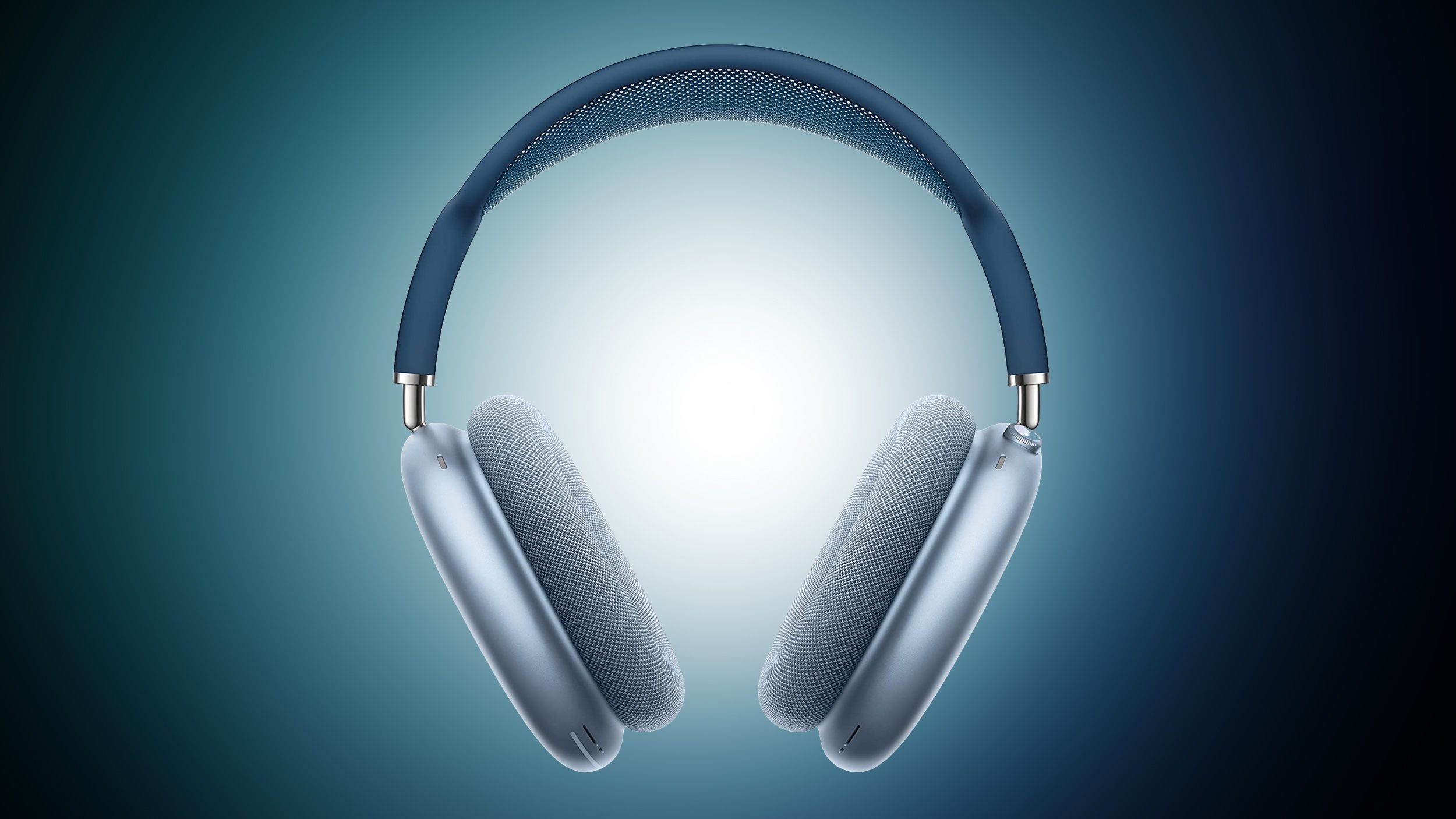
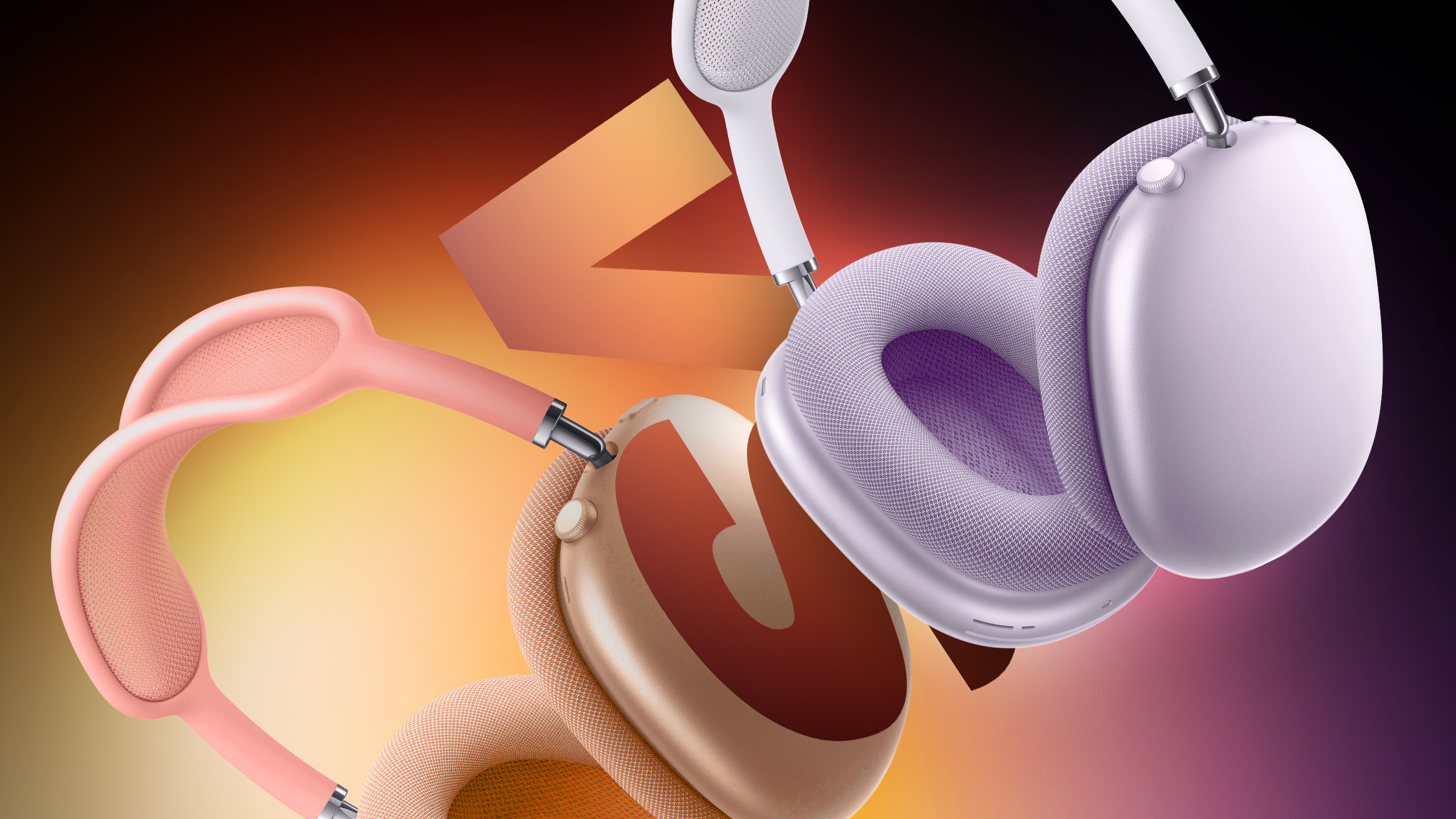
10 Audio Improvements in Apple's New AirPods Max 2

Apple refreshed the AirPods Max today, and the main new addition is an H2 chip that replaces the H1 chip. The H2 chip has previously been used in the AirPods 4 and the AirPods Pro 2 and later, but it's new to the AirPods Max. It brings multiple audio improvements alongside an updated high dynamic range amplifier.


We've listed all of the audio features that are new to the AirPods Max according to Apple.

  • Active Noise Cancellation - The AirPods Max 2 have up to 1.5x more active noise cancellation because of the more powerful H2 chip and a new computational audio algorithm that detects and counters external sound.

  • Adaptive Audio - The AirPods Max support Adaptive Audio, adjusting the level of ANC based on your environment.

  • Transparency - Apple says it is using a new digital signal processing algorithm built for the H2 and the AirPods Max microphone array to make Transparency sound more natural. Your own voice will sound more realistic, and so will other sounds. Transparency lets you hear what's going on around you, with environmental noise filtered through the AirPods Max microphones.

  • Loud Sound Reduction - Adaptive Audio includes Loud Sound Reduction and the AirPods Max will automatically reduce loud environmental sounds like lawn mowers or construction equipment.

  • Personalized Volume - Another Adaptive Audio feature, Personalized Volume learns your volume preferences across different environments over time and automatically adjusts.

  • Conversation Awareness - When you start to talk, Conversation Awareness kicks on and lowers the volume of what you're listening to while amplifying voices so you can hear a response. When you're done talking, the sound returns to its previous volume.

  • High-fidelity audio improvements - Apple says the H2 chip and a new high dynamic range amplifier provide more headroom for the driver, resulting in richer bass, more natural vocals, and improved localization of instruments. Users can expect more accurate and consistent bass along with more natural sounding mids and highs.

  • Adaptive EQ - Apple retuned Adaptive EQ for the H2 chip, and the feature now extends to higher frequencies. Adaptive EQ uses inward-facing microphones to sample what you're hearing, adjusting playback in real-time. According to Apple, users will get a more consistent listening experience across different fits, movements, and ear geometry.

  • Voice Isolation - Voice Isolation isolates your voice in noisy environments so people can hear you when you're on a call. Voice Isolation also lets creators capture high-quality vocals.

  • Reduced wireless audio latency - Apple says latency is lower with the H2 chip in the ‌AirPods Max 2‌. The AirPods Max support Bluetooth 5.3, up from Bluetooth 5.0 in the prior model.


There are other features enabled by the H2 chip that aren't tied directly to audio, like Live Translation, camera remote functionality, and the option to activate Siri without using "Hey." The ‌AirPods Max 2‌ also still have all of the other features from the original AirPods Max, like personalized spatial audio, quick pairing, device switching, and more.

Apple did not make other design changes to the AirPods Max, and the overall fit and look have not been updated. Compared to the AirPods Pro 3, the main AirPods Max benefit is lossless audio. With a wired USB-C connection to a device, the AirPods Max offer 24-bit 48kHz lossless audio, which the AirPods Pro can't match.

The AirPods Max are priced at $549, and Apple plans to accept pre-orders on Wednesday, March 25. A launch will follow in early April, but Apple hasn't provided a specific date yet.
Related Roundup: AirPods Max 2
Buyer's Guide: AirPods Max (Buy Now)
Related Forum: AirPods

This article, "10 Audio Improvements in Apple's New AirPods Max 2" first appeared on MacRumors.com

Discuss this article in our forums

  •  

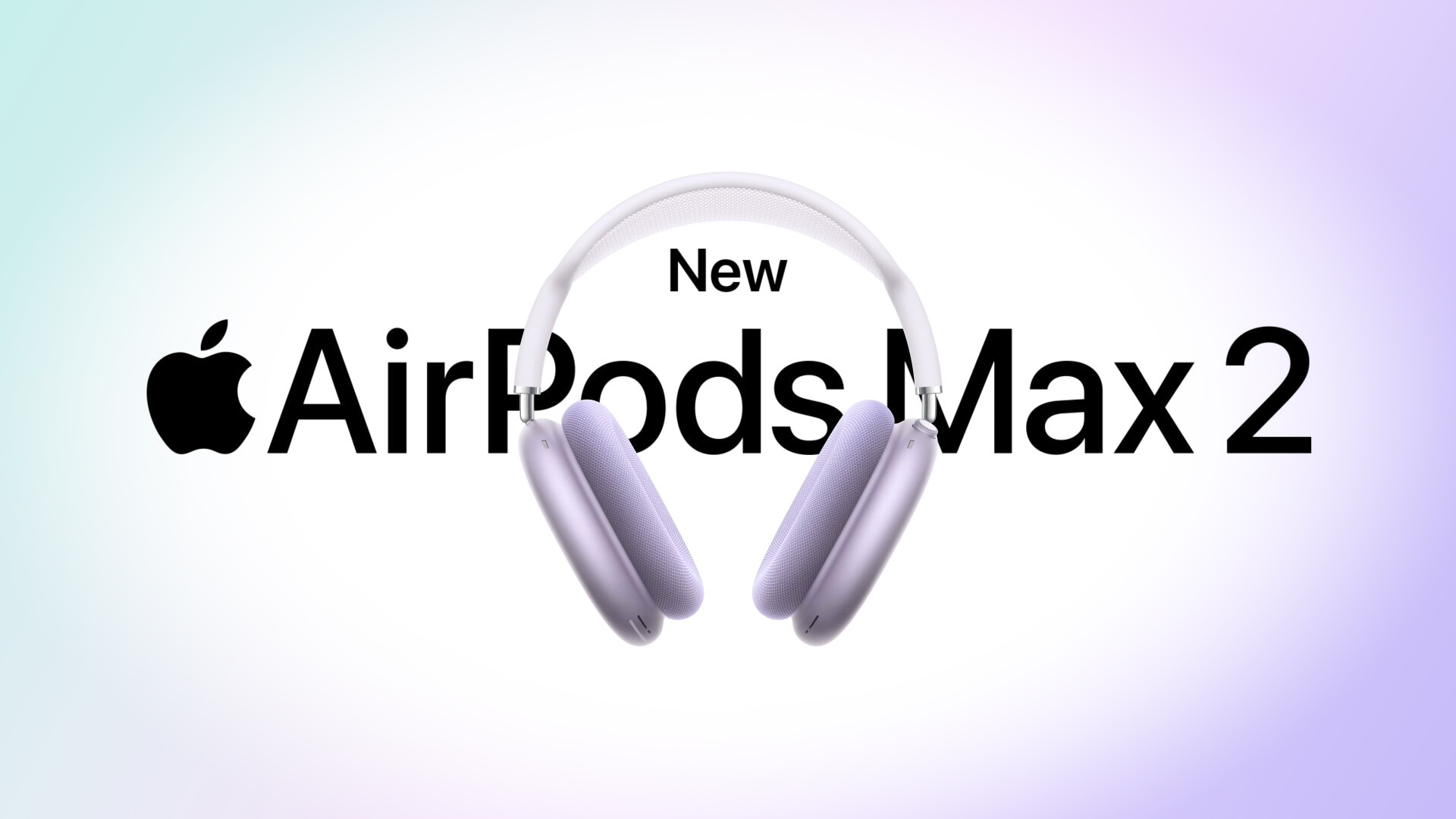
AirPods Max 1 vs. AirPods Max 2 Buyer's Guide: 25+ Differences Compared

Apple has now announced the AirPods Max 2, bringing the first major hardware upgrade to Apple's over-ear headphones since their debut. So how does the new model compare with both earlier versions of ‌AirPods Max‌?


In late 2020, Apple announced the AirPods Max, a whole new AirPods variant with an over-ear design. In September 2024, the company refreshed the AirPods Max's selection of color options and swapped the Lightning port for USB-C, enabling 24-bit, 48 kHz lossless audio over a wired connection.

Now, with the arrival of the ‌AirPods Max 2‌, Apple has introduced a far more substantial upgrade than the 2024 refresh. The new model adds the H2 chip, more powerful Active Noise Cancellation, improved Transparency Mode, Adaptive Audio features such as Conversation Awareness and Personalized Volume, updated Bluetooth 5.3 connectivity with reduced latency, and enhancements to Spatial Audio and sound quality.


Following the announcement, the full range of differences between the original Lightning model, the USB-C refresh, and ‌AirPods Max 2‌ are outlined below:


AirPods Max
(2020, Lightning)
AirPods Max
(2024, USB-C)
‌AirPods Max 2‌
(2026)
H1 chip H1 chip H2 chip
Active Noise Cancellation Active Noise Cancellation Improved Active Noise Cancellation (1.5x stronger)
Transparency Mode Transparency Mode Improved Transparency Mode
Adaptive Audio
Conversation Awareness
Voice Isolation
Personalized Volume
Loud Sound Reduction
Camera Remote
Live Translation
"Hey Siri" commands "Hey ‌Siri‌" commands "Hey ‌Siri‌" and "‌Siri‌" commands
‌Siri‌ Interactions (privately respond to ‌Siri‌ announcements by simply nodding their head yes or gently shaking their head no)
Custom high dynamic range amplifier
New digital signal processing algorithm
Spatial Audio Spatial Audio Improved Spatial Audio (improved localization of instruments, more accurate and consistent bass response, and more natural-sounding mids and highs)
Lossless Personalized Spatial Audio via USB-C to USB-C cable Lossless Personalized Spatial Audio via USB-C to USB-C cable
Enhanced audio via Lightning to 3.5mm audio cable "24-bit, 48 kHz lossless audio" via USB-C to USB-C cable "24-bit, 48 kHz lossless audio" via USB-C to USB-C cable
Audio recording Audio recording "Studio-quality" audio recording
Create and mix audio in Personalized Spatial Audio with head tracking via USB-C to USB-C cable Create and mix audio in Personalized Spatial Audio with head tracking via USB-C to USB-C cable
Bluetooth 5.0 Bluetooth 5.0 Bluetooth 5.3
Reduced wireless audio latency
Reduced latency audio via Lightning to 3.5mm audio cable "Ultra-low" latency audio via USB-C to USB-C cable or USB-C to 3.5mm audio cable "Ultra-low" latency audio via USB-C to USB-C cable or USB-C to 3.5mm audio cable
Lightning port USB-C port USB-C port
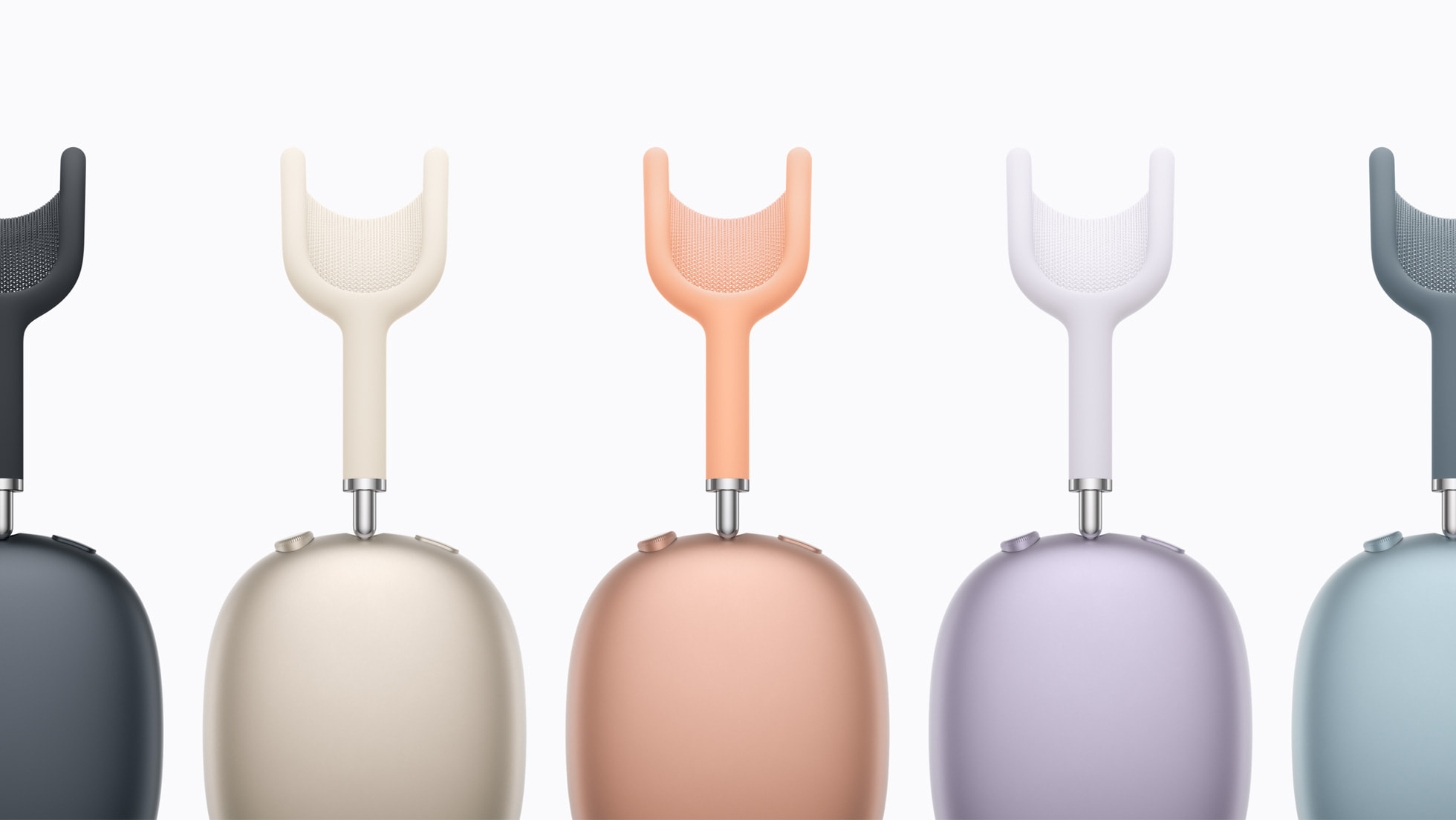
Available in Silver, Space Gray, Sky Blue, Pink, and Green Available in Starlight, Midnight, Blue, Purple, and Orange Available in Starlight, Midnight, Blue, Purple, and Orange
Released December 2020 Released September 2024 Release in April 2026
Now discontinued Now discontinued $549


The original AirPods Max with Lightning are becoming increasingly difficult to find as remaining inventory has gradually dried up over the past two years. While some third-party retailers may still have limited stock or refurbished units available, the model is no longer widely sold. For buyers who can still locate a pair at a substantial discount, the Lightning version can remain an appealing option. It offers the same distinctive design, premium build quality, Active Noise Cancellation, Transparency mode, and Spatial Audio support that defined the product when it launched in 2020. If you primarily use AirPods Max wirelessly for casual listenin, have no interest in the newer software capabilities, or have other Lightning devices, the original model still delivers a good core experience.

The AirPods Max with USB-C, introduced in 2024, remain widely available and until today represented Apple's current version of the headphones. Aside from the switch from Lightning to USB-C and a new set of color options, the hardware is largely identical to the original model. A firmware update alongside iOS 18.4 restored wired audio input and enabled 24-bit, 48 kHz lossless audio over a USB-C connection when used with a USB-C to USB-C cable. This gives the USB-C model a clear advantage over the Lightning version for users who want the best possible wired audio quality. It also enables creator-focused capabilities such as Lossless Personalized Spatial Audio and the ability to create or mix content in Spatial Audio with head tracking. For most users listening wirelessly, however, the overall experience remains very similar to the original model.

The newly announced ‌AirPods Max 2‌ represent the first meaningful upgrade to the product since its debut. The new model introduces Apple's H2 chip, enabling significantly improved Active Noise Cancellation, enhanced Transparency Mode, and Adaptive Audio features such as Conversation Awareness, Personalized Volume, and Voice Isolation. Apple has also improved Spatial Audio performance and added Bluetooth 5.3 with reduced wireless latency. Together, these upgrades bring the over-ear AirPods much closer to the capabilities offered by Apple's latest in-ear AirPods models.

For buyers deciding between generations, the choice largely comes down to how important the new features are. The original AirPods Max still deliver the premium design, sound quality, and wireless listening experience that made them popular. However, for those who want stronger noise cancellation, new features like Live Translation, and the most future-proof option, ‌AirPods Max 2‌ are clearly the model to choose.

Existing owners of the original AirPods Max may want to weigh the benefits of the H2 chip, improved Active Noise Cancellation, Adaptive Audio features such as Conversation Awareness and Personalized Volume, and reduced wireless latency. Users with the Lightning version may be more inclined to upgrade given their device's age, while those with the newer USB-C variant may find the improvements less essential if they are satisfied with the current feature set. For frequent travelers, people who regularly listen in noisy environments, or anyone who simply wants the most advanced version of Apple's over-ear headphones, the upgrade may still be worthwhile.

AirPods frequently see hefty discounts on Amazon and other third-party retailers, so stepping up to the ‌AirPods Max 2‌ may be more worth it if you can take advantage of one of those deals. The AirPods Max often see solid discounts, so it is always worth seeking the best price using our Deals roundup.
Related Roundup: AirPods Max 2
Buyer's Guide: AirPods Max (Buy Now)
Related Forum: AirPods

This article, "AirPods Max 1 vs. AirPods Max 2 Buyer's Guide: 25+ Differences Compared" first appeared on MacRumors.com

Discuss this article in our forums

  •  

Apple Announces AirPods Max 2 With H2 Chip and More

Apple today unveiled AirPods Max 2, with key upgrades including the H2 chip, increased active noise cancellation, improved sound quality, and features such as Adaptive Audio, Conversation Awareness, Voice Isolation, and Live Translation.


The new AirPods Max have the same overall design as the previous generation, with most of the new features coming from the upgrade to the H2 chip:
- Adaptive Audio adjusts the levels of ANC and Transparency in response to the environment automatically to optimize the audio experience.

- Conversation Awareness helps lower content volume and reduce background noise when a user starts speaking to someone nearby.

- Live Translation, powered by Apple Intelligence, helps users communicate across languages in person.

- Voice Isolation uses advanced computational audio powered by H2 to prioritize the voice during calls, while blocking out ambient noise.
AirPods Max 2 also support Personalized Volume, which adjusts the volume based on a combination of your surroundings and your volume preferences.

With the H2 chip, Apple says the AirPods Max 2 deliver up to 1.5× more effective active noise cancellation than the previous generation, and it promised that the Transparency mode that lets in some ambient noise sounds even more natural.


AirPods Max 2 feature a new high dynamic range amplifier for "even cleaner audio," and Apple says Spatial Audio content "sounds better than ever." The headphones also have reduced wireless audio latency compared to the previous generation.

The headphones still have a USB-C port for charging and lossless audio. Apple advertises up to 20 hours of battery life on a single charge with active noise cancellation enabled, which is unchanged compared to the previous generation.

Like the previous AirPods Max running iOS 18.4 or newer, the AirPods Max 2 support 24-bit, 48 kHz lossless audio with the included USB-C cable, for the highest-quality wired playback. For wireless connectivity, AirPods Max 2 support Bluetooth 5.3, whereas the previous AirPods Max support Bluetooth 5.0.

Color options remain Midnight, Starlight, Orange, Purple, and Blue.


A new Camera Remote feature allows users to press the Digital Crown on the AirPods Max 2 to take a photo and start or stop video recording while using Apple's Camera app or compatible third-party camera apps on an iPhone or iPad.

AirPods Max 2 will be available to order on Apple.com and in the Apple Store app starting Wednesday, March 25 in the U.S. and more than 30 other countries, and they launch on an unspecified day in early April. In the U.S., AirPods Max 2 have the same $549 price as the previous AirPods Max, which Apple is no longer selling.

AirPods Max 2 come with a Smart Case, which has the same design as it always has. The headphones enter an ultra-low-power state when placed in this carrying case, which is fairly important, as the headphones still lack a power button.

These are technically the third AirPods Max headphones to be released. The original AirPods Max with a Lightning port launched in December 2020, and the headphones received a minor update with a USB-C port and new color options in September 2024.
Related Roundup: AirPods Max 2
Buyer's Guide: AirPods Max (Buy Now)
Related Forum: AirPods

This article, "Apple Announces AirPods Max 2 With H2 Chip and More" first appeared on MacRumors.com

Discuss this article in our forums

  •  

AirPods Pro 3 Available for $209.99 on Amazon This Week

Amazon today has the AirPods Pro 3 available for $209.99, down from $249.00. This is only about $10 higher when compared to the Amazon all-time low price, which has been hard to come by in recent weeks.

Note: MacRumors is an affiliate partner with Amazon. When you click a link and make a purchase, we may receive a small payment, which helps us keep the site running.
This model of the AirPods Pro launched in September 2025 and has 2x better Active Noise Cancellation than the previous generation, better audio quality, a revised fit that's meant to improve comfort and stability, Live Translation for in-person conversations, and heart rate sensing for workouts.


If you're shopping for the AirPods 4, Amazon also has a solid discount on the base model at $99.00, down from $129.00. Keep up with all of this week's best discounts on Apple products and related accessories in our dedicated Apple Deals roundup.


Deals Newsletter


Interested in hearing more about the best deals you can find in 2026? Sign up for our Deals Newsletter and we'll keep you updated so you don't miss the biggest deals of the season!


Related Roundup: Apple Deals

This article, "AirPods Pro 3 Available for $209.99 on Amazon This Week" first appeared on MacRumors.com

Discuss this article in our forums

  •  

10+ New Features Coming in iOS 27

We're only three months away from Apple's WWDC 2026 event, which will see the company unveil iOS 27. With the fully revamped version of Siri possibly delayed until September, ‌iOS 27‌ is shaping up to be the update we wanted iOS 26 to be.


There will be new Apple Intelligence features, updates for the iPhone Fold, and more, with the latest rumors summarized below.

Foldable iPhone Features


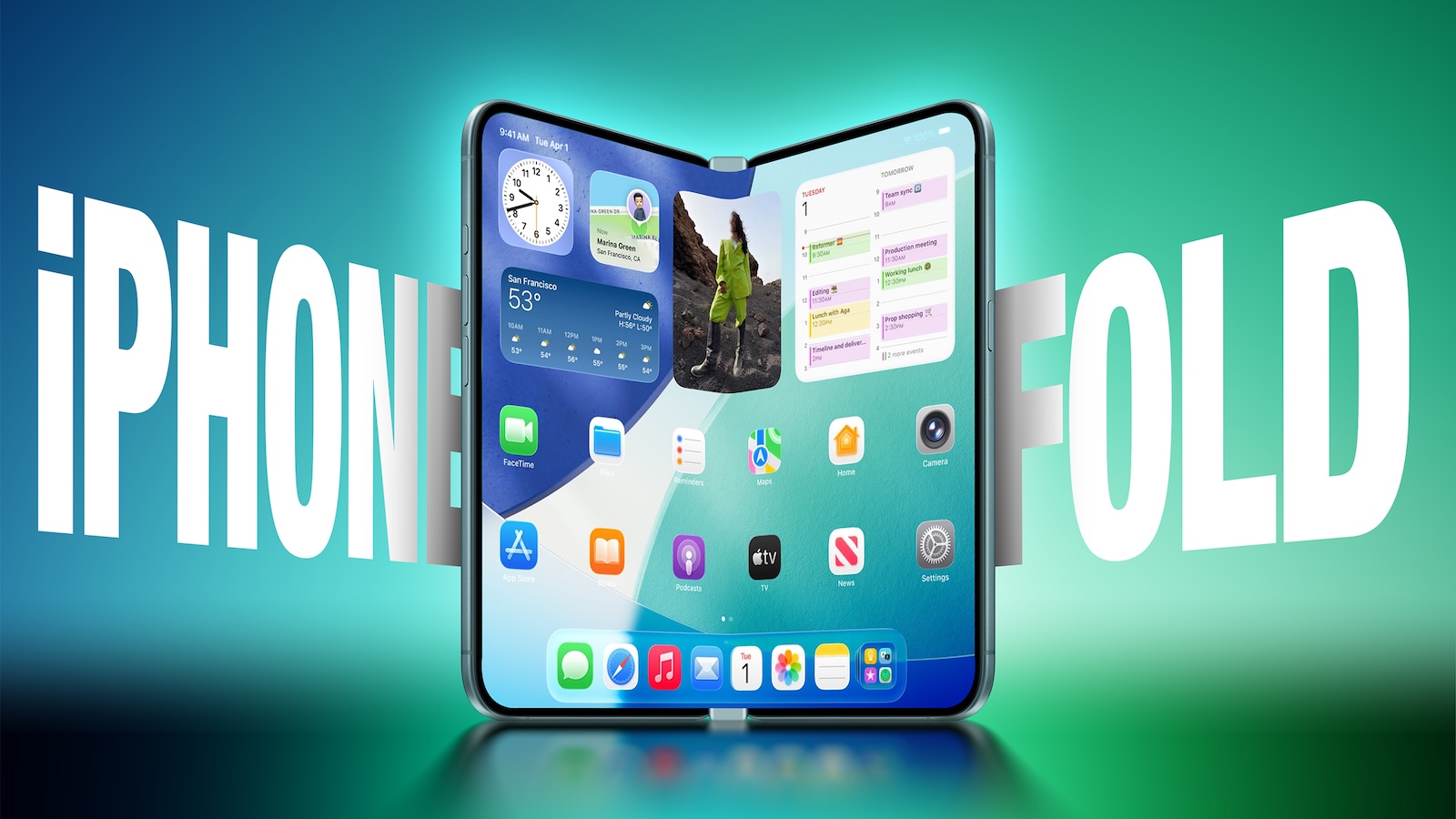
Apple plans to launch the first foldable iPhone in September, a device that could possibly be called the iPhone Fold. Rumors suggest that it will feature a 5.5-inch display when folded, and a 7.8-inch display when it's opened up like a book.


An iPhone with a larger display that also folds will require some major updates to iOS, and ‌iOS 27‌ will focus on building new interfaces and experiences made for a larger display.

The iPhone Fold will operate like a cross between an iPhone and an iPad, but it will run iOS, not iPadOS, and it won't support ‌iPad‌ apps. When unfolded, the iPhone will have an iPad-like layout that supports multitasking with two apps side-by-side. Many of Apple's iPhone apps will have sidebars on the left of the display, with Apple providing developers with tools to easily adapt their apps to the new layout.

Apple is using a wider design for the iPhone Fold than most foldable smartphone makers have used, and it is rumored to have an iPad-like 4:3 aspect ratio. When the iPhone is closed, it will have a standard iPhone layout that looks like the version of iOS we have now.

Smarter Siri


We were supposed to get the ‌Apple Intelligence‌ version of ‌Siri‌ in iOS 26.4, but Apple is still having problems with development. ‌Siri‌ isn't yet operating as expected, and it's not ready to launch.

Some or all of the new ‌Siri‌ features could be pushed to ‌iOS 27‌, though there's a chance we'll get something new in iOS 26.5. It's a little unclear just what we'll get and when, because ‌iOS 27‌ is also supposed to include a chatbot version of ‌Siri‌ that will operate more like ChatGPT, Claude, or Gemini.

We could get an entirely revamped chatbot version of ‌Siri‌ with all of the new features all at once, or we could get the ‌Apple Intelligence‌ update and then chatbot functionality in a later ‌iOS 27‌ update.

Apple is partnering with Google and plans to use a custom AI model built in collaboration with Google's Gemini team for some of the new ‌Siri‌ features, including the ‌Siri‌ chatbot functionality that's coming.

Apple Intelligence Siri Features We're Waiting On


Apple described three specific ways that ‌Siri‌ will improve with ‌Apple Intelligence‌ integration, including personal context, the ability to see what's on the screen to know what the user is talking about, and the capability to do more in and between apps.

‌Siri‌ will understand pronouns, references to content on the screen and in apps, and it will have a short-term memory for follow-up requests.

Personal Context


With personal context, ‌Siri‌ will be able to keep track of emails, messages, files, photos, and more, learning more about you to help you complete tasks and keep track of what you've been sent.

  • Show me the files Eric sent me last week.

  • Find the email where Eric mentioned ice skating.

  • Find the books that Eric recommended to me.

  • Where's the recipe that Eric sent me?

  • What's my passport number?


Onscreen Awareness


Onscreen awareness will let ‌Siri‌ see what's on your screen and complete actions involving whatever you're looking at. If someone texts you an address, you can tell ‌Siri‌ to add it to their contact card. Or if you're looking at a photo and want to send it to someone, you can ask ‌Siri‌ to do it for you.

Deeper App Integration


Deeper app integration means that ‌Siri‌ will be able to do more in and across apps, performing actions and completing tasks that are just not possible with the personal assistant right now. We don't have a full picture of what ‌Siri‌ will be capable of, but Apple has provided a few examples of what to expect.

  • Moving files from one app to another.

  • Editing a photo and then sending it to someone.

  • Get directions home and share the ETA with Eric.

  • Send the email I drafted to Eric.


Answers and Images


Back in August 2025, Apple software engineering chief Craig Federighi told employees that efforts to update the architecture were promising enough that Apple would be able to implement a "much bigger upgrade" than Apple originally envisioned.

Since then, rumors suggest that Apple will add image generation capabilities to ‌Siri‌, relying on Image Playground. ‌Siri‌ is also expected to get a "World Knowledge" search feature that would provide information on general search queries using information pulled from the web. ‌Siri‌ will be able to summarize web results like ChatGPT to answer questions.

Chatbot Siri


Apple is planning to turn Siri into a full chatbot that users can interact with similarly to Claude or ChatGPT. The ‌Siri‌ chatbot will be deeply integrated into Apple's operating systems at the system level, and it won't be a standalone app experience.

Users will activate ‌Siri‌ by speaking the ‌Siri‌ wake word or pressing on the side button of the iPhone, similar to how ‌Siri‌ works now. There's no word yet on what the ‌Siri‌ chatbot interface will look like, but Apple will need to make major changes if it wants to match the functionality offered by chatbot apps. Right now, there's no way to have a back and forth typed conversation with ‌Siri‌ where the conversation history is visible, and that will need to change.

The ‌Siri‌ chatbot will be able to do everything current chatbots can do, like searching the web for information, analyzing uploaded files, and summarizing information, but since it will be integrated into the iPhone at the system level, ‌Siri‌ will also be able to ingest information from on-device data, control device features and settings, use personal data for tasks, analyze on-screen content, and more.

Siri Design Update


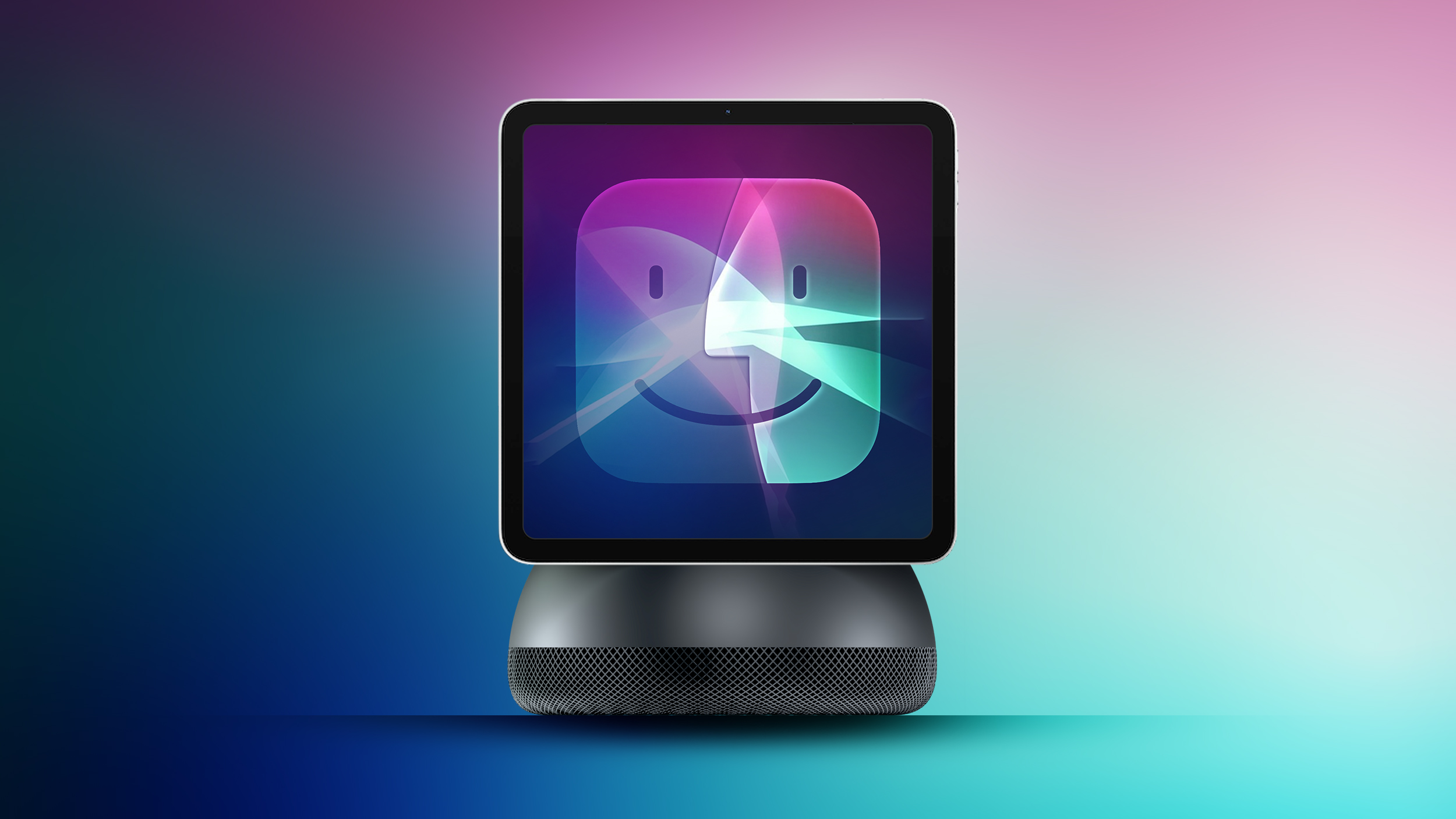
With ‌iOS 27‌, Apple could update Siri's design. There are no specifics about what the redesign might entail, but rumors linked to Apple's upcoming tabletop robot suggest that the company might introduce a version of ‌Siri‌ that's more animated, similar to the Mac Finder logo. That more animated version of ‌Siri‌ could also come to the iPhone and ‌iPad‌.

Core AI Framework


Apple will introduce a Core AI framework for developers that replaces the current Core ML framework. The Core AI framework will provide developers with a way to integrate AI models into their apps.

Liquid Glass


‌iOS 27‌ is likely to include refinements for the Liquid Glass design that Apple introduced with ‌iOS 26‌. There have already been some changes in the iOS 26.1 and iOS 26.2 updates, but ‌iOS 27‌ will provide Apple with the opportunity to make more bigger adjustments.

AI Calendar App


‌iOS 27‌ could include a Calendar app that incorporates AI.

AI Health Features


Apple planned a full AI-powered Health+ subscription service, but plans have been scaled back. Some components that Apple planned to implement could still be introduced in ‌iOS 27‌, though it's unclear what we'll get.

Health+ reportedly would have provided health recommendations in the Health app, delivering detailed health reports, videos that explain medical conditions, and wellness tips.

New Satellite Features


Apple is working on several new satellite features for the iPhone, and it's possible some features could be introduced as soon as 2027. Timing on Apple's satellite improvements is unclear, though, and behind-the-scenes updates from Apple's satellite partner Globalstar are required.
Rumored features:

  • Apple Maps via satellite

  • Photos in Messages via satellite

  • Satellite API framework for third-party apps

  • Satellite over 5G

  • Satellite connectivity without the need for a view of the sky


Some of these features might require new hardware, but options like ‌Apple Maps‌ via satellite would not require components beyond what's available now.

Performance and Stability


Bloomberg's Mark Gurman has described iOS 27 as a "Snow Leopard" update, suggesting that Apple will focus on improving underlying performance and quality.

Apple is prioritizing cleaning up the iOS code and removing anything that's outdated, which could mean upgrading apps to improve performance and rewriting some existing features to be more efficient. The code updates could provide a more responsive, faster version of iOS.

Apple is also aiming for efficiency improvements that could translate into tangible battery life gains.

Launch Date


New versions of iOS, macOS, and Apple's other software platforms will be previewed in June at WWDC before launching in September just ahead of when new iPhone models come out.
Related Roundup: iOS 27

This article, "10+ New Features Coming in iOS 27" first appeared on MacRumors.com

Discuss this article in our forums

  •  

Top Stories: Apple's 50th Anniversary, New and Upcoming Products, and More

After Apple's big week of announcements, this week saw all of the new products officially become available, so reviewers and general users alike are now getting their hands on them and putting them through their paces.


Apple also started ramping up plans for celebrating the company's 50th anniversary coming up on April 1, with Tim Cook sharing a letter addressing the milestone and the company even hosting a brief musical appearance by Alicia Keys at its Grand Central Terminal store in New York City, so read on below for all the details on these stories and more!

Top Stories


Apple Announces 50th Anniversary Plans


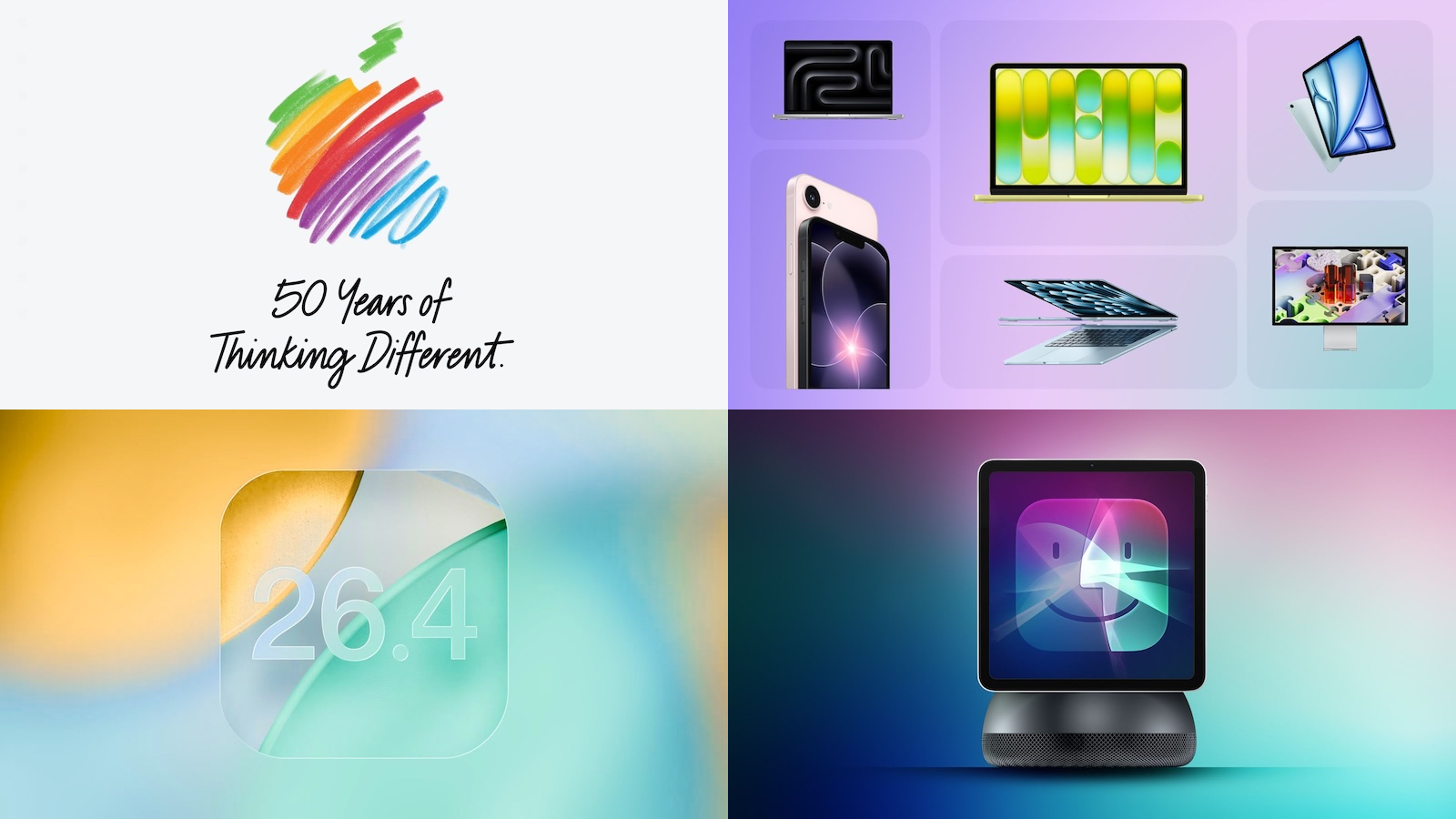
Apple this week announced that it plans to celebrate its 50th anniversary, which is on April 1. Ahead of the big date, Apple CEO Tim Cook shared a "50 Years of Thinking Different" letter.


"While Apple is known for looking forward, this milestone offers a special moment to reflect on the journey that has brought the company here, to celebrate the people and communities who have thought different with us, and to honor the enduring values that continue to guide our work," said Apple, in a press release.

Apple has also launched a new "Hello Apple" account on Instagram where it will share company news, stories, product marketing, and more, while journalist David Pogue has just released a new book chronicling the history of Apple over its first 50 years. And on Friday, Apple hosted a surprise musical appearance by Alicia Keys at its Grand Central Terminal store as part of the anniversary celebration.

Apple Released Seven New Products This Week


As of Wednesday, the seven new Apple products that were announced last week became available at Apple Stores and started arriving to customers.


The colorful MacBook Neo and all of the other new products are on display at most Apple Store locations around the world. Apple Stores have inventory of the new products for both walk-in customers and Apple Store pickup, but availability varies, so make sure to see if your local store has stock via Apple's online store.

Apple Could Launch Three New 'Ultra' Devices This Year


Apple is planning to launch at least three new "Ultra"-class devices this year, according to Bloomberg's Mark Gurman.


While it is unclear whether the new products will carry the "Ultra" name, Apple is planning to launch at least three such devices this year: Apple's first foldable iPhone with an expected price tag of at least $2,000, higher-end AirPods Pro equipped with infrared cameras, and a premium MacBook Pro with touchscreen OLED display that may sit above the current MacBook Pro models in the lineup.

Everything New in iOS 26.4 Beta 4


Apple is continuing to test the iOS 26.4 beta, and the latest update became available for developers and public beta testers earlier this week.


As testing goes on, there are fewer new features in each beta, but this week’s release adds new emoji characters and support for the new iPhone 17e and M4 iPad Air, and makes a few other changes.

Apple 'HomePad' to Offer Magnetic Snap-to-Wall Feature and More


Apple's upcoming "HomePad" will offer a magnetic snap-to-wall feature and more, according to the leaker and prototype collector known as "Kosutami."


In a post on X this week, Kosutami said that one of the HomePad prototypes features a MagSafe-like snap-to-wall capability, along with doorbell integration. It is said to be heavily reliant on Apple Intelligence.

With Apple's ongoing delays for the enhanced Siri powered by Apple Intelligence, it appears the HomePad may not launch until this fall. Updated Apple TV and HomePod models may also be waiting for the upgraded Siri.

iPhone Fold to Feature iPad-Style Multitasking and Layouts


While Apple's upcoming foldable iPhone will run iOS and not iPadOS, it will function as more of a hybrid device, according to Bloomberg's Mark Gurman.


The iPhone Fold will reportedly be able to run two iPhone apps side by side on the large internal display, which will be roughly the size of an iPad mini display. Apple is also revamping its apps to support sidebars for this mode, and third-party developers will be able to adapt their apps to use them as well. The iPhone Fold will, however, lack the more extensive multitasking capabilities of iPadOS and will not be able to directly run iPad-optimized apps.

MacRumors Newsletter


Each week, we publish an email newsletter like this highlighting the top Apple stories, making it a great way to get a bite-sized recap of the week hitting all of the major topics we've covered and tying together related stories for a big-picture view.

So if you want to have top stories like the above recap delivered to your email inbox each week, subscribe to our newsletter!
This article, "Top Stories: Apple's 50th Anniversary, New and Upcoming Products, and More" first appeared on MacRumors.com

Discuss this article in our forums

  •  

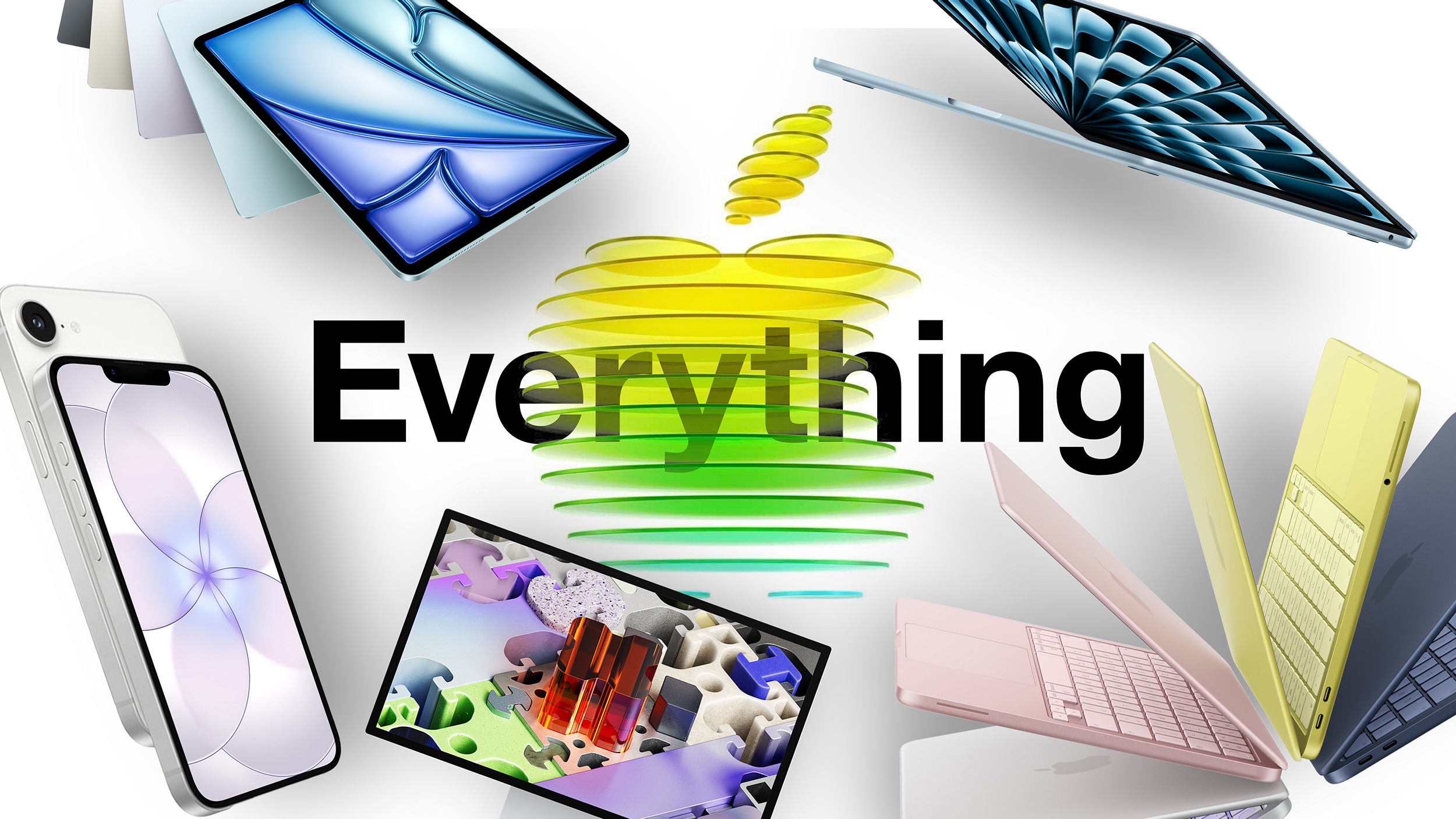
Apple's Biggest Week of 2026: Details on Every New Product Announced

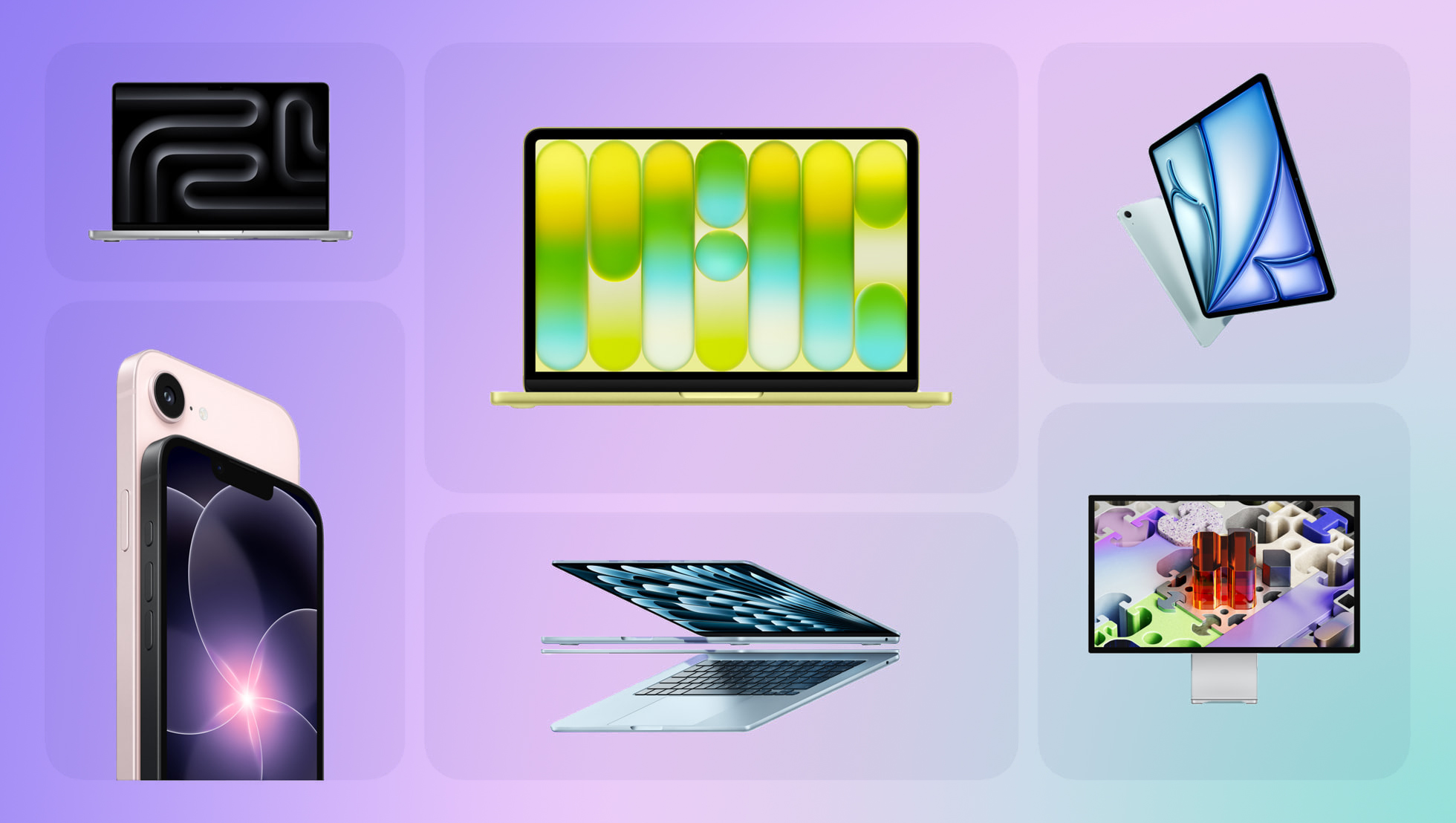
Across Monday, Tuesday, and Wednesday, Apple unveiled seven new products, including low-cost iPhone and MacBook options, new displays, and refreshes for the MacBook Air, MacBook Pro, and iPad Air.


We've rounded up all of our coverage from this week in case you missed any of the product announcements or details.

MacBook Neo


iPhone 17e


iPad Air


Studio Display


MacBook Pro


MacBook Air


Accessories


Other News


More Coverage


Apple CEO Tim Cook shared a wrap-up post on social media, and with pre-orders now live for all of the new products, we're not expecting any additional announcements this week.

Everything Apple announced this week will be launching on Wednesday, March 11, and we'll have more in-depth coverage and reviews of what's new.
This article, "Apple's Biggest Week of 2026: Details on Every New Product Announced" first appeared on MacRumors.com

Discuss this article in our forums

  •  

20+ MacBook Neo Compromises: What You Give Up for Apple's Cheapest Mac

The new MacBook Neo is Apple's most affordable Mac notebook, and at $599, it's priced the same as the iPhone 17e. For teachers and college students, it's even more affordable at $499.


To offer a Mac at such a low price, Apple had to make some compromises, and there are some features that the ‌MacBook Neo‌ is lacking compared to the next most expensive Mac notebook, the MacBook Air.

Processor


  • A18 Pro Chip - Apple is using an A-series chip instead of an M-series chip in the Neo. It has the A18 Pro chip that Apple debuted in the iPhone 16 Pro, but it is a binned version. It has a 6-core CPU and a 5-core GPU, while the ‌iPhone 16‌ Pro chip had a 6-core CPU and a 6-core GPU.

  • RAM - The ‌MacBook Neo‌ has 8GB RAM with no option to pay for more. All other Macs start with 16GB. It still supports Apple Intelligence, because 8GB is the minimum for it.

  • Memory bandwidth - Apple's chips use unified memory that's available to the CPU and GPU. Memory bandwidth in the Neo is 60GB/s, less than half that of the ‌MacBook Air‌.

  • Storage - The ‌MacBook Neo‌ starts with 256GB of storage, and there's only a single 512GB upgrade. Other Macs support much higher capacity SSDs.

  • Wi-Fi - The ‌MacBook Neo‌ has Wi-Fi 6E, but not Wi-Fi 7 because Apple did not include its new N1 networking chip.


Battery and Charging


  • Battery capacity - The ‌MacBook Neo‌ is almost the same size as the ‌MacBook Air‌, but it has a shorter battery life. It lasts for up to 16 hours when streaming video, while the ‌MacBook Air‌ lasts for up to 18 hours. The battery has a 36.5-watt-hour capacity, while the ‌MacBook Air‌ has a 53.8-watt-hour battery.

  • Battery size - Since the ‌MacBook Neo‌ is thicker than the ‌MacBook Air‌, it has even more room for a battery, but Apple didn't max out on battery life, which is likely a cost cutting measure. Apple is using older battery technology or a smaller battery. Battery life should theoretically be even longer because the A18 Pro chip doesn't draw as much power as the M5.

  • No MagSafe - The ‌MacBook Neo‌ is limited to USB-C charging, and it does not include a MagSafe port.

  • No fast charging - Apple ships the ‌MacBook Neo‌ with a 20W power adapter, and there is no mention of fast charging support.


Ports


  • USB-C - There are two USB-C ports, one that's USB 3 and one that's USB 2. The USB3 port supports DisplayPort 1.4 and up to 10Gb/s transfer speeds, but the USB 2 port is limited to 480Mb/s.

  • Display support - The ‌MacBook Neo‌ only supports a single external display at 4K 60Hz, though it may be possible to connect another with a third-party DisplayPort adapter.

  • No Thunderbolt - There are no Thunderbolt ports on the ‌MacBook Neo‌ because Thunderbolt is not supported.

  • No Studio Display - Since the Neo does not have Thunderbolt and is limited to 4K displays, it is not compatible with the Studio Display.


Design


  • Display size - The ‌MacBook Neo‌ has a 13-inch display size, so it is Apple's smallest Mac notebook. The ‌MacBook Air‌ has a 13.6-inch display.

  • Bezels - There is no notch on the Neo, but it does have thick iPad-style bezels at the top, bottom, and sides of the display. The bezel hides the FaceTime camera.

  • Thickness - The Neo is just a little smaller than the ‌MacBook Air‌ when it comes to length and width, but it is thicker at 0.50 inches (vs 0.44 inches for the ‌MacBook Air‌).


Display


  • No True Tone - The ‌MacBook Neo‌ does not support True Tone, which is the white balance feature that adjusts the temperature of the display to match the ambient lighting in the room, making it easier on the eyes.

  • No P3 Wide color - sRGB is supported, but P3 Wide color is not, so the ‌MacBook Neo‌ won't have colors that are as true to life as other Mac notebooks.

  • No ProMotion - Unsurprisingly, the ‌MacBook Neo‌ is limited to a 60Hz refresh rate and it does not support ProMotion.


Trackpad and Keyboard


  • Backlighting - There is no backlight for the keyboard.

  • Touch ID - Touch ID is not included with the base 256GB model, but you can get it by paying an extra $100 for the 512GB model.

  • Trackpad - There isn't a Force Touch trackpad, with Apple instead adopting a less complicated physical Multi-Touch trackpad. The button on the trackpad is an actual button, rather than a virtual button with haptic feedback. There is no pressure-sensing feature, Force clicks, or pressure-sensitive drawing option.


Speakers and Camera


  • FaceTime Camera - The ‌MacBook Neo‌ has a 1080p ‌FaceTime‌ HD camera like older Macs rather than the newer 12-megapixel Center Stage camera Apple has been adding to its newer models. There is no Center Stage or Desk View.

  • Camera light - There's no little light to alert you when the ‌MacBook Neo‌ camera is on, with Apple instead displaying a warning on the menu bar.

  • Speakers - The ‌MacBook Neo‌ has a dual-speaker sound system with speakers that are on the outer sides of the device. The ‌MacBook Air‌ has a four-speaker sound system with richer sound, but both the Neo and the Air support spatial audio.

  • Microphones - There are only two microphones, but Voice Isolation and Wide Spectrum are still supported for better clarity for calls.

  • Headphone jack - There's a 3.5mm headphone jack, but it does not have support for high-impedance headphones.


MacBook Neo Pros


Even though the ‌MacBook Neo‌ has a simplified feature set compared to other Mac models, the price can't be beat. $599 for a Mac is an incredible deal, and the A18 Pro chip is more than adequate for daily use and the type of work that students do.

It's not the best choice for 3D rendering, running local AI models, video editing, or similar creative tasks, but it will do those things at a basic level. It's an ideal MacBook for anyone who doesn't need more than a machine for web browsing and other light work, and it will do everything an iPhone can do. These days, that's quite a bit.

For more on the differences between the ‌MacBook Neo‌ and the ‌MacBook Air‌, we have a dedicated comparison guide.

The ‌MacBook Neo‌ is available for pre-order now, and it is set to launch on Wednesday, March 11.
Related Roundup: MacBook Neo

This article, "20+ MacBook Neo Compromises: What You Give Up for Apple's Cheapest Mac" first appeared on MacRumors.com

Discuss this article in our forums

  •  

Apple's Two New Studio Display Models Feature Different A19 Chips

Apple's press release and marketing materials for the new Studio Display and Studio Display XDR models do not mention which chips are inside the monitors, but MacRumors has confirmed this information in the latest Studio Display firmware.


The firmware reveals that the second-generation Studio Display is equipped with an A19 chip, while the Studio Display XDR has an A19 Pro chip, according to code reviewed by MacRumors contributor Aaron Perris. Rumors had mentioned either the A19 chip or the A19 Pro chip, and it turns out that the two chips are split across the two models.

The original Studio Display from 2022 is equipped with an A13 Bionic chip, which is something that Apple advertised. Apple said the chip enables features such as Center Stage camera framing, Spatial Audio, and "Siri" and "Hey Siri" voice activation for Siri. Apple introduced the A13 Bionic chip in the iPhone 11 series in 2019.

Introduced across the iPhone 17 and iPhone Air models last year, the A19 and A19 Pro chips are much newer. These chips likely help to drive the improved speakers in both new Studio Display models, and they likely enable the camera's Desk View feature, which can show your face and an overhead view of your desk at the same time.

In both new Studio Displays, Apple says the six-speaker sound system delivers 30% deeper bass compared to the previous generation.

It is unclear exactly why the Studio Display XDR has a higher-end A19 Pro chip, but it certainly tracks with this model having more powerful features, such as a 120Hz refresh rate, mini-LED backlighting, and increased brightness.

We will learn more about the new Studio Displays and the hardware inside of them through upcoming reviews and teardowns.

Both new models can be pre-ordered now and launch on Wednesday, March 11.
Related Roundup: Studio Display
Related Forum: Mac Accessories

This article, "Apple's Two New Studio Display Models Feature Different A19 Chips" first appeared on MacRumors.com

Discuss this article in our forums

  •  

Apple Releases macOS Tahoe 26.3.1 With Support for Studio Display and Studio Display XDR

Apple today released macOS Tahoe 26.3.1, a minor update to the ‌macOS Tahoe‌ operating system that came out last September. ‌macOS Tahoe‌ 26.3.1 comes three weeks after Apple launched macOS Tahoe 26.3.


Mac users can download the new software by opening up the System Settings app and navigating to the Software Update section.

According to Apple's release notes for the update, it adds support for the new Studio Display and ‌Studio Display‌ XDR. Apple has also released a firmware update for the new displays.

The new monitors are available for pre-order and will launch on Wednesday, March 11.
Related Roundup: macOS Tahoe
Related Forum: macOS Tahoe

This article, "Apple Releases macOS Tahoe 26.3.1 With Support for Studio Display and Studio Display XDR" first appeared on MacRumors.com

Discuss this article in our forums

  •  

Apple Releases Third macOS Tahoe 26.4 Public Beta

Apple today provided public beta testers with the third release of an upcoming macOS Tahoe 26.4 update for testing purposes. The public beta comes a week after Apple seeded the second beta.


After signing up for beta testing on Apple's beta site, public beta testers can download the updates using the Software Update section in the settings app for each update.

‌macOS Tahoe‌ 26.4 includes several new features. The Compact tab layout has been reimplemented in Safari for those who missed having the option in earlier versions of ‌macOS Tahoe‌, and there is a new Charge Limit feature that lets Mac users select a maximum charge level that ranges from 80 percent to 100 percent.

Apple silicon Mac users will see now see warnings about apps that are still using Rosetta 2, because Apple is phasing out Rosetta after macOS 27. ‌macOS Tahoe‌ is also the final version of macOS that will run on Intel-based Macs, and Apple is working to remove all lingering Intel features.

We could see additional features in upcoming versions of ‌macOS Tahoe‌ 26.4, such as new emoji characters. Apple is expected to test the update for the next several weeks, with a launch planned for the spring.
Related Roundup: macOS Tahoe
Related Forum: macOS Tahoe

This article, "Apple Releases Third macOS Tahoe 26.4 Public Beta" first appeared on MacRumors.com

Discuss this article in our forums

  •  

Apple Releases iOS 26.3.1 and iPadOS 26.3.1 With Bug Fixes and Studio Display Support

Apple today released iOS 26.3.1 and iPadOS 26.3.1, minor updates to the iOS 26 and iPadOS 26 operating systems. The software comes three weeks after Apple released iOS 26.3 and iPadOS 26.3.


The new software can be downloaded on eligible iPhones and iPads over-the-air by going to Settings > General > Software Update.

According to Apple's release notes, the update adds support for the new Studio Display and ‌Studio Display‌ XDR, and it includes unspecified bug fixes.

Apple is also beta testing iOS 26.4 and iPadOS 26.4, major updates that are set to come out this spring.
Related Roundups: iOS 26, iPadOS 26
Related Forum: iOS 26

This article, "Apple Releases iOS 26.3.1 and iPadOS 26.3.1 With Bug Fixes and Studio Display Support" first appeared on MacRumors.com

Discuss this article in our forums

  •  

MacBook Neo Can Only Drive One External Display at 4K 60Hz

Apple's new low-cost MacBook Neo is equipped with the A18 Pro chip that Apple first used in the iPhone 16 Pro, and it's the first Mac that has an A-series chip.


Using an iPhone chip in a Mac comes with some downsides, like external display support. The ‌MacBook Neo‌ supports a single external display with a 4K resolution and 60Hz refresh rate.

The ‌MacBook Neo‌ will not work with the new Studio Display and ‌Studio Display‌ XDR that Apple announced yesterday because both of those are 5K displays, but it will work with affordable USB-C 4K display options from companies like LG, Dell, and Samsung.

There are two USB-C ports in the ‌MacBook Neo‌, but only one supports DisplayPort 1.4 for an external display. An external monitor will need to be plugged into the appropriate port, which is the USB 3 port closest to the rear of the device. There is no Thunderbolt support, which is what other Macs use for multiple displays, and how the ‌Studio Display‌ options connect.

Adding a second display might be possible using a third-party DisplayLink adapter, as has been the case with other Macs with display limitations, but this has not been tested yet.

While there's official support for just one external display, the ‌MacBook Neo‌ can at least drive the extra display and its own built-in display at full native resolution. The ‌MacBook Neo‌ has a 13-inch Retina display with a resolution of 2408 x 1506 at 219 pixels per inch.

The ‌MacBook Neo‌ is priced starting at $599, and it is available for pre-order today from Apple's website. The new Mac will launch on March 11.
Related Roundup: MacBook Neo

This article, "MacBook Neo Can Only Drive One External Display at 4K 60Hz" first appeared on MacRumors.com

Discuss this article in our forums

  •  

Hands-On With the New MacBook Neo

Apple introduced an all-new affordable Mac today, the MacBook Neo. Members of the media were invited to try the new device and other Apple products at events in New York, Shanghai, and London, and MacRumors' videographer Dan Barbera was in attendance. Dan was able to see the ‌MacBook Neo‌ in person, as well as other devices like the new Studio Display XDR.


The ‌MacBook Neo‌ looks and feels a lot like the MacBook Air, because it's almost the same size and has an aluminum chassis. It's thicker than the ‌MacBook Air‌, but it has a 13-inch display, and it also weighs 2.7 pounds.

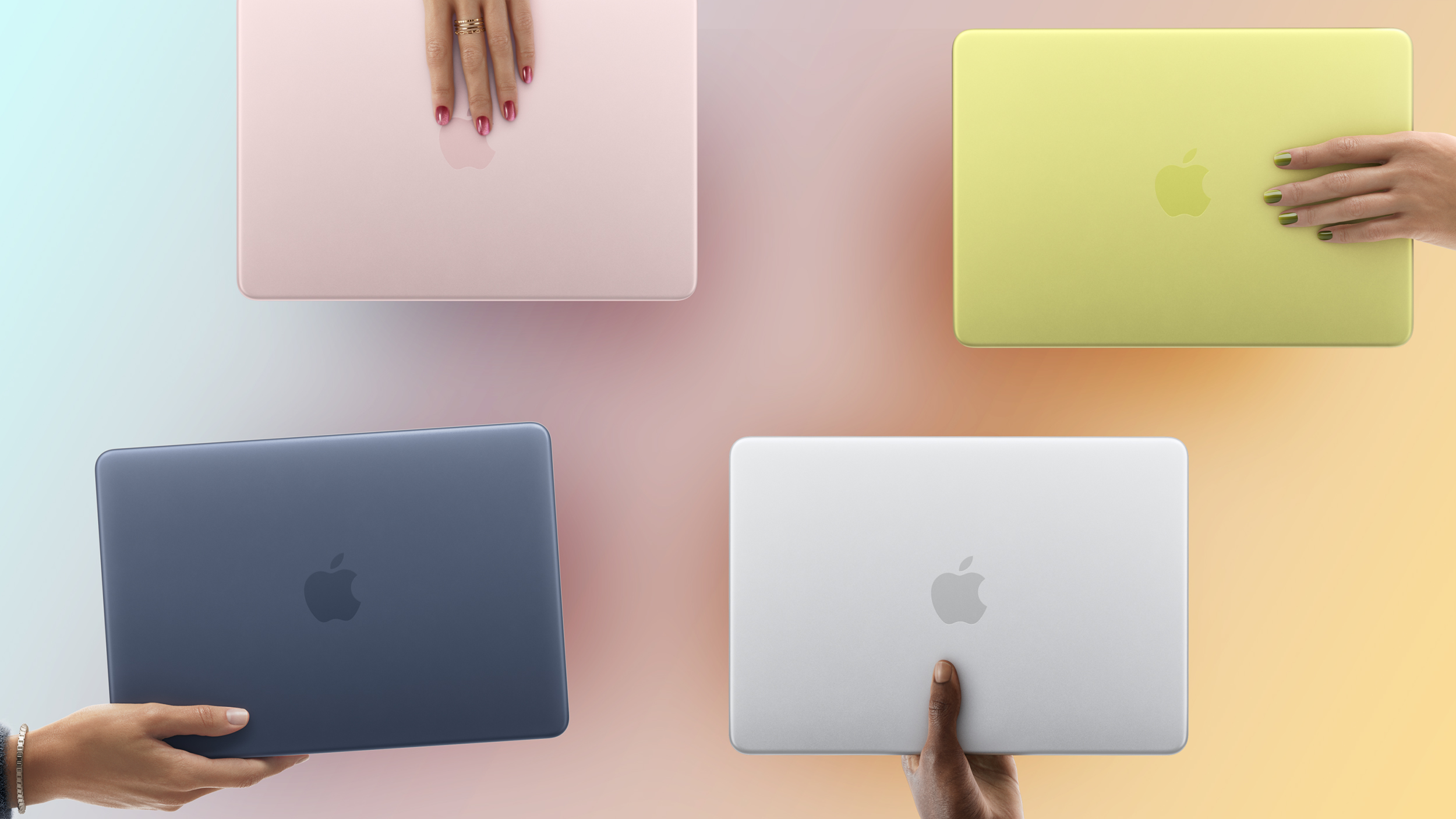
Apple designed the ‌MacBook Neo‌ from the ground up, and it comes in some fun colors like Silver, Indigo, Blush, and Citrus. Each of the notebooks has a color matched keyboard and trackpad, but the keyboard has no backlighting and the trackpad isn't the higher-end Force Touch trackpad Apple uses in its other Macs. It's a physical trackpad with an actual click rather than haptic feedback for presses.

There is no notch, with Apple instead adopting an iPad-style design with thicker bezels that house the front-facing camera. Speakers are located on the exterior sides of the device, which is new, and Spatial Audio is supported. The ‌MacBook Neo‌ has a bit of a cheaper feel compared to the ‌MacBook Air‌ or MacBook Pro because of the thicker bezels and the changes to the trackpad, but it is still an excellent machine for the price.

Apple used the A18 Pro chip in the ‌MacBook Neo‌, which is technically an iPhone chip. It was first introduced in the iPhone 16 Pro, and while it's a powerful chip, it doesn't match the performance of Apple's newer M-series chips. There's only 8GB RAM included, and 60GB/s memory bandwidth, half that of the ‌MacBook Air‌.

Apple says the ‌MacBook Neo‌ is up to 50 percent faster for everyday tasks than the bestselling PC with an Intel Core Ultra 5 chip, which is an apt comparison because this is aimed at people who might instead buy a lower-cost Windows laptop or Chromebook. The ‌MacBook Neo‌ is up to two times faster at photo editing, and three times faster when it comes to on-device AI workloads, according to Apple.

You get a Retina quality display, but only 500 nits brightness and no add-on features like True Tone or P3 Wide color. There are two USB-C ports, but only one is USB3 with DisplayPort 1.4 support. You can connect a single 4K 60Hz display to the ‌MacBook Neo‌.

Battery life is a little low for a device the size of a ‌MacBook Air‌ with an A-series chip, and it lasts for up to 16 hours. Bluetooth 6 and Wi-Fi 6E are supported, so it is compatible with 6GHz networks.

We'll have more in-depth hands-on coverage of the ‌MacBook Neo‌ and Apple's other new products next week.
Related Roundup: MacBook Neo

This article, "Hands-On With the New MacBook Neo" first appeared on MacRumors.com

Discuss this article in our forums

  •  

New M5 MacBook Air and MacBook Pro Get First Pre-Order Offers From Best Buy

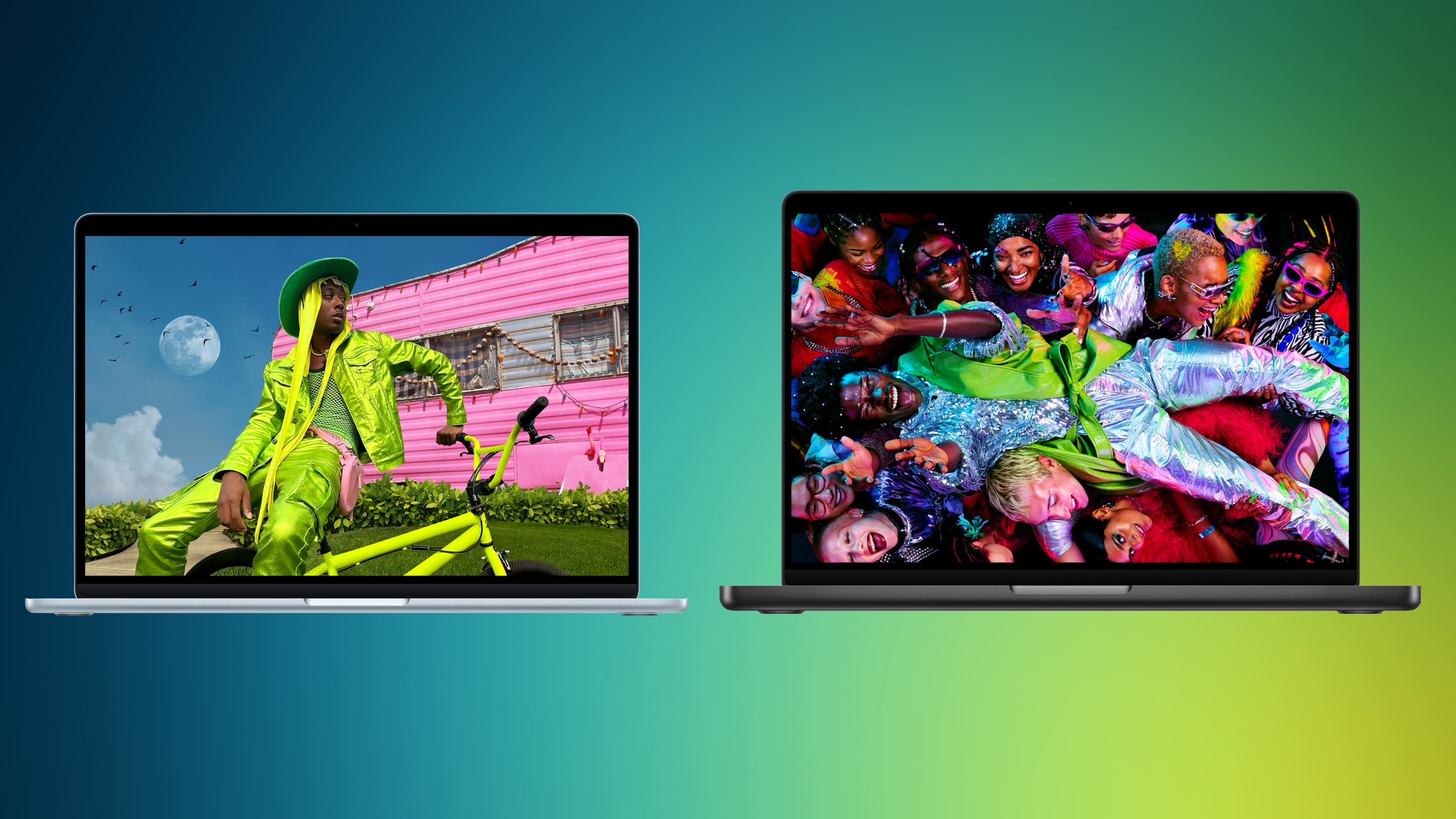
Apple just kicked off pre-orders for the new M5 MacBook Air and M5 Pro/M5 Max MacBook Pro, and Best Buy already has a few offers on these notebooks. You can get a $50 Best Buy gift card when pre-ordering the MacBook Air and a $100 gift card when pre-ordering the MacBook Pro.

Note: MacRumors is an affiliate partner with Best Buy. When you click a link and make a purchase, we may receive a small payment, which helps us keep the site running.
In order to get these deals, you need to pre-order one of the newest MacBooks at Best Buy with a valid e-mail address. The e-gift card will be sent out after you receive the eligible MacBook Air or MacBook Pro, or after you pick it up in a Best Buy store.


In regards to the upgrades, the MacBook Air features performance improvements thanks to the newest M5 chip, as well as Apple's custom N1 wireless chip for Wi-Fi 7 and Bluetooth 6 connectivity.

The new MacBook Pro includes M5 Pro and M5 Max chips, which are up to 30 percent faster when compared to the M4 generation, and up to 2.5x faster than M1 Pro and M1 Max. In terms of design, both the MacBook Air and MacBook Pro keep the same overall designs as previous generations.

M5 MacBook Air


M5 Pro/M5 Max MacBook Pro


If you're on the hunt for more discounts, be sure to visit our Apple Deals roundup where we recap the best Apple-related bargains of the past week.


Deals Newsletter


Interested in hearing more about the best deals you can find in 2026? Sign up for our Deals Newsletter and we'll keep you updated so you don't miss the biggest deals of the season!


Related Roundup: Apple Deals

This article, "New M5 MacBook Air and MacBook Pro Get First Pre-Order Offers From Best Buy" first appeared on MacRumors.com

Discuss this article in our forums

  •  

MacBook Neo vs. MacBook Air Buyer's Guide: 40 Differences Compared

The MacBook Neo is now Apple's entry-level MacBook, undercutting the MacBook Air by $500. To deliver such a dramatically lower price, the ‌MacBook Neo‌ has a significant number of tradeoffs. Here's everything that's different between the two devices.


Apple's introduction of the ‌MacBook Neo‌ expands the company's laptop lineup with a far more affordable entry point, sitting well below the ‌MacBook Air‌ in both price and capability. While the two machines share a similar size and lightweight design, they are aimed at very different types of users. The ‌MacBook Neo‌ focuses on delivering the essentials of the Mac experience at the lowest possible cost, while the ‌MacBook Air‌ offers significantly more performance, features, and flexibility.

Design


The ‌MacBook Neo‌ and the 13-inch ‌MacBook Air‌ have similar dimensions. The ‌MacBook Air‌ remains thinner, but the ‌MacBook Neo‌ has a slightly smaller overall footprint owing to its smaller display. Both machines weigh 2.7 pounds (1.23 kg).


‌MacBook Neo‌ ‌MacBook Air‌
Height 0.50 inch (1.27 cm) 0.44 inch (1.13 cm)
Width 11.71 inches (29.75 cm) 11.97 inches (30.41 cm)
Depth 8.12 inches (20.64 cm) 8.46 inches (21.5 cm)


There are still some notable design differences. The ‌MacBook Neo‌ does not have a backlit keyboard or a haptic trackpad, and only has Touch ID when configured with 512GB of storage for an extra $100. They are also available in different selections of color options, with the ‌MacBook Neo‌'s color extending to the Magic Keyboard in a lighter shade.


‌MacBook Neo‌ ‌MacBook Air‌
Available in Silver, Blush, Indigo, and Citrus Available in Silver, Sky Blue, Midnight, and Starlight
‌Touch ID‌ on 512GB models only ‌Touch ID‌
Magic Keyboard or Magic Keyboard with ‌Touch ID‌ Backlit Magic Keyboard with ‌Touch ID‌
Color-matched Magic Keyboard Black Magic Keyboard
Mechanical Multi-Touch trackpad Haptic Force Touch trackpad with pressure-sensing capabilities
Display "notch"


Display


The ‌MacBook Air‌'s display is slightly larger and supports True Tone and P3 wide color. Both are Liquid Retina displays with 500 nits of brightness.


‌MacBook Neo‌ ‌MacBook Air‌
13-inch Liquid Retina display 13.6-inch Liquid Retina display
(15-inch model also available)
2408 by 1506 pixel resolution 2560 by 1664 pixel resolution
sRGB Wide color (P3)
True Tone technology
Thicker display borders Slimmer display borders


Performance


The ‌MacBook Neo‌ is Apple's first Mac to contain an iPhone chip. The A18 Pro is still a capable chip, but the M5 is around 20% faster for single-core tasks and 80% faster for multi-core tasks. The M5 chip also has more than double the GPU throughput of the A18 Pro and features Neural Accelerators.


‌MacBook Neo‌ ‌MacBook Air‌
Apple A18 Pro chip Apple M5 chip
Made with TSMC's second-generation 3nm process (N3E) Made with TSMC's third-generation ‌3nm‌ process (N3P)
6-core CPU 10-core CPU
5-core GPU 8-core GPU
Neural Accelerators
8GB unified memory 16GB, 24GB, or 32GB unified memory
60GB/s memory bandwidth 153GB/s memory bandwidth


Battery and Charging


The ‌MacBook Air‌ has up to two hours of extra battery life over the ‌MacBook Neo‌, along with support for charging via MagSafe 3 and fast charging.


‌MacBook Neo‌ ‌MacBook Air‌
Integrated 36.5-watt-hour lithium-ion battery Integrated 53.8-watt-hour lithium-polymer battery
16-hour battery life 18-hour battery life
‌MagSafe‌ 3 charging
Fast-charge capable with 70W USB-C Power Adapter or higher
Comes with 20W USB-C Power Adapter Comes with 40W Dynamic Power Adapter with 60W Max


Cameras, Speakers, and Microphones


The ‌MacBook Air‌ has a superior array of camera and audio hardware, resulting in a slightly better experience with video calls, listening to music, and recording audio.


‌MacBook Neo‌ ‌MacBook Air‌
1080p FaceTime HD camera 12MP Center Stage camera
LED webcam indicator light
Desk View support
Dual-speaker sound system Four-speaker sound system
Spatial Audio with dynamic head tracking when using supported AirPods
Dual-mic array with directional beamforming Three-mic array with directional beamforming


Connectivity


The ‌MacBook Neo‌'s connectivity is more limited than that of the ‌MacBook Air‌. While both have two USB-C ports, the ‌MacBook Air‌'s are considerably more capable in terms of data transfer and external display support.


‌MacBook Neo‌ ‌MacBook Air‌
Wi-Fi 6E connectivity Wi-Fi 7 connectivity
One USB 3 (10 Gb/s) port and one USB 2 port (480 Mb/s) Two Thunderbolt 4 ports (40 Gb/s)
Support for one 4K external display at 60Hz Support for two 6K external displays up 60Hz or 4K at 144Hz
3.5mm headphone jack 3.5mm headphone jack with support for high-impedance headphones
Magnetic ‌MagSafe‌ 3 charging port


Other Differences


The most significant difference between the ‌MacBook Neo‌ and the ‌MacBook Air‌ is price: The ‌MacBook Air‌ costs $500 more. It is also much more configurable, with higher amounts of memory and storage available.


‌MacBook Neo‌ ‌MacBook Air‌
Ambient light sensor
256GB or 512GB storage 512GB, 1TB, 2TB, or 4TB storage
Starts at $599 Starts at $1,099


Which to Choose?


Choosing between the ‌MacBook Neo‌ and the ‌MacBook Air‌ primarily comes down to how demanding your needs are and how much you want to spend. The ‌MacBook Neo‌ is clearly positioned as Apple's most accessible notebook, delivering the core Mac experience at the lowest possible price. For users who primarily need a reliable computer for basic everyday tasks, the Neo provides enough performance. Its lower cost also makes it an appealing option for households purchasing multiple computers, such as for kids or family use.

For first-time Mac owners, the ‌MacBook Neo‌ is also likely to be the most sensible starting point. It offers the same software experience as Apple's more expensive laptops, allowing new users to explore the platform without a large financial commitment. In many cases, buyers moving from inexpensive Windows laptops or Chromebooks will find the Neo significantly faster and better built than devices in the same price range.

The ‌MacBook Air‌, by contrast, is aimed at users who expect higher performance, greater longevity, and a more feature-rich, premium experience. Its more powerful M5 chip, memory options, larger display, and significantly more capable connectivity make it far better suited to multitasking, professional workloads, and creative applications. Users who regularly work with large files, run demanding software, connect multiple external displays, or want a machine that will remain comfortable to use for many years will benefit from choosing the Air.

In practical terms, the ‌MacBook Neo‌ is best viewed as a budget entry point into the Mac lineup, while the ‌MacBook Air‌ remains Apple's mainstream ultraportable for most people. Buyers who simply want a dependable Mac for everyday computing can save money with the Neo, but those who want stronger performance, better hardware features, and a laptop that will scale to more demanding tasks over time should consider spending the extra money on the ‌MacBook Air‌.
Related Roundups: MacBook Air, MacBook Neo
Related Forum: MacBook Air

This article, "MacBook Neo vs. MacBook Air Buyer's Guide: 40 Differences Compared" first appeared on MacRumors.com

Discuss this article in our forums

  •  
❌