Reading view

Peace plan has caused more conflict, says thinktank.

Stark figures show expansion of fighting groups under ‘Paz Total’.

Comandos de La Frontera in Putumayo, one of many armed groups in talks with the Colombian government: Photo credit: Bram Ebus.

Colombia’s illegal armed groups have grown by 84 per cent during the three years of the Petro government’s Paz Total plan, thinktank Fundacion Ideas para la Paz (FIP) announced last week.

The alarming data showed the country’s main guerrilla factions and organised crime gangs totalled 27,000 active members at the end of 2025, adding 5,000 new recruits in just 12 months.

And humanitarian crises associated with the expansion of illicit economies, such as combats, displacements or confinement of communities, attacks on social leaders and extortion were also on the rise.

According to Gerson Arias, co-author of FIP’s El Deterioro de la Seguridad Marca el Inicio de 2026 (Deteriorating Security Marks the Start of 2026), the endless peace talks played out under President Petro’s expansive Paz Total policy had only incentivised armed groups to grow in terms of fighters, weapons and territory.

Paz Total was based on a state ceasefire – but without any conditions put on the groups, such as ceasing recruitment, including child recruitment, or ending expansion,” he told The Bogotá Post.

“As such, the policy gave a gigantic strategic advantage to the armed groups to strengthen their fighting forces.”

Big surge

The biggest surge was in the organised crime group Clan de Golfo, up by 30 per cent to 9,840 active agents, reported FIP (see chart below).

Next in terms of size was the ELN, the guerrilla group dominating the eastern borderlands of Colombia, with 6,810 members, an increase of 9 per cent.

Dissident FARC groups also grew, some by almost a quarter, such as CNEB (Coordinadora Nacional Ejercito Bolivariano) which despite drawn-out peace talks with the Petro government – and numerous plans for a disarmament – ended the year 25 per cent bigger than started, now numbering 2,089.

And these were probably underestimates, said Arias. The FIP figures were based on military and intelligence data collected annually since 2002,and generally considered to be lower than the actual numbers.

“We tend to undermeasure illegal activity. It’s impossible to say with precision, but we would say the real data could be 20% or 30% higher,” he concluded.

All of Colombia’s major armed groups have grown in the last year. Credit: FIP.

Unlucky 13

These numbers included both armed fighters – often uniformed and carrying heavy weaponry – and support members tasked with infiltrating civilian communities to “ensure compliance”, often carrying pistols. Armed groups were increasingly deploying explosives by drones.

According to the FIP report, none of the negotiation processes had managed to curb their recruitment capacity.

Territorial expansion had also triggered disputes over illegal gold mining, coca, and trafficking routes. The FIP report identified 13 zones where two or more groups were facing off, more than twice the number of disputed territories that Petro inherited from the Duque government in 2022.

Top in terms of combat last year were Catatumbo in Norte de Santander, and areas of Guaviare, Cauca, Nariño, Valle and Arauca (see map).

But even departments considered peaceful in recent years, such as Tolima and Huila, were being drawn back into the fray, said Arias.

This rise in conflict brought a host of humanitarian impacts. Armed groups strictly controlled their zones, at times displacing or confining populations, but also imposing daily controls such as travel permissions and ID cards.

Last year, according to UN figures quoted by FIP, one million mostly rural Colombians were affected by armed group controls, tripling the number recorded in 2024.

Colombia's 13 hot zones at the end of 2025 (marked in purple) - double than in 2025. Credit: FIP
Colombia’s 13 hot zones at the end of 2025 (marked in purple). Credit: FIP.

Civilians in the crosshairs

And according to Arias, the government had itself increased the risks to civilians by involving them as third parties in the peace talks while failing in any robust plan to pacify the zone.

“Petro reached partial agreements with the groups – even while they were still armed, still controlling, extorting, confining and pressuring civilian communities. There was no cost to the armed groups,” said the researcher.

Part of the problem was that Paz Total had initially failed to link to any coherent military strategy that could had protected civilian communities. This had put civic leaders “in the crosshairs of armed groups” as one side accused them of siding with the other.  

The statement is backed by a graph showing a year-on increase since 2022 in attacks both between armed groups, and against civilians and state forces. Last year there were 150 attacks on civilian targets.

In fact, by Arias’s estimate Colombia had gone back to 2011 in terms of the numbers of non-state armed actors – 27,000 – potentially in conflict.

That compared to a recent low of 12,800 combatants in 2018, two years after former president Santos signed the 2016 peace deal with the FARC guerrillas.

From bad to worse

In fact, to explain the current situation, Arias pointed to failures in the both the current administration and the previous right-wing government under Ivan Duque.

Taking over in 2018, Duque rolled back many of the agreements made with the FARC sending many ex-combatants back to the bush along with a wave of new combatants.

But then left-leaning Gustavo Petro, taking over in 2022, surprised even his own military advisers by declaring a unilateral ceasefire. This was the opening salvo of the Paz Total policy which announced negotiations with armed groups and criminal gangs on multiple fronts – in some cases even without informing them.

Petro’s plan was conceived “with good intentions”, said Arias, but had put misplaced trust in armed groups busy enriching themselves by illegal activities and with little incentive to demobilize.

By comparison, during the 2013-16 process with the FARC, the military forces under Santos had continued operations against the guerrilla up until the final signing: “This pressure incentivised the FARC to take serious decisions in terms of the peace process,” he said.

Graph showing year-on increase in conflict events in Colombia. Credit: FIP

Too little, too late

The failings of Paz Total were apparent on the ground in the first few months of inception in 2022, with community organisations raising the alarm over the increased fighting between groups.

It took until late 2024 for the state military to step up offensive actions in areas such as Cauca, with battles against the dissident FARC factions of Ivan Mordisco. Then, in early 2025, the Catatumbo region of Norte de Santander caught fire with fierce combat between the ELN and FARC 33, leading to the largest humanitarian crisis in Colombia’s recent history.

But it took until August last year for President Petro himself to acknowledge that the policy had “not achieved peace”.

During 2025 military actions increased by 30 per cent, but with reduced state forces – many experienced soldiers and commanders had left – facing stronger armed groups, said Arias.

“The offensive came slowly and without an analysis of what was required to combat the strengthened armed groups.”

“Years of intelligence capacity was lost, along with military presence and air deployment. This explains why – despite the offensives – there are few concrete improvements for many communities.”

For soldiers on the ground, the job got harder under Paz Total with a strengthened enemy and less military intelligence to rely on. According to President Petro’s own presentation to the Trump Whitehouse early this month, 360 state forces have been killed “in the fight against drug trafficking” in the last three years, with 1,680 wounded.

But even away from the front line, Paz Total was not up to the monumental task of negotiating peace with multiple armed groups given that most governments had failed to pacify even one.

Illegal gold mining barge in Guainia. In many parts of Colombia, control of illicit economies have proved more tempting for the armed groups than the peace process. Photo: S. Hide.

At whatever cost

Paz Total never evaluated the institutional capacity required. It’s good to say: ‘we have to negotiate with everyone’. But that requires a method,” said Arias.

The government often pushed talks ahead even without any legal framework that would allow, constitutionally, the state to make peace with certain criminal gangs, or groups of recycled combatants that had previously demobilised. This created a credibility gap which continued to undermine the peace initiative.

“Even today, no group has taken a serious position on disarming or demobilisation or reducing violence,” said Arias.

FIP also questioned the government’s own seriousness in finalizing any negotiations, terming Paz Total an “electoral peace”; endless rounds of talks through the upcoming election period.  

It’s a strategy Arias condemned: “This government seems intent on continuing the process at whatever costs and put the burden of resolution on the next government. This is politically irresponsible.”

Lack of concrete results could also taint future processes, he said.

“The poor results have thrown doubt on the idea that political solutions to conflict is the best route, which is very worrying, and eventually exposes communities to more risk.”

His main message – and the key finding of the FIP report – was that ending conflict in Colombia required more than goodwill, he told The Bogotá Post.

“It’s incoherent to talk of ‘peace or security’. We need to talk of ‘peace and security’. Without that, we’ve gone backwards.”

The post Peace plan has caused more conflict, says thinktank. appeared first on The Bogotá Post.
  •  

Why You Should Check Out Festival Estéreo Picnic 2026 in Bogotá

Festival Estéreo Picnic 2026 is nearly here, and is a great way to find out more about Latin music alongside serious international superstars

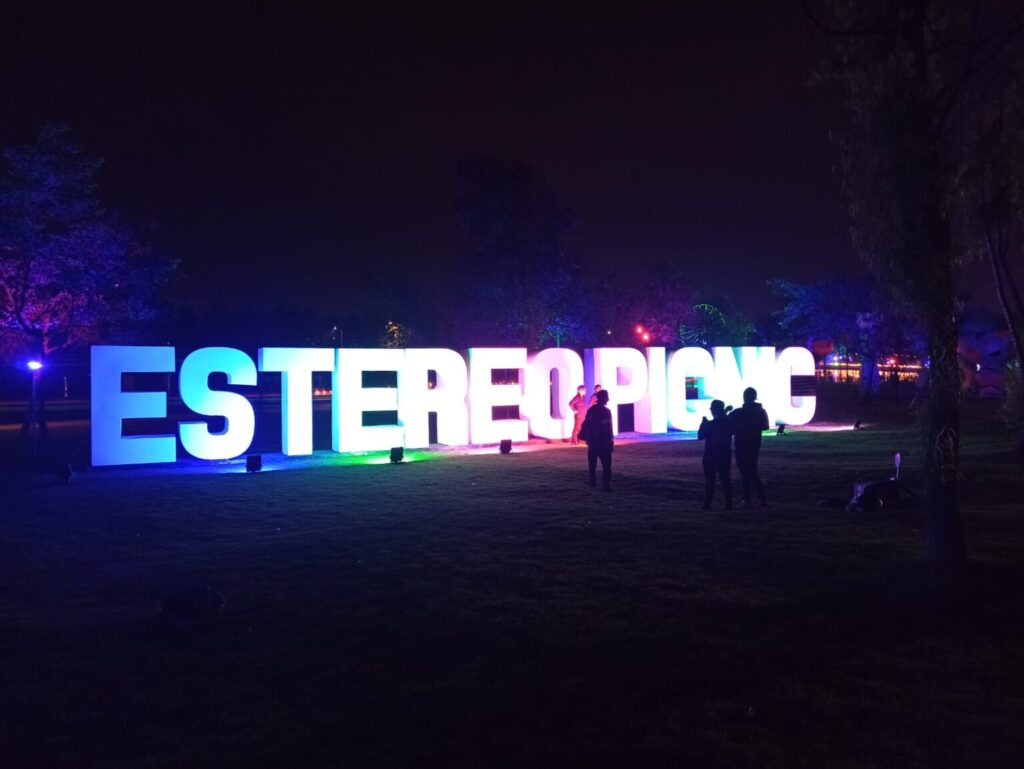
Festival Estéreo Picnic 2026 is only a few weeks away now, with artists including Tyler, the Creator and Sabrina Carpenter topping a typically star-studded bill on the 20th-22nd of March. Having cemented its place in the centre of Bogotá, the event continues to be the biggest draw in town.

Festival Estéreo Picnic 2026 in Bogotá is just a few weeks away

This year, it’s a three-day event. That seems like a good move, concentrating quality into a long weekend rather than stretching things over four days. Adult tickets start at COP$523,000 for a single day and are available online via Ticketmaster here

Full fest regular passes are at COP$1,413,000 and Sat-Sun at COP$939,000. VIP rates are significantly higher, with a full 3 day pass clocking in at COP$2,899,000. Prices will increase in the coming weeks.

Cultural tourism is now a heavyweight part of the sector and is rapidly diversifying away from purely traditional events like Barranquilla Carnival. That means a lot more travellers timing trips to coincide with festivals like Estéreo Picnic.

It’s easy to see why. Not only do you get a stellar international lineup, but also a peek at the flow of a Latin crowd. With prices competitive compared to North America and Europe, it’s a good way to see international stars along with your holiday.

What is Festival Estéreo Picnic in Bogotá like?

In a word: fantastic. Since the move back to the heart of the city, everything now flows pretty much seamlessly. Considering the size of the event, this is quite an achievement. It’s a cashless wristband affair, meaning you don’t have to worry about carrying too much cash.

There’s two big stages as well as a frequently interesting third stage set behind the second stage, often home to some of the more quirky and/or local acts. Hometown hip-hoppers La Etnnia’s set in 2024 was emblematic of that.

Of course, you’ll find getting to the front tricky with thousands of people in front of you, but there’s no VIP barriers to contend with and good views of most stages across the site. Bands are timed to avoid clashes, so you should be able to catch everyone on your list, even if from far away and there’s little dead time to contend with.

There’s even a (sort of) beach!

Food and drink is reasonably priced: you won’t be able to find a corrientazo bargain, but neither is it airport pricing. There’s a wide selection of local chains and some internationals with all tastes catered for, usually including fully vegan stands. The park’s normal drinking water fountains keep running through the festival too, with long lines.

If you’re getting tired after hours in a field, there are lots of seated spaces or grass to lie on, as well as tents in which to keep warm or shelter from rain. If you find yourself between bands, there’s a wide selection of shops and stalls to peruse. If things are really going south, there are dedicated chill-out spots and medical support.

Who’s headlining Festival Estéreo Picnic 2026 in Bogotá?

Festival Estéreo Picnic 2026 will be starting off front foot forward, with Tyler, The Creator headlining Friday night. Kiwi popster Lorde is the undercard here, with Turnstile bound to attract a big audience, given how much of a rock city Bogotá is.

On Saturday night, traditionally the biggest party of the weekend, the festival is going back to a tried and trusted favourite: The Killers. They’ve played Colombia a half dozen times over the past decade, so this isn’t breaking new ground, but will be popular.

There’s plenty of international quality down the bill on the middle day too, with Swedish House Mafia likely to go down an absolute storm, The Whitest Boy Alive popular and Tom Morello guaranteed to make a political statement.

For the final night, there’s a mix of contemporary talent and big name legends. Sabrina Carpenter ticks the first box, while Skrillex, Deftones and Interpol tick the latter. Scottish Britpop survivors Travis are timing things perfectly for a rendition of Why Does It Always Rain On Me.

Who else should I check out at Festival Estéreo Picnic 2026?

So, there’s plenty of well-known names you’ll recognise from international charts, but what about the local and Latin talent? After all, you can catch many of the big names around the world, but this might be your only chance to check out local talent.

These bands are usually scheduled earlier in the day, giving you the perfect excuse to rock up early and miss the queues for peaktime entrance around 6pm. Sadly, the local scene isn’t always the best attended, meaning that it’ll be easy to get up nice and close for most of these bands.

Nicolás y los Fumadores are as classic rolo rockcito as they come and command a strong following in the capital. 80s-infused Pirineos en Llamas are popping over from Medellín. Up-and-coming popster Manú is touring last year’s album, while Zarigüeya mix pop with carranga rhythms.

Viral Mexican sensation Macario Martínez is a young version of the classic Latin pop-rock crooners of yesteryear.  From Quito is Machaka, highlighting Ecuadorian and wider Latin culture via tropipop. Spain is represented by Guitarricadelafuente and Judeline.

Cult kitsch octogenarian Peruvian legend La Tigresa Del Oriente plays the cabaret tent. It’s hard to describe precisely what she’s like, as she ploughs her own furrow, but this will be packed and spectacular. FEP fixture La Ramona will also play there. DJs such as Briela Veneno, Babath and Silvia Ponce are also onsite for electronica fans.

You need to see La Tigresa to understand her

The post Why You Should Check Out Festival Estéreo Picnic 2026 in Bogotá appeared first on The Bogotá Post.
  •  

Restorative justice in Colombia: Victims, former combatants come together in Granada

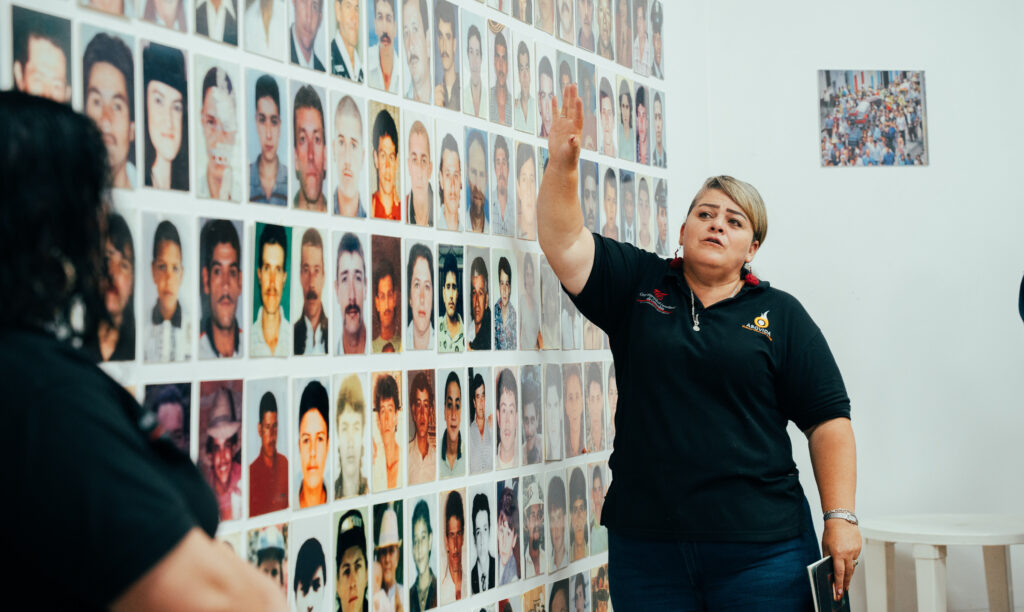
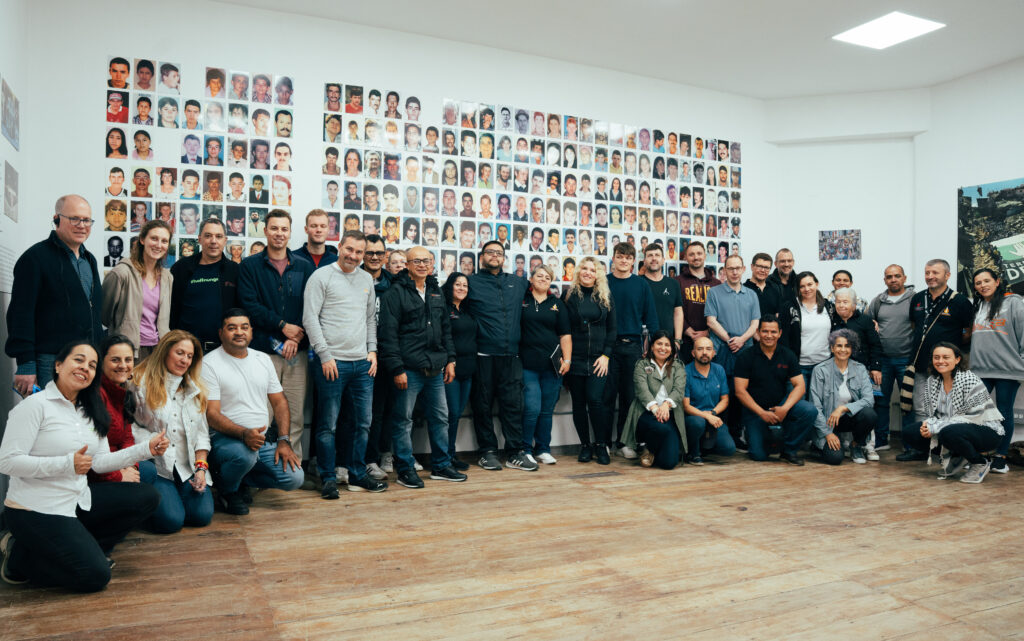
Photos of victims from Granada, Antioquia killed in Colombia’s armed conflict. Image credit: Jonathan Hernandez Nassif.

Inside the Salón del Nunca Más (Hall of Never Again), where the faces of victims of Colombia’s half-century-long internal conflict stare silently from their pictures hung along the walls, former combatants, members of the security forces, and survivors of the armed conflict sat together on February 2 to talk. 

This wasn’t a hollow symbolic gesture, nor a staged act of reconciliation. It was something far more fragile, and far more real: an uncomfortable, human exercise in restorative justice.

The meeting in the hall took place in Granada, a municipality that endured some of the worst violence of Colombia’s long-running conflict. Between 1980 and the mid-2000’s, this corner of eastern Antioquia was caught between the crossfire of guerrilla groups, paramilitaries, and state forces. 

The result was mass displacement and violence. An estimated 90% of rural residents and 70% of the urban population were forced from their homes, nearly 3,000 people were disappeared, 460 were victims of selective killings, and dozens of kidnappings and sexual assaults left a community deeply fractured.

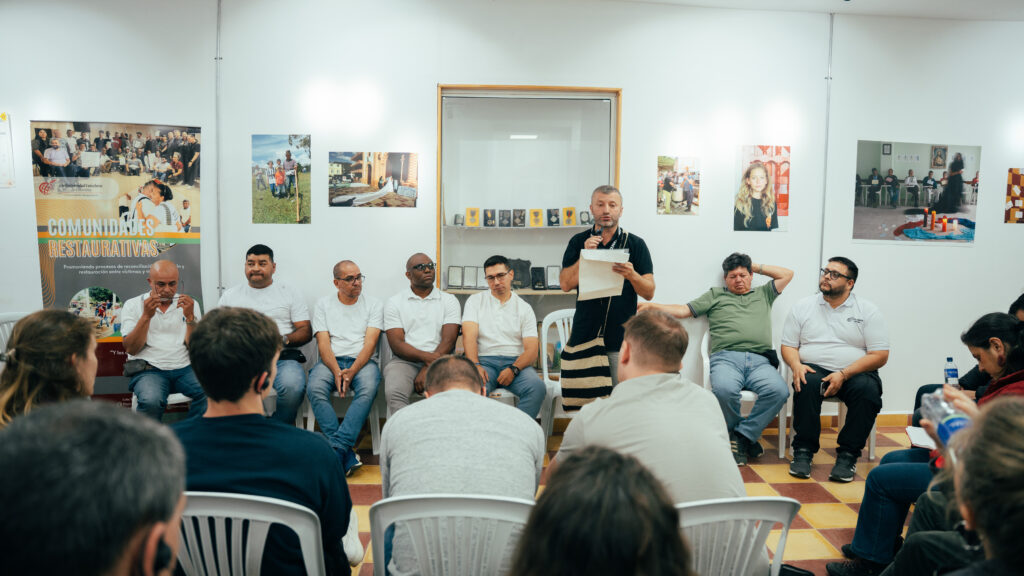
Now, ASOVIDA, the local victims’ association, together with representatives from Comunidades Restaurativas, a program supported by Prison Fellowship Colombia, brought together victims of the conflict, former combatants from the demobilized Revolutionary Armed Forces of Colombia (FARC), and former members of Colombia’s security forces appearing before the Special Jurisdiction for Peace (JEP). 

While participants meet regularly throughout the process, the February 2 gathering marked the culmination of the process and took the form of a symbolic celebration.

“This place is sacred”

The gathering opened with words from Gloria Ramírez, a community leader, member of ASOVIDA, and a victim of forced displacement. She reminded those present that this was no ordinary meeting hall.

“This place is sacred,” she said. “We are not here to victimize ourselves again. We are here to find tools to move forward.”

In Granada, memory has become a form of resistance. For more than 18 years, victims groups have worked to transform grief into collective action, often under threat, often in silence. Gloria admitted that for a long time, the idea of sitting across from those who caused the harm felt impossible.

“We were terrified of getting close to them,” she said. “But we understood that without truth, there is no path forward.”

That insistence on truth echoed throughout the encounter. For the victims, reconciliation does not mean forgetting, nor abandoning the most painful questions: what happened, why it happened, and where the bodies of the disappeared are located.

Walking through the hall makes that tension visible. Archival photographs show war-battered streets and faces of victims and their loved ones frozen in grief. Yet alongside them are images of community members rebuilding together, evidence of resilience layered on top of loss.

Comunidades Restaurativas gathers victims and former combatants of Colombia’s armed conflict in an effort to promote restorative justice. Image credit: Jonathan Hernandez Nassif.

The long road to restorative justice

The Comunidades Restaurativas program, or “Communities of Reconciliation,” did not arrive in Granada to open arms. It emerged from a recognition that traditional justice mechanisms often fail to fully address victims’ needs, that legal rulings alone do not always translate into a sense of reparation or closure.

Its early attempts to convene dialogue sessions and community meetings between victims and former perpetrators were met with rejection. The community was not ready to receive their victimizers. Trust had to be built slowly, conversation by conversation.

A turning point came on September 23, 2017, when former FARC members publicly asked for forgiveness inside the town’s church, led by demobilized guerrilla commander José Lisandro Lascarro, known by the nome de guerra “Pastor Alape”. Granada was later declared a “Territory of Peace,” and the Day of Forgiveness and Reconciliation was formally established.

Since then, between 50 and 60 former guerrillas, paramilitaries, and ex-members of the security forces, have taken part in symbolic acts of victim reparation. 

Many have contributed to rebuilding community spaces, gestures meant to acknowledge responsibility rather than erase the past.

“They were not mistakes. They were actions.”

One of the most powerful moments of the gathering in February was the intervention of Gabriel Montaño, who is appearing before Colombia’s Special Jurisdiction for Peace in connection with extrajudicial executions. 

Montaño reflected on his responsibility. “I used to think what we had done were mistakes,” he said. “Today, I understand they were not mistakes. They were actions, and those actions caused profound harm.”

His words captured a core principle of restorative justice: taking responsibility without euphemisms.

“I am responsible for what I did,” Montaño added. “And part of this process is learning to live with that truth—without ever forgetting the victims.”

For those listening, such acknowledgment does not erase pain. But it shifts the conversation.

“When someone looks you in the eye and says, ‘Yes, I did this,’ it changes the possibility of moving forward,” said Sonia Suárez, a member of ASOVIDA.

Survivors, not enemies

William Forero, a former FARC combatant who is now a community leader, offered a reframing that resonated across the room: moving beyond the language of “victims and perpetrators” to recognize one another as survivors of the war.

According to Forero, the conflict cannot be reduced to a simple battle between good and evil.

“Most of those who carried weapons were pushed there by a system that denied them opportunities,” he said.

In Granada, the war did not arrive as an external invasion. It was local young people who ended up on opposing sides.

Granada became a corridor of violence largely because of its strategic location in eastern Antioquia. 

Situated along key routes connecting Medellín with the Magdalena Medio region and the eastern plains, the municipality served as a passageway for armed groups seeking territorial control, mobility, and access to supply lines. 

Its rural geography, combined with a weak state presence during the height of the conflict, made it a contested zone for guerrilla groups, paramilitary forces, and state security forces alike. 

Control over Granada meant control over transit routes, local populations, and strategic depth, placing the civilian community at the center of competing military and political interests.

Comunidades Restaurativas gathers victims and former combatants of Colombia’s armed conflict in an effort to promote restorative justice. Image credit: Jonathan Hernandez Nassif.

Remembering, so it does not happen again

The meeting closed around a shared conviction: memory should not trap communities in pain, but prevent repeating the offenses.  

In Granada, roads once used for war are being reimagined as paths toward reconciliation. Spaces of mourning are turning into places of collective learning.

“War is not welcome here,” one community leader said at the end of the event. “We do not want to leave our children a territory marked by violence. Our inheritance will be peace.”

In a country where armed conflict persists and political polarization runs deep, what is happening in Granada offers an uncomfortable but powerful lesson: reconciliation cannot be decreed from above.

It is built slowly, when former enemies choose to sit face to face and decide to speak.

The post Restorative justice in Colombia: Victims, former combatants come together in Granada appeared first on The Bogotá Post.

  •  

Colombian Elections 2026: How do they work?

Colombia is off to the polls in a little under a month, but what’s at stake and what could happen? And why can’t you have a drink while watching results roll in?

Sunday March 8th will be the first of three elections in Colombia. Photo: Element5 Digital on Unsplash

Every Colombian over the age of majority (18) and with a correctly registered cédula ciudandanía can vote. In return, each voter gets a half day off work. Non-citizens are not eligible to vote in national elections, but holders of resident visas will be able to vote in next year’s local elections.

The polls are open from 8am until 4pm and counting is usually very fast with the first results coming in just an hour or so later. Due to the PR system (see below), final results come through in the week. 

Land and fluvial borders will be closed for Colombian nationals on the day of the election, although foreigners can cross. From the Saturday afternoon before voting until the Monday morning, ley seca will apply, meaning no alcohol sales in bars, restaurants or shops. That applies for everyone, so no representation or boozing.

Oversight is carried out by the CNE (Consejo Nacional Electoral). In order to do this over the vast territory and number of stations, over 800,000 citizens are selected to be vote-counters. This is similar to jury duty in other countries and is compensated with a day off as well as a compulsory day of training a couple of weeks beforehand.

As the electorate is growing, there are now some 13,000 voting sites across the country, most with multiple voting tables. Colombians have to vote where their cédula is registered, so don’t be surprised to see some people trekking to other cities if they forgot to update their registration.

Some parties run a closed list system, meaning you simply vote for them, whereas others have open lists, meaning you vote for the party and can also vote for your preferred candidate within the party. For closed lists, the party will decide who enters congress, with an open list it will be done in order of preference.

A smidgen under 50% turnout is common for house elections, with higher figures expected for the presidential elections later this year. The Colombian parliament is a bicameral system with the Senate acting as the upper and more powerful house and the Cámara the lower house.

Most parties do not really have well-defined manifestos as such, although better-funded candidates will give a range of positions on matters. In general, there will simply be slogans and general aims that give voters an idea of where their candidates stand.

Who’s up for election?

With a PR system in place there are a plethora of parties to peruse. The country was dominated for decades by the Conservadores and Liberales and both remain strong across the country. In recent years they’ve been joined by the Centro Democrático as the third force. Expect all three to do well.

Mid-level parties include the likes of the right-wing Cambio Radical, particularly strong on the Caribbean, centrist (and not ecologically centred) Alianza Verde and ex-president Santos’ centrist partido de la U. The last election saw the leftist Colombia Humana rocket up to join these blocs.

Then there are the smaller parties, often operating essentially as almost one-man-bands. These usually have an enormous amount of support in a particular area or for a certain candidate but fail to translate this to a wider audience. It’s common to see them banding together, as with the governing coalition Pacto Histórico.

Finally, there are guaranteed seats in both the Senate and Cámara for certain groups and people. This year sees the Comunes party no longer receiving an automatic five seats in both houses that they had in the last two votes as part of the peace process. 

If you are a fan of PR, this system allows a diverse number of voices to be heard and limits the power of government, especially when there is opposition to their plans. For those more cynically-minded, it is a way to make sure that little gets done and few significant bills are passed.

There’s also the curious option of voto en blanco. Different from a spoiled vote, which is simply disregarded, this is an active protest. If it ranks highest in any race, then a rerun of the election must take place within a month with entirely new candidates and/or party lists. 

Colombian Senate Elections 2026

The Senate now has 103 seats (known as curules) and is the upper house in the bicameral system. Of those, a straight 100 are chosen by the electorate as a whole, while Indigenous communities select a further two and the runner-up in the presidential election will receive the final seat.

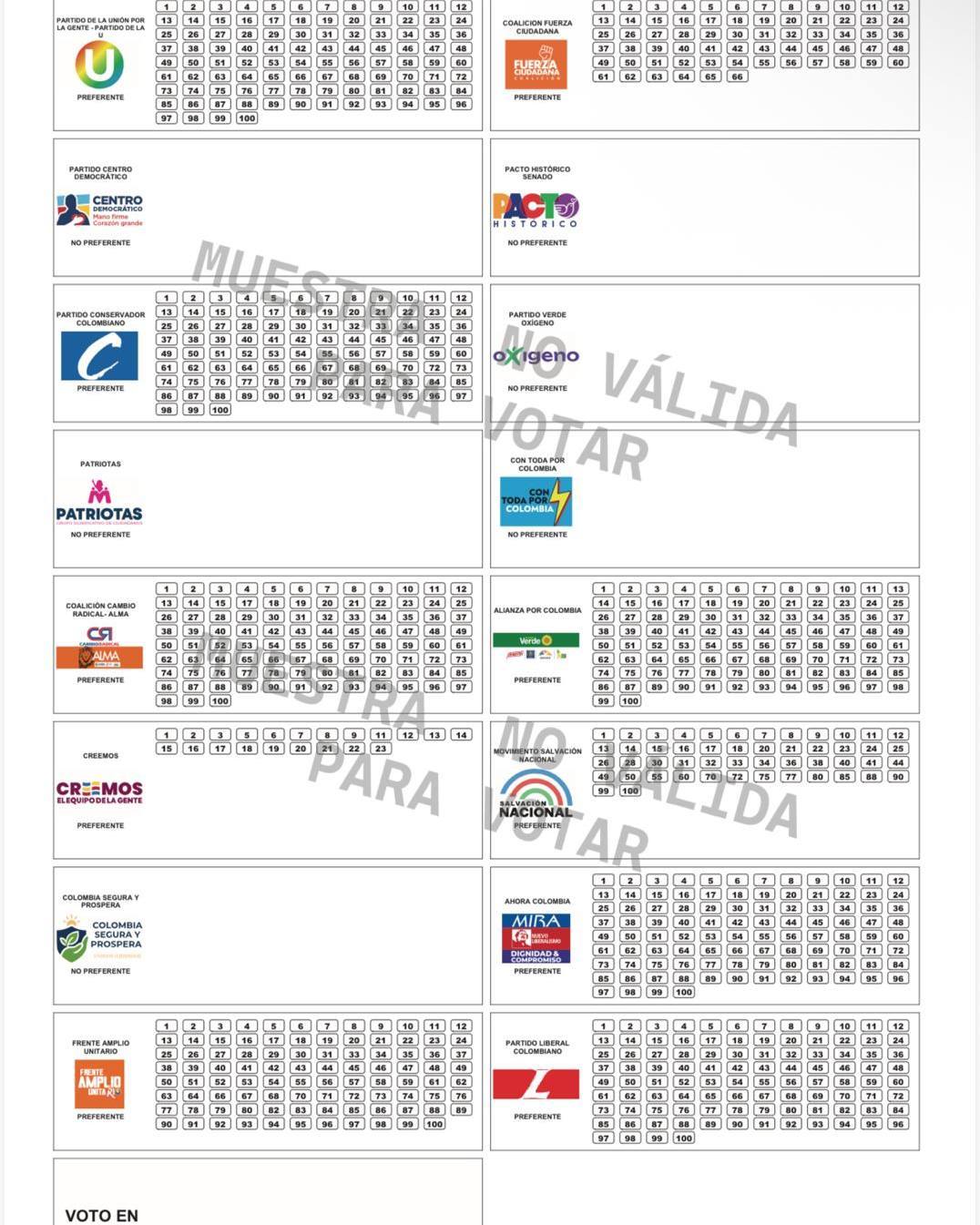
The voting list for elections in Colombia in 2026
The tarjetón for voting in the Senate. Photo courtesy of the Registraduría via Facebook

The Senate currently boasts a whopping 17 parties, but only six of those have double figure representation with the Conservadores’ 15 being the biggest single group. 26 parties are running 1,000 candidates between them this time. Voting is done on a national basis and tallied up across the territory, meaning this takes a little while to work out.

While there is a diverse group of parties, they hang together in loose blocs roughly delineated as government, opposition and neutral. With the government only controlling 34 curules and the opposition 24, the neutrals are incredibly important for horse-trading.

This will be a huge litmus test for the ruling leftist bloc. They will lose their guaranteed  Comunes seats, so any further losses will be highly problematic. On the other hand, gaining curules would be a huge shot in the arm in terms of public support, hence why they are campaigning in places like Huila, outside of their traditional strongholds.

The most likely outcome is that there will be little change in the makeup of the Senate, with neither the government nor opposition likely to take outright control or make large gains. Whichever of those two groups increases their representation will quickly turn it into a sign that they are on the right track and use that as support for their presidential campaign.

Cámara de Representantes election Colombia 2026

The lower chamber, too, is also up for election. It is significantly larger, with 188 seats and 23 parties. The government is also in a minority here and relies on support from independents to get things done. There are over 2,000 candidates representing nearly 500 parties, or listas of similar candidates.

The key difference in voting here is that it is largely territorial, with 161 seats divided between the departments and Bogotá, DC. The latter returns the most seats, with 18, closely followed by Antioquia with one fewer. Colombians living abroad and voting in embassies get one between them

However, these are not equal, as departments receive at least two seats, meaning Vaupés gets one representative for every 20,000 or so people, while the national average is more like 300,000. Changes in population have led to odd situations like Caldas returning more representantes (5) than Cauca (four) despite only having ⅔ of its population.

Then there are the special seats. Again, the Comunes party will lose their five extra seats in this term and it is also the last election to feature the 16 seats reserved for conflict victims. Colombians of Afro descent get two seats, while Indigenous Colombians and raizales from San Andres and Providencia have one apiece and the VP runner-up rounds it out.

Consultas for the presidential election

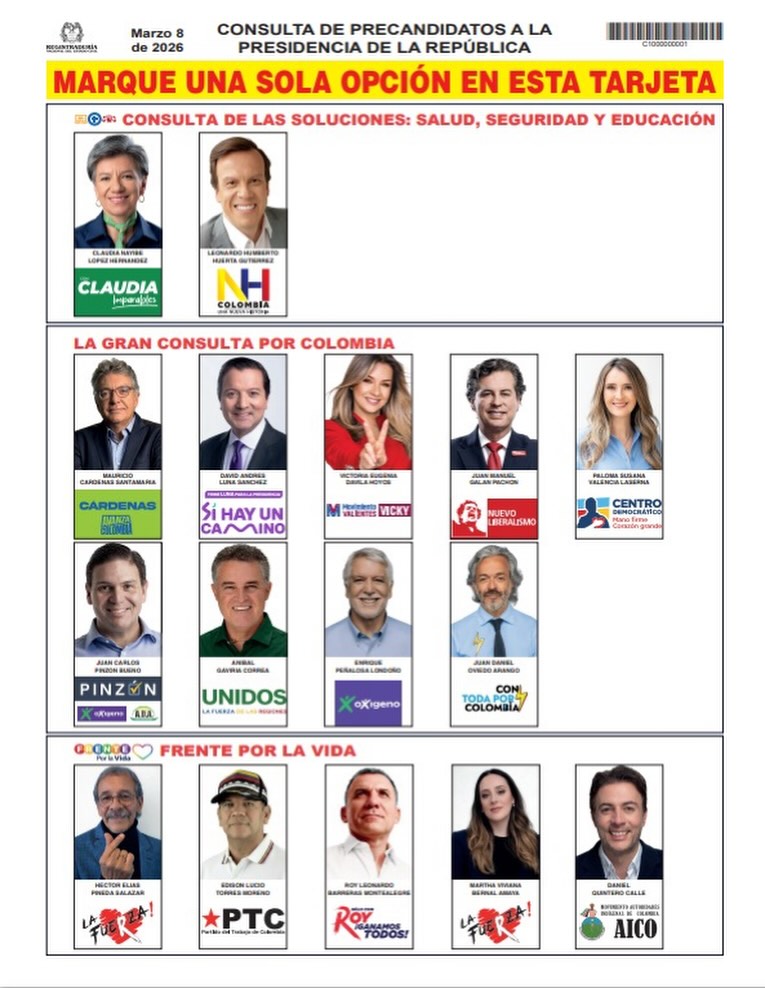
Just in case you thought there was enough on the plate, there are further considerations at stake. To avoid spreading the vote, various presidential candidates with similar positions group together for a preliminary vote. The losers in each consulta will drop out on March 9th. This year there are three on the voting card.

The voting list for consultas in Colombia elections 2026
The tarjetón for voting in the Senate. Photo courtesy of the Registraduría via Facebook

The biggest of these with 9 names is the Gran Consulta Por Colombia, which stretches the credibility of political similarity. It’s nominally centrist but features prominent rightists Vicky Dávila and Paloma Valencia alongside traditional centre voices such as Enrique Peñalosa and Juan David Oviedo. The latter is also the Centro Democrático candidate. 

The leftist consulta is under intense scrutiny as candidate Iván Cepeda, currently leading the polls, was blocked from taking part. That led to further withdrawals and angry denunciations from Cépeda and sitting president Gustavo Petro. Roy Barreras is now the favourite to win this five person race.

Then there’s a centrist competition between former Bogotá mayor Claudia López and little-known candidate Leonardo Huerta. López is the clear favourite here after perennial runner Sergio Fajardo chose to go directly to the first round of presidential voting.

At the moment, the presidential campaign is very unclear. Iván Cepeda leads polling and is extremely unlikely not to make the second round. Who joins him is hard to see at this point, so the consultas will trim that field significantly.

While the Senate and Cámara will be decided by mid-March, this is only the first lap of the field for the presidential candidates. Some will fall out, others will consolidate their position and things will start changing throughout the spring until the May 31st first round.

The post Colombian Elections 2026: How do they work? appeared first on The Bogotá Post.
  •  
❌