Login
Login
Colombia’s Finance Minister Leaves Central Bank Meeting Over Rate Increase, Fueling Tensions
Finance Minister Germán Ávila walked out of a central bank board meeting, accusing it of going against Colombia’s national interests and deepening institutional tensions.
Colombia’s Finance Minister Germán Ávila abandoned a meeting of the board of the central bank (Banco de la República), on April 1 in protest over two decisions by the institution: the release of an internal document without prior consultation, and a 100-basis-point increase in the benchmark interest rate, which was raised to 11.25%.
According to the finance minister, the disclosure of the document, which involved both institutions and was linked to a draft government decree, constituted an “abuse.”
He also described the rate hike, the second so far this year, as “irresponsible and inconvenient,” arguing that it contradicts the government’s economic growth strategy.
The central bank said the decision was approved by a majority of its board: “four members voted in favor of the increase, two supported a 50-basis-point cut, and one proposed keeping the rate unchanged.”
The bank justified the move by noting that inflation stood at 5.4% in January and 5.3% in February, above the 5.1% recorded at the end of 2025. It also warned of external risks, including the impact of the conflict in Iran on the global economy, which could increase the cost of key imports such as gas and fertilizers and add to inflationary pressures later this year.
It remains unclear whether Ávila’s withdrawal from the board will be temporary or permanent, but the episode marks a new point of institutional tension that could influence the direction of monetary policy in Colombia in the coming months.
Clash between monetary policy and government strategy
Ávila criticized the decision, saying the central bank is overlooking the country’s economic progress. “The decision taken by the central bank is repetitive and continues to ignore the national government’s efforts to ensure fiscal stability and sustained economic growth,” he said.
He also argued that the increase is disproportionate compared with global trends. “There is not a single economy in the world proposing a 200-basis-point increase in the benchmark rate in the current global context,” he said, referring to the fact that the bank had already raised rates by 100 basis points in February, meaning a total increase of 200 basis points in just four months.
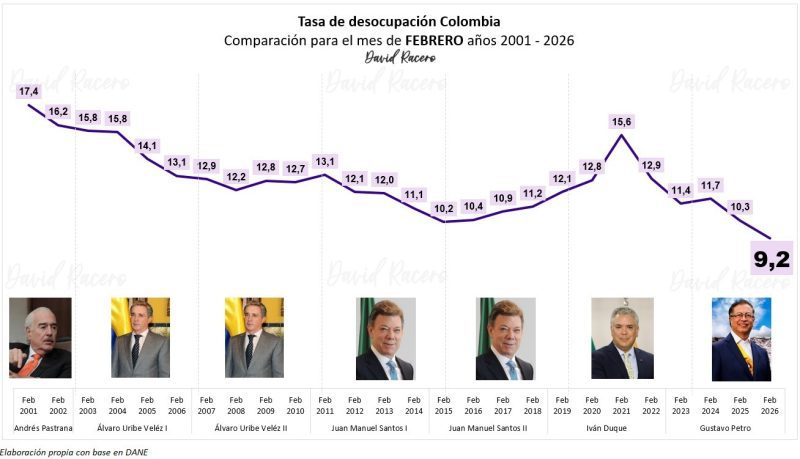
The government maintains that macroeconomic conditions remain stable, pointing to controlled inflation, a relatively stable Colombian peso (COP) against the dollar, declining unemployment and solid productive growth, and argues that tighter monetary policy is unnecessary.
Debate over central bank independence
The Finance Ministry said the minister’s decision to leave the meeting does not seek to challenge the independence of the central bank, but rather to highlight the need for its decisions to align with the country’s economic and social reality.
However, the move has raised legal and institutional concerns. Central bank chairman of the board, Leonardo Villar noted that the finance minister has a constitutional obligation to attend board meetings, as he “not only represents the government but also lead the meetings” said in a public interview broadcasted by media outlet like La República.
He warned that an indefinite absence could amount to a breach of legal duties and urged President Gustavo Petro to appoint an “ad hoc” delegate if the minister decides not to attend future meetings.
Experts say the minister’s absence could affect the board’s ability to make decisions. According to Andrés Pardo, former deputy finance minister and head of Latin America macro strategy at XP Investments, in an interview with Valora Analitik, “current regulations require at least five members, including the finance minister or a delegate, for the board to deliberate and decide”.
This could mean that, without his presence, the central bank may be legally unable to adopt monetary policy decisions.
Economic impact
The rate increase could have significant effects on the real economy. According to the Finance Ministry, a move of this magnitude could slow economic recovery, increase borrowing costs for households and businesses, and raise debt servicing costs.
Small and medium-sized companies, construction, retail and tourism are expected to be among the most affected sectors, along with households holding variable-rate loans.
Lower-income groups could face the greatest impact, as reduced purchasing power and tighter access to credit may deepen economic inequality.