Apple is planning to hold an "Experience" on March 4 for select members of the media, and in the days before the event, we're expecting several product refreshes. The iPad Air is one of the new devices that could get an update, so we thought we'd highlight what's coming.
Design and Display
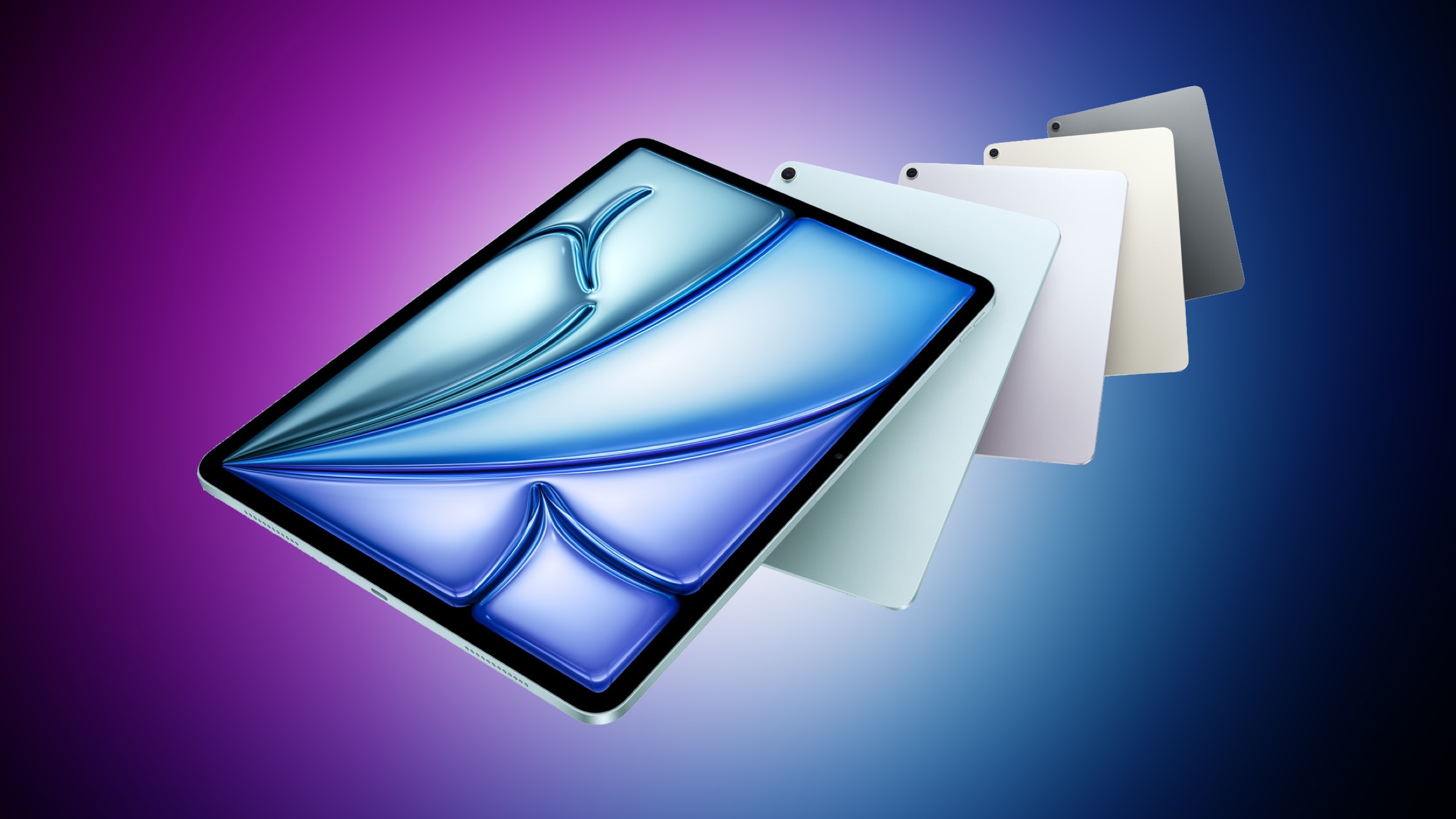
There are no design changes rumored for the iPad Air, so we can expect the same 11-inch and 13-inch size options.
The iPad Air is thicker and heavier than the iPad Pro, and it uses a standard LED display instead of OLED technology. The iPad Air will eventually be upgraded to OLED, but for now, the higher-end display technology will remain limited to the iPad Pro. The iPad Air also doesn't support ProMotion, and there's no sign that Apple is planning to add it.
The iPad Air will continue to feature USB-C, a Touch ID top button, and the same front and rear cameras.
It's possible there will be a new color option, but it's not guaranteed with a minor refresh. No new accessories are rumored, and it will continue to work with the Magic Keyboard and the Apple Pencil Pro.
M4 Chip
Apple has been updating the iPad Air with an M-series chip that's a generation behind the chip in the iPad Pro. Since the iPad Pro was updated in October 2025 with the M5, the iPad Air is set to get the M4 chip.
The M3 in the current iPad Air and the M4 chip are both built on a 3-nanometer process, but the M4 has an updated process that brings speed and efficiency improvements.
There are up to 10 CPU cores instead of 8, the Neural Engine is faster, and there's more memory bandwidth. The GPU is also more power efficient for potential battery gains. The M4 CPU is up to 30 percent faster than the M3 CPU, while the GPU is up to 21 percent faster.
The iPad Air already supports Apple Intelligence, and the next-generation model will continue to do so. Apple increased the RAM in iPad Pro models with higher storage tiers, but there's no word on whether that same change will come to the iPad Air. Current models feature 8GB RAM, the minimum for Apple Intelligence.
Charging
The iPad Pro gained faster charging with the M5 update, and that's something that could trickle down to the iPad Air.
N1 Networking Chip
The iPad Air is likely to adopt the N1 networking chip that Apple first introduced in the iPhone 17 models.
The N1 chip is an Apple-designed Wi-Fi and Bluetooth chip that offers connectivity and efficiency improvements compared to the third-party chips that Apple has used in previous devices. The N1 supports the latest Wi-Fi 7 and Bluetooth 6 technology.
The current iPad Air offers Wi-Fi 6E support, so the next-generation model could see faster Wi-Fi speeds on compatible networks with Wi-Fi 7.
Apple Modem
Apple used the C1X in the M5 iPad Pro, and the cellular versions of the iPad Air will get that same modem chip. The C1X is an upgraded variant of the C1, Apple's first in-house modem chip.
It offers performance on par with Qualcomm chips, though 5G connectivity is limited to sub-6GHz with no support for mmWave 5G. That's not an issue on the iPad, because the current version of the iPad Air doesn't support mmWave.
Apple's modem chips are much more power efficient than Qualcomm modem chips, and are able to better integrate with other iPad components.
Pricing
There are no rumors of a price increase, so the 11-inch model is expected to continue to start at $599, while the 13-inch model will start at $799.
Launch Date
The iPad Air could come out as soon as next week, ahead of Apple's March 4 Special Experience.
The Dynamic Island will replace the notch, leaving more available screen space for content. As with the iPhone's Dynamic Island, the Mac Dynamic Island will be interactive and it will contextually expand based on the app or Mac feature in use.
Apple is updating macOS to make it more touch friendly. Users will be able to tap or click on-screen elements, and controls will change based on input method. If a user taps on a menu bar item, for example, it will display a larger set of controls optimized for touch. Touch-based options will be integrated throughout macOS, and it will support iPad features like pinch gestures for zooming in or out and fast scrolling.
The new MacBook Pro will be the first Mac that supports touch gestures on the display, despite Apple's insistence over the years that it would not bring touch-based technology to the Mac. Apple did experiment with an OLED Touch Bar in prior MacBook Pro models, but ultimately removed it after it proved to be unpopular. Apple apparently is not going to advertise the MacBook Pro as a touch-first device like the iPad, and will let customers use touch and mouse gestures interchangeably for all functions.
Along with a touchscreen and OLED display technology, the MacBook Pro could have an updated design with a slimmed-down chassis, but it will look a lot like the current MacBook Pro. Apple is not removing the keyboard or the trackpad, and sizes aren't expected to change. Apple is planning for OLED versions of both the 14-inch and 16-inch MacBook Pro models.
Apple plans to update the MacBook Pro with M5 Pro and M5 Max chips this spring, but the OLED MacBook Pro models will adopt the M6 Pro and M6 Max chips, built on Apple's new 2-nanometer process. The OLED MacBook Pro models are expected to launch toward the end of 2026, so Apple is planning for two MacBook Pro refreshes in 2026.
The Struggle Continues: students painting murals at the Universidad Nacional last week. Photo: S Hide.
Student leaders declare ‘indefinite strike’ at Bogotá’s sprawling Universidad Nacional as controversial rector reappointed.
In another twist in the saga of who runs the ‘Nacho’, Colombia’s largest public university, controversial candidate Ismael Peña was formally inducted as rector last week ending a two-year legal wrangle.
Peña was sworn in during a small private ceremony on Thursday just days after a Bogotá tribunal ordered his reinstatement in the job. This followed the resignation last November of another rector whose possession was ruled illegitimate by Colombia’s state council.
The initial controversy was sparked in 2024 in the highly politicized campus when a popular candidate, Leopoldo Múnera, lost out to Peña in the last voting round by the university council.
#BOGOTÁ | Este es el panorama a esta hora (6:53 p.m.) en la calle 26 a la altura de la Universidad Nacional.
Los servicios troncales que transitan realizan retornos en Corferias y Concejo de Bogotá.
The ensuing strikes and protests galvanized the university for four months setting back the academic agenda and creating an exhausting three-term year in 2025, from which students and professors are only just recovering.
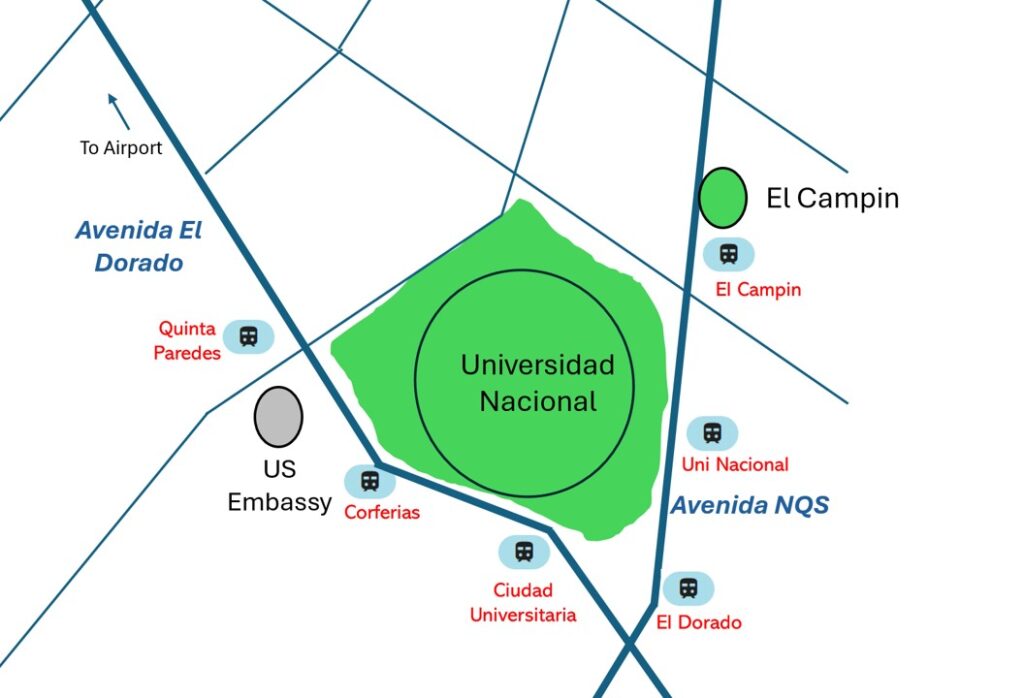
Protests and vandalism spilled over onto major nearby transport routes around the Bogotá campus. In Bogotá, the Nacho sits in the corner of the busy Avenida NQS and Avenida El Dorado, two of the most vital throughfares for both public and private transport.
Bogotá’s Universidad Nacional campus sits on the junction of the city’s main transport routes.
Return of Torres
Mural of Camilo Torres.
Even as news of Peña’s legal victory and imminent reinstatement was announced last week, students and supporters quickly blocked the Avenida El Dorado forcing Transmilenio buses to suspend operations and thousands of commuters to make their way on foot.
Student assemblies at the university’s two main campuses, Bogotá and Medellin, called for “indefinite strikes” to protest Peña reinstatement.
To add to the confusion, the Bogotá campus was also invaded by a large group of campesinos from Cauca whose later protests detained workers in government buildings, part of a plan to draw attention to conflict-related problems in their department.
On Friday, when The Bogotá Post visited the university, most of the faculties were closed but the campus was filled with students busy painting fresh murals to celebrate the return of the remains to the campus of Camilo Torres, a revolutionary priest and founder of the university Sociology Department, who joined the ELN guerrillas and was killed in action against the army in 1966.
Many students gave their views on the return of Peña but declined to be fully identified.
Roberto, a sociology student selling food in the campus, said he supported the strike to “preserve the autonomy of the university”. Peña was seen as an unpopular candidate “linked to private interests that will privatize the curriculum and syphon off profits”, he said.
Corporate spinoffs
Similar sentiments were expressed across the campus: that Peña was being parachuted in with the backing of the Centro Democratic party to advance both a right-wing agenda and disburse lucrative contracts to a select group of private companies.
According to an investigation by magazine La Raya last year, Peña was the continuity candidate for “a parallel administration system” embedded in a company called Rotorr that dished out deals on behalf of the university, but bypassed internal auditing procedures leaving an opaque tangle of beneficiaries.
During his rectorship Múnera described these corporate spinoffs as engaging in “crimes against the university” and flagged them to the judicial authorities, but so far with no clear resolution.
Despite these controversies, Peña’s return was boosted by support from the Consejo Superior Universitario, the highest decision-making body of public universities in Colombia, that unanimously agreed to respect the tribunal ruling, clearing any final legal hurdles.
Strike Down
In another unexpected outcome, an online poll of students revealed that a majority were against the suspension of classes.
The initial strike call came after a hastily convened student assembly on the Bogotá campus where some student representatives later complained that their voices were not heard.
“There was one classmate, he raised his hand and they wouldn’t let him speak. So, the next day we decided to conduct a survey to ask the students if they agreed with the strike,” student representative Kevin Arriguí told City TV.
The results, based on a total of 5,438 respondents, showed that 56 per cent (3,060 students) disagreed with the strike, while only 36 per cent (2,141 students) supported it. There were 237 undecideds.
Tellingly, the online strike survey had a higher participation among students than last year’s vote to install a Constituyente Universitaria – a people’s body – that is now in place.
Some students consulted on the campus by The Bogotá Post last week were mindful of the outcome of the 2024 strike which lasted several months and created hardships, particularly for poor students from rural areas who had spent money to travel to the capital to study, only to face severe interruptions to their curriculums and the risk of having to study another year to gain their degrees.
“We don’t want Peña. People are angry. But we don’t want to stop the term either,” said Carla, a student outside the newly constructed 70,000-million-peso arts faculty building.
Bogotá is Colombia’s protest capital with thousands of events every year. Photo: S Hide.
Fragile mobility
Finding a compromise could be problematic. Activists on the campus were pressuring undergraduates to not attend classes and most lessons were abandoned. Some professors offered their classes on-line.
The student assembly planned this week at the Bogotá site could reverse the strike plans, though this seems unlikely. The general mood among students on the campus was that they would “block Peña, whatever it takes”.
Such talk is common at a university that is a petri dish for the national condition and at times – literally – a battleground for political divisions, particularly in a city nominated as the country’s “protest capital”.
This was revealed by data published in an El Espectador op-ed this week which showed Bogotá had 1,678 mass mobilization recorded during 2025, roughly 32 per week, and an increase of 17 per cent on the previous year.
While celebrating this increase as a “symptom of democracy”, it also pointed out that these protests “affected public order and the fragile mobility of millions of Bogotanos”.
That included two million people using the Transmilenio each day, with a majority of these on lines passing close to the Universidad Nacional. Easy targets for agitators based on the campus.
Which is why trouble at the Nacho generally means headaches for the whole city.
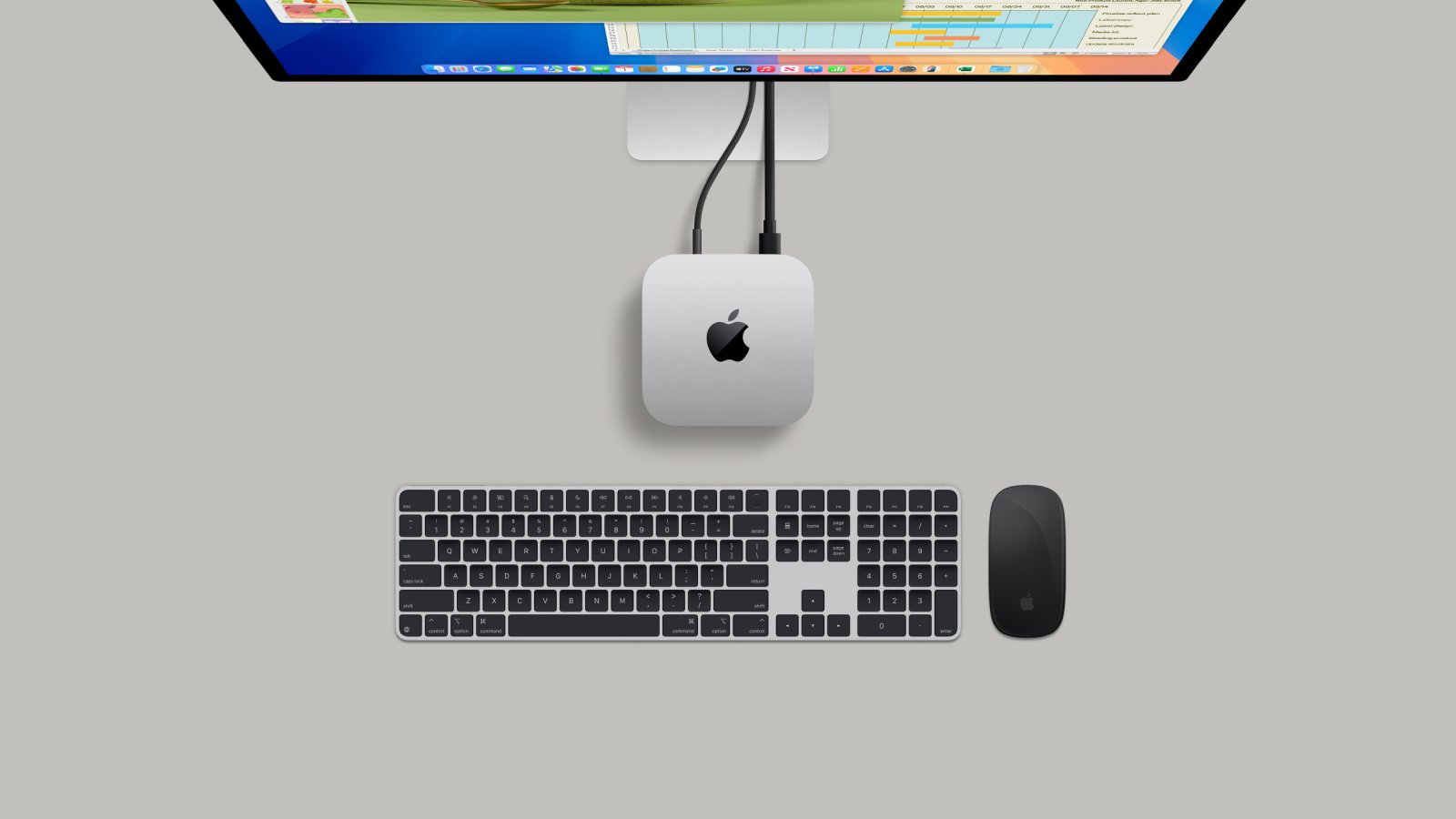
Apple has announced that Foxconn will begin assembling some Mac mini computers at a factory in Houston, Texas later this year.
"Apple is deeply committed to the future of American manufacturing, and we're proud to significantly expand our footprint in Houston with the production of Mac mini starting later this year," said Apple CEO Tim Cook, in a press release.
Apple is also expanding AI server manufacturing at the Houston factory, and it is opening a new Advanced Manufacturing Center in the city later this year. The dedicated facility will "provide hands-on training in advanced manufacturing techniques to students, supplier employees, and American businesses of all sizes."
Mac mini units assembled in the U.S. will primarily serve the U.S. market, while production will continue in Asia for orders abroad, according to Khan.
As the report notes, the Mac mini is a niche product for Apple, with research firm Consumer Intelligence Research Partners estimating that the desktop computer accounted for only 5% of Apple's global Mac sales last year. In 2024, the Mac mini received its first major redesign since 2010, along with M4 and M4 Pro chips.
In the U.S., the Mac mini starts at just $599, but customers must supply their own display, keyboard, and trackpad or mouse.
Apple touted assembly of the Mac Pro desktop tower in Texas in 2019, during U.S. President Donald Trump's first term, but it had been assembling the computer there since 2013. Apple's plan to begin assembling some Mac mini units in the U.S. comes during Trump's second term, and this time it does involve some assembly shifting stateside.
Apple said it is on track to purchase more than 100 million chips from TSMC's Arizona factory this year, and it has directed TSMC and Texas Instruments to purchase bare silicon wafers from GlobalWafers' new factory in Sherman, Texas.
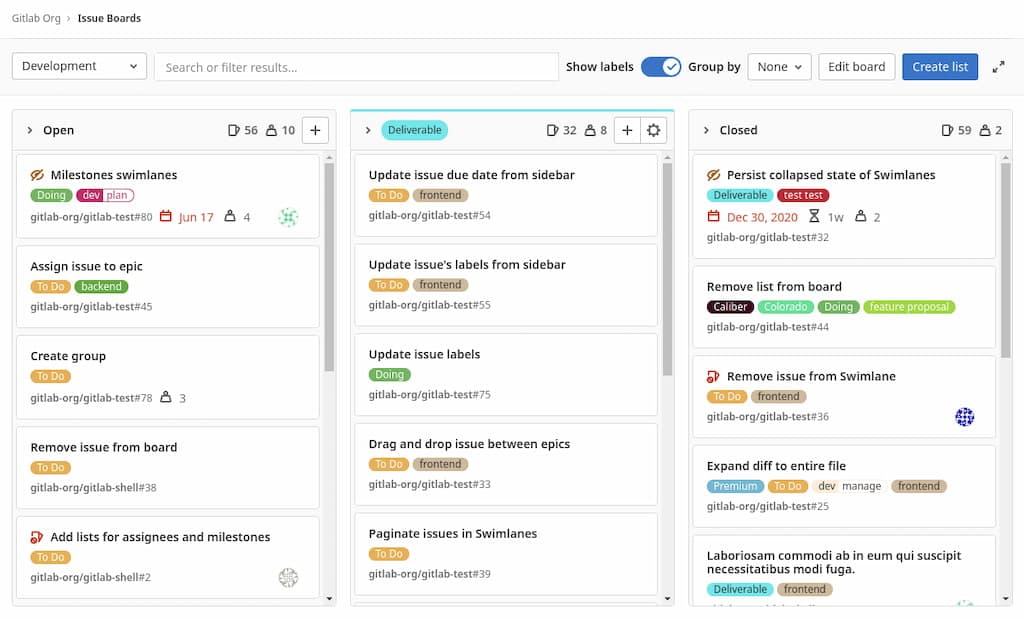
How to choose the best open source project management software
Finding the right project management software for your organization can be a challenge — especially when you want a solution that is transparent, flexible, and gives you full control over your data.
Open source project management tools are increasingly popular in 2026, as many organizations look for alternatives to proprietary platforms, rising licensing costs, and cloud-only solutions. At the same time, requirements around data privacy, security, and compliance continue to grow — particularly for public institutions and regulated industries.
To help you make an informed decision, we have updated our overview of the top open source project management software in 2026. The tools listed below differ in focus and strengths: some are built for agile teams, others for software development workflows, and others for full-featured project planning across an organization.
When comparing project management software, make sure to consider:
Feature set and supported methodologies (classic, agile, or hybrid)
Hosting options (cloud vs. self-hosted)
Data protection and privacy strategy
Community activity and long-term maintenance
Pricing and available support options
The tools listed in this article are widely used and well-established open source solutions, each with different strengths depending on your organization’s needs.
Here are our 5 top open source project management tools to consider in 2026:
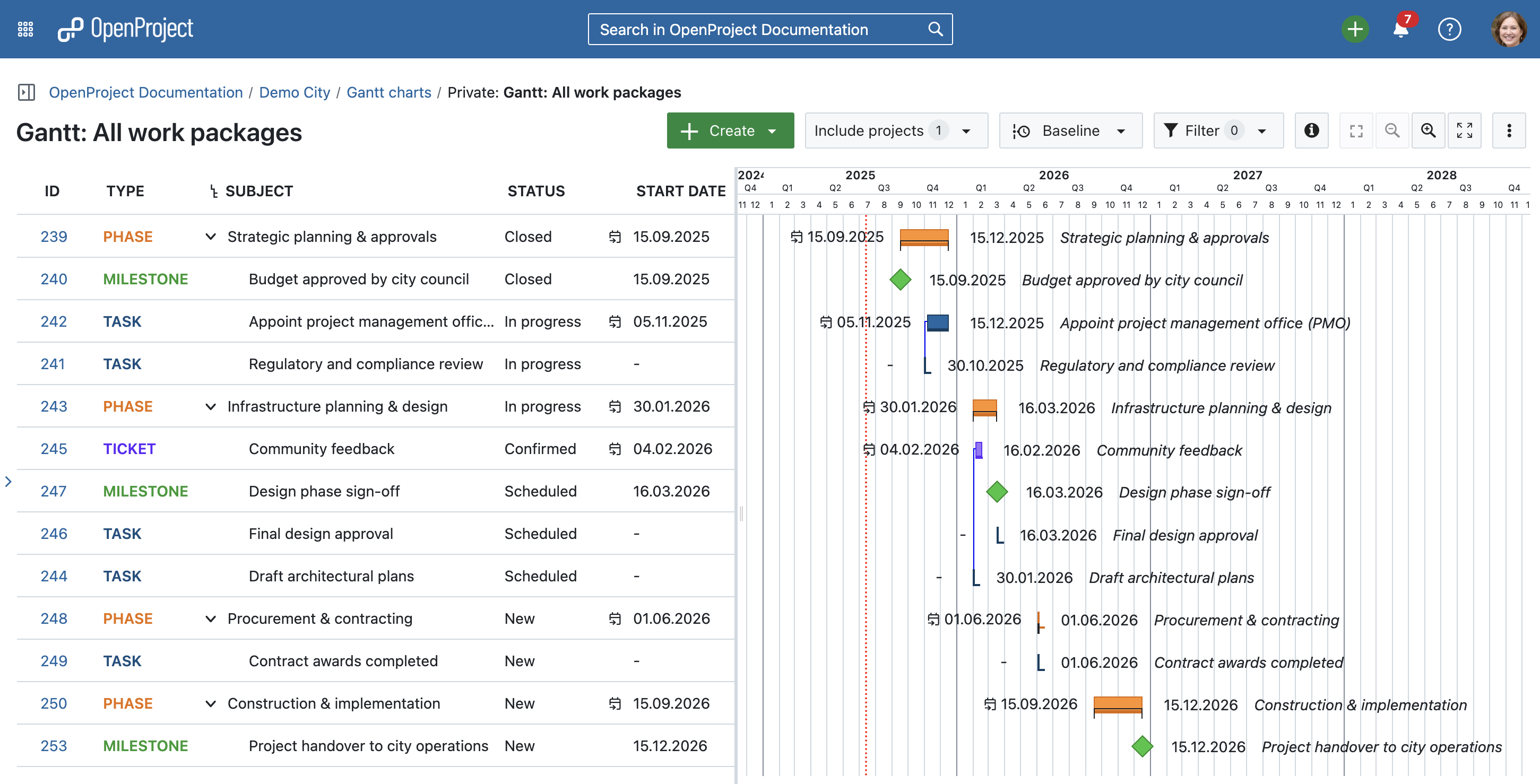
OpenProject is a widely used open source project management platform, licensed under GNU GPL v3.
Best for in 2026: organizations looking for a secure solution that supports classic, agile, and hybrid project workflows.
Free and open source software
The software code is freely available on GitHub. All changes to the source code are transparently traceable at any time. With OpenProject, there is no vendor lock-in.
OpenProject meets high data protection and security requirements. The company, based in Berlin, Germany, focuses on developing a secure and privacy-compliant European alternative for project management and team collaboration. Read more about security and privacy conditions at OpenProject.
Data sovereignty
With OpenProject, users retain full control over their data. With the self-installed version hosted on own servers, OpenProject offers a high level of data sovereignty. Alternatively, hosting is provided on demand on secure servers within Germany. OpenProject follows a strict privacy approach and does not rely on user tracking within the application. Read the OpenProject privacy policy.
Secure hosting
If you don’t have the capacity or knowledge to host OpenProject in your environment, the Enterprise cloud edition offers secure hosting in the EU.
Feature set
OpenProject maps the entire project lifecycle, from project planning and execution to project controlling and closure. The software supports classic, agile, and hybrid project management.
It includes extensive project management functions such as project and milestone planning (Gantt charts), task management, agile boards, meetings, project wiki, forums, time and cost tracking, budgets, and more. See OpenProject collaboration features.
Configuration
The software is flexibly configurable and can be adapted to individual requirements. With a powerful API, additional systems can be connected if required.
Part of openDesk
OpenProject is part of openDesk, an open source office and collaboration suite for the German public sector. Learn more about openDesk.
Active maintenance and development
OpenProject is continuously developed and maintained by an active developer Community. New features, improvements, and updates are released regularly. To learn more, take a look at the OpenProject roadmap.
The OpenProject Community edition is free of charge and self-hosted. All essential project and task management features are included in this free version.
OpenProject also offers a 14 days free trial to explore the Enterprise edition in practice — no credit card required, and you won’t receive unwanted marketing emails.
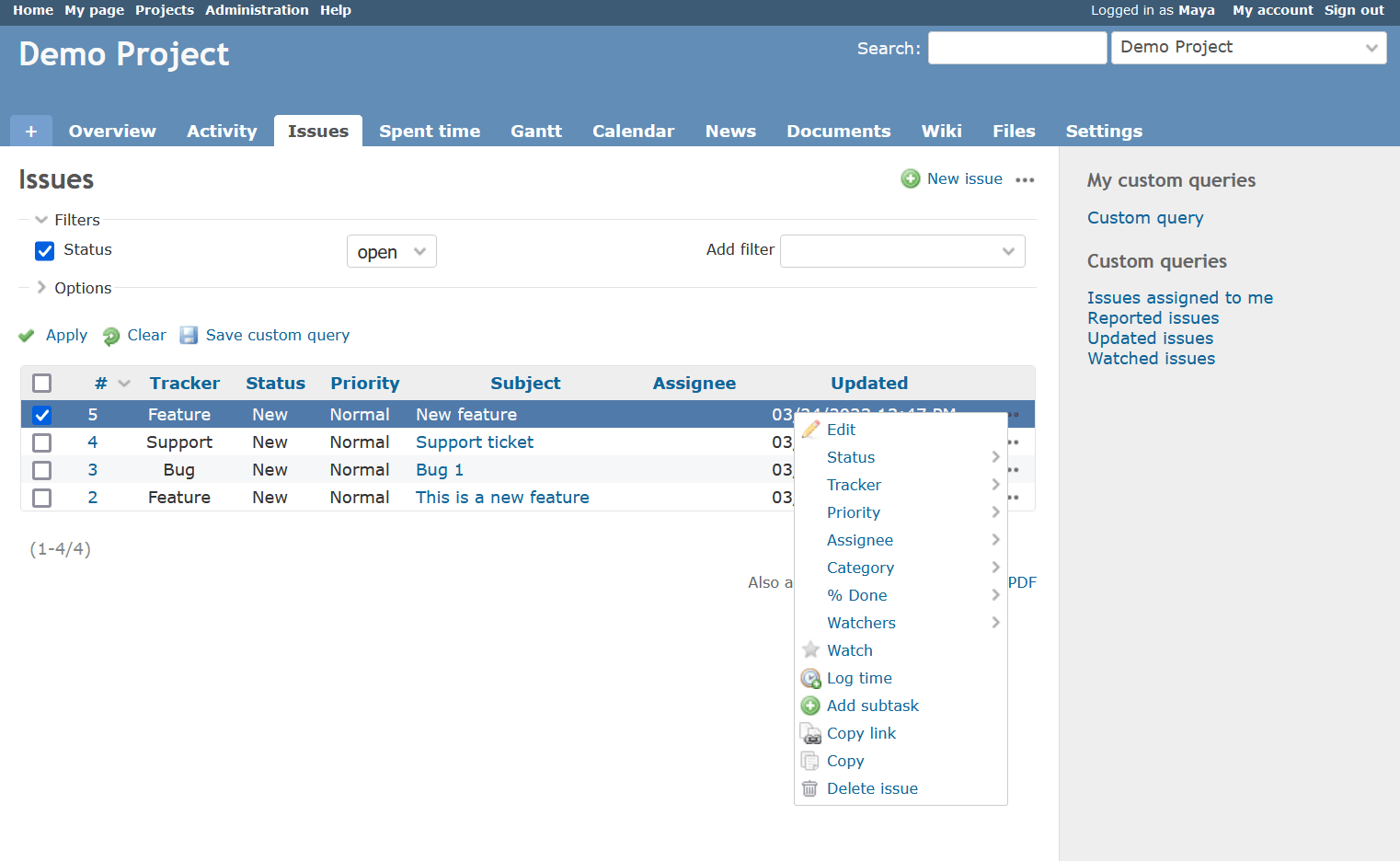
Redmine
Redmine is a long-established open source project management and issue tracking tool, licensed under GNU GPL v2.
Best for in 2026: teams looking for a lightweight, self-hosted solution focused on issue tracking and extensibility through plugins.
Feature set
Redmine combines project management with strong issue tracking capabilities. It is particularly popular among technical teams who want a flexible tool for managing tasks, bugs, and workflows.
Key features include:
Issue and task tracking
Project and role-based access management
Custom fields and workflows
Wiki and documentation features
Plugin ecosystem for extending functionality
Redmine is often chosen for its simplicity and adaptability. However, compared to more modern platforms, it may require additional configuration and plugins to cover advanced project planning features such as Gantt-based scheduling or portfolio management.
Redmine is primarily designed for self-hosting, giving organizations full control over where their data is stored. This makes it a common choice for teams with strict infrastructure or compliance requirements.
Pricing
Redmine is free to use as open source software. Costs typically depend on hosting, maintenance, and whether professional support is provided by third-party vendors.
GitLab
GitLab is a source code management and DevOps platform that can also be used for project planning and collaboration. It is licensed under an MIT open source license and has a clear focus on software development teams.
Best for in 2026: software development teams looking to manage code, CI/CD, and project planning in one integrated platform.
GitLab offers a broad feature set to support the entire software delivery lifecycle. In addition to version control and DevOps functionality, it includes project management features such as issue tracking, agile boards, workflows, and timelines.
GitLab is especially strong for teams that want to connect project work directly to development processes. However, features such as budgeting, cost tracking, or more advanced project portfolio management are not a core part of GitLab’s offering.
Tip
If you are not entirely convinced by the GitLab offering in terms of project management, but like its feature set, you can use OpenProject with its GitLab integration.
GitLab is available both in the cloud and as a self-hosted on-premises solution. The self-managed version provides full control over your data and infrastructure.
GitLab.com, the hosted cloud offering, is primarily operated on Google Cloud infrastructure in the United States. For organizations with strict compliance requirements, hosting location and applicable regulations should be reviewed carefully.
Pricing
GitLab offers a free tier with limited features. Paid plans provide additional functionality and support, with pricing depending on the selected edition and team size. GitLab also offers a free trial for its paid plans.
Tuleap
Tuleap is an open source project management and application lifecycle management (ALM) platform, licensed under GNU GPL.
Best for in 2026: agile software development teams that need structured planning and lifecycle management in one open source platform.
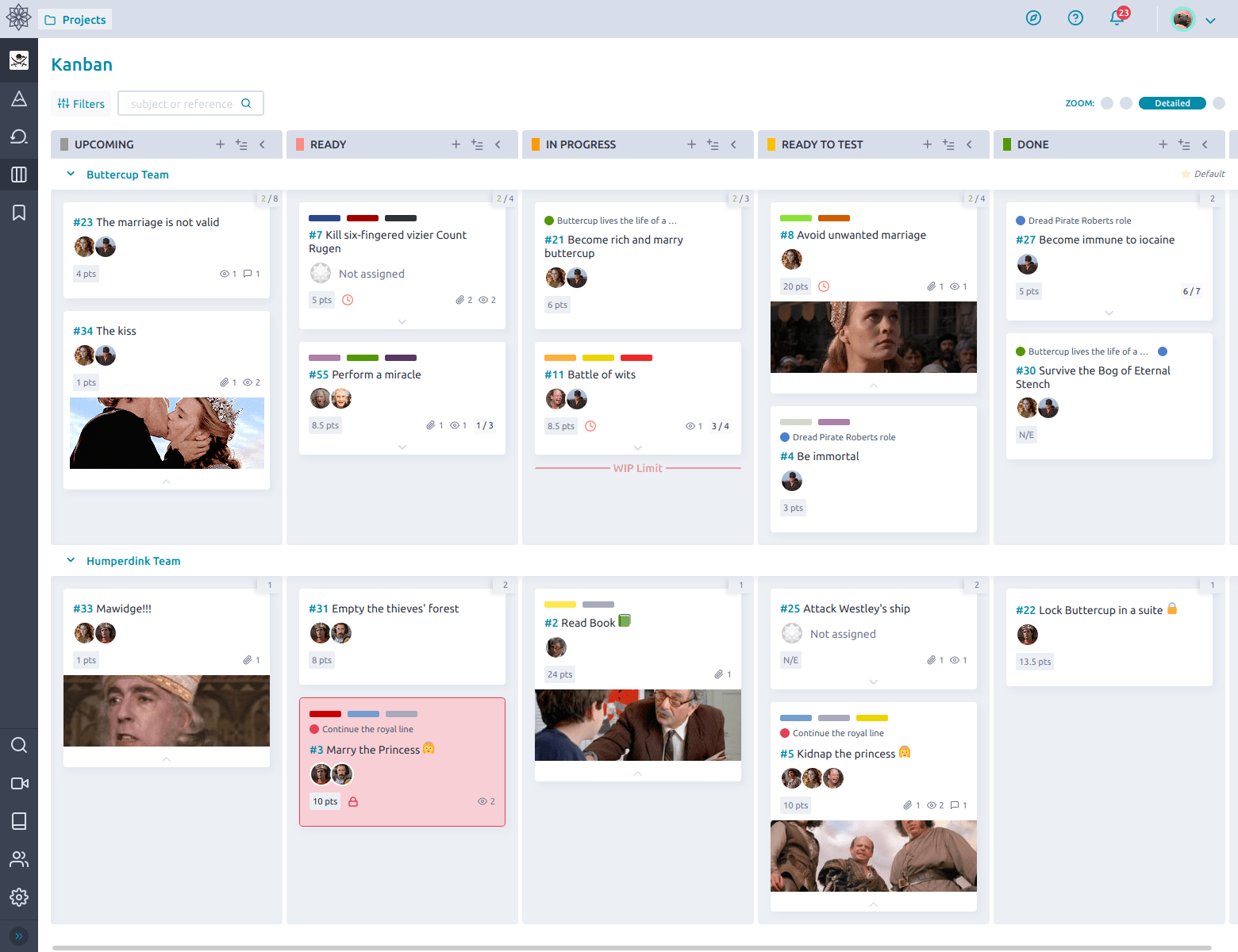
Tuleap provides a comprehensive set of agile project management features, including task boards, backlogs, Kanban boards, burnup and burndown charts, and dashboards.
In addition to agile planning, Tuleap supports software development workflows such as test management and project tracking, making it particularly relevant for teams working in regulated or complex development environments.
For organizations looking for a broader project management approach, Tuleap’s focus on agile and ALM may feel more specialized. Traditional project management features such as Gantt-based scheduling, budgeting, or cost tracking are not as central as in other tools.
Tuleap is available both as a cloud solution and as a self-hosted on-premises edition.
For the premium cloud version, hosting providers are available in several regions, including France, Switzerland, the USA, the UK, Korea, and others. Organizations with specific compliance requirements should review the hosting setup carefully depending on the chosen plan.
Pricing
Tuleap does not offer a fully free cloud version. Pricing depends on the selected edition and hosting model, and a free trial is available upon request.
Taiga
Taiga is an open source project management software whose beginnings date back to a Kaleidos hackathon in 2013. It is licensed under MPL 2.0.
Best for in 2026: agile teams looking for a simple and visually intuitive tool focused on Scrum and Kanban workflows.
Taiga was created with the goal of providing an accessible and user-friendly agile project management tool for developers and designers.
It offers a comprehensive feature set for agile methodologies, including:
Kanban boards
Product and sprint backlogs
Issue tracking
Estimation tools
Dashboards and reporting features
Taiga is well suited for teams working primarily with Scrum or Kanban. However, classic project management features such as Gantt charts, budget tracking, or broader portfolio planning are not part of its core focus.
Taiga is available both as a cloud solution and as a self-hosted on-premises edition.
The cloud version is hosted in the European Union via AWS, which can be relevant for organizations that require GDPR-aligned hosting.
Pricing
Taiga offers free cloud and self-hosted options. Paid plans provide additional services such as premium support, with pricing depending on the selected edition.
Compare the top 5 open source project management software in 2026
Choosing the best project management software for your organization depends on a variety of criteria, including the features and workflows you need, the size of your team, and your hosting and data privacy requirements.
All listed open source project management tools have their own strengths and are suited for different use cases — from lightweight issue tracking to full-featured hybrid project planning.
If you are looking for an open source project management software in 2026, we recommend taking a closer look at OpenProject, Redmine, GitLab, Tuleap, and Taiga.
To give you a quick summary:
Tool
Best for in 2026
Hosting options
OpenProject
Hybrid project management across teams
Cloud + self-hosted
Redmine
Lightweight issue tracking and plugins
Mainly self-hosted
GitLab
DevOps teams managing code + planning
Cloud + self-hosted
Tuleap
Agile planning + lifecycle management
Cloud + self-hosted
Taiga
Scrum and Kanban teams
Cloud + self-hosted
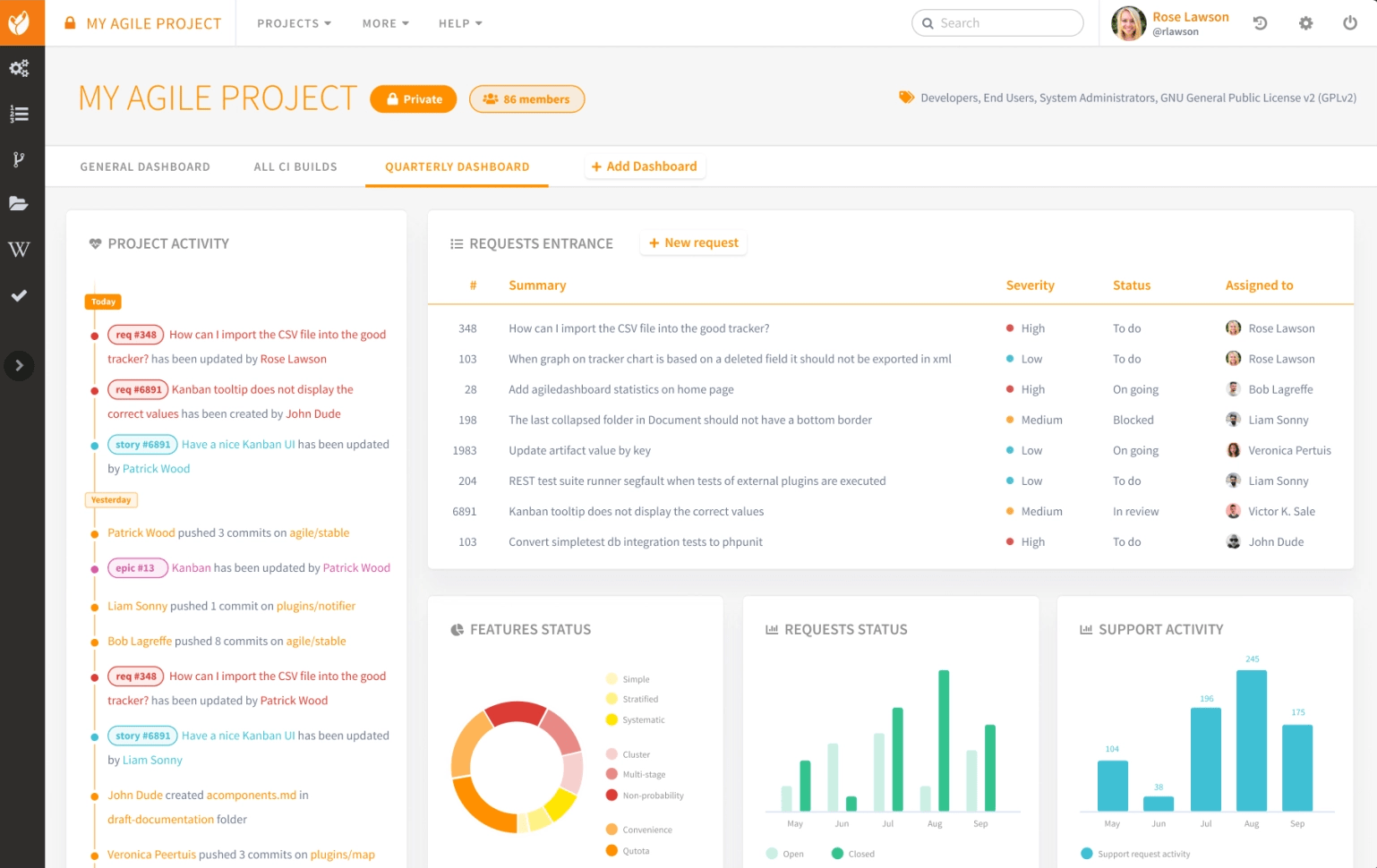
OpenProject supports classic, agile, and hybrid project management in one platform. It offers features such as Gantt charts, agile boards, time and cost tracking, and a strong focus on data sovereignty through self-hosting or secure EU-based cloud hosting.
Redmine is a long-established open source tool focused on issue tracking and extensibility through plugins. It is primarily self-hosted and often used by technical teams looking for a lightweight and customizable solution.
GitLab combines project planning with source code management and DevOps workflows. It is especially relevant for software development teams that want to manage code and project work in one integrated environment.
Tuleap focuses on agile project management and application lifecycle management (ALM). It is well suited for teams working in structured software development environments that require agile planning and lifecycle tracking.
Taiga provides an intuitive and visually appealing agile project management experience, focused on Scrum and Kanban workflows. It is a strong option for teams looking for simplicity in agile execution.
Regarding pricing and hosting details, we recommend visiting the individual websites, as costs and available plans may vary depending on team size, deployment model, and support requirements.
2026 has started off unusually wet, with downpours in Bogotá and floods elsewhere in Colombia. What’s going on and how can you help?
While this is meant to be the dry season for most of Colombia, it’s instead been raining heavily. Vast swathes of the Caribbean region have flooded, and in Bogotá, it’s led to collapses in the traffic systems. That’s led to an emergency declaration by the president and frantic relief efforts (links at article end).
Heavy floods have left much of Córdoba underwater. Photo courtesy of UNGRD
Colombian president Gustavo Petro has declared a state of emergency yet again to address the situation in the northern department of Córdoba and elsewhere. While the emergency measures were declared for Córdoba, this was later extended to 22 departments, underlining the severity of the situation.
Within the capital, flash floods have swamped roads and forced traffic to grind to a halt as well as collapsing roofs and flooding buildings. Luckily, Bogotá has so far escaped the levels of damage seen elsewhere in the nation.
Barrios such as Nicolás de Federman have been hit by hailstorms heavy enough to resemble a blizzard, leaving them carpeted in white as though snowed in while the autopista norte has been forced to close as it resembles a swamp.
One silver lining to the rainclouds is that the reservoirs will be nice and full, alleviating fears that Bogotá will be forced to return to water rationing, as happened in 2024. That will be little comfort to many who have lost everything in the floods.
Why is it raining so much?
Heavy rain has persisted through year start
Colombia’s weather monitors, IDEAM, have explained that there are four main factors: the Madden and Julian wave; high Amazonian humidity; a lack of winds to move that humidity and la Niña-esque conditions.
All put together, these four factors combine to make a perfect storm and unseasonably high January rainfall levels. That’s continued into February and with March and April around the corner there is little relief in sight.
That’s led to half the country being put on alert for potential floods and high precipitation, which leads to all sorts of other trouble such as landslides. Colombia’s disaster relief agency UNGRD is underprepared currently, having endured corruption scandals recently.
This is meant to be the dry season, too. Bogotá in particular is meant to receive heavy rain October-December and April, not January and February. In fact, these months are normally characterised by blazing sunshine, clear skies and hot temperatures.
Adding to the confusion is the fact that we’re supposed to be heading into an El Niño cycle, meaning dry weather and lower rainfall than expected. Instead, we’ve had the precise opposite so far. While Colombia is the world’s rainiest country, it’s not meant to fall in January and February, at least not in the north.
Floods in the Caribbean
The rains have been annoying and disruptive in Bogotá, but other parts of the country have faced genuine devastation. First among those is the department of Córdoba, which has suffered widespread floods. However, over half the country has been affected.
The capital of Córdoba, Montería, is the worst hit major city in the country, with thousands of people evacuated in the city and surrounds. Over a quarter of a million people have been directly affected by the rains nationally.
Sadly, politics have come into play here too, with Petro clashing with regional governor Erasmo Zuleta over the management of the department. The pair have had a lot of differences over the years. He also said he was initially unable to land in Córdoba due to the risk of an attack.
Rivers across Colombia are full and at risk of flooding
More reasonable are Petro’s claims that the situation has been exacerbated by water management systems such as reservoirs. These have diverted normal water flows and critically diminished the region’s ability to handle pressure from unusual weather patterns. Zuleta’s response is that the national government oversees the Urrá hydro plant.
The worst affected regions are on the Caribbean coast, with Uraba Antioqueño, La Guajira and Sucre joining Córdoba, but the Amazon and Pacific regions have also seen unusually high rainfall for the start of the year.
There has been flooding in Medellín, as well as the risk of landslides in hillside comunas, while coastal cities such as Cartagena have had heavy downpours and storms, affecting much-needed tourism income in high season as beaches close.
Even when the rains stop, the long term effects will take years to overcome. Already, bad actors are starting to take advantage of the situation, with desperate houseowners paying through the nose for boaters to rescue their belongings before thieves arrive.
Fields that are now underwater will take an age to fully drain and even longer to recover from the damage currently being wrought upon them. Thousands upon thousands of hectares of farmland will be unusable for the near future.
With what looks like a fraught year ahead for Colombia, this is an unwanted extra pressure to deal with and exposes the fragility of infrastructure in the face of increased climate change pressure. Whoever wins the next election, investment will be needed to avoid similar problems going forward.
The Cruz Roja Colombiana are taking donations of clothes and building materials at their Salitre centre (Av.68 #68b-31), and you can donate money directly on this link. The local government in Bogotá is also organising donation drives on this link.
Apple's older MacBook Air with the M1 chip is now out of stock on Walmart's website in the U.S., amid rumors of a new lower-cost MacBook coming soon.
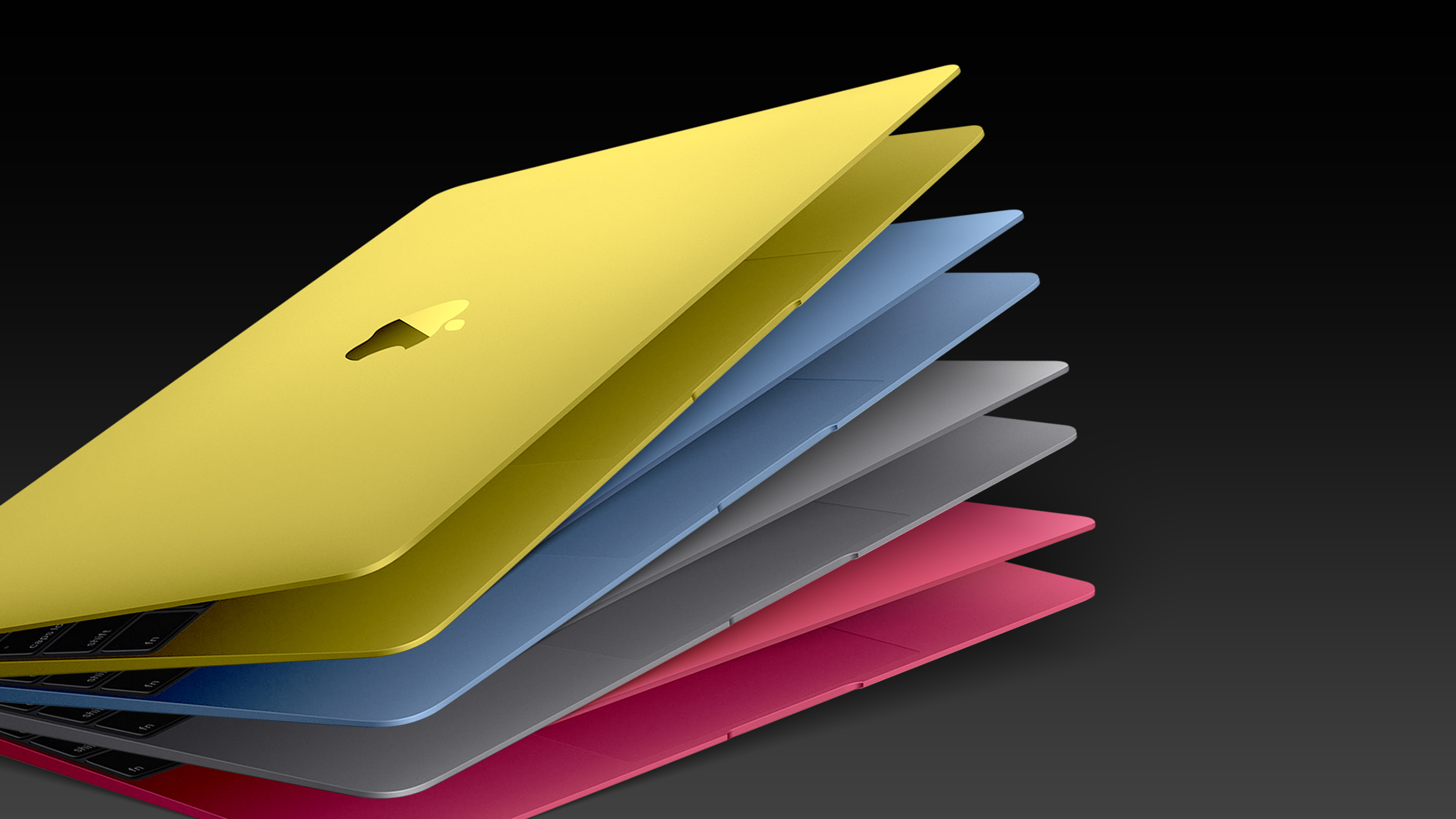
A colorful MacBook (concept)
Walmart first began selling the MacBook Air with the M1 chip for $699 in March 2024. The price later dropped to $649, then to $599, and briefly to as low as $549 during a Black Friday sale last year. However, we just noticed that it has been out of stock for a while now, and there is no indication if it will ever be returning.
Apple first released the MacBook Air with the M1 chip in November 2020, as one of the first Macs with an Apple silicon chip, instead of an Intel processor. The configuration being sold by Walmart for as low as $549 included 256GB of storage and 8GB of RAM. They were new-in-box units, not refurbished or open-box models. Walmart's website continues to offer refurbished units from "trusted sellers" for as low as $449.
Apple discontinued the MacBook Air with the M1 chip in 2024, after it launched models with the M3 chip, and it has since updated the MacBook Air with the M4 chip. Prior to being discontinued, the model with the M1 chip was being sold for a starting price of $999 brand new, but Amazon sometimes offered it on sale for $749 to $899.
The laptop going out of stock at Walmart could be a hint.
Apple plans to release a lower-priced MacBook with a version of the iPhone 16 Pro's A18 Pro chip as early as the first week of March, according to several reports and leakers. This would be an all-new model positioned below the MacBook Air in the Mac lineup, and it would mark a revival of the "MacBook" brand (with no "Air" or "Pro" designation).
Apple supply chain analyst Ming-Chi Kuo was first to reveal that Apple is allegedly planning a more affordable MacBook. Last year, he said the laptop would have around a 13-inch display and come in fun colors, like green, blue, pink, and/or yellow. A few rumors have specifically said it will have a 12.9-inch screen.
The lower-cost MacBook could have a lot in common with the discontinued 12-inch MacBook, including an ultra-thin and lightweight design. However, that model was powered by Intel processors. Apple stopped selling the 12-inch MacBook in July 2019, so there has been a long wait for a similar model powered by Apple silicon.
In the iPhone 16 Pro, the A18 Pro chip has a 6-core CPU and a 6-core GPU. The chip's multi-core performance is similar to the M1 chip, so this new MacBook could effectively be a replacement for the MacBook Air with the M1 chip, and that could explain why it is finally out of stock at Walmart ahead of the lower-cost MacBook launching.
With the A18 Pro chip, the lower-cost MacBook might have only 8GB of RAM, whereas all current MacBook Air and MacBook Pro models start with at least 16GB of RAM. The chip also lacks Thunderbolt support, so the new MacBook would likely be equipped with regular USB-C ports, with slower data transfer speeds and external display limitations.
As we approach the launch of the iPhone 17e, MacRumors videographer Dan Barbera decided to take a look back at the iPhone 16e. He goes over what it's been like using Apple's budget iPhone over the past 12 months, and whether it's worth choosing over one of Apple's more expensive models.
The iPhone 16e is $599, so it's $200 cheaper than the iPhone 17. iPhone 16e buyers didn't miss much in terms of performance or battery life compared to those who bought Apple's more expensive iPhones, but the device does only have a single camera, which is one of the main downsides.
There's a single-lens 48-megapixel Wide Angle lens, so no Telephoto and no Ultra Wide lens, which also means no macro support. The other major feature that's missing is MagSafe, which is majorly inconvenient since MagSafe charging is so prevalent. There's no Camera Control button, but that's easy to do without.
Apple used an older design for the iPhone 16e, so it still has a tired-looking notch instead of the Dynamic Island, and it only comes in black or white so there are no fun colors to choose from. Other than the camera, design, and MagSafe shortcomings, the iPhone 16e is remarkably similar to Apple's other iPhones and you're not going to notice much in the way of day-to-day differences between the iPhone 16e and a higher-end model.
We definitely don't recommend buying an iPhone 16e right now, but the iPhone 17e that's going to launch very soon will absolutely be worth considering over Apple's more expensive flagship iPhones.
Rumors suggest the iPhone 17e is going to solve some of the problems that we had with the iPhone 16e. It could get a Dynamic Island for the first time, adding all of the Dynamic Island features like Live Activities, and it's supposedly going to be updated with MagSafe. We're also expecting Apple's upgraded C1X modem and the same A19 chip that's in the iPhone 17.
As long as you don't mind the lack of extra cameras, the iPhone 17e, like the iPhone 16e, is going to be a very competitive iPhone that gives you a lot of performance for the money. If you've been waiting to upgrade from an older device, the iPhone 17e has the potential to be a very good buy.
The 31st Major League Soccer season is set to begin on Saturday, February 21, with games set to be available through the Apple TV subscription service. Apple TV subscribers in more than 100 countries can access MLS matches with no blackouts and no additional fees.
Apple used to charge $14.99 per month or $99 for the MLS Season Pass, but the Season Pass was removed for the 2026 season to give all Apple TV subscribers access for free. MLS is aiming to expand its fanbase and make content easier to access through its partnership with Apple.
Apple says that MLS on Apple TV will include Walmart Saturday Showdown, which spotlights a featured matchup during the Saturday slate of matches throughout the regular season. It will include enhanced production that's designed to "help viewers feel more connected to the match," with Shot on iPhone moments captured with dynamic angles. This week's Saturday Showdown will feature LAFC vs Miami at the LA Memorial Coliseum. The game is set to begin at 9:30 p.m. Eastern Time.
All 30 MLS teams will take the pitch on February 21 and February 22 for MLS is Back Weekend. 13 of 15 season openers are scheduled for Saturday, with two games on Sunday. The season will begin with St. Louis facing off against Charlotte at 2:30 p.m. Eastern Time. A full schedule can be found on the MLS website.
Soccer fans can keep up to date with scores, stats, and standings throughout the MLS season with the Apple Sports app. The app offers Live Activities for all MLS matches, with live scores and play-by-play information. Apple will also have special curated playlists on Apple Music, dedicated Matchday Guides in Apple Maps, an MLS hub in the Apple Podcasts app, and MLS info in Apple News.
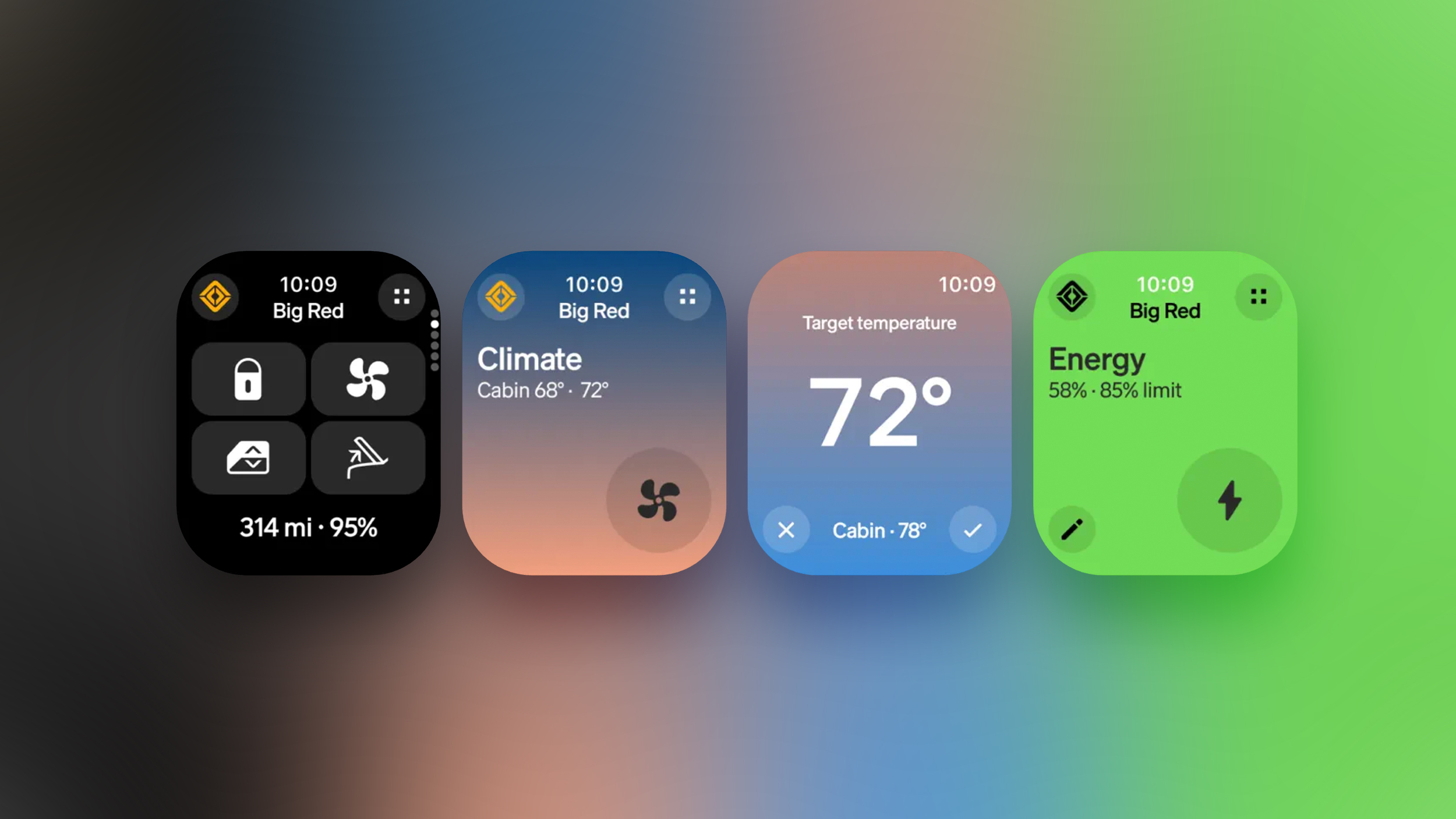
As expected, electric vehicle maker Rivian today released an Apple Watch app, providing R1S and R1T drivers with convenient features on their wrist.
The app lets you choose up to four one-tap controls for locking or unlocking doors, opening or closing the windows, opening the front or rear trunks, sounding the vehicle's alarm, and more. In addition, you can turn the Apple Watch's Digital Crown to adjust the vehicle's cabin temperature and battery charging target in the app.
Rivian also offers an Apple Watch complication, allowing you to view the vehicle's charge level at a glance on your watch face.
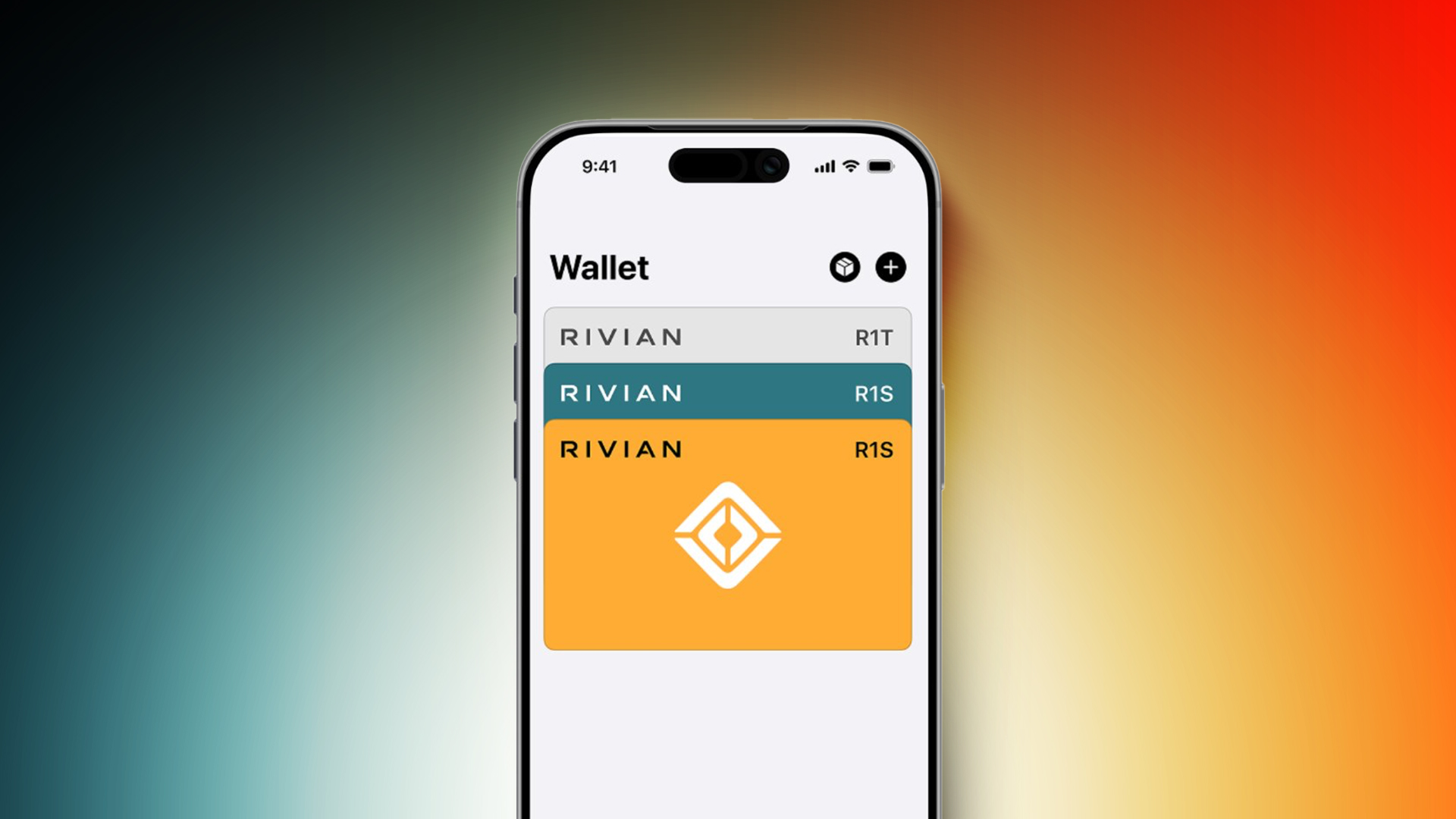
Rivian recently rolled out Apple Wallet car key support for its second-generation R1S and R1T vehicles. This feature utilizes Ultra Wideband technology, allowing you to simply approach the vehicle, open the door, and start the vehicle, all with your iPhone in your pocket or bag or your Apple Watch on your wrist.
Passive entry functionality requires an iPhone 11 or newer (excluding iPhone SE and iPhone 16e models) or an Apple Watch Series 6 or newer.
If you have a first-generation R1S or R1T model, digital key functionality is a bit more limited. You can lock or unlock the vehicle with a tap of the "lock" button in the app. "With the app open, you're ready to drive," says Rivian, for these models.
To get the Apple Watch app, head to the App Store and install the latest version of the Rivian app for the iPhone, and it will extend to the Apple Watch.
With tvOS 26.4, Apple has removed the dedicated iTunes Movies and iTunes TV Shows apps that listed content available for purchase. Buying movies and TV shows can be done through the Apple TV app instead.
Apple started phasing out the iTunes Movies and iTunes TV Shows apps back in 2023, redirecting users to the Apple TV app for purchases. The apps remained available until now to provide customers with instructions on where to find their content, and to provide access to the iTunes Wish List.
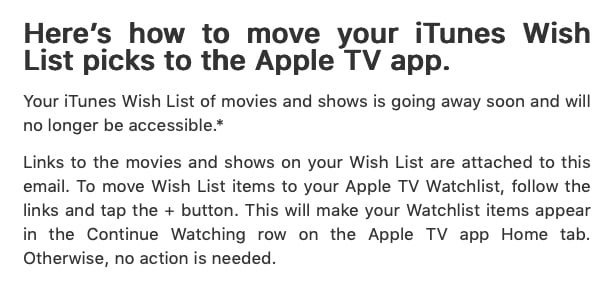
Customers that still have an iTunes Wish List with movies and TV shows have received emails letting them know the feature is being removed. The emails include links to migrate those lists to the Apple TV watchlist feature as an alternative.
Apple has been working to consolidate all movie and TV show viewing and buying to the TV app, so it's all in one place. There is no longer any iTunes-related app on the Apple TV, but the iPhone still has an iTunes Store option for purchasing music.
Apple has also updated the Apple TV Audio Format settings in tvOS 26.4. Dolby Atmos immersive audio has been replaced with Spatial Audio, and there is an option to convert to Dolby Digital 5.1, select Stereo Only, or turn on Auto mode. There's also a Continuous Audio Connection option for HDMI output.
tvOS 26.4 is available to developers and public beta testers at the current time, with a release planned for spring.