Reading view

iMac Rumor Recap: OLED Display, M5 Max, 32-Inch Model, and More

While it appears that the iMac will not be updated in 2025, rumors indicate that Apple is planning some big changes for the all-in-one desktop computer.


Below, we recap what has been rumored for the iMac over the next two to three years.

Current Model: M4 Chip


As a refresher, Apple last updated the 24-inch iMac in October 2024. Key upgrades included the M4 chip, up to 32GB of RAM, a 12-megapixel Center Stage camera, a nano-texture display option, Thunderbolt 4 ports, and new color options.

The overall design of the iMac has not changed since April 2021.

Next Model: M5 Chip


Apple will likely update the iMac with an M5 chip next year, but no other changes have been rumored yet, so expect a spec bump for now.

If the iMac receives some of the upgrades that the 14-inch MacBook Pro with the M5 chip did, the next iMac could be available with up to 4TB of storage (up from 2TB), and up to 2× faster SSD performance compared to the previous model.

iMac Pro With M5 Max Chip?


Earlier this year, Apple accidentally released a macOS kernel debug kit that contained internal product codenames, including for what appears to be an iMac with an M5 Max chip. It is unclear if the 24-inch iMac would be updated with M5 and M5 Max chips simultaneously next year, or if Apple plans to re-release a separate, higher-end iMac Pro with the M5 Max. The previous Intel-based iMac Pro was discontinued in March 2021.

32-Inch iMac?


It has been nearly four years since Apple discontinued the 27-inch iMac, as part of its move away from Intel processors. Since then, the 24-inch iMac has been Apple's only all-in-one desktop computer, with no larger model available.

In October 2023, Apple supply chain analyst Ming-Chi Kuo predicted that a higher-end 32-inch iMac with mini-LED backlighting would be released in 2025, but it appears that rumor was wrong given that the year is nearly over. Kuo has not commented on a larger iMac in a long time, so it is unclear if Apple plans to release such a product.

In November 2023, Apple announced that it had no plans to release a new version of the 27-inch iMac with an Apple silicon chip at that time. Instead, Apple recommended pairing its standalone Studio Display with a Mac Studio or Mac mini. Perhaps this was Apple ruling out a larger iMac entirely, but only time will tell, and decisions can change.

Wishful thinking: a 32-inch iMac Pro with an M5 Max chip and mini-LED backlighting.

OLED Display


South Korean publication The Elec this week reported that Apple is planning to release a 24-inch iMac with an OLED display in 2027 or 2028.

The primary benefit of OLED technology compared to the current iMac's LCD is better overall image quality, with higher contrast ratio and deeper blacks.

Like the iPad Pro, the iMac could go from LCD to mini-LED to OLED over the years.

Bookmark our iMac roundup to stay up to date with the latest rumors.
Related Roundup: iMac
Buyer's Guide: iMac (Caution)
Related Forum: iMac

This article, "iMac Rumor Recap: OLED Display, M5 Max, 32-Inch Model, and More" first appeared on MacRumors.com

Discuss this article in our forums

  •  

Report: Apple Developing 24-Inch OLED iMac With 600 Nits Brightness

Apple is working on a 24-inch iMac featuring an OLED display, with the aim of completing development as early as 2027, claims a new report out of Korea.


According to The Elec, Apple has sent requests for information to Samsung Display and LG Display regarding development of a 24-inch OLED panel for the iMac. Current 24-inch iMacs use a 4.5K Retina display, which is an LCD panel with LED backlighting.

The specs apparently being discussed include 600 nits of brightness and a pixel density of 218 PPI. If accurate, that would match the current 24-inch iMac's resolution but deliver a 20% brightness boost over the existing 4.5K Retina display's 500-nit maximum, making it equivalent to the brightness of Apple's Studio Display – though that also uses an inferior LCD panel.

OLED display technology benefits from several other advantages beyond brighter screens, such as deeper blacks with higher contrast, improved power efficiency, and other enhancements.

This is the first report we've seen suggesting Apple plans to bring OLED technology to its all-in-one desktop lineup. The company has already committed to OLED displays for future MacBook Pro models, with 14-inch and 16-inch versions expected to enter production next year using Samsung Display's 8th-generation IT OLED manufacturing line. OLED versions of its MacBook Air models are expected to follow.

For the iMac display, both Samsung and LG Display are expected to propose their respective large-format OLED technologies rather than the RGB OLED method Apple traditionally prefers. Samsung would likely pitch its quantum dot (QD-OLED) panels, while LG Display would offer its white (W-OLED) solution. QD-OLED produces color by passing blue light through a QD color conversion layer, while W-OLED produces color by passing white light through RGBW color filters. Both manufacturers are reportedly developing 5-stack configurations that add an extra green layer to improve brightness compared to current 4-stack designs.

The report suggests Apple prefers RGB OLED, where light and color generate at the subpixel level, but this technology apparently hasn't yet scaled reliably to the 20-30 inch range needed for desktop displays. Both panel makers are said to be exploring RGB OLED as a longer-term option.

Apple aims to complete iMac OLED panel development by 2027 or 2028, but the finished product could launch after that timeline. A recent but separate report has claimed Apple is developing a high-end iMac featuring the M5 Max chip, but there is currently no indication that OLED is destined for this rumored model. Apple could refresh the 24-inch iMac with an updated M5 chip at some point next year.
Related Roundup: iMac
Tags: OLED, The Elec
Buyer's Guide: iMac (Caution)
Related Forum: iMac

This article, "Report: Apple Developing 24-Inch OLED iMac With 600 Nits Brightness" first appeared on MacRumors.com

Discuss this article in our forums
  •  

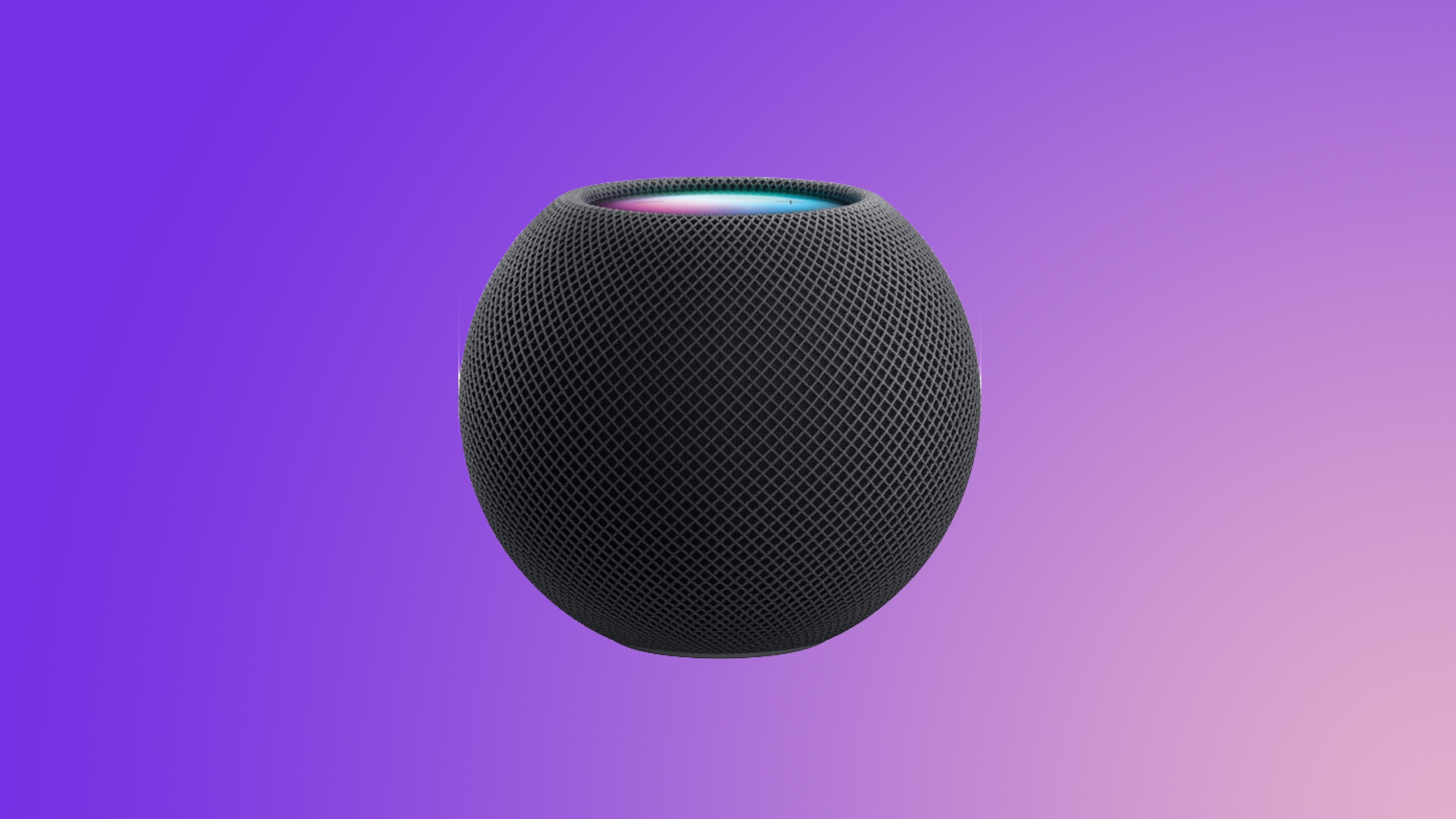
Apple's HomePod Mini 2 Might Not Get This Rumored Feature After All

The next-generation HomePod mini won't include Apple's new N1 networking chip, according to code analysis provided by a MacRumors tipster.


A macOS kernel debug kit distributed by Apple earlier this year included information on a number of upcoming devices, including the ‌HomePod mini‌ 2. Code associated with the ‌HomePod mini‌ 2 mentions the "Sunrise" wireless system, which is what Apple calls Bluetooth/Wi-Fi chips sourced from MediaTek. The N1 is called "Centauri" in Apple's internal systems.

Based on the Sunrise mention, it appears that the ‌HomePod mini‌ 2 won't be upgraded with the N1 networking chip, which contradicts some prior rumors we've heard about it. Bloomberg's Mark Gurman has suggested that both the Apple TV and ‌HomePod mini‌ will use Apple's N1 chip in the past.

It appears that Apple plans to use the N1 chip for premium devices, while entry-level products will stick with cheaper MediaTek hardware for now. The upcoming ‌HomePod mini‌ 2, the iPhone 17e, the iPad 12, and the A18 Pro MacBook are all expected to use MediaTek chips instead of Apple's chip.

The N1 was introduced in the iPhone 17 models, and it is Apple's first in-house networking chip. It supports Bluetooth 6, Wi-Fi 7, and Thread. Because it was designed by Apple, it better integrates with other hardware and software in Apple devices, leading to improved efficiency and reliability.
Related Roundup: HomePod mini

This article, "Apple's HomePod Mini 2 Might Not Get This Rumored Feature After All" first appeared on MacRumors.com

Discuss this article in our forums

  •  

Next iPad Mini With OLED Display Now Rumored to Feature A20 Pro Chip

Apple's next-generation iPad mini will be equipped with an A20 Pro chip, according to a MacRumors tipster who analyzed a macOS kernel debug kit containing internal Apple codenames. The kit was accidentally released on Apple's website earlier this year, but it was quickly pulled after information started leaking out of it.


A previous rumor indicated that the next iPad mini would be powered by the A19 Pro chip, which debuted in the iPhone 17 Pro, but our tipster is confident the codenames actually point towards the device using an unreleased A20 Pro chip.

We cannot say for sure whether the next iPad mini will use the A19 Pro or A20 Pro. It is possible that Apple initially tested a model with the A19 Pro, but the company's plans do change from time to time. If the iPad mini will next be updated in September or October of 2026, perhaps Apple ultimately decided to give it the A20 Pro.

In September 2021, Apple introduced the A15 Bionic chip across the iPhone 13 mini, iPhone 13, iPhone 13 Pro, iPhone 13 Pro Max, and iPad mini all at once. But over the years, the iPad mini has not always received Apple's newest A-series chip at the time it was updated, so the A19 Pro cannot be entirely ruled out at this time.

iPhone 18 Pro models are also expected to use the A20 Pro chip, which will reportedly be fabricated with TSMC's advanced 2nm process.

Other rumored features for the next iPad mini include an OLED display, a redesigned speaker system with vibration technology, and a water-resistant design.

Bloomberg's Mark Gurman previously reported that the next iPad mini could be unveiled as early as next year. The current ‌iPad mini‌ was unveiled in October 2024, with key features including an A17 Pro chip and Apple Intelligence support.
Related Roundup: iPad mini
Buyer's Guide: iPad Mini (Neutral)
Related Forum: iPad

This article, "Next iPad Mini With OLED Display Now Rumored to Feature A20 Pro Chip" first appeared on MacRumors.com

Discuss this article in our forums

  •  

News from the Product Desk: Real-time collaboration in Documents

Starting version 17.0 – currently planned for January 2026, OpenProject introduces a completely redesigned Documents module with real-time collaboration capabilities. This marks a significant step forward in how teams can work together within OpenProject, enabling multiple users to edit documents simultaneously while seeing each other’s changes as they happen.

Why we needed this change

Project teams work in increasingly distributed and asynchronous ways. Whether you are brainstorming ideas, drafting project requirements, writing status reports or planning the next phase of work, collaboration is at the heart of what makes projects successful. However, traditional document editing workflows often create friction: files are duplicated, versions become out of sync, and team members struggle to know which version is the most current. Parallel editing leads to conflicts, data loss and frustration.

At OpenProject, we’re always trying to find ways to help our users communicate and collaborate in better ways. We believe teams want to work together in real time, see who else is contributing and have confidence that their edits won’t be lost or overwritten. This is precisely why we worked on upgrades to the Documents module.

Important

Please note that the changes outlined in this article are planned for release in version 17.0, which is currently scheduled for January 14, 2026.

Real-time collaboration in OpenProject

The redesigned Documents module brings true real-time collaboration to OpenProject. When you open a document, you can see who else is actively editing it. Their cursors appear on the page, showing exactly where they are and what changes they are making, as they type.

Real-time collaboration is not simply about being able to see other users’ changes. It’s also about removing the barriers that slow teams down: no more waiting for someone to finish editing before you can make your contribution, no more merging conflicting versions, no more hunting through email attachments or shared drives to find the latest version of a document. The most current document is always in one place, and everyone works from the same source of truth.

What’s new in Documents

The new Documents module represents both a significant user experience improvement and a fundamental technological shift:

Real-time collaborative editing: Multiple users can edit the same document simultaneously. You see who’s online, where their cursors are, and what they’re changing in real time. Complex conflict management happens automatically in the background, ensuring that no one’s edits are lost.

Modern rich text editor: Documents now uses BlockNote, a modern open source rich text editor that makes writing and formatting simple and intuitive. Adding rich content like images, videos, audio files, or code blocks is straightforward.

Dynamic work package references: You can now include references to work packages directly within documents using the /op or /workpackage commands. These references update dynamically, so if the name, status or type of a work package changes, these are reflected automatically in the document. This also makes it easy to link to features or reference bugs without manually copying and pasting information that might become outdated.

File attachments: Attach files to any document to provide additional context, supporting materials, or related resources. Everything stays organized in one place.

Improved design and usability: The entire interface has been redesigned with a focus on clarity and ease of use, with a particular focus on providing a distraction-free editing experience.

Take a look at this short preview Gif that shows the features listed above:

Gif showing 4 active editors in the OpenProject Documents module, adding a heart image to the document, linking work packages and collaboratively writing and editing text

Preview for OpenProject 17.0: Four active editors in the Documents module, adding a heart image to the document, linking work packages and collaboratively writing and editing text.

Technical foundations

Making real-time collaboration possible required substantial work on the technical foundation of the Documents module. We’ve adopted two powerful open source technologies: BlockNote as our rich text editor and Hocuspocus as our real-time collaboration toolkit.

BlockNote provides the editing experience users interact with directly. It’s extensible, modern and designed with collaboration in mind. One particularly exciting aspect of using BlockNote is that our new work package reference components are built to be generic and reusable, such that other tools that use BlockNote can also benefit from these same components. For example, Docs, part of France’s LaSuite and Germany’s openDesk, is based on BlockNote. XWiki is also testing an integration with BlockNote, which will allow users of these tools to call our BlockNote extension add dynamic links to OpenProject work packages in their text. The combination of XWiki’s knowledge management platform and OpenProject’s work management capabilities is especially potent as a replacement for Atlassian’s Jira-Confluence package. Such integrations create a more consistent experience for users working across different tools in their digital workspace.

Hocuspocus handles the complex real-time synchronization and conflict resolution that happens behind the scenes. When multiple users are editing simultaneously, Hocuspocus ensures that changes are merged correctly, no edits are lost and that the editing experience remains smooth.

These technologies form a solid foundation for collaborative editing in the Documentions module today, and potentially across other areas of OpenProject in the future.

Looking ahead

The new Documents module is the first step in a larger vision for real-time collaboration in OpenProject. However, it’s also a test bed. We’re using Documents to refine our technology, test our infrastructure and learn how our users collaborate in practice.

Once the technology is stable and we’ve gathered real-world experience, we plan to introduce real-time collaboration in other areas of OpenProject where it can bring value. Work packages are an obvious next candidate. Our goal is to make it possible for you to see your colleagues editing work package descriptions or updating custom fields in real time, with the same experience you now have in Documents.

How to access the new Documents module

For Cloud users: If have an OpenProject Cloud subscription, the new Documents module is available starting with version 17.0. You don’t need to do anything. Hocuspocus and all other dependencies are already installed and configured. Simply ensure the Documents module is enabled for each project where you want to use it, and you can start collaborating immediately.

For on-premises users: How you access the new Documents depends on your installation type:

  • Containerized installations (Kubernetes, Docker, or Helm charts): Everything works out of the box. Hocuspocus is automatically installed and configured for you and real-time collaboration is enabled by default.

  • Package-based installations (DEB/RPM packages): You’ll need to manually install dependencies such as Hocuspocus and configure them to enable real-time collaboration.

Note

Please see this admin guide for more information on real-time collaboration for Package-based installations.

What happens to existing documents

All documents created before version 17.0 remain accessible exactly as they were, using the CKEditor-based text editor. These documents do not support real-time collaboration, but they’re fully functional and unchanged. You can continue to use them as you always have.

Starting with version 17.0, all newly created documents use BlockNote and support real-time collaboration (if real-time collaboration is properly configured and enabled). This means you’ll have both old-style and new-style documents coexisting in your OpenProject instance. Older documents will have a ‘Legacy’ label on them for easy identification.

Important

If real-time collaboration is enabled and users create new documents, but real-time collaboration is subsequently disabled (either manually or due to issues reaching the Hocuspocus server), those documents will no longer be accessible. We are aware this can lead to loss of access to data, so we strongly recommend that you not disable real-time collaboration after it has been enabled.

If real-time collaboration is not enabled—for example, because Hocuspocus is not available—new documents will continue to use the old style with CKEditor, without real-time collaboration features.

Your feedback

There is of course still a lot of work to do before we have real-time collaboration across all of OpenProject. We would really appreciate your help in getting us there.

Your feedback will help us understand what we’re doing right, what we can improve and what we should focus on. Does having real-time editing in OpenProject change the way you work? Will you use this in your own projects? What are ways we can improve it?

As an open source company, we develop in the open and value input from our user Community. If you have thoughts about the new Documents module, questions about how it works, or ideas for how we can make it even better, we’d love to hear from you. Join our Community instance and share your feedback.

Credits

We would like to thank the team behind BlockNote — Yousef El-Dardiry, Nick Perez, and Matthew Lipski — for creating such an excellent open source rich text editor. Thanks as well to the team behind Hocuspocus for providing the robust real-time collaboration infrastructure that makes this possible.

We’d also like to thank the design, development and QA teams at OpenProject for their hard work in making all this possible.

  •  

AirPods Max 2 Likely to Offer These 10 New Features

Apple released the AirPods Max on December 15, 2020, meaning the over-ear headphones launched five years ago today. While the AirPods Max were updated with a USB-C port and new color options last year, followed by support for lossless audio and ultra-low latency audio this year, the headphones lack some of the features that have been introduced for newer generations of the regular AirPods and the AirPods Pro.


Fortunately, it has been rumored that Apple plans to update the AirPods Max within the next few years, and they will likely receive the following 10 changes.

Earlier this year, Apple supply chain analyst Ming-Chi Kuo said he expected lighter AirPods Max to enter mass production in 2027. However, he did not outline any other planned upgrades beyond the headphones apparently weighing less.

The current AirPods Max weigh 0.85 pounds, excluding the charging case, according to Apple.

AirPods Max still have Apple's H1 chip from 2019, so it is very likely that a second-generation pair would be equipped with the H2 chip or newer. That should unlock at least seven upgrades, including improved sound quality, increased active noise cancellation, longer battery life, Adaptive Audio, Personalized Volume, Conversation Awareness, and the ability to use "Siri" instead of "Hey Siri."

Adaptive Audio adjusts Active Noise Cancellation based on your environment — you can customize the setting to allow more or less ambient noise. Personalized Volume is a similar feature that adjusts your AirPods volume based on both your surroundings and your volume preferences. Conversation Awareness temporarily lowers your volume and enhances voices in front of you while you are talking with someone.

Other likely changes include new color options for the ear cushions and headband, as well as a redesigned carrying case. Hopefully the case gains an Ultra Wideband chip, which would unlock Precision Finding in the Find My app.

In the U.S., AirPods Max remain priced at $549, but they are frequently on sale for less at Amazon and other resellers. Unless you really want AirPods Max now, we are now at a point where waiting for the 2027 model is worthwhile.
Related Roundup: AirPods Max
Buyer's Guide: AirPods Max (Neutral)
Related Forum: AirPods

This article, "AirPods Max 2 Likely to Offer These 10 New Features" first appeared on MacRumors.com

Discuss this article in our forums

  •  

AirPods Max Launched Five Years Ago Today

Apple's AirPods Max launched five years ago today, marking the company's first push into the high-end over-ear headphones market under its own brand name.


Rumors about Apple's work on a pair of high-end headphones, at the time believed to be called the "AirPods Studio," heated up throughout 2020. They were announced abruptly via a somewhat unexpected press release on December 8, 2020 and went on sale the same day. Orders started arriving to customers one week later on Tuesday, December 15.

The ‌AirPods Max‌ offer many popular AirPods features such as the H1 chip, easy pairing, Active Noise Cancellation, Transparency mode, automatic switching, and Spatial Audio with dynamic head tracking, but in a premium over-ear design for the first time. They also offer a headband made of a flexible mesh canopy, replaceable magnetic earcups, a Digital Crown for physical volume controls, a button for switching between ANC and Transparency, and a Smart Case for storage and to put the headphones into a low power state.

Demand for the ‌AirPods Max‌ was high immediately after launch, with shipping estimates that stretched out several months. Initial reviews of AirPods Max were favorable, applauding the headphones for being "more than enough to compete with other high-end headphones" in terms of design and sound quality. While the recommended retail price remains at $549, the ‌AirPods Max‌ are often available with discounts of over $100.

The ‌AirPods Max‌ have also been subject to criticism since their launch, including for their price relative to rival sets of high-end over-ear headphones, the design of the Smart Case, condensation inside the earcups, poor battery life (something that was later fixed via a software update), ANC strength seemingly being reduced over time, the over-head canopy's poor durability, and the long period in which the device has been left without meaningful hardware update.

Last year, Apple refreshed the AirPods Max's selection of color options and swapped the Lightning port for USB-C, but there were no other changes. Since the changes were so minor, Apple does not seem to consider the "new" model a second-generation.
Related Roundup: AirPods Max
Buyer's Guide: AirPods Max (Neutral)
Related Forum: AirPods

This article, "AirPods Max Launched Five Years Ago Today" first appeared on MacRumors.com

Discuss this article in our forums

  •  

More All-Black Vision Pro Prototype Parts Surface Online

A new image shared by prototype collector and leaker Kosutami appears to show parts designed for an unreleased all-black Apple Vision headset.


The image shows what seems to be a Vision Pro's left power strap and audio pod with the attached power cable. It seems to be identical to Apple's existing hardware, but uses a dark finish not seen on any production Vision Pro hardware.

Kosutami previously claimed that Apple has been testing a thinner and lighter mixed-reality headset referred to internally as "Vision Air," featuring a Midnight-colored exterior and reduced weight achieved by switching several structural components and the battery enclosure to titanium. According to the leaker, this model would retain an aluminum exterior but adopt a deep bluish-black finish rather than the Vision Pro's current silver and white.

Earlier this year, Kosutami also shared images of a new Lightning-style connector in Midnight said to be intended for a next-generation Vision headset. The existing Vision Pro uses a 12-pin connector, while the unreleased cable featured only eight pins, which seemed to indicate that Apple may have been redesigning the external battery system for future headsets.

Apple had been widely expected to release a lower-cost headset called the "Vision Air," as well as a redesigned second-generation Vision Pro. However, Bloomberg reported in October that Apple paused development of all Vision headsets in order to accelerate work on AI-powered smart glasses.
Related Roundup: Apple Vision Pro
Buyer's Guide: Vision Pro (Buy Now)
Related Forum: Apple Vision Pro

This article, "More All-Black Vision Pro Prototype Parts Surface Online" first appeared on MacRumors.com

Discuss this article in our forums

  •  
❌