
Reading view

Nomad Launches Find My-Compatible Tracking Card Pro

Nomad today announced the launch of its latest Find My-compatible item tracker, the Tracking Card Pro. Compared to Nomad's existing $29 Tracking Card, the $39 Tracking Card Pro features a design that better blends into the cards in your wallet, and a longer battery life.


Available in black or white, the Tracking Card Pro looks like a credit card, complete with an included chip to disguise it. The white version is the same size and shape as the Apple Card, just thicker. If someone steals your wallet, a tracking card that looks like a credit card might not be thrown out by a savvy thief that does a cursory check for tracking devices.

The Tracking Card Pro is 2.5mm thick, so it is not as slim as the 1.7mm Tracking Card. It fits well enough in a wallet, but if you're someone who prefers a super slim wallet with just a few cards, it might be too large. Nomad opted for a straight-edged design with an exposed aluminum frame, and while it looks nice, it also makes the Tracking Card Pro look thicker than it is. Other companies make tracking cards that are in this thickness range, but they have a slimmer appearance because of beveled edges.

The tracker is a third of the thickness of the AirTag, and Nomad used the extra space for the battery. The Tracking Card Pro can last for up to 16 months without needing to be recharged, rather than five months like the Tracking Card.
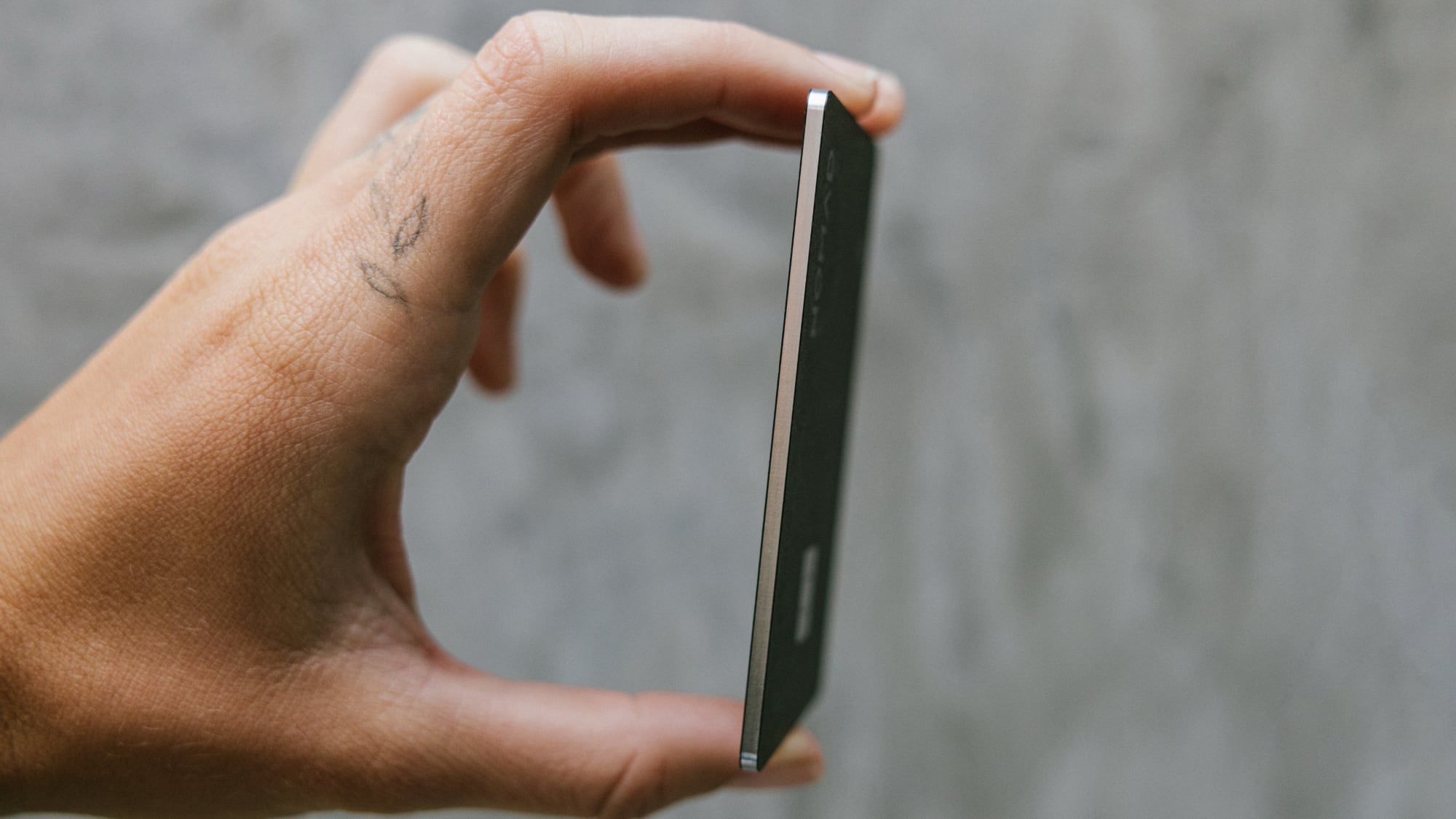

When recharging is required, the Tracking Card Pro charges with a Qi, Qi2, or MagSafe charger. It is magnetic so it can attach to an upright charger, and a red LED lets you know that it's aligned properly and charging. IPX7 water resistance and dust resistance means it can withstand water, dirt, and other abuse without failing.

The Tracking Card Pro works just like an ‌AirTag‌. It can be added to the Items tab in the Find My app, and it will then show up right alongside AirTags and other Find My-enabled tracking products.

You can view a map of where the Tracking Card Pro was last spotted, play a sound to locate it if it's nearby, and get a notification if your wallet is left behind. Like AirTags, the Tracking Card Pro takes advantage of the ‌Find My‌ network. It can leverage nearby Apple devices to relay its location even if you're out of Bluetooth range.
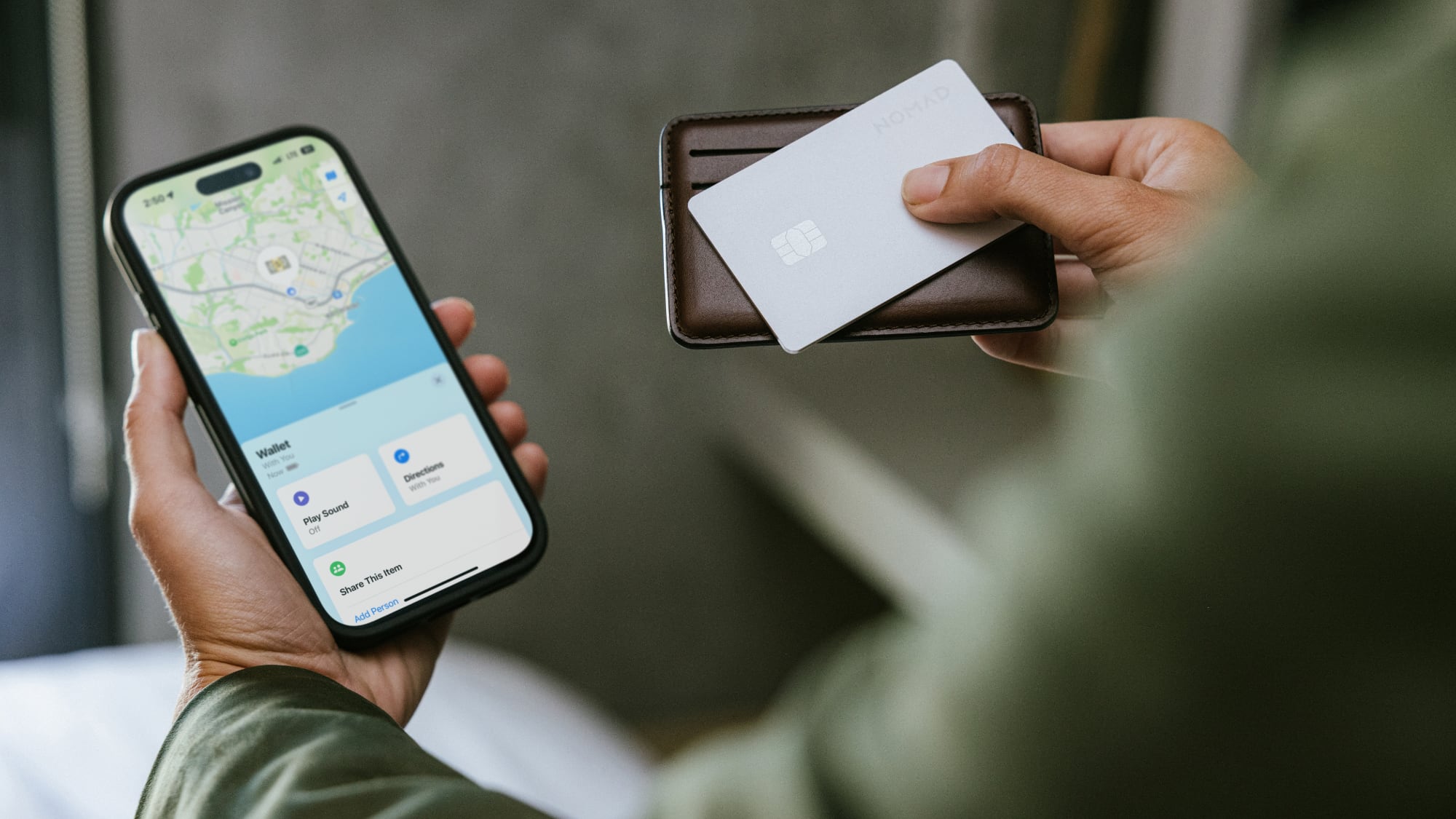

Other features include an option to share your contact info so someone can get in touch if they find your wallet, and item location sharing, so if your item is left behind somewhere like an airport, staff can track it down for you even if you're far away.

The Tracking Card Pro has all of the same capabilities as the ‌AirTag‌ with one exception, Precision Finding. There is no Ultra Wideband chip, so tracking it down in close quarters requires the sound feature.

Nomad's Tracking Card Pro can be purchased from the Nomad website for $39, with a 10 percent discount when purchasing two. It will ship by December 19.
Tag: Nomad

This article, "Nomad Launches Find My-Compatible Tracking Card Pro" first appeared on MacRumors.com

Discuss this article in our forums
  •  

Happy 24th Anniversary, iPod

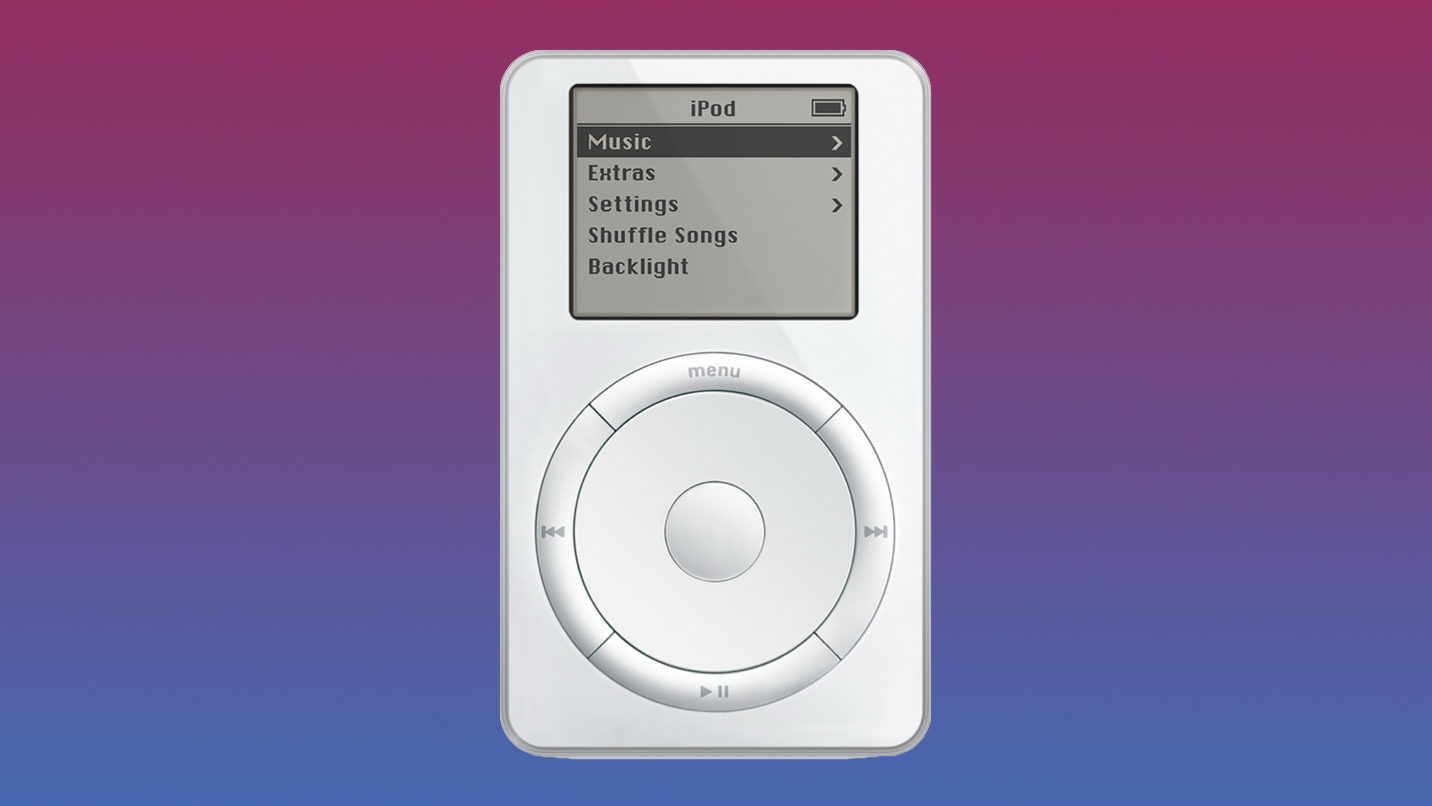
The first-generation iPod came out on November 10, 2001, making today the 24th anniversary of the device's launch. Apple announced it in late October, but November 10 was the first day customers were able to get their hands on it.


Even way back in 2001, there were leaks and fake leaks before the iPod launched. In one rumor article, Apple's upcoming device was dubbed the "iWalk" and described as a PDA with a high-color TFT-screen with handwriting recognition, which did not prove to be true. CNET suggested that it was too sophisticated to be an MP3 player, and was instead a component for a home digital stereo system, while a German website said it was "like a standalone CD-writer" that looks like "a Hifi component." The site did accurately predict that it would make it possible to "have all the music in the house stored on one place," but described it as a sort of AirPlay-enabled speaker.

More reliable rumors accurately pegged it as a digital music device able to sync with a computer, and in the days leading up to the launch, the iPod name leaked. Even with the info that came out, much of the iPod's introduction was a surprise because 2001 leaks were much less detailed than 2025 leaks.

Some MacRumors readers lined up to buy one on launch day, kicking off a tradition of long lines at Apple Stores that continued well into the iPhone launch days. As with any Apple product launch, there were some mixed reactions to the iPod, and of course a slew of early complaints. Here's what the forums had to say:

There were plenty of MacRumors readers thrilled with the iPod, and as we well know, it was a wildly popular device that spurred several subsequent models and eventually led to the launch of the ‌iPhone‌.

It was impressive to be able to have a 5GB FireWire drive in your pocket at the time, and iPod owners used it as a hard drive for file transfers. MP3 players existed, but nothing with the storage capacity and design of the iPod.

With the ‌iPhone‌ that does everything an iPod does, there's no longer a need for the iPod. The very last iPod was the iPod touch, which Apple updated sporadically and then didn't touch after 2019. It was officially discontinued in 2022, marking the end of the iPod line. Apple almost never announces when a product has been discontinued, but the iPod was an exception given its history.

In a statement, Apple's marketing chief Greg Joswiak said that the "Spirit of the iPod lives on" across all of the company's products, from the ‌iPhone‌ to Apple Watch to HomePod.

The iPod will celebrate its 25th anniversary next year. Apple has revived old products in the past, but people have little use for a music-only device in 2025. Apple is, however, working on a home hub that can play music, run apps, and control smart home products, and it's described as a small, square device with a display. It's possible Apple could reference the iPod when unveiling the device, or even borrow a part of its name like it did when naming the ‌HomePod‌.
This article, "Happy 24th Anniversary, iPod" first appeared on MacRumors.com

Discuss this article in our forums
  •  

Mophie Launches Juice Pack Charging Cases for iPhone Air and iPhone 17 Pro

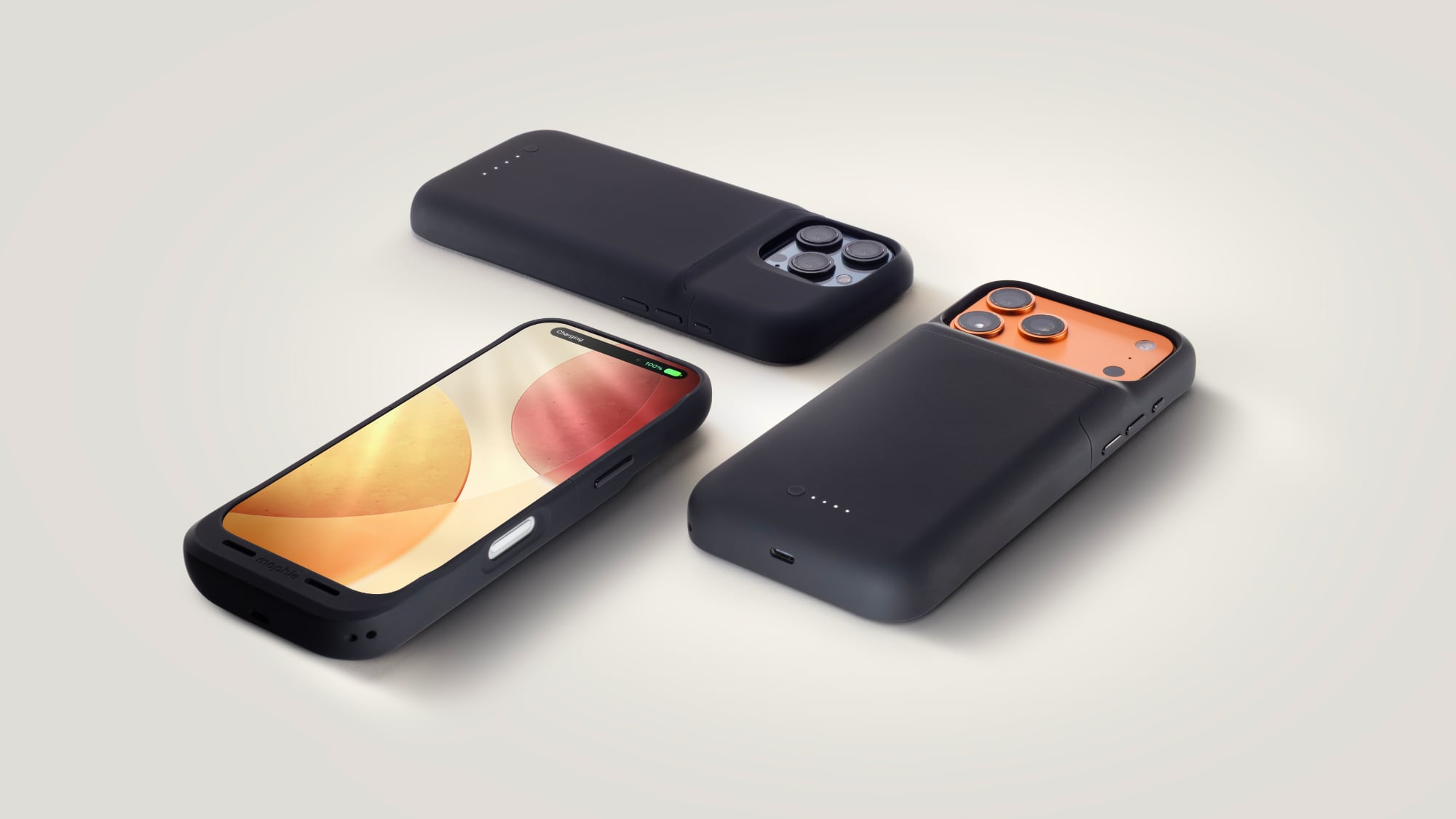
Mophie today announced the launch of new Juice Pack charging cases designed for the iPhone Air, iPhone 17 Pro, and ‌iPhone 17 Pro‌ Max.


The Juice Pack for ‌iPhone Air‌ was designed to be slim so it doesn't add too much bulk to Apple's thin and light iPhone. It includes a 2,400 mAh battery that Mophie says provides up to 60 percent more power. The ‌iPhone Air‌ case is 15mm thick, but it is the thinnest of the three Juice Pack cases.

The Juice Pack for ‌iPhone 17 Pro‌ has a 3,000 mAh battery, while the Juice Pack for ‌iPhone 17 Pro‌ Max has a 3,600 mAh battery. Both cases provide 50 percent more battery for Apple's Pro iPhones and are just over 19mm thick. All three cases weigh 98 grams, according to Mophie.

Along with additional power, the cases provide protection for the iPhone 17 lineup. There are raised edges to keep the screen from getting scratched or cracked, and high-impact protection shields the ‌iPhone‌ from drops and bumps. An included lanyard loop port allows for a lanyard to be attached.

Mophie's Juice Pack cases offer passthrough charging, so plugging them into USB-C will charge the ‌iPhone‌ first and then the case. There's also support for passthrough USB-C audio for those who prefer wired headphones.

All three Juice Pack cases are priced at $99.99 and can be purchased from the Mophie website as of today.
Tag: Mophie

This article, "Mophie Launches Juice Pack Charging Cases for iPhone Air and iPhone 17 Pro" first appeared on MacRumors.com

Discuss this article in our forums
  •  

B&H Lists HomePod Mini as Discontinued Amid Refresh Rumors

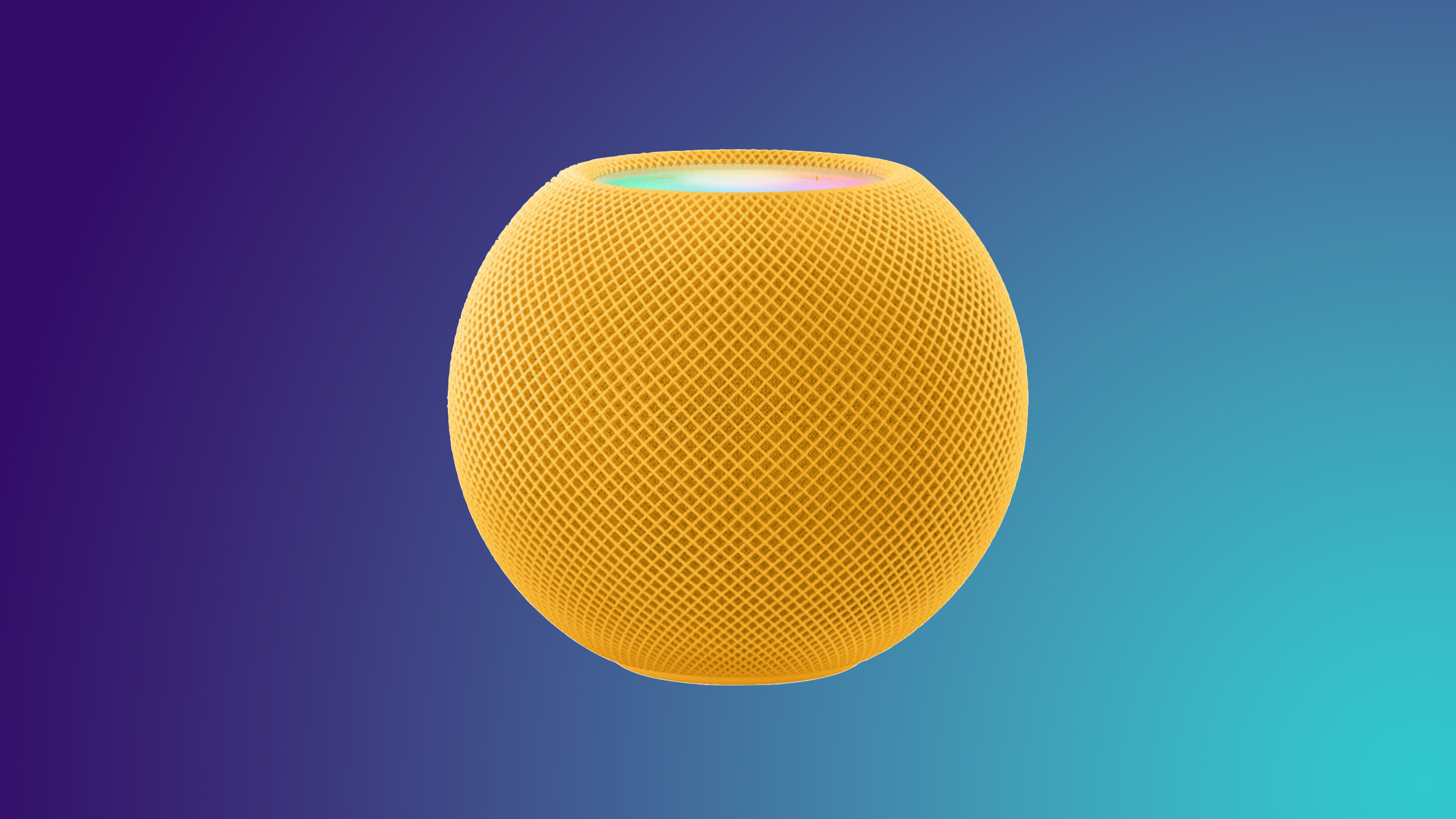
Apple product retailer B&H is listing all HomePod mini models as discontinued, and no longer offering them for sale. Some other retailers are also listing the HomePod mini as out of stock or on backorder, which suggests that an update isn't too far off.


Adorama lists the ‌HomePod mini‌ as backordered, and select colors are out of stock at Target. Walmart doesn't have any stock that's not from resellers, Staples has no HomePod minis available online, and at least one color is sold out from Verizon. The Midnight color option is unavailable for shipping from Best Buy, though other colors are in stock. Apple is still selling all colors of the speaker, with options available for both immediate shipping and pick up.

Apple is rumored to be working on a new version of the ‌HomePod mini‌, and Bloomberg said it could come as soon as this month. It's possible that the waning stock at third-party retailers is a sign that we'll get a new version of the ‌HomePod mini‌ before the end of 2025.

Apple held an event in September and did a series of product releases in October, casting some doubt that a new model is still on the immediate horizon.

The next ‌HomePod mini‌ is expected to have an upgraded S-series chip inside and Apple's N1 networking chip, but there are no design changes rumored except for refreshed color options.
This article, "B&H Lists HomePod Mini as Discontinued Amid Refresh Rumors" first appeared on MacRumors.com

Discuss this article in our forums
  •  

Five Years of Apple Silicon: M1 to M5 Performance Comparison

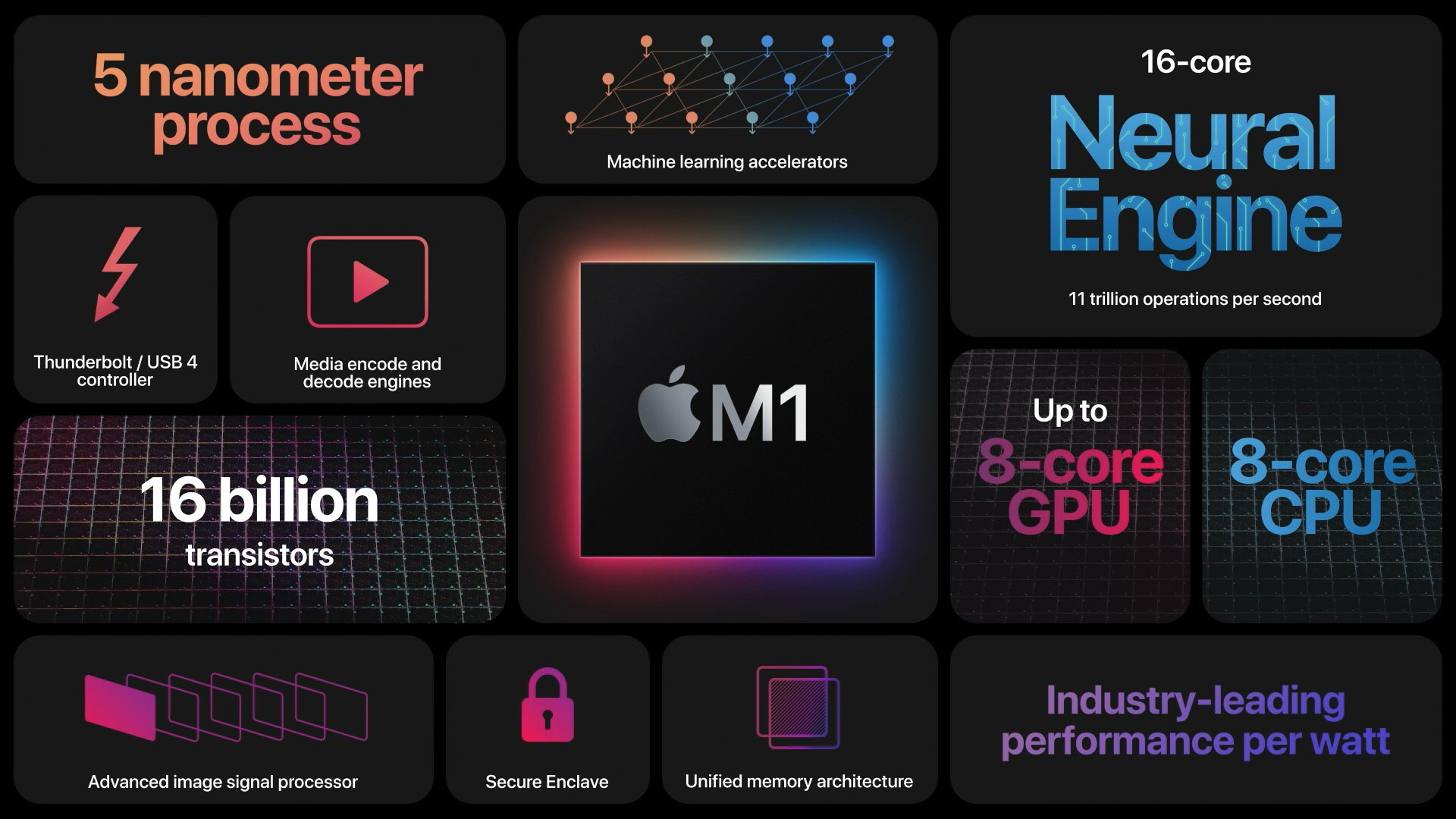
Today marks the fifth anniversary of the Apple silicon chip that replaced Intel chips in Apple's Mac lineup. The first Apple silicon chip, the M1, was unveiled on November 10, 2020. The M1 debuted in the MacBook Air, Mac mini, and 13-inch MacBook Pro.


The ‌M1‌ chip was impressive when it launched, featuring the "world's fastest CPU core" and industry-leading performance per watt, and it's only improved since then. We've had five total generations of Apple silicon chips, with the M5 unveiled in the 14-inch ‌MacBook Pro‌ just last month.

Here's how the M5 measures up to the ‌M1‌, per Apple's M5 specs:

  • 6× faster CPU/GPU performance

  • 6× faster AI performance

  • 7.7× faster AI video processing

  • 6.8× faster 3D rendering

  • 2.6× faster gaming performance

  • 2.1× faster code compiling


Geekbench comparison scores:

  • ‌M1‌ single-core - 2,320

  • M5 single-core - 4,263

  • ‌M1‌ multi-core - 8,175

  • M5 multi-core - 17,862

  • ‌M1‌ Metal - 33,041

  • M5 Metal - 75,637


Both CPU and GPU performance have increased significantly over the past five years, and Apple has boosted AI and gaming performance too with add-ons like hardware-accelerated ray tracing and an ever-improving Neural Engine.


‌M1‌ Chip M5 Chip
Made with TSMC's 5nm process (N5) Made TSMC's third-generation 3nm process (N3P)
Based on A14 Bionic Pro chip from iPhone 12 Based on A19 Pro chip from iPhone 17 Pro
8-core CPU, 8-core GPU 10-core CPU, 10-core GPU
3.2 GHz CPU clock speed 4.61 GHz CPU clock speed
No integrated Neural Accelerators Integrated Neural Accelerator in every GPU core
No ray tracing engine Third-generation ray tracing engine
No dynamic caching Second-generation dynamic caching
Support for up to 16GB unified memory Support for up to 32GB unified memory
68.25 GB/s unified memory bandwidth 153 GB/s unified memory bandwidth


Apple sold Apple silicon Macs alongside Intel Macs for three years, but phased out the final Intel Mac in June 2023 when the 2019 Mac Pro was discontinued. Now all of Apple's devices have Apple chips, and we're even hitting the end of the road for Intel Mac software support. Intel Macs won't get software updates after macOS Tahoe.

Over the next five years, Apple silicon chip technology will continue to evolve. Apple supplier TSMC is already working on 2nm chips that could make an appearance as soon as 2026, offering a 10 to 15 percent speed improvement and a 25 to 30 percent power reduction. 1.4nm chips could follow as soon as 2028 for even more power and efficiency.
This article, "Five Years of Apple Silicon: M1 to M5 Performance Comparison" first appeared on MacRumors.com

Discuss this article in our forums

  •  

Samsung SmartThings for iPhone Gets Siri Shortcuts Support and Enhanced Apple Watch Features

Samsung today updated its SmartThings app for the iPhone, adding several new features for those who own Samsung products or devices connected to the SmartThings ecosystem. Samsung says that the changes are helpful for households with both Galaxy and Apple devices.


Device groups created in the SmartThings app are available, and those groups can be viewed and controlled with the accompanying SmartThings Apple Watch app. Apple Watch users can view their full SmartThings device list, send commands, and trigger routines from the wrist.

SmartThings is also gaining support for Siri Shortcut controls of SmartThings Routines. With this capability, SmartThings automations can be launched with ‌Siri‌ voice commands. The automations work similarly to HomeKit automations, so users can do things like create a "Good Morning" routine that turns on the lights, opens the blinds, and starts the coffee machine, or a "Leaving Home" routine that locks the doors, turns off the lights, and activates a home alarm.

The app already supported Live Activities, but it is expanding to support up to five recently used devices at a glance, including air conditioners, robot vacuums, air purifiers, dehumidifiers, and more.

The SmartThings app can be downloaded from the App Store for free. [Direct Link]
Tag: Samsung

This article, "Samsung SmartThings for iPhone Gets Siri Shortcuts Support and Enhanced Apple Watch Features" first appeared on MacRumors.com

Discuss this article in our forums

  •  

iPhone Air Sales Are So Bad That Apple's Delaying the Next-Generation Version

The thin, light iPhone Air sold so poorly that Apple has decided to delay the launch of the next-generation ‌iPhone Air‌ that was scheduled to come out alongside the iPhone 18 Pro, reports The Information.


Apple initially planned to release a new ‌iPhone Air‌ in fall 2026, but now that's not going to happen.

Since the ‌iPhone Air‌ launched in September, there have been reports of poor sales and manufacturing cuts. Apple's supply chain has scaled back shipments and production. Apple supplier Foxconn has reportedly dismantled all but one and a half of its production lines for the ‌iPhone Air‌, and all production is expected to be stopped at the end of the month. Luxshare, another supplier, stopped production at the end of October.

Apple was counting on the novel look of the device to spark interest, because it features the first substantial design update that we've seen to the iPhone lineup since the ‌iPhone‌ X added Face ID and an all-display design in 2017. Creating a super thin 5.6mm ‌iPhone‌ required compromises, so the ‌iPhone Air‌ has a smaller battery and a single-lens rear camera, but it still has a high price tag. Apple priced it starting at $999, and that appears to be more than customers are willing to pay for style without substance. The ‌iPhone Air‌ is only $100 cheaper than the $1,099 iPhone 17 Pro, which has a triple-lens rear camera and much better battery life.

Apple has not been able to land on a fourth ‌iPhone‌ that will sell well alongside the standard ‌iPhone‌ and Pro ‌iPhone‌ models. Apple experimented with a smaller 5.4-inch ‌iPhone‌ mini that suffered from disappointing sales, then moved on to the larger "Plus" ‌iPhone‌ that served as a more affordable version of the Pro Max. Plus models also failed, leading to the ‌iPhone Air‌.

Apple has already been planning for a split launch for the ‌iPhone‌ starting with the ‌iPhone 18‌ models. The ‌iPhone 18‌ Pro, ‌iPhone 18‌ Pro Max, and foldable ‌iPhone‌ are planned for fall 2026, while the ‌iPhone 18‌ and ‌iPhone‌ 18e will be held until early 2027. It's possible that the next-generation ‌iPhone Air‌ will come out alongside the ‌iPhone 18‌ in the spring.

Apple has been working on a second-generation version of the ‌iPhone Air‌ with a lighter weight, vapor chamber cooling, and a larger battery capacity, but Apple could rethink the design.
Related Roundup: iPhone Air
Buyer's Guide: iPhone Air (Buy Now)

This article, "iPhone Air Sales Are So Bad That Apple's Delaying the Next-Generation Version" first appeared on MacRumors.com

Discuss this article in our forums

  •  

Samsung Galaxy XR vs. Apple Vision Pro

Samsung recently came out with the Galaxy XR, its first mixed reality headset. The Galaxy XR competes with the Apple Vision Pro, so we thought we'd pick one up to see how it compares to Apple's headset.


In person, it's hard to mistake how much it looks like the Apple Vision Pro, but there are minimal design options for an XR headset that straps to your face.

The Galaxy XR is a whole lot cheaper than the Vision Pro at $1,799. It's not as premium as the Vision Pro because it's using more affordable materials like plastic, but that also means it's a lot lighter. The lighter weight makes it more comfortable to wear, and it also feels more balanced on the head. Having anything attached to your face can be unpleasant, but the Galaxy XR is an improvement over the Vision Pro. There's a single strap, but it cradles the back of the head and has a dial at the back to tighten it.

Unlike the Vision Pro, the seal on the Galaxy XR doesn't block out all light, so you're not entirely cut off from your surroundings. The headset has two micro-OLED displays that look good, but text isn't as sharp as it is on the Vision Pro.

Samsung partnered with Google for the Android XR operating system, and the Galaxy XR features deep Google Gemini integration. Gemini can use the cameras in the headset to see what the wearer is looking at, answering questions about what's in view. Circle to Search is available for real-life items, which can be useful.

There aren't many apps available for the Galaxy XR because it's new, and so is the Android XR operating system. YouTube, Google Maps, Photos, Netflix, and more come pre-installed, and Android apps can be downloaded from the Play Store, but they're not optimized for AI. The Vision Pro offers more apps, but it's been out for a longer period of time.

Hand and eye tracking is not as intuitive as it is on the Vision Pro, so that's something Apple does better. Samsung sells optional controllers, which do help with control issues.

The Vision Pro connects to a Mac to serve as a virtual display, and the Galaxy XR can connect to a PC in the same way. It's not as smooth of an experience as connecting to a Mac, and multiple apps are required to get it up and running.

Make sure to watch our video to see all of the Galaxy XR features, and let us know if it's something you'd buy.

The Galaxy XR is available for $1,799.99 and Samsung has a 24-month financing option. Early adopters receive the Explorer Pack at no additional cost, which Samsung says has a value of at least $1,140. It includes 12 months of access to Google AI Pro, YouTube Premium, Google Play Pass, Adobe Project Pulsar, and Calm Premium, plus an NBA League Pass subscription and more. Samsung is also selling a Galaxy XR Travel Case and Galaxy XR Controller for $250 each.

Note: MacRumors is an affiliate partner with Samsung. When you click a link and make a purchase, we may receive a small payment, which helps us keep the site running.
This article, "Samsung Galaxy XR vs. Apple Vision Pro" first appeared on MacRumors.com

Discuss this article in our forums

  •  
❌