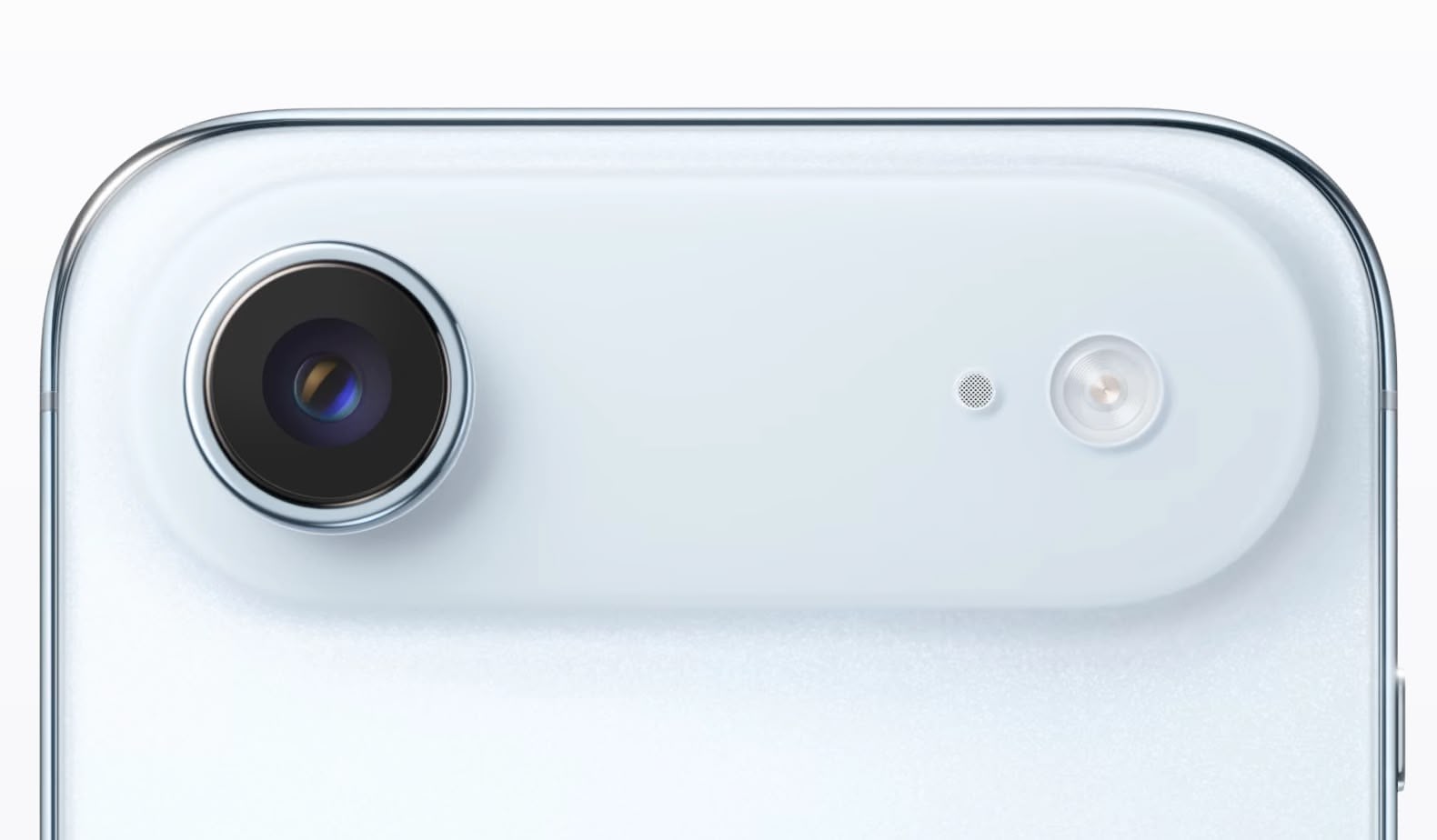
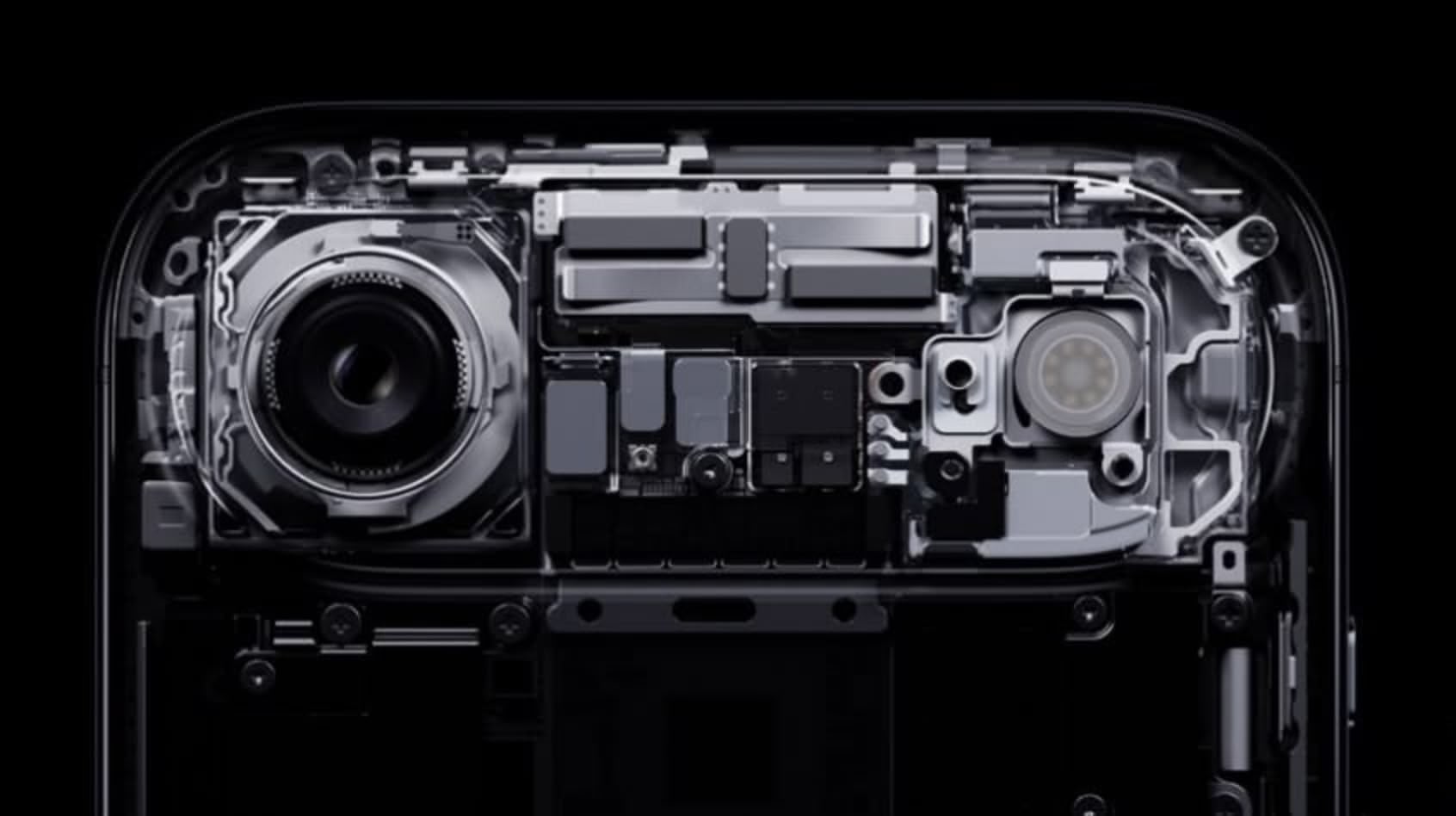
Apple's reported delay of the second-generation iPhone Air will be used to work on a redesign of the device that could include a second rear camera, according to a news brief from The Information.
A redesign that includes a second camera is said to be one way that Apple thinks it can address user complaints that the iPhone Air, while an impressive design feat, has led to too many hardware compromises, especially given the high price tag.
Apple priced it starting at $999, and that appears to have put off customers, leading to reports of poor sales and manufacturing cuts. The iPhone Air is only $100 cheaper than the $1,099 iPhone 17 Pro, which has a triple-lens rear camera and much better battery life. Adding a second camera to the ultra-slim device would also make it look more feature-equivalent to the standard iPhone 18 and therefore more appealing to consumers.
Citing people with knowledge of the matter, the report claims that some Apple engineers want to release the redesigned version with a second camera in spring 2027, which is when Apple is expected to release the regular iPhone 18 and iPhone 18e, as part of a new split launch cycle. The iPhone 18 Pro, iPhone 18 Pro Max, and an all-new foldable iPhone are expected to launch in fall 2026, which was when the iPhone Air 2 was originally expected. The Information reported on the delay earlier this week.
The report seemingly corroborates a leak out of China last week that claimed Apple's second iPhone Air model is in development and could feature two rear cameras instead of one, with a 48MP Fusion Ultra Wide camera joining the existing 48MP Fusion Main camera. Multiple technologies are housed in the plateau of the iPhone Air to maximize space for the battery, so Apple would presumably need to redesign the internals considerably to fit in another camera.
Previous reports have said Apple's work on a second-generation version of the iPhone Air is aimed at reducing the weight, adding vapor chamber cooling, and improving the battery capacity.
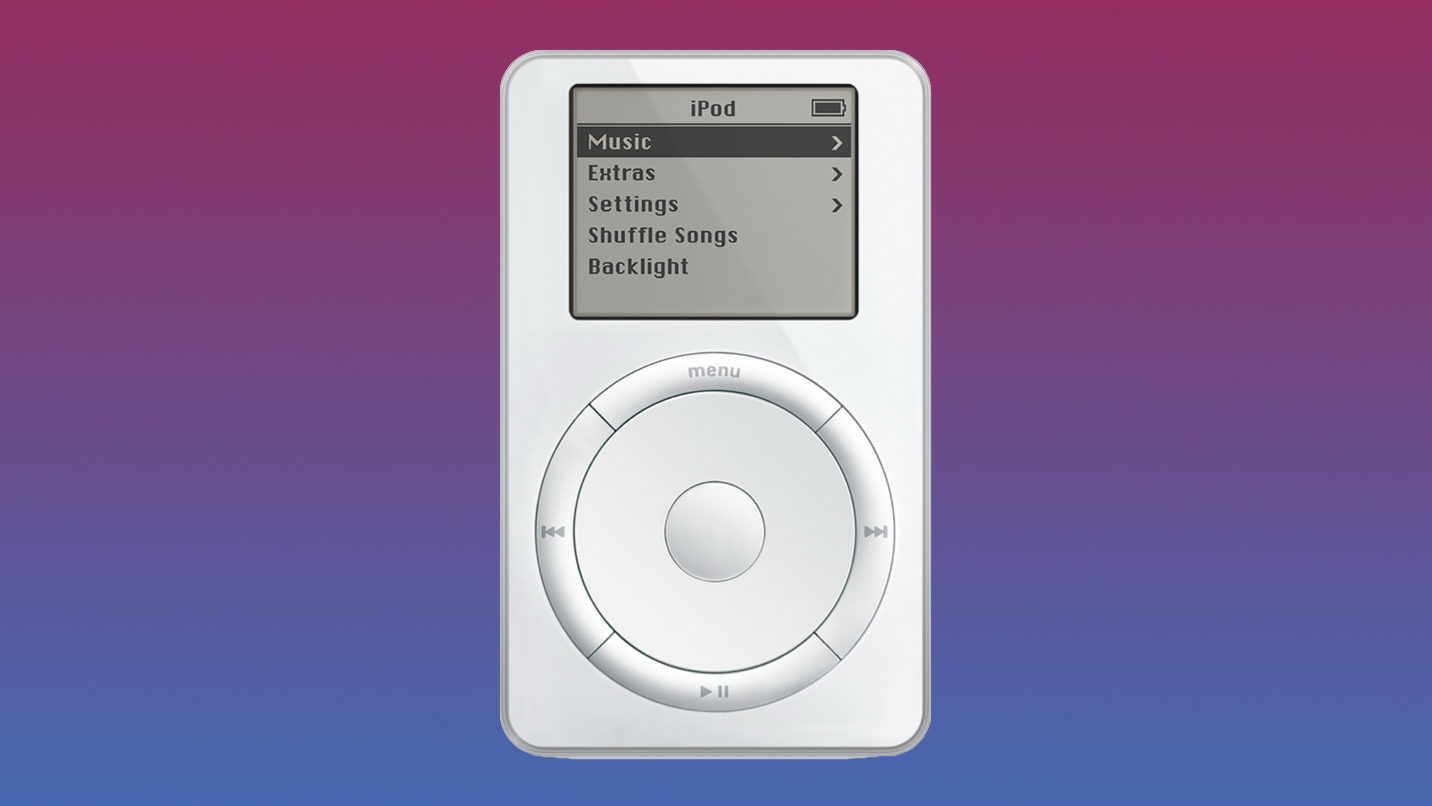
The first-generation iPod came out on November 10, 2001, making today the 24th anniversary of the device's launch. Apple announced it in late October, but November 10 was the first day customers were able to get their hands on it.
Even way back in 2001, there were leaks and fake leaks before the iPod launched. In one rumor article, Apple's upcoming device was dubbed the "iWalk" and described as a PDA with a high-color TFT-screen with handwriting recognition, which did not prove to be true. CNET suggested that it was too sophisticated to be an MP3 player, and was instead a component for a home digital stereo system, while a German website said it was "like a standalone CD-writer" that looks like "a Hifi component." The site did accurately predict that it would make it possible to "have all the music in the house stored on one place," but described it as a sort of AirPlay-enabled speaker.
More reliable rumors accurately pegged it as a digital music device able to sync with a computer, and in the days leading up to the launch, the iPod name leaked. Even with the info that came out, much of the iPod's introduction was a surprise because 2001 leaks were much less detailed than 2025 leaks.
Some MacRumors readers lined up to buy one on launch day, kicking off a tradition of long lines at Apple Stores that continued well into the iPhone launch days. As with any Apple product launch, there were some mixed reactions to the iPod, and of course a slew of early complaints. Here's what the forums had to say:
There were plenty of MacRumors readers thrilled with the iPod, and as we well know, it was a wildly popular device that spurred several subsequent models and eventually led to the launch of the iPhone.
It was impressive to be able to have a 5GB FireWire drive in your pocket at the time, and iPod owners used it as a hard drive for file transfers. MP3 players existed, but nothing with the storage capacity and design of the iPod.
With the iPhone that does everything an iPod does, there's no longer a need for the iPod. The very last iPod was the iPod touch, which Apple updated sporadically and then didn't touch after 2019. It was officially discontinued in 2022, marking the end of the iPod line. Apple almost never announces when a product has been discontinued, but the iPod was an exception given its history.
In a statement, Apple's marketing chief Greg Joswiak said that the "Spirit of the iPod lives on" across all of the company's products, from the iPhone to Apple Watch to HomePod.
The iPod will celebrate its 25th anniversary next year. Apple has revived old products in the past, but people have little use for a music-only device in 2025. Apple is, however, working on a home hub that can play music, run apps, and control smart home products, and it's described as a small, square device with a display. It's possible Apple could reference the iPod when unveiling the device, or even borrow a part of its name like it did when naming the HomePod. This article, "Happy 24th Anniversary, iPod" first appeared on MacRumors.com
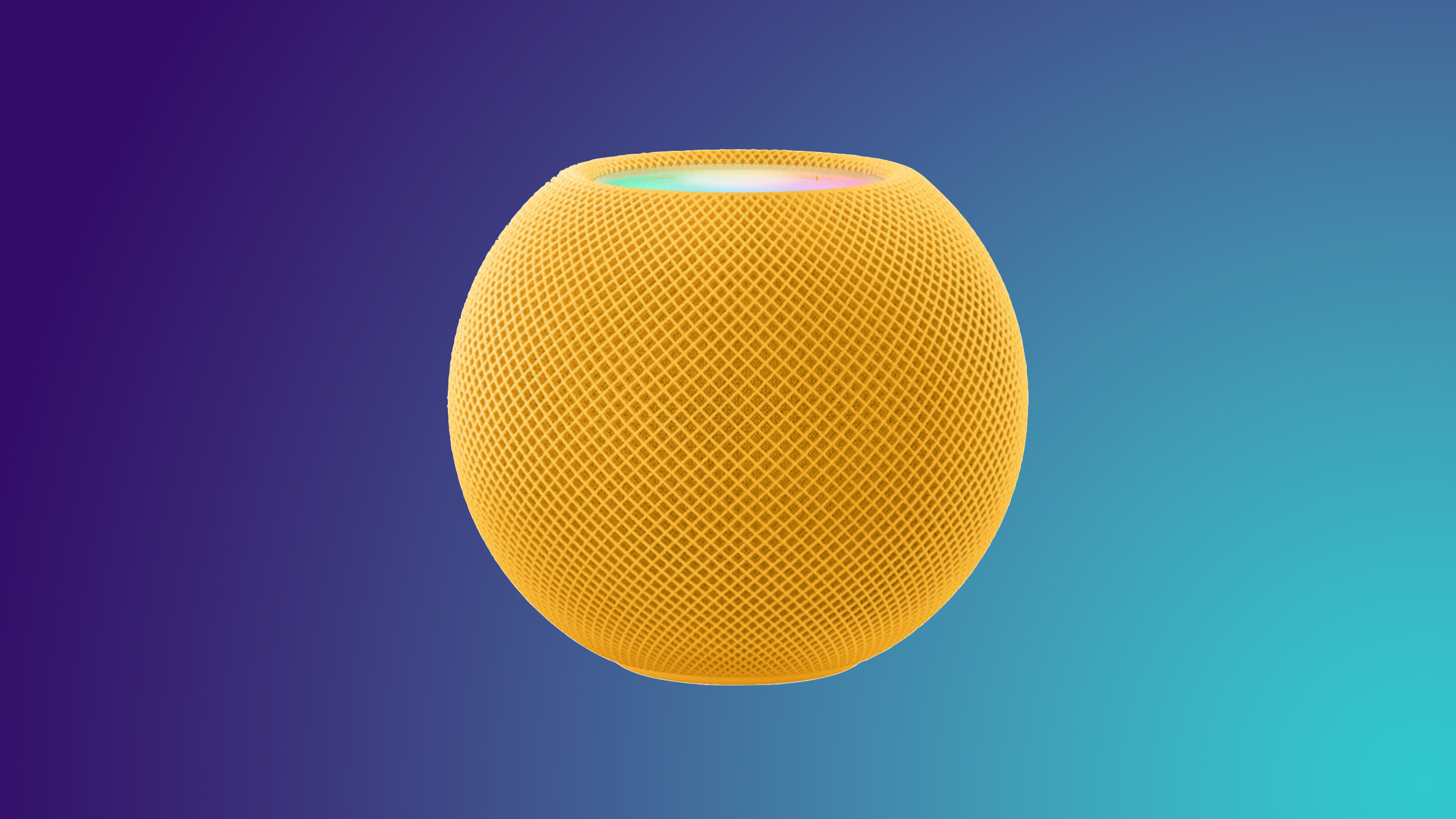
Apple product retailer B&H is listing all HomePod mini models as discontinued, and no longer offering them for sale. Some other retailers are also listing the HomePod mini as out of stock or on backorder, which suggests that an update isn't too far off.
Adorama lists the HomePod mini as backordered, and select colors are out of stock at Target. Walmart doesn't have any stock that's not from resellers, Staples has no HomePod minis available online, and at least one color is sold out from Verizon. The Midnight color option is unavailable for shipping from Best Buy, though other colors are in stock. Apple is still selling all colors of the speaker, with options available for both immediate shipping and pick up.
Apple is rumored to be working on a new version of the HomePod mini, and Bloomberg said it could come as soon as this month. It's possible that the waning stock at third-party retailers is a sign that we'll get a new version of the HomePod mini before the end of 2025.
Apple held an event in September and did a series of product releases in October, casting some doubt that a new model is still on the immediate horizon.
The next HomePod mini is expected to have an upgraded S-series chip inside and Apple's N1 networking chip, but there are no design changes rumored except for refreshed color options. This article, "B&H Lists HomePod Mini as Discontinued Amid Refresh Rumors" first appeared on MacRumors.com
The thin, light iPhone Air sold so poorly that Apple has decided to delay the launch of the next-generation iPhone Air that was scheduled to come out alongside the iPhone 18 Pro, reportsThe Information.
Apple initially planned to release a new iPhone Air in fall 2026, but now that's not going to happen.
Since the iPhone Air launched in September, there have been reports of poor sales and manufacturing cuts. Apple's supply chain has scaled back shipments and production. Apple supplier Foxconn has reportedly dismantled all but one and a half of its production lines for the iPhone Air, and all production is expected to be stopped at the end of the month. Luxshare, another supplier, stopped production at the end of October.
Apple was counting on the novel look of the device to spark interest, because it features the first substantial design update that we've seen to the iPhone lineup since the iPhone X added Face ID and an all-display design in 2017. Creating a super thin 5.6mm iPhone required compromises, so the iPhone Air has a smaller battery and a single-lens rear camera, but it still has a high price tag. Apple priced it starting at $999, and that appears to be more than customers are willing to pay for style without substance. The iPhone Air is only $100 cheaper than the $1,099 iPhone 17 Pro, which has a triple-lens rear camera and much better battery life.
Apple has not been able to land on a fourth iPhone that will sell well alongside the standard iPhone and Pro iPhone models. Apple experimented with a smaller 5.4-inch iPhone mini that suffered from disappointing sales, then moved on to the larger "Plus" iPhone that served as a more affordable version of the Pro Max. Plus models also failed, leading to the iPhone Air.
Apple has already been planning for a split launch for the iPhone starting with the iPhone 18 models. The iPhone 18 Pro, iPhone 18 Pro Max, and foldable iPhone are planned for fall 2026, while the iPhone 18 and iPhone 18e will be held until early 2027. It's possible that the next-generation iPhone Air will come out alongside the iPhone 18 in the spring.
Apple has been working on a second-generation version of the iPhone Air with a lighter weight, vapor chamber cooling, and a larger battery capacity, but Apple could rethink the design.
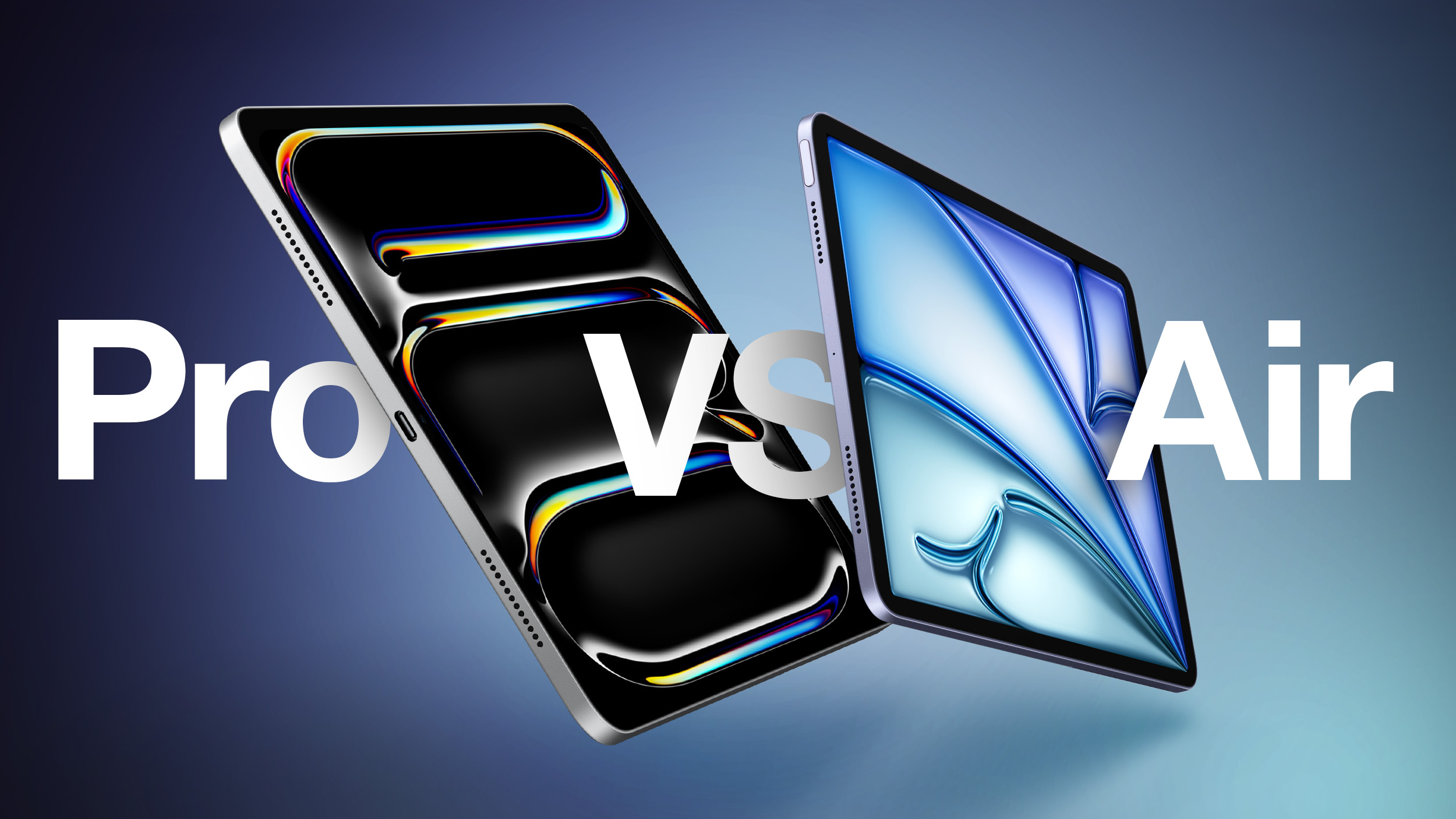
Apple recently updated the iPad Pro, widening the gap with the iPad Air, but how different are the two product lines and which should you buy?
Earlier this year, Apple refreshed the iPad Air with the M3 chip—a minor update over the previous model from 2024 which added the M2 chip and Apple Pencil hover. The latest iPad Pro models introduced the M5 chip alongside a small number of changes after last year's major redesign, which saw the debut of a thinner design with OLED displays.
Should you consider purchasing the iPad Air to save money, or do you need the high-end features of the iPad Pro? Our guide answers the question of how to decide which of these two iPads is best for you.
iPad Air (M3, 2025)
iPad Pro (M5, 2025)
Liquid Retina display (LED backlit display with IPS technology)
Ultra Retina XDR display (Tandem OLED)
ProMotion technology for refresh rates up to 120Hz
11-inch model SDR brightness: 500 nits max
13-inch model SDR brightness: 600 nits max
SDR brightness: 1,000 nits max
XDR brightness: 1,000 nits max full screen, 1,600 nits peak (HDR content only)
Nano-texture display glass option on 1TB and 2TB models
Drive external displays at 60Hz
Drive external displays at up to 120Hz
Adaptive Sync support
M3 chip
M5 chip
Made using TSMC's first-generation 3nm technology (N3)
Made using TSMC's third-generation 3nm process (N3P)
Portrait mode with advanced bokeh and Depth Control
Portrait Lighting with six effects (Natural, Studio, Contour, Stage, Stage Mono, High-Key Mono)
Animoji and Memoji
LiDAR scanner
Adaptive True Tone flash
Rear ambient light sensor
ProRes video recording up to 4K at 30 fps (1080p at 30 fps for 256GB capacity)
ProRes video recording up to 4K at 60 fps with external recording
Two microphones
Four studio-quality microphones
Audio zoom
Stereo recording
Landscape stereo speakers
Four speaker audio
Weight: 462 grams or 617 grams
Weight 444 grams or 579 grams
Depth: 6.1 mm
Depth: 5.3 mm or 5.1 mm
Fast-charge capable (Up to 50% charge using a 60W adapter or higher in 30 minutes with the 11-inch model or 35 minutes with the 13-inch model)
USB‑C connector
USB‑C connector with support for Thunderbolt/USB 4
Supports Magic Keyboard for iPad Air
Supports Magic Keyboard for iPad Pro
128GB, 256GB, 512GB, or 1TB storage
256GB, 512GB, 1TB, or 2TB storage
Up to 2× faster SSD read and write speeds
Available in Space Gray, Starlight, Purple, and Blue
Available in Space Black and Silver
Price starting at $599
Price starting at $999
Overall, the iPad Air is the better option for the majority of users, simply on the basis of value for money. For most people, the additional $400+ needed to buy the iPad Pro is not justified to get the likes of Face ID, a thinner design, four-speaker audio, and a ProMotion OLED display with refresh rates up to 120Hz.
Some iPad Pro features, such as LiDAR, up to 16GB of memory, and Thunderbolt connectivity are only practically useful to a small niche of users and most will never use some of these high-end capabilities. Many features, such as Adaptive Sync and Audio zoom, will not be meaningfully utilized by many users.
Professionals who have a clear use case for needing larger amounts of RAM and storage, a matte display, Thunderbolt connectivity, and OLED for HDR content will clearly benefit from buying the iPad Pro. That being said, "prosumer"-style customers who simply want the best iPad will enjoy features such as 120Hz ProMotion for smoother scrolling and gaming, a thinner design, deeper blacks and more vivid colors with the OLED display, and the Adaptive True Tone flash for document scanning, even if they are not necessary.
Beyond these individual circumstances, the iPad Air is the best value for money and will be more than ample for most users' needs. With the iPad Air, users can get a modern all-screen design, the M3 chip, practical features like USB-C and 5G connectivity, and compatibility with the core Apple accessories for a price well below that of the iPad Pro.
A new iPad Air with the M4 chip is in development and will likely launch in the first half of 2026, which may be worth bearing in mind if you aren't in a hurry to make a purchase. The new chip is expected to be the main upgrade, with few other new features or enhancements expected.
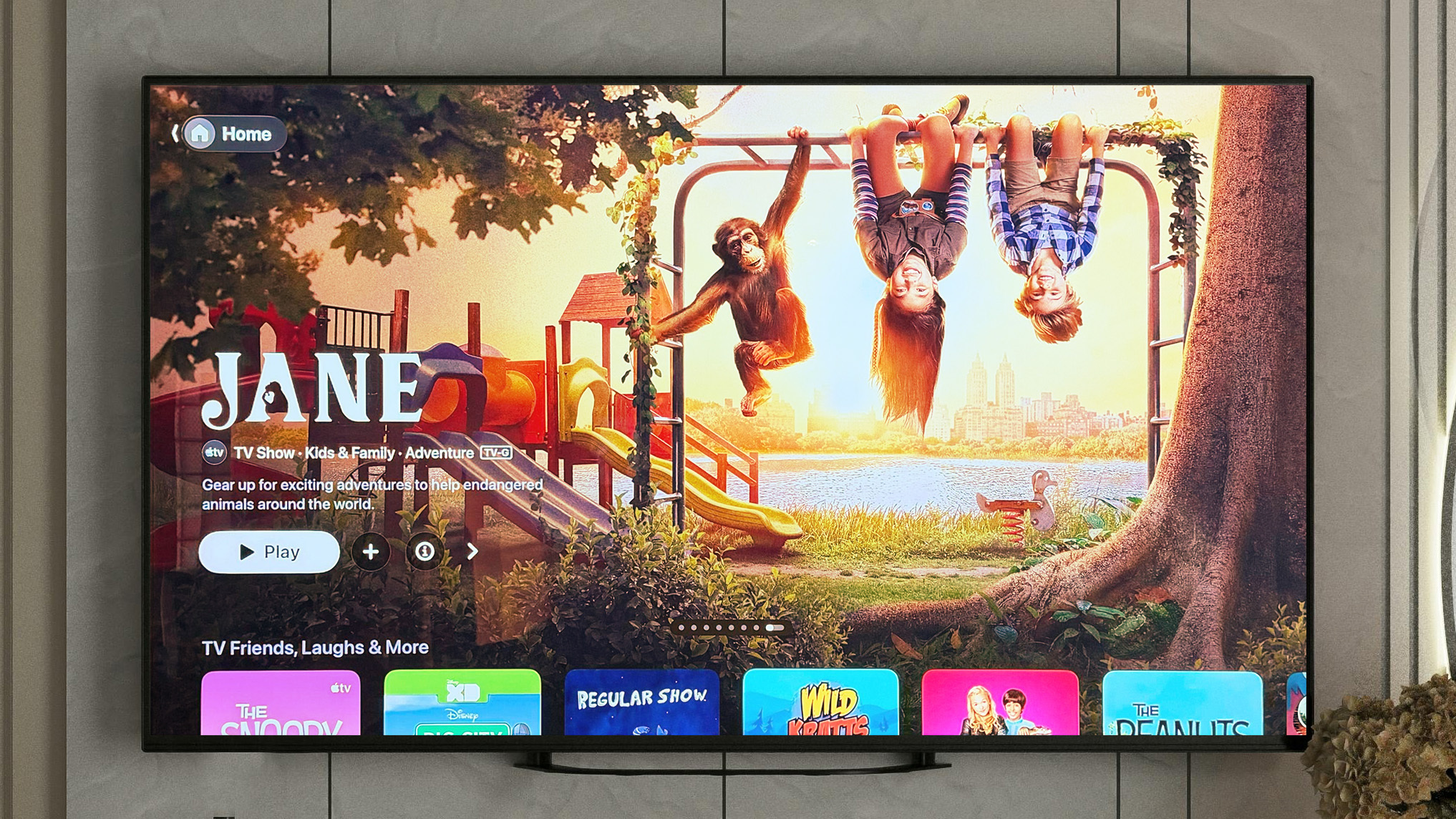
With tvOS 26.2, Apple is changing the way that profiles work on the Apple TV. It's now possible to create a profile without an Apple Account, which is particularly useful for guest profiles and profiles for children.
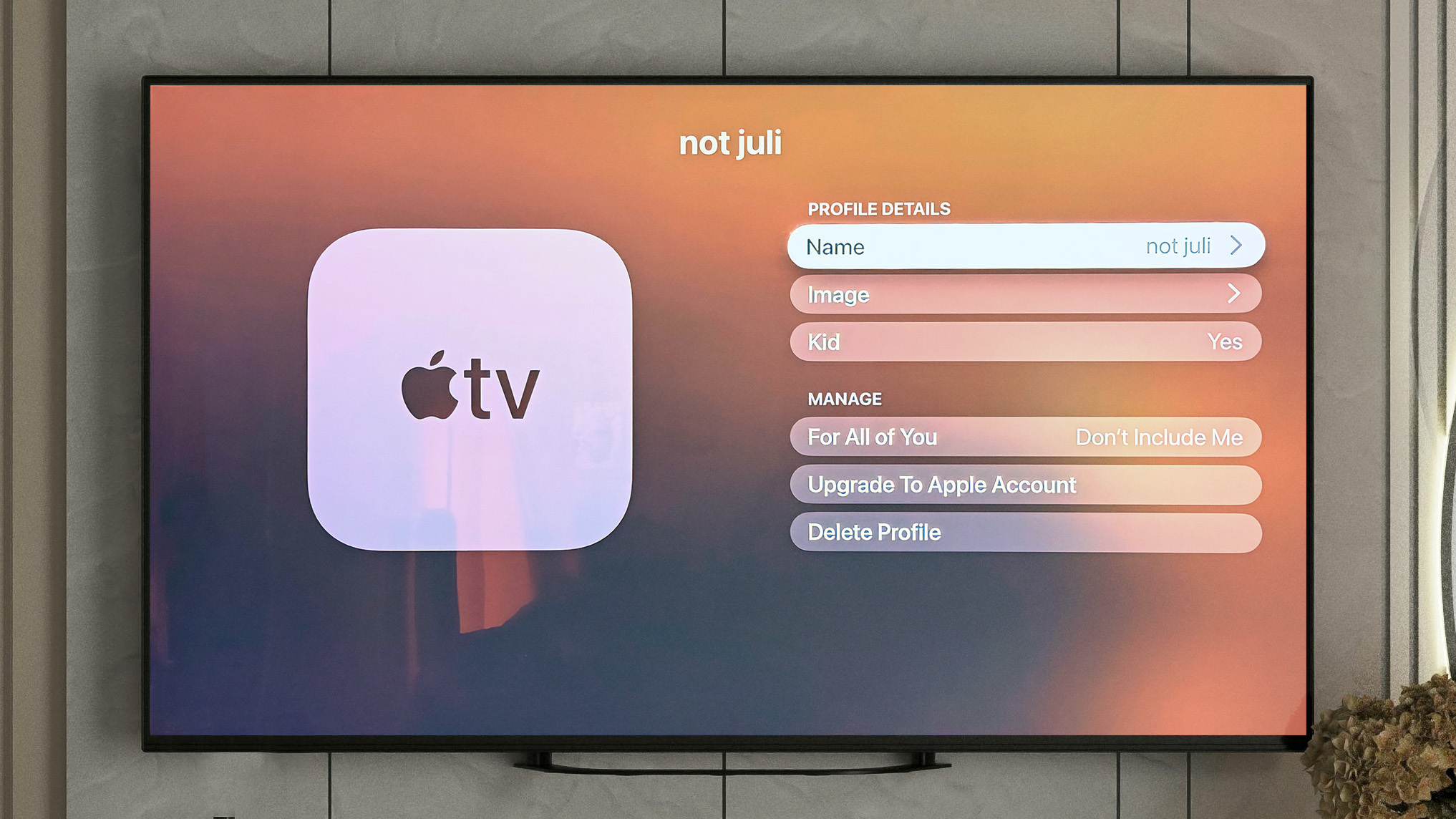
In the Apple TV Settings app's profiles section, the "Add New Profile" option no longer requests that users sign in with an Apple device or manually with an Apple Account.
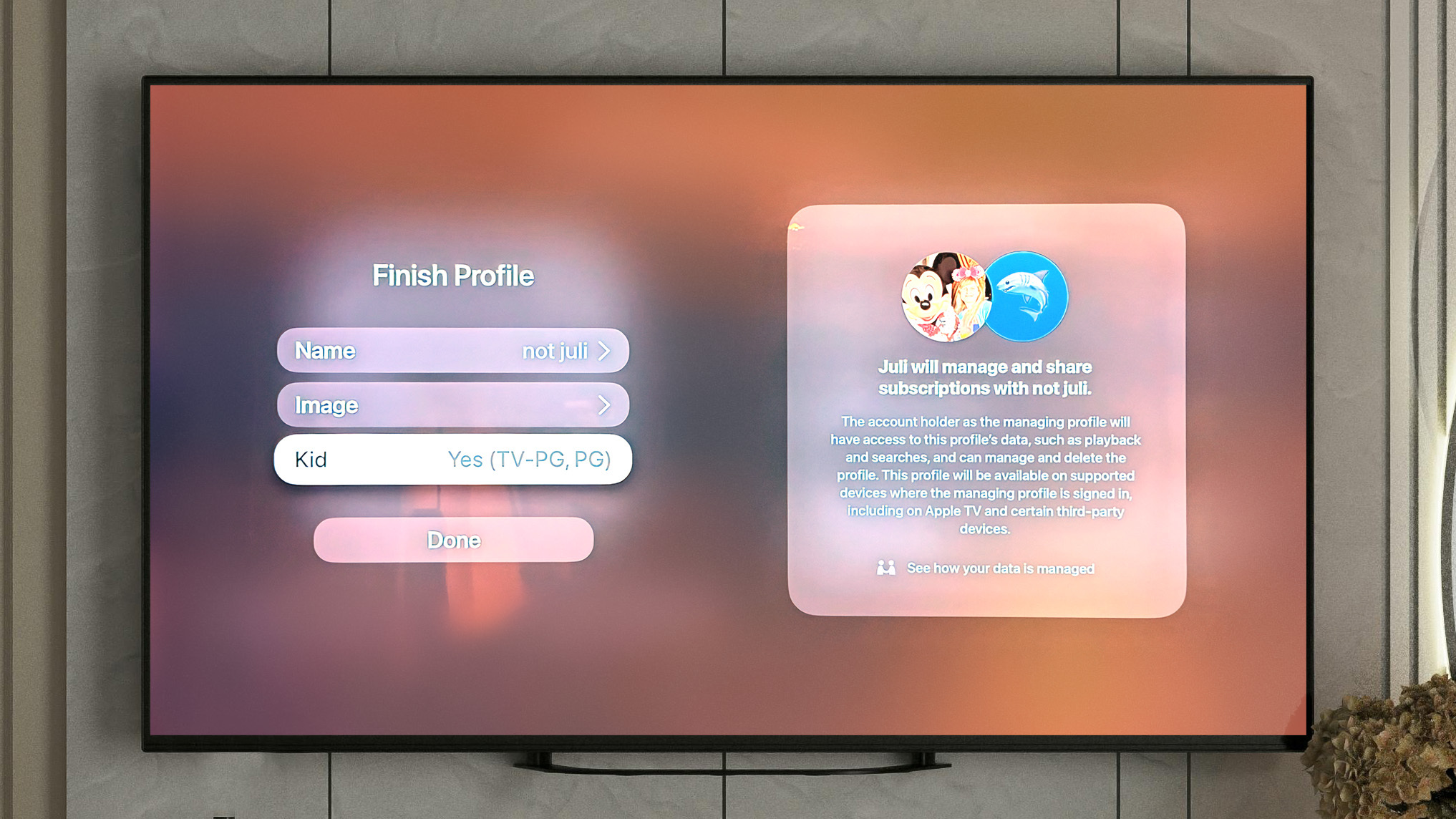
Alongside the Apple Account sign in, there is a "Create Profile" option that only requires a name, a profile rating, and a yes or no question about whether the new user is a child.
Selecting yes limits content to a PG rating by default, but there is a customize option for more granular control. Users can select ratings for TV shows and movies that are appropriate for the child based on their age. All of the standard TV show and movie ratings are available to select. Creating a child account and choosing a rating changes the Apple TV content that is available to the child. The Apple TV app will only show content that is appropriate for the limits that have been established for the account.
In tvOS 26.1, the latest public version of tvOS, profiles require an Apple Account. The TV app has a dedicated children's section and parents can set up parental controls to limit access, but it is not the full kids-only Apple TV view that's in tvOS 26.2.
The Apple TV app in tvOS 26.2 does not show any adult content when a child's profile is signed in, including in the Store and Library sections of the app. Only kids shows and movies are available to watch or purchase.
Years ago prior to the launch of tvOS 14, there were rumors of a dedicated kids mode for the Apple TV, but that didn't materialize. The changes in tvOS 26.2 are the closest Apple has come to an Apple TV experience just for children.
When a kids profile is active, it only applies to the Apple TV app. All other apps are visible and accessible to the user, and any app can be downloaded from the App Store. Parental controls still need to be used to limit access to content outside of the Apple TV app.
Setting up an adult profile allows for unrestricted access to the content on the Apple TV, so adults in the home that don't have an Apple Account can also now have their own profiles with their own content recommendations. Any account that is created without an Apple Account can be deleted or can be upgraded to add an Apple Account at a later time.
Profiles on tvOS 26.2 say that they may also show up on certain third-party devices, so accounts for children may also be accessible on devices with the Apple TV app, like smart TVs.
tvOS 26.2 is available for developers and public beta testers at the current time, and it is expected to launch sometime around the middle of December.
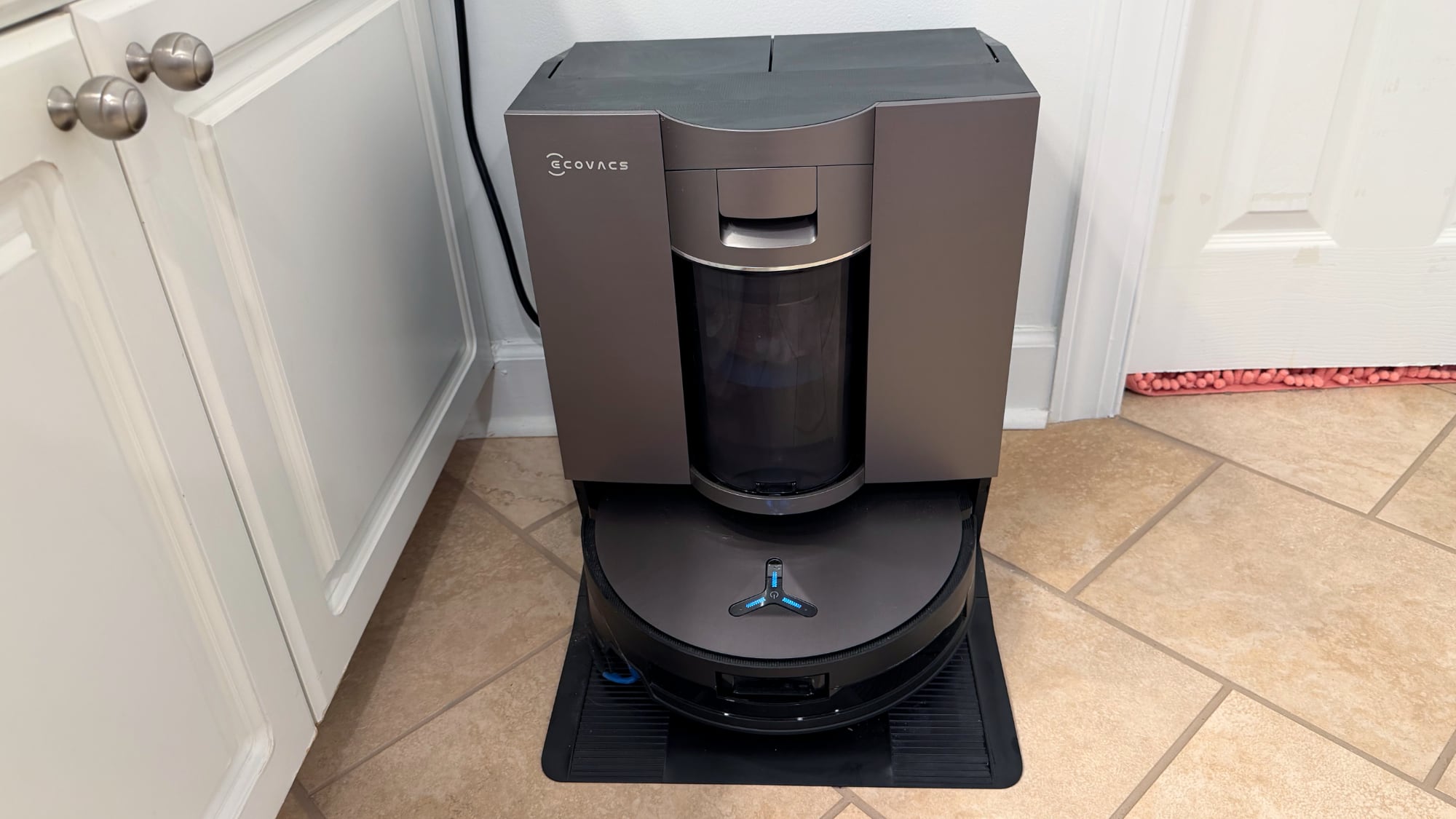
Ecovacs recently came out with its newest robot vacuum, the Deebot X11 Omnicyclone. Like the last couple of models, this new vacuum has Matter integration and it's able to connect to HomeKit so it can be sent off to clean the floor with Siri voice commands.
Design
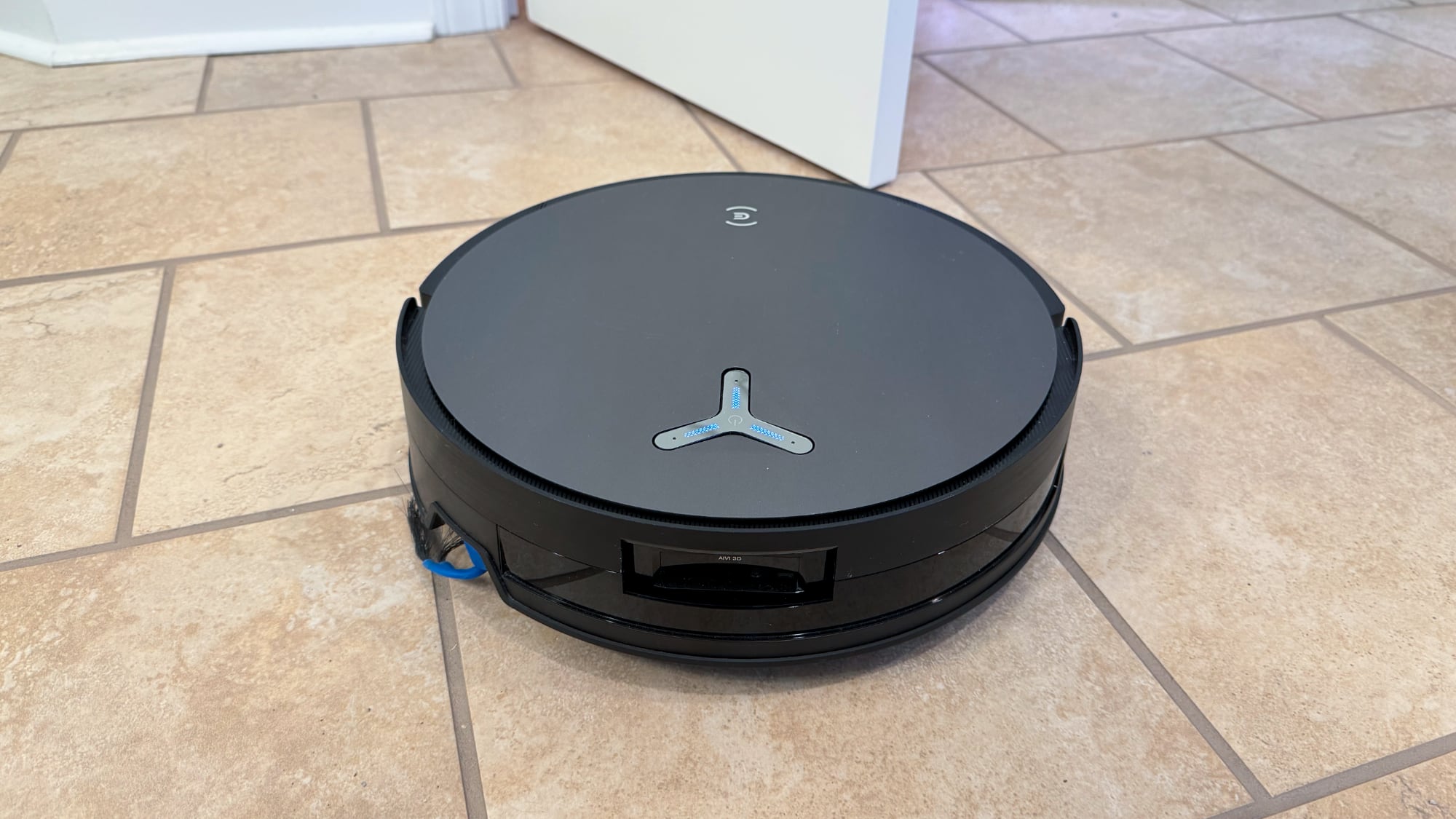
The X11 is the same size as the prior-generation X9, coming in at 3.86 inches tall. I've tested several robot vacuums now, and that's on the thinner side. It can get under almost all of my furniture, including my stove, to vacuum in areas that are often untouched.
Height is the most important metric when it comes to robot vacuums, but if you have a lot of tightly spaced furniture, you also need to consider width. The X11 is about 13.8 inches across, and it could be too large for smaller apartments.
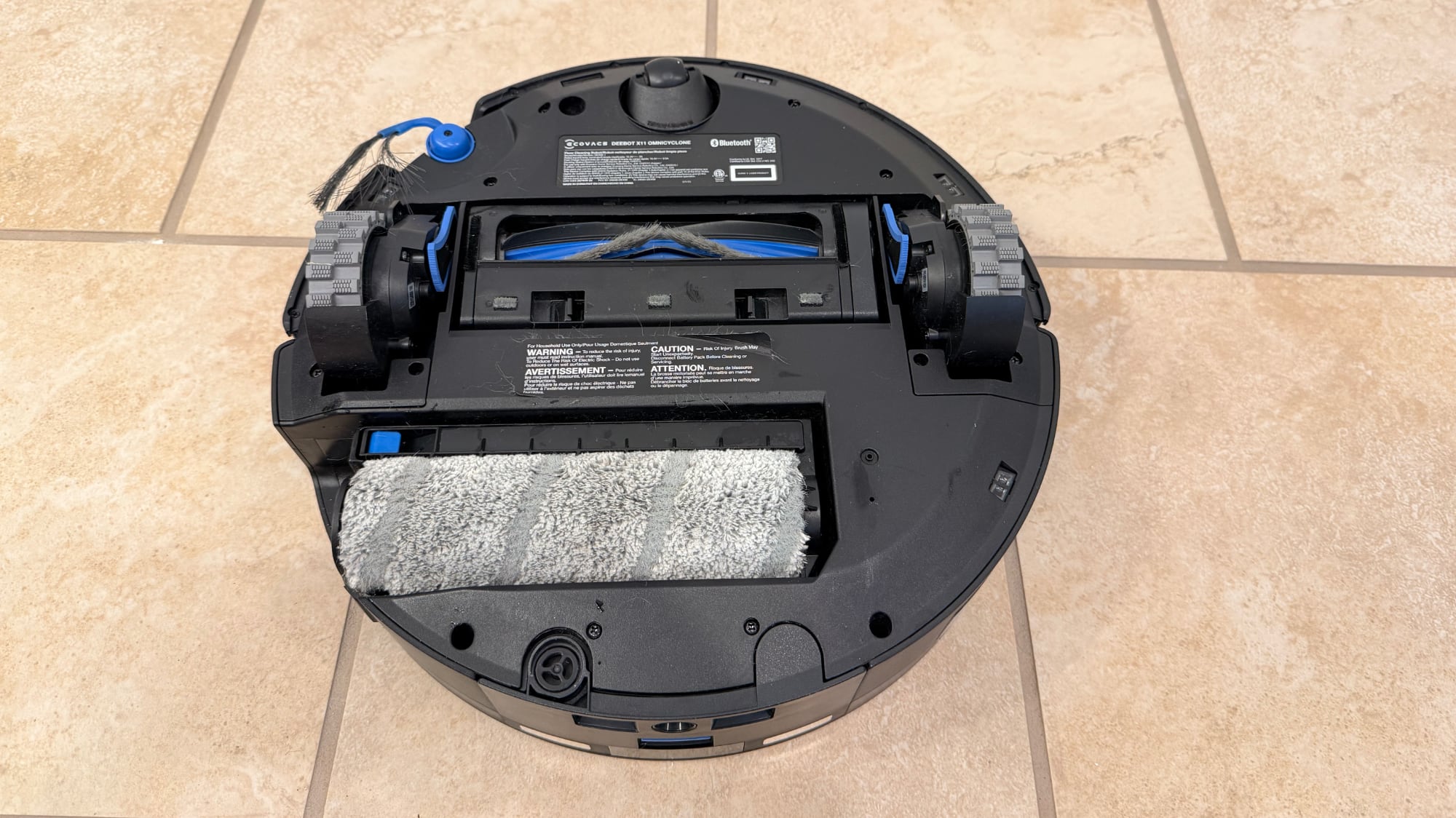
Underneath the vacuum, there's a roller bar, a mop, a brush that gets into nooks and crannies along baseboards, a canister for dust and debris, and internal areas for clean and dirty water for mop washing and cleaning. You can access the dust canister by removing the top plate of the robot and undoing the latch.
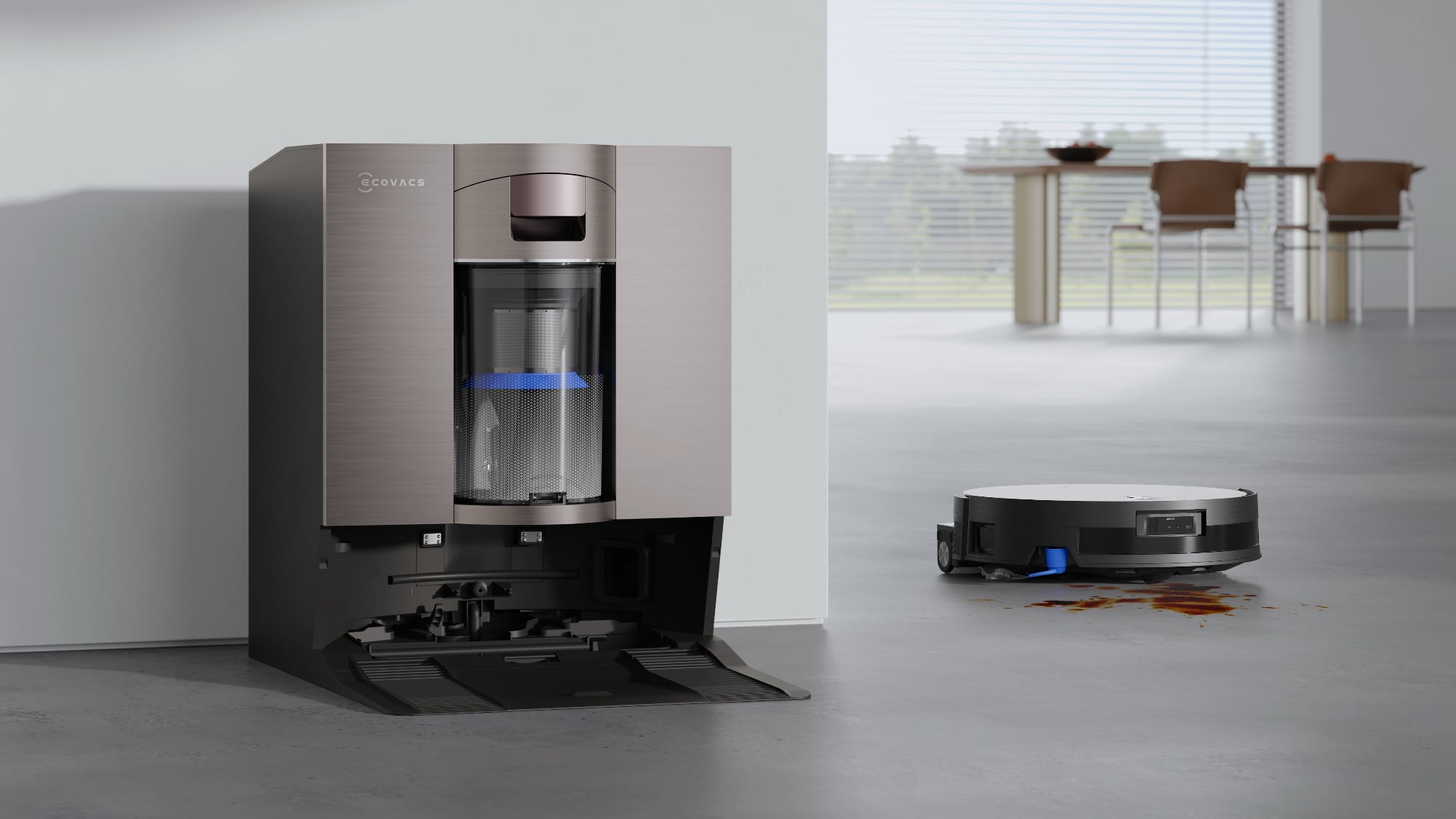
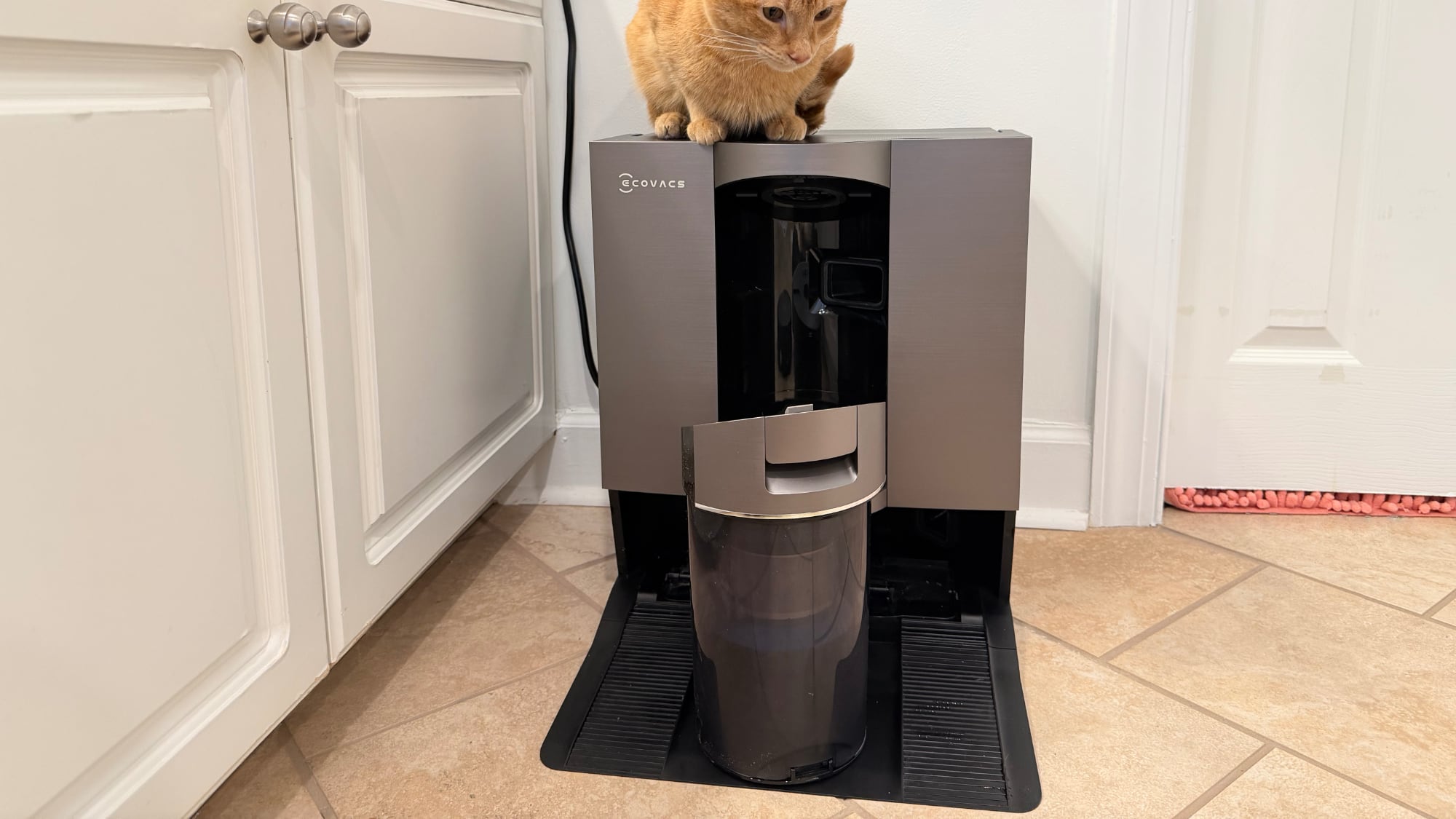
Exterior vacuum design didn't change much between the X9 and the X11, but the X11's base station is entirely different. It's significantly larger than before because it includes a reusable canister for dust instead of a bag.
The canister is why the X11 has its "Omnicyclone" name. It reminds me of a Dyson-style vacuum canister, and it's built right into the middle of the base station. You can pop it out and empty it into the trash, then stick it right back in. Large chunks of debris can get stuck, so as with a Dyson, the canister can need cleaning at times. There is no need to buy bags with the X11, which does make it stand out from other robot vacuums on the market.
Along with the vacuum canister, the base station houses a 2.7-liter dirty water tank and a 3.2-liter clean water tank. The water tanks are larger than the tanks in the X9, which means less maintenance. I fill the clean water tank less, and I try to remember to empty the dirty water tank regularly because it can get smelly if it sits.
Inside the base station, there's a spot to add cleaning fluid. The X11 supports two kinds of cleaning fluid, one for standard cleaning and one for deep cleaning. Two cleaning fluid options are more expensive and more of a hassle, so I'm not a fan of the dual cleaning. Ecovacs recommends that you use Ecovacs cleaning fluid, and it sells the two variants.
Setup and Maintenance
Setting up the X11 is straightforward enough that anyone can do it. There's a single-page startup guide that has easy instructions on putting the base station components together, then it's just a matter of filling the water tank, downloading the app, turning on the robot, and following the app steps for pairing.
The X11 is simple enough that someone not technologically inclined could operate it, but the number of app settings and complicated features like voice activation could be confusing. None of those features are required, and it can clean on default settings, but if you have older parents who struggle with electronics and buy this (or any robot vacuum) for them, you're going to get calls for troubleshooting.
There is maintenance to take care of, like occasionally replacing the rollers and brush with parts purchased from Ecovacs. The site sells a bundle that includes a new roller brush, three filters and two side brushes for $60, and a new roller mop is $35.
Vacuuming
The X11 has the strongest suction of any robot vacuum that I've tried. It is excellent at picking up pet hair, dust, and debris on my hardwood and tile floors. I started tossing a handful or two of dirt on the floor to see how much robot vacuums can clean up, and the X11 got almost all of it in the first pass.
Robot vacuums are meant to clean regularly rather than deeply, which is why it's not an ideal test, but it does give me a clear metric to compare by.
According to Ecovacs, the X11 has 19,000 Pa suction and it uses the same Blast system (multi-stage suction and airflow) from prior Ecovacs robots. It's more suction than the X9, which I already thought worked well, and more suction than the Roborock vacuum I use regularly. If you have hard floors and pets or kids, it's good at getting up even trace amounts of pet hair, and it doesn't miss crumbs in the kitchen.
There's a side brush for sweeping along baseboards and in corners, and it's able to get most dirt and fur up. You'll want to manually vacuum in corners every so often, but it's not a situation where the X11 is vacuuming the main area of a room and pushing dust to the sides. It is able to use the added side brush and the improved suction to do a passable job keeping hard to reach areas clean.
Ecovacs' robots have a ZeroTangle brush, and it works. I have long hair, my partner has long hair, and we have two cats. I haven't seen the brush get tangled up with hair, and I've never had to fuss with it.
The X11 is able to get over higher thresholds than prior Ecovacs robots, so if you have a tall threshold that other robots can't handle, the X11 might be able to navigate it. It can go over thresholds as high as 2.4cm (0.95 inches). It can get into a bathroom that has a higher than average threshold, but another room with a baby gate has a threshold too high for it to overcome. I definitely notice a difference between the X11 and the older X9 when it comes to threshold navigation.
Despite stronger suction, the X11 isn't louder than prior models, measuring in at around 62 dBA in tests. I wouldn't want to sleep while the X11 is running, but I can work while it's on if I put in my AirPods Pro to block out the noise. Emptying the vacuum into the canister at the base station is the loudest action that it performs (close to 80 dBA), so keep that in mind when positioning the base station.
The X11 is one of the quieter robot vacuums that I've tried in terms of straight vacuuming and operation sound, and it has a mode that makes it even quieter. Turning down the suction level will also help.
Mopping
Like Ecovacs' prior-generation high-end robots, the X11 has a roller mop rather than two rotating mopping pads. I am a fan of this design because it continually removes dirty water, so it's washing the floor with clean water.
It sprays water onto the mop, cleans the floor, and squeezes the dirty water into a collection tank before starting the process over again. With this version, the roller extends out further, so it can get into corners. It's also supposed to have stain-detecting AI to go over a dirty area again, and I've seen this work as long as certain AI cleaning modes are enabled.
With wet stains, the X11 can get a mess in one go. A squirt of ketchup on the floor, for example, gets wiped up with a single cleaning. With dried-on stains, it can take a few passes. I tested dried ketchup, and needed to have the robot go over it three times to get every speck up. Anecdotally, the X11 seems to be better at getting up things like dried up cat food in fewer passes than prior Ecovacs robots.
Every so often, the X11 returns to the base station to wash the mop with hot water, and when a cleaning is finished, it's dried with hot air.
I wouldn't expect any robot vacuum to get a floor entirely spotless in one cleaning, but weekly cleanings paired with daily cleanings in specific areas like the kitchen keep the floors clean.
Time
Cleaning 2,000 square feet takes the X11 approximately five hours on the standard setting with one pass, though that can vary depending on the number of passes that it's instructed to make when mopping, how often it empties the vacuum and washes the mop, and how far it is from the base station. That time is fairly standard for the robot vacuums that I've tested, though some will take longer because of long periods for charging.
I find it useful to set up scheduled cleanings with the Ecovacs app or the Home app. I schedule the X11 to clean one area of the house per day, which keeps the floor clean but doesn't subject me to listening to a vacuum run for hours on end. It can be set to clean after meal times or more frequently just in high traffic areas, which is helpful.
Navigation and AI
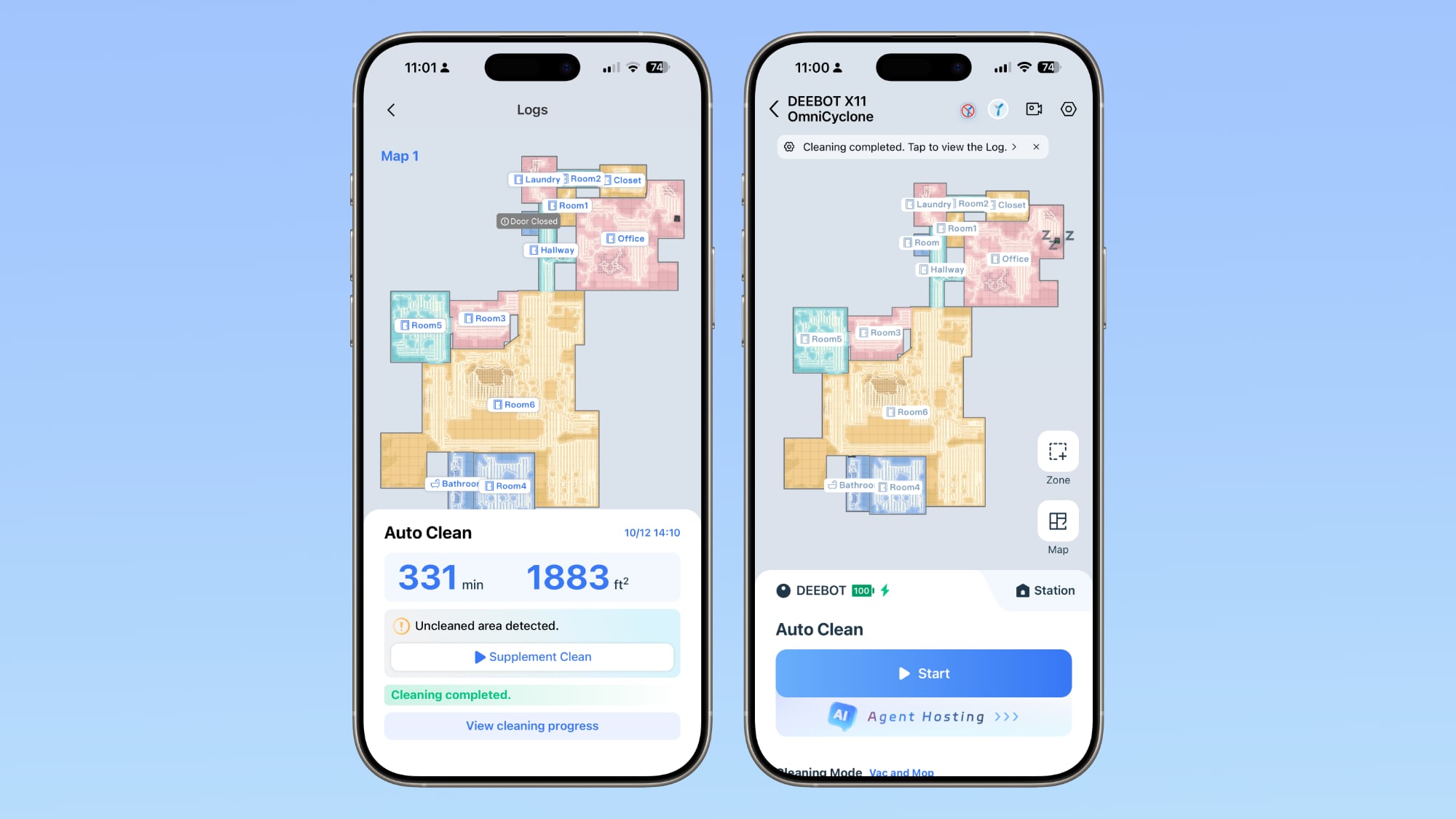
When you set up the X11 for the first time, it maps each room in your house prior to cleaning. You can see the map as it goes, and it's clear that the lidar sensor at the front works well. It made a perfect map of my house, though unlike some other robot vacuums, it doesn't detect furniture and add those items to the map automatically, nor is it great at labeling rooms.
It can detect some thresholds, but it's best to go in and edit the map to make changes. My house has an open-concept main area, and it wasn't able to distinguish between the kitchen, dining room, and living room, and it also merged one bedroom with those areas. In my office, it wasn't able to tell the bathroom from the main office area, I suppose because it didn't detect the door.
The X11 is good at obstacle avoidance, using a camera-based sensor system for object detection. It hasn't run directly into anything, and it is better at not getting trapped by furniture. It knows where walls are, where furniture legs are, and it can detect and avoid items on the floor like cables, socks, pets, and more. It doesn't see smaller items like LEGO bricks, and it can suck those up.
Some vacuums will label the in-app map with items that have been detected so you can go in and tell them whether to avoid that item in the future. The X11's object detection is more behind-the-scenes, so I don't get a readout of what it's avoiding.
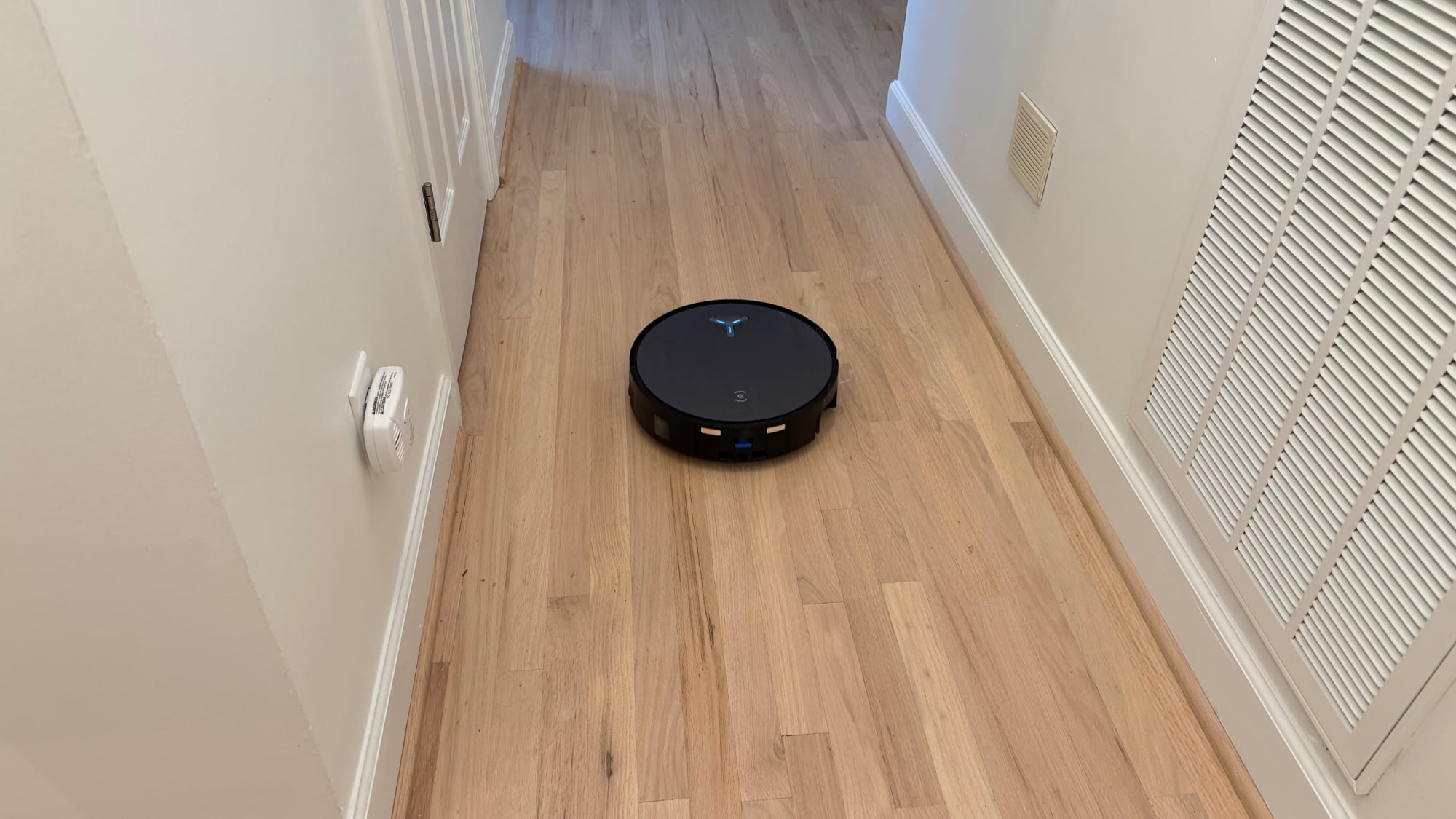
It's good at navigating the house, though I did see it get inexplicably lost one time. It might have been that the hallway was too dark, but it couldn't find its way back to the dock in another room.
The AI in the X11 is more transparent than in prior models, and I can better keep track of what the robot is doing, why it's doing it, where it's cleaned, where it hasn't cleaned, and where access was blocked by a closed door or another obstacle.
Rugs
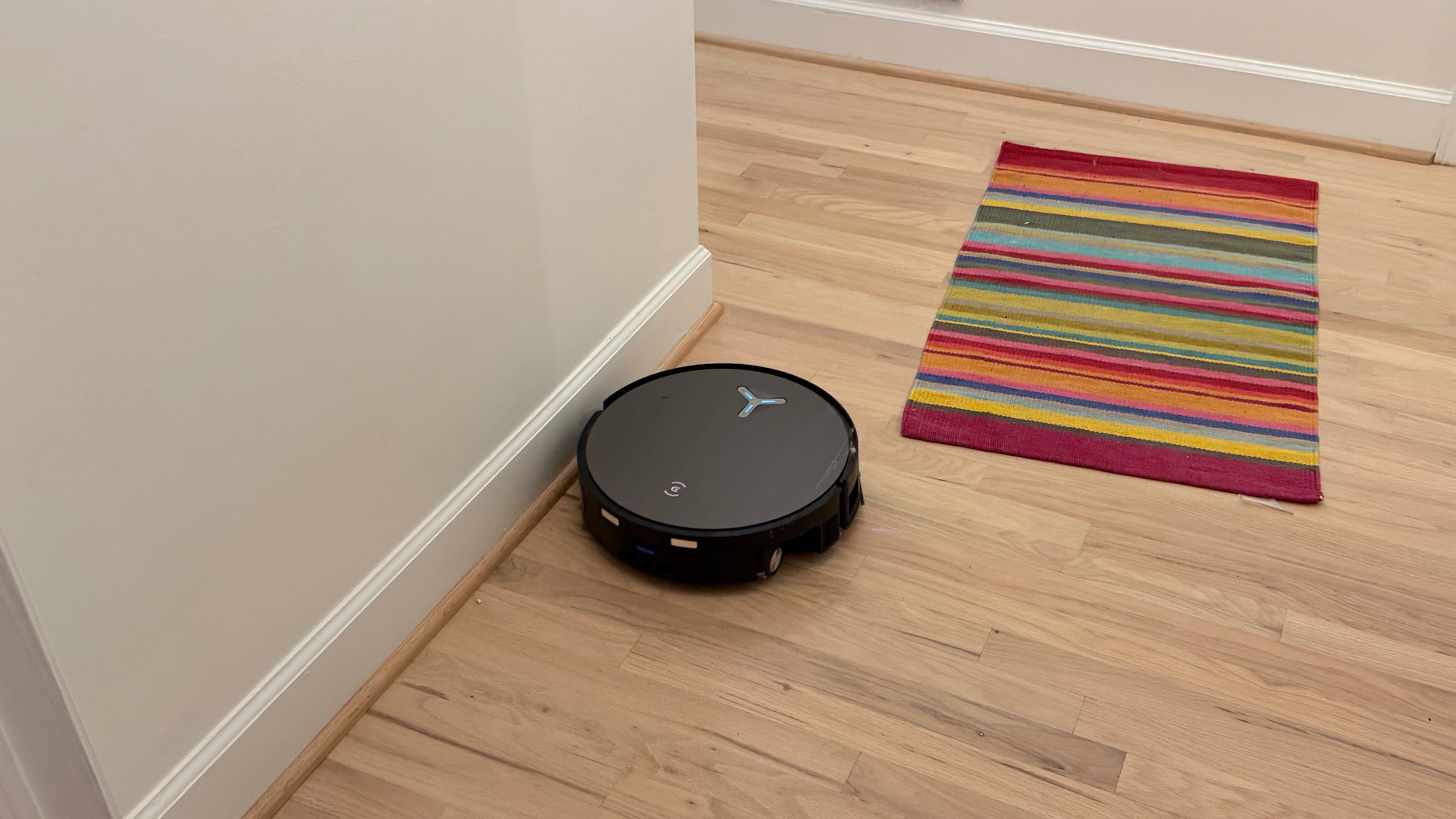
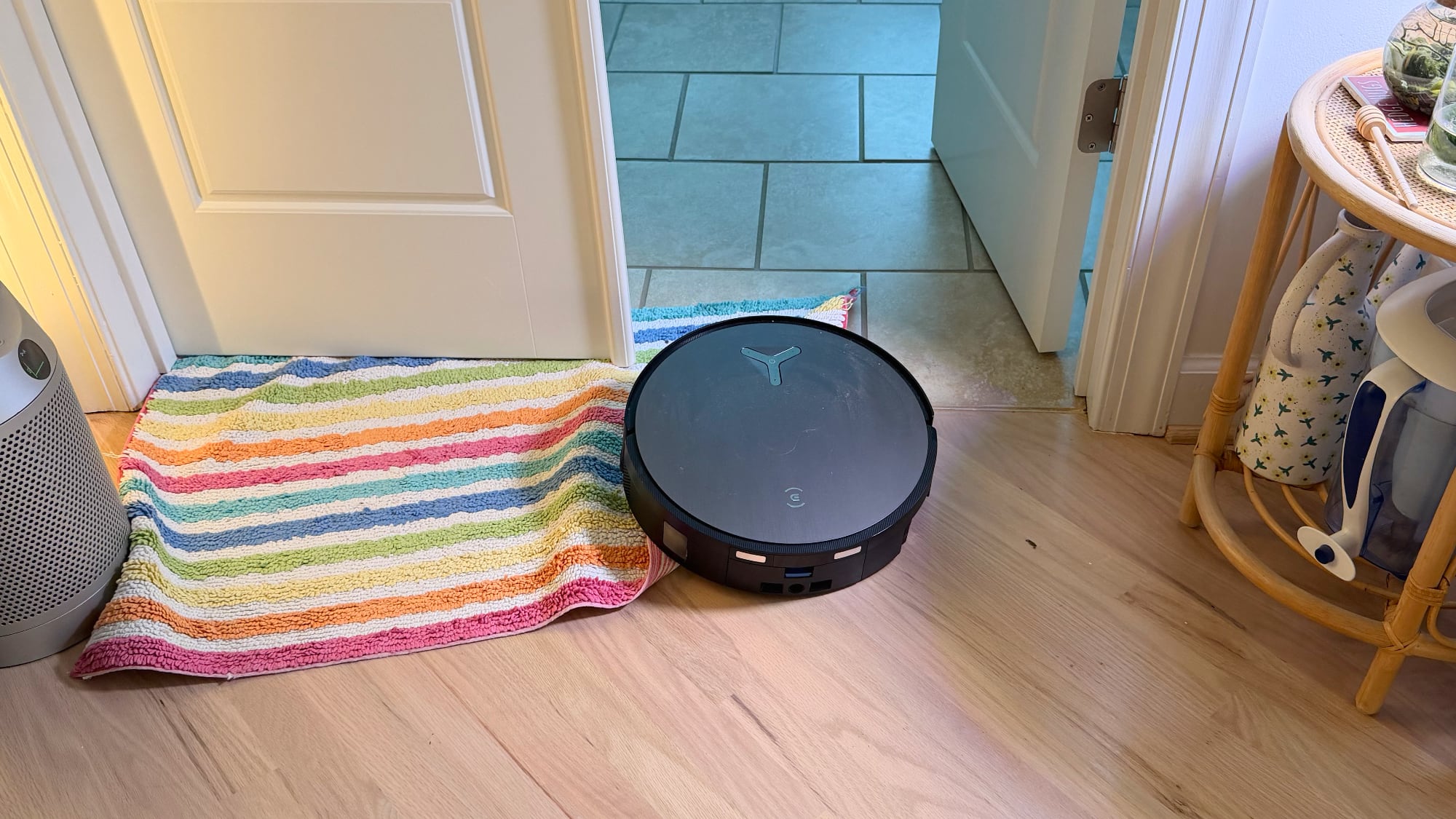
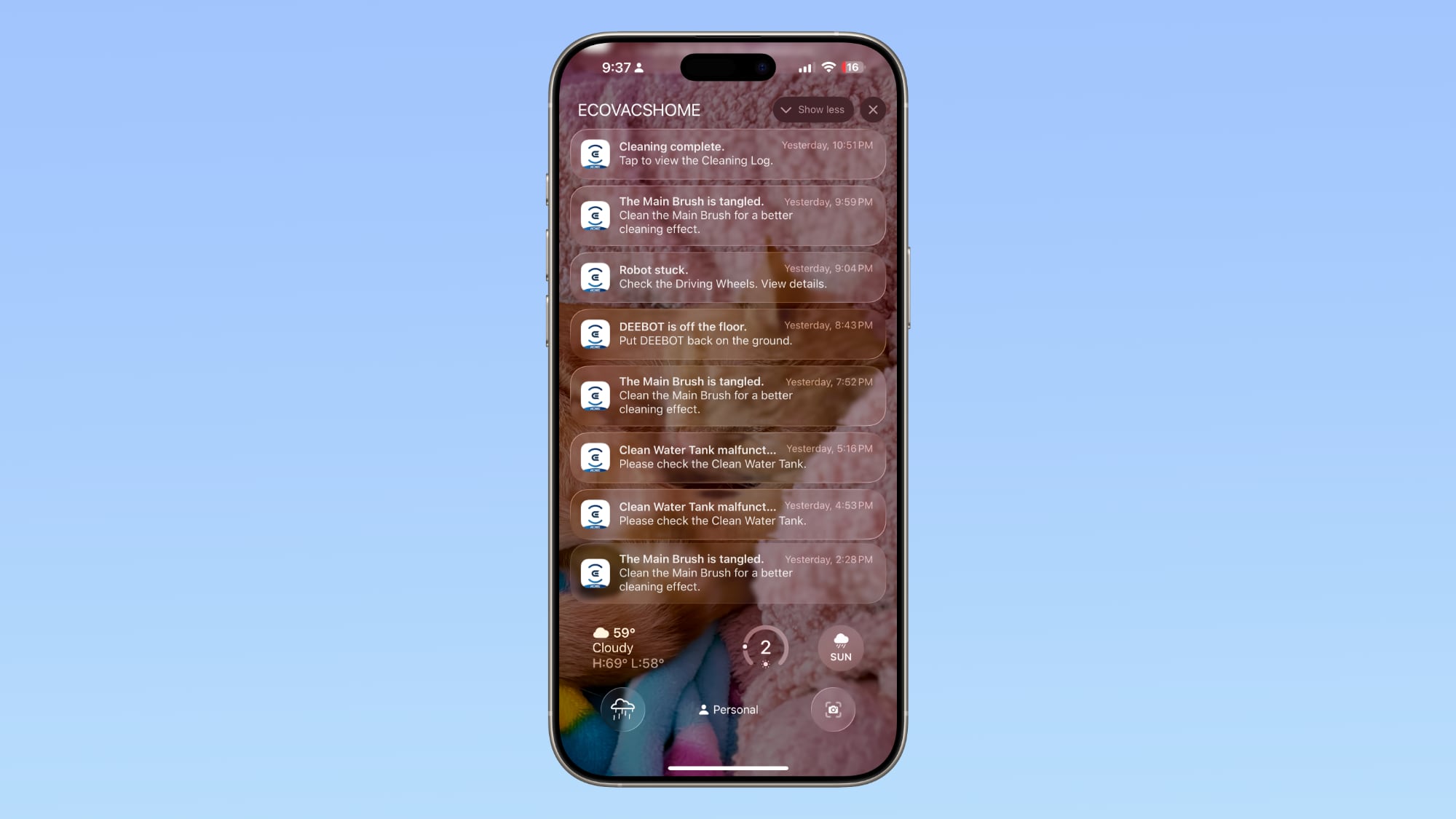
I've been frustrated with the way the Ecovacs robots handle small rugs, and there's no change with the X11 Omnicyclone. It regularly gets trapped on the rugs in bathrooms and thin, soft-backed rugs on my wood floors that don't have grip. It also cannot handle tassels. By "trapped," I mean that the roller vacuum sucks up the rug and can't release it, so I'm forced to go pull it out and set the vacuum to continue cleaning.
To be fair, Ecovacs does recommend picking up smaller rugs and tucking tassels away underneath the rug to avoid these issues, but that's a hassle. It's annoying to have to fix the vacuum when it sucks up a rug, and it's annoying to have to take the time to move everything out of the way every time it's running. Having to regularly move rugs makes it more difficult to automate and schedule cleanings.
With bigger, thicker rugs anchored by furniture, the X11 works with no issue. I have one rug that sheds like crazy even two years after I bought it. Sometimes the X11 will leave behind a big ball of rug fuzz, but all of my vacuums do that. My Dyson can't even clean that rug without getting clogged.
There is another rug in my laundry room that is an absolute dirt and lint magnet, and the X11 can get every speck of dust off of it. I'm satisfied with how well it cleans rugs, but it needs to be better about not getting stuck.
Battery
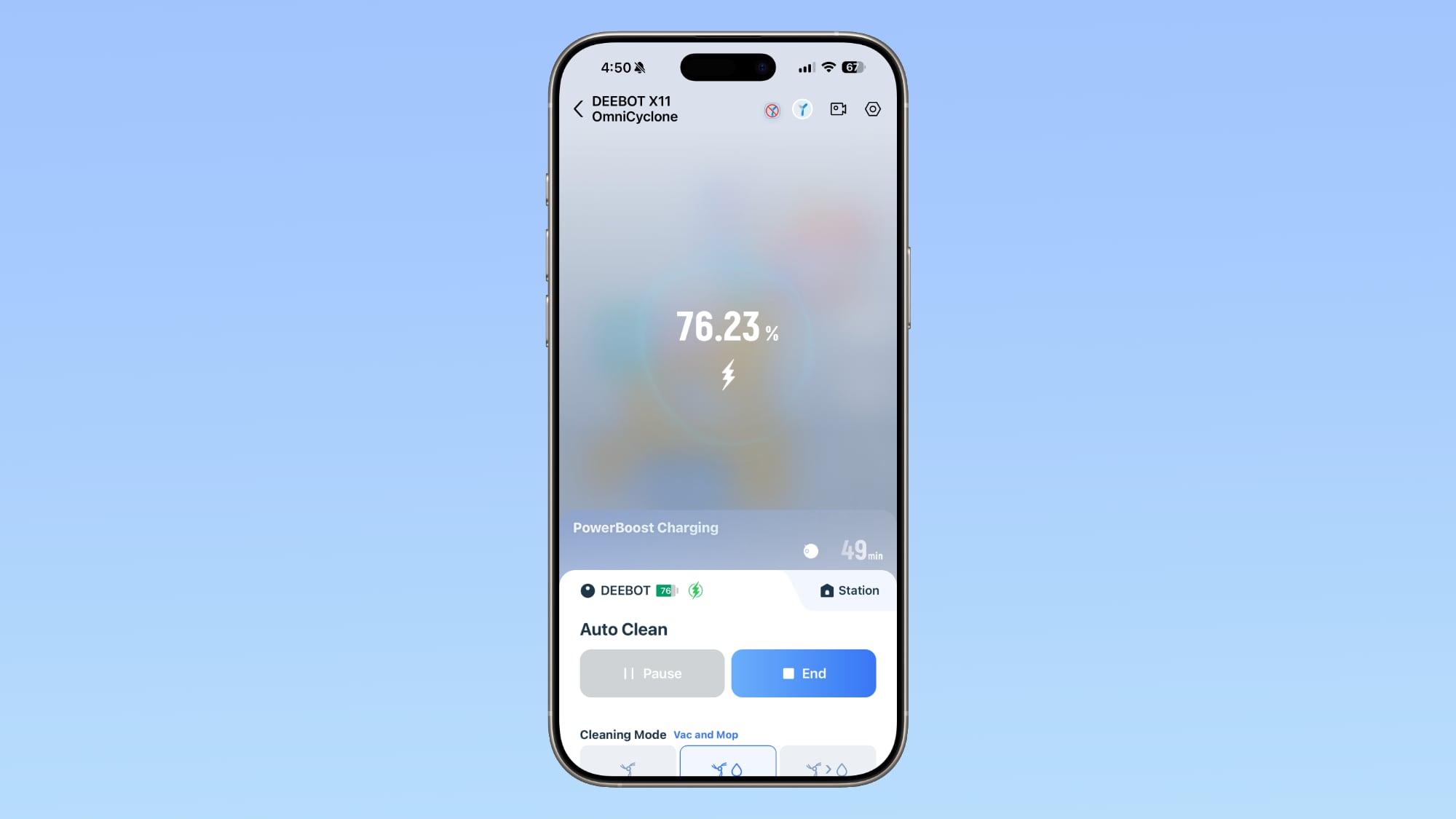
The X11 has a fast-charging feature where the robot can go back to the base station and quick charge for about 10 minutes. For a large home, this means that there's no multi-hour pause in cleaning.
With prior Ecovacs robots, there would be a long break for charging in the middle of a cleaning. With the X11, it cleaned for six hours straight with only brief stops to quick charge.
Ecovacs recommends the fast charge system for homes that are over 2,000 square feet, and there is an option to turn it off for smaller homes. Faster charging works well, and it sets the X11 apart from other vacuums. If you have a large home, it's a reason to consider this model over other options.
Ecovacs App
Even if you're planning to use the X11 with the Home app and through Siri voice commands, you need the Ecovacs app. It's the only place to manage the many, many settings that are available for the vacuum, and it houses the map the robot uses for navigation.
There are settings to adjust the vacuum suction, mopping water level, noise, and set up different types of cleaning such as after-meal cleaning, daily cleaning, and deep cleaning. You can set up custom scenarios for future one-touch cleanings, customize charging and station settings, adjust settings for carpet, view cleaning logs, and more. There's more than I can go over in a review, but if you get an Ecovacs robot, expect to spend a half-hour or so going through the options selecting your preferred parameters.
The X11 has an AI cleaning mode that incorporates cleaning history and preferences that you set. You can customize it with natural language commands, and it's meant to learn over time. It's new to this model, and it wasn't a feature that was available in prior Ecovacs robots I've reviewed.
The AI mode is listed in the app as "Agent Hosting," and you can tap on it instead of "Start" when beginning a cleaning. The AI will analyze your prior cleaning, take into account your app settings and preferences you've provided, and then adjust its settings on its own to clean the house.
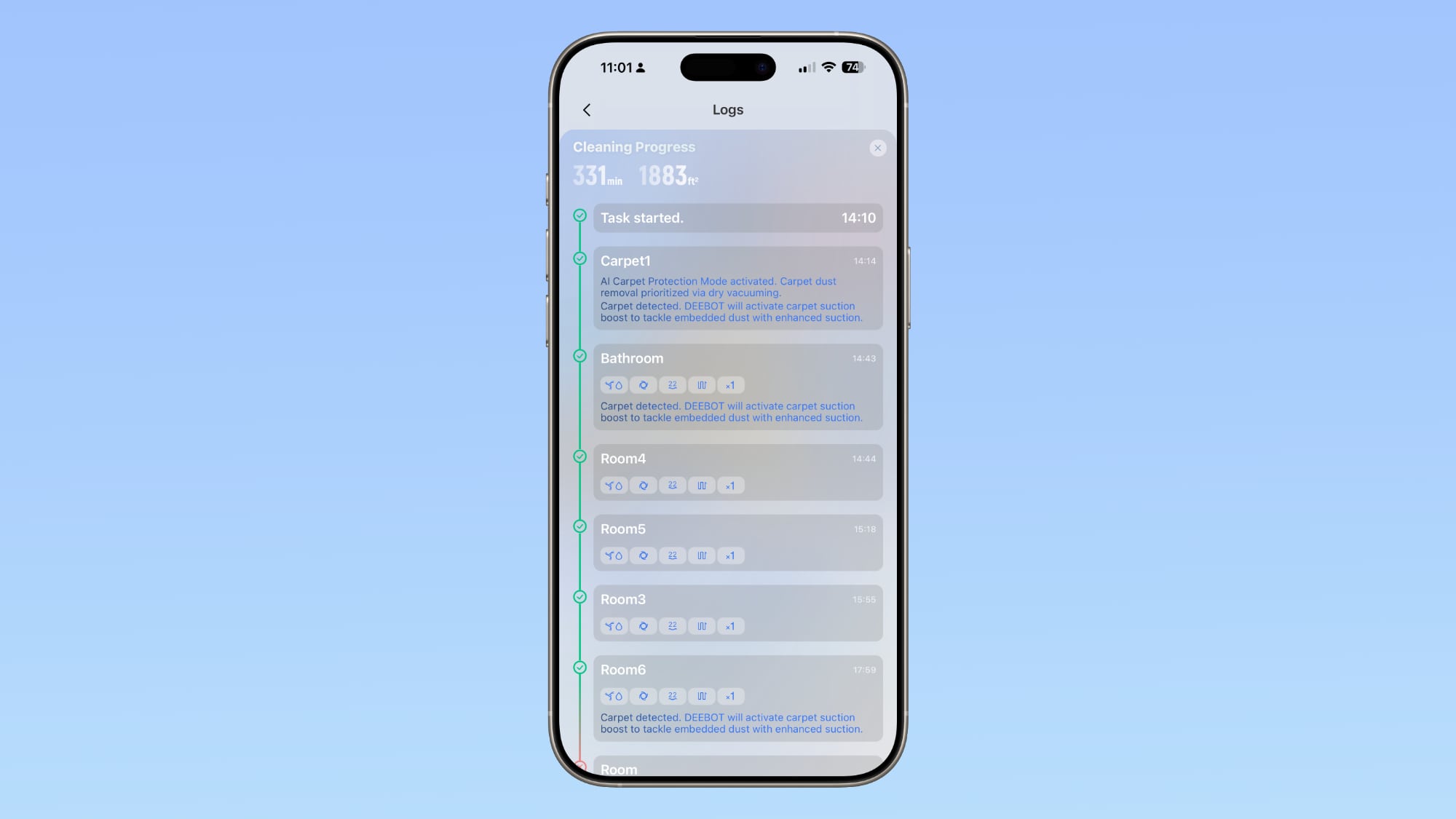
I've had mixed results with it, but I'm still working on customization. The first time I used it, it determined that the living room hadn't been cleaned for seven days, so it proceeded to clean it for like three hours (two passes) even though it wasn't dirty (the X11 hadn't vacuumed the floor in a week because I had). There is an AI feature that's supposed to notice messes and do another pass, but it clearly wasn't using that when evaluating how to clean.
The AI cleaned for 5.5 hours, and because it was doing double passes everywhere, it didn't get the task finished. I had to turn it off at around 11 p.m., and I wasn't able to resume the cleaning the next day because it can't pick up a task if the pause is more than a few hours.
In other tests, the AI performed better and selected reasonable cleaning parameters for various rooms, successfully executing a cleaning. I like that I can see what the AI is thinking and follow along as it completes each task, but there is a major issue I've run into. For some reason, the X11 has the wrong time. I started a clean at 2:30 p.m., and it thought it was 2:30 a.m. Another time, it was around 11:00 a.m., and it thought it was 11:00 p.m. The time is an issue because it will adjust suction to avoid being too loud if it's late at night.
The AI cleaning option is useful overall if you don't want to mess with settings for every clean, but it also takes time and effort to train it with your preferences. Luckily, plain old "Start" launches a standard clean where you can select the options that you want.
There's also a "Yiko" voice assistant that you can use to direct the X11 to clean. It's been present in the last several Ecovacs robots, but I don't use it often. Yiko isn't super responsive when I attempt to activate it, doesn't understand some simple commands, and doesn't do enough where I can use it instead of the app.
Home App
The X11 has Matter integration, so it connects to the Home app. You only get a few controls in the Home app, but it's enough to operate it on a basic level.
You can have the robot vacuum or vacuum and mop, selecting the entire house or just a single room. You can also choose from a standard clean or a deep clean for two mopping passes instead of one. The app will let you know if there's an error, such as when the water tank needs to be filled up. You can also play a sound so you can locate the robot if it gets itself stuck somewhere in the house.
Matter integration is useful for the Siri voice commands and for automations. You can use the Ecovacs app for setting schedules, or do it through the Home app if you want to use geofencing (such as having the robot clean when you leave home) or pair it with other HomeKit accessories.
Siri
I don't often use the Home app with robot vacuums, but I like being able to use Siri. There are HomePods in the main areas of my house, so I can say something like "Hey Siri, clean the kitchen" if I happen to be in the kitchen and notice crumbs on the floor.
When I first used a robot vacuum with HomeKit, I was skeptical that it would be useful, but it's been a convenience. I wouldn't necessarily buy a robot vacuum just for the Matter integration, but if there are two robots with similar features and only one has Matter, I'm going to choose the Matter version.
I am hoping that Matter integration with products like the Omnicyclone X11 gets even better when Apple introduces the new version of Siri that it's been working on, and when the rumored home hub comes out.
Bottom Line
The X11 has the strongest AI functionality of a robot vacuum that I've tested, and aside from its poor performance with thin rugs, it's the best vacuum that I've tried so far. I appreciate that the X11's AI can learn my cleaning preferences and adjust, but sometimes a simple scheduled cleaning with pre-set parameters is better than AI. There's a lot of redundancy in the Ecovacs app with the option to use AI, standard settings, or the Yiko voice assistant, and it can be confusing. I'd like to see streamlining in the future.
Matter integration isn't necessarily a reason to buy one robot vacuum over another, but it is useful if you have a lot of Apple devices and tend to use Siri voice commands for smart home devices.
The X11 isn't leagues ahead of the X8 and X9 when it comes to cleaning performance, but there are a few features that could be a reason to consider it instead of another robot vacuum. If there's a threshold in your house that other vacuums can't climb, there's a good chance the X11 can navigate it. It's the only robot vacuum I've tested that has a vacuum chamber you can empty, eliminating the need for vacuum bags.
For larger homes, the change to charging makes a difference in how quickly cleaning gets done, and it prevents frustrating multi-hour pauses. Fast charging could be worth the cost if you have a home larger than 2,000 square feet.
If you don't need those features, Ecovacs' X8 and X9 robots clean well too, and are available at a lower price.
How to Buy
The X11 Omnicyclone can be purchased from the Ecovacs website or from Amazon for $1,499.99, but there is a promo code for $200 off at the current time, which is listed on the website. There are regular sales on Ecovacs vacuums, so don't buy one at full price.
OpenProject 16.6 has been released and this version introduces new features and improvements again. Please take a few minutes to learn what changes for you. We will summarize the most important changes in this blog article and, as always, please see our release notes that contain all changes, features and bug fixes.
Project evaluation and scoring (Enterprise add-on)
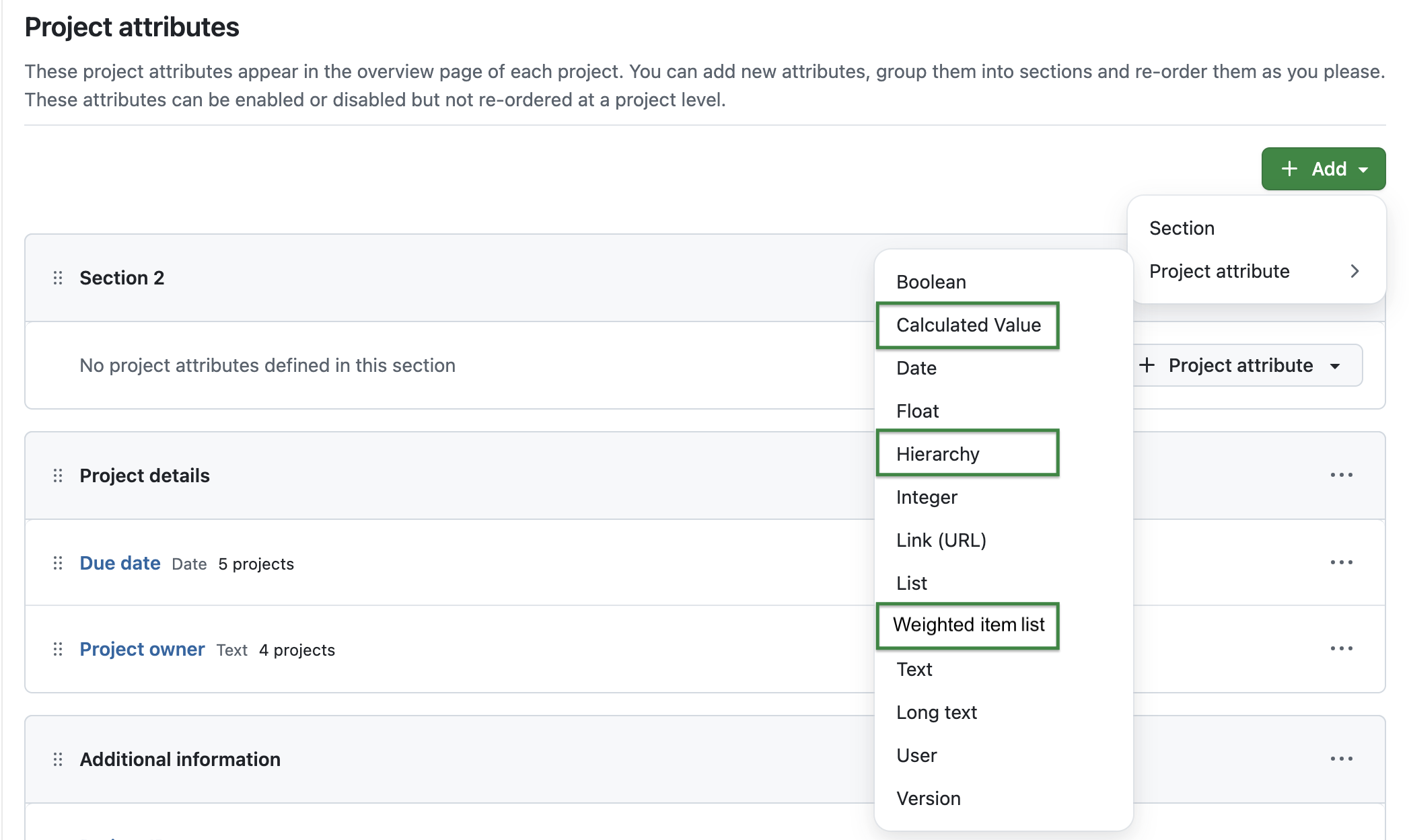
With OpenProject 16.6, project portfolio managers gain new ways to make their work more measurable and transparent. The release introduces three new project attribute types: Hierarchy, Weighted item lists, and Calculated value. They can be combined to evaluate and compare projects based on consistent criteria.
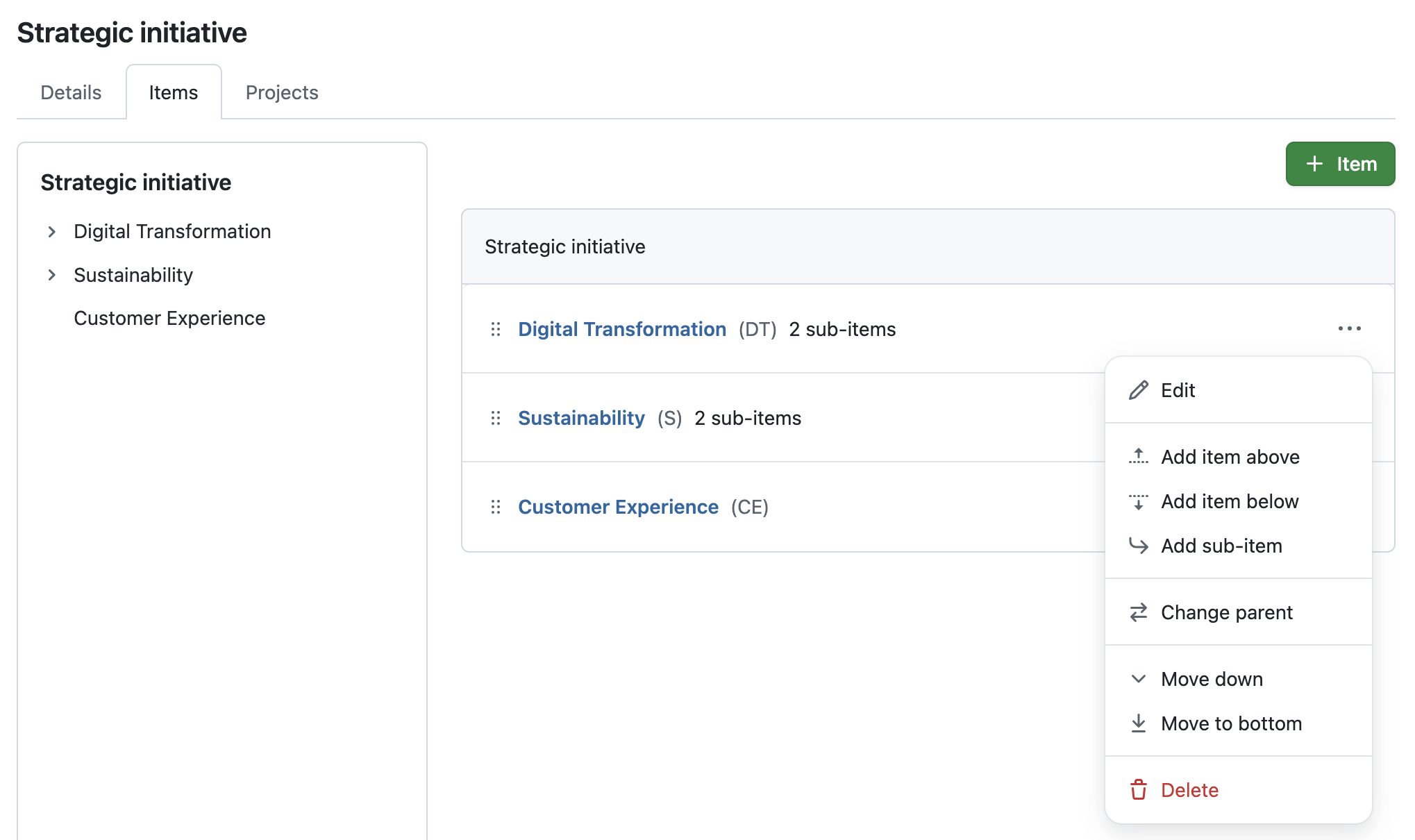
These attributes allow organizations to build their own evaluation models. Hierarchy project attributes let you organize information in a structured, nested way — for example, grouping initiatives by region, department, or program.
Weighted item lists extend this concept by assigning numeric scores to list options, such as effort levels or risk ratings. These values can then be used as input for automated calculations.
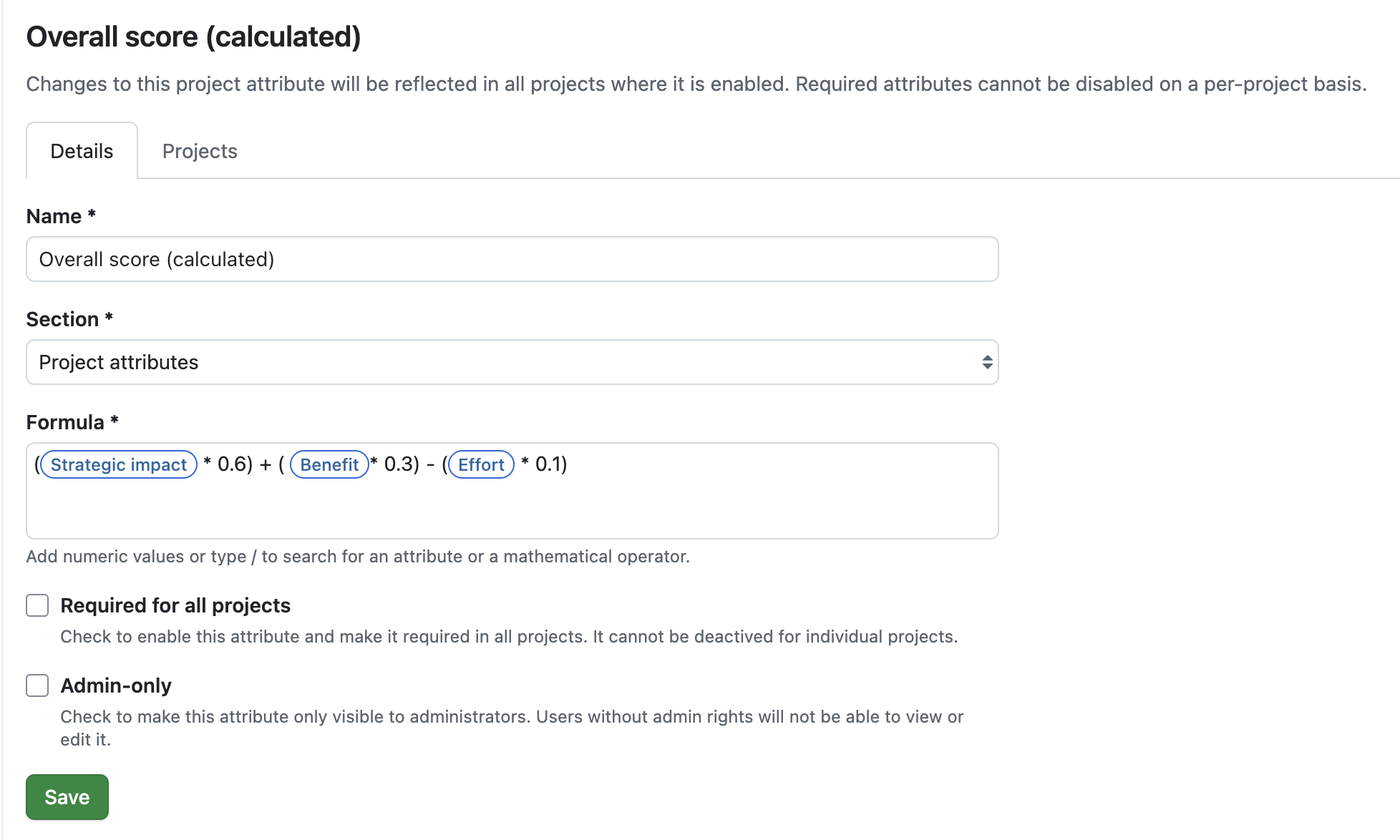
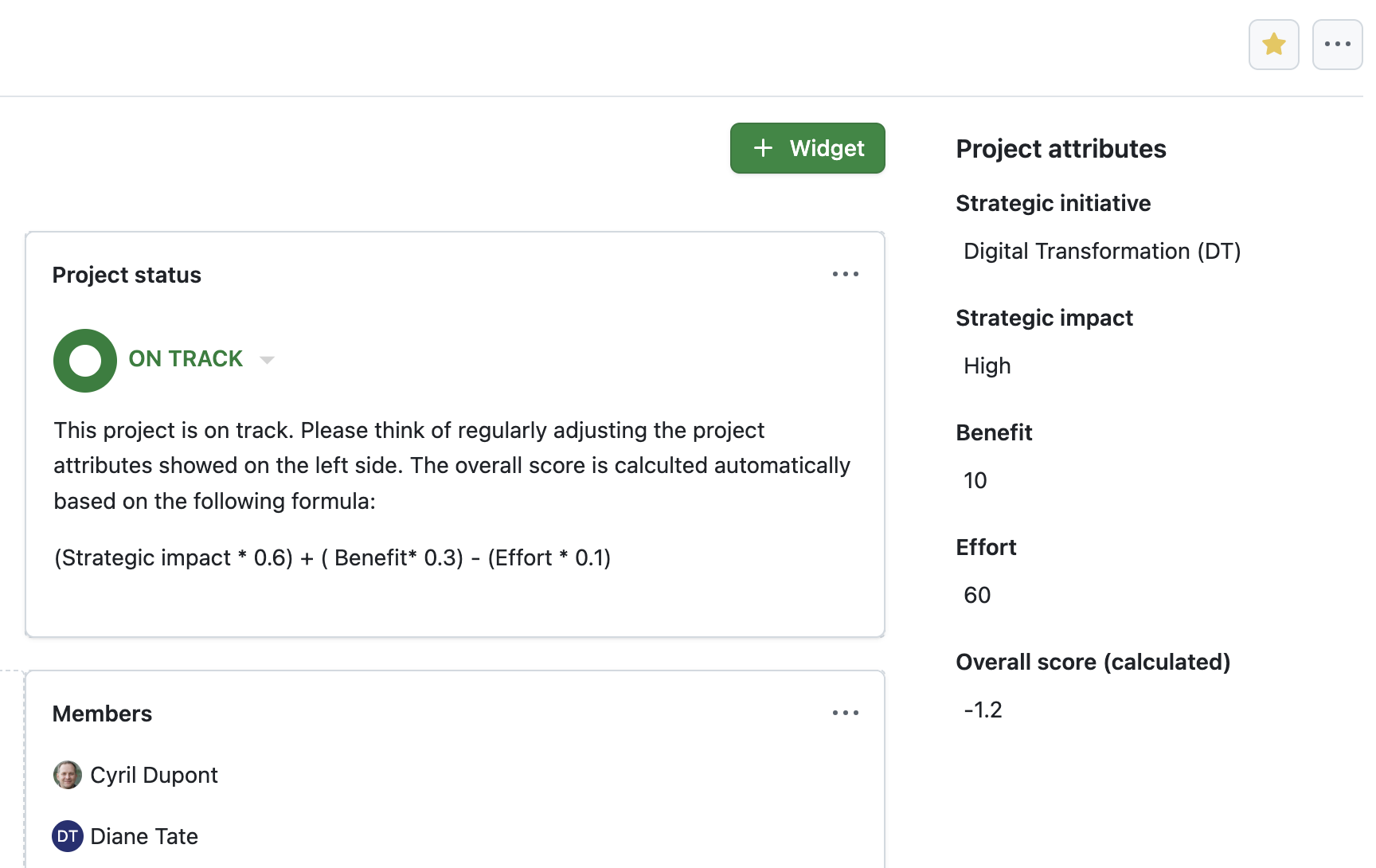
Calculated values enable automatic computations based on formulas using numeric project attributes, including scores from Weighted item lists or even other calculated values. The computed result is displayed directly on the project overview and in the project list. It automatically updates whenever one of its source attributes (e.g., Benefit or Effort in the example below) changes.
Here’s an example of a calculated value called ‘Overall score (calculated)’ with the following formula: (Strategic impact * 0.6) + ( Benefit * 0.3) - (Effort * 0.1)
These new attribute types open up flexible ways to work with project data. Scoring is just one typical example — the same structure can be used to represent strategic priorities, aggregate indicators, or define your own evaluation framework that fits your organization’s needs.
Working with large projects and complex portfolios can be challenging when pages take too long to load or filters lag behind. That’s why OpenProject 16.6 focuses on improving performance, ensuring that even large-scale installations with thousands of projects and millions of work packages remain fast and reliable.
To achieve this, several backend processes have been improved. Database queries and API responses have been refined to avoid unnecessary counting operations, and the autocompleter for adding work package relations now only retrieves the data it actually needs. These changes reduce query load and make the application more efficient overall.
As a result, users will notice faster response times, smoother navigation, and more responsive filtering — even in the largest environments.
New index page for Documents module
Managing project documents efficiently is key to keeping everyone aligned. But as projects grow, finding the right file can become a challenge. To make this easier, OpenProject 16.6 introduces the first step toward a more powerful and collaborative Documents module.
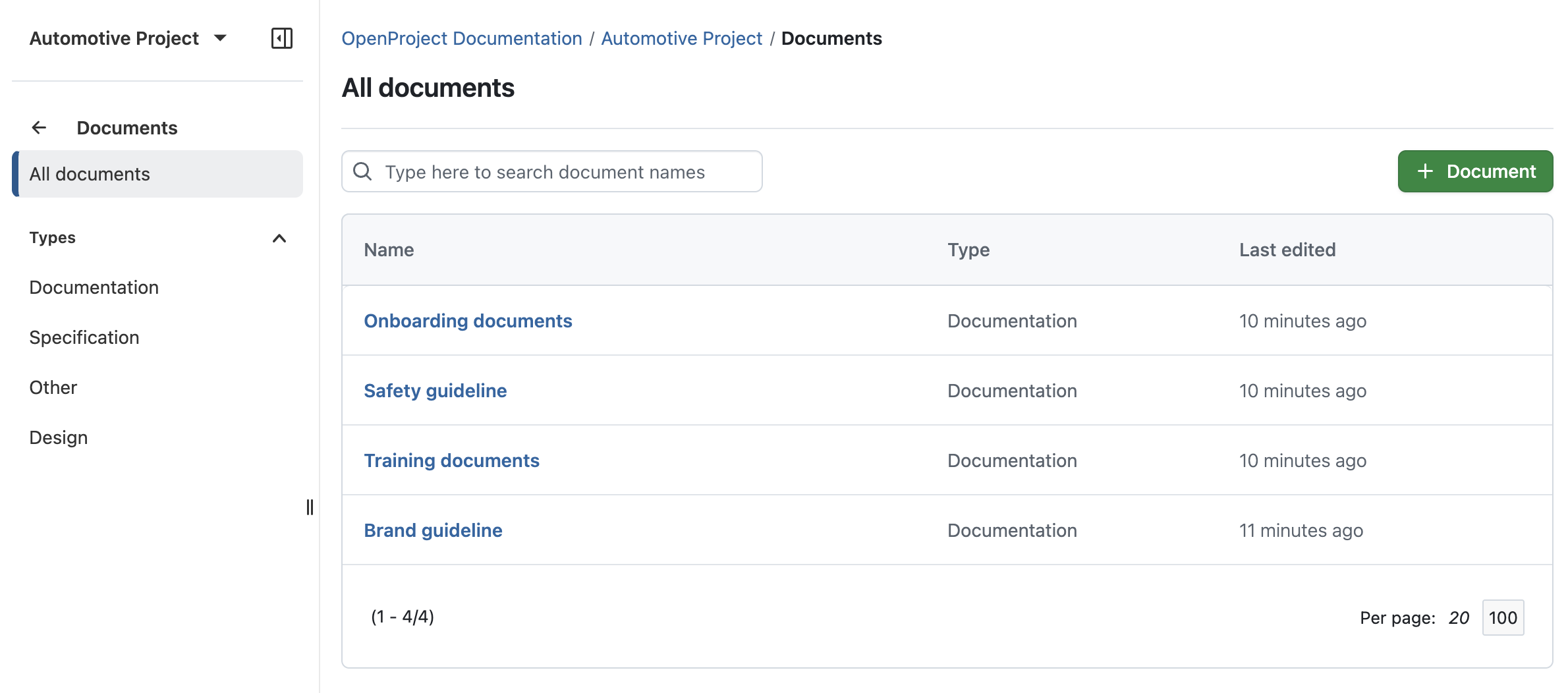
The new index page provides a structured overview of all project documents, showing each file’s Name, Type (the category), and Last edited date. The most recently updated items are always on top. A quick filter helps you search by title, and the navigation menu on the left lets you narrow the list by Type (previously called Category). Both terms are used synonymously in this first step, as Type will gradually replace Category in future updates.
A new + Document button makes adding content straightforward, and on mobile devices, the view adapts to show only the most relevant details.
While this is a smaller change on its own, it marks the beginning of a broader improvement to how teams will work with documents in OpenProject. We are excited about the upcoming changes that will make document management and live collaboration easier and more intuitive.
Small usability enhancements can make a big difference in everyday work. OpenProject 16.6 brings several refinements that make managing information smoother, meetings more efficient, and administration tasks easier to navigate.
Change parent of a custom field item or project attribute (Enterprise add-on)
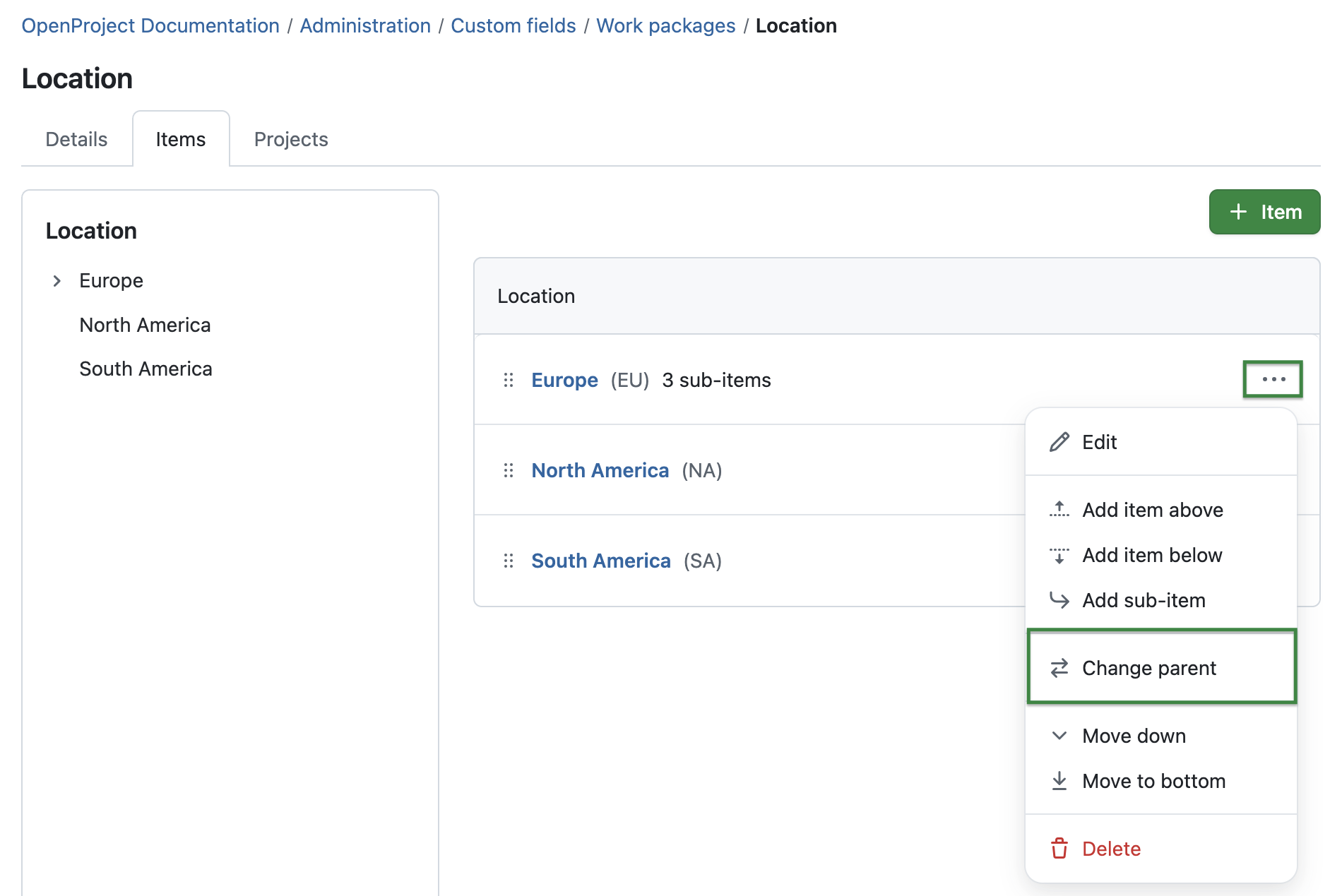
Administrators can now rearrange items within hierarchical custom fields (Enterprise add-on) or project attributes without having to recreate them. A new Change parent option opens a dialog showing the hierarchy tree, allowing quick reorganization through search and selection.
Updated “More” menu in meetings
In the Meetings module, moderators can now move agenda items directly between sections using the new Move to section action. This saves time in meetings with multiple sections or longer agendas and helps keep discussions better structured.
Editing individual attributes even if other fields are invalid
Users can now edit visible fields even if other required fields are missing or invalid. This prevents unnecessary validation errors — for example, when a required field was added later — and lets users continue their work without interruption.
Sticky header and first column in workflows
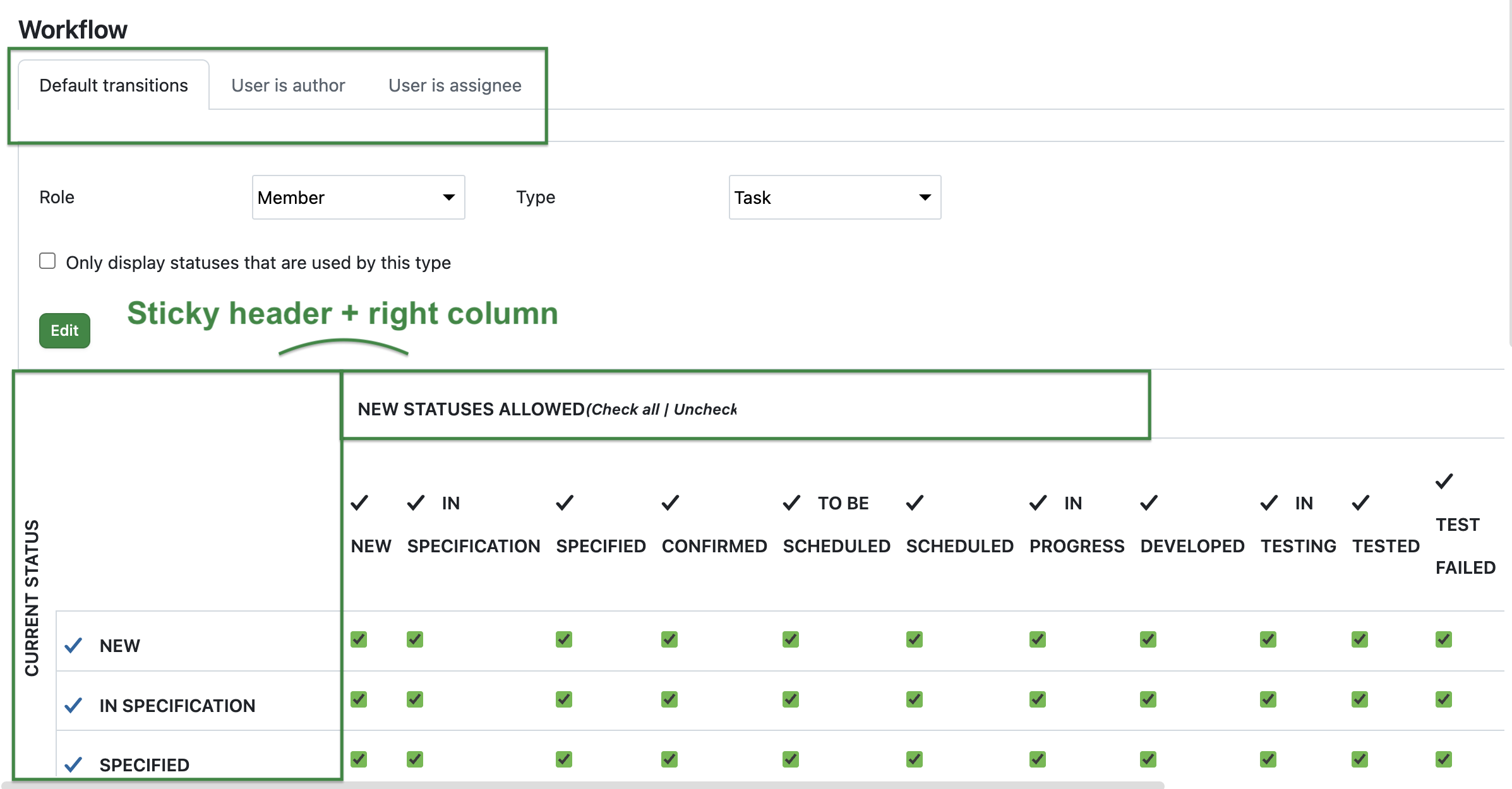
In Administration → Work packages → Workflow, the table now has a sticky header and sticky first column. This makes it easier for administrators to keep an overview of transitions when scrolling through large workflow tables.
On mobile devices, the date picker once again includes a mini calendar view for selecting start and finish dates. This makes it easier to see weekdays and working days at a glance, improving usability when managing tasks on the go.
OpenProject 16.6: Migration, installation, updates and support
You will find more information about all new features and changes in our Release notes or in the OpenProject Documentation.
If you need support, you can post your questions in the Community Forum, or if you are eligible for Enterprise support, please contact us and we are happy to support you personally.
New to OpenProject? To test all features of OpenProject 16.6 right away, create a 14 days free trial instance for our OpenProject Enterprise cloud.
Prefer to run OpenProject 16.6 in your own infrastructure? Here you can find the Installation guidelines for OpenProject.
A very special thank you goes to Helmholtz-Zentrum Berlin, City of Cologne, Deutsche Bahn and ZenDiS for sponsoring released or upcoming features. Your support, alongside the efforts of our amazing Community, helps drive these innovations. Also a big thanks to our Community members for reporting bugs and helping us identify and provide fixes. Special thanks for reporting and finding bugs go to Sven Kunze, Stefan Weiberg, Gábor Alexovics, Alexander Aleschenko, and Tobias Nowakow.
This release, we specifically want to thank Emon for reporting a security vulnerability on our website. Reports and feedback like this are one of the reasons we love OSS and appreciate being part of such an amazing community.
Last but not least, we are very grateful for our very engaged translation contributors on Crowdin, who translated quite a few OpenProject strings! This release we would like to particularly thank the following users:
William, for a great number of translations into Chinese Traditional.
Pickart, for a great number of translations into Catalan.
Maxime77, for a great number of translations into French.
Would you like to help out with translations yourself? Then take a look at our translation guide and find out exactly how you can contribute. It is very much appreciated!
As always, we welcome any feedback on this release. 💙
Apple's second iPhone Air model is in development and could feature two rear cameras instead of one, according to a Chinese leaker with sources within Apple's supply chain.
The Weibo-based account "Digital Chat Station" claims that Apple is evaluating a dual-lens setup for the next version of its ultra-thin iPhone, with a 48MP Fusion Ultra Wide camera joining the existing 48MP Fusion Main camera, similar to the base iPhone 17.
However, the leaker says that the second-generation device will keep the distinctive horizontal camera plateau, suggesting the second lens will sit alongside the existing one, unlike the dual-lens vertical arrangement on the iPhone 17.
Multiple technologies are housed in the plateau of the iPhone Air to maximize space for the battery, so Apple would presumably need to redesign the internals considerably to fit in another camera. Apple will reportedly continue to focus on making the device ultra-thin and lightweight.
Apple will release a second-generation iPhone Air alongside the iPhone 18 Pro, iPhone 18 Pro Max, and its first foldable iPhone in the second half of 2026, according to industry analyst Ming-Chi Kuo. Apple also plans to launch a third iPhone Air model with a larger display in the second half of 2027. That said, the first-generation device has apparently not been selling well outside of China, so Apple's plans could change.
Digital Chat Station has a decent track record for Apple rumors. They accurately revealed that the iPhone 15 and iPhone 15 Plus would feature a slightly smaller 48-megapixel sensor than the iPhone 15 Pro and iPhone 15 Pro Max, as well as the display panel design of the iPhone 12 back in 2020.
 Login
Login