Reading view

10+ macOS Tahoe Features You Might Have Missed

Apple's new Liquid Glass design has received most of the attention in news about macOS Tahoe, but there are quite a few new features that make the Mac better than ever, including some that are not super obvious. We've rounded up 10 useful macOS Tahoe features that you should know about.


Customize the Menu Bar


With macOS Tahoe, you have more control over the layout of your menu bar. You can rearrange the menu bar, remove things you're not using, and add Control Center widgets for quick access to your most used settings.


To customize your menu bar, go to System Settings > Menu Bar > Menu Bar Controls, or open Control Center, click on Edit Controls, and click on the "+" in the menu bar. You can uncheck boxes to remove items, and use the Add Controls option to add new options from both first and third-party apps.

Customize Your Mac's Lock Screen Font


macOS Tahoe lets you customize the clock that appears on your Mac's Lock Screen. You can't adjust size like you can in iOS 26, but you can change the font style and thickness.
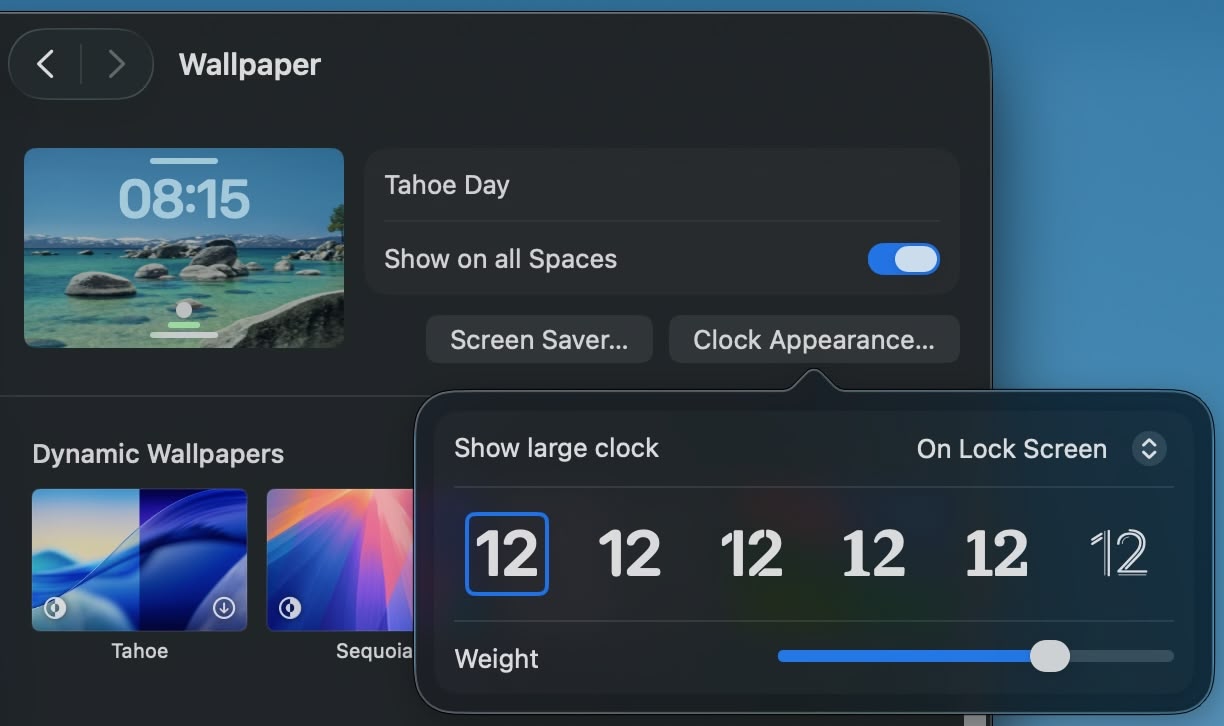

To adjust your clock, go to System Settings > Wallpaper > Clock Appearance. You can choose from six different font styles, and adjust the weight with a slider. You can opt to have the clock show on your Lock Screen or on the Lock Screen and Screen Saver.

Live Activities


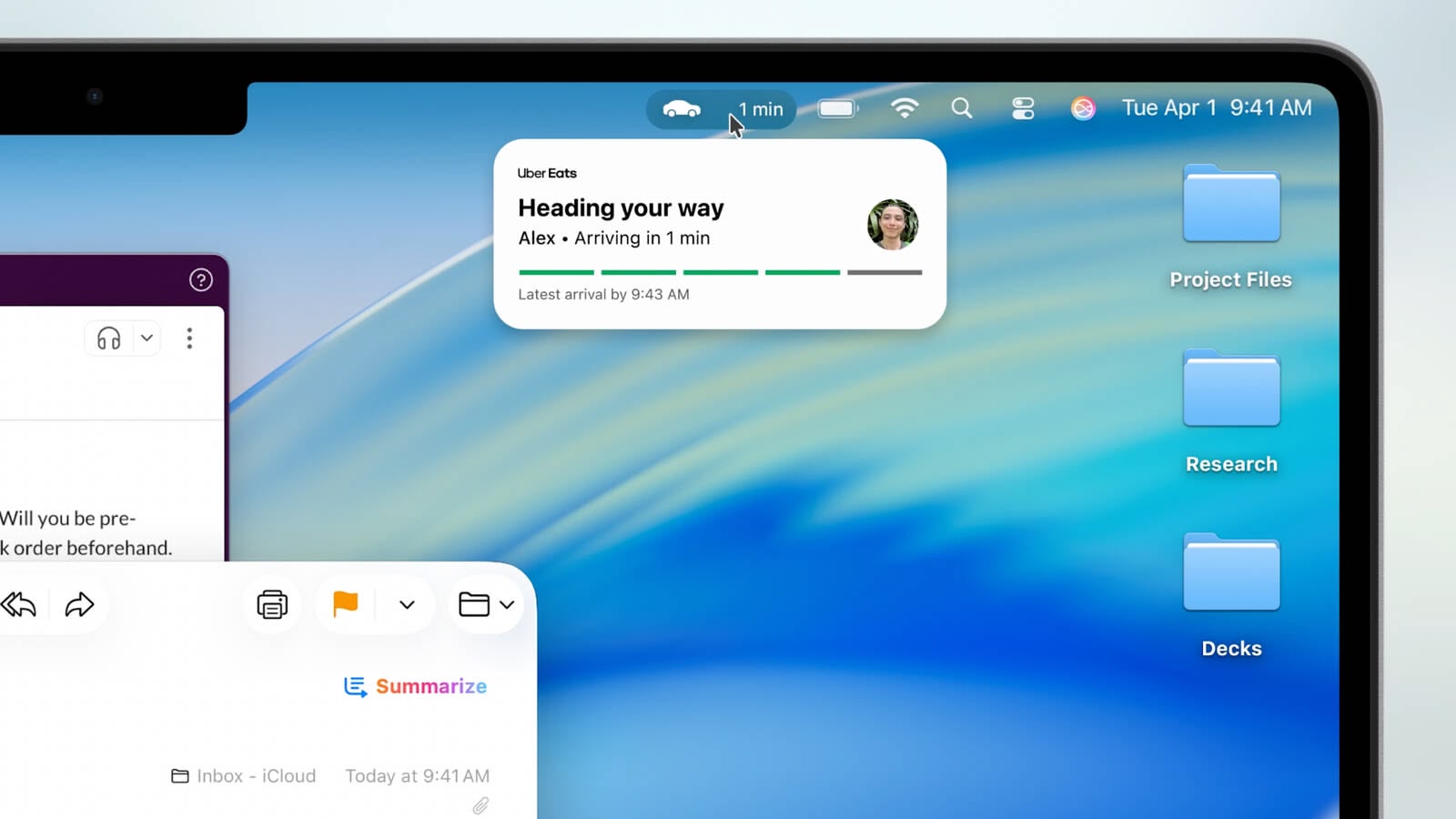
If you have an iPhone and a Mac, Live Activities can now sync between your devices. When you have an active Live Activity on your ‌iPhone‌, like an in-progress flight, an upcoming Uber ride, or a live sports game, it will automatically show up in your Mac's menu bar through the ‌iPhone‌ Mirroring feature.


Live Activities sync automatically with ‌iPhone‌ Mirroring enabled, and you can turn it on with the ‌iPhone‌ Mirroring Mac. You can click on any Live Activity to open the associated ‌iPhone‌ app through ‌iPhone‌ Mirroring.

See Your Clipboard History


Spotlight now incorporates clipboard history, tracking what you copy and paste. It's erased every eight hours so nothing is saved longterm, but it's useful if you need to find something you copied earlier in the day.


To get to your clipboard, press Command + Spacebar to open Spotlight, then press Command + 4 to swap over to the clipboard view. Click on any item to copy it.

Clipboard history is off by default, so you do need to turn it on in the Spotlight section of System Settings before you can use it.

Streamline Spotlight Search Results


When you're using Spotlight to search for something in an app, macOS Tahoe lets you add filters directly in the search bar. Open up Spotlight, type in a search term, and then click on a filter at the top to narrow down the results. If you want to find PDFs you've been sent in the Mail app, for example, you can type in PDF and then click on Mail.
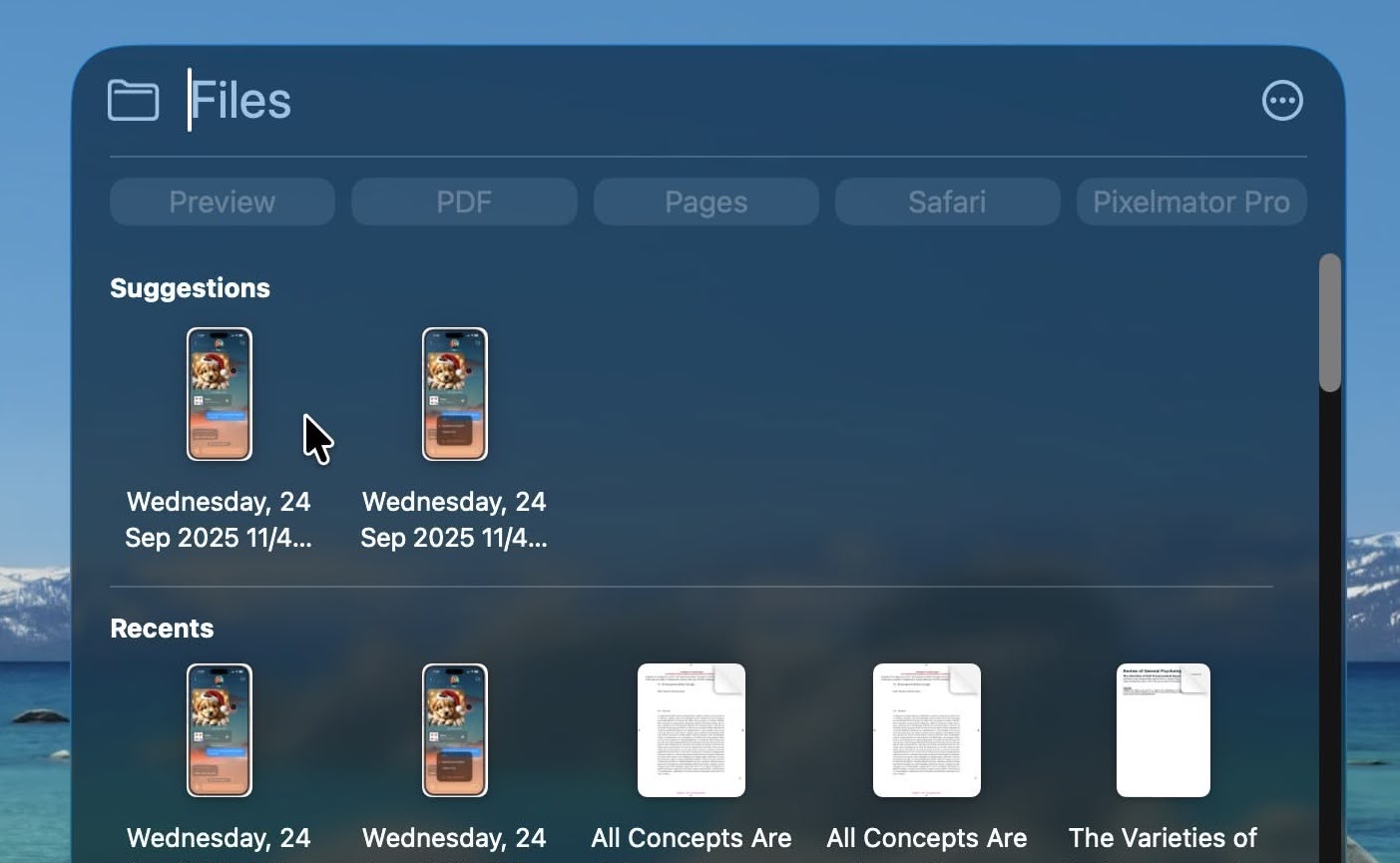

A quicker way to search is to type in the app name, like Mail, press the tab key, and then type in your second filter term like PDF.

Search Websites Faster


You can use Spotlight to perform searches on websites without having to open up Safari and navigate to the site first. Just type a website name like Etsy or Amazon, press Tab, and type what you want to search for.

Search Your Tabs


When you search in Spotlight, the results include the Safari tabs that you have open. If you tend to have dozens of tabs open at once, it can be a good way to find the specific tab you're looking for rather than clicking through them one-by-one. Open tabs show up at the top of the list when you enter a relevant search term.

Use Quick Keys


Quick Keys are shortcuts that let you perform actions in Spotlight using just a few characters. With a Quick Key, you can type in a couple of letters to do a task that you repeat often, such as sending someone a message or opening up an app.


To use it, open up Spotlight by pressing Command + Spacebar, then press Command + 3 to get to Actions. Type in the action that you want, like Open ChatGPT, and then when it appears, click on the Add Quick Key option.

From there, you can type between 1 and 12 letters as your shortcut, such as "gpt." The next time you want to execute that action, just type the Quick Key phrase.

Create Automations


macOS Tahoe has iOS-style Shortcut automations that can run automatically based on time, system events, or other triggers, which is functionality that was not previously available.
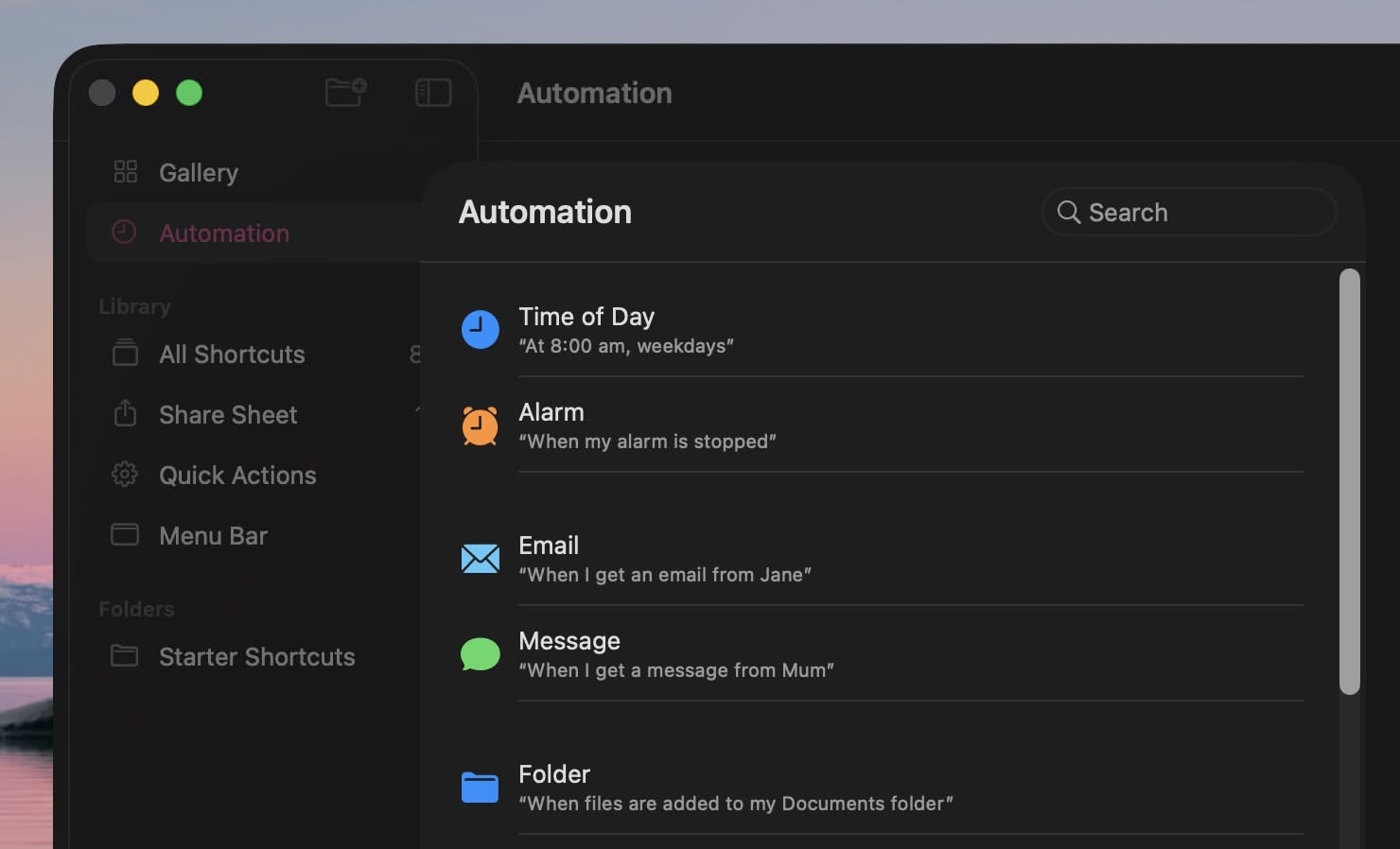

Open the Shortcuts app, click on the Automation option in the side bar, and then click on the "+" button to create an automation. Triggers include time of day, when an app opens, when a display or accessory is connected, when a Focus mode activates, when the battery gets to a certain level, when you save a file to a specific folder, and more.

Safari Picture in Picture


Picture-in-picture has been available in Safari for several years, but macOS Tahoe brings easier activation, new controls, and customization options.


In an article where there's a video, click on the Page Menu icon in the left side of the URL bar to enter picture-in-picture mode. You can now access playback controls for skipping forward and backward, and you can skip ads directly from the picture-in-picture window.

See Your Spotlight History


You can see your past Spotlight searches and actions in macOS Tahoe, which makes it easy to get back to something that you did before.


With Spotlight open, press on the up arrow to scroll through your past queries.

Gaming Low Power Mode


macOS Tahoe updates Low Power Mode so that it's optimized for gaming, giving you a way to extend your gameplay sessions. You can set Low Power Mode to turn on automatically when your Mac is not plugged in, or let your Mac manage its power intelligently.

Whenever Low Power Mode is activated, it won't impact gameplay by lowering game performance.

Game Overlay


When you're playing a game in macOS Tahoe, you can tap Command + ESC to bring up a new Game Overlay. From the Game Overlay, you can view achievements and leaderboards, connect with friends, and adjust settings like brightness and volume.


macOS Tahoe packs these useful features alongside its eye-catching visual redesign. Whether you're customizing your workspace, streamlining your workflow with Quick Keys, or automating repetitive tasks, these features can make your Mac experience significantly more productive. Take some time to explore these capabilities--you might find your new favorite Mac feature hiding in plain sight.

Read More


For more on what's new in macOS Tahoe, check out our dedicated roundup.
Related Roundup: macOS Tahoe 26
Related Forum: macOS Tahoe

This article, "10+ macOS Tahoe Features You Might Have Missed" first appeared on MacRumors.com

Discuss this article in our forums
  •  

Upcoming Apple Vision Pro Could Get More Comfortable 'Dual Knit Band'

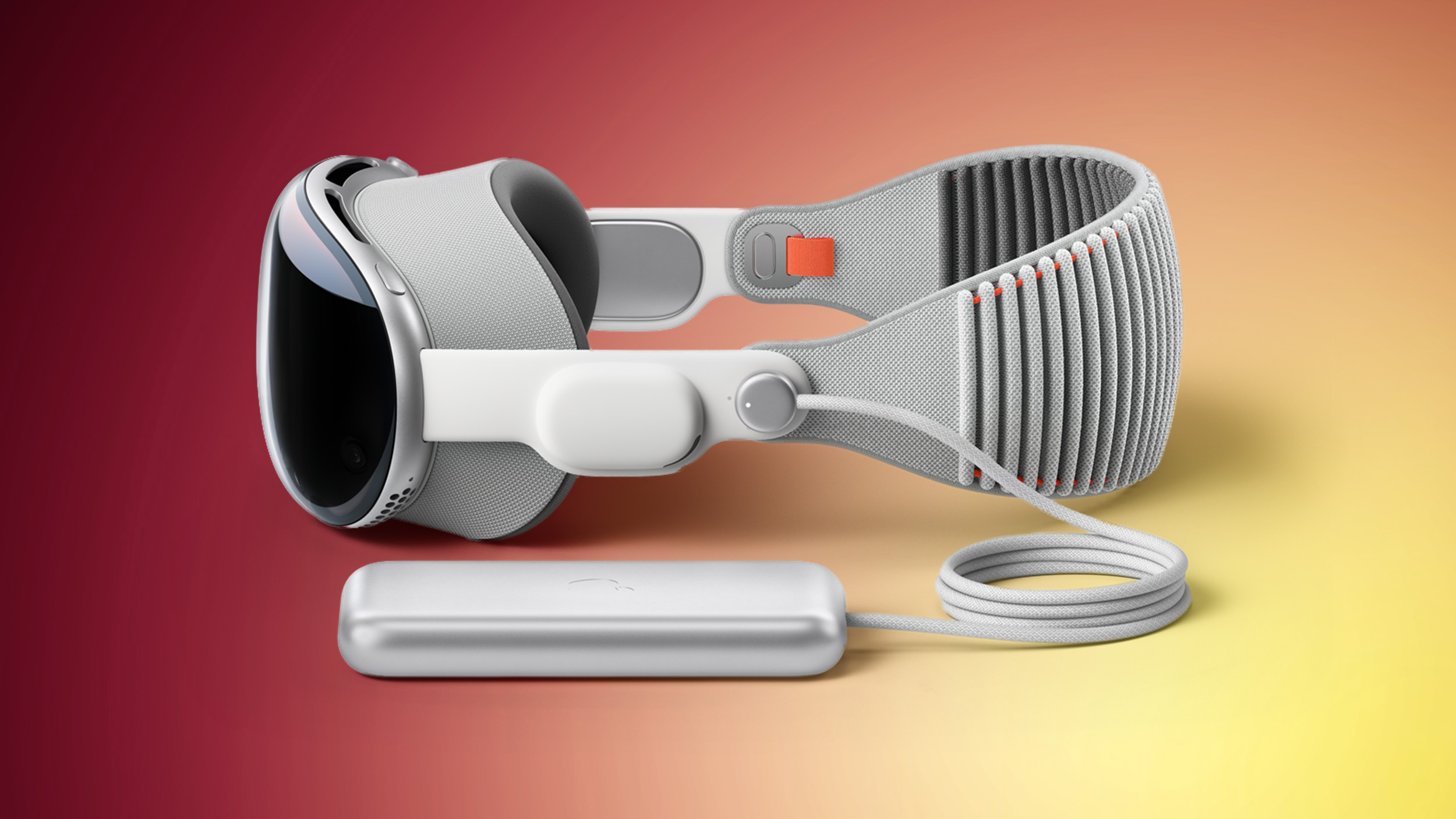
Apple is working on a next-generation version of the Vision Pro with an updated chip, and it could include a new Dual Knit Band that provides a more comfortable fit.


Updated Apple backend code found by MacRumors includes a reference to a "Dual Knit Band," which is not a band that exists at the current time. The Apple Vision Pro comes with a Solo Knit Band and a Dual Loop Band, but no Dual Knit Band.

Based on the name, the new band could be a cross between Apple's two existing bands, featuring the same comfortable material as the Solo Knit Band but with a more supportive two-band fit. A text description of the Dual Knit Band suggests that there will be an upper band that spans the top of the head and another band that fits behind the head.

Some people have made custom adjustments to the Vision Pro to get it to accommodate two Solo Knit Bands for extra support at the top of the head, and those that have gone that route suggest it is much more comfortable than Apple's current Dual Loop Band.

Back in July, Bloomberg's Mark Gurman said that the refreshed Vision Pro could include a new strap that would make it easier to wear the headset for long periods of time, and it looks like the rumor is accurate.

The Vision Pro weighs between 21.2 and 22.9 ounces, putting considerable strain on the head when it's worn for long periods of time. Some users find the weight of the device and the poor distribution of the Solo Knit Band to cause discomfort. The Dual Loop Band removes some of the weight from the face, but because it doesn't have the same knit design as the Solo Knit Band, it is less comfortable.

Apple is expected to refresh the $3,499 Vision Pro before the end of 2025. It will get a faster M5 chip, but Apple doesn't plan to make any other updates to the device.
Related Roundup: Apple Vision Pro
Buyer's Guide: Vision Pro (Neutral)
Related Forum: Apple Vision Pro

This article, "Upcoming Apple Vision Pro Could Get More Comfortable 'Dual Knit Band'" first appeared on MacRumors.com

Discuss this article in our forums

  •  

MacRumors Giveaway: Win an iPhone Air or iPhone 17 Pro From iMazing

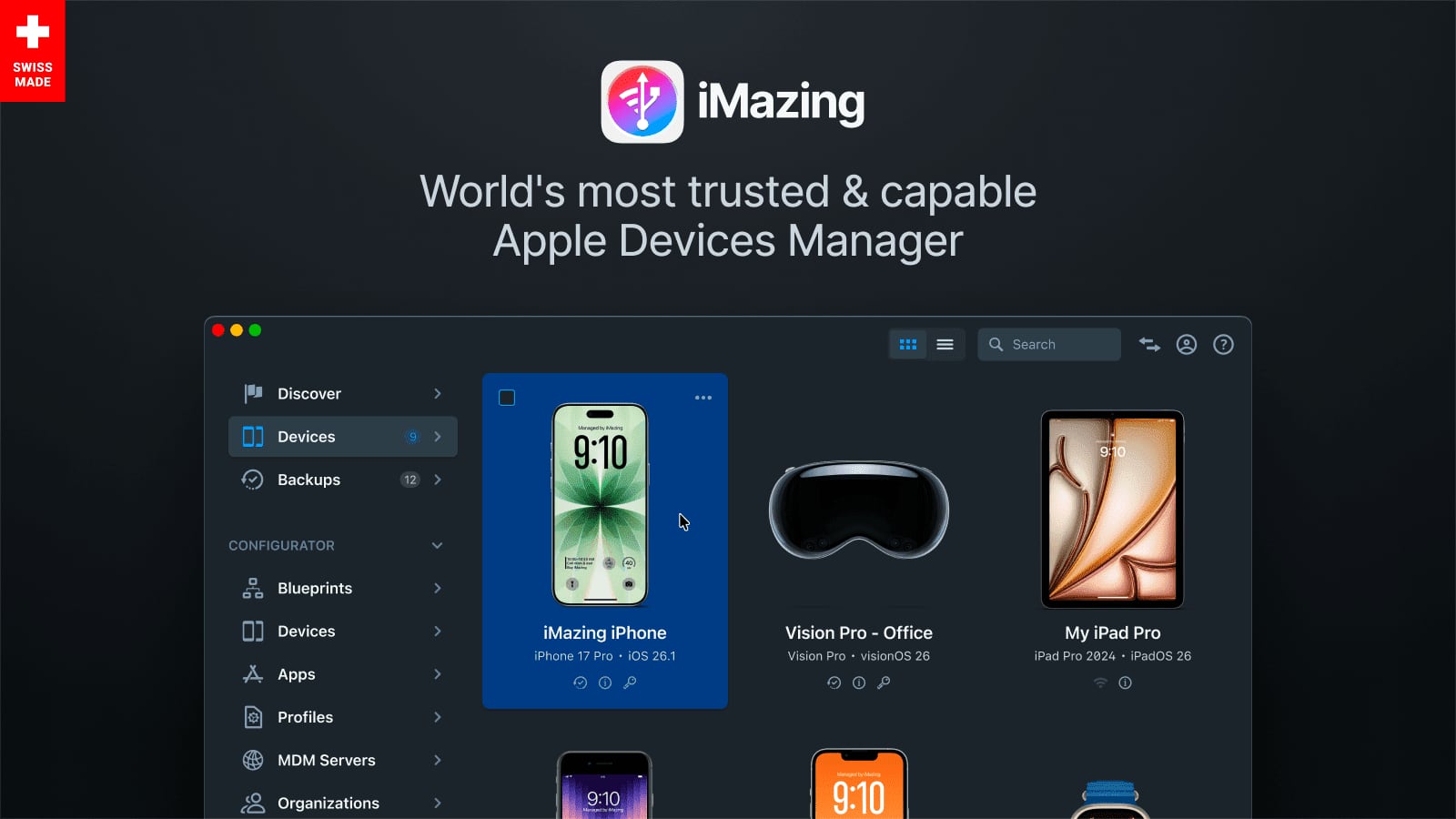
For this week's giveaway, we've teamed up with iMazing to offer MacRumors readers a chance to win one of Apple's new iPhone Air or iPhone 17 Pro models. For those unfamiliar with iMazing, it is Mac and PC software that offers a simple, fast way to manage everything on your iPhone and other Apple products. You can transfer data, make backups, manage media, save content like messages, and more.


Apple has the built-in Finder on the Mac for managing the ‌iPhone‌, and an app for PCs, but iMazing's tools give you much more control than Apple's native functionality.

Creating and managing backups is easy with iMazing's backup tools. You can set up automatic backups for hassle-free protection, and the app supports snapshots so you can browse through your backups to find something specific that you're looking for. With selective restore, you can bring back just what you need. Backups are encrypted and can be saved to any computer, a local storage setup, or an external drive, and iMazing is ideal for managing multiple Apple devices.


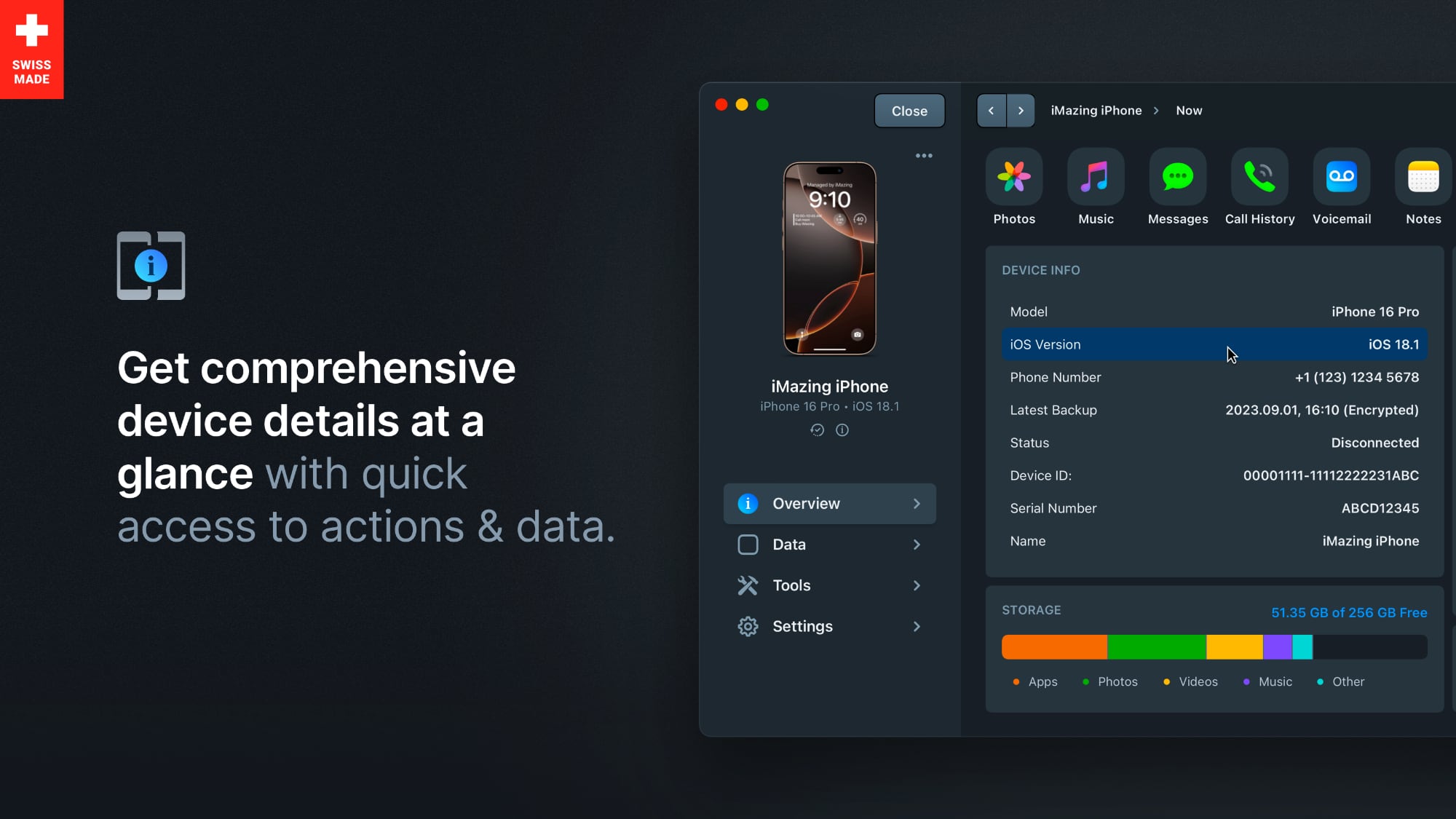
The Device overview provides detailed information on your ‌iPhone‌ in one spot, and it gives you a quick way to access all of iMazing's capabilities. The layout is straightforward and it's easy to find the exact tool that you're looking for. The Device overview lists information like serial number, model number, device ID, and stored data, and there's even a section for battery management that shows details on temperature, max charge, and charge cycles.


iMazing can be used to browse, export, and archive content, so you can transfer photos, music, books, movies and other media and files from your computer to your ‌iPhone‌ and vice versa. It's not limited to the ‌iPhone‌, either. You can use the data management tools with the iPad, iPod, and Vision Pro, too. iMazing's tools are useful for moving photos from one device to another, or transferring music files without the need for a streaming service. With Quick Transfer, you can even drag and drop files and folders to your ‌iPhone‌ and choose an iOS app to transfer the file to.

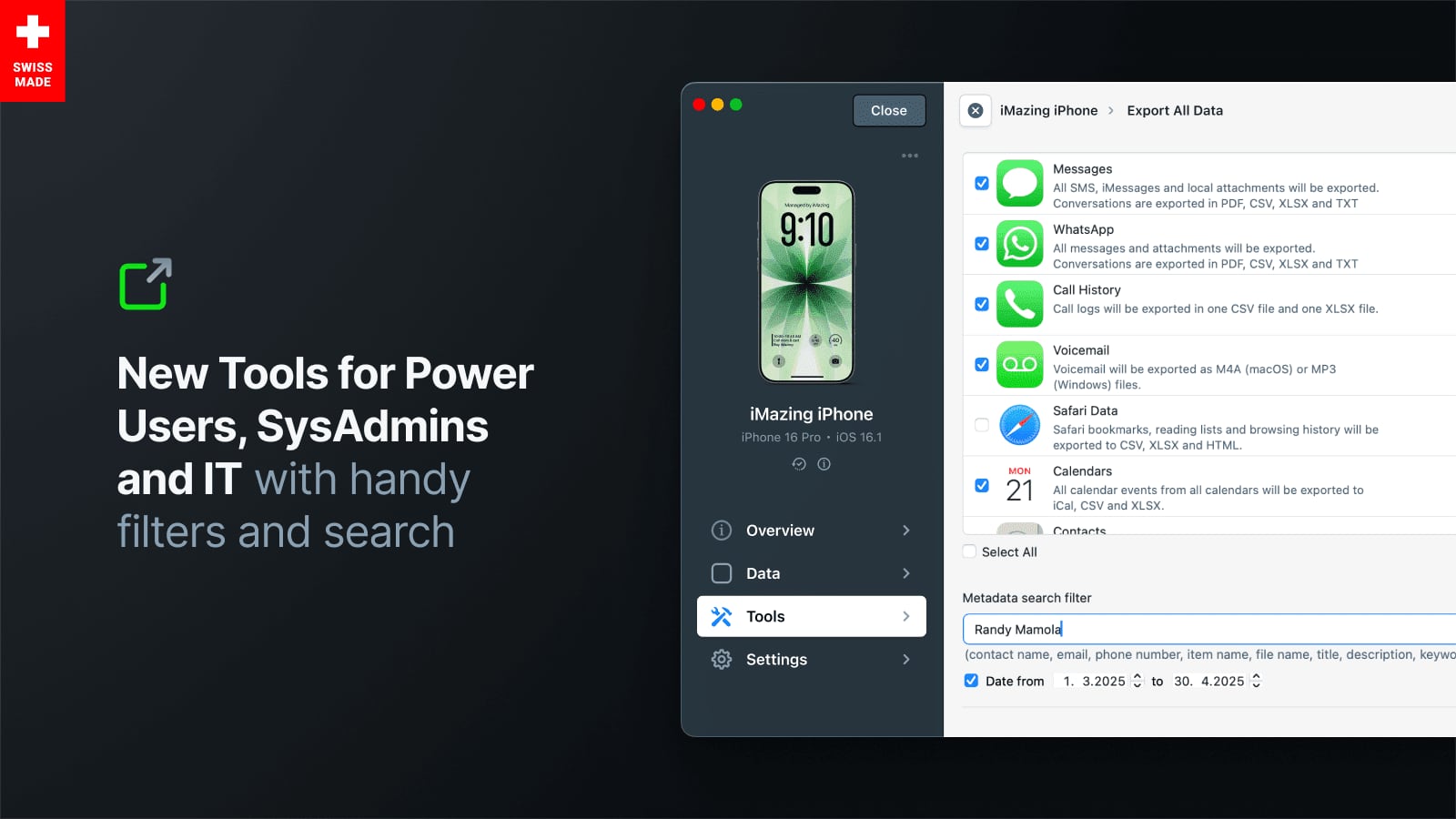
Apple has no way to get your messages off of your ‌iPhone‌, but iMazing can create an entire archive from the Messages app or WhatsApp, and it works for RCS/SMS/MMS messages and iMessages. You can save your messages into a PDF, an Excel document, or use other file formats.


iMazing can be used by businesses for advanced device management too, and it supports bulk provisioning, configuring, and streamlining MDM enrollment for fleets of Apple devices. iMazing was updated to version 3.4 recently, bringing full support for iOS 26, macOS 26, and the iPhone 17 models. There are also new features for both everyday users and IT professionals.


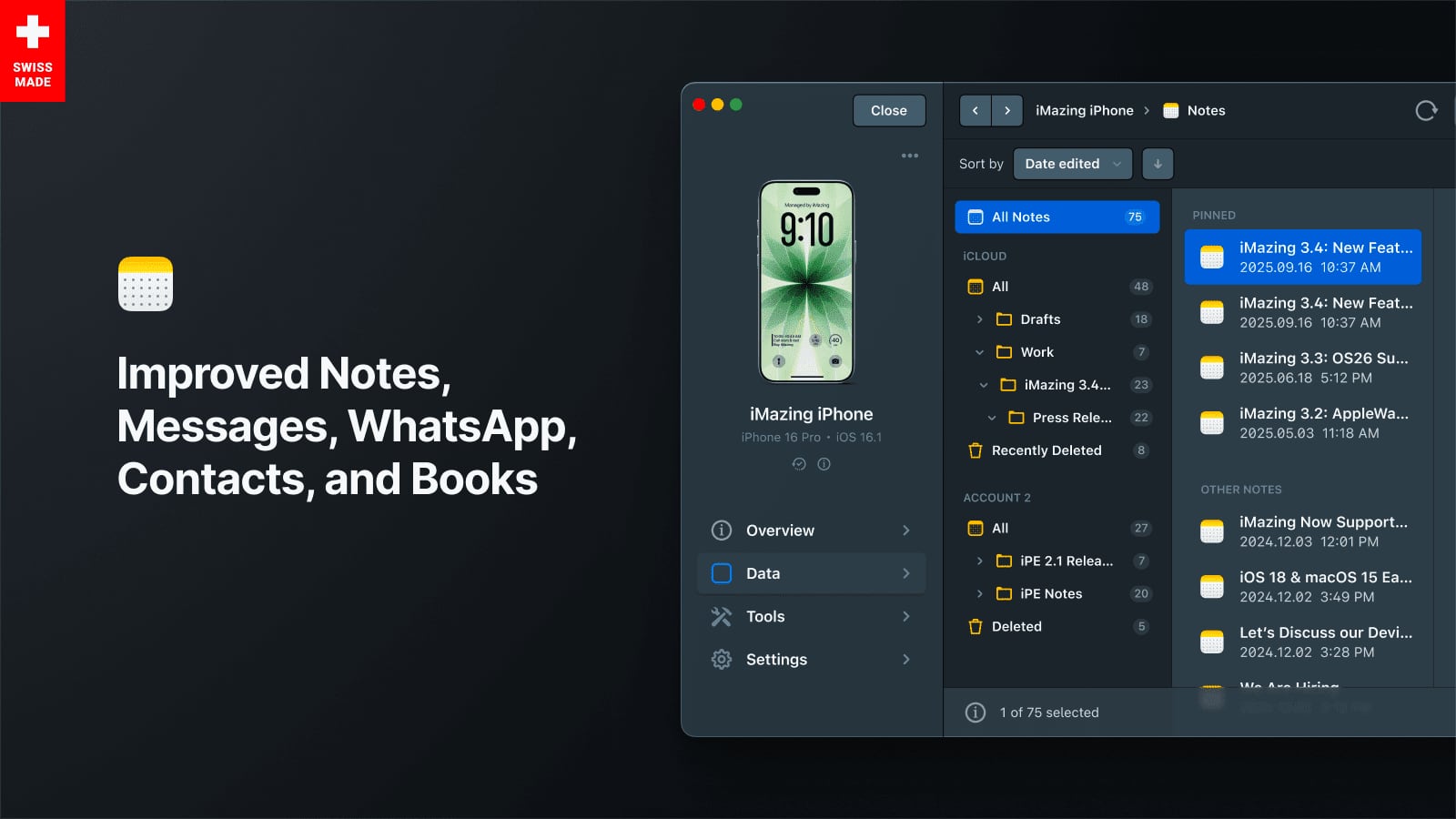
When you import notes, tables, colors, and attachments are included. There's a photo viewer for imported texts from Messages and WhatsApp, and useful filters for Contacts and Books.

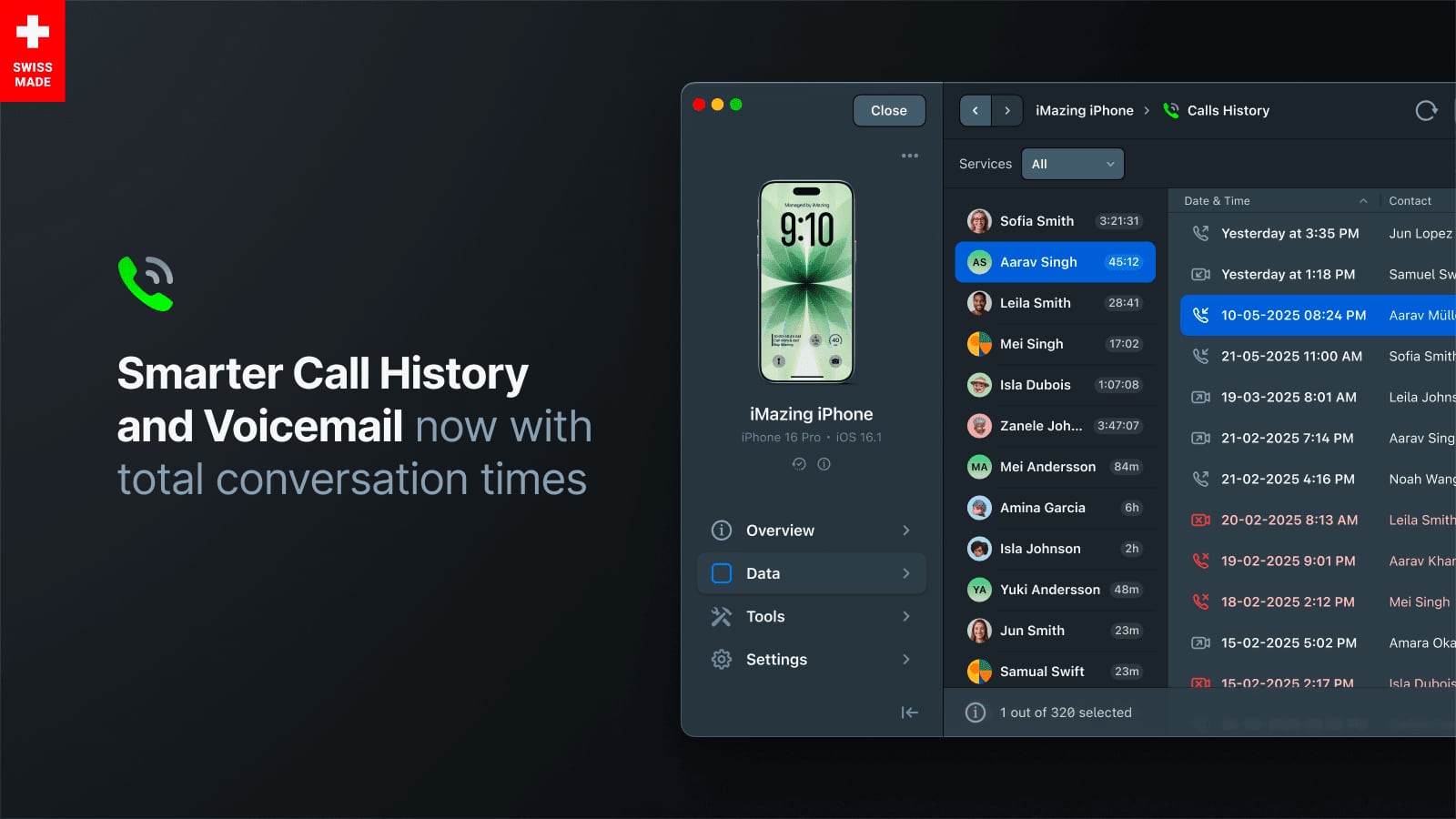
Imported call history and voicemail show total duration, which is a useful feature for professionals who log billable calls. There is also support for multi-SIM organization. For businesses, iMazing 3.4 features advanced export filters, developer tools, Configurator updates, and CLI enhancements to streamline automation and fleet management.


iMazing can be downloaded from the iMazing website at prices starting at $30. There are options for personal subscriptions, family subscriptions, and enterprise subscriptions. iMazing also offers free trials, and some functions are free even without a purchase.

iMazing is offering an ‌iPhone 17 Pro‌ or ‌iPhone Air‌ for one lucky MacRumors reader, with the winner to choose their preferred device. To enter to win, use the widget below and enter an email address. Email addresses will be used solely for contact purposes to reach the winner(s) and send the prize(s). You can earn additional entries by subscribing to our weekly newsletter, subscribing to our YouTube channel, following us on Twitter, following us on Instagram, following us on Threads, or visiting the MacRumors Facebook page.

Due to the complexities of international laws regarding giveaways, only U.S. residents who are 18 years or older, UK residents who are 18 years or older, and Canadian residents who have reached the age of majority in their province or territory are eligible to enter. All federal, state, provincial, and/or local taxes, fees, and surcharges are the sole responsibility of the prize winner. To offer feedback or get more information on the giveaway restrictions, please refer to our Site Feedback section, as that is where discussion of the rules will be redirected.The contest will run from today (October 3) at 9:00 a.m. Pacific Time through 9:00 a.m. Pacific Time on October 10. The winner will be chosen randomly on or shortly after October 10 and will be contacted by email. The winner will have 48 hours to respond and provide a shipping address before a new winner is chosen.
This article, "MacRumors Giveaway: Win an iPhone Air or iPhone 17 Pro From iMazing" first appeared on MacRumors.com

Discuss this article in our forums
  •  

The MacRumors Show: Leaks Reveal What Apple Products Are Coming Next

On this episode of The MacRumors Show, we discuss the latest leaks about the next-generation iPad Pro, MacBook Pro, Studio Display, and Vision Pro.


Earlier this week, an apparent unboxing video of an updated ‌iPad Pro‌ with the M5 chip was shared online. The same YouTube account leaked the 14-inch ‌MacBook Pro‌ with the M4 chip before it was announced by Apple last year. The new ‌iPad Pro‌ does not have any noticeable external design changes compared to the current models with the M4 chip, with the chip being the only difference.

Meanwhile, documents leaked from the U.S. Federal Communications Commission (FCC) reveal the next-generation ‌iPad Pro‌, ‌MacBook Pro‌, and Vision Pro are imminent. Bloomberg's Mark Gurman also recently detailed Apple's plan to release two new external monitors either later this year or in early 2026.

Gurman this week revealed that Apple has stopped work on a cheaper, lighter version of the $3,499 Vision Pro. There were rumors that Apple was developing a a much lighter, more affordable "Vision Air" for launch in 2027, but Apple is now apparently transitioning engineers from that project to its smart glasses project to compete with Meta. Last year, The Information reported that suspended its work on the true second-generation Vision Pro. This means that the only new Vision product in the pipeline is the impending refresh of the existing product to upgrade to the M5 chip.

We discuss the wave of product leaks and our expectations for the new releases, as well as the implications of Apple seemingly halting work on new Vision headsets. The MacRumors Show has its own YouTube channel, so make sure you're subscribed to keep up with new episodes and clips.


You can also listen to ‌The MacRumors Show‌ on Apple Podcasts, Spotify, Overcast, or your preferred podcasts app. You can also copy our RSS feed directly into your podcast player.


If you haven't already listened to the previous episode of The MacRumors Show, catch up to hear our discussion about first impressions of the iPhone Air and iPhone 17 Pro.

Subscribe to ‌The MacRumors Show‌ for new episodes every week, where we discuss some of the topical news breaking here on MacRumors, often joined by interesting guests such as Kayci Lacob, Kevin Nether, John Gruber, Mark Gurman, Jon Prosser, Luke Miani, Matthew Cassinelli, Brian Tong, Quinn Nelson, Jared Nelson, Eli Hodapp, Mike Bell, Sara Dietschy, iJustine, Jon Rettinger, Andru Edwards, Arnold Kim, Ben Sullins, Marcus Kane, Christopher Lawley, Frank McShan, David Lewis, Tyler Stalman, Sam Kohl, Federico Viticci, Thomas Frank, Jonathan Morrison, Ross Young, Ian Zelbo, and Rene Ritchie.

‌The MacRumors Show‌ is on X @MacRumorsShow, so be sure to give us a follow to keep up with the podcast. You can also head over to The MacRumors Show forum thread to engage with us directly. Remember to rate and review the podcast, and let us know what subjects and guests you would like to see in the future.
This article, "The MacRumors Show: Leaks Reveal What Apple Products Are Coming Next" first appeared on MacRumors.com

Discuss this article in our forums
  •  

M5 MacBook Air: Release Date, Features, and Performance Predictions

The MacBook Air is Apple's most popular laptop – a thin, fanless machine that wields quiet power thanks to the efficiency of Apple silicon. While the M4 model isn't exactly old, attention is already turning to its successor.


Apple doesn't telegraph new product launches ahead of time, but we can draw a surprisingly clear picture of what to expect by looking at Apple's silicon roadmap, release cycles, and past upgrades.

Release Timing and Price


Apple appears to have settled into a spring refresh cycle for the MacBook Air. After releasing the M2 model in mid-2022 with an all-new design, Apple skipped 2023 and then delivered back-to-back M3 and M4 MacBook Air updates in March 2024 and March 2025, respectively.

Indeed, Bloomberg's Mark Gurman reports that Apple plans to roll out M5 versions of the MacBook Air in the first quarter of 2026. This suggests a likely March 2026 window – unless Apple breaks the cycle, of course. As for pricing, we expect it to remain stable, with the base model sticking with the current entry-level $999 price.

Processor Upgrade


The M5 series is expected to feature an enhanced ARM architecture and is reportedly being manufactured using TSMC's advanced 3-nanometer process technology. Apple's decision to forgo TSMC's more advanced 2nm process for the M5 chip is believed to be due to cost considerations.

Recent leaked benchmarks – allegedly from a next-gen iPad Pro running an M5 chip – show single-core scores around 4,133 and multi-core scores around 15,437. That's roughly a 12-15% jump over the current M4 iPad Pro in both categories. As for graphics performance, the M5 chip appears to have up to a 36% faster GPU compared to the M4 chip.

The benchmark suggests Apple has focused on modest clock speed increases and core-level efficiency improvements for the M5 chip, rather than an architecture overhaul. In other words, the M5 will be similar to the step-wise performance upgrade from M3 to M4. Expect 10-15% faster CPU speeds, a slightly more powerful GPU, and better efficiency, potentially leading to even longer battery life.

As a result, the M5 MacBook Air will likely feel more responsive in daily use, particularly in single-threaded tasks, but it won't dramatically outpace the M4 for sustained workloads like video rendering.

Display and Other Possible Changes


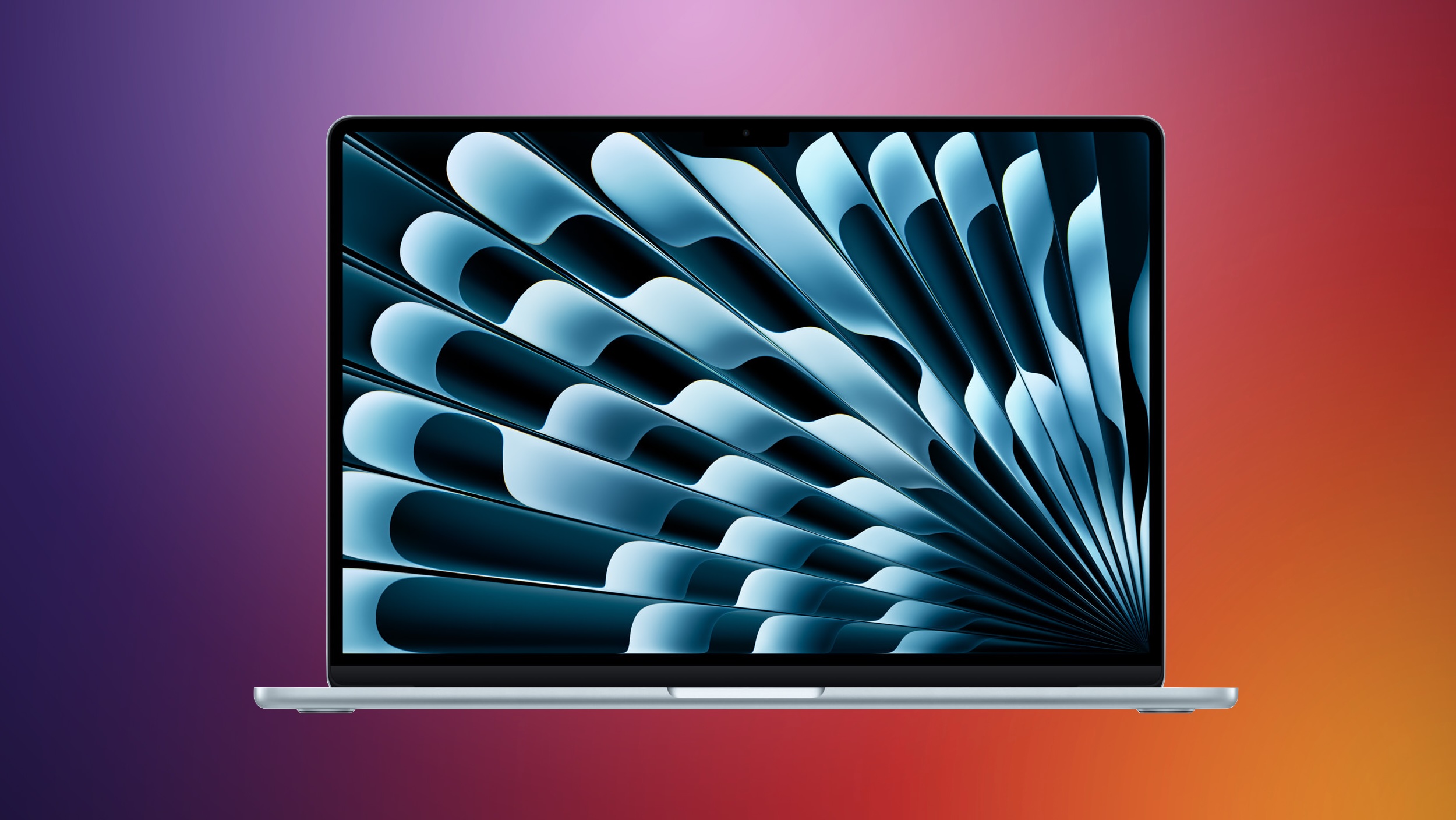
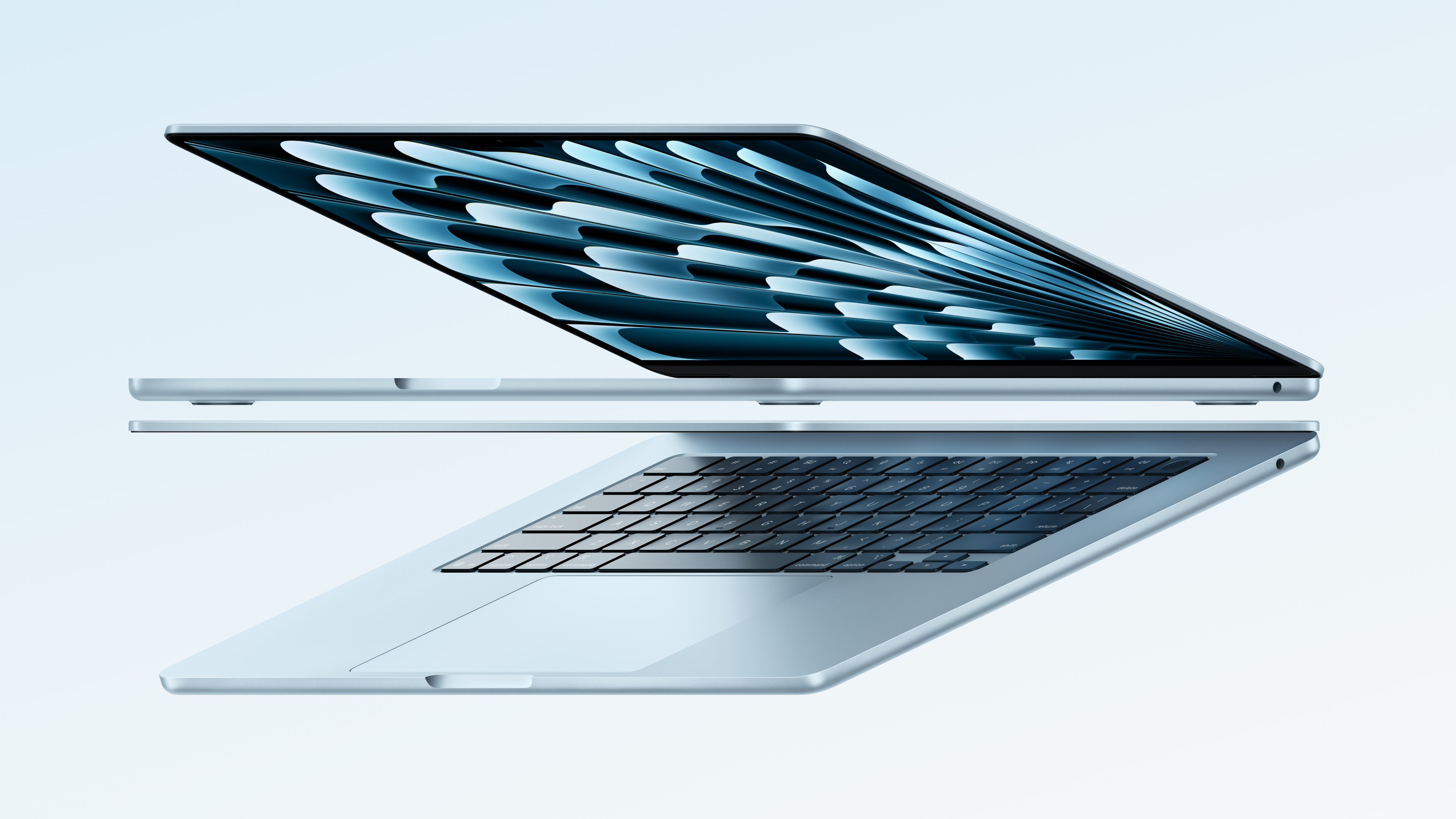
M4 MacBook Air in Sky Blue, the color Apple debuted earlier this year

Apple tends to stick with the same industrial design for multiple chip generations. The current MacBook Air design (introduced with the M2 model) is only three years old and shows no signs of ageing. Expect the same 13- and 15-inch sizes, the same fanless aluminium unibody, and similar display technology – that means no OLED, which Apple appears to be saving for initial adoption in the MacBook Pro line later next year or in 2027.

If there are any physical changes, they'll likely be subtle. Think improved webcam quality, or tweaks to accommodate the next generation of wireless connectivity (such as Wi-Fi 7 or Bluetooth LE Audio). You never know – Apple could even offer the machine in a new color, just like it did this earlier year with the M4.

Looking Further Ahead


According to reports out of Korea, Apple plans to release a MacBook Air with an improved LCD display in 2027, featuring Oxide TFT technology instead of the current amorphous silicon (a-Si) panels.

The new display technology is said to be a significant upgrade over current MacBook Air screens. Oxide TFT LCD panels offer better power efficiency and improved performance compared to traditional a-Si displays, resulting in sharper images, smoother scrolling, and enhanced battery life.

The transition to Oxide TFT technology should also mean faster pixel response times and more consistent brightness across the screen. In practical terms, this should translate to reduced motion blur when watching videos or gaming, and more uniform lighting without the "clouding" effect sometimes visible on current LCD displays.
Related Roundup: MacBook Air
Related Forum: MacBook Air

This article, "M5 MacBook Air: Release Date, Features, and Performance Predictions" first appeared on MacRumors.com

Discuss this article in our forums
  •  

Apple's 2026 Smart Glasses: Five Key Features to Expect

Apple is working on a set of smart glasses to rival the Meta Ray-Bans, and now that Meta has debuted glasses that include a display, Apple wants to speed up development on its first-generation model. Work has stopped on the next Vision Pro so that Apple can prioritize getting the glasses to market.


They'll Be Fashion Forward


Like the initial versions of the Apple Watch, the Apple Glasses will be a fashion accessory rather than clunky frames with limited style availability.

Apple is planning to offer multiple frame and temple material options for a personalized look. There needs to be space for a battery, a chip, and multiple cameras, so it's not clear how slim Apple can get the glasses, but different color, size, and shape options are likely.

Meta had limited color and style options for its Ray-Bans to begin with, but over the last few years, it's added more shapes and colors, and expanded to Oakley frames.

Siri Will Play a Major Role


Apple can't release smart glasses until it has a functional, next-generation version of Siri. Controls will be largely voice based, which means ‌Siri‌ needs to be intelligent enough to understand what you want and act on it.

Apple rearchitected ‌Siri‌ with large language models, and a smarter ‌Siri‌ that's more like Claude, Gemini, or ChatGPT is coming in spring 2026.

You should be able to ask ‌Siri‌ all kinds of questions, and with cameras integrated into Apple's glasses, ‌Siri‌ could be able to do things like provide feedback on what you're seeing, look things up for you, translate foreign languages, remember where you parked or put your keys, offer instructions to help you with tasks, play music, send messages, and more.

Apple will want to match many of the features of the Meta Ray-Bans, and Meta AI can do all of the above.

Rumored Apple Glasses Features


Apple's first-generation glasses won't include a display like Meta's latest Ray-Ban Display glasses, but they will have the same AI features, cameras, and audio capabilities of Meta's less expensive Ray-Bans.

We don't know everything about Apple's glasses yet, but we've heard rumors about some of the capabilities that will be included.

  • Take photos

  • Record video

  • Play audio, including podcasts, music, and audiobooks

  • Offer directions

  • Answer questions

  • Describe your surroundings

  • Identify plants, animals, landmarks and more with Visual Intelligence

  • Make phone calls

  • Send messages

  • Translate languages


You'll Still Need Your iPhone


The Apple glasses will have an Apple-designed chip that's based on the chip in the Apple Watch, but you're still going to need an iPhone to use them. They won't be able to operate standalone, and will need a connection to an ‌iPhone‌ for AI processing and other features.

We don't know what the battery life will be like, but handing tasks off to the ‌iPhone‌ should help extend battery life.

We Could See the Glasses as Soon as 2026


Apple is speeding up development on the smart glasses, and current rumors suggest Apple could show them off in late 2026. It sounds like Apple might announce them in 2026 and then launch them in early 2027.

There is no word yet on how much the glasses might cost, but Meta Ray-Bans start at $380 and Apple may want to price its version competitively.

Read More


We have an Apple Glasses guide that aggregates all of the rumors that we've heard so far. We update it regularly when new info comes out.
This article, "Apple's 2026 Smart Glasses: Five Key Features to Expect" first appeared on MacRumors.com

Discuss this article in our forums
  •  

Powerbeats Fit Review: Apple's New $200 Workout Earbuds Replace Beats Fit Pro

Apple's Beats brand has a new set of fitness-focused earbuds available, the Powerbeats Fit. We picked up a set of the Powerbeats Fit to see how they compare to the prior-generation Beats Fit Pro and Apple's AirPods Pro 3.


The Powerbeats Fit are designed for working out, playing sports, and other activities where in-ear security is important. The earbuds have silicone tips and a soft silicone wingtip that tucks up against the concha of the ear, holding them in place even during vigorous movement.

At $200, the Powerbeats Fit are $50 cheaper than the ‌AirPods Pro 3‌ and the same price as the prior-generation Beats Fit Pro, but they are targeted at a different market. The AirPods Pro can be used for working out, but aren't necessarily designed specifically for that purpose.

Apple made the wingtip of the Powerbeats Fit more flexible than the wingtip of the Beats Fit Pro, for a more secure fit in a wider range of ear sizes. There are ear tip sizes from extra small to large to fit different sized ear canals. There's an IPX4 water resistance rating, so they're sweat resistant.

The Powerbeats Fit include Active Noise Cancellation, Transparency mode, and an Apple-designed acoustic platform with proprietary drivers. The sound is similar to the sound you get with the ‌AirPods Pro 3‌, and it feels more bass heavy than before. ANC is about on par with the AirPods Pro 2, and it does a good job blocking out low frequency sounds.

You won't get the newer H2 chip, though, as the Powerbeats Fit are still using the H1. The H1 allows for quick pairing, automatic switching between devices, Audio Sharing, Hey Siri integration, and Find My support. There are on-device controls to swap songs, change listening modes, and adjust volume.

The USB-C charging case is smaller than the Beats Fit Pro case, so it's easier to carry in a pocket. You'll get around seven hours of playback per charge from the earbuds, and then another 30 hours from the case. Beats earbuds support a 5-minute Fast Fuel charge that gets you an hour of listening time.

What the Powerbeats Fit offer that the AirPods don't is better cross-platform compatibility. The Powerbeats Fit work just as well on Android devices, with customizable features enabled through a dedicated Beats app.

The Powerbeats Fit are $200 and come in four colors, including a bright orange that matches Apple's latest iPhone 17 Pro models. They're available for purchase starting today.
Tag: Beats

This article, "Powerbeats Fit Review: Apple's New $200 Workout Earbuds Replace Beats Fit Pro" first appeared on MacRumors.com

Discuss this article in our forums
  •  

Best Buy's Member Deal Days Sale Has $20 Credit With AirPods Pro 3 Purchase and More

Best Buy recently kicked off a Member Deals Days sale, with exclusive discounts available only to My Best Buy Plus and My Best Buy Total members. With Amazon Prime Big Deal Days approaching, many retailers have begun introducing their own discount events, and Best Buy's is set to end this Sunday, October 5.

Note: MacRumors is an affiliate partner with some of these vendors. When you click a link and make a purchase, we may receive a small payment, which helps us keep the site running.

During Member Deals Days, you can save on computers, tablets, home appliances, smartphones, speakers, headphones, TVs, and much more. You'll need to have a My Best Buy Plus or Total membership, which start at $49.99 per year.


One of the most notable offers during this event is on the AirPods Pro 3, which come with a $20 Best Buy credit with purchase. While not a straight cash discount, this is still one of the best offers we've tracked for the new AirPods Pro 3.


Otherwise, some of the best deals in this sale are on TVs, including $50 in Best Buy credit when spending $499 or more on select TVs. Popular TVs on sale include brands like LG and Samsung, with multiple major discounts on Samsung's The Frame TVs.

Be sure to head to Best Buy's website to shop the full sale before it ends on Sunday. If you're on the hunt for more discounts, be sure to visit our Apple Deals roundup where we recap the best Apple-related bargains of the past week.


Deals Newsletter


Interested in hearing more about the best deals you can find as we head into the holidays? Sign up for our Deals Newsletter and we'll keep you updated so you don't miss the biggest deals of the season!


Related Roundup: Apple Deals

This article, "Best Buy's Member Deal Days Sale Has $20 Credit With AirPods Pro 3 Purchase and More" first appeared on MacRumors.com

Discuss this article in our forums
  •  

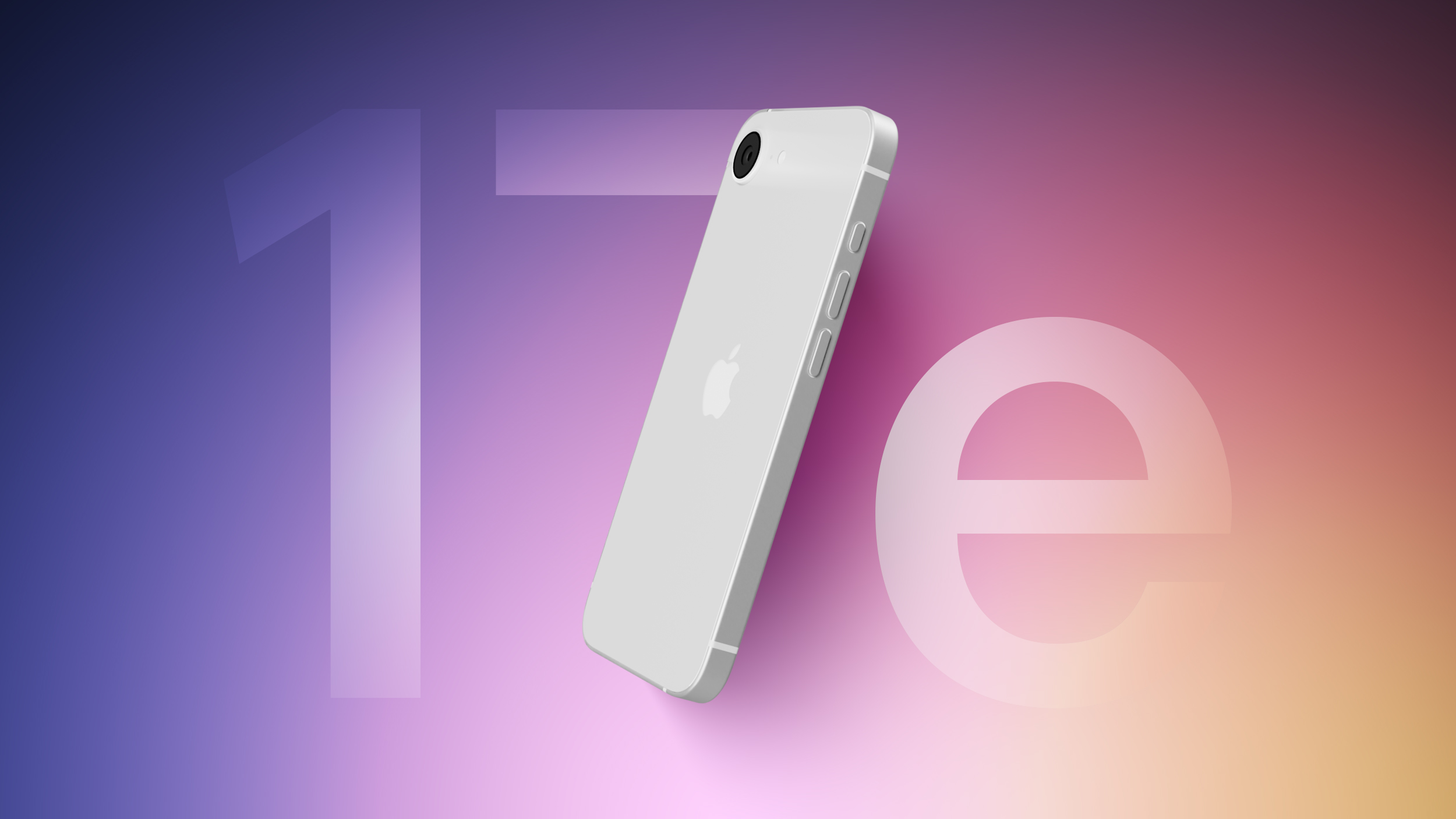
iPhone 17e: All the Rumors So Far

Earlier this year, Apple released the $599 iPhone 16e – a budget-friendly late addition to its iPhone 16 series and a replacement for its long-running entry-level iPhone SE line. Given the iPhone 17 lineup has now launched, can we expect an iPhone 17e anytime soon?


If you're holding out for a more affordable device with the 17 moniker attached, here's everything we know so far about the next-generation iPhone 17e.

Release Schedule


Several reports from reputable sources have indicated that Apple will launch a next-generation iPhone 17e model in 2026. Industry analyst Ming-Chi Kuo said in May that Apple would release an iPhone 17e in the first half of next year as part of a switch to an annual update strategy for its entry-level ‌iPhone‌. Bloomberg's Mark Gurman has also reported that an iPhone 17e is coming early next year.

An earlier rumor from April suggested Apple's next-generation ‌iPhone‌ 17e was already nearing the trial production stage, though the leaker behind the claim suggested a May 2026 release for the device rather than February, which was when the iPhone 16e launched.

Display


Korean outlet The Elec in July said Apple plans to launch a second-generation ‌iPhone‌ 17e that will use the same OLED panel as that found in the ‌iPhone 16e‌ – a panel that originally debuted in the ‌iPhone‌ 14 – as part of its efforts to use lower-cost components based on established production lines.

The iPhone 16e has an OLED Super Retina XDR display with a 2,000,000:1 contrast ratio for blacker blacks and brighter whites, along with 800 nit typical max brightness and up to 1200 nits peak brightness for HDR photos, videos, TV shows, and movies. It has a resolution of 2532 by 1170 with 460 pixels per inch, and is a slightly lower resolution than the 2556 by 1179 resolution of the iPhone 16 display.

Processor


According to Gurman, the new phone will include the same A19 chip as the iPhone 17. The A19 is built on an upgraded 3-nanometer process. It features a 6-core CPU with two performance cores and four efficiency cores. There's a 5-core GPU, offering performance and efficiency improvements over the A18.

There's an updated display engine, image signal processor, and 16-core Apple Neural Engine. Each GPU core includes a Neural Accelerator that boosts daily workflows and the performance of local AI models, like on-device Siri. Meanwhile, hardware-accelerated ray tracing enables console-quality gaming with improved frame rates and visual effects. The A19's efficiency improvements bring a significant battery life boost.

Dynamic Island or Notch?


According to the leaker known as "Digital Chat Station," the iPhone 17e will feature a Dynamic Island and a "new design." For context, the iPhone 16e features a "notch" at the top of the display, similar to the ‌iPhone‌ 13 and ‌iPhone‌ 14.

The ‌iPhone 16e‌ is based on the design of 2022's ‌iPhone‌ 14, so it's possible that the ‌iPhone‌ 17e could be based on 2023's ‌iPhone‌ 15, which gained the ‌Dynamic Island‌ and a noticeably more rounded frame. However, this would seem to go against reports that the device will use the same OLED panel as the iPhone 16e, so there's reason to be skeptical.

Looking Ahead


Looking further ahead, Kuo says a third-generation "e" device will be released alongside the standard iPhone 18 in the first half of 2027. That's because Apple is now said to be launching the standard ‌iPhone 18‌ and ‌iPhone‌ 18e in the spring – a full six months after the ‌iPhone 18‌ Pro models – as part of its switch to a split ‌iPhone‌ yearly launch strategy.
This article, "iPhone 17e: All the Rumors So Far" first appeared on MacRumors.com

Discuss this article in our forums
  •  

Apple's 2025 Product Roadmap: What's Still Coming

Apple's two big yearly events, WWDC and the iPhone launch, are done and over with, but there are still some new products that we're expecting to see before the end of the year.


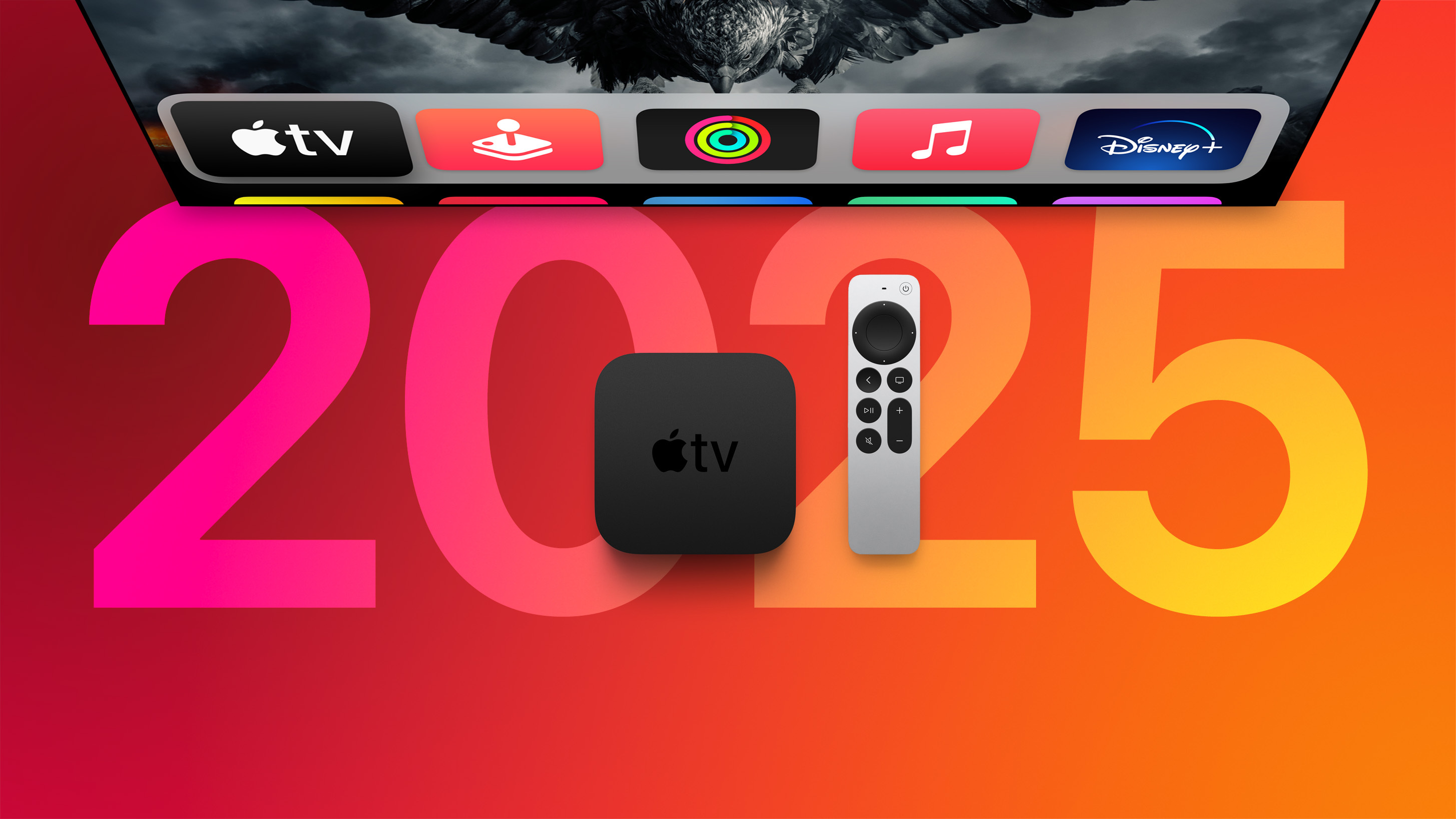
Apple TV


The Apple TV hasn't been updated since 2022, so it's due for a refresh. It doesn't look like Apple is going to change the design of its set-top box, but we can expect a faster chip


Apple code suggests that the upcoming ‌Apple TV‌ will use the A17 Pro chip, which Apple first debuted in the ‌iPhone‌ 15 Pro models. The A17 Pro is in the iPad mini 7, and it supports Apple Intelligence. We could see some new ‌Apple Intelligence‌ features for the ‌Apple TV‌ for improving search and content recommendations.

There's a new version of Siri that will likely be integrated into the ‌Apple TV‌ at some point, but the revamped version of ‌Siri‌ isn't coming until spring 2026 and we're expecting the ‌Apple TV‌ before the end of 2025.

The A17 Pro has more advanced GPU capabilities like hardware-accelerated ray tracing for console-quality games, so we could see the ‌Apple TV‌ able to support higher-quality gaming titles.

Rumors suggest the ‌Apple TV‌ will get an Apple-designed Bluetooth and Wi-Fi chip, and we now know that the chip is called the N1. It's already in the new ‌iPhone‌ models, so it makes sense for Apple to incorporate it in other devices coming this year.

Apple could potentially lower the price of the ‌Apple TV‌ or sell an older model at a more affordable price to better compete with products like the Amazon Fire Stick that provides 4K streaming for less than $50.

M5 iPad Pro


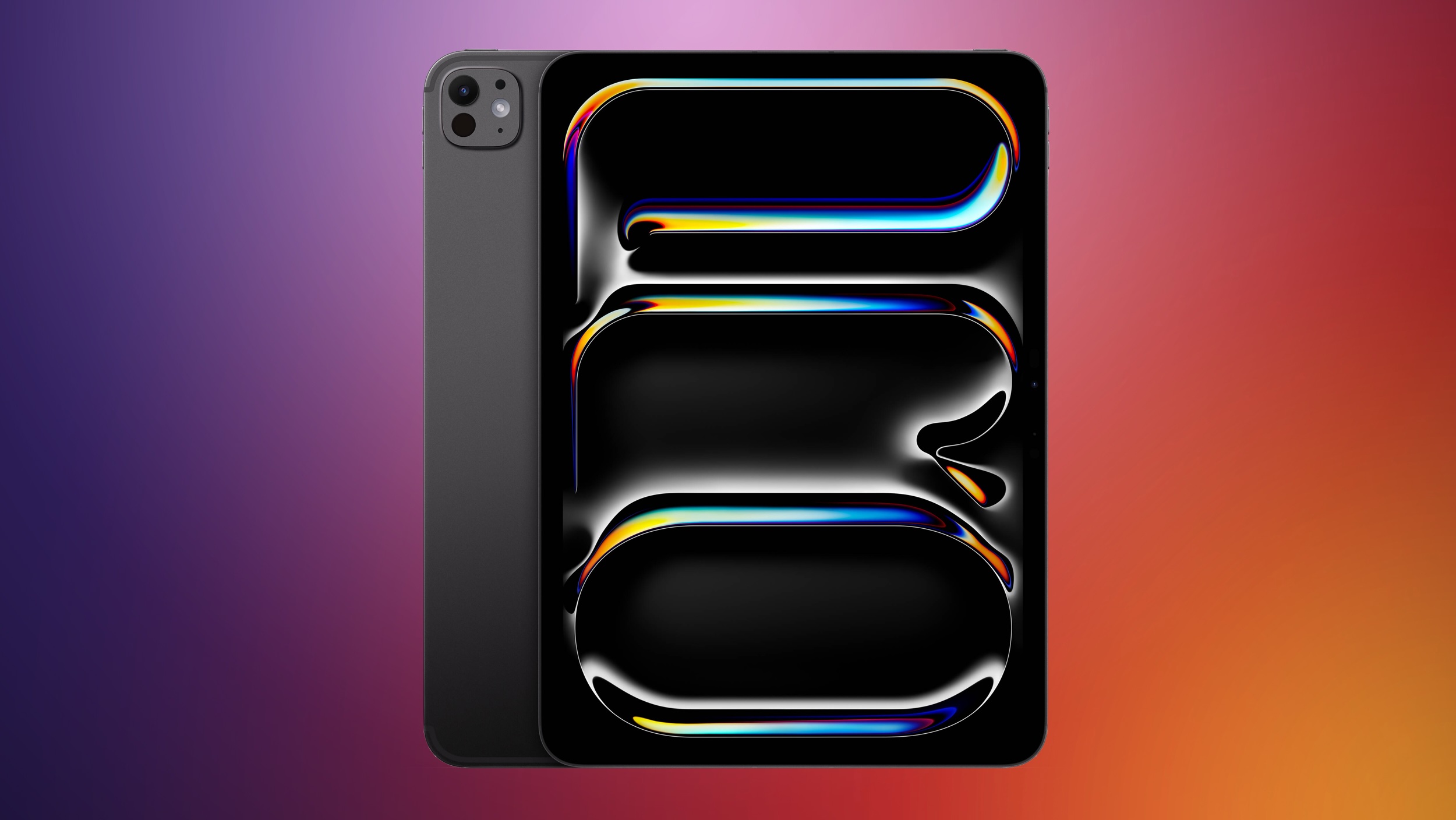
Apple is working on an updated iPad Pro with a new M5 chip, and we already know quite a bit about it since it leaked in an unboxing video earlier this week.


We're expecting 11-inch and 13-inch versions of the ‌iPad Pro‌, with the same design as the current M4 ‌iPad Pro‌ models. Based on benchmarks, the M5 offers up to 12 percent faster multi-core CPU performance compared to the M4 chip, and up to 36 percent faster GPU performance. Like the iPhone Air and the iPhone 17 Pro models, the next ‌iPad Pro‌ will have 12GB RAM, up from 8GB.

Rumors have suggested the next-generation ‌iPad Pro‌ will have a second front camera so that it can be used for video calls in portrait and landscape orientations. A second front camera is not visible in the video, but it's not out of the question.

Updated Vision Pro


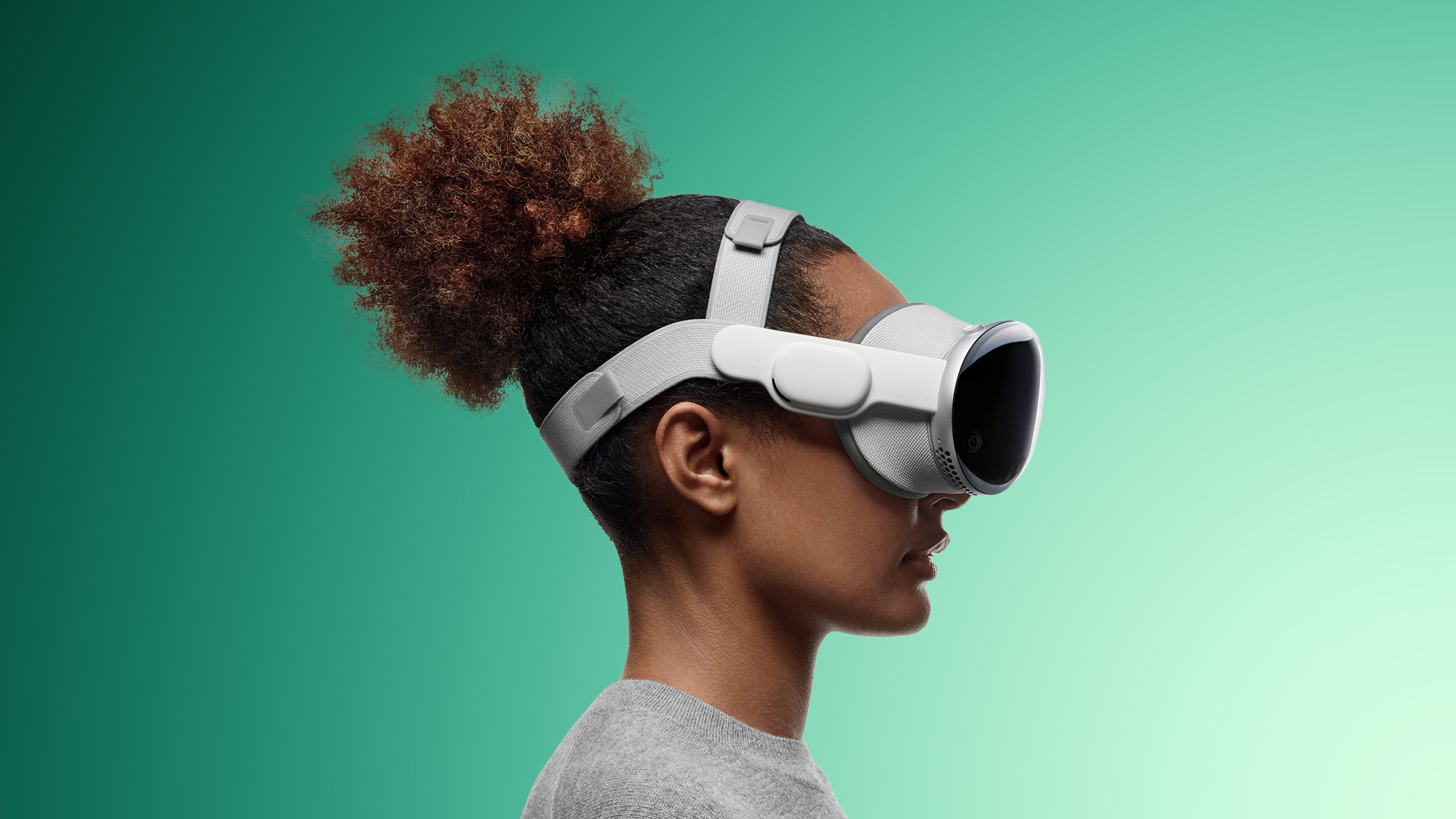
Apple is also going to use the M5 chip in an updated version of the Vision Pro, replacing the M2 chip. So far, it sounds like the Vision Pro refresh will focus solely on the chip, with no design changes planned.


While the headset isn't being updated, Apple might introduce a more comfortable head strap to reduce neck strain and head pain.

The FCC accidentally leaked the next Vision Pro and several other devices earlier this week, so we know a new model isn't too far off. Rumors have said that the revamped Vision Pro will launch sometime in 2025.

HomePod mini


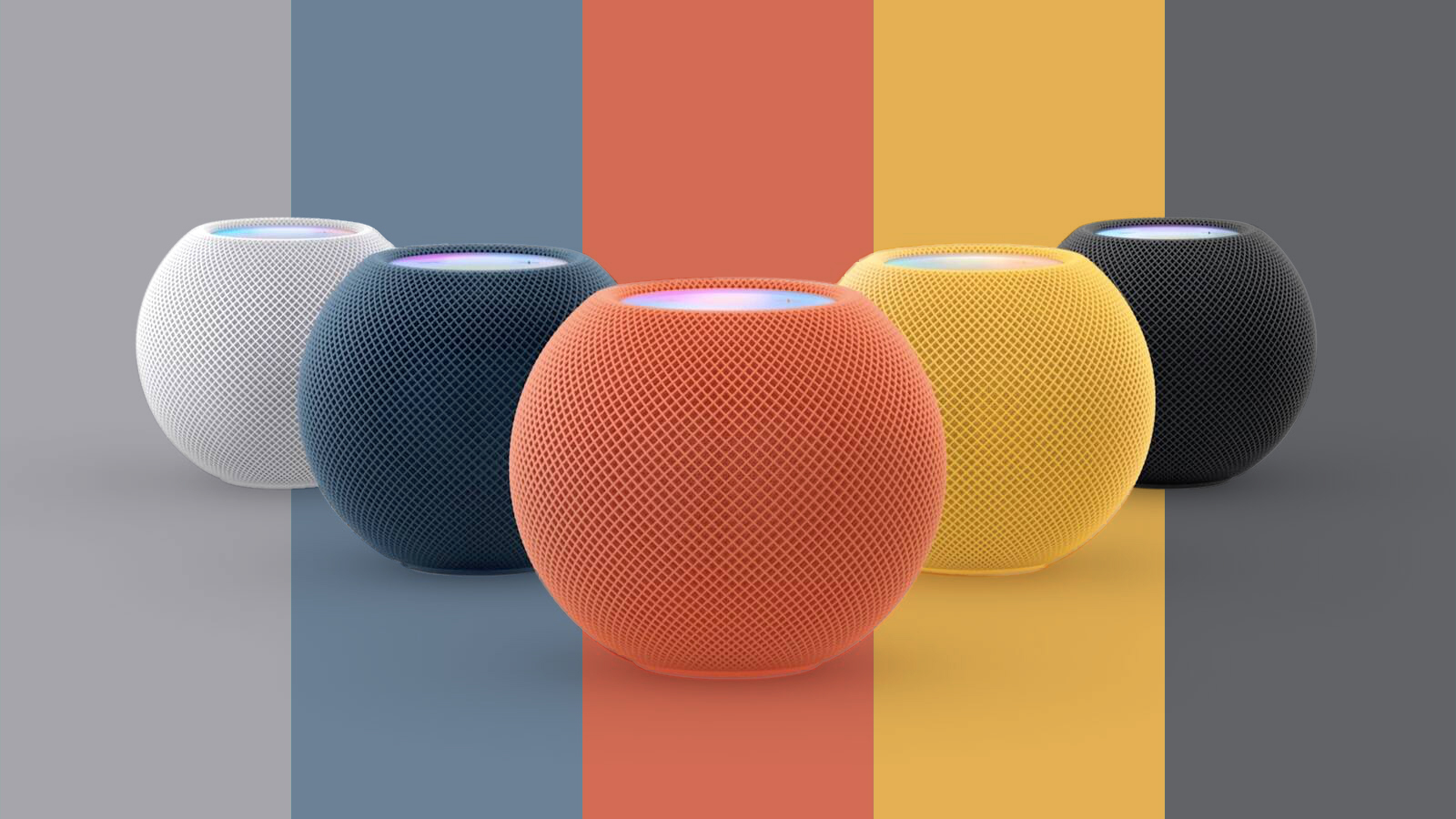
The HomePod mini hasn't been updated since it came out in 2020, but 2025 will supposedly be the year that it gets a refresh.


It looks like the next ‌HomePod mini‌ will get an updated S-series chip, likely the same S10 chip that's in the Apple Watch Series 11. The original ‌HomePod mini‌ has the S5 chip that was used in the Apple Watch Series 5, but Apple did make some HomePod-specific tweaks to it, like including Ultra Wideband capabilities.

The S10 chip will provide faster performance for any underlying processing that the ‌HomePod mini‌ does. The ‌HomePod mini‌ uses computational audio for real-time tuning, so that will see an improvement, and it could support more on-device ‌Siri‌ processing.

More recent Apple Watch chips have an altimeter that could come in handy for positioning and audio orienting on a ‌HomePod mini‌, and the S9 and later chips have a four-core Neural Engine that might also add new functionality.

Like the updated ‌Apple TV‌, the new ‌HomePod mini‌ is expected to use Apple's N1 networking chip for Bluetooth and Wi-Fi, with support for connecting to 6GHz networks.

Along with these internal changes, we're also expecting new color options for the ‌HomePod mini‌.

AirTag 2


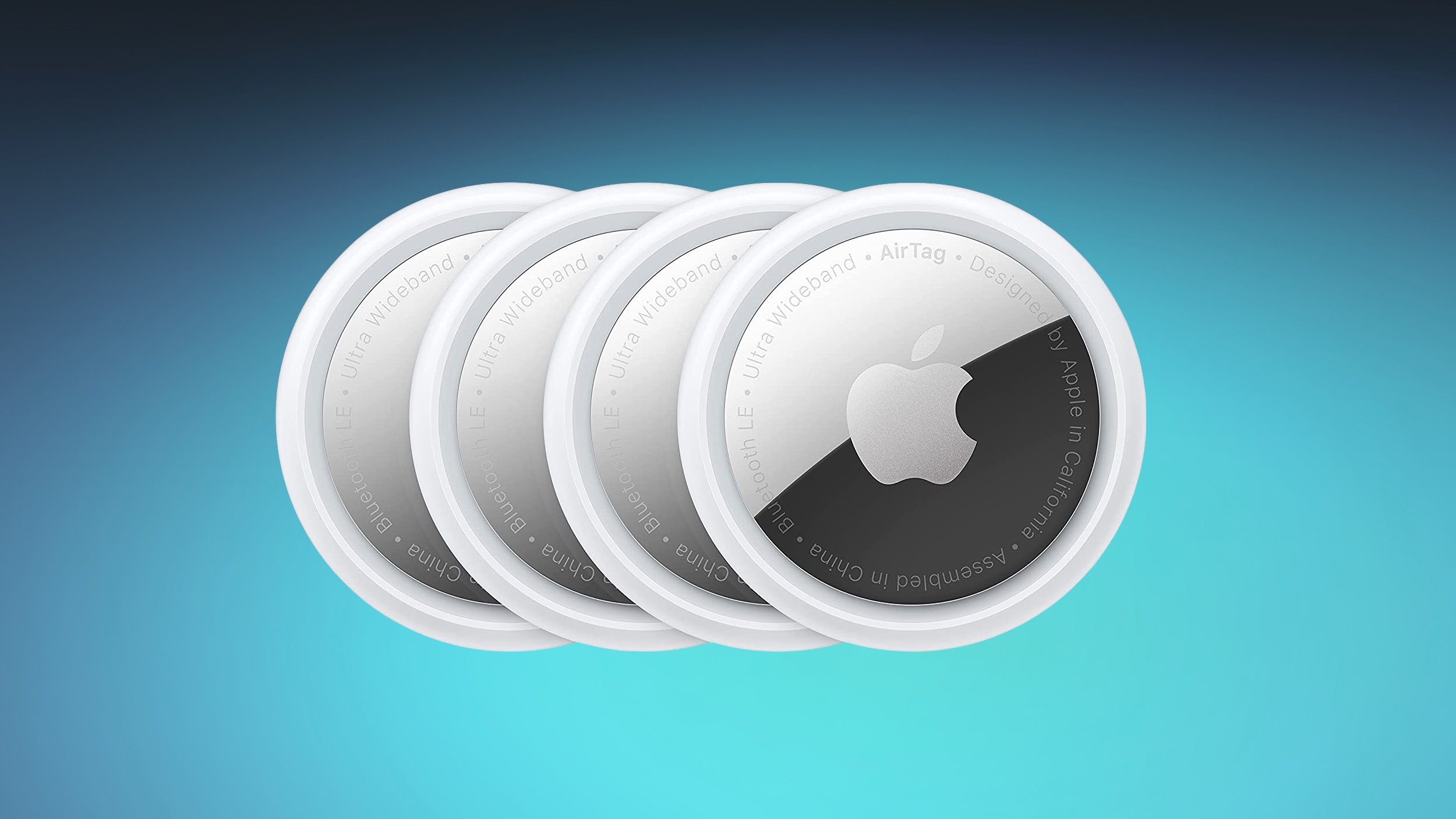
The AirTag 2 is yet another product that's supposed to be updated before the end of 2025, but with no major design changes. Rumors suggest the shape of the ‌AirTag‌ isn't going to change, but Apple will make under-the-hood improvements.


It will be harder to get the speaker out of the ‌AirTag‌ 2, preventing tampering for hidden tracking without sound alerts. AirTags could also be trackable from further distances, with Apple adding a second-generation Ultra Wideband chip that supports three times the range.

Unfortunately, it doesn't look like the AirTags are going to get a rechargeable battery or design options like a slim wallet version.

MacBook Pro


The FCC's leak included a MacBook Pro, but there weren't multiple variants in the database like we would expect if a refresh of the entire ‌MacBook Pro‌ line was coming soon.


It's possible that Apple will announce a lower-cost ‌MacBook Pro‌ that has an M5 chip, saving M5 Pro and M5 Max variants for a later date. There is precedent for that kind of staggered launch, and it would make sense because other M5 devices like the ‌iPad Pro‌ and Vision Pro are rumored to be debuting in 2025.

Rumors about the launch timing of the M5/M5 Pro/M5 Max ‌MacBook Pro‌ models have changed throughout the year. Bloomberg's Mark Gurman first said the ‌MacBook Pro‌ models would be refreshed in late 2025, before saying Apple was "internally targeting" an early 2026 launch. Last weekend, Gurman claimed that the new ‌MacBook Pro‌ models would come out sometime between late 2025 and early 2026, so the timeline isn't clear.

If Apple does wait until early 2026 to unveil all or most of the ‌MacBook Pro‌ models, it might make for a confusing year. Apple is developing an OLED version of the ‌MacBook Pro‌ that's supposed to come out in late 2026, so there would be an early 2026 launch and perhaps a late 2026 launch if the OLED technology isn't later delayed until 2027.

Since there is a major 2026 refresh in play, Apple might want to get all of the M5 models out in 2025.

Will There Be an October Event?


After its September event, Apple sometimes holds a second fall event in October or November. This year, a new event is a possibility, but it's not guaranteed.

Most of the product refreshes that are rumored for the last few months of 2025 will feature internal updates with no major flashy additions. For that reason, Apple could announce new devices through press releases. Apple's last October event was in 2023, when it shared a short "Scary Fast" Mac-focused presentation. In 2024, Apple released new M4 Mac models with press releases, so it could go either way.

Apple does like to unveil new versions of the Apple silicon chip at events, and we haven't seen the M5 yet. The M1 came out at an November 2020 event, the ‌M2‌ was unveiled at WWDC, the M3 came out in an October 2023 event, and the M4 was introduced at a May 2024 event.

For the last two years, Apple's October announcements have come toward the end of the month, so if there is an event, we could hear about it in the next couple of weeks.
This article, "Apple's 2025 Product Roadmap: What's Still Coming" first appeared on MacRumors.com

Discuss this article in our forums
  •  

Apple Stops Work on Lighter Vision Pro to Fast-Track AI Smart Glasses

Apple has decided to stop work on a cheaper, lighter version of the $3,499 Vision Pro to instead focus its resources on smart glasses, reports Bloomberg. Apple wants to speed up development on a glasses product to better compete with Meta.


There were rumors that Apple was developing a a much lighter, more affordable "Vision Air" for launch in 2027, but Apple is now transitioning engineers from that project to its smart glasses project.

Apple is working on a set of smart glasses that will rival Meta's AI-equipped Ray-Bans. The glasses will include cameras, microphones, and AI capabilities. Apple could introduce the glasses as soon as next year, and then launch them in 2027.

There won't be a display in the first version of the glasses, but Apple is developing another model that will include an integrated display. Apple wanted to debut the version with a display in 2028, but it is now aiming to speed up development because Meta just recently announced the Meta Ray-Ban Display AI glasses.

The Meta-Ray Ban Display glasses include a full-color, high-resolution display in one of the lenses. The display is able to display messages, photos, and information from Meta AI. Meta's glasses look similar to regular glasses despite the added screen, and they are the first step toward Meta's "Orion" augmented reality glasses. Meta unveiled its AR glasses last year, showing off thick pair of glasses with dual AR displays. Both Apple and Meta are aiming to launch lightweight augmented reality glasses in the future.

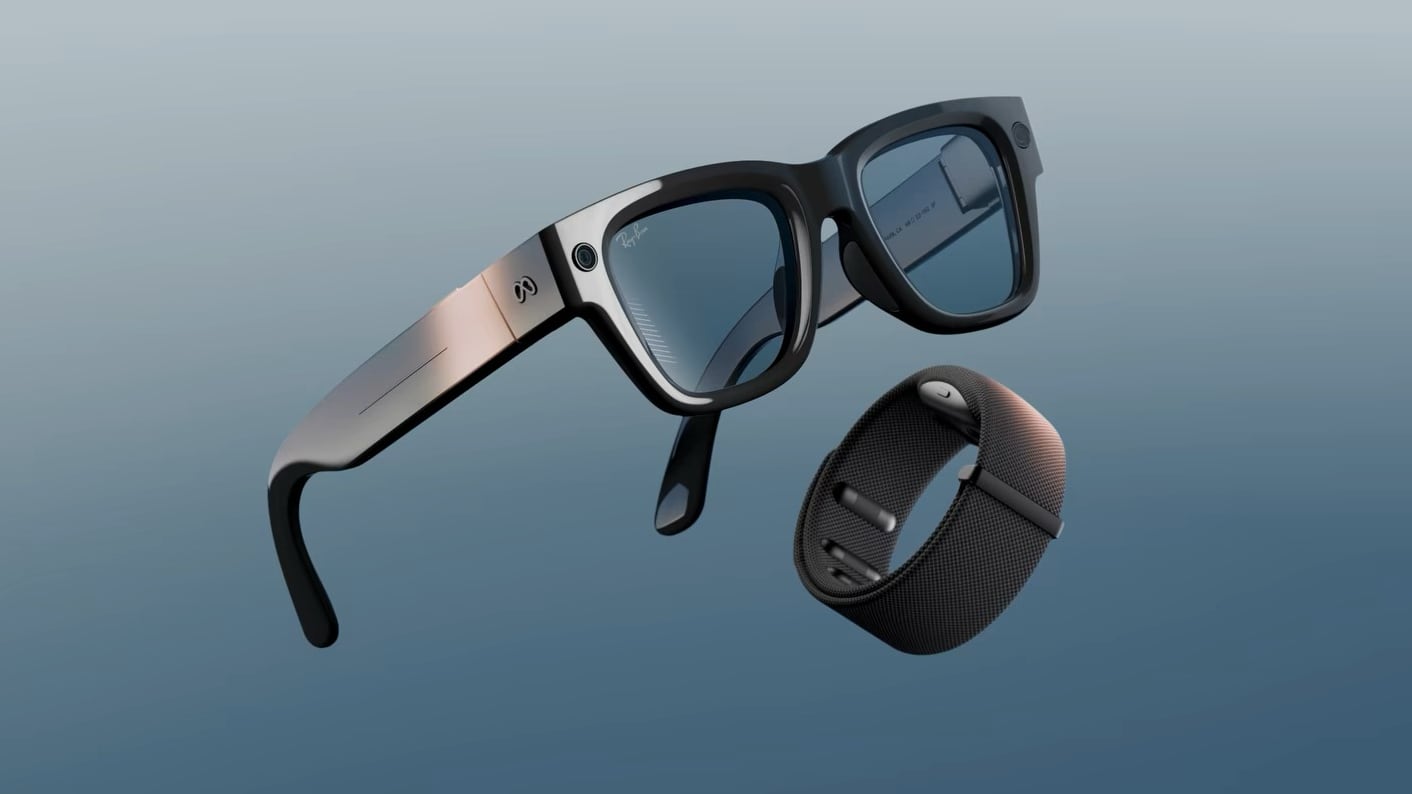
Meta's Ray-Ban Display

Meta has come out with several variations of the Meta Ray-Bans since 2023, and the company has a more advanced AI product than Apple does. Apple's smart glasses will rely on AI and voice-based commands, which will require the next-generation version of Siri.

Apple delayed ‌Siri‌ after the assistant didn't meet expectations for promised Apple Intelligence features in iOS 18, but an updated version of ‌Siri‌ built on new architecture is expected in spring 2026.

Apple plans to release its first smart glasses with multiple material and frame options, turning them into a fashion accessory. Buyers will be able to choose their preferred color and frame style. The glasses will have an Apple-designed chip inside, but will still be reliant on a connected iPhone. Other features will include cameras, microphones, and health tracking capabilities.

While work on a lighter version of the Vision Pro has been paused for now, Apple still plans to refresh the current model with an M5 chip later this year.
This article, "Apple Stops Work on Lighter Vision Pro to Fast-Track AI Smart Glasses" first appeared on MacRumors.com

Discuss this article in our forums

  •  
❌