Negative side-effect: users of the option to automatically mark updated articles as unread will once have some articles with enclosures re-appear as unread
Programme management in public administration is complex. Multiple projects need to be coordinated, dependencies managed, and the achieved benefits demonstrated transparently. With PM², the project management methodology of the European Commission, there is a clear framework for this. The German Federal Office of Administration has adapted this standard with PMflex specifically for German authorities – practice-oriented and with checklists for programmes, portfolios, and projects.
To keep an overview as a programme manager, you need a central control point – a kind of cockpit that bundles all relevant information. The open source software OpenProject, developed in Europe, provides exactly this support. In this article, we present seven features that specifically support and empower you in programme management.
What does good programme management mean?
Good programme management means steering several interrelated projects so that they jointly deliver the planned benefits. Unlike project management, it is not only about successfully completing a single initiative, but about keeping the overall impact in focus. While portfolio management sets the strategic selection and prioritization, programme management ensures the coordinated operational execution.
For public administrations, this approach is crucial: programme management creates transparency, enables accountability to stakeholders, and ensures that political or organizational objectives are actually achieved.
Programme management in the public sector in Europe
OpenProject supports you in implementing both approaches. With standardized workflows, transparency across programme structures, and central documentation, it is an ideal tool for managing programmes according to PM² and PMflex.
Tip
Of course, OpenProject supports not only programme management but also project and portfolio management. Projects form the operational level, programmes bundle several projects with a shared benefit, and portfolios provide the strategic orientation. With OpenProject, administrations have one solution that covers all three levels – integrated, transparent, and compliant with PM² and PMflex.
Seven features for successful programme management
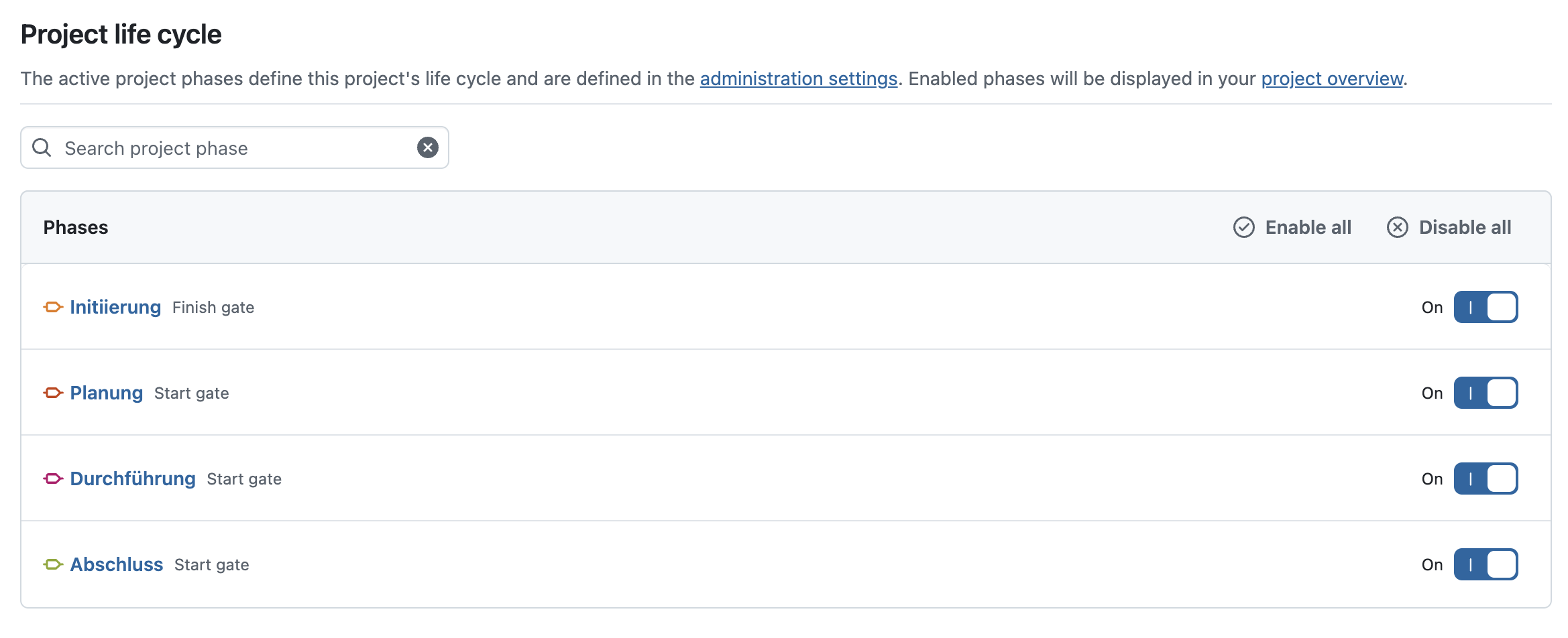
In PM² and PMflex, phases and phase gates are central building blocks. Every programme runs through defined stages – from initiation through planning and implementation to closure. At the phase gates, it is checked whether a phase has been successfully completed and whether the next one may start. This governance ensures that decisions are transparent and traceable.
OpenProject helps you apply this logic in practice. Even in the cost-free Community Edition, you can create and monitor phases and phase gates according to PM² specifications. In the Enterprise Edition, you can customize them individually as well as add new phases or phase gates. This way, you stay in control – and always know whether your programme is on track.
2. Keep the overview: Programme dashboards and baseline
For programme managers, a quick overview at the programme level is essential:
Monitor the status of all sub-projects (e.g. phase, phase-gate status, traffic light).
Detect deviations and bottlenecks early (schedule, budget, quality).
Track upcoming milestones and deadlines.
Identify risks and issues that need to be escalated.
Consolidate key figures for reporting and decision-making.
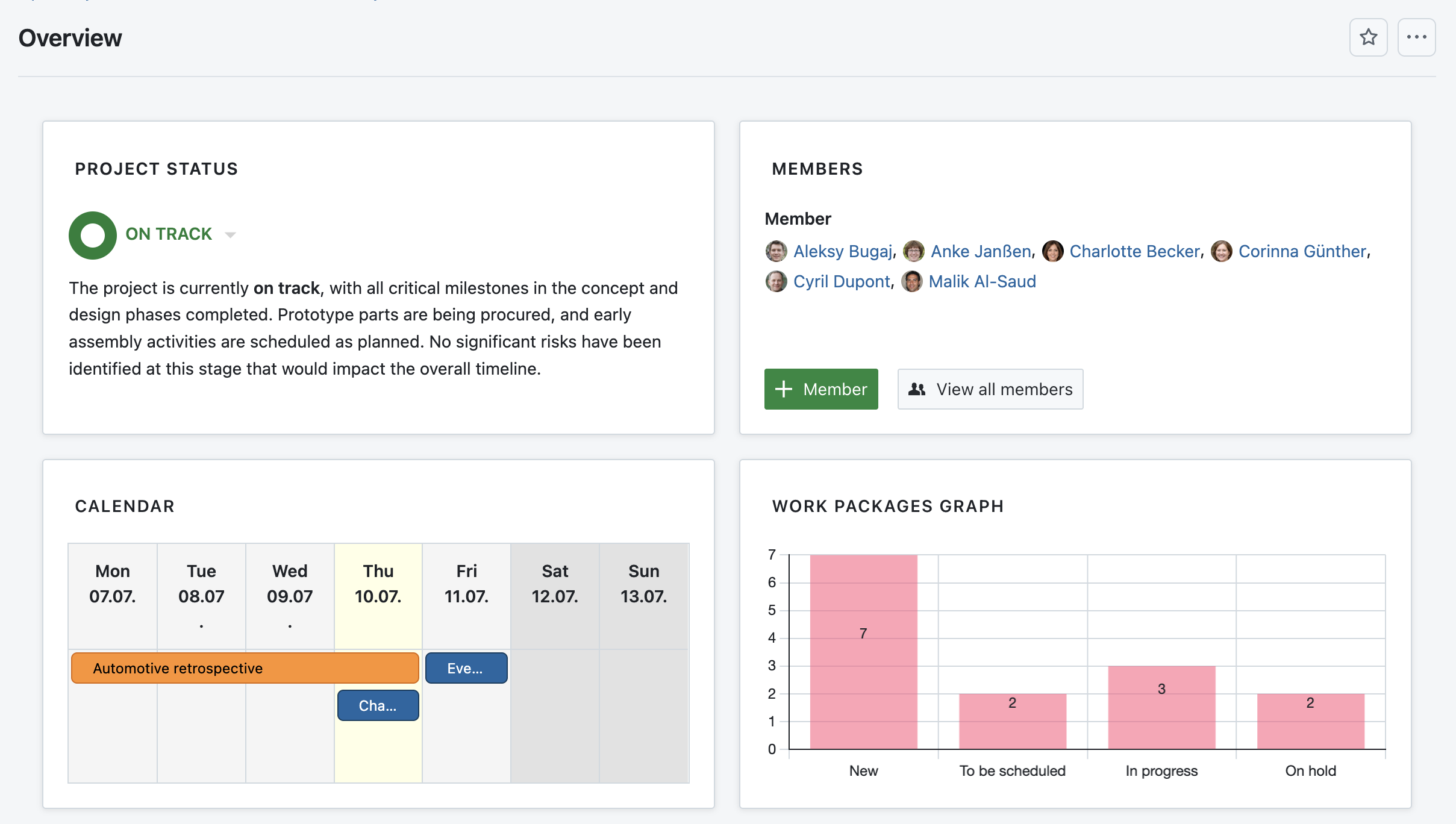
With OpenProject, you set up an overview page (dashboard) for each programme that displays all relevant information. In addition, you can create, filter, save and share project lists to consolidate the metrics of all sub-programs or sub-projects in one clear table. To dive deeper into work packages, risks, and recent changes, you can use the Baseline feature.
Returning to the cockpit metaphor from the introduction: in OpenProject, this becomes your cockpit, where all information is available at a glance and forms the basis for well-founded decisions at any time.
3. Clarify dependencies: Milestones and relations
Programmes consist of many sub-projects with close content-related and time-related interdependencies. To detect delays or conflicts at an early stage, dependencies and common milestones must always be visible.
In OpenProject, you represent a programme as a project with sub-projects. Dependencies are managed through the diverse relations types between work packages:
Temporal dependencies such as predecessor / successor.
Logical relations such as blocks / blocked by or includes.
Parent-child relations to clearly structure complex tasks.
Programme-level milestones that apply to multiple sub-projects.
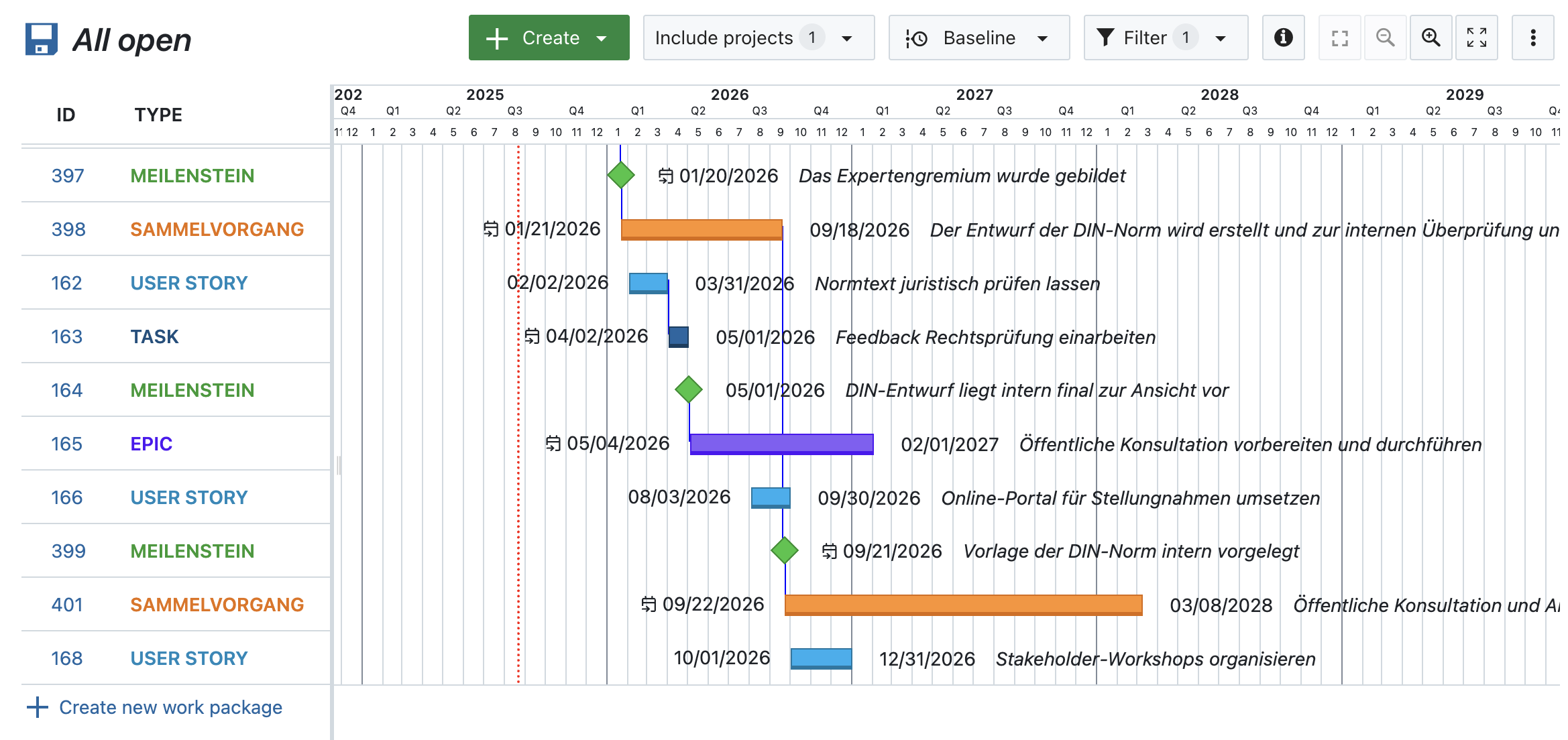
These dependencies can be visualized in different views – for example, in the Gantt chart for timelines, in table views for detailed overviews, or also in parent-child boards (Enterprise add-on) to visualize the hierarchy of work packages.
4. Make impact visible: Outputs, outcomes, and benefits
In PM² and PMflex, a clear distinction is made between three levels:
Outputs are the tangible results of a project, e.g. a new IT system.
Outcomes are the direct effects when these results are used, e.g. active use of the system.
Benefits are the long-term value for the organization, e.g. more efficient processes or reduced costs.
For programme managers, it is crucial to keep this entire chain of impact in view, rather than focusing only on the completion of individual deliverables.
OpenProject supports you by allowing outputs, outcomes, and benefits to be defined as separate work package types. These types can be equipped with status transitions for custom workflows, attributes, and status values, and tailored exactly to the specific steering needs. This creates a transparent structure that makes it clear at any time whether the programme is actually delivering the planned benefits.
5. Detect problems early: Risk and issue management
Good risk management helps you sleep at night. As a programme manager, you need to keep an eye not only on current problems but also on potential risks and issues that may endanger the entire programme.
In OpenProject, risks and issues can be represented just like Outputs or Outcomes as their own work package types – with individual workflows and attributes. This allows you to manage probabilities of occurrence, impacts, and countermeasures systematically and ensures that critical points are not lost in the daily project routine.
Note
The OpenProject team is currently working intensively on an extended risk module that will soon support the PMflex requirements even more consistently and enable more precise control at the programme level. Stay up to date: Risk module development on OpenProject Community
6. Create transparency: Reports and controlling
For programme managers, it is essential to always have reliable information available – for their own control and for mandatory reporting upwards. You need clarity about the status of your programme, and at the same time standardized documentation to reliably inform portfolio managers, agency leaders, or political decision-makers.
OpenProject provides standardized reports and controlling features for this purpose. Status reports, budget overviews, or progress analyses can be consolidated and exported directly as PDFs – ideal for regular communication with stakeholders. In addition, OpenProject takes PMflex templates into account, so your reports comply with established standards and are ready to use without additional editing.
This way, you keep your own overview while at the same time providing transparent, comparable information for control at portfolio and management level.
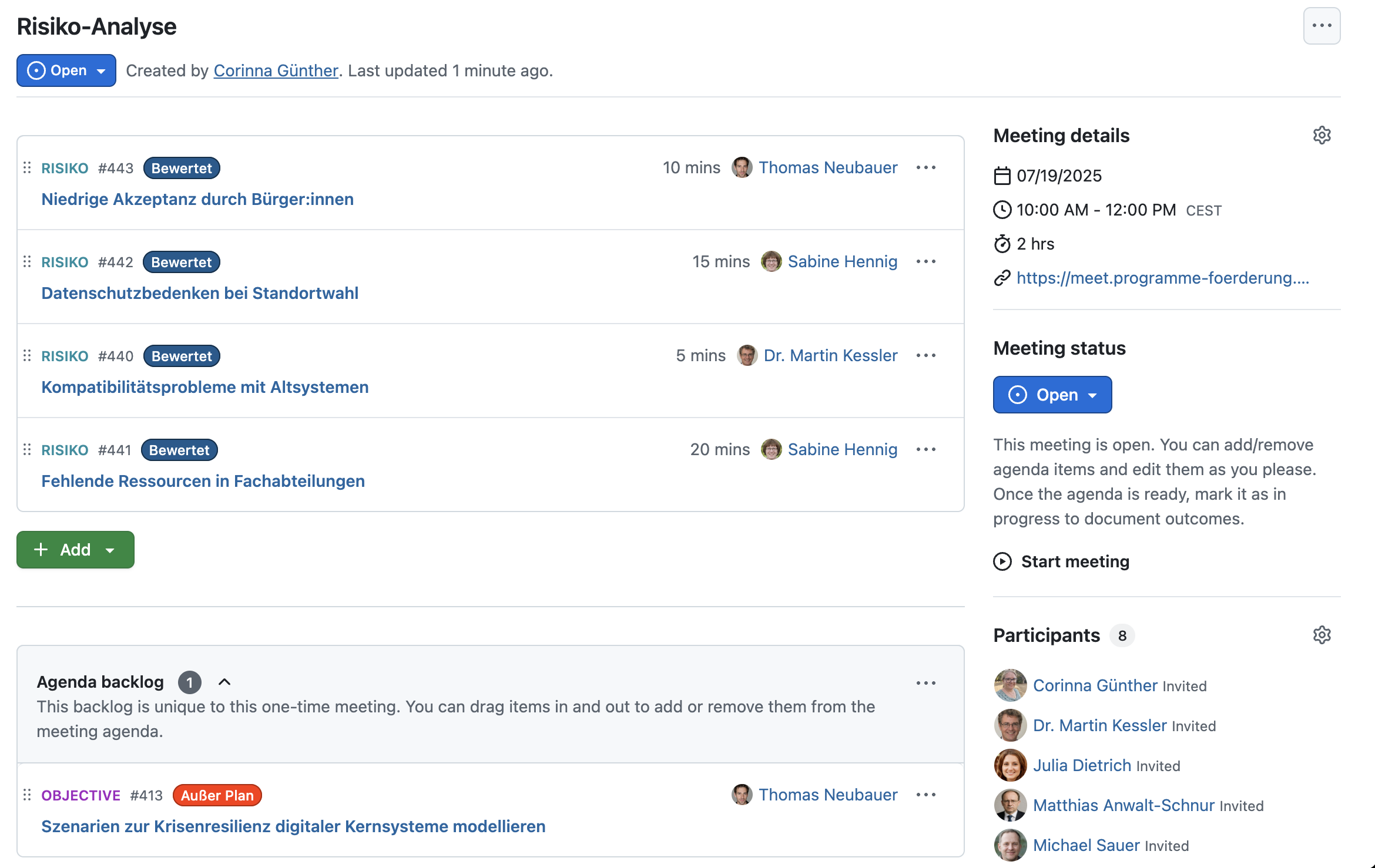
7. Strengthen collaboration: Meetings based on work packages
What if your team meetings started exactly where the actual work happens? Instead of meticulously gathering information from emails or external Word or Excel documents, in OpenProject you can directly access work packages stored in the programme or sub-project.
This way, you create agendas with the relevant topics in no time, document results directly during the meeting, and generate minutes immediately – in the OpenProject style, with links to the respective risks, milestones, outcomes, and more. Everyone involved stays aligned, and traceability is ensured at all times. OpenProject’s Meetings module is a highlight for many programme managers, and offers significant advantages, especially in public sector programmes with many stakeholders.
Conclusion: Successfully implementing programme management with PM² and PMflex
Programme managers in public administrations face the task of steering complex initiatives transparently and traceably. With PM² and PMflex, clear standards are available – and with OpenProject, a tool that consistently supports these standards in practice.
From phase gates to dashboards, risk management, and meetings: OpenProject provides you with an integrated “cockpit” that ensures governance, creates transparency, and strengthens collaboration. This way, you not only guide programmes reliably through the individual phases but also ensure that the planned outcomes and benefits are actually achieved.
Especially in public administration, where traceability and accountability are crucial, OpenProject is the right solution to bring programmes to success according to European standards.
OpenProject 16.3 is here, bringing a fresh look, more control over email notifications for meetings, along with other improvements that make everyday work more efficient. This release is all about helping you stay focused, find what you need faster, and keep your projects running smoothly.
We will summarize the most important changes in this blog article and, as always, please see our release notes that contain all changes, features and bug fixes.
Here is a quick navigation to all feature descriptions:
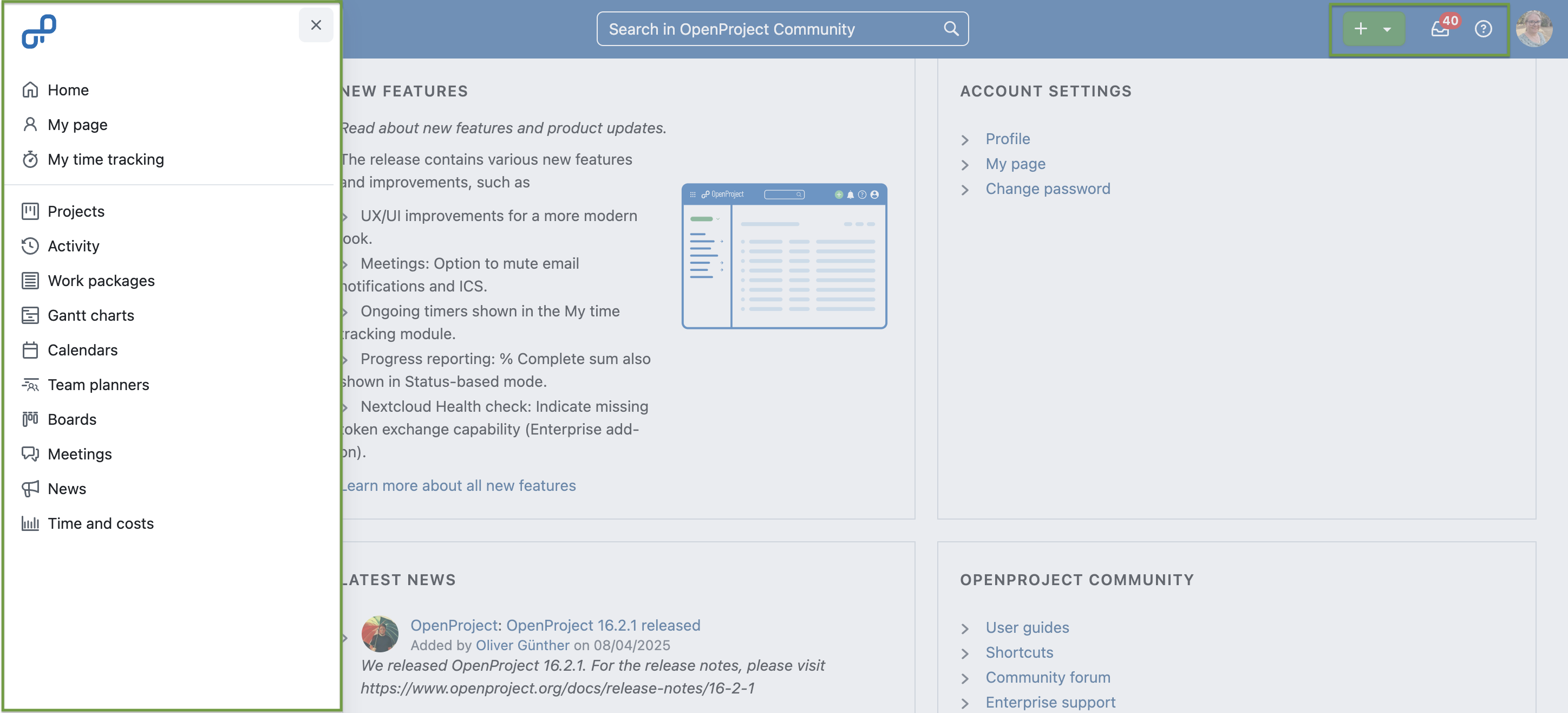
Your workspace should help you focus — not distract you. That’s why in 16.3, we’ve refined the design and navigation to make OpenProject easier and more pleasant to use:
The header has been redesigned with Primer, including a fresh icon for notifications.
The grid icon now opens as a smooth lateral menu, giving you quick access to Home, My Page, and My time tracking.
The sign-in modal and running time tracking section have moved to a new overlay menu on the right, keeping the header clean and uncluttered.
These changes make it easier to find your way around and keep important tools within reach.
Better control of meetings notifications
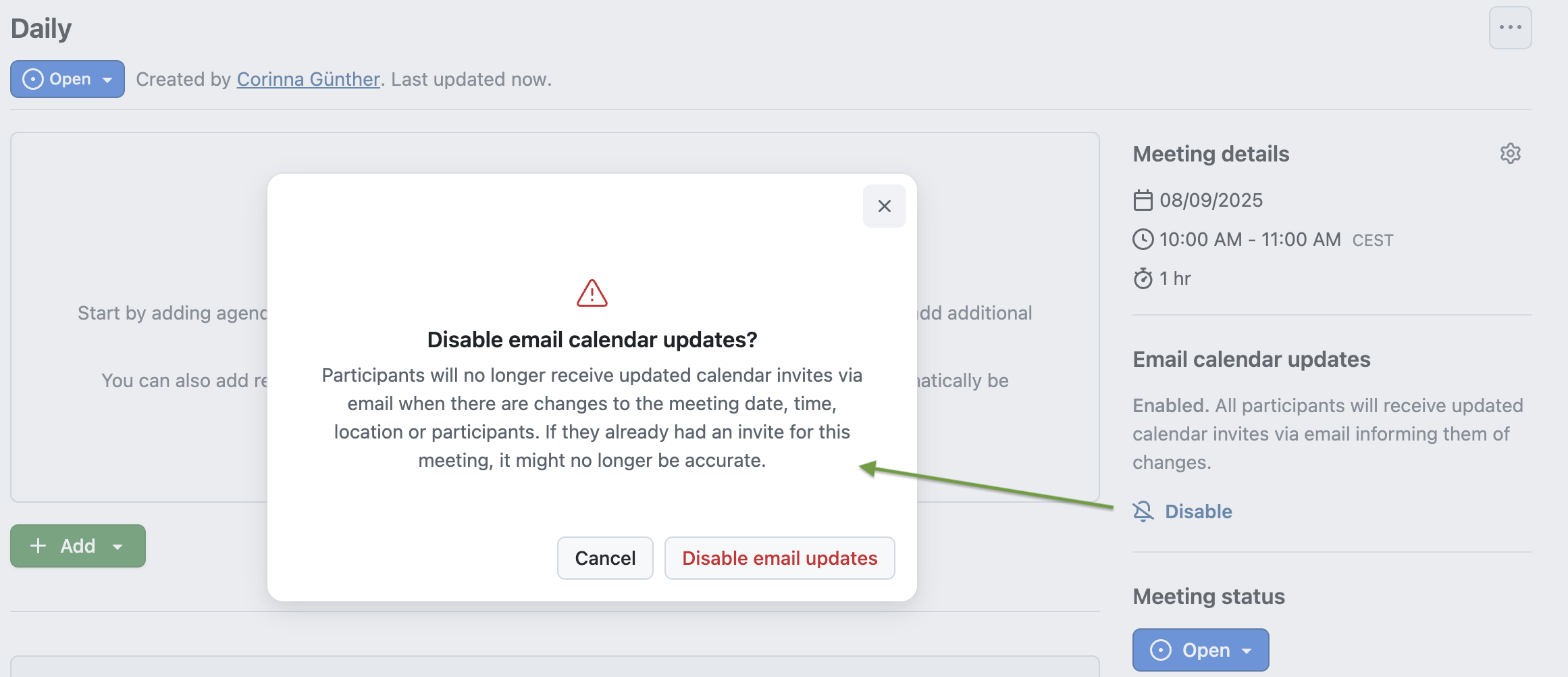
Receiving emails about every small update can be annoying. With OpenProject 16.3, you can now choose whether participants receive email calendar updates when creating or copying a meeting.
A simple checkbox in the meeting form lets you enable or mute notifications. The current status is always visible in the sidebar:
For one-time meetings, you can toggle notifications directly there.
For recurring meetings, you can set the preference in the template so it applies to the whole series.
This small change gives you more control over how and when participants are informed and keeps your communication timely and relevant.
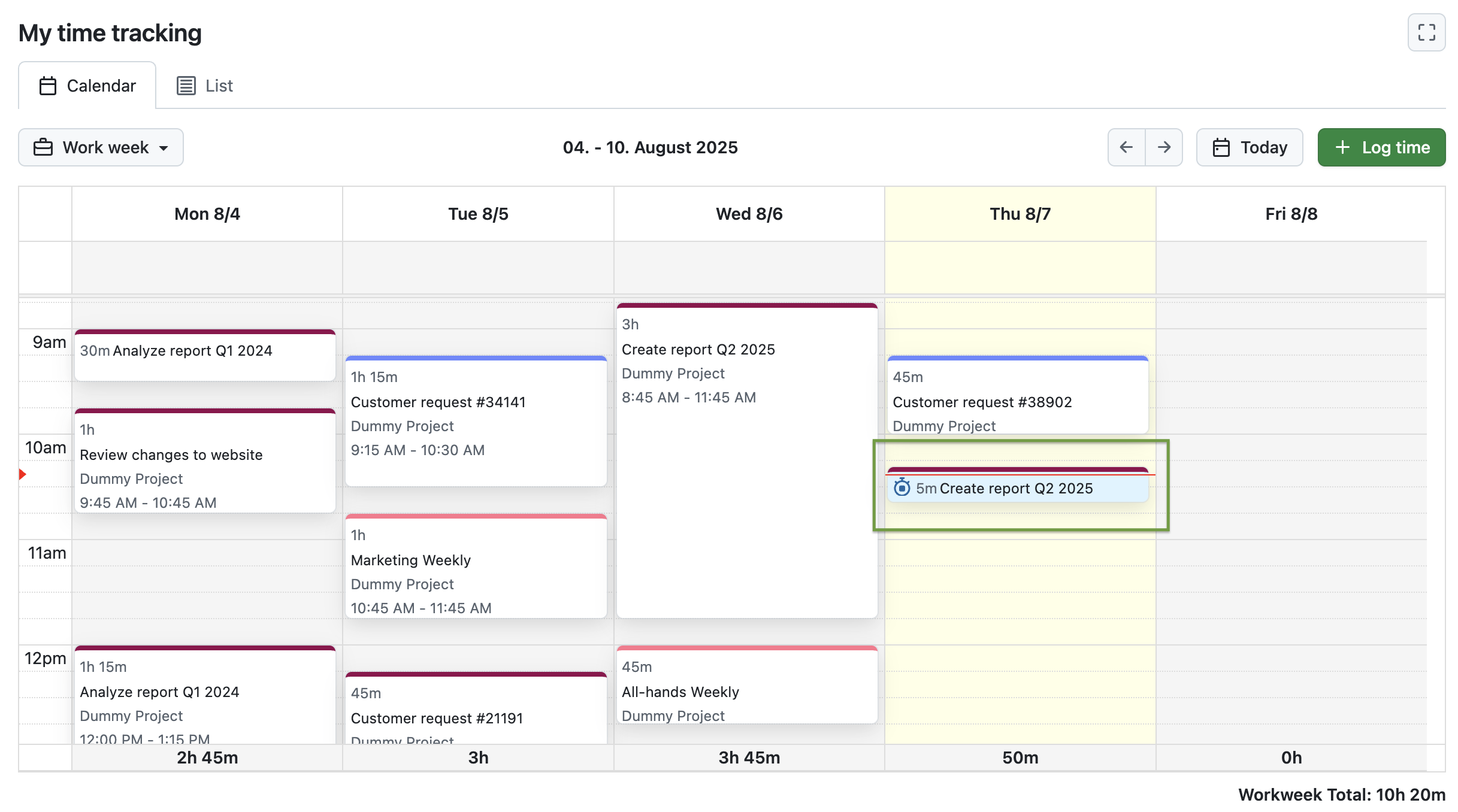
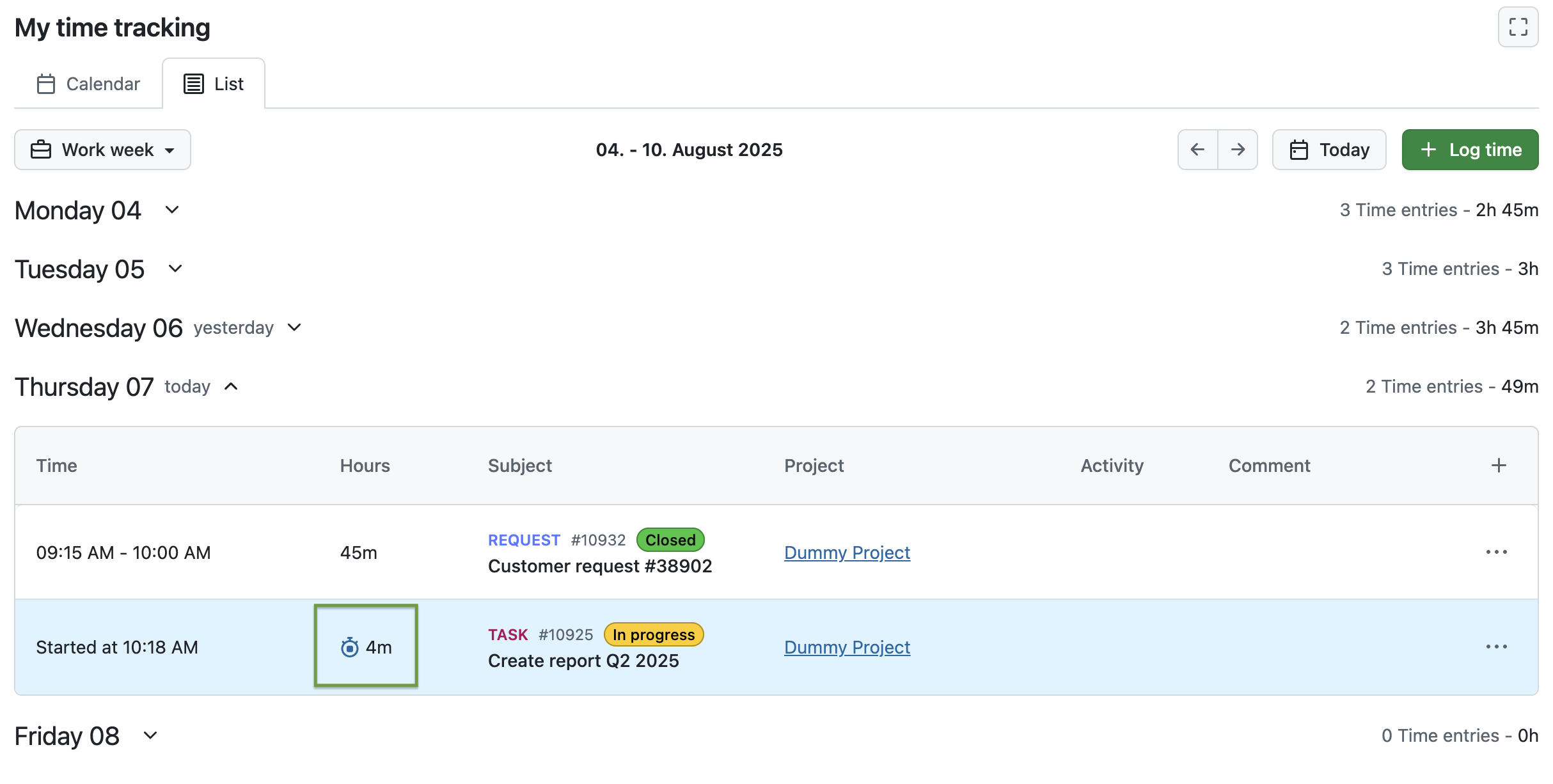
We’ve made it easier to avoid double time entries and keep an eye on your work in progress. The My time tracking module now clearly shows if a timer is running: In both list view and calendar view, the work package currently being tracked is marked with a small timer icon and blue background. This makes it easy to spot ongoing tracking, especially if you step away and return later in the day.
Progress reporting in work package tables is now more reliable. In OpenProject 15.5, we introduced % Complete sums, but in some cases — especially when not all work packages had values for Work or Remaining work — the calculation could be misleading.
With 16.3, these % Complete sums are now calculated accurately across all progress calculation modes, including status-based and simple averages. This means you can trust the numbers you see, no matter how your team tracks progress.
For teams using the Nextcloud integration in the Corporate plan, there’s now a clearer way to spot one specific issue: missing token exchange capability. If your identity provider doesn’t support token exchange (often due to older OIDC settings), the health check will now flag this directly. That way, you’ll get a precise message pointing to the cause, instead of a generic “token refresh failed” error.
Faster cost reporting with autocomplete
Cost reports are a powerful way to get insight into your projects — and now, setting them up is faster. In OpenProject 16.3, key filters like User or Work package now support autocomplete in cost report filters. Just start typing and select from matching results, instead of scrolling through long lists. It’s a small change that can save you time every week.
You will find more information about all new features and changes in our Release notes or in the OpenProject Documentation.
If you need support, you can post your questions in the Community Forum, or if you are eligible for Enterprise support, please contact us and we are happy to support you personally.
New to OpenProject? To test all features of OpenProject 16.3 right away, create a 14 days free trial instance for our OpenProject Enterprise cloud.
Prefer to run OpenProject 16.3 in your own infrastructure? Here you can find the Installation guidelines for OpenProject.
A very special thank you goes to City of Cologne, Deutsche Bahn and ZenDiS for sponsoring released or upcoming features. Your support, alongside the efforts of our amazing Community, helps drive these innovations. Also a big thanks to our Community members for reporting bugs and helping us identify and provide fixes. Special thanks for reporting and finding bugs go to Sven Kunze, Michael Lathion, Gábor Alexovics, and Tom Gugel.
Last but not least, we are very grateful for our very engaged translation contributors on Crowdin, who translated quite a few OpenProject strings! This release we would like to particularly thank the following users:
Alin Marcu, for a great number of translations into Romanian.
William, for a great number of translations into Chinese Traditional.
OlhaTrotska, for a great number of translations into Ukrainian.
Would you like to help out with translations yourself? Then take a look at our translation guide and find out exactly how you can contribute. It is very much appreciated!
As always, we welcome any feedback on this release. 💙
AI is everywhere. Especially large language models (LLM), which are what most people mean when they talk about AI today. These models are becoming common tools at work and in everyday life. At the same time, concerns around data protection and transparency remain.
At OpenProject, we’ve been exploring this topic deeply. We recognize both the incredible potential and the valid concerns. This article gives you a first look at how OpenProject approaches AI — and what you can expect as a user.
How does OpenProject approach AI?
At OpenProject, we approach AI — or more precisely, language models — with both curiosity and caution. Our goal is clear: help users save time and reduce complexity, without compromising privacy or open source standards.
We stick to a simple principle: “A fool with a tool is still a fool.” This applies to software just as much as it does to artificial intelligence: What matters is how you use it. Or, in other words, technology only helps if it’s used responsibly. That’s why we develop AI-powered features to assist, not replace, human decision-making.
We will use language models to save our users time and hassle in their work. At the same time, we remain firmly committed to our principles: Open source standards will not be broken and data protection is our top priority.
One quick note: While we use the term “AI” in this article, we technically refer to large language models (LLMs). The distinction matters, but for clarity, we follow everyday language.
Important
Even though we will be implementing AI/LLM features in OpenProject, the final decision will always be up to you, the user. Therefore, we want to emphasize that we will offer the option to enable or disable AI features.
OpenProject follows strict ethical AI guidelines
Human decision authority
AI serves as decision support, never autonomous decision-making
Transparent recommendations with clear explanations
Human oversight required for all critical decisions
Clear accountability chains maintained
Privacy & GDPR compliance
Strict data isolation between projects and tenants
Our AI features are designed to align with PM² as well as with PMflex, the official German standard for strategic project and portfolio management in the public sector. This means workflows automatically follow government requirements — no manual checks needed.
Thanks to AI, OpenProject can detect risks early, before they disrupt timelines or budgets. Real-time analytics and predictive insights give public sector teams the confidence to make data-driven decisions.
At the same time, automating workflows and reporting can save up to 80% of the time normally spent on admin tasks — allowing teams to focus on strategy rather than routine.
Preview of some of the first AI features in OpenProject
Even though we cannot make any firm promises regarding the release date for AI features at this time, we would like to show you some features that we are working on intensively. Especially with the still relatively new topic of AI, we want to test all features extensively before we release them.
Note
Some technical information: To develop AI features, we use our own OpenProject Haystack. Just like the rest of OpenProject, all source code is publicly available. Visit our Haystack GitHub to see it and learn more about the system architecture.
During a hackathon in July, we designed several AI-powered features and showcased them in a demo. Here’s a short overview of the specific AI features that we now continue working on:
Automatically generated tips to improve your project management
Some users are new to project and portfolio management and might need support. Ideally, this takes place directly in the application so that users don’t have to look up information in their handbook. Additionally, no external handbook can give you the exact information you need based on the data you already created.
This is why we created a feature to automatically display tips, specifically based on PMflex and PM² standards. But also users who are not working with these standards will benefit from this feature as some hints and are generally helpful in the area of project and portfolio management.
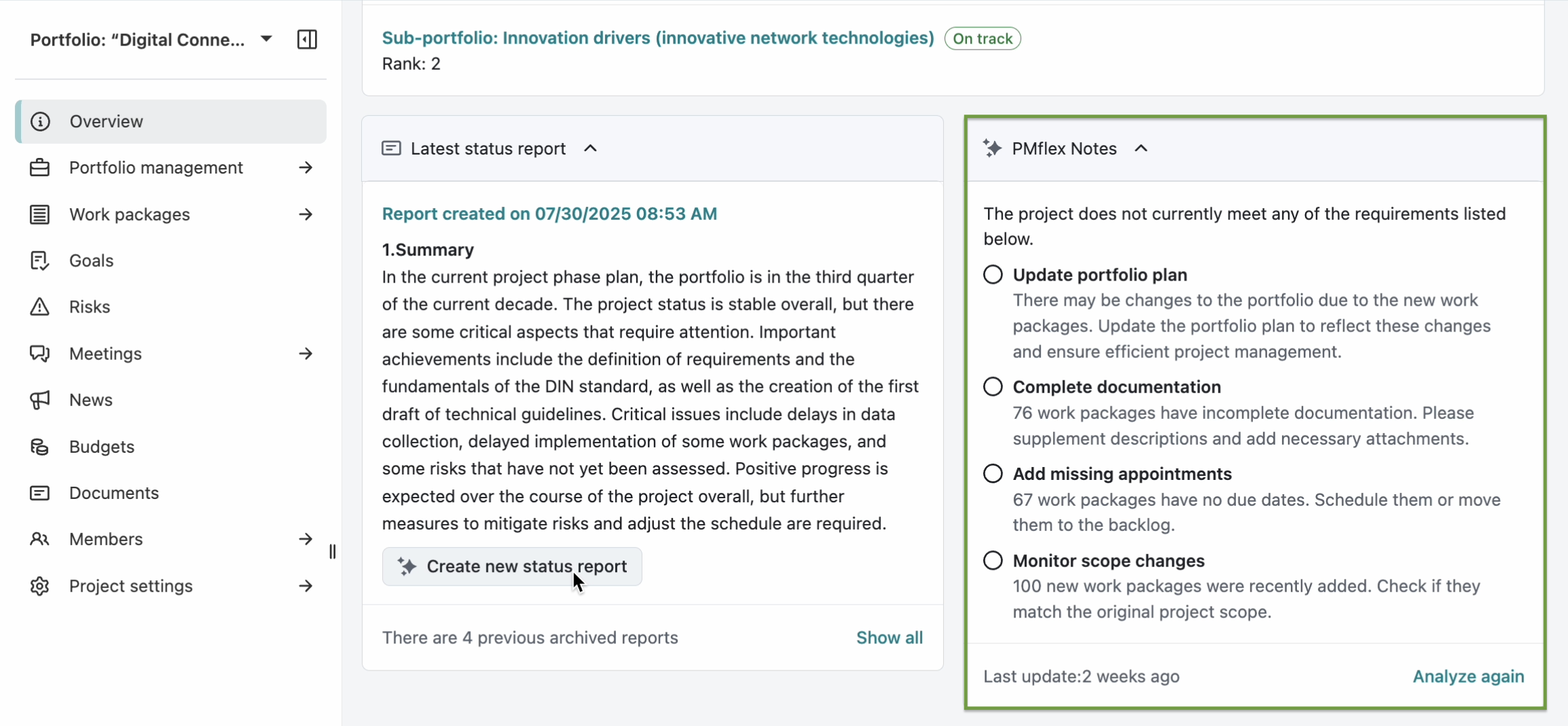
Here’s an example of how we implemented this feature on a demo instance:
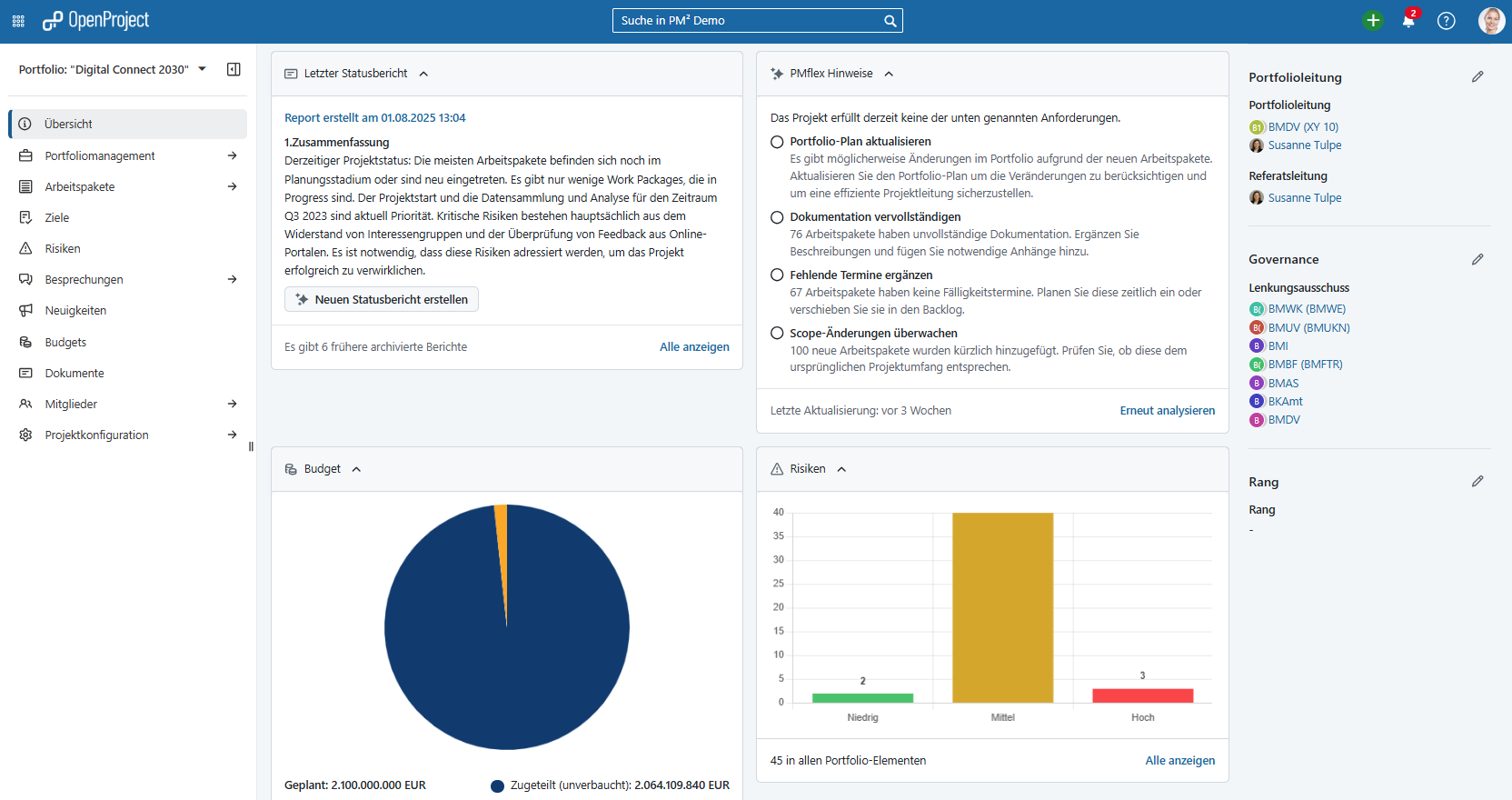
These are the hints in the example screenshot:
Update portfolio plan
Complete documentation
Add missing deadlines
Monitor scope changes
The overview page only shows the five most relevant notes. The information includes not only missing tasks, but also notes on what has already been accomplished.
Automatically generated status reports
Creating a project status report can be very time-consuming and tedious, requiring a lot of copying and pasting. With the help of the OpenProject LLM, users save several hours of time and can focus on more important things.
The feature to generate status reports by just pressing a button is still in development, and some parts of it don’t even need AI functionality. The LLM mainly summarizes the information used in the project and creates a short text based on that.
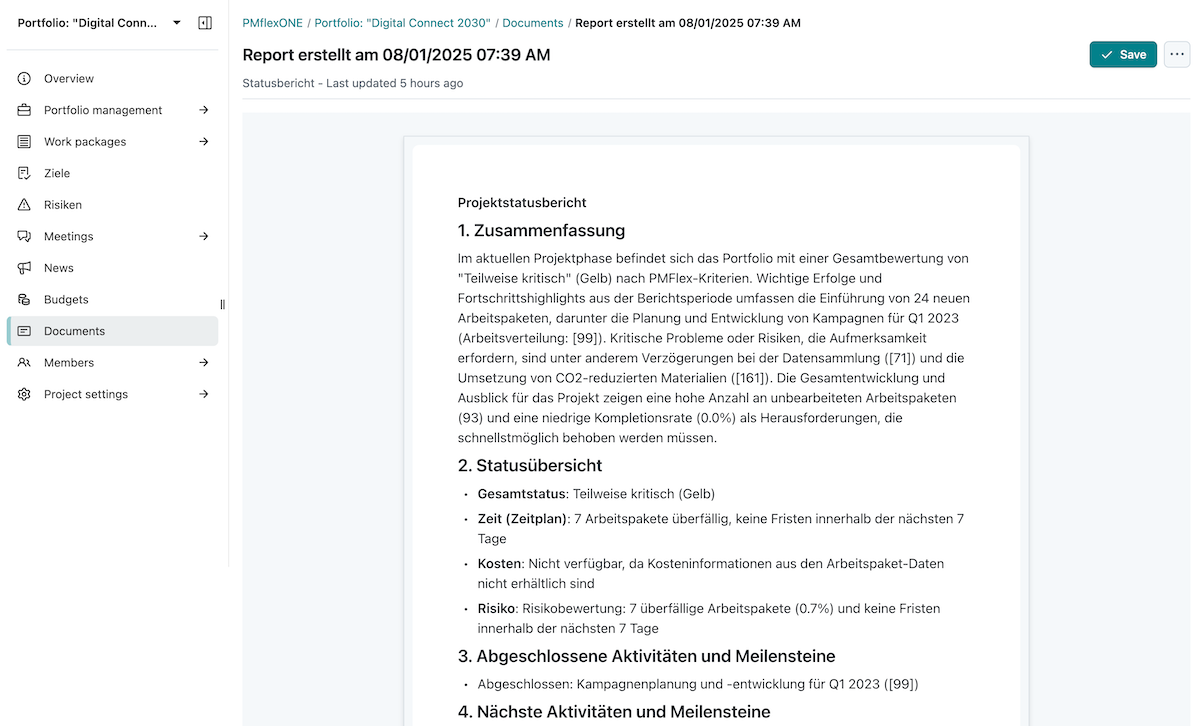
After one minute, your project status report is created and you can adjust, save and share it with others. This is how a status report could look:
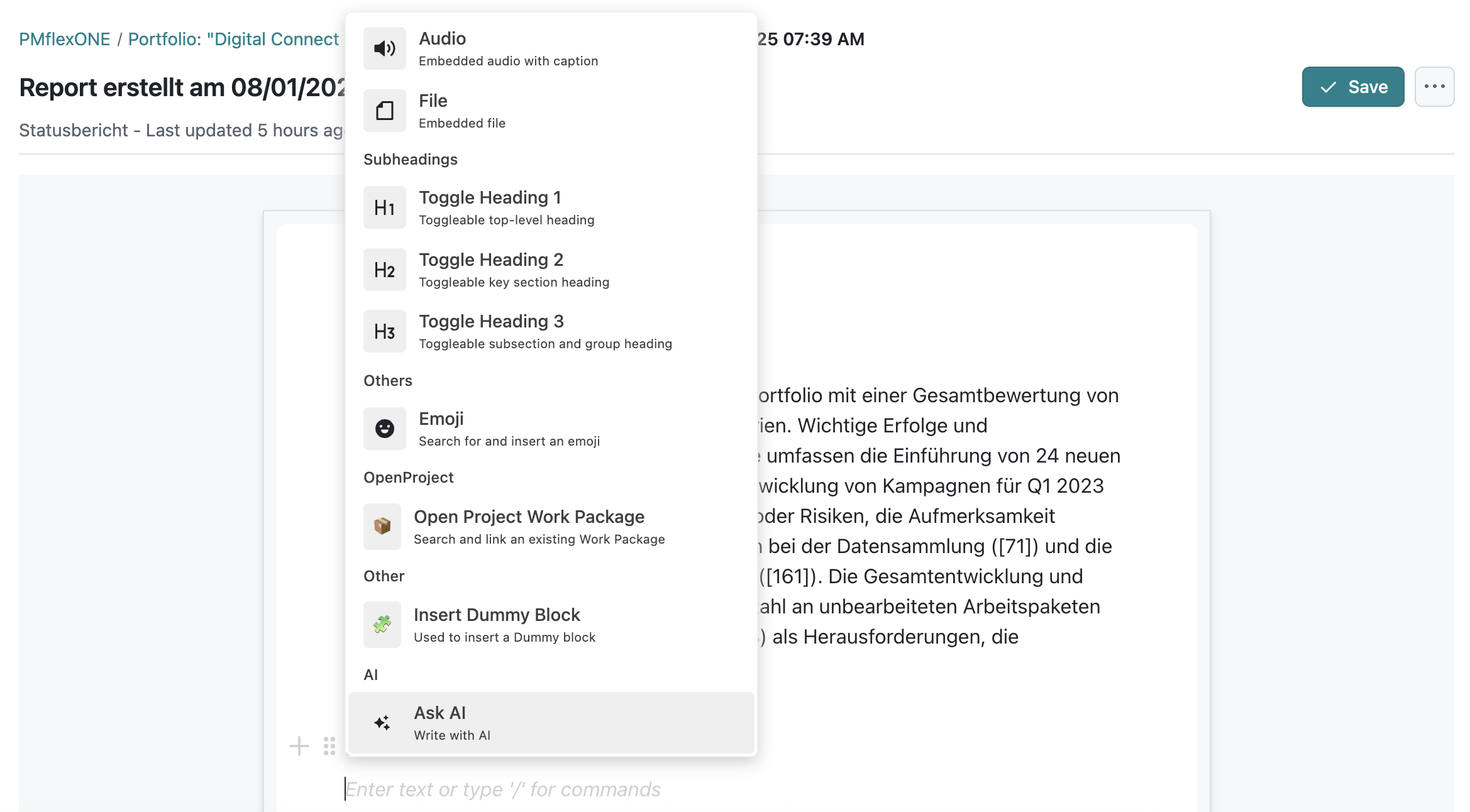
AI Document features: Ask AI, Improve writing and more
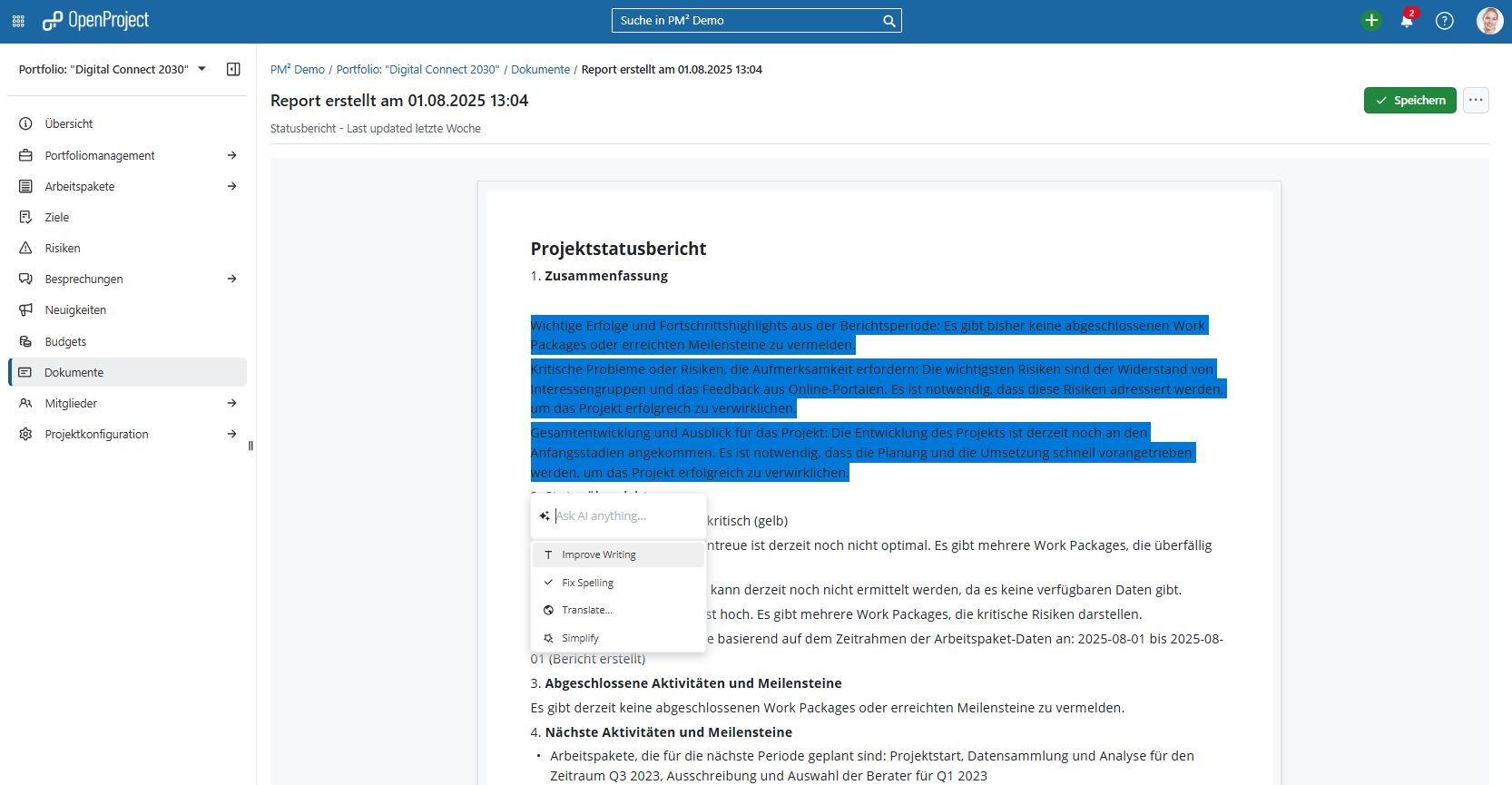
OpenProject is working on integrating familiar AI-powered writing tools directly into its editor — making it easy to translate, rephrase, check spelling, or generate first drafts without switching tools. Within the Documents module, on which we’re also currently working, the AI can also perform helpful tasks like summarizing longer texts. This streamlines your workflow and supports teams in creating high-quality content more efficiently.
Conclusion and outlook on AI features in OpenProject
“We are continuing to work on AI features with one goal in mind: more efficient, standard-compliant work with a single mouse click, even without prior knowledge of AI.” – Dominic Bräunlein, Feature lead for AI topics at OpenProject
With OpenProject, we are committed to building AI features that are not only helpful, but also ethical, secure, and transparent. We believe that language models can significantly support users in their daily work — especially in the public sector, where structured processes, compliance, and documentation are essential.
By combining AI with OpenProject’s proven project management features, we want to reduce manual effort, accelerate strategic alignment, and make professional project and portfolio management accessible to more people. Whether you’re new to project management or a seasoned expert — our goal is to support your work without replacing your judgment.
We will continue developing and testing AI features carefully, hand in hand with our Community, partners, and users. If you’re interested in trying out the first features, we’ll keep you informed through our blog and newsletter. The future of project management is intelligent, but above all: open and secure.
What does a software solution look like that enables employees in the public sector to successfully prioritize, manage, implement, and report on strategic initiatives?
At OpenProject, we explored this question during a hackathon last week. In this article, we give you an overview of our results.
The requirements we defined are based on PM² the open source project management methodology provided by the European Commission.
If you already want to “spoil” the results, feel free to watch the following video (available in German only), which we presented at the end of the hackathon:
Wanted: A software solution for the strategic implementation of digitalization initiatives
Transparency is one of our core values, so in this article we want to share an overview of the hackathon, the requirements, and of course our proposed solutions.
Requirements included:
Compatibility to PM² (tailoring)
Consistency across portfolio, program, and project levels
Cross-agency collaboration
Agility
Enjoyable user experience
Challenges for us:
Only one week to develop additional features, comprehensive demo material, documentation, and (video) presentation. All of this alongside our daily business, including the release of version 16.2.
Immersing ourselves in the working environment and various user stories from public administration, which operates very differently than we do internally. Here, our extensive experience with the public sector, especially in connection with openDesk, was a major advantage.
Overview of the required user stories:
Several user stories were provided, each with associated data like budget, status, target states, and more. Every user story included at least one fictional persona, from whose perspective the solution needed to be demonstrated.
Prioritize portfolio elements
Manage portfolio
Report program status
Report project status
In addition to the predefined user stories, we also showcased how the solution could be used on the go via the mobile app.
Delivered: Full commitment for ten new PM² features
Alongside 19 developers, many other OpenProject team members were fully engaged in the PM² hackathon. Despite — or perhaps because of — the short timeframe and complex requirements, the energy and team spirit were tangible across all days, even across our globally distributed remote workspaces.
For Rosanna Sibora, who had her very first week at OpenProject as Chief Product Officer during the hackathon, the team’s commitment, creativity, and passion made a strong impression:
“During the hackathon, I was impressed by how well the self-organized teams collaborated. It clearly showed me how well-aligned the OpenProject team is and how open and empowering the culture is. We proved that 2+2 is definitely more than 4 — and what can be achieved with great collaboration and empowerment.” – Rosanna Sibora, CPO, OpenProject GmbH
OpenProject implementation – behind the scenes:
Full energy and passion, not just from developers
15,000+ lines of new code
Team formation for developing new features, building a demo instance, and designing product mockups for additional features
Daily hackathon stand-ups, retros, and pulse checks with the PM² experts and other stakeholders, 100% remote collaboration using other open source tools like Big Blue Button and Element
Daily operations continued in parallel: support and release of OpenProject 16.2
OpenProject implementation – on the product level:
While the current version of OpenProject already supports the majority of requirements, we identified several aspects we wanted to expand or develop from scratch during the hackathon week. Especially relevant across all user stories was the development of features for reporting and managing goals, risks, and budgets.
Here is an overview of our main development focuses during the hackathon:
Let’s take a closer look at what these features and requirement implementations looked like by the end of the hackathon week.
Important
Please note that this is a summary of key developments. Additional features were also planned, designed, and developed during the hackathon. As these features were created in a very short time, they are not yet fully tested or finalized.
Planning and managing portfolios and programs
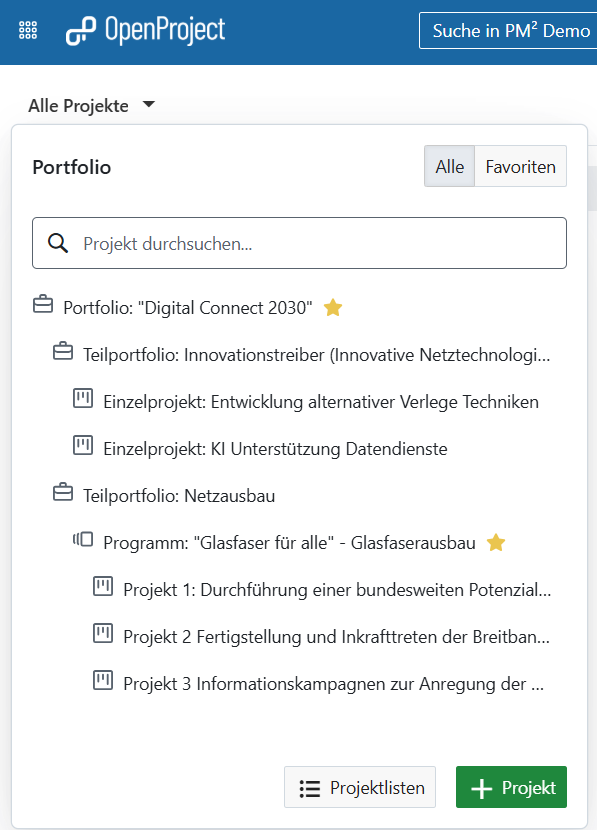
To support PM², OpenProject needed to manage not just projects but also portfolios and programs. Modeling these was the first step during the hackathon. Portfolio, sub-portfolio, and program extend the existing project hierarchy with the ability to group projects and manage them collectively.
Enhancing portfolio and program dashboards
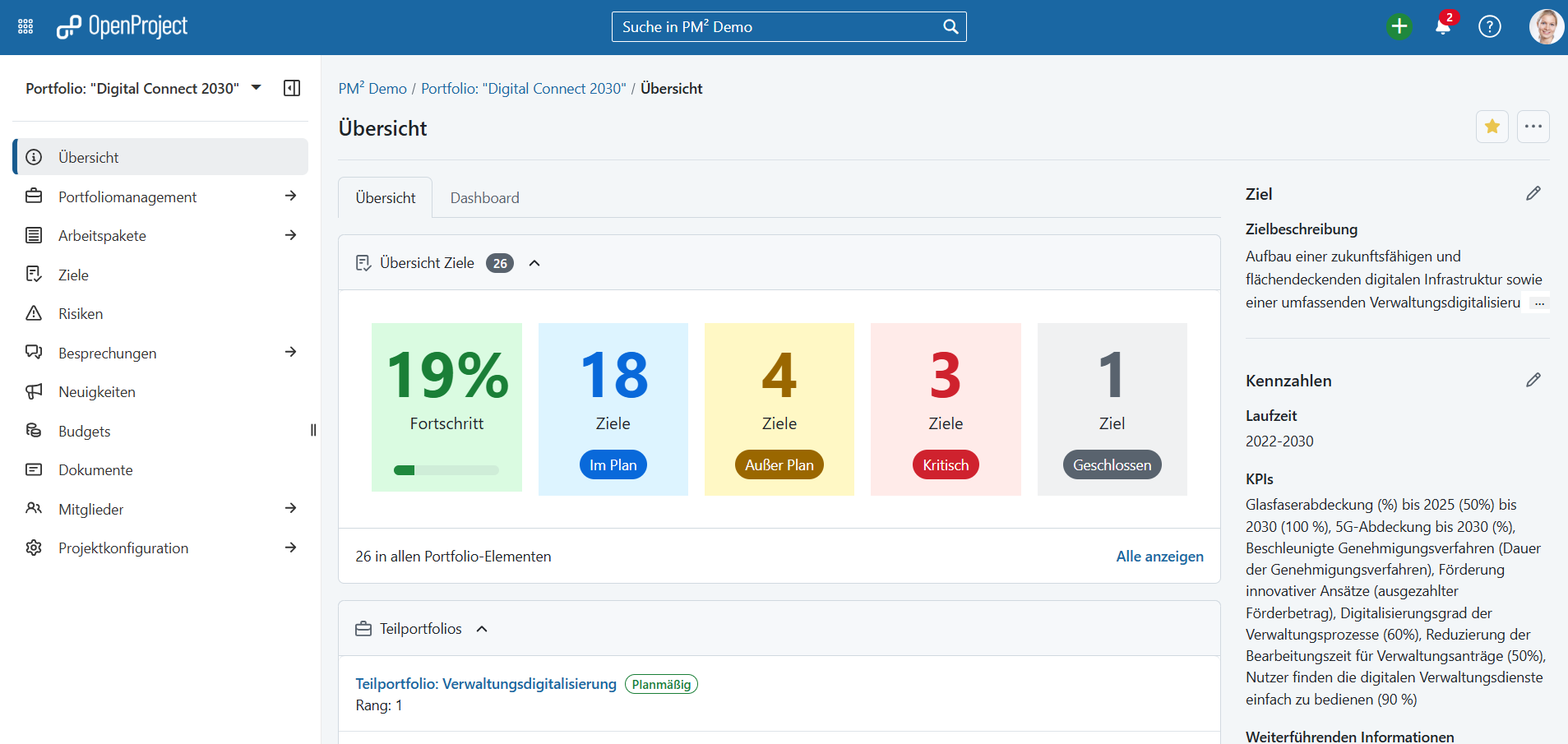
On the overview pages for portfolios, (sub-)programs, or even projects, managers want to see key information about goals, milestones, risks, and budgets at a glance. To enable this, we created widgets during the hackathon that visually aggregate this data: charts for budgets and risks, listings of components with their priority, status, and goal progress. These widgets were implemented as prototypes in a new dashboard using the OpenProject Design System.
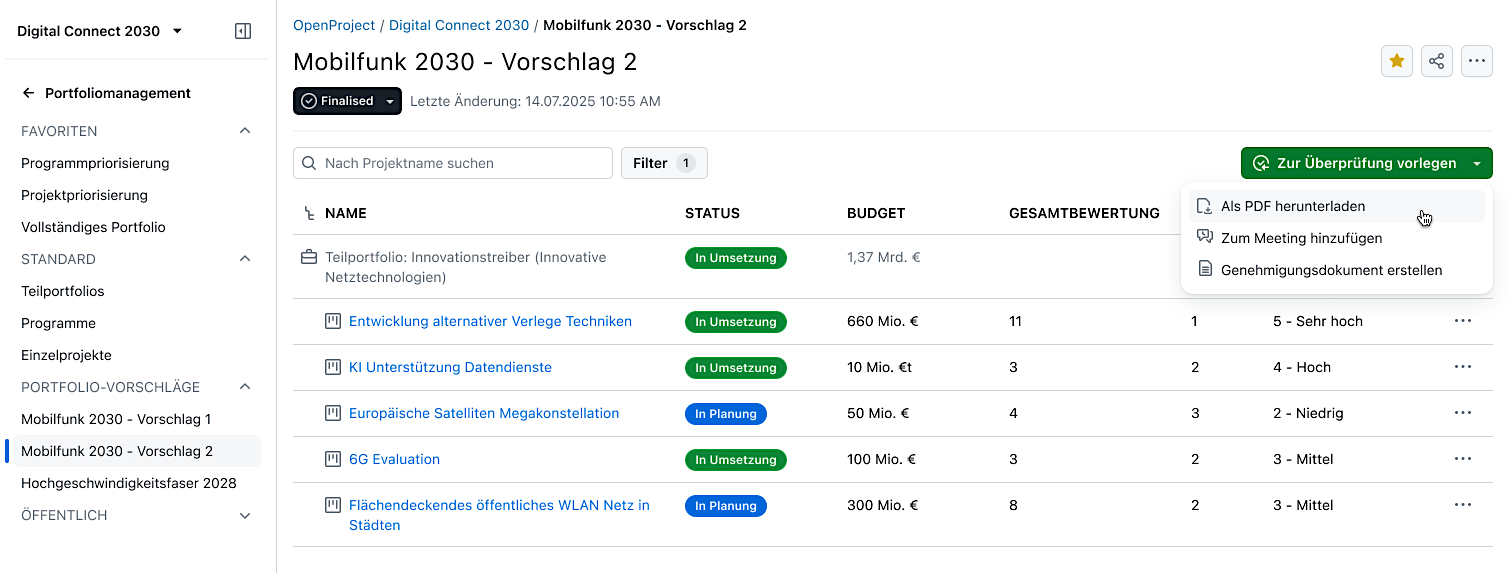
Portfolio management with proposal functionality
We created a dedicated module for portfolio management where managers can first create portfolio proposals and then submit them for review. These can be downloaded as PDFs or added to a meeting.
Linking and improved display of budget planning and overviews
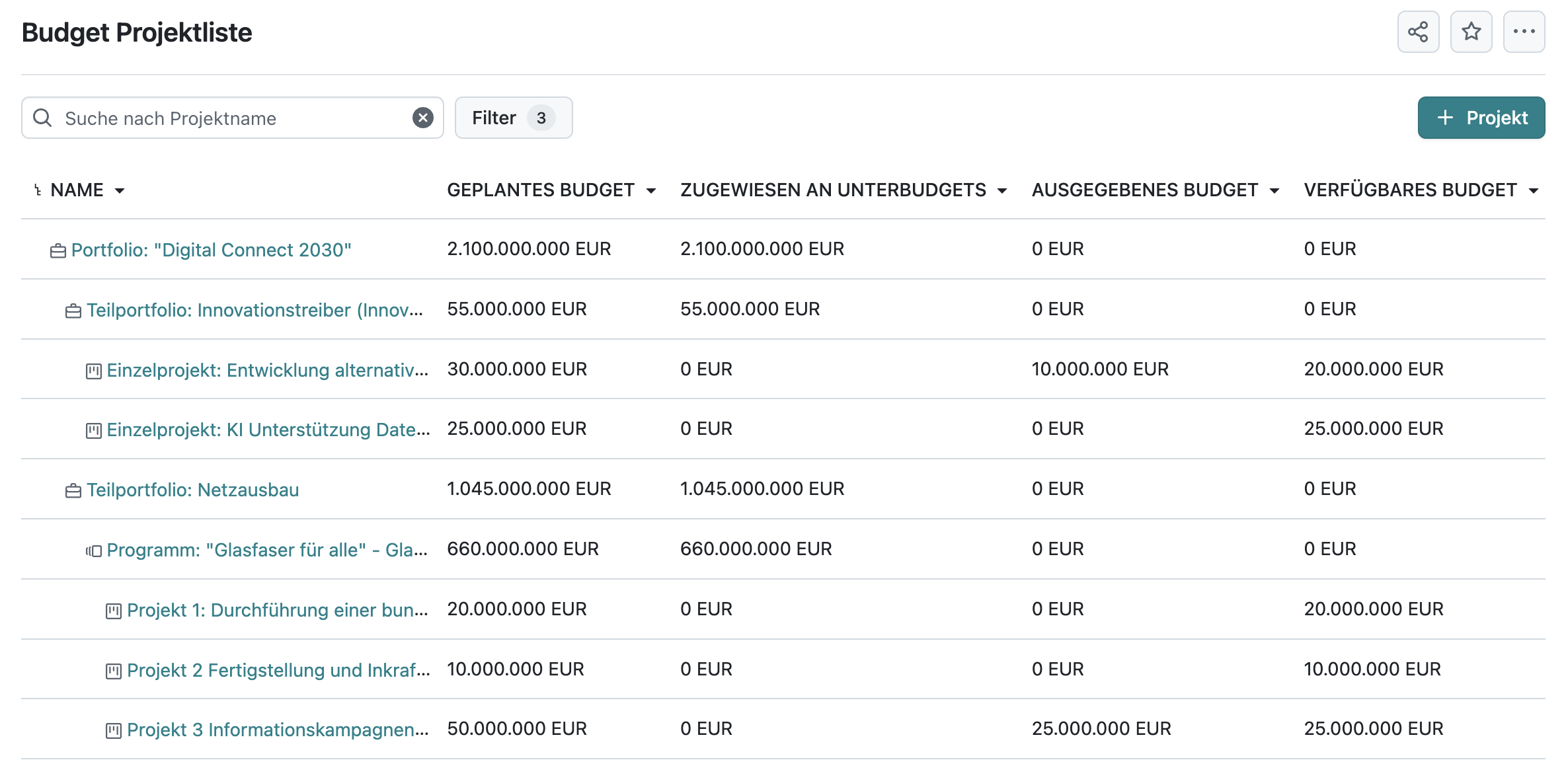
OpenProject already supports extensive budgeting and cost tracking, but previously limited this to individual projects. During the hackathon, we added cross-project budgeting, distinctions between planned and booked costs, and modeling of sub-budgets. The overview page and project lists can now display total budgets and their components.
Calculated project scoring
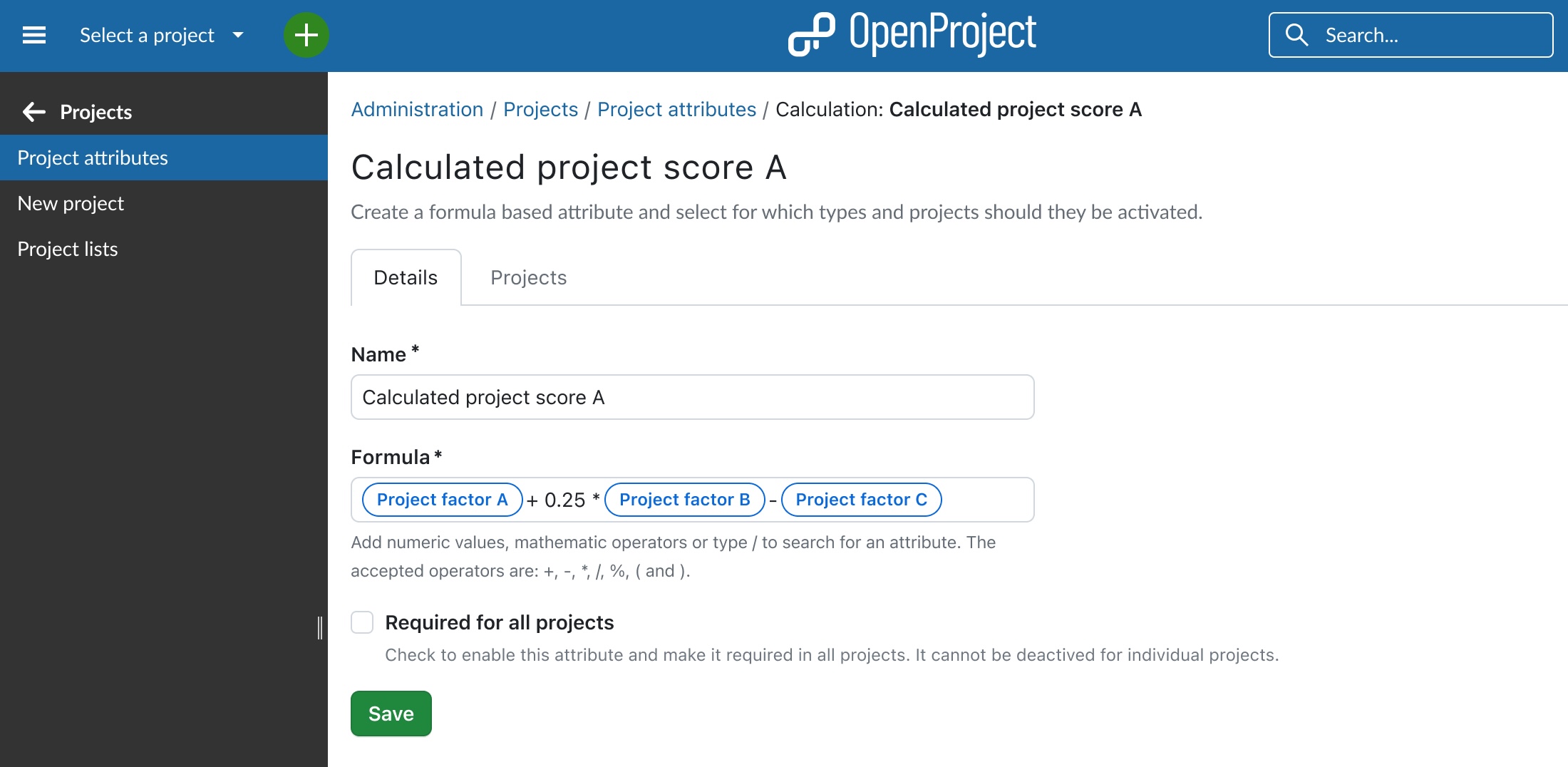
Portfolio managers want to calculate project scores automatically based on project attributes, allowing better evaluation, prioritization, and communication of decisions. This functionality was further developed during the hackathon and activated on the demo instance to display ranking values for project weighting.
It is now possible to apply formulas to freely configurable values that together generate a score. This increases transparency and comparability of evaluations.
This feature is still in development (thanks City of Cologne for their support here), so we’re showing a design draft here:
Risk management and overview
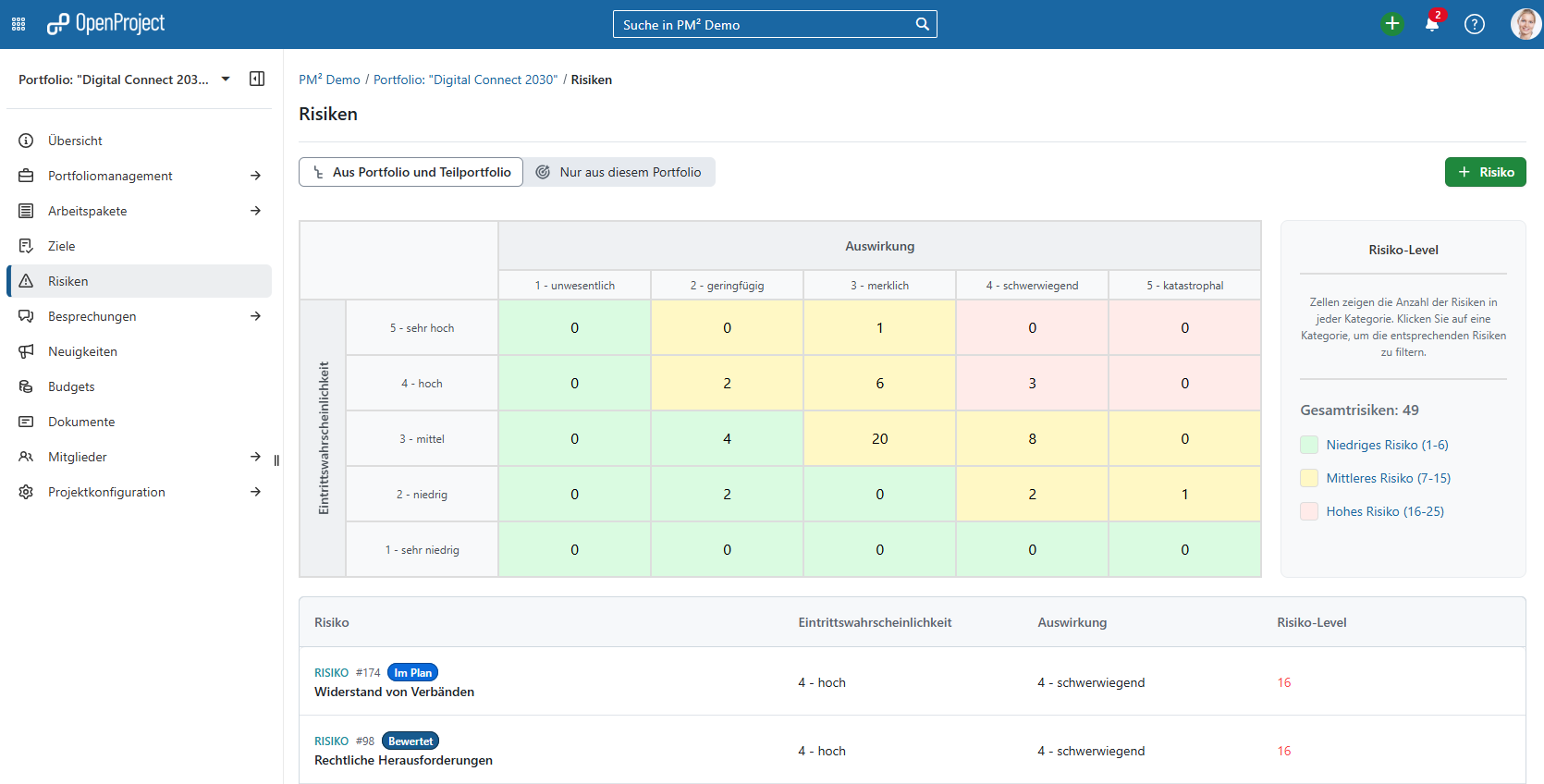
Since risk management is a core requirement for the public sector, we created a dedicated risk module. It includes a risk matrix that visualizes project, portfolio, or program risks with color-coded severity.
Modeling is based on probability (1–5) and impact (1–5). The system calculates a risk level from these values.
This also means: Risks now have their own data type and are a core part of OpenProject. Users are encouraged to document risks, monitor them regularly, and take countermeasures.
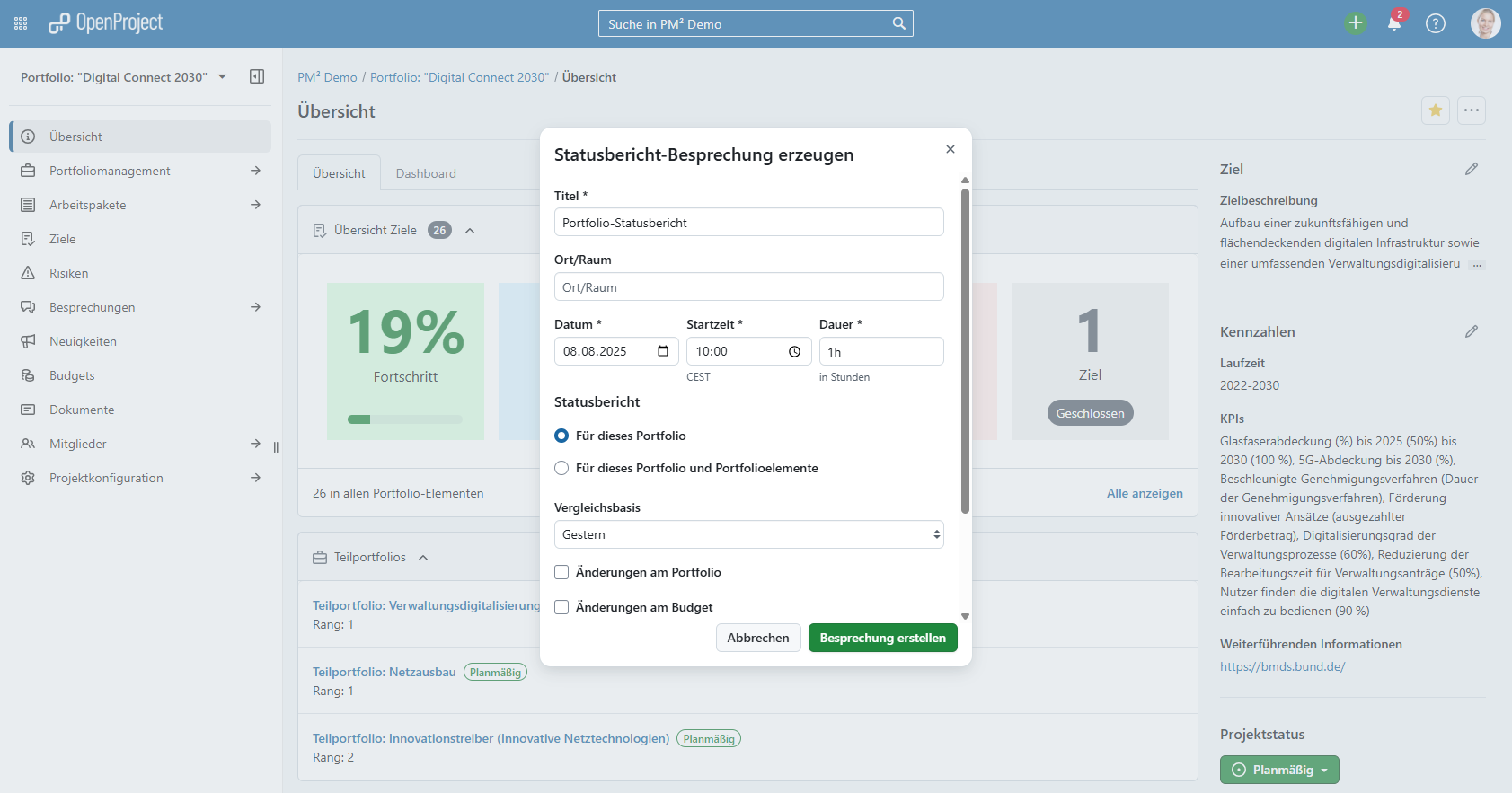
Create status report meetings
Status reports are a key element of PM². But they are not just documents — they are often discussed in meetings. That’s why we created a feature to automatically generate status report meetings.
Directly from the overview page, managers can create proposals for a status report meeting with the steering committee. They can select a baseline timeframe and add currently relevant information from the portfolio. The system generates an agenda based on selected changes for further editing.
Documents module with real-time editing
A few weeks ago, OpenProject successfully participated in Hack Days 2025 in Paris, organized by the French government’s digital directorate, DINUM (direction interministérielle du numérique). We’ve now extended those features to enable collaborative real-time editing for multiple users.
To support collaborative creation and sharing of typical documents, the OpenProject documents module was completely redesigned. It now allows for automatically updated content and real-time collaborative editing.
Mobile app enhancements for portfolio/program management
We have been working on a mobile app (iOS/Android) for OpenProject for some time. During the hackathon, we also developed new functionality to differentiate between portfolio, program, and project levels in the app.
Please note that developing a high-quality mobile app takes time, and we want to ensure the best experience before release. Of course, we will announce availability as soon as it’s ready for users.
AI foundations and support for documents and project/portfolio management
OpenProject was extended with two core services: Haystack to gather relevant information, and a custom LLM (Large Language Model). Both services operate within the same network as OpenProject and have no internet access. No data leaves the cluster for AI usage.
Detailed AI features developed during the hackathon include:
AI-generated status report drafts
Create drafts of status reports based on work packages and attributes visible to the respective user, using a local AI trained on PMflex
AI assistance in project and portfolio management
Display of PMflex-based best practices on the overview page, based on analysis of project data and work packages
A secure local AI assists with introducing best practices and provides timely management recommendations
AI support in documents
Writing tools in the OpenProject editor (translate, rephrase, spell check, generate drafts, etc.)
Familiar AI editing features directly inside the editor
The documents module uses the LLM to perform simple text tasks like summarizations
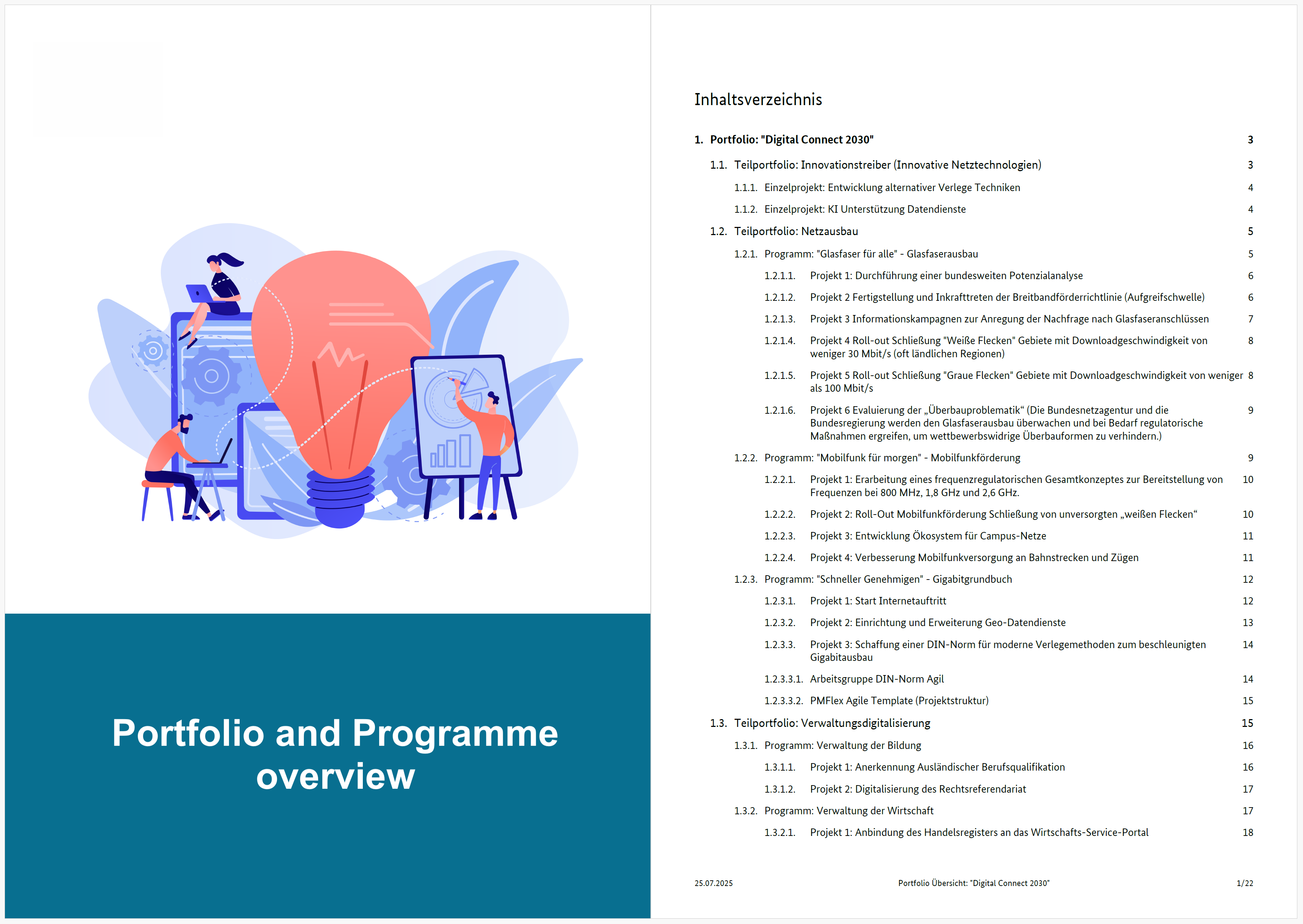
PDF export of portfolio and program status
We believe in a single source of truth for project data. However, there many use cases where an export is extremely helpful, e.g. when information needs to be documented in external systems. So during the hackathon we built a status report engine that creates pixel-perfect PDF files from the data in the system.
Status information
Budget
Risks
Objectives
KPIs
Milestones
Custom attributes
[…]
Kudos go to the German Federal Ministry of the Interior who sponsored the pdf export of work packages in 2023. The PDF export library we developed laid the foundation for this feature.
As an outlook, we are working on more configuration options to adjust the export to the specific needs. Additionally, we plan to add further charts and illustrations.
Found? – What happens after the hackathon?
All released features will be available either in OpenProject itself or in openDesk, the secure office and collaboration suite designed specifically for the public sector.
Demo environments provided through OpenProject’s SaaS infrastructure
Even though the work is progress this hackathon clearly demonstrated how OpenProject, as an open source solution, can meet the concrete requirements of public administration — quickly, competently, and collaboratively.
There is a visible shift toward data sovereignty, open standards, and independent software solutions — not only, but especially in the public sector.

 Login
Login