OpenProject 16.0 has been released and this new major version introduces a range of new features and improvements. We look forward to hearing your thoughts and feedback on the latest updates. Please take a few minutes to learn what changes for you. We will summarize the most important changes in this blog article and, as always, please see our release notes that contain all changes, features and bug fixes.
In this blog article, we will present these feature updates:
We are especially excited about this improvement: Meeting backlogs make organizing and preparing meetings even easier — and help make the transition from classic meetings to the newer one-time and recurring meeting types even more powerful.
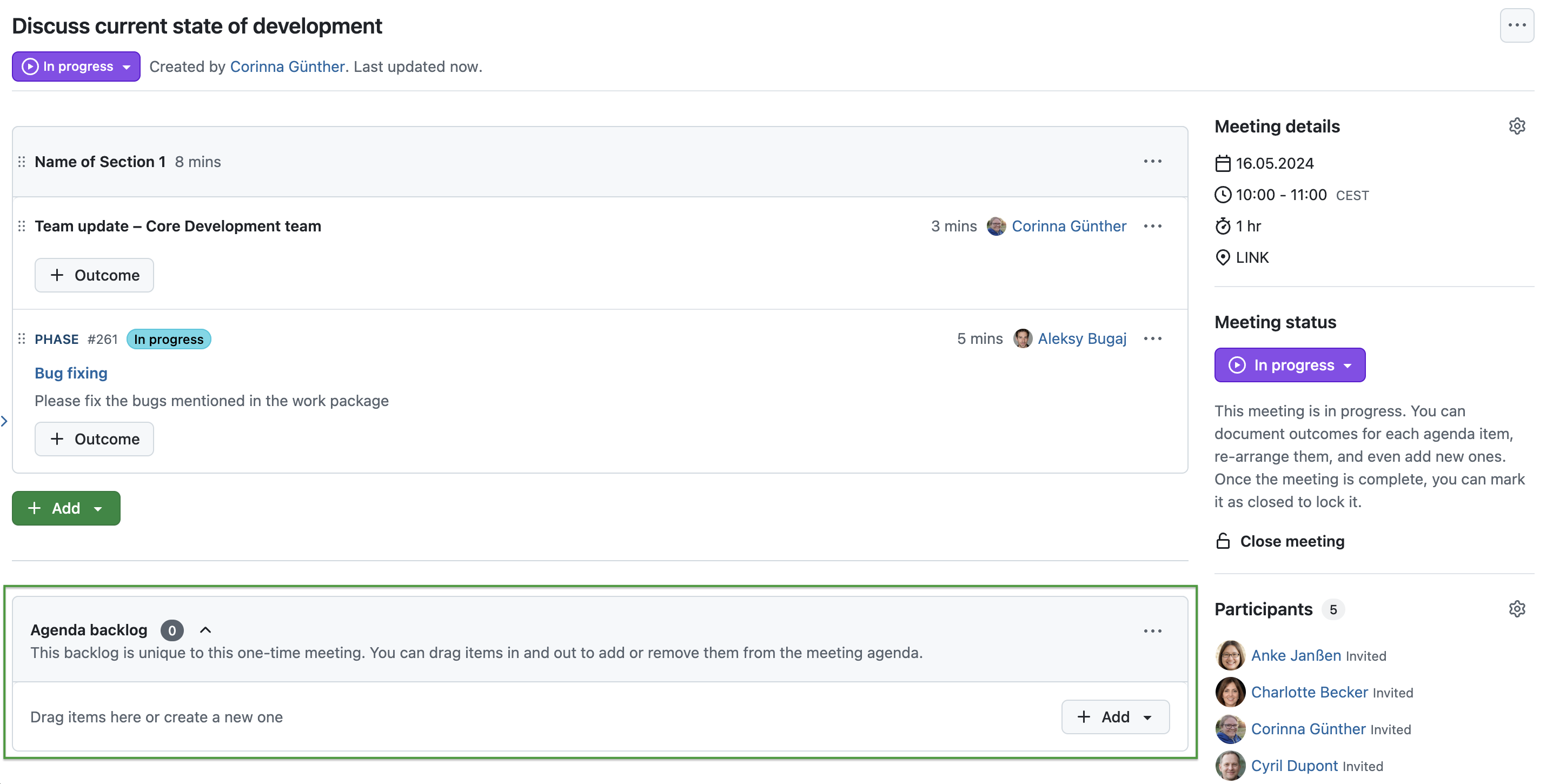
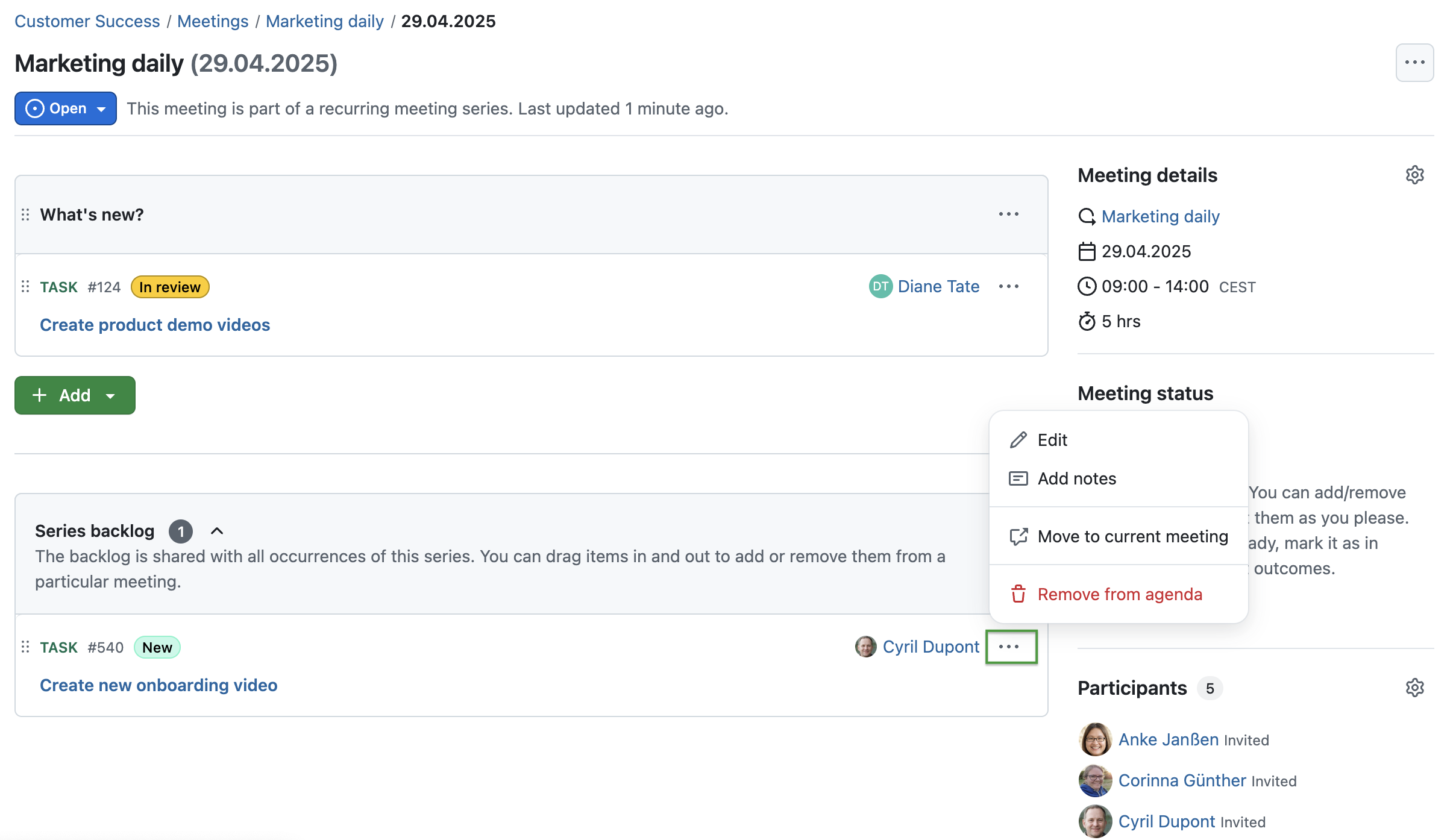
In OpenProject 16.0, users can now collect and manage agenda items flexibly using the new backlog feature. For one-time meetings, the Agenda backlog offers a space to store topics that are not yet scheduled but might be added later. For recurring meetings, the Series backlog allows teams to track open points across all meetings in a series and move items between occurrences as needed — without having to manually copy or recreate them.
Agenda items can easily be dragged from the backlog into a meeting or moved back again. Work packages can also be added directly to the backlog. Even if a meeting has no agenda yet, it can still maintain a list of important topics through the backlog.
Here’s an example of an Agenda backlog for one-time meetings:
And this is how a Series backlog for a recurring meeting looks like – with the option to move an agenda item to the current meeting:
Meeting backlogs bring more flexibility, better preparation, and a clearer structure to the way teams organize discussions — and are another great step toward making OpenProject’s meeting management even more efficient. Learn more about OpenProject meeting management in our documentation.
The end of classic meetings
As we announced earlier in this blog article, the Classic meeting type is no longer available in OpenProject 16.0. Existing classic meetings have been automatically converted into one-time meetings. No data is lost during this transition, apart from the meeting history.
To manage your meetings going forward, you can choose between one-time and recurring meetings. These dynamic formats give you more flexibility to structure your agendas and meeting workflows. For documenting decisions and results, you can use the Outcome feature, which replaces the classic Minutes functionality.
Internal comments in work packages (Enterprise add-on)
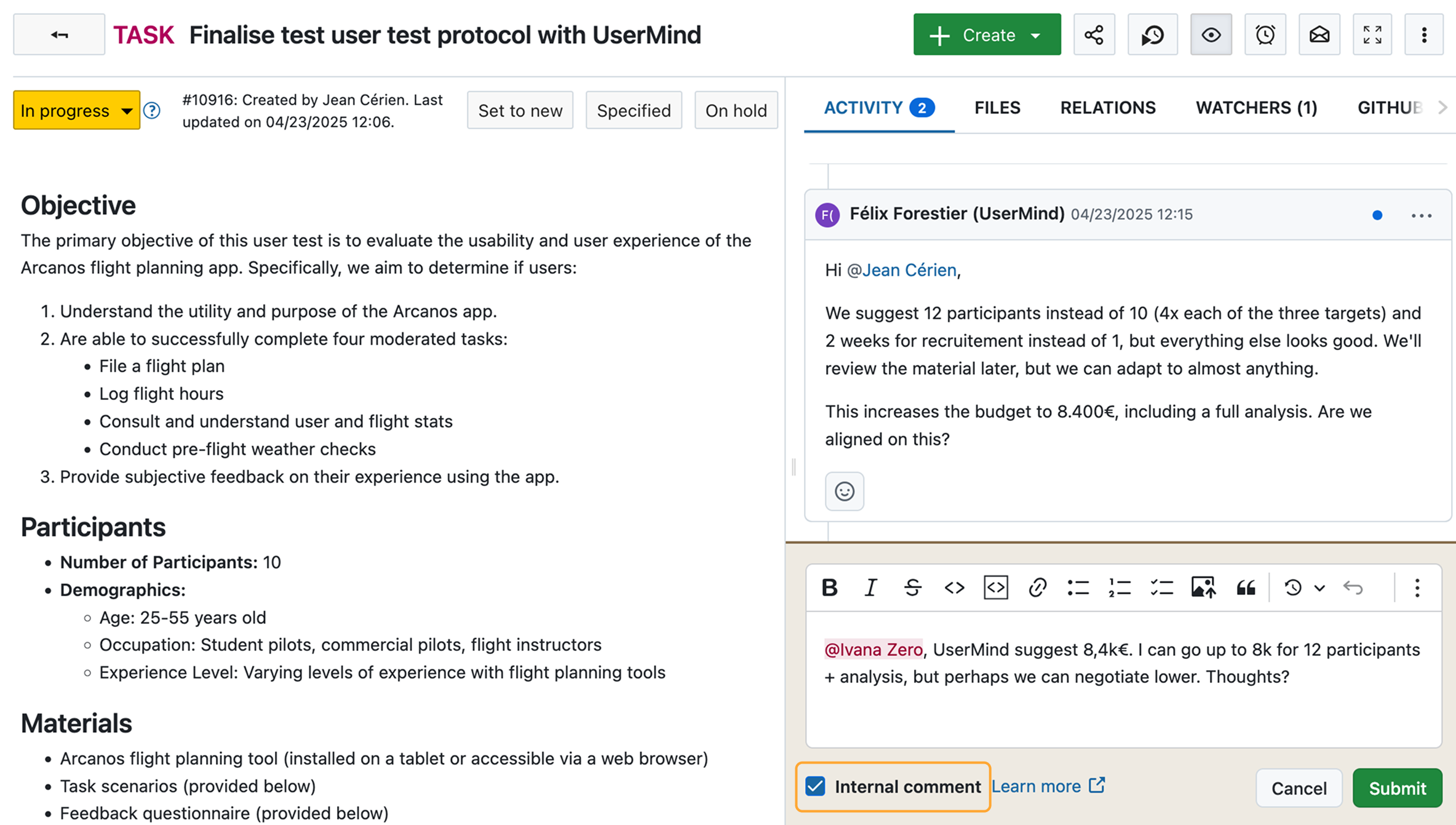
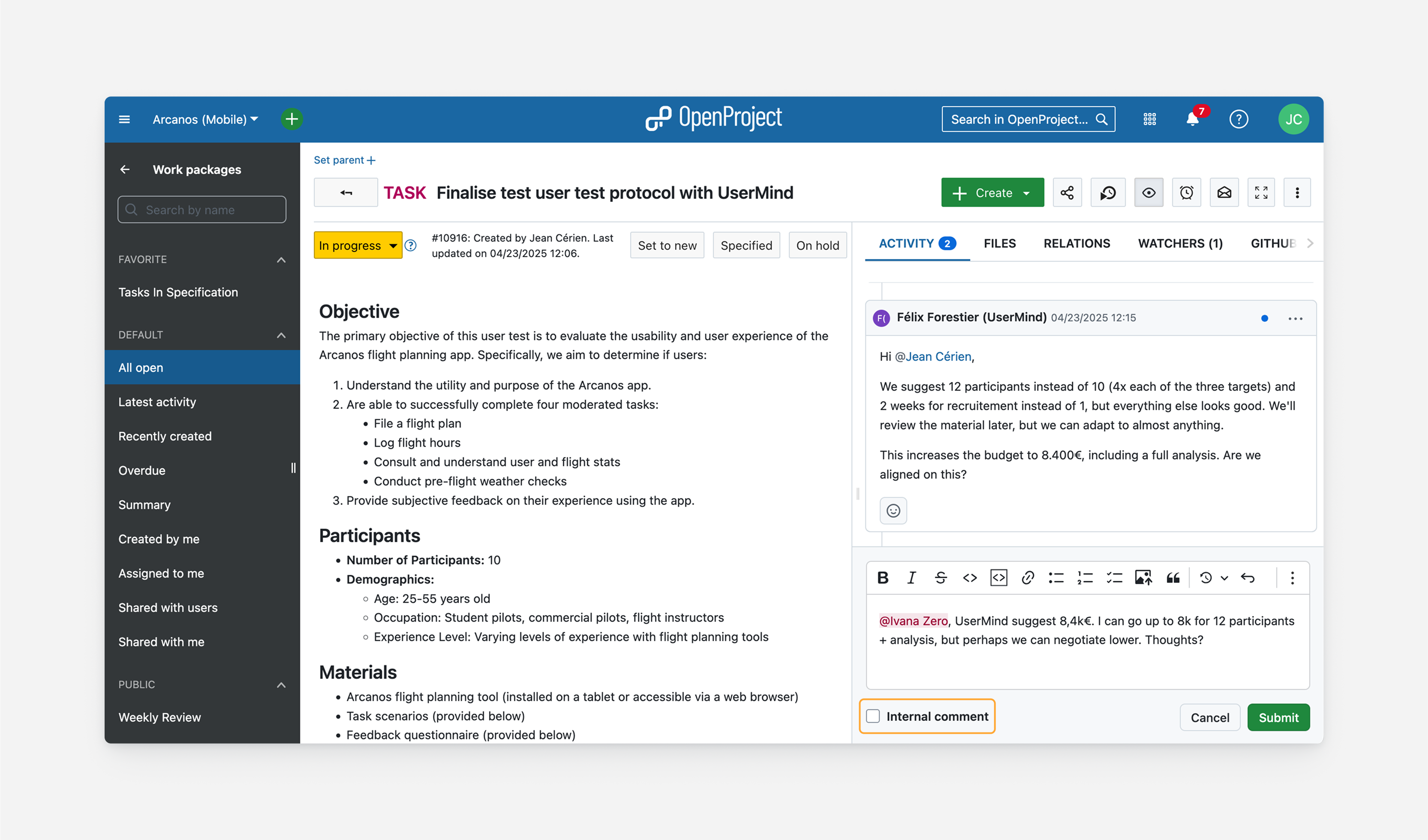
A new Enterprise add-on, available in the Professional plan and higher, allows adding internal comments to work packages. Internal comments are visible only to authorized users and help teams keep sensitive information separate from public discussions.
This feature is a further step to replace Atlassian Jira Service Management functionalities.
Automatically generated work package subjects (Enterprise add-on)
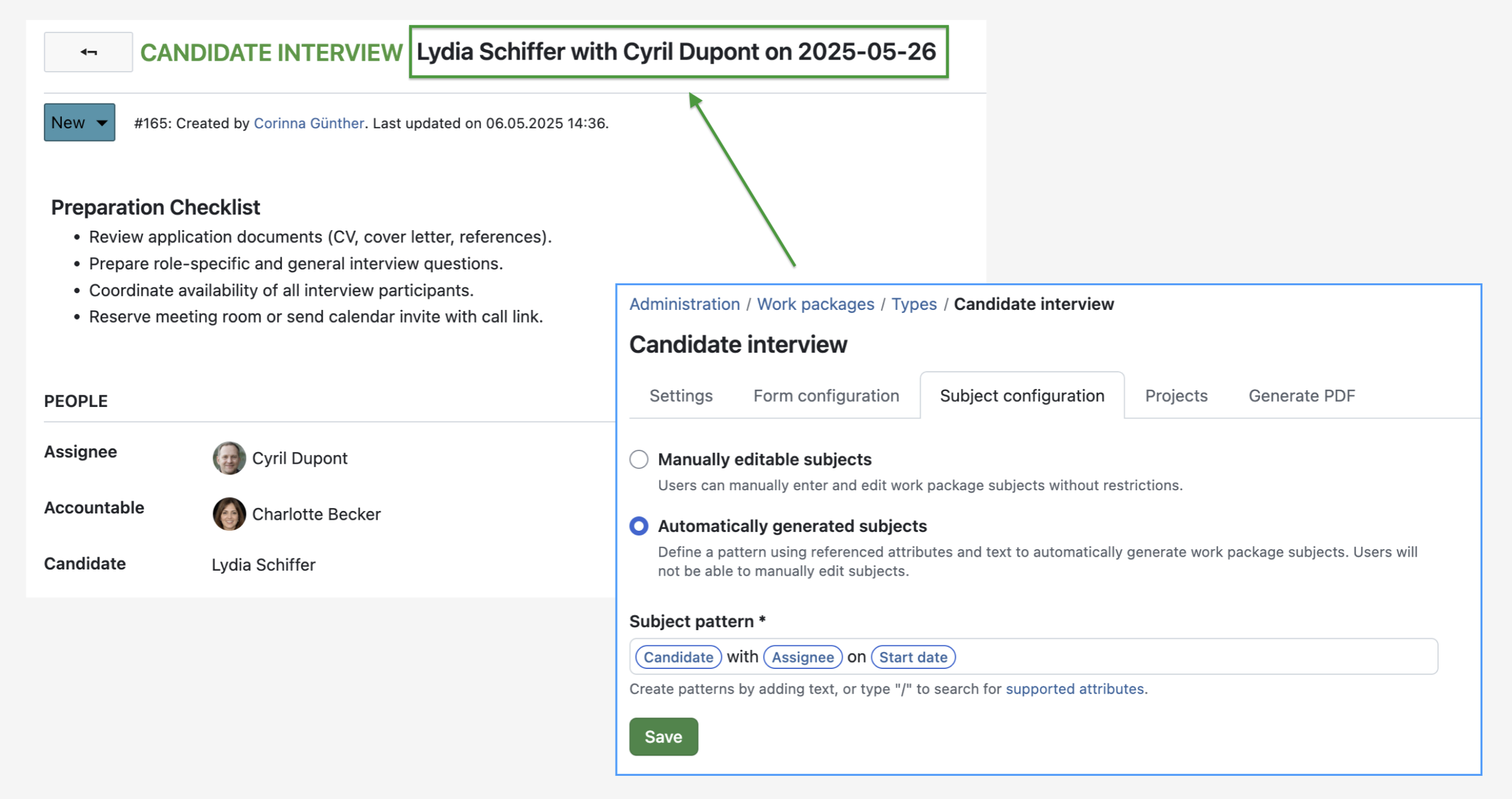
Consistent naming of work packages is now easier than ever. Users of the Enterprise Professional plan and higher can now automatically generate work package subjects based on predefined patterns. Subjects are created automatically during work package creation and do not need to be entered manually.
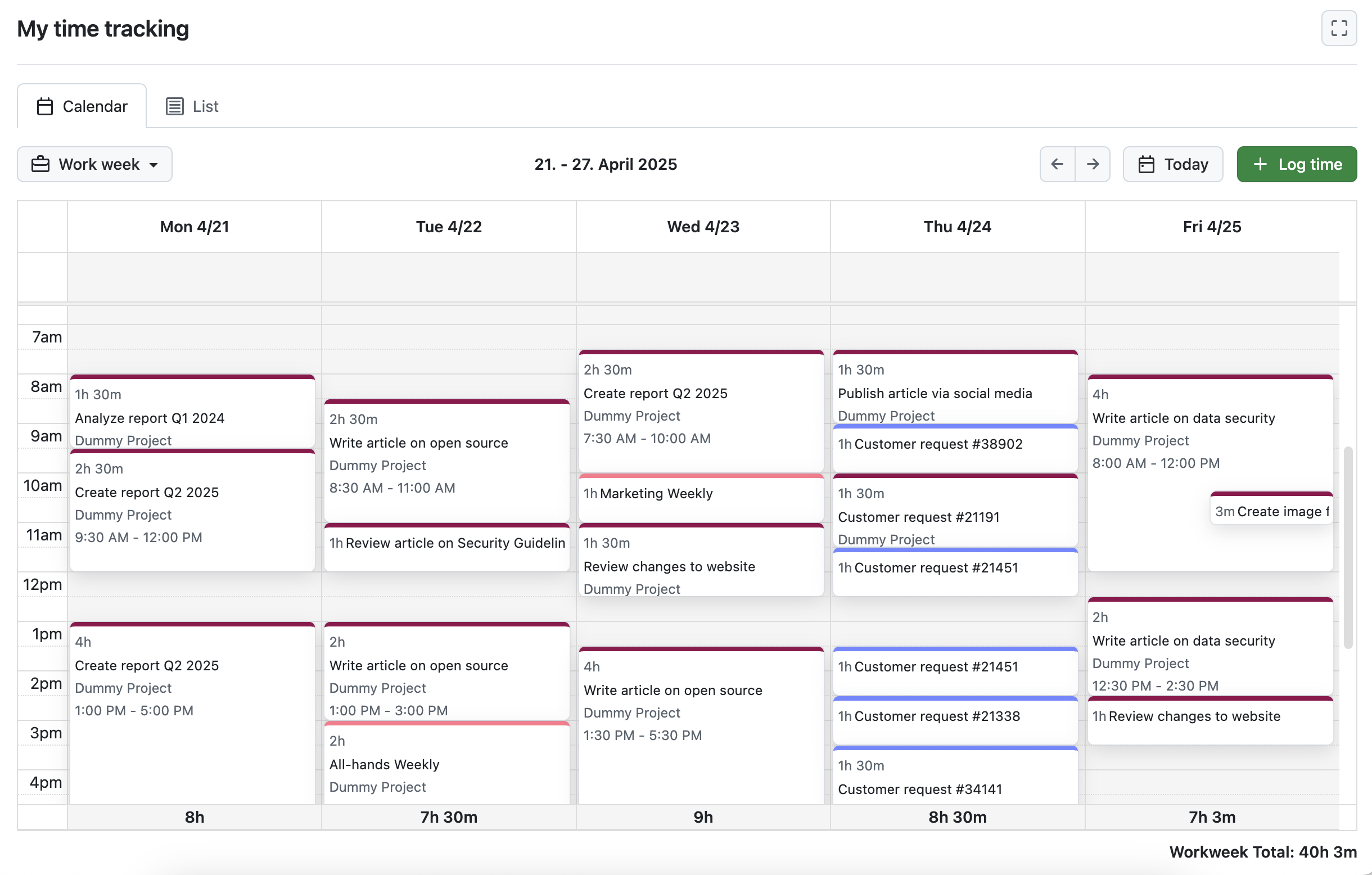
Tracking and reviewing time entries is now even more convenient. OpenProject 16.0 introduces the My time tracking module, which is personal to each user and must be activated by an administrator. Users can view, edit and log time entries either in a structured list or in a new calendar view for better overview.
Release to Community: Graphs on project overview page
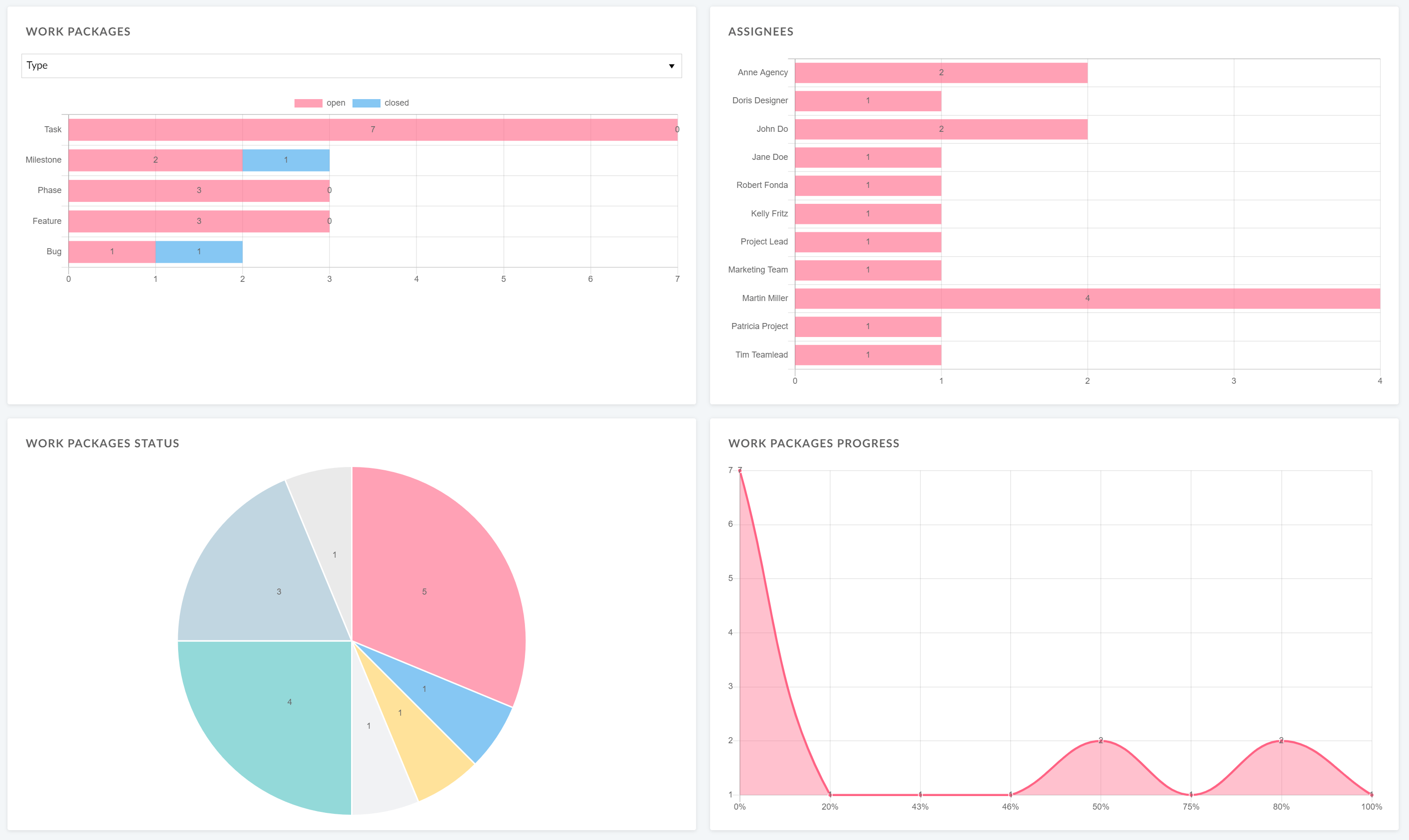
We are happy to share that a feature previously available only as an Enterprise add-on is now released to the Community version with OpenProject 16.0: Displaying different types of work package graphs directly on the project overview page.
This means that all users can now display graphs directly on the project overview page to visualize important project information and communicate project status at a glance. Users can choose between different graph types, such as bar charts or pie charts, depending on their needs.
Updated Enterprise plans
With 16.0 OpenProject has updated its Enterprise offering. Each Enterprise plan (Basic, Professional, Premium, Corporate) now comes with a clearly defined set of Enterprise add-ons on top of the additional services and support levels.
This means that, going forward, some new Enterprise add-ons will be introduced in higher-tier plans. For example, the new Internal comments Enterprise add-on is part of the Professional plan.
Important information about these changes:
Pricing remains unchanged.
Support levels remain unchanged.
No features are removed for existing Enterprise customers.
If you are not yet using an Enterprise plan, you can easily test all Enterprise add-ons:
You will find more information about all new features and changes in our Release notes or in the OpenProject Documentation.
If you need support, you can post your questions in the Community Forum, or if you are eligible for Enterprise support, please contact us and we are happy to support you personally.
New to OpenProject? To test all features of OpenProject 16.0 right away, create a 14 days free trial instance for our OpenProject Enterprise cloud.
Prefer to run OpenProject 16.0 in your own infrastructure? Here you can find the Installation guidelines for OpenProject.
A very special thank you goes to the City of Cologne, Deutsche Bahn and ZenDiS for sponsoring released or upcoming features. Your support, alongside the efforts of our amazing Community, helps drive these innovations.
Also, a big thanks to our Community members for reporting bugs and helping us identify and provide fixes. Special thanks for reporting and finding bugs go to alex e, Klaas vT, Daniel Elkeles, Regina Schikora, Çağlar Yeşilyurt, and Александр Татаринцев.
Last but not least, we are very grateful for our very engaged translation contributors on Crowdin, who translated quite a few OpenProject strings. This release we would like to particularly thank the following users:
Сергей Баранов, for a great number of translations into Russian.
Gzyyy, for a great number of translations into Chinese simplified.
rlmpereira, for a great number of translations into Portuguese.
Would you like to help out with translations yourself? Then take a look at our translation guide and find out exactly how you can contribute. It is very much appreciated!
As always, we welcome any feedback on this release. 💙
Update May 2025: Internal comments have been released with version 16.0, and are included in our Enterprise professional plan.
With OpenProject 16.0, scheduled for May 21, 2025, we will introduce a new way to communicate with your team: internal comments in the work package Activity tab. This blog post will talk about why we developed this feature, how you can use it and how it might evolve in the future.
Why do we need internal comments?
OpenProject is as much a tool for team communication as it is for project management. In public offices, hospitals, universities and small and large companies, teams use OpenProject to manage the exchange of information.
Most of this information is contained within individual projects and our users sometimes work across multiple projects, each with a limited set of users with different roles. Each of these roles comes with a different set of permissions. For example, project admins generally have full, unrestricted access to the project, project members might have the ability to create only certain types of work packages or execute certain status changes, while external (non-project) collaborators might only be able to read and write comments. This approach allows for fine-grained access control.
In version 13.1 of OpenProject, we introduced work package sharing. This made it possible to invite users who are not project members to individual work packages in a limited capacity, with rights to only view, view and comment, or even modify the shared work package.
Sharing is especially useful when you need to involve people in very specific, small scopes. They might be external collaborators, clients, suppliers or observers. However, until now, anyone who could view a work package could also view all the comments in the Activity tab. This might not always be ideal. There might be times when a core team might want to discuss things related to a work package confidentially amongst themselves and keep that conversation separate from what is visible to all other stakeholders.
That’s where internal comments come in.
Internal communication
Internal comments lets core project members limit the visibility of certain comments to a select group that is a smaller subset of project members.
To use this feature, a project admin will be able to enable internal comments for their project. By default, these internal comments are only visible to the project admin role. To expand who can view these comments, instance administrators can grant a new set of permissions (to view, write and edit internal comments) to any number of roles.
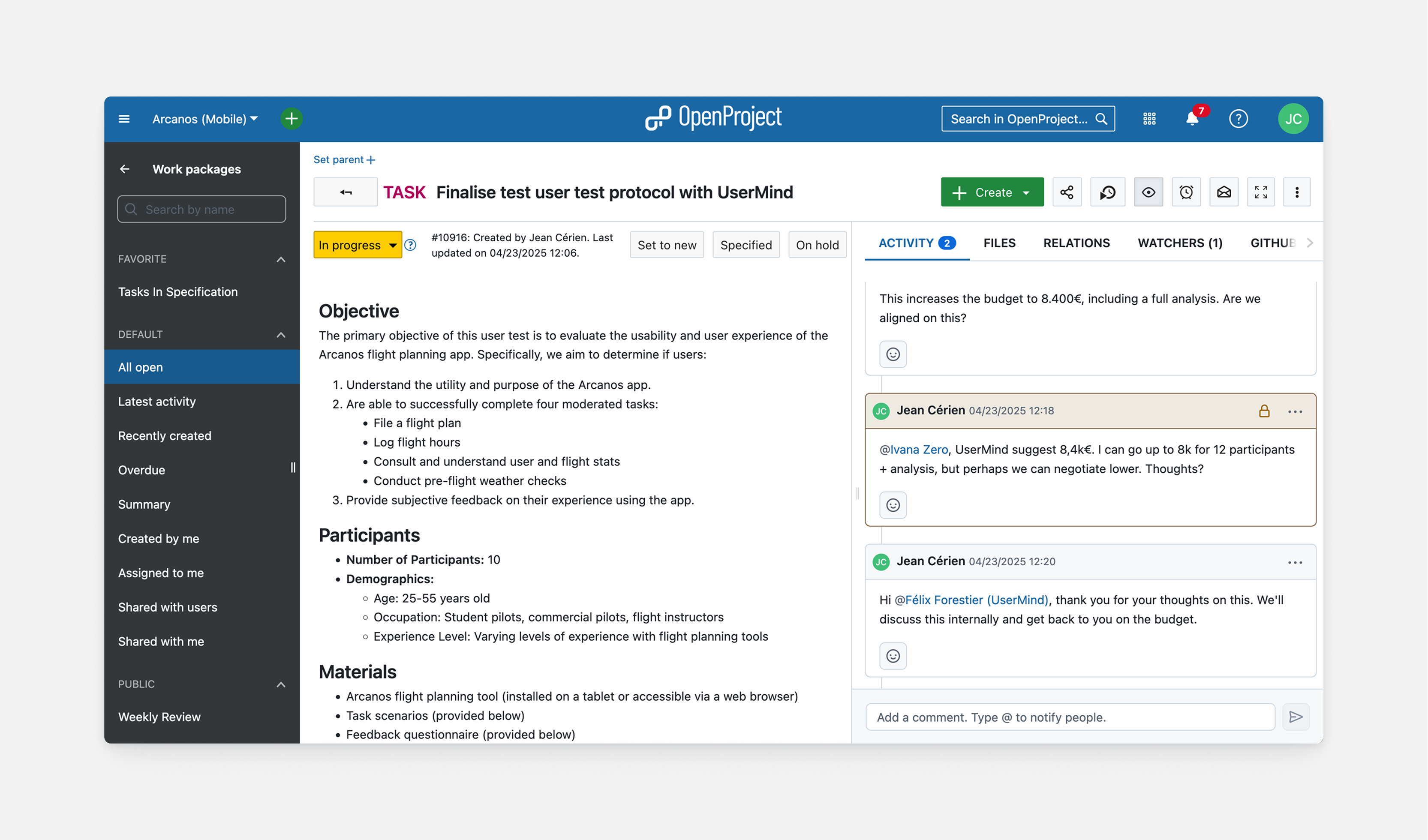
Users who have these roles within their project will then see a checkbox under the comment box labeled “Internal comment”:
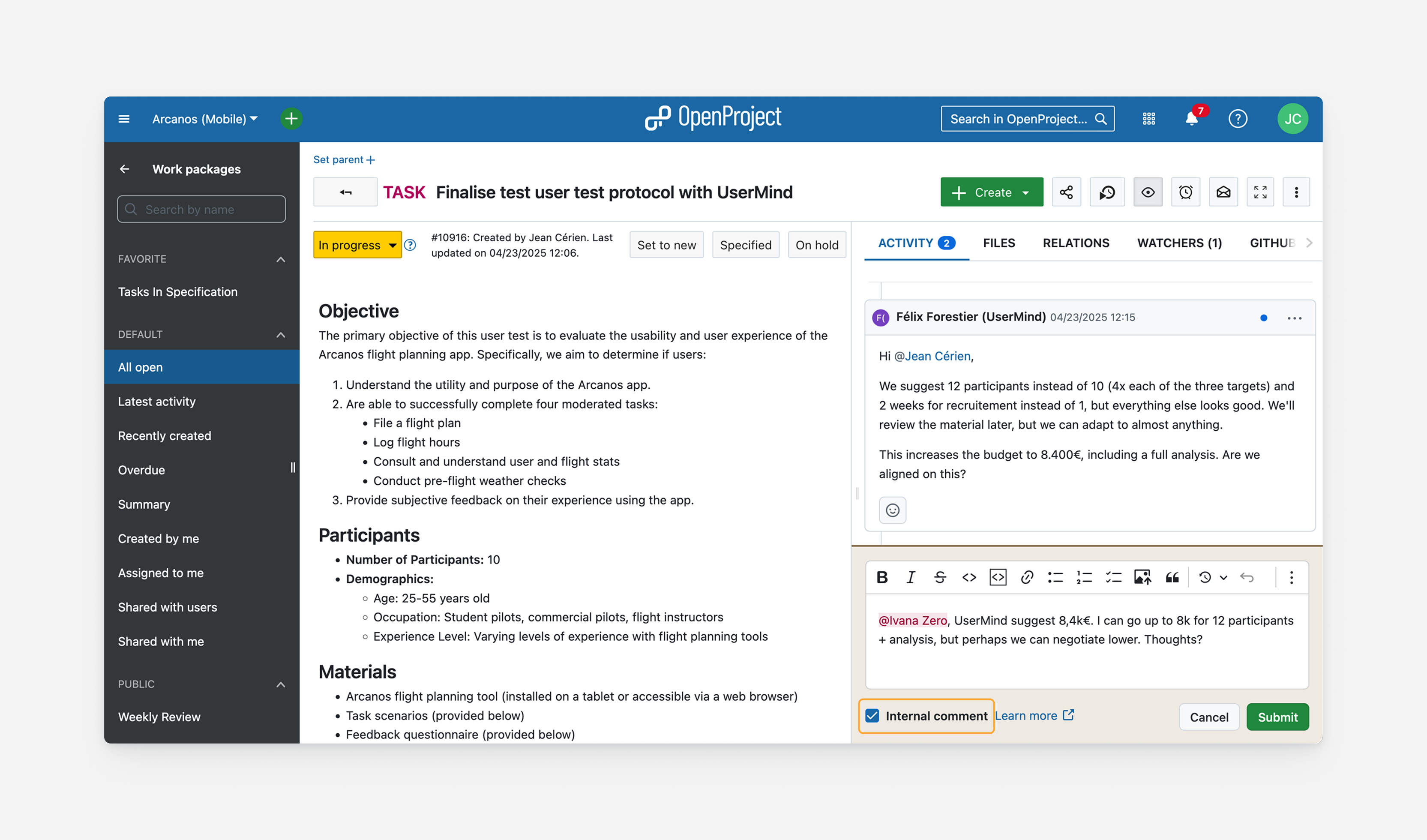
Checking this will turn that comment into an internal comment. The background color of the comment box will change to indicate this.
Once posted, the comment will also be marked in the same color, along with a lock icon, to distinguish it from regular comments.
Users without the necessary permissions will not be able to see these comments, nor that new comments were posted. They will not be visible in neither the Activity tab nor the other places where user activity is reported, like the user activity and project activity pages.
A project can include a number of different stakeholders and not all stakeholders should be privy to all information. Ideally, all discussion around a single topic or work package should happen in the same place but because there are currently no visibility controls, confidential conversations need to currently happen elsewhere. This is often a separate work package (in a different project), a Matrix chat room or email. All of these introduce inefficiencies by introducing information duplication and blind spots.
With internal comments, all information and stakeholders can be gathered in one work package that is considered the single source of truth and core project members are nevertheless able to communicate amongst only themselves.
Collaborate with an external client or supplier
Projects often involve external clients or suppliers. They can be invited to a project or an individual work package with specific, limited roles. This reduces the need to organize outside the project context using different incompatible tools.
However, the core project team might want to keep some of their conversation private and limited to a smaller group, for example when discussing rates, negotiations, sensitive financial information or contextual information. With restricted visibility comments, the core team can have a meta-level conversation within work packages that external clients or suppliers cannot access.
Use OpenProject as a helpdesk tool
Implementing internal comments is also a step towards making OpenProject a capable helpdesk tool. Customer support teams can write internal notes only they can view, along with public comments and responses the customer can read and react to.
This will be supplemented in the future with other important helpdesk features such as the ability to set up OpenProject to automatically create work packages based on incoming emails to certain addresses and allow responding to comments via email.
Your feedback
We are excited to release internal comments this May with version 16.0.
As an open source software company, we value the ideas and feedback of our user Community. If you have opinions about these changes or have feature requests, feel free to join our Community instance and share your thoughts.
We would like to thank ZenDiS for sponsoring this feature. We hope you are looking forward to this update as much as we are looking forward to releasing it.
How to choose the best project management software?
Finding the best project management software suited for your organization is a challenging task. We have put together the important criteria to help you make that choice. As an open source software, we of course advocate for choosing an open source project management software.
We prepared a latest overview of the top 5 open source project management software in 2025 for you to compare and see which one could enable you to tackle your challenges best. Take a look at the feature sets, hosting options, prices, security of the open source project management solutions to make an informed decision for your organization.
Please also make sure to check your potential project management software provider’s privacy policy and data security strategy in detail. In a project management software, confidential data is being processed so you have to make sure your data is in the right hands and being protected.
Here are our 5 best open source project management tools in 2025 with different advantages:
OpenProject is the leading open source project management software, licensed under GNU GPL v3.
Free and open source software
The software code is freely available on GitHub and the changes to the source code are transparently traceable any time. With OpenProject there is no vendor lock-in.
As self-hosted versions, the Community and Enterprise on-premises editions provide users with data sovereignty. You will benefit from a set-up with ultimate control over your data and with your preferred technical set up.
If you don’t have the capacity or knowledge to host OpenProject in your environment, we offer the Enterprise cloud edition with secure hosting in the EU or on request in Germany. With the OpenProject Enterprise cloud, you will benefit from a data center and network architecture built to meet the requirements of the most security-sensitive organizations. You can rely on hosting in a high security data center and redundant infrastructure, built for high availability and performance. Continuous encrypted data backups in separate locations, regular data privacy assessment and certification by external auditor are part of the security strategy.
Extensive project management features
OpenProject maps the entire project lifecycle, from project planning, execution and project controlling, to project closure. The software supports classic, agile and hybrid project management. The software includes extensive project management functions, such as project and milestone planning (Gantt charts), task recording, agile boards, project wiki, pre- and post-processing of deadlines, forums, time and cost recording, budgets.
Also, UX and UI play an important role at OpenProject. We invest heavily into our interface design team so that the use of OpenProject is as intuitive as possible and users don’t need much training or a documentation quest before jumping right in.
Configuration
The software is flexibly configurable, can be adapted to individual requirements and is suitable for the respective company processes. With a powerful API, additional systems can be connected if required.
Part of openDesk
OpenProject is one of the software solutions that are used for openDesk – the Sovereign Workplace. The vision of the Sovereign Workplace is to offer a true open source alternative to Microsoft and Google throughout Europe. And OpenProject is ‘openDesk’ ready, which means the current version (and upwards, of course) can be used as part of openDesk.
Active maintenance and development
OpenProject is continuously developed and maintained by an active developer community. New functions, improvements and updates are released regularly. This also allows a quick reaction to possible security gaps.
Professional support and training
OpenProject offers professional support and training. This ensures that users receive both technical and functional support in order to work with the software in the best possible way.
Pricing
The OpenProject Community edition covers a wide range of features and plugins and is free of charge. This is an on-premises version that requires you to host it in your own environment.
The Enterprise cloud and on-premises editions offer you professional support as well as additional premium and security features. Consequently, these are paid plans. Pricing starts from €5.95 per month per user, long-term subscriptions though are cheaper.
OpenProject offers a 14 days free trial which you can extend on request.
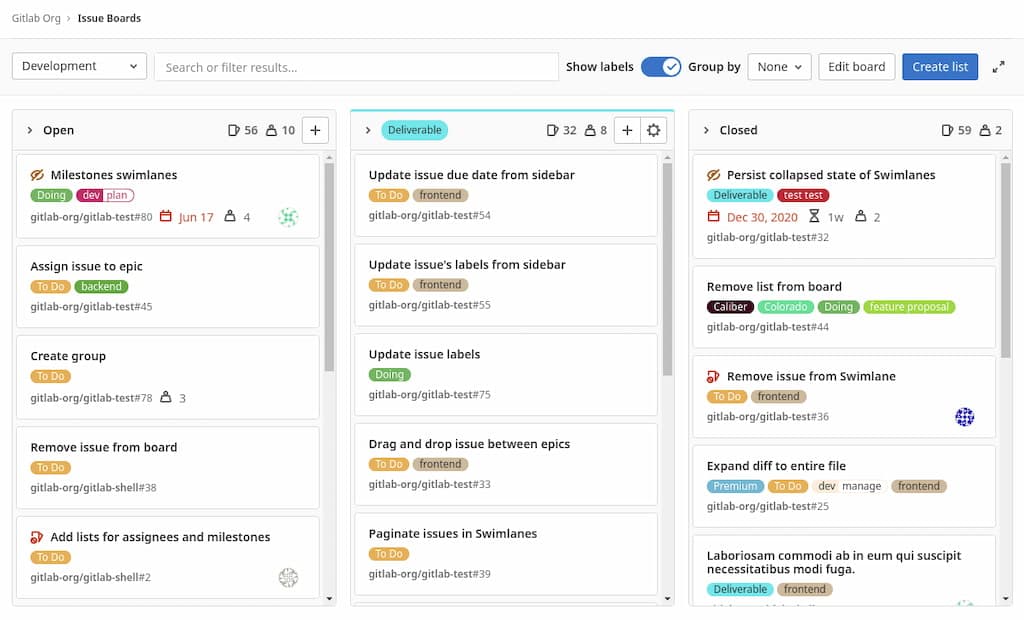
GitLab
GitLab is a source code management and DevOps platform that can also be used for project management, licensed under MIT open source license. It has a clear focus on software development. The users benefit from fast deployments, standardization, automation and increased security of the software development process.
GitLab has a vast feature set to allow the mapping of the entire software delivery lifecycle. It offers many specific features targeted at software developers, such as DevOps Reports. Both agile and traditional project management methodologies are supported by GitLab as it also includes timelines, task management and workflows. However, time tracking or budget and costs are features missing in GitLab’s offer.
Overall, one can say that GitLab has a more technical user interface due to the fact that the main target group is software engineers. It might not be as intuitive as other open source project management software in 2025.
Exciting: If you are not entirely convinced by the GitLab offering in terms of project management, but like its feature set, you can use OpenProject with its GitLab integration.
GitLab is available in the cloud and on-premises. The self-installed version provides full data control. GitLab’s cloud version, the GitLab.com core infrastructure, is primarily hosted in Google Cloud Platform’s (GCP) US-East1 region.
The location where your data is stored is important as it determines which regulations and data privacy measures apply (in the EU e.g. the providers have to adhere to GDPR). Feel free to read up more about cloud security.
GitLab Pricing
While there is a free version available (with limited storage, users and features), the paid versions start from $19 per user per month. To test the paid version, GitLab offers a 30 days free trial.
Tuleap
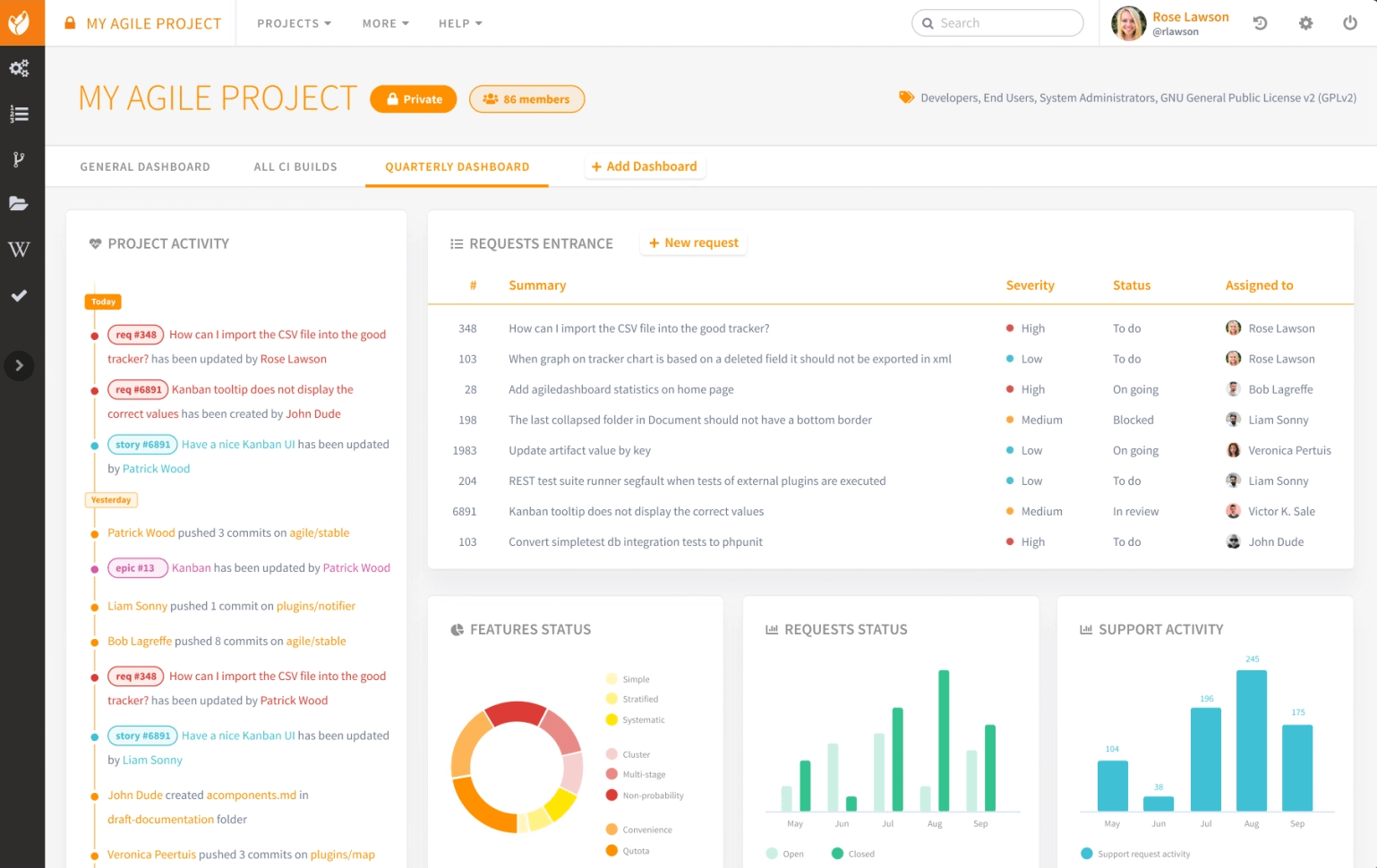
Tuleap is an open source project management software for agile project management, licensed under GNU GPL.
Tuleap comprises all agile project management features like task board, backlog, Kanban boards, burnup and burndown charts, dashboard. It allows you to execute software development, test management, project tracking and agile planning in specific.
If you are an agile or software development team, Tuleap’s clear focus on the agile methodology might work very well for you. For a broader project management approach, you might miss traditional project management features like a Gantt chart or a Wiki, and options to track time, budget and costs. Working in Tuleap, its interface seems very intuitive.
Tuleap is available in the cloud and on-premises. The premium cloud version gives you a hosting choice among providers in France, Switzerland, USA, UK, Korea. There is no information on the basic cloud hosting.
Tuleap Pricing
There is no free version of Tuleap available. The cheapest option is the basic cloud version that starts from 6€ per user per month. However, Tuleap offers a free trial if you contact them.
Taiga
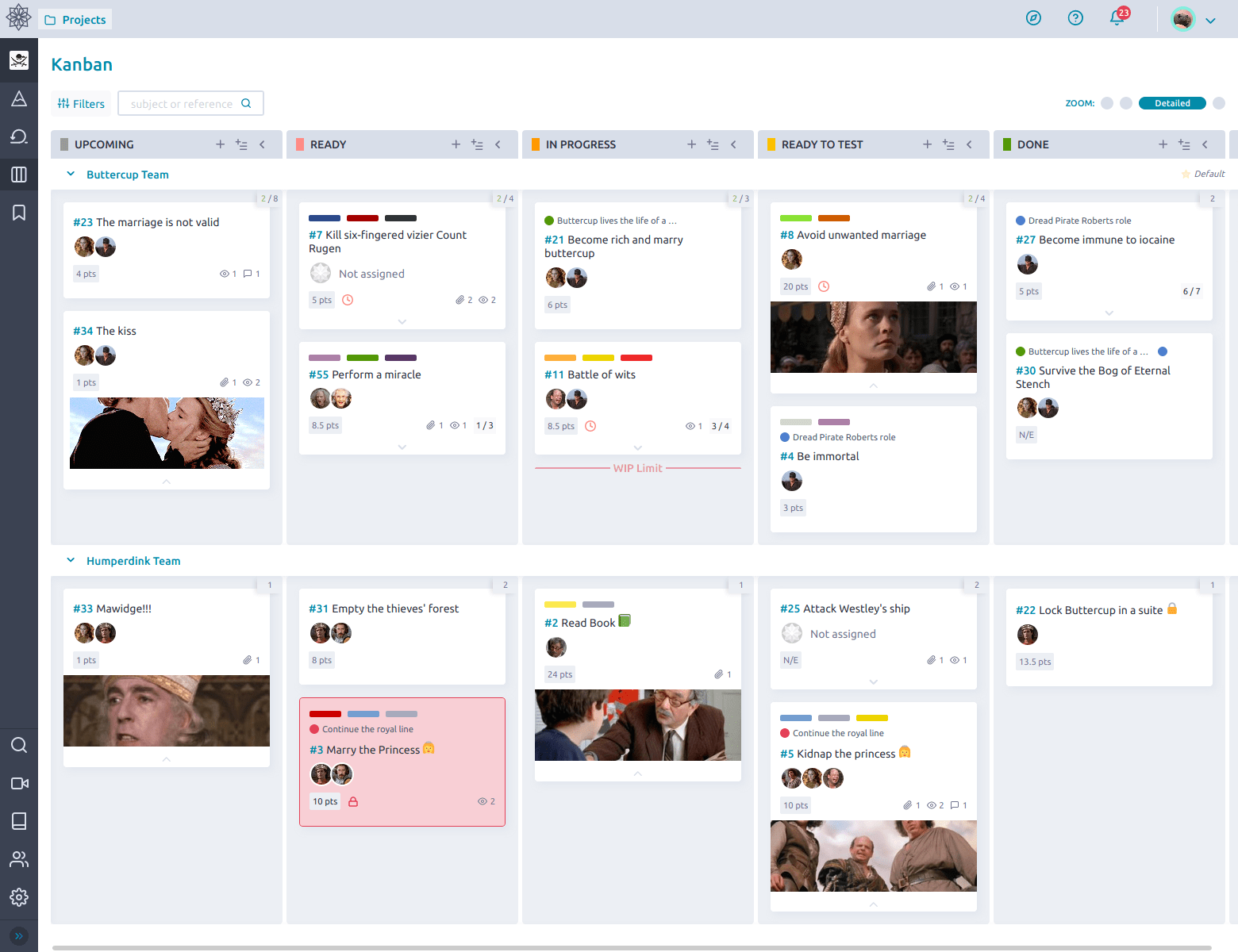
Taiga is an open source project management software whose beginnings date back to a Kaleidos hackathon in 2013. It is licensed under MPL 2.0.
Taiga’s vision was to create an intuitive and visually appealing agile project management tool for developers and designers. Accordingly, Taiga offers a comprehensive feature set for agile project management. It includes Kanban boards, backlog, estimation tool, issue tracking, dashboard and more.
Consequently, classic project management features are not part of Taiga, limiting its use cases to agile methodologies only. Taiga has a very intuitive interface, which makes it easy for users to start working with the software.
Taiga is available in the cloud and on-premises. The cloud version is hosted in the EU by AWS, which means it complies with GDPR in this regard.
Taiga Pricing
There is a free cloud and free on-premises version available. The paid Taiga cloud edition comes with premium support and is at $70 per month (unlimited users).
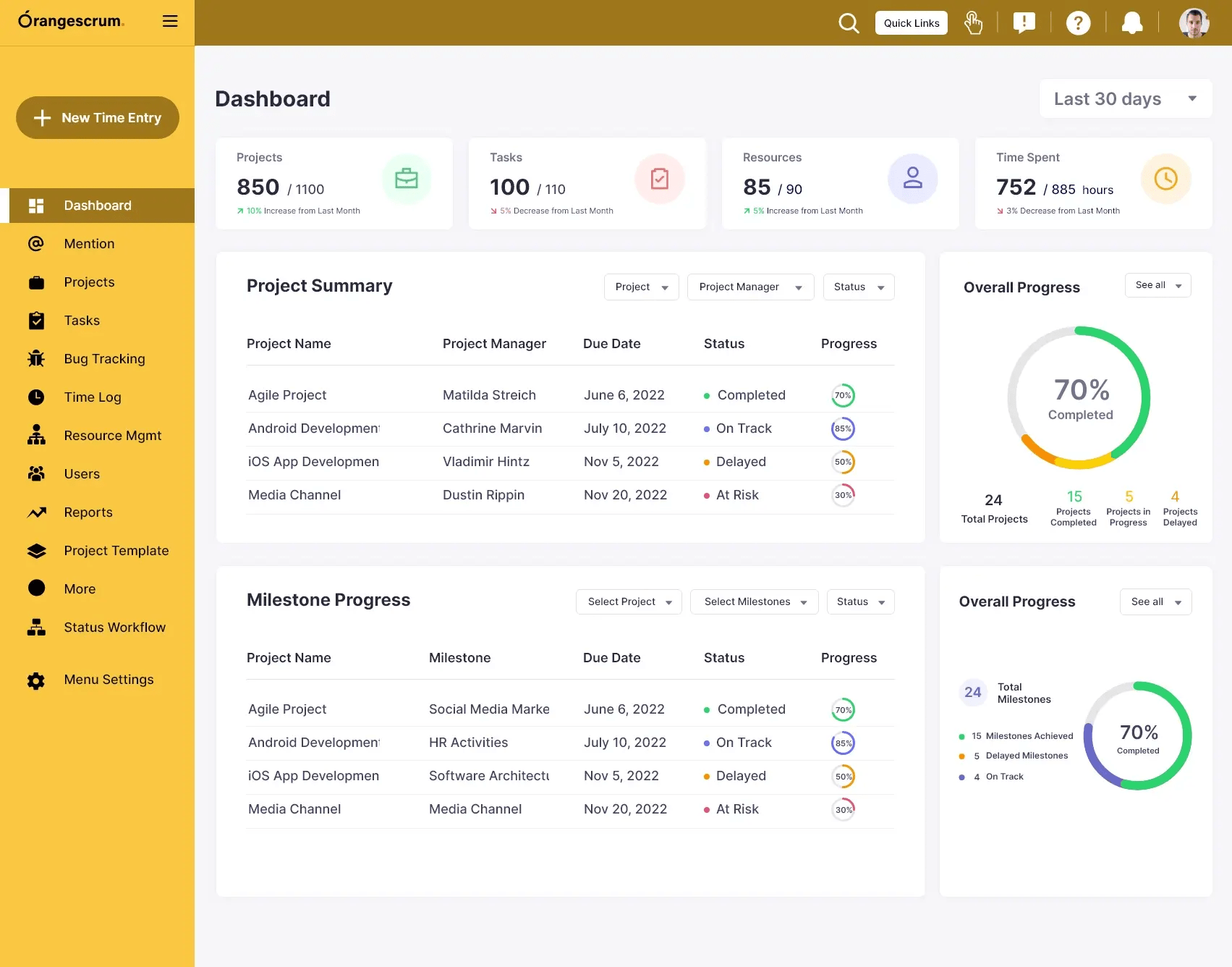
Orangescrum offers classic as well as agile project management features. Resource management, schedule management (Gantt charts), budget and cost management, issue tracking, time tracking, workflow management as well as backlogs are available.
The on-premises and cloud version include even more features (burndown chart, project overview, task labels, custom task types, recurring tasks, invoicing etc.). Those are premium features and are part of paid plans.
Orangescrum is available in the cloud and self-hosted. The cloud version is hosted with AWS (location not mentioned).
Orangescrum’s privacy policy states that they are taking many steps across the entire company to ensure they will be ready for the GDPR.
Orangescrum Pricing
The Orangescrum open source edition can be downloaded for free. You can add paid support plans to it, from $299 per month. You can try Orangescrum for 15 days for free.
There is a free Orangescrum cloud edition for 3 users and limited storage, paid plans are starting from $8 per user per month. The on-premises version with premium features and support is charged as a once-off (from $4,425), with potential support subscriptions for following years.
Compare the top 5 open source project management software
Choosing the best project management software that fits your organization depends on a variety of criteria, including the features and use cases you want, the size of your team, and hosting preferences. All listed top 5 open source project management software have their advantages.
If you are looking for an open source project management software in 2025, we recommend to have a look at OpenProject, GitLab, Tuleap, Taiga, and Orangescrum.
To give you a quick summary:
OpenProject offers traditional, classic and hybrid project management features with a very intuitive interface. It is available in the cloud and on-premises and focuses on data security and privacy, protecting your confidential data. Therefore, the cloud version is securely hosted in the EU or on request in Germany. The OpenProject Community edition (on-premises) includes a comprehensive feature set and is free of charge.
GitLab has an elaborate feature set that is mainly targeted at software development teams and has a more techy interface. It is available in the cloud and on-premises. The cloud is hosted in the US. They offer a free on-premises version for a maximum of 5 users with limited storage and essential features only.
Tuleap is only for agile project management teams. It offers an intuitive interface. It comes both as on-premises and cloud version. Only for the premium cloud version you can choose the location of the host provider. Tuleap does not offer a free version.
Taiga also only offers agile project management features, though with a very appealing interface. It is available as cloud and on-premises version and the cloud version is hosted in the EU. Taiga offers a free cloud and free on-premises version.
Orangescrum has a big feature set for traditional as well as agile project management with an intuitive interface. There are on-premises and cloud versions, the latter is hosted by AWS but it seems Orangescrum might not comply fully with GDPR. The open source version with reduced feature set is free of charge and there is a free cloud version for a maximum of 3 users.
Regarding the pricing of all top 5 open source project management software, we recommend you visit the individual websites to input your team size and other requirements to find out the detailed pricing as there are many variables that may change the pricing.
Ever wondered what all these project management terms actually mean? Understanding key project management terminology is essential for effective collaboration and successful project execution. In this article, we’ll walk you through fundamental concepts and terms.
If you’re looking for OpenProject-specific definitions, see our Glossary, where we define the most commonly used terms in OpenProject.
Waterfall
Waterfall is sometimes referred to as classic or traditional project management. It is characterized by a sequential flow of tasks. One task is completed before the next can begin. This linear structure gave the method its name — Waterfall.
Because of this sequential nature, careful planning and precise timing are essential. Delays can lead to significant setbacks. A Gantt chart is a typical way to visualize a waterfall project.
Agile
Agile project management recognizes the complexity and uncertainty of many projects. It uses an adaptive approach: a large project is broken into smaller pieces that are handled by cross-functional teams.
Work is done in short cycles, known as iterations or sprints, and customer feedback is integrated regularly. Agile allows for greater flexibility and continuous improvement during the development process.
Scrum
Scrum is a framework used within agile project management. Originally developed in software, it can be applied in many industries. Scrum divides work into small, manageable tasks and emphasizes collaboration, progress tracking, and regular adjustment.
Scrum teams deliver value incrementally. A task board helps visualize the current status.
Sprint
A sprint is a fixed-length iteration in agile development — often lasting one or two weeks. During each sprint, the team works on selected tasks from the backlog. After each sprint, results are reviewed, and the backlog is adjusted based on feedback and progress.
Board
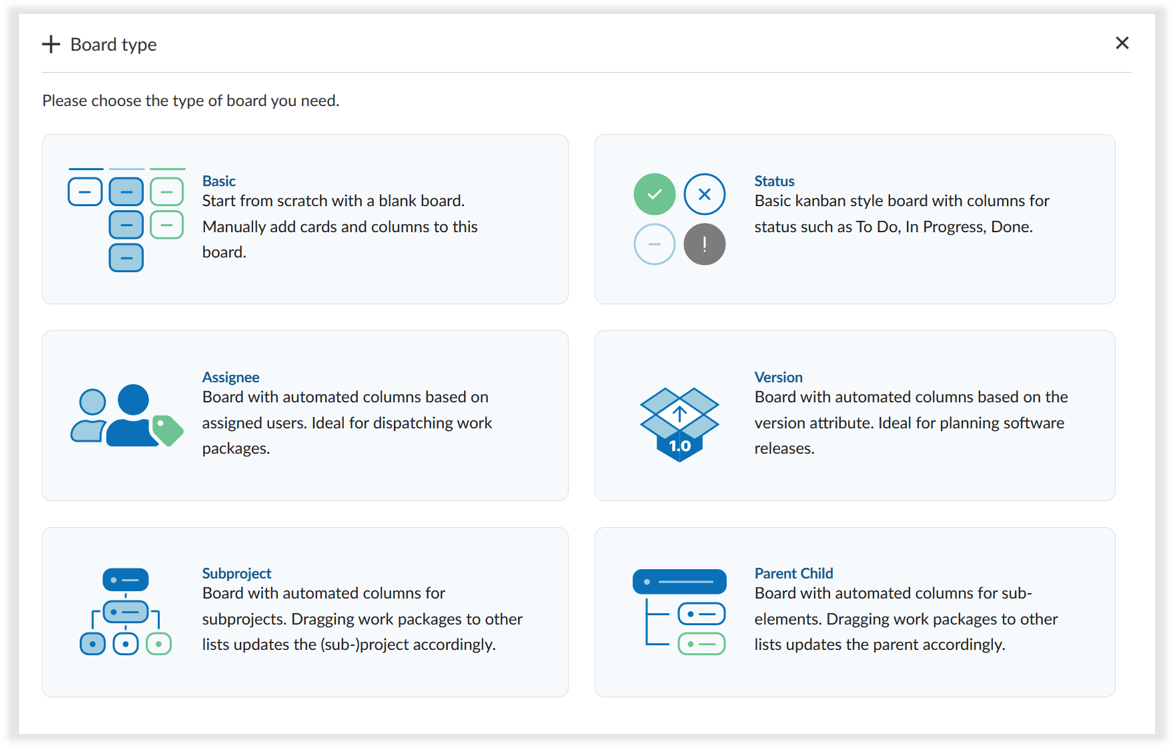
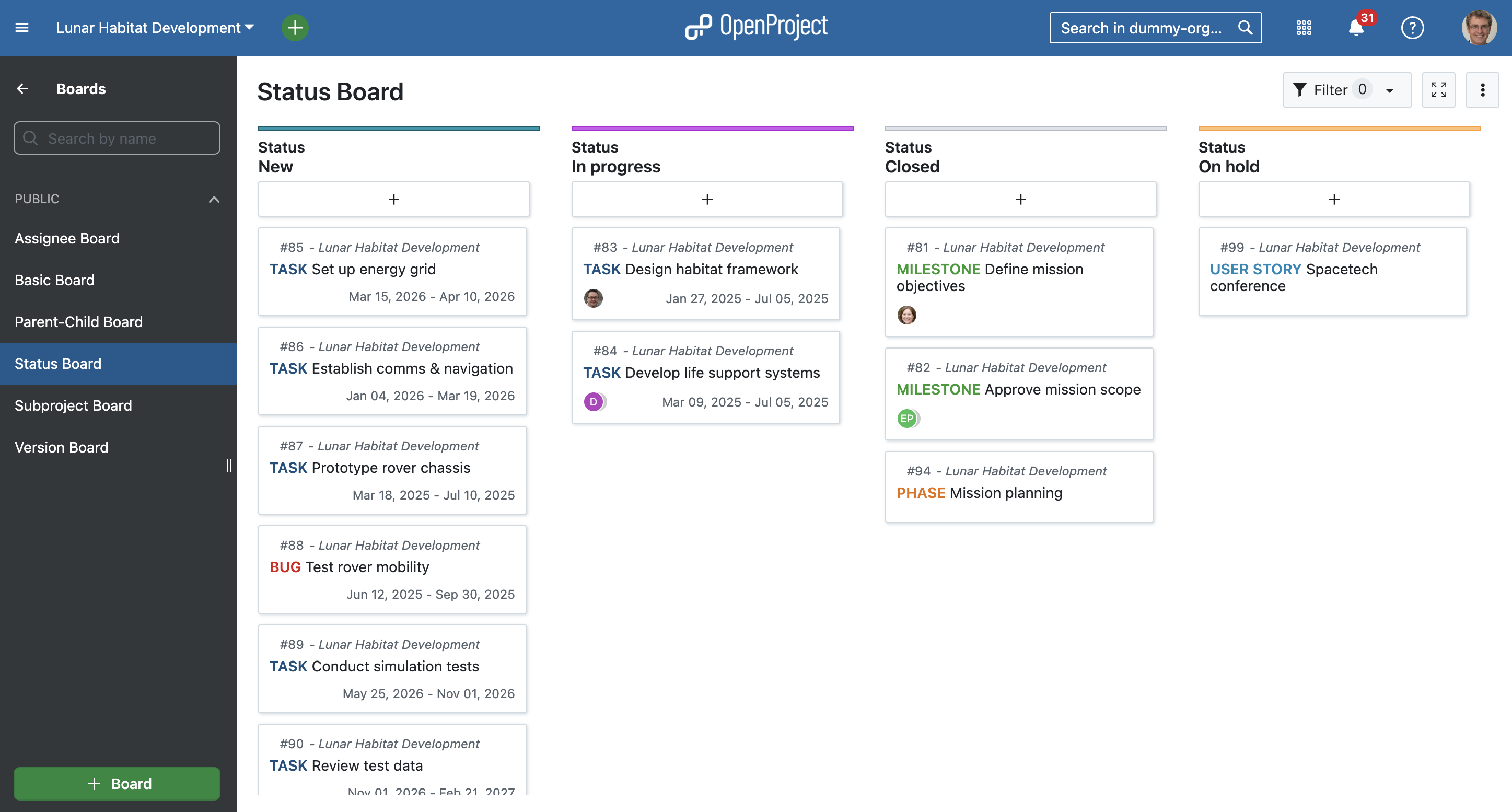
A board is a visual tool used to manage and track tasks in a project. In OpenProject, boards help teams stay organized and collaborate effectively by showing tasks (work packages) in columns such as To Do, In Progress, or Done. This makes boards ideal for agile workflows like Scrum or Kanban, but they are just as useful for managing general task lists, team priorities, or feedback rounds.
In OpenProject, there are basic boards for all users and action boards (with automatic sorting e.g. by status or version) available as Enterprise add-on:
Tip
To learn more about how boards work in OpenProject and which board types are available, read our blog article on Agile Boards.
Kanban
Kanban is a visual approach to agile project management. It focuses on transparency and continuous delivery. A Kanban board shows tasks in columns (e.g., To do, In progress, Done) and helps teams limit work in progress.
Backlog
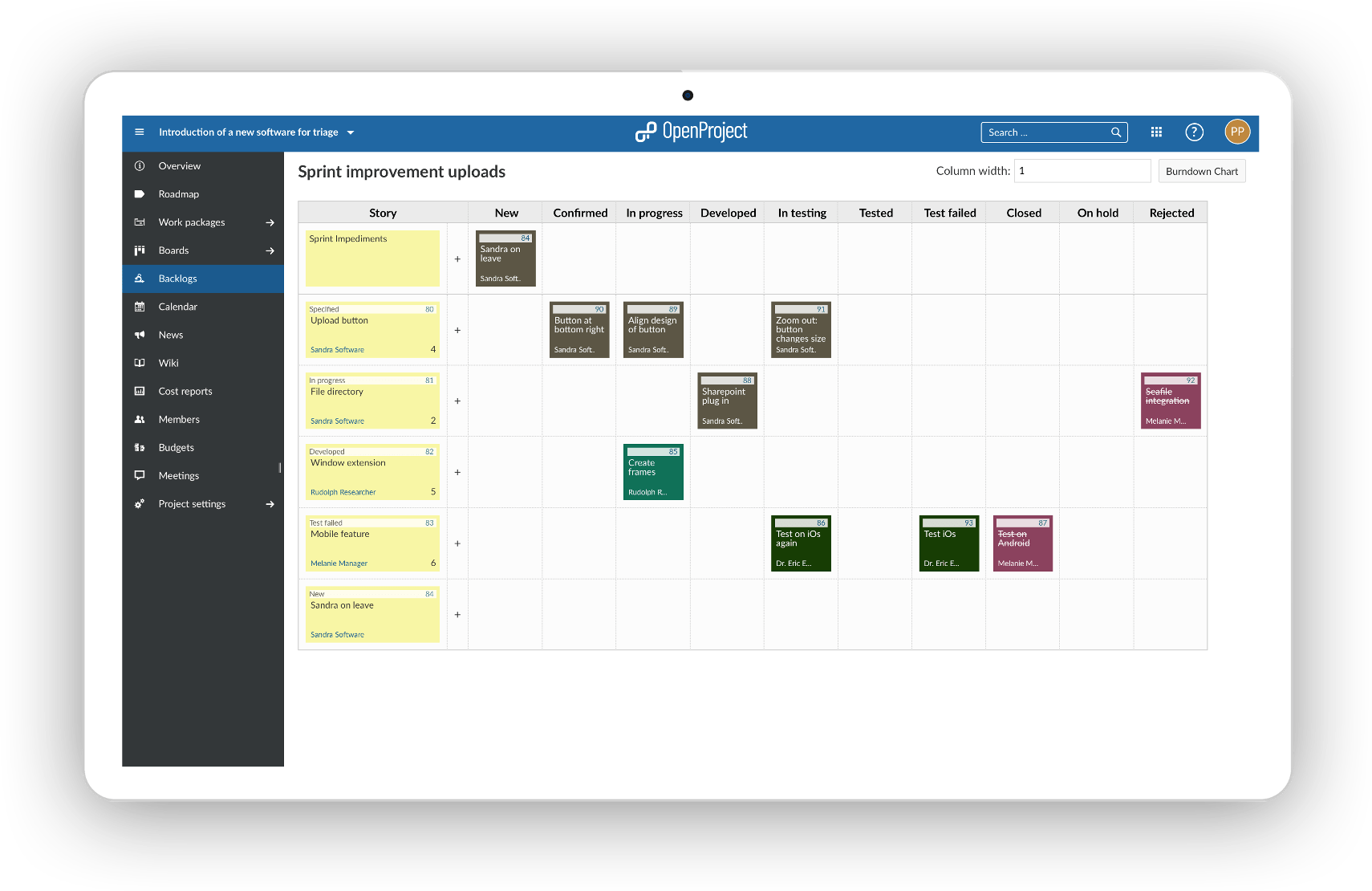
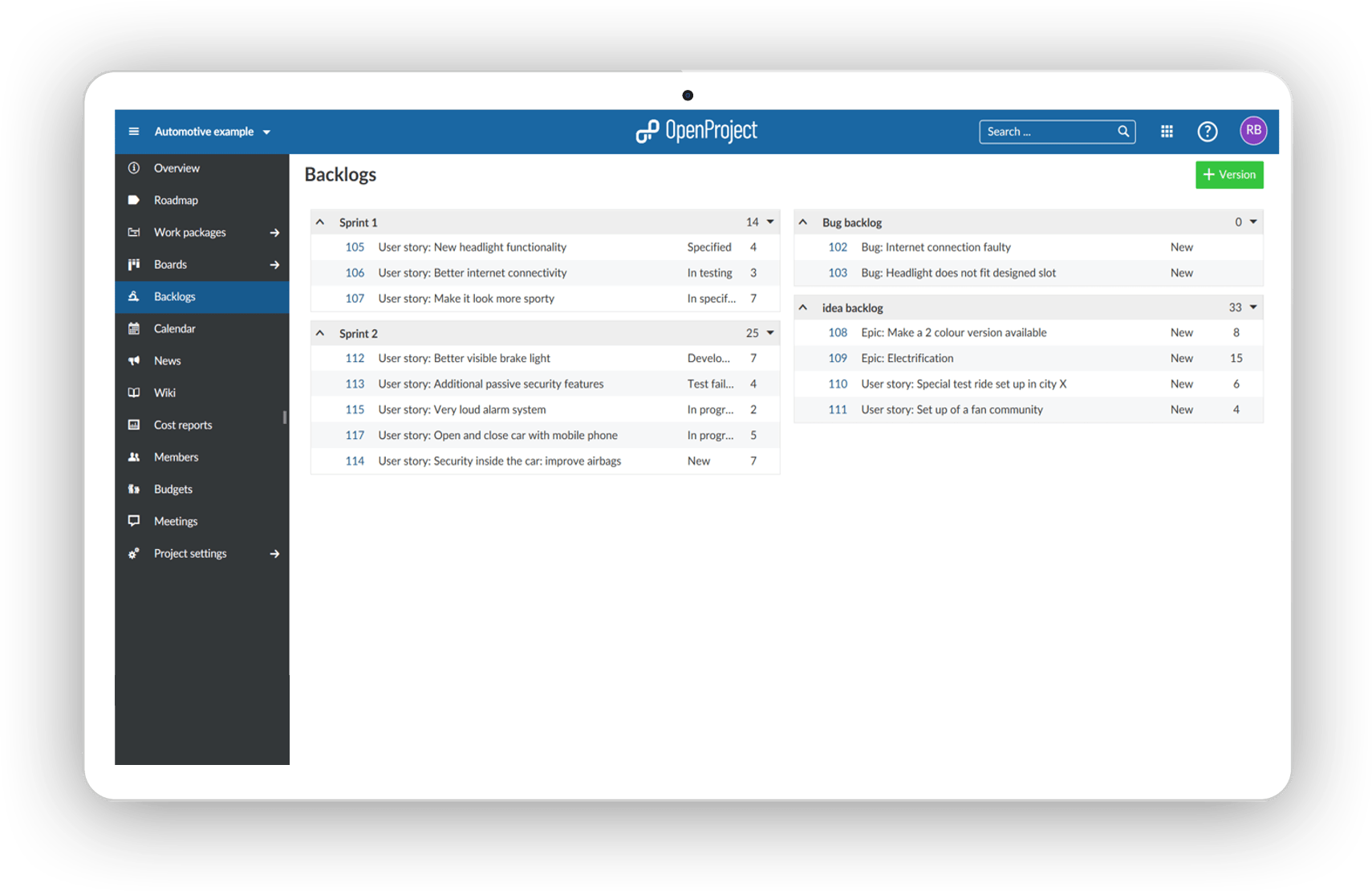
The backlog is a list of all items that need to be completed to achieve a project goal. Tasks are typically prioritized, and the most important ones are selected for the next sprint. A backlog serves as the central source of truth for the team.
User story
A user story represents a piece of functionality from the user’s perspective — something they want to achieve. Stories should be small enough to complete within a sprint and usually follow a standard format like: “As a [user], I want to [goal] so that [benefit].”
Epic
An epic is a large body of work that represents a big objective or need. It’s typically too large to complete in a single sprint, so it is broken down into smaller user stories that can be tackled incrementally.
Milestone
A milestone marks a significant point in a project — such as deadlines, delivery dates, or decision gates. It helps monitor progress and often represents a non-working task with a specific target date but no duration.
Bug
A bug is an unintended error or issue in the software that affects functionality or performance. Bug tracking is an essential part of product development.
Feature
A feature is a specific piece of functionality that delivers value to the user. In agile teams, features are often driven by user stories and linked to requirements in the backlog.
Story points
Story points are used to estimate the effort required to complete a task, feature, or user story. They are typically assigned using a predefined scale and help teams plan and track sprint velocity.
Burndown chart
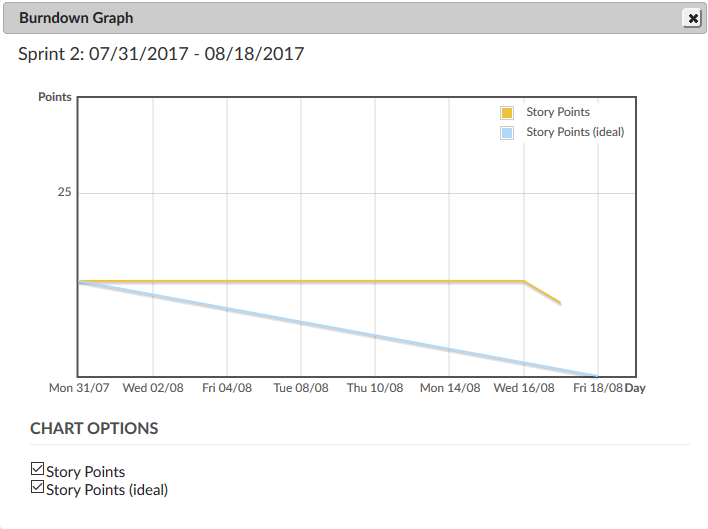
A burndown chart is a tool mostly used in Scrum. It is a two-dimensional graph that shows the amount of work remaining (usually measured in story points) versus the time left in a sprint or project. This visual representation helps teams track their progress and stay focused on their goals.
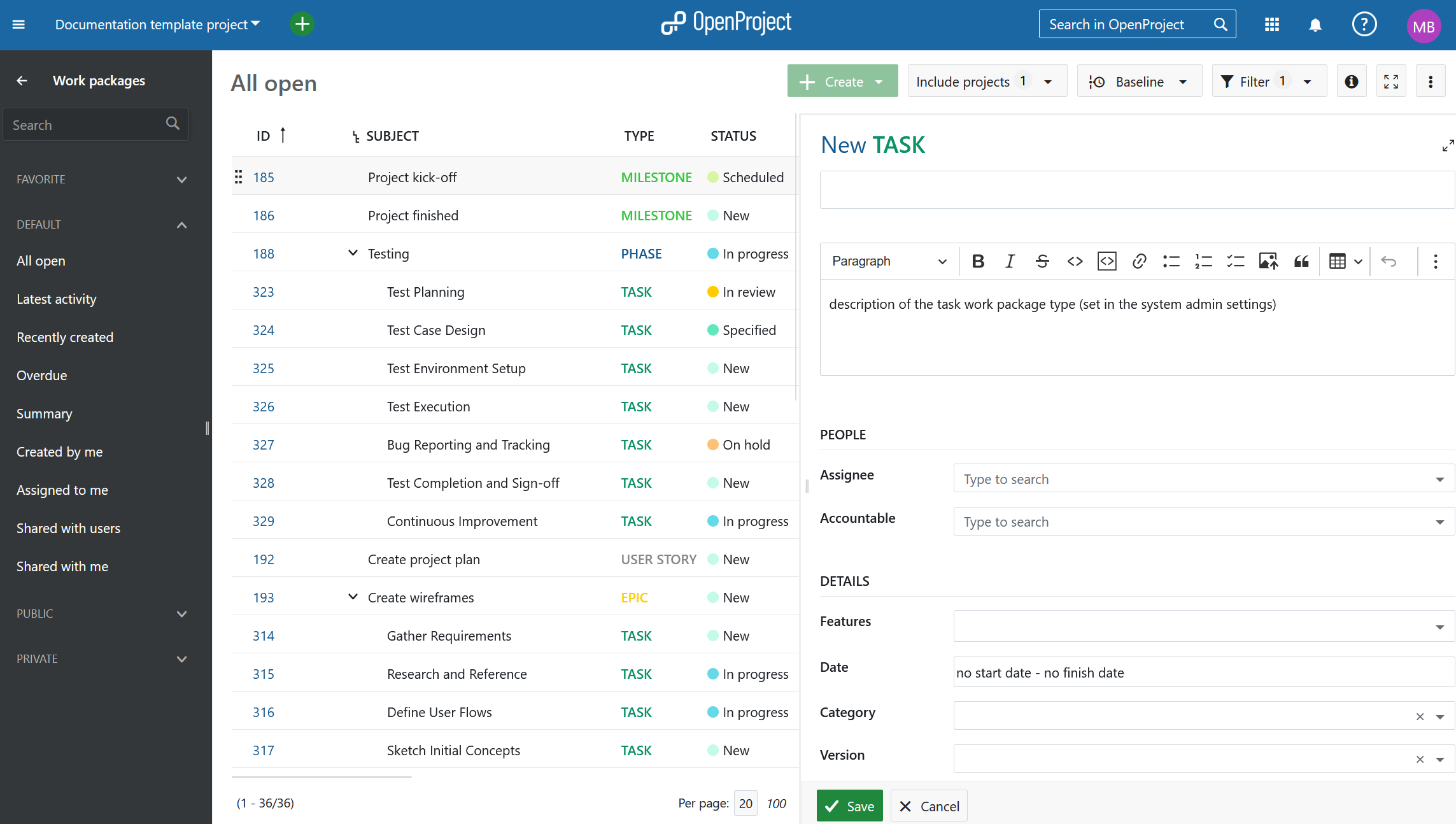
Work package
A work package is a group of related tasks that can be managed and delivered together. In OpenProject, a work package can represent a task, feature, user story, bug, phase, or milestone.
Wiki
A wiki is a collection of collaborative, editable pages where teams can document knowledge, processes, or project information. In OpenProject, each project can have its own wiki, helping centralize documentation.
Dependencies
Dependencies, also known as relations, define how tasks are connected. For example, one task may need to finish before another starts. Managing dependencies helps create realistic timelines and avoid bottlenecks.
Project
A project is a temporary endeavor with a defined goal, timeline, and scope. It can range from small internal improvements to complex product releases. Even though the term is widely used, it’s not always clearly defined. Taking time to align on what constitutes a “project” in your context helps ensure consistent planning and execution.
We are happy to announce the release of OpenProject 15.5. Among other changes, users now can filter for descendants of work packages, which includes children, grandchildren, and deeper levels in the hierarchy. This makes it easier to focus on specific parts of a project hierarchy.
In this blog article, we will take a closer look at these feature updates:
And there are more great updates in this version again. For more details on other changes, features and bug fixes in 15.5, please check out our release notes.
Tip
The next version is already on the horizon: In May 2025, we plan to release OpenProject 16.0 with major feature changes. One change will be the ‘sunsetting’ of classic meetings, meaning users will only be able to create one-time and recurring meetings then. With the release of 15.5, you already see a hint in the application that classic meetings are unsupported. We recommend switching to the newer meeting types now to benefit from recent improvements and to ensure a smooth transition. Read this article to learn more: Classic meetings will be replaced: What changes with OpenProject 16.0
Filter for descendants of work packages
OpenProject 15.5 introduces a helpful new filter to better navigate complex project structures. The Descendants of filter allows you to display all related work packages beneath a selected parent — including its children, grandchildren, and deeper levels.
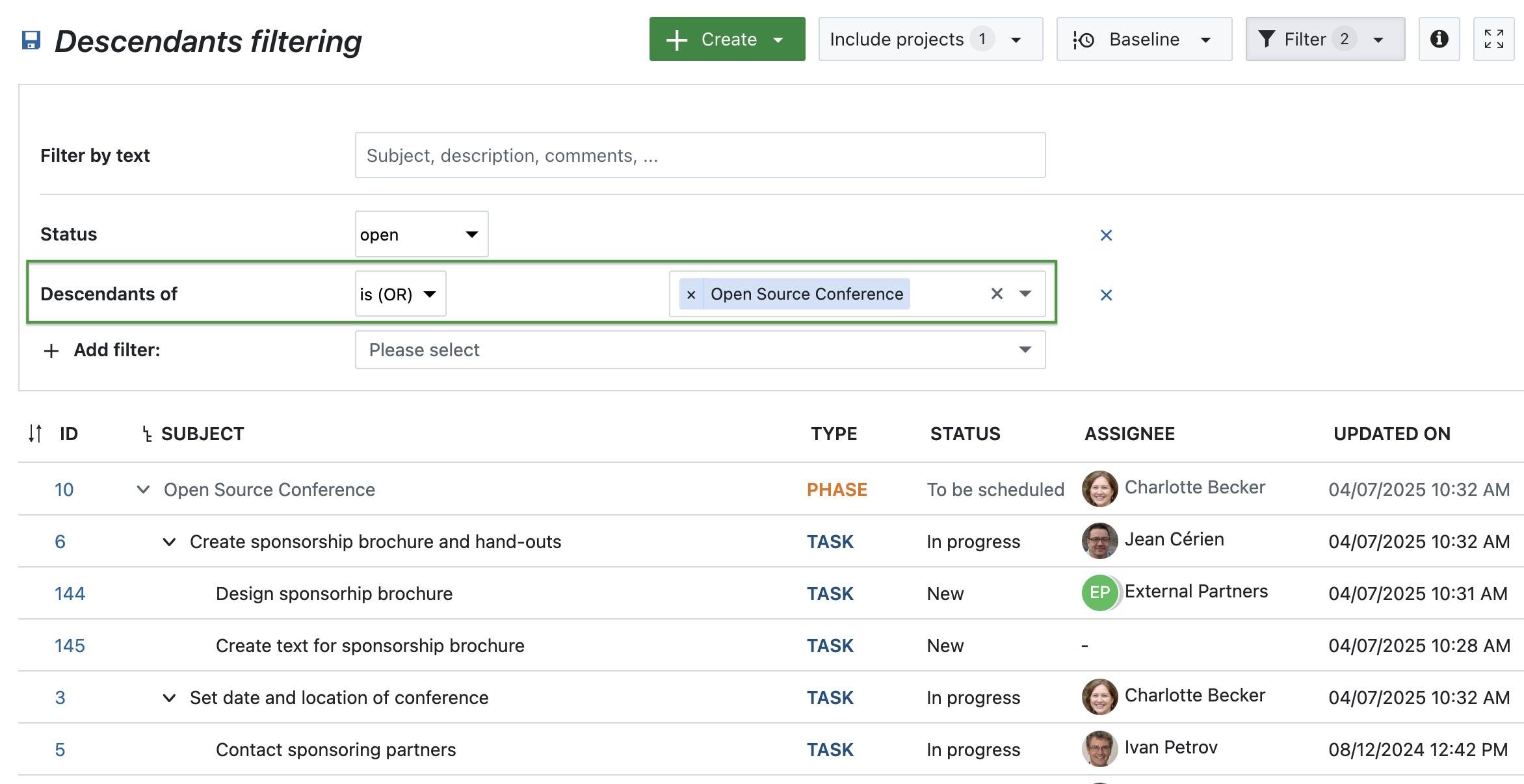
For example, if you apply the filter “Descendants of” is (OR) “Open Source Conference”, the view will include:
Two direct children: Create sponsorship brochure and hand-outs and Set date and location of conference
Two children of the brochure task — in other words, grandchildren of the main phase: Design brochure and Write brochure text
One grandchild under the location task: Contact sponsoring partners
This filter is available wherever filters are supported, such as work package tables or agile boards. Until now, it was only possible to filter for parent work packages — this new option lets you see the full hierarchy below a selected item, making it easier to focus on a specific part of your project and understand its structure at a glance.
Column for children in work package tables (Enterprise add-on)
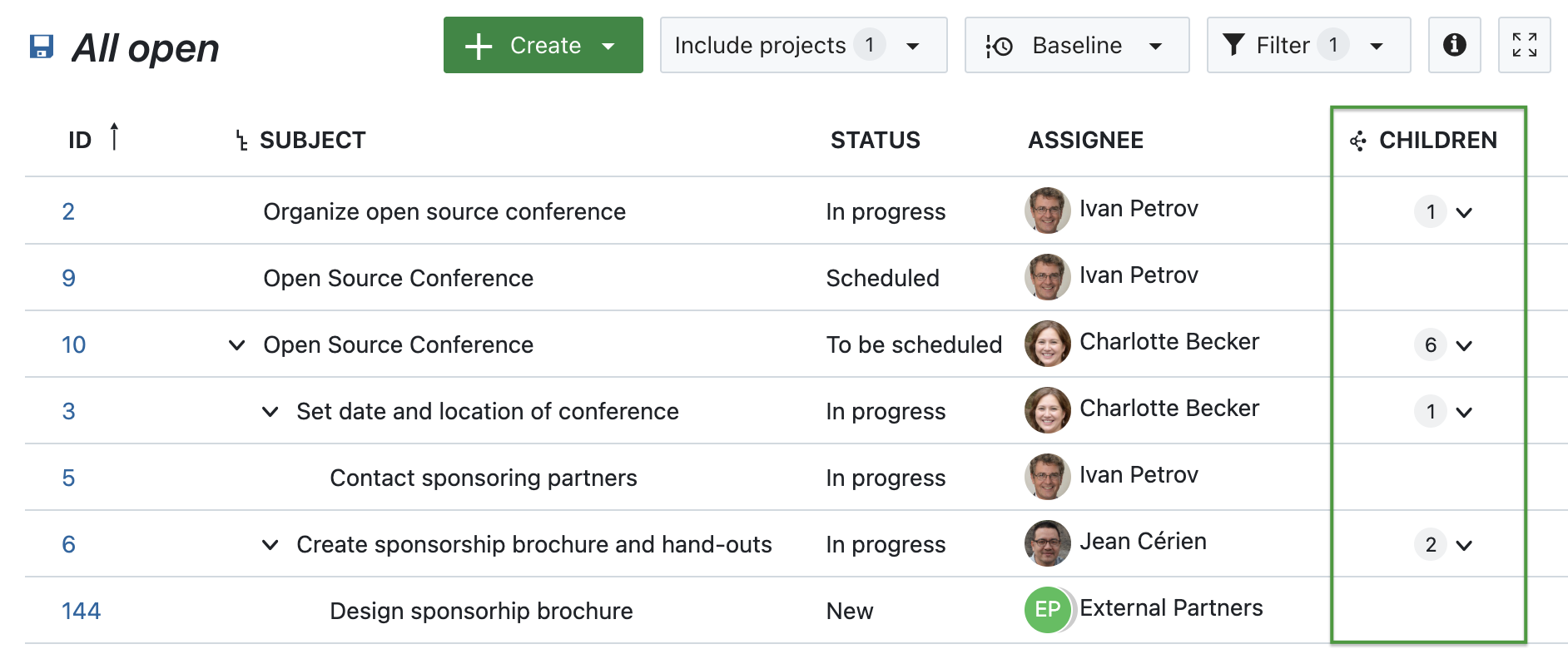
OpenProject 15.5 adds a new Children column to work package tables — giving you a faster and more structured way to view hierarchical relationships without needing to apply filters or switch views.
This column shows a clickable dropdown icon alongside the number of child work packages linked to each parent. With one click, you can expand the parent directly in the table to get an immediate overview of its structure. Each child is clearly marked with a Child label, helping you stay oriented even in complex project hierarchies.
This feature is especially useful when working with large datasets or focused views, where quickly understanding relationships between work packages is key.
For example, in a project phase like Open Source Conference, the Children column shows how many related work packages are connected to that phase — helping teams assess scope and progress without leaving the table view.
Note
All relationship columns, including the new Children column, are part of the Enterprise add-ons.
% Complete included in work package table sums
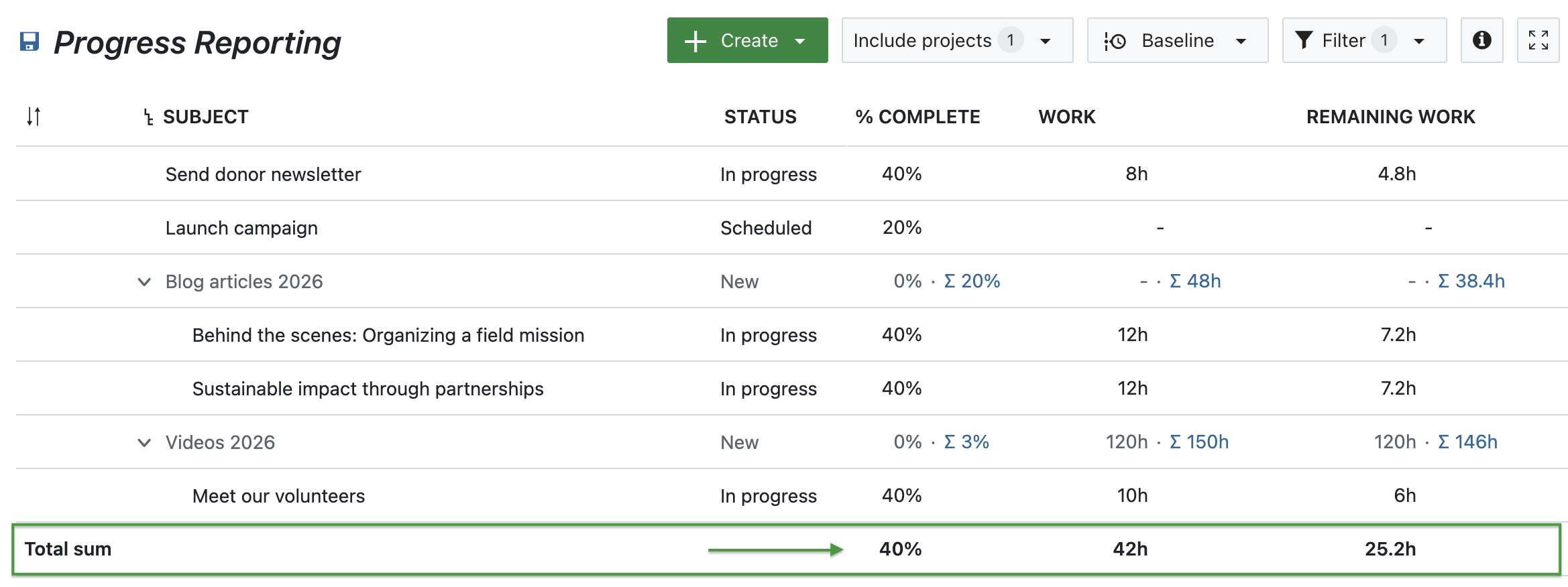
Imagine you’re part of an NGO marketing team planning newsletters, blog articles, and videos for the upcoming year. Each campaign includes several tasks — like writing a blog post titled Behind the scenes: Organizing a field mission or producing the video Meet our volunteers. Both are in progress and marked as 40% complete.
With OpenProject 15.5, it’s now easier to get an overview of your content pipeline: the % Complete value is included in the sum row of work package tables. Alongside Work and Remaining work, this provides a quick snapshot of overall progress — in this case, 42 hours of work planned, 25.2 hours remaining, and an overall completion rate of 40%.
All three values are calculated based on the selected progress tracking mode, giving you accurate insights tailored to your team’s workflow — whether you’re tracking effort manually or automatically.
Advanced accessibility
Accessibility is not just a feature — it’s a fundamental part of building inclusive software. With version 15.5, we’ve taken another step forward in making OpenProject more accessible, especially for users who rely on screen readers or keyboard navigation.
The date picker now provides clearer, more meaningful feedback during manual input, ensuring that everyone can interact with project timelines confidently and independently. This means that screen readers now announce when switching between manual and automatic scheduling modes. Changes to one field, such as the Start date or Duration, are immediately announced when they affect related fields. The “Today” shortcuts come with ARIA labels that give users helpful context — for example, “Select today as start date.”
You will find more information about all new features and changes in our Release notes or in the OpenProject Documentation.
If you need support, you can post your questions in the Community Forum, or if you are eligible for Enterprise support, please contact us and we are happy to support you personally.
New to OpenProject? To test all features of OpenProject 15.5 right away, create a 14 days free trial instance for our OpenProject Enterprise cloud.
Prefer to run OpenProject 15.5 in your own infrastructure? Here you can find the Installation guidelines for OpenProject.
A very special thank you goes to the City of Cologne, Deutsche Bahn and ZenDiS for sponsoring released or upcoming features. Your support, alongside the efforts of our amazing Community, helps drive these innovations.
Also, a big thanks to our Community members for reporting bugs and helping us identify and provide fixes. Special thanks for reporting and finding bugs go to Abhiyan Paudyal, Andreas H., Paul Kernstock, Patrick Stapf, and Stefan Weiberg.
Last but not least, we are very grateful for our very engaged translation contributors on Crowdin, who translated quite a few OpenProject strings! This release we would like to particularly thank the following users:
Yuliia Pavliuk, for a great number of translations into Ukrainian.
Adam Siemienski, for a great number of translations into Polish.
NCAA, for a great number of translations into Danish.
greench, for a great number of translations into Turkish.
Would you like to help out with translations yourself? Then take a look at our translation guide and find out exactly how you can contribute. It is very much appreciated!
As always, we welcome any feedback on this release. 💙
Whether you’re a team of five or fifty — as your organization grows, so does the number of projects, tasks, and priorities. At some point, work packages that once fit on one board become a sea of cards, and keeping focus becomes a challenge.
That’s why we created the Attribute highlighting feature: it helps you immediately see what needs your attention most. In this article, we’ll walk you through a relatable scenario and show how this feature can support you in staying focused and scaling successfully.
Important
Before February 2026, Attribute highlighting was part of the Enterprise edition in OpenProject. With the release of version 17.1, it is part of the free Community edition, because we value our Community a lot and aim to give “back” Enterprise add-ons to all users every few releases. You can find more information about this feature in our documentation.
You’ve grown — now it’s time to change how you work
Things might be going well. Your organization is growing. More clients, more projects, more team members. But with growth comes complexity. What used to be a simple backlog is now a multi-project list of dozens — maybe hundreds — of open tasks. And suddenly, you’re no longer sure what’s urgent, what’s blocked, or what’s been waiting for weeks.
Your system hasn’t changed, but your needs have. And that’s a good thing — because it means it’s time to invest in new ways to keep your growing team aligned.
Clean up your work package table by highlighting priority, status or finish date
Let’s take your team’s work package table as an example. Imagine you’ve filtered for this month’s deliverables — but the list is still long. You spot tasks with due dates coming up, some that are marked high priority, and one that was updated just now. But it takes a few minutes of scrolling and reading to get the full picture.
That’s where Attribute highlighting comes in. This feature allows you to visually emphasize specific values in your work package table using color: overdue tasks can turn red, high-priority items might stand out in orange, and different status values can appear in clearly distinguishable shades.
With just a glance, your team can now immediately see:
What’s overdue,
What’s marked as high or urgent priority,
What’s resolved or in progress.
How Attribute highlighting works
Let’s say your team uses the Priority attribute and a custom status workflow. You can highlight individual attributes inline (Status, Priority, Finish date) or apply full-row highlighting based on Status, Type, or Priority.
Once you’ve set this up in the work package table view, your team sees these visual cues automatically — without needing to open each task individually.
Tip
You can configure which colors are used for each priority and status in the System administration. Learn how to adjust them for priorities and for statuses.
Let’s look at an example work package table and how it looks with different attributes highlighted. Please note that you can change the colors for work package attributes and that they might look different in dark mode or light mode.
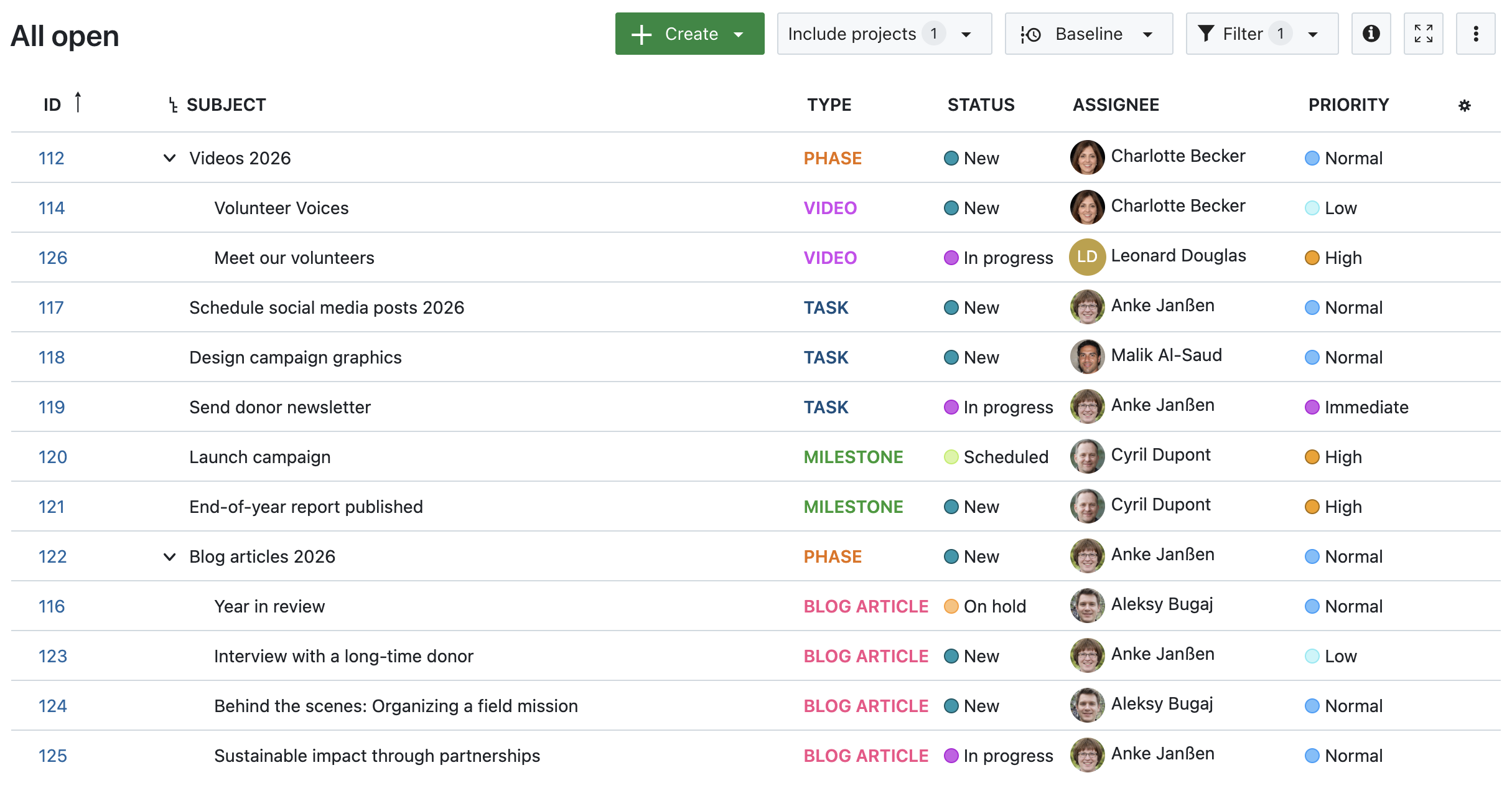
1. No attribute highlighting
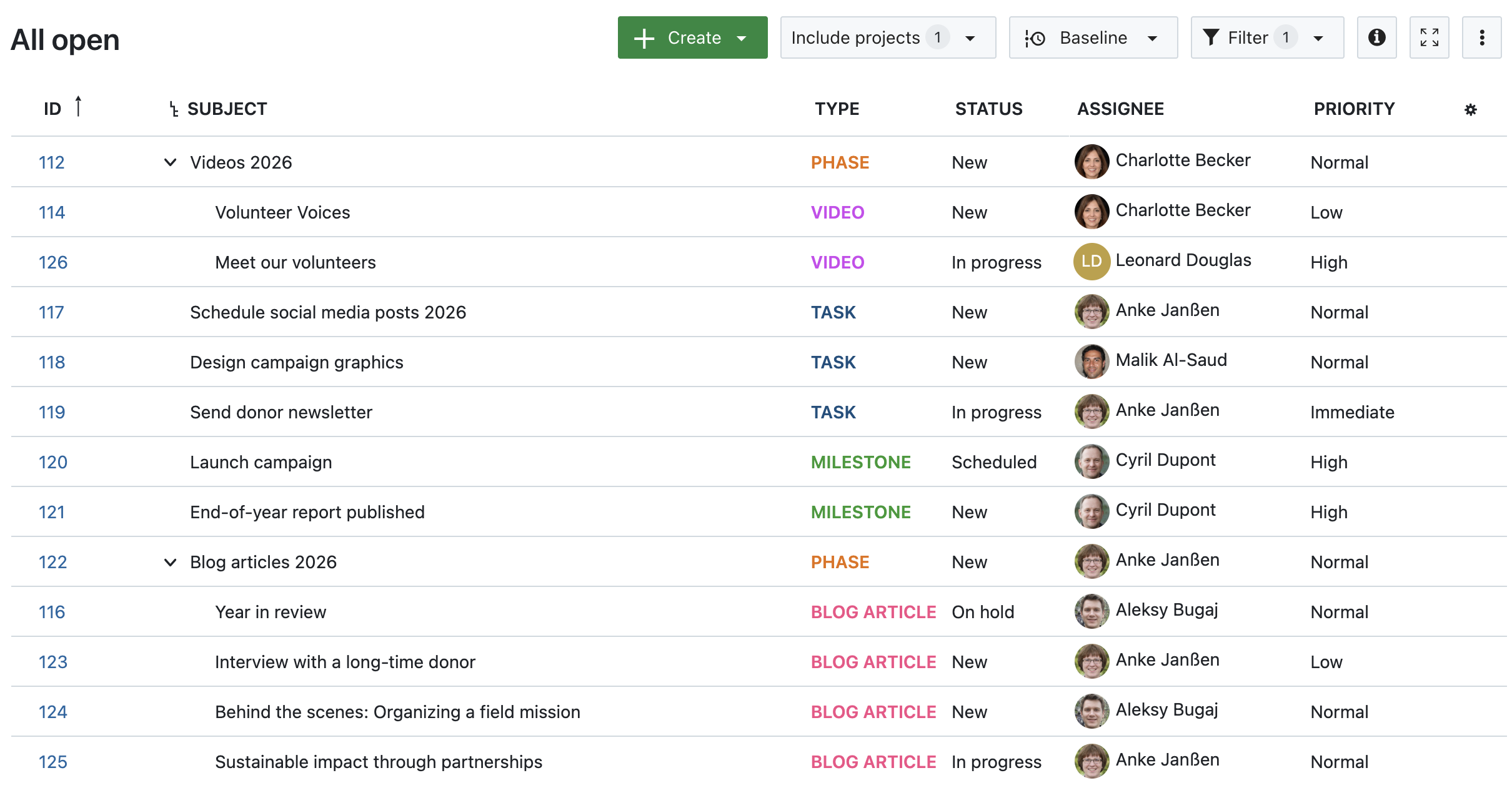
Image 1: A work package table in OpenProject, no attributes highlighted.
2. Status, Priority and Finish date highlighted inline
Image 2: A work package table in OpenProject, with inline-highlighted Status, Priority and Finish date.
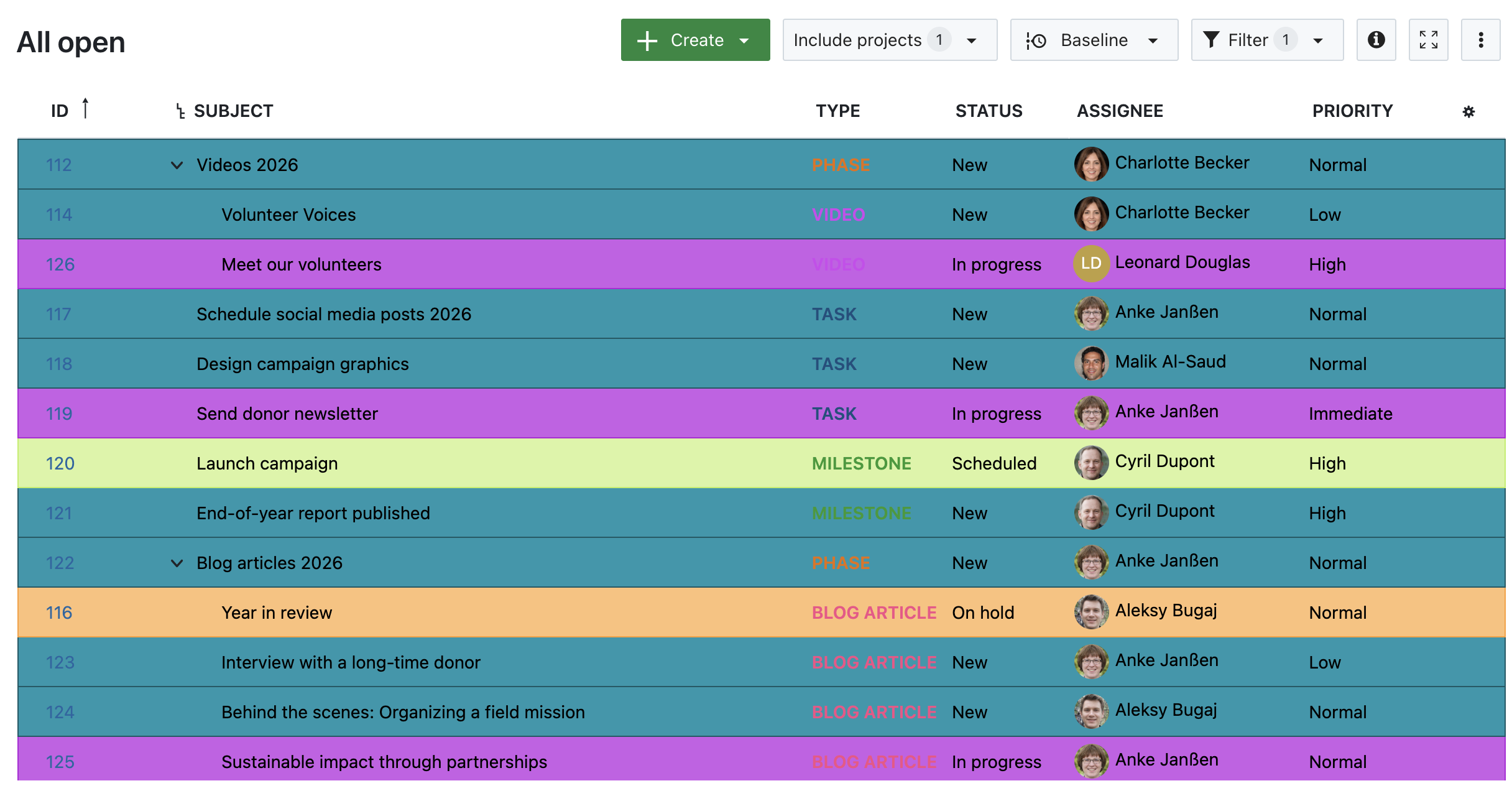
3. Highlighted by Status
Image 3: A work package table in OpenProject, highlighted by Status.
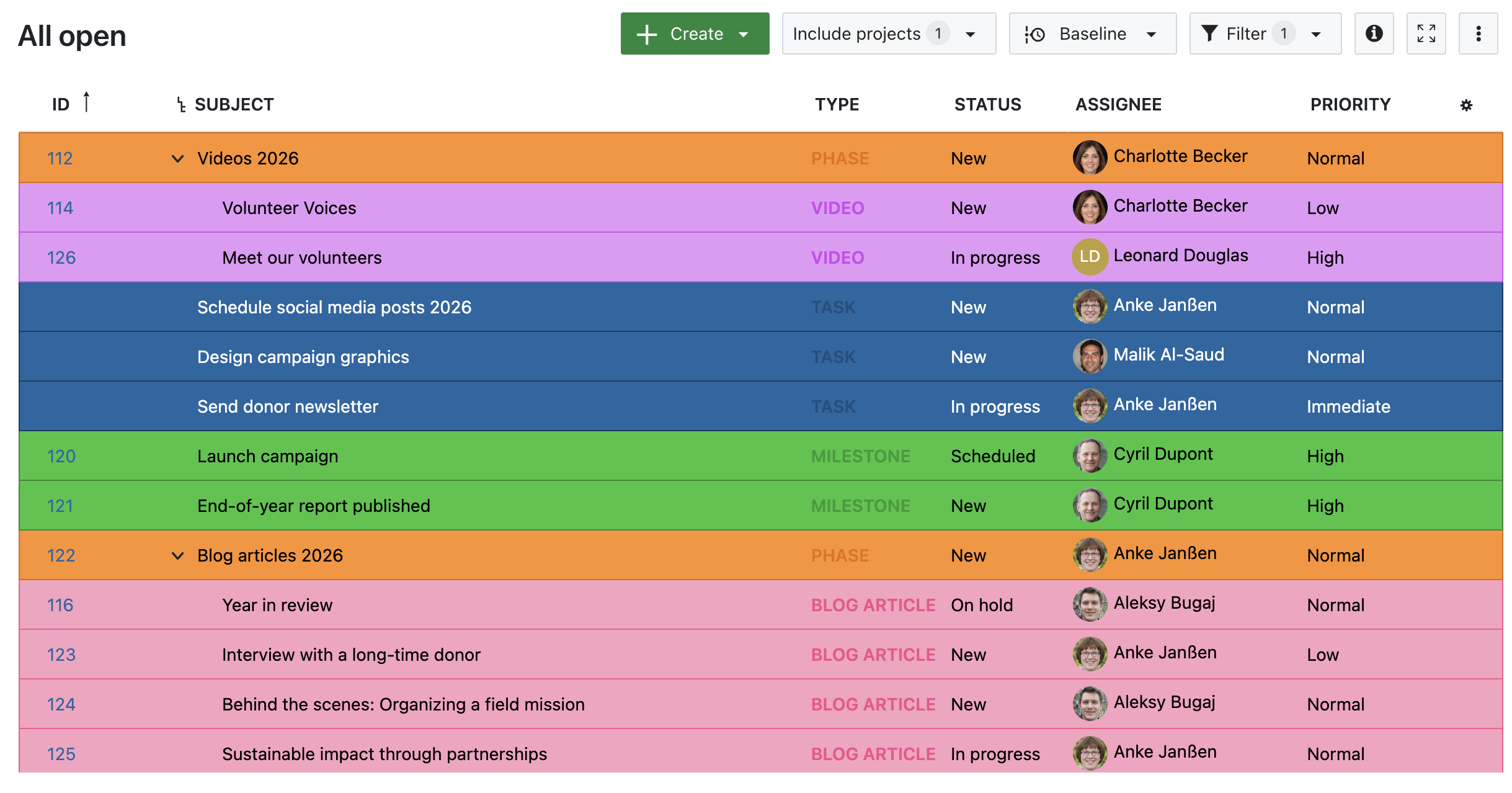
4. Highlighted by Type
Image 4: A work package table in OpenProject, highlighted by Type.
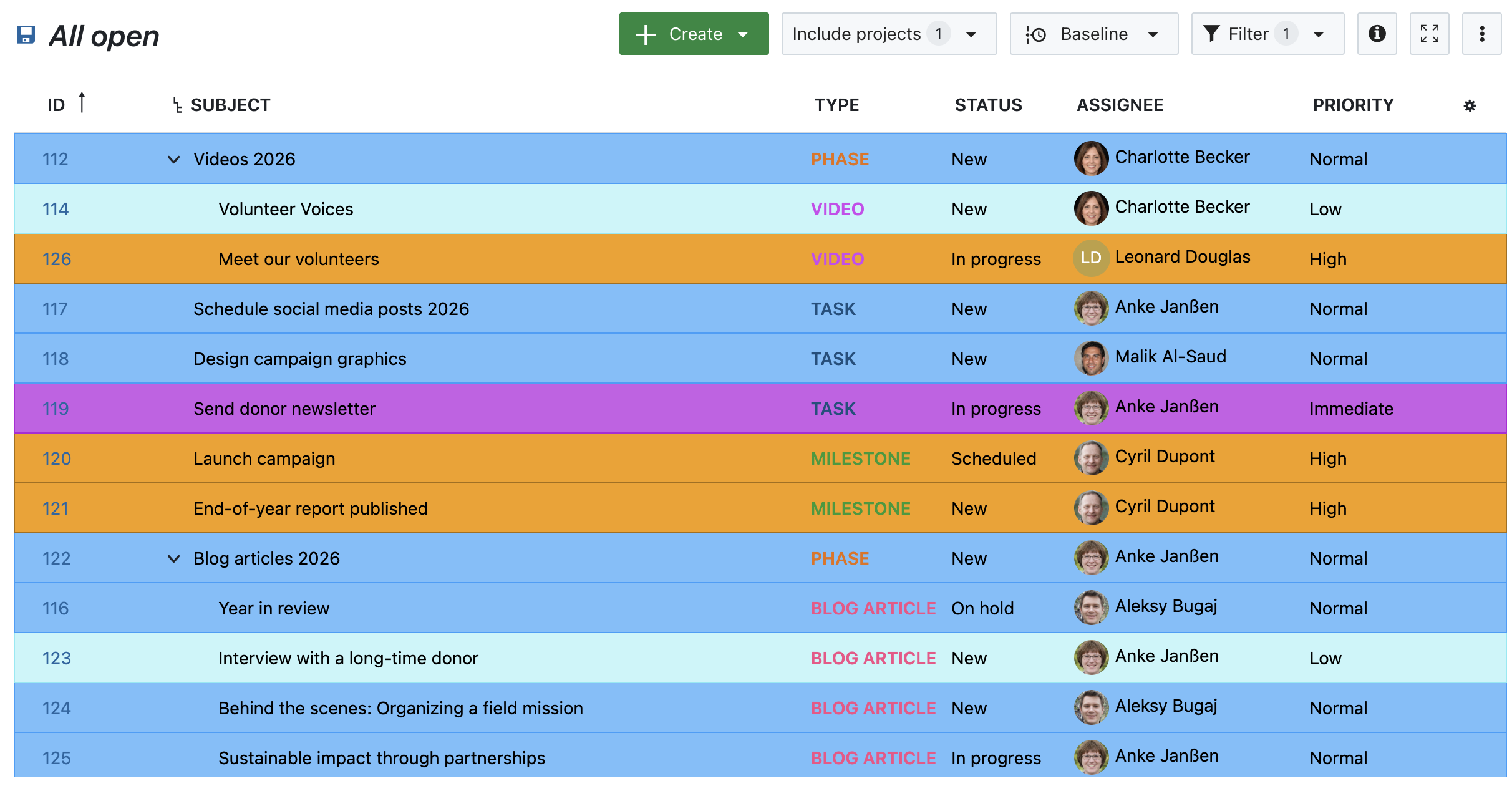
5. Highlighted by Priority
Image 5: A work package table in OpenProject, highlighted by Priority.
Other helpful features for prioritizing work packages
Attribute highlighting works best in combination with other prioritization features. Here are a few tools to support your growing team:
Status workflows
Define which status transitions are possible and by whom, helping structure review and approval processes.
Date alerts and reminders
Automatically notify assignees or watchers when a due date is approaching.
Versions
Group work packages under a common version to align delivery and deadlines across tasks.
Custom fields
Add structured information to work packages that you can then use for filtering, highlighting, or grouping.
Each of these features helps you bring structure to complexity — and together, they make it easier to stay focused.
Stay focused as you scale
Growth is exciting — but only sustainable if your tools grow with you. Features like Attribute highlighting can make a real difference: not by changing how you work, but by making it easier to see what matters.
With a growing team and more responsibilities, the ability to focus at a glance isn’t just a nice-to-have — it’s essential. Let OpenProject help you take that next step.
 Login
Login