Google today said its Quick Share feature that allows Android and iPhone users to exchange files with AirDrop is expanding to more devices.
Quick Share is now available on the following Android smartphones.
Samsung:
Galaxy S26, S26+, S26 Ultra
Galaxy S25, S25+, S25 Ultra, S25 Edge (new)
Galaxy S24, S24+, S24 Ultra (new)
Galaxy Z Flip7 (new)
Galaxy Z Fold7 (new)
Galaxy Z Flip6 (new)
Galaxy Z Fold6 (new)
Galaxy Z TriFold (new)
Google:
Pixel 10, 10 Pro, 10 Pro XL, 10 Pro Fold, 10a
Pixel 9, 9 Pro, 9 Pro XL, 9 Pro Fold, 9a
Pixel 8a
Other Smartphone Makers:
HONOR Magic V6 (new)
OnePlus 15 (new)
Xiaomi 17T Pro
OPPO Find X9, X9 Pro, X9 Ultra, X9s
OPPO Find N6
Vivo X300, X300 Pro, X300 Ultra
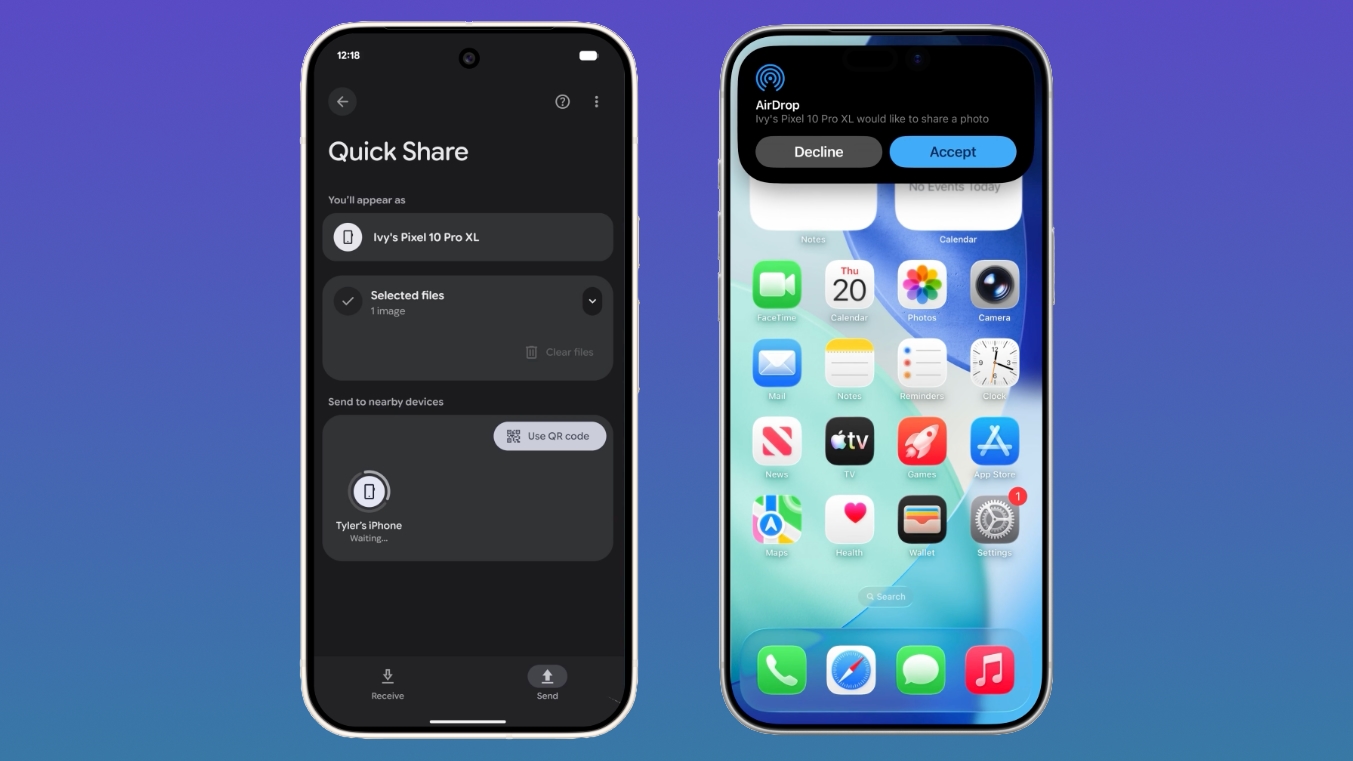
Quick Share is the Android equivalent of AirDrop, and Google added AirDrop integration in November 2025. iPhone users can AirDrop files and photos to Quick Share-enabled Android devices, while Android users can use Quick Share to send files and photos to iPhone users.
On an Android device, users need to make sure the Share with Apple devices setting is turned on and that the iPhone user sets AirDrop visibility to "Everyone for 10 minutes" through the Control Center. From there, an Android to iPhone file transfer is identical to a standard AirDrop transfer on the iPhone end.
On an iPhone, sharing a file to an Android smartphone is done through the standard AirDrop interface. Android owners receiving files will need to make sure Quick Share Receive mode is on, and then an iPhone user sending a file will see the Android device in the AirDrop list.
Android devices that are not compatible with Quick Share can generate a QR code that can be used to share content with iPhone users via the cloud.
Though Google positions the Quick Share to AirDrop file transfer feature as an Android/iPhone option, Android users can also exchange files with iPads and Macs.
Google plans to bring Quick Share to the Motorola Razr Fold 2026, OPPO Find X8 series, and HONOR Magic8 Pro in the coming months.
If you’re the type of person who uses tons of open tabs in a web browser, you’ll undoubtedly have experienced a situation where you’d like to bookmark all of the tabs you have open so that you can easily return back to your browsing session. Fortunately, the Google Chrome browser makes bookmarking all tabs in ... Read More
Google held its annual Google I/O event today, launching new AI products and giving us a look at what's coming in the near future. Google I/O is Google's equivalent of Apple's Worldwide Developers Conference, and Google's announcements offer insight into what Apple is going to be competing with in the coming months.
We've rounded up everything Google announced at I/O across its product lineup.
Gemini
Gemini Omni - Gemini Omni is a new model that can create anything from any input, and that is better at simulating gravity and kinetic energy. It combines Gemini intelligence with generative models like Nano Banana and Veo. It supports conversational language video editing, and allows users to upload videos and edit any element in the video. Omni is starting with video, but Google's Demis Hassabis says it will eventually be able to create any output from any input.
Gemini Omni Flash - Gemini Omni Flash is the first Omni model that Google is releasing, and it is available starting today in the Gemini app.
Gemini 3.5 Flash - Gemini 3.5 Flash is a new model that Google's Sundar Pichai said combines frontier intelligence with action. Flash is better across almost all benchmarks compared to 3.1 Pro, and it is "comparable to the best models" but faster. Gemini 3.5 Flash is available for everyone today across Google's products and APIs.
Gemini 3.5 Pro - Google is testing Gemini 3.5 Pro internally, and it's coming next month.
Gemini App - Google redesigned the Gemini app with a new Neural Expressive design language that's rolling out today on desktop, iOS, and Android. It features fluid animations, vibrant colors, haptic feedback, and new typography. It's also getting custom regional dialects in the next few months. Gemini Omni is available for paid Plus, Pro, and Ultra subscribers in the Gemini app today, making it easier to create and edit videos.
AI Agents for Gemini - Gemini is getting AI agents, like a Daily Brief agent that presents users with a customized daily digest. Daily Brief is rolling out today for paid subscribers.
Gemini Mac App - Mac users will be able to select a bunch of images and documents in Finder, and then press the Function key to give Gemini a voice command on what to do with the files. Google's demo involved sending an email to a dog kennel with the dog's information and image, with info pulled from Finder to generate an email using Gmail in Chrome. Voice support and Gemini Spark are coming to the Gemini Mac app this summer.
Gemini for Science - Gemini for Science is a collection of science tools, and there's also a Co-Scientist collaborative AI research partner.
AI Content Identification
Identifying AI-generated Images - C2PA content credentials are coming to Gemini and Chrome. Google's tools can tell if an image was captured with a camera or made with AI, and can determine whether an image captured with a camera was edited with AI. Users will be able to right-click on an image in Chrome and ask Gemini whether it was generated with AI.
Antigravity
Antigravity 2.0 - Google is launching a new agent-first Antigravity 2.0 app for the desktop that uses Gemini 3.5 Flash. Antigravity is Google's coding tool, and the equivalent of Copilot, Codex, and Claude Code. Gemini 3.5 Flash is 12x faster in Antigravity, which optimizes token use. Antigravity 2.0 is available globally for everyone.
Gemini Spark
Gemini Spark - Gemini Spark is a personal AI agent that helps users navigate their digital life. Gemini Spark runs on virtual machines through Google Cloud, and it is able to operate 24/7, with no need to have a laptop open for it to run. It's accessible through the Gemini app, but there will also be options to email or message it. It uses Gemini 3.5 Flash and Antigravity to work on long-running tasks in the background. It integrates with Google tools now, and Google is debuting MCP support for third-party apps in the coming weeks. Gemini Spark can do multi-step ongoing tasks, planning out subtasks and going through the steps. Gemini Spark will be available for Google AI Ultra subscribers in the U.S. next week, and it will work with Chrome later this summer.
Google Search
Google Search - Google Search AI Mode and AI Overviews now use Gemini 3.5 Flash. "Google Search is AI Search," was Google's messaging. There's a new Google Search box that's been reimagined with AI, and it changes based on how you're using it and goes "beyond autocomplete" to help you better ask questions. The search box supports images, files, videos, and Chrome tabs as input in addition to text. Pichai said it's the biggest upgrade to the search box in over 25 years, and it's rolling out today. Google is also combining AI Overviews and AI Mode into one interface.
Agents in Search - Search is gaining support for creating and managing multiple AI agents. It can keep users updated on what's going on in the world, like changes in the stock market, and send alerts. Search will be able to monitor changes on webpages, so users can get alerts on things like sneaker drops. Information Agents are coming to search in the summer, and Google plans to add more agents.
Coding in Search - Agentic coding capabilities are coming to Search. Search will be able to build a custom response on the fly with dynamic layouts, interactive widgets, and more for queries. It uses Antigravity and 3.5 Flash. Search can create tools, trackers, widgets, and dashboards. Generative UI in Search is rolling out this summer for everyone with no charge. Antigravity in Search for building custom experiences is coming in the summer for subscribers first.
Shopping in Search - Google has a new Universal Cart coming this summer to Search and the Gemini app. It's an intelligent shopping cart that works across merchants and services. You can add things to the cart when reading Gmail, watching YouTube, or browsing the web, then check out on Google or on third-party retailer sites. Google has a Universal Commerce Protocol and an Agents Payment Protocol for agentic shopping. The payments feature lets AI agents make payments on your behalf using parameters that you set like a brand and price. It's coming to Gemini Spark later this year.
YouTube
Ask YouTube - YouTube is getting an Ask YouTube feature, which is similar to the Ask Maps AI feature. It uses Gemini and lets users ask questions. It supports context and follow-up questions, and it's in testing now. It will roll out broadly in the United States this summer.
Google Docs
Docs Live - With AI integration in Docs Live, users can speak or write parameters of what they need, and Gemini can create a document. Google's Sundar Pichai said users could "brain dump" and then let Gemini "do the rest." The feature supports text-based commands for creating and editing content.
Hardware
Android XR Audio Glasses - The first Android XR audio glasses are coming this fall, providing all-day access to Gemini with responses privately spoken into the wearer's ear. The glasses can be used for taking photos, listening to music, making calls, and tapping into apps. Google worked with Gentle Monster and Warby Parker on the design of the glasses, and Samsung on hardware. The glasses will pair with Android and iOS devices.
Miscellaneous Announcements
Google AI Ultra Plan - Google has a new $100 Ultra plan, and it's dropping the price of its top-tier Ultra plan from $250 to $200.
Android AI Agents - Android Halo lets Android users keep an eye on AI agents, and it shows activity at the top of an Android device. It's coming to Android later this year.
Google Pics - Google Pics is Google's new image generating and editing tool in Google Workspace. It can create posters, flyers, infographics, and more, similar to Canva. Content is watermarked with SynthID. Pics is rolling out this summer.
Stitch - Stitch is Google's Figma-like tool that lets users build apps and websites. This year, Google is adding real-time collaborative design with Stitch Agent, exports to Antigravity, and publishing directly to Netlify.
Google Flow - Google Flow, Google's "AI creative studio" for creatives, is getting Gemini Omni, AI agents for executing multiple actions at once, and custom tools with Flow Tools. New Google Flow features are available today.
Many of Google's new features are rolling out today, with the rest planned for later this year. Apple is going to hold its WWDC 2026 keynote on June 8, and that's when we'll see if Apple debuts equivalent features.
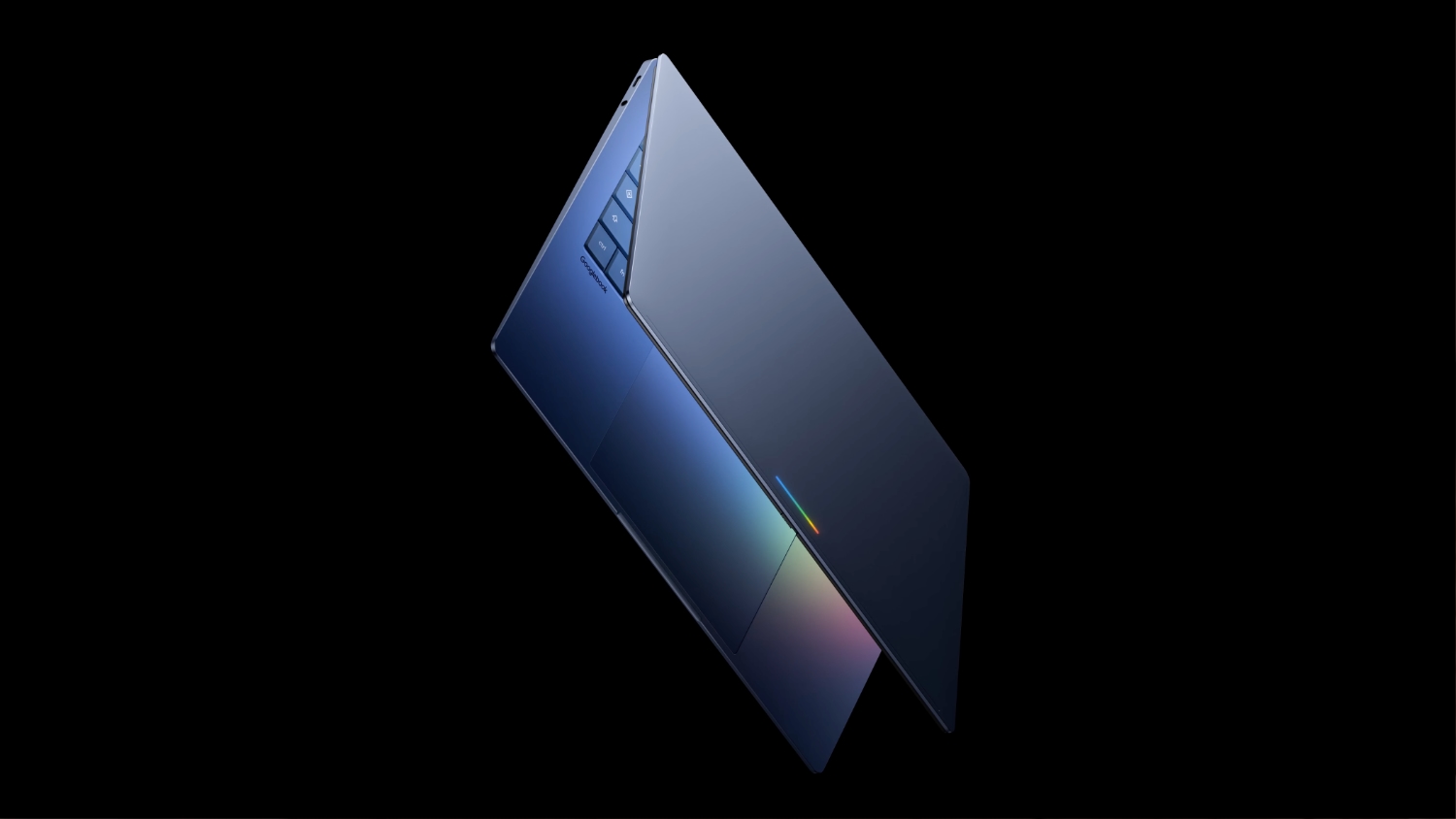
Google today announced a new series of Googlebook laptops that will be built with Gemini at the core. Googlebooks will run software built on a foundation that combines Android and ChromeOS.
Google says the new laptops are designed for Gemini Intelligence for a more personalized and proactive experience.
Instead of a cursor, Googlebooks have a Magic Pointer that users can wiggle to activate Gemini. Gemini can then provide contextual suggestions and answers based on whatever the user is pointing to on the screen. Pointing at a date in an email sets up a meeting, and selecting two images allows them to be visualized together. There are ask, compare, and combine tools available with the Magic Pointer.
Create My Widget, a new Android feature, is coming to Googlebooks. Users can create custom widgets with a Gemini prompt. Gemini is able to search the internet and connect with Google apps like Gmail and Calendar to create a personalized dashboard that can be used for widget creation.
Since Googlebooks will run Android, it will be easier to switch between a Googlebook and an Android smartphone. Apps from a connected Android smartphone will be available on the Googlebook, with a feature set similar to Apple's iPhone Mirroring.
Quick Access will let users view, search, or insert files from a smartphone on the laptop, with no transfer needed.
Google says it is working with Acer, ASUS, Dell, HP, and Lenovo to make the first Googlebooks. The machines will be built with "premium craftsmanship and materials, coming in a variety of shapes and sizes." Each one will have a "glowbar" on the lid, making it clear that it's a Googlebook.
Google has not given insight into Googlebook pricing, but with the specific "premium" build language, they could be priced above the low-cost MacBook Neo that Apple recently came out with. It's also possible that Googlebooks will have MacBook Neo-level pricing to better compete with Apple's laptop in on pricing and build quality.
The first Googlebooks are set to launch this fall.
Google today said it is introducing updated file sharing features that will make it easier for Android users to send files to iPhone users.
Quick Share is already compatible with Apple's AirDrop feature on select Android devices, but Google says the feature will expand to Samsung, OPPO, OnePlus, Vivo, Xiaomi, and HONOR devices in 2026.
On Android devices that are not compatible with AirDrop, Quick Share can be used to generate a QR code that can instantly share content with iOS devices via the cloud.
The QR code sharing feature is rolling out to all Android devices starting today, and will be fully available within the next month. Google says it also plans to make Quick Share available in apps like WhatsApp in the near future.
Google says that it also worked with Apple to make it easier to switch from an iPhone to an Android device, capabilities the two companies had to implement under Europe's Digital Markets Act. While Apple implemented the feature in iOS 26.3, Google says it will be coming to Samsung Galaxy and Google Pixel devices in 2026.
The transfer process will allow eSIM, passwords, photos, messages, apps, contacts, and Home Screen layout to migrate wirelessly from an iPhone to an Android device. Google has also implemented similar tools for simplifying switching between an Android device and an iPhone.
The Samsung Galaxy A57 has a thin body, clean software, and a good-looking screen, making it great as an everyday phone. But it struggles with performance and photography.
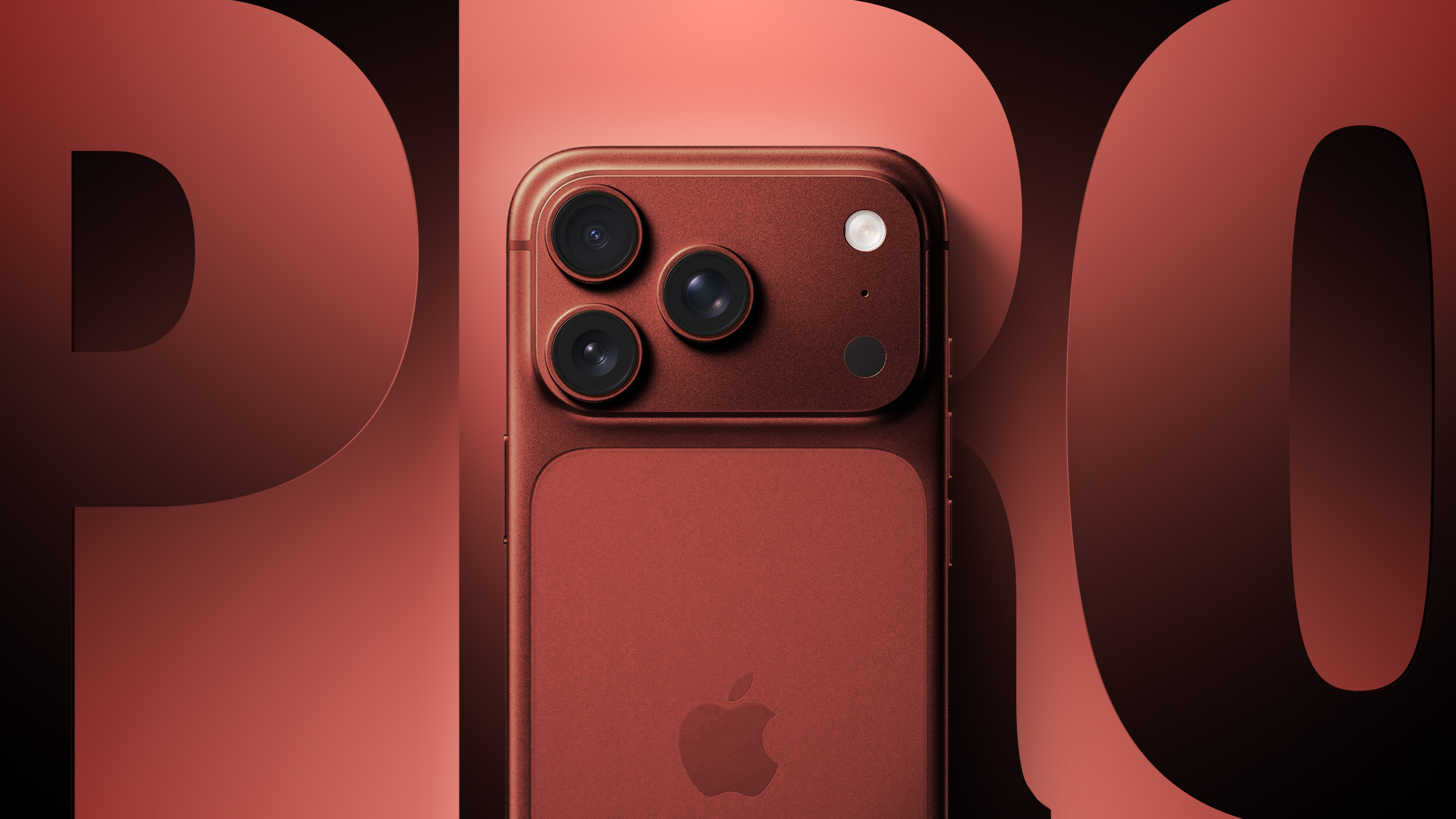
Apple's upcoming iPhone 18 Pro is very likely to come in a new deep red color, claims a Chinese leaker, because the color is already being prototyped by Android phone makers.
In February, Bloomberg's Mark Gurman reported that Apple is testing a deep red finish for the iPhone 18 Pro and iPhone 18 Pro Max. Rumors of purple and brown finishes have also circulated, but Gurman believes those are just variants of the same red idea.
Weibo-based leaker Digital Chat Station has now thrown their weight behind the rumor. In a post shared over the weekend, the leaker said there was a high likelihood that Apple is testing the deep red finish, based on the fact that they have seen the same color in prototypes of next-generation Android phones by rival brands.
It's unclear if the leaker is suggesting that Android makers have inside knowledge of Apple's color plans and are aiming to match it, or that the color's appearance is a sign of shared trend forecasting. Both Apple and Android OEMs likely rely on global color forecasting agencies that track fashion trends, and if deep red is "on trend," several companies could end up adopting it independently. However, Android makers are also well known for copying Apple's design trends.
According to Instant Digital, another Weibo-based leaker, Apple's iPhone 18 Pro models won't come in black this year. If the rumor is true, it will be the second consecutive year Apple has ditched what was arguably its most classic color option for the Pro lineup. The premium devices are expected to arrive this September alongside Apple's first foldable iPhone.
Google is expanding its cross-platform file sharing feature to additional Android devices, allowing them to transfer files to an iPhone using the AirDrop protocol. AirDrop support for Quick Share is coming to the Pixel 9, Pixel 9 Pro, Pixel 9 Pro XL, and Pixel 9 Pro Fold over the next few days.
Google announced Quick Share compatibility with AirDrop back in November, but the feature was initially limited to the newest Pixel 10 devices.
With AirDrop interoperability, Pixel 9 and Pixel 10 devices can transfer files to an iPhone, iPad, or Mac, and it works the same way as Apple device to Apple device AirDrop transfers. No internet connection is required.
To accept files from a Pixel smartphone, Apple device users need to change their AirDrop visibility to "Everyone for 10 Minutes." With the setting enabled, a file coming from an Android user looks identical to an AirDrop file from an iPhone, with the same notification and option to accept. Files are saved in the appropriate location, with a photo going to the Photos app or a document going to the Files app.
To receive files from an Apple user, the Pixel user will also need to turn on the Everyone for 10 minutes setting or enter into Receive mode on the Quick Share page. Files are saved in the Files app.
According to Google, Quick Share and AirDrop interoperability was designed with a multi-layered security approach to ensure a safe sharing experience regardless of platform. There's a secure sharing channel, built-in platform protections for Android and iOS, and a consent requirement before a file is received.
Connections between devices are direct and peer-to-peer, so data is not routed through a server. For file transfers in both directions, the Apple device or the Pixel device displays the other person's device name for verification purposes.
Apple and Google are teaming up to make it easier for users to switch between iPhone and Android smartphones, according to 9to5Google. There is a new Android Canary build available today that simplifies data transfer between two smartphones, and Apple is going to implement the functionality in an upcoming iOS 26 beta.
Apple already has a Move to iOS app for transferring data from an Android device to an iPhone, while Google has an Android Switch app that can migrate data from an iPhone to an Android smartphone. The new method will apparently replace the existing apps, offering a transfer function when setting up a new iPhone or Android device.
The collaboration will apparently add "more functionality" and support for transferring data types that are not available to transfer with the current tools.
Both Apple and Google are facing regulatory pressure around the world, with multiple countries scrutinizing practices that might keep customers locked into a platform. Making it simpler for users to transition from one platform to another will be beneficial to both companies.

 Login
Login