Login
Login
Apple Apparently Sees Camera Control as Key Foldable iPhone Feature
Apple's first foldable iPhone will be eSIM only and feature a Camera Control despite its ultra-thin design, according to a known leaker.

In a series of new posts, the leaker known as "Instant Digital" said that Apple has made deliberate engineering compromises to ensure that the first foldable iPhone features a Camera Control button, despite it being at least 1.1mm thinner than the iPhone Air when unfolded.
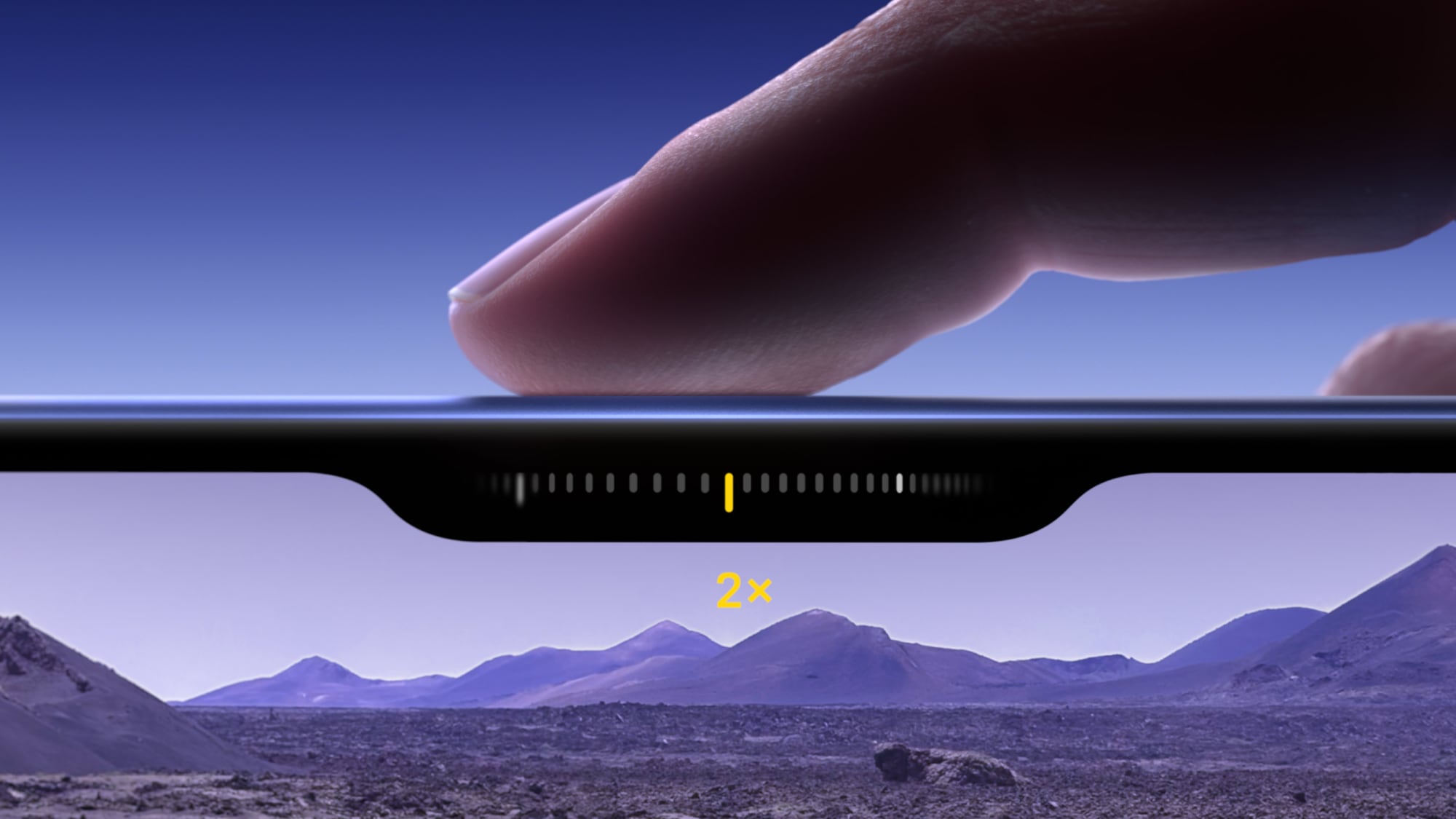
According to the leaker, Apple's rationale is largely ergonomic: With competing foldable phones, Apple believes that making adjustments and taking photos can be "cumbersome" owing to their large size. The Camera Control is said to be the company's preferred solution, enabling users to maintain a steady grip on the device while making any required adjustments, or do so one-handed if they wish.
In addition, Apple's U.S. imaging team apparently recently took a trip to Shenzhen, China, to test the cameras of foldable smartphones from rival brands such as Huawei, with particular attention to telephoto zoom capabilities. The first foldable iPhone is not expected to offer a telephoto camera, with only wide and ultra wide cameras on the rear like the iPhone 17. Most high-end rival foldable smartphones, such as the Samsung Galaxy Z Fold 7, feature three rear cameras, including a telephoto.
Instant Digital added that they have seen no signs in the supply chain of tooling or stocking for SIM card tray modules for the foldable iPhone, concluding the device will be eSIM-only across all regions, just like the iPhone Air. The leaker also puts first-year production at a conservative 10 million units, with pricing expected to fall between 15,000 and 20,000 RMB (roughly $2,060–$2,750).
The leaker added that the mainland China variants of the iPhone 18 Pro models are set to adopt a "Single SIM + eSIM" configuration, dropping the dual-physical-SIM setup currently used in the region. The Hong Kong version is said to follow the same approach while retaining a physical SIM card slot.
The foldable iPhone is widely expected to launch alongside the iPhone 18 Pro and iPhone 18 Pro Max in fall 2026. It is expected to feature a 7.8-inch inner display, a 5.5-inch outer display, Touch ID, the A20 chip, the C2 modem, and more.
This article, "Apple Apparently Sees Camera Control as Key Foldable iPhone Feature" first appeared on MacRumors.com
Discuss this article in our forums
In a series of new posts, the leaker known as "Instant Digital" said that Apple has made deliberate engineering compromises to ensure that the first foldable iPhone features a Camera Control button, despite it being at least 1.1mm thinner than the iPhone Air when unfolded.
According to the leaker, Apple's rationale is largely ergonomic: With competing foldable phones, Apple believes that making adjustments and taking photos can be "cumbersome" owing to their large size. The Camera Control is said to be the company's preferred solution, enabling users to maintain a steady grip on the device while making any required adjustments, or do so one-handed if they wish.
This ensures that even when the screen is fully unfolded, users can still perform these operations effortlessly using just one hand.
Although the reception for this button on standard flat-screen iPhones has been somewhat polarized, Apple believes that within the unique context of a foldable device's ergonomics, its practical value will be significantly enhanced. Consequently, the Apple team made a firm decision to prioritize this feature—even at the cost of sacrificing precious internal component stacking space—to ensure the "Camera Control" button is included on their very first generation of foldable iPhones.
In addition, Apple's U.S. imaging team apparently recently took a trip to Shenzhen, China, to test the cameras of foldable smartphones from rival brands such as Huawei, with particular attention to telephoto zoom capabilities. The first foldable iPhone is not expected to offer a telephoto camera, with only wide and ultra wide cameras on the rear like the iPhone 17. Most high-end rival foldable smartphones, such as the Samsung Galaxy Z Fold 7, feature three rear cameras, including a telephoto.
Instant Digital added that they have seen no signs in the supply chain of tooling or stocking for SIM card tray modules for the foldable iPhone, concluding the device will be eSIM-only across all regions, just like the iPhone Air. The leaker also puts first-year production at a conservative 10 million units, with pricing expected to fall between 15,000 and 20,000 RMB (roughly $2,060–$2,750).
The leaker added that the mainland China variants of the iPhone 18 Pro models are set to adopt a "Single SIM + eSIM" configuration, dropping the dual-physical-SIM setup currently used in the region. The Hong Kong version is said to follow the same approach while retaining a physical SIM card slot.
The foldable iPhone is widely expected to launch alongside the iPhone 18 Pro and iPhone 18 Pro Max in fall 2026. It is expected to feature a 7.8-inch inner display, a 5.5-inch outer display, Touch ID, the A20 chip, the C2 modem, and more.
Related Roundups: iPhone 18 Pro, iPhone Fold
This article, "Apple Apparently Sees Camera Control as Key Foldable iPhone Feature" first appeared on MacRumors.com
Discuss this article in our forums