Reading view

Colombia to cull wild hippos as population threatens Magdalena River ecosystems

Colombia will cull dozens of invasive hippopotamuses descended from animals illegally imported by Pablo Escobar, as authorities warn the rapidly growing population is endangering ecosystems and local communities.

Environment Minister Irene Vélez Torres said the government has authorized the euthanasia of up to 80 animals as part of a broader strategy to control the herd, which now numbers around 200 across the Magdalena River basin.

“We must act to reduce the hippopotamus population,” Vélez said, describing the cull as a “technical recommendation” following years of failed attempts to contain the species through sterilization and relocation.

The hippos — descendants of four animals brought to Colombia in the 1980s for Escobar’s private zoo at Hacienda Nápoles — have flourished in the country’s tropical lowlands, where a lack of natural predators and abundant water sources have enabled unchecked reproduction.

Scientists warn that without intervention, the population could surge to between 500 and 1,000 animals within the next decade, placing increasing strain on fragile river ecosystems.

The large herbivores consume vast quantities of vegetation and deposit significant organic waste into waterways, altering water chemistry and threatening native species, including manatees and turtles. Officials also cite rising risks to rural communities, with reports of hippos damaging farmland and attacking livestock and people.

The government’s plan, backed by a 2022 technical report from the Humboldt Institute and the National University, includes euthanasia, confinement and possible relocation. The program carries a budget of 7.2 billion pesos and is set to begin in the second half of 2026, targeting key hotspots near Puerto Triunfo and along the Magdalena River.

Previous efforts to manage the population — including sterilization campaigns in 2022 and 2023 and talks with countries such as India and Mexico to relocate animals — yielded limited results. Authorities say international transfers are unlikely, citing logistical challenges and genetic concerns linked to inbreeding.

Animal welfare advocates have condemned the cull. Senator Andrea Padilla, an outspoken animal rights campaigner, described the plan as “cruel” and accused the government of opting for the “easy way out.”

“Killings and massacres will never be acceptable,” Padilla wrote on social media, arguing the animals are victims of decades of state neglect.

But officials insist the risks posed by the species — considered among the world’s most dangerous large mammals — leave little alternative. In Africa, hippos are responsible for hundreds of human deaths each year, and Colombian authorities report increasing “hippo-human interactions,” including road accidents and attacks along riverbanks.

Escobar, who built his sprawling Napoles estate was killed in 1993, but the legacy of his private zoo has endured in unexpected ways. After his death, some animals were relocated, while others — including the hippos — escaped into the swamps.

Decades later, what began as a curiosity has become one of Colombia’s most unusual environmental dilemmas, forcing authorities to weigh animal welfare against the protection of native ecosystems.

  •  

Colombia floods revive controversy over hydroelectric dam

Flooded sugar cane fields in Colombia. Picture by Neil Palmer (CIAT) via Wikimedia Commons.

As Colombia’s northern Córdoba province continues to grapple with the aftermath of mass flooding, current and former government officials allege a pattern of mismanagement involving the Urrá hydroelectric dam.

President Gustavo Petro has accused the dam’s operators of committing an “environmental crime”, blaming corporate greed on the current natural disaster which has affected as many as 78,000 families. 

Meanwhile, the former Director of the Land Restitution Unit in Córdoba claims she was removed from her position to prevent the Urrá dam from returning land to local Indigenous groups.

Urrá’s role in the flooding

The crisis in Córdoba began at the end of January when unseasonably heavy rainfall triggered flash floods, overflowing rivers, and landslides. As of March 2, 15,000 evacuated people are still living in temporary shelters in the region, according to the United Nations Office for the Coordination of Humanitarian Affairs. 

While climate change is a key factor in the disaster – which occurred during the dry season – there are also indications of man-made causes. 

“All flooding of Urrá onto farmers’ land is a continuation of an existing environmental crime,” wrote Petro in a post on X on February 8, claiming that the dam allowed its reservoirs to fill up excessively “out of pure greed.”

The president called for the immediate resignation of the president of Urrá, Juan Acevedo Rocha, who stepped down days later. However, Acevedo denies wrongdoing and maintains the dam’s levels were 90cm below the maximum permitted. 

Petro later took aim at Urrá’s environmental impact in the region, citing the disappearance of wetlands: “Urrá was not built to generate energy but to dry up the nation’s land and damage the entire natural flow of water in Córdoba.”

Large swaths of swampland have been drained as a result of the dam blocking water flows, which has freed up land for economic purposes like agriculture and cattle ranching.

“The drying of swamps affected the natural capacity of ecosystems to regulate flooding,” wrote Carolina García Londoño, President of the Antioquia Chapter of the Colombian Geological Society, in a column for news website La Silla Vacia.

García also described “poor management” of the dam in relation to regulating water overflow. 


“It is clear that there were failures in communication with downstream communities. They were not informed in a timely manner of the opening of the floodgates,” affirmed the disaster management expert.

An alleged pattern of corruption

Controversy surrounding the Urrá dam is not new, with the project embroiled in scandal as far back as the 1990s. In 1998, the Constitutional Court ruled that the project did not consult local Indigenous groups before beginning construction on their native land, breaching the 1991 Constitution.

But a court later accepted Colombian government arguments that the dam was vital to the country’s energy needs, with the concession that Urrá would pay indemnities to Indigenous communities.

Yet local Indigenous leaders, notably Kimy Pernía Domicó, publicly campaigned against Urrá, saying it did not comply with its commitments to Embera Katío communities. Pernía was killed in 2001 by the United Self-Defense Forces of Colombia (AUC), a prominent paramilitary group.

Years later, Ana Cristina Muñoz was appointed to the Land Restitution Unit in Córdoba and Bajo Cauca, overseeing the return of lands illegally confiscated during Colombia’s decades-long armed conflict.

“I found sufficient evidence proving that the Urrá hydroelectric plant controls 123,000 hectares of land belonging to the Emberá Katío people,” Muñoz told Latin America Reports.

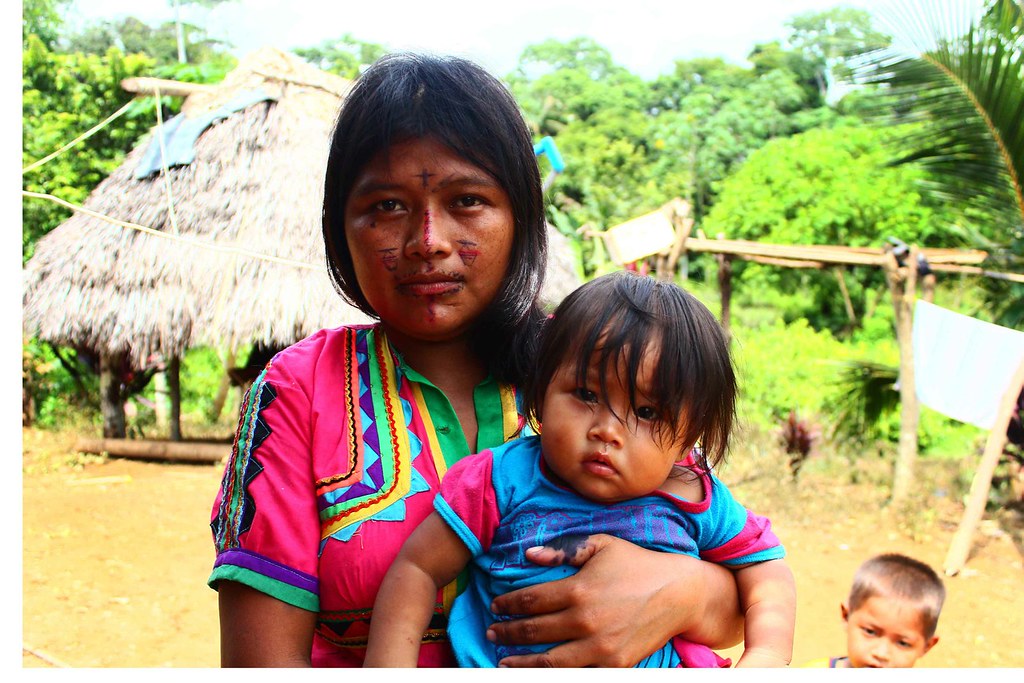
Embera Katío people. Image credit: Agencia Prensa Rural via Flickr

But in September 2024, just one day before she was due to meet 21 Indigenous authorities to sign a formal petition for the return of land restitution from Urrá, Muñoz was removed from her position.

She alleges that she was sacked because she planned to order the restitution of lands from Urrá to the local Embera Katío Indigenous population: “Urrá was directly involved in my departure.”

Following the flooding, Muñoz has been actively campaigning in Córdoba on the promise of justice for victims of the environmental disaster.

Running as part of the Frente Amplio Unitario, she hopes to finally enact land reforms in Córdoba by being elected to the Senate.

“We need to revisit this issue, through a legal battle, to see what we can achieve,” said Muñoz

The post Colombia floods revive controversy over hydroelectric dam appeared first on The Bogotá Post.

  •  

Here's Why the Apple Watch and Mac Mini Are No Longer Advertised as 'Carbon Neutral'

As noted by the French blog WatchGeneration, the Apple Watch and Mac mini are no longer advertised as "carbon neutral" products on Apple's website.


The term "carbon neutral" means that, on a net basis, a product does not add any carbon dioxide to the atmosphere. Apple achieves this by reducing emissions and through projects that offset carbon, including working with Forestal Apepu to develop fast-growing eucalyptus forests for timber production on deforested lands in Paraguay.

When paired with select bands, the Apple Watch Series 9 and Apple Watch Ultra 2 models were Apple's first carbon-neutral products, and the Apple Watch Series 10 and the latest Mac mini with M4 chips were also advertised as being carbon neutral.

In 2023, Apple said each carbon neutral Apple Watch model met the following strict criteria: 100% clean electricity used for manufacturing and product use, at least 30% recycled or renewable material by weight, and at least 50% of shipments occurring without air transportation. Apple said these combined efforts resulted in at least a 75% reduction in product emissions for the new Apple Watch models, and it said it would use "high-quality carbon credits" to address the "small amount of remaining emissions."

However, starting with the Apple Watch Series 11 and Apple Watch Ultra 3, Apple no longer includes a "carbon neutral" label on its product pages or packaging worldwide. Apple also removed the label from its Mac mini product pages. This change took effect worldwide following Apple's iPhone event in September.

There are a few reasons why.

In August, Apple's vice president of environment Sarah Chandler told Fast Company that this change was not the result of a change in the company's environmental efforts. Instead, a new law in the EU taking effect in September 2026 will ban companies from using claims like "carbon neutral" or similar across packaging, ads, and product pages.

Second, a German court ruled the Apple Watch could no longer be advertised as "carbon neutral," after a local environmental group accused Apple of "greenwashing" with misleading carbon neutrality claims. According to Reuters, some ecologists said carbon offsetting plantations can actually harm biodiversity and require high water usage.

Apple likely still considers the Series 11 and Ultra 3 to be carbon neutral internally, but it is getting ahead of laws and rulings that prevent it from advertising it. Apple removed the label worldwide to avoid potentially confusing customers.

Given the Mac mini received no changes last month, it likely remains carbon neutral too.

Apple is still aiming for carbon neutrality across its global footprint by 2030.

"We're proud of our carbon neutral products and on track to achieve carbon neutrality throughout our entire supply chain by 2030," said Apple, in a statement shared with Fast Company. "Every Apple product is designed with the environment in mind, and that commitment will continue, regardless of new EU rules restricting how we can talk about it."
Related Roundups: Apple Watch 11, Mac mini
Related Forum: Mac mini

This article, "Here's Why the Apple Watch and Mac Mini Are No Longer Advertised as 'Carbon Neutral'" first appeared on MacRumors.com

Discuss this article in our forums

  •  
❌