
Reading view

Colombia congress holds hearing on 1989 plane bombing blamed on Pablo Escobar

Families move closer to justice over the downing of Avianca Flight 203, blamed on Pablo Escobar.
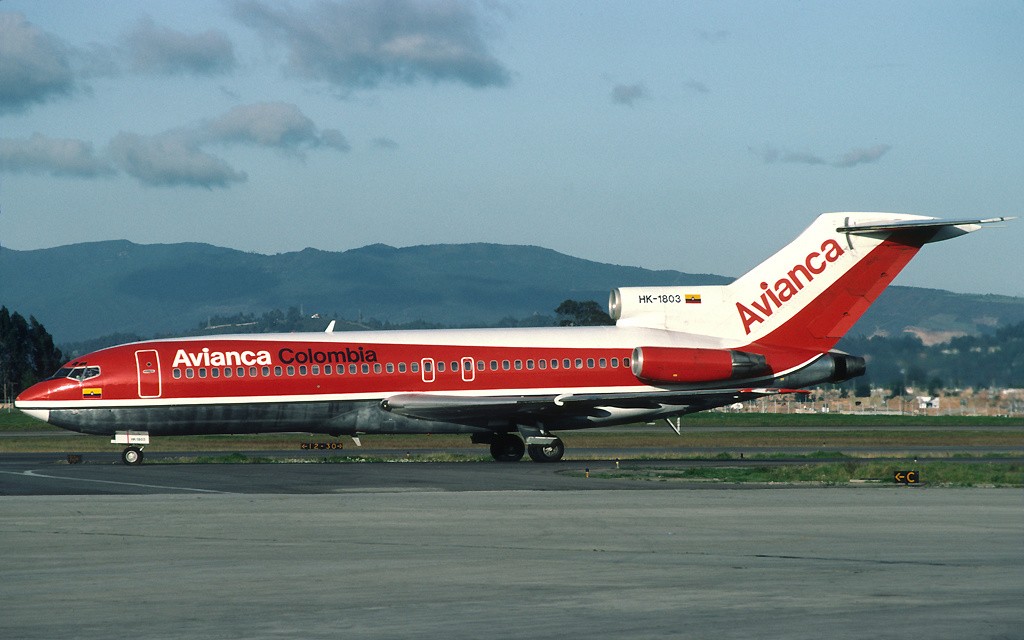
Avianca Boeing 727-21 HK-1803, which was downed in 1989. Image credit: Richard Vandervord via Wikimedia Commons.

Colombia’s Congress held a hearing on Wednesday on the bombing of Avianca Flight 203 for the first time since it happened on November 27, 1989. 

The explosion killed all 107 people on board shortly after take-off from Bogotá on its way to Cali, and has been widely attributed to Pablo Escobar’s Medellin Cartel.

Families have long demanded truth, justice and reparations for the attack, considered one of Colombia’s deadliest acts of narco-related violence.

The hearing, held as a political oversight session, focused on truth, justice, memory and reparations for victims of narcoterrorism.

The Attorney General’s Office has led the investigation for decades, but families say the process has been “painfully slow.”

“It is a case that remains in a preliminary stage, as if it had happened this morning,” Gonzalo Enrique Rojas Peña, son of one of the victims, told The Bogotá Post.

Rojas was 10 years old when his father, Gonzalo Hernán Rojas Castro, was killed. He now represents families of victims of the bombing.
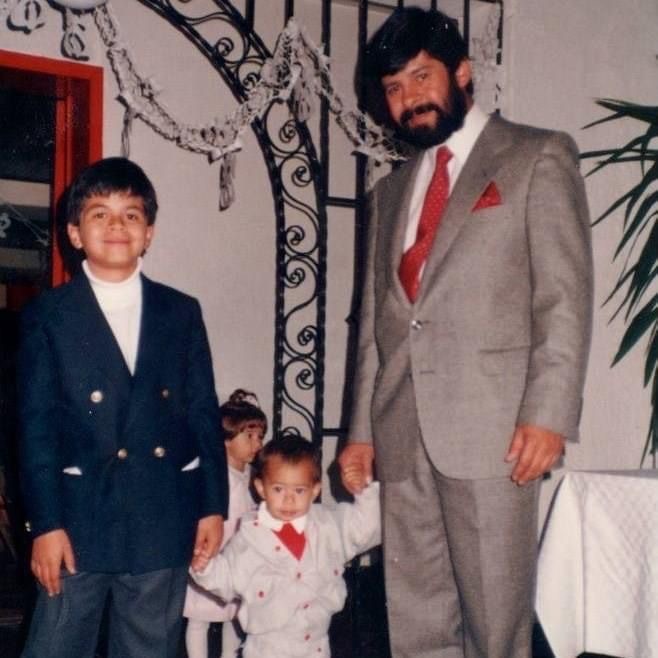
Gonzalo Rojas alongside his late father. Image credit: Catherine Ellis.

“Many aspects have not been clarified by the state, particularly regarding who planned and carried out the attack, and the possible involvement of other actors,” he explained.

The hearing highlighted questions that remain unanswered, including the identity of all those responsible and the current status of investigations.

Authorities initially attributed the attack to an assassination attempt on presidential candidate César Gaviria, who did not board the plane on the advice of his security team.

Later investigations concluded that a young man boarded the plane with explosives under orders from the Medellín Cartel, one of the most violent drug trafficking organisations in Colombia’s history. Questions around the case, however, persist, and victims continue to seek justice.

Just one person was jailed for the attack: Dandeny Muñoz Mosquera, known as “La Quica”, who was sentenced to three life terms in the United States, although he has repeatedly denied involvement.

The session was convened by the Human Rights Commission of the Chamber of Representatives and led by Representative Juan Daniel Peñuela. The National Centre for Historical Memory, the Victims’ Unit and the Ministry of the Interior were present, alongside families of victims, many of whom spoke about their loved ones.

However, two key institutions — the Attorney General’s Office and the Special Jurisdiction for Peace (JEP) — did not attend, despite being formally invited.

“On one hand we had two national institutions, but on the other it was unfortunate that the Fiscalía and the JEP did not attend. It is unfortunate that responses remain very ambiguous,” Gonzalo said.
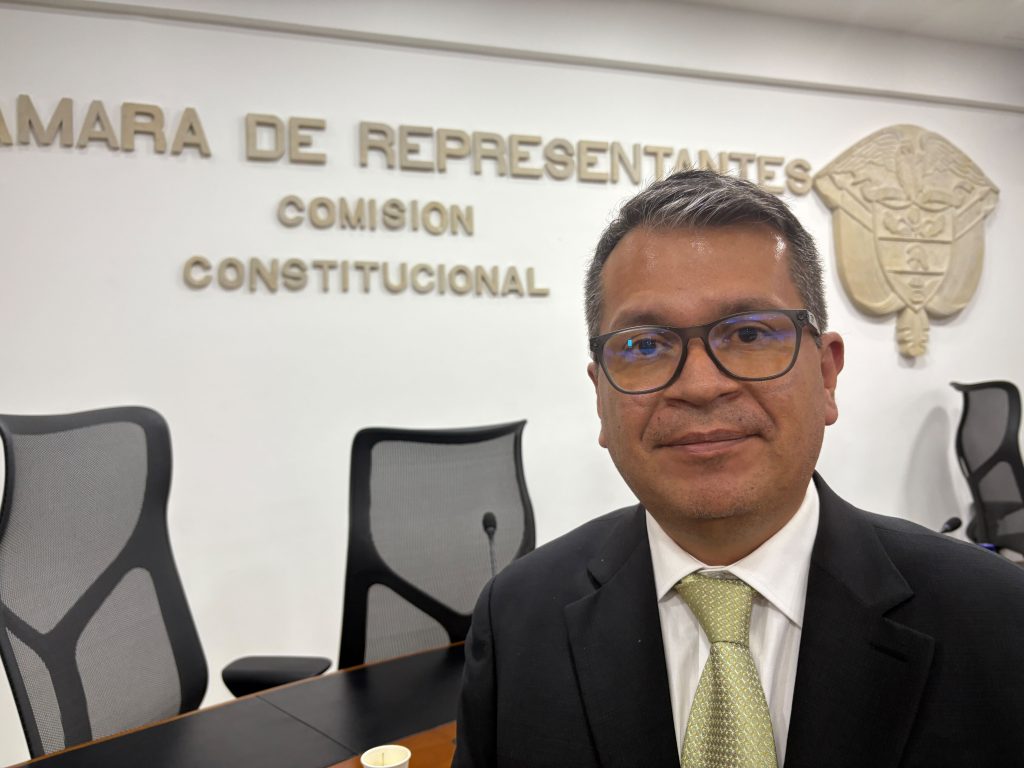
Gonzalo Rojas at the hearing on May 27. Image credit: Catherine Ellis.

The hearing also addressed the issue of reparations, which families say they have spent decades waiting for.

The Victims’ Unit said it will convene working groups to address long-standing gaps in registration and documentation that affect families’ access to reparations under Colombia’s 2011 Victims Law. The law provides recognition, financial compensation, symbolic measures and psychosocial support for victims of armed conflict.

Claudia Peñón was 17 years old when her father was killed on the flight in 1989.

“He was an excellent man and a hardworking man. He had the hope of seeing me graduate from high school, and he never got to do that,” she told The Bogotá Post, adding so many people’s lives were shattered that fateful day. “One hundred and seven families’ lives were left shattered. One hundred and seven families had their dreams destroyed.”

Her mother always expected answers, but died ten years ago without receiving them or reparations.

“She never got to see real restitution, never got to see justice in that situation. And honestly, so many other families have been failed too — and we’re still fighting,” she said. 

Families are also pushing for stronger memory-building efforts.

While there have been initiatives to recognize victims of armed conflict, the history of narcoterrorism has often been marginal in official narratives.

During the hearing, the National Centre for Historical Memory said the case has not yet been developed as a dedicated exhibition in Colombia’s planned Museum of Memory. It is included in broader reports and timelines, but could still be incorporated through a future “memory initiative”.

The hearing triggered formal follow-up steps from state institutions.

Congress will send official requests to the Attorney General’s Office over its absence and may refer the matter to the Procuraduría for review.

But for many families, the session underscored a deeper reality: after 37 years, there has been no new judicial breakthrough and no clear path to resolution.

“I think the day was partially positive,” said Gonzalo.  “I feel calm that other families were able to have a space to receive more information about the case. But there is still more to do.”

The post Colombia congress holds hearing on 1989 plane bombing blamed on Pablo Escobar appeared first on The Bogotá Post.

  •  

Medellín Cartel’s Fabio Ochoa Vasco Returns to Colombia After U.S. Prison Term

Fabio Enrique Ochoa Vasco, a former insider of the defunct Medellín Cartel, and once accused by Pablo Escobar of betrayal and marked for death, has quietly returned to Colombia after serving a prison sentence in the United States, drawing renewed attention to the discreet return of aging narcotics operatives to the country.

Ochoa Vasco, known among the cartel’s henchmen as “Kiko Pobre” or “Carlos Mario,” returned to Medellín roughly two and a half months ago after completing a nine-year prison term in the United States for drug trafficking and money laundering, according to judicial sources.

Now 65, he is reportedly living in the Antioquia capital under a low profile, far from the notoriety that once surrounded his role inside the world’s most violent cocaine empire.

His return also reflects a broader trend in Colombia, where former cartel figures, paramilitary commanders and extradited traffickers are quietly re-entering civilian life after serving lengthy prison terms abroad, often without pending criminal cases at home.

Ochoa Vasco was part of the Medellín Cartel faction led by Fernando Galeano and Gerardo Moncada, two of Escobar’s most powerful associates who controlled major cocaine routes from the municipality of Itagüí.

Known respectively as “El Negro” and “Kiko,” Galeano and Moncada were once among Escobar’s closest allies, but their relationship collapsed in 1992 when Escobar accused them of hiding millions of dollars from him while he was serving his negotiated prison sentence inside La Catedral, the luxury prison he built for himself in Envigado.

Both men were tortured and murdered inside the prison on Escobar’s orders, triggering one of the most violent internal purges in the cartel’s history.

Ochoa Vasco, who had worked closely with their network, was forced into hiding as Escobar reportedly branded him a traitor and sought to have him killed.

He later aligned himself with Los Pepes — the vigilante alliance of Escobar’s most feared enemies and whose acronymn stood for “Persecuted by Pablo Escobar”.  Escobar’s relentless campaign of car bombings and assassinations contributed to the cartel boss’s downfall before he was killed by Colombian security forces in Medellín on December 3, 1993.

But the end of Escobar did not signal the end of Ochoa Vasco’s criminal career.

According to the U.S. Department of State, he had been involved in international narcotics trafficking since the early 1980s and was allegedly responsible for sending between six and eight tons of cocaine per month from Colombia to the United States.

U.S. authorities described him as the head of a drug trafficking organization that moved multi-ton shipments of cocaine by speedboats and cargo ships from Colombia to Central America for eventual distribution in the United States.

Investigators also linked him to the now-demobilized United Self-Defense Forces of Colombia, or AUC, the right-wing paramilitary organization founded by cattle ranchers in the middle Magdalena River valley, and under command of Carlos and Fidel Castaño.

In September 2004, prosecutors in the Middle District of Florida indicted Ochoa Vasco on charges of narcotics trafficking and money laundering. He also had a previous narcotics conviction in the United States and remained a fugitive on an earlier 1989 indictment from the Southern District of Florida.

He was captured in Venezuela in 2009 and extradited to the United States, where he was sentenced to nine years in prison.

With that sentence completed and no active judicial proceedings pending in Colombia, Ochoa Vasco was been able to return to Medellín without major public attention.

His case mirrors that of other former Medellín Cartel figures who have returned after decades in U.S. prisons.

Fabio Ochoa Vásquez, the youngest member of the powerful Ochoa family and one of the cartel’s best-known figures, returned to Colombia in December 2024 after serving nearly 30 years behind bars in the United States.

Now 69, he reportedly lives in Antioquia and has resumed the family’s long-standing horse breeding business.

Carlos Enrique Lehder Rivas, one of the cartel’s most eccentric members and who oversaw Pablo’s Caribbean cocaine routes, also returned to Colombia in March 2025 after serving 33 years in U.S. custody.

At 75, Lehder now moves between Bogotá and Medellín after all Colombian charges against him were closed.

One of the earliest and most infamous examples was Griselda Blanco, the so-called “Black Widow,” widely considered a pioneer of cocaine trafficking into Florida and New York during the 1970s.

After serving roughly 20 years of a U.S. sentence, she was deported to Medellín in 2004 and lived quietly there until she was shot dead by motorcycle gunmen outside a butcher shop in 2012.

The return of these figures underscores the long afterlife of Colombia’s drug wars.

Many of the men and women once at the center of cartel violence are now elderly, legally free, and living once again in the same cities where their criminal empires flourished.

For many Colombians, their quiet reintegration raises uncomfortable questions about justice, memory and how a country still marked by the legacy of narcotics violence confronts the survivors of that era.

  •  
❌