
Reading view

Apple's Overhauled Siri Will Reportedly Run on Nvidia's Blackwell Chips

Apple will rely on Google's fleet of Nvidia chips to power its overhauled version of Siri when it launches in September, according to a new report from The Information.

Last week, the outlet reported that Apple plans to highlight the on-device AI capabilities of its devices at WWDC next week, but queries that require cloud-based processing will still fall back on one of Google's large Gemini models, as per an agreement between the two companies.

Today's report adds some specificity to the planned cloud setup by revealing that Apple will tap into Google's fleet of Nvidia Blackwell B200 data center chips, where user data will be encrypted using Nvidia's hardware-based confidential compute feature. Introduced in 2024 as the successor to Hopper, Blackwell chips are designed primarily for large language models, and can dramatically speed up AI training and inference compared to the previous generation.

The report notes that the arrangement diverges from Apple's usual strategy of "attempting to control all the critical ingredients to its products." It also adds that it's unclear how Apple's previously launched server system, called Private Cloud Compute, will fit into the upcoming Siri launch.

Private Cloud Compute runs on Apple's Mac-series chips and was announced two years ago as a way to offer cloud-based computing in a more private and secure fashion. Apple reportedly tried to get a modified version of Gemini working on its in-house server system, but found that it ran too slowly. The publication's previous report said Apple will likely retain the Private Cloud Compute branding despite the change.

Apple Intelligence was unveiled at WWDC 2024, but its rollout has been overshadowed by a lukewarm reception to its initial features and ongoing delays to the more personalized version of Siri. WWDC 2026 begins on June 8, when Apple is expected to reset the narrative by revisiting those delayed features and introducing new AI capabilities.
This article, "Apple's Overhauled Siri Will Reportedly Run on Nvidia's Blackwell Chips" first appeared on MacRumors.com

Discuss this article in our forums
  •  

Report: Apple Plans to Make On-Device AI a Key WWDC Focus

Apple reportedly plans to use next month's Worldwide Developers Conference (WWDC) to highlight its on-device AI capabilities as a competitive advantage, leaning on 15 years of custom silicon expertise to make the case for running AI models locally rather than in the cloud.


People familiar with Apple's plans speaking to The Information say the company is expected to showcase how the chips designed for iPhones, Apple Watches, and Macs give it an edge in processing AI queries directly on devices. While cloud-based processing will remain necessary for complex queries, Apple will position local inference as a privacy-preserving, cost-saving alternative to the massive data center buildouts its rivals have pursued.

As part of its agreement with Google, Apple is apparently set to use a large version of Google's Gemini model to train a smaller, distilled version capable of running locally on Apple hardware. Apple is also said to be scouting acquisitions to help advance its model-shrinking work, with one company it has reportedly considered being Liquid AI, a Massachusetts startup focused on running AI locally on devices.

Some queries will still require cloud processing. Apple is believed to have approved the use of Nvidia's confidential compute technology within Google Cloud to handle processing of the larger Gemini-based model. The security feature encrypts data and AI models during processing, adding a modest performance cost but offering stronger privacy protections.

The arrangement represents a noticeable departure from Apple's original Apple Intelligence announcement, in which the company said all cloud-bound queries would be handled exclusively by its own Private Cloud Compute infrastructure running on Apple silicon. Apple is likely to retain the Private Cloud Compute branding despite the change, people familiar with the partnership told The Information.

There are also said to be material limits to how far Apple can push on-device processing. Google's full Gemini model runs into the trillions of parameters, and The Information claims that Apple has struggled to run it on its own Private Cloud Compute infrastructure, which uses the same Apple silicon chips found in Mac computers.

‌Apple Intelligence‌ was first announced at WWDC 2024, but the rollout has been hampered by a tepid response to initial features and a protracted delay to the more personal version of Siri. Apple is now expected to use WWDC 2026, which runs from June 8 to reframe the narrative, reintroduce the delayed features, and debut new ones.
Related Roundup: WWDC 2026

This article, "Report: Apple Plans to Make On-Device AI a Key WWDC Focus" first appeared on MacRumors.com

Discuss this article in our forums
  •  

Apple Working on Plan to Allow AI Agent Apps on the App Store

Apple is looking into ways to better support apps that include AI agents and AI coding capabilities in the App Store, reports The Information. Apple is designing a system that would maintain its security and privacy standards while allowing for AI app features, but details on how the system will work are unavailable.


Apple started blocking updates for some popular vibe coding apps in March because those apps violated ‌App Store‌ rules that prohibit apps from executing code that alters their own functionality or that of other apps. Vibe coding apps let users build apps and websites with little to no coding experience, using AI agents and natural language prompts. Vibe coding has become popular, and Apple's rules have not been able to keep up.

Apps that include AI agents present similar problems for Apple. AI agents can autonomously complete complex actions and make mini apps using tools and capabilities that would not traditionally be supported under Apple's ‌App Store‌ rules. Apple will need to make changes to keep up with the software trends that developers and users want.

Apple wants to incorporate AI agents into the ‌App Store‌ while preventing some of the issues that people have run into with rogue AI agents deleting content and causing other problems.

As it works to prepare for future AI apps, Apple is also developing its own AI capabilities. Siri is set to get a major overhaul in iOS 27, making it smarter and better able to compete with Claude and ChatGPT. Apple has partnered with Google to use custom Gemini models to power ‌Siri‌.

The Information says Apple has started contacting app developers to integrate app capabilities like booking flights and sending calendar invites into the new version of ‌Siri‌ and Apple Intelligence. Some developers are hesitant to work with Apple to integrate their apps into ‌Siri‌ because they are worried about providing new ways for Apple to collect commissions. Apple is telling some developers that it does not plan to charge commissions during the early stages of the partnership, but that fees are a possibility in the future. Apple has held talks with Baidu, Alibaba, and Tencent about ‌Siri‌ integration in ‌iOS 27‌, but the companies do not want to end up paying fees to Apple.

Apple also plans to allow users to select from multiple chatbots to use with ‌Siri‌, instead of limiting people to OpenAI's ChatGPT. AI models from companies like Anthropic or Google could be used for Image Playground and Writing Tools the way ChatGPT can be used today.

It is not clear if Apple plans to open up more of iOS to third-party chatbots, but OpenAI has reportedly been disappointed with Apple's limitations. ChatGPT can be used to generate images and text through the iOS integration, but it cannot access user emails or other personal information. Customers are also rarely using the functionality, according to The Information.

Apple's new version of ‌Siri‌ is expected to be unveiled at the WWDC keynote on June 8, and the plans that Apple has for agentic AI apps in the ‌App Store‌ could also be discussed at the same time.
Related Roundup: iOS 27

This article, "Apple Working on Plan to Allow AI Agent Apps on the App Store" first appeared on MacRumors.com

Discuss this article in our forums

  •  

Report: Apple Asks Google to Run Siri on Its Servers

Apple has asked Google to investigate setting up servers in its data centers to run a future version of Siri powered by Gemini, The Information reports.


Currently, Apple sends its more complex AI queries to Private Cloud Compute, a system that runs on Apple servers using Apple silicon chips. Today, only 10% of Apple's Private Cloud Compute capacity is said to be in use on average. The usage is low enough that some servers intended for Apple's AI cloud system are still in warehouses and have not yet been installed. This could change rapidly upon the launch of the next-generation version of ‌Siri‌, which could spike Apple's demands for cloud computing.

Apple has reportedly suffered from a cultural reluctance to bolster its cloud infrastructure for years, leading to the departure of some key cloud experts from the company, such as Patrick Gates. Gates pioneered the idea of bringing Apple chips to data centers, which later formed the basis of Private Cloud Compute. The company still strongly focuses on hardware devices and consumer features rather than their supporting cloud technologies, despite the growth of services, resulting in a neglect of the need for additional capacity.

At the time Apple realized it needed to use the cloud to support its AI efforts, its internal AI infrastructure was "beginning to decay." The company was amid the process of decommissioning old Nvidia-powered servers. Combined with financial pressure, this led the company to increasingly turn to third-party providers like Amazon.

For years, Apple banned its AI engineers from Google's cloud technologies because of privacy concerns. Apple software chief Craig Federighi repeatedly vetoed Google Cloud as an option for its AI computing requirements. In 2023, Google made changes to its security systems that satisfied Apple's privacy concerns. Apple then started to adopt Google's cloud infrastructure for artificial intelligence.

The issue has been exacerbated by problems with Private Cloud Compute, which takes longer to update than other servers. Moreover, the chips currently used in Private Cloud Compute servers were designed for consumer devices and are not optimized for AI workflows, meaning that they are not well equipped to run large models like Gemini.

Apple now wants to be prepared for a potential surge in AI use on its devices when the more powerful, Gemini-based version of ‌Siri‌ debuts later this year, motivating the request for Google to run ‌Siri‌ directly on its servers. See The Information's full report for more.

This article, "Report: Apple Asks Google to Run Siri on Its Servers" first appeared on MacRumors.com

Discuss this article in our forums

  •  

Report: Apple's AI Strategy Could Finally Pay Off in 2026

Apple's restrained artificial intelligence strategy may pay off in 2026 amid the arrival of a revamped Siri and concerns around the AI market "bubble" bursting, The Information argues.


The speculative report notes that Apple has taken a restrained approach with AI innovations compared with peers such as OpenAI, Google, and Meta, which are investing hundreds of billions of dollars in data centers, chips, and large language model training. This has fueled criticism that Apple is falling behind in the AI space, particularly as Siri has significantly lagged behind more advanced, capable, and reliable conversational systems.

The report argues that market sentiment toward AI spending is beginning to show signs of skepticism, with questions emerging over whether such large investments can be justified by near-term revenue. Against that backdrop, Apple's decision to limit AI-specific capital expenditures has left it with more than $130 billion in cash and marketable securities, giving the company the option to pursue acquisitions or partnerships if valuations of AI startups fall.

Apple's biggest AI-related move in 2026 will be the long-anticipated overhaul of ‌Siri‌, which is expected to arrive in the spring. The updated assistant is set to be more conversational and capable of completing multi-step tasks. To power it, Apple is believed to be adopting Google's Gemini, reflecting an internal view that large language models may become commoditized and not worth the cost of large-scale proprietary development.

The iPhone is said to be a key strategic advantage. Unlike AI companies that rely on standalone apps or web services, Apple can distribute AI features directly through software updates and system-level integrations across its devices. Efforts by AI companies to build competing hardware face major challenges in manufacturing, distribution, and ecosystem development, areas where Apple has very strong footholds.

The Information also points to recent leadership changes as part of Apple's effort to refocus its AI work. ‌Siri‌ has been placed under Mike Rockwell, who was responsible for launching the Vision Pro headset, following significant delays to the assistant's overhaul. In addition, Apple's AI chief John Giannandrea announced his retirement earlier in December, with parts of his organization redistributed into product-focused teams amid internal concerns about a lack of clear product direction.

While Apple has a history of early but uneven AI efforts, including the original launch of ‌Siri‌ in 2011, The Information argues that these shortcomings have not materially harmed its core businesses. 2026 may be an inflection point in which Apple's cautious strategy could appear prescient if enthusiasm for large-scale AI spending continues to cool and the company finally delivers a more capable version of ‌Siri‌.
This article, "Report: Apple's AI Strategy Could Finally Pay Off in 2026" first appeared on MacRumors.com

Discuss this article in our forums
  •  

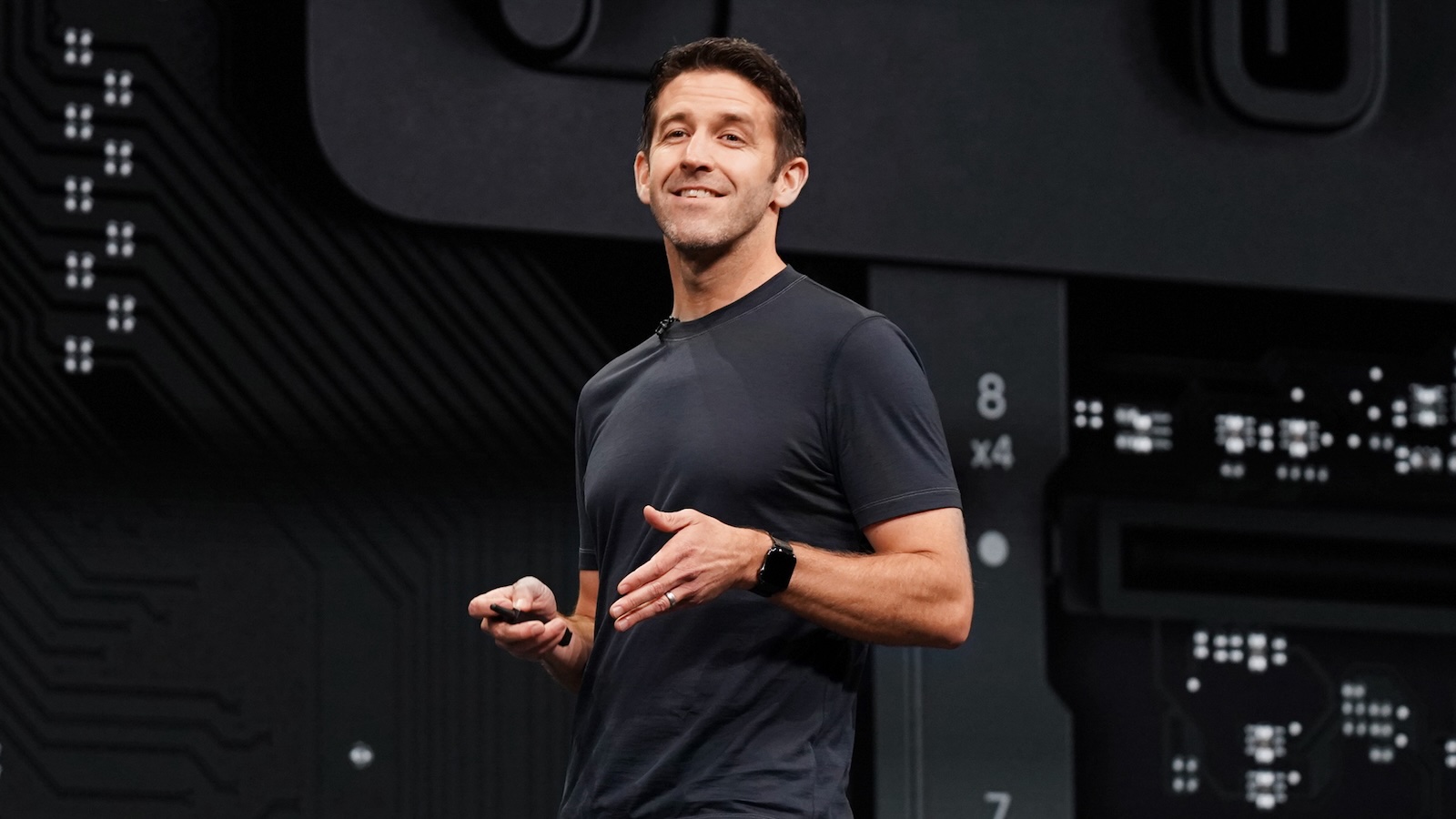
Will John Ternus Really Be Apple's Next CEO?

There is uncertainty about Apple's head of hardware engineering John Ternus succeeding Tim Cook as CEO, The Information reports. Some former Apple executives apparently hope that a new "dark-horse" candidate will emerge.


Ternus is considered to be the most likely candidate to succeed Cook as CEO. The report notes that he is more likely to become CEO than software head chief Craig Federighi, Chief Operating Officer Sabih Khan, or marketing head Greg Joswiak.

Ternus is 50 and has worked at Apple since 2001. He is known for being dependable and good at following orders with an obsessive attention to detail. Colleagues describe him as calm, emotionally intelligent, logical, and conservative. He purportedly took the fall for Apple's butterfly keyboard internally, which earned him respect. He also led the transition of the Mac to Apple silicon to much success. These situations are said to have helped Ternus earn Cook's trust.

However, some voices in the company believe that Ternus is not ready to take on the role, which could delay a succession announcement. Some skeptics inside the company say that Ternus is too risk averse, leading to frustrations within his group. For example, some in Apple's hardware engineering department were disappointed that Ternus declined to fund more ambitious projects.

One of these individuals was vice president Tang Tan, who now leads OpenAI's project to build an AI hardware device designed by Apple's former chief designer, Jony Ive. Tan and Ive have since poached a large number of hardware engineers from Ternus' team to work on the unreleased device. Other critics say that Ternus "isn't a charismatic leader" and has had little involvement in the geopolitical affairs that have dominated the attention of Cook in recent years.

While Craig Federighi could succeed Cook due to his high profile, there are concerns that his focus on software may make him a poor fit for the role. He apparently prefers tackling technical problems rather than dealing with the kind of broader issues that the role of CEO demands.

Federighi is also risk-averse and voiced disproval over the Apple's spending on the Vision Pro and its now-canceled self-driving car project. He was also initially skeptical about AI, believing that the technology was overhyped and too unpredictable.

Cook has said publicly that he wants Apple's next CEO to come from within the company, but it is possible that the company could opt for a former employee. One such individual is said to be former Apple hardware executive Tony Fadell, who co-created the iPod.

Fadell reportedly told associates recently that he would be open to replacing Cook as CEO. Some former Apple executives believe that Fadell would help "shake up" the company from the perspective of a brash product leader.

Other individuals within Apple see the prospect as "unlikely," since Fadell was a "polarizing figure" when he worked at the company. Apple passed on acquiring Fadell's smart home company Nest in 2014 because some staff did not want him to return to the company.

Regardless of who succeeds him, Cook is now thought to be highly likely to retire in the not-too-distant future. Some analysts believe that ‌Tim Cook‌ "hasn't moved fast enough" or with the urgency of executives at Meta and Google to respond to the growing challenge of AI.

There are reportedly growing signs in Cook's personal life that he could be planning to move on soon. He apparently no longer routinely rises at 4 a.m. as he once did to go to the gym. Individuals around Cook have begun to notice a slight tremor in his hands, which was also visible during a recent visit to the White House.

In addition, Cook surprised colleagues when he purchased a luxury home outside Palm Springs, California. The report notes that he used to be noticeably more frugal, such as when he chose to rent a home in Silicon Valley rather than buying one to save money.

Senior Apple employees are said to be so sure of the likelihood of major management changes at the company, which could open up new opportunities, that they have raised the situation to many who have tried to recruit them.
This article, "Will John Ternus Really Be Apple's Next CEO?" first appeared on MacRumors.com

Discuss this article in our forums
  •  

Report: Apple Considers Adding Second Camera to Delayed iPhone Air 2

Apple's reported delay of the second-generation iPhone Air will be used to work on a redesign of the device that could include a second rear camera, according to a news brief from The Information.


A redesign that includes a second camera is said to be one way that Apple thinks it can address user complaints that the iPhone Air, while an impressive design feat, has led to too many hardware compromises, especially given the high price tag.

Apple priced it starting at $999, and that appears to have put off customers, leading to reports of poor sales and manufacturing cuts. The ‌iPhone Air‌ is only $100 cheaper than the $1,099 iPhone 17 Pro, which has a triple-lens rear camera and much better battery life. Adding a second camera to the ultra-slim device would also make it look more feature-equivalent to the standard iPhone 18 and therefore more appealing to consumers.

Citing people with knowledge of the matter, the report claims that some Apple engineers want to release the redesigned version with a second camera in spring 2027, which is when Apple is expected to release the regular iPhone 18 and iPhone 18e, as part of a new split launch cycle. The iPhone 18 Pro, iPhone 18 Pro Max, and an all-new foldable iPhone are expected to launch in fall 2026, which was when the iPhone Air 2 was originally expected. The Information reported on the delay earlier this week.

The report seemingly corroborates a leak out of China last week that claimed Apple's second iPhone Air model is in development and could feature two rear cameras instead of one, with a 48MP Fusion Ultra Wide camera joining the existing 48MP Fusion Main camera. Multiple technologies are housed in the plateau of the iPhone Air to maximize space for the battery, so Apple would presumably need to redesign the internals considerably to fit in another camera.

Previous reports have said Apple's work on a second-generation version of the ‌iPhone Air‌ is aimed at reducing the weight, adding vapor chamber cooling, and improving the battery capacity.
Related Roundup: iPhone Air
Buyer's Guide: iPhone Air (Buy Now)

This article, "Report: Apple Considers Adding Second Camera to Delayed iPhone Air 2" first appeared on MacRumors.com

Discuss this article in our forums

  •  
❌