
 Login
Login
Smart Adhesive Is Key to Crease-Free Foldable iPhone Display
Advances in optically clear adhesive (OCA) will be a key factor in achieving a near-invisible crease in Apple's first foldable iPhone expected later this year, according to TrendForce.
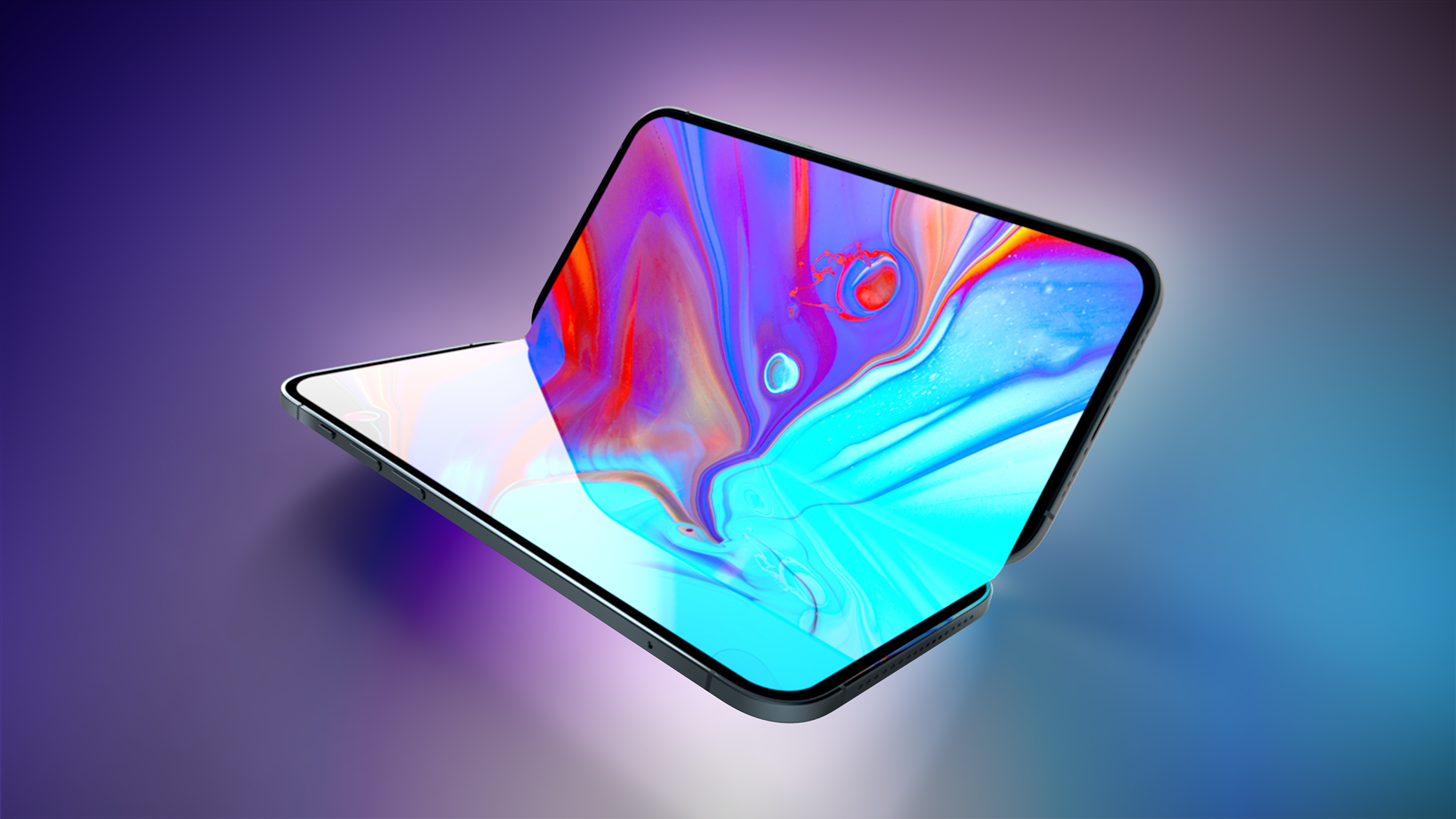
The supply chain intelligence firm outlined the key technologies in a new report on foldable display innovation, explaining that creases form when layers within the display panel fall out of alignment, concentrating stress at the fold and causing micro-cracks or permanent deformation over time.
Ultra-thin glass (UTG) also plays a role in the optimal design. Apple's patents have described a design where the glass is thinner at the fold for flexibility and thicker elsewhere for durability, which is an approach consistent with reports last year that Apple was testing uneven-thickness panels, and more recently that it may use a dual-layer glass structure to spread stress across multiple layers.
The single most important factor, TrendForce says, is OCA. Modern formulations go well beyond simple bonding, staying pliable during gradual bending to reduce fatigue while temporarily stiffening under sudden impact to provide structural support. Over time, the adhesive's ability to flow into microscopic irregularities also reduces light scattering and keeps the crease less visible.
Hinge and structural engineering still matter too. Samsung Display uses laser drilling in the metal support plate behind the display to balance rigidity and flexibility, a technique analyst Ming-Chi Kuo reported last July that Apple's foldable would also use via supplier Fine M-Tec. Samsung briefly showcased a crease-free panel at CES 2026, though it later clarified this was an R&D concept rather than a production-ready design.
Apple has reportedly pursued eliminating the crease "regardless of cost", and leaker "Fixed Focus Digital" reported in February that production orders had been placed with a crease depth under 0.15mm and a crease angle under 2.5 degrees. TrendForce estimates Apple could capture close to 20% of the foldable smartphone market this year, which it says would compress Samsung and Huawei to roughly 30% each.
The foldable iPhone is expected to be unveiled alongside the iPhone 18 Pro models in September. Foxconn began trial production last week, and Samsung Display is reportedly on track to begin mass production of OLED panels for the device in May.
This article, "Smart Adhesive Is Key to Crease-Free Foldable iPhone Display" first appeared on MacRumors.com
Discuss this article in our forums
The supply chain intelligence firm outlined the key technologies in a new report on foldable display innovation, explaining that creases form when layers within the display panel fall out of alignment, concentrating stress at the fold and causing micro-cracks or permanent deformation over time.
Ultra-thin glass (UTG) also plays a role in the optimal design. Apple's patents have described a design where the glass is thinner at the fold for flexibility and thicker elsewhere for durability, which is an approach consistent with reports last year that Apple was testing uneven-thickness panels, and more recently that it may use a dual-layer glass structure to spread stress across multiple layers.
The single most important factor, TrendForce says, is OCA. Modern formulations go well beyond simple bonding, staying pliable during gradual bending to reduce fatigue while temporarily stiffening under sudden impact to provide structural support. Over time, the adhesive's ability to flow into microscopic irregularities also reduces light scattering and keeps the crease less visible.
Hinge and structural engineering still matter too. Samsung Display uses laser drilling in the metal support plate behind the display to balance rigidity and flexibility, a technique analyst Ming-Chi Kuo reported last July that Apple's foldable would also use via supplier Fine M-Tec. Samsung briefly showcased a crease-free panel at CES 2026, though it later clarified this was an R&D concept rather than a production-ready design.
Apple has reportedly pursued eliminating the crease "regardless of cost", and leaker "Fixed Focus Digital" reported in February that production orders had been placed with a crease depth under 0.15mm and a crease angle under 2.5 degrees. TrendForce estimates Apple could capture close to 20% of the foldable smartphone market this year, which it says would compress Samsung and Huawei to roughly 30% each.
The foldable iPhone is expected to be unveiled alongside the iPhone 18 Pro models in September. Foxconn began trial production last week, and Samsung Display is reportedly on track to begin mass production of OLED panels for the device in May.
Related Roundup: iPhone Fold
Tags: Foldable iPhone, TrendForce
This article, "Smart Adhesive Is Key to Crease-Free Foldable iPhone Display" first appeared on MacRumors.com
Discuss this article in our forums

