
Reading view

Colombia on Guard as ‘Super’ El Niño Threatens Record Heat, Drought and Food Security

A potentially historic El Niño climate event is emerging as one of the defining stories for Colombia through the remainder of 2026, with authorities warning that extreme heat, drought, water shortages and energy pressures could push vulnerable regions toward crisis conditions.

Climate agencies, environmental authorities and agricultural groups are increasingly sounding alarms over what some scientists describe as a possible “super” El Niño – an exceptionally intense warming of Pacific Ocean waters capable of disrupting global weather systems and triggering severe consequences across Latin America.

In Colombia, the warnings are becoming stark.

Authorities fear a prolonged period of extreme temperatures, dwindling reservoirs, forest fires, crop failures and surging food prices that could stretch into early 2027 when typically the “summer season” starts. Officials have already begun urging Colombians to conserve water and electricity as forecasts indicate the phenomenon may intensify during the second half of the year.

The environmental authority of Cundinamarca, known as the CAR, warned that the probability of El Niño has reached 82%, threatening domestic water supplies, industrial production and hydroelectric generation across central Colombia.

“The measures of prevention and adaptation must be taken immediately,” CAR director Alfred Ignacio Ballesteros said, warning that the event could coincide with the Andean region’s traditional dry season in January and February, placing additional pressure on already strained water systems.

For Bogotá, however, authorities insist the capital is better prepared than during the water crisis of 2023 and 2024. The city’s Aqueduct and Sewer Company said no water rationing measures are currently expected despite the arrival of El Niño. Diego Montero, manager of the utility’s master water system, said reservoir levels remain stable, with the Chingaza system — including the Chuza and San Rafael reservoirs — holding nearly 20 million cubic meters above the established guidance curve. Officials also said the Tibitoc treatment plant is undergoing capacity upgrades aimed at increasing production and reducing pressure on the Chingaza system, which supplies most of Bogotá’s drinking water.

Fears beyond Inconvenience

Meteorologists predict temperatures in Colombia’s Caribbean region could surpass 40 degrees Celsius, while prolonged drought conditions may devastate agriculture and livestock production. Industry groups have warned that prices for staple foods including milk, rice, vegetables and beef could rise sharply toward the end of the year, adding renewed pressure to inflation at a moment when many households are already struggling with high living costs. A ‘super’ El Niño could push inflation above 7 percent, warns the National Association of Financial Institutions – ANIF.

Officials are also concerned about the vulnerability of Colombia’s energy grid, which depends heavily on hydroelectric power. Reduced rainfall and lower reservoir levels could increase the risk of electricity rationing or blackouts similar to those experienced during past El Niño events.

The country’s fragile páramo ecosystems and wetlands — critical natural water regulators located in the Andes — may also face heightened threats from forest fires and prolonged heatwaves. Environmentalists warn that drought could destroy sensitive habitats and endanger wildlife already under pressure from deforestation and climate change.

The emerging crisis is part of a broader global climate pattern that scientists say is being intensified by human-driven warming.

El Niño occurs every few years when ocean waters in the eastern and central Pacific become abnormally warm, altering rainfall patterns, shifting jet streams and increasing global temperatures. However, so-called “super” El Niño events are far rarer and more dangerous, with sea surface temperatures rising more than 2 degrees Celsius above historical averages.

Some climate researchers now fear the world could be heading toward one of the strongest El Niño events in modern history.

Paul Roundy, a professor of atmospheric sciences at the University of Albany, recently warned there was “real potential” for the strongest El Niño event in 140 years. Forecasts from the European Centre for Medium-Range Weather Forecasts suggest Pacific Ocean temperatures could rise three degrees Celsius above average.

Such projections have revived comparisons to the catastrophic El Niño of 1877-1878, which contributed to massive crop failures and famine across parts of India, China, Brazil and Africa. Historians estimate more than 50 million people died globally during that climate disaster.

While modern infrastructure and global trade networks make a repeat of 19th-century famine unlikely, experts say today’s interconnected crises — inflation, inequality, geopolitical conflict and fragile food systems — create new vulnerabilities.

“Hunger is fundamentally political and economic,” warns Benjamin Selwyn from the University of Sussex. “Wars disrupt trade routes, inequality restricts access to food and profit-driven agricultural systems prioritize industrial production over resilience. Climate shocks such as El Niño amplify those existing weaknesses,” writes Selwyn in The Conversation.

Studies by the UN Food and Agriculture Organization and the World Meteorological Organization have already shown that rising temperatures are reducing crop yields and making agricultural labor increasingly dangerous in tropical regions. Heat stress also lowers livestock productivity and survival rates.

In Colombia, the government of leftist President Gustavo Petro has begun discussing contingency measures, though critics argue the country remains dangerously unprepared.

Carlos Carrillo, director of Colombia’s National Unit for Disaster Risk Management (UNGRD), has called for urgent efforts to conserve water and energy while identifying regions at high risk of forest fires. There is also growing concern that years of underinvestment in water storage, energy diversification and climate adaptation could leave Colombia exposed to prolonged disruptions.

If the global forecasts prove accurate, Colombians could soon face months of punishing heat, food inflation and growing anxiety over the resilience of the country’s infrastructure in an age of accelerating climate extremes.

  •  

Extreme flooding in northern Colombia triggers humanitarian crisis

Unseasonal heavy rains and severe flooding across northern Colombia have created a full-blown humanitarian crisis, displacing hundreds of thousands, destroying homes and farmland, and pushing local infrastructure and health systems to breaking point.

The disaster has hit hardest in the department of Córdoba, where officials say 156,000 people have been affected and 80% of the territory remains underwater following rainfall that broke historical records for February, traditionally one of the region’s driest months.

“In one day we received the amount of rain expected for an entire month,” Ghisliane Echeverry, director of the Institute of Hydrology, Meteorology and Environmental Studies (Ideam), told ministers during a government emergency council meeting.

The flooding has spread across multiple departments, including Sucre, Magdalena, La Guajira, Chocó and Antioquia, but Córdoba — a key agricultural and cattle-raising hub — has borne the brunt of the devastation.

“This is much more serious than even the most pessimistic scenarios we expected,” Carlos Carrillo, director of the National Unit for Disaster Risk Management (UNGRD), said. “We are facing a severe climate crisis that has overwhelmed traditional coping mechanisms.”

Displacement and extensive damage

Preliminary government assessments report at least 14 confirmed deaths linked to flooding and landslides, while thousands of families have been forced into temporary shelters as floodwaters inundate entire neighborhoods.

In Córdoba’s rural areas, officials estimate that around 157,000 hectares of agricultural land are submerged, affecting crops such as plantain, yucca and watermelon as well as commercial monocultures like African palm. Livestock losses are mounting, with local authorities reporting that more than 5,500 animals have been affected.

“We have 1,700 homes already destroyed and 4,000 more uninhabitable,” Carrillo said, though he cautioned that final figures are expected to change once waters recede and damage is fully assessed.

The United Nations Office for the Coordination of Humanitarian Affairs (OCHA) said more than 27,000 families have been impacted by flooding across the Caribbean departments, with thousands more indirectly affected as access roads and bridges have been reduced to rubble.

Public health officials warn that overcrowded shelters are becoming hotspots for disease, exacerbated by lack of access to clean water, sanitation and essential medical care.

“We are seeing extreme levels of waterborne and respiratory illnesses among displaced families,” said a health official in Montería, the capital of Córdoba. “The combination of stagnant water, cramped conditions and limited resources is a ticking time bomb.”

Essential supplies including food, mattresses and personal hygiene products are in critically short supply in many shelters, officials said.

Cold front and climate pressures

Meteorologists have attributed the extreme rainfall to an atypical cold front entering from the Caribbean, which has pushed precipitation far above normal levels. Rainfall in some areas has been measured at more than 64% above average for January and February.

“The water levels we are witnessing have never been recorded in February,” Carrillo said. Ideam has maintained high-level yellow and red alerts for at least 16 departments as flooding and landslide risks persist.

Typically dry early months of the year have instead seen consistent rains, and meteorologists warn that March and April could bring the usual seasonal rains, compounding the already dire situation.

Local officials across affected regions reported severe disruptions to vital road networks, bridges and public services, isolating some communities entirely. In the Urabá Antioqueño in western Antioquia, authorities said more than 9,000 families were left displaced in 13 municipalities that declared calamity.

Despite the scale of the disaster, the national government has not formally declared an economic emergency, a move that would unlock additional disaster funds and expedite aid. President Gustavo Petro, who convened a council of ministers in Montería, has signaled that such a declaration is under consideration.

“The magnitude of these floods demands a national response,” one government official said. “We are mobilizing resources but the scale of the crisis is beyond anything we normally plan for.”

The response has also brought renewed scrutiny to long-standing water management challenges in the region. Carrillo and other government officials have criticized decades-old hydraulic works, including reservoirs and levees, for altering natural water flows and potentially exacerbating flooding.

President Petro echoed these concerns on social media, singling out infrastructure such as the Urrá hydroelectric reservoir — built in the 1990s — as part of the region’s broader hydrological challenges.

“These reservoirs were not designed to manage excess water but to drain lands and disrupt natural flow patterns,” Petro wrote, arguing that such interventions may have contributed to current conditions.

Communities struggle amid uncertainty

In two coastal departments – La Guajira and Magdalena – continuous rainfall has caused streams to overflow and paralyzed mobility, while in the colonial port city of Santa Marta, strong winds and currents drove a cargo vessel ashore, highlighting the intensity of the storms.

For residents in isolated rural towns, the toll is deeply personal. Entire families have lost homes and livelihoods, and many are now waiting for relief that has been slow to reach remote areas.

“We’ve never seen water this high,” said a farmer in northern Córdoba. “We are afraid of what comes next — we don’t know how we will recover.”

With rains expected to continue over the coming weeks, authorities and humanitarian organizations warn that the full scale of the disaster may not be known for months, and that recovery will require sustained national and international support.

  •  

Tropical storms batter Colombia’s Caribbean coast, flooding tens of thousands of homes

Powerful storm surges and weeks of unusually intense rainfall have triggered widespread flooding across Colombia’s Caribbean coast, affecting more than 50,000 families, damaging homes and infrastructure, and placing hundreds of thousands of livestock at risk, authorities said.

The floods have hit the Magdalena River basin and large swathes of northern Colombia, forcing beach closures in major tourist hubs and leaving vast rural areas under water, particularly in the department of Córdoba, one of the country’s most productive cattle-raising regions.

In Cartagena, Colombia’s flagship Caribbean destination, six-foot waves driven by strong winds washed ashore this week, prompting authorities to close beaches and confine tourists to hotels as storm conditions intensified. Local officials warned that continued rough seas could further disrupt port operations and tourism activity.

Córdoba has borne the brunt of the emergency. According to local authorities, up to 70% of the department remains flooded after rivers burst their banks following sustained heavy rainfall. The National Federation of Cattle Ranchers (Fedegán) said losses to agriculture and livestock production were already “in the millions of dollars.”

Leonardo Fabio de las Salas, Fedegán’s coordinator in Córdoba, said 20 municipalities were flooded, with 4,778 rural properties submerged and more than 263,000 animals at risk. “Córdoba is the most severely affected department so far,” he said.

The floods have killed at least five people in Córdoba and left 24 of its 30 municipalities in a state of emergency, according to Colombia’s disaster management agency.

Carlos Carrillo, director of the National Unit for Disaster Risk Management (UNGRD), confirmed that the entity will oversee the delivery of emergency aid kits to affected families. The agency said more than 7,500 humanitarian kits — including food, hygiene products, cooking supplies and blankets — have already been distributed in municipalities such as Ciénaga de Oro, Montelíbano, Moñitos and Puerto Libertador.

Additional deliveries are being extended to Canalete, Cereté, San Pelayo and San Bernardo del Viento, while a new phase of assistance has been scheduled for towns including Lorica, Sahagún, Valencia and Puerto Escondido, some 6,000 families are expected to receive aid this week.

Córdoba Governor Erasmo Zuleta described the situation as one of the worst climate emergencies the department has faced in recent years. “The balance for Córdoba is very sad, very hard,” Zuleta said in a radio interview. “We have 23 of our 30 municipalities affected, 12 of them in critical condition. Around 20,000 families are currently displaced or severely impacted by the rains.”

The extreme weather has not been confined to Córdoba. In Santa Marta, a diesel tanker ran aground on Los Cocos beach on Tuesday morning near the city’s historic center after losing maneuverability amid strong currents and gale-force winds. The vessel remained stranded overnight, with authorities saying hazardous sea conditions continued to hamper efforts to remove it.

The incident also highlighted the scale of debris and waste washed ashore by the storm surge along Colombia’s Caribbean coastline. Local authorities in Santa Marta, echoing measures taken earlier in Cartagena, ordered the temporary closure of beaches as a cold front from the northern hemisphere intensified rainfall, winds and rough seas across the region.

Residents filmed the cargo vessel as it became lodged in the sand just meters from the shore, near the city’s marina. Officials have not yet said how long it will take to refloat the ship, citing ongoing maritime risks.

The first months of 2026 have been marked by persistent and unusually heavy rainfall across Colombia, from the Caribbean coast to central and western regions. Authorities say swollen rivers, landslides and flash floods have destroyed homes, killed people and animals, and caused widespread material losses.

Meteorological officials have warned that further rainfall is expected in the coming days, raising concerns that flooding could worsen in already saturated areas as emergency services struggle to reach remote communities.

  •  

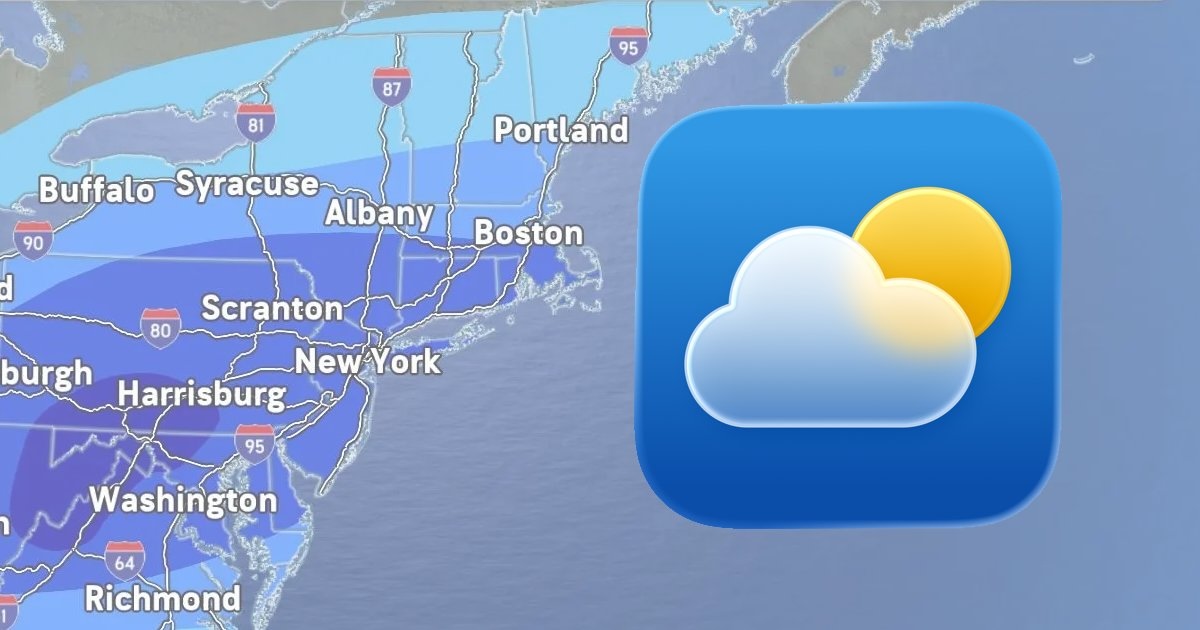
Apple Weather App Predicts Lots of Snow: What's Behind the Forecast?

A major storm system is expected to deliver significant snowfall and freezing rain across more than half of the United States this weekend, with winter weather alerts in effect in cities like Atlanta, Baltimore, Boston, Charlotte, Cleveland, Dallas, Indianapolis, Nashville, New York, Philadelphia, Raleigh, Washington D.C., and others.


On the iPhone, iPad, and Mac, the Apple Weather app has forecasted up to two feet of snowfall in some cities, which has led to a lot of discussion about the app and how its forecasts can sometimes significantly differ from other weather providers.

The New York Times today reported on the topic. First, it said "many weather apps" show the results from a single forecast model, whereas meteorologists will often look at many models. Second, it noted that meteorologists caution that it can be difficult to forecast specific precipitation amounts several days in advance of a storm.

As this system approaches, snowfall estimates shown in the Apple Weather app have decreased in many cities compared to what was originally forecasted, but the amounts remain significant in many areas. Other cities may experience freezing rain, sleet, or a wintry mix, and the weather could cause power outages in some locations.

Apple Weather Data Sources


In 2020, Apple acquired the popular weather app Dark Sky, and it has since integrated the app's features and hyperlocal forecasts into the Apple Weather app. In a support document, however, Apple says that it still gathers at least some weather data from sources including the U.S. National Weather Service, The Weather Channel, and others.

Severe Weather and Next-Hour Precipitation Notifications


In the U.S., you can receive severe weather and next-hour precipitation notifications on your iPhone by opening the Apple Weather app, tapping on the list icon in the bottom-right corner, tapping on the three dots in the top-right corner, selecting Notifications, and turning on both types of notifications under Current Location.
This article, "Apple Weather App Predicts Lots of Snow: What's Behind the Forecast?" first appeared on MacRumors.com

Discuss this article in our forums

  •  

Apple's Weather via Satellite Feature in iOS 26 Beta Code is Still Missing

A little more than three months ago, MacRumors contributor Aaron Perris discovered references to an unreleased "Weather via satellite" feature in the code for the first iOS 26 developer beta. However, just one day before iOS 26 is set to be widely released, the feature has yet to be released or even announced by Apple.


The references have not been removed from the code, as of the iOS 26 Release Candidate, so it is possible that Apple will introduce the feature eventually. Perhaps the feature will be added in a follow-up update, such as iOS 26.1 or iOS 26.2.

The feature would let you view the forecast and other weather information in the Weather app, in supported areas without Wi-Fi and cellular range. Apple's other satellite features include Emergency SOS via satellite, Messages via satellite, Find My via satellite, and Roadside Assistance via satellite, with availability varying by country.

Apple has yet to charge a fee for any of its satellite features. Last week, the company announced it is providing existing iPhone 14 and iPhone 15 users with an additional year of free access to the entire suite of satellite features on those devices.
Related Roundups: iOS 26, iPadOS 26
Related Forum: iOS 26

This article, "Apple's Weather via Satellite Feature in iOS 26 Beta Code is Still Missing" first appeared on MacRumors.com

Discuss this article in our forums

  •  
❌