Reading view

iPhone 17 vs. iPhone 16 Wi-Fi Speeds: New Study Reveals the Winner

A new study has revealed that the iPhone 17, iPhone 17 Pro, iPhone 17 Pro Max, and iPhone Air achieve significantly faster average Wi-Fi speeds compared to the iPhone 16 series, thanks to Apple's custom-designed N1 chip.


The study was conducted by Ookla, the company behind the popular Speedtest website and app. It said the results are based on global, crowdsourced Speedtest user data collected from September 19 to October 29 of this year.

Ookla said Apple's N1 chip is a "substantial upgrade," with up to 40% faster average download and upload speeds compared to Broadcom's Wi-Fi chip in the iPhone 16 series. The study found that speeds were faster across every country it analyzed, including the United States, France, Italy, the United Kingdom, India, Japan, and others.

The study found that the N1 chip "lifts the floor" for Wi-Fi performance, more than "raising the ceiling." Based on the results, Ookla said the N1 chip often delivers more consistent performance in challenging Wi-Fi conditions.

In the United States in particular, Ookla said the iPhone 17 and iPhone Air series achieved a median average Wi-Fi download speed of 409 Mbps, compared to 350 Mbps for the iPhone 16 series. That is a nearly 17% increase.
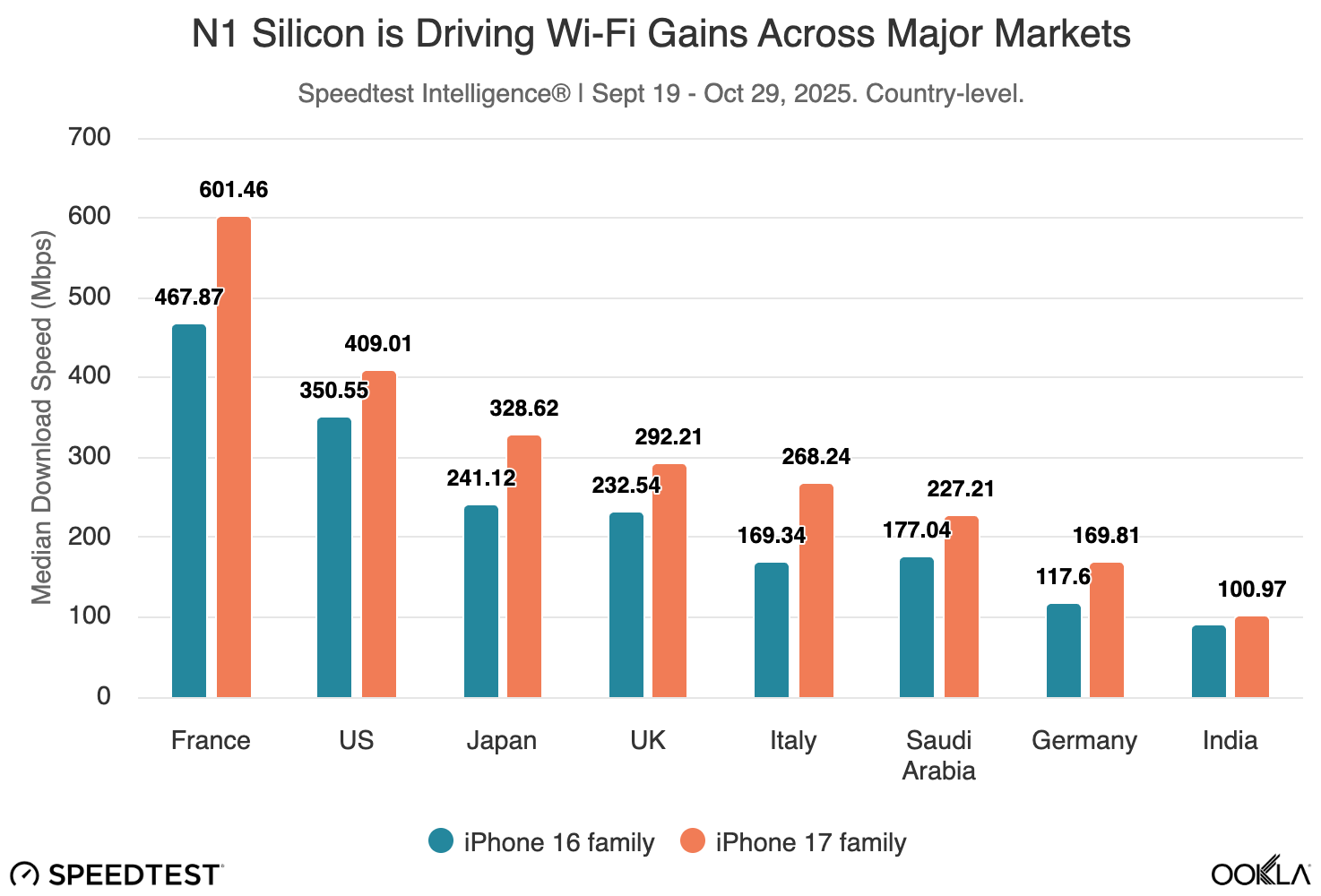

Head over to Ookla's website for more charts.

A few months ago, we reported that the N1 chip supports up to 160 MHz channel bandwidth for Wi-Fi 7, short of the standard's 320 MHz maximum. This limitation means the devices cannot achieve the peak theoretical speeds possible with Wi-Fi 7, but we said this was a non-issue for most customers, and the study backs that up.

Ookla said the results show the 160 MHz limitation "does not materially affect performance in real world use for most people."

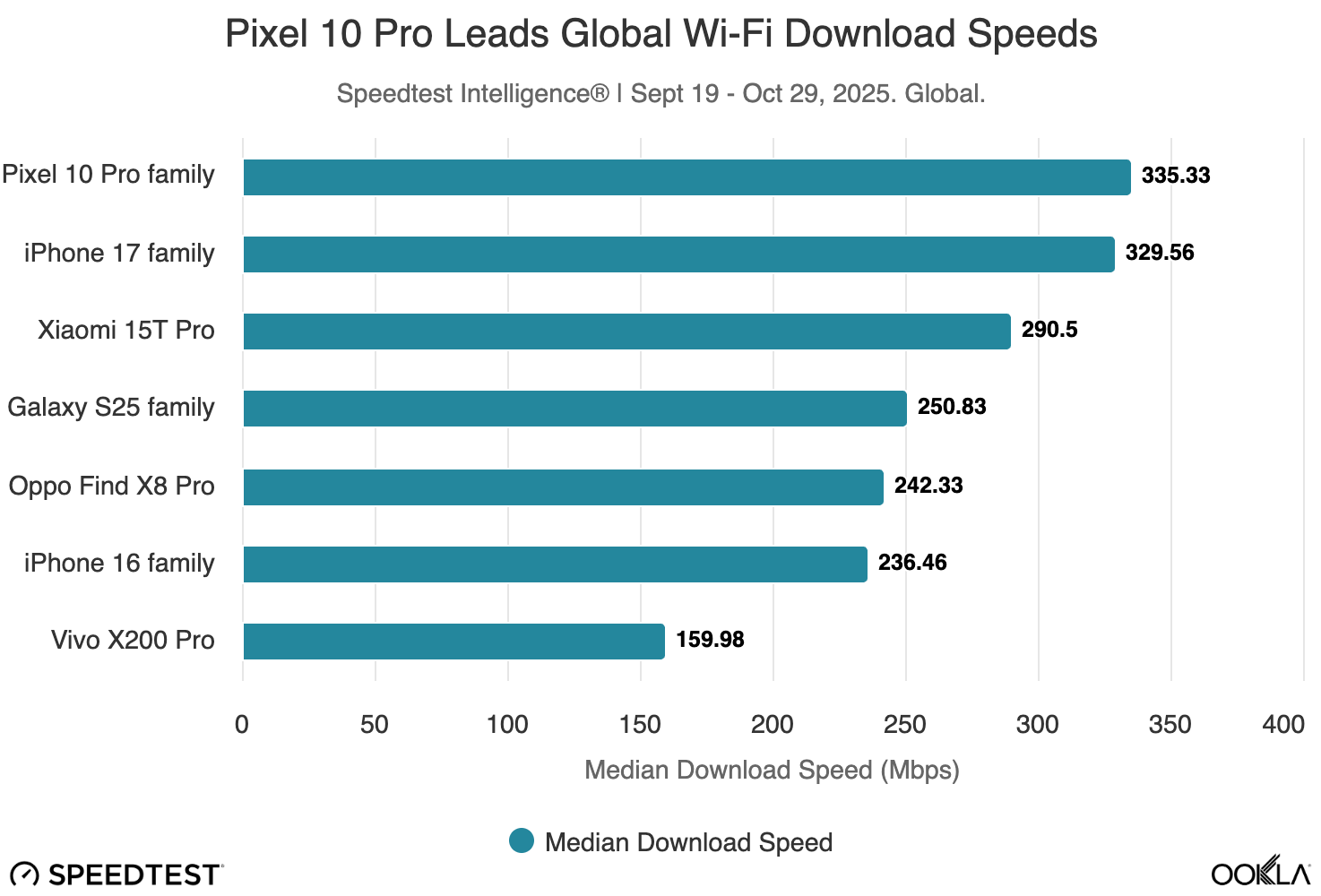
While the study found the iPhone 17 and iPhone Air series tops the iPhone 16 series in terms of average global Wi-Fi download speeds, Ookla said the Google's Pixel 10 Pro series was even faster, but only by a slim margin.

The Pixel 10 Pro came in at 335 Mbps, edging out the iPhone 17 series at 329 Mbps.

All in all, the study reveals that the N1 chip is an upgrade, not a downgrade. If you are considering purchasing any of the iPhone 17 or iPhone Air models, it looks like you can be confident that Wi-Fi performance will not be an issue.
Related Roundups: iPhone 17, iPhone 17 Pro, iPhone Air
Tags: N1 Chip, Ookla
Related Forum: iPhone

This article, "iPhone 17 vs. iPhone 16 Wi-Fi Speeds: New Study Reveals the Winner" first appeared on MacRumors.com

Discuss this article in our forums

  •  

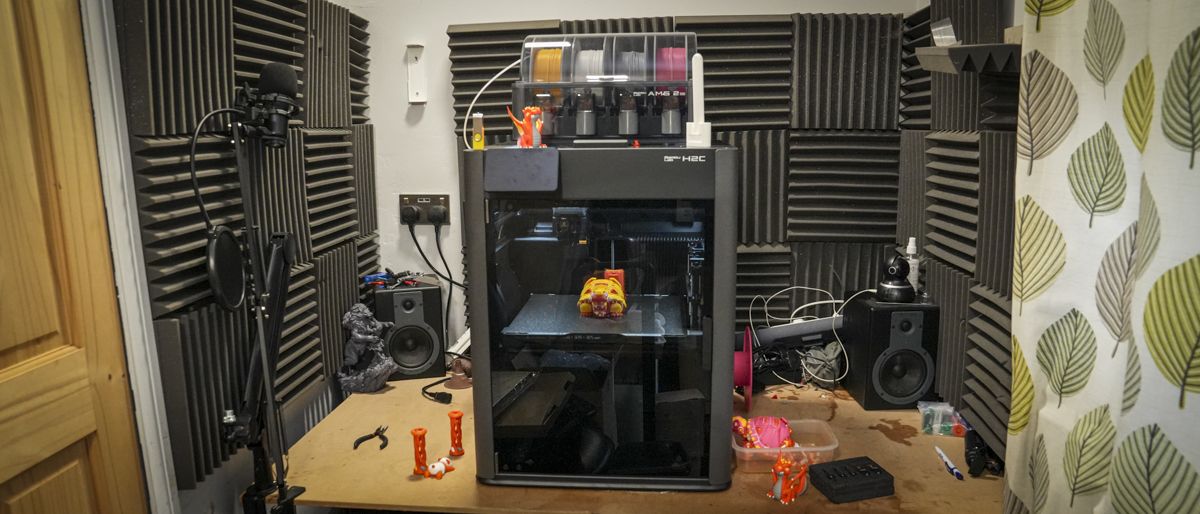
I've spent the past month testing the Bambu Lab H2C 3D printer and it's not what I was expecting - it's actually much better

The H2C is one of the most anticipated machines for a long time, featuring not only a dual head but the Vortek Hot-end Change System. It features six mechanically mounted hot ends that are inductively heated to enable up to 7 colours/materials straight out of the box, and most importantly, a design that creates less waste than previous multifilament machines.

  •  

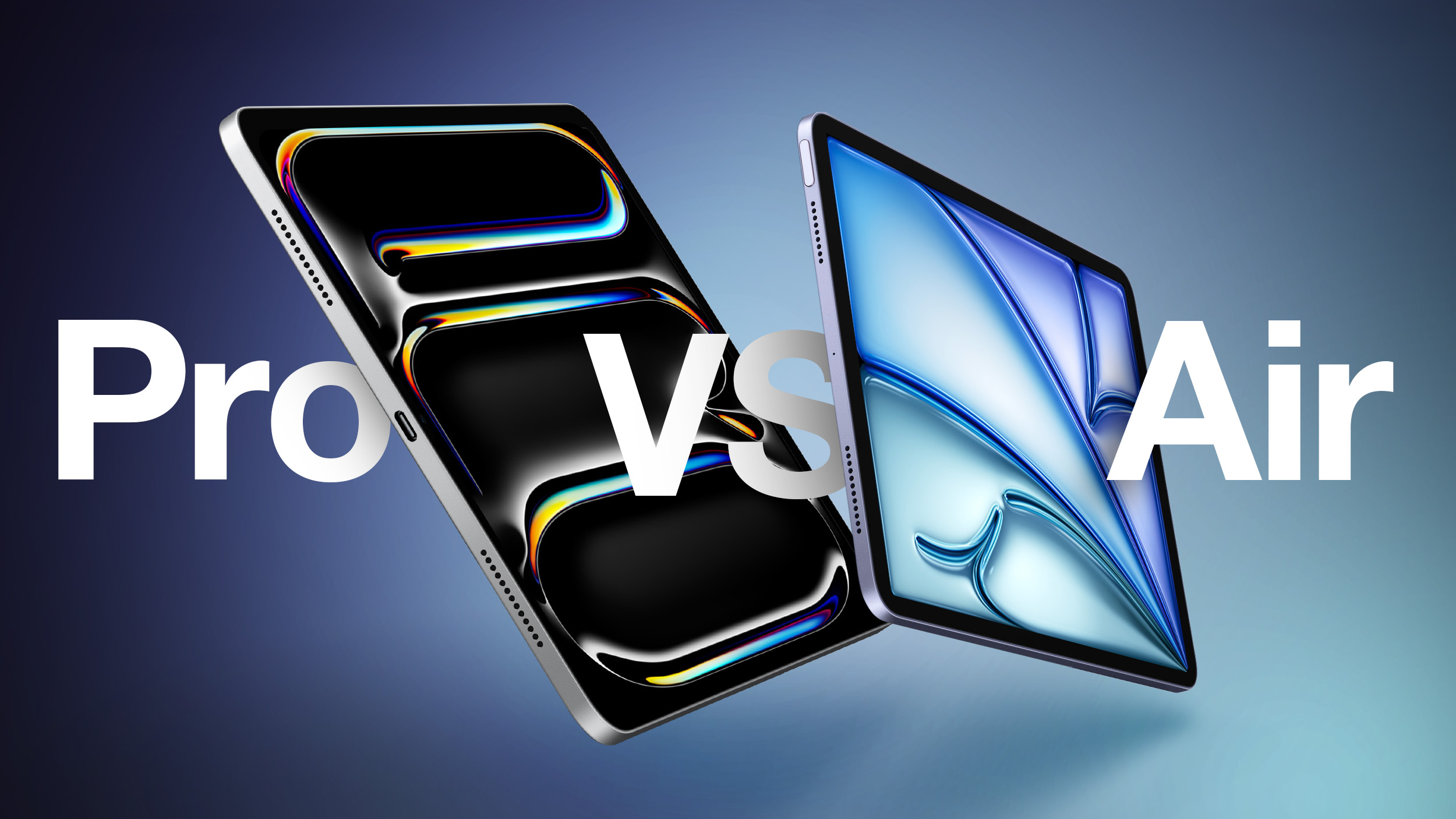
M3 iPad Air vs. M5 iPad Pro Buyer's Guide: All Differences Compared

Apple recently updated the iPad Pro, widening the gap with the iPad Air, but how different are the two product lines and which should you buy?


Earlier this year, Apple refreshed the ‌iPad Air‌ with the M3 chip—a minor update over the previous model from 2024 which added the M2 chip and Apple Pencil hover. The latest ‌iPad Pro‌ models introduced the M5 chip alongside a small number of changes after last year's major redesign, which saw the debut of a thinner design with OLED displays.

Should you consider purchasing the ‌iPad Air‌ to save money, or do you need the high-end features of the ‌iPad Pro‌? Our guide answers the question of how to decide which of these two iPads is best for you.


‌iPad Air‌ (M3, 2025) ‌iPad Pro‌ (M5, 2025)
Liquid Retina display (LED backlit display with IPS technology) Ultra Retina XDR display (Tandem OLED)
ProMotion technology for refresh rates up to 120Hz
11-inch model SDR brightness: 500 nits max
13-inch model SDR brightness: 600 nits max
SDR brightness: 1,000 nits max
XDR brightness: 1,000 nits max full screen, 1,600 nits peak (HDR content only)
Nano-texture display glass option on 1TB and 2TB models
Drive external displays at 60Hz Drive external displays at up to 120Hz
Adaptive Sync support
‌M3‌ chip M5 chip
Made using TSMC's first-generation 3nm technology (N3) Made using TSMC's third-generation ‌3nm‌ process (N3P)
Based on A17 Pro chip from iPhone 15 Pro (2023) Based on A19 Pro chip from iPhone 17 Pro (2025)
8-core CPU (4 performance + 4 efficiency cores) Up to 10 CPU cores (4 performance + 6 efficiency cores)
9-core GPU 10-core GPU
Integrated Neural Accelerator in every GPU core
Metal 4 developer APIs Metal 4 developer APIs with Tensor APIs to program GPU Neural Accelerators
LPDDR5 memory LPDDR5X memory
8GB of memory 256GB and 512GB models: 12GB memory
1TB and 2TB models: 16GB memory
100 GB/s memory bandwidth 153 GB/s unified memory bandwidth
Dedicated display engine
First-generation ray tracing engine Third-generation ray tracing engine
First-generation dynamic caching Second-generation dynamic caching
Shader cores Enhanced shader cores
GPU with standard power efficiency More power-efficient GPU: Maintains performance with significantly less power
Improved thermal design with graphite sheets and copper
Broadcom Wi-Fi and Bluetooth chip N1 chip
Bluetooth 5.3 Bluetooth 6
Wi-Fi 6E connectivity Wi-Fi 7 connectivity
Qualcomm Snapdragon 5G modem (cellular models only) C1X chip (cellular models only)
Touch ID in top button TrueDepth camera system for Face ID
Portrait mode with advanced bokeh and Depth Control
Portrait Lighting with six effects (Natural, Studio, Contour, Stage, Stage Mono, High-Key Mono)
Animoji and Memoji
LiDAR scanner
Adaptive True Tone flash
Rear ambient light sensor
ProRes video recording up to 4K at 30 fps (1080p at 30 fps for 256GB capacity)
ProRes video recording up to 4K at 60 fps with external recording
Two microphones Four studio-quality microphones
Audio zoom
Stereo recording
Landscape stereo speakers Four speaker audio
Weight: 462 grams or 617 grams Weight 444 grams or 579 grams
Depth: 6.1 mm Depth: 5.3 mm or 5.1 mm
Fast-charge capable (Up to 50% charge using a 60W adapter or higher in 30 minutes with the 11-inch model or 35 minutes with the 13-inch model)
USB‑C connector USB‑C connector with support for Thunderbolt/USB 4
Supports Magic Keyboard for ‌iPad Air‌ Supports Magic Keyboard for ‌iPad Pro‌
128GB, 256GB, 512GB, or 1TB storage 256GB, 512GB, 1TB, or 2TB storage
Up to 2× faster SSD read and write speeds
Available in Space Gray, Starlight, Purple, and Blue Available in Space Black and Silver
Price starting at $599 Price starting at $999


Overall, the ‌iPad Air‌ is the better option for the majority of users, simply on the basis of value for money. For most people, the additional $400+ needed to buy the ‌iPad Pro‌ is not justified to get the likes of ‌Face ID‌, a thinner design, four-speaker audio, and a ProMotion OLED display with refresh rates up to 120Hz.

Some ‌iPad Pro‌ features, such as LiDAR, up to 16GB of memory, and Thunderbolt connectivity are only practically useful to a small niche of users and most will never use some of these high-end capabilities. Many features, such as Adaptive Sync and Audio zoom, will not be meaningfully utilized by many users.

Professionals who have a clear use case for needing larger amounts of RAM and storage, a matte display, Thunderbolt connectivity, and OLED for HDR content will clearly benefit from buying the ‌iPad Pro‌. That being said, "prosumer"-style customers who simply want the best iPad will enjoy features such as 120Hz ProMotion for smoother scrolling and gaming, a thinner design, deeper blacks and more vivid colors with the OLED display, and the Adaptive True Tone flash for document scanning, even if they are not necessary.

Beyond these individual circumstances, the ‌iPad Air‌ is the best value for money and will be more than ample for most users' needs. With the ‌iPad Air‌, users can get a modern all-screen design, the M3 chip, practical features like USB-C and 5G connectivity, and compatibility with the core Apple accessories for a price well below that of the ‌iPad Pro‌.

A new ‌iPad Air‌ with the M4 chip is in development and will likely launch in the first half of 2026, which may be worth bearing in mind if you aren't in a hurry to make a purchase. The new chip is expected to be the main upgrade, with few other new features or enhancements expected.
Related Roundups: iPad Air , iPad Pro
Related Forum: iPad

This article, "M3 iPad Air vs. M5 iPad Pro Buyer's Guide: All Differences Compared" first appeared on MacRumors.com

Discuss this article in our forums
  •  

I reviewed the Falcon A1 Pro and this impressive desktop laser engraver is perfect for small businesses

The Falcon A1 Pro is one of the smallest laser engravers of its type, offering both the 20W blue laser for cutting and an optional 2W IR laser for fine detail. Features include auto-focus, camera-assisted positioning, and CoreXY mechanics for speed, making it a perfect fit if you're a small business and don't want the bulk of more advanced machines.

  •  

Video: Testing the New M5 Apple Vision Pro

Apple recently refreshed the Apple Vision Pro, adding a new M5 chip for improved performance. There aren't design changes, but Apple did introduce a new Dual Knit Band that's supposed to be more comfortable. MacRumors videographer Dan Barbera picked up one of the new Vision Pro headsets to see how it compares to the prior-generation M2 versions.


Software and hardware are the same if you've been using visionOS 26, but with the M5 chip, performance is noticeably improved. Creating a Persona, generating spatial photos, and using multiple apps at once are all tasks that are quicker.

Apple didn't update the micro-OLED displays in the Vision Pro, but the M5 is able to render 10 percent more pixels and it supports a 120Hz refresh rate, so things look smoother than before. Mac Virtual Display, where the Vision Pro works as a screen for your Mac, looks like two sharp 5K displays side-by-side. Personalized Spatial Audio support adds more accurate directionality for more immersive audio.

To improve the wearing experience, the Vision Pro ships with a Dual Knit Band that replaces the prior Solo Knit Band and Dual Loop that came with the ‌M2‌ model. The Dual Knit Band has a strap that goes over the top of the head and one at the back of the head, which allows for better weight distribution. The back band has weights inside for counterbalance, and it does make a difference in how it feels.

The top and bottom straps can be adjusted using an updated Fit Dial, so each Vision Pro wearer can get an ideal fit. The Dual Knit Band isn't a miracle fix, so while it does make the Vision Pro a little more comfortable to wear, it's still a heavy headset. The M5 Vision Pro continues to be priced at $3,499, and it can be purchased from Apple. ‌M2‌ Vision Pro owners can buy the Dual Knit Band standalone for $99.
Related Roundup: Apple Vision Pro
Buyer's Guide: Vision Pro (Buy Now)
Related Forum: Apple Vision Pro

This article, "Video: Testing the New M5 Apple Vision Pro" first appeared on MacRumors.com

Discuss this article in our forums
  •  

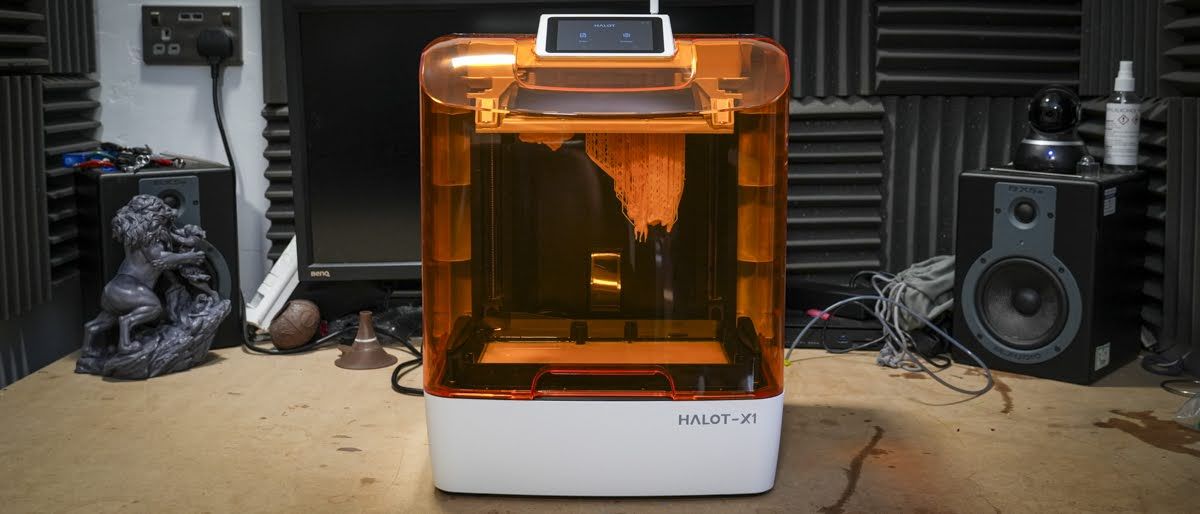
Piocreat Halot-X1 3D printer review

The Piocreat Halot-X1 is an MSLA resin 3D printer that offers 16K resolution and one of the first true level-three designs. The build area is pretty decent considering its relatively compact footprint, and with auto resin feeding and a quick-release build plate, this printer marks a pivotal point in resin 3D printing.

  •  
❌