Reading view

Apple's $700 Mac Pro Wheels Kit Discontinued Along With Mac Pro

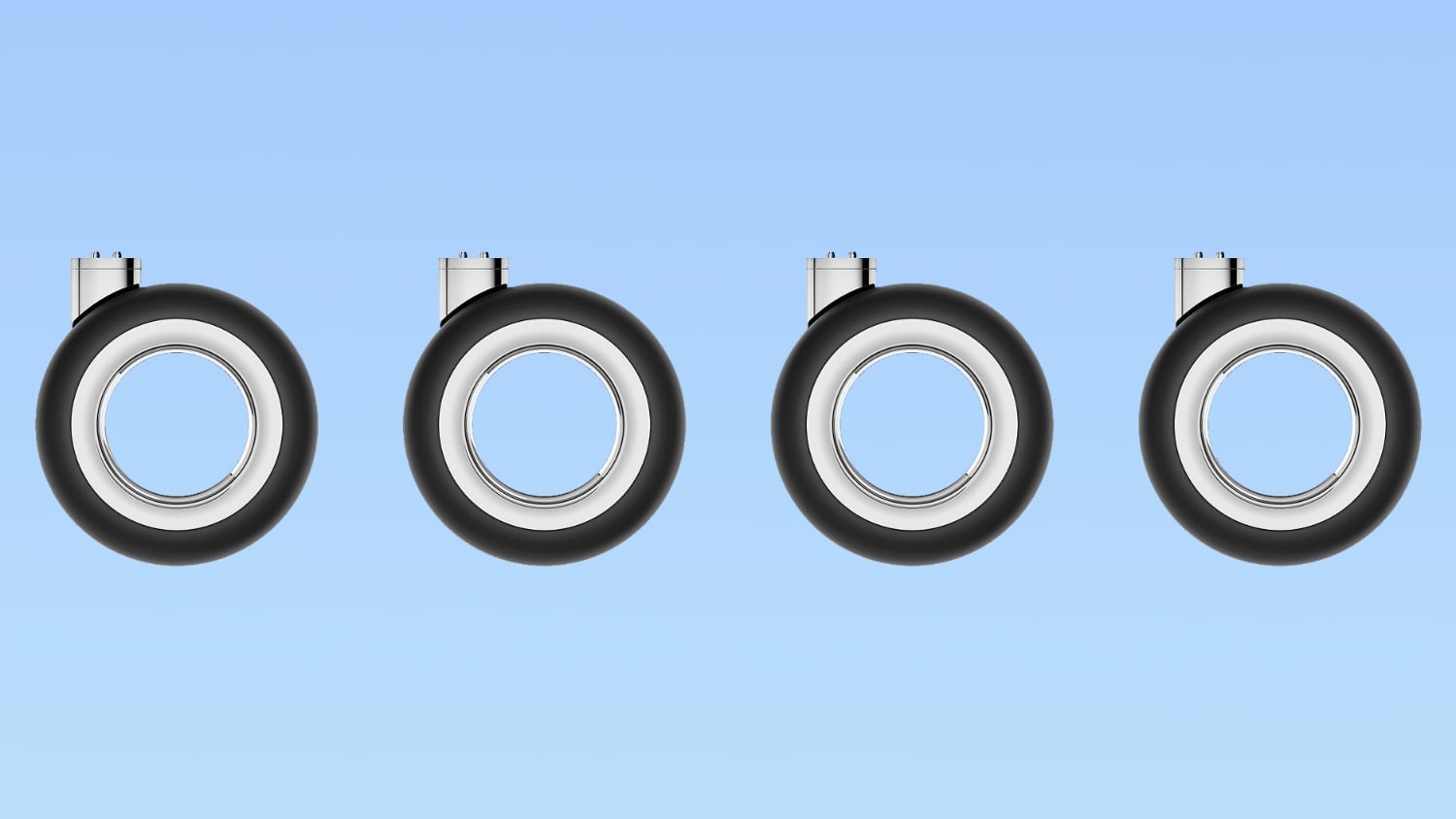
In addition to discontinuing the Mac Pro, Apple today discontinued the $700 wheel add-on kit that it sold for the Mac Pro.


The ‌Mac Pro‌ Wheels kit was introduced in 2020, and allowed ‌Mac Pro‌ owners to add wheels to their machine after purchase. The ‌Mac Pro‌ could be bought with a wheel option for an additional $400, but the lower price was because opting for wheels removed the $300 feet.

Apple's kit included a 1/4-inch to 4mm hex bit for installing the wheels, and an installation guide.

Apple also sold a $300 ‌Mac Pro‌ Feet Kit for users who ordered wheels but wanted to swap to standard feet. That kit has also been discontinued. The ‌Mac Pro‌ and its accessories have been removed from Apple's website entirely, and old links now redirect to the online Apple Store.

For ‌Mac Pro‌ owners who want to switch to wheels but are now unable to do so, OWC sells a less expensive Rover Pro wheels kit for $200.
Related Roundup: Mac Pro
Buyer's Guide: Mac Pro (Don't Buy)
Related Forum: Mac Pro

This article, "Apple's $700 Mac Pro Wheels Kit Discontinued Along With Mac Pro" first appeared on MacRumors.com

Discuss this article in our forums

  •  

Apple Confirms Mac Pro Is Dead, No Future Models Planned

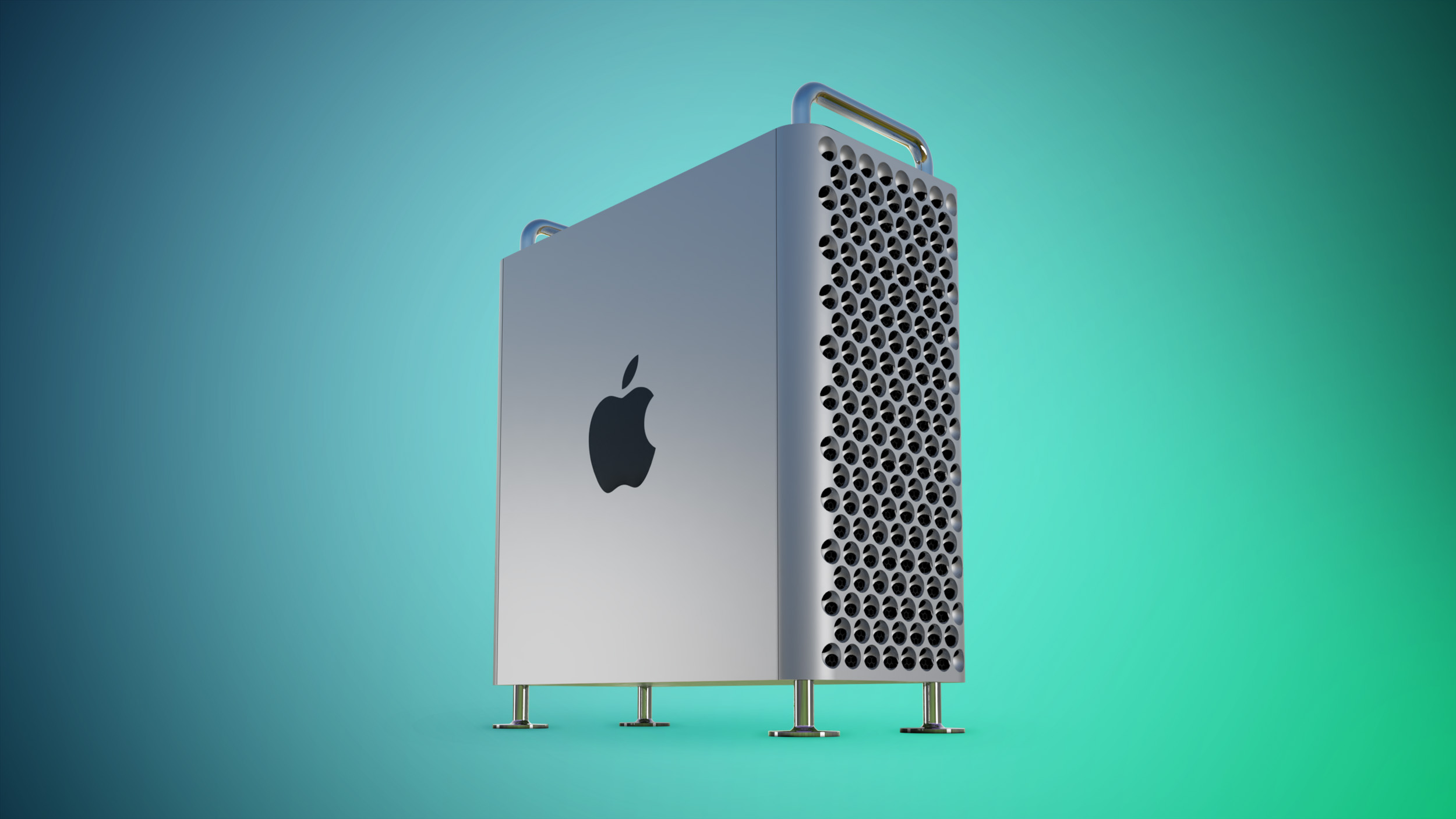
Apple has discontinued the Mac Pro and has removed the machine from its website, reports 9to5Mac. Apple said it does not plan to design a new version of the ‌Mac Pro‌, and no new model will be coming in the future.


The ‌Mac Pro‌ was last updated in 2023, which was when Apple added an M2 Ultra Apple silicon chip, but the chassis has not been refreshed since 2019. Apple redesigned the ‌Mac Pro‌ to be more modular in 2019 after failing with its "innovative" trashcan Mac Pro, but the machine has never been mainstream due to its $6,999 starting price.

Apple has largely replaced the ‌Mac Pro‌ with the Mac Studio, a device that is smaller and uses newer Apple silicon chips. The ‌Mac Studio‌ is now Apple's high-end desktop machine designed for professional use.

The current ‌Mac Studio‌ features an M3 Ultra chip, though it is expected to get an M5 Ultra refresh later this year. Apple's desktop lineup also includes the Mac mini and the iMac.

The ‌Mac Pro‌'s downfall started in 2013 when Apple introduced a radical cylindrical design that turned out to be a major mistake. The ‌Mac Pro‌'s components were mounted around a central thermal dissipation core and cooled with a single fan that pulled air from under the case, through the core, and out of the top of the machine. It was quiet, but not efficient.

When Apple announced the 2013 ‌Mac Pro‌, Phil Schiller infamously said "Can't innovate anymore, my ass," in response to critics who complained about the ‌Mac Pro‌'s lack of updates and Apple's failure to create products for pro users.

Unfortunately, the 2013 ‌Mac Pro‌'s design did not include PCIe expansion slots for graphics cards and other hardware, with expansion handled through Thunderbolt 2 ports. The design also did not account for future updates in GPU technology, leaving Apple unable to add larger graphics cards and other components to the device.

Apple ended up apologizing to its pro user base and said the 2013 design was thermally constrained in a way that made upgrades impossible. It took Apple until 2019 to unveil the current ‌Mac Pro‌, which adopted a more standard tower form factor with eight PCIe slots.

After the 2019 launch, the ‌Mac Pro‌ got an Apple silicon chip in 2023, and that's it. There have been three ‌Mac Pro‌ updates in the last 13 years, so it's not surprising to see the ‌Mac Pro‌ retired. The ‌Mac Studio‌ offers almost all of the same capabilities as the ‌Mac Pro‌, with the exception of PCIe expansion slots.
Related Roundup: Mac Pro
Buyer's Guide: Mac Pro (Don't Buy)
Related Forum: Mac Pro

This article, "Apple Confirms Mac Pro Is Dead, No Future Models Planned" first appeared on MacRumors.com

Discuss this article in our forums

  •  

iPhone Fold Likely to Ship Later Than iPhone 18 Pro

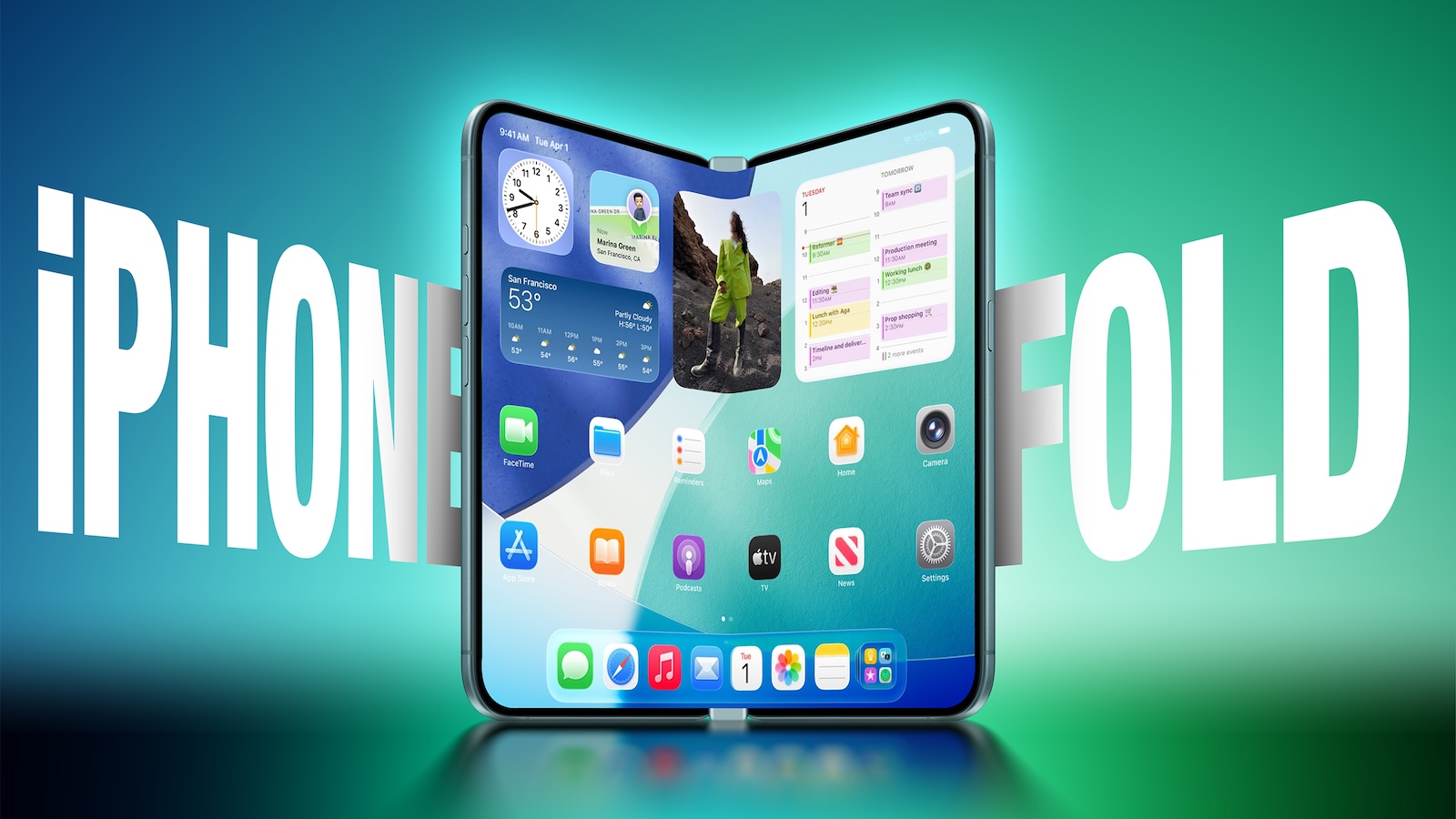
The new foldable iPhone won't ship to customers in the same September timeframe as the iPhone 18 Pro and ‌iPhone 18 Pro‌ Max, Bloomberg's Mark Gurman said today in a Q&A session.


Apple will likely ship the iPhone Fold to customers after the ‌iPhone 18 Pro‌ and Pro Max come out in September, but Gurman did not provide a specific availability timeline.

Earlier this month, Barclays analyst Tim Long suggested that the foldable iPhone won't ship until December, suggesting a roughly three-month delay between the ‌iPhone Fold‌ and the ‌iPhone 18 Pro‌ models. Apple has done a split launch before, shipping one model later than another. When the iPhone X launched in 2017, it shipped out in November, while the iPhone 8 and 8 Plus introduced alongside it came out in September as usual.

It is entirely possible Apple will ship the ‌iPhone 18 Pro‌ and ‌iPhone 18 Pro‌ Max in September and then follow it with the ‌iPhone Fold‌ sometime between September and the end of the year. Back in December, Apple analyst Ming-Chi Kuo said that the ‌iPhone Fold‌ would be in short supply, suggesting manufacturing difficulties. Kuo expects supply constraints into 2027, and supply problems or manufacturing issues could explain why Apple would delay the ‌iPhone Fold‌'s shipment date.

Even if Apple does plan to ship the ‌iPhone Fold‌ after September, we can still expect to see it introduced during the annual iPhone event that will feature the ‌iPhone 18 Pro‌ models. Apple will likely announce all three phones at once, and then bring them to customers when they're ready.
Related Roundups: iPhone 18 Pro, iPhone Fold

This article, "iPhone Fold Likely to Ship Later Than iPhone 18 Pro" first appeared on MacRumors.com

Discuss this article in our forums

  •  

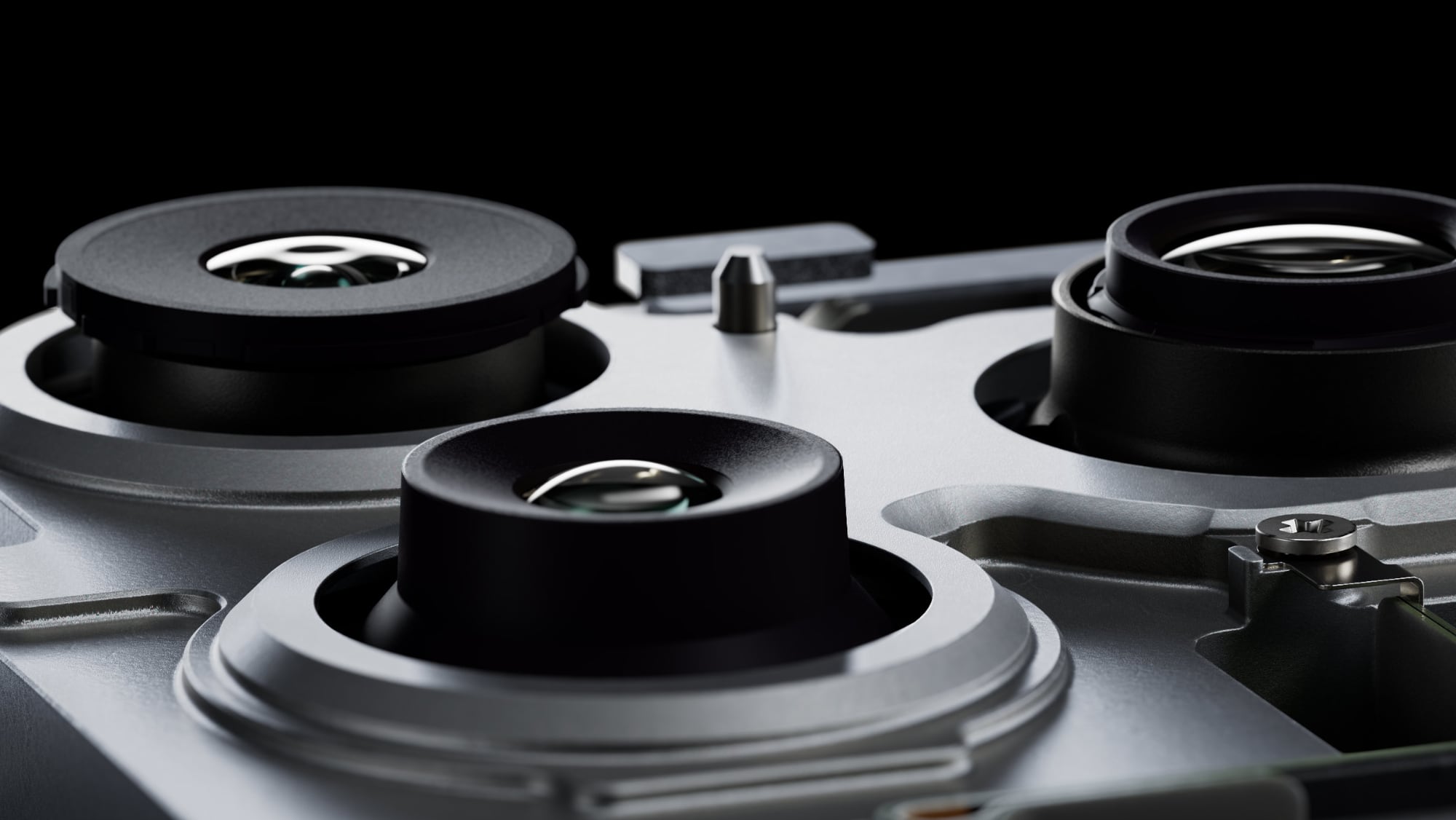
Apple Testing 200MP Telephoto iPhone Lens That Could Ship Next Year

Apple is evaluating a 200-megapixel telephoto camera sensor that could potentially ship in an iPhone as soon as next year, according to Digital Chat Station, a leaker on Chinese social media platform Weibo with a decent track record.


In a post shared today, the leaker said Apple is actively testing a 200-megapixel 1/1.2" sensor similar to the one rumored for Oppo's upcoming Find X9 Ultra.

On the already-released Find X9 Pro, Oppo debuted a 200-megapixel periscopic telephoto lens with a large 1/1.56" sensor that's far bigger than typical zoom cameras. An earlier leak by Digital Chat Station suggests Oppo's upcoming Ultra model will push this further by introducing a 1/1.28" sensor.

The leaker's latest claim is a notable development. In January, they said 200-megapixel camera sensors were being discussed in Apple's supply chain, but that they had not appeared in engineering prototypes. At the time, Apple's development work was said to remain focused on refining its existing 48-megapixel systems.

January was also the month that Morgan Stanley reported Apple is working to bring a 200-megapixel camera to the iPhone as soon as 2028.

Samsung introduced a 200-megapixel rear camera on its Galaxy S23 Ultra in 2023, and the follow-up models also have one. With a 200-megapixel camera, an iPhone would be able to shoot photos with greater detail. The increased megapixel count would also result in higher-resolution photos, which can be cropped further and printed at larger sizes without a loss of image quality.

In early 2027, Apple is expected to release the regular iPhone 18 as part of a new split-launch cycle, with next-generation Pro models following during the usual September time frame. Next year could also usher in a 20th anniversary iPhone, which could be either a Pro equivalent or perhaps a higher-tier premium model, similar to Apple's iPhone X.
Related Roundup: iPhone 18 Pro

This article, "Apple Testing 200MP Telephoto iPhone Lens That Could Ship Next Year" first appeared on MacRumors.com

Discuss this article in our forums

  •  

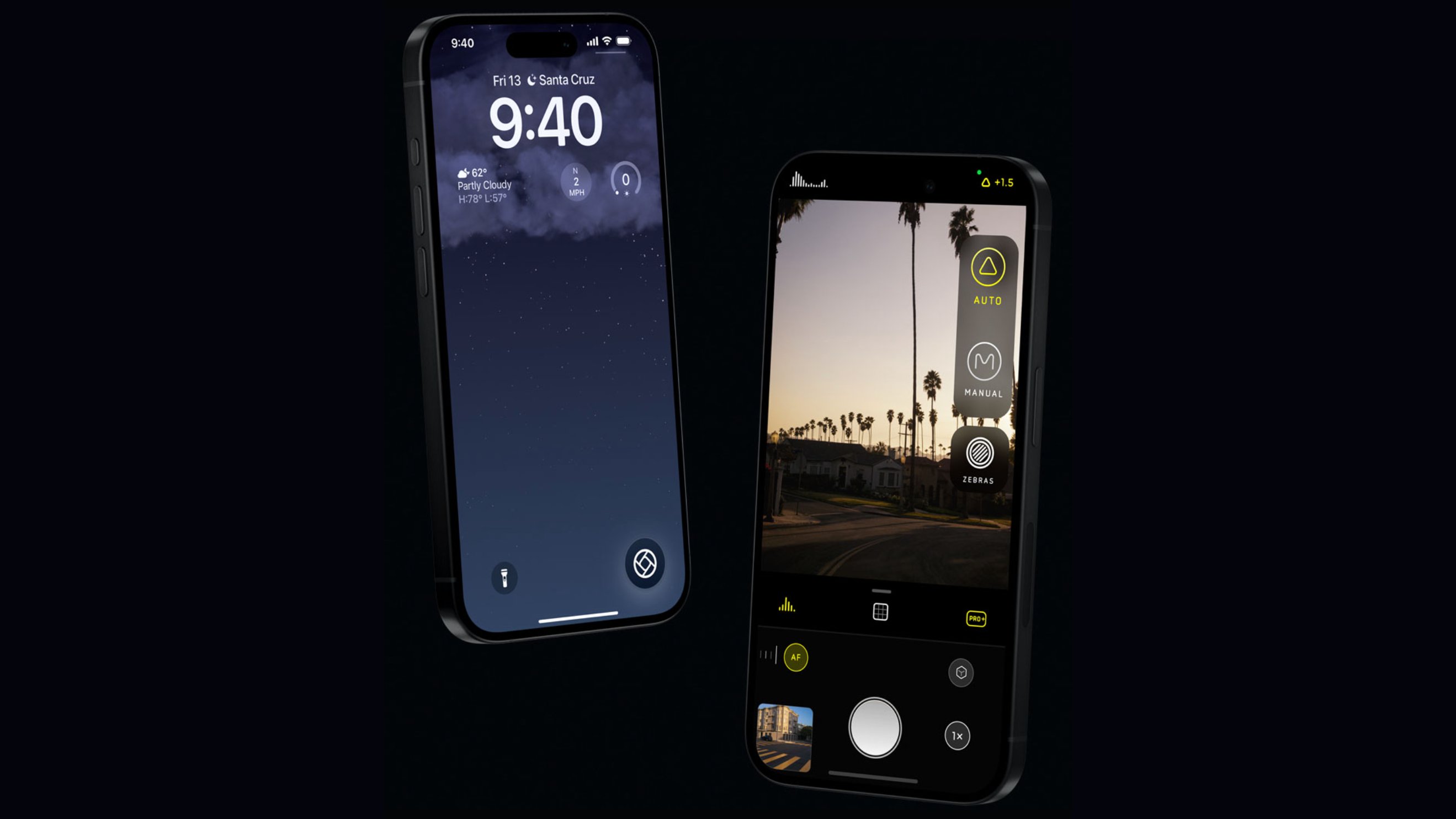
Apple Wanted to Buy Halide to Boost iPhone 18 Pro's Camera App—Now There's a Lawsuit

Apple's plans to enhance the iPhone 18 Pro's Camera app led it to consider acquiring Halide, but the talks ultimately collapsed and were followed by a fierce legal dispute between the startup's co-founders, according to The Information reports.


In the summer of 2025, Apple reportedly held discussions to acquire Lux Optics, the developer behind the popular iPhone camera apps Halide, Kino, and Spectre. The company concluded that it could get a better offer from Apple in the future following updates to the app. Two months after the talks concluded without a deal, Apple set about recruiting Lux's co-founder and designer Sebastian de With.

Lux CEO and co-founder Ben Sandofsky is said to have fired de With in December over financial misconduct. de With announced that he had joined Apple's design team in January.

Sandofsky has now filed a lawsuit in the California Superior Court of Santa Cruz against de With, accusing him of improperly using more than $150,000 in Lux company funds to pay for personal expenses since 2022, as well as providing confidential material and source code from Lux to Apple.

During the discussions to acquire Lux, Apple employees purportedly told the startup that its intellectual property was a major consideration in evaluating the company. Apple apparently wanted to acquire Lux to bolster the built-in Camera app, which is said to be "top priority for the company right now." The ‌iPhone 18 Pro‌ will "match professional-grade cameras in terms of certain advanced features," necessitating an upgrade of the built-in Camera app. Apple is not named as a defendant in the case and it is not accused of any wrongdoing.

de With's legal representatives say that the lawsuit is meritless and deny that he "used, transferred, or disclosed any Lux intellectual property" as part of his new job at Apple. They added that the lawsuit was only filed after de With raised concerns with Sandofsky about financial irregularities at Lux and had requested access to its financial records and payments, suggesting that it was a "retaliatory response to those efforts and an attempt to avoid scrutiny of that conduct."
Related Roundups: iPhone 18, iPhone 18 Pro
Related Forum: iPhone

This article, "Apple Wanted to Buy Halide to Boost iPhone 18 Pro's Camera App—Now There's a Lawsuit" first appeared on MacRumors.com

Discuss this article in our forums

  •  

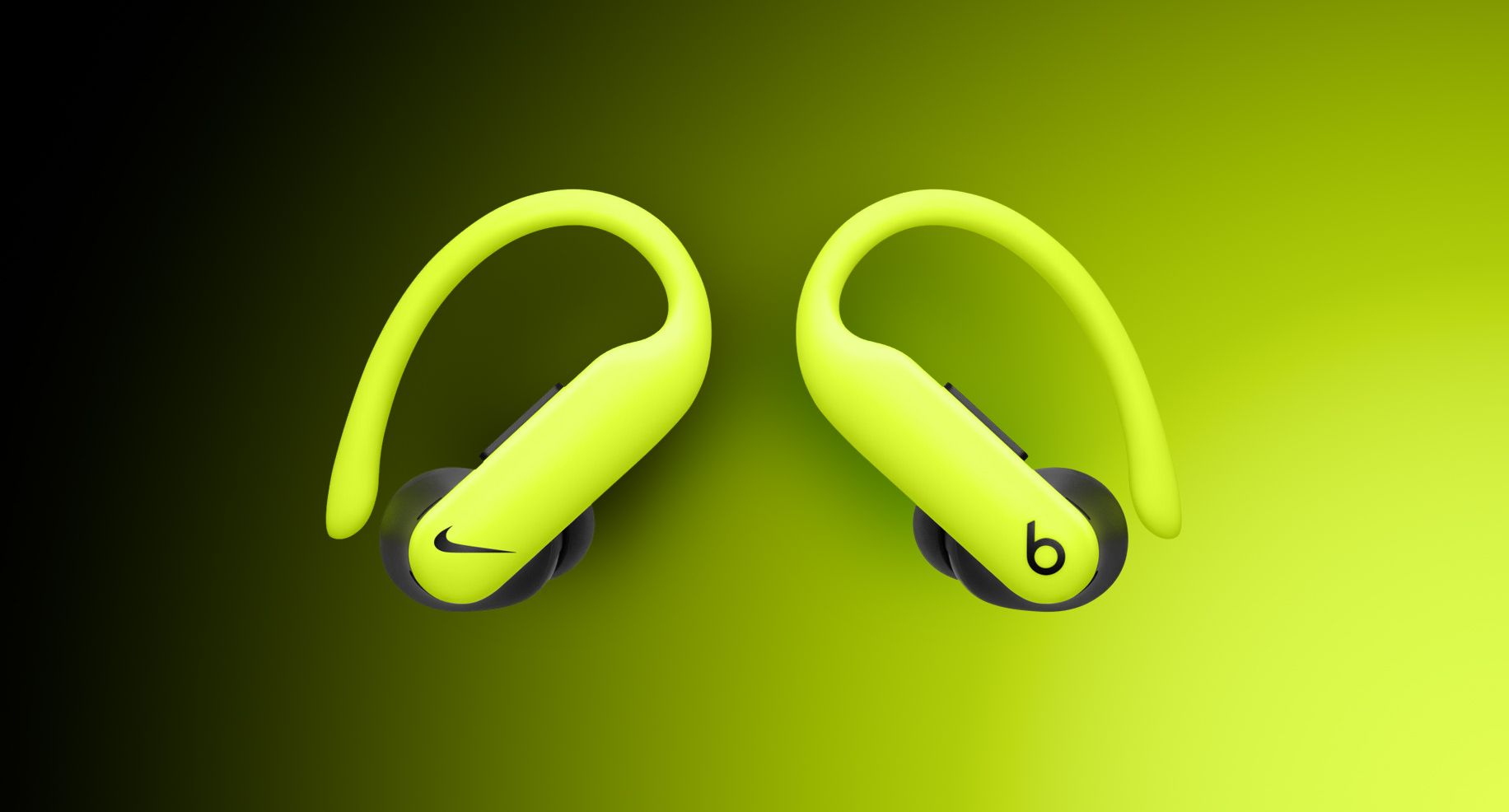
Apple's Special-Edition Nike Powerbeats Pro 2 Now Available

The special-edition Nike Powerbeats Pro 2 are now available to order on Apple.com in the U.S., Canada, Australia, the U.K., and a handful of other countries. These headphones are the same as the regular Powerbeats Pro 2, except they have a two-tone design consisting of black and Nike's signature Volt neon green-yellow color.


Aside from the Nike-focused design, these are the same ‌Powerbeats Pro‌ 2 that were introduced last year, with the signature Powerbeats wraparound earhooks for stability, Active Noise Cancelling with Transparency mode, built-in heart rate monitoring, and up to 45 hours of battery life when tapping into the charging case to recharge.

Powerbeats Pro 2 are essentially a fitness-focused alternative to the AirPods Pro 3.

Nike showed off the headphones in an ad starring NBA superstar LeBron James.


In the U.S., pricing is set at $249.99, in line with the regular Powerbeats Pro 2. Apple is currently showing a March 24 delivery date.
This article, "Apple's Special-Edition Nike Powerbeats Pro 2 Now Available" first appeared on MacRumors.com

Discuss this article in our forums

  •  

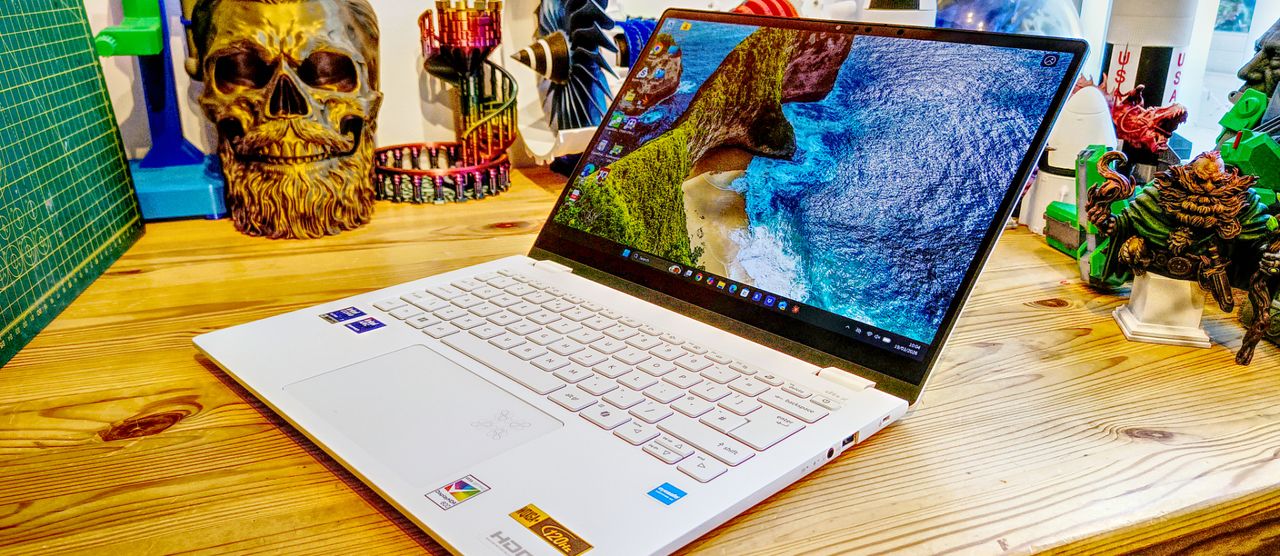
M5 MacBook Air vs. M5 MacBook Pro Buyer's Guide

Both the MacBook Air and entry-level MacBook Pro now feature the M5 chip, so how do the latest models compare?
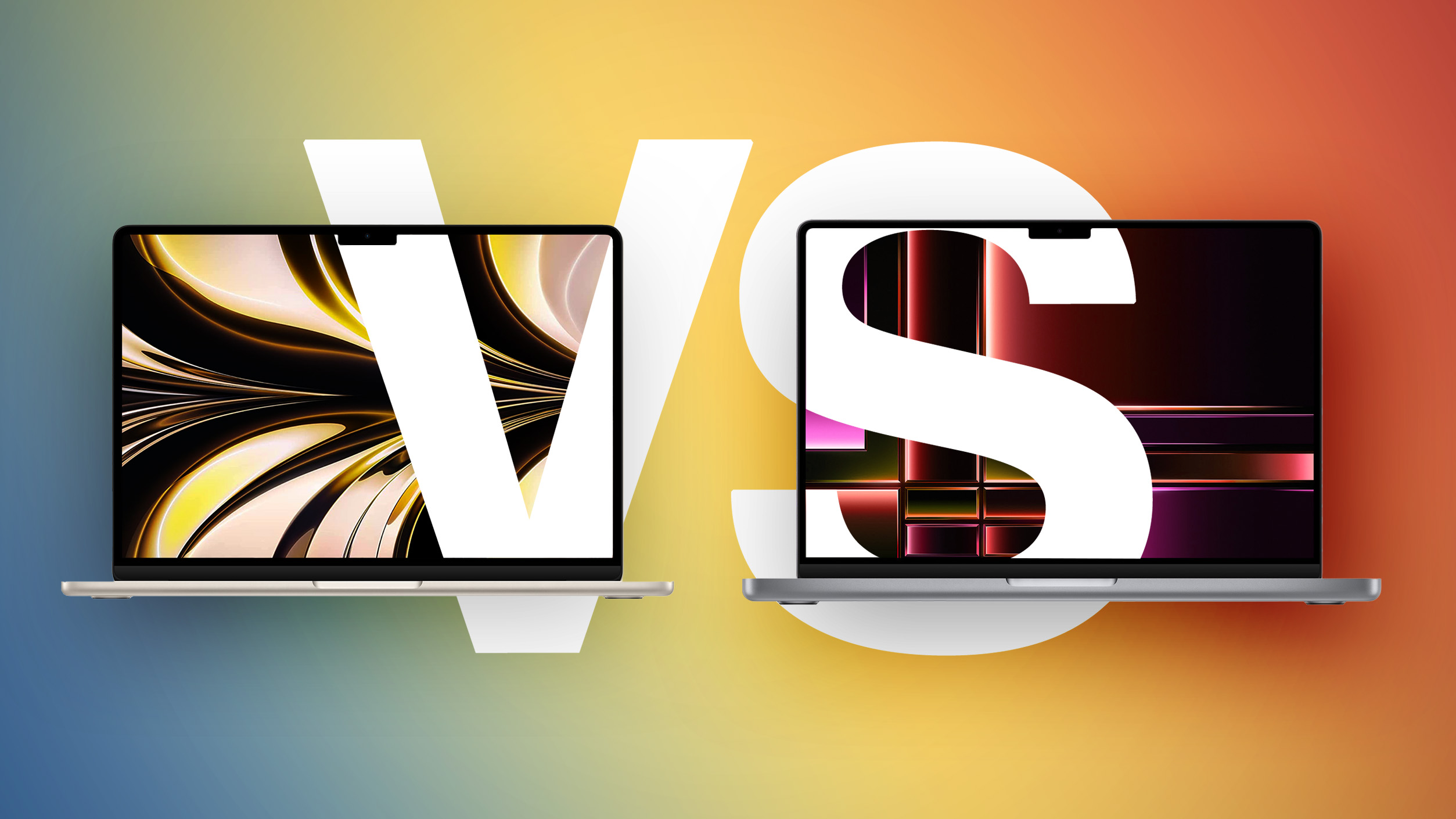

While the 13-inch ‌MacBook Air‌ starts at $1,099 and the 15-inch model at $1,299, moving to the 14-inch ‌MacBook Pro‌ requires spending at least $300 more. For some buyers, the extra cost is unnecessary; for others, the Pro's ability to sustain performance, along with its more advanced display and expanded I/O, meaningfully change the experience in ways the Air cannot match even with higher configurations.

With the introduction of the MacBook Neo as a new entry-level option, the Mac lineup now spans three distinct tiers. As a result, the ‌MacBook Air‌ no longer represents the default choice for most buyers, but instead occupies a middle position between affordability and performance. If you've already ruled out the ‌MacBook Neo‌, this guide helps to answer the question of how to decide which of Apple's other two popular laptops is best for you. The key differences are as follows:


‌MacBook Air‌ ‌MacBook Pro‌
13.6- or 15.3-inch display 14.2-inch display
Slimmer borders around the display
LCD Liquid Retina display Mini-LED Liquid Retina XDR display
60Hz refresh rate ProMotion for refresh rates up to 120Hz
Up to 500 nits brightness Up to 1,000 nits brightness and 1,600 nits peak HDR brightness
Nano-texture display option
Passive cooling Active cooling
Two Thunderbolt 4 (USB-C) ports Three Thunderbolt 4 (USB-C) ports
HDMI 2.1 port with support for multichannel audio output
SDXC card slot
13-Inch: Four-speaker sound system
15-Inch: Six-speaker sound system with force-canceling woofers
High-fidelity six-speaker sound system with force-cancelling woofers
Three-mic array with directional beamforming Studio-quality three-mic array with high signal-to-noise ratio and directional beamforming
512GB, 1TB, or 2TB of storage 512GB, 1TB, 2TB, or 4TB storage
13-Inch: 53.8-watt-hour lithium-polymer battery
15-Inch: 66.5-watt-hour lithium-polymer battery
14-Inch: 72.4-watt-hour lithium-polymer battery
18-hour battery life 24-hour battery life
30W, 35W, or 70W USB-C Power Adapter 70W or 96W USB-C Power Adapter
Silver, Sky Blue, Starlight, or Midnight color options Silver or Space Black color options
13-Inch: Starts at $1,099
15-Inch: Starts at $1,299
Starts at $1,599


Dimensions are also a key area of difference between the ‌MacBook Air‌ and ‌MacBook Pro‌. The ‌MacBook Pro‌ is noticeably thicker and heavier than both ‌MacBook Air‌ models:


‌MacBook Air‌ (13-Inch) ‌MacBook Air‌ (15-Inch) ‌MacBook Pro‌ (14-Inch)
Height 0.44 inches (1.13 cm) 0.45 inch (1.15 cm) 0.61 inches (1.55 cm)
Width 11.97 inches (30.41 cm) 13.40 inches (34.04 cm) 12.31 inches (31.26 cm)
Depth 8.46 inches (21.5 cm) 9.35 inches (23.76 cm) 8.71 inches (22.12 cm)
Weight 2.7 pounds (1.24 kg) 3.3 pounds (1.51 kg) 3.4 pounds (1.55 kg)


Taken as a whole, the ‌MacBook Air‌ now occupies a more clearly defined middle position in Apple's laptop lineup. With the introduction of the ‌MacBook Neo‌ as a lower-cost entry point, the Air no longer represents the default choice for most buyers, but instead serves those who want a meaningful step up in performance, features, and long-term usability without moving into the ‌MacBook Pro‌ tier.

The ‌MacBook Air‌ offers excellent performance with the M5 chip, capable memory and storage options, a good all-round display, and key features like a backlit keyboard, 18 hours of battery life, and a 12MP Center Stage camera. For everyday tasks, performance remains effectively indistinguishable from more expensive models, but the Air is far less likely to feel constrained after several years of use compared to the ‌MacBook Neo‌. Its thinner chassis, lower weight, silent fanless design, and broader range of color options also remain important advantages.

By contrast, the 14-inch ‌MacBook Pro‌ is differentiated less by baseline performance and more by its ability to sustain it, as well as by a collection of hardware features that materially change the experience. Active cooling allows the M5 chip to operate at higher levels for prolonged periods, avoiding the thermal limitations inherent to the Air's passive design. This becomes noticeable in extended workloads such as video editing, 3D rendering, compiling large codebases, or running intensive AI-driven tasks. If your workload regularly involves sustained performance, such as long video exports, large code builds, or intensive multitasking, the ‌MacBook Air‌'s fanless design may become a limiting factor.

Alongside this, ‌MacBook Pro‌'s mini-LED Liquid Retina XDR display with ProMotion offers substantially higher brightness, contrast, and motion fluidity, while the inclusion of HDMI, SDXC, and an additional Thunderbolt port expands its versatility in professional environments. It also delivers consistently better speakers, higher-quality microphones, and longer battery life. For users planning to keep their machine for several years, this sustained performance headroom and broader feature set can make the ‌MacBook Pro‌ a more resilient long-term investment.

The most consequential trade-off emerges at the upper end of the ‌MacBook Air‌'s pricing. At $1,299, the 15-inch ‌MacBook Air‌ sits close enough to the 14-inch ‌MacBook Pro‌'s $1,599 starting price that the decision becomes less about affordability and more about priorities. For an additional $300, the Pro offers a significantly more advanced display, active cooling for sustained performance, longer battery life, additional I/O, and overall greater versatility. Once you are already considering spending over $1,000 on a laptop, these advantages become disproportionately impactful, particularly for users intending to keep their machine for several years.

As a result, the ‌MacBook Air‌ is best understood as the balanced option within the lineup: Meaningfully more capable and longer-lasting than the ‌MacBook Neo‌, but somewhat constrained compared to the ‌MacBook Pro‌. The right choice depends less on basic specifications and more on where your needs sit across three distinct tiers, with basic computing at the low end, sustained performance and advanced features at the high end, and the ‌MacBook Air‌ positioned squarely between them.
Related Roundups: MacBook Pro, MacBook Air
Related Forums: MacBook Pro, MacBook Air

This article, "M5 MacBook Air vs. M5 MacBook Pro Buyer's Guide" first appeared on MacRumors.com

Discuss this article in our forums

  •  

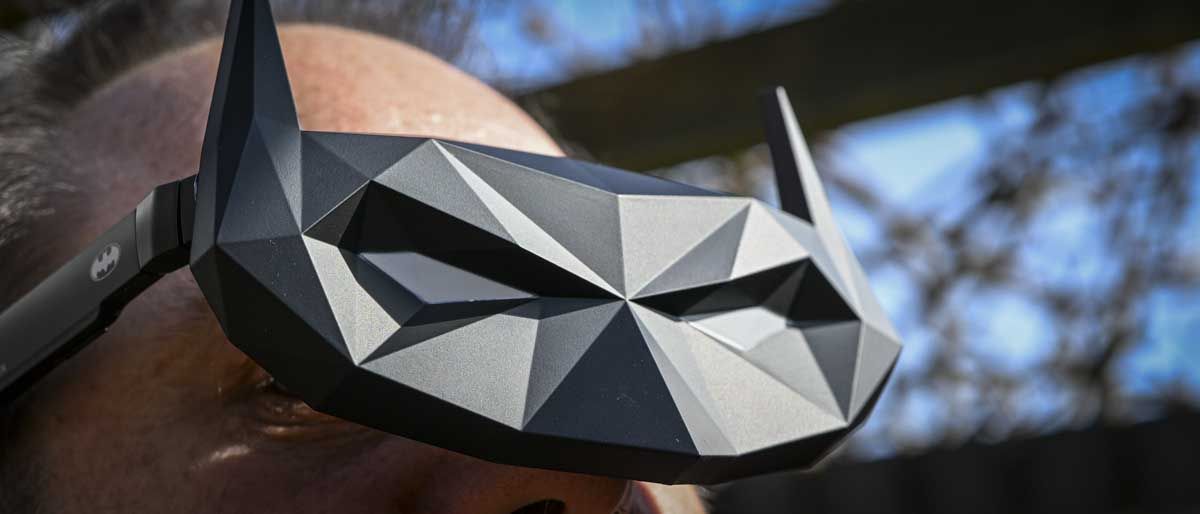
'I'm Batman': I tested the RayNeo Air 4 Pro Batman Justice Edition - the theme is unapologetically fun and the HDR10 and B&O audio experience is surprisingly good

The RayNeo Air 4 Pro Batman Justice Edition is a limited collector's variant of RayNeo's latest display glasses. Essentially adding a clip-on Batman mask and themed packaging to the existing hardware that delivers HDR10, Bang & Olufsen audio, and a 201-inch virtual screen.

  •  

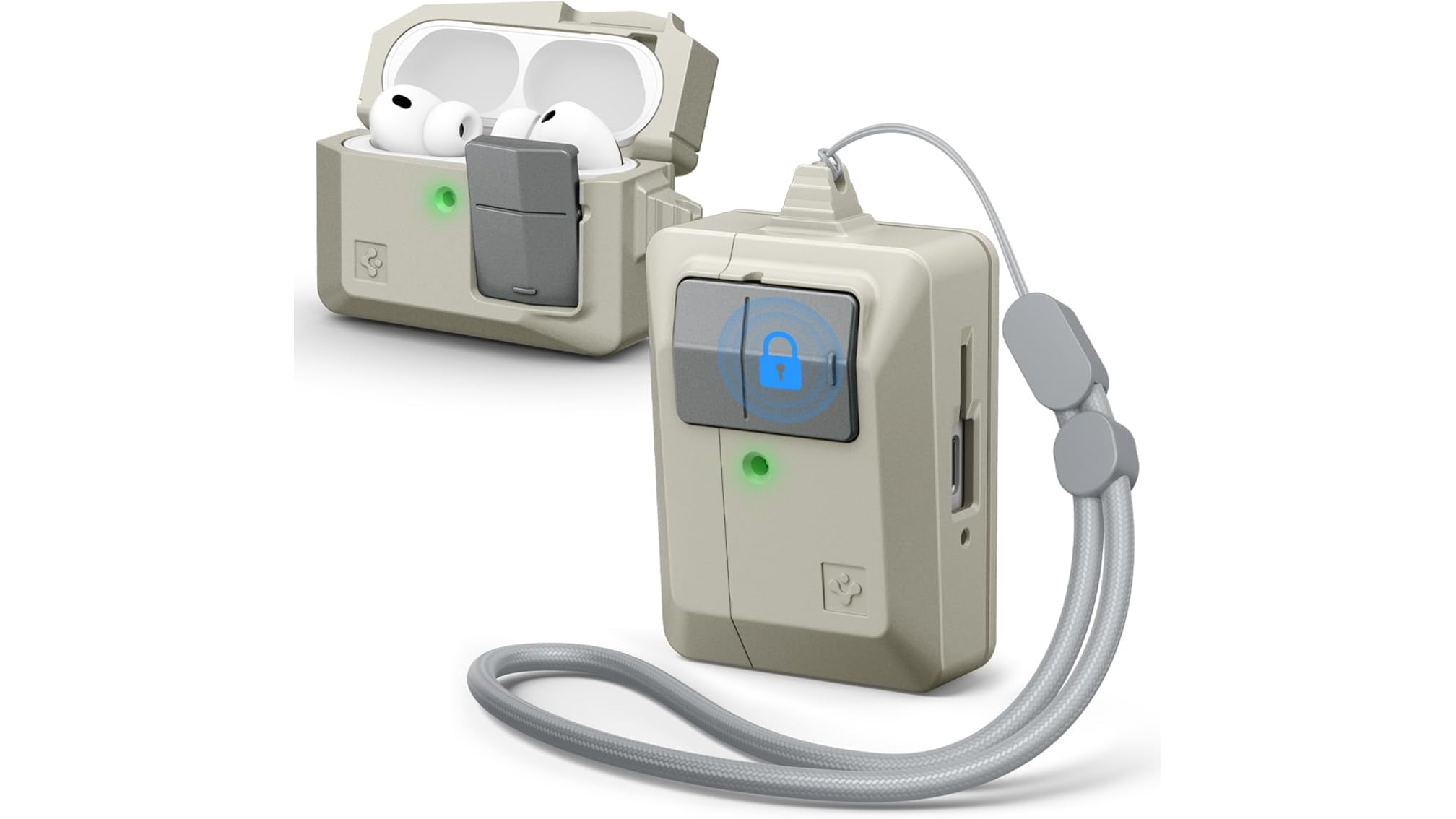
Spigen's New AirPods Pro 3 Case Is Modeled After the Original Macintosh Mouse

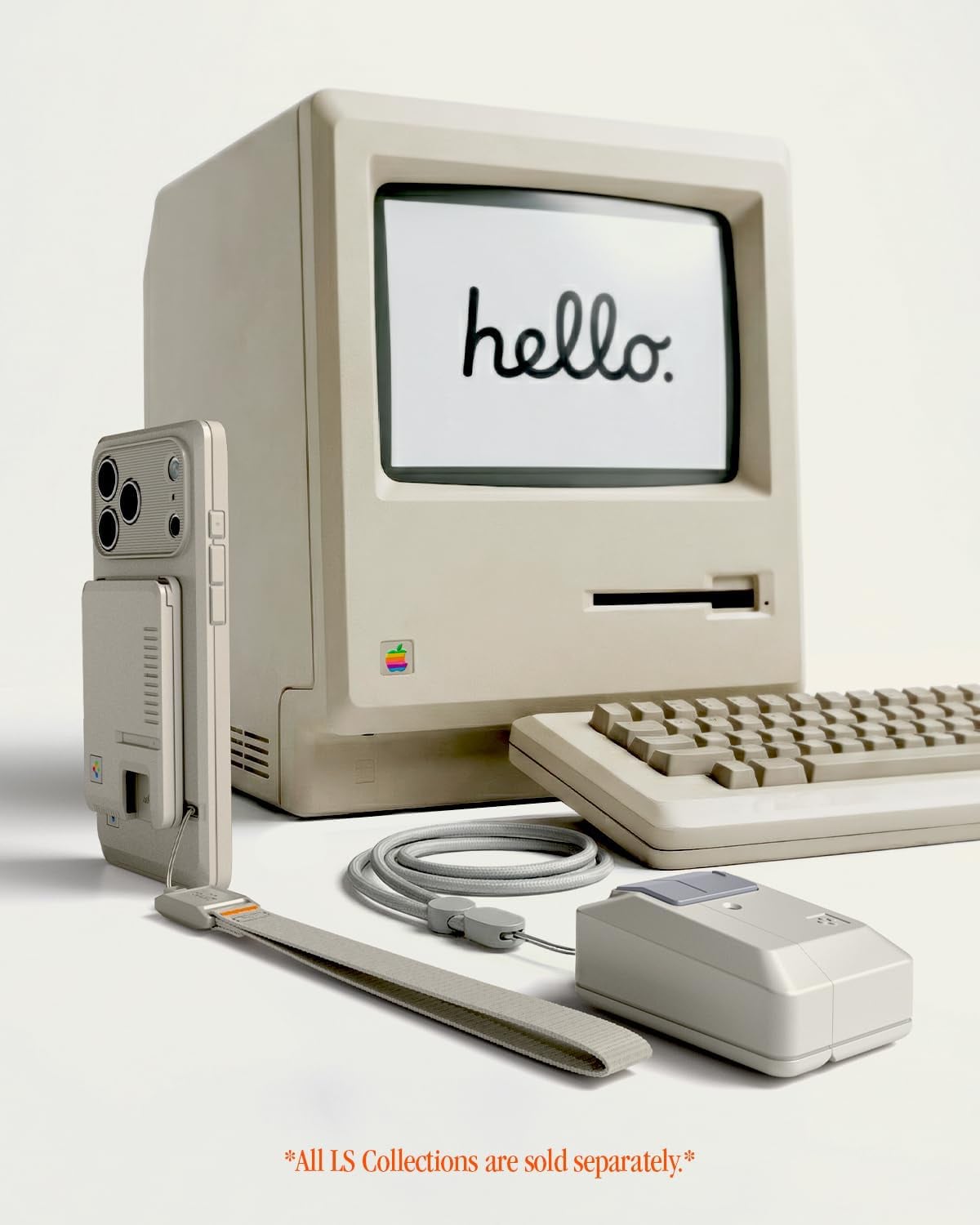
Accessory maker Spigen this week expanded its lineup of case options that are designed to look like vintage Apple Macs. The clever new Classic LS AirPods Pro 3 Case resembles a the iconic Apple Macintosh mouse, so it goes well with Spigen's Mac-style iPhone cases.


Priced at $25 from Amazon, the case features the stone color that was used for the Classic Macintosh, along with a gray mouse button. The mouse button is actually a lock that secures the two halves of the AirPods case together when it's closed.

Spigen says that the lock clip buttons are meant to mirror the tactile feel and iconic look of the classic Macintosh mouse. There's a dual material design that includes a polycarbonate interior and a TPU exterior to protect the AirPods, and Spigen added a lanyard to make the accessory easy to carry.

To get to the ‌AirPods Pro 3‌, you can push on the button to cause the top of the case to swing open. The AirPods are able to wirelessly charge while the case is on, and it has a cutout for a wired USB-C connection. The LED that's on the AirPods case is able to shine through the mouse cover, and it looks like the power light from the original Macintosh mouse.

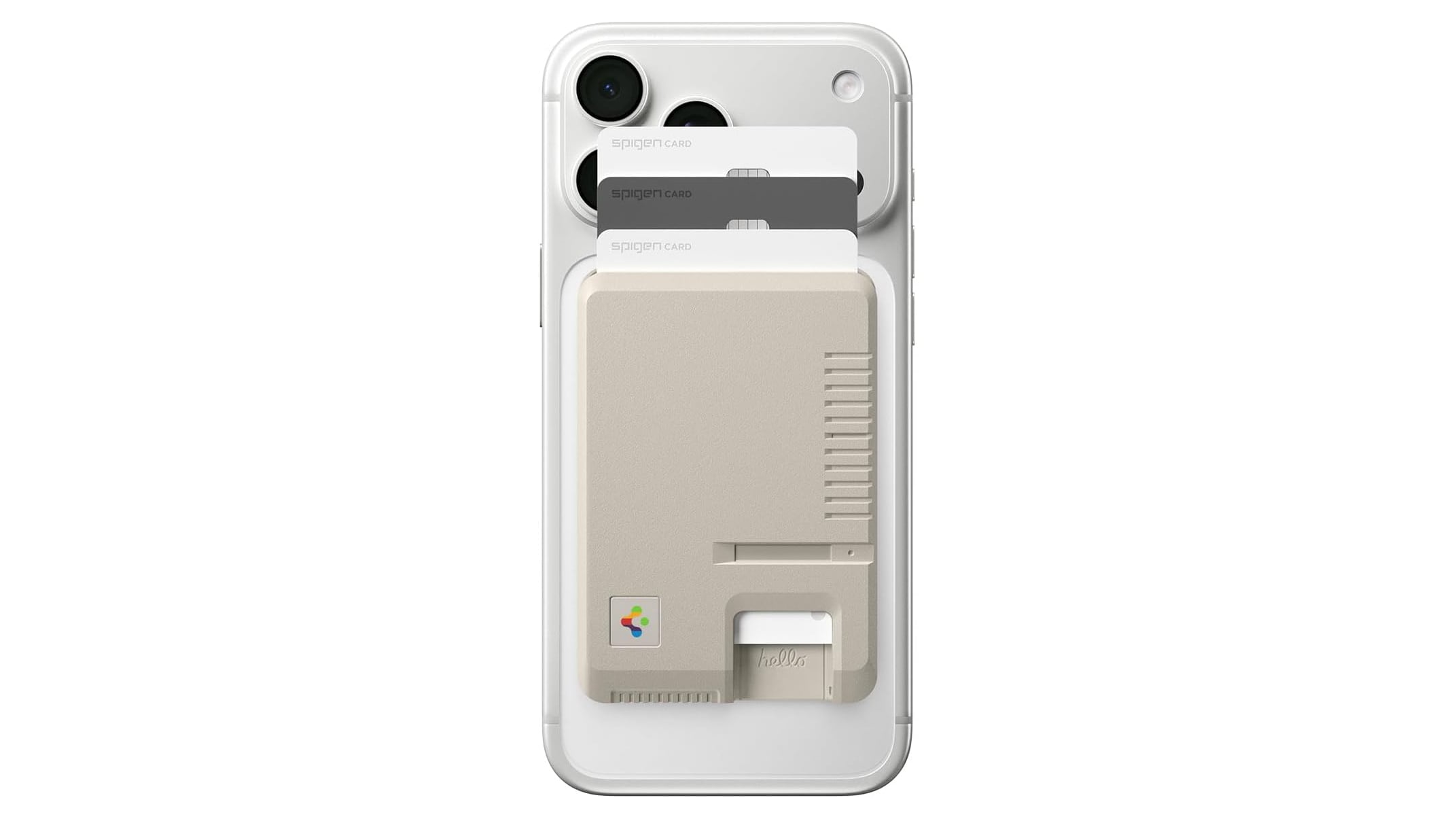
Spigen also introduced the Classic LS MagFit Card Holder, which joins the Classic LS iPhone 17 Pro and Pro Max cases that Spigen released in January 2026. The $30 Classic LS Card Holder was inspired by the Macintosh 128K, featuring a floppy disk-style accent, vintage keyboard details with a "Hello" engraving, and an Apple-like Spigen logo.


According to Spigen, the Card Holder has a strong magnet that ensures a secure attachment to MagSafe-compatible devices and cases. It is able to hold up to three cards, with an open cutout design at the bottom to push them out for easy access. The Card Holder is compatible with all MagSafe iPhones, including the iPhone 12 and later.


Spigen's classic Mac series also includes a lanyard and a set of cases for the ‌iPhone 17 Pro‌ models, with info available on the Spigen website.
Related Roundup: AirPods Pro 3
Buyer's Guide: AirPods Pro (Buy Now)
Related Forum: AirPods

This article, "Spigen's New AirPods Pro 3 Case Is Modeled After the Original Macintosh Mouse" first appeared on MacRumors.com

Discuss this article in our forums

  •  
❌