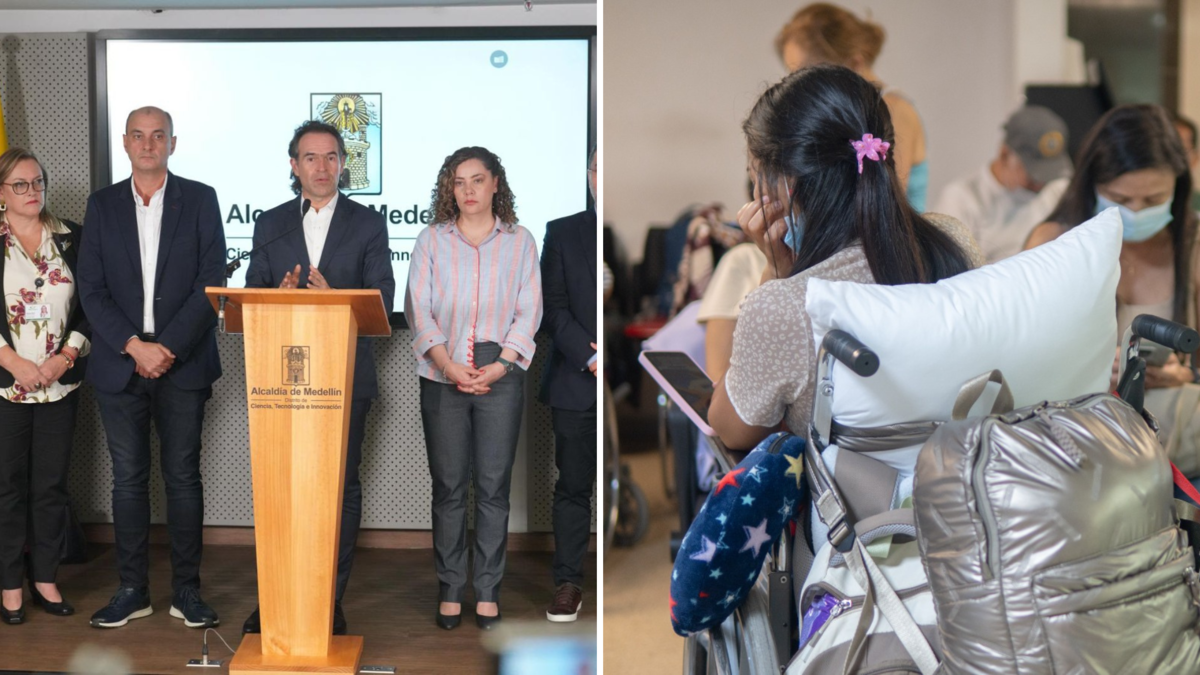
Medellín, Colombia – Medellín Mayor Federico Gutiérrez prompted outrage last week after “censoring” a new book on M-19 guerrilla history at a public library.
Gutiérrez cancelled a talk of the book on April 21, saying that it glorifies terrorism and has no place in a public library.
The cancellation has drawn widespread criticism, with many observers citing the hypocrisy of the move one month after UNESCO designated Medellín as its 2027 World Book Capital.
Shortly before an event for the book at a public library on April 21, Gutiérrez announced on X: “This event will be cancelled. In Medellin, there will never be room for the glorification of terrorism. The M-19 was not a ‘romantic tale’: it was a terrorist armed group that left victims, pain, and death in Colombia.”
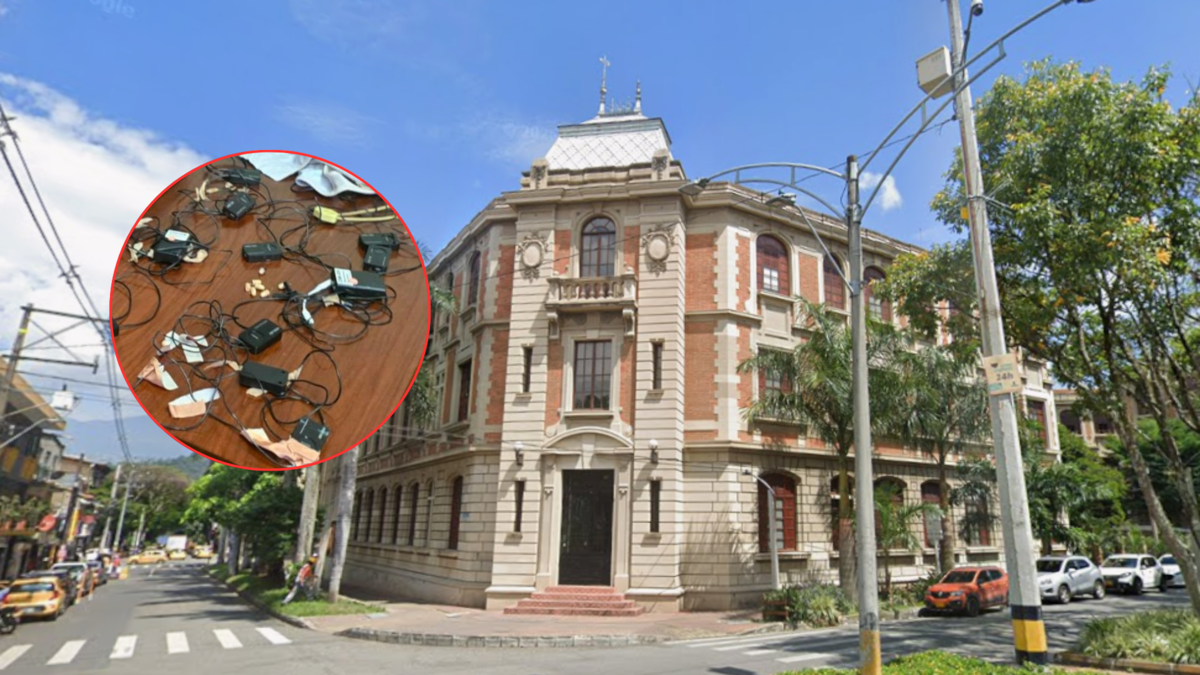
Attendants at the packed auditorium were visibly opposed to the measure, according to newspaper El País. Although staff removed microphones and speakers and the police surrounded the building, spectators remained in their seats.
“Our city respects the memory of the victims; no to propaganda for those that wielded weapons. This event has an obviously political character, and no public entity can host it,” the mayor continued.
But the book’s author, sociology professor Jaime Rafael Nieto, insisted that the government should not be able to censor events like the one last week: “This is not a space for government officials, but for writers, artists and citizens,” he told Spanish newspaper El País via phone call.
The April 19th Movement (M-19) guerrilla was founded in the early 1970s and became a violent urban actor, perpetrating kidnappings and killings in cities as well as symbolic crimes including the theft of libertador Simon Bolívar’s sword from its resting place and the Palace of Justice siege which left over 100 dead.
Incumbent leftist Colombian President Gustavo Petro – who has routinely publicly clashed with rightist Gutiérrez – was an M-19 militant, operating under the nome de guerre “Aureliano”.
He joined in the criticism of Gutiérrez’s move, writing on X: “The M-19 after making peace, was a legal movement with legal status. What you’re doing is censorship. Those who censor books end up burning them, and then they end up burning humans at stakes. Don’t censor; let minds and thoughts be free.”
Medellín’s history of books: a reformed city
Colombia’s second-largest city has seen a 542% rise in bookstores over the past seven decades, and is home to over 110 bookstores and 25 libraries – many of which were transformed from former prisons and police facilities, as per UNESCO.
“Medellín has become an international reference for urban and cultural transformation, where books and libraries play a crucial role in bringing positive social change. [Its] designation as World Book Capital 2027 is a powerful message on how culture can build peace and social cohesion,” noted Khaled El-Enany, UNESCO director-general.
The city’s literary turn is thus inseparable from its broader reinvention. Having been named the world’s “murder capital” in 1991, when 16 people were murdered daily on average, it has spent decades recasting itself through culture and education.
In 2004, then-mayor Sergio Fajardo – now a presidential candidate for the upcoming May 31, 2026 election – deployed a plan to combat structural violent patterns, investing in the city’s poorest neighborhoods. Libraries, metrocables and cultural centers were planted in the hillside of comunas, once the most dangerous neighborhoods in the Americas.
Over a 15-year period, Medellin built 60 cultural facilities in areas with the highest poverty, historic violence and population densities, and by 2024, the city recorded 300 homicides per 100,000 people – the lowest since 1942.
The result is a city that has made literary culture central to its identity. Every September, the Fiesta del Libro y la Cultura (Celebration of Books and Culture) – backed by $9 billion Colombian pesos ($2.5 million USD) from the mayor’s office – draws hundreds of national and international guests to its botanical gardens, parks and cultural centers.
The city also hosts an annual edition of the Hay Festival, the prestigious Welsh literary gathering.
Banned in the city of books
Regardless of Mayor Gutiérrez’s disapproval, the event on April 21 continued, with organizers stressing they consulted with the attendees what they believed should be done.
“There were three options: cancelling the event, going someplace different, or reaffirming our condition of citizens which occupy the city’s public space,” they said. Meanwhile, Nieto confirmed that the launch had been scheduled a month prior, and that the decision to go ahead in spite of the mayor’s outrage was an “act of civil resistance.”
“[The book is about] interpreting how the M-19 emerged and what its characteristics were. It isn’t about justifying its actions, because then the investigation would take on a partisan bias, and that’s not the case,” the M-19: From War to Politics author added.
The M-19 has become a contentious subject in Colombian politics since the election of Petro in 2022 as the country’s first leftist president, although the group demobilized in 1990.
Petro joined the urban guerrilla at 17 years old, but not as a combatant. As per Colombian news outlet La silla vacía, he was arrested by armed forces in 1985, and spent 18 months in prison, where he directed the jail library.
One of Petro’s greatest feats as an M-19 militant, in fact, was promoting the peace process that saw the group’s turn to peace and legality from 1989 to 1990. Most recently, the head of state celebrated his birthday on the anniversary of the armed group’s founding.
Nieto believes that studying M-19 history is imperative to understanding Petro’s government, and his book’s thesis: the M-19 was the Colombian armed actor that best knew how to combine war with politics.
“Every act of war produced political effects. And that made it a political actor,” he told El País.
Medellín AI Summit outlines strategic growth for global investors.
The city of Medellín is scheduled to host the second edition of the “WOBI on AI and Business Transformation” summit on April 28, 2026. The event, which will take place at Plaza Mayor, represents the sixth major collaboration between the Alcaldía de Medellín and WOBI since the partnership began in 2017. This year’s forum focuses on the integration of artificial intelligence into corporate leadership and operational strategy, reinforcing the city’s status as a Special District of Science, Technology, and Innovation.
Martha Lucía Maldonado Nieto, Managing Director of WOBI Colombia, detailed the evolution of the event series, noting that previous editions held between 2017 and 2019 attracted more than 4,300 business owners. “Since last year, we have shifted these digital transformation conversations toward an unavoidable topic: Artificial Intelligence,” Maldonado stated. She emphasized that the summit is designed to analyze how AI supports macro-management themes rather than providing purely technical instruction. “WOBI is not about providing technical content. Our goal isn’t to teach people how to operate a specific AI tool, but rather to support them in their roles as leaders.”
“We are certain that only by sensitizing our leaders will we achieve real changes in organizations.” — María Fernanda Galeano Rojo
The upcoming summit features a lineup of international speakers covering diverse facets of the technology. Terry Gutiérrez, the General Manager for Tesla (TSLA) in Mexico and Latin America, will present on leadership algorithms. Nathan Furr, a professor at INSEAD, is set to discuss using AI to scale business models. Other speakers include marketing expert Giuseppe Stigliano and Andrew Mayne, a former prompt engineer at OpenAI, who will provide insights into the development of ChatGPT. Maldonado noted that the curation of this content is managed by WOBI’s team in New York to identify global trends relevant to executive decision-making.
María Fernanda Galeano Rojo, the Secretary of Economic Development for Medellín, will also address the assembly on the role of “Cities that Think.” Galeano Rojo highlighted the city’s commitment to ensuring high-level technological discourse reaches multiple sectors of the local economy. “We will have 600 leaders, more than 70% of whom will be from our city,” Galeano Rojo said. “At the same time, we will have parallel activities where we will be talking with these same speakers, as well as with entrepreneurs and university students. What we want is for all this knowledge to reach different sectors of our city.”
The event structure has transitioned to a membership model as of 2024, though individual tickets remain available. Maldonado confirmed that the average cost for participation is approximately $1,990,000 COP. The summit aims to build on the success of the inaugural AI edition, which saw 800 attendees from 350 companies and has since been exported to Madrid and Milan. “Artificial Intelligence is not just another trend; it is a new reality,” Maldonado added. “It is going to change and impact us in much the same way that the internet at some point changed the way we function.”
The Secretaría de Desarrollo Económico continues to prioritize digital skills and AI training as part of its broader economic strategy. According to Galeano Rojo, the objective of the Alcaldía de Medellín is to use these international platforms to drive social and organizational transformation. “We are betting on digital skills training and AI training,” she remarked. “We are certain that only by sensitizing our leaders will we achieve real changes in organizations.”
The one-day academic session will begin at 9:00 AM. Key regional entities including Rappi, McKinsey, and Procter & Gamble (PG) were cited as background for the expertise being brought to the stage, reflecting the professional trajectories of the invited speakers.
Sector adapts to investment decline through secondary asset markets.
The mining industry in Colombia is undergoing a structural transformation as companies prioritize operational efficiency to navigate a challenging economic environment. Recent industry data shows the mining Producto Interno Bruto (GDP) contracted by approximately 8%, while foreign direct investment has experienced a notable downturn. This trend has prompted firms to seek innovative financial strategies to maintain sustainability and competitiveness.
A primary strategy gaining traction is the rotation of underutilized industrial assets. By leveraging industrial auctions, companies are liquidating idle machinery—such as excavators, drilling rigs, and heavy-duty power equipment—to recover capital without the necessity of maintaining internal commercial structures. Superbid, a multinational industrial auction platform, has emerged as a key facilitator for these transactions within the region.
“Asset rotation is becoming a strategic decision to free up capital and improve operations.” — Maria Paula Villa Velez, Superbid
This operational shift toward asset-light business models will be a central topic at MINEXPO Colombia 2026, which is scheduled to take place on April 15 and 16 at Plaza Mayor Medellín. The event serves as a platform for mining producers, suppliers, and investors to discuss strategies for financial optimization and industrial reindustrialization.
The secondary market for industrial equipment has expanded significantly as mining companies divest assets no longer essential to their core operations. This machinery is being repurposed in the infrastructure, construction, and energy sectors, thereby extending the lifecycle of the assets and contributing to circular economy objectives. Market participants have observed increased competition for this equipment, with buyers consistently acquiring assets at market-determined values.
Looking toward the remainder of 2026, industry analysts expect the integration of these efficient asset management models to accelerate, particularly in regions such as Antioquia, where the nexus of mining and infrastructure projects remains a critical economic driver.
“Today the mining sector is understanding that efficiency is not only in producing, but in better managing its resources,” stated Maria Paula Villa Velez, sub-manager at Superbid Medellin. “Asset rotation is becoming a strategic decision to free up capital and improve operations.”
 Login
Login