Reading view

Lufthansa and Qatar Airways Narrowly Avert Air Collision Over Bogotá

A Qatar Airways cargo jet and a Lufthansa passenger plane came within an estimated 200 meters of each other on final approach to Bogotá on Sunday evening, in a near miss that could have resulted in a major airline catastrophe.

The incident unfolded near El Dorado International Airport as both aircraft were being guided toward runway 32L during a late-evening arrival window. According to preliminary information, Qatar Airways cargo flight QTR 8174, operated by a Boeing 777 from São Paulo, was descending to approximately 9,600 feet when it converged with Lufthansa flight DLH 542.

The Lufthansa flight from Frankfurt Airport, operated by a Boeing 787 -900 ‘Dreamliner’ carrying some 270 passengers, had departed at 3:08 p.m. local time and was scheduled to land in Bogotá at 11:51 p.m. local time. As it approached the Colombian capital, the aircraft turning at roughly 9,700 feet, placing it on a dangerously converging path with the Qatar Airways freighter.

The two wide-body aircraft, each spanning more than 60 metres in length, were both landing from the East, and were above the residential neighbourhood of Modelia, according to late-night eyewitness reports.

Under standard air traffic control procedures, aircraft must maintain a minimum vertical separation of 1,000 feet, 0r 300 metres. The apparent compression of that buffer to an estimated 600 feet suggests a significant breakdown in sequencing or communication during the critical end-phase of a flight.

Disaster was averted when the Lufthansa aircraft abruptly climbed to over 12,000 feet, executing what appears to have been an emergency “Go-Around” avoidance manoeuvre. Such actions are typically triggered by onboard collision avoidance systems, which issue automated instructions to pilots when another aircraft is detected at dangerously close range. The manoeuvre forced the passenger flight to abort its initial landing approach before safely completing a second descent into Bogotá. No injuries were reported.

However, the near miss has renewed scrutiny over air traffic control operations in the Colombian capital, following another serious safety incident just two months earlier.

On February 20, a LATAM Airlines flight operated by an Airbus A320 carrying 157 passengers was forced to abort take-off after a military helicopter appeared unexpectedly near the runway at El Dorado International Airport.

According to Colombia’s civil aviation authority, Aerocivil, the aircraft—bound for San Andrés—had been cleared for departure after routine taxi procedures. At 17:04 local time, the plane was authorized for pushback from position C5, and by 17:13 it had been instructed to taxi toward runway 14R.

At 17:36, after receiving clearance for take-off, the crew initiated the departure roll. Moments later, pilots detected a rotary-wing aircraft flying on a parallel trajectory and approaching the runway environment. The unexpected presence of the helicopter forced the crew to execute an aborted take-off, a high-risk manoeuvre at speed, in order to avoid a potential collision.

Aerocivil attributed the incident to interference in the communication frequency of the airport’s north control tower, raising concerns about coordination between different air traffic control sectors. The episode, involving a commercial jet accelerating for departure and an unauthorized or mis-coordinated helicopter movement, has been classified as a serious operational safety event.

Together, the two incidents have cast a spotlight on the operational pressures facing El Dorado International Airport (SKBO), which handles hundreds of daily movements and serves as one of the busiest aviation hubs in Latin America. Bogotá’s high-altitude location—more than 2,600 metres above sea level—combined with surrounding mountainous terrain, requires tightly managed flight paths and precise coordination between controllers and pilots.

Sunday’s late evening incident involving two long-range aircraft is expected to undergo a detailed investigation, including analysis of radar data, cockpit voice recordings and air traffic communications.

On Monday, Colombia’s Aerocivil, affirmed that the event did not constitute a critical safety risk. In an official statement, the authority said runway 32 Right had been temporarily unavailable due to a third aircraft blocking the strip, prompting controllers to redirect incoming traffic—including the Qatar Airways and Lufthansa flights—to runway 32 Left.

Aerocivil said the change in instructions led to a reduction in speed that decreased horizontal separation between the two aircraft during the approach phase. However, it stressed that “controlled and safe vertical separation was maintained at all times.”

According to Aerocivil , the Lufthansa crew’s decision to abort the landing was carried out “independently” and in line with standard global aviation protocols. “This is a normal and standardised procedure in aviation, designed precisely to guarantee safety when visual or distance parameters so require,” the statement said.

The technical analysis, Aerocivil added, confirms that the situation was “an operational event managed under control” and “at no time represented a critical situation or a real risk to air safety for passengers or crew.”

The authority also urged the public and political actors not to “exaggerate or politicise” what it described as a strictly technical matter, warning that reliance on unofficial sources could generate unfounded alarm and affect confidence in Colombia’s aviation sector.
  •  

Ugly Americans? Colombia Expels Americans, Others Deemed Undesirable For Behavior & Vice Accusations

Enhanced enforcement seeks to promote family-friendly tourism & unwelcome sex & vice-oriented tourism.

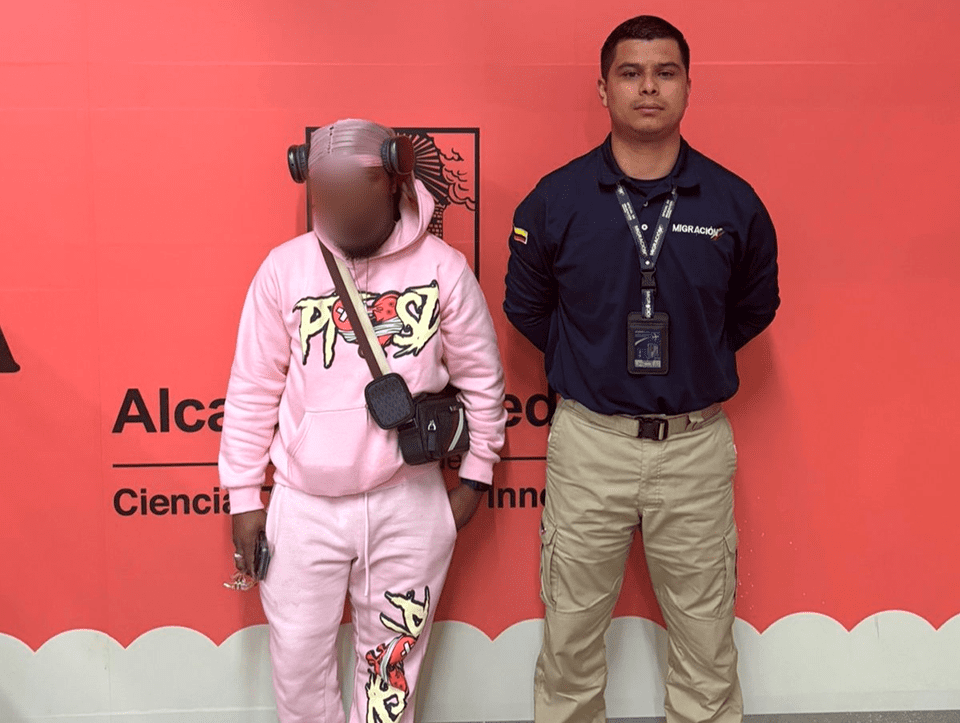
Migración Colombia, Colombia’s immigration agency, has executed the expulsion of two US citizens from Medellín following separate investigations into activities deemed a risk to public security and peaceful coexistence. The administrative measures targeted Steve Newland, a digital content creator known as “Chill Capo,” and Samuel McVey, a former teacher from New York. Both individuals were transported to the Aeropuerto Internacional José María Córdova in Rionegro and placed on a flight to Miami, Florida.

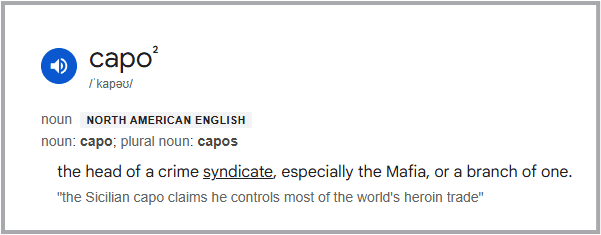
Definition of "Capo" according to Google.

Definition of “Capo” according to Google.

The actions come amid a broader strategy by the Colombian government to address concerns regarding sex tourism and the presence of foreign nationals with outstanding legal issues in their home countries. According to Paola Salazar, the Regional Director of Migración Colombia, the agency has adopted a stricter posture to ensure that Colombia is not utilized as a refuge for individuals linked to fraudulent or illicit activities.

The Case of Steve “Chill Capo”Newland

Steve Newland, a 42-year-old US citizen born in Willingboro, New Jersey, had been residing in Medellín since 2022. Operating under the digital brand “Chill Capo,” Newland promoted luxury lifestyle experiences and nightlife events. However, an investigation by Migración Colombia determined that Newland used his digital platforms to promote encounters with alleged purposes of sexual exploitation.

“Lo están esperando y lo capturan, (they are waiting for them and they will capture them)” stated Federico Gutiérrez, the Mayor of Medellín, referring to the coordination with US authorities regarding the return of the individuals.

The agency reported that Newland’s content included advice on how to evade immigration controls at the airport, such as using false medical certificates or simulating injuries to bypass rigorous inspections. His publications also mentioned accommodations linked to historical criminal figures, specifically the penthouses de Pablo Escobar, and provided instructions on how to avoid being targeted with escopolamina during social outings. Following the investigation, authorities confirmed Newland was in an irregular migration status. He has been banned from reentering Colombia for a minimum of five years.

Newland has publicly denied the allegations via his social media channels. He asserted that his primary objective was to educate visitors on safety and help them avoid dangerous situations. Newland claimed that his events were legal, safe, and conducted in collaboration with established Colombian businesses in the Parque Lleras district. He further contended that his visa had been renewed multiple times since 2022, suggesting that any illegal activity would have prevented such renewals. Newland challenged authorities to present specific evidence or identify victims related to the claims of exploitation.

🔴 #Noticia | Influenciador estadounidense que promovía turismo con fines de explotación sexual en Medellín, fue deportado por Migración Colombia.
El extranjero no podrá ingresar al país en los próximos cinco años, luego de este tiempo tendrá que solicitar una visa. pic.twitter.com/9QhZKJ7C8X

— Migración Colombia (@MigracionCol) April 11, 2026

Samuel McVey: School Incidents and US Warrants

Samuel McVey crazy man

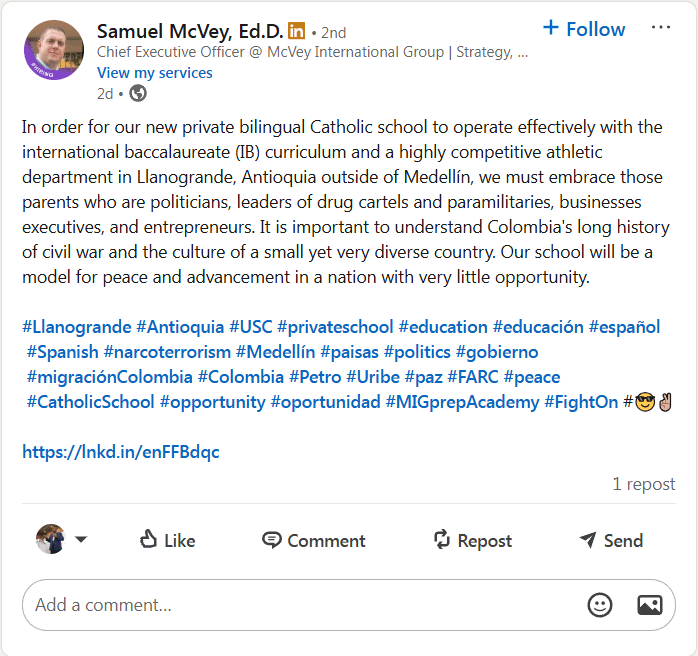
On LinkedIn, McVey claims to have a new private school in Llanogrande, Antioquia, that embraces “leaders of drug cartels and paramilitaries” among others.

In a separate incident, 46-year-old Samuel McVey, who was fired as a primary school teacher but styles himself as “Chief Executive Officer @ McVey International Group” on LinkedIn, was expelled following a series of disturbances at educational institutions in the Valle de Aburrá (Metro Medellín) and the city’s eastern Antioquia bedroom community of Rionegro. On April 8, 2026, McVey reportedly entered at least three schools in the wealthy Las Palmas sector of Medellín, where he allegedly initiated confrontations and made threats against staff and students. He subsequently traveled to Rionegro, where he attempted to gain entry to the Colegio Monteluna in Llanogrande by posing as an English language instructor.

When denied access, McVey reportedly directed threats toward students, prompting school officials to contact the Policía Nacional. He was apprehended by units from the Estación Llanogrande near a local strip mall. Manuel Villa Mejía, the Secretary of Security and Coexistence of Medellín, described McVey as a risk to the community and confirmed that the individual was in a state of high agitation upon his detention.Samuel McVey (photo from LinkedIn)

Investigation into McVey’s background revealed that he is a fugitive from New Rochelle, New York. In the United States, McVey faces charges of aggravated harassment in the second degree, a misdemeanor. The charges stem from an investigation by the New Rochelle Police Department involving threats made against Dr. Corey W. Reynolds, the Superintendent of the City School District of New Rochelle. McVey, a former Spanish teacher at Isaac E. Young Middle School, was terminated in early 2026. New Rochelle authorities had issued two bench warrants for his arrest after he failed to appear for court proceedings on March 26 and April 1, 2026.

Despite the outstanding warrants, the New Rochelle Police Department noted that they do not typically extradite individuals for misdemeanor offenses. Consequently, Colombian authorities processed his departure as an immediate expulsion based on his conduct within Colombia. McVey has been prohibited from entering Colombia for ten years.

Regional Enforcement Trends and Peak Travel Season Operations

The expulsions of Newland and McVey come after a larger enforcement effort during the 2026 Semana Santa (Easter Week) season. Migración Colombia reported that enhanced controls at airports and land borders resulted in the detection of numerous foreign nationals with irregular status or criminal backgrounds.

Specific cases identified by the agency during this period include:

  • In Leticia, Amazonas, a Peruvian citizen was detained at a hotel; the individual was the subject of an Interpol Red Notice for alleged crimes against public health.
  • In Ibagué, a Venezuelan citizen wanted by Peruvian authorities under an Interpol Red Notice for aggravated theft was arrested in a joint operation with the Policía Nacional.
  • In Facatativá, another Venezuelan national was apprehended for an Interpol Red Notice involving charges of human trafficking for sexual exploitation and membership in criminal organizations.
  • In Bogotá, two Dominican citizens were expelled after attempting to fraudulently obtain Colombian passports to travel to Europe.
  • At the Aeropuerto Internacional José María Córdova, a man and a woman from the Dominican Republic were intercepted while attempting to travel to Peru and Argentina using fraudulent Colombian documentation.

    Inadmitted (photo courtesy Migración Colombia)

    Inadmitted (photo courtesy Migración Colombia)

Statistical Overview of Inadmissibility in 2026

In the first quarter of 2026, Migración Colombia has denied entry to over 600 foreign nationals. The primary reasons for inadmissibility include state sovereignty and security risks (153 cases), lack of required visas (133 cases), and insufficient documentation (104 cases). Additionally, 89 individuals were rejected for providing false information during immigration interviews, while 34 had documented criminal records.

The agency also noted a specific focus on preventing the Explotación Sexual Comercial de Niños, Niñas y Adolescentes (ESCNNA). Through cooperation with international intelligence agencies and the Angel Watch platform, 471 individuals have been denied entry since 2016 for reasons associated with sexual offenses. At the Rionegro terminal alone, 31 inadmissibility cases have been recorded so far in 2026 related to potential sex tourism risks.

The Director General of Migración Colombia, Gloria Esperanza Arriero, emphasized that while the country remains open to international travel and investment, visitors are required to comply with the Constitución Política de Colombia and national laws. Under Decreto 2136 de 2021, the immigration authority maintains the power to deny entry or order the immediate return of any foreign citizen who poses a risk to national security or public order.

The main nationalities of those denied entry in early 2026 include citizens from the United States (76), the Dominican Republic (64), Ecuador (55), and Venezuela (52).

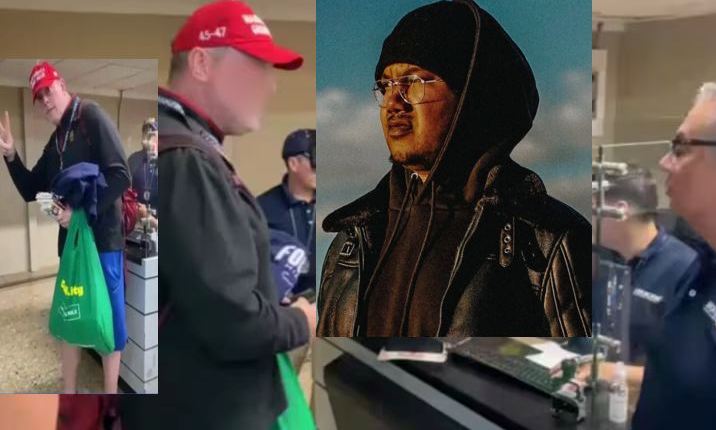
Montage of deportees Samuel McVey and Steven “Chill Capo” Newland

Video footage courtesy Migración Colombia

  •  

Influencer “Stink Bomb” on Avianca Flight Triggers Safety Alert Over Atlantic

The stunt began, as so many do in the age of viral fame, driven by the need to provoke a reaction.

At 35,000 feet above the Atlantic, inside the sealed cabin of an Avianca B-787 ‘Dreamliner’ en route from Bogotá to Madrid, passengers aboard flight AV46 were unwitting participants in a reckless influencer incident involving a “stink bomb”. At the center of it: Yeferson Cossio, a content creator whose appetite for shock value appears to have outpaced even the most basic understanding of context.

The incident occurred on March 11, 2026, during the long-haul crossing between Colombia and Spain – a route that typically lasts close to 10 hours and operates far from diversion airports for much of its duration. According to Avianca, Cossio activated “an odor-generating chemical device” mid-flight, releasing a strong, foul smell inside the cabin. Several passengers reportedly complained of discomfort, while others grew concerned about the nature of the substance.

What may have been conceived as a prank for social media rapidly escalated into a situation requiring intervention from the cabin crew, who followed established safety protocols for unknown substances in flight. In aviation, any unexplained odor – particularly one described as chemical – can trigger alarm, given the potential risks ranging from toxic exposure to onboard system malfunctions.

There is a particular kind of arrogance required to mistake a transatlantic flight for a social media stage.

Aircraft cabins are not neutral spaces. They are tightly controlled environments governed by strict international safety regulations, with air continuously recirculated through pressurization systems. Introducing any foreign substance – no matter how trivial its intent – can compromise not only passenger comfort but also operational safety.

Avianca’s response was swift and unequivocal. In an official statement, the airline confirmed it had terminated Cossio’s contract of carriage upon arrival and canceled his return ticket, citing “disruptive behavior” that affected “security, order, discipline, and sanitation” on board. The company also announced it would pursue legal action.

The airline went further, emphasizing the context: the aircraft was flying over the Atlantic Ocean at the time of the incident, limiting options for emergency diversion. Under such conditions, even a perceived threat can escalate quickly, placing additional pressure on crew and passengers alike.

Cossio, who commands more than 12 million followers on Instagram and upwards of 19 million on TikTok, has since denied the allegations. He claims the incident has been misrepresented and insists he will release video footage to clarify what happened, dismissing the reports as “gossip” and false accusations.

But denial does little to erase the broader implications.

The influencer has built his online persona around shock-driven content – often involving elaborate setups designed to provoke strong reactions. In previous videos, similar “odor-based” gags have been used on friends and acquaintances. Transplanting that formula into a commercial aircraft, however, represents a significant escalation.

In the algorithmic economy of social media, outrage is currency. Platforms reward engagement – clicks, shares, comments – often amplifying the most extreme content. For influencers, this creates constant pressure to push boundaries further, to transform everyday situations into spectacles.

But what happens when that spectacle unfolds in a high-risk, regulated environment?

The incident has reignited debate in Colombia over the limits of digital content and the responsibilities of public figures. Avianca used the moment to call on lawmakers to advance a Proyecto de Ley 153 de 2025, aimed at strengthening sanctions against conflictive passengers and enhancing protections for airline crews.

The aviation industry, both in Colombia and globally, has reported a rise in unruly passenger behavior in recent years. From altercations to non-compliance with safety instructions, the incident comes amid a wider shift in airline policy toward stricter enforcement of passenger conduct. Carriers are increasingly drawing hard lines around behavior once dismissed as merely inconsiderate. United Airlines, for instance, recently updated its contract of carriage to require passengers to use headphones when listening to personal devices, explicitly reserving the right to remove those who refuse and even ban repeat offenders.

The message is clear: in the confined, high-stakes environment of a commercial aircraft, disruption – no matter how trivial it may seem on the ground – is no longer tolerated. And for the passengers aboard AV46, the experience was not content. It was a disruption – uninvited, unsettling, and entirely avoidable.

  •  

American Airlines Flight Attendant Found Dead Following Disappearance in Medellín, Colombia

The search for Eric Fernando Gutiérrez Molina, a 32-year-old US flight attendant reported missing since March 22, concluded Friday following the discovery of a body in rural Antioquia, about two and a half hours south of Medellín. Medellín Mayor Federico Gutiérrez confirmed that the remains were located between the municipalities of Jericó and Puente Iglesias, stating there is a very high probability they belong to the American Airlines (NASDAQ: AAL) employee.

Gutiérrez Molina, a Salvadoran-American national who lived in Texas, arrived in Medellín on a commercial flight via José María Córdova International Airport. He was last seen alive on Sunday, March 22, after visiting commercial establishments in the El Poblado neighborhood. Investigations by the Secretaría de Seguridad y Convivencia suggest the victim was targeted by criminals using scopolamine, a sedative that can be used to incapacitate victims for robbery. According to witness statements, Gutiérrez Molina and another flight attendant were approached at a nightclub by individuals who lured them to another venue in Itaguí, a southwestern suburb of Medellín. While the companion flight attendant was able to make it back to her hotel, ill and disoriented, Gutiérrez Molina remained missing for five days.

“We have very clear leads on those responsible,” stated Mayor Federico Gutiérrez. “I have requested that justice be served and that the perpetrators be sought for extradition to the United States if necessary.”

The body was spotted by residents of Puente Iglesias floating in the Río Piedra ravine. The Instituto Nacional de Medicina Legal y Ciencias Forenses is currently conducting formal identification and an autopsy in Medellín. Mayor Gutiérrez reported that he has personally informed the victim’s father, the US Ambassador to Colombia, and the Consul General at the US Embassy in Bogotá regarding the development. The mayor stated that investigators have identified alleged perpetrators and expressed his intent to seek their extradition to the US.

‼Tengo que dar una triste noticia.
Desde el pasado Domingo, estamos en la búsqueda de Eric Gutiérrez un ciudadano Estadounidense que se encuentra desaparecido.
Lamentablemente acaba de ser encontrado un cuerpo sin vida, entre el municipio de Jericó y Puente Iglesias.
Existe…

— Fico Gutiérrez (@FicoGutierrez) March 27, 2026

This problem is not new. Criminals have been using scopolamine to prey on both Colombians and foreigners for years. Just last week, the Alcaldía de Medellín (Medellín Mayor’s Office) announced the capture of two women, aged 19 and 34, accused of drugging and robbing foreigners in Parque Lleras. The Policía Nacional and the Fiscalía General de la Nación  (Colombia Attorney General’s Office) conducted raids in the Caicedo and Villa Hermosa neighborhoods to dismantle the operation. The suspects reportedly offered escort services as a facade to move victims to tourist accommodations, where they administered benzodiazepines such as clonazepam to facilitate the theft of high-value belongings and cash.

Manuel Villa Mejía, Secretary of Security and Convivencia, stated that the captured women had extensive judicial records for aggravated robbery. During the operations, authorities seized mobile devices, identification documents belonging to other women, and a firearm. Villa Mejía emphasized that the city is utilizing intelligence and focused operations to close pathways for those who instrumentalize tourism for criminal purposes. These actions are part of a broader strategy to weaken the financial operations of networks that continue to target international visitors in El Poblado.

Finance Colombia has also reported on the capture of the Queen of Scopolamine, who led a network dedicated to drugging and robbing tourists in Parque Lleras. Despite prior law enforcement successes against structures like Las Barbies and The Ghetto, predatory crime remains a concern for the international investment community and business travelers.

Also read: Don’t Be A Victim! Six Rules For Safety When Visiting Colombia

photo of Mr. Gutierrez from social media

  •  

American Airlines flight attendant missing in Medellín prompts cross-border search

The disappearance of a U.S. flight attendant during a brief layover in Medellín has sparked an urgent search involving Colombian authorities, airline officials and U.S. representatives, as questions mount over his final hours in the city.

Eric Fernando Gutierrez Molina, 32, an American Airlines crew member based in Dallas-Fort Worth, arrived in Colombia’s second-largest city late on Saturday as part of a routine flight rotation. He and fellow crew members were scheduled to remain overnight before returning to the United States on a flight to Miami early Sunday.

But Molina never made it back to the airport.

According to local broadcaster Telemedellín, Molina left his hotel Saturday night with a colleague and went to a nightclub in the city. There, they reportedly met two men and later decided to continue the evening elsewhere after the venue closed.

Hours later, Molina’s colleague was found disoriented by authorities and taken to a medical center. The circumstances surrounding what happened next remain unclear.

The last confirmed sighting of Molina occurred in the early hours of Sunday in Medellín’s La América neighborhood, a largely residential area not typically frequented by foreign visitors. Investigators say the timeline of events following that sighting is fragmented and under review.

A final digital trace from Molina came in the form of a message sent around 5:00 a.m. on Sunday, sharing his location at an Airbnb property in El Poblado, a district known for its nightlife and popular among tourists. The location is roughly 20 kilometers from José María Córdova International Airport, where Molina had been expected to report for duty just hours later.

After that message, no further communication was recorded.

Friends and coworkers have since filed missing persons reports in both Medellín and Dallas, while Colombian authorities have activated an urgent search protocol. Officials have not ruled out any lines of investigation, including robbery, intoxication or other forms of assault.

Family members told local media that Molina had intended to use his layover to briefly explore Medellín’s nightlife, a common practice among airline crews on tight schedules. However, those who accompanied him that night have reportedly been unable to provide clear details about his last known movements.

One unconfirmed account suggests that while at the nightclub, Molina and his group were approached by a man who claimed to know the city well and offered to take them to other venues. Authorities have not substantiated this version of events and caution that it remains one of several hypotheses under consideration.

The case has drawn international attention, with American Airlines confirming it is working closely with Colombian law enforcement.

“We are actively engaged with local law enforcement officials in their investigation and doing all we can to support our team member’s family during this time,” the airline said in a statement to U.S. media.

The Association of Professional Flight Attendants also said it is supporting efforts to locate Molina, describing the situation as deeply concerning for colleagues across the airline industry.

U.S. diplomatic officials in Colombia have been notified of the disappearance, though details of their involvement have not been made public.

The incident also highlights ongoing safety concerns tied to nightlife in Medellín. Authorities have repeatedly warned of cases in which foreign visitors are targeted in bars or nightclubs, sometimes through the use of drugs such as scopolamine — locally known as “burundanga” — which can leave victims disoriented, unconscious or vulnerable to theft.

While officials have not linked Molina’s disappearance to such substances, the fact that his colleague was found disoriented has added to concerns among investigators and the public.

Local data shows that Medellín has reported 124 missing persons cases so far this year. Of those, 104 individuals were later found alive, two were found dead, and 18 remain unaccounted for.

Officials have not indicated whether Molina’s case is linked to any broader pattern.

As the search continues, investigators are working to reconstruct Molina’s final movements through surveillance footage, phone data and witness testimony. For now, significant gaps remain in the timeline, complicating efforts to determine what happened after he left the nightclub.

Nearly a week after his disappearance, Molina’s whereabouts remain unknown, leaving family, friends and colleagues awaiting answers in a case that has quickly evolved from a routine layover into an international missing persons investigation.

EDITOR’S UPDATE:

On Friday, March 27, authorities confirmed the discovery of the body of American Airlines flight attendant and U.S. citizen Éric Fernando Gutiérrez Molina in a rural area of Puente Iglesias, between the municipalities of Fredonia and Jericó.

Gutiérrez Molina had been reported missing since Saturday, March 21, after he was last seen leaving a nightclub in Itagüí, south of the Aburrá Valley. For days, family members and officials held out hope he would be found alive. However, after nearly a week of intensive search efforts, those hopes were dashed.

His body was located roughly 100 kilometers from the last place he was seen, raising serious questions about the circumstances surrounding his disappearance and death.

Authorities are pursuing multiple lines of investigation. One of the leading hypotheses is that Gutiérrez Molina may have been drugged with scopolamine – commonly used by criminal networks in Colombia to incapacitate victims – before being robbed. Investigators believe he may then have been transported to the remote area of Puente Iglesias, either while still alive but disoriented, or after his death, in an apparent attempt to mislead authorities and hinder search efforts.

  •  
❌