Reading view

Apple Slashes iPhone 17 Prices in China for Annual 618 Festival

Apple has slashed prices on the iPhone 17 Pro series in China by 1,000 yuan (around $138) in anticipation of the annual 618 shopping festival, one of the country's largest mid-year online retail events.


The cuts went live on Friday on JD.com and Tmall, with Apple's official store on the latter platform applying a direct 1,000-yuan discount on the iPhone 17 Pro series. On JD.com, taking into consideration trade-in offers and platform promotions, some iPhone 17 Pro models can be picked up for as low as 6,999 yuan (around $968). That's the lowest price since the device's launch, according to the Global Times.

The standard iPhone 17 also received its first notable markdown. Some configurations are now available for 4,499 yuan (around $622) including discounts, bringing it well under the 6,000-yuan threshold for China's national trade-in subsidy, which knocks 15% off qualifying devices up to a 500-yuan cap – something that customers of the Pro models miss out on.

News of Apple's price cuts quickly shot to the top of social media platform Weibo's trending list on Friday. Meanwhile, Huawei has also introduced lower prices for its high-end foldable models for the first time.

"Apple and Huawei are the two companies most closely benchmarked against each other in the high-end segment," said Liu Dingding, a technology industry analyst speaking to the Global Times. "Other brands still hold market share, but in terms of premium-market influence, the rivalry is increasingly centered on these two players."

Liu said both companies are using this year's shopping festival window to quickly lift orders and shipments while competing for a larger share of replacement demand.

Apple's iPhone 17 series has been a runaway hit in China so far. Apple reported $26 billion in Chinese revenue during its fiscal first quarter, a 38 percent year-over-year increase and the company's best-ever performance in the region. China now accounts for roughly one-fifth of Apple's total global sales.

The results are a major turnaround after nearly three years of declining sales in the country, where Apple has faced stiff competition from domestic rivals like Huawei, Xiaomi, and Vivo.

Apple CEO Tim Cook is currently on his way back home from China, following his participation in an official U.S. business delegation accompanying President Donald Trump as he met with Chinese president Xi Jinping.
Related Roundup: iPhone 17
Tag: China
Buyer's Guide: iPhone 17 (Neutral)
Related Forum: iPhone

This article, "Apple Slashes iPhone 17 Prices in China for Annual 618 Festival" first appeared on MacRumors.com

Discuss this article in our forums

  •  

Apple Watch: 15 Tips Every Owner Needs to Know

Apple Watch is now eleven generations in, and packed with useful features that are easy to miss at first glance. To help you get more out of your device, we've rounded up 15 practical tips you might not have discovered yet, including a few that long-time users often overlook.


Bounce Between Two Apps


watch
On your Apple Watch, double-press the Digital Crown to see a deck of all currently open apps, and turn it to scroll through them. From this view, you can jump back to the last app you were using. Simply tap on an app screen to switch to it, or swipe left on its card and tap the red X button to quit it.

Switch App Views


app view
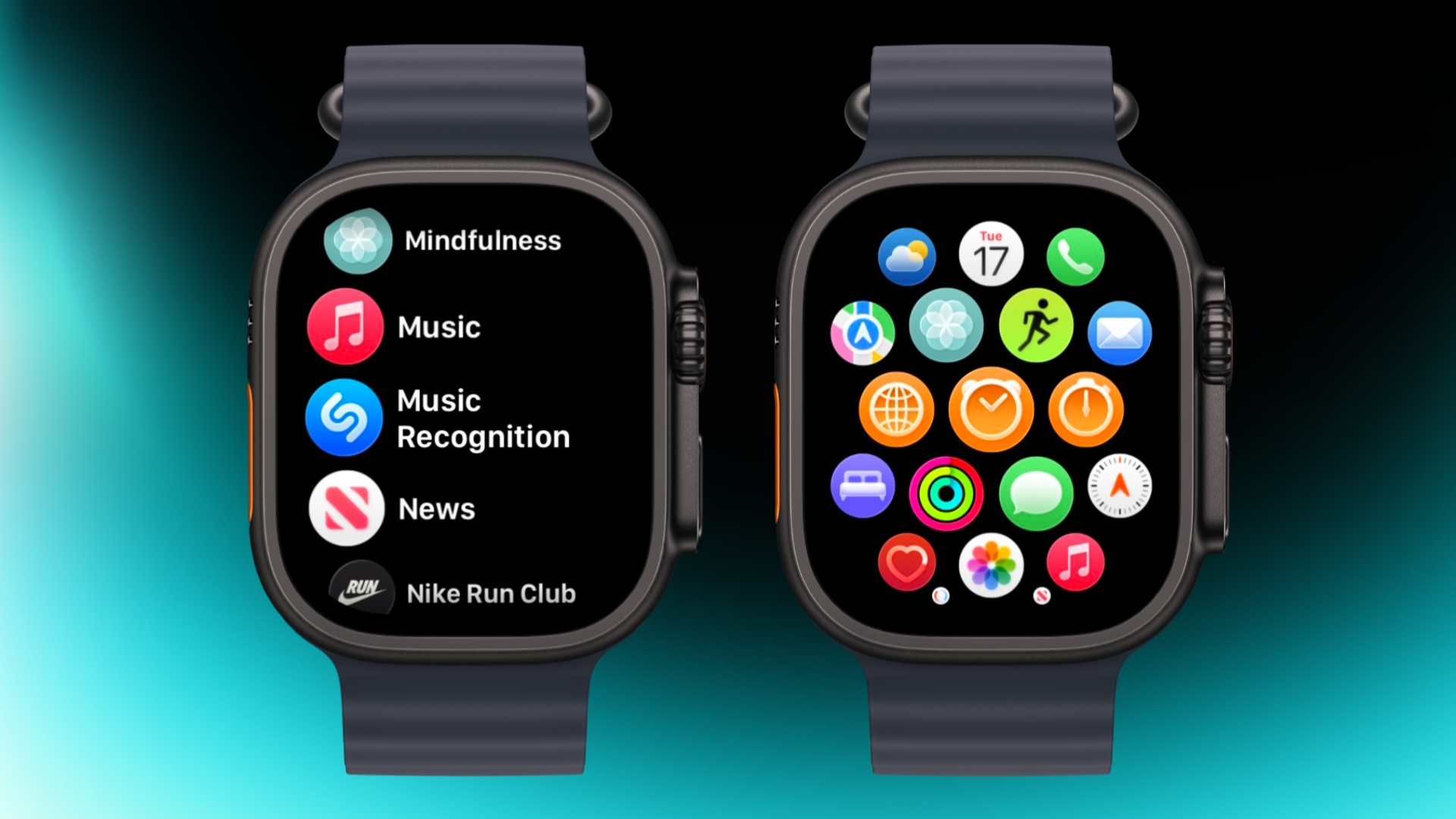
If the app grid feels messy, switch to List View. Open the Watch app on iPhone, tap App View, and choose List View. From then on, pressing the Digital Crown will show your apps in a simple, scrollable list.

Rearrange Apps


watch app
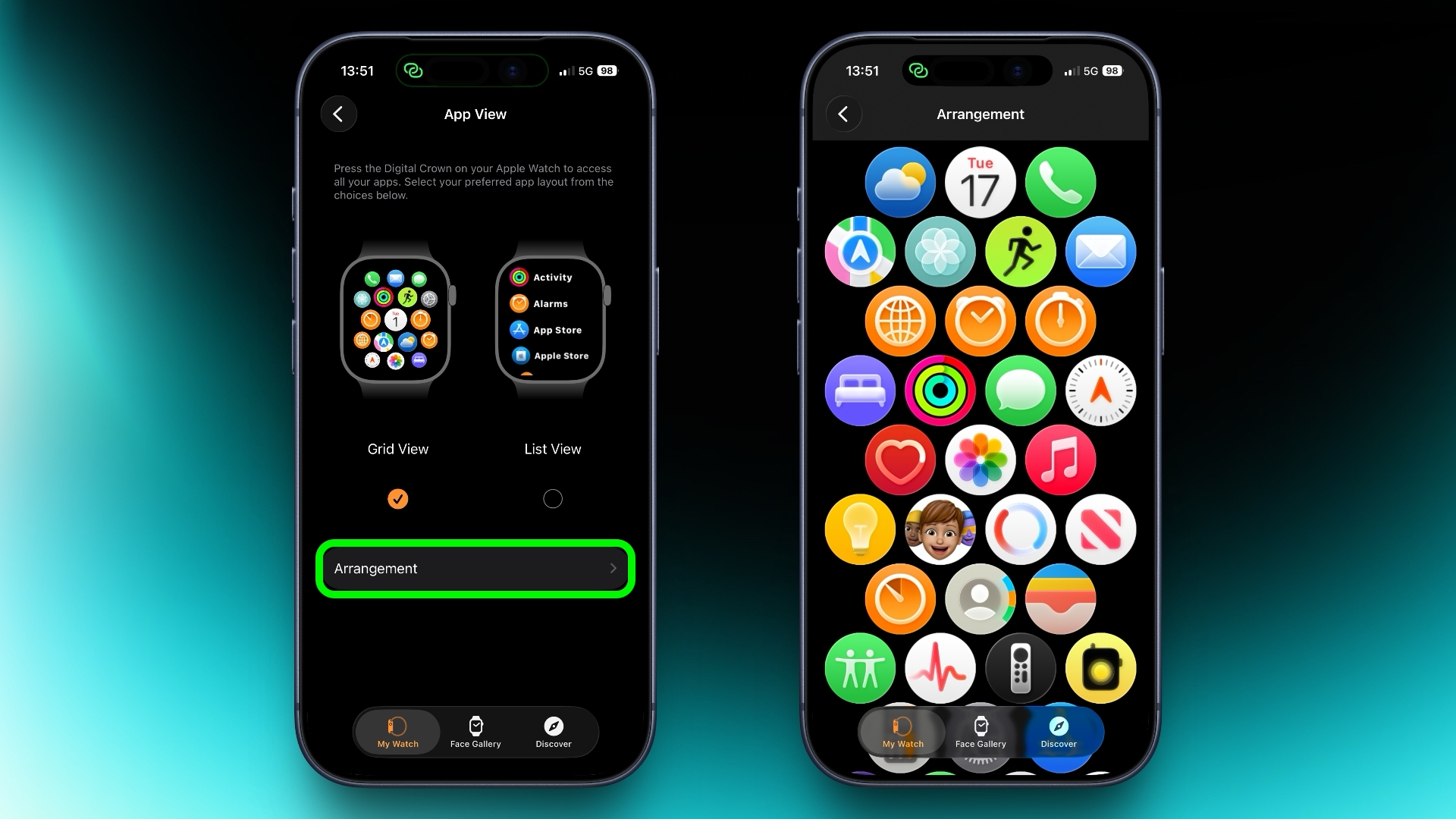
You can rearrange your apps so that the ones you use most are closer to hand. Simply press and hold on any app in the grid view, then drag it where you want. Alternatively, open the Watch app on your iPhone, go to App View ➝ Arrangement, and move things around there instead.

Ping Your iPhone


ping
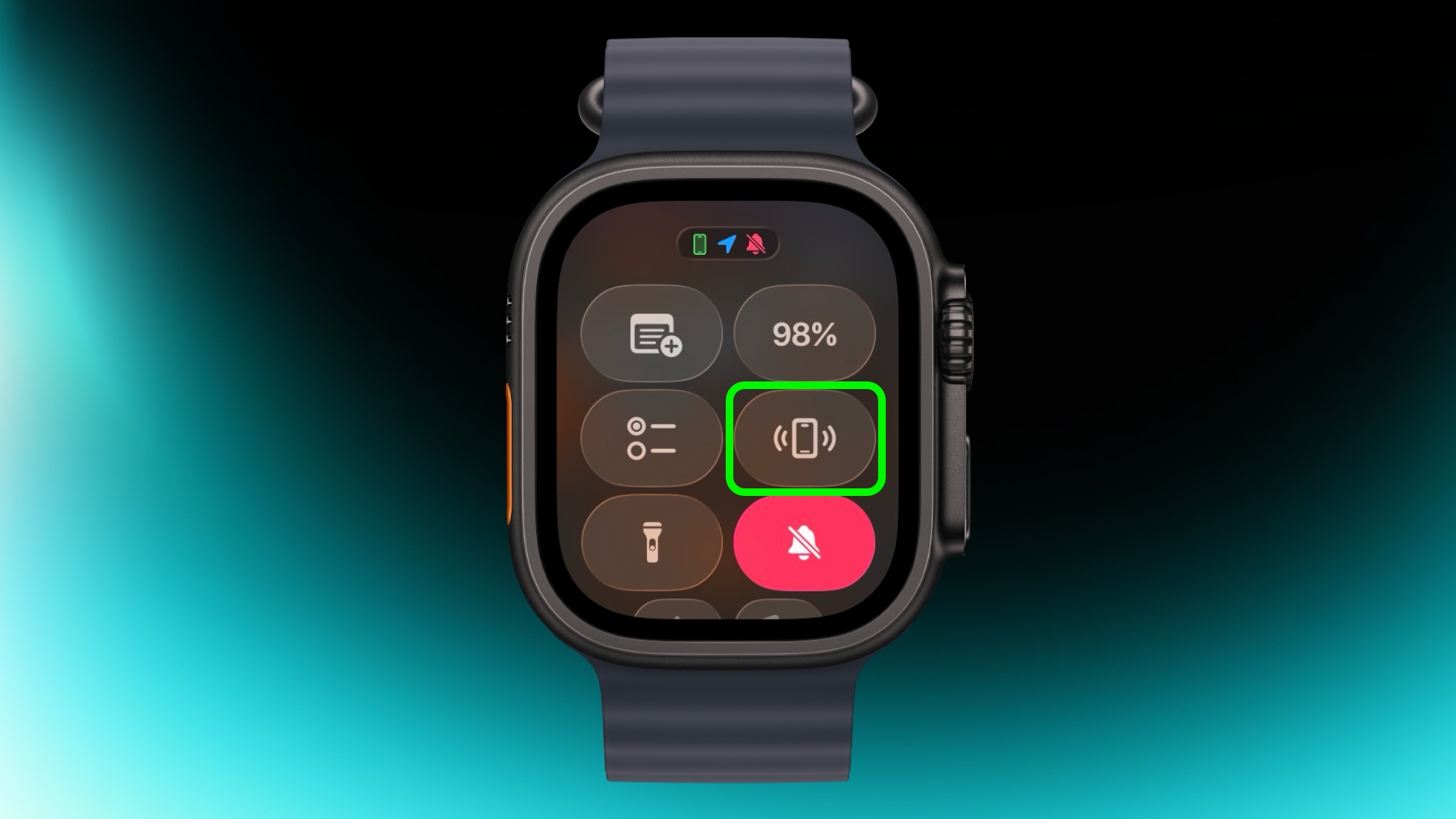
If you've misplaced your iPhone but you're sure it's nearby, open Control Center with a press of the Side button, then tap the phone icon to make it ping. Press and hold that icon and the iPhone's camera flash will blink too, which can help if it's hidden under something.

Skip the Countdown


workout
If you're eager to start a workout, the three-second countdown before it starts can be skipped. Just tap the screen when the countdown begins and your workout will start immediately. If you find yourself doing this regularly, consider turning on Precision Start in Settings ➝ Workout.

Customize Vibration Strength


haptics
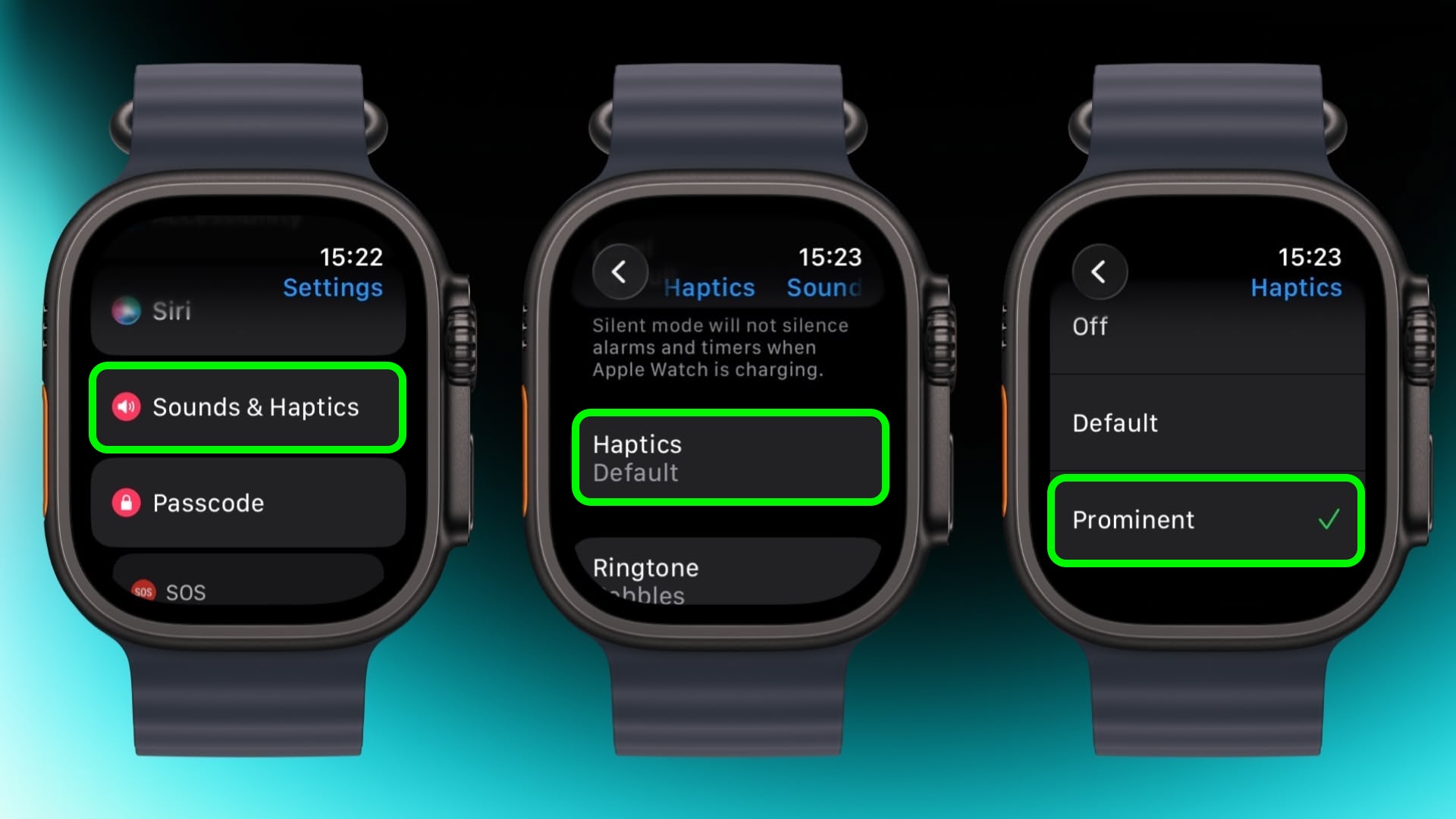
If you keep missing notifications, go to Settings ➝ Sounds & Haptics ➝ and change from Default to Prominent. This adds an extra tap pattern before alerts so they're harder to ignore.

Perform Precision Timing


chronograph
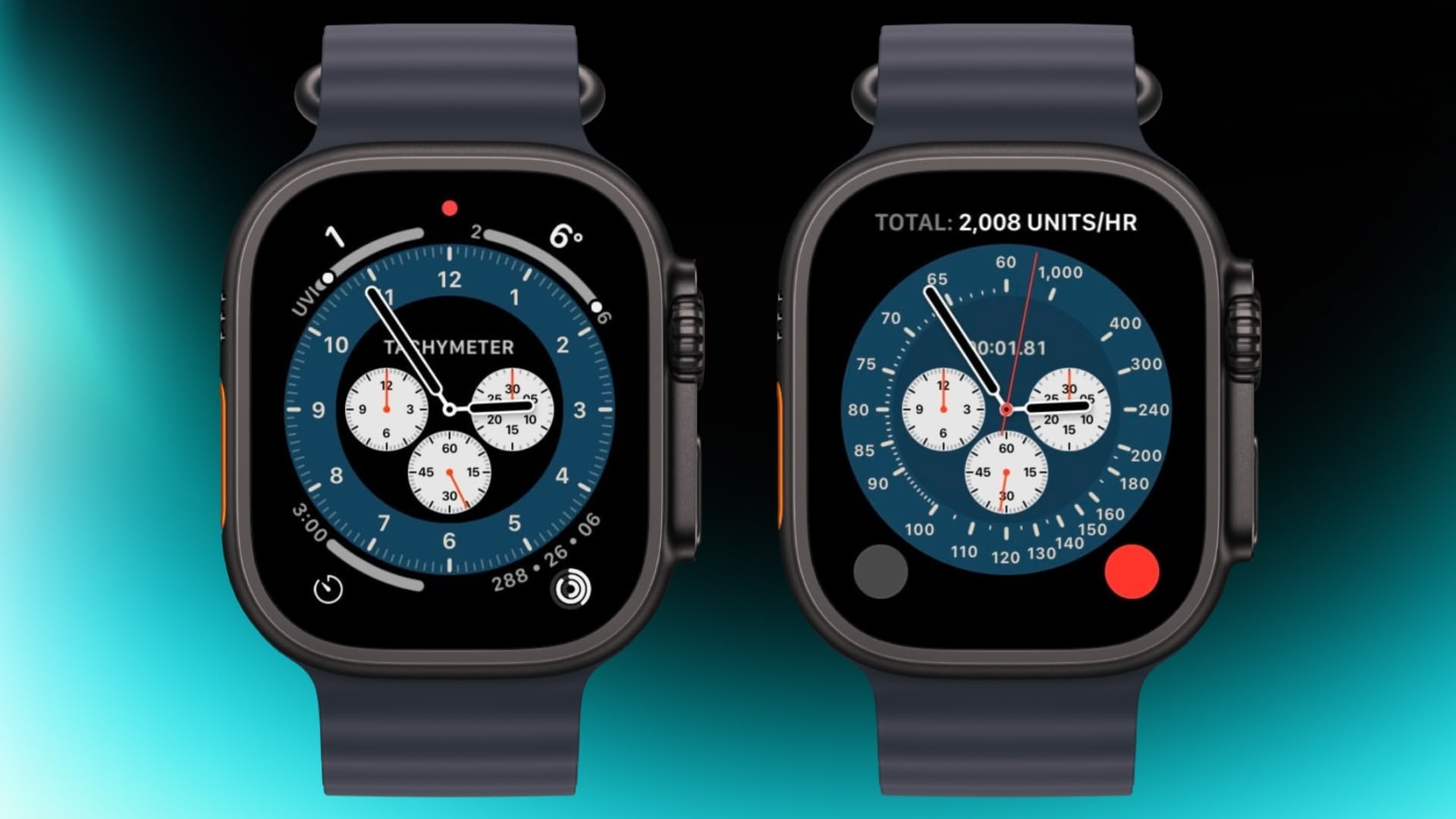
The Chronograph Pro watch face transforms into an actual chronograph. Tap the outer edge surrounding the main 12-hour dial on this watch face to record time on scales of 60, 30, 6, or 3 seconds. Alternatively, select the tachymeter timescale to measure speed based on time travel over a fixed distance.

Jump to the Top


jump to top
If you've scrolled way down in an app and want to jump back to the top, just tap the time in the top corner of the screen. It works in most apps and saves a lot of scrolling.

Remove Apps


apps view
Clearing out apps you don't use on your Apple Watch is easy. In the List or Grid View, press and hold on the screen until the apps jiggle, then tap the small x in the corner of the app icon to delete it. This works for most system apps and all third-party apps.

Customize Control Center


control center
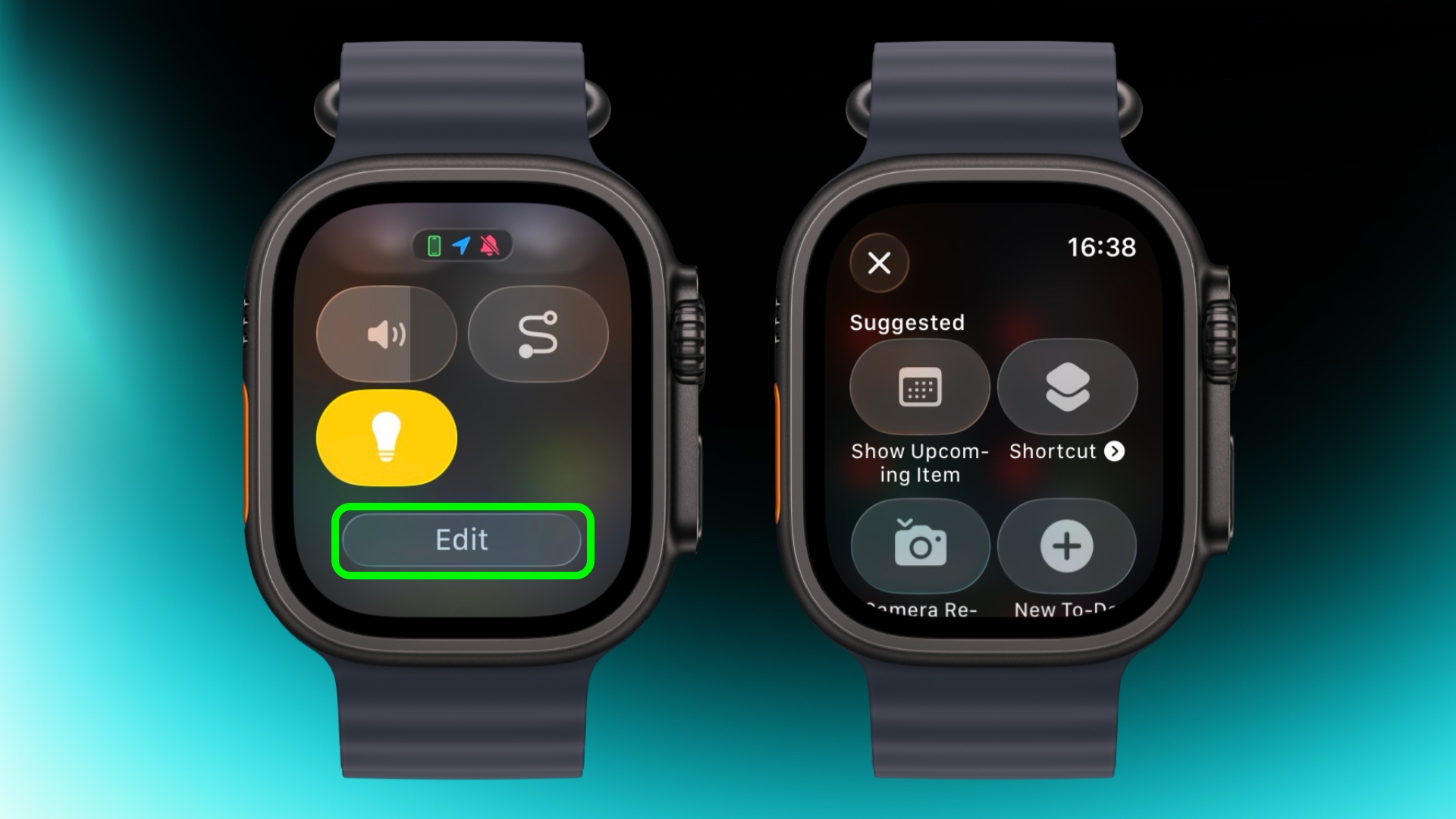
By default, Control Center (accessed via the Side button) gives you quick access to things like Wi-Fi, battery, and Do Not Disturb. But it's worth seeing what else you can add to it that you'd like quick access to. Tap the Edit button at the bottom, then tap the + icon in the top-left corner of the screen. System options such as New Note and Lights are particularly handy, and you might see some third-party options listed too, depending on your installed apps.

Speak the Time Out Loud


mickey
If you're using the Mickey or Minnie watch face, tap on the character and they'll speak the time out loud. Just make sure your sound is turned on. In fact, you can also have Siri read the time on any watch face by tapping and holding with two fingers on the display. Again though, sound needs to be enabled.

Customize Smart Replies


smart replies
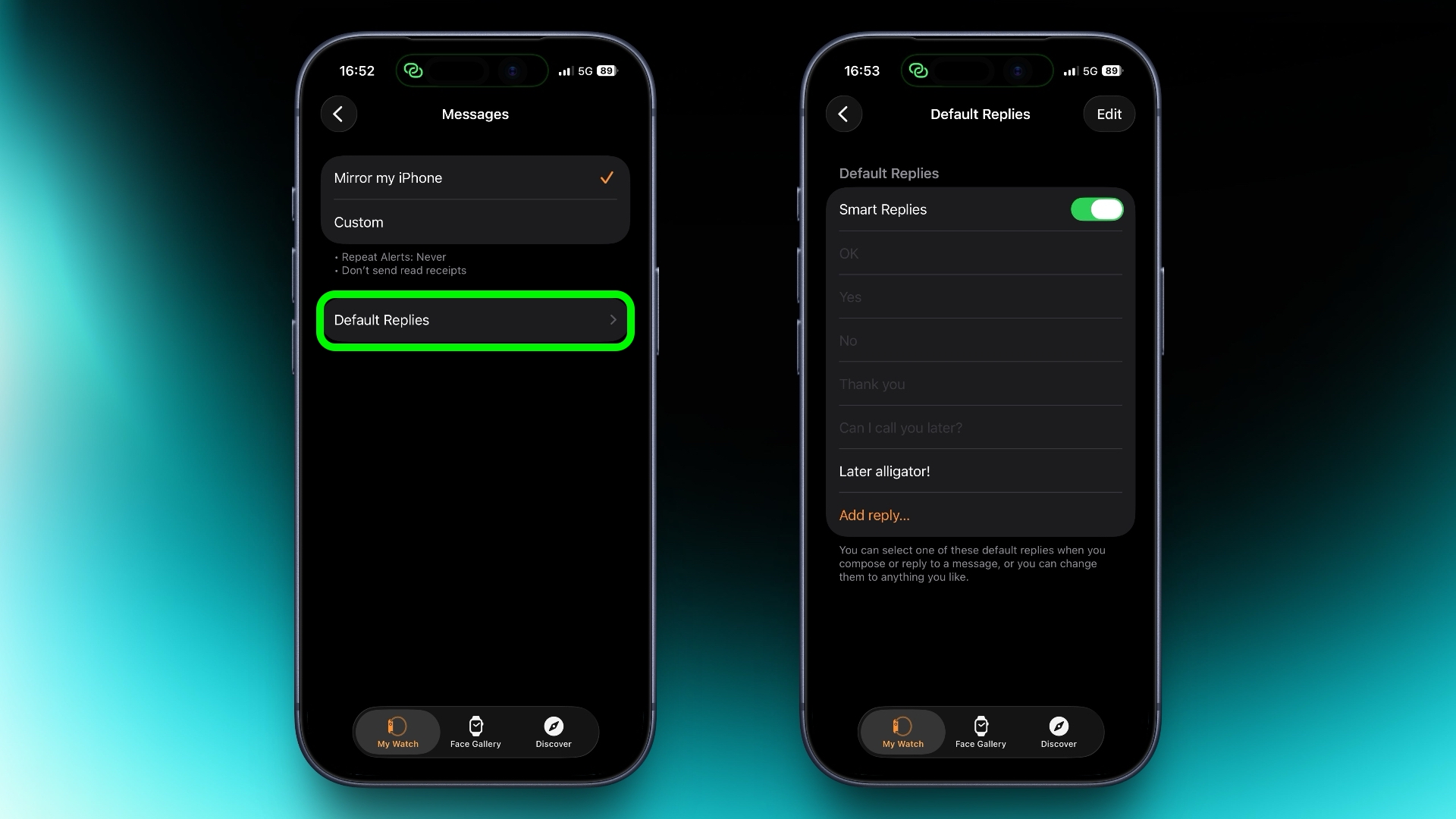
Smart Replies are handy when you want to reply with just a few words. In the Watch app on iPhone, go to Messages and tap Default Replies to customise what shows up. Then when a message comes in, simply swipe down to pick one of your preset replies.

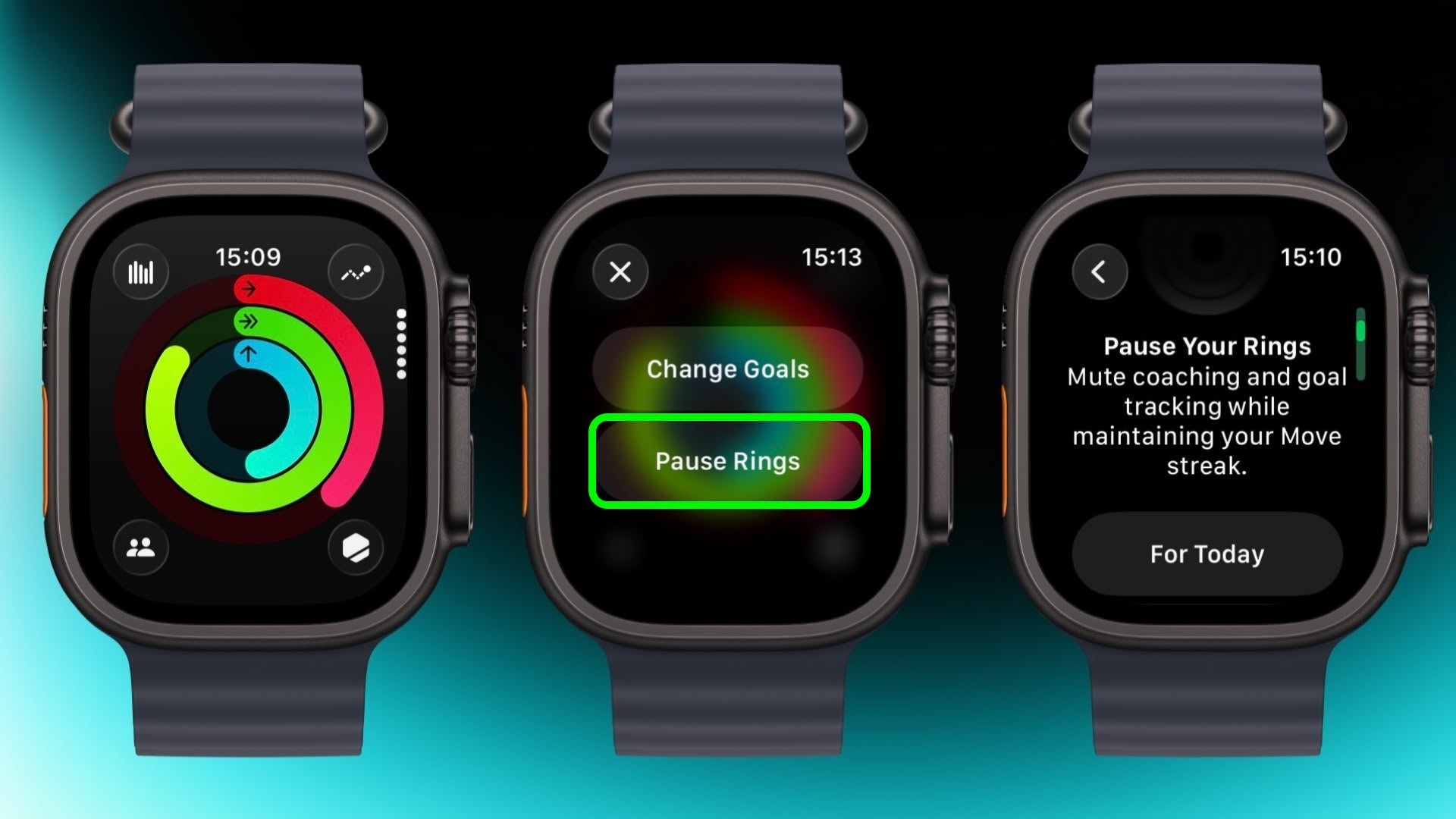
Pause Activity Rings


activity
Feeling unwell but hoping to keep your streak intact? In the Activity app, select your rings to access the option to suspend them for the day, or set a pause that lasts until a chosen date up to 90 days ahead.

Create a Note


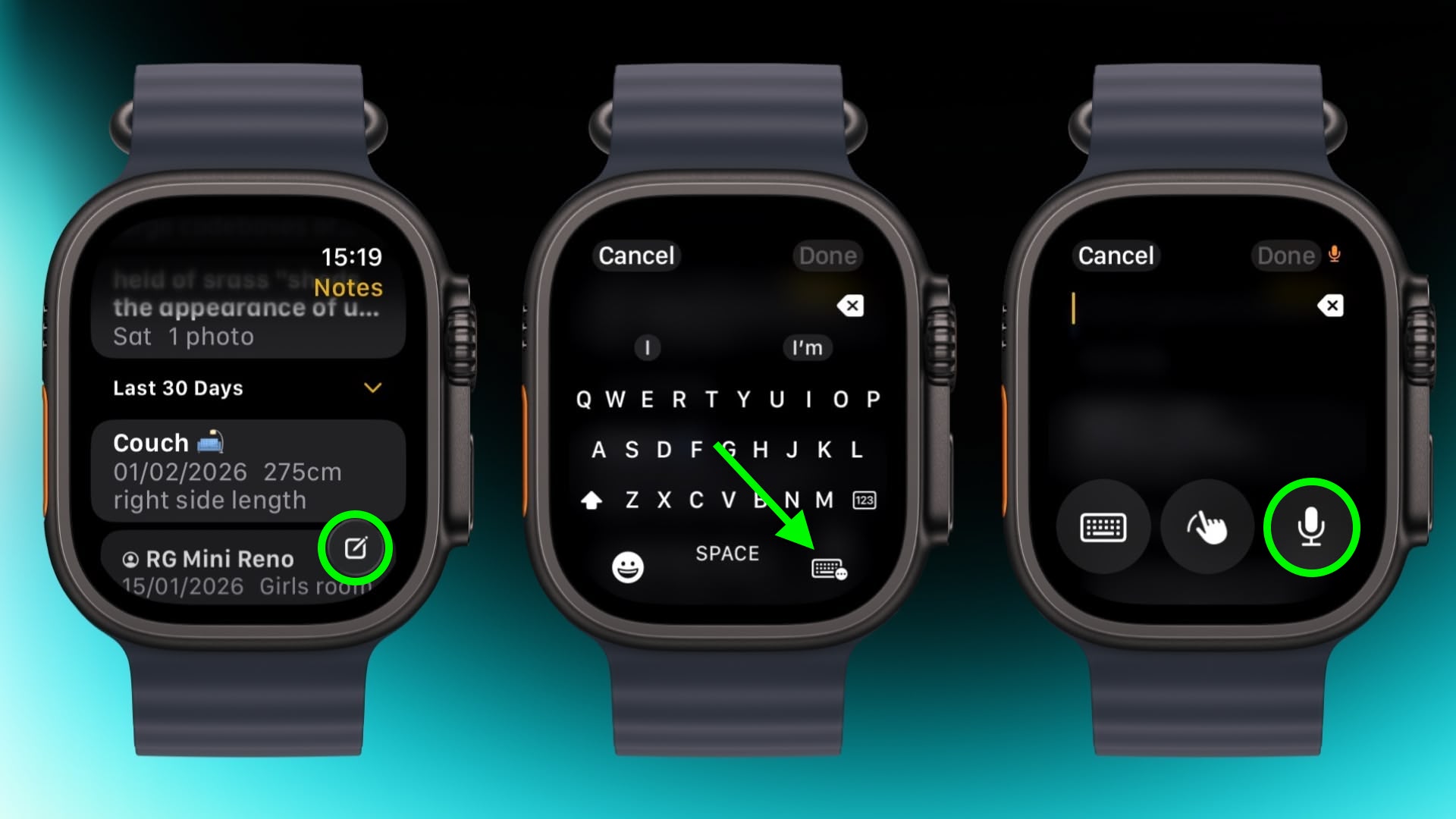
notes
In the new Notes app in watchOS 26, you can't modify existing notes on Apple Watch, but you can create a new one by tapping the compose control in the bottom-right corner and speaking your text. Because Notes sync through iCloud, you can refine or reorganize everything later on a device with a physical or on-screen keyboard.

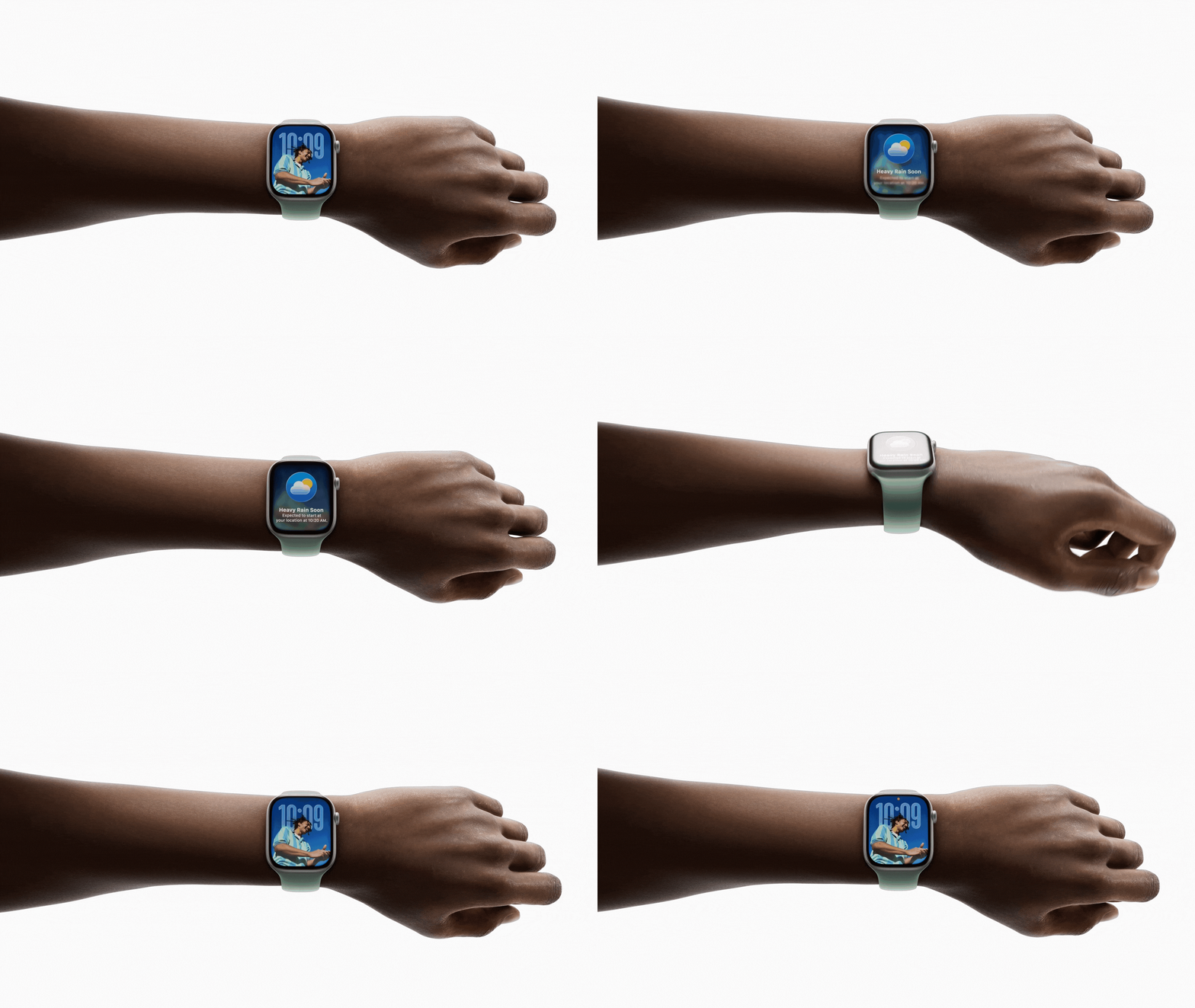
Mute and Dismiss Alerts


With a quick wrist flip, you can clear the current screen and go back to the watch face. The same gesture can be used to mute calls, stop timers, and dismiss notifications. The feature, which is on by default, is supported on Apple Watch SE (3rd generation), Series 9, Ultra 2, and later.
Related Roundup: Apple Watch 11
Buyer's Guide: Apple Watch (Caution)

This article, "Apple Watch: 15 Tips Every Owner Needs to Know" first appeared on MacRumors.com

Discuss this article in our forums

  •  

OpenAI Brings Codex Remote Access to ChatGPT Mobile App

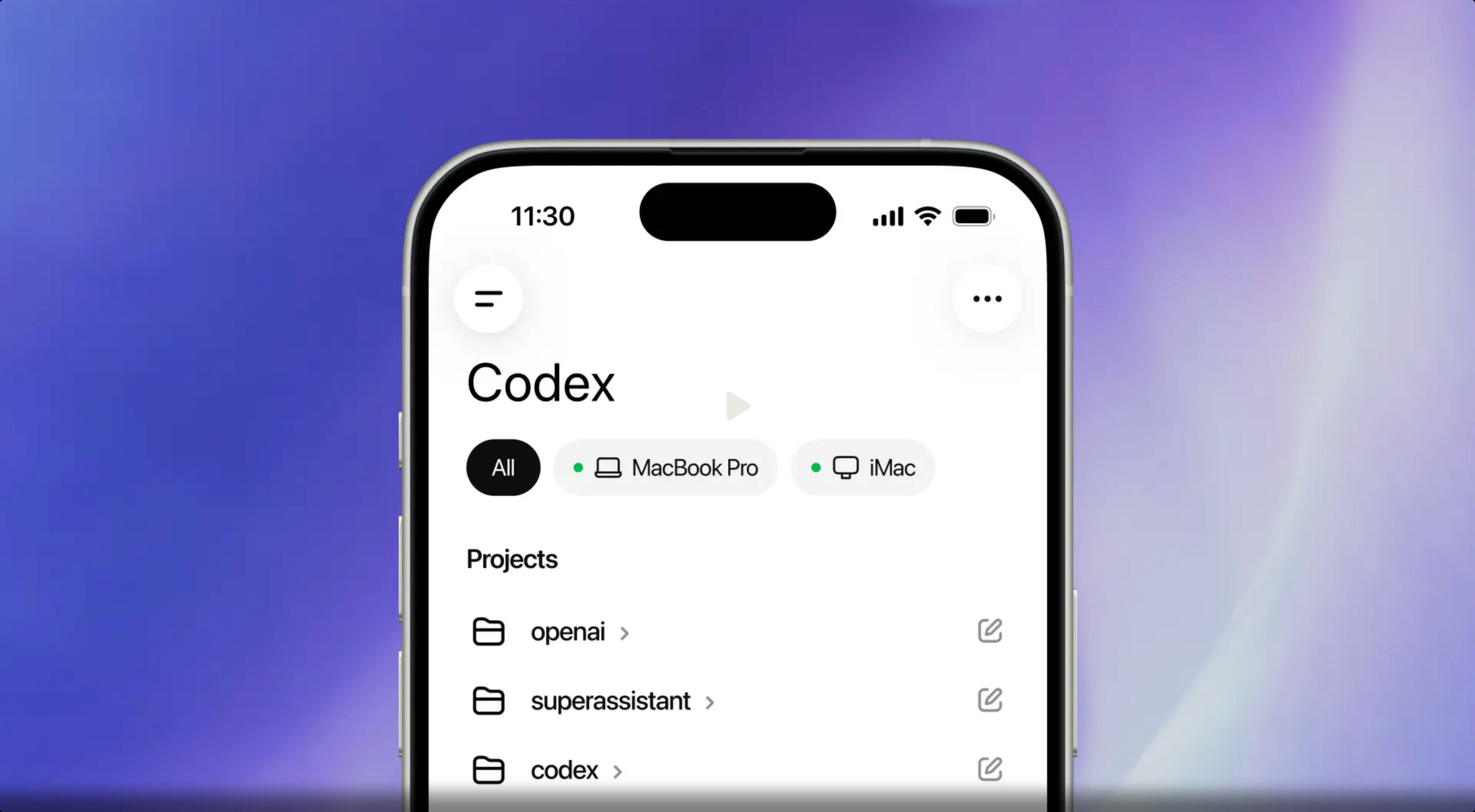
OpenAI has brought its Codex coding agent to the ChatGPT mobile app, providing iPhone and Android users with remote access to Codex sessions running on a Mac.


"Codex is now in the ChatGPT mobile app so you can stay in the loop from anywhere while Codex gets work done across your laptops, devboxes, or remote environments," said OpenAI, announcing the feature.

Codex remains a standalone app on Mac, but the mobile integration lives inside the existing ChatGPT app on iPhone and Android. Setup is pretty simple. First, update the Codex Mac app and ChatGPT mobile app, then select the new "Codex mobile" section in the Mac app interface. Scan the QR code it shows with your phone, and you're done.

Once connected, the mobile app loads the live state from the Mac where Codex is running, and you can pick up active chats or projects from the desktop, get notifications when Codex finishes a task or needs input, and begin new tasks by sending a message from your phone.

From the ChatGPT app, users can also review outputs, approve commands, switch between models, and add new prompts across active threads. Files, credentials, and permissions stay on the machine where Codex is operating, while screenshots, terminal output, diffs, test results, and approval requests flow back to the phone in real time.

OpenAI notes that Codex will access the desktop's files, apps, and browser to complete tasks sent from a phone, and warns users to only pair devices they own and trust.

You've been asking for this one...

Now in preview: Codex in the ChatGPT mobile app.

Start new work, review outputs, steer execution, and approve next steps, all from the ChatGPT mobile app. Codex will keep running on your laptop, Mac mini, or devbox. pic.twitter.com/9i2Jckjt9z

— OpenAI (@OpenAI) May 14, 2026

The feature follows OpenAI's recent launch of a Codex Chrome extension, which lets the agent work directly in the browser to test web apps and pull context across tabs.

OpenAI says support for remotely accessing Codex for Windows will follow soon.
This article, "OpenAI Brings Codex Remote Access to ChatGPT Mobile App" first appeared on MacRumors.com

Discuss this article in our forums
  •  

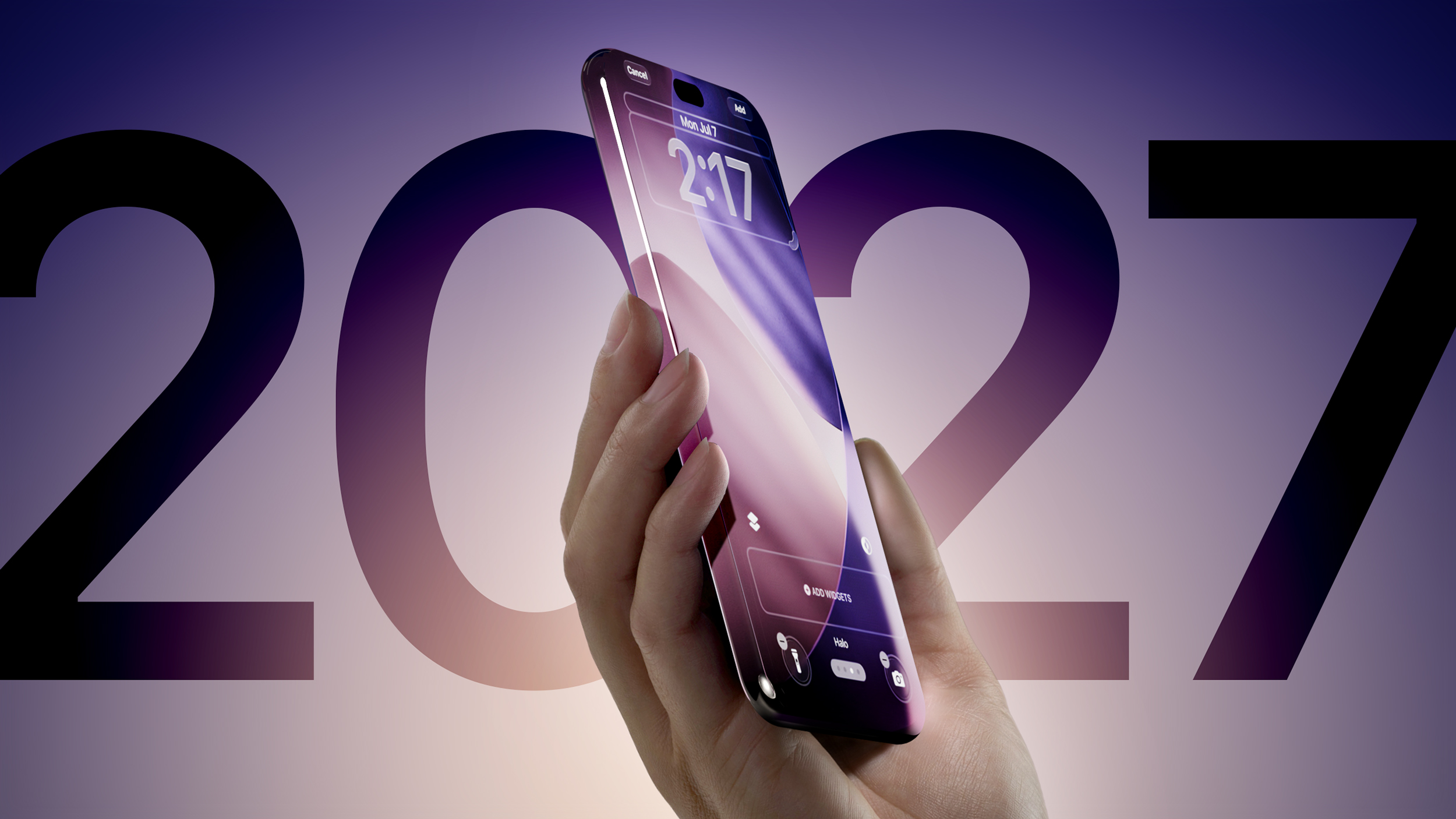
20th Anniversary iPhone's Curved Display to Improve a Year Later

Apple is already planning a second version of the "four-edge bending" display that is rumored to debut on next year's 20th-anniversary iPhone, claims a new report out of Korea.


For the 20th-anniversary iPhone, Apple is said to be introducing a display that curves down around all four edges of the device for a borderless visual experience. It could be one of the biggest design shifts in the iPhone's history since the 10th anniversary iPhone X, which saw Apple drop the Home button, introduce a notched display, and adopt an intuitive swipe gesture-based navigation interface.

Today, ETNews reports that Apple is planning a two-stage rollout for the new OLED display technology that the commemorative iPhone will use, with a more advanced version said to be coming a year later.

For the 2027 variant, Apple will reportedly rely on OLED technology that uses a magnesium-silver (MgAg) alloy in the cathode layer. This implementation can cause image distortion and brightness loss in the curved areas, but Apple is apparently willing to live with the compromise for the 20th-anniversary iPhone while more advanced technology scales.

Apple then plans to address the issue in 2028 by transitioning to next-generation transparent electrodes. Apple will reportedly switch to indium zinc oxide (IZO) cathode materials, and because IZO is more transparent, it should reduce distortion, uneven brightness, and heat issues around the curved edges while enabling even narrower bezels.

ETNews reports that Samsung Display and LG Display have already been put on alert to prepare for the two-stage rollout. LG recently announced a ₩1.106 trillion investment (roughly $790 million) in OLED infrastructure, which industry observers believe is connected to development and mass production of the new technology.

Meanwhile, Samsung is reportedly evaluating whether its existing OLED lines can accommodate the required hardware, but a dedicated production line is not out of the question, and may well be necessary.

Bloomberg in May 2025 reported on Apple's plans to launch a "mostly glass, curved iPhone without any cutouts in the display" for its 20th-anniversary model. The Information last year also cited multiple sources claiming that at least one new iPhone model launching in 2027 will have a truly edge-to-edge display.
This article, "20th Anniversary iPhone's Curved Display to Improve a Year Later" first appeared on MacRumors.com

Discuss this article in our forums
  •  

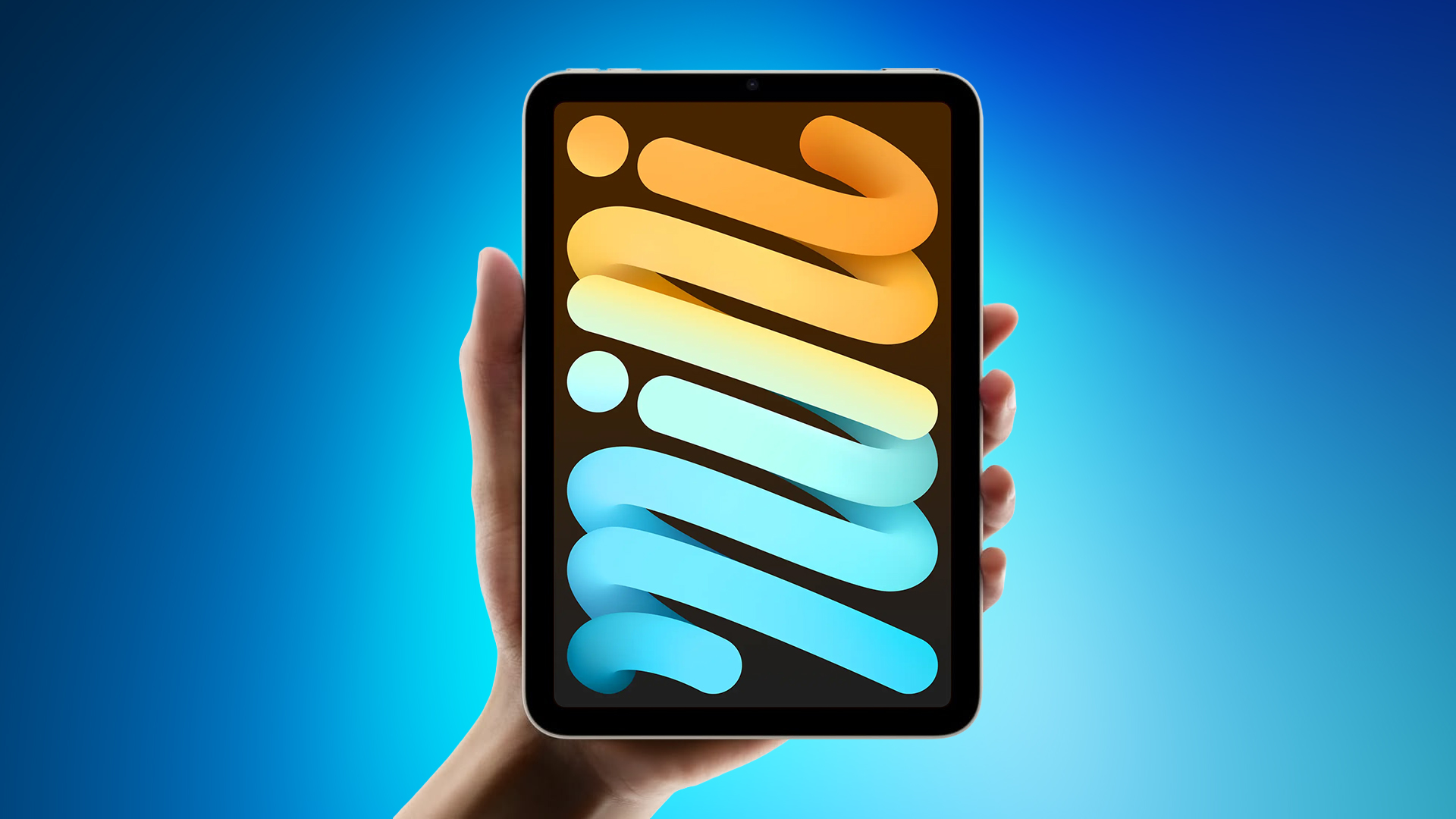
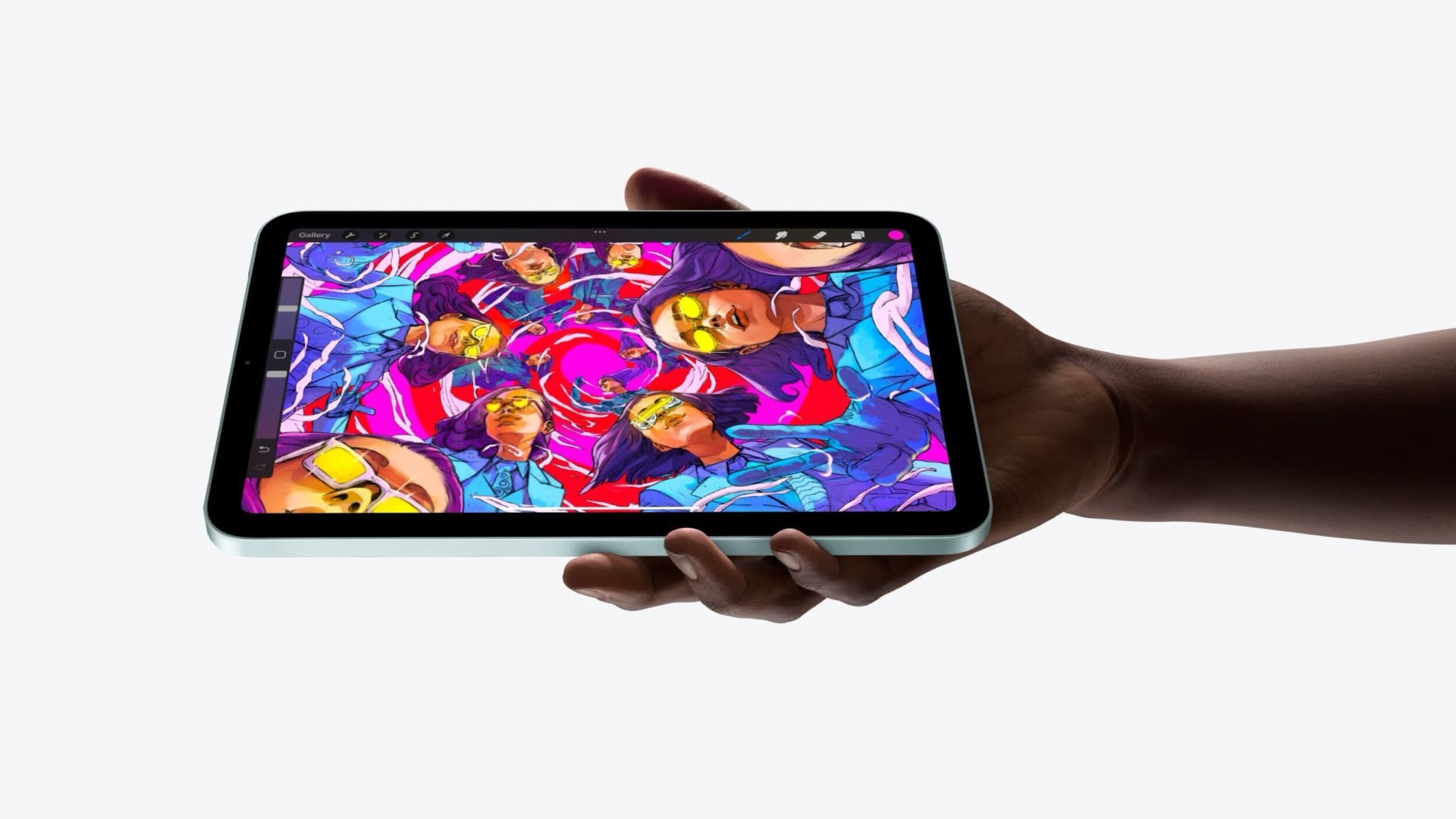
OLED iPad Mini: Release Date, Pricing, and What to Expect

According to the latest rumors, Apple is close to launching its next-generation iPad mini. So what should we expect from the successor to the iPad mini 7 that Apple released over a year ago? Read on to find out.


Processor and Performance


Apple is working on a next-generation version of the iPad mini (codename J510/J511) that features the A19 Pro chip, according to information found in code that Apple mistakenly shared in August.

Apple's A19 Pro chip since debuted in the iPhone Air and iPhone 17 Pro models. The iPhone 17 Pro models include the higher-end version of Apple's A19 Pro chip with a 6-core CPU and a 6-core GPU, while the iPhone Air uses a mid-tier A19 Pro chip with one fewer GPU core than the A19 Pro chip used in the iPhone 17 Pro and Pro Max.

If the code leak is accurate for the iPad mini 8, Apple is likely to use the mid-tier A19 Pro chip found in the iPhone Air. This is based on the fact that the A17 Pro chip used in the iPad mini 7 has a 6-core CPU with two high-performance cores and four efficiency cores, along with a 5-core GPU, compared to the 6-core GPU found on the A17 Pro used in the iPhone 15 Pro.

Apple built the A19 Pro chip on an upgraded third-generation 3-nanometer N3P process for modest speed and efficiency improvements. The chip includes a 16-core Neural Engine, next-generation dynamic caching, and unified image compression.

The GPU in the A19 Pro has an upgraded architecture with a larger cache, more memory, and Neural Accelerators that are built into each core. Apple says that this change provides 3× the peak GPU compute over the prior-generation chip. There's also an upgraded 16-core Neural Engine for AI tasks.

There is an outside chance that Apple opts for the A20 Pro chip for the new iPad mini. The claim has been made by a MacRumors tipster who analyzed a macOS kernel debug kit containing internal Apple codenames. However, the iPad mini has not always received Apple's newest A-series chip at the time it was updated, so the A19 Pro cannot be ruled out at this time. iPhone 18 Pro models are also expected to use the A20 Pro chip, which will reportedly be fabricated with TSMC's advanced 2nm process.

Display


Apple's plan to transition the ‌‌iPad mini‌‌ from an LCD to an OLED display is widely rumored. According to Bloomberg's Mark Gurman, the small form-factor tablet is likely to be the next Apple device to adopt OLED. According to a Chinese leaker with sources in Apple's supply chain, Apple has evaluated a Samsung-made OLED display for its next iPad mini model.

It remains unclear whether the iPad mini 8 will feature a higher refresh rate than the 60Hz LCD display used in the existing iPad mini 7, but since the new base iPhone 17 now uses a 120Hz ProMotion panel, it would be reasonable to expect the same on the first OLED iPad mini. A separate report has suggested the ‌‌‌iPad mini 8‌‌‌'s screen could increase in size from 8.3 inches to 8.7 inches with the adoption of OLED.

OLED panels can individually control each pixel, resulting in more precise color reproduction and deeper blacks compared to other common display technologies. They also provide superior contrast, faster response times, better viewing angles, and greater design flexibility. All of Apple's flagship iPhones use OLED panels, and in May 2024 the company brought the display technology to the iPad Pro for the first time.

Unlike Apple's ‌iPad Pro‌ models, which feature two-stack low-temperature polycrystalline oxide (LTPO) OLED panels‌, the ‌iPad mini‌ may have a single-stack low-temperature polycrystalline silicon (LTPS) panel, which would make it dimmer.

Chassis Design


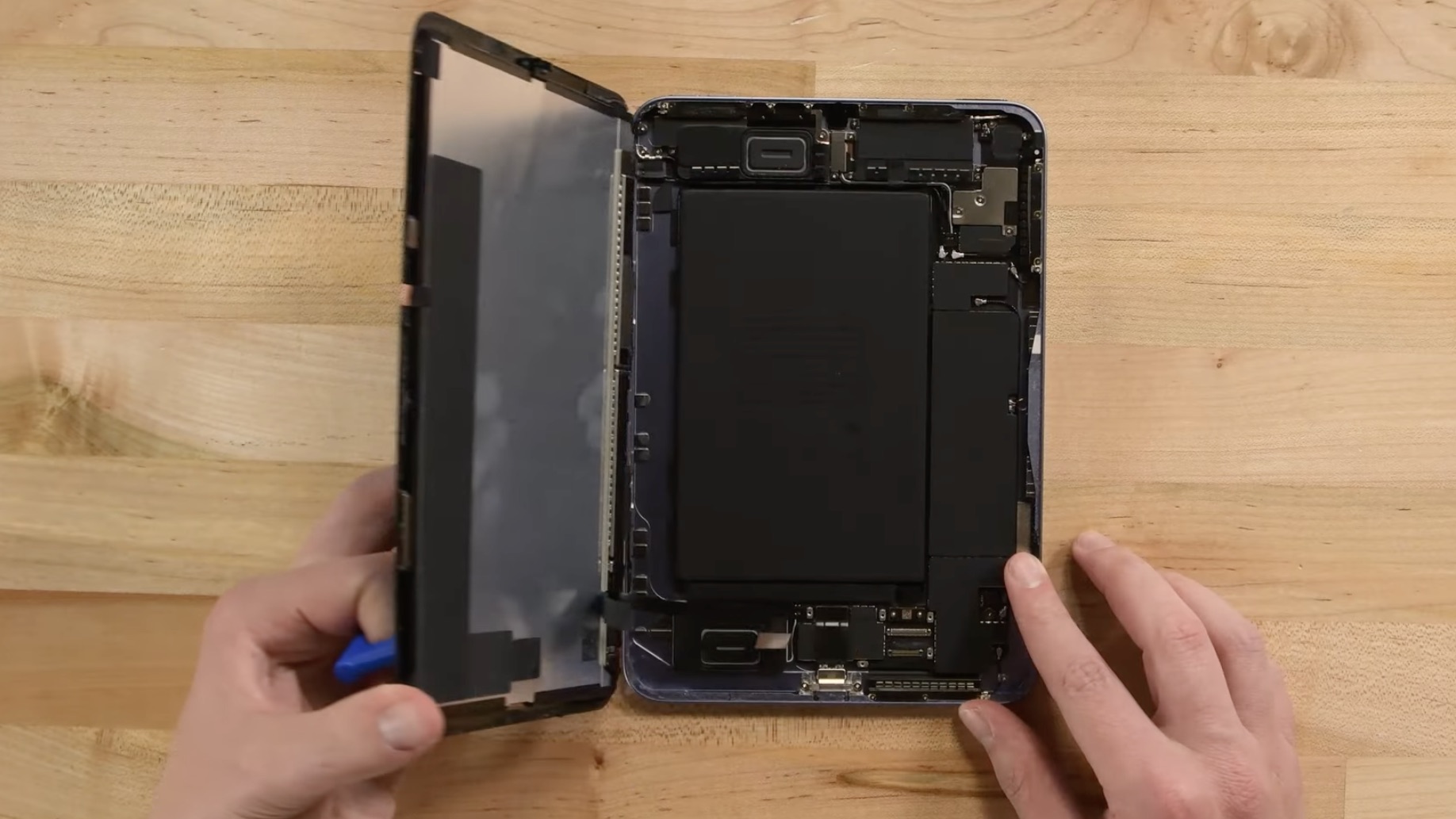
Apple is reportedly working to give the iPad mini 8 a more water-resistant design, according to Bloomberg's Mark Gurman. The updated casing would bring protection levels closer to those of the iPhone, making the tablet safer for use in damp environments.

To achieve this, Apple is said to have designed a new vibration-based speaker system that eliminates the need for traditional speaker holes. By using sound-emitting surfaces instead of open grilles, the company can reduce potential entry points for water and dust, resulting in a more sealed, durable enclosure.

On the iPhone, Apple relies on adhesives and gaskets to shield speakers and other openings from moisture. The iPad mini's approach appears to go further, doing away with the holes altogether. Current iPad mini models lack any official IP rating, but the upcoming version could mark the first in the lineup to feature a certified level of water protection.

Apple patents could offer further clues to the new design direction. For example, a 2014 patent outlines a "mechanically actuated panel acoustic system" that vibrates flat surfaces to generate sound, effectively turning parts of a device's chassis into a speaker diaphragm. This could potentially allow Apple to produce audio without visible speaker holes. The patent suggest Apple has been building towards a sealed, vibration-based acoustic system for several years.

Release Date


According to research firm Omdia, the ‌‌iPad mini‌‌ is expected to adopt an OLED display in 2027. However, Korea's ET News and ZDNET Korea have both suggested that the iPad mini will be updated with an OLED display in 2026. Bloomberg has also said the update could come as soon as this year.

The most recent word on the subject comes from Weibo-based leaker Instant Digital, who claims the OLED iPad mini will be launched in the second half of 2026 at the earliest.

In May 2024, it was reported that Samsung Display had started developing sample OLED panels for a future ‌iPad mini‌, with plans to initiate mass production at its facility in Cheonan in the second half of 2025. The same report claimed that Apple will bring an OLED panel to the iPad Air alongside the ‌iPad mini‌ in 2026, though Apple only refreshed the iPad Air in March, and more recent reporting suggests an OLED iPad Air will arrive in early 2027.

The latter outlook aligns with a December report by analyst firm Display Supply Chain Consultants (DSCC) that said an 8.5-inch OLED iPad mini is planned for a 2026 launch, while 11-inch and 13-inch OLED iPad Air models are expected to follow in 2027.

Ultimately, there are no rumors suggesting exactly when the next ‌iPad mini‌ will be released, but a launch later in 2026 has a high probability.

Pricing


Apple's ‌iPad mini‌ with OLED display technology and improved water resistance is expected to be more expensive, and Apple could charge up to $100 more for the device, according to Bloomberg's Gurman. The ‌iPad mini‌ is currently priced starting at $499. Gurman has previously argued that Apple should consider a lower-end version of the mini, or at least a change to its current $499 starting price, given that it's up against rival products that cost a lot less.

However, Apple users who are looking for a more affordable option should probably consider the 10th-generation iPad instead. Starting at $329, the iPad offers many iPad mini features, such as Touch ID and Center Stage, but at a lower price that balances functionality and affordability.
Related Roundup: iPad mini
Tag: OLED
Buyer's Guide: iPad Mini (Don't Buy)
Related Forum: iPad

This article, "OLED iPad Mini: Release Date, Pricing, and What to Expect" first appeared on MacRumors.com

Discuss this article in our forums
  •  

Apple's F1 Streaming Ambitions Hit Wall as Sky Renews European Rights

Apple's interest in expanding its Formula 1 streaming deal for Apple TV beyond the United States may have stalled, after Sky Sports signed early renewals to retain the sport's broadcast rights across its largest European markets.


Sky and F1 jointly announced on May 6 that Sky will remain F1's exclusive live broadcast partner in the UK and Ireland through the 2034 season, and in Italy through 2032. The five-year extension adds to a UK and Ireland deal that was already running through 2029, so it won't impact any immediate plans Apple may have had, but it certainly pushes those markets further out of reach. Sky's early move secured the rights before they could go to open tender.

Sky and F1 did not disclose the value of the deal, but trade publication IBC reported that the UK and Ireland portion is worth around £200 million (around $265–270 million) per season, while other reports put the total figure at around £1 billion (around $1.34 billion).

The deal follows recent comments from Apple's senior vice president of services Eddy Cue at the Autosport Business Exchange in Miami. According to a report from MotorBiscuit, Cue said that clinching its F1 streaming rights in the U.S. first was "undoubtedly the best strategy," adding: "I hope we can expand into other markets."

Sky may have walled off the British, Irish, and Italian markets for now, but other major European deals remain open – Canal Plus holds French rights only through 2029, for example.

Apple's five-year U.S. deal began with the 2026 season, and Apple has already folded its coverage into its wider offerings, with a dedicated F1 section in the Apple TV app, race tracking in Apple Sports, F1 circuit guides in Apple Maps, and playlists in Apple Music.
Tag: Europe

This article, "Apple's F1 Streaming Ambitions Hit Wall as Sky Renews European Rights" first appeared on MacRumors.com

Discuss this article in our forums

  •  

Notepad++ Mac Port Renamed Nextpad++ After Trademark Row

Following last month's coverage of an unofficial Mac port of Notepad++ that the original developer called out for trademark violation, the dispute has now been resolved with a rebrand.

Notepad++
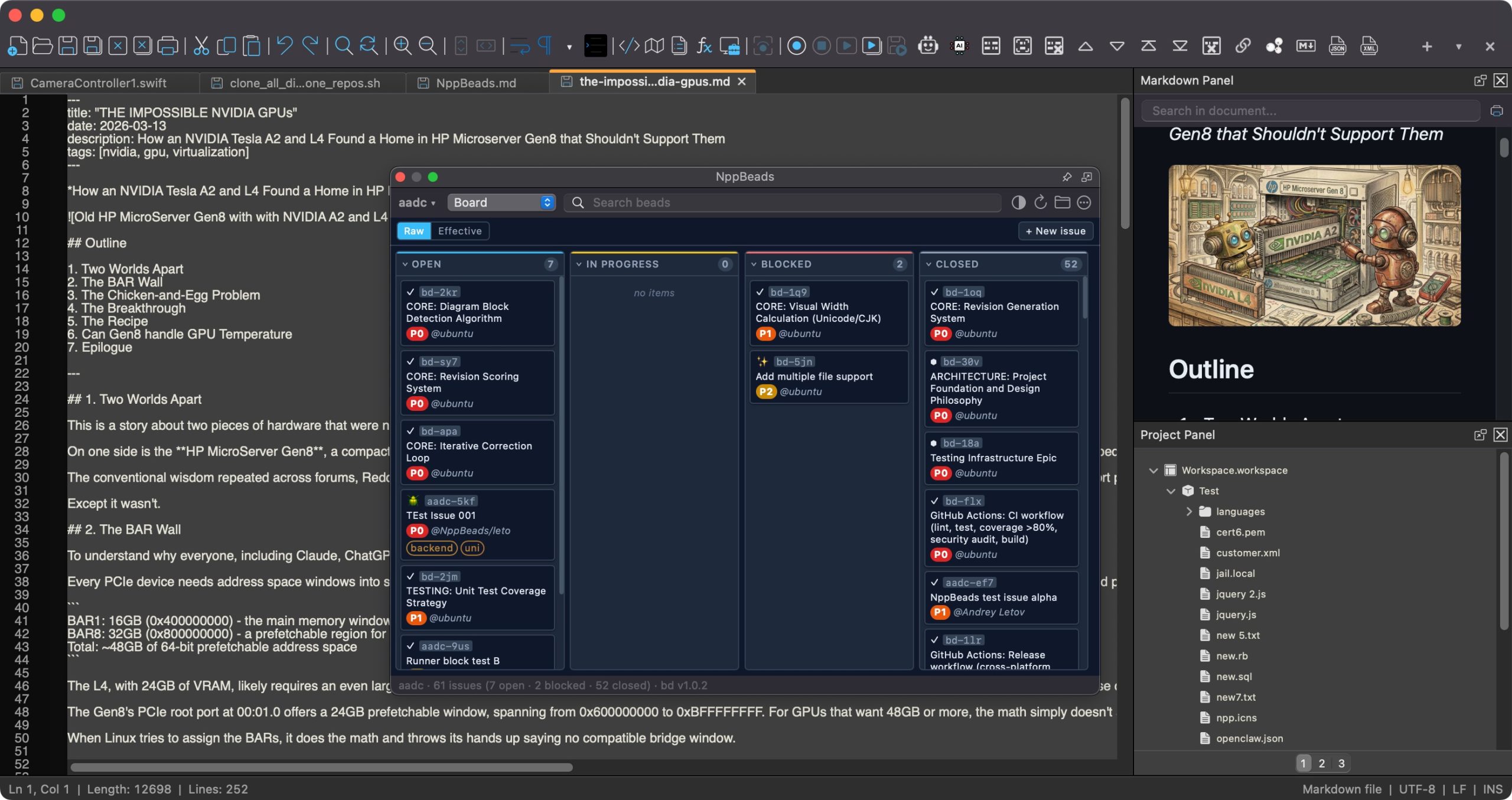
The macOS port was previously released by Andrey Letov under the Notepad++ name without authorization. Don Ho created the original Windows code editor in 2003, and had publicly objected to the unofficial app's use of his trademark and the inclusion of his name and biography on its author page. After settling the dispute, the app has subsequently been renamed Nextpad++.

The site for Nextpad++ has been thoroughly updated and clearly states that the app is an "open-source and independent community port of Notepad++ to macOS." Elsewhere, Letov's About page describes the project as a Mac port of the Notepad++ GPL codebase, built on Objective-C++, Scintilla, and Cocoa, and shipped as a universal binary for Apple silicon and Intel Macs. The app also has a new icon.

Names aside, it seems Daring Fireball's John Gruber is less than charmed by the result, describing the app as feeling "unholy" and suggesting the rapid port could only have been built with AI vibe-coding tools. The site states development began on March 10.

Have you tried out Nextpad++ for Mac? Let us know what you think in the comments.
This article, "Notepad++ Mac Port Renamed Nextpad++ After Trademark Row" first appeared on MacRumors.com

Discuss this article in our forums
  •  

Apple Project Files Allegedly Stolen in Foxconn Ransomware Attack

Apple supplier Foxconn has confirmed a cyberattack on several of its U.S. factories, after a ransomware group claimed to have stolen confidential Apple project files as part of the hack.

Apple Vs Foxconn Feature 2
The Nitrogen group posted the breach on its data leak site this week, claiming to have made off with 8TB of data spanning more than 11 million files. Alongside the allegedly stolen Apple files, Nitrogen claims the trove includes internal project documentation and technical drawings tied to Intel, Google, Dell, and Nvidia.

Foxconn confirmed the intrusion to The Register on Tuesday, but the supplier did not respond to questions regarding whether any customer data was actually taken. A company spokesperson said its cybersecurity team activated response measures to keep production running, and that all of its affected factories are resuming normal operations.

Foxconn assembles a wide range of Apple products, but Apple famously takes the secrecy of unreleased products extremely seriously, and suppliers typically receive only the technical information needed for their specific role in manufacturing.

Nitrogen is believed to be an offshoot of leaked Russia-based Conti 2 ransomware code. If so, though, the stolen files may be inaccessible. Researchers at Coveware warned in February that a bug in the group's ESXi encryptor makes file recovery impossible, even for victims who pay up.

It's not the first time Foxconn has been targeted by ransomware gangs. The manufacturer was previously hit by LockBit in 2022 and 2024.
Tag: Foxconn

This article, "Apple Project Files Allegedly Stolen in Foxconn Ransomware Attack" first appeared on MacRumors.com

Discuss this article in our forums
  •  

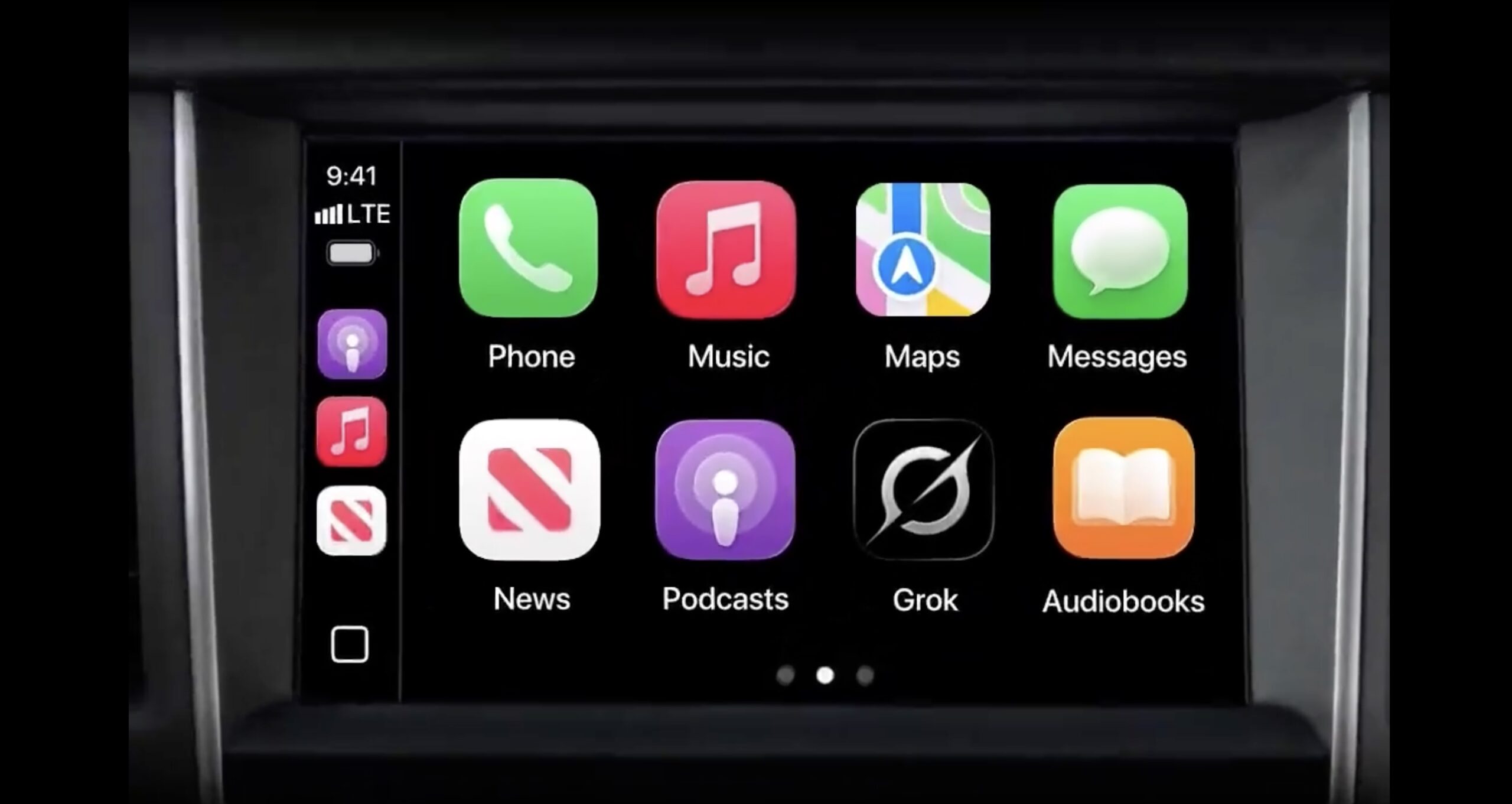
Grok AI Voice Mode Arrives on Apple CarPlay

SpaceXAI has released Grok Voice mode for Apple CarPlay, allowing CarPlay users to ask the chatbot questions and make requests directly from their vehicle dashboard, handsfree.

grok
Previously, Grok for iPhone displayed a placeholder app in CarPlay saying the handsfree support would be coming soon. Grok comes built-in on Tesla vehicles, but now almost any other car can access it.

Apple started permitting third-party voice-driven conversational apps to integrate with ‌CarPlay‌ in iOS 26.4, but developers must add support for the feature and obtain a special entitlement from Apple.

Apple requires apps to use its voice control template for CarPlay. Whenever voice-based services are active, apps must display the voice control interface and can include up to four action buttons. However, Apple says chatbot apps should not show text or imagery in response to queries.

Grok Voice mode joins ChatGPT and Perplexity, which arrived on CarPlay in March and April, respectively.

Your commute just got smarter

Talk to me hands free — now on Apple CarPlay pic.twitter.com/ZuMzC9D9jH

— Grok (@grok) May 7, 2026

‌CarPlay‌ has supported third-party apps for years, but Apple restricts the types of apps permitted on the platform to reduce driver distractions. Apple maintains a list of approved app categories, including audio, communication, EV charging, and navigation apps.
Related Roundup: CarPlay
Tag: Grok

This article, "Grok AI Voice Mode Arrives on Apple CarPlay" first appeared on MacRumors.com

Discuss this article in our forums

  •  

Apple Warns Canada's Bill C-22 Could Force Encryption Backdoors

Apple and Meta have opposed a Canadian bill that the companies say could force them to create backdoor access to encrypted user data, should it pass through the country's parliament.


Proposed by Canada's ruling Liberal Party, Bill C-22 contains provisions that could be similar ​to a UK data access provision order sent to Apple last year, depending on how they are implemented.

Back in February 2025, the British government demanded that Apple give it blanket access to all encrypted user content uploaded to the cloud. Apple refused, and instead pulled its Advanced Data Protection iCloud feature from the United Kingdom.

U.S. officials later said Britain had dropped the request after the director of national intelligence, Tulsi Gabbard, raised concerns that it could violate a cloud data treaty and tap into US citizens' data.

Apple now finds itself in a similar standoff across the Atlantic. Canadian law enforcement ​officials say Bill C-22 would help them investigate security threats earlier and act more quickly. But Apple has pushed back against the proposed legislation. The company provided Reuters with the following statement:

"At a time of rising and pervasive threats ‌from malicious ⁠actors seeking access to user information, Bill C-22, as drafted, would undermine our ability to offer the powerful privacy and security features users expect from Apple. This legislation could allow the Canadian government to force companies to break encryption by inserting backdoors into their products – something Apple will never do."
Meta also argued that the bill contained "sweeping powers, minimal oversight, and lack of clear safeguards" that could end up making Canadians less safe, rather than more.

Apple CEO Tim Cook has consistently insisted that providing back-door access past its encryption for authorities would open the door for "bad guys" to gain access to its users' data. Cyber security experts agree that it would only be a matter of time before bad actors discover such a point of entry. Apple's stance was enhanced in 2016 when it successfully fought a US order to unlock the iPhone of a shooter in San Bernardino, California.

The Canadian bill is currently being debated in the House of Commons.
This article, "Apple Warns Canada's Bill C-22 Could Force Encryption Backdoors" first appeared on MacRumors.com

Discuss this article in our forums

  •  

Spotify Now Plays Personal Podcasts Generated by Your AI Agent

Spotify has launched a new feature that lets users save AI-generated audio briefings called Personal Podcasts directly to their Spotify library. It uses a new command-line tool for desktop that works with AI coding agents like OpenAI's Codex and Anthropic's Claude Code.


After you install the Save to Spotify CLI from GitHub and sign into your Spotify account, you can prompt the agent to generate a custom audio piece, like a daily news digest, a study guide pulled from class notes, or a weekly itinerary. Once generated, it appears alongside your music and regular podcasts in Your Library.

Here's how Spotify frames it. From the company's newsroom post:
People are already starting to use their agents to create personal audio that guides their day: from summaries of class notes before an exam to briefings of what's on their calendar. And they're asking for a way to listen to it on Spotify, where they already listen to everything else.

Now, we're making it possible to save and play Personal Podcasts on Spotify. Your agent can generate a daily briefing, private to you, and it's saved alongside everything else in Your Library. And as always with Spotify, it's seamlessly integrated across the devices you use.
Spotify offers a few use case examples to get you started, such as a morning briefing that flags upcoming meetings, checks the weather, and recommends a commute podcast, or a progressively deeper audio series built from saved articles and personal notes for learning a new subject.

The feature remains in beta but is available worldwide to eligible Free and Premium subscribers, though Spotify cautions that there are usage limits during the testing period.

The CLI tool launch follows Spotify's release last month of a Claude integration that lets users connect their Spotify account to the chatbot and ask for personalized music and podcast recommendations directly in a conversation.
Tag: Spotify

This article, "Spotify Now Plays Personal Podcasts Generated by Your AI Agent" first appeared on MacRumors.com

Discuss this article in our forums
  •  

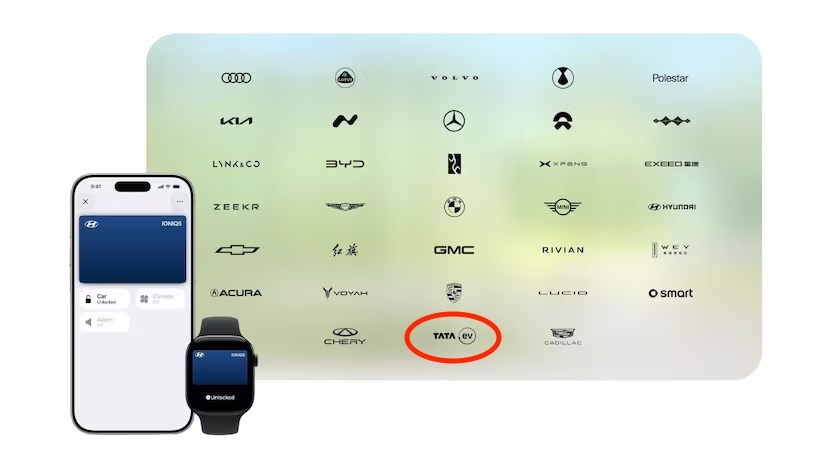
Apple Set to Add Car Key Support for India's Tata Vehicles

Apple is preparing to bring support for its digital car key feature to Tata EV vehicles, based on evidence uncovered by MacRumors on Apple's backend.


Tata is an Indian multinational commercial vehicle manufacturer, headquartered in Mumbai. The company produces trucks, vans, and buses, and is now on an internal Apple list of vehicles that offer car key integration, but it is not known which EV models the support pertains to.

Introduced in 2022, Car Keys allows an iPhone or Apple Watch to unlock a vehicle through the Wallet app. A digital version of a car key is stored in Wallet, and unlocking can be done by holding an Apple Watch or ‌iPhone‌ near a compatible vehicle's NFC reader.

A tap on the door handle is enough to initiate an unlock, and while Face ID authentication is a security option, Apple offers an Express Mode that eliminates the need to authenticate for a faster unlocking process.

At WWDC 2025, Apple confirmed that 13 vehicle brands would "soon" add support for digital car keys, and Tata was on the list. Vehicles from BMW, Genesis, Kia, Hyundai, Lotus, Mercedes, Volvo, and more offer car keys support, with a list available on MacRumors.com.
This article, "Apple Set to Add Car Key Support for India's Tata Vehicles" first appeared on MacRumors.com

Discuss this article in our forums

  •  

Apple Withholds Data as India Antitrust Case Advances to Final Hearing

Apple is facing a fast-track decision on regulatory penalties in India because it has not submitted data sought by the country's antitrust body as part of an investigation into its market practices.


The Competition Commission of India (CCI) ⁠published a report in 2024 that Apple exploited its dominant position in the apps market by forcing developers to use its proprietary in-app purchase system. The report was the result of a case that began in 2021​ after a non-profit group opposed Apple's practices.

Apple in 2024 denied any wrongdoing by arguing that it is a minor presence in India. However, nowadays iPhones have an 9% market share in the country compared to just 4% two years ago, according to data from Counterpoint Research, potentially weakening its case.

According to Reuters, the CCI this month said that Apple has not submitted details of its financials ​and its views on the investigation since October 2024. Instead, Apple has cited a separate case pending in the ​Delhi High Court where the company has challenged India's entire antitrust penalty law.

The CCI typically requires financial ⁠information from companies to calculate penalties when they are found to have contravened the law, but Apple has said it fears it could be fined up to $38 billion. Apple last year said that using global turnover would result in a fine that's "manifestly arbitrary, unconstitutional, grossly disproportionate, and unjust."

Apple in March requested that the CCI put its proceedings "in abeyance" while the High Court case plays out, but the CCI has rejected that demand and suggested Apple is trying to stall the antitrust case, which is just one of many that the company is facing around the globe.

The CCI has given Apple two more weeks to file its responses and has for the first time fixed a final hearing date of May 21.
This article, "Apple Withholds Data as India Antitrust Case Advances to Final Hearing" first appeared on MacRumors.com

Discuss this article in our forums
  •  

OLED iPad Mini: Release Date, Pricing, and What to Expect

According to the latest rumors, Apple is close to launching its next-generation iPad mini. So what should we expect from the successor to the iPad mini 7 that Apple released over a year ago? Read on to find out.


Processor and Performance


Apple is working on a next-generation version of the iPad mini (codename J510/J511) that features the A19 Pro chip, according to information found in code that Apple mistakenly shared in August.

Apple's A19 Pro chip since debuted in the iPhone Air and iPhone 17 Pro models. The iPhone 17 Pro models include the higher-end version of Apple's A19 Pro chip with a 6-core CPU and a 6-core GPU, while the iPhone Air uses a mid-tier A19 Pro chip with one fewer GPU core than the A19 Pro chip used in the iPhone 17 Pro and Pro Max.

If the code leak is accurate for the iPad mini 8, Apple is likely to use the mid-tier A19 Pro chip found in the iPhone Air. This is based on the fact that the A17 Pro chip used in the iPad mini 7 has a 6-core CPU with two high-performance cores and four efficiency cores, along with a 5-core GPU, compared to the 6-core GPU found on the A17 Pro used in the iPhone 15 Pro.

Apple built the A19 Pro chip on an upgraded third-generation 3-nanometer N3P process for modest speed and efficiency improvements. The chip includes a 16-core Neural Engine, next-generation dynamic caching, and unified image compression.

The GPU in the A19 Pro has an upgraded architecture with a larger cache, more memory, and Neural Accelerators that are built into each core. Apple says that this change provides 3× the peak GPU compute over the prior-generation chip. There's also an upgraded 16-core Neural Engine for AI tasks.

There is an outside chance that Apple opts for the A20 Pro chip for the new iPad mini. The claim has been made by a MacRumors tipster who analyzed a macOS kernel debug kit containing internal Apple codenames. However, the iPad mini has not always received Apple's newest A-series chip at the time it was updated, so the A19 Pro cannot be ruled out at this time. iPhone 18 Pro models are also expected to use the A20 Pro chip, which will reportedly be fabricated with TSMC's advanced 2nm process.

Display


Apple's plan to transition the ‌‌iPad mini‌‌ from an LCD to an OLED display is widely rumored. According to Bloomberg's Mark Gurman, the small form-factor tablet is likely to be the next Apple device to adopt OLED. According to a Chinese leaker with sources in Apple's supply chain, Apple has evaluated a Samsung-made OLED display for its next iPad mini model.

It remains unclear whether the iPad mini 8 will feature a higher refresh rate than the 60Hz LCD display used in the existing iPad mini 7, but since the new base iPhone 17 now uses a 120Hz ProMotion panel, it would be reasonable to expect the same on the first OLED iPad mini. A separate report has suggested the ‌‌‌iPad mini 8‌‌‌'s screen could increase in size from 8.3 inches to 8.7 inches with the adoption of OLED.

OLED panels can individually control each pixel, resulting in more precise color reproduction and deeper blacks compared to other common display technologies. They also provide superior contrast, faster response times, better viewing angles, and greater design flexibility. All of Apple's flagship iPhones use OLED panels, and in May 2024 the company brought the display technology to the iPad Pro for the first time.

Unlike Apple's ‌iPad Pro‌ models, which feature two-stack low-temperature polycrystalline oxide (LTPO) OLED panels‌, the ‌iPad mini‌ may have a single-stack low-temperature polycrystalline silicon (LTPS) panel, which would make it dimmer.

Chassis Design


Apple is reportedly working to give the iPad mini 8 a more water-resistant design, according to Bloomberg's Mark Gurman. The updated casing would bring protection levels closer to those of the iPhone, making the tablet safer for use in damp environments.

To achieve this, Apple is said to have designed a new vibration-based speaker system that eliminates the need for traditional speaker holes. By using sound-emitting surfaces instead of open grilles, the company can reduce potential entry points for water and dust, resulting in a more sealed, durable enclosure.

On the iPhone, Apple relies on adhesives and gaskets to shield speakers and other openings from moisture. The iPad mini's approach appears to go further, doing away with the holes altogether. Current iPad mini models lack any official IP rating, but the upcoming version could mark the first in the lineup to feature a certified level of water protection.

Apple patents could offer further clues to the new design direction. For example, a 2014 patent outlines a "mechanically actuated panel acoustic system" that vibrates flat surfaces to generate sound, effectively turning parts of a device's chassis into a speaker diaphragm. This could potentially allow Apple to produce audio without visible speaker holes. The patent suggest Apple has been building towards a sealed, vibration-based acoustic system for several years.

Release Date


According to research firm Omdia, the ‌‌iPad mini‌‌ is expected to adopt an OLED display in 2027. However, Korea's ET News and ZDNET Korea have both suggested that the iPad mini will be updated with an OLED display in 2026. Bloomberg has also said the update could come as soon as this year.

The most recent word on the subject comes from Weibo-based leaker Instant Digital, who claims the OLED iPad mini will be launched in the second half of 2026 at the earliest.

In May 2024, it was reported that Samsung Display had started developing sample OLED panels for a future ‌iPad mini‌, with plans to initiate mass production at its facility in Cheonan in the second half of 2025. The same report claimed that Apple will bring an OLED panel to the iPad Air alongside the ‌iPad mini‌ in 2026, though Apple only refreshed the iPad Air in March, and more recent reporting suggests an OLED iPad Air will arrive in early 2027.

The latter outlook aligns with a December report by analyst firm Display Supply Chain Consultants (DSCC) that said an 8.5-inch OLED iPad mini is planned for a 2026 launch, while 11-inch and 13-inch OLED iPad Air models are expected to follow in 2027.

Ultimately, there are no rumors suggesting exactly when the next ‌iPad mini‌ will be released, but a launch later in 2026 has a high probability.

Pricing


Apple's ‌iPad mini‌ with OLED display technology and improved water resistance is expected to be more expensive, and Apple could charge up to $100 more for the device, according to Bloomberg's Gurman. The ‌iPad mini‌ is currently priced starting at $499. Gurman has previously argued that Apple should consider a lower-end version of the mini, or at least a change to its current $499 starting price, given that it's up against rival products that cost a lot less.

However, Apple users who are looking for a more affordable option should probably consider the 10th-generation iPad instead. Starting at $329, the iPad offers many iPad mini features, such as Touch ID and Center Stage, but at a lower price that balances functionality and affordability.
Related Roundup: iPad mini
Tag: OLED
Buyer's Guide: iPad Mini (Caution)
Related Forum: iPad

This article, "OLED iPad Mini: Release Date, Pricing, and What to Expect" first appeared on MacRumors.com

Discuss this article in our forums
  •  

Apple Threatened to Pull Grok From App Store Over Sexualized Images

Apple privately warned Elon Musk's xAI company in January that it would remove the Grok app from the App Store unless the company put a stop to the chatbot's nude and sexualized deepfakes, according to a letter Apple sent to U.S. senators and obtained by NBC News ($).


Earlier this year, Grok's AI capabilities came under scrutiny after X users shared nonconsensual sexualized images of women and children created by the app, many of which were based on photos of real people.

What followed was a confusing rollout of moderation changes to Grok, some of which could be easily bypassed. Publicly, Apple did not comment on the controversy at the time, but it did respond, and was in fact the instigator of the changes. Internally, the company had found both X and Grok in violation of its App Store guidelines and demanded its developers submit a content moderation plan, the letter reveals.

According to the letter, Apple rejected an initial fix from xAI as insufficient, saying the "changes didn't go far enough," and Apple warned it that additional alterations were required or Grok would be removed. After further back-and-forth, however, Apple eventually concluded that a later submission of the app had improved enough for it to be approved.

The disclosure was apparently prompted by a January letter from Senators Ron Wyden, Ben Ray Luján, and Edward Markey, who urged Apple and Google to pull both apps, arguing the imagery violated App Store rules barring offensive, sexual, and exploitative content.

The senators also said that Apple's response would test its own arguments, since the company has long defended its curated App Store by claiming its review process keeps users safer. Letting Grok continue to generate this kind of imagery, they argued, would undermine that case in the eyes of the public and in a court of law.

After NBC News published its report, X posted the following statement on its platform:
"We strictly prohibit users from generating non-consensual explicit deepfakes and from using our tools to undress real people. xAI has extensive safeguards in place to prevent such misuse, such as continuous monitoring of public usage, analysis of evasion attempts in real time, frequent model updates, prompt filters, and additional safeguards."
While the amount of sexualized deepfakes created by Grok and posted to X appears to have decreased significantly, NBC News found that Grok is still able to generate similar imagery, with some users apparently having simply updated their prompt tactics to get around the safeguards. You can read that report in its entirety by following this link.
This article, "Apple Threatened to Pull Grok From App Store Over Sexualized Images" first appeared on MacRumors.com

Discuss this article in our forums
  •  

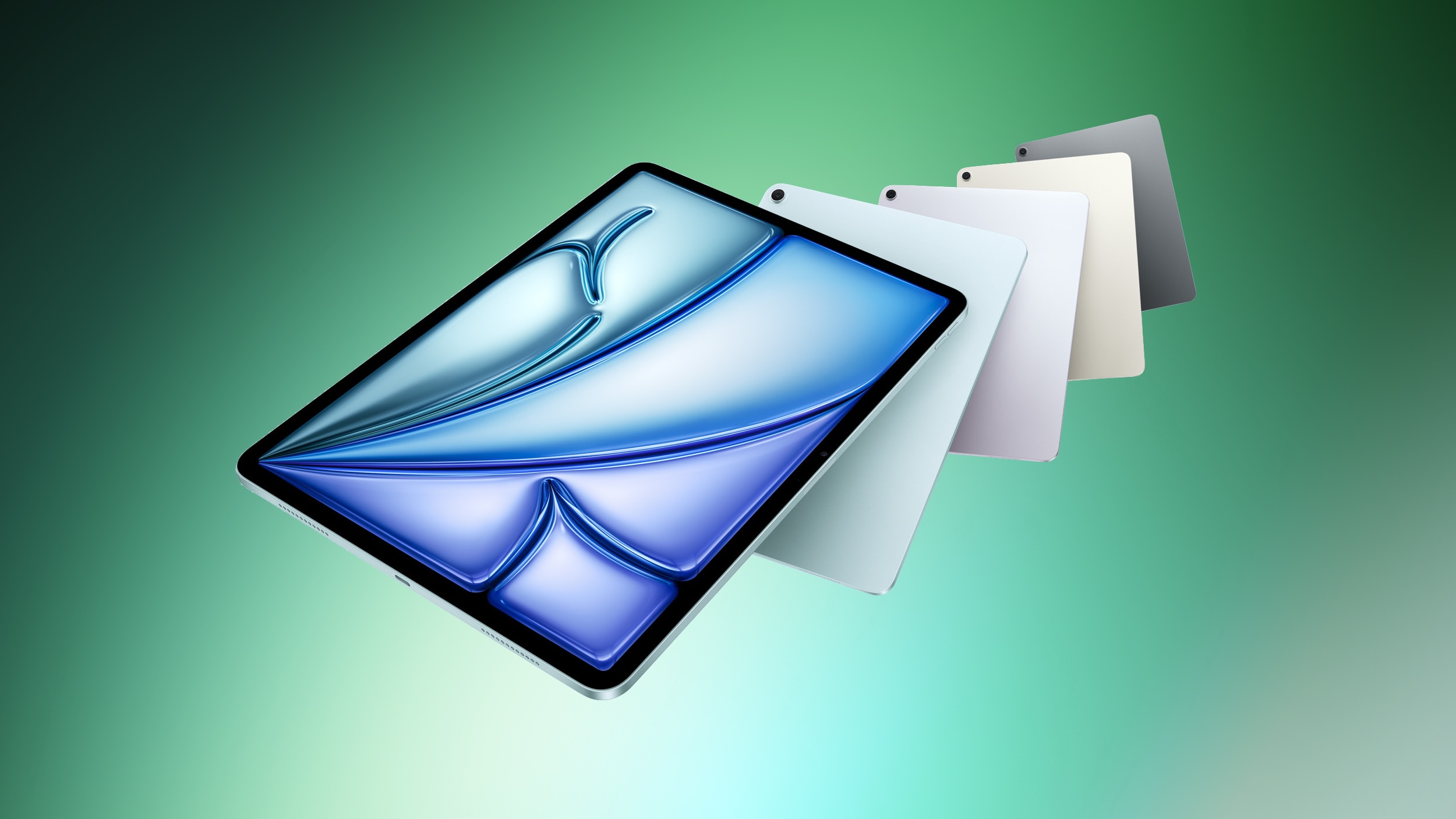
Report: iPad Air to Gain OLED Display Early Next Year

Apple will bring OLED displays to its iPad Air models next year, according to a new report from Korea's ET News.


Citing industry sources, the outlet says Samsung Display will begin mass production of OLED panels around the end of 2026 or January next year, with a view to supplying panels for Apple's next iPad Air, expected to be released in early 2027. Apple last updated the iPad Air in March 2026 with an M4 chip.

Apple's iPad Pro models already have OLED displays, but the iPad Air models still use more affordable LCD displays that Apple calls Liquid Retina. The Liquid Retina displays do not support 120Hz ProMotion display technology, and are limited to 60Hz refresh rates.

OLED panels individually control each pixel, resulting in more precise color reproduction and deeper blacks compared to LCD. They also provide superior contrast, faster response times, better viewing angles, and greater design flexibility.

That said, unlike Apple's ‌iPad Pro‌ models, which feature two-stack low-temperature polycrystalline oxide (LTPO) OLED panels‌, the iPad Air‌ is expected to use single-stack low-temperature polycrystalline silicon (LTPS) panels, meaning that they may be dimmer and continue to lack ProMotion.

Apple's plan to transition the ‌‌iPad mini‌‌ from an LCD to an OLED display is already widely rumored, with reports suggesting the iPad mini 8 will adopt OLED later this year, albeit using the same cheaper single-stack LTPS panel.

Once the iPad mini and iPad Air receive the display upgrade, the entry-level iPad will be the only model in Apple's tablet lineup without an OLED panel.
Related Roundup: iPad Air
Tags: ETNews, OLED
Buyer's Guide: iPad Air (Buy Now)
Related Forum: iPad

This article, "Report: iPad Air to Gain OLED Display Early Next Year" first appeared on MacRumors.com

Discuss this article in our forums
  •  

Anthropic Rebuilds Claude Code Desktop App Around Parallel Sessions

Anthropic has released a redesigned Claude Code experience for its Claude desktop app, bringing in a new sidebar for managing multiple sessions, a drag-and-drop layout for arranging the workspace, and more.


The new sidebar displays every active and recent session in one place, and users can filter by status, project, or environment, with the option to group sessions by project. A new side chat shortcut (Command + ;) also lets users branch a question off a running task without feeding extra context back into the main thread.

Anthropic has also dropped more of the developer workflow into the app itself. There's now an integrated terminal for running tests and builds, an in-app file editor for spot edits, a rebuilt diff viewer aimed at large changesets, and an expanded preview pane that handles HTML files and PDFs alongside local app servers. Each pane is also drag-and-drop friendly, so the layout can be arranged to suit.

In addition, the desktop app now matches Claude Code's CLI for plugin support, while SSH sessions are supported on Mac as well as Linux. Lastly, there are three view modes (Verbose, Normal, and Summary) that let users decide how much of Claude's tool-call activity they want to see.

The Claude desktop app update is rolling out now to Claude Code users on Pro, Max, Team, and Enterprise plans.


In related news, Anthropic also announced Routines – a new way to set up Claude Code automations that run without an active session. A routine bundles a prompt, a repo, and any relevant connectors into a single configuration that can run on a schedule, fire from an API call, or trigger off a GitHub event such as a new pull request.

Routines run on Claude Code's web infrastructure rather than a local machine, but Anthropic has put in place daily run caps that scale by plan. Routines are available in research preview to Pro, Max, Team, and Enterprise users with Claude Code on the web enabled. For further details, check out Anthropic's blog post.
This article, "Anthropic Rebuilds Claude Code Desktop App Around Parallel Sessions" first appeared on MacRumors.com

Discuss this article in our forums
  •  

Apple TV and Peacock $20 Monthly Bundle Available on Amazon Prime Video, Offering a 30% Discount

Apple and Amazon are partnering up for a $19.99/month streaming TV bundle that includes access to Apple TV and Peacock Premium Plus.


Available to customers in the U.S. for a limited time, the streaming bundle offers access to both services at a 30% discount, similar to the bundle that launched in October 2025.

‌Apple TV‌ is normally $12.99 per month, while Peacock starts at $16.99 for the Premium plan that's included in the bundle, so that's a $10 monthly saving. Peacock Premium Plus includes the option to download content and watch it offline. It also removes most ads.

The Apple TV and Peacock Premium Plus bundle offers customers access to live sports like Premier League soccer and Major League Baseball, Apple Originals like Pluribus and Severance, as well as Peacock shows and moves. Customers can watch content from both services directly through the Prime Video app on compatible devices.
"This bundle makes it easier for customers to seamlessly access even more entertainment options all in one place," Ryan Pirozzi, Head of Prime Video Channels, US, said in a statement. "By expanding the streaming services and bundles available on Prime Video, we're continuing to deliver on our commitment to provide customers with greater choice and seamless access to the shows, movies, and sports they love."
Prime members can subscribe to the bundle via the Prime Video app or visiting the Prime Video website and using their existing Amazon account and payment method.
Related Roundup: Apple TV
Buyer's Guide: Apple TV (Don't Buy)

This article, "Apple TV and Peacock $20 Monthly Bundle Available on Amazon Prime Video, Offering a 30% Discount" first appeared on MacRumors.com

Discuss this article in our forums
  •  

Check Who's Using Your iPhone Hotspot Data

If you regularly share your iPhone's data connection with your laptop or iPad, or let family members piggyback on your device's data, you'll be glad to learn that Apple recently made it a lot easier to keep tabs on who's burning through your monthly allowance.


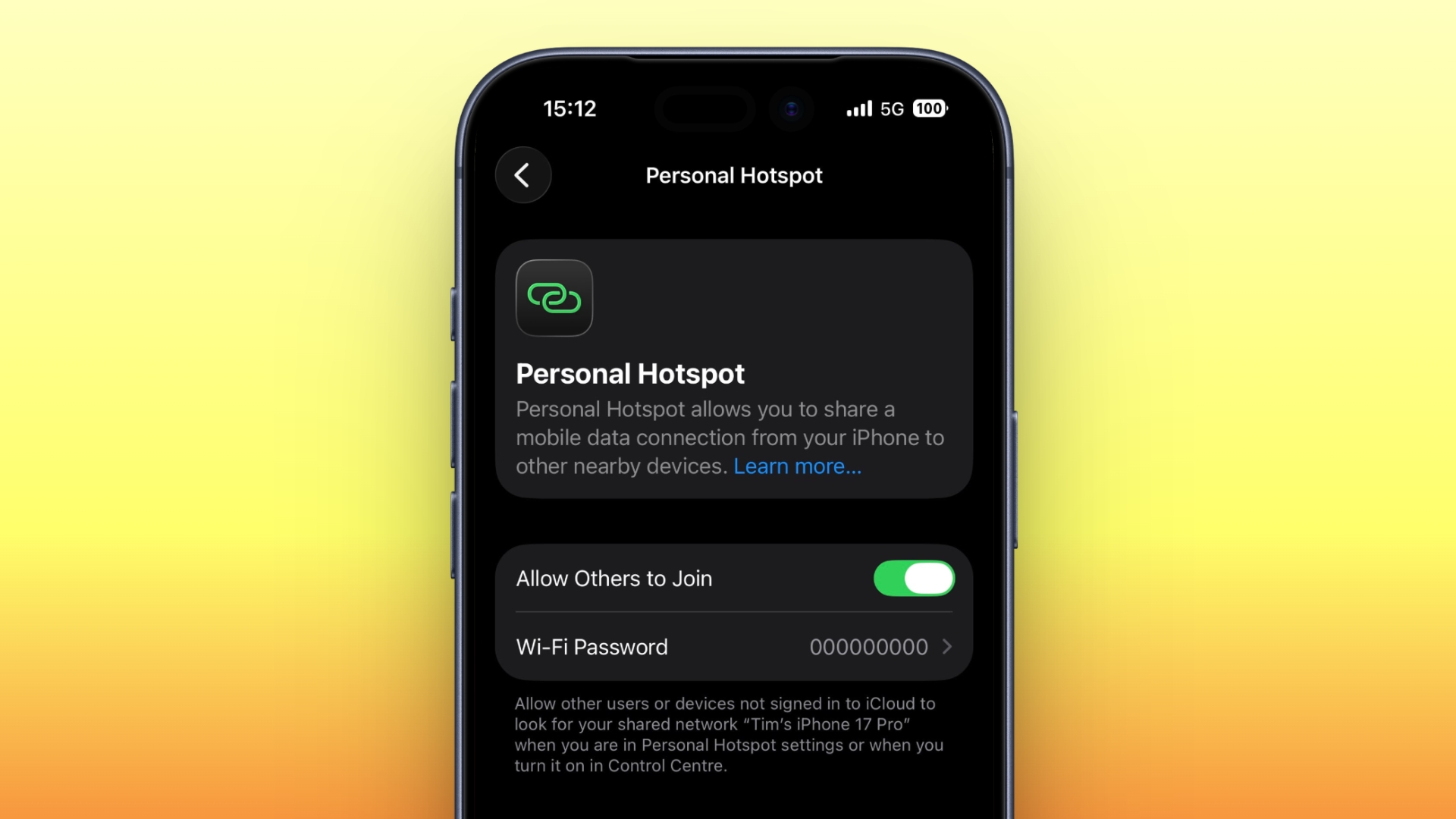
In a welcome change with the release of iOS 26.4, Apple has moved Personal Hotspot data usage info out of its previous hiding spot and put it in a much more convenient location.

Before the latest update, Personal Hotspot's per-device breakdown was secreted away inside cellular settings, where it was easy to miss. Now it sits right inside the Personal Hotspot menu, making it way more practical for anyone on a capped data plan who's keen to keep an eye on usage.

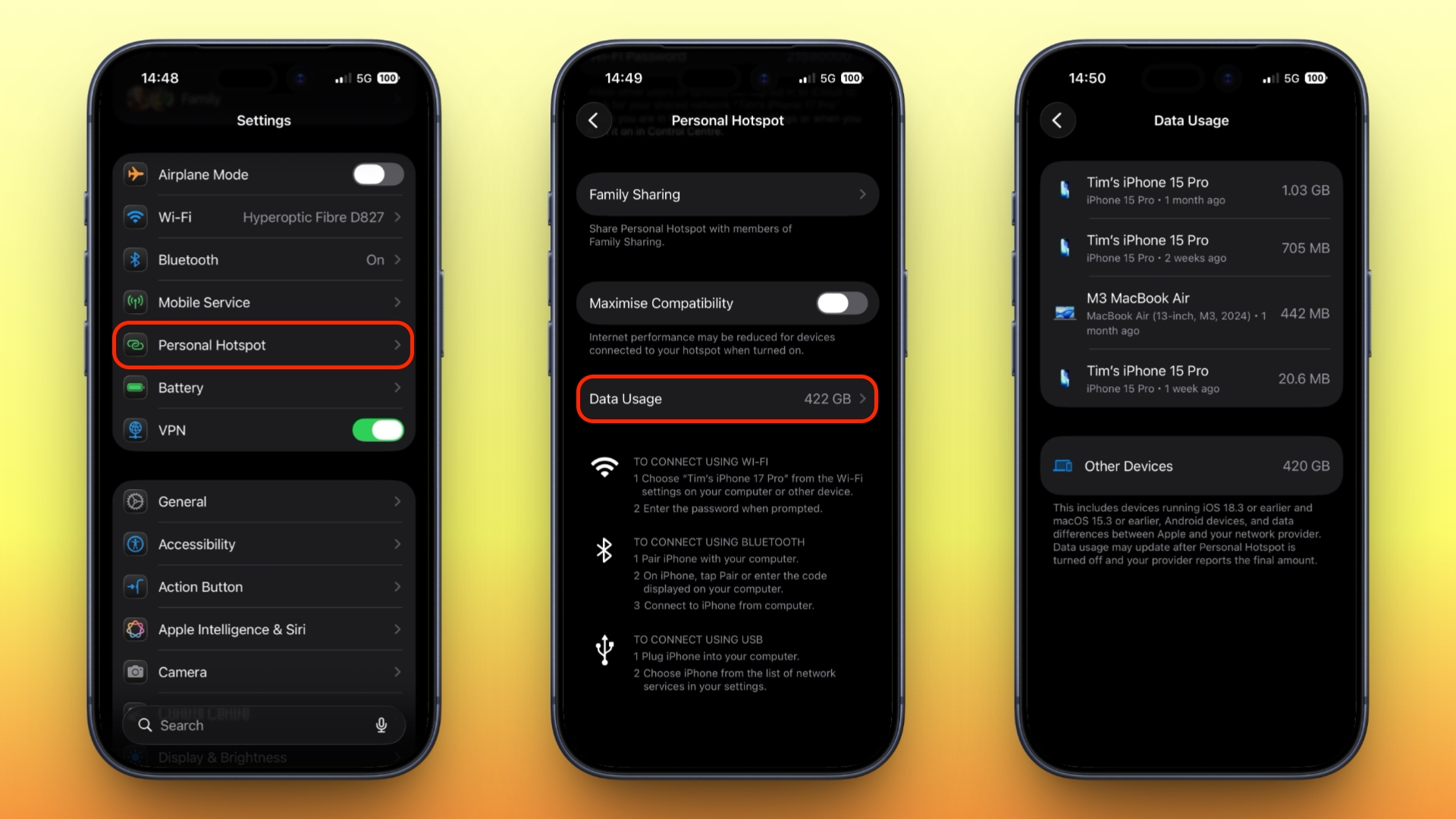
Here's how to check it in iOS 26.4 (you can make sure your device is up-to-date via Settings ➝ General ➝ Software Update).

How to Check iPhone Hotspot Data Usage


  1. Open Settings on your iPhone.

  2. Tap Personal Hotspot.

  3. Below the "Maximize Compatibility" toggle, tap Data Usage.


Here you'll see a list of connected devices along with how much data each one has consumed, as well as a total figure across all devices. Note that Apple devices running iOS 26.4 or macOS 26.4 appear individually by name, whereas Android phones, Windows PCs, and anything running older Apple software are grouped together under "Other Devices."

Bear in mind that the Data Usage option only appears if you've used Personal Hotspot recently. If you want, you can clear the figures and start tracking anew by heading to Settings ➝ Cellular/Mobile Service and resetting your overall cellular usage statistics (the option at the bottom). This wipes your hotspot numbers at the same time.
This article, "Check Who's Using Your iPhone Hotspot Data" first appeared on MacRumors.com

Discuss this article in our forums
  •  

Valve's Steam Link App Is Coming to Apple Vision Pro

Valve's Steam Link app, which is designed to let you stream games from your main gaming computer to another device, is coming to Apple Vision Pro.


The upcoming app for visionOS means users will be able to wirelessly stream games from Steam running on their Mac or PC to their Vision Pro headset, assuming the devices are on the same local network.

Prior to its official release, Valve is offering access to a beta of the app via TestFlight. The latest version improves network performance, allows streaming up to 4K resolutions, and allows users to dynamically adjust the curve of the display in panoramic mode.

The one limitation worth bearing in mind is that the client is for 2D streaming only and does not support VR content. Whether this will change in the future is unclear. Valve announced its intention to release a native Steam Link app for visionOS earlier this month, but the company has yet to share a general release date.
Related Roundup: Apple Vision Pro
Tag: Valve
Buyer's Guide: Vision Pro (Buy Now)
Related Forum: Apple Vision Pro

This article, "Valve's Steam Link App Is Coming to Apple Vision Pro" first appeared on MacRumors.com

Discuss this article in our forums
  •  
❌