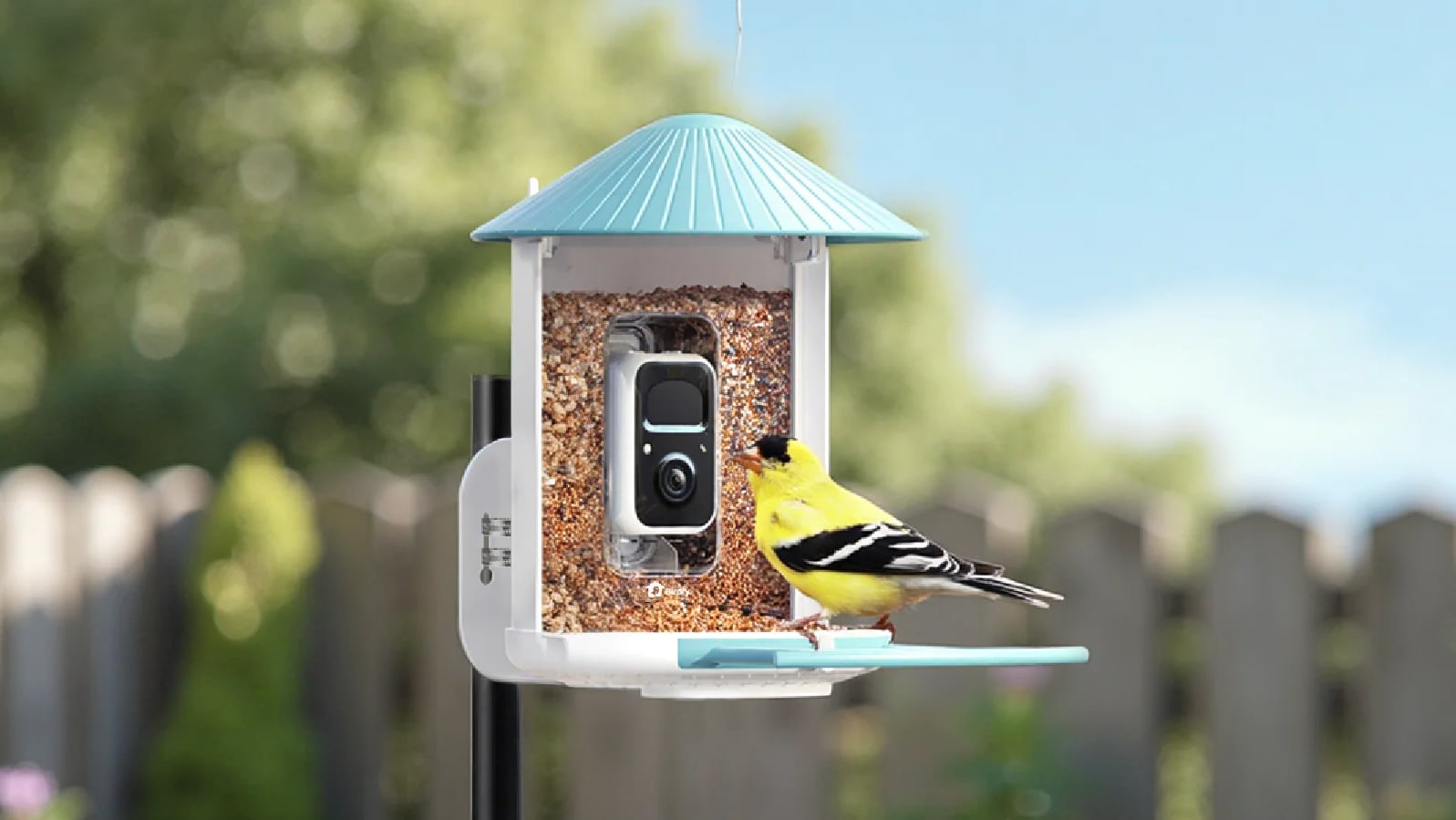
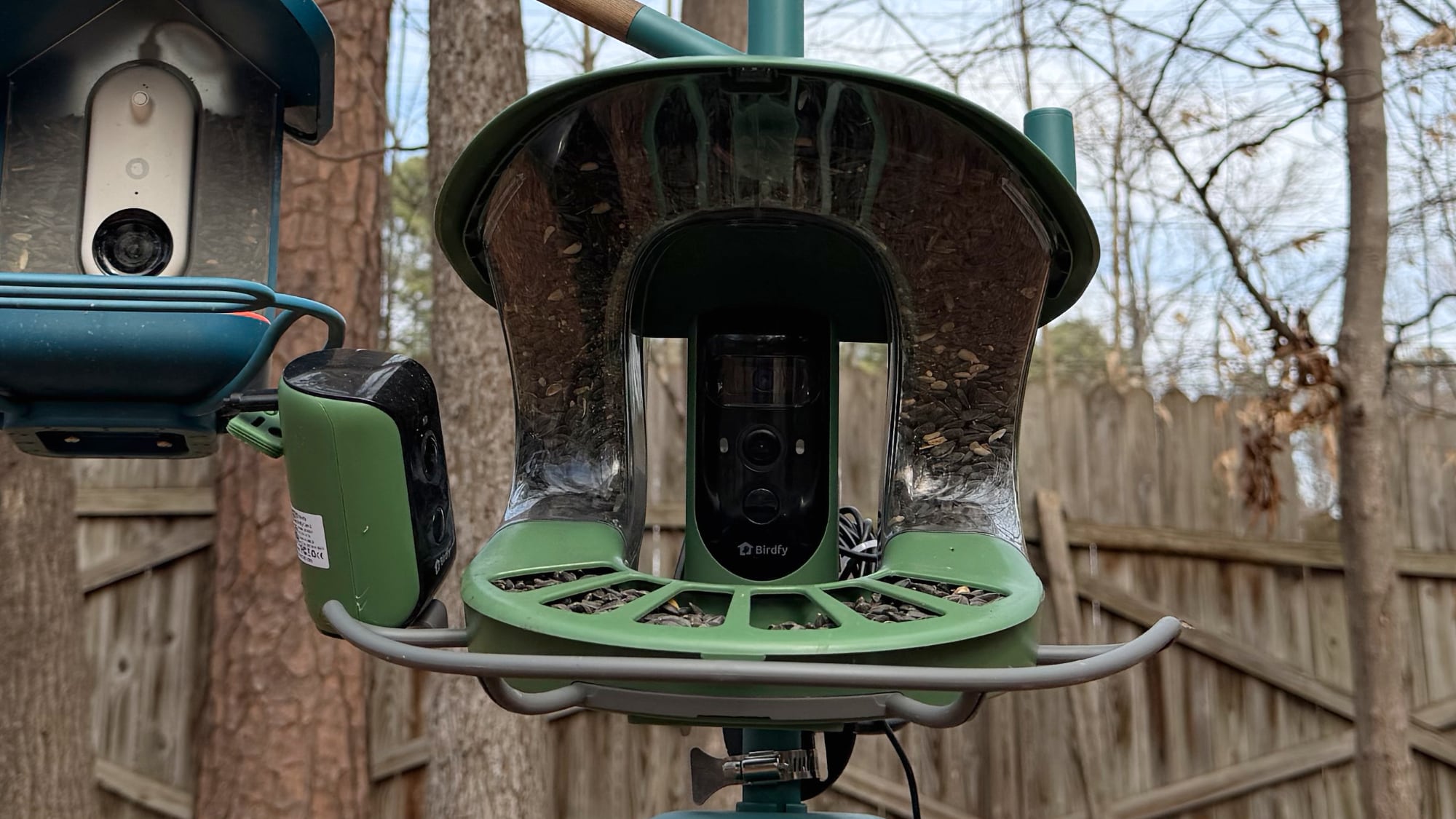
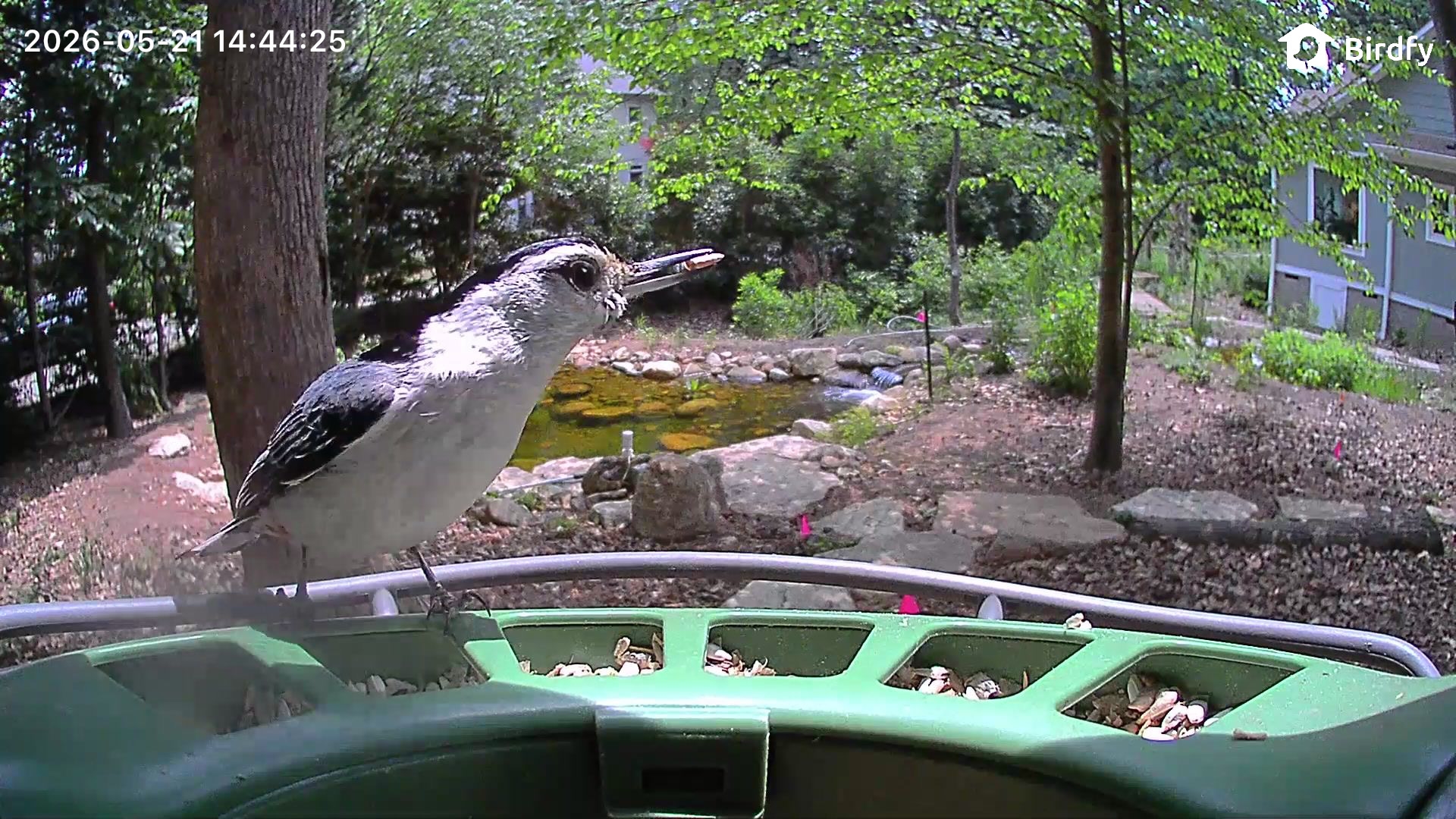
There are multiple companies making bird feeders with AI identification that send you pictures and info on the birds visiting your home, and Birdfy is one of the better-known brand names. I've reviewed and regularly use multiple Bird Buddy products, so when Birdfy asked if I wanted to give their bird feeders a look last winter, I said yes.
Birdfy has a lot of bird feeder options at different prices, along with camera-equipped bird baths and bird houses. I've been testing the standard Birdfy Feeder ($170 with solar panel and lifetime AI included), the Birdfy Feeder 2 Duo ($360), and the Birdfy Bath Pro (currently $280) for the past five months, so I'm very familiar with the product options and the Birdfy software, which is a major factor when choosing a smart product.
Birdfy products record bird visits, providing AI species identification and photos and videos that you can watch. You just need to put them in a spot that gets a decent Wi-Fi signal to view the birds that are coming to your area.
Birdfy Feeder
The Birdfy Feeder is a good starting point for someone new to bird feeders. There's a cheaper model that starts at $80, but the Birdfy Feeder has a 2K high-definition camera and an option to buy it with lifetime AI bird identification.
The lower-priced Birdfy options can be purchased with or without a solar panel, and I think the solar panel is worth getting. It's an extra $40, but as long as your feeder is somewhere with partial sun, the solar panel provides enough power to prevent the camera from having to be manually charged.
My Birdfy Feeder is in a spot with morning and afternoon sun, and it has never dipped below a 90 percent charge. I have the other Birdfy feeder in a wooded area, also with solar panel, and it hovers at about 50 percent battery. I had to charge it once in the winter, but I haven't needed to do so again.
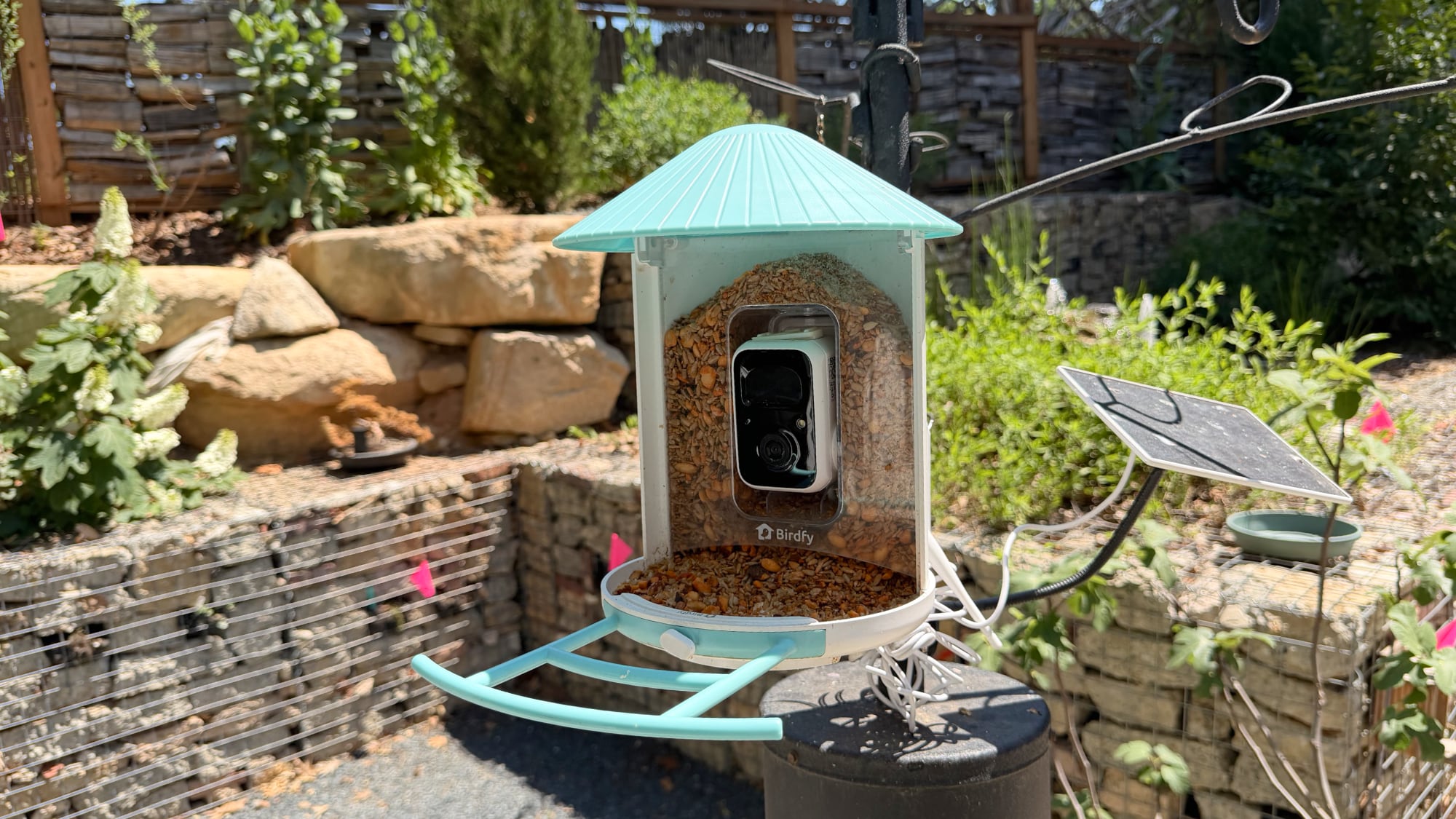
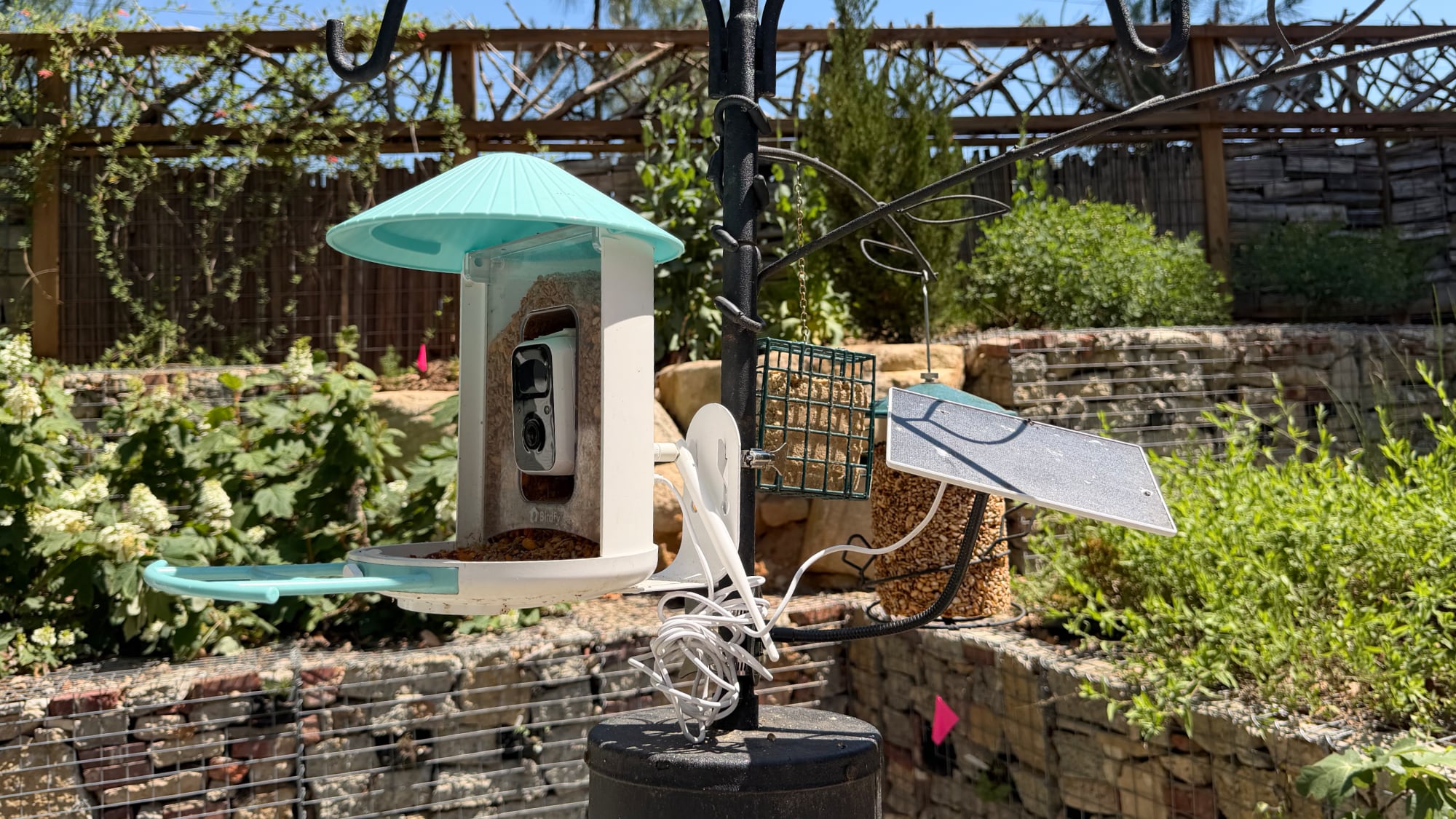
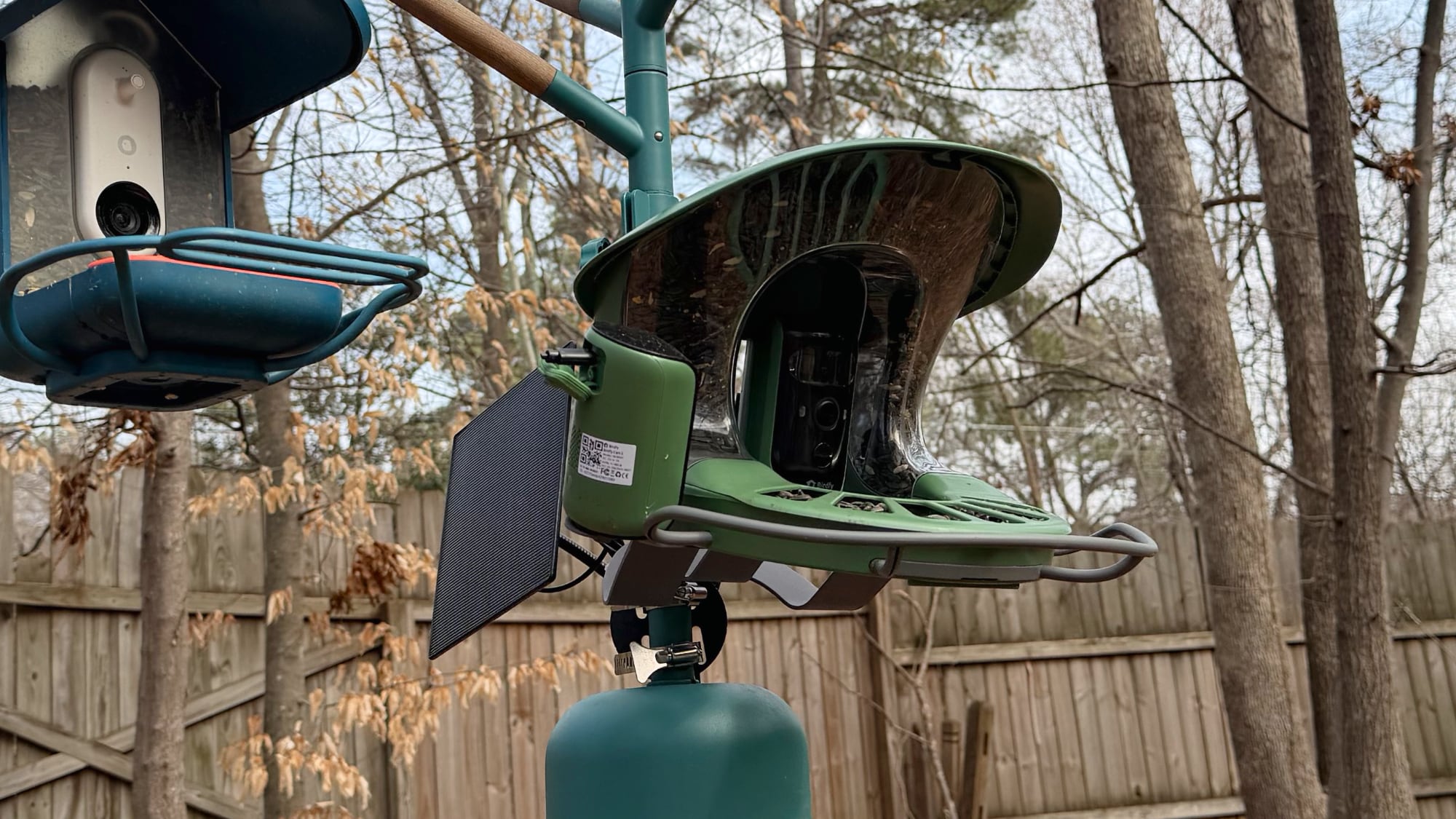
The solar panel that comes with the Birdfy Feeder is not attached to the feeder itself, so it can be positioned a couple of feet away if necessary. There are pros and cons to that setup compared to the Bird Buddy, where the solar panel is on the roof of the feeder. The Bird Buddy is a more compact, all-in-one design with no extra cords, and I prefer that look. The Birdfy solar panel is larger and more versatile, but it's also more visible and there is a cable to contend with.
While the Bird Buddy hangs or can be mounted, Birdfy's feeders are all meant to be mounted to a pole, tree, wall, or post. There's no loop for hanging one up, and feeder designs don't work for hanging. Birdfy includes multiple mounting options, which is nice, but also more complicated than the Bird Buddy.
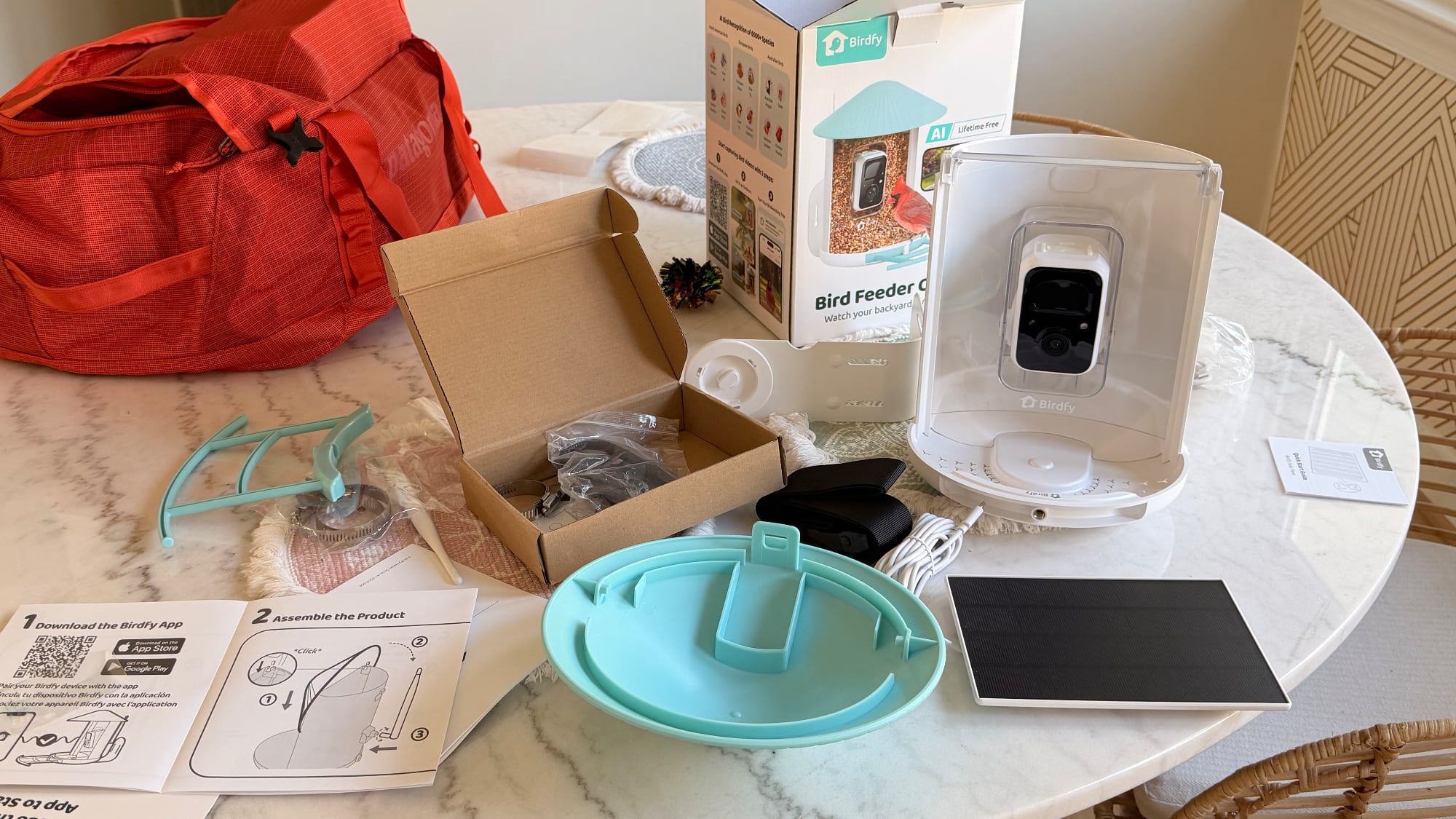
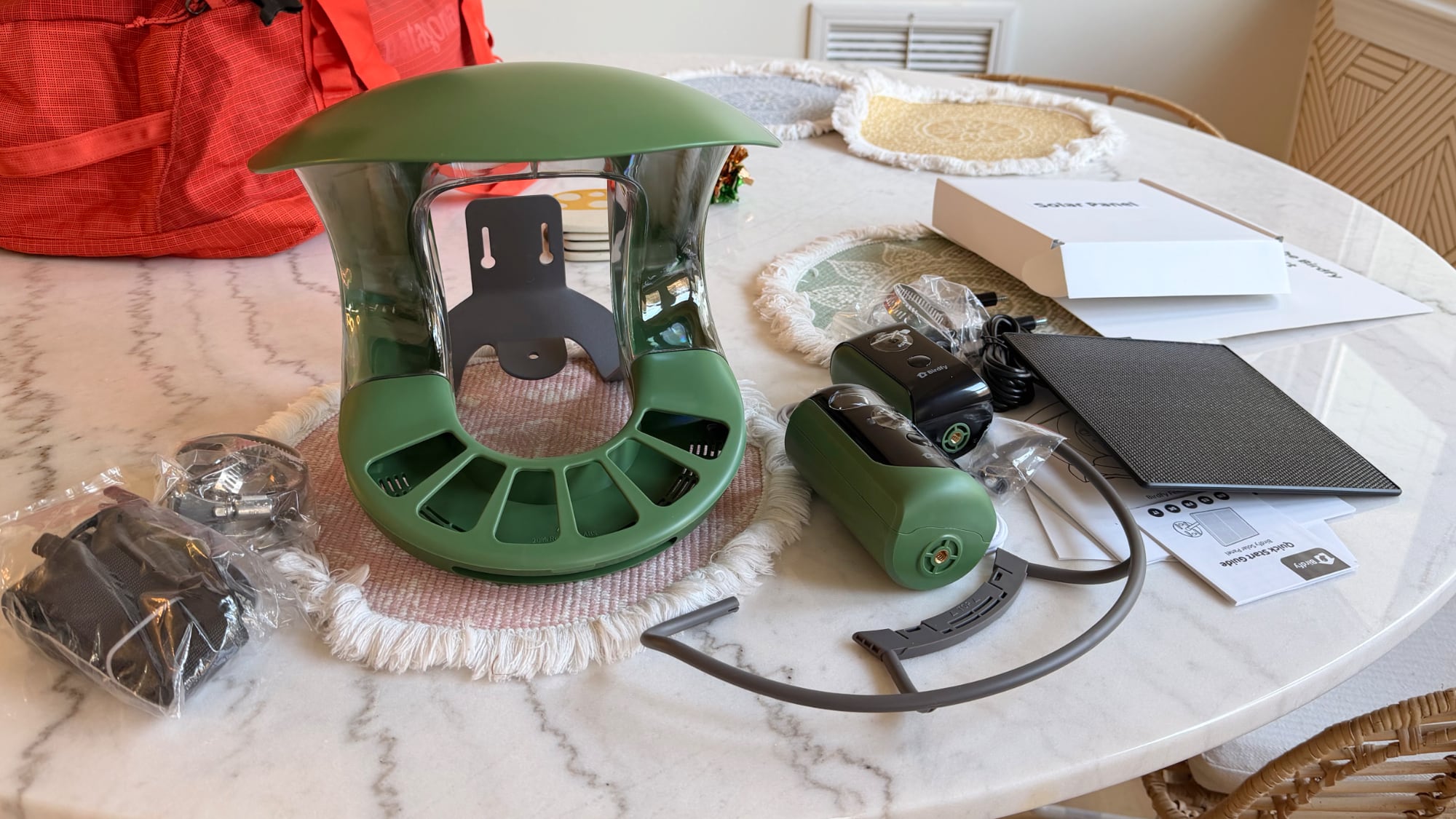
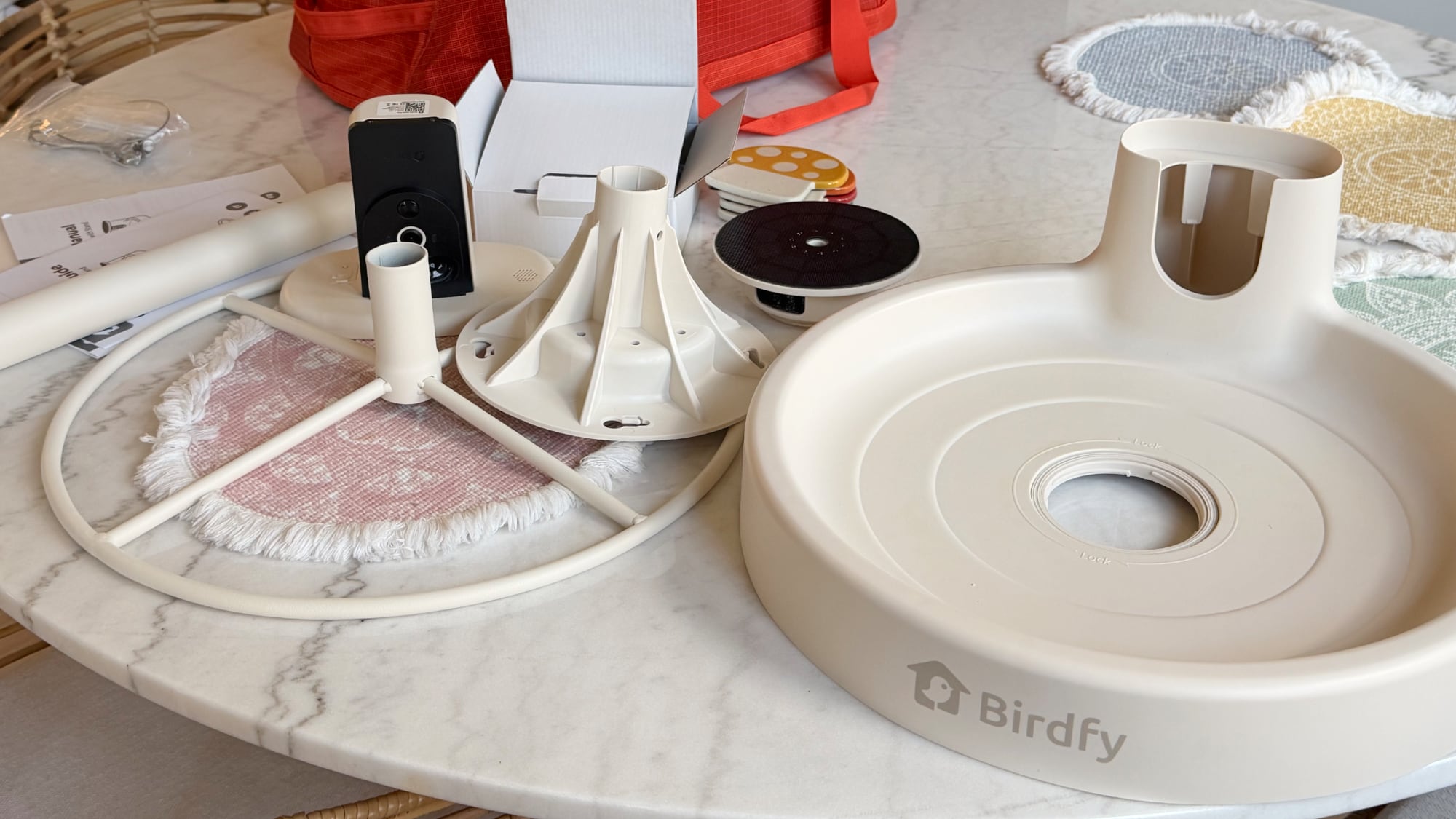
There are a lot of components in the box, and for someone that just wants to put up a bird feeder and connect to an app, Birdfy products might feel overwhelming. I've gifted a Bird Buddy to older family members and it's been a hit, but I'd be more hesitant to gift the Birdfy to those same people.
Unless you live somewhere with no tree-climbing seed-loving creatures, mounting to a tree with the included tree straps isn't ideal because it makes access too easy.
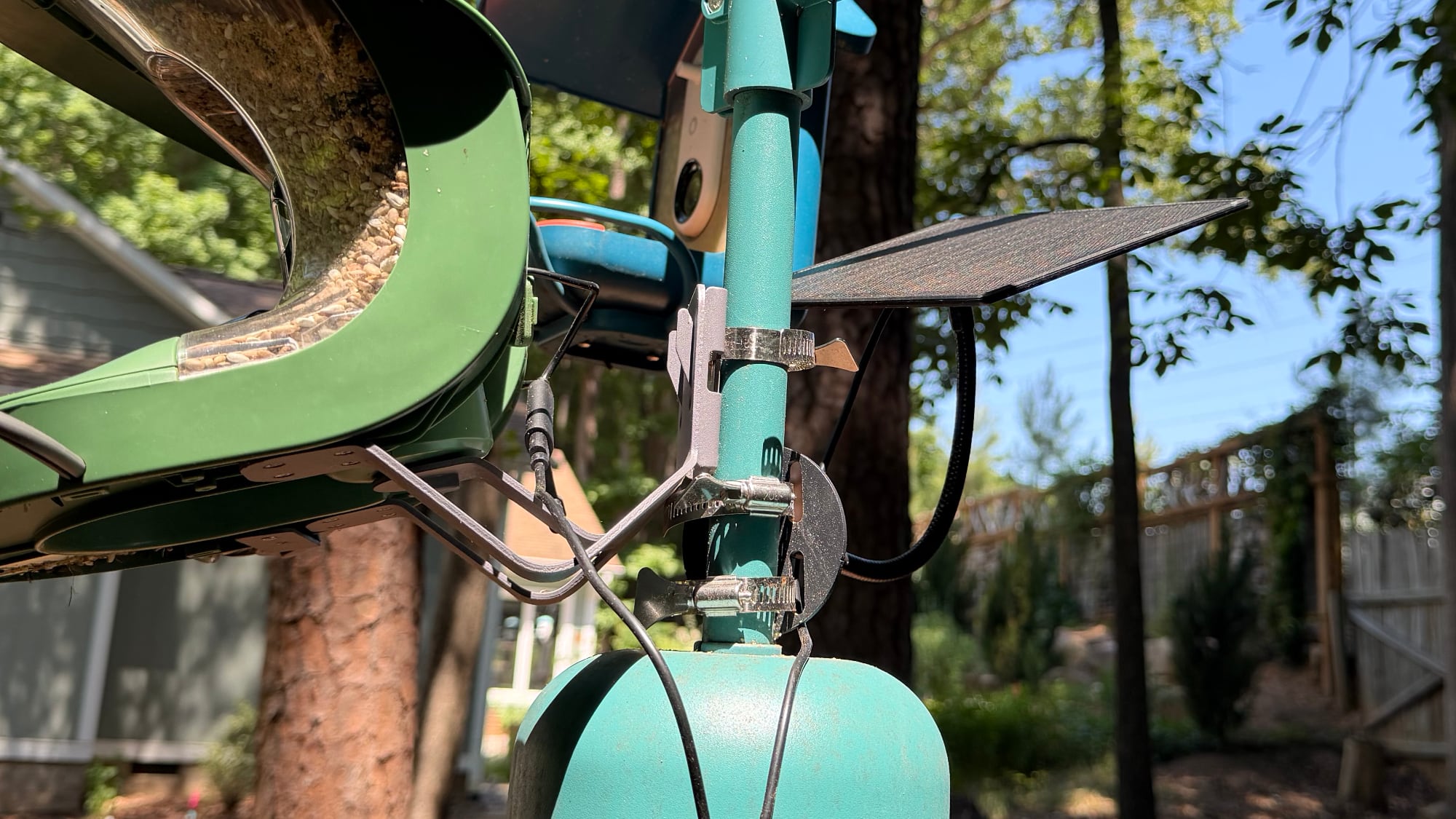
Mounting on a wall or a post can work, but my squirrels will climb the side of my house to leap over to bird feeders. I like hanging feeders like the Bird Buddy because I can put them on a pole with a baffle without a hassle and keep them away from squirrels. Birdfy also supports pole mounting, but it uses adjustable metal hose clips that take longer to install.
I can't put the Birdfy Feeder on one of the hanging branches because of its design, so it has to be on the pole itself just above the baffle that I have. It's sturdy and works fine. All of the mounting options work in the same way, in that you install a metal plate that the Birdfy Feeder then attaches to. That lets you remove it without having to unmount it for cleaning, filling, and charging.
The Birdfy Feeder has a simple design where the seed goes into a reservoir at the sides of the camera, which is in the middle of the feeder. The top pops up so you can fill it, and it holds a good amount of seed. I fill it about once a week, and I have a lot of birds visiting.
The roof keeps the seed dry for the most part, and there is an included perch for the birds to land on. The camera slots into the feeder, and then the solar panel plugs in at the back of the camera (if you have the solar panel). If you don't have a solar panel, you take the Birdfy Feeder off the mount and charge it with USB-C.
Birdfy uses white plastic for the standard Feeder I tested (with blue or yellow accents), though there are wood options for those that prefer that look. The plastic has held up well so far through rain, sun, and freezing temperatures over the winter, and Birdfy says it's IP65. Since the Feeder can be removed from the mount, it's simple to clean. Bird feeders need to be cleaned every two weeks or so, and I typically rinse them in hot water, spray them with alcohol, give them a bit of a scrub where necessary, rinse again, and let them dry. Refilling the seed is simple, and I don't even take it down for that. I just need to pop open the roof and pour the seed in. I do wish Birdfy included a seed pouring device like the Bird Buddy does, but a measuring cup or a 3D-printed solution works fine.
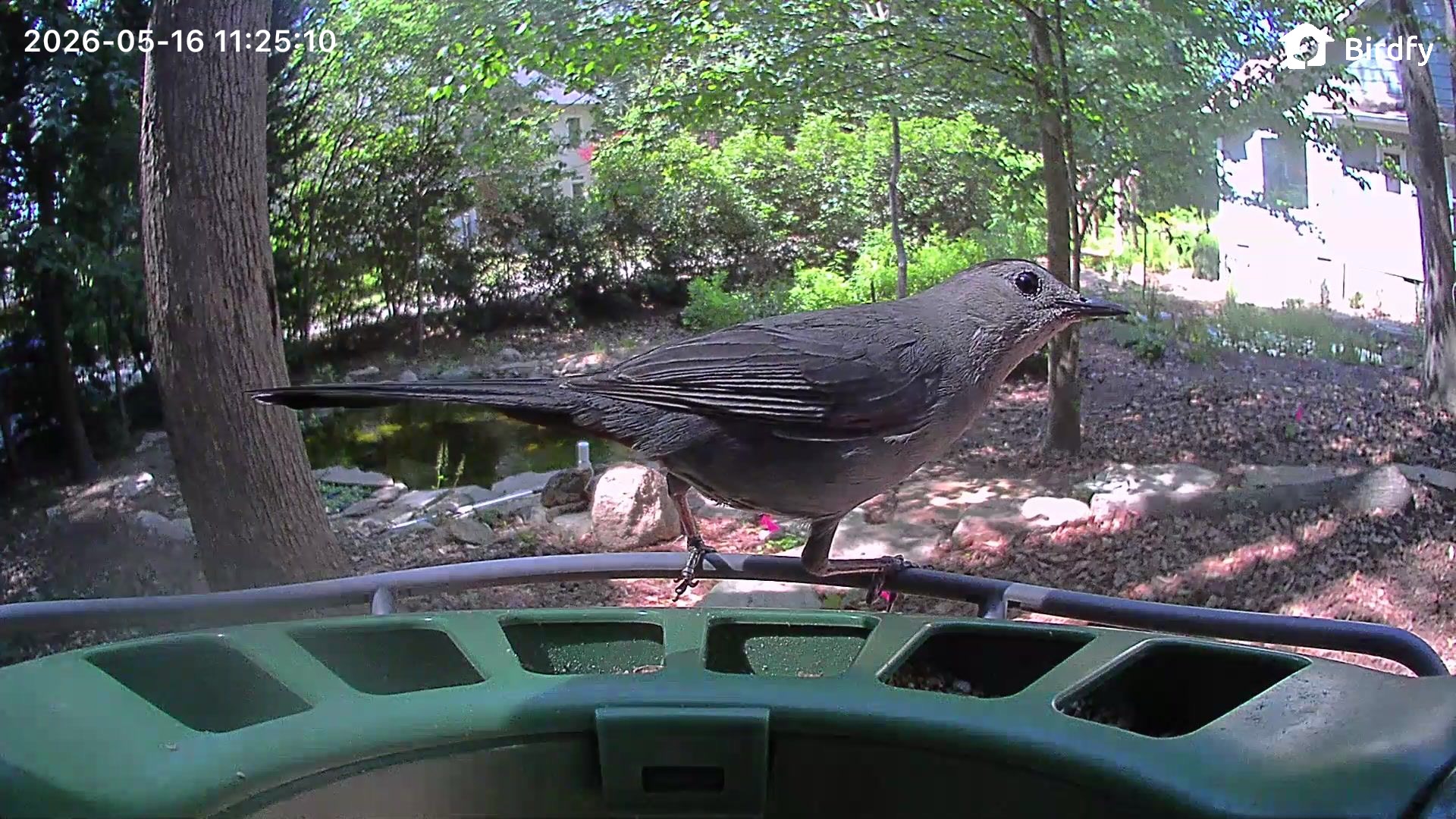
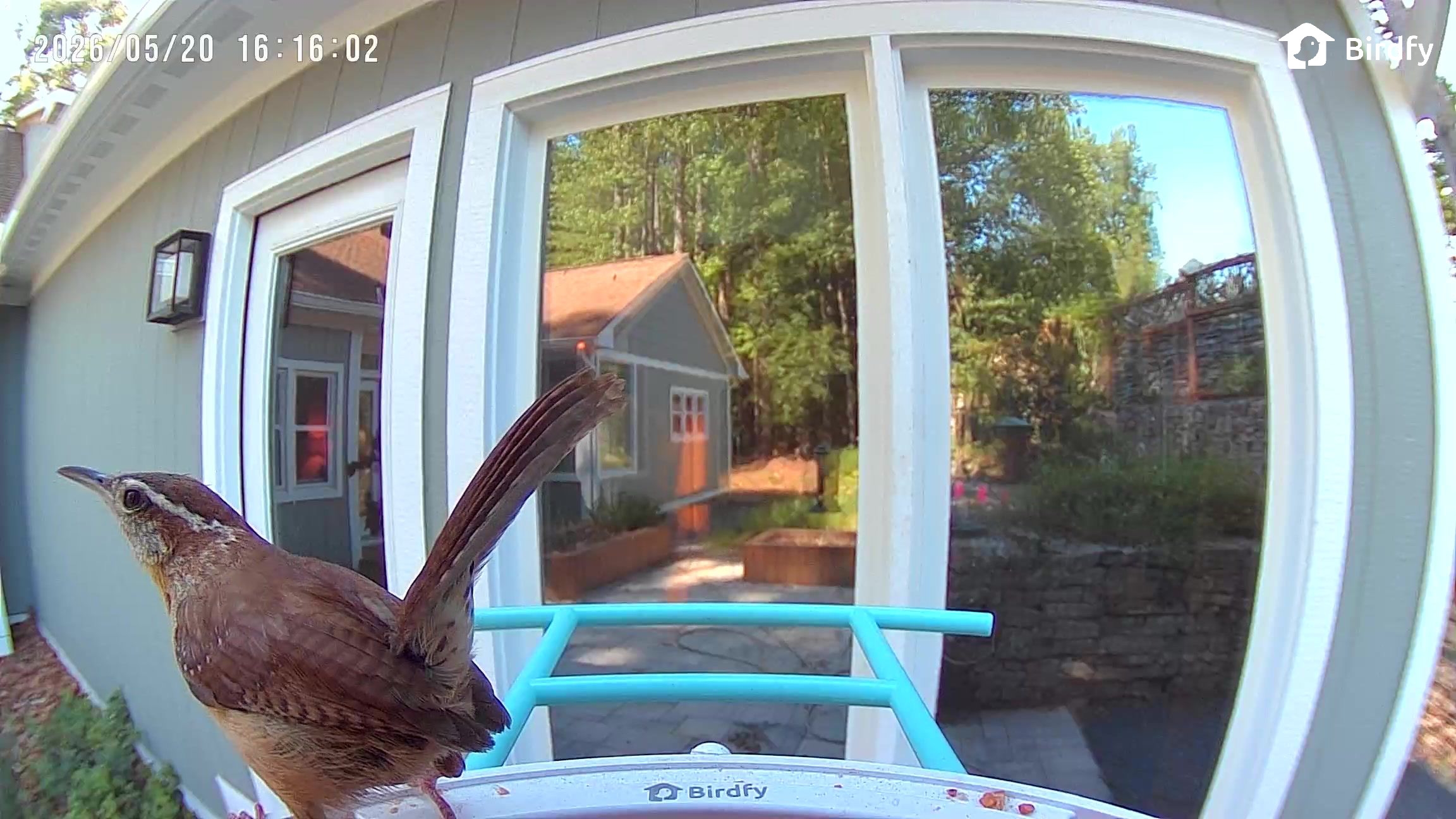
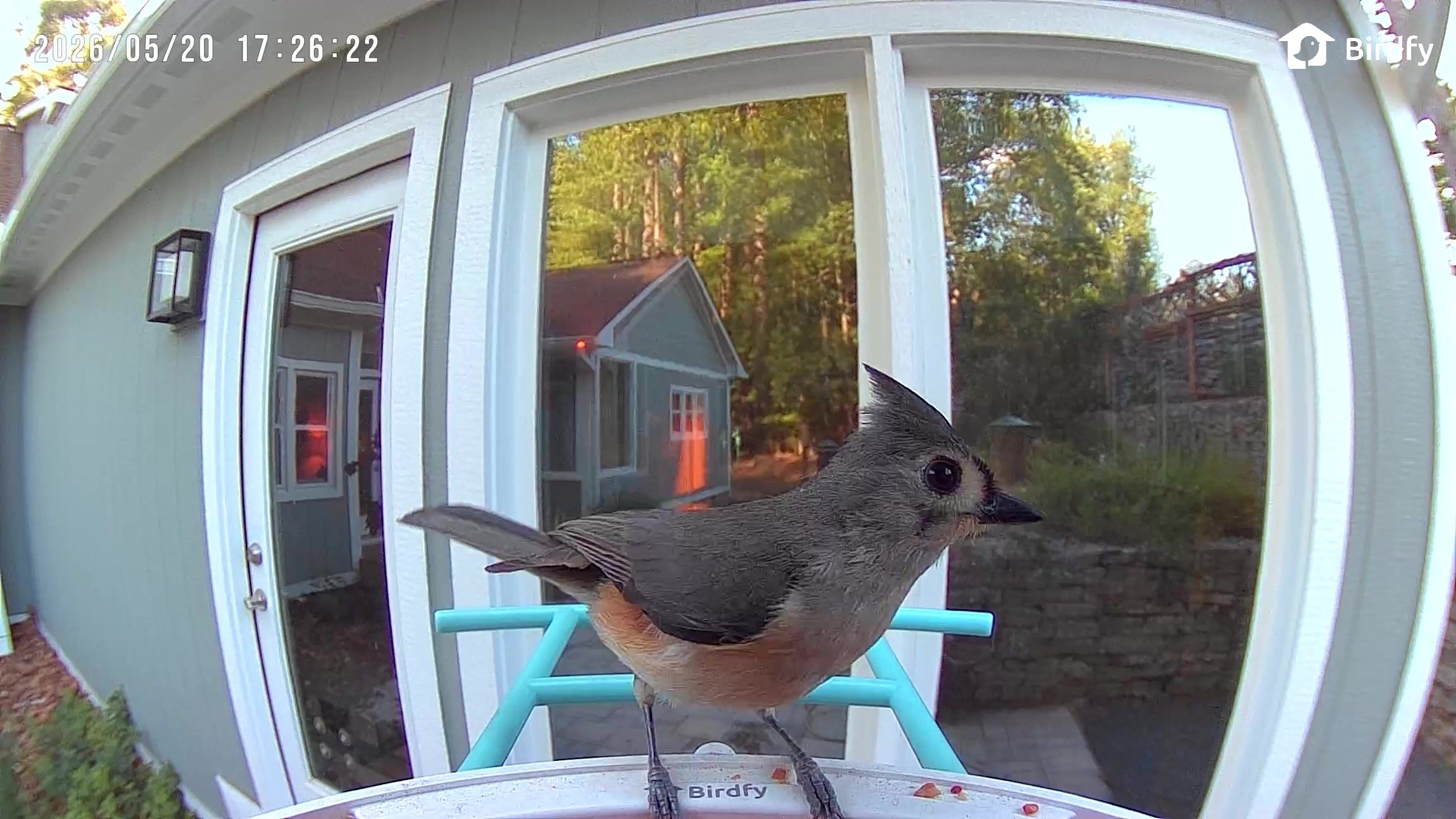
The camera in the Birdfy Feeder is 2K, and the image quality is on par or better than the Bird Buddy. I get clear images and videos, but the camera doesn't handle direct sun well, so when it's sunny, video quality suffers. I don't think the Birdfy Feeder has the best video I've seen from a camera, but it's similar to the Bird Buddy and my outdoor security cameras.
I don't have many night visits from birds, but there are night vision modes. There's an infrared mode for black and white recording, or a mode that uses white light to provide illumination for recording in color. Neither mode is very clear, so it's just a matter of whether you'd prefer to have more detail in infrared mode or color with less detail.
Birdfy Feeder 2 Duo
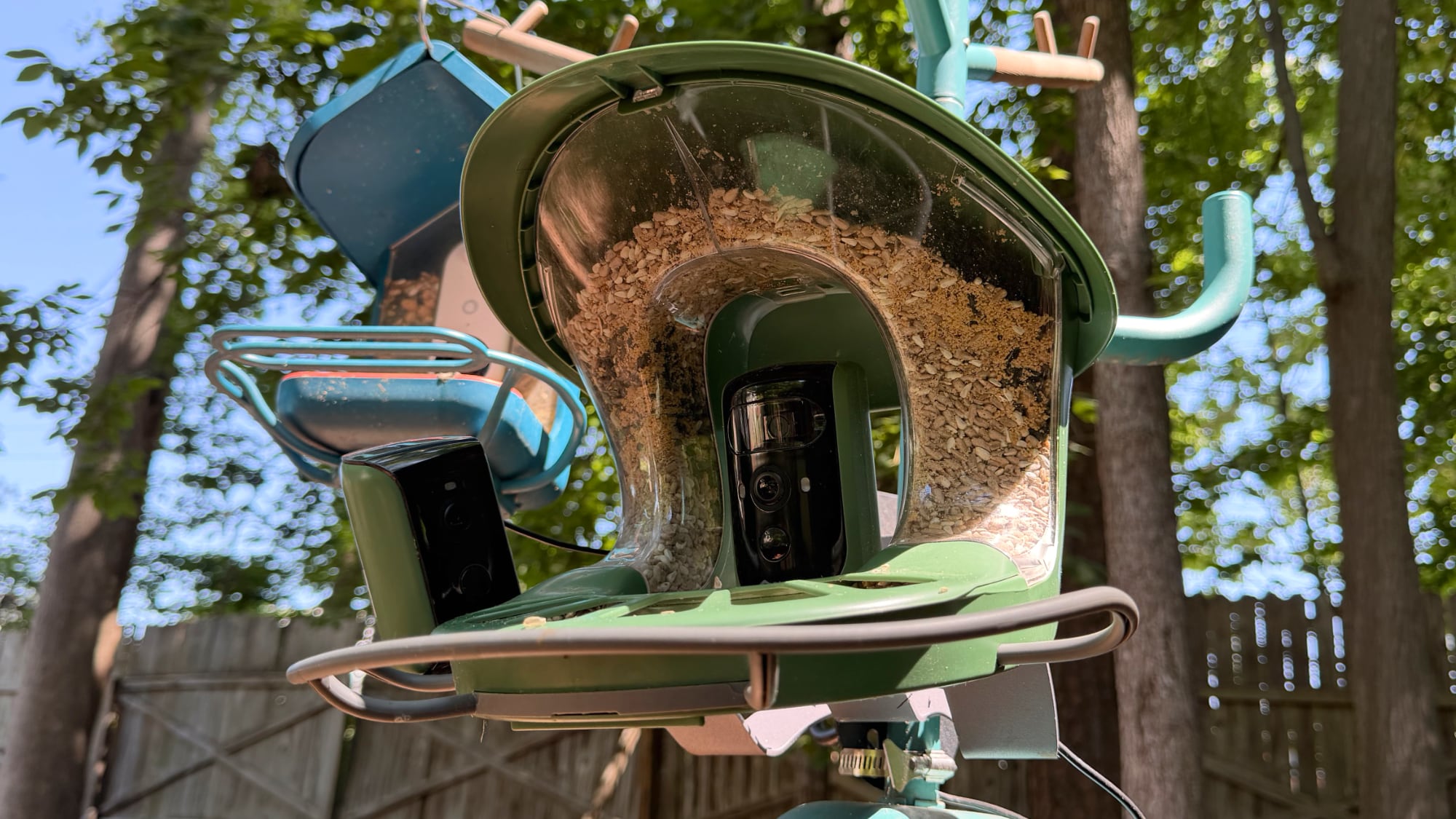
The Birdfy Feeder 2 Duo has a different design than the Birdfy Feeder, and it's expensive, so this is an upgrade version for someone who loves bird watching. The Duo has two cameras instead of one, with three lenses between them. One camera is located in the center and it has a wide-angle lens and a close-up portrait lens, while another camera captures side angles.
The portrait camera is 2K and some bird shots come out crisp and vivid, and I've also been happy with the wider-angle videos and images. Photo and video quality depend on the lighting conditions, connection, the length of time a bird stays, when the camera captures the shot, whether the lens is clean, and the weather conditions outside, so results are always variable with all of my bird feeders.
Getting multiple angles is fun, because if one camera doesn't pick up a bird, it's likely going to get captured from the other camera. It's ideal for birds that tend to stick to the sides of the feeder and just flit in to grab a quick seed. My Bird Buddy is unable to capture visits when the bird is not in the center of the feeder.
I wish that at the $360 price point, the camera quality was even better. Videos come out well and look good for the most part, but the portrait lens is not as crisp as I would have hoped.
Seed goes in a hopper that splits around the central camera. The lid flips open and the seed is poured inside, and it fills the feeder tray. The tray has bars at the bottom that can prevent larger birds from getting to the seed, and some people use those kinds of barriers on bird feeders to cut down on mess.
The Birdfy Feeder 2 Duo is made of plastic, but it is black and green, so it blends in better outside. It too has held up well through the winter, and it has IP66 water and dust resistance rating. It mounts the same way as the Birdfy Feeder, with multiple mounting options. I tried this one strapped to a tree to begin with, but it was too easy for squirrels to reach, and they ate all the seed. They also chewed through the USB-C cable that connects the cameras to the solar charger, and I had to get a replacement. I moved it to a bird feeder pole with a baffle that's a good eight feet from trees, and the squirrels can no longer reach it.
The solar panel for the Birdfy Feeder 2 Duo is a separate component, and it connects to the feeder with a USB-C cable. To power more than one camera, it uses a split USB-C cable. I have the feeder in a spot with little direct sunlight, and I have had to manually charge the cameras twice. Since they charge over USB-C, I bring a USB-C battery pack out and charge them at the feeder, but it's also easy to remove the feeder from the bracket that holds it in place for charging and cleaning.
Bird Bath Pro
I first put the Bird Bath Pro out in December, and I thought it was a failure. I had no bird visits for the first two months it was outside, but when spring came, it became a wildlife favorite.
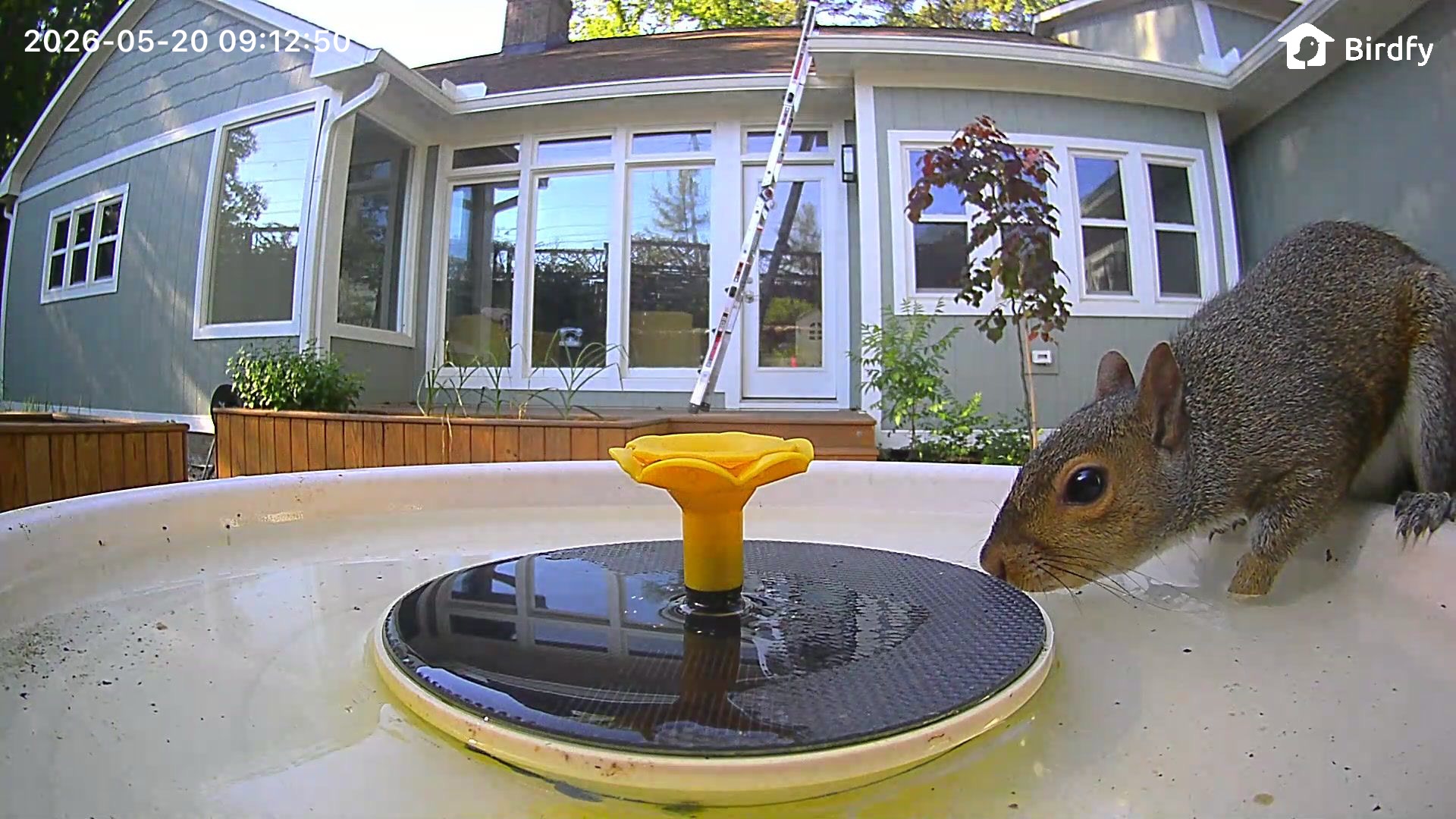
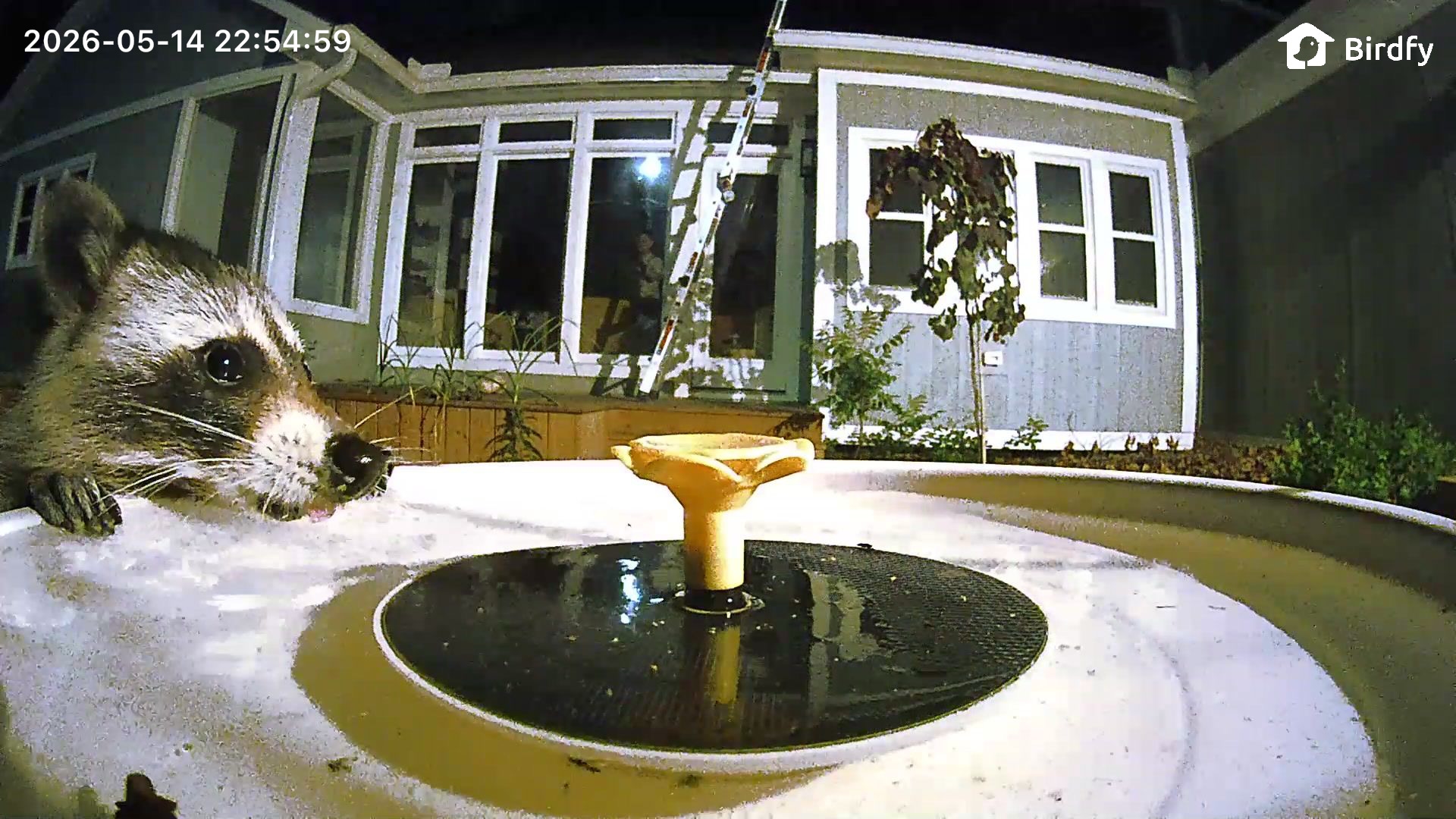
While I do occasionally see birds taking a bath in the Bird Bath Pro, it's used more often as a drinking fountain. Even though the bird bath is next to a fountain and also close to my pond, it is the preferred drinking spot for every creature nearby.
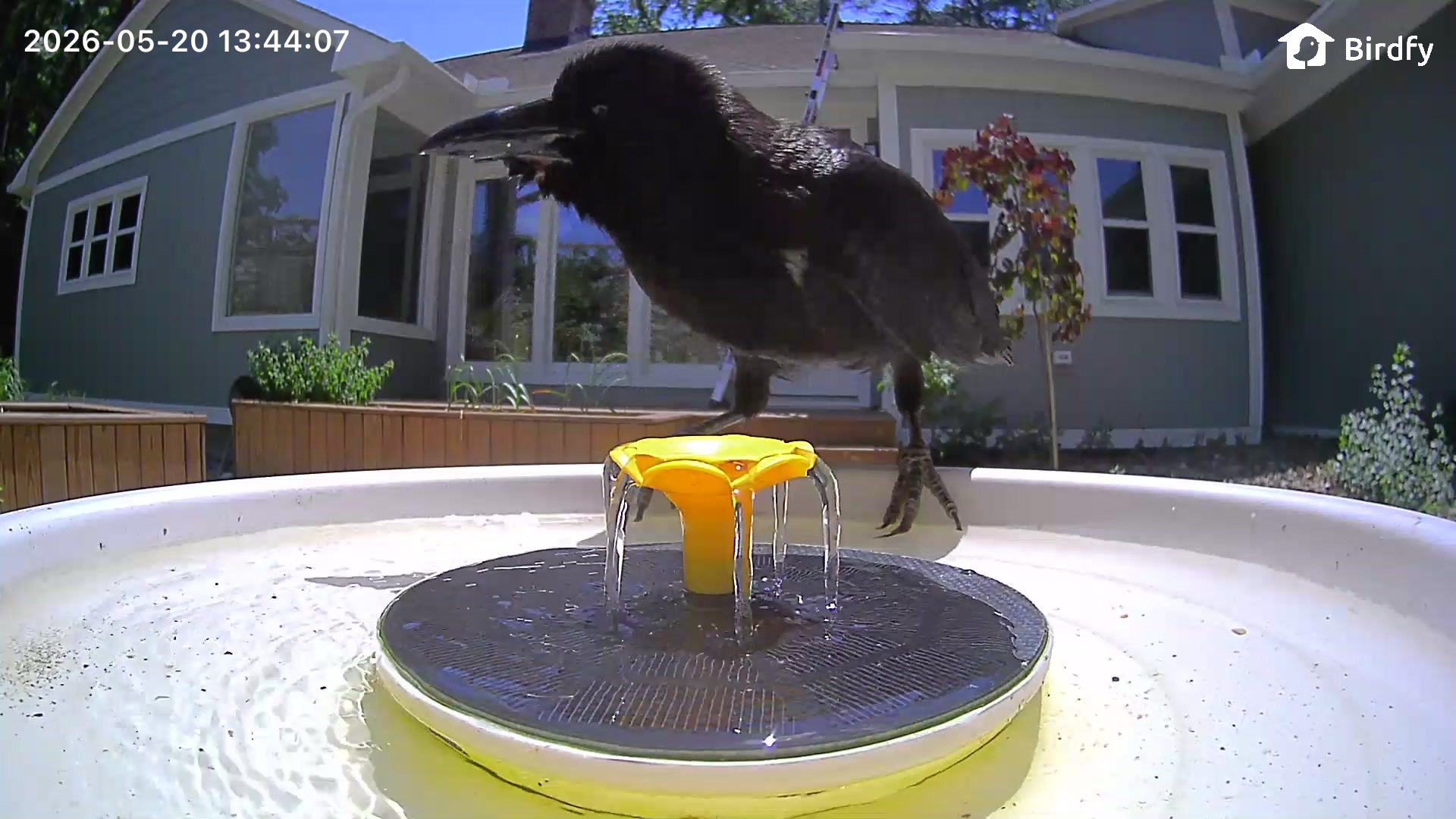
The crows that come to my house like to take a mouthful of food, spit it into the bird bath, and eat it like bird cereal. A raccoon that comes by every night drinks from it, as does a local fox. The squirrels are especially fond of the bird bath and drink from it every day.
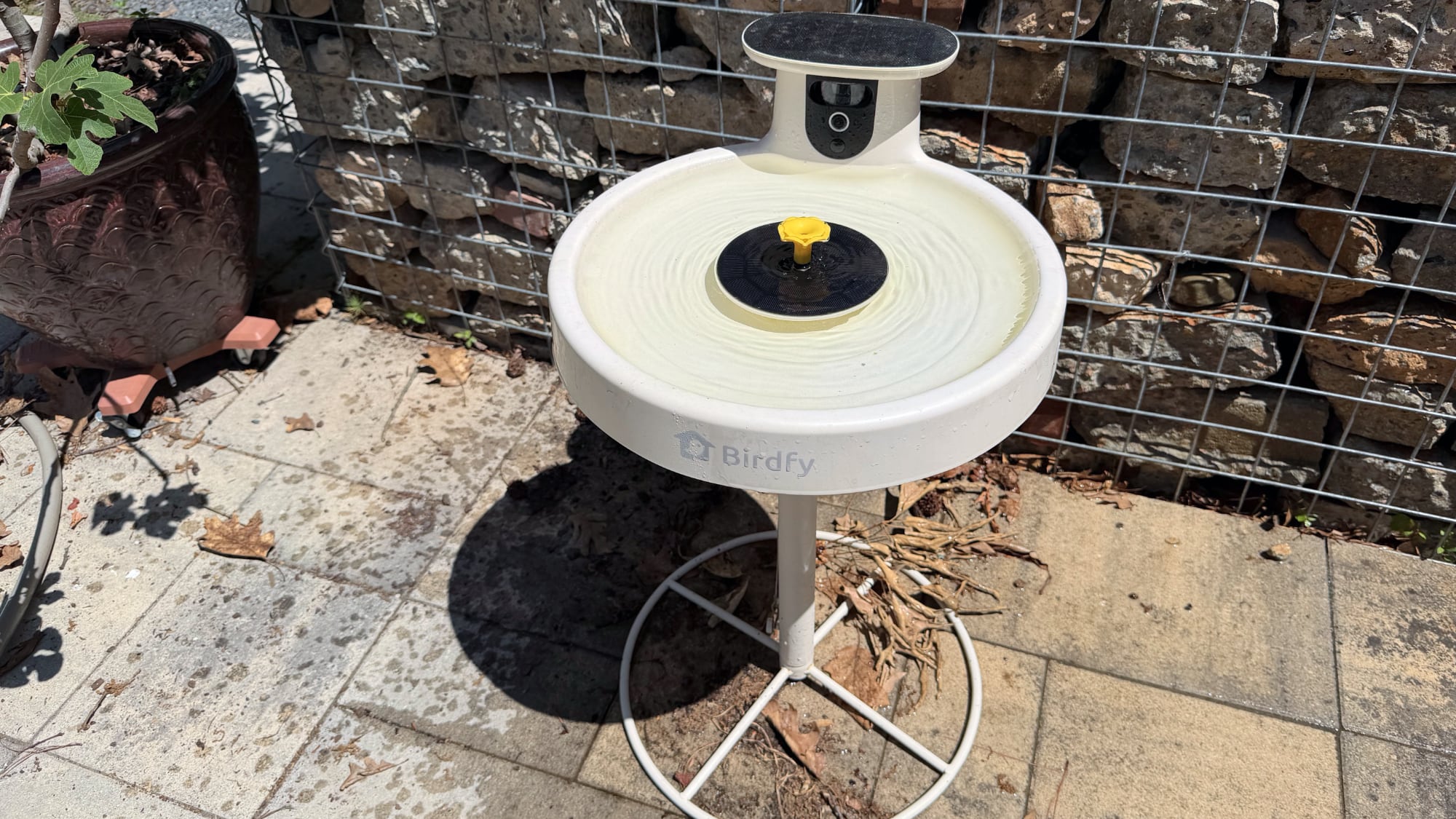
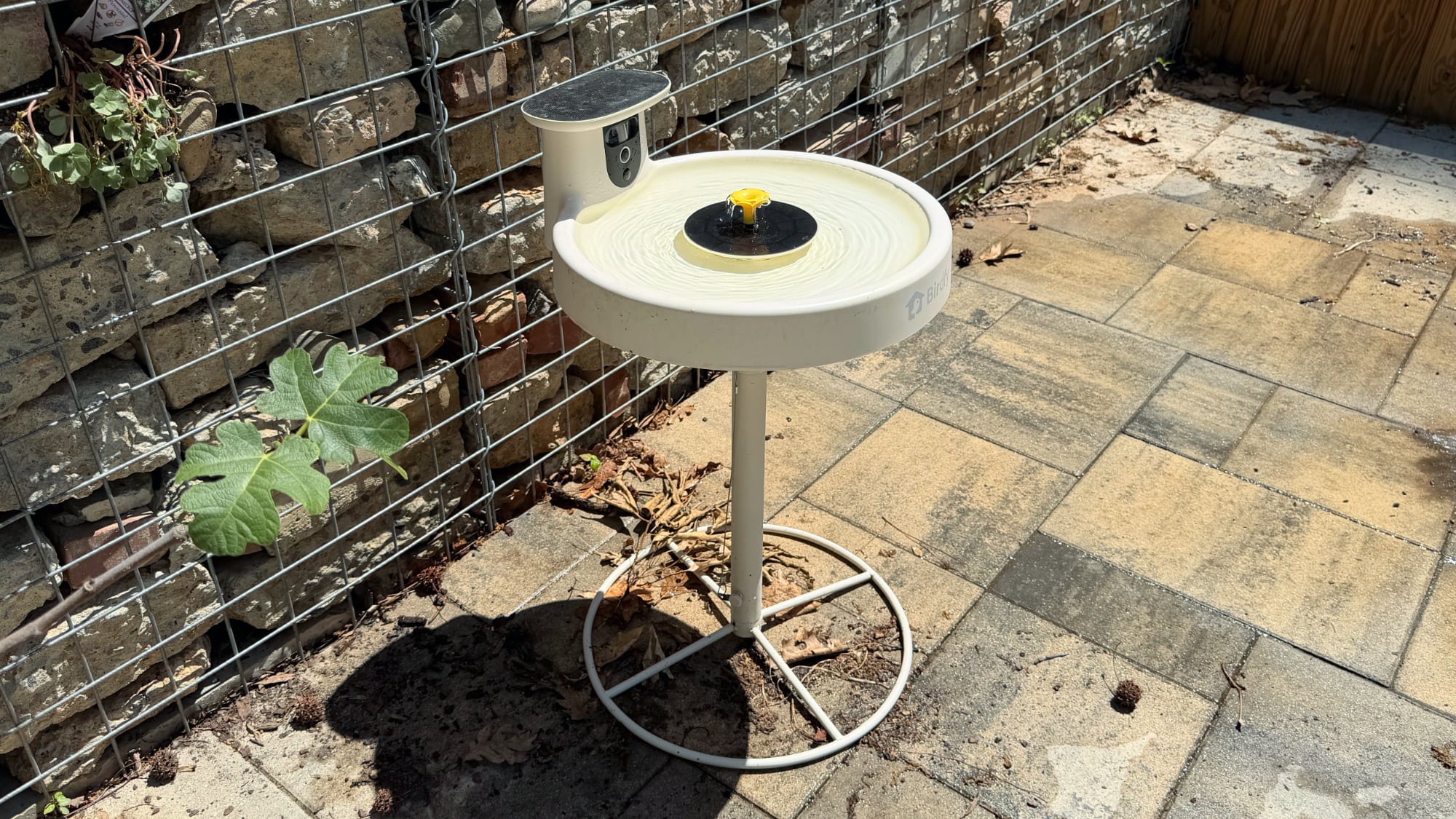
The Bird Bath Pro is made from plastic, and it has an optional base that you can get from Birdfy. I thought it might be a little low, but it's a height birds seem to like. It holds maybe an inch of water, or a little more if I fill it to the top. A built-in solar-powered fountain comes on when the sun is out to move the water, which prevents mosquitoes.
I don't see the fountain run when it's not in direct sunlight, so it's not on all the time. I'd like to see it run more often, but it seems to be designed to work only some of the time. The birds will use it either way. There is a filter in the fountain part of the Bird Bath Pro to keep the mechanism from getting jammed up with debris, and that should be replaced or cleaned regularly. Speaking of the fountain, there are interchangeable nozzles with different spray patterns to choose from. I use the flower that has gentle water movement.
The Bird Bath Pro tends to get dirty quickly, so I wipe it out and change the water every other day. Other than the cleaning and the filling, it doesn't take much more work, and I think I like it even more than my bird feeders.
Like the other Birdfy cameras, it struggles somewhat in direct sun and the image gets washed out. It's also not crystal clear because birds don't stay still for glamour shots, but I enjoy the photos and videos.
Setting up the Bird Bath Pro is simpler than setting up the cameras, because it's mostly all one piece. The camera fits into a slot in the bird bath, and then it's ready to go. No attaching it to a pole with clips or straps, and the filter and fountain parts are easy to figure out.
Birdfy App
All of the Birdfy products use the Birdfy iOS and Android app for bird identification and visit alerts. The Birdfy app works, but I think it's confusingly designed and not as intuitive as the Bird Buddy app. It's used for everything from setup to viewing bird images.
I did not like the Birdfy setup process. It's the standard connect, enter Wi-Fi password, and add to app system that most products use, but when you put the Birdfy cameras into pairing mode, they beep incessantly until successfully paired. It was by far the most irritating setup process I've ever gone through just because of the noise. Once connected to Wi-Fi, Birdfy's devices work fine, and I haven't had interruptions in service.
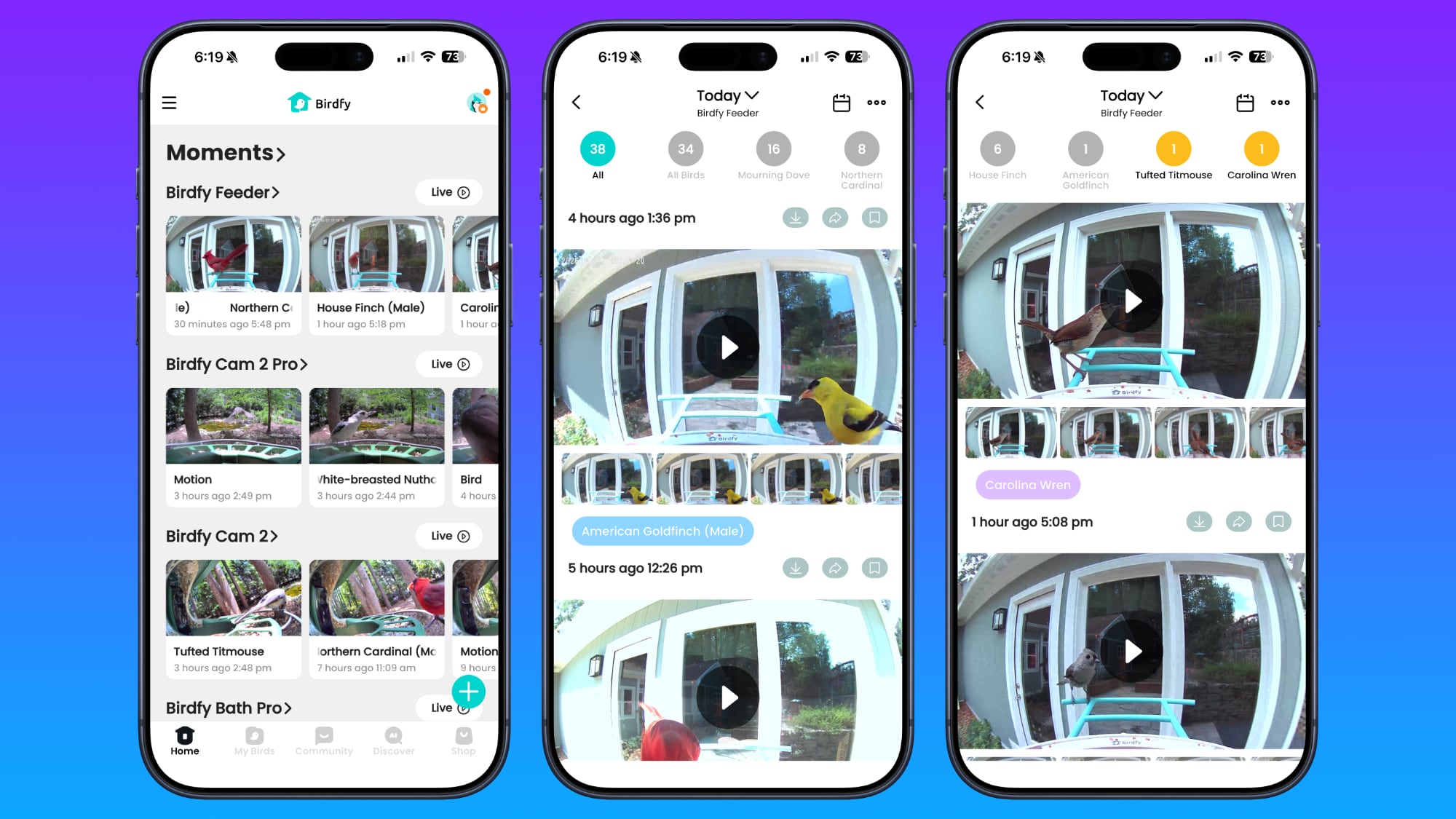
The app opens to a Home section that shows a view of each Birdfy camera, and you can tap in to see captured moments or get to a live view. Tapping into a camera provides an overview of the day with a readout of the total number of bird visits and the bird visits by species. Scrolling down lets you watch all of the videos for the day, and if you keep scrolling, you can swap to prior days. There's also a calendar icon you can use to get to previous recordings.
Birdfy's app gets a lot of birds right, but it makes errors regularly and there are some fleeting visits where it can't identify the bird type. As I'm writing this review, I've had 47 visits, some of which involved more than one bird at a time. The app correctly identified 38 birds, but marked 14 unknown. Two birds were incorrectly identified. It called a house finch a canyon towhee (despite correctly identifying finches the rest of the time), and marked a white-breasted nuthatch as a brown-headed nuthatch.
Yesterday, I had 73 visits. Of those visits, 12 were unidentified, one house finch was misidentified as a canyon towhee again, and a tufted titmouse was incorrectly named an oak titmouse. It's not able to identify crows, and it sometimes struggles with the raccoons and squirrels that visit the bird bath. I can tell when it's wrong because I know the local birds by sight, but misidentification is a bigger problem for users that aren't aware of what's around. On the plus side, it's right much more often than it's wrong, and it is able to tell male or female for some birds. Birdfy says it is able to identify over 6,000 bird species.
The camera does not use AI to decide when to record. If it detects motion, it records. It will pick up people walking by and other random movement. Unlike the Bird Buddy, it does send a notification for every bird visit, and that's a lot of notifications.
I wish there was an option for daily highlights instead of a notification for each visit. I can exclude certain types of birds in the app, but since it sometimes misidentifies birds, I don't want to do that. I mostly ignore the notifications now though, since I'm getting 50+ per day. The Bird Buddy sends occasional postcards from the best bird visits, and I think that's a much better way to do it.
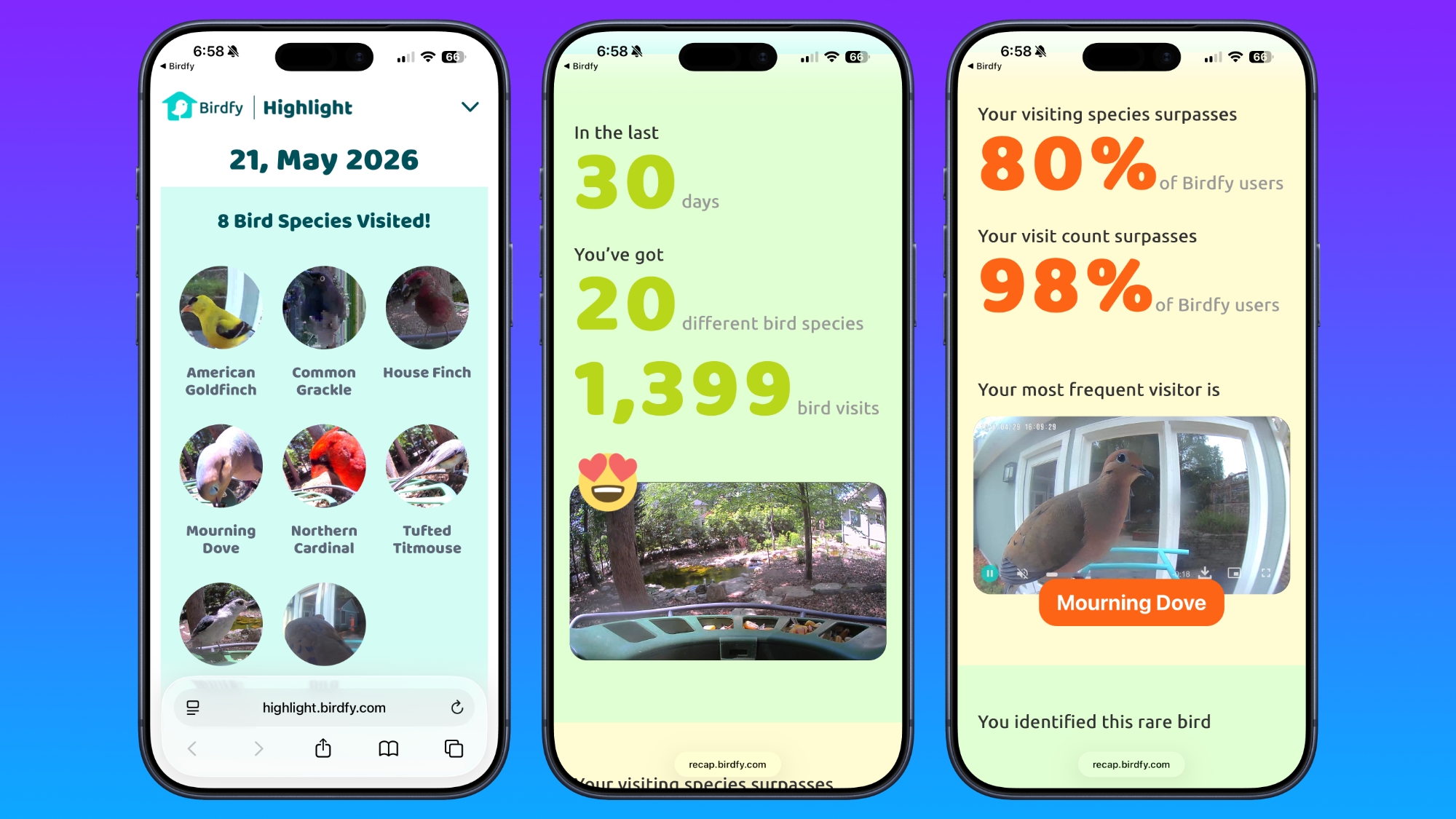
Birdfy does have a useful recap feature, but it's not obvious. You need to tap on your profile and then tap on Highlight. It opens a recap on the web rather than in the app, which is a weird choice. It gives an overview of everything that visited in a day, and lets you know when you've had a certain type of bird visit for the first time. You also get overall monthly recaps.
There is no fee for the Birdfy AI if you buy it upfront with the camera. Cameras with "lifetime" AI are around $20 higher, and I think that's worthwhile not to have a subscription. You get free AI, 5GB storage, and 20-second video recordings that are kept for a month, but you can also pay for a subscription for expanded cloud storage.
The $6.99/month Plus plan keeps videos for 60 days and expands recordings to 30 seconds each, plus it provides 20GB storage and 15 percent off Birdfy products. There's also a Bird Data feature for visit statistics, activity patterns, and time-of-day analysis. Since the Plus plan only extends recordings by 10 seconds and it is limited to two Birdfy devices, it doesn't seem like a good value. It makes more sense to pay for AI access when making an initial purchase and doing without the extra features. Birdfy does have a 50 percent discount for those who bought the lifetime AI, but the device limit still doesn't feel worth it even at $3.50/month.
Local storage is not an option as an alternative to cloud storage, but video clips and images can be downloaded and shared.
Bottom Line
Smart bird feeders can feel repetitive because most people get the same birds with the exception of seasonal migration, but it's still fun to see the antics that the regulars get up to. I have bird spats, bird couples that come in pairs and check in often, little wrens that like to carry around large peanuts, and silly doves that like to just sit on the food. It's also always a treat to see colorful bluebirds and goldfinches that I don't get as often as cardinals, mourning doves, and sparrows.
Birdfy has an extensive product line with different feeder styles and multiple price points, which makes it easy to recommend. The app and the setup are not as simple as the Bird Buddy and I'd be a little hesitant to get a Birdfy Feeder as an option for someone who isn't app and iPhone savvy, but it's not impossible to figure out.
For any bird watcher that can figure out an app that's somewhat convoluted, it's a fun product for keeping tabs on what's around your home. There are lifetime AI options that don't require a subscription, and the AI had a good (but not perfect) accuracy rating in my testing. The feeders are easy to fill and clean because they all use the same easy-access mount, but there is no hanging option and that makes them a target for squirrels and other critters depending on location.
The standalone solar panels are useful for finding just the right sun spot for charging, though it does introduce extra cabling to deal with compared to an all-in-one solution.
Of the Birdfy products I tested, I liked the Bird Bath Pro best. It's been a hub of activity, and it provides a look at birds doing something other than eating. If you live somewhere that you can't have bird feeders (like somewhere with rat or mouse concerns), the Bird Bath Pro is a product that will still let you see local birds.
How to Buy
Birdfy's products can be purchased from the Birdfy website. The Birdfy Feeder is $170 for the lifetime AI and the solar panel, the Birdfy Feeder 2 Duo with three lenses is $360, and the Bird Bath Pro is priced at $280 for the version with lifetime AI and an included stand. The stand-free model is $200.
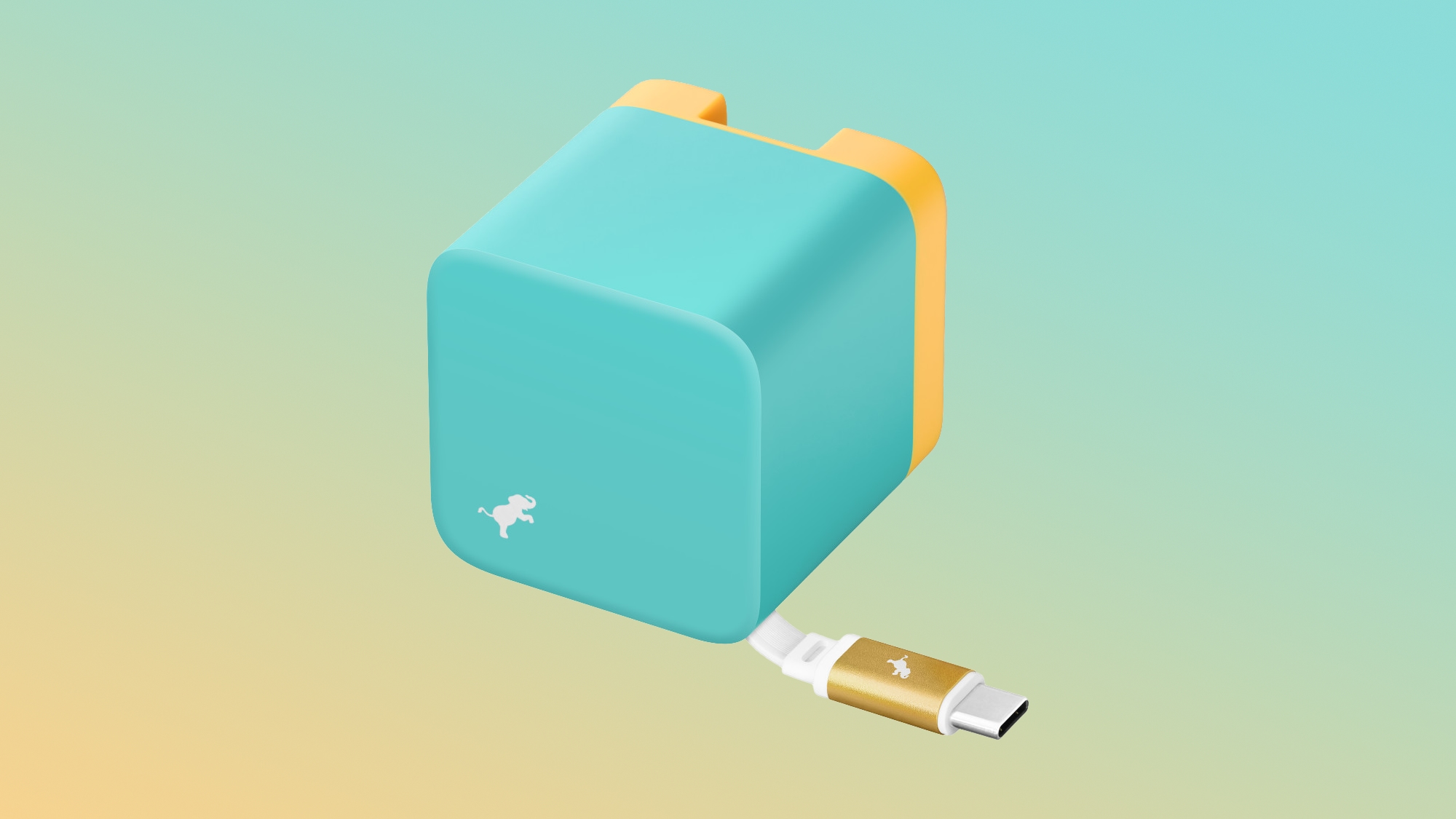
Last year, accessory maker Nimble came out with the Wally Stretch power adapters, and they've become some of my favorite charging options.
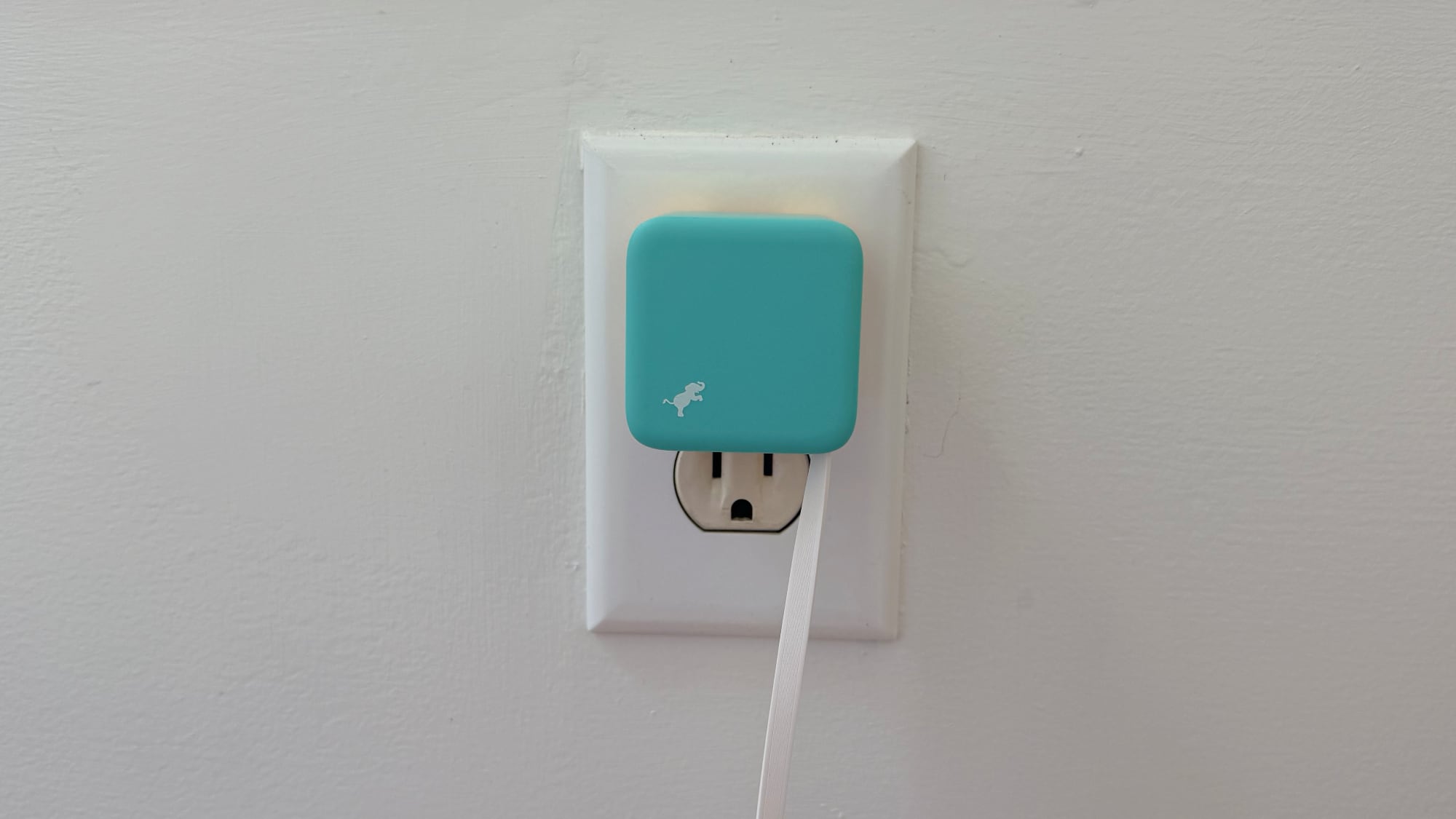
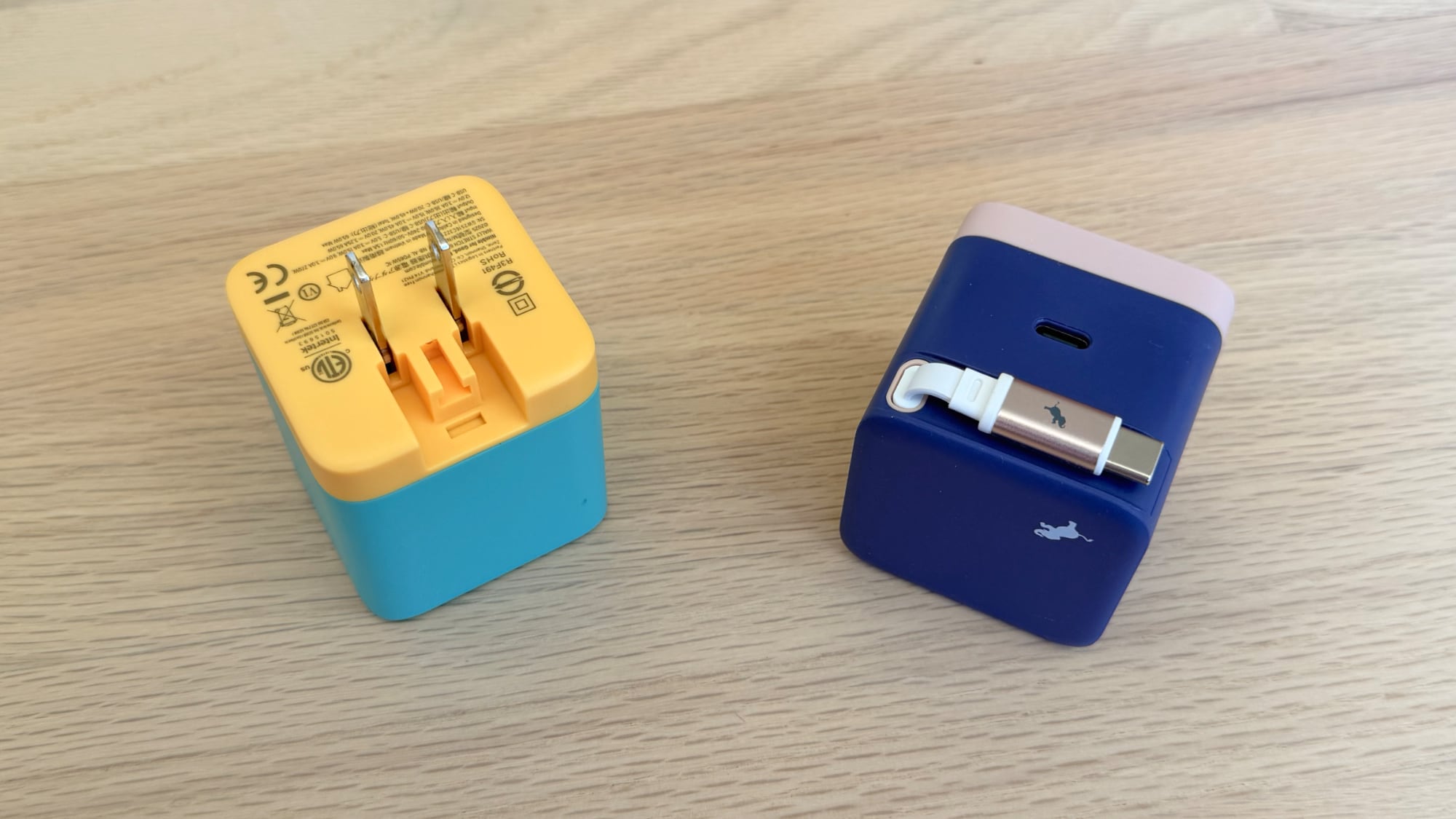
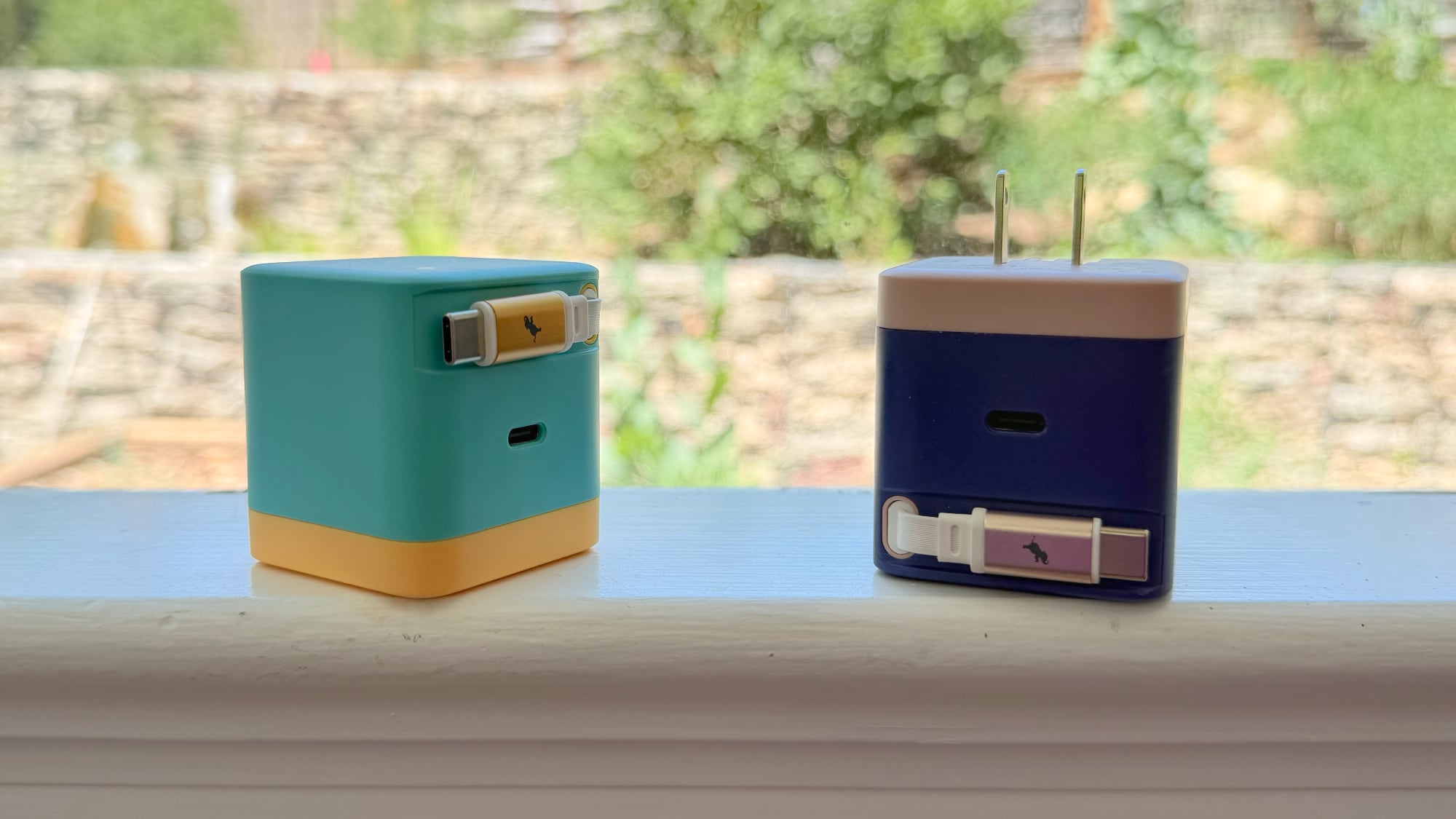
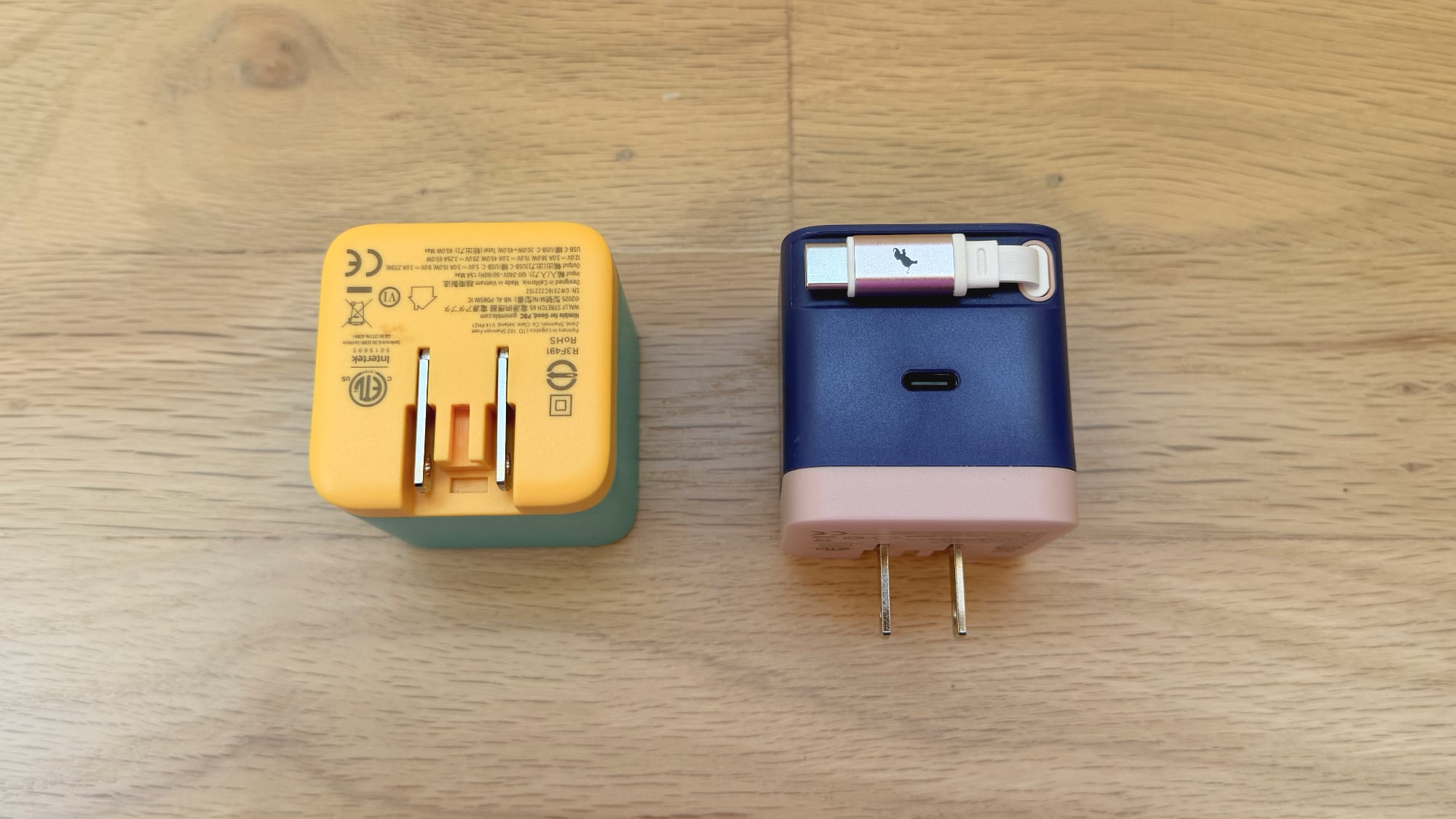
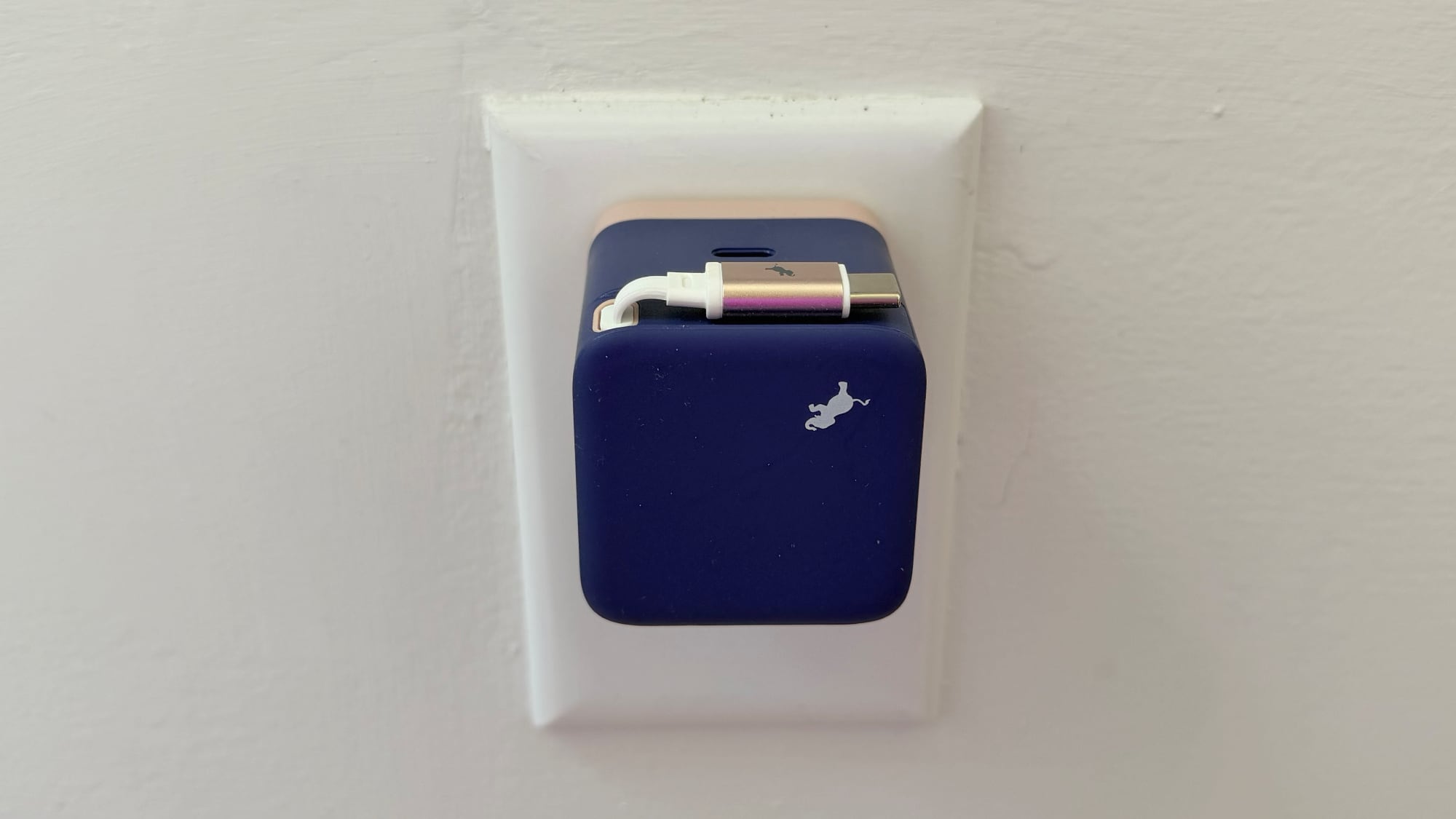
The Wally Stretch is available in 35W and 65W options, and it has an excellent design. It's a simple cube with prongs that fold down, a retractable USB-C cable, and an extra USB-C port. The 65W model that I tested is thicker than the comparable 70W Apple charger, but it's smaller in length and width.
Nimble's charger is just about two inches all around, and it looks like a block. While Nimble sells the 35W charger in black and the 65W charger in white, Apple offers 65W Wally Stretch in better colors. It comes in teal with a yellow accent and a gold-topped cable, along with deep purple with a pink accent and a silver-topped cable. I'm a big fan of any charger that's not your standard black or white, and I use the Wally Stretch chargers with my desktop power strip.
The retractable USB-C cable measures in at two feet, which is a great length for desktop use. It's also worked well for traveling between locations, and two feet seems to be an all-around useful length. Some people prefer much longer cables, and there aren't options with the Wally, which is a downside. There is, however, an extra USB-C port at the bottom where a longer cable can be plugged in if desired.
65W is enough for me to power even a 16-inch MacBook Pro when it's not under heavy load, and it's more than sufficient for my MacBook Air, iPad Pro, and iPhone. Even when charging two of the latter three devices at the same time, I get fast charging.
A retractable cable paired with an extra USB-C port all in a small package makes the Wally Stretch one of my most flexible power adapters. I would pick it over a standard Apple charger in all situations, and over many third-party chargers. The only situation where I reach for something else is when I need more than two ports or higher watts, but that doesn't happen too often. I think the only thing that would make the Wally Stretch better is an XL version with two retractable cables and 140W.
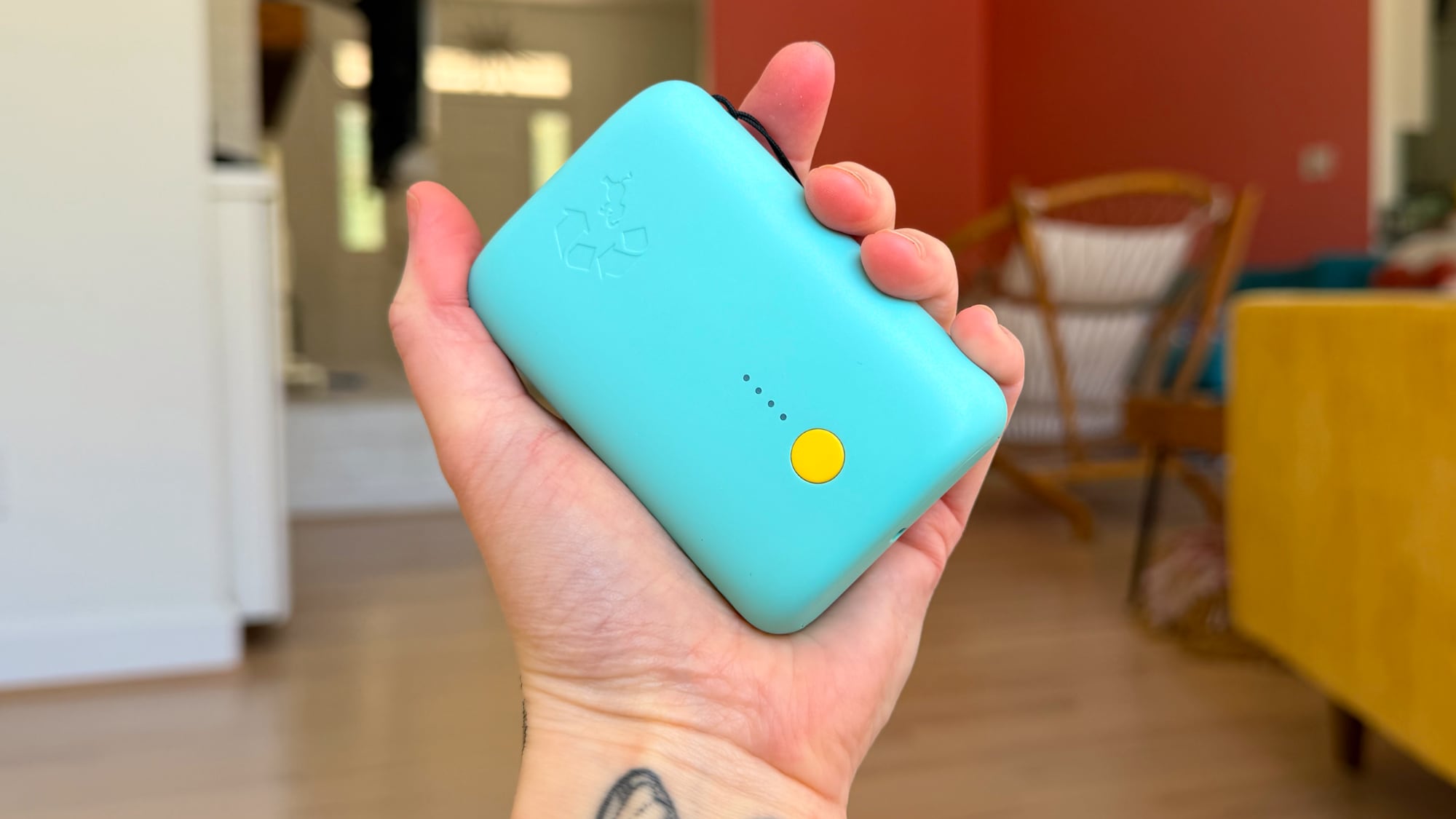
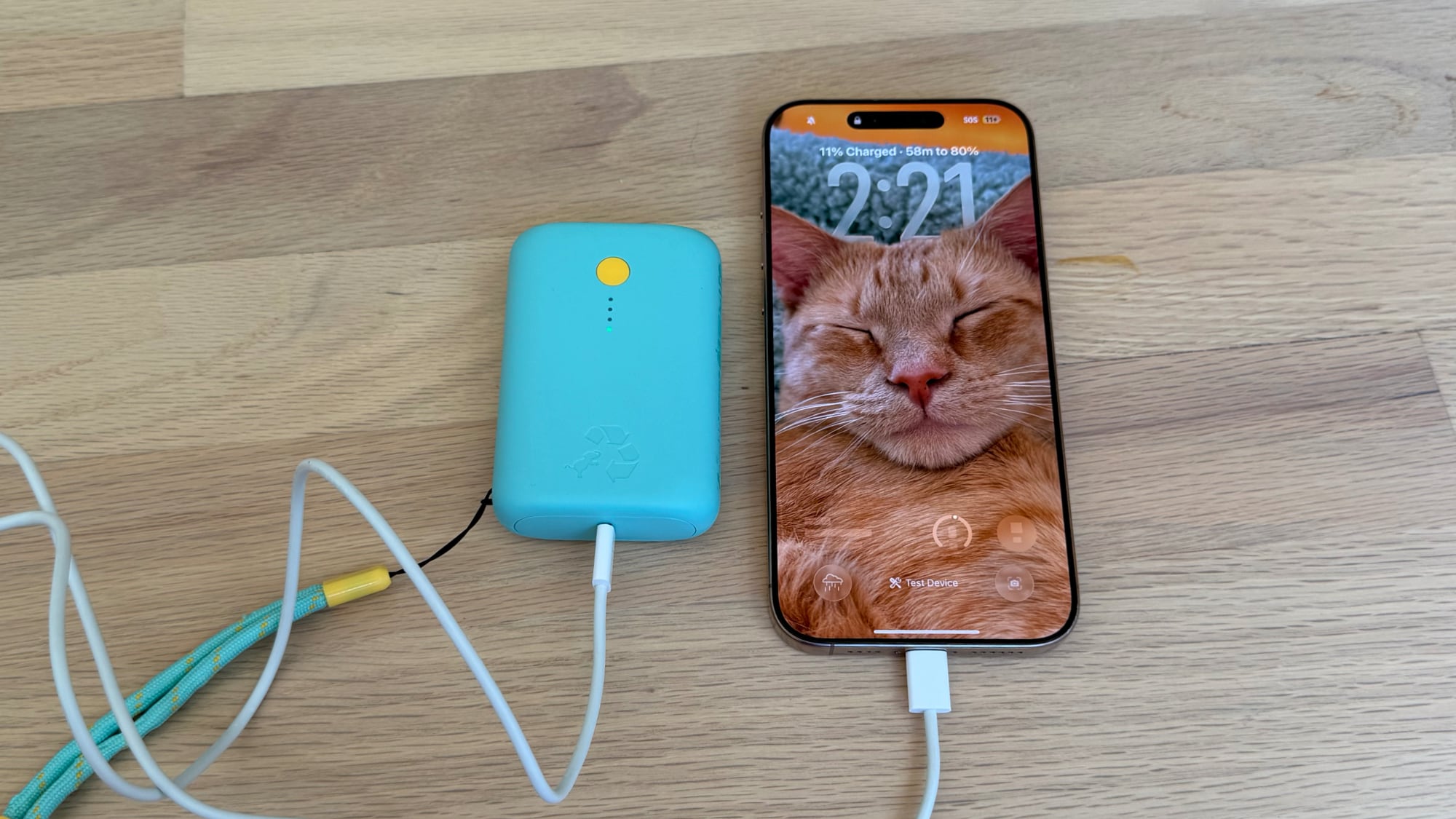
Nimble also makes power banks that I like a lot, again because they come in colors other than your standard black or white. The Nimble 10k Champ Portable Charger I tested is teal with yellow accents, and it has some design elements I've found useful.
It's small, and it tucks nicely into a pocket or a bag. It has a lanyard, which is a feature that I find surprisingly useful for a power bank. I can always track it down in my backpack, and I can put it around my wrist when I'm charging my iPhone with a short cable. I wouldn't have thought a lanyard would make a difference, but I have a decent selection of power banks, and I always pick the ones with the lanyard first when I need one.
The Nimble Champ is 3.4 inches long, 2.3 inches wide, and under an inch thick, plus it's lightweight at six ounces. There's a yellow button on the front that can be pressed to see remaining power level, which is reflected via four LED dots. That's standard for power banks, and it's fine. Some power banks have a little LED display that shows exact level, and I do prefer the more exact readout, but it's not a make-or-break feature.
There are two USB-C ports for charging an iOS device or for charging the power bank, and while it does come with an included USB-C cable, I wish it was a color-matched cable instead of a plain cable. A power bank designed to stand out with a bright color should have a cable that goes along with it, but I do understand the plain cable choice because it keeps costs lower. Nimble's power bank is $60, which makes it reasonably priced.
I have an Anker Nano power bank with a lanyard and a retractable cable and it is the one that I love the most. Nimble Champ is my second pick, just because I like integrated cables that don't require me to hunt down a cable and that don't result in excess cable I don't need. Nimble does actually have an updated version with a retractable cable and an exact readout of charging capacity, but it's more expensive at $80.
This is a 10K power bank, so it has enough power to charge an iPhone 17 Pro Max from 0 to 100 and then some, but it is limited to 20W fast charging. Apple's iPhone 17 models charge to 50 percent in 20 minutes with a 40W adapter, so you're not going to get maximum charging speeds with the Nimble Champ. I probably wouldn't choose the Nimble Champ in a situation where you need to optimize for the fastest possible charging for an iPhone 17, but it's great if charging that's a bit slower isn't an issue.
Bottom Line
Nimble's Wally is a useful power adapter for everything from the Mac to the iPhone, and the retractable cable is super convenient. I'd definitely recommend it to anyone looking for a power adapter for desktop or travel use.
The Nimble Champ is a budget-friendly power bank that's brightly colored and slim enough to carry in a pocket. It's a good pick as long as you don't need the fastest USB-C charging.
The latest versions of iOS and iPadOS support a feature that allow you to easily see who and what devices are using data on Personal Hotspot. This is particularly useful if you find yourself using Personal Hotspot often, and perhaps find yourself hitting overages or getting throttled from Personal Hotspot data usage over cellular. By ... Read More
Following last month's coverage of an unofficial Mac port of Notepad++ that the original developer called out for trademark violation, the dispute has now been resolved with a rebrand.
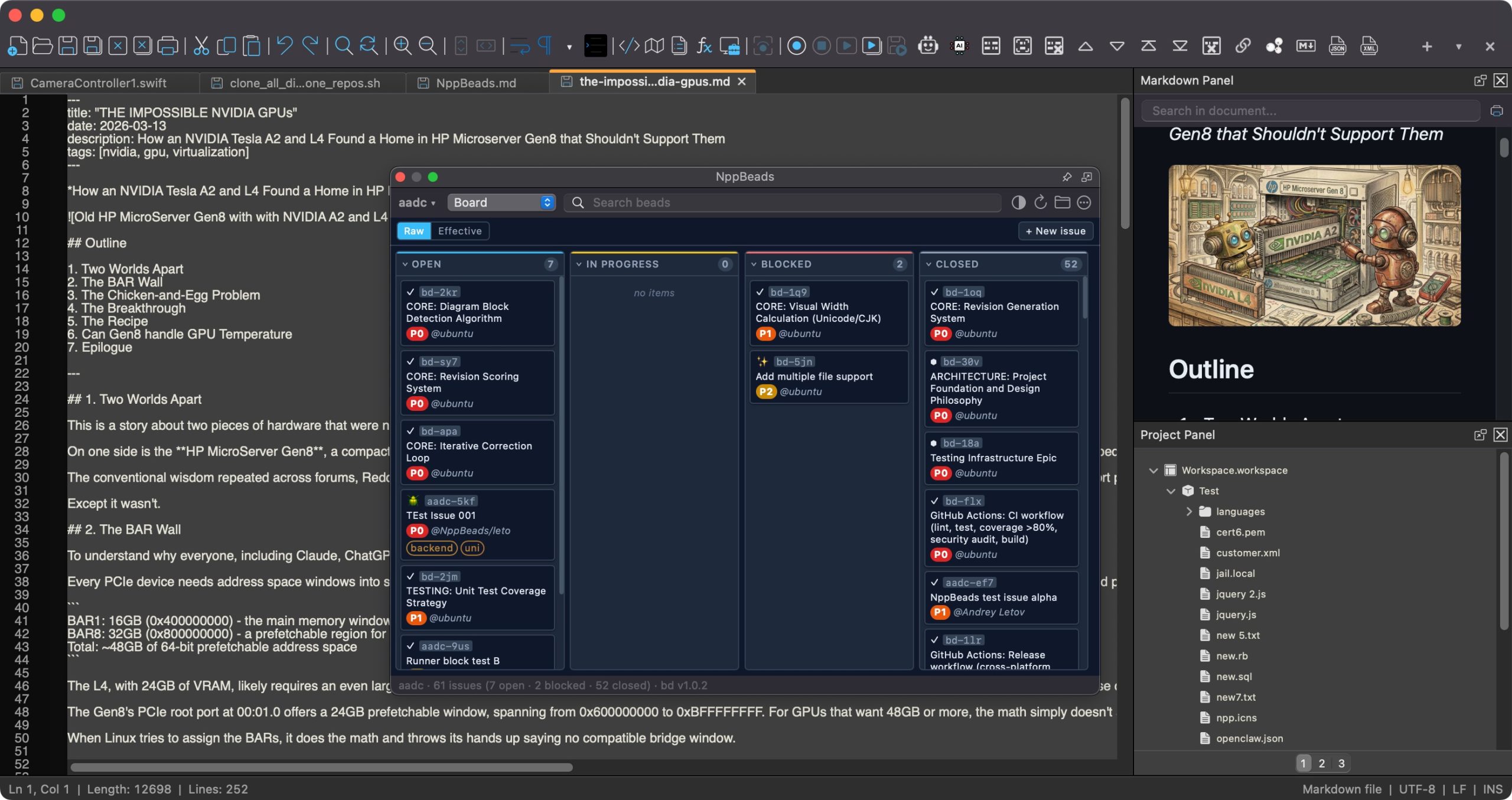
The macOS port was previously released by Andrey Letov under the Notepad++ name without authorization. Don Ho created the original Windows code editor in 2003, and had publicly objected to the unofficial app's use of his trademark and the inclusion of his name and biography on its author page. After settling the dispute, the app has subsequently been renamed Nextpad++.
The site for Nextpad++ has been thoroughly updated and clearly states that the app is an "open-source and independent community port of Notepad++ to macOS." Elsewhere, Letov's About page describes the project as a Mac port of the Notepad++ GPL codebase, built on Objective-C++, Scintilla, and Cocoa, and shipped as a universal binary for Apple silicon and Intel Macs. The app also has a new icon.
Names aside, it seems Daring Fireball's John Gruber is less than charmed by the result, describing the app as feeling "unholy" and suggesting the rapid port could only have been built with AI vibe-coding tools. The site states development began on March 10.
Apple has released an array of new system software updates for older model iPhone and iPad hardware, alongside the iOS 26.5 update for newer devices. These updates include important security fixes, and are therefore recommended to install onto your eligible devices. The updates arrive as iOS 18.7.9, iPadOS 17.7.11, iOS 16.7.16, and iOS 15.8.8, each ... Read More
Apple has released iOS 26.5 for iPhone, along with ipadOS 26.5 for iPad. The new software updates include bug fixes, security patches, and a few new features, including encrypted RCS messaging on supported carriers (basically for encrypted texting between iPhone and Android users), a new customizable Pride wallpaper, and “Suggested Places” in Apple Maps. Separately, ... Read More
The Calendar app on iPhone, iPad, and Mac offers a handy automatic event detection feature, able to find details like dates, times, and locations, through the Messages app and even Mail app, of presumed events and appointments. The auto detection system is part of Siri, and recognizes dates as potential events, placing them in a ... Read More
Apple held its earnings call for the second fiscal quarter (first calendar quarter) of 2026 today after announcing its best March quarter ever. Apple saw revenue of $111.2 billion with double-digit growth across every geographic segment and across every product category. Apple CEO Tim Cook and Apple CFO Kevan Parekh provided insight into iPhone sales, Mac sales, RAM supply issues, and more.
We've rounded up the most interesting takeaways from the call.
iPhone 17 Sales
Apple attributed its success to the new iPhone models. Cook said "demand was off the charts," but Apple was facing supply constraints that impacted revenue. Had there not been supply issues, Apple would have seen higher revenue.
The A19 and A19 Pro chips from TSMC proved to be a bottleneck because TSMC uses the same 3nm process for AI chips that are in high demand. Cook said iPhone constraints were "primarily driven" by the availability of the advanced nodes Apple's SoCs are produced on.
According to Parekh, the iPhone 17 family is Apple's best-selling iPhone lineup to date. "The iPhone 17 family is now the most popular lineup in our history... we believe we gained market share during the quarter," he said.
iPhone revenue was $57 billion, up 22 percent year-over-year, which is a new March quarter record. Apple saw strong demand from upgraders and customers choosing an iPhone for the first time. Cook said Apple is "enormously pleased" with how the iPhone 17 lineup has been received.
Memory Costs
Apple had higher memory costs during the March quarter, and the impact is expected to get worse as the year goes on. Apple CEO Tim Cook said that Apple is expecting "significantly higher memory costs" in the June quarter, and beyond June, memory costs will "drive an increasing impact" on Apple's business.
Mac Sales
Mac revenue was $8.4 billion, up six percent year-over-year. Cook said sales were impacted by supply constraints "driven by higher than expected levels of demand."
The MacBook Neo that was introduced during the quarter was a hit, and Apple sold out. Shipping times for new machines reached several weeks. Apple also saw high demand for the Mac mini and the Mac Studio from people buying the machines for use with AI.
Apple set March quarter records for upgraders and customers new to the Mac, leading to a new all-time record for the overall Mac install base. Apple is focused on customers new to the Mac and customers who have been holding onto their Mac for a long period of time, and the Neo is selling well to those customers.
Apple expects Macs to face supply constraints in the June quarter due to continued high demand and "less flexibility in the supply chain."
Mac Studio and Mac mini Supplies
Apple expects it to take months to reach supply/demand balance on the Mac Studio and Mac mini, suggesting they are going to be hard to get for months to come.
Apple underestimated demand for the Mac mini and the Mac Studio. "Both of these are amazing platforms for AI and agentic tools and the customer recognition of that is happening faster than what we had predicted, and so we saw higher than expected demand," Cook said.
John Ternus
Cook addressed John Ternus, who will take over as Apple's CEO on September 1, 2026.
As I have said, there is no one on this planet I trust more to lead Apple into the future than John Ternus. John is a brilliant engineer, a deep thinker, a person of remarkable character, and a born leader. I know he will push us to go further than we think is possible in order to deliver the greatest products and services for our users. I have been so proud to call him a colleague and a friend, and I will be even more proud to call him Apple's CEO.
Ternus also spoke on the call, where he teased Apple's upcoming product lineup.
As Tim mentioned, we have an incredible roadmap ahead. And while you're not going to get me to talk about the details of that roadmap, suffice it to say this is the most exciting time in my 25-year career at Apple to be building products and services.
There are so many opportunities before us, and I couldn't be more optimistic about what's to come. For now, let me simply say I am deeply grateful to Tim, to the executive team and to everyone at Apple, and I look forward to all of the important work ahead with that.
Wearables
Wearables revenue was $7.9 billion, an increase of five percent year-over-year. Apple's wearables install base hit a new all-time high, and more than half of customers who purchased an Apple Watch during the quarter were new to the product.
Services
Apple's services revenue reached $31 billion, a new all-time revenue record.
Apple has an install base of over 2.5 billion active devices, a new all-time high across all major product categories. Both transacting and paid accounts hit new all-time highs in the quarter.
Retail
Apple had a March quarter revenue record for retail, with "very high levels of store traffic throughout the quarter."
AI
Parekh said that AI is a "really important investment area" for Apple, and the company plans to continue to invest in AI "incrementally on top of" what it normally invests in its product roadmap.
Apple's R&D spending accelerated during the quarter, and Cook said that Apple is investing in products and services. "We see opportunities in both of those," he said. "We could not be more excited about how the future is playing out."
On the collaboration with Google, Cook said things are going well. "We're happy with where things are, and we're happy with the work that we're doing independently as well," he said.
Tariffs
From Q1 to Q2, Apple saw less impact from tariffs due to the reduction in IEEPA tariff rates, and the reduced global tariff rate under Section 122. Cook said Apple is following the established processes of applying for a refund of tariffs paid, and any amount received will be invested back into U.S. innovation and advanced manufacturing. Any investment of refunded tariff fees will be in addition to Apple's prior commitments in the U.S.
Next Quarter
Parekh said June quarter total revenue is expected to grow 14 to 17 percent year-over-year. Services revenue is expected to grow at a similar rate to what was reported in the March quarter.
Parekh warned investors about iPad revenue because last year, Apple released the A16 iPad. "Keep in mind, we face a difficult compare driven by the launch of the A16-powered iPad in the prior year," Parekh said.
Apple had higher memory costs during the March quarter, and the impact is expected to get worse as the year goes on. Apple CEO Tim Cook said that Apple is expecting "significantly higher memory costs" in the June quarter, and beyond June, memory costs will "drive an increasing impact" on Apple's business.
Cook said the higher memory costs have been partially offset because the company is selling existing inventory that it has stockpiled. As those supplies dwindle, Apple's costs will go up.
According to Cook, Apple is going to look at a "range of options" and the company is "continuing to evaluate" the situation. Cook declined to provide more insight into how Apple plans to deal with the problem.
The Passwords app, Apple’s built-in password manager for Mac, iPhone, and iPad, not only stores your logins and passwords for easy authentication, but it can also alert you to security risks. Passwords app makes it easy to quickly find compromised, reused, or weak passwords, and take action to secure your accounts. If you’re a Passwords ... Read More
The newest versions of iOS 26 and iPadOS 26 have another Accessibility toggle that can help to further reduce the intensity of the Liquid Glass interface appearance for iPhone and iPad, called “Reduce Bright Effects”. As you might have guessed by the name alone, toggling the switch on will eliminate the brighter and flashier effects ... Read More
iOS 26.4.2 has been released by Apple for iPhone, along with ipadOS 26.4.2 for iPad. Both updates include important security fixes, as well as unspecified bug fixes, for the iPhone and iPad. The security patch apparently addresses an issue with data being retained in notifications, which had allowed extraction of deleted Signal messages from notifications ... Read More
Are you looking to resize your photos captured on iPhone or iPad, and make them smaller in size? This may be necessary if you want to upload images to a site where there’s a size limit or you want to fit your image into a certain space on a web page. As complicated as this ... Read More
To celebrate Apple’s 50th anniversary earlier this month, Paul McCartney held a special performance for Apple employees at the company’s Apple Park campus.
McCartney recently shared a behind-the-scenes tour video of his visit to Apple Park, providing an inside look at the campus and a special meeting with Apple CEO Tim Cook.
Cook said that Apple could not think of anyone better to celebrate its 50th anniversary with.
It’s an incredibly special day for us, our 50th anniversary, and we could not be happier to have Paul here to share it with. We love the Beatles. We love the band itself. We love Paul. I can’t think of anyone better to celebrate the moment with.
The Liquid Glass interface is highly translucent and layered with various depth and visual effects, and while some users may like the glitz and shine, there are others who find the transparency and reduced contrast to be difficult to use. Introduced with iOS 26, the Liquid Glass look has been a hit with some and ... Read More
Using a game controller with an iPhone or iPad can make playing games feel much more like a traditional gaming console experience, and both iOS and iPadOS fully support modern controllers. The Xbox Series X controller connects easily over Bluetooth and works with many popular iPhone and iPad games, whether that’s popular classics like Fortnite ... Read More
Many people think of game controllers on iPad as something only used inside games, but modern versions of iPadOS allow you to use a Bluetooth controller to navigate the system interface itself, including the Home Screen. This allows you to launch apps and games directly with the controller, right from the iPad, and is a ... Read More
An iPhone exploit that involves a linked Visa card can allow attackers to steal money from a locked device using NFC, but the process is complex, requiring physical access and specialized hardware. The exploit was highlighted by popular YouTube channel Veritasium, and it involves tricking an iPhone into thinking it's making a payment at a mass transit terminal, a process that can be completed from a locked iPhone.
Cybersecurity researchers from the University of Surrey and the University of Birmingham developed the attack to bypass an iPhone's locked status and steal funds from a mobile wallet. The exploit was first publicized in 2021, and it bypasses traditional limits on transaction size. Veritasium demonstrated the attack by collecting $10,000 from YouTuber Marques Brownlee's locked iPhone.
The attack works using an NFC card reader that intercepts the communication between an iPhone and a tap-to-pay terminal when a payment is made. The card reader is connected to a laptop that collects payment data and sends it to a separate burner phone, which is then tapped on a legitimate card reader. The NFC device has to be tuned to the same transit terminal identifier as a legitimate transit reader.
The process requires the victim to have Express Transit Mode enabled for payments, and a Visa card linked for those payments, among other steps. As it turns out, it's a Visa-related security loophole rather than an iPhone issue, and it doesn't work with a Mastercard or an American Express card because other cards use different security methods. It also doesn't work with Samsung Pay on Samsung devices, and it requires the specific combination of a Visa card and an iPhone. Apple told Veritasium that it's an issue with the Visa system, but something unlikely to occur in the real world.
This is a concern with the Visa system, but Visa does not believe this kind of fraud is likely to take place in the real world. Visa has made it clear that their cardholders are protected by Visa's zero liability policy.
Visa also told Veritasium that the exploit was very unlikely from a scaled real world setting, and any such transactions can be disputed. The researchers who shared the exploit said users can protect themselves by not using a Visa card on the iPhone for transit purposes. This article, "Here's How Researchers Stole $10,000 From MKBHD's Locked iPhone" first appeared on MacRumors.com
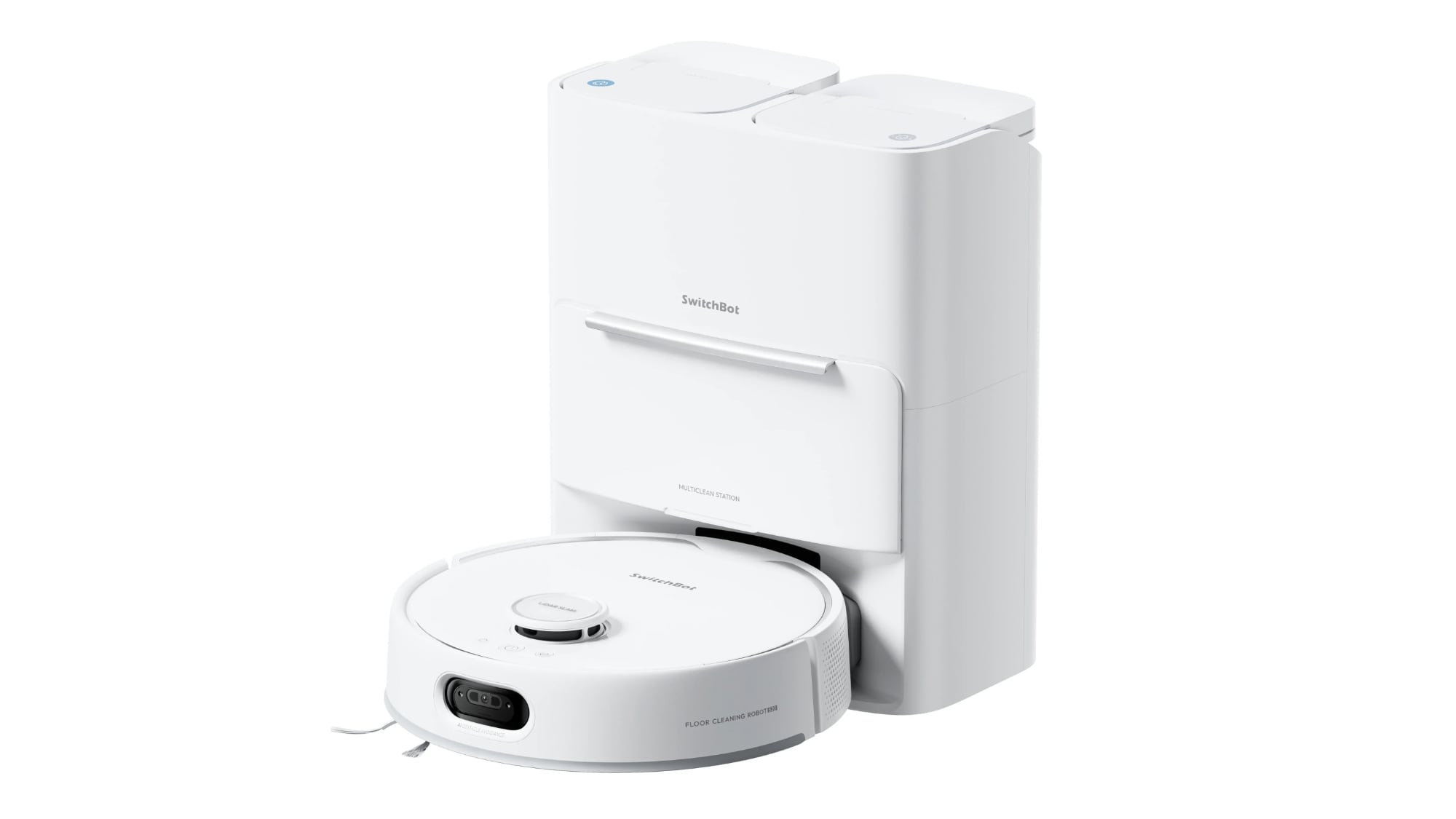
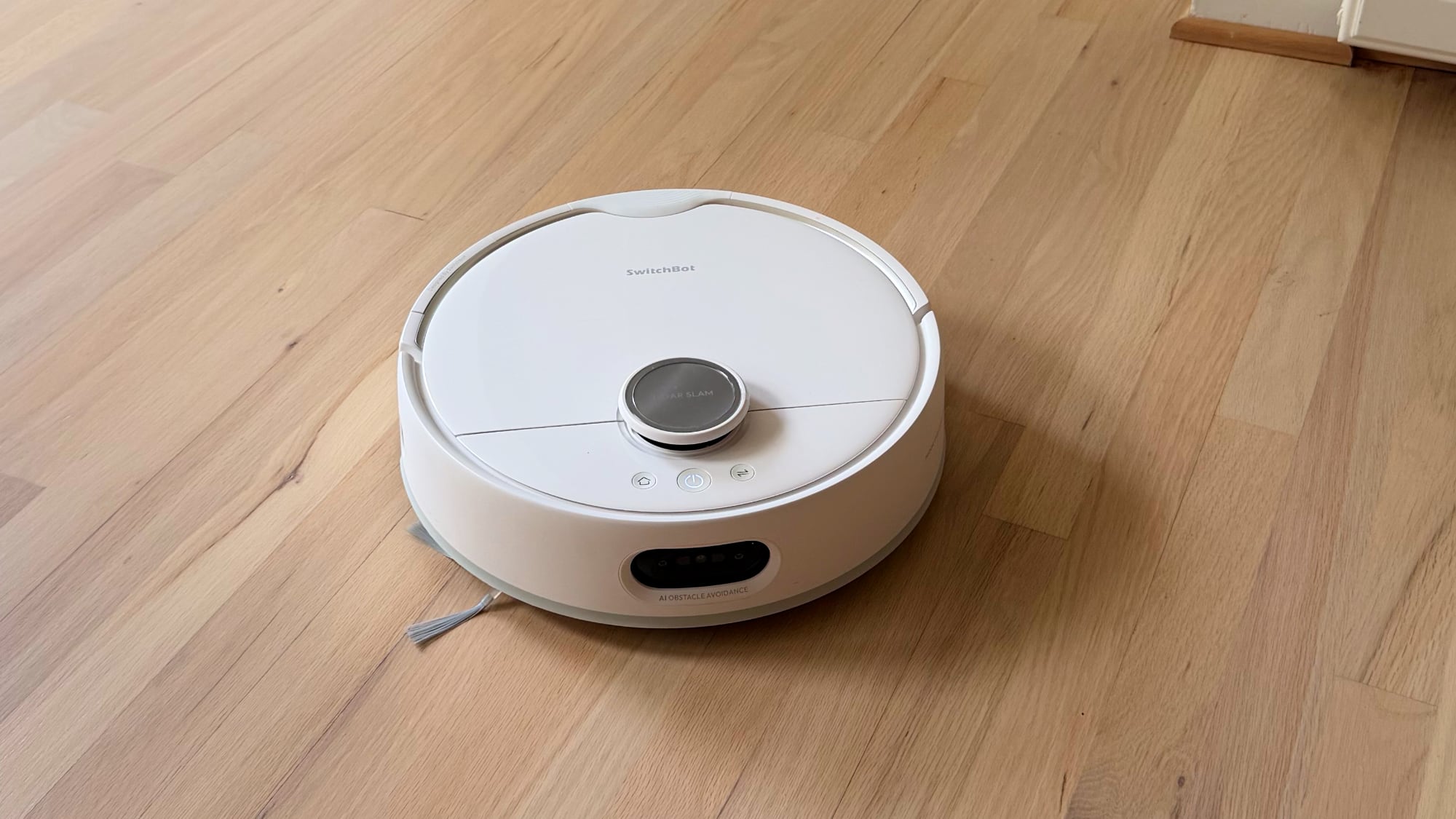
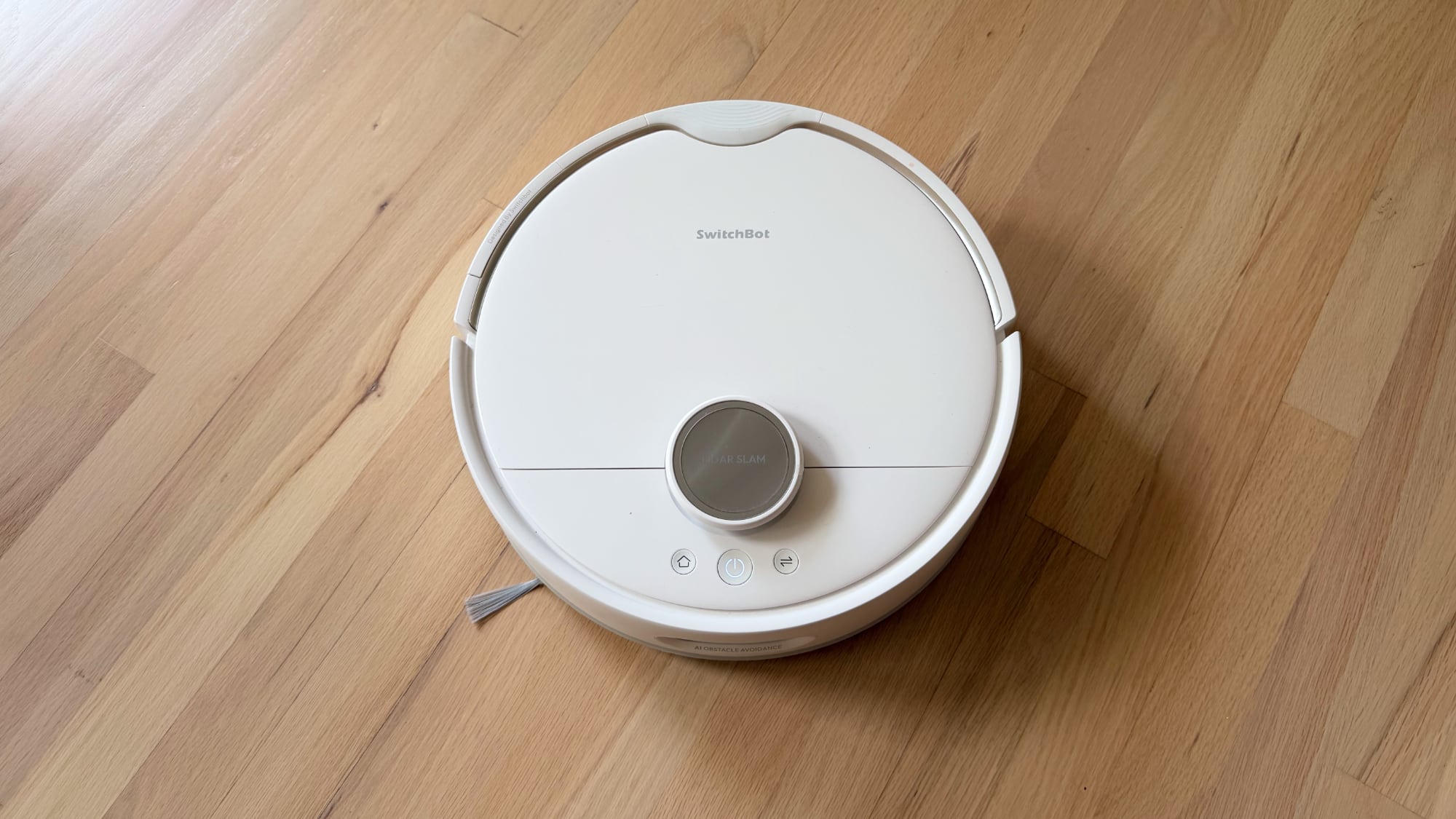
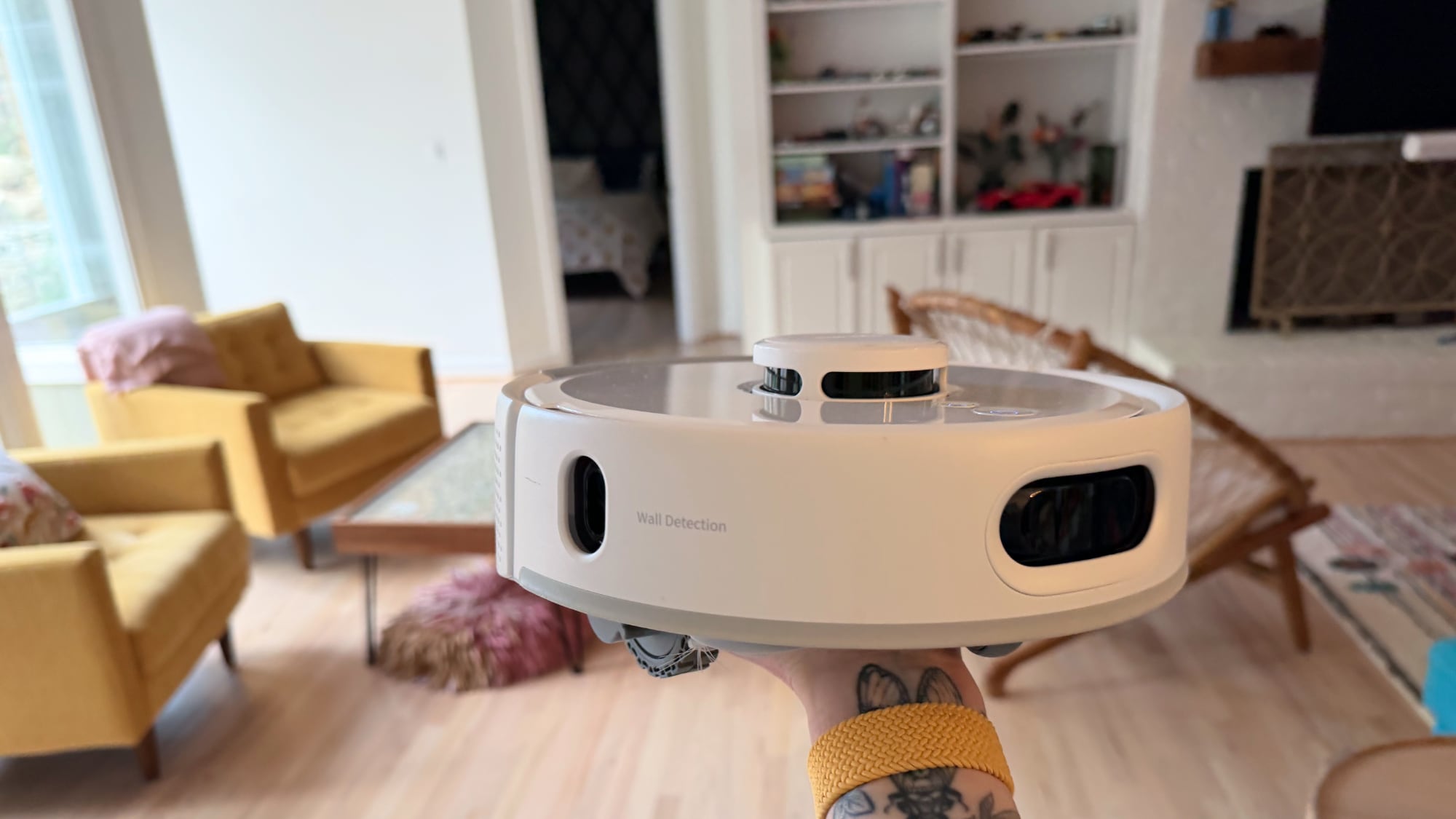
SwitchBot makes some of the most affordable HomeKit-compatible robot vacuums on the market. I've been testing the SwitchBot S20 and the K11+ for the last several months to see how they measure up to some of the more expensive models that I've reviewed.
SwitchBot S20
The MSRP for the S20 is $799, but SwitchBot runs sales often that drop the price to under $500, so it's competitive with some of the more affordable robot vacuums that don't have Matter integration.
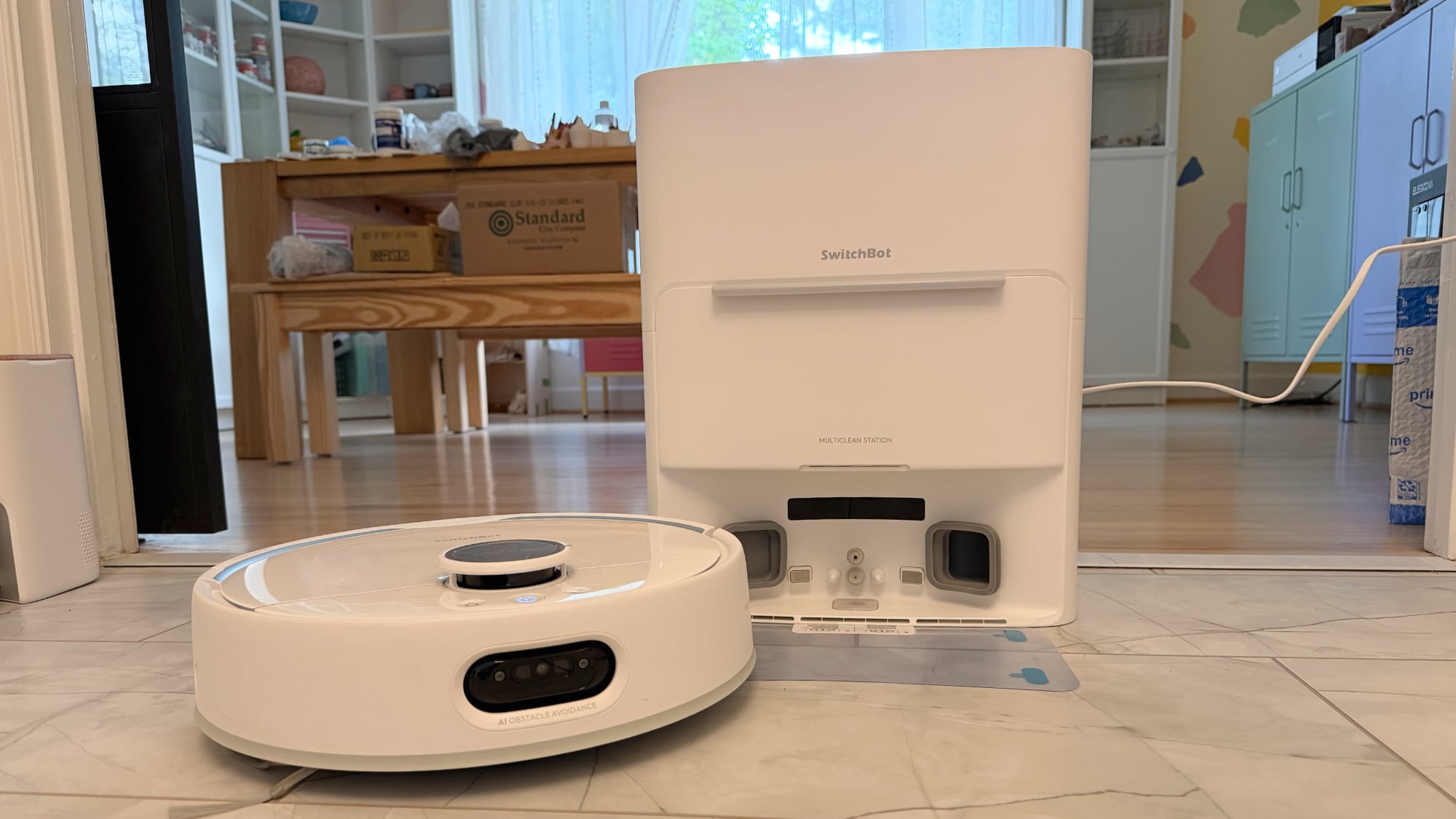
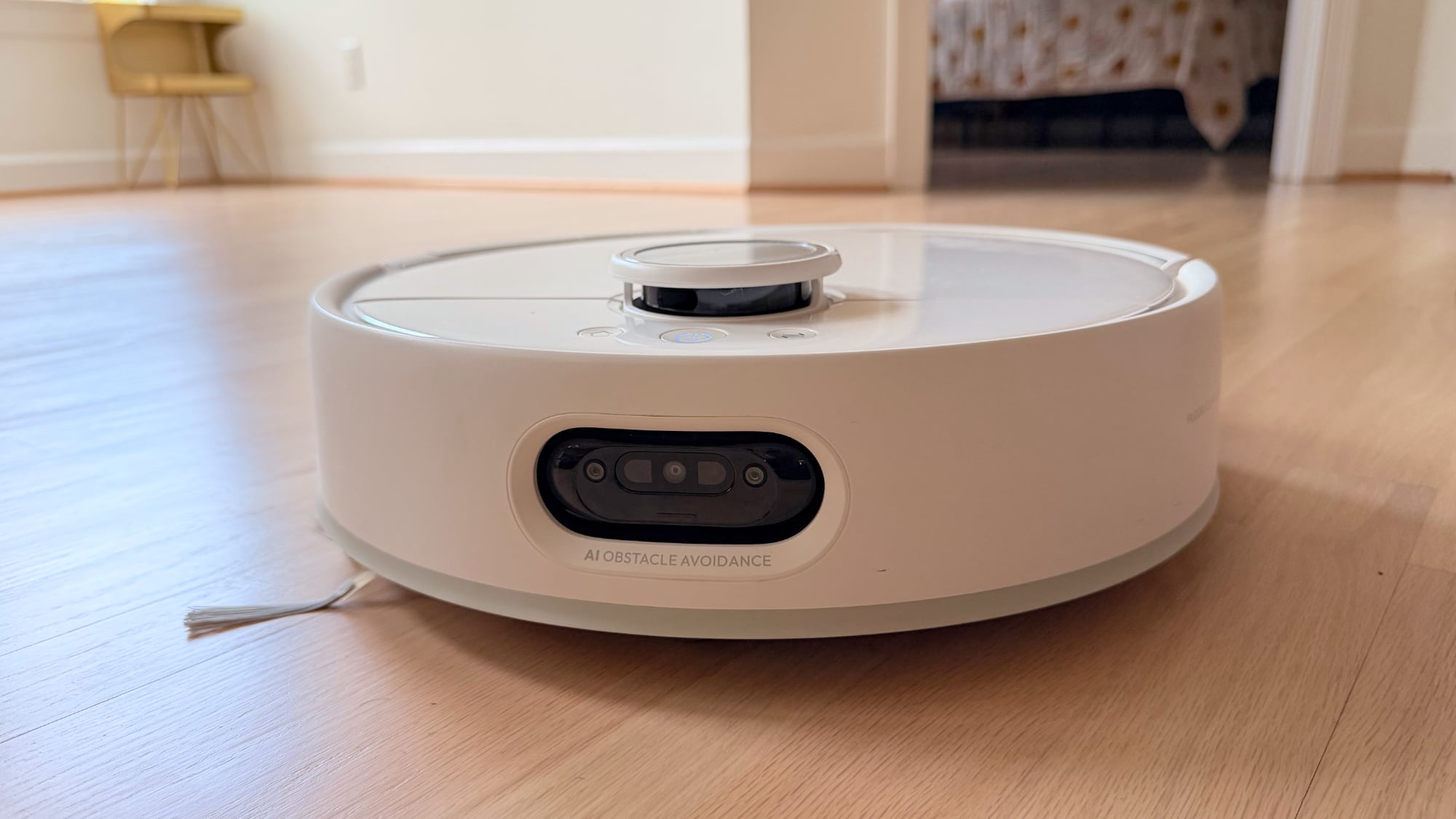
I've noticed some clear differences between the SwitchBot vacuums and higher-end vacuums I've tested, but the S20 has impressed me with its cleaning ability. It is a vacuum and a mop, so it can vacuum up crumbs and mop the floors at the same time.
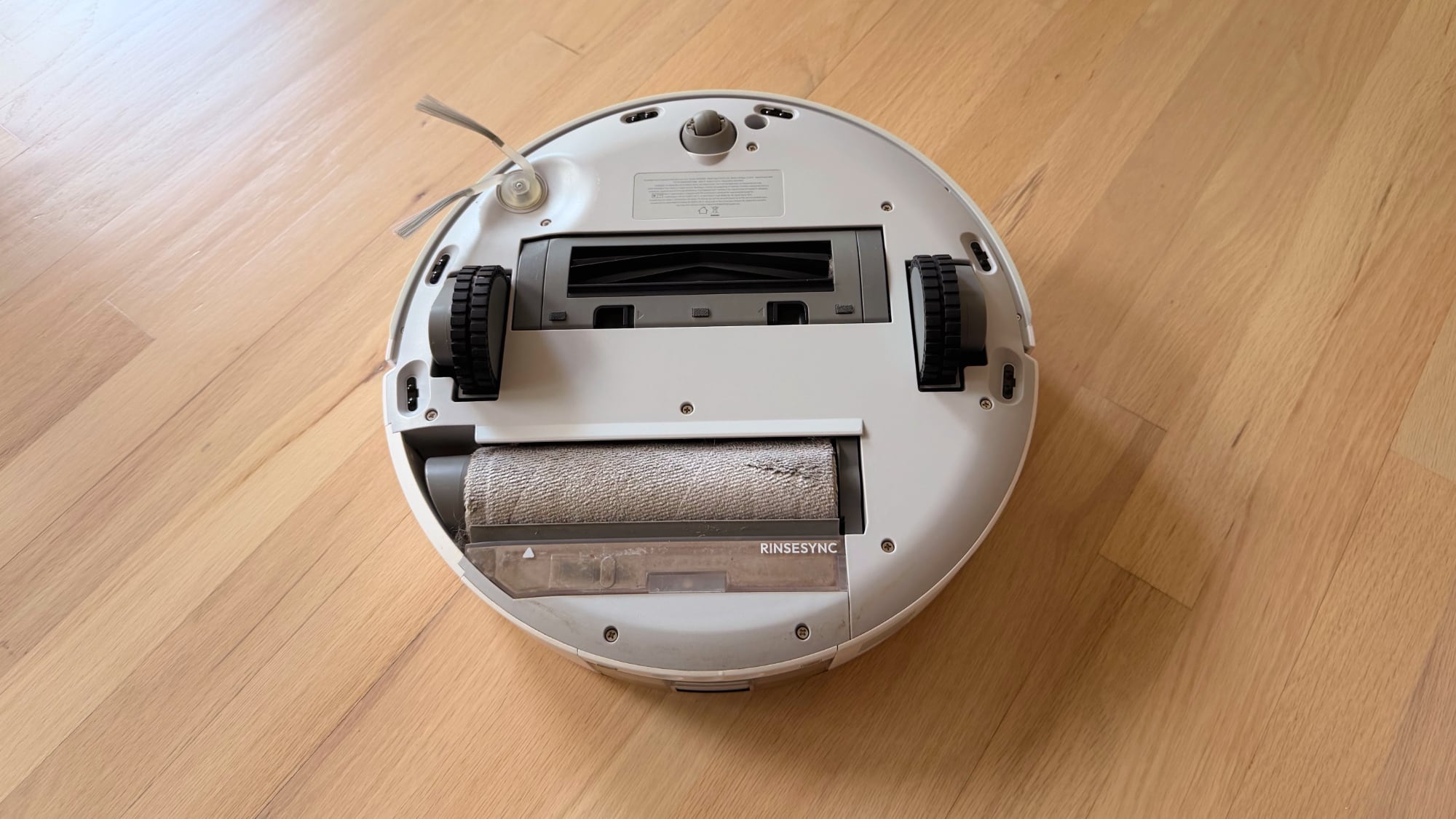
For vacuuming, it has a 10,000Pa suction, but I've never been able to tell a real difference in suction power between the vacuums I've tested. They're all able to do a good job with dust, fur, dirt, and other debris on the floor. There is an anti-tangle system, and I've never seen the SwitchBot S20 have a problem with hair or fur, and there are rubber ridges on the vacuum brush that seem to help it pick up lightweight messes. A brush on the side sweeps along baseboards, and while I don't think it's as good at getting into small crevices as the Roborock vacuum I have, it does a passable job. You might have to do a perimeter sweep with a regular vacuum every once in a while.
The S20 has a roller mop, and that's my favorite robot vacuum mopping design. A lot of companies use rotating mopping pads, but the roller gets washed continually as the robot cleans, so it's not spreading a mess around. It also just feels more hygienic to me because it's scrubbing grime off of the mop as it goes. No robot vacuum is able to get crusty, dried-on stains off in one pass, but the S20 did a good job on dried ketchup with two passes. Robot vacuums aren't ideal for deep cleaning, but with multiple cleans per week or even every day, my floor is cleaner than when I do it manually.
I have wood flooring and tile, but no carpet, so I can't test carpet extensively. I have a few larger-sized rugs that it has done fine vacuuming, and it's done no damage to my wood floors.
All robot vacuums have a base station, and the S20 is no exception. In fact, it has the option for a base station that hooks up to your plumbing so it can automatically empty waste water and refill with clean water. For a review, I didn't want to hook it up to my house permanently so I opted for tanks that I refill and empty manually, but it's nice to have the option. The SwitchBot S20 base station has a simple, unobtrusive design, and it's not overly large.
There's a 2.7L clean water tank and a 2.5L dirty water tank, which I have to refill/empty around once a week depending on how often the robot runs. The base station also has a spot for adding floor cleaner, and there are cleaners that are for robot vacuums. The tanks are easy to access, simple to open, and quick to refill or empty.
Dust and dirt are collected in a bag that needs to be replaced every three months, so that is an ongoing expense. You'll also need to do some light cleaning and maintenance of the robot vacuum every so often because the mop and other components don't last forever, but that usually only needs to be done once a year or so. The base station uses hot air (50°C) to dry the mop after cleaning, and that keeps it from growing mold or smelling mildewy.
Those are all the good things about the SwitchBot, and now I'll go over the not-so-good and the bad. The base station has a thin plastic mat to protect the floor from the wheels, which SwitchBot wants you to attach to the floor with adhesive. I am not going to attach plastic to my floor, and I was disappointed there wasn't a snap-in floor protector like most robot vacuums have for the base station. Without the adhesive, the plastic moves around and is useless, so I just deal with some drips and dirt on my kitchen floor.
Compared to Ecovacs and Roborock vacuums I've tested, the S20 is loud. I would not be able to sleep or work through its vacuuming noise, though it does have a mode to reduce suction and make it quieter. It's still not quiet enough. It sounds like a vacuum when the vacuum is running, but it's not the worst tradeoff for a lower price.
The S20 has modes for vacuuming, vacuuming and then mopping, or vacuuming and mopping at the same time, but if you just want it to mop, SwitchBot doesn't have an option for that.
As far as the AI goes, it's not as good as some of the other vacuums I've used, and in some ways that's a good thing. It doesn't get stuck on my kitchen rugs because it just flat out ignores them. If one is stuck on the wheel, it drags the rug along until it gets unstuck. I don't necessarily mind, because I don't have to get up and save it. It's able to operate independently for the most part, and I don't have to intervene often.
It is able to avoid cords almost entirely, and I haven't had it suck up anything that it shouldn't except for a cat toy and a sock. The Ecovacs robot I tested would sometimes err too far on the side of caution, misidentifying objects and staying away from them for a less thorough clean. The S20 cares less, and that could be an issue if you have a lot of items on the floor.
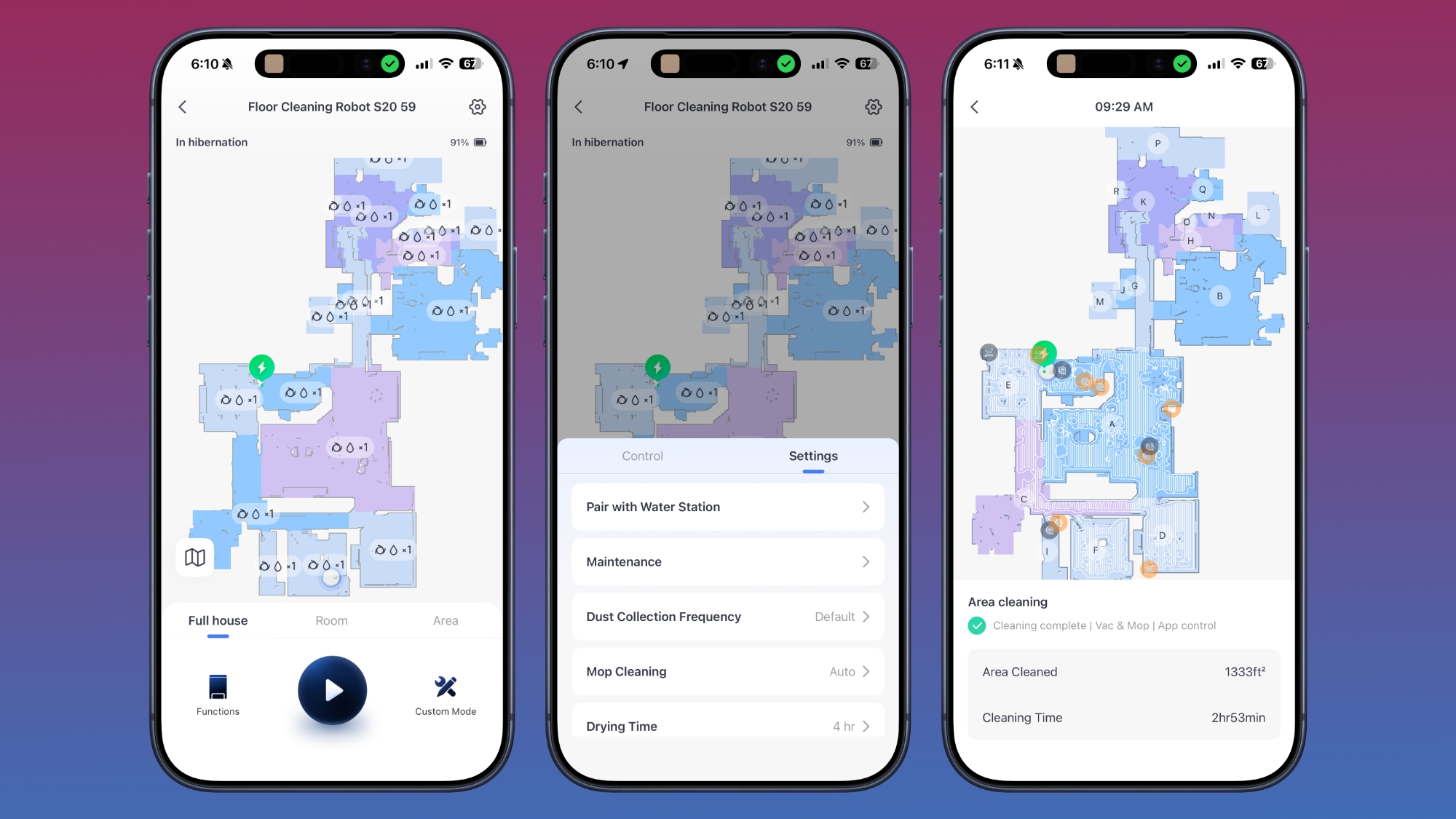
The AI mapping isn't as capable as some more expensive robots, but the S20 was able to identify every room in my house and it navigates them well for the most part. It is not great at thresholds, especially taller thresholds. It gets stuck in my bathroom, and instead of realizing it's stuck and alerting me, it will keep trying to get out until its battery is exhausted.
I can edit maps to create no-go areas, label rooms and objects, and make other edits to make sure that it's only cleaning where I want it to clean, and the edits are a must with the SwitchBot vacuums.
The S20 can go for around 100 minutes before it needs to charge (in vacuum and mopping mode), and can clean approximately 1,000 square feet in my house before that point. It isn't able to do my entire house on a single charge, but in-app scheduling lets me have it clean a room or an area a day on a cycle. The battery lasts closer to three hours in vacuum-only mode.
SwitchBot K11+
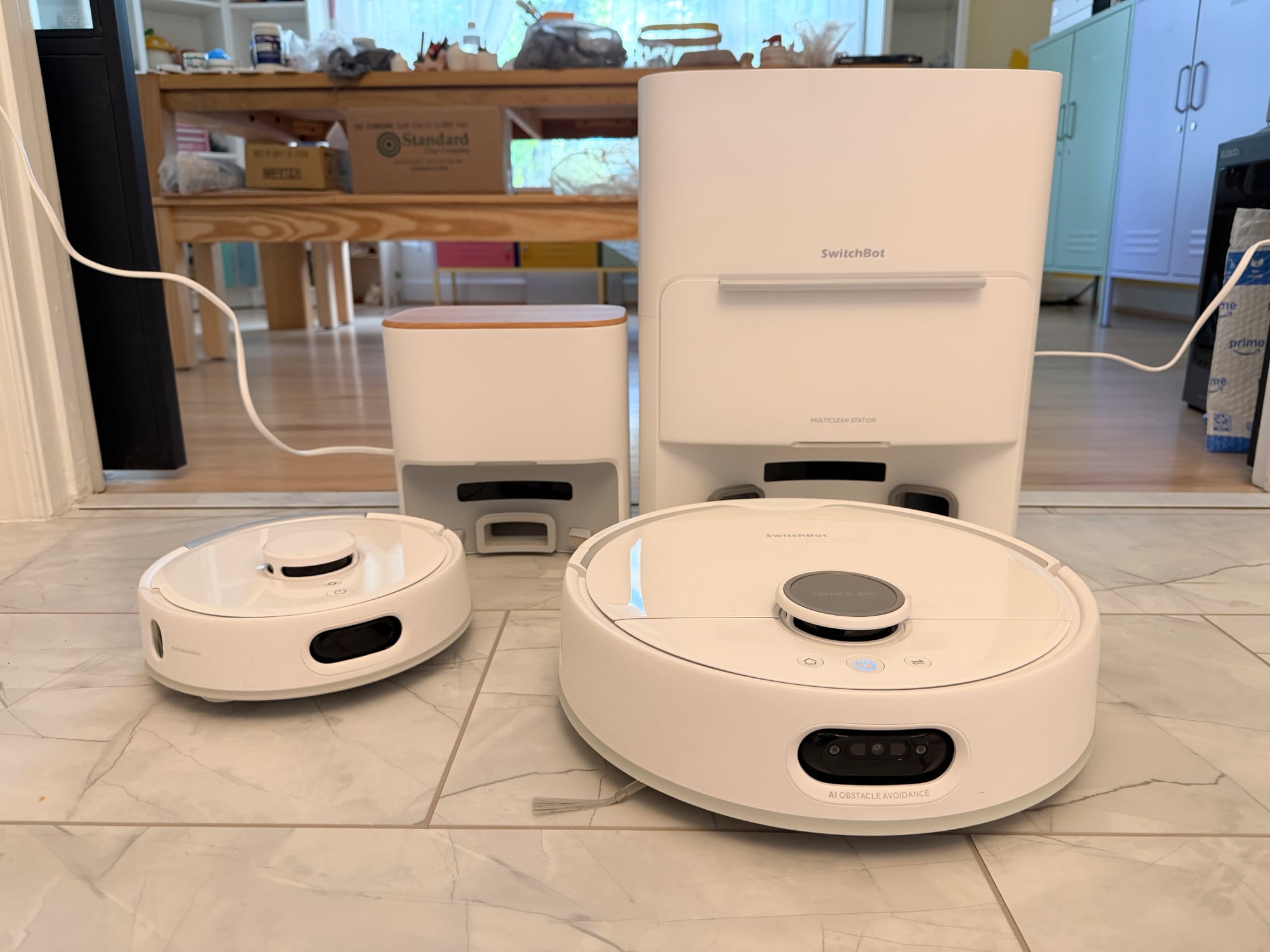
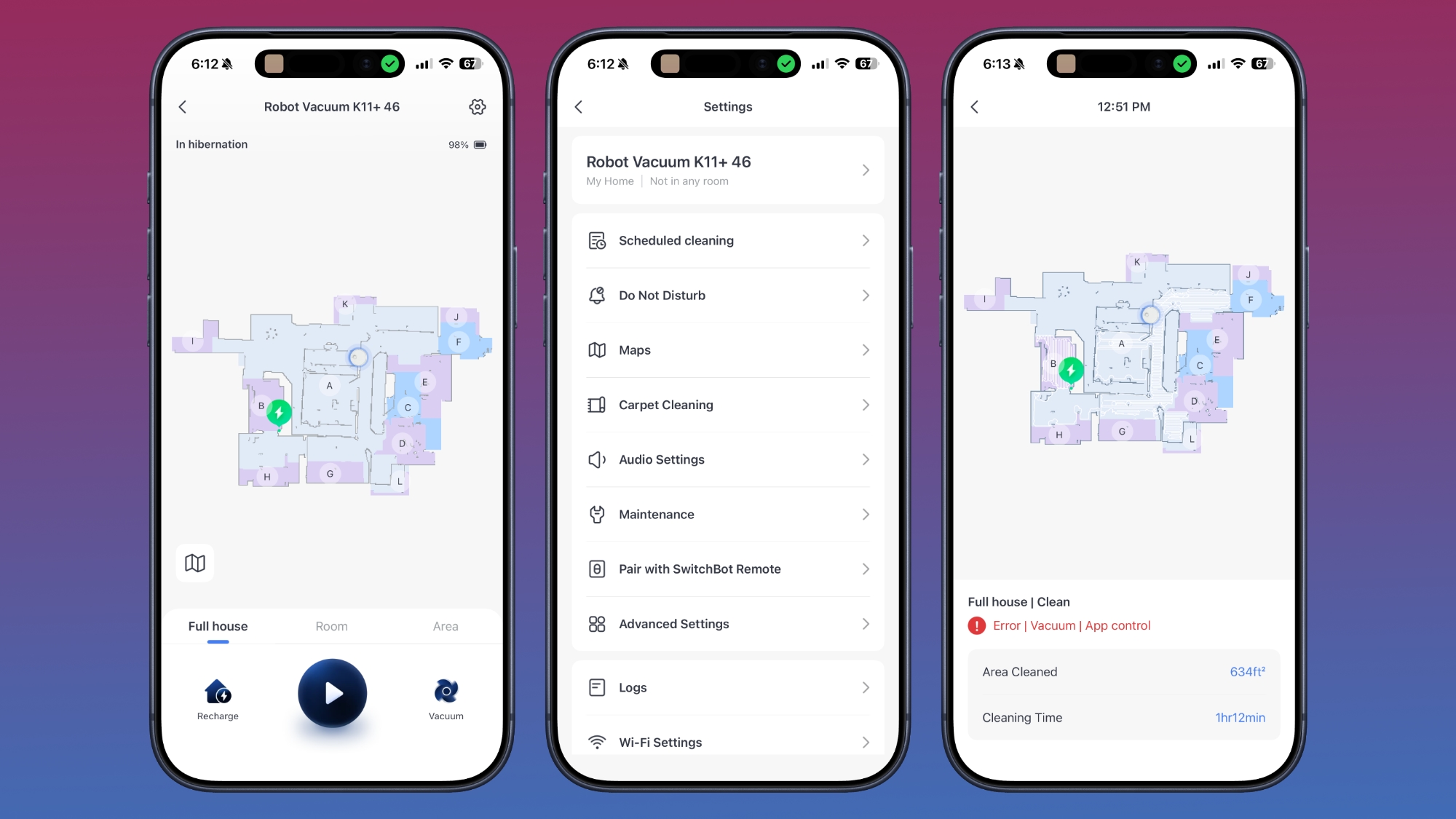
The SwitchBot K11+ is a much smaller, vacuum-only robot. It's best for small spaces and it's a robot I'd consider in an apartment. With three attempts, I wasn't able to get it to accurately map my entire house, and the AI seems to be limited.
I can isolate it in a room and get an accurate map, so it's okay in a smaller area, but it's still not particularly intelligent. Like the S20, if it can't get to an area, it doesn't give up and move on. It continues to try to get there until it dies and I have to go hunt it down, and that's inconvenient when I'm not home.
The suction is decent at 6,000Pa per SwitchBot, but it doesn't pick up as much as quickly as the S20. What I like best about the K11+ is the small size. It's able to get in smaller nooks and crannies than bigger robot vacuums, which makes it ideal for small spaces.
There is technically a feature where you can attach a Swiffer-style mop to the K11+ for a mopping feature, but that just seems like much more of a hassle than quickly mopping the floor myself.
Matter Integration
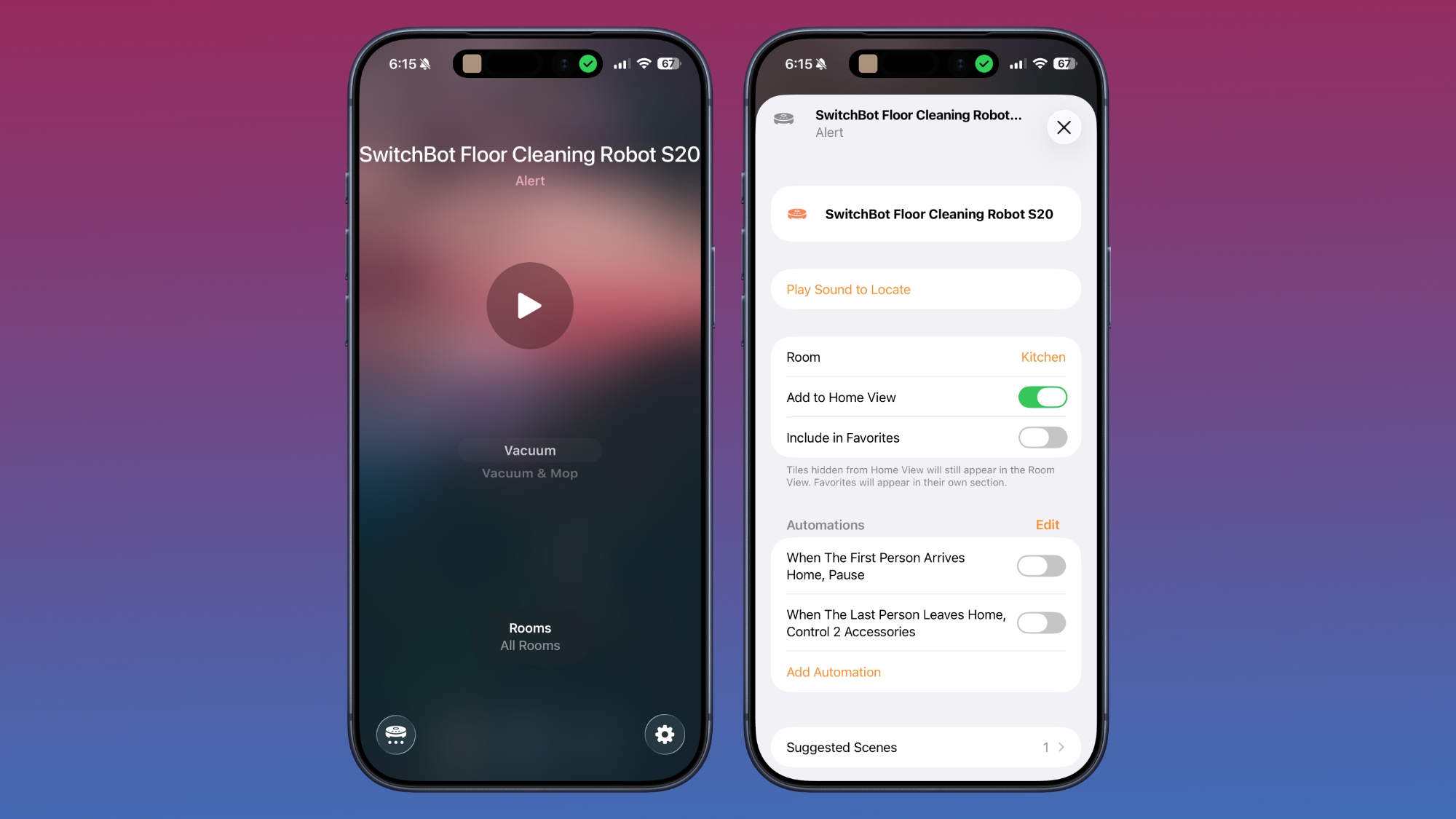
With an Apple Matter hub (Apple TV or HomePod), SwitchBot vacuums connect to the Home app. Basic functions can be controlled through the Home app or through Siri, and I've come around to Siri integration as a useful feature.
I wasn't impressed with the limited robot vacuum controls in the Home app to begin with, but I can say things like "Siri, vacuum the kitchen" or "Siri, mop the dining room" to get a targeted clean when needed, and that's come in handy.
That's primarily what I use Matter for, but the Home app also supports automations and integration with other Apple products. You can have a setup where the robot vacuums when you leave home, so you never have to deal with the sound.
There is no situation where Siri or the Home app can be used to control a robot vacuum entirely without the need to access the dedicated SwitchBot app. Features like editing a map, updating firmware, viewing cleaning progress, troubleshooting, or checking estimates for replacement parts require the SwitchBot app, and that's true of any robot vacuum.
HomeKit integration is nice to have, but it is limited, and it's not a feature that I would choose one robot vacuum over another for.
Bottom Line
If you're looking for a robot vacuum and mop that does a good job cleaning and mopping and you don't want to spend a ton, the SwitchBot S20 is worth checking out. You'll need to deal with some frustrations, like loud noise, map editing, and rescuing it from being stuck, but it cleans well.
I would not recommend the smaller K11+ unless you have a small space. It's not meant for larger homes, but it is a good apartment vacuum if you won't miss mopping functionality.
How to Buy
The SwitchBot S20 is available from the SwitchBot website for $520 after a 35 percent discount (I've seen the price lower, so it's worth waiting for a bigger sale), while the SwitchBot K11+ is available for $220 after a 45 percent discount.

 Login
Login
 Nintendo Music has been updated with support for the iPad, CarPlay, and searching for tracks via Siri.