Reading view

Google's First AI Smart Glasses Launching This Fall With iPhone Support

Google today said that its first "intelligent eyewear" product is set to launch this fall. It is teaming up with Samsung and eyewear manufacturers Gentle Monster and Warby Parker to launch new AI audio glasses.
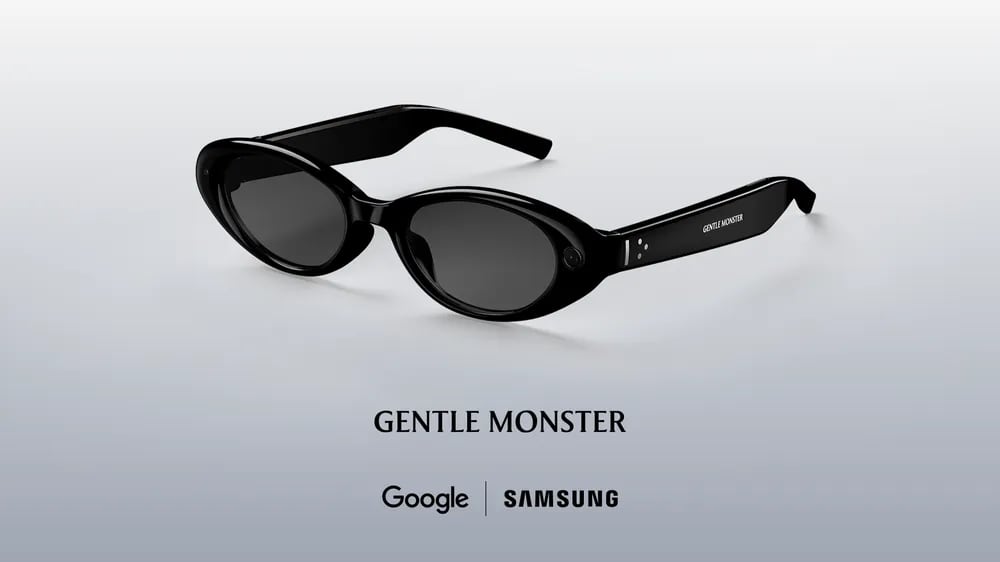

The glasses will run Android XR, which is Google's platform for smart glasses and AR/VR headsets. There are cameras, speakers, and microphones in the glasses, but there is no display in the lenses.


Google previewed two of the designs coming from Gentle Monster and Warby Parker, though there will be other options. Google says the two companies will have "full collections" available when the glasses launch.

The glasses support Gemini AI, with Gemini integrated into all of the available features. Users will be able to say "Hey Google" or tap the side of the frame to bring up Gemini, and Google says the AI can do the following:

  • Gives information about what the wearer sees, like reviews for a restaurant nearby, the name of a cloud formation, or details on a confusing parking sign.

  • Offer sight-based navigation with turn-by-turn directions. Gemini can add stops or locate nearby locations like restaurants based on user preferences.

  • Manage calls, send texts, and summarize messages.

  • Listen to music.

  • Capture photos and videos and edit them with Google's Nano Banana AI image editing engine.

  • Translate speech and writing in real time.

  • Complete multi-step tasks like ordering coffee via DoorDash.

  • Use apps on a connected smartphone with voice-based commands.


Google says that its upcoming glasses will be able to work with iPhones in addition to Android smartphones.

Apple is working on its own AI smart glasses that are expected to have similar capabilities, but rumors suggest Apple's glasses won't be ready until 2027.

In the future, Google plans to launch "display glasses" that have a small display in the lens to relay information from Gemini, but that product is not coming until later.
Tag: Google

This article, "Google's First AI Smart Glasses Launching This Fall With iPhone Support" first appeared on MacRumors.com

Discuss this article in our forums
  •  

Nintendo's New 'Pictonico' iOS Game Turns Your Photos Into Minigames

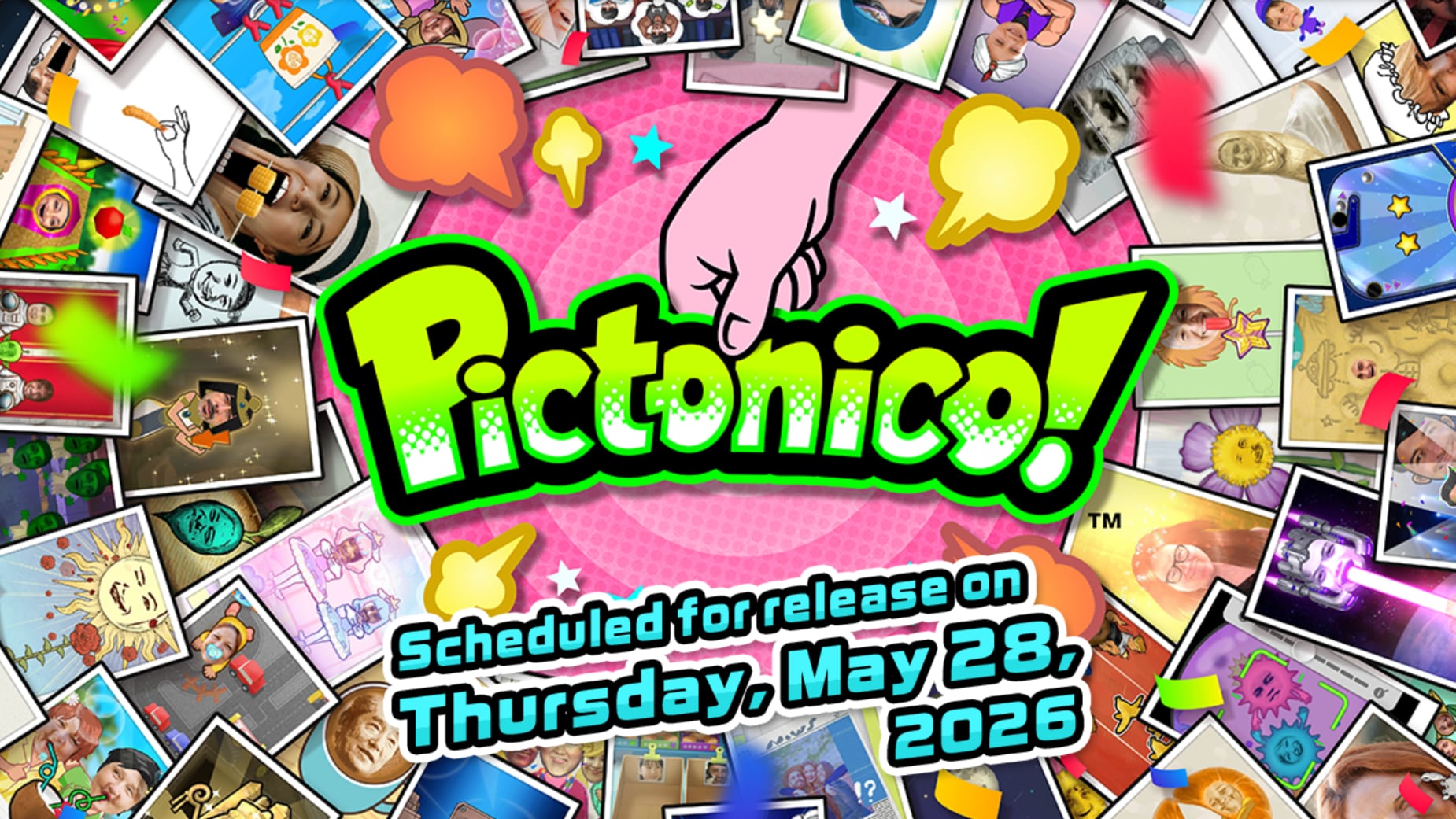
Nintendo today announced a new mobile game called Pictonico, which is set to launch on Thursday, May 28. Pictonico turns photos into minigames like those you see in WarioWare.


The app's website features players taking photos of themselves and their friends, with the app altering the photos in different ways. In one example, the person's mouth opens up widely to chomp on corn with a tap, and in another, a person is bundled up with a mummy and the goal is to unwrap the mummy.


There are 80 minigames to play through, at normal, high-speed, and danger zone speeds that make gameplay more challenging. As players progress through the levels, the game will get more difficult. Pictonico can use photos from the Photo Library, or photos taken with the iPhone's camera from the game interface. Nintendo says that photos remain on device and are not sent to its servers.

Pictonico was co-developed with Intelligent Systems, which is the studio that created the WarioWare game series.

According to Nintendo, the game is free to try, with three minigames available at no cost. Unlocking the "Volume 1" games costs $7.99, while a "Volume 2" series is available for $5.99.

Pictonico is available for pre-order from the App Store. [Direct Link]
This article, "Nintendo's New 'Pictonico' iOS Game Turns Your Photos Into Minigames" first appeared on MacRumors.com

Discuss this article in our forums
  •  

Google I/O 2026 Roundup: Gemini 3.5, AI Search, Android XR Glasses, and More

Google held its annual Google I/O event today, launching new AI products and giving us a look at what's coming in the near future. Google I/O is Google's equivalent of Apple's Worldwide Developers Conference, and Google's announcements offer insight into what Apple is going to be competing with in the coming months.


We've rounded up everything Google announced at I/O across its product lineup.

Gemini


  • Gemini Omni - Gemini Omni is a new model that can create anything from any input, and that is better at simulating gravity and kinetic energy. It combines Gemini intelligence with generative models like Nano Banana and Veo. It supports conversational language video editing, and allows users to upload videos and edit any element in the video. Omni is starting with video, but Google's Demis Hassabis says it will eventually be able to create any output from any input.

  • Gemini Omni Flash - Gemini Omni Flash is the first Omni model that Google is releasing, and it is available starting today in the Gemini app.

  • Gemini 3.5 Flash - Gemini 3.5 Flash is a new model that Google's Sundar Pichai said combines frontier intelligence with action. Flash is better across almost all benchmarks compared to 3.1 Pro, and it is "comparable to the best models" but faster. Gemini 3.5 Flash is available for everyone today across Google's products and APIs.

  • Gemini 3.5 Pro - Google is testing Gemini 3.5 Pro internally, and it's coming next month.

  • Gemini App - Google redesigned the Gemini app with a new Neural Expressive design language that's rolling out today on desktop, iOS, and Android. It features fluid animations, vibrant colors, haptic feedback, and new typography. It's also getting custom regional dialects in the next few months. Gemini Omni is available for paid Plus, Pro, and Ultra subscribers in the Gemini app today, making it easier to create and edit videos.

  • AI Agents for Gemini - Gemini is getting AI agents, like a Daily Brief agent that presents users with a customized daily digest. Daily Brief is rolling out today for paid subscribers.

  • Gemini Mac App - Mac users will be able to select a bunch of images and documents in Finder, and then press the Function key to give Gemini a voice command on what to do with the files. Google's demo involved sending an email to a dog kennel with the dog's information and image, with info pulled from Finder to generate an email using Gmail in Chrome. Voice support and Gemini Spark are coming to the Gemini Mac app this summer.

  • Gemini for Science - Gemini for Science is a collection of science tools, and there's also a Co-Scientist collaborative AI research partner.


AI Content Identification


  • Identifying AI-generated Images - C2PA content credentials are coming to Gemini and Chrome. Google's tools can tell if an image was captured with a camera or made with AI, and can determine whether an image captured with a camera was edited with AI. Users will be able to right-click on an image in Chrome and ask Gemini whether it was generated with AI.


Antigravity


  • Antigravity 2.0 - Google is launching a new agent-first Antigravity 2.0 app for the desktop that uses Gemini 3.5 Flash. Antigravity is Google's coding tool, and the equivalent of Copilot, Codex, and Claude Code. Gemini 3.5 Flash is 12x faster in Antigravity, which optimizes token use. Antigravity 2.0 is available globally for everyone.


Gemini Spark


  • Gemini Spark - Gemini Spark is a personal AI agent that helps users navigate their digital life. Gemini Spark runs on virtual machines through Google Cloud, and it is able to operate 24/7, with no need to have a laptop open for it to run. It's accessible through the Gemini app, but there will also be options to email or message it. It uses Gemini 3.5 Flash and Antigravity to work on long-running tasks in the background. It integrates with Google tools now, and Google is debuting MCP support for third-party apps in the coming weeks. Gemini Spark can do multi-step ongoing tasks, planning out subtasks and going through the steps. Gemini Spark will be available for Google AI Ultra subscribers in the U.S. next week, and it will work with Chrome later this summer.


Google Search


  • Google Search - Google Search AI Mode and AI Overviews now use Gemini 3.5 Flash. "Google Search is AI Search," was Google's messaging. There's a new Google Search box that's been reimagined with AI, and it changes based on how you're using it and goes "beyond autocomplete" to help you better ask questions. The search box supports images, files, videos, and Chrome tabs as input in addition to text. Pichai said it's the biggest upgrade to the search box in over 25 years, and it's rolling out today. Google is also combining AI Overviews and AI Mode into one interface.

  • Agents in Search - Search is gaining support for creating and managing multiple AI agents. It can keep users updated on what's going on in the world, like changes in the stock market, and send alerts. Search will be able to monitor changes on webpages, so users can get alerts on things like sneaker drops. Information Agents are coming to search in the summer, and Google plans to add more agents.

  • Coding in Search - Agentic coding capabilities are coming to Search. Search will be able to build a custom response on the fly with dynamic layouts, interactive widgets, and more for queries. It uses Antigravity and 3.5 Flash. Search can create tools, trackers, widgets, and dashboards. Generative UI in Search is rolling out this summer for everyone with no charge. Antigravity in Search for building custom experiences is coming in the summer for subscribers first.

  • Shopping in Search - Google has a new Universal Cart coming this summer to Search and the Gemini app. It's an intelligent shopping cart that works across merchants and services. You can add things to the cart when reading Gmail, watching YouTube, or browsing the web, then check out on Google or on third-party retailer sites. Google has a Universal Commerce Protocol and an Agents Payment Protocol for agentic shopping. The payments feature lets AI agents make payments on your behalf using parameters that you set like a brand and price. It's coming to Gemini Spark later this year.


YouTube


  • Ask YouTube - YouTube is getting an Ask YouTube feature, which is similar to the Ask Maps AI feature. It uses Gemini and lets users ask questions. It supports context and follow-up questions, and it's in testing now. It will roll out broadly in the United States this summer.


Google Docs


  • Docs Live - With AI integration in Docs Live, users can speak or write parameters of what they need, and Gemini can create a document. Google's Sundar Pichai said users could "brain dump" and then let Gemini "do the rest." The feature supports text-based commands for creating and editing content.


Hardware


  • Android XR Audio Glasses - The first Android XR audio glasses are coming this fall, providing all-day access to Gemini with responses privately spoken into the wearer's ear. The glasses can be used for taking photos, listening to music, making calls, and tapping into apps. Google worked with Gentle Monster and Warby Parker on the design of the glasses, and Samsung on hardware. The glasses will pair with Android and iOS devices.


Miscellaneous Announcements


  • Google AI Ultra Plan - Google has a new $100 Ultra plan, and it's dropping the price of its top-tier Ultra plan from $250 to $200.

  • Android AI Agents - Android Halo lets Android users keep an eye on AI agents, and it shows activity at the top of an Android device. It's coming to Android later this year.

  • Google Pics - Google Pics is Google's new image generating and editing tool in Google Workspace. It can create posters, flyers, infographics, and more, similar to Canva. Content is watermarked with SynthID. Pics is rolling out this summer.

  • Stitch - Stitch is Google's Figma-like tool that lets users build apps and websites. This year, Google is adding real-time collaborative design with Stitch Agent, exports to Antigravity, and publishing directly to Netlify.

  • Google Flow - Google Flow, Google's "AI creative studio" for creatives, is getting Gemini Omni, AI agents for executing multiple actions at once, and custom tools with Flow Tools. New Google Flow features are available today.


Many of Google's new features are rolling out today, with the rest planned for later this year. Apple is going to hold its WWDC 2026 keynote on June 8, and that's when we'll see if Apple debuts equivalent features.
This article, "Google I/O 2026 Roundup: Gemini 3.5, AI Search, Android XR Glasses, and More" first appeared on MacRumors.com

Discuss this article in our forums
  •  

iOS 27 to Let Users Generate Wallpapers and Build Shortcuts With AI

iOS 27 will include a custom wallpaper generator and an option to automatically create shortcuts using AI, reports Bloomberg.


When choosing a new wallpaper, users will have the option to generate something custom using the Image Playground app. ‌Image Playground‌ is used for generating custom emoji and images that can be used throughout iOS, and it is set to get an upgrade in ‌iOS 27‌.

Apple is testing models that produce more lifelike images, so the version of ‌Image Playground‌ that's used for generating custom wallpapers could be different from the current version.

Shortcuts is also getting a major update, with users able to use natural language to ask Siri to make a shortcut. There is an option for users to tell ‌Siri‌ what they want to accomplish with a shortcut to have the workflow created using AI.

Bloomberg says the Shortcuts app has a prompt that says "What do you want your shortcut to do?" with a text field to enter a description. Shortcuts that are created using AI are then automatically installed and immediately available for use.

Shortcut creation is largely done manually now, and it is a tool that has remained out of reach of many casual iPhone users. A Shortcuts app that's able to work with natural language capabilities will see the app getting more widespread use.

The new Shortcuts app and the wallpaper generation tool will be previewed at the WWDC keynote that's set to take place on June 8.
Related Roundup: iOS 27

This article, "iOS 27 to Let Users Generate Wallpapers and Build Shortcuts With AI" first appeared on MacRumors.com

Discuss this article in our forums

  •  

Apple Expanding AI Writing Tools With Grammar Checker in iOS 27

iOS 27 and iPadOS 27 will include a revamped AI chatbot version of Siri with new capabilities, but Apple is also planning to introduce new Apple Intelligence features across the operating system, reports Bloomberg.


Apple is testing an expanded version of Writing Tools that will do more rewriting and text generation than the current version. There is a "Write With ‌Siri‌" toggle at the top of the keyboard, along with a "Help Me Write" option that comes up when ‌Siri‌ is activated while a text field is open.

Apple is planning to introduce a dedicated AI grammar checker for Writing Tools that will work like Grammarly. When writing in Messages, Mail, and other apps there will be a translucent menu that slides up from the bottom of the iPhone's screen, and it will show suggested revisions next to the original written text.

Users can go through the suggestions and accept or reject them one by one, approve all of the changes at once, or ignore all of the changes. Apple has an option for pausing grammar checking and for moving between different flagged sections of text. Apple already has a spellchecking feature, but the new feature will add grammar suggestions.

The updates to Writing Tools will be unveiled at Apple's June 8 WWDC keynote. Apple is also planning AI updates for the Photos app, Camera app, and more, with details available in our iOS 27 roundup.
Related Roundup: iOS 27

This article, "Apple Expanding AI Writing Tools With Grammar Checker in iOS 27" first appeared on MacRumors.com

Discuss this article in our forums
  •  

Apple Design Award Finalists Announced Ahead of WWDC 2026

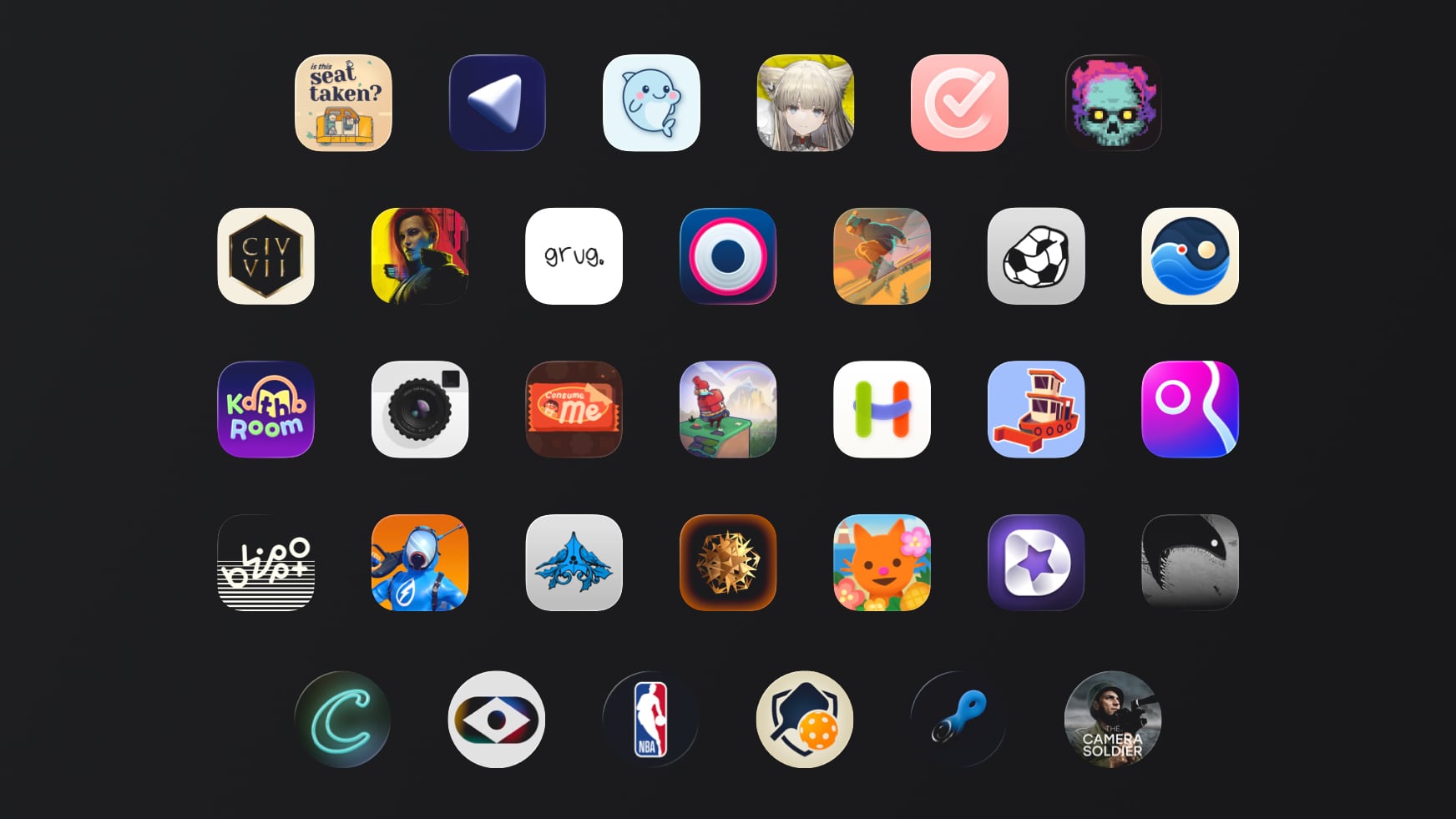
In preparation for the 2026 Worldwide Developers Conference that is set to begin on June 8, Apple today announced its finalists for the 2026 Apple Design Awards. Apple picks top apps and games annually, and announces winners at WWDC.


The Apple Design Awards recognize apps with innovation, ingenuity, and technical achievement in app and game design.

Delight and Fun - Apps


  • Blippo+

  • Metaballs

  • Grug


Delight and Fun - Games


  • PowerWash Simulator

  • Is This Seat Taken?

  • Ball x Pit


Inclusivity - Apps


  • Guitar Wiz

  • Hearing Buddy

  • Structured


Inclusivity - Games


  • Sago Mini Jinja's Garden

  • Pine Hearts

  • Civilization VII


Innovation - Apps


  • Detail: AI Video Editor

  • NBA: Live Games & Scores

  • D-Day: The Camera Soldier


Innovation - Games


  • TR–49

  • Blue Prince

  • Pickle Pro


Interaction - Apps


  • The Outsiders: Athlete Tracker

  • Moonlitt: Moon Phase Tracker

  • Tide Guide: Charts & Tables


Interaction - Games


  • TR–49

  • Sago Mini Jinja's Garden

  • Grand Mountain Adventure 2


Social Impact - Apps


  • Primary: News in Depth

  • Katha Room

  • Harvee


Social Impact - Games


  • Consume Me

  • Despelote

  • Spilled!


Visuals and Graphics - Apps


  • Tide Guide: Charts & Tables

  • Caradise

  • (Not Boring) Camera


Visuals and Graphics - Games


  • Cyberpunk 2077 Ultimate Edition

  • Arknights: Endfield

  • SILT


One app and one game will be chosen in each category, with Apple to announce winners during the 2026 Worldwide Developers Conference. Winners will receive a physical award and hardware to help them continue to create apps and games.

Links to all of the apps that are nominated can be found on Apple's website.
Related Roundup: WWDC 2026

This article, "Apple Design Award Finalists Announced Ahead of WWDC 2026" first appeared on MacRumors.com

Discuss this article in our forums
  •  

Apple Announces WWDC 2026 Schedule, Sends Media Invites

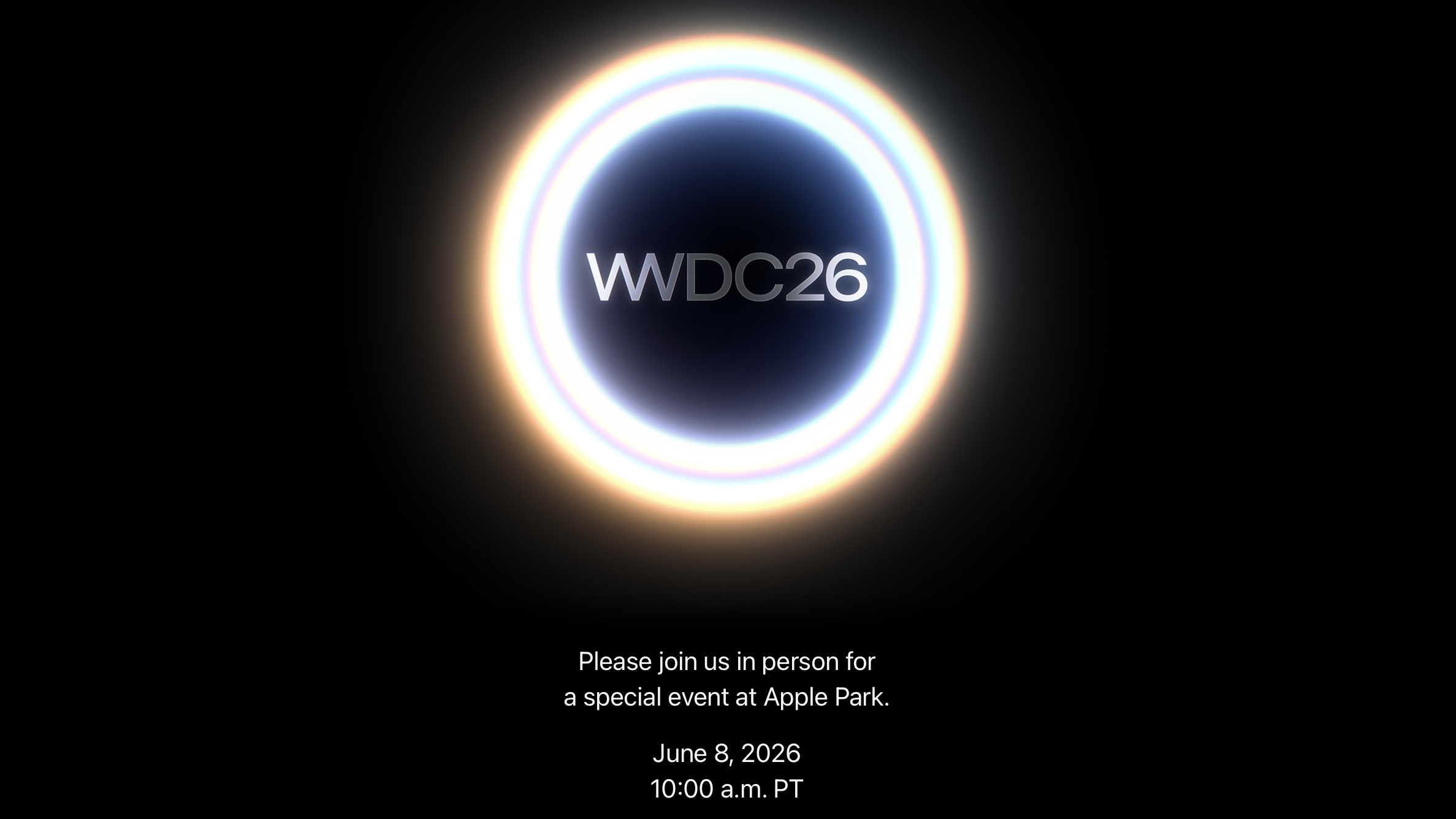
Apple today provided a schedule for its 2026 Worldwide Developers Conference, which starts on June 8 and ends on June 12. Apple also sent out invites to members of the media who have been invited to attend an in-person keynote viewing at Apple Park.


Both the invites and schedule confirm that the keynote will begin at the standard time, 10:00 a.m. Pacific Time or 1:00 p.m Eastern Time.

Apple says the keynote event will be available to stream on Apple.com, the Apple TV app, and the Apple YouTube channel. We'll also be providing live coverage at MacRumors.com for those who are unable to watch.

Apple also plans to host the Platforms State of the Union for developers at 1:00 p.m. Pacific Time, and video sessions and guides will start coming out after the keynote event. Group Labs and Q&A sessions will be hosted by Apple engineers and designers throughout the week, providing more insight into the new software coming at WWDC 2026.

‌WWDC 2026‌ will see Apple unveil iOS 27, iPadOS 27, macOS 27, and more. An updated version of Siri that's smarter and more like a ChatGPT-style chatbot will be unveiled, along with multiple design changes to accommodate ‌Siri‌'s new abilities. We have an in-depth look at what's coming in iOS 27 in our dedicated roundup.
Related Roundup: WWDC 2026

This article, "Apple Announces WWDC 2026 Schedule, Sends Media Invites" first appeared on MacRumors.com

Discuss this article in our forums
  •  

Apple's iPhone 18 Modem Switch Comes With a Quiet Privacy Benefit

Rumors suggest Apple plans to expand Apple-designed modems to the entire iPhone 18 lineup, ending support for Qualcomm modems. The transition will bring speed and efficiency improvements, along with a little-known privacy benefit.


In iOS 26.3, Apple added a Limit Precise Location setting that cuts down on the amount of location data that's available to mobile networks, improving user privacy.

Mobile networks determine your location using information from cellular towers that a device connects to, but with Limit Precise Location enabled, some of the data typically provided to mobile networks is restricted. Instead of seeing location down to a street address, carriers may be limited to the neighborhood where a device is located.

The problem is that this feature is currently only available on devices with an Apple-designed C1 or C1X modem, which includes the iPhone Air, iPhone 16e, iPhone 17e, and M5 iPad Pro. Devices with Qualcomm modems like the iPhone 17 Pro models do not have the Limit Precise Location setting.

With the iPhone 18 Pro models and the iPhone Fold expected to use Apple modem technology, this is likely a privacy option that is set to expand to the full iPhone lineup.

Reducing location precision does not impact signal quality or user experience, nor does it affect the precision of location data provided to emergency responders during an emergency call. It is only meant to limit the location data given to cellular carriers, and it is distinct from location data shared with apps through Location Services.

While Apple's next set of iPhones will all likely have the new privacy feature, carriers do have to implement support. So far there are a limited number of carriers that have added the feature, but if it expands to the entire iPhone lineup and there is customer demand, it could see more widespread adoption.

In the United States, only Boost Mobile supports limiting precise location data, but EE, BT, and Sky all support it in the UK, while carriers in Austria, Germany, Denmark, Ireland, and Thailand have also adopted support and all of these carriers have the setting turned on by default. Users on a physical SIM or eSIM from any carrier in the EU or UK can also manually turn the setting on. A full list of supported carriers and regions is available on Apple's website.

The C2 modem that Apple is rumored to be working on is more capable than the C1 or C1X, and it will offer similar performance to Qualcomm's newest modems. It is expected to support mmWave 5G, which is not a feature of the C1 or C1X.
Related Roundups: iPhone 18, iPhone 18 Pro, iPhone Fold
Related Forum: iPhone

This article, "Apple's iPhone 18 Modem Switch Comes With a Quiet Privacy Benefit" first appeared on MacRumors.com

Discuss this article in our forums
  •  

It's a Bad Time to Buy the Low-Cost iPad

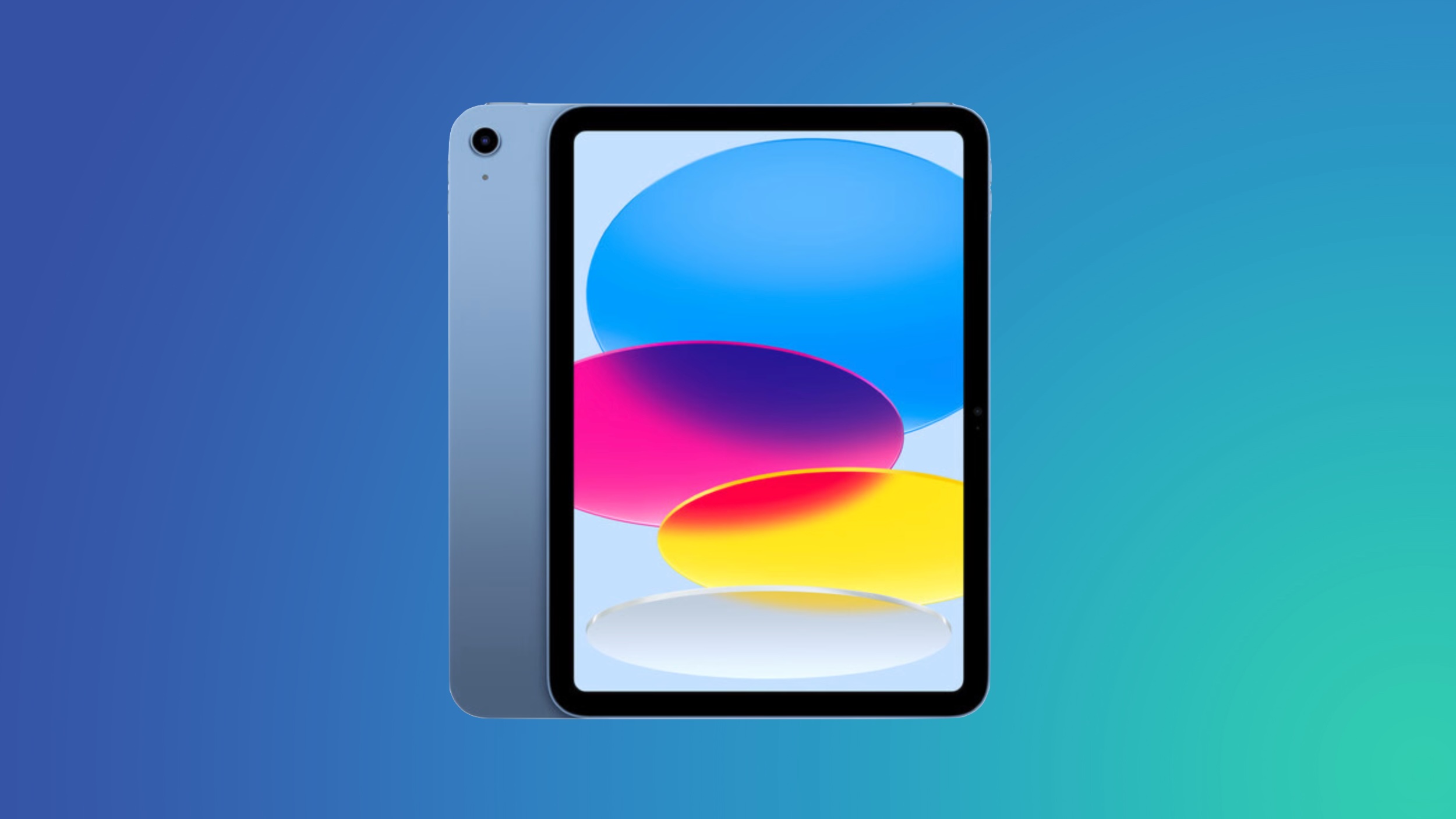
Apple's iPad that's just an ‌iPad‌ with no Air or Pro attached is its most appealing tablet because of the affordable starting $349 price tag, but if you've been thinking about buying one, you should wait.


Apple refreshed the ‌iPad‌ in March 2025, so it's over a year old. That's reason enough not to buy when there's a new model on the horizon, but this year, there's even more to lose by purchasing now.

The 2025 ‌iPad‌ has an A16 chip inside that does not support Apple Intelligence. It does not have features like Writing Tools, Image Playground, Clean Up, Live Translation, notification summaries, Smart Reply, Priority Messages in Mail, Visual Intelligence, and multiple other AI-related tools.

‌Apple Intelligence‌ is still new so it might not sound like a big deal to miss out on those capabilities, but not having access to it is going to become more of a problem as Apple continues implementing new AI features.

Rumors suggest there are big changes coming in iOS 27. Siri is going to get smarter and turn into a full chatbot, the Camera app is going to get ‌Visual Intelligence‌ integration, the Photos app will have AI image editing tools, Shortcuts may be more automated, and there are probably features coming that haven't even been rumored yet.

The A16 ‌iPad‌ will likely feel outdated in the next year or two because of the feature set it won't have access to.

The next ‌iPad‌ is likely to get the A18 chip, and the A18 does support ‌Apple Intelligence‌. It will have faster performance, more RAM, and most importantly, future-proofing and access to the AI features that Apple is investing in.

Holding out for the next ‌iPad‌ will take some patience, because right now, we don't know when it's coming. Updating the ‌iPad‌ alongside the low-cost iPhone 17e would have made sense, but that didn't happen. A new entry-level ‌iPad‌ isn't coming in the first half of 2026, so we're likely going to be waiting until September or October.

Bloomberg's Mark Gurman said in March that an updated low-cost iPad is "ready to go" and "still coming this year." Even though the wait may be several months, we think it's worth holding out for the next ‌iPad‌ instead of buying now because of the upgrade that comes with ‌Apple Intelligence‌ support.
Related Roundup: iPad
Buyer's Guide: iPad (Don't Buy)
Related Forum: iPad

This article, "It's a Bad Time to Buy the Low-Cost iPad" first appeared on MacRumors.com

Discuss this article in our forums
  •  

Nimble Wally Stretch Review: A Colorful Charger With a Retractable USB-C Cable

Last year, accessory maker Nimble came out with the Wally Stretch power adapters, and they've become some of my favorite charging options.


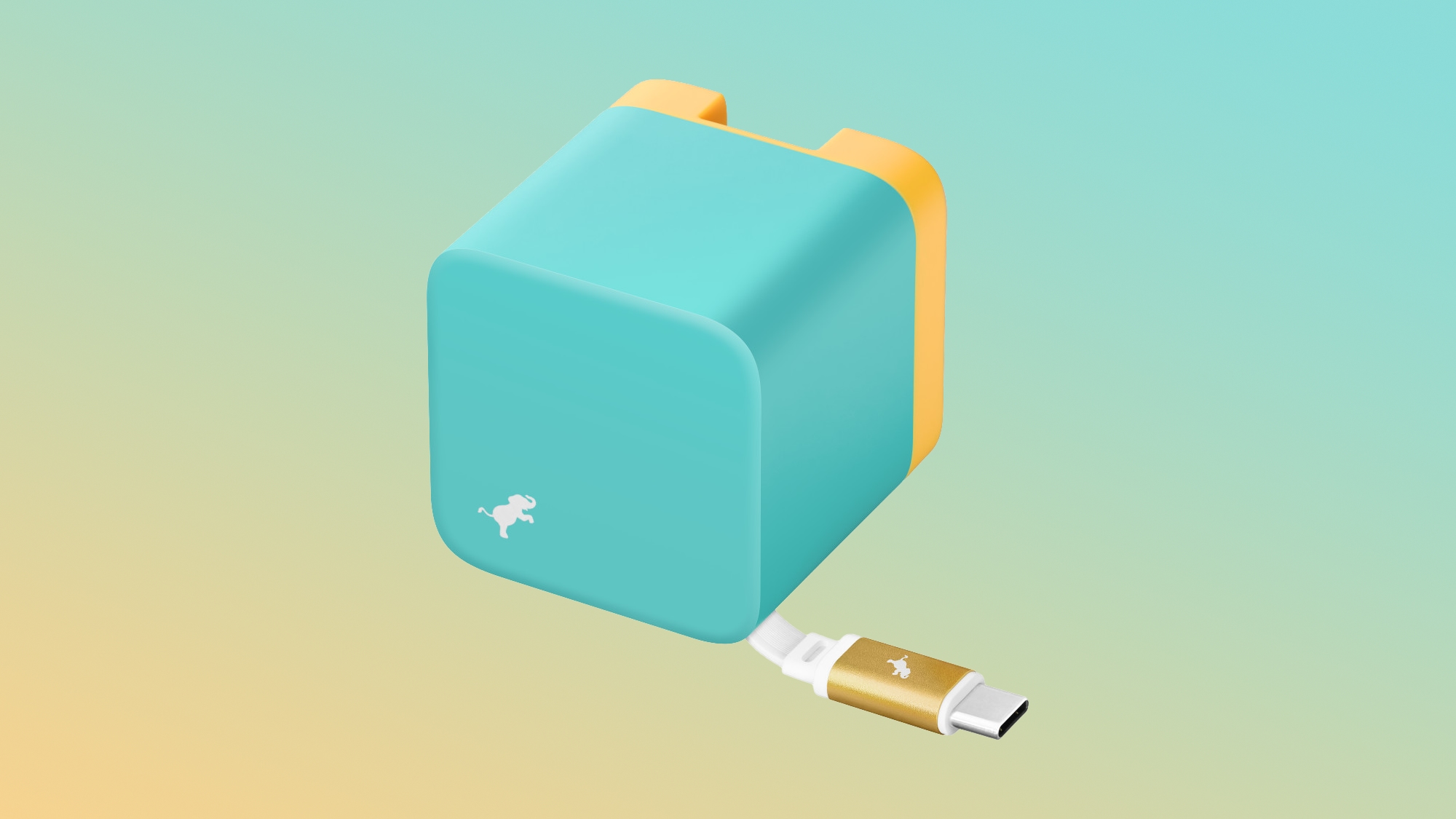
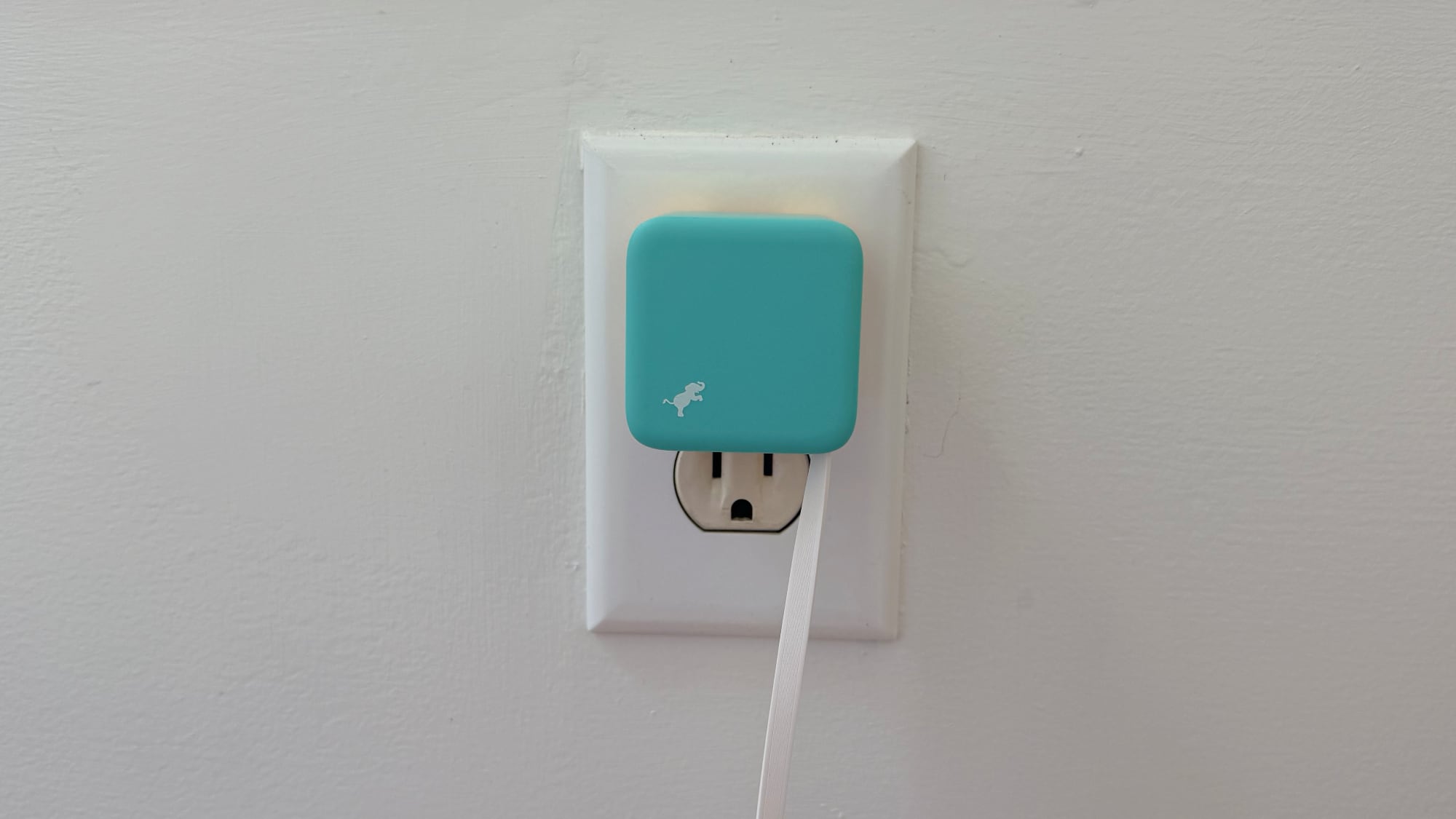
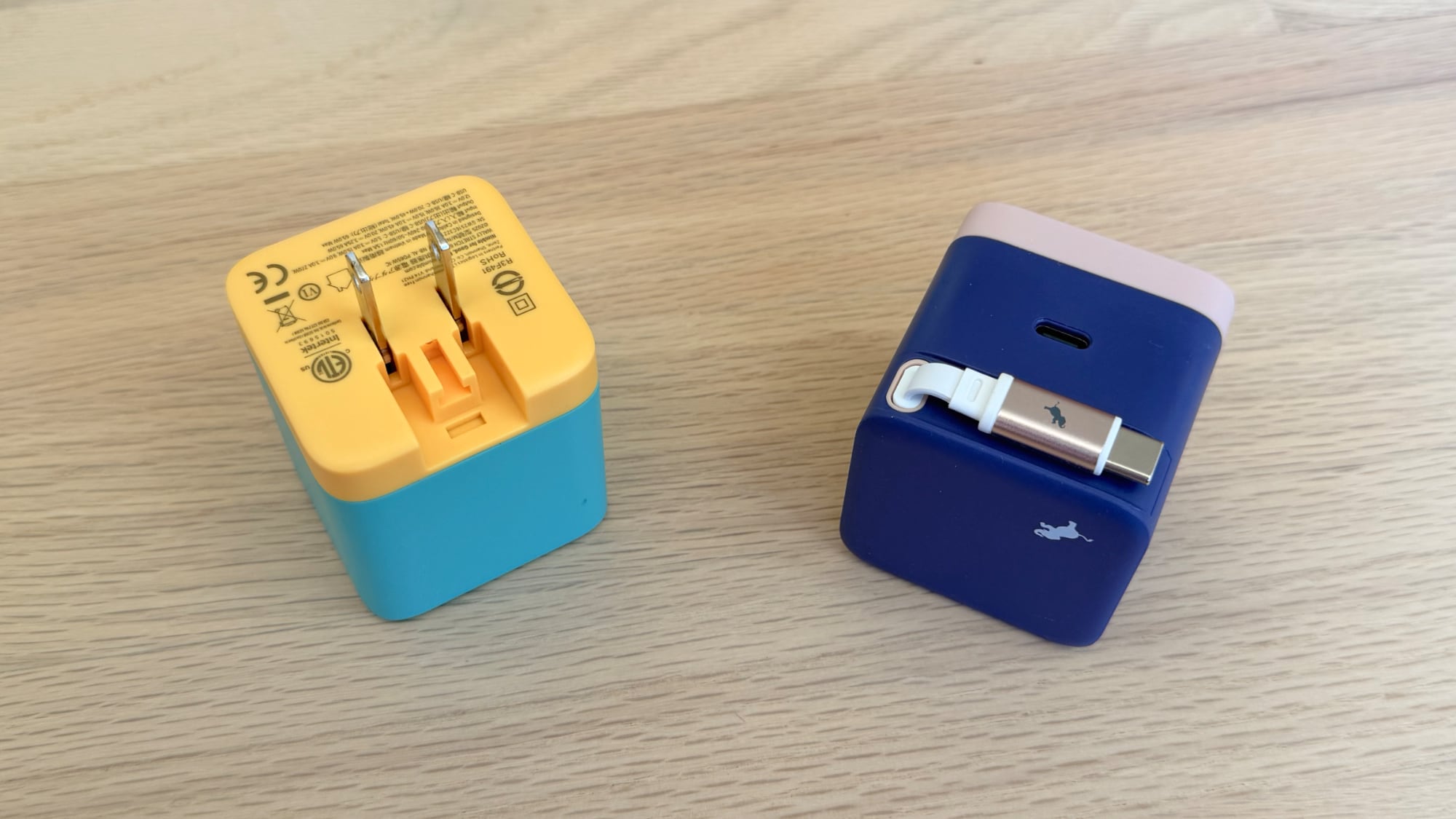
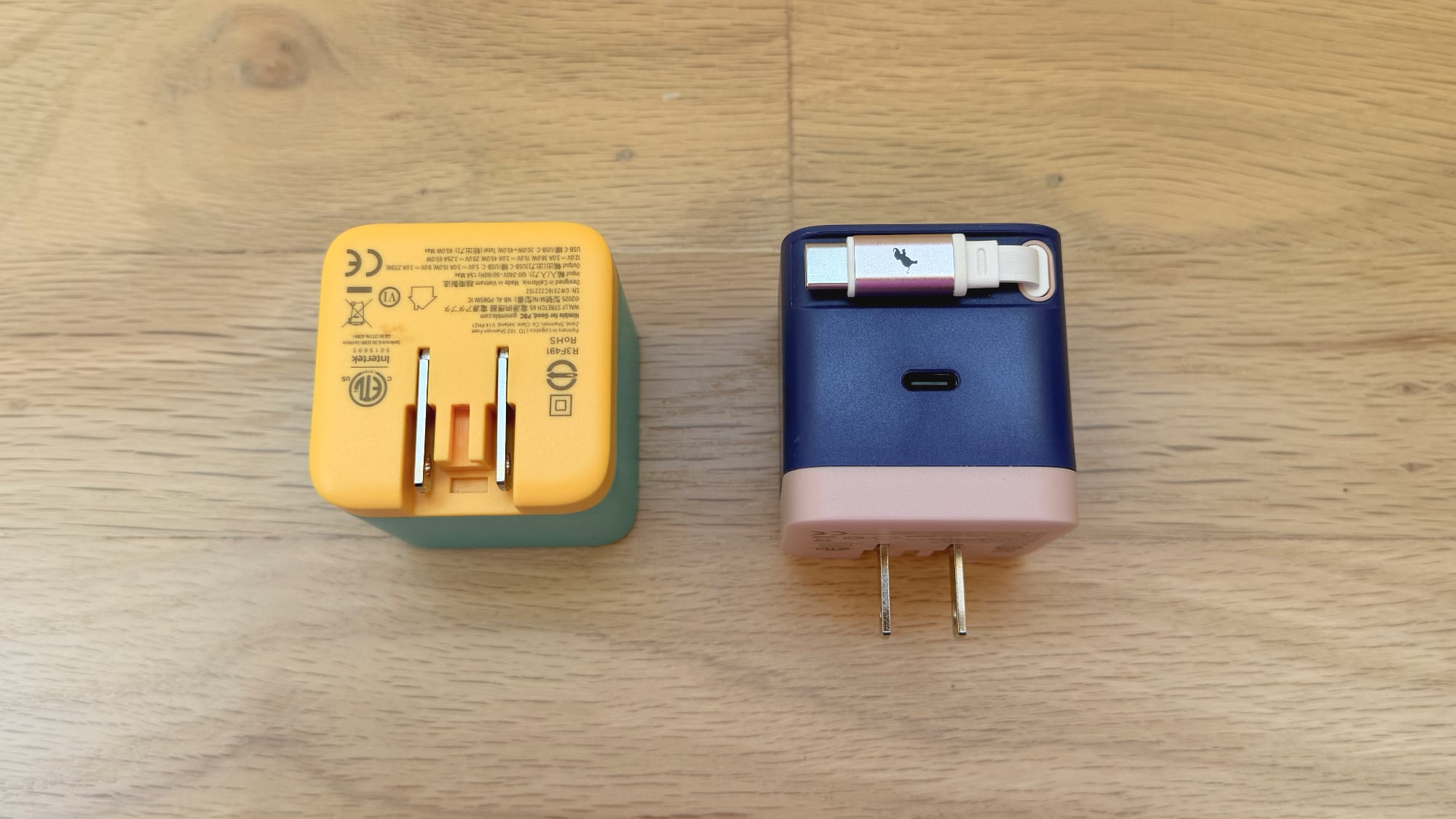
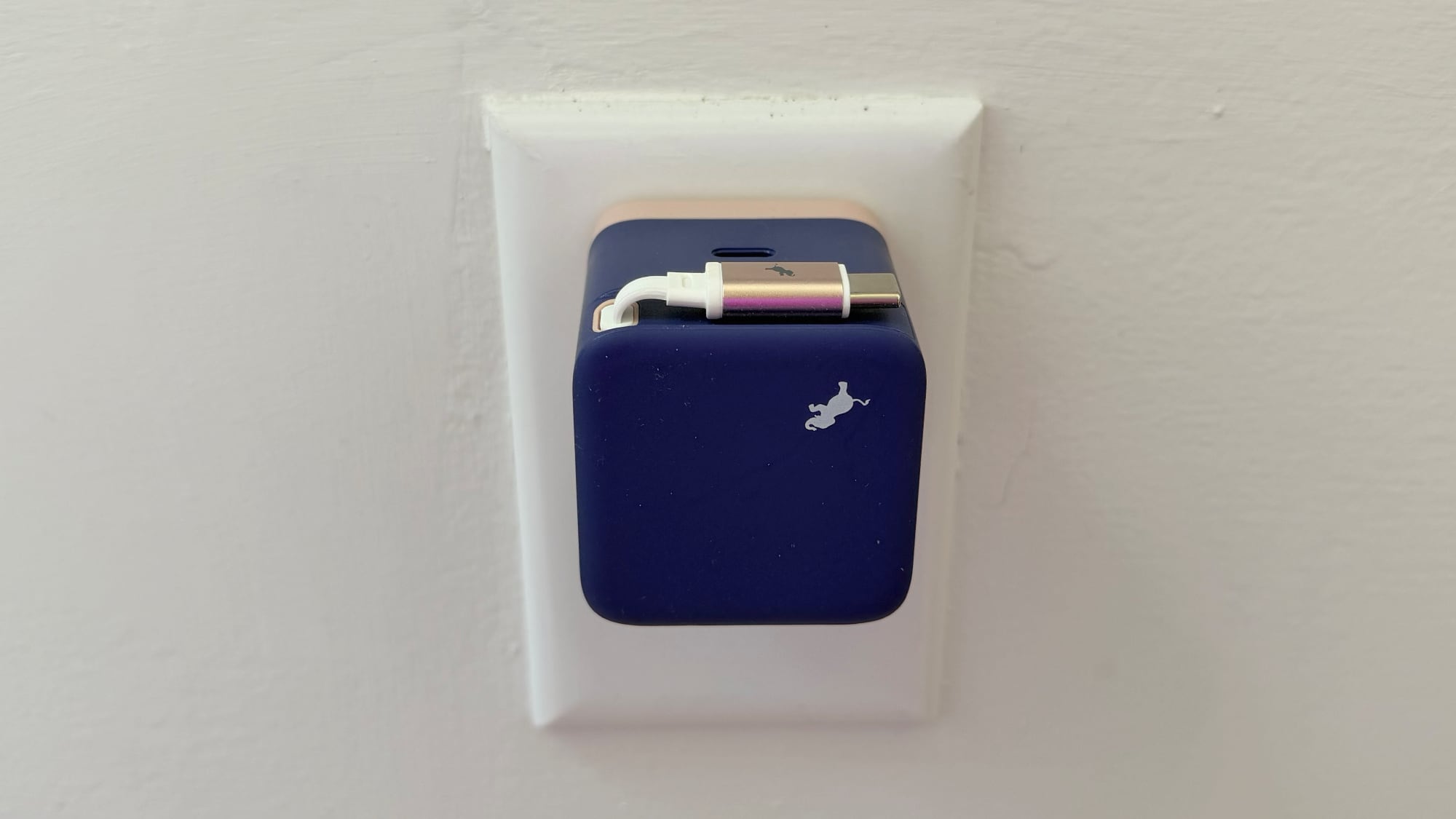
The Wally Stretch is available in 35W and 65W options, and it has an excellent design. It's a simple cube with prongs that fold down, a retractable USB-C cable, and an extra USB-C port. The 65W model that I tested is thicker than the comparable 70W Apple charger, but it's smaller in length and width.


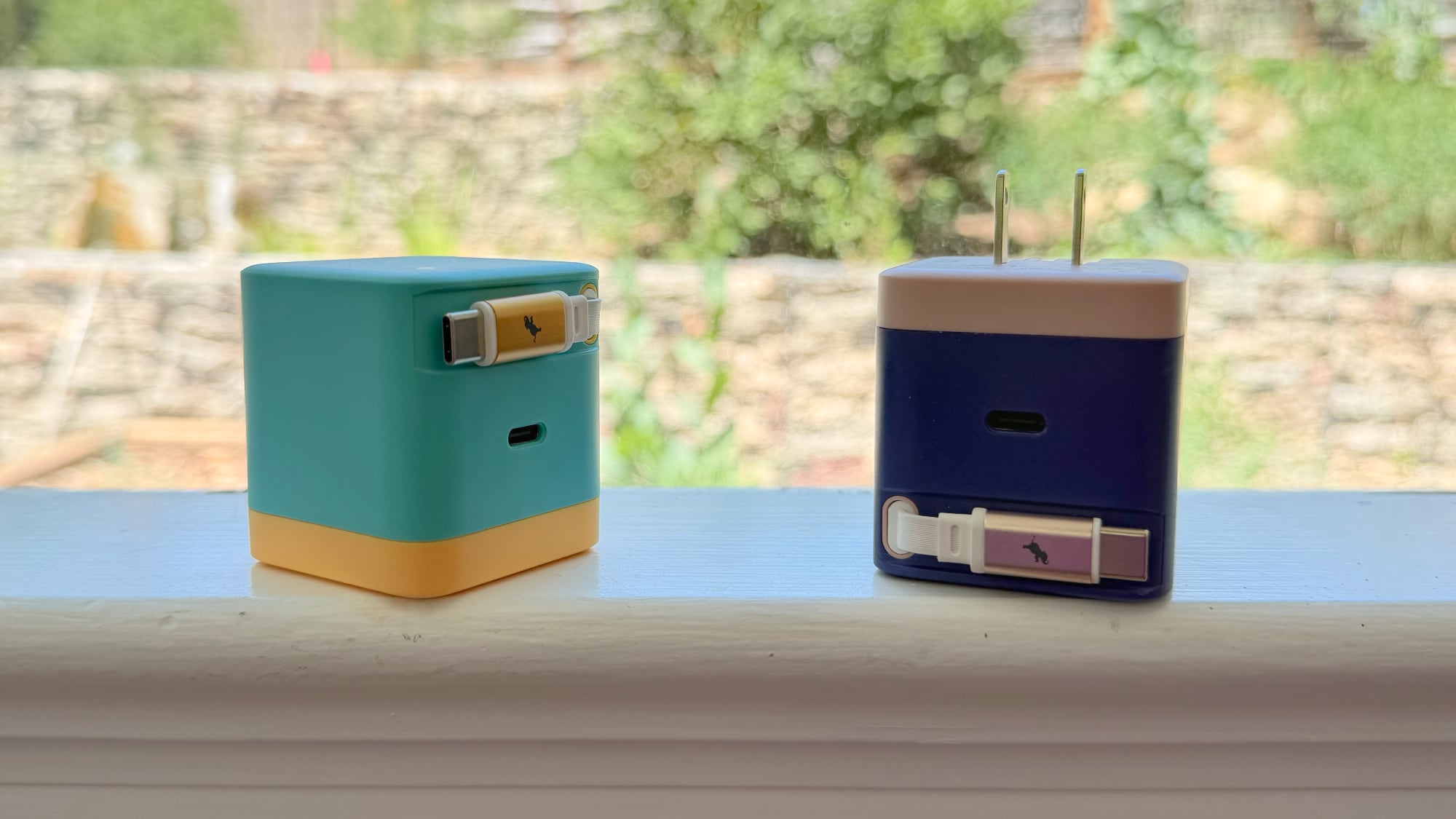
Nimble's charger is just about two inches all around, and it looks like a block. While Nimble sells the 35W charger in black and the 65W charger in white, Apple offers 65W Wally Stretch in better colors. It comes in teal with a yellow accent and a gold-topped cable, along with deep purple with a pink accent and a silver-topped cable. I'm a big fan of any charger that's not your standard black or white, and I use the Wally Stretch chargers with my desktop power strip.


The retractable USB-C cable measures in at two feet, which is a great length for desktop use. It's also worked well for traveling between locations, and two feet seems to be an all-around useful length. Some people prefer much longer cables, and there aren't options with the Wally, which is a downside. There is, however, an extra USB-C port at the bottom where a longer cable can be plugged in if desired.


65W is enough for me to power even a 16-inch MacBook Pro when it's not under heavy load, and it's more than sufficient for my MacBook Air, iPad Pro, and iPhone. Even when charging two of the latter three devices at the same time, I get fast charging.


A retractable cable paired with an extra USB-C port all in a small package makes the Wally Stretch one of my most flexible power adapters. I would pick it over a standard Apple charger in all situations, and over many third-party chargers. The only situation where I reach for something else is when I need more than two ports or higher watts, but that doesn't happen too often. I think the only thing that would make the Wally Stretch better is an XL version with two retractable cables and 140W.


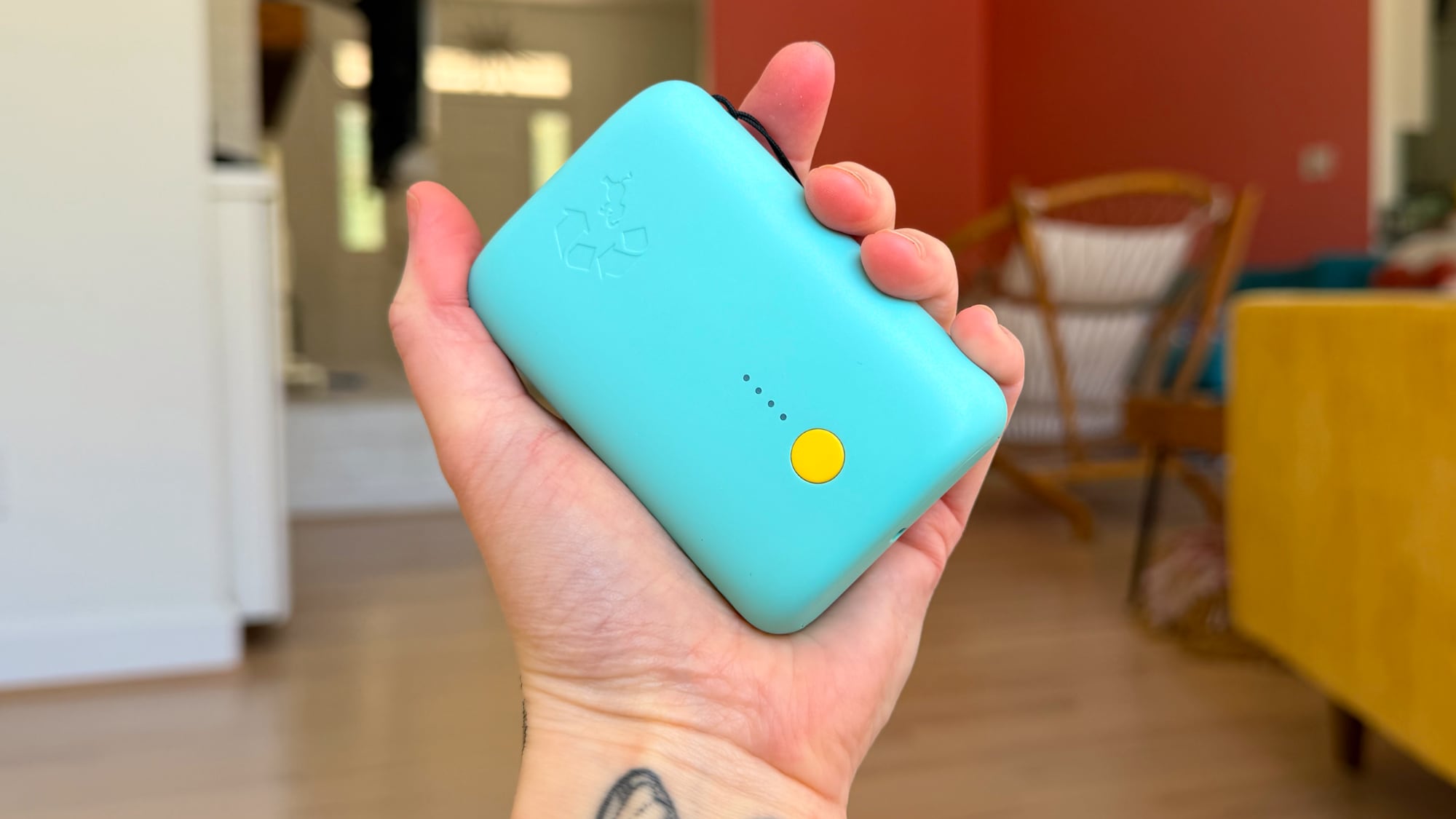
Nimble also makes power banks that I like a lot, again because they come in colors other than your standard black or white. The Nimble 10k Champ Portable Charger I tested is teal with yellow accents, and it has some design elements I've found useful.


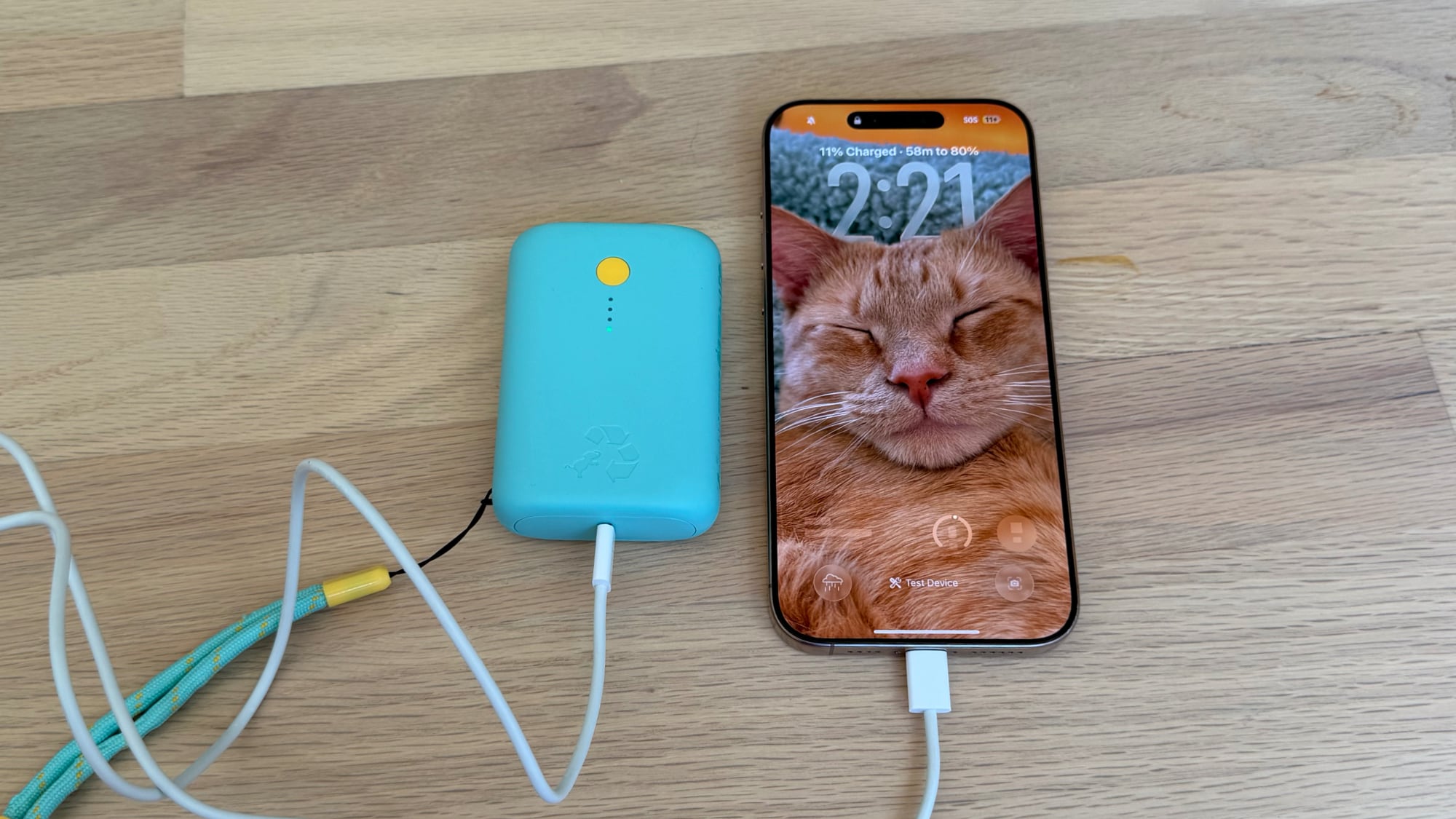
It's small, and it tucks nicely into a pocket or a bag. It has a lanyard, which is a feature that I find surprisingly useful for a power bank. I can always track it down in my backpack, and I can put it around my wrist when I'm charging my iPhone with a short cable. I wouldn't have thought a lanyard would make a difference, but I have a decent selection of power banks, and I always pick the ones with the lanyard first when I need one.

The Nimble Champ is 3.4 inches long, 2.3 inches wide, and under an inch thick, plus it's lightweight at six ounces. There's a yellow button on the front that can be pressed to see remaining power level, which is reflected via four LED dots. That's standard for power banks, and it's fine. Some power banks have a little LED display that shows exact level, and I do prefer the more exact readout, but it's not a make-or-break feature.

There are two USB-C ports for charging an iOS device or for charging the power bank, and while it does come with an included USB-C cable, I wish it was a color-matched cable instead of a plain cable. A power bank designed to stand out with a bright color should have a cable that goes along with it, but I do understand the plain cable choice because it keeps costs lower. Nimble's power bank is $60, which makes it reasonably priced.


I have an Anker Nano power bank with a lanyard and a retractable cable and it is the one that I love the most. Nimble Champ is my second pick, just because I like integrated cables that don't require me to hunt down a cable and that don't result in excess cable I don't need. Nimble does actually have an updated version with a retractable cable and an exact readout of charging capacity, but it's more expensive at $80.

This is a 10K power bank, so it has enough power to charge an iPhone 17 Pro Max from 0 to 100 and then some, but it is limited to 20W fast charging. Apple's iPhone 17 models charge to 50 percent in 20 minutes with a 40W adapter, so you're not going to get maximum charging speeds with the Nimble Champ. I probably wouldn't choose the Nimble Champ in a situation where you need to optimize for the fastest possible charging for an ‌iPhone 17‌, but it's great if charging that's a bit slower isn't an issue.

Bottom Line


Nimble's Wally is a useful power adapter for everything from the Mac to the iPhone, and the retractable cable is super convenient. I'd definitely recommend it to anyone looking for a power adapter for desktop or travel use.

The Nimble Champ is a budget-friendly power bank that's brightly colored and slim enough to carry in a pocket. It's a good pick as long as you don't need the fastest USB-C charging.

How to Buy


Nimble's 65W Wally Chargers can be purchased from the Nimble website for $42, but you can get the colorful versions from Apple for $60. The 10K Nimble Champ Charger is $60 from Nimble or from Apple.
This article, "Nimble Wally Stretch Review: A Colorful Charger With a Retractable USB-C Cable" first appeared on MacRumors.com

Discuss this article in our forums
  •  

Ads Aren't in the Apple Maps App Yet, But They're Coming Soon

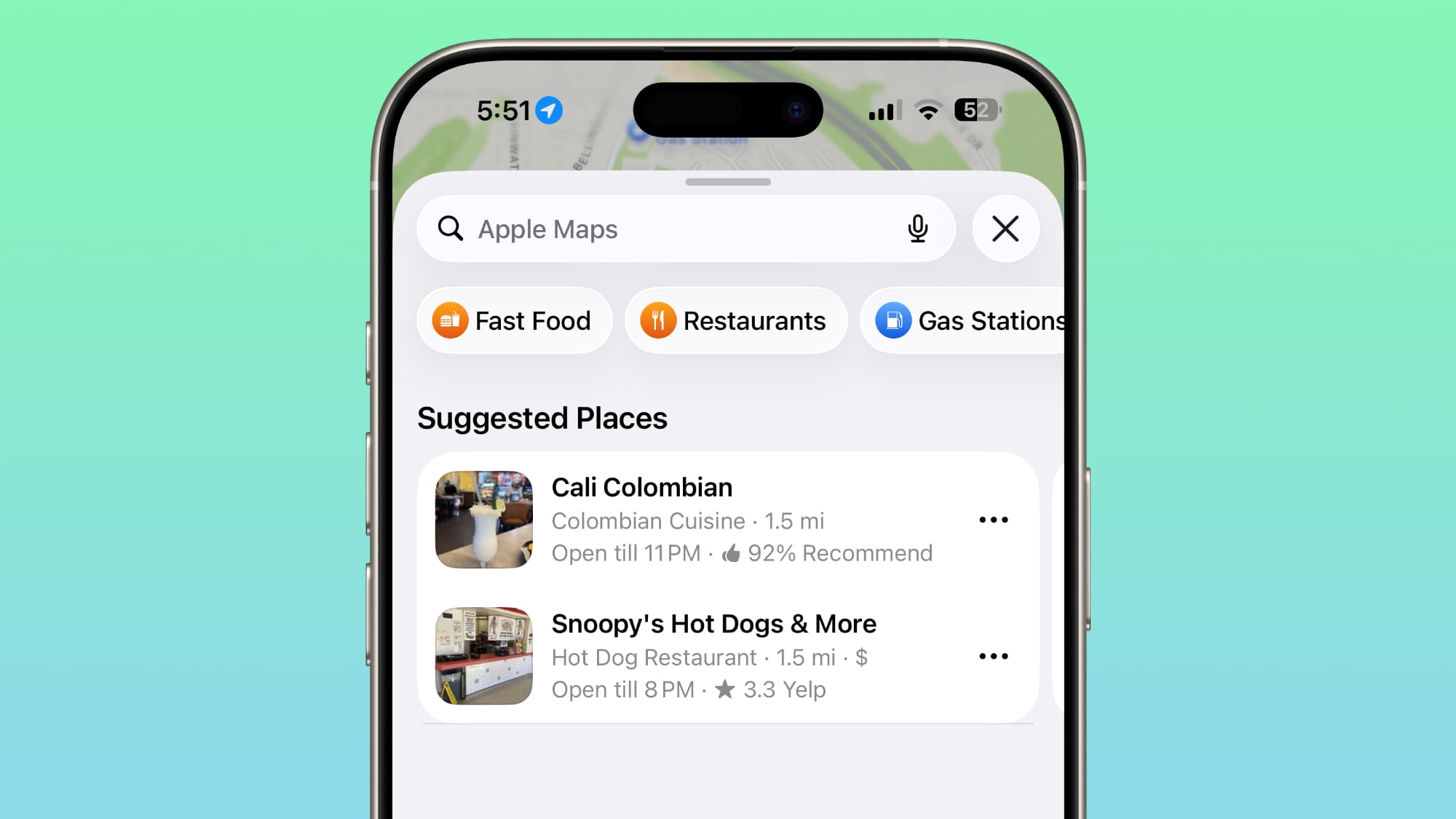
Apple released iOS 26.5 yesterday with a new Suggested Places feature in the Apple Maps app, which is a precursor to the ads that Apple plans to start showing later this year. There was some confusion over whether ads are live, but as of now, the ‌Apple Maps‌ app still doesn't have ads.


Apple did start laying the groundwork for ads in iOS 26.5 and tested a splash screen, but no ads appeared during the beta testing period or after launch.

When Apple announced plans to bring ads to the Maps app in March, it said that ads will be implemented in the United States and Canada "this summer." Astronomical summer in the Northern Hemisphere starts on June 21 and ends on September 22. Meteorologically, summer begins on June 1 and lasts through August, so depending on Apple's definition of summer, we'll get ads in Maps sometime between June 1 and September 22.

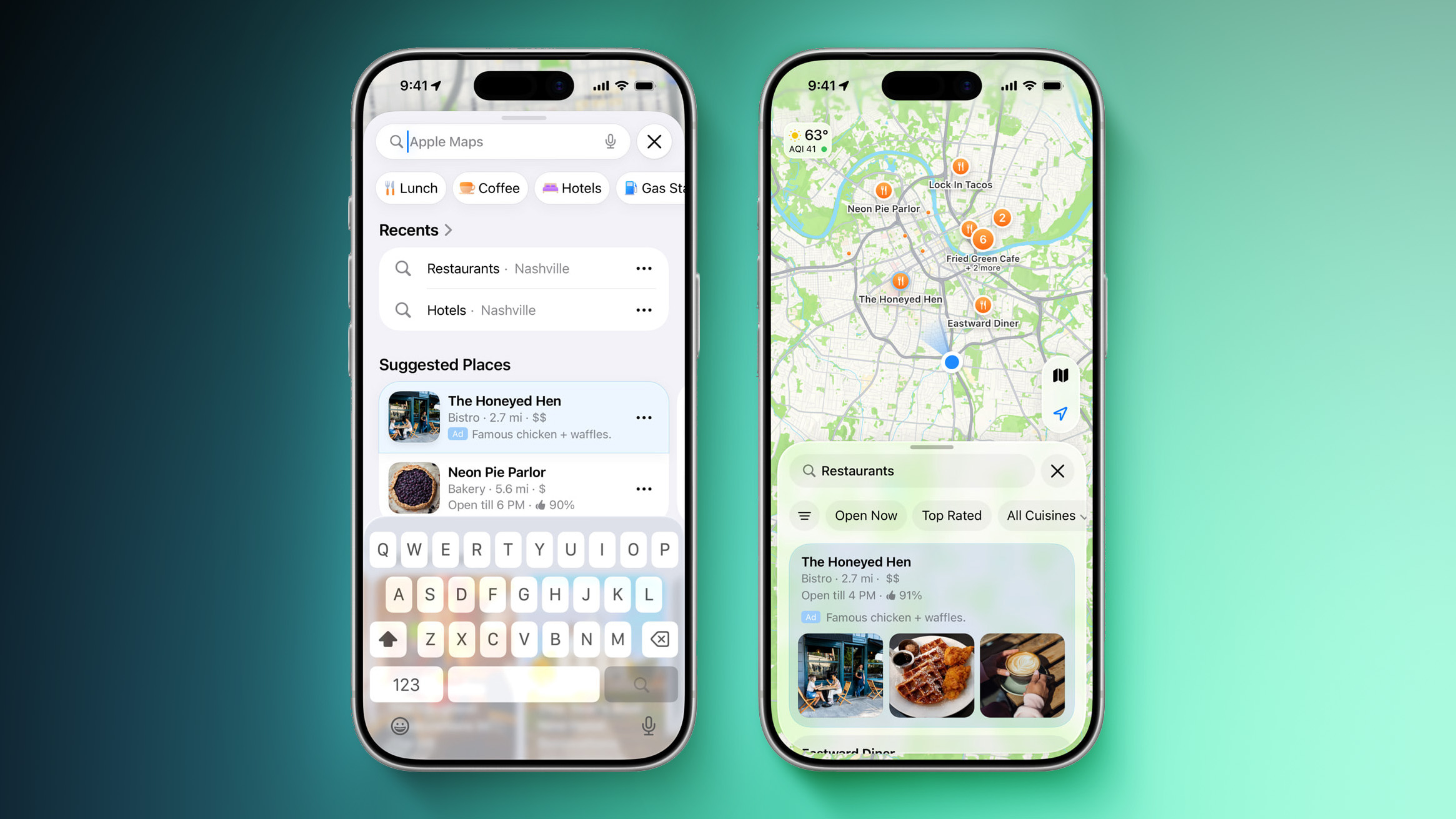
Ads will be displayed in ‌Apple Maps‌ search results and in the new Suggested Places section added in iOS 26.5. Suggested Places shows recommendations based on what's trending nearby and a user's recent searches.


There will be ads in the Maps app on iPhone and iPad, and they will be clearly marked with an "Ad" label, similar to how ads appear in App Store search results. Businesses will bid for ad placement, and the highest bidder for a keyword or search term will have its ad shown in search.

Apple says that location data and the ads that users see and interact with in the Maps app are not associated with an Apple account, and data is not shared with third parties. There is no opt-out for location-based or personalized ads in Suggested Places.
This article, "Ads Aren't in the Apple Maps App Yet, But They're Coming Soon" first appeared on MacRumors.com

Discuss this article in our forums
  •  

Apple Grew U.S. iPhone Sales While Broader Smartphone Market Declined in Q1

Apple's smartphone sales increased 1.3 percent year-over-year in the United States during the first quarter of 2026, according to data shared by Counterpoint Research. Apple saw a sales increase while the broader U.S. smartphone market experienced a 5.7 percent decline during the same time period.


Android device sales declined 14.4 percent, while Apple's market share grew 4 percent year-over-year. iPhone 17 performance is part of the reason Apple outperformed the market, but Counterpoint says the company was also helped by a later launch of Samsung's Galaxy S26 series in March.

Apple's market share increased at all three major U.S. carriers, while Android saw a decline. The iPhone made up 75 percent of sales at Verizon, AT&T, and T-Mobile, while Android devices made up 25 percent.

Counterpoint expects Apple to continue to draw users to iOS because it maintained pricing with the iPhone 17e and even increased storage, while smartphone makers with slimmer hardware margins have had to raise prices.
If Apple can avoid significant price increases and continue to outpace its peers in promotional dollars, it will be tough for Android OEMs to keep up in the year ahead.

During Apple's April 30 earnings call, CEO Tim Cook said the ‌iPhone 17‌ family was the most popular lineup in Apple's history. Cook said information from IDC indicated Apple gained market share during the quarter.

Cook also said iPhone demand was off the charts, leading to supply constraints during the quarter. Apple was having trouble getting the A19 and A19 Pro chips manufactured by TSMC due to demand for TSMC's AI server chips.

According to Cook, memory shortages and rising costs will have more of an impact on Apple later in 2026. Apple is expecting "significantly higher" memory costs and plans to look at a "range of options" for mitigation. Cook declined to provide insight into how Apple plans to deal with the problem, and he did not comment on whether Apple will raise prices.
This article, "Apple Grew U.S. iPhone Sales While Broader Smartphone Market Declined in Q1" first appeared on MacRumors.com

Discuss this article in our forums
  •  

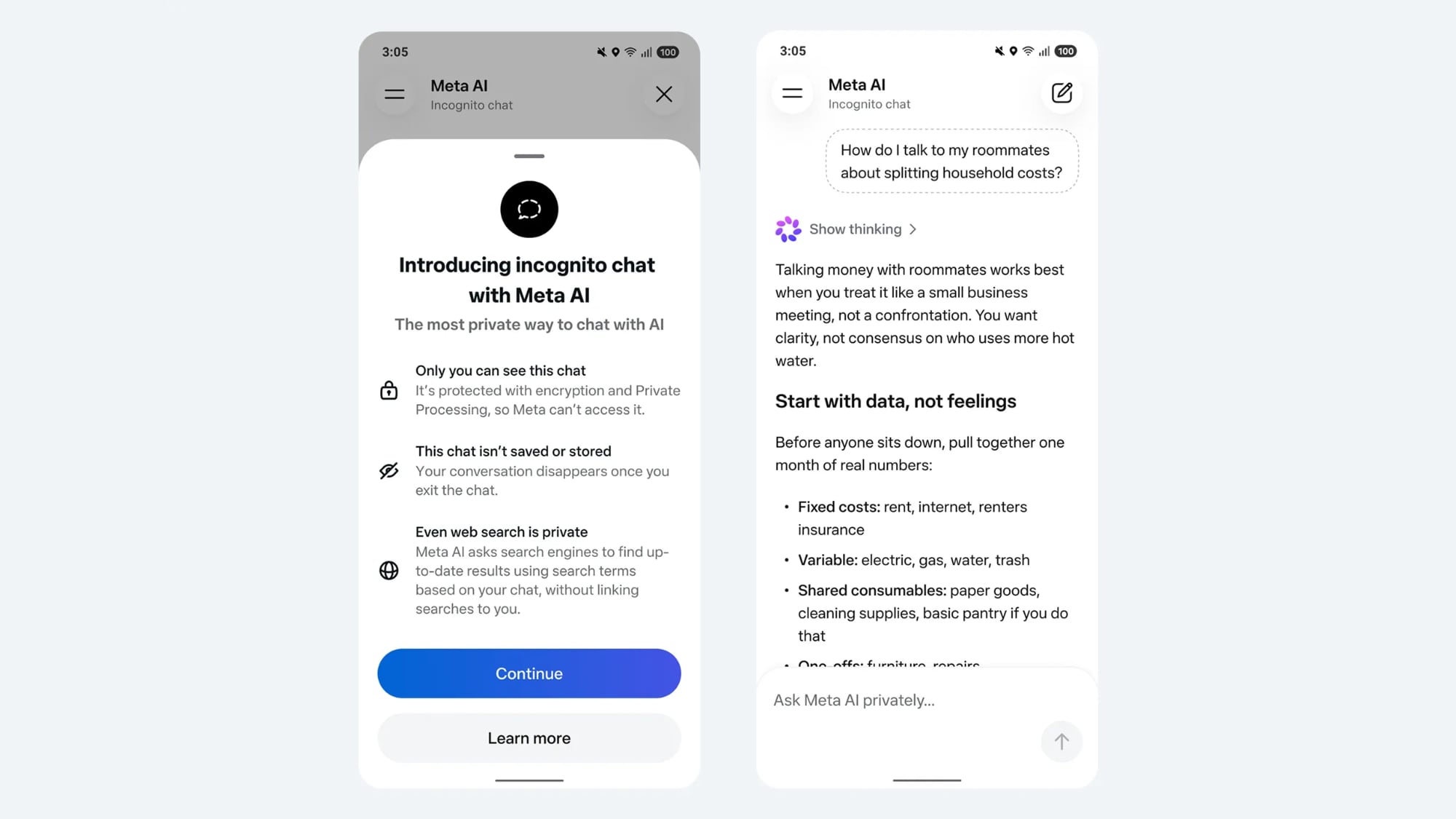
Meta AI App Gets 'Incognito Chat' as OpenAI Faces Lawsuits Over Stored Chat Logs

The Meta AI app and Meta AI on WhatsApp have a new "incognito chat" option, which Meta CEO Mark Zuckerberg said is a "completely private way to interact with AI."


Zuckerberg also said that Meta AI's incognito mode is the first major AI product where there is no log of conversations stored on servers. Zuckerberg likened the feature to end-to-end encryption, and said no one will be able to read the AI conversations, not even Meta or WhatsApp.

AI inference for incognito chat is done in a Trusted Execution Environment that Zuckerberg said is not accessible to Meta. Conversations also disappear from the phone when exiting a chat session, and nothing is saved or logged. Web searches are conducted privately, with no search information linked to the user.

"To get the most from personal superintelligence, we'll all need ways to discuss sensitive topics in ways that no one else can access," Zuckerberg said.

WhatsApp head Will Cathcart told reporters that the AI has safety guardrails, and it will refuse to answer questions that could be interpreted as harmful or illegal, steering conversations in a different direction. The mode also only supports text, and users are unable to upload images.

Incognito chat for Meta AI comes as OpenAI is facing a lawsuit for allegedly causing a teen's drug overdose. The teen asked ChatGPT for information on whether it was safe to take two drugs together, and was provided with an incorrect answer that led to his death. OpenAI has been sued several times by the families of people who used ChatGPT before dying by suicide.

Lawsuits against OpenAI have involved chat logs recovered by the plaintiffs, and without those logs, there would be far less evidence for a legal complaint over AI actions and advice.

Google and OpenAI also offer temporary chat options, but messages are still stored on remote servers. Google keeps data for up to three days, and OpenAI keeps logs for 30 days.

Meta's private chat option is rolling out in the coming months in the Meta AI app and WhatsApp.
This article, "Meta AI App Gets 'Incognito Chat' as OpenAI Faces Lawsuits Over Stored Chat Logs" first appeared on MacRumors.com

Discuss this article in our forums
  •  

Samsung Set to Beat Apple to AI Smart Glasses With July Launch

Samsung is planning a Galaxy Unpacked event for July, and the company plans to introduce new foldable smartphones and AI "Galaxy Glasses," according to Seoul Economic Daily.


Samsung's event will take place on July 22, so it will debut new Galaxy Z Fold8 and Z Flip8 foldable smartphones just weeks ahead of when Apple's first foldable iPhone is introduced, plus it will beat Apple to AI glasses.

Apple has been racing to develop its own smart glasses to compete with the Meta Ray-Ban AI glasses, but rumors suggest Apple won't launch the glasses until 2027. There is a chance Apple will preview the glasses in 2026, but there's no certainty yet.

Samsung is working with eyewear company Gentle Monster for its AI glasses, and the wearable will run Google's Android XR operating system with Gemini integration. The glasses will feature a high-definition camera, speakers, and a microphone, similar to the Meta Ray-Bans, and there will be no built-in display. AI integration will be a main selling point, with Gemini able to use video captured by the wearer to answer queries. Samsung will link the glasses to Galaxy smartphones and its SmartThings home appliance ecosystem.

The glasses that Samsung is working on sound similar to everything rumored for Apple's own AI glasses. Apple's glasses will rely on Siri, and will include cameras to feed visual information to the AI. Speakers and microphones will be included, but no display is expected for the first version.

Samsung is also planning for a Fold Wide, or a foldable smartphone that's similar to the dimensions that Apple plans to use for its foldable iPhone. Samsung's foldables to date have been taller than they are wide, but Apple is planning for a wider, iPad-like 4:5 aspect ratio.

After Samsung's event, Apple will unveil its next smartphones at its traditional September event. Dates are not known at this time.
Tag: Samsung

This article, "Samsung Set to Beat Apple to AI Smart Glasses With July Launch" first appeared on MacRumors.com

Discuss this article in our forums
  •  

Meta Launches 'Instants' App for Sharing Disappearing Photos on Instagram

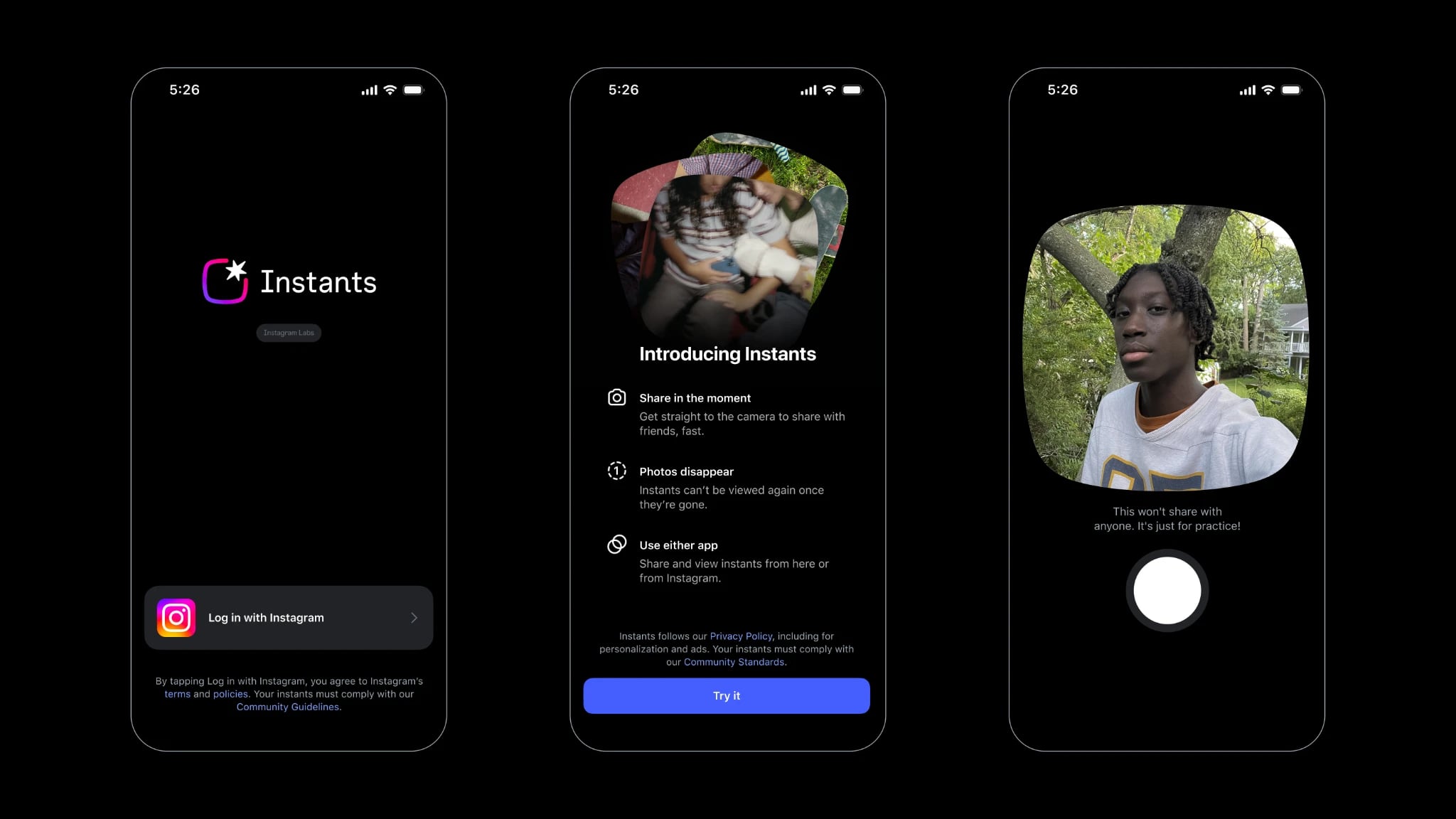
Meta today announced the launch of Instants, a new image sharing option on the Instagram social network. Instants are ephemeral photos that disappear from Instagram after they're viewed by a user's friends or after a 24-hour period.


Reactions and replies to Instants images show up in DMs instead of on the post. Instants photos are only displayed for a short period, but they are saved to a user's archive for a year and can be reshared to Stories. Instants cannot be edited, with no option for filters, stickers, or modifications beyond captions. That sets them apart from Stories, which is already an Instagram feature.

Instants is an Instagram feature, but Meta has also developed a standalone Instants companion app "for quicker camera access." The standalone app is a direct competitor to Snapchat, the original ephemeral image social network. The new app can be used for sharing Instants, but on Instagram, users can also share Instants from a new camera option in the Direct Messages section of the app.

Instants can be viewed on Instagram by opening up DMs and tapping on the new Instants box in the bottom right corner of the inbox. Photos can be shared with friends set as close friends, or as mutuals, aka followers that an Instagram user follows back. Instants are not able to be screenshotted or screen recorded, providing privacy features not available with other Instagram image types.

Meta says that Instants are designed for casual, everyday photos. The standalone app is limited to select countries, as Meta says that it is an experiment. Images shared on the Instants app will show up for friends on Instagram, and images shared on Instagram will show up in the Instants app.

Instants on Instagram is available globally starting today, and the app is also available for download in countries where it is supported.
This article, "Meta Launches 'Instants' App for Sharing Disappearing Photos on Instagram" first appeared on MacRumors.com

Discuss this article in our forums
  •  

Apple Working on Plan to Allow AI Agent Apps on the App Store

Apple is looking into ways to better support apps that include AI agents and AI coding capabilities in the App Store, reports The Information. Apple is designing a system that would maintain its security and privacy standards while allowing for AI app features, but details on how the system will work are unavailable.


Apple started blocking updates for some popular vibe coding apps in March because those apps violated ‌App Store‌ rules that prohibit apps from executing code that alters their own functionality or that of other apps. Vibe coding apps let users build apps and websites with little to no coding experience, using AI agents and natural language prompts. Vibe coding has become popular, and Apple's rules have not been able to keep up.

Apps that include AI agents present similar problems for Apple. AI agents can autonomously complete complex actions and make mini apps using tools and capabilities that would not traditionally be supported under Apple's ‌App Store‌ rules. Apple will need to make changes to keep up with the software trends that developers and users want.

Apple wants to incorporate AI agents into the ‌App Store‌ while preventing some of the issues that people have run into with rogue AI agents deleting content and causing other problems.

As it works to prepare for future AI apps, Apple is also developing its own AI capabilities. Siri is set to get a major overhaul in iOS 27, making it smarter and better able to compete with Claude and ChatGPT. Apple has partnered with Google to use custom Gemini models to power ‌Siri‌.

The Information says Apple has started contacting app developers to integrate app capabilities like booking flights and sending calendar invites into the new version of ‌Siri‌ and Apple Intelligence. Some developers are hesitant to work with Apple to integrate their apps into ‌Siri‌ because they are worried about providing new ways for Apple to collect commissions. Apple is telling some developers that it does not plan to charge commissions during the early stages of the partnership, but that fees are a possibility in the future. Apple has held talks with Baidu, Alibaba, and Tencent about ‌Siri‌ integration in ‌iOS 27‌, but the companies do not want to end up paying fees to Apple.

Apple also plans to allow users to select from multiple chatbots to use with ‌Siri‌, instead of limiting people to OpenAI's ChatGPT. AI models from companies like Anthropic or Google could be used for Image Playground and Writing Tools the way ChatGPT can be used today.

It is not clear if Apple plans to open up more of iOS to third-party chatbots, but OpenAI has reportedly been disappointed with Apple's limitations. ChatGPT can be used to generate images and text through the iOS integration, but it cannot access user emails or other personal information. Customers are also rarely using the functionality, according to The Information.

Apple's new version of ‌Siri‌ is expected to be unveiled at the WWDC keynote on June 8, and the plans that Apple has for agentic AI apps in the ‌App Store‌ could also be discussed at the same time.
Related Roundup: iOS 27

This article, "Apple Working on Plan to Allow AI Agent Apps on the App Store" first appeared on MacRumors.com

Discuss this article in our forums
  •  

Google Unveils Googlebook, a New AI Laptop Built Around Gemini

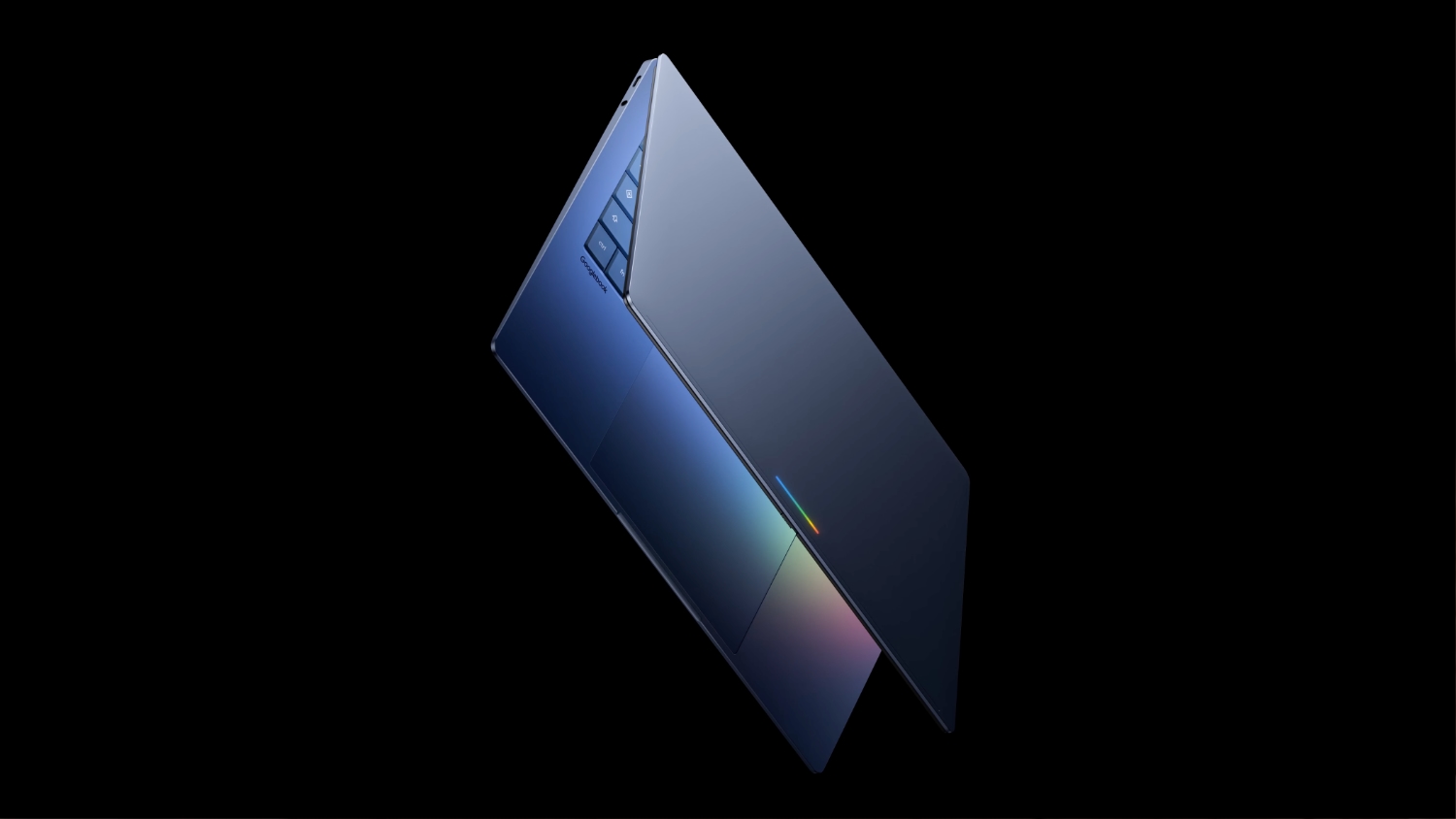
Google today announced a new series of Googlebook laptops that will be built with Gemini at the core. Googlebooks will run software built on a foundation that combines Android and ChromeOS.


Google says the new laptops are designed for Gemini Intelligence for a more personalized and proactive experience.

Instead of a cursor, Googlebooks have a Magic Pointer that users can wiggle to activate Gemini. Gemini can then provide contextual suggestions and answers based on whatever the user is pointing to on the screen. Pointing at a date in an email sets up a meeting, and selecting two images allows them to be visualized together. There are ask, compare, and combine tools available with the Magic Pointer.

Create My Widget, a new Android feature, is coming to Googlebooks. Users can create custom widgets with a Gemini prompt. Gemini is able to search the internet and connect with Google apps like Gmail and Calendar to create a personalized dashboard that can be used for widget creation.


Since Googlebooks will run Android, it will be easier to switch between a Googlebook and an Android smartphone. Apps from a connected Android smartphone will be available on the Googlebook, with a feature set similar to Apple's iPhone Mirroring.

Quick Access will let users view, search, or insert files from a smartphone on the laptop, with no transfer needed.

Google says it is working with Acer, ASUS, Dell, HP, and Lenovo to make the first Googlebooks. The machines will be built with "premium craftsmanship and materials, coming in a variety of shapes and sizes." Each one will have a "glowbar" on the lid, making it clear that it's a Googlebook.

Google has not given insight into Googlebook pricing, but with the specific "premium" build language, they could be priced above the low-cost MacBook Neo that Apple recently came out with. It's also possible that Googlebooks will have MacBook Neo-level pricing to better compete with Apple's laptop in on pricing and build quality.

The first Googlebooks are set to launch this fall.
This article, "Google Unveils Googlebook, a New AI Laptop Built Around Gemini" first appeared on MacRumors.com

Discuss this article in our forums
  •  

Bartender Pro Brings Widgets, Clipboard, and File Storage to the MacBook Notch

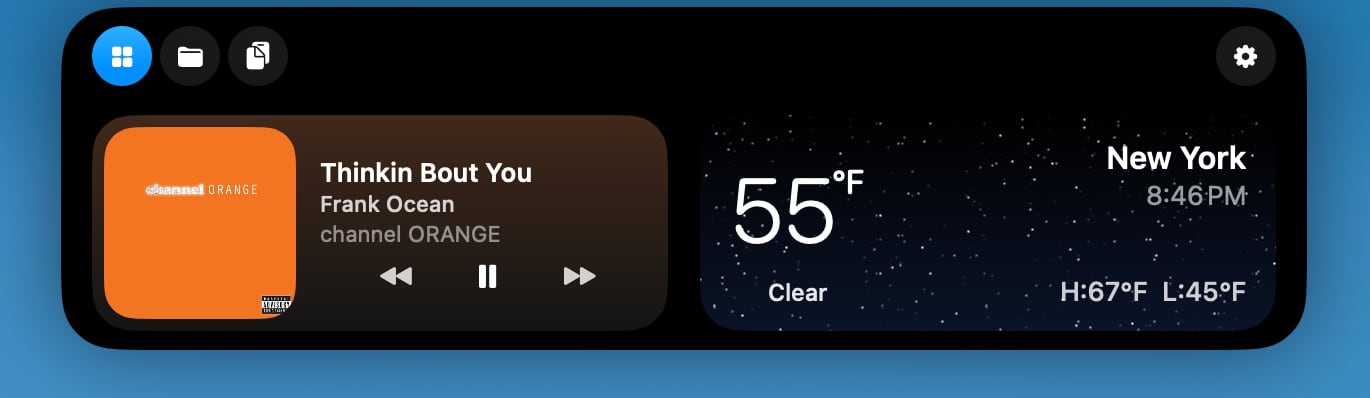
Popular Mac menu bar management app Bartender received an upgrade today with the launch of Bartender Pro. Bartender Pro adds a new Top Shelf feature to the Mac's notch, with access to multiple utility tools.


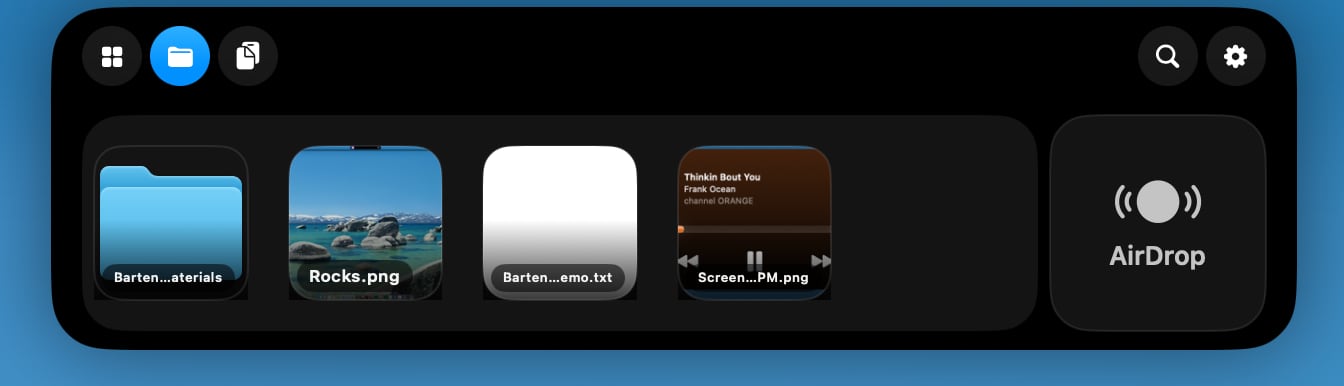
Top Shelf can be used for clipboard access, storing files, controlling audio, and sending content over AirDrop. It supports widgets for calendar, weather, and music apps like Apple Music or Spotify. There's a full Now Playing music controller, and options to get alerts when scheduled events are coming up.


Top Shelf expands the size of the notch, turning it into something like the iPhone's Dynamic Island. Users can drag files over to the notch to store them or send them via AirDrop, and access a clipboard. The clipboard can be set to automatically capture content that's copied, with options to ignore passwords. There are customizable duration options for both the clipboard and file storage.


Widgets in Top Shelf are customizable, and it supports a Live Activity-like tracking feature for AI agents like Codex and Claude Code. Info like volume, display brightness, and battery level is also available.

Top Shelf works alongside Bartender, and all of the standard Bartender features are available with Bartender Pro. When not in use, Top Shelf is tucked away much like Bartender, and it disappears when Bartender is expanded. While it is a tool designed around the notch, it also works on Macs that don't have one.


Bartender Pro is optional, and users who don't need the extra features can stick with Bartender 6.

Bartender Pro is priced at $15 per year. The subscription includes Bartender 6, all future upgrades for the subscription duration, and the Bartender Pro suite.

Bartender 6 is still available for a one-time $20 purchase, and the $80 Mega Supporter option continues to offer lifetime Bartender access with Bartender Pro included. Bartender Pro and Bartender 6 are available from the Bartender website.
This article, "Bartender Pro Brings Widgets, Clipboard, and File Storage to the MacBook Notch" first appeared on MacRumors.com

Discuss this article in our forums
  •  

Google Makes It Easier to Share Files Between Android and iPhone

Google today said it is introducing updated file sharing features that will make it easier for Android users to send files to iPhone users.


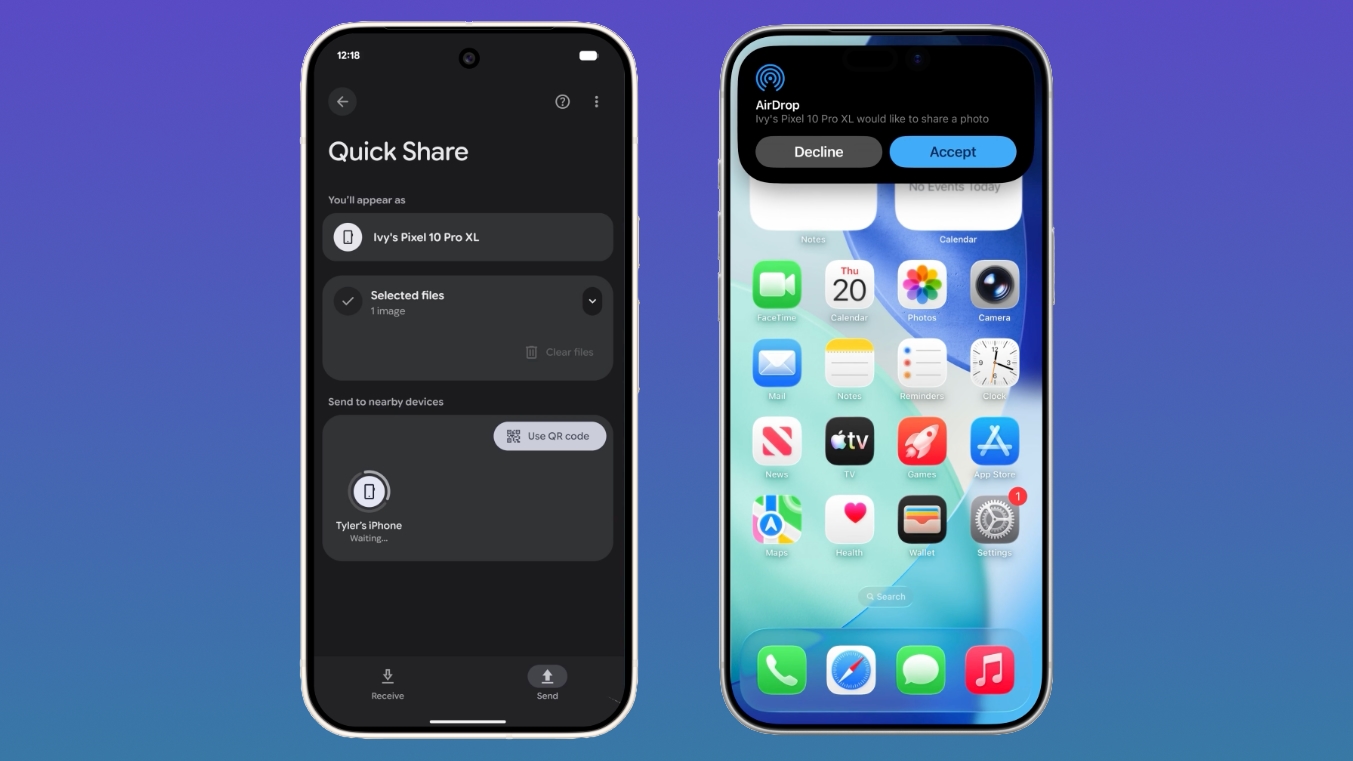
Quick Share is already compatible with Apple's AirDrop feature on select Android devices, but Google says the feature will expand to Samsung, OPPO, OnePlus, Vivo, Xiaomi, and HONOR devices in 2026.

On Android devices that are not compatible with AirDrop, Quick Share can be used to generate a QR code that can instantly share content with iOS devices via the cloud.

The QR code sharing feature is rolling out to all Android devices starting today, and will be fully available within the next month. Google says it also plans to make Quick Share available in apps like WhatsApp in the near future.

Google says that it also worked with Apple to make it easier to switch from an iPhone to an Android device, capabilities the two companies had to implement under Europe's Digital Markets Act. While Apple implemented the feature in iOS 26.3, Google says it will be coming to Samsung Galaxy and Google Pixel devices in 2026.

The transfer process will allow eSIM, passwords, photos, messages, apps, contacts, and Home Screen layout to migrate wirelessly from an iPhone to an Android device. Google has also implemented similar tools for simplifying switching between an Android device and an iPhone.
This article, "Google Makes It Easier to Share Files Between Android and iPhone" first appeared on MacRumors.com

Discuss this article in our forums
  •  

iOS 27 Getting Major Siri Redesign With Chat Interface and Dedicated App

Apple is introducing an overhauled version of Siri in iOS 27, evolving the personal assistant into a more capable chatbot and AI agent able to compete with ChatGPT, Claude, and Gemini. With ‌Siri‌'s transition, Apple will be making multiple Siri-related design changes in ‌iOS 27‌, according to a new report from Bloomberg. ‌Siri‌ will largely live in the Dynamic Island in ‌iOS 27‌, but there will also be a dedicated ‌Siri‌ app for the first time.


When ‌Siri‌ is activated with the ‌Siri‌ wake word or through the iPhone's side button, a pill-shaped animation will be displayed in the ‌Dynamic Island‌. When ‌Siri‌ is asked a question or given a task, there will be a transparent results card. Swiping on it will bring up a conversation mode that looks similar to an iMessage chat, and it will incorporate small cards for the weather, notes, upcoming appointments, and other information that's relevant to queries.

Apple is also designing a full ‌Siri‌ app for ‌Siri‌ conversations. It will allow users to look back at prior chats, and begin new ‌Siri‌ chats. There is a grid of rectangles with summaries of past conversations that users can tap into, a search bar, and a "+" button for starting a new conversation. The app will support uploading images and documents, and users will be able to type to ‌Siri‌ or use voice input.

Swiping down from the top center of the display in any app will activate a system-wide search interface, with a "Search or Ask" bar in the ‌Dynamic Island‌ for typing or speaking questions. Search or Ask is similar to Spotlight Search, but Bloomberg suggests it will display "more advanced results and additional data from within apps."

‌Siri‌ will be able to draw information from the web to provide detailed answers to the typical questions users ask chatbots. ‌Siri‌'s responses will include bullet points with information and large images.

While ‌Siri‌ is the default for the search bar, pressing on it will let users select other chatbots to speak with, such as ChatGPT or Gemini. Apple plans to let users choose third-party AI services as the default for Apple Intelligence features like Writing Tools and Image Playground, expanding ‌Apple Intelligence‌ integration beyond ChatGPT.

Apple plans to overhaul the ‌Image Playground‌ app. The interface for generating a new image has fewer controls and a "describe a change" option for editing images that are created. Previously created images are displayed in a grid with more rounded edges, and instead of a New Image button, there's a "+" button. Apple has also been testing new models that produce more lifelike images, so we could see new image generation capabilities in ‌iOS 27‌.

Apple is also planning changes to the Camera app, Photos app, Wallet, and Shortcuts, plus there could be tweaks to Liquid Glass. More on what to expect from ‌iOS 27‌ can be found in our iOS 27 roundup.
Related Roundup: iOS 27

This article, "iOS 27 Getting Major Siri Redesign With Chat Interface and Dedicated App" first appeared on MacRumors.com

Discuss this article in our forums
  •  
❌