
Reading view

The ‘Era of the Tiger’ Begins: De La Espriella Responds to Trump’s Endorsement

In a lengthy post on Truth Social, U.S. President Donald Trump threw his support behind Colombian presidential candidate Abelardo “El Tigre” de la Espriella, describing him as a “Smart, Strong, and Tough Leader” and offering what he called his “Complete and Total Endorsement” ahead of Colombia’s June 21 presidential runoff.

Trump praised De la Espriella’s first-round victory and portrayed him as a future champion of economic growth, law and order, and closer ties with the United States.

“The results of this Election are very important to the future of Colombia and its relationship to the United States,” Trump wrote.

The endorsement was notable not only for its enthusiasm but also for its language. Trump attacked De la Espriella’s opponent, left-wing senator Iván Cepeda, as a “Radical Left Marxist” and suggested the runoff could shape the future direction of one of Washington’s closest allies in Latin America.

Then came the response.

Addressing Trump directly, De la Espriella published a lengthy open letter that read less like a campaign statement and more like a declaration of intent.

“With my head held high and a heart full of patriotic gratitude, I receive your words and your steadfast support,” he wrote.

“Thank you, Mr. President.”

The candidate praised Trump as “a leader of true strength and conviction” who had refused to surrender to ideological trends or enemies of freedom.

More importantly, he suggested that Colombia was now following a path similar to that taken by Trump’s political movement in the United States.

“You have paved the way for the people to defeat the entrenched powers that have long held sway,” De la Espriella wrote. “In Colombia, we have now begun to follow that same path.”

It was one of the clearest attempts yet by the conservative candidate to place his campaign within a broader political realignment taking shape across the Americas.

The letter repeatedly returned to the idea of a common destiny shared by Colombia and the United States.

“The United States and Colombia are sister nations, bound by the blood of heroes and by our shared destiny to defend Western civilization across the Americas,” he wrote.

“Together, we are unbreakable.”

For De la Espriella, the relationship extends beyond diplomacy. It is rooted in what he described as shared values, mutual respect and a common struggle against forces that threaten both nations.

The candidate outlined a vision of closer cooperation on security, trade and economic development while emphasizing that both countries face similar challenges from organized crime and drug trafficking.

“Our security policies are fully aligned,” he wrote.

“Narcoterrorism is the cancer destroying our societies, and we will confront it relentlessly, with iron resolve and without apology.”

The statement echoed themes that have defined much of De la Espriella’s campaign: security, economic growth, private enterprise and a promise to reverse what he views as the failures of the Petro administration.

“We stand together in the sacred defense of private property, free enterprise, productive growth, and the well-being of our citizens as the highest purpose of government,” he wrote.

The candidate also pledged resistance to what he called the advance of communism in the hemisphere and announced support for an “Alliance of the Shield of the Americas,” a regional initiative intended to strengthen cooperation among governments committed to security, democracy and economic freedom.

The exchange unfolded as another senior figure in the Trump administration weighed in on Colombia’s election. U.S. Secretary of State Marco Rubio said Washington would closely monitor the electoral process. “We will be very firm in guaranteeing free and fair elections in Colombia and will do everything within our power to achieve that,” he said.

The comments were interpreted by many as a sign of growing U.S. interest in the outcome of the June 21 runoff.

President Gustavo Petro responded without mentioning Trump directly.

“When one country intervenes in the decisions of another country, freedom dies,” he wrote on social media, before posting videos of anti-riot police on the streets of Santiago, Chile, accompanied by the text: “They chose (President) Kazt and once again the violent war against youth in Chile.”  Petro’s incoherence is palpable.

Yet it was the final image accompanying De la Espriella’s letter that perhaps captures the moment more effectively than any political statement.

Created using artificial intelligence, the illustration shows a bald eagle next to a fearless tiger. Behind them, the flags of the United States and Colombia under a turbulent sky.

The symbolism requires little explanation.

The eagle represents the United States. The tiger represents the firebrand “outsider”.

And together they illustrate the central message of De la Espriella’s response: that if voters elect him on June 21, relations between Bogotá and Washington will enter a new chapter.

“In this coming Era of the Tiger – which begins on June 21 – we look forward to the full normalization of relations between Colombia and the United States, built on mutual respect, sovereignty, and mutual benefit.”

Whether Colombians embrace that vision remains to be seen.

But for one extraordinary day in the campaign, the conversation was no longer only about Colombia’s future. It was about two flags, an eagle, a tiger and a political alliance that both supporters and critics believe could reshape relations across the hemisphere.
  •  

Trump Endorses De La Espriella, Calls Cepeda a “Radical Left-Wing Marxist”

U.S. President Donald Trump has thrown his unconditional support behind Colombian hard-right presidential candidate Abelardo “El Tigre” de la Espriella, offering what he described as his “complete and total endorsement” ahead of the country’s June 21 runoff election.

The endorsement, published Tuesday evening on Trump’s Truth Social platform, immediately injected an international dimension into Colombia’s presidential race and marked a rare intervention by a sitting U.S. president in support of a candidate during an active electoral campaign.

The U.S. president went on to congratulate the Barranquilla-based lawyer on his first-round victory and expressed confidence that he would become Colombia’s next president. Trump also used the post to attack De la Espriella’s rival, left-wing senator Iván Cepeda, describing him as a “radical left-wing Marxist.”

Drawing parallels between MAGA (Make America Great Again), and “The Tiger’s” Defensores de la Patria (Defenders of the Homeland) movement, the two-term Republican leader stated the following:

“Abelardo de la Espriella, fights tirelessly for, and loves, his Great Country and People, just like I do for the United States of America.”

He then went on to claim: “As President, Abelardo would be tremendously successful in leading Colombia to Grow the Economy, Create Jobs, Promote Trade, Stop Illegal Immigration, Crack Down on Crime and Drugs, and Restore LAW AND ORDER! (…) “EL TIGRE” ABELARDO DE LA ESPRIELLA WILL NOT THE WONDERFUL PEOPLE OF COLOMBIA DOWN!”

The comments came less than three weeks before Colombians return to the polls to choose a successor to President Gustavo Petro, who is constitutionally barred from seeking reelection.

The runoff has emerged as one of the most polarized presidential contests in recent Colombian history, pitting firebrand De la Espriella, a political “outsider” who has campaigned on restoring security and strengthening ties with Washington, against Cepeda, a veteran senator and one of Petro’s closest political allies.

De la Espriella welcomed Trump’s endorsement, describing it as a sign of confidence in his vision for Colombia and its future relationship with the United States.

“President Trump has my deepest gratitude,” De la Espriella said in a statement following the endorsement.

The candidate has spent much of the campaign positioning himself as a staunch defender of free-market policies and a critic of Petro’s administration, which has faced mounting public dissatisfaction over security, corruption and economic management.

Trump’s endorsement follows months in which De la Espriella cultivated ties with conservative political figures in Washington. As his campaign gained momentum, he received backing from prominent Republican lawmakers including Florida Representative Maria Elvira Salazar and Ohio Senator Bernie Moreno, both influential allies of the U.S. president.

The support from Republican circles comes as Colombia remains one of Washington’s closest partners in Latin America. The two countries maintain extensive cooperation on trade, security, counternarcotics operations and migration issues.

Although U.S. administrations have traditionally avoided direct involvement in Colombian electoral politics, Trump’s endorsement places the White House squarely into the political conversation during the final stretch of the campaign.

Political analysts say the endorsement could resonate among some conservative voters while reinforcing De la Espriella’s efforts to present himself as the candidate most capable of rebuilding a close relationship with Washington.

President Gustavo Petro responded on social media without mentioning Trump by name, framing the issue as one of national sovereignty and warning against foreign influence in Colombia’s democratic process.

“When one country intervenes in the decisions of another country, freedom dies,” Petro wrote.

“I invite all Colombians to vote in complete freedom and not become slaves or a colony of anyone.”

The president also invoked Colombia’s independence heroes, writing that “an entire generation of young men and women of New Granada fought alongside Bolívar and Nariño to give us freedom and sovereignty.”

“If the heart of the world loses its freedom and sovereignty, the hope of the world and of Colombia is extinguished,” Petro added.

The exchange between U.S President Donald Trump and his Colombian counterpart adds a new layer of tension to an election campaign already marked by heightened political polarization and security concerns. The assassination of presidential candidate Miguel Uribe Turbay in June last year shocked the nation and has revived memories of Colombia’s violent political past.

More than 41 million Colombians are eligible to vote in the June 21 election, including approximately 1.4 million citizens living abroad. Recent polling suggests a highly competitive race, although De la Espriella has gained momentum since emerging as the leading candidate in the first round.

The Colombian runoff is now attracting attention far beyond the country’s borders. Whether the U.S. president’s words manages to convince undecided voters in the center of the political spectrum, remains to be seem, but it has already ensured that the race between De la Espriella and Cepeda raises a high-stakes political gambit in Washington and Bogotá.

  •  

From Prose to Fabric: WHITMAN and the Art of Slow Made Fashion

In a city where fashion retail can often feel hurried, transactional and beholden to the churn of seasonal algorithms, WHITMAN builds its universe around a radically different proposition: that clothing should invite pause. Step inside one of the Colombian fashion house’s softly lit stores in Bogotá, Cartagena, Barranquilla, and Medellín, and there is an immediate sense that time has slowed by several degrees.

Harris Tweed jackets rest beside pastel-hued linen shirts, and Italian Merino wool jumpers hang near tailored overcoats fastened with tagua-nut buttons. A carefully curated playlist hums somewhere in the background. The experience resembles less a conventional boutique than the private library of a well-travelled aesthete.

Named after the great American poet Walt Whitman, whose seminal work Leaves of Grass celebrated the sacred beauty of the everyday and humanity’s intimate relationship with nature, WHITMAN has emerged over the past decade as one of Colombia’s most compelling premium lifestyle brands.

The label advances a philosophy its founders describe as “Slow Made”, though the phrase extends beyond tailoring or craftsmanship into a broader meditation on how people inhabit time itself. There is an unpretentiousness to the WHITMAN community — a quiet rejection of excess and spectacle — rooted instead in simplicity, permanence and a profound connection to the natural world.

Founded by brothers Felipe and Sebastián Falla, who hail from the southern Colombian city of Neiva, WHITMAN began modestly in 2014 designing outerwear for men. Colombia’s fashion industry at the time was still heavily associated with mass-market denim, fast-growing textile conglomerates and tropical resort wear. Menswear, particularly tailored menswear, often occupied a conservative and uninspired corner of the market. WHITMAN entered that landscape with something altogether more literary and contemplative.

“From a very young age we were curious about art and music,” Felipe Falla says of the brothers’ early influences, which ranged from cinema and gastronomy to the melancholic lyricism of Leonard Cohen. Before launching the label, Felipe worked in advertising campaigns for major brands while Sebastián studied gastronomy in Buenos Aires, another passion that would later shape the sensory universe surrounding WHITMAN stores. “Life gave us the opportunity to serve,” the brothers explain of the company’s mission, “and this project exists as a platform for growth and transformation.”

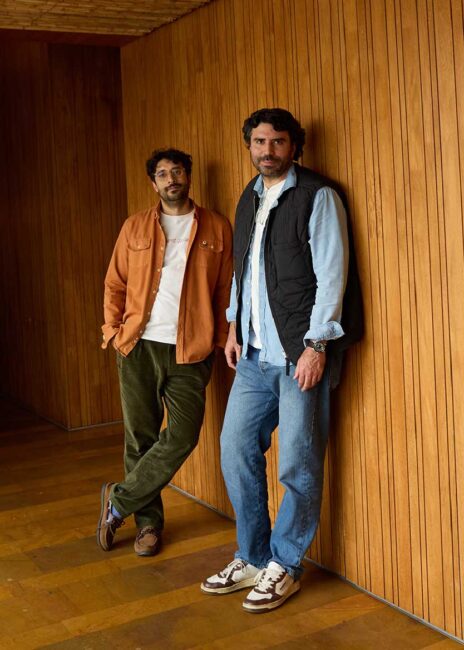
WHITMAN co-founders Felipe and Sebastián Falla. Photo: Courtesy WHITMAN

That language might sound grandiose were it not so carefully embodied in the garments themselves. WHITMAN’s tailoring is meticulous without becoming rigid. Jackets in Harris Tweed wool retain a reassuring weight and texture rarely encountered in contemporary ready-to-wear. Their made-to-measure suits, inspired by Savile Row traditions and constructed using top-tier textiles, favour timeless silhouettes over exaggerated cuts.

Each blazer is designed to age gracefully rather than remain pristine. Even their shirts — including guayaberas intended for that “magic hour” between afternoon and evening — are treated with near-ceremonial attention. Clients are encouraged to personalise collars, cuffs and fit through WHITMAN’s in-house tailoring service. Rather than pursuing relentless seasonal turnover, WHITMAN releases limited-edition “capsules” built around fabrics, textures and moods, reinforcing the brand’s philosophy that clothing should be collected slowly and lived in fully.

Increasingly, WHITMAN has evolved beyond clothing into a broader lifestyle proposition. Its “Home Collection” introduces visitors to hand-painted ceramics, artisanal candles and small-batch chocolate sourced from carefully curated cacao harvesters across Colombia. Guests visiting the stores are often offered cups of “La Molienda”, a Huila Arabica coffee that reflects the founders’ attachment to their Andean roots and tradition of hospitality. The atmosphere feels intentionally domestic rather than commercial — a place designed to make clients linger, converse and reconnect with slower rhythms of living.

The company’s commitment to craft extends deeply into Colombia’s artisanal traditions. WHITMAN works closely with women artisans from the department of Cauca, incorporating delicate embroidery into its women’s wear collections and preserving techniques passed through generations. In doing so, the brand positions craftsmanship not as decorative nostalgia but as a living cultural dialogue between fashion, territory and memory.

The company’s flagship boutique near Bogotá’s upscale Centro Andino shopping district has become something of a pilgrimage site for Colombia’s emerging creative class: architects, filmmakers, restaurateurs and musicians who regard clothing less as conspicuous consumption than as an extension of cultural identity. WHITMAN’s expansion to five stores in Bogotá, as well as boutiques in Cartagena, Barranquilla and Medellín, reflects how successfully the brand has tapped into a regional appetite for understated luxury rooted in authenticity.

Crucially, WHITMAN’s refinement does not exist in opposition to sustainability but alongside it. The brand works with organic cottons and Indian block prints while openly acknowledging the contradictions inherent in the fashion industry. “We do not believe sustainability is an absolute claim,” the company notes in its manifesto, “but a constant exercise of consciousness, revision and responsibility.” It is a refreshingly nuanced position in an era when many fashion houses deploy ecological language as little more than marketing varnish.

The WHITMAN approach instead suggests that sustainability begins with permanence: clothing designed not to be discarded after one season. In this respect, the label belongs to a wider international movement challenging the disposability of modern consumption. Its “Slow Made” philosophy prioritises craftsmanship over industrial repetition, quality over quantity and emotional attachment over instant gratification. To purchase a WHITMAN “Loretto” overcoat or dark-blue “Poet” blazer is, in some sense, to reject the accelerated rhythms of fast fashion altogether.

There are also echoes here of the old-world ateliers that once defined European tailoring culture. WHITMAN’s made-to-measure programme remains entirely hand-finished, preserving artisanal techniques passed from one generation of tailors to the next. The process unfolds deliberately: fabric selection, inner lining, structure, stitching and finishing all treated as rituals rather than stages of production. “The true value of bespoke tailoring,” WHITMAN argues, “lies in its capacity to reflect authenticity.”

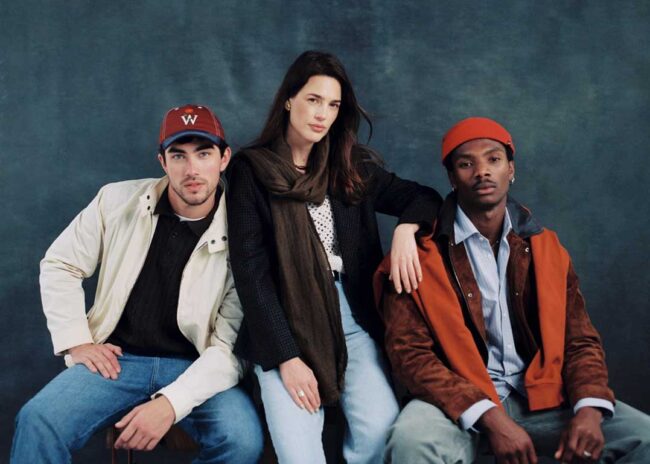
WHITMAN blends tailoring, craftsmanship, music and slow living into a quietly elegant experience. Photo courtesy WHITMAN

That sensibility extends beyond clothing into cultural patronage. WHITMAN has positioned itself as an active supporter of Colombia’s artistic ecosystem, sponsoring emerging cultural initiatives and independent artists. At Bogotá’s prestigious ARTBO art fair, the company awards the annual Premio Whitman to emerging artists participating in the ArteCámara section, reinforcing the brand’s dialogue with contemporary art and design. The label has also forged close ties with Colombia’s film world, dressing the jury for the “Cine en los Barrios” category at the Festival Internacional de Cine de Cartagena de Indias, better known as FICCI, the oldest film festival in Latin America.

International expansion has followed organically. In 2024, WHITMAN announced its arrival in Mexico with two stores and hinted at ambitions extending towards the United States, Spain and wider European markets. Yet unlike many Latin American brands eager for overseas validation, WHITMAN appears less interested in aggressive scale than in cultivating a community united by shared values: appreciation for music, art, nature and intentional living.

That perhaps explains why WHITMAN feels distinct within Colombia’s increasingly sophisticated fashion landscape. The brand is not merely selling jackets or linen shirts. It is offering a slower tempo of life — one in which elegance is measured not by spectacle but by permanence, texture and thoughtfulness. And if WHITMAN represents a new kind of menswear energy emerging “from Colombia to all of Latin America”, it also channels something of the Scottish Highlands, the understated elegance of Bond Street and the urban edge of St Urbain Street in Cohen’s fabled Montreal.

For a label named after a poet who celebrated beauty in ordinary existence, that feels entirely fitting. Or, as WHITMAN’s Brand and Partnerships Lead, Laura González Saavedra, puts it with understated simplicity: “wearing a WHITMAN makes you feel at home.”

Follow WHITMAN at @WHITMAN_CO or visit WHITMANSTORE.COM

Or visit their flagship store at Paseo de la Cabrera, Carrera 11 No. 84A-09, Bogotá.

  •  

Petro Challenges Election Results as Colombia’s “Tiger” Clinches First-Round Victory

The hard-right presidential candidate Abelardo “El Tigre” de la Espriella emerged as the frontrunner in Colombia’s presidential election on Sunday, setting up a June 21 runoff against left-wing senator Iván Cepeda after a closely contested first round that was quickly overshadowed by President Gustavo Petro’s allegations of electoral irregularities.

According to the final bulletin (No.67) released by the National Registry Office, De la Espriella secured 43.74% of the vote, finishing ahead of Cepeda, who obtained 40.91%. Conservative senator Paloma Valencia followed with 6.92%, while centrist candidate Sergio Fajardo received 4.26%.

The outcome sets the stage for a high-stakes second round that could determine whether Colombia continues along the political path established by Petro’s administration or pivots sharply toward a more conservative agenda centered on security, economic growth and closer relations with the United States.

Within hours of the results being announced, Petro cast doubt on the preliminary count, stating on social media that he would not recognize the pre-count figures and would only accept the results produced through the official electoral scrutiny process conducted by judicial commissions.

The president argued that the election-day count “has no binding force” and raised concerns about alleged modifications to electoral software and inconsistencies in the voter registry. Petro further suggested that some 800,000 voter identification records may have been improperly added to the electoral census before the vote.

Petro’s allegations quickly became the dominant political controversy of election night. While the president suggested that software modifications and irregularities in the voter registry may have affected the process, he presented no public evidence to substantiate the claims. Electoral authorities, judicial officials and international observers subsequently defended the integrity of the vote, creating a sharp contrast between the president’s warnings and the assessments of institutions directly responsible for overseeing the election.

National Registrar Hernán Penagos responded forcefully to the allegations, rejecting claims that the software used in the electoral process handled voter identification records. Penagos emphasized that the electoral census had been closed since April 30, that all voting records were publicly available for review and that party witnesses had monitored voting and counting procedures throughout the country.

Attorney General Gregorio Eljach also challenged Petro’s assertions, publicly demanding evidence to support accusations that risked undermining confidence in the electoral process.

The controversy intensified briefly when Cepeda questioned apparent discrepancies in electoral databases and echoed concerns regarding the voter registry. However, the left-wing candidate later moderated his position after internal reviews by his campaign.

“We have found no evidence of facts that merit a statement regarding eventual irregularities,” Cepeda said, effectively distancing himself from Petro’s original claims.

The president’s fake narrative appeared to lose momentum after Cepeda’s own campaign acknowledged that it had uncovered no evidence of fraud or irregularities sufficient to challenge the outcome. The concession strengthened the position of election officials, who maintained throughout the day that Colombia’s voting system functioned normally and transparently.

Former Justice Minister Wilson Ruiz Orejuela was among those who condemned Petro’s statements, accusing the president of attempting to cast doubt on a legitimate electoral process. “Petro did not recognize last night’s results,” Ruiz said. “But he has been a complicit driver of the rigged elections that took place in Venezuela.”

International observers, meanwhile, offered a markedly different assessment of the electoral process. Scott Campbell, Colombia representative for the United Nations Human Rights Office, congratulated Colombians for what he described as a peaceful election day and praised the country’s institutions for overseeing the vote. “Today we have not documented significant violations or infringements of human rights,” Campbell said following the election.

Support for the integrity of the process also came from the United States.

Republican Senator Bernie Moreno, who participated as an international observer, described Colombia’s voting system as one of the most effective he had encountered.

“The beauty of democracy was fully displayed as the people of Colombia exercised their power to chart their future in their own hands and with their own voices,” Moreno wrote on social media.

Speaking later to Colombian media, Moreno said he had informed Secretary of State Marco Rubio and President Donald Trump that “the elections in Colombia were completely free and well done.”

Moreno went further, suggesting aspects of Colombia’s voting system compared favorably with those used in the United States. “They do it better here in Colombia than in the United States,” he said. U.S President Donald Trump directly endorsed De La Espriella ahead of Sunday’s vote, stating: “He has all my support.”

The controversy surrounding Petro’s claims also drew attention from Venezuela’s democratic opposition. President-elect Edmundo González praised Colombia’s institutions and warned of the fragility of democratic systems. “I look at Colombia with hope and with memory,” González wrote. “I know the value of what our Colombian brothers possess because we lost it. The right to choose, and the institutions that make it possible, are not easily recovered. Yours are still standing. Protect them.”

While election authorities sought to contain the controversy, De la Espriella’s victory triggered an immediate wave of support from conservative political leaders across Latin America and beyond.

Argentine President Javier Milei was among the first foreign leaders to congratulate the Barranquilla criminal defense lawyer. “This result reflects the desire for freedom and progress of the Colombian people, and an explicit willingness to say enough to the failed socialist model that has caused so much damage to our region and to Colombia in particular over the last four years,” Milei wrote on X.

The Argentine leader added that if the result is repeated in the runoff, “Colombia will once again join the community of free nations” before concluding with his trademark slogan: “Long live liberty, damn it.”

Ecuadorian President Daniel Noboa also congratulated De la Espriella and suggested Colombians were demanding political change after four years of left-wing government. “Being a bad loser is contagious,” Noboa wrote in an apparent reference to former president Rafael Correa, and his criticism of the 2025 election results, adding that Colombia needs “real change.”

Venezuelan opposition leader María Corina Machado likewise celebrated the outcome, saying the result would strengthen democratic institutions and regional security. “The Venezuelan people need a strong and united Colombia,” Machado said, arguing that democratic nations must work together against organized crime and authoritarianism.

In Washington, Republican Congresswoman María Elvira Salazar welcomed De la Espriella’s performance and interpreted the result as a repudiation of Petro’s administration. “The results send a powerful message,” Salazar wrote. “Millions of Colombians reject Gustavo Petro’s direction and want to recover security, prosperity and freedom.”

The Conservative Party formally endorsed De la Espriella following the first-round results, describing him as the candidate who best “represents Colombians demanding a firm direction” for the country.

The runoff campaign now enters a critical three-week stretch as De la Espriella and Cepeda compete for support from voters whose preferred candidates were eliminated in the first round.

For firebrand De la Espriella, victory on June 21 would represent a dramatic ideological shift following four years of Petro’s left-wing presidency and could usher in closer ties with Washington and key allied governments, among them, Israel.

For Cepeda, the challenge will be persuading voters to embrace continuity with Petro’s political project despite deep public dissatisfaction over security, economic mismanagement, corruption scandals and an increasingly polarized political climate.


  •  
❌