
Reading view

Venezuela contradicts Colombia cooperation claims about military strikes near border

Delcy Rodríguez and Gustavo Petro pictured at a meeting in Caracas in April. Image credit: Colombia President’s Office.

The Venezuelan government on Wednesday published a declaration saying it regretted recent violence in the Catatumbo region of Colombia just days after Bogotá announced bombing in cooperation with Caracas.

The statement muddies the waters about whether or not Venezuela was involved in the military operations against the National Liberation Army (ELN) rebels near the two countries’ joint border, which allegedly killed 7 guerrilla fighters. 

“The Bolivarian Republic of Venezuela expresses its profound concern and regrets the escalation of violence in the border region of Catatumbo,” read a statement shared on X by Foreign Minister Yvan Gil.

The declaration came after Colombian President Gustavo Petro said on Monday that he had ordered the bombing in cooperation with Venezuela. 

“I gave the order to bomb the ELN camp in accordance with the agreement reached with the Bolivarian government of Venezuela,” wrote Petro on X.

Petro appeared to allude to an agreement with Caracas to cooperate on tackling cross-border crime following his visit to Venezuela in April. 

But Caracas appeared to wash its hands of the recent bombing operation; while it did not directly acknowledge the bombing or Petro’s statement, its declaration said that it “rejects any armed action that compromises the peace, stability, and security of border communities.” 

It added that the only way to preserve peace and stability in the region is through “mechanisms of understanding and mutual respect, avoiding actions that can aggravate tensions or generate greater risks for border populations, who for decades have faced the consequences of a conflict out of their control.”

Since last year, Catatumbo has been the site of what has been described as “the most serious humanitarian crisis of recent times” in Colombia. In January 2025, a family of three, including a nine-month-old baby, was killed, marking the collapse of fragile peace pacts between the ELN and the Frente 33 – a dissident faction of the demobilized FARC rebels – and triggering a humanitarian crisis on a scale not seen in the country for over a decade.

The Red Cross said that 2025 was one of the most complicated years for humanitarian conditions in Colombia: more than 235,000 people were individually displaced, over 176,000 people have been unable to move freely because of armed conflict, and there has also been a sharp increase in cases of mass displacements.

Venezuela’s statement highlights the cross-border nature of the conflict, noting that the country “has historically suffered the consequences of Colombian internal conflict.” Colombian armed groups like the ELN and dissident FARC factions have traditionally had a significant presence in Venezuela and were known to have ties to the Nicolás Maduro regime.

But both the interim government under Delcy Rodríguez and Petro have been under pressure from the White House to confront guerrilla groups.

The post Venezuela contradicts Colombia cooperation claims about military strikes near border appeared first on The Bogotá Post.
  •  

Drone attack on home in Colombia kills three, injures one

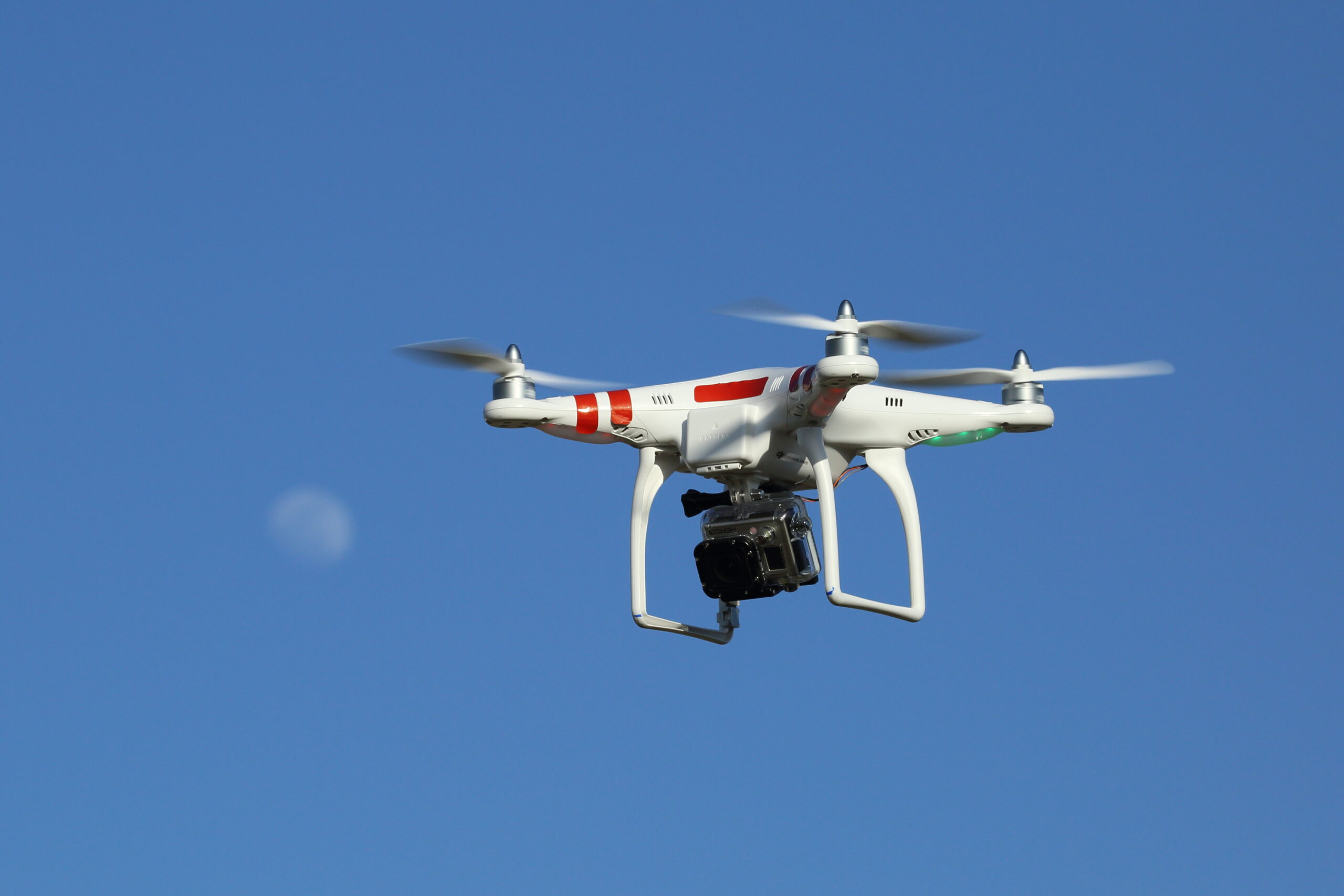
Drone with GoPro digital camera mounted. Credit: Don McCullough, Wikimedia Commons

Medellín, Colombia – On Thursday morning, a drone dropped a mortar shell on a home in Segovia, a town in the northeast of the Antioquia department, killing three occupants of the house and leaving one critically injured.

The police identified the victims as María Cecilia Silva Silva and her two adult children, Yalusan Cano Silva and Alsonso de Jesús Silva. Silva’s other son was also wounded in the attack.

Segovia is a key center for illegal gold mining and is being contested by multiple armed groups, including the Gaitanist Army of Colombia (EGC), also known as the Clan del Golfo, and dissident groups of the now-defunct FARC rebels.

Authorities are still working to establish if the attack was directed at the family or if it was an error by the drone operators, an increasingly common occurrence as drones become the latest technology used in Colombia’s internal armed conflict. 

According to the Secretary of Security of Antioquia, General Luis Eduardo Martínez Gúzman, the victims were “a family who have nothing to do with the conflict, who were simply attacked by a drone.” 

Martínez highlighted the danger of these devices, suggesting that the explosive device was detached from the drone, which means the mortar could “fall anywhere.”

The Director of the National Police in Colombia, General William Oswaldo Rincón Zambrano, released a statement of condemnation: “[we] categorically reject this criminal act which plunges a Colombian family into mourning and demonstrates the contempt of illegal armed groups for human life and dignity.” 

He also reported that state security forces have headed to the area where the attack took place in order to verify what happened and assist in locating and capturing those responsible. He also expressed solidarity with the victims and their families.

The Governor of Antioquia, Andrés Julián Rendón took to social media to blame the security policies of the national government for the attack: “Who in their right mind could consider that this government has achieved transformations for Colombia?”

Rendón criticized President Gustavo Petro for negotiating with the armed groups involved in the conflict in Segovia, part of the leftist leader’s “total peace” policy. 

“This is the so-called ‘total peace’: concessions for criminals and burials for civilians. Antioquia demands an unwavering military offensive, full backing for the security forces, and zero leniency towards the criminals,” said Rendón. 

Drone attacks, both against armed groups as well as against security forces and the civilian population, have become widespread in Colombia. Between April 2024 and February 2026, the government recorded 418 attacks using drones. 

Tackling the mounting security crisis is a key issue in upcoming elections, which the United Nations warns may be undermined by the armed conflict.


Featured image description: Drone with GoPro digital camera mounted

Featured image credit: Don McCullough, Wikimedia Commons

The post Drone attack on home in Colombia kills three, injures one appeared first on The Bogotá Post.

  •  
❌