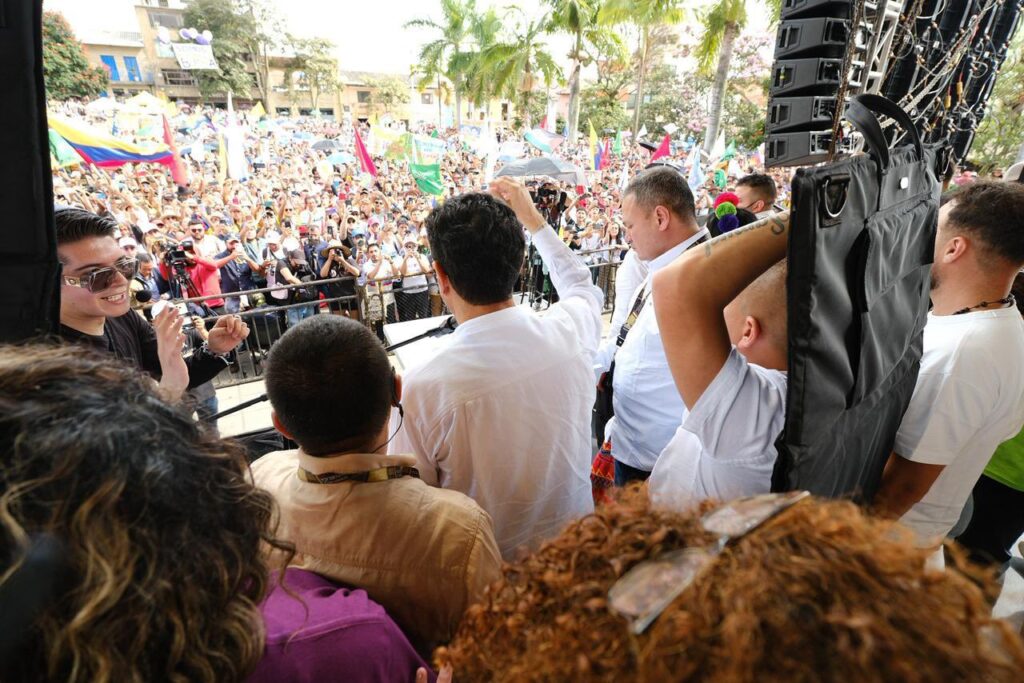
Delcy Rodríguez and Gustavo Petro pictured at a meeting in Caracas in April. Image credit: Colombia President’s Office.
The Venezuelan government on Wednesday published a declaration saying it regretted recent violence in the Catatumbo region of Colombia just days after Bogotá announced bombing in cooperation with Caracas.
The statement muddies the waters about whether or not Venezuela was involved in the military operations against the National Liberation Army (ELN) rebels near the two countries’ joint border, which allegedly killed 7 guerrilla fighters.
“The Bolivarian Republic of Venezuela expresses its profound concern and regrets the escalation of violence in the border region of Catatumbo,” read a statement shared on X by Foreign Minister Yvan Gil.
The declaration came after Colombian President Gustavo Petro said on Monday that he had ordered the bombing in cooperation with Venezuela.
“I gave the order to bomb the ELN camp in accordance with the agreement reached with the Bolivarian government of Venezuela,” wrote Petro on X.
Petro appeared to allude to an agreement with Caracas to cooperate on tackling cross-border crime following his visit to Venezuela in April.
But Caracas appeared to wash its hands of the recent bombing operation; while it did not directly acknowledge the bombing or Petro’s statement, its declaration said that it “rejects any armed action that compromises the peace, stability, and security of border communities.”
It added that the only way to preserve peace and stability in the region is through “mechanisms of understanding and mutual respect, avoiding actions that can aggravate tensions or generate greater risks for border populations, who for decades have faced the consequences of a conflict out of their control.”
Since last year, Catatumbo has been the site of what has been described as “the most serious humanitarian crisis of recent times” in Colombia. In January 2025, a family of three, including a nine-month-old baby, was killed, marking the collapse of fragile peace pacts between the ELN and the Frente 33 – a dissident faction of the demobilized FARC rebels – and triggering a humanitarian crisis on a scale not seen in the country for over a decade.
The Red Cross said that 2025 was one of the most complicated years for humanitarian conditions in Colombia: more than 235,000 people were individually displaced, over 176,000 people have been unable to move freely because of armed conflict, and there has also been a sharp increase in cases of mass displacements.
Venezuela’s statement highlights the cross-border nature of the conflict, noting that the country “has historically suffered the consequences of Colombian internal conflict.” Colombian armed groups like the ELN and dissident FARC factions have traditionally had a significant presence in Venezuela and were known to have ties to the Nicolás Maduro regime.
But both the interim government under Delcy Rodríguez and Petro have been under pressure from the White House to confront guerrilla groups.
2025 was worst humanitarian crisis in over a decade, says report.
Delegates from the International Committee of the Red Cross in Colombia. Photo: ICRC
Colombia’s armed groups must stop targeting civilians, urged the International Committee of the Red Cross (ICRC) this week in a report highlighting the country’s intensifying conflict.
In 2025 the impact of armed conflict on communities was the worst recorded in a decade, said the ICRC, with all indicators showing mistreatment of civilians on the rise.
Quoting statistics from Colombia’s victim support unit – the UARIV – the human rights organization reported more than 87,000 persons displaced in mass events by conflict or threats, and a further 235,000 forced to uproot their lives individually.
Also in 2025, at various times more almost 177,000 people were confined in their communities by aggression by armed groups, either by combat or closing of transport routes.
And in a shocking figure, 965 persons were killed or injured by explosives, often delivered by drones, an increase of 34% on the previous year (2024). Most victims were civilians.
“The scale of this human tragedy cannot be described by numbers alone but is reflected in the suffering of entire communities living in fear of fighting,” said the ICRCs Colombia chief Olivier Dubois, presenting the findings.
“Families are forced to leave everything behind in order to survive, the search for thousands of missing persons, and the shattered lives of boys and girls scarred by war,” he added.
New forms of warfare
The ICRC has a key role in promoting International Humanitarian Law (IHL) in armed conflicts – the so-called ‘rules of war’ – of which an important part is keeping civilians out of the crossfire. The Geneva-based organization, which has been present in Colombia for decades, said upholding these rules depended on decisions by the armed actors themselves.
This was an increasingly difficult task given the breakdown of formerly hierarchical armed groups into numerous factions. And with new forms of warfare.
“In 2025, our teams worked in a context marked by the intensification and transformation of armed conflict dynamics, including an increasing use of new technologies, such as the use of drones, with significant consequences on civilians’ daily lives,” said Dubois.
The increase of explosive hazards – booby traps, landmines and drone bombs – affected civilians as clashes intensified in departments such as Norte de Santander, Cauca, Antioquia and Valle.
In these areas a total of 75 civilians were affected by landmines, and more than 540 injured or killed by “controlled detonation devices and launched explosive devices”, a term that includes a range of improvised devices from roadside bombs to armed drones and clumsy pipe mortars firing cooking gas cylinders packed with explosives.
Intimidation and power
The rise in drone-dropped bombs had not only intensified in the conflict but “generated fear, uncertainty and serious harm among affected communities”.
The report also described scant regard for civilian spaces as explosives were found scattered in fields, roads and even schools, stated the report.
“The way in which hostilities are conducted, and weapons are used, has direct implications for civilians and civilian property”, it added.
The ICRC also warned of the horror of sexual violence within the conflict framework, though often hidden and unreported. From its own presence in zones dominated by armed groups, the ICRC was aware that rape and abuse survivors faced stigmatization and fear of reprisals.
This created barriers for victims seeking care and assistance and under-reporting of cases: “The available figures do not reflect the true scale of this phenomenon,” said the report.
Armed groups used sexual violence as a form of intimidation and a show of power, but in some cases also as a form of punishment in communities under their control.
The report also called on armed groups to stop recruiting minors: “No person under the age of 18 should be recruited, used or involved in hostilities under any circumstances,” it said.
The humanitarian crisis observed last year was not a sudden phenomenon, explained the ICRC, but rather the culmination of year-on deterioration since 2018.
Bad month for civilians
A public bus burnt by armed men on a highway on May 12th. Photo: X
The report follows a calamitous month for Colombia in terms of civilian victims. In late April, 21 bus passengers were killed in Cauca when the EMC armed group exploded a roadside bomb by a queue of stopped traffic.
And in early May a young journalist was tortured and murdered by suspected Frente 36 dissidents in a rural area close to Briceño, Antioquia.
The report’s findings chime with those from thinktanks and UN agencies that have rung alarm bells over growing conflict and abuses by armed groups.
In February, UNICEF warned of a spike in child recruitment with numbers rising 400 per cent over five years, with one minor forced into conflict on average every 20 hours.
The same month thinktank Fundacion Ideas para la Paz (FIP) published data showing that Colombia’s illegal armed groups had grown by 84 per cent during the three years of the Petro government’s Paz Total policy
Armed groups had cynically used rounds of negotiations to expand both in numbers and territory, FIP analyst Gerson Arias told The Bogotá Post.
“As such, the policy gave a gigantic strategic advantage to the armed groups to strengthen their fighting forces,” he said.
War without ideology
A common theme between conflict commentators was the lack of ideology among today’s armed groups, lowering any humanitarian impulses. This even though these groups at times mimicked the uniforms, logos and terminology of former rebel movements with social agendas such as the FARC-EP.
“Any ideological dimension of these groups has been replaced by the dynamics of illegal markets,” Gerson told The Bogotá Post last week. “The dimension now is military strength to sustain those markets.”
From the 1960s to the 1980s Colombia’s guerrilla movements were close to rural communities. That relationship was now predatory, said Gerson. “Communities in Cauca, for example, don’t feel represented or protected by these armed groups who attack them, confine them and recruit their children,” he explained.
The question now is: will the current crop of combatants heed the ICRC’s call this week to respect civilian communities?
ICRC’s Olivier Dubois said that while the context was challenging, international humanitarian law should be foremost in the minds of all fighters in the conflict.
In particular, he called on armed groups to protect children from war, and respect spaces such as schools. He also called for an end to forced disappearances, of which the ICRC recorded 308 new cases last year, on top of the 132,000 historical cases reported by the authorities over six decades of conflict.
“No one should go missing, and no family should have to endure the uncertainty of not knowing what happened or where their loved one is. Preventing the disappearance of persons is an obligation imposed by Interntional Humanitarian Law on all parties to armed conflicts,” he said.
“Upholding international humanitarian law is fundamental to limit suffering in armed conflicts. When these rules are not respected, suffering is exacerbated”.
Today the world is celebrating Global Big Day, a 24-hour birding event open to families, scientists, and nature lovers across the planet.
Birders have 24 hours to record as many species as possible, and Colombia, one of the most biodiverse places on the planet, aims to keep the country perched atop the worldwide leaderboard.
Last year, the country recorded around 1,500 species and 12,000 checklists, according to the Ministry of Commerce, Industry, and Tourism (MINCIT).
Colombia, of course, has a leg up on other countries. It’s home to the highest number of identified bird species on the planet: 1,900. That’s 20% of all known bird species.
The country is also a temporary home to over 200 migratory species each year.
“Colombia’s global ranking is opening doors for regions that were once isolated but still hold incredible natural resources,” Luisa Aguirre, Technical Director of Sustainability and Innovation for Environmental Culture at the Regional Autonomous Corporation of Cundinamarca (CAR), told The Bogotá Post.
The event schedule is centered on Saturday, but people can still report their findings between May 10 and 12. On May 16, CornellLab, the organizers of Global Big Day, will present the preliminary results.
“Beyond just spotting birds, these activities help us learn more about the world we live in and create a real sense of emotional well-being,” Aguirre stated.
The participants (beginners and experienced birders) can share their observations on the eBird platform, managed by the Cornell Lab of Ornithology, which is used as the main global data repository. In the case of Colombia, the goal is to surpass the 1,600 species targeted and defend its current crown.
Colombia’s neighbor, Peru, is hovering close behind. Last year the Andean nation took second place, recording 1,400 species.
If you’re from Colombia, you know the people love a good regional rivalry, and birders are no different. Different regions of Colombia are vying for bragging rights as a top birding destination.
Image credit: CAR
For example, CAR, which plans and executes environmental projects in the department of Cundinamarca in central Colombia, activated 29 strategic natural parks and lakes, including the Embalse del Neusa, El Hato, and Laguna del Cacique de Guatavita for the global event.
Within driving distance from the country’s megametropolis capital city Bogotá, there are plenty of great birding destinations.
In Cundinamarca, Puente Sopó is a local birding favorite, with 160 registered species in 2025, while Neusa and Cacique de Guatavita areas hosted approximately 140 species each during the past year; this is also due to their high-mountain ecosystems.
All around the country, hummingbirds, macaws, blue tanagers, and the majestic Andean condor are some of the most recognized species of Colombia’s biodiversity. While spotting the condor represents a real challenge, hummingbirds and woodpeckers are some of the easiest species to catch a glimpse of.
Beyond the ecological data, these places also offer a deep connection to the region’s historical and ancestral roots. In the Cacique de Guatavita Lake, for example, the Muisca community from Sesquilé (an indigenous community) guides foreign and national visitors on a hike while sharing one of the most recognized stories in Colombia’s history: the Legend of El Dorado.
“Watching birds in a place full of history and spirituality is a unique chance to promote a more conscious and sustainable type of tourism,” said Aguirre.
“Birdwatching has become a great opportunity to support local businesses and promote the country’s biological heritage fairly and responsibly,” she added. “This event is a huge recognition of the hard work that local communities, guides, and researchers do for nature conservation”.
By opening these protected areas, the region aims to show its variety of endemic and migratory species. It also offers specialized routes for thousands of observers, strengthening Colombia’s position as a top nature tourism destination.
“The best advice is to just go for it… You need to be patient and take the time to really watch the habits and colors of the birds,” Aguirre concluded.
Colombian politician Germán Vargas Lleras died Friday in the capital Bogotá, according to Semana magazine. His death brings an end to a political career spanning more than 30 years, including as a senator, minister, vice president, and two-time presidential candidate.
On Monday, Vargas Lleras was admitted to the Intensive Care Unit at the Luis Carlos Sarmiento Angulo Cancer Treatment and Research Center in Bogotá. He was later transferred to another hospital where he lost a battle with cancer he had been fighting for years. He was 64 years old.
Political career
Born in Bogotá on February 19, 1962, Vargas Lleras grew up in a political family. His grandfather, former President Carlos Lleras Restrepo, was a pillar of the country’s Liberal Party.
He would go on to make a name for himself on his own, serving as a city councilman, congressman, minister, and ultimately leader of the Cambio Radical political party.
Vargas Lleras first ran for president 2009. He traveled the country, participated in debates, and garnered nearly 1.5 million votes. It wasn’t enough to win, but he finished third.
The winner of the election, Juan Manuel Santos, would later call on him to serve as a minister in his cabinet.
In 2014, Santos chose him as his running mate for reelection. Together they won in the runoff, and Vargas Lleras took office as vice president on August 7 of that year.
Once his term as vice president ended, Vargas Lleras did not sit idle. In 2018, he ran again for president, this time with the “Mejor Vargas Lleras” coalition backed by Cambio Radical.
His policy proposals included infrastructure, housing, and a more efficient public administration.
In the first round, he received over 1.4 million votes but finished fourth, knocking him out of the runoff race. His campaign stated that he would not officially endorse either of the remaining candidates, Iván Duque and Gustavo Petro.
Over time, he kept a lower profile, though he never completely stepped away from politics.
During his career, Vargas Lleras would survive two assassination attempts and a “parapolitics” scandal in which he was accused, but never charged, with benefitting politically from his connections to warlord “Martin Llanos”.
Health issues
In his later years, his health gradually got in the way of politics; reportedly, he suffered from a benign meningioma, a tumor in the membranes surrounding the brain and spinal cord, which was detected in 2016 after a fainting spell.
On March 11, former President Álvaro Uribe commented on his condition, saying, “My best wishes for the health of Dr. Germán Vargas Lleras, a distinguished patriot whom I respect despite our occasional disagreements.”
During his final months, the former vice president stayed out of the public eye, though he briefly reappeared on March 3 in a video concerning the March 8 parliamentary elections.
Upon learning of his death, former President Santos wrote on X that he is “deeply saddened” and described Vargas Lleras as “an exceptional colleague.”
Current President Gustavo Petro also mourned the political leader’s death: “Both in the Senate and on the campaign trail, he behaved like a gladiator. As someone who often disagreed with him, I regret that his seriousness in debate will be lost,” he said on his X account.
Authorities in Colombia confirmed the discovery of the body of Mateo Pérez Rueda, an independent journalist and Political Science student at the National University in Medellín, who had traveled to Briceño, Antioquia, to document the security situation in that region, where the 36th Front of the dissidents of the former FARC operates.
The body has been released to the family following dialogues between organized crime groups and humanitarian organizations, including the ICRC. The family wasn’t allowed to enter the zone either.
“He was murdered by Jhon Edison Chalá Torrejano, from the Darío Gutiérrez front, which is a divided group from the 36th Front, fragmented into various criminal groups,” stated President Gustavo Petro through his X account.
The 25-year-old reporter had become an important voice for the communities of northern Antioquia, founding and serving as the director of the digital media outlet El Confidente de Yarumal.
In this role, he covered issues related to organized crime, administrative corruption, public order, security, and local politics in municipalities where organized crime and illegal armed groups operate actively, such as Valdivia, and Ituango. Because of this, he faced legal prosecutions, conciliation summons, and other hostile acts against him.
The country entered into an active search for Mateo following the report of his disappearance on May 5 in the rural hamlet of Palmichal, where local residents and relatives of the victim had reported that the journalist had been murdered by members of the criminal group led by alias Calarcá Córdoba.
Alias Calarcá is a guerrilla leader participating in President Gustavo Petro’s “Total Peace” negotiations, and his arrest warrant was suspended by the government to facilitate talks with the armed group.
According to local media, Mateo contacted several officials seeking someone to accompany him to a rural area to get information about the ongoing armed conflict in the region.
Reports state that authorities and neighbors reportedly recommended that he should not leave the urban center, as no one, even government officials, have guaranteed safety going into these sectors; the journalist reportedly ignored these warnings and set off on his motorcycle.
Defense Minister Pedro Sánchez initially handled the case as a disappearance, but Mateo’s loved ones pointed out that it could be a kidnapping and murder just a few hours after losing contact with him, when his vehicle, wallet, cell phone, and keys were found abandoned.
Sánchez also offered a 300 million COP (around $80,500 USD) reward for information leading to those responsible for Mateo’s suspected murder.
This situation also highlights the ongoing risks for those practicing journalism in Colombia, mostly in rural territories and conflict zones.
According to the FLIP, a press freedom foundation, since 2022, armed groups have attacked the press 387 times, using threats and displacement to force silence.
Featured image: Mateo Pérez Rueda
Image credit: FLIP
This article originally appeared on Latin America Reports and was republished with permission.
Unexploded device sparks alarm after suspected links to armed groups.
Remains of the drone found in Bogotá this week, the PVC pipe contained C4 explosives. Photo: PoliciaNacional
Bogotá’s security agencies were on full alert this week after a drone rigged to carry explosives was found on the outskirts of the city less than six kilometers (3.7 miles) from El Dorado international airport.
Anti-terrorist units working along side Colombian air force specialists discovered the drone bomb in woodland close to the Bogotá River in the Kennedy district on Wednesday afternoon.
The drone was close to a makeshift camp, though it was unclear from official reports of the artefact had crashed there or was discarded and hidden.
An air force spokesman said the site was detected with the help of intelligence services after a tip-off from investigators in Cauca, a conflict region of Colombia where drone bombs are frequently used by armed groups.
The bomb itself was made from 260 grams of powerful C4 explosive stuffed in a PVC tube with a medical syringe rigged as a detonator, a device more commonly seen in Colombia with artisanal landmines, and a camera for guidance.
One unusual element of the drone was its unconventional control system using fiber-optic cables, said the spokesman. This style of drone, pioneered in the Russia – Ukraine conflict, can overcome signal jamming technology making it harder to intercept.
“This type of threat is now present in the cities, we call on the community to call in any suspicious activities,” said the spokesman. Citizens should phone 107 to report drone sightings.
Meanwhile the device had been disarmed and handed over to experts at the CTI (Cuerpo Técnico de Investigación) for forensic analysis, he added.
The improvised weapon’s discovery followed a week of alerts of unauthorized drones seen flying over El Dorado airport, in some cases causing temporary shutdowns. In the most recent incident, an Avianca crew spotted a drone close to the terminal building leading to a10-minute flight suspension.
Aeronáutica Civil, Colombia’s airspace agency, later declared the sighting a false alarm.
Rise of the drones
Armed drones are increasingly being used in Colombia with combatants dropping airborne explosives on rival gangs and state forces, often from home-made devices fabricated from small drones and accessories available on the high street.
The technological race to gain a performative edge on the battlefield has created game-changing tactics in the country’s decades-old conflict, but also brought misery to civilians caught in the crossfire.
According to website Razón Publica, there were 418 drone bombings across the country in 2024 and 2025, with 28 fatalities, of which 10 were civilians. Another 300 people were injured.
Three of Colombia’s largest armed groups, the ELN, Clan del Golfo and EMC dissidents, were perfecting these improvised devices while state security forces were scrambling to keep up, said the publication.
Drone attacks were reported in all of Colombia’s conflict hotspots, particularly Cauca, Valle, Norte de Santander, Antioquia and Caquetá.
Civilians were often collateral victims – bombs are dropped from several hundred meters and frequently miss their targets – and armed groups also used drones to control communities.
“The drone go beyond attacks: they monitor, intimidate, and generate displacements,” said Razón Publica.
On May 8th, a police station was attacked by five armed drones in the Cauca town of Suárez, according to the local mayor.
#Atención A esta hora disidentes atacan con drones cargados de explosivos la estación de Policía en Suárez, Cauca. La alcaldía suspendió la atención al público y ordenó a sus habitantes a permanecer resguardados en sus viviendas. pic.twitter.com/qcNmg8sDOB
Security chiefs speculated this week that the Bogotá drone bomb could have been planned for military installations based at El Dorado.
Colombia’s main international airport lies alongside the large hangars of CATAM, or Comando Aéreo de Transporte Militar, a large logistical base for military operations, as well as FAC (Air Force) and police facilities.
Cauca link
As for the drone’s origin, some clues pointed to EMC armed group currently fighting state forces in Cauca in the southwest of the country.
According to reports on the El Tiempo news site, the Bogotá drone was only found after prosecutors in Popayán alerted their counterparts in the capital of its location, and this tip-off came two days after the capture in Cauca of two suspected explosives experts – José Musse and José Valencia – accused of belonging to the Frente Carlos Patiño, one of the major fighting units of the EMC.
Cauca was the scene last month of one of Colombia’s worst conflict atrocities when a roadside bomb planted by the EMC exploded killing 21 civilians traveling close to Popayán, the departments regional capital.
When captured on May 4th in Cauca, Musse and Valencia were found with an “artisanal drone that could be used to attack official installations”, said local prosecutors.
The fact the pair had knowledge of the Bogotá drone – and where to find it – suggested a link to the EMC, said El Tiempo, though there was no evidence they were directly involved.
So the question remains who put a drone bomb in Bogotá? And was it linked to the drone alerts at the airport? With the presidential elections around the corner, many rolos will be hoping for some answers.
A crowd at International Workers’ Day in Medellín, 2026. Image credit: Cristina Dorado Suaza.
Colombian Minister of Labor, Antonio Sanguino, said the government was “on the verge” of issuing a decree outlining a path to collective reparations for trade unions at a rally in Medellín on May 1.
The government had previously pledged to pay state reparations to the trade unions movement, which it has recognized as a victim of the Colombian armed conflict.
Colombia remains one of the most dangerous countries in the world for trade unionists, accounting for 63% of all anti-union murders worldwide between 1971 and 2023, according to the Ministry of Labor of Colombia, citing data from the International Labour Organization (ILO).
The ministry had previously announced that President Gustavo Petro would sign a decree on May 1 establishing “180 remedial measures for the labor movement.”
While the measure did not materialize on International Workers’ Day, Sanguino maintained it was imminent and hailed the symbolic importance of the historic plans, telling the crowd, “so that our dead are not forgotten, so that our disappeared are present in every action of the government.”
The measures are part of the integrated collective reparation plan (PIRC) created under the umbrella of the peace process by the Victims Unit. The PIRC was developed in collaboration with labor unions and victims—a historic milestone for the Colombian trade union movement which suffered 15,481 acts of violence between 1970 and 2021.
On May 1st, thousands of Colombian workers gathered in Parque de las Luces in Medellín for International Workers’ Day.
The march began at the Teatro Pablo Tobón Uribe at 9:00 AM while an event scheduled for 12:30 p.m. saw the president and members of his cabinet give speeches alongside social organizations and labor unions.
Speaking at the rally, Sanguino praised the city and the province’s workers: “Antioquia is a people that resists—a resilient people that has fought for its rights and for workers’ rights since the time of María Cano… Today is not Labor Day—work is an activity. It is Workers’ Day.”
Gustavo Petro speaks at International Workers’ Day in Medellín, 2026. Image credit: Cristina Dorado Suaza.
Meanwhile, the crowd chanted “Antioquia is not (ex-President Álvaro) Uribe.” Banners and signs praised Gustavo Petro and his administration. There were also slogans and imagery referencing figures such as Betsabé Espinal – the Antioquian woman who led the first women’s strike in Colombia – and Che Guevara.
“I went out to march for workers’ rights because today, as every year, each and every worker in this country is recognized,” said Gladys Maya, a teacher.
The Colombian government outlined its progress on labor rights and the measures included in the labor reform: increasing the “living” minimum wage, reducing working hours, improving pay for night shifts and Sunday work, and raising benefits for older adults.
“This is not a favor; it is justice,” said Claribed Palacios, president of the Unión de Trabajadoras Afrocolombianas del Servicio Doméstico – an Afro-Colombian domestic workers’ union – regarding progress in labor rights for workers in the sector under the new government, such as mandatory formal employment contracts.
The rally also addressed the status of the pension reform, with Gustavo Petro urging the Constitutional Court of Colombia to fully approve it.
“Dignity is the foundation of the human person, and it is achieved when a person can feel that their rights are beginning to be realized and respected. Dignity is what we bring today,” said Petro.
The president also spoke about the upcoming elections, saying that his government will guarantee democracy through a “free and dignified vote,” but that he “hopes” the next administration will continue the change and social reforms.
“Let them not return us to horror; let them not return us to La Escombrera,” said Petro, referring to a mass grave uncovered in Medellín’s Comuna 13 district.
As the civilian death toll rises to 21, here’s a closer look at conflict in southwest Colombia.
Police anti-explosives experts remove half a tonne of explosives from a drainage channel in Cauca last week. The find follows a deadly attack by dissidents that killed 21 travelers. Photo: Policia Nacional
Colombian armed group the Estado Mayor Central (EMC) has admitted its role in the massive roadside bomb near the small town of Cajibío that killed 21 civilians and injured 60 others in Cauca on April 25, the worst such attack in the country’s recent history.
In a message, the EMC said “we cannot hide or justify the error” which resulted from buried explosives aimed at military targets but which they detonated in a queue of vehicles held at a roadblock.
Cajibío was one of 37 coordinated attacks over five days in Cauca and the neighboring Valle department, conflict analyst Gerson Arias of Fundacion Ideas para la Paz (FIP) told The Bogotá Post.
“This was a message of terror from the EMC who wanted to show their military superiority in the region,” he maintained.
And despite admitting its error, the EMC showed no signs of slowing its offensive in recent days. On Thursday police experts defused 600 kilos of explosives found wedged in a drainage tunnel near Piendamó, Cauca, potentially avoiding a fresh tragedy.
Civilian targets
Military sources told news media after the Cajibío bomb that the EMC fighters had likely set a trap on the Via Panamericana, the main route linking Cali and Popayán. They buried the massive bomb then forced trucks to block the highway before retreating to the wooded hillsides as a long queue of traffic formed on the busy road.
When troops arrived in their heavily armored tanquetas – fortified troop carriers with turret guns – they sensed a trap and parked several hundred meters from the blocked road, then moved on foot through the wooded hillside to engage the guerrillas.
An EMC fighter then remotely detonated the roadside bomb striking 15 civilian vehicles, killing 21 people and injuring 60. The combatants escaped in the aftermath.
Arias believes that despite their original plan to kill military targets, the EMC fighters chose to blow up civilian vehicles: “They decided to detonate; it was a decision by the EMC.”
Vehicles damaged by the roadside bomb at El Tunel, Cajibío, Cauca last April 25. Photo: X.
The resulting carnage was one of the highest civilian death tolls from a single incident in Colombian history, last seen on this scale in 2002 when a gas cylinder packed with high explosives detonated in a church in Bojayá, Chocó, killing 79 local people.
The deadly nature of homemade bombs, or ‘IEDs’ as they are called in military parlance (Improvised Explosive Devices), was shown again in August last year when 13 policemen were killed in Antioquia by a buried cylinder bomb that destroyed a helicopter.
Armed groups growing
Who was behind the Cajibío bomb? The EMC are remnants of the FARC’s 6th Front, formed by guerrillas that rejected the 2016 peace process, now called ‘disidencias’, or dissidents.
The EMC still uses the FARC name, uniforms and logo, and its leaders mimic the ideology of former FARC icons such as ‘Tirofijo’ insisting it is a “political insurgent force”.
Last week Colombia’s defense minister was swift to blame the EMC’s Frente Jaime Martínez which is under the command of alias Marlon, a former FARC commander freed from jail in 2016 as a signatory to the peace deal but who returned to the fray.
The Cauca-based Frente Jaime Martínez numbered around 600 combatants, one of the most powerful units in the Bloque Occidental of the EMC, explained Arias. FIP data showed the EMC numbering around 3,300 fighters spread across southern Colombia, an estimated growth of 23% during 2025. Around 60% of those were concentrated in southwest Colombia.
“Cauca is a strategic point for illicit mining and narcotrafficking, all the armed groups are seeking dominance, and this means intensive recruitment of young people into their ranks,” said Arias.
Cauca’s Andean massif, rugged highlands that provide shelter for armed groups. Photo: S. Hide.
The mountainous department is a heartland of Colombia’s illicit economies, straddling both the Andean cordillera and the Pacific lowlands with topography perfect for both hiding rebel armies and providing lush hillsides for coca crops and marijuana.
Cocaine production needs large cropping areas, 32,000 hectares of coca bushes covered the Cauca hillsides by the last count (Indepaz, 2024). And since Spanish colonial times the lowland riverbeds have provided a source of gold, today mined illegally with destructive heavy machinery paid for by cocaine profits.
Inland links
Cauca has no proper roads linking the highlands coast, though there are numerous clandestine ‘conflict tracks’, mule trails and navigable rivers to the Pacific. A labyrinth of mangrove swamps provides cover for boats running an estimated 70% of Colombia’s cocaine product to central America and beyond.
The department’s east is formed by the ‘Cauca Boot’, a foot-shaped chunk of mountainous terrain long held by rebel groups which penetrates as far as the Caquetá jungle linking the eastern Llanos plains and Amazon region to the Pacific coast.
This corridor created a vital link between the interior of the country and the EMC’s Bloque Oriental, in the eastern plains and jungles, Arias told The Bogotá Post.
Map of Cauca and neighboring departments, and recent conflict events.
Cauca was also bisected by the Via Panamericana, the highway running down the mountain and linking three main cities – Cali, Popayán, Pasto – and on to Ecuador to the south. This neuralgic route was easily blocked or attacked by armed groups, he said.
Combat units like the Frente Jaime Martínez would likely have autonomy from the top leadership of the EMC and could plan and execute their own actions, explained Arias.
“They articulate and communicate with the EMC structure, but are not necessarily subordinate,” he said.
Failed peace plan
EMC message. They still use the FARC logo.
The EMC was originally included in Petro’s sweeping Paz Total (Total Peace) initiative in 2022, but after repeated infractions by the armed group – including murdering four indigenous children the group had forcibly recruited – talks broke down in 2024.
In October that year Petro called off the talks and ordered the military to attack EMC heartlands in Cauca. The ensuing Operation Perseus sparked intense combat around the town of El Plateado in the Micay Canyon, historically a hideout for the FARC and now an EMC stronghold.
FIP has been critical of Paz Total and in February this year published data showing that armed groups had used the façade of peace talks to expand both their ranks and territory.
According to Arias, Petro’s government failed to understand the strategic importance Cauca had to the armed groups, as well as underestimating the control the EMC had over local communities.
Many rural families were reliant on coca growing and gold mining in a region lacking state presence: “There’s been a historical process of armed groups coopting civilian and ethnic communities,” said Arias.
This was evident in the civilian uprisings – asonadas – against state forces leading to incidents such as the 57 soldiers forcibly detained by a community in El Tambo in June 2025.
But the armed groups also preyed on the host population, he said, particularly victimizing the indigenous communities which make up 20% of Cauca’s population. EMC commanders frequently forced indigenous youth to join their ranks, creating conflict with the Nasa and Misak people of the area.
Contacts ofThe Bogotá Post living in rural Cauca – who declined to be named – said that armed groups controlled communities with networks of spies and even used surveillance drones to monitor movements.
A person needing to travel in or out of the zone controlled by a particular armed group needed permission and had to carry ID cards issued by community councils under orders of the armed group.
Anyone rejecting these restrictions was threatened and displaced, and particularly social leaders who spoke out against the armed groups risked being assassinated: 12 in Cauca so far in 2026.
The Cauca cauldron
Strength in numbers was a contributing factor to EMC aggression in the region, said Arias. FIP data showed a steady increase in armed attacks against both civilian structures and military targets since 2016, peaking at 175 recorded incidents last year (see graph below).
Year on increase in coflict events, Cauca and Valle, 2010-2026. Source: FIP
Not all events involved state forces; the EMC was under pressure from rival groups such as the ELN, Segunda Marquetalia and EMBF dissidents. All want a share of Cauca’s illicit economies.
And while waging a conflict of asymmetric warfare, often resorting to terror tactics, the EMC was also demonstrating military dominance with armed drones that put the Colombian military on the back foot.
“Out of 500 attacks, 408 were using drones,” said Arias. “The conflict is changing direction, but state strategies are not adapting to respond to this new technology.”
But beyond a military response, the state needed to implement a strategy of well-planned and sustainable social interventions to stem the resurgence of the armed groups.
In Cauca, this was a huge challenge, said Arias. For now, groups like the EMC were sticking to illicit gold and narcotrafficking, even if it meant constant conflict to deter and weaken state forces.
“They are on the attack to show they are the bosses,” he said.
In the software industry, most formal training stops at the technical layer. Engineers are taught syntax, frameworks and system design.
In particular, they learn how to develop and ship. However, almost no one teaches them something far more important: how to decide which problems are actually worth their time and energy.
That question sits at the center of the latest season of La Hora del Tech, a podcast by one of Colombia’s leading employers Source Meridian that’s building an audience not by chasing hype, but by challenging it.
As AI continues to impact the industry, the main bottleneck is no longer technical. It’s human. At a certain point, it stops being about what you can build and starts being about how you think.
This tension feels especially relevant in places like Colombia, where the tech ecosystem is growing fast but still navigating its identity. Engineers here are increasingly working with international teams and the most cutting-edge tools, while also dealing with very real questions about balance and long-term growth.
The third season opens with an episode titled “From Los Angeles to Medellín: Building AI Agents Without Burning Out.”
Andrés Restrepo, CTO of Enric AI,
The guest, Andrés Restrepo, CTO of Enric AI, shares what it means to operate between two different cities.
Rather than framing Colombia as a limitation, the conversation explores it as an advantage.
The second episode raises the stakes with a story that breaks away from the usual narrative of constant acceleration.
Aníbal Rojas, former VP of Technology at Platzi, talks about stepping off the fast track at the peak of his career. That pause allowed him to rethink not only how he works, but how he learns and lives.
Instead of consuming generative AI tools at surface level, Rojas chose to deeply understand them. His experience highlights a growing tension in Colombia’s tech scene: the pressure to keep up globally versus the need to build knowledge that actually lasts.
Burnout, technical judgment, and sustainable growth become central themes. The conversation openly addresses something many engineers feel but rarely say: progress shouldn’t come at the cost of exhaustion.
The podcast hosts bring credibility rooted in real-world experience. Hugo Rodríguez, Software Architect and Team Lead at Source Meridian, has spent over a decade in the field and challenges a common assumption: being senior isn’t about knowing everything—it’s about knowing what not to use. His perspective emphasizes building systems that support business goals without breaking the people behind them.
Alongside him, Maria Camila Figueroa of Source Meridian offers a lens that reconnects technology with humanity. From her point of view, every dataset represents people, and every process impacts lives. Her focus on “humanizing agility” resonates strongly in Colombia.
On May 5th, the third episode premieres: “Emotional Debt in Code: Token-Driven Anxiety.” This time, the guest is clinical psychologist Ricardo Duarte, and the topic shifts into territory that most engineering conversations avoid.
What happens when you spend months working on code you know is fragile, rushed, or fundamentally broken?
The episode explores the emotional weight that builds up from technical debt, tight deadlines, and systems no one wants to touch out of fear. It’s a conversation about the hidden cost of development: the stress, the loss of motivation, and the quiet erosion of confidence. These are things that don’t show up in KPIs but often matter more than any production bug.
This season will feature 10 episodes and a diverse set of voices, but its real ambition is grounded in reality. From building AI tools that genuinely support developers, to acknowledging burnout in teams that pretend everything is fine, the podcast leans into honest and necessary discussions.
La Dragona, the monster truck that crashed killing three spectators in Poayán on Sunday. Photo: X still.
Colombia’s troubled corner of Cauca was struck by another tragedy Sunday when a monster truck plowed into spectators at a car show killing three persons and injuring dozens more.
Harrowing footage posted online showed spectators scrambling to escape the path of the customized jeep after it inexplicably left the track in Popayán, the regional capital of Cauca department. Others were not so lucky and crushed by the huge tires. A ten-year-old girl was reported among the dead.
Sunday’s incident was at a fun family event held during the Mayday bank holiday weekend. For many of the 1,500 attendees the car show would initially have been a welcome respite from the grim news that has emerged from Cauca in recent weeks.
The accident struck eight days after a roadside bomb killed 21 vehicle passengers on a highway 30 kilometers north of the city. Dissident fighters from the EMC armed grop later claimed responsibility for the attack, claming that is was targeting military troops but killed civilians by mistake.
At the car show event the monster truck, called La Dragona, was being driven by Colombian Sonia Segura. According to event organizers Colombian Monsters SAS, Segura is only woman in Latin America permitted to drive such oversized vehicles.
Monster failure
In an Instagram video posted before Sunday’s event she presented La Dragona and its “1,500 horsepower motor”.
The outdoors display, which also featured a monster truck called Godzilla and motocross competitions, had already appeared at several Colombian cities and has made regular tours of the country over the years.
According to their Facebook page, Colombian Monsters SAS is a Colombian company based in Bogotá but has trucks brought in from the U.S.
#ATENCIÓN. Lamentable balance en Popayán: asciende a 3 la cifra de fallecidos y al menos 12 heridos tras el accidente en la exhibición de Monster Truck en el Boulevard Rose. Entre los lesionados se encuentran varios menores de edad que recibían atención en centros asistenciales.… https://t.co/IsPHNJ0W6Hpic.twitter.com/YuYcIncITT
Footage of Sunday’s crash showed Segura driving La Dragona over crushed cars then turning towards the crowd and accelerating before hitting a concrete post that eventually stopped the vehicle. Ambulance and fire brigade then scrambled to assist the trail of crushed spectators.
Talking to El Tiempo after the tragedy, the Popayán’s police chief Julián Castañeda said that the accident was caused by mechanical faults. Segura was also injured and in hospital in a stable condition, he added.
“This was a private event. There was a mechanical failure, and the vehicle went off the road. The vehicle accelerated, the driver couldn’t brake.”
One video showed the truck engine on fire, though it is not clear if this is a feature of La Dragona or part of any mechanical problem.
Medellín, Colombia – Medellín Mayor Federico Gutiérrez prompted outrage last week after “censoring” a new book on M-19 guerrilla history at a public library.
Gutiérrez cancelled a talk of the book on April 21, saying that it glorifies terrorism and has no place in a public library.
The cancellation has drawn widespread criticism, with many observers citing the hypocrisy of the move one month after UNESCO designated Medellín as its 2027 World Book Capital.
Shortly before an event for the book at a public library on April 21, Gutiérrez announced on X: “This event will be cancelled. In Medellin, there will never be room for the glorification of terrorism. The M-19 was not a ‘romantic tale’: it was a terrorist armed group that left victims, pain, and death in Colombia.”
Attendants at the packed auditorium were visibly opposed to the measure, according to newspaper El País. Although staff removed microphones and speakers and the police surrounded the building, spectators remained in their seats.
“Our city respects the memory of the victims; no to propaganda for those that wielded weapons. This event has an obviously political character, and no public entity can host it,” the mayor continued.
But the book’s author, sociology professor Jaime Rafael Nieto, insisted that the government should not be able to censor events like the one last week: “This is not a space for government officials, but for writers, artists and citizens,” he told Spanish newspaper El País via phone call.
The April 19th Movement (M-19) guerrilla was founded in the early 1970s and became a violent urban actor, perpetrating kidnappings and killings in cities as well as symbolic crimes including the theft of libertador Simon Bolívar’s sword from its resting place and the Palace of Justice siege which left over 100 dead.
Incumbent leftist Colombian President Gustavo Petro – who has routinely publicly clashed with rightist Gutiérrez – was an M-19 militant, operating under the nome de guerre “Aureliano”.
He joined in the criticism of Gutiérrez’s move, writing on X: “The M-19 after making peace, was a legal movement with legal status. What you’re doing is censorship. Those who censor books end up burning them, and then they end up burning humans at stakes. Don’t censor; let minds and thoughts be free.”
Medellín’s history of books: a reformed city
Colombia’s second-largest city has seen a 542% rise in bookstores over the past seven decades, and is home to over 110 bookstores and 25 libraries – many of which were transformed from former prisons and police facilities, as per UNESCO.
“Medellín has become an international reference for urban and cultural transformation, where books and libraries play a crucial role in bringing positive social change. [Its] designation as World Book Capital 2027 is a powerful message on how culture can build peace and social cohesion,” noted Khaled El-Enany, UNESCO director-general.
The city’s literary turn is thus inseparable from its broader reinvention. Having been named the world’s “murder capital” in 1991, when 16 people were murdered daily on average, it has spent decades recasting itself through culture and education.
In 2004, then-mayor Sergio Fajardo – now a presidential candidate for the upcoming May 31, 2026 election – deployed a plan to combat structural violent patterns, investing in the city’s poorest neighborhoods. Libraries, metrocables and cultural centers were planted in the hillside of comunas, once the most dangerous neighborhoods in the Americas.
Over a 15-year period, Medellin built 60 cultural facilities in areas with the highest poverty, historic violence and population densities, and by 2024, the city recorded 300 homicides per 100,000 people – the lowest since 1942.
The result is a city that has made literary culture central to its identity. Every September, the Fiesta del Libro y la Cultura (Celebration of Books and Culture) – backed by $9 billion Colombian pesos ($2.5 million USD) from the mayor’s office – draws hundreds of national and international guests to its botanical gardens, parks and cultural centers.
The city also hosts an annual edition of the Hay Festival, the prestigious Welsh literary gathering.
Banned in the city of books
Regardless of Mayor Gutiérrez’s disapproval, the event on April 21 continued, with organizers stressing they consulted with the attendees what they believed should be done.
“There were three options: cancelling the event, going someplace different, or reaffirming our condition of citizens which occupy the city’s public space,” they said. Meanwhile, Nieto confirmed that the launch had been scheduled a month prior, and that the decision to go ahead in spite of the mayor’s outrage was an “act of civil resistance.”
“[The book is about] interpreting how the M-19 emerged and what its characteristics were. It isn’t about justifying its actions, because then the investigation would take on a partisan bias, and that’s not the case,” the M-19: From War to Politics author added.
The M-19 has become a contentious subject in Colombian politics since the election of Petro in 2022 as the country’s first leftist president, although the group demobilized in 1990.
Petro joined the urban guerrilla at 17 years old, but not as a combatant. As per Colombian news outlet La silla vacía, he was arrested by armed forces in 1985, and spent 18 months in prison, where he directed the jail library.
One of Petro’s greatest feats as an M-19 militant, in fact, was promoting the peace process that saw the group’s turn to peace and legality from 1989 to 1990. Most recently, the head of state celebrated his birthday on the anniversary of the armed group’s founding.
Nieto believes that studying M-19 history is imperative to understanding Petro’s government, and his book’s thesis: the M-19 was the Colombian armed actor that best knew how to combine war with politics.
“Every act of war produced political effects. And that made it a political actor,” he told El País.
Medellín, Colombia – Medellín Mayor Federico Gutiérrez prompted outrage last week after “censoring” a new book on M-19 guerrilla history at a public library.
Gutiérrez cancelled a talk of the book on April 21, saying that it glorifies terrorism and has no place in a public library.
The cancellation has drawn widespread criticism, with many observers citing the hypocrisy of the move one month after UNESCO designated Medellín as its 2027 World Book Capital.
Shortly before an event for the book at a public library on April 21, Gutiérrez announced on X: “This event will be cancelled. In Medellin, there will never be room for the glorification of terrorism. The M-19 was not a ‘romantic tale’: it was a terrorist armed group that left victims, pain, and death in Colombia.”
Attendants at the packed auditorium were visibly opposed to the measure, according to newspaper El País. Although staff removed microphones and speakers and the police surrounded the building, spectators remained in their seats.
“Our city respects the memory of the victims; no to propaganda for those that wielded weapons. This event has an obviously political character, and no public entity can host it,” the mayor continued.
But the book’s author, sociology professor Jaime Rafael Nieto, insisted that the government should not be able to censor events like the one last week: “This is not a space for government officials, but for writers, artists and citizens,” he told Spanish newspaper El País via phone call.
The April 19th Movement (M-19) guerrilla was founded in the early 1970s and became a violent urban actor, perpetrating kidnappings and killings in cities as well as symbolic crimes including the theft of libertador Simon Bolívar’s sword from its resting place and the Palace of Justice siege which left over 100 dead.
Incumbent leftist Colombian President Gustavo Petro – who has routinely publicly clashed with rightist Gutiérrez – was an M-19 militant, operating under the nome de guerre “Aureliano”.
He joined in the criticism of Gutiérrez’s move, writing on X: “The M-19 after making peace, was a legal movement with legal status. What you’re doing is censorship. Those who censor books end up burning them, and then they end up burning humans at stakes. Don’t censor; let minds and thoughts be free.”
Medellín’s history of books: a reformed city
Colombia’s second-largest city has seen a 542% rise in bookstores over the past seven decades, and is home to over 110 bookstores and 25 libraries – many of which were transformed from former prisons and police facilities, as per UNESCO.
“Medellín has become an international reference for urban and cultural transformation, where books and libraries play a crucial role in bringing positive social change. [Its] designation as World Book Capital 2027 is a powerful message on how culture can build peace and social cohesion,” noted Khaled El-Enany, UNESCO director-general.
The city’s literary turn is thus inseparable from its broader reinvention. Having been named the world’s “murder capital” in 1991, when 16 people were murdered daily on average, it has spent decades recasting itself through culture and education.
In 2004, then-mayor Sergio Fajardo – now a presidential candidate for the upcoming May 31, 2026 election – deployed a plan to combat structural violent patterns, investing in the city’s poorest neighborhoods. Libraries, metrocables and cultural centers were planted in the hillside of comunas, once the most dangerous neighborhoods in the Americas.
Over a 15-year period, Medellin built 60 cultural facilities in areas with the highest poverty, historic violence and population densities, and by 2024, the city recorded 300 homicides per 100,000 people – the lowest since 1942.
The result is a city that has made literary culture central to its identity. Every September, the Fiesta del Libro y la Cultura (Celebration of Books and Culture) – backed by $9 billion Colombian pesos ($2.5 million USD) from the mayor’s office – draws hundreds of national and international guests to its botanical gardens, parks and cultural centers.
The city also hosts an annual edition of the Hay Festival, the prestigious Welsh literary gathering.
Banned in the city of books
Regardless of Mayor Gutiérrez’s disapproval, the event on April 21 continued, with organizers stressing they consulted with the attendees what they believed should be done.
“There were three options: cancelling the event, going someplace different, or reaffirming our condition of citizens which occupy the city’s public space,” they said. Meanwhile, Nieto confirmed that the launch had been scheduled a month prior, and that the decision to go ahead in spite of the mayor’s outrage was an “act of civil resistance.”
“[The book is about] interpreting how the M-19 emerged and what its characteristics were. It isn’t about justifying its actions, because then the investigation would take on a partisan bias, and that’s not the case,” the M-19: From War to Politics author added.
The M-19 has become a contentious subject in Colombian politics since the election of Petro in 2022 as the country’s first leftist president, although the group demobilized in 1990.
Petro joined the urban guerrilla at 17 years old, but not as a combatant. As per Colombian news outlet La silla vacía, he was arrested by armed forces in 1985, and spent 18 months in prison, where he directed the jail library.
One of Petro’s greatest feats as an M-19 militant, in fact, was promoting the peace process that saw the group’s turn to peace and legality from 1989 to 1990. Most recently, the head of state celebrated his birthday on the anniversary of the armed group’s founding.
Nieto believes that studying M-19 history is imperative to understanding Petro’s government, and his book’s thesis: the M-19 was the Colombian armed actor that best knew how to combine war with politics.
“Every act of war produced political effects. And that made it a political actor,” he told El País.
Since 1970, when Italian collectibles company Panini launched its first official World Cup sticker collection in Mexico, the brand has focused on churning out collectible sticker albums for each subsequent World Cup. In Colombia, the tradition has deep roots.
“I believe that [in Colombia], there is a very deep-rooted culture of collecting. People collect toy cars, dolls, and jerseys; therefore, the Panini football album is no exception,” sports journalist Diego Chiriví told The Bogotá Post.
Although the global fever began in the ‘70s, it was during the 1980s and, especially, during the 1990 World Cup, that the ritual became a national phenomenon in the country.
“We are one of the top five countries in the world for sticker sales. For us, Panini is a tradition—a legacy we share from generation to generation with every World Cup,” Luis Felipe Gallego, Commercial Vice President at Continente (Panini’s official distributor in Colombia), told The Bogotá Post.
Initially, completing the album was an activity reserved for specialized football fans. However, over the decades, this hobby has expanded its reach, becoming a massive social phenomenon that now captures the country’s attention.
This shift solidified in 2014, when the collection moved from being a niche hobby to a popular tradition.
“In 2014, the Colombian National Team united the entire country. The team represented hope, reaching the quarter-finals for the first time in history. When they returned, over a million people welcomed them in Bogotá. It was the most unforgettable team of this generation, and since then, the ‘fever’ for the Panini album has only grown,” said Chiriví.
Indeed, this passion has moved from private collections to the streets, becoming a social ritual where ‘cambiatones‘, or sticker swaps, take center stage.
These massive gatherings in parks and shopping malls have turned the hobby into a collective mission, where people of all ages trade ‘monas‘ (stickers) to complete their albums.
“It’s a family tradition—grandparents, uncles, parents, everyone is involved,” explained Elie Milhem, Panini’s CEO in Colombia. “People love seeing which players will make it to the World Cup, and that passion has made us one of the top ten countries for Panini sales in the world.”
The “repetidas” (duplicates) are what make the hobby exciting. Even though every sticker is printed in the same quantity, the random packs make some feel impossible to find. This struggle is what pushes people to meet and trade, turning the album into a competitive race to see who can finish first.
This year, the challenge is bigger than ever. For the first time in World Cup history, 48 teams will participate, meaning the album now features 112 pages and 980 stickers. This massive scale makes completing the collection an even more difficult mission for fans.
The stickers also come in four different versions: gold, silver, bronze, and the common ones. The gold, silver, and bronze versions are considered real treasures because they are much harder to find. Getting one of these in a pack feels like winning a prize, and they are often the most valuable pieces to trade during the ‘cambiatones.’
“I would say the Lionel Messi sticker, in any of its years, but especially the 2018 Russia version, was incredibly tough to find,” Chiriví shared. “In 2022, it was much easier, but because of what happened four years prior, the 2018 Messi sticker became almost impossible.”
Surely, Colombians will be on the hunt this year as their national team kicks off soccer’s biggest tournament facing Uzbekistan on June 17.
A JEP hearing about the “false positives”. Image credit: JEP
Colombia’s transitional justice mechanism, the Special Jurisdiction for Peace (JEP), announced yesterday that it had revised the official number of “false positive” killings – deaths illegitimately presented as combat casualties – from 6,402 to 7,837.
The announcement came as part of the JEP’s Macro Case 03, which is investigating extrajudicial executions between 1990 and 2016.
The country’s Truth Commission had previously established 6,402 cases of “false positive” killings but the JEP’s latest figures suggest the scale of one of the country’s largest scandals was greater than previously thought.
The information was provided by Pedro Elías Díaz on April 24, Magistrate of the Legal Situations Definition Chamber, during a hearing related to a massacre of leaders and children in San José de Apartadó, Antioquia. Díaz first revealed that 1,932 people had been killed in the department between 1990 and 2016, before disclosing the new national figure.
“The report also highlighted statistics on homicides and forced disappearances allegedly attributed to the public force between 1990 and 2016 nationwide, classified as illegitimate killings presented as combat deaths, amounting to 7,837 victims—a figure that remains dynamic as cases progress,” said Díaz.
The magistrate affirmed that in addition to the forensic identification of victims, the latest figures were based on victims’ reports submitted to the JEP since 2018 and documents from the National Center for Historical Memory, the Office of the Inspector General, and the Office of the Attorney General.
JEP President Alejandro Ramelli Arteaga later confirmed the revised figures and said that the period during which the “false positives” occurred was extended, from 2002 to 2008, to 1990 to 2016.
Ramelli added that the number is likely to increase as investigations continue: “They have been holding territorial hearings with those most responsible, who are also confessing to cases of executions and disappearances that had never been investigated. It is most likely that this new figure will continue to increase in the future.”
The “false positives”, many of which occurred during the administration of ex-President Álvaro Uribe (2002-2010) are highly politicized.
President Gustavo Petro responded to the news with thinly veiled criticism of Uribe, whose Democratic Center (CD) party won the second highest number of seats in recent congressional elections.
“There are 7,837 victims of the state due to the systematic execution of young people under the government of the so-called “Democratic Security” policy — in reality, a policy of total death… They do not want reelection for social justice; they want it for death,” wrote Petro on X.
Paloma Valencia, the CD’s presidential candidate, has pledged an iron-fisted approach to armed groups similar to that of her political mentor, Uribe, who continues to lead the party.
Increasing numbers of travelers being denied entry after interrogations at the border.
Immigration officers have powers to interrogate, detain and deny entry to travelers. Photo: Migración Colombia.
Five foreign tourists flying into Colombia were turned back at Medellín airport Tuesday last week after other passengers reported them for “conversing on the plane about their plans for sexual encounters”.
Although not clear who exactly denounced the travelers, or what other evidence was produced, immigration officers barred them entry after declaring their reasons to visit Colombia as “illegitimate”.
The case is part of a growing crackdown by immigration authorities against sex tourism in Colombia, which has been on the rise in recent years.
The five U.S. citizens were interviewed by immigration officials after arriving at José Maria Cordova airport on a United Airlines flight from Houston.
According to posts by Migración Colombia, the men were overheard during the inbound flight discussing hiring sex workers to “fulfil their fantasies”.
The cases highlighted a trend of increasing sex tourism but also stronger measures to prevent it, said immigration officials this week.
“We are focusing immigration control on detecting these types of offenders, fighting sexual exploitation, and protecting children not only in Antioquia but throughout the country,” said Gloria Arriero, director of Migración Colombia.
Data showed that 60 tourists were denied entry at airports in the first four months of 2026, compared to 110 in all of 2025.
Watching angels
The problem existed in tourist destinations like Cartagena and Bogotá, but was most evident in Medellín, the capital of Antioquia and Colombia’s second city, said Arriero, with 48 of the cases registered at the José María Córdova Airport. Of the persons barred this year 51 were U.S. citizens.
In the last week alone 15 foreign nationals, mostly U.S. nationals, were denied entry including the five passengers overheard on the plane. Many of the suspects were arriving on flights from Houston, Miami and New York, added Arriero.
The latest expulsions followed a campaign by Medellín’s mayor Fico Gutiérrez to stamp out a rise in human trafficking and sexual exploitation, particularly of children, linked to organized crime and visitors to the city.
Prostitution is legal in Colombia although immigration officers have autonomous powers to deny entry to travelers if they suspect them of sex tourism. Checks have gathered pace in recent years under the “Angel Watch” system that allows Colombian immigration to identify foreign travelers with criminal records or reports of sexual offences against minors before they enter the country.
Angel Watch, which has been running in Colombia since 2024, gives immigration officers real-time access to data from national sex offender registries and state websites in the U.S, including the Department of Homeland Security and National Center for Missing & Exploited Children (NCMEC).
The U.S.-based Angel Watch Center then alerts overseas authorities to its citizens with convictions for sexual crimes against minors. Specialized police task forces in Colombia also use international alerts from INTERPOL to intercept other nationalities.
Angel Watch alerts can catch potential offenders at points of entry or prevent undesirables from obtaining or extending visas, if they are long stayers. The system blocks around 50 travelers a year detected with a history of pedophilia or sexual aggression.
Inadmiitted: five tourists sent home after talking trash on their inbound flight. Photo: Migración
Cell phones searches
For other cases border authorities rely on old-fashioned detective work, such as the case of the five travelers hauled in for questioning after reports of their lewd talk on the plane.
In February, two men were netted after being spotted filming children during the inbound flight. On investigation, border officers found bans from multiple countries for sexual offences involving minors.
Others have been interrogated based on items detected in their luggage; in February, a Lithuanian was sent home after inspectors found a huge haul of sex toys. These were decreed “inconsistent with his declared purpose for visiting Colombia” according to a press release at the time.
Migración has also revealed cases where large numbers of condoms, lingerie, or exaggerated quantities of “potency drugs” triggered interrogations and cell-phone searches which then revealed plans for sex tourism.
Migration officers also accompanied police units in sweeps where foreigners were suspected to be involved in wrongdoing. Tactics included visiting hotels and hostels which had registered visitors with previous convictions, but also monitoring their social media profiles for incriminating material.
Disturbing the peace
Earlier in April, Migración deported in a blitz of publicity Medellín-based influencer ‘Chill Capo’ (real name Steve Newland) who was sent back to the U.S. after being detained at a party in the city’s Parque Lleras, a hotspot for sex workers.
“We found he repeatedly used his social media to invite and organize sex parties at various establishments where the main focus is on women, viewed as just another object to attract foreigners,” said director of the regional migration office Paola Salazar.
#Medellín | Ruso, con extenso historial de quejas por alteraciones al orden público, fue expulsado, por parte de la autoridad migratoria. El individuo abordó un vuelo con destino a Miami luego de que la entidad consolidara un contundente expediente basado en múltiples denuncias pic.twitter.com/wMcuQSz2zk
The 42-year-old content creator denied the accusation claiming his on-line videos of sleaze-fests were simply to encourage “a safe experience” for clients seeking the services he advertised on social media. But since Newland’s visa had expired, he was slung out anyway and banned from the country for five years.
In another recent case, a U.S-Russian citizen living in the El Poblado district was detained and deported after two years of loud music, partying, and a constant parade of bikini-clad women in and out of his flashy flat.
40-year-old George Wolfe held day-long parties on his rooftop flat and accumulated dozens of fines for disturbing the peace.
Wolfe, who claimed to be a lawyer, threatened to sue immigration authorities but they reminded him that the state “has the discretion to admit, not admit, or expel foreign citizens”.
The question circulating on social media after Wolfe’s deportation was if Colombia was now less welcoming to overseas visitors. But statistics suggest otherwise since more than nine million tourists visited last year. Instead, the message for Migración seems increasingly clear: sex tourists aren’t welcome.
A bus damaged by the huge explosion on Saturday 30kms north of Popayán. Photo: X
A bomb attack attributed to fighters from the EMC armed group killed 20 travelers trapped on the busy highway connecting Colombia’s southwestern cities on Saturday.
The tragic events in the El Tunel sector, close to the town of Cajibío, unfolded after the dissidents mounted a checkpoint on the main Via Panamericana south of Cali and 30 kilometers (20 miles) before Popayán.
The busy road runs through a mountainous region dominated by gangs run by the former guerrillas dedicated to a booming cocaine industry in hidden canyons beyond state control. At the illegal checkpoint the fighters forced truck drivers to block the road and abandon their vehicles, causing a long queue of traffic.
According to video posted online, soon after a midday the huge explosion rocked the valley mangling around 15 vehicles caught blockade including two minibuses with civilian passengers.
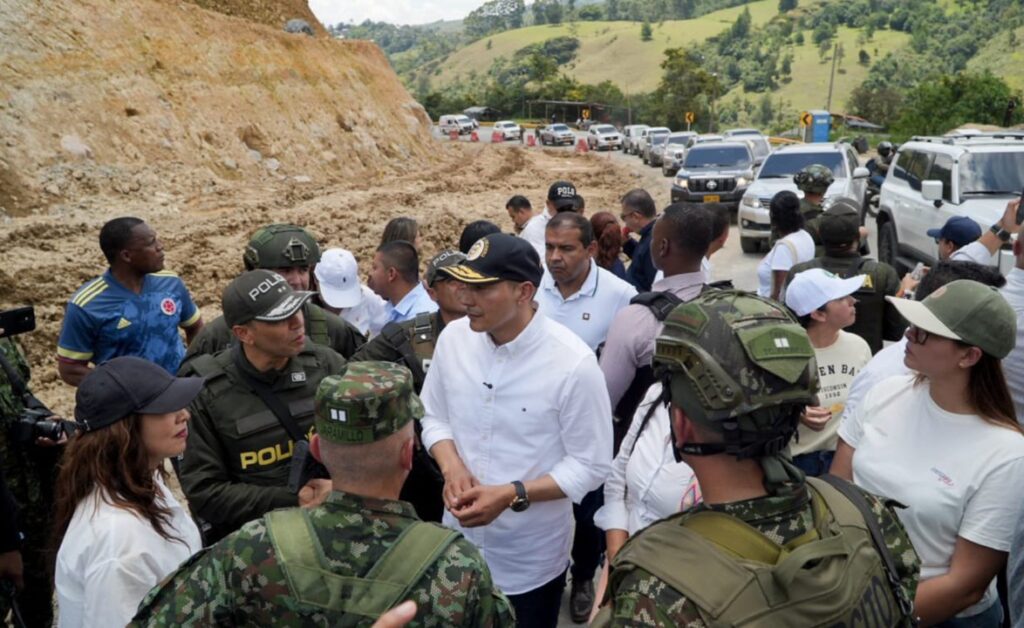
The governor of Cauca, Octavio Guzmán, confirmed the 20 dead civilians caught in the blast were 15 women and five men, all adults. A further 47 people were injured, of whom three were critical. Five children were recovering in hospital. Eleven of the affected persons came from the same village of Pedregosa, close to Cajibío, he added.
“What happened on April 25th constitutes the most brutal and ruthless attack against the civilian population in decades in the department of Cauca,” the governor later announced.
The bomb had displaced 200 cubic meters of soil, he said, creating a crater five meters deep in the Panamericana highway, the main route linking Cali to Popayan and on to Ecuador. Despite the damage, road crews were able to partially reopen the road six hours after the blast.
Saturday’s attack, one of the worst atrocities in recent years, comes against a background of rising conflict between state forces and dissident armed groups in the southwest of Colombia.
A nuestro medio de comunicación llega video #PRIMICIA del momento exacto donde explota el artefacto explosivo en el sector conocido como el TÚNEL CAJIBIO CAUCA entre popayan y piendamo @Noti90Minutos@DELAESPRIELLAE
Just in the last four days communities across three departments – Valle, Cauca and Nariño – reported a series of what appear to be coordinated attacks against civilian and military targets. These included:
24 April – A bus bomb exploded close to base of the Pichincha Battalion in the south of Cali, causing damage and three injuries.
24 April – In the nearby town of Palmira, Valle, an army base came under attack from cylinder bombs launched from a passing vehicle, no injuries were reported.
25 April – Two attackers launched grenades at a petrol station in Rozo, Valle, damaging vehicles.
25 April – A police station in the rural community of Potrerito, close to Jamundí, came under gunfire attack in the early hours of the morning.
25 April – In another morning attack, Aeronáutica Civil reported drones launching explosives against a hilltop air traffic station close to El Tambo (Cauca), damaging antennas and leaving the radar inoperative.
25 April – a chiva rural bus was hit by explosive charges while traveling on Route 25 near to Mercaderes, south of Popayan. Police reported several injured including a child but no deaths
26 April – four men were gunned down in a bar in Toro, Valle, between Cali and Pereira.
According to a tally by thinktank Indepaz, the Toro deaths were the 48th massacre recorded in 2026. In Colombia a ‘massacre’ is defined by the intentional killing of three or more people at the same time.
This weekend’s attacks were typical of a return to terrorist tactics such as car bombs, motorbike bombs, drones dropping home-made explosives and other artisanal artefacts.
Cauca governor Octavio Guzmán visiting the scent of the explosion this weekend. Photo: Social Media
Saturday’s Cajibío attack was initially reported as a boobytrap bomb, or “IED” (Improvised Explosive Device) which are caches of high explosives buried by the roadside by rebel groups, usually aimed at passing military patrols
But later reports suggested the civilian vehicles were struck by a pipeta mortar. These are fashioned from household gas bottles and clumsily launched from mortars made of industrial piping.
Notoriously inaccurate, a pipetas have claimed many civilian lives in the Colombian conflict, most notably in the Chocó town of Bojayá in 2002 when a charge launched by FARC guerrillas struck a church killing 79 civilians sheltering inside.
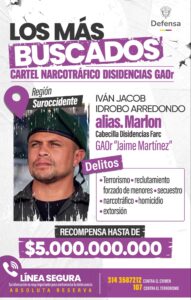
Behind Saturday’s atrocity was alias ‘Marlon’ of the Estado Mayor Central (EMC), said Colombia’s defence minister of defence Pedro Sanchez. The state offered a reward of US$140,000 for information leading to his capture.
Original dissidents
Most Wanted…
Marlon, whose real name is Iván Idrobo, was formerly in the ranks of the FARC guerrillas where he trained as a bomb maker. He is now thought to lead the EMC’s Frente Jaime Martínez which according to the Defensoria del Pueblo controls the cocaine trade, illegal gold mining and extortion rackets around the town of Suárez in the northwest of Cauca.
The EMC, lead by former FARC chief Iván Mordico, has proven to be the most intransigent of the myriad of armed groups which the current Petro government has tried to broker peace with under his controversial Paz Total policy.
Seen as the “original” dissidents that rejected the partly successful peace process under former president Manual Santos in 2016, the EMC initially agreed to negotiate when Gustavo Petro came to power in 2022 but soon engaged in bitter infighting with rival armed groups creating a rupture with Paz Total.
For his part, Petro tweeted his disgust at the Cajibío attack and the EMC “narco-terrorists” behind it.
“The groups led by Iván Mordisco in Cauca are criminals who have committed crimes against humanity and must be treated as such,” he said.
Some pundits commented that Petro’s early treatment of the EMC as a political actor had given the armed group room to expand, contributing to the current security crisis. In the heat of next month’s elections, others turned their ire on presidential candidate Iván Cepeda, seen as an architect of Petro’s struggling peace plans.
Rival right-wing candidate Paloma Valencia accused Cepeda of his role in “tying the hands of state forces, the rampant increase in illicit crops, the historic numbers of massacres, and waves of violence like today’s”.
Valencia also rounded on Petro for posting photos of his birthday celebrations even as the country was reeling from the horrific footage of the Cauca bombing. “Show some respect,” she messaged.
Crucial Santa Marta conference will include voices of communities long opposed to the exploitation of fossil fuels.
Indigenous campaigners against oil drilling in the Amazon. Photo: courtesy Amazon Watch.
Thirty years ago, Colombia’s U’wa people were ready to commit mass suicide by jumping off a 500-meter cliff. The close-knit indigenous community would rather die with dignity than succumb to oil exploration on their ancestral land.
The U’wa announced their dilemma in 1995 in an open letter that ricocheted around the world. It was no empty threat: 400 years before their ancestors had jumped from the Alto de los Infieles (Cliff of the Infidels) rather than submit to the Spanish colonial yoke.
“The U’wa were the first to call oil the ‘blood of the earth’,” explains Kevin Koenig, director of climate and energy at Amazon Watch, a U.S.-based non-profit. “The U’wa were the first to say that oil needs to stay in the ground. They warned against its extraction and its impact on the world.”
Amazon Watch has supported the U’wa to resist extractive industries over the same three decades, along with dozens of other at-risk communities in Latin America.
This week, in a ground-breaking conference in Santa Marta, some of those efforts will come full circle at the first global summit on “Transitioning away from Fossil Fuels”.
The six-day conference, starting April 24, will host 50 country delegations plus dozens of civil society organizations.
This “road map towards renewable energy” is backed by the Fossil Fuel Treaty Initiative, an alliance of nation states, technical bodies, communities and individuals working to secure a “global just transition from coal, oil and gas”.
For the organizers the timing is critical with climate upset, fuel shortages, war in the Middle East and big oil’s sticky grip on geopolitics more exposed than ever. There’s never been a better moment to move to renewable energy.
A key part of the conference will be representation from indigenous communities; the U’wa, along with many others, will have a voice at the table.
Glacier gone
For Koenig, it is also significant that the inaugural meeting is in Colombia, one of the world’s most biodiverse countries, but also an oil producer moving to curb fossil fuels and embrace renewables.
There is further symmetry in the location: the small coastal city of Santa Marta is “just over the hill” from the U’wa territory which straddles the tropical glaciers of the El Cocuy mountain range, Koenig tells The Bogotá Post.
A hiking route over the same mountains is known as Colombia’s climate change trail – see the ice before it melts.
Prophetically, just three weeks before the conference’s kick-off, the IDEAM climate agency reported that a glacier in the heart of U’wa territory had melted for good.
“Satellite monitoring confirms that Los Cerros de la Plaza glacier coverage is today at zero square kilometers,” it announced matter-of-factly.
Living these realities gives indigenous communities such as the U’wa, wedded to nature and geography, a powerful voice in the transition from fossil fuels.
This experience has often come at a high cost, says Koenig. In countries like Colombia, particularly in the Amazon, oil companies are an existential threat to both the natural environment and the communities it supports. Drilling is invariably a catalyst for violence.
“Some countries use oil extraction as a reason to open areas, saying ‘we can militarize it and it will be safer’. In fact, oil and energy infrastructures are a magnet for armed groups, for political attacks or blackmail,” he explains.
Amazon Watch has supported many indigenous communities to resist oil companies in the Amazon regions of southern Colombia, Peru and Ecuador, often through practical means such as providing solar power and communications equipment, trainings and legal resources, but also by raising their voices to the outside world.
The organization’s latest report, The Amazon Under Siege, highlights how extractive industries and the armed groups that trail in their wake are putting Amazon communities in the crossfire.
U’wa sacred territory includes El Cocuy glaciers which are melting with global warming. Photo: S. Hide.
Oil addiction
Colombia might have turned a corner with its oil moratorium in Amazon regions but neighboring countries are on a different path, one that might be summed up by U.S. president Donald Trump’s call to “drill, baby, drill”.
“Ecuador is going in the opposite direction with new oil auctions, and two new exploration blocks in remote rainforest,” says Koenig. Peru is following suit in jungle areas hitherto untouched. Perhaps not surprisingly, neither of the Andean countries is attending the Santa Marta transition conference.
According to Koenig, Peru and Ecuador are already in the throes of social violence but now risk replicating Colombia’s conflict with its rural oil pipelines that are constantly attacked or bombed, or oil lines tapped by fuel thieves, creating spills in biodiverse hotspots.
Added to that, drilling new wells makes little economic sense, he says. Current markets are signalling peak oil demand by 2030 even while wind and solar are taking a bigger share of energy output.
By doubling down on oil extraction both countries are “gambling with their future.” Aside from the moral and ethical issues of drilling in remote rainforest with indigenous peoples, getting banks to fund these ventures against the headwinds of renewables is not guaranteed.
“This is the moment where we are seeing both wars linked to fossil fuels politics and dependencies, but also for the first time renewables energies are not just theoretical, they are real, and decision-makers know they are scalable,” notes Koenig.
Inga indigenous guards in Putumayo. The community resists oil extraction on its lands. Photo: S.Hide
Fresh air
This seismic shift is reflected in the sassy subtext of the Santa Marta conference: climate deniers not invited. Meetings are reserved for a “coalition of the willing”, Colombian environment minister Irene Vélez, a key organizer of the event, told the Guardian this week..
For campaigners like Kevin Koenig this attitude is a breath of fresh air. Previous climate change conferences, run by the UN, have failed to pin global warming on big oil, he says.
“We know that fossil fuels are the number one source of carbon emissions but that’s nowhere to be found in the Paris [climate change] agreement. That’s due largely to the influence of the oil industry and lobbyists,” says Koenig.
Changing the narrative requires an alignment between traditional knowledge and science, he says. Indigenous communities, the original resisters, are now part of that with their wealth of experience.
Bogotá, Colombia – Leftist presidential candidate Iván Cepeda challenged his opponents to a debate on Saturday after turning down previous proposals to face-off with his rivals.
“I challenge the far right, its two candidates – Senator Paloma Valencia and lawyer Abelardo de la Espriella – to a debate,” Cepeda told a crowd at a rally in Fusagasugá, a city near Bogotá.
His opponents responded by accepting the proposal, while also highlighting that they had been calling for a debate for months.
The possibility of a live face-off between candidates has been a recurring theme ahead of first-round presidential elections on May 31.
Shortly after beginning his candidacy last year, Cepeda dismissed the idea of participating in a debate: “I’m not going to take part in debates—let me make this clear from the outset—to exchange insults with other candidates, or to threaten one another, or to denigrate one another.”
Iván Cepeda addressed a crowd of supporters on Saturday in Fusagasugá.
Cepeda’s rivals have repeatedly criticized him for refusing to spar with them on the public stage, something they highlighted following the leftist candidate’s U-turn on Saturday.
“Allow me to correct you: you’re not issuing a challenge; you’re accepting the challenge you were invited to take up months ago,” said criminal defense attorney de la Espriella.
Valencia, the candidate for the Centro Democrático (Democratic Center) party, also seized the opportunity to pounce on Cepeda: “A few weeks ago, it was I who challenged Iván Cepeda several times to a face-to-face debate, yet you chose to hide away in the Senate with a controlled microphone.”
She suggested that Cepeda’s U-turn owes toaworsening performance in recent polls: “Now that the polls are tightening, you’re coming out of Fusagasugá with this challenge.”
Analysts agreed with Valencia’s suggestion, saying that Cepeda’s debate proposal is an attempt to inject life into a stagnating campaign.
“Cepeda has offered to debate because of his campaign’s inherent lack of momentum and general weakness. He is not captivating any new voters or finding a tangible way of changing the narrative in his favor,” Sergio Guzmán, Director at Colombia Risk Analysis, a political risk consultancy, told Latin America Reports.
Internal party polls reportedly show sluggish growth in Cepeda’s polling numbers since he became the official candidate for the Pacto Histórico (Historic Pact) in October.
Meanwhile, Valencia has been soaring in the polls following her victory in presidential primaries in March; Cepeda and de la Espriella did not partake.
But the debate is not without risk for Cepeda, according to Guzmán: “Cepeda runs the risk of having to go on the defensive of Petro and his administration.”
Others believe that Cepeda’s oratory style does not lend itself to the televised debate format.
“He has a much more academic tendency, which is not so typical in politics, let alone in modern politics,” noted Miguel Jaramillo Luján, a Colombian political strategist. In contrast, he noted that de la Espriella and Valencia have a more media-savvy communication style.
Nevertheless, the analyst told Latin America Reports that Cepeda’s debate style could give him the chance to woo crucial centrist voters: “I believe he can inspire confidence and credibility among his target audience and even among the centre, particularly when it comes to dispelling certain myths and lies that have been spread by the centre and the right.”
With the leading candidates agreeing to debate, the battle over the specifics – including moderators, questions, and location – begins.
Presidential spat intensifies after Ecuadorian leader revisits old rumors that Petro met with drug gang during state visit.
Relations between Noboa, left, and Petro, right, have hit rock bottom after a visit to Manta.
President Petro says he will sue Daniel Noboa over an interview in which the Ecuadorian president accused his Colombian counterpart of associating with feared drug baron Adolfo Macías Villamar, alias ‘Fito’, during a state visit to Ecuador.
“I have decided to file a criminal complaint against President Noboa for his slander,” wrote Petro on his X account, following statements made by Ecuador’s leader to Semana News.
In Sunday’s interview Noboa made references to Petro’s visit to Ecuador in May, 2025, as part of a state visit to attend the right-wing president’s own inauguration.
After the event Petro took a three-day visit to the coastal city of Manta to rest and write his book, the Colombian president later explained.
But this hiatus from the public eye – Petro is rarely out of the spotlight – and his choice of destination sparked rumors that the Colombian president was holding secret meetings with underworld figures. Manta is both a tourist destination with Pacific beaches and the ground zero for violent armed gangs that control Ecuador’s drug trafficking.
Rumors started with unfounded comments by Ecuadorian politicians that Petro was “holed up” in a luxury house on the coast, adding tantalizing details that officials “could not confirm or deny” that Fito or persons related to the gang leader were present.
“What we know is that Gustavo Petro was in Manta inside a house for his entire stay. We can’t confirm whether Fito was there. It’s been said that certain political figures were with him,” Ecuador’s Interior Minister John Reimberg stated to news media at the time.
“He arrived at a luxury house and stayed there for two days. He never left, not even to eat. He was locked inside. I can’t say who he met with.”
Manta on his mind
Noboa reinforced the slurs this week, stating without evidence that the house rented in Manta was “directly or indirectly linked to drug trafficking”.
The Colombian president “never has any real explanations for his actions”, pressed Noboa, suggesting the book writing was a cover for more suspicious motives. But he failed to provide any motive as to why Petro would want to meet with Fito or his associates from Los Choneros gang, Ecuador’s most violent armed group.
Fito has been likened to Mexico’s El Chapo, with a history of repeated prison breaks. The career criminal was re-arrested again in Manta in June last year – a month after Petro’s visit – hiding in a bunker, and has since been extradited to the U.S.
For his part, Petro hit back claiming the Ecuadorian president had been himself been well aware of his plans to holiday in Manta, a visit accompanied by the Ecuadorian army and a Colombian security detail. These and other witnesses could vouch for his book writing, he said.
“I don’t know if going anywhere in Ecuador raises suspicions of shady dealings. Manta is a beautiful place worth visiting.”
Petro stayed in a “wooden cabin with a sea view”, he said, and not the luxury condominium conjured up by Noboa.
Petro linked Noboa’s verbal attacks on the recent trade war between Colombia and Ecuador and Petro’s request that Noboa released former Ecuadorian vice president Jorge Glas currently jailed for corruption.
Both disputes have put relations between the two countries at rock bottom.
Behind those disagreements lie long-standing accusations by Ecuador that Colombia has exported violence and criminality over the shared border during Petro’s tenure, a claim supported by a recent report by Amazon Underworld.
Illegal drugs passing through Ecuador came mostly from Colombia, said the report, and Colombian armed groups like the Comandos de La Frontera had established a permanent presence on the Ecuadorian side of the border.
An abandoned Ecuadorian military post close to the Putumayo River. Cross-border incursions by Colombian armed groups have increased insecurity in a country once considered safe.
Political prisoner
The high tariffs imposed by Ecuador, which seem out of U.S. President Trump’s playbook, seem designed to punish Colombia for its internal security policies and Petro’s left-wing government at political poles from the Noboa administration.
The spat over Jorge Glas stems from the former vice-president’s jailing after being found guilty of corruption in public office.
Glas was VP to left-wing leader and former president Rafael Correa, and accused of corruption in contracting cases. In 2017 he was jailed for six years. After his release was again accused of fresh crimes related to corruption.
Faced with these new accusations, in 2024 the politician took refuge in the Mexican Embassy in Quito but was quickly captured by Ecuadorian state forces who violated international protocols by invading the protected site, creating a diplomatic crisis with Mexico.
For his part, Petro conferred Colombian citizenship on Glas, declared him a ‘political prisoner’, and demanded his extradition to Colombia. Meanwhile Petro has been highlighting the former VPs stark prison conditions on social media.
“Just as I demanded the freedom of political prisoners in Venezuela and Nicaragua, I believe that Jorge Glas should be released,” he wrote, angering Noboa who recalled his ambassador from Bogotá earlier this month.
The rift between the two leaders also widened after announcements of joint military operations between the U.S. and Ecuador, with tension mounting after an air bombardment of the border left an unexploded bomb on Colombian territory.
In Sunday’s message Petro alluded to coordinated plots by political opponents in Ecuador, Colombia and “the extreme right in Florida” to drag up dirt from his Mantra trip.
Events this week should clarify if Petro has grounds to sue his Ecuadorian counterpart in a court of law, or if the battle continues on social media.
The ELN, Colombia’s oldest rebel group, has been trying to source weapons from Syria. Photo: Youtube screenshot.
A plan to swap Colombian cocaine for guns was exposed last week when a Lebanese-Syrian smuggler Antoine Kassis – a cousin of deposed Syrian dictator Bashir al-Assad – faced trial for his attempt to send Russian-made armaments to ELN guerrillas.
The failed plot, which played out in a U.S. federal courtroom last week but seemed more suited to a Hollywood movie, risked putting military-grade weapons sourced from Syrian arsenals in the hands of the Colombian rebels.
In exchange, the ELN planned to send 500 kilos of cocaine disguised in a cargo container of Colombian fruit, according to U.S. Justice Department documents.
A federal jury convicted Antoine Kassis on charges of narco-terrorism conspiracy and conspiracy to provide material support to a designated foreign terrorist organization after a five day hearing. He now faces at least 20 years in a U.S. prison.
Kassis, 59, who had links to proscribed organizations such as Hamas and Hezbollah, offered the ELN drones, grenades, assault rifles, missiles, mortars and heavy machine guns in exchange for the cocaine smuggled to a Syrian port.
He eventually hoped to sell the Colombian-supplied narcotics throughout the Middle East.
Captured in Kenya
The deal was initially brokered in 2024 before the fall of al-Assad but unraveled after a sting operation mounted by the U.S. Drug Enforcement Administration (DEA) in 2025.
As court documents revealed, Kassis traveled to Africa in February last year after reassuring the Colombian guerrillas that the cocaine swap was still on – even after the unexpected fall of his cousin’s brutal dictatorship in Syria at the end of 2024.
Kassis claimed he could bribe Syrian port staff US$10,000 per kilo of cocaine to import the illicit drug through Latakia, a well-known route for drugs in and out of the eastern Mediterranean.
Despite the fall of al-Assad, he could still access “all the toys”, he told the Colombians, referring to the military-grade weapons.
Unknown to Kassis, DEA investigators had already infiltrated the Colombian end of the deal and sent an undercover agent posing as an ELN weapons expert to the crucial meeting in Nairobi, Kenya.
Kassis was arrested with the help of Kenyan police and extradited weeks later to the U.S.
Meanwhile the suspected ELN counterparts, named by news website Infobae as Alirio Rafael Quintero and Wisam Kherfan Okde, were arrested in Colombia. They are currently detained in Bogotá’s La Picota prison pending extradition requests from the U.S.
Missed missiles
Evidence from the Kassis investigation pointed to a vast money-laundering operation based in Colombia that shifted million-dollar drug profits in cryptocurrencies across four continents. According to court documents, the plot roped in Palestine’s Hamas, Lebanon’s Hezbollah and Mexico’s Sinaloa drug cartel.
Syrian-Lebanese smuggler Antoine Kassis. Photo: Kenya Police.
The Kassis case also showed that the ELN was attempting to upgrade its weapons arsenal even as the armed group was engaged in on-off peace negotiations with Colombia’s Petro government. Talks are currently on hold.
The Marxist rebel group, properly known as the Ejército de Liberación Nacional, has been fighting the Colombian state since 1964 and is currently said to have 3,600 armed combatants, many based in neighboring Venezuela where it controls drug routes and illegal mining camps.
The latest round of peace talks, under Petro’s controversial Paz Total initiative, has seen the ELN expand in both territory and numbers within Colombia, with an estimated growth of 9 per cent in the last two years. Attempts to obtain Russian-made weapons via Syria are likely linked to that expansion.
Of note was the missiles included in the thwarted Syrian cargo. Though exact details were not given in the court documents, these could refer the portable shoulder-fired anti-aircraft weapons, highly coveted by Colombia’s armed groups for their ability to down helicopters and small attack aircraft used by state forces against insurgent groups.
In recent months Colombian armed forces have returned to aerial bombing of suspected guerrilla camps, a controversial practice that risks killing or injuring civilians and children. Bombing campaigns against dissident FARC groups in Guaviare late last year left at least 15 minors dead, according to news reports from the time.
And on February 4 this year, an air attack ordered by President Petro on an ELN camp in the Catutumbo region left seven ELN fighters dead, with no reports of child victims.
The ELN have in the past experimented with home-made anti-aircraft missiles, such as found in a hidden cache in Cauca in 2018, and some of their combatants are thought to have been trained in the use of Russian-made Igla-S missiles, of which 5,000 are used by state forces in Venezuela.
Hezbollah’s Latin American hubs
The Kassis case highlighted links between Colombian armed groups and the Middle East that include designated terror groups such as Lebanon-based Hezbollah.
According to expert testimony at a U.S. senate caucus on narcotics in October last year, groups like Hezbollah received funds via drug trafficking and money laundering in Latin America, with hubs in Brazil, Paraguay, Venezuela and Colombia.
“Hezbollah capitalized on a combination of weak local governance, corruption, and the presence of sympathetic diaspora communities to create cells and recruit financial facilitators,” former treasury official Marshall Billingslea told the caucus in October last year.
Billingslea suggested that Hezbollah could source up to a third of its income from Latin America, and until recently had close links through its Iranian backers Venezuela, now in flux with the forced removal of former president Nicolás Maduro to the U.S. in January this year.
Hard pivot to Colombia
But while its Venezuelan ties were more often reported, the Lebanese Shi’ite group had also made inroads into Colombian crime circles with a long history of deals, such as cocaine shipments sent by the Oficina de Envigado cartel, and drugs-for-weapons swaps with the former FARC guerrillas, he said.
In 2016, U.S. prosecutors brought charges against a Hezbollah laundering ring based in Medellín, according to reports in the Miami Herald at the time. Funds were connected to jailed Mexican kingpin Joaquín “El Chapo” Guzmán.
Billingslea explained that groups like Hezbollah also saw Colombia as a refuge for foreign operatives who obtained fake passports and ID cards. Recent turmoil in the Middle East could stimulate armed groups there to increase their interests in countries like Colombia, he said.
“Now, with their Lebanese infrastructure in shambles, and with robust financing from Iran again in doubt, I believe Hezbollah will make a hard pivot to Latin America and to the drug trade in particular.”

 Login
Login

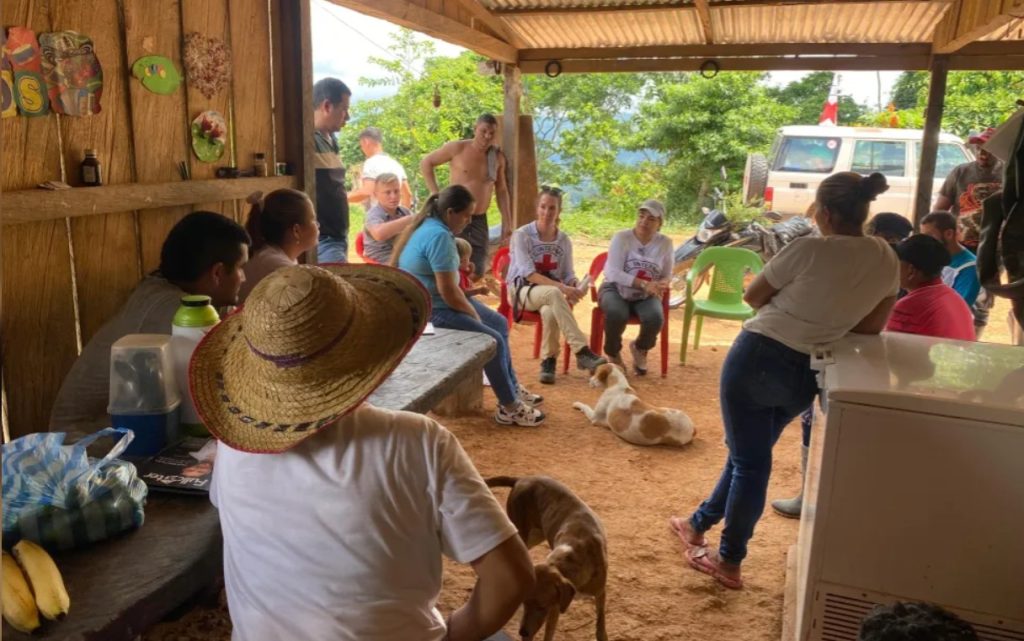

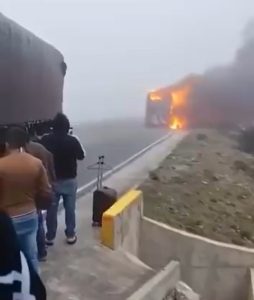


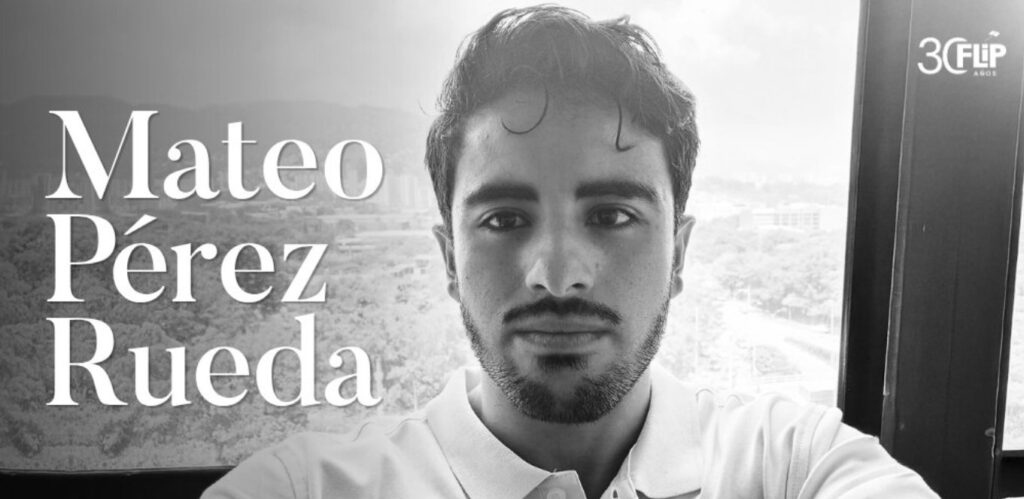


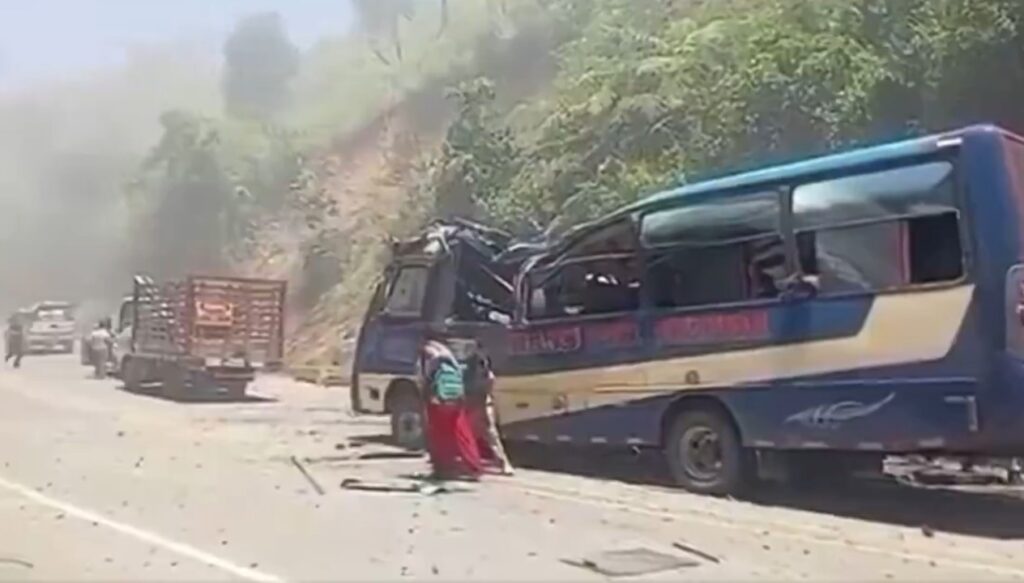

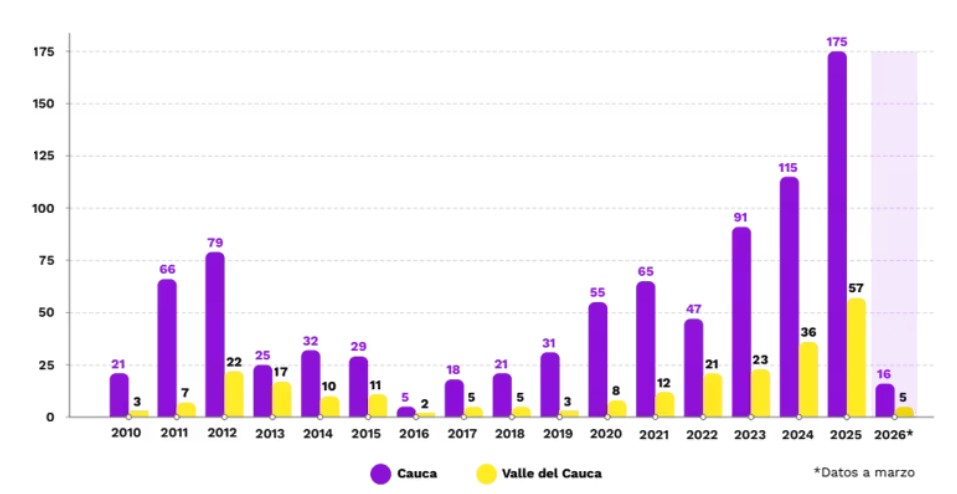


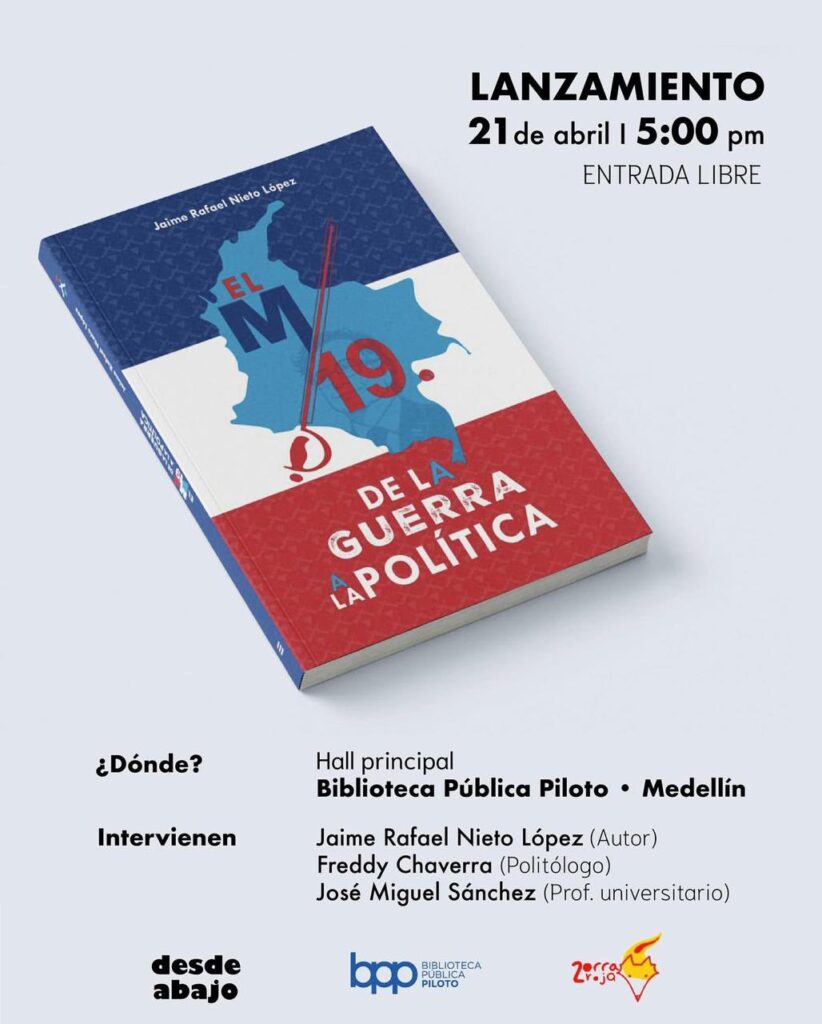

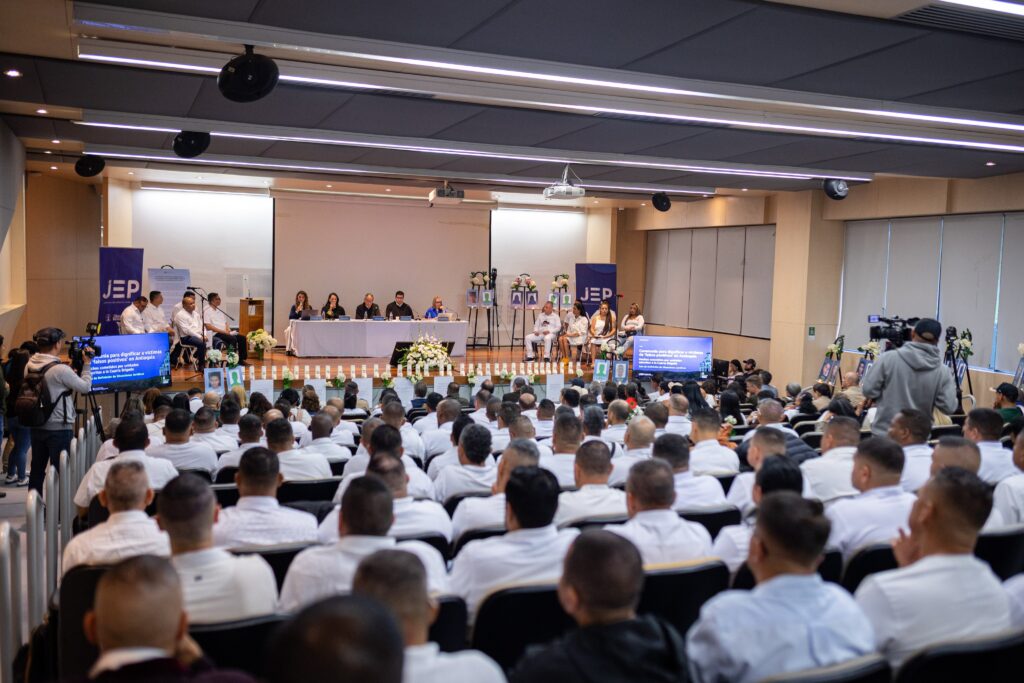
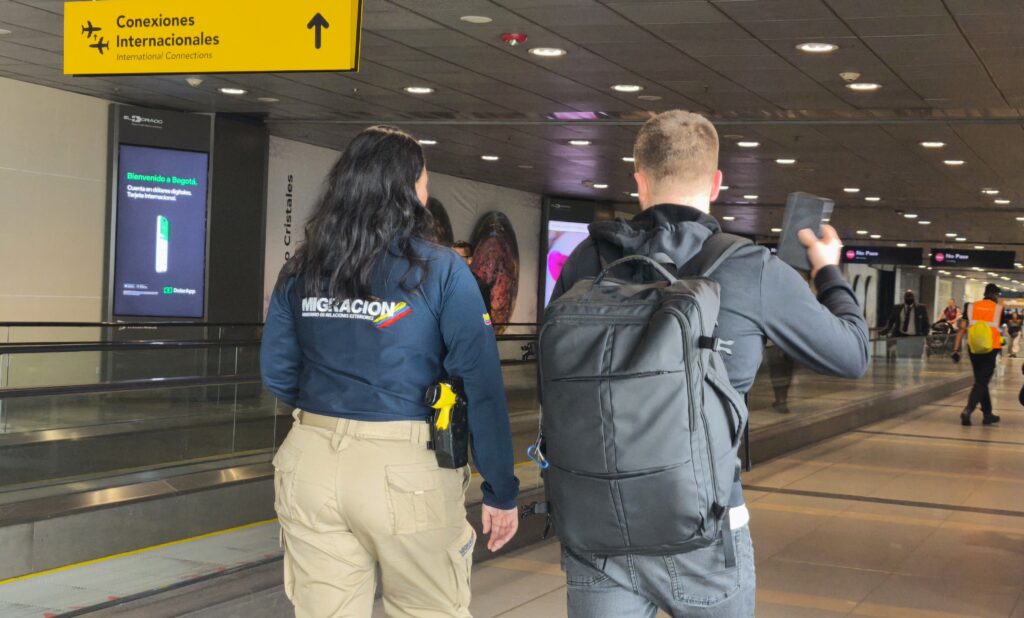

 en el sector conocido como el TÚNEL CAJIBIO CAUCA entre popayan y piendamo