Reading view

Ecopetrol Board Says Ricardo Roa’s Medical Leave Will Extend Absence From Company

Medical leave, vacation time and unpaid leave will keep Ricardo Roa away from Ecopetrol through late July

The board of directors of Ecopetrol, Colombia’s largest oil and energy company, announced the postponement of unpaid leave previously granted to its president, Ricardo Roa Barragán, due to a 30-day medical leave taken by the executive. The decision was disclosed by the state-controlled company in an official statement issued May 27, 2026.

According to the company, the unpaid leave, initially scheduled to begin May 26 for a 30-day period, will take effect once both Roa’s medical leave and his remaining vacation period have concluded, meaning it is now expected to begin June 27.

If the schedule remains unchanged, Roa Barragán would return to Ecopetrol in late July, just one week before Colombia’s next president is sworn in on August 7, 2026, and gains the authority to appoint new leadership at the state-owned oil company.

Read Ecopetrol Announces Temporary Leave for President Ricardo Roa Amid Investigations by Colombia’s Attorney General’s Office by Finance Colombia.

The rescheduling extends Roa Barragán’s temporary absence during a sensitive period for Colombia’s largest state-controlled company, amid a government transition and growing scrutiny over its corporate stability.

The vacations and unpaid leave had previously been approved by Ecopetrol’s board as an institutional response to tensions surrounding Roa Barragán’s continued tenure. While labor unions, minority shareholders and various public voices had called for his removal, President Gustavo Petro publicly maintained his support.

Read The petroleum workers called for Ricardo Roa’s head following formal influence-peddling charges filed by Colombia’s Attorney General’s Office.

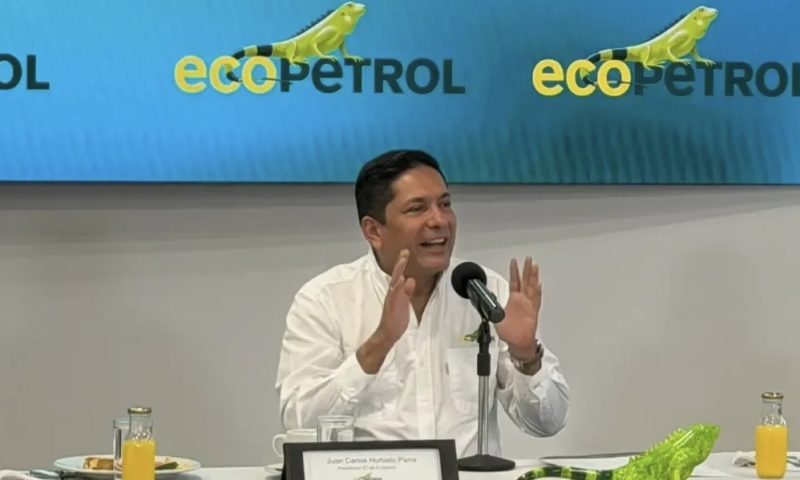
The board also decided to keep Juan Carlos Hurtado as acting president of Ecopetrol. Hurtado has served as executive vice president of hydrocarbons since November 2025.

So far in 2026, Colombia’s Attorney General’s Office has formally charged Roa Barragán in two separate cases: one involving alleged influence peddling by a public official, linked to purported benefits obtained in the purchase of an apartment in Bogotá, and another involving alleged violations of campaign spending limits in the 2022 “Petro Presidente” presidential campaign, for which he served as campaign manager.

Read Ecopetrol President Ricardo Roa Charged Over Alleged Campaign Spending Violations in Petro’s Presidential Campaign.

So far, no judicial conviction has been issued in either case, and the executive retains the presumption of innocence.

Under the revised schedule, Roa Barragán is expected to remain away from Ecopetrol’s presidency during part of the electoral period and presidential transition, ahead of the eventual handover to the administration elected in Colombia’s May 31 elections.

  •  

Colombia’s House Committee Opens Investigation into Petro Over Alleged Political Interference Ahead of Presidential Election

The ongoing investigations have now been joined by a new complaint filed by presidential candidate Claudia López

Colombia’s House Investigation and Accusation Committee has opened an ex officio investigation into President Gustavo Petro over alleged improper political participation ahead of the country’s presidential election on May 31, 2026, amid growing scrutiny over the president’s neutrality during the campaign.

The decision became public Tuesday, May 26, through an official document in which the committee said the investigation stems from “recent statements and social media posts” by the head of state “related to alleged participation in politics in connection with the upcoming presidential elections.”

“This Legal Investigation and Accusation Committee is legally obligated, under the powers granted by Law 600 of 2000 (Article 27) and Law 5 of 1992, to initiate an ex officio criminal investigation for the crime of Political Intervention (Article 422 of the Criminal Code),” the document states.

The order was signed by Gloria Arizabaleta, chair of the Investigation and Accusation Committee and a House representative from the ruling Pacto Histórico party.

Although Colombia’s president is considered the natural leader of his political movement, in this case, Pacto Histórico, whose presidential candidate is Iván Cepeda, Colombian law imposes restrictions on public officials regarding electoral participation.

In Colombia, public officials are subject to the principle of political neutrality, preventing them from intervening in electoral controversies or using their positions to influence citizens’ votes in favor of a particular party or candidate, although they retain their individual right to vote.

Article 422 of Colombia’s Criminal Code (Law 599 of 2000) establishes penalties for improper political intervention, including prison sentences and disqualification from holding public office. Such conduct may also result in disciplinary sanctions under Colombia’s General Disciplinary Code.

Claudia López files separate complaint

Presidential candidate Claudia López also filed a formal complaint before the same committee, alleging lack of electoral guarantees and abuse of power by the president.

“We filed before the House Investigation Committee a 58-page complaint with evidence of President Gustavo Petro’s improper participation in politics and the lack of electoral guarantees. His attacks against my campaign, abuse of power and blatant political interference cannot be accepted,” López said in a social media post.

Inspector General requests report on complaints

Meanwhile, Colombia’s Inspector General’s Office requested a detailed report from the committee regarding existing complaints against Petro related to alleged improper political participation.

The request was signed by Inspector General Gregorio Eljach, who asked for a “detailed report listing complaints against the President of the Republic” to be delivered within three days.

However, the scope of the Inspector General’s Office remains limited because, under Colombia’s institutional system, it holds disciplinary authority over lawmakers and local officials, while constitutional authority to investigate the president rests with the House of Representatives.

“The Executive Branch is overwhelmingly powerful compared with the others, and the president, as head of the state’s public administration, has extraordinary powers and tremendous influence over society,” Eljach told El Tiempo newspaper, referring to the president’s social media activity and its possible impact on voters.

According to El País newspaper in Cali, the Investigation and Accusation Committee currently has around 12 complaints against Petro related to alleged political intervention.

The investigation opens in the final stretch of a presidential campaign in which Petro has sought to maintain political influence through support for ruling coalition candidate Iván Cepeda, who currently leads voter intention polls ahead of the first round.

  •  

Petro Advances Temporary Concentration Zones for “Clan del Golfo” as Final Push for Total Peace Policy

More than 400 combatants would be concentrated in the new zones as negotiations continue in Doha, Qatar

President Gustavo Petro is moving forward with the creation of temporary concentration zones, known as Zonas de Ubicación Temporal (ZUT), for members of the Estado Mayor Conjunto del Ejército Gaitanista de Colombia (EGC), also known as the Clan del Golfo, the country’s largest drug trafficking armed group, in a renewed effort to advance his Total Peace (Paz Total) policy just days before Colombia’s presidential elections on May 31, 2026.

According to an official statement from Colombia’s presidency, the ZUTs would initially allow the concentration of more than 400 combatants while parallel negotiations continue over a possible peace agreement with the Colombian government, although no preliminary agreements have yet been reached.

The temporary concentration zones would function as designated areas where combatants suspend armed activities while participating in talks with the government and preparing for a potential reintegration into civilian life.

According to the government, the zones would remain in effect until December 31, 2026, meaning their future would ultimately depend on Colombia’s next president, who will take office on August 7, as well as on the broader future of the Total Peace policy.

Colombia’s most powerful criminal organization

The Clan del Golfo is considered by specialized organizations, including the Fundación Ideas para la Paz (FIP), to be Colombia’s most powerful criminal structure.

According to the organization, the group has nearly 10,000 armed members and operates in multiple strategic regions linked to drug trafficking, illegal mining and territorial control.

The US government has designated the group a transnational terrorist organization, while President Donald Trump previously warned of possible US military actions in Colombian territory over security and narcotics concerns, comments that sparked diplomatic tensions with Petro’s administration.

Institutional clash over arrest warrants and extradition requests

The ZUT proposal comes amid tensions between Colombia’s executive branch and the Attorney General’s Office over the legal conditions required to move the process forward.

The Office of the High Commissioner for Peace requested the suspension of arrest warrants against 29 Clan del Golfo members, including 13 individuals subject to extradition requests, among them Jobanis de Jesús Ávila Villadiego, alias “Chiquito Malo,” the group’s top leader.

Attorney General Luz Adriana Camargo rejected the request, citing legal limitations regarding individuals sought by foreign authorities.

Following the refusal, Petro publicly defended the process in a message on X. “I have been clear that, in the early stages of the process, individuals facing extradition do not participate,” the president wrote, denying any intention to suspend extradition orders unless there is “an advanced peace process, as established by law.”

Amid the controversy, the Clan del Golfo itself issued a statement accepting that individuals facing extradition requests would not initially participate in the temporary concentration zones.

“As an unequivocal demonstration of political will and coherence, the Joint High Command of the Gaitanista Army of Colombia accepts, in good faith, that access to the Temporary Concentration Zones will be limited to combatants who are not subject to extradition requests by any foreign government,” the group said.

The group added that the decision seeks to “remove any shadow of doubt” over the process and prevent extradition disputes from obstructing negotiations.

The presidency later highlighted that the EGC accepted the government’s conditions for concentrating fighters in Tierralta, Córdoba, and in the municipalities of Belén de Bajirá and Unguía, Chocó. According to the government, combatants and commanders are expected to begin entering the zones on June 25.

Criticism over timing

The initiative has sparked criticism because of its timing, arriving just days before presidential elections and during a government transition period.

Ombudswoman Iris Marín warned that the process creates uncertainty over how armed groups might interpret the political transition.

“The move toward those zones creates expectations among armed groups in the middle of an electoral context and government transition. It is impossible for disarmament to happen before August 7, 2026, so how do armed groups interpret that in an electoral context?” Marín said in a video shared on social media.

Marín clarified, however, that Colombia’s Constitution grants the president authority to pursue peace negotiations, meaning concerns center not on the legality of the initiative itself but on its political timing.

Negotiations between the Colombian government and the Clan del Golfo have been underway since 2025 in Doha, Qatar, which has quietly hosted talks between both parties. According to official sources, the ZUTs are intended as confidence-building measures and humanitarian relief for communities affected by the group’s violence.

*

Photo: Colombian government representative Álvaro Jiménez shakes hands with Clan del Golfo spokesperson Luis Armando Pérez in the presence of Qatar’s Minister of State for Foreign Affairs, Mohammed bin Abdulaziz bin Saleh Al-Khulaifi, in Doha on September 18, 2025, at the start of peace talks. Photo shared by Colombia’s Office of the High Commissioner for Peace.
  •  

Political Tensions Between Petro and Bolivia’s President Trigger Diplomatic Expulsions

Colombia and Bolivia intensified a diplomatic crisis this week after mutually expelling representatives from their respective embassies, amid growing political tensions between Colombian President Gustavo Petro and Bolivian President Rodrigo Paz Pereira.

The tensions began May 20, 2026, when Bolivia’s Foreign Ministry announced the expulsion of Colombia’s ambassador to La Paz, Elizabeth García Carrillo, after describing remarks made by Petro regarding Bolivia’s political crisis as interference in the country’s internal affairs.

“The decision responds to the need to preserve the principles of sovereignty, noninterference in internal affairs and mutual respect among states, fundamental pillars of international coexistence and diplomatic relations between sovereign nations,” Bolivia’s Foreign Ministry said in an official statement.

One day later, Colombia’s Foreign Ministry, headed by Rosa Yolanda Villavicencio, responded by expelling Bolivia’s chargé d’affaires in Bogotá, Ariel Percy Molina Pimentel, under the principle of diplomatic reciprocity.

“The Ministry of Foreign Affairs of the Republic of Colombia, considering the recent decision adopted by the Government of the Plurinational State of Bolivia regarding the permanence of Colombia’s ambassador (…) was compelled, on the basis of reciprocity, to declare the termination of the functions of Mr. Ariel Percy Molina Pimentel,” Colombia’s Foreign Ministry said, citing Article 9 of the 1961 Vienna Convention on Diplomatic Relations.

The Colombian government clarified that the measure does not imply a formal break in diplomatic relations between the two countries, adding that “Colombia remains willing to support, always at the request of the Bolivian government, initiatives in favor of peace, political dialogue, institutional channels, citizen participation and the observance of human rights and fundamental freedoms.”

Origin of the dispute

Bolivia’s decision followed a message posted by Petro on X on May 18, in which he said that “Bolivia is experiencing a popular uprising,” referring to the political and social crisis affecting the Andean country.

For the past three weeks, Bolivia has faced protests and road blockades led by supporters of former President Evo Morales, who oppose the current administration and are demanding the resignation of President Rodrigo Paz Pereira.

The protests have also unfolded as Morales faces judicial proceedings over alleged crimes related to human trafficking and child sexual abuse, while also refusing to appear before judicial authorities.

The Bolivian government interpreted Petro’s remarks as a violation of the principle of nonintervention in domestic affairs.

Bogotá, however, rejected that interpretation and said its officials had not sought to interfere in Bolivia’s internal politics.

Colombia “categorically rejects any interpretation attributing to its authorities an interest or intention to interfere in Bolivia’s internal affairs,” the Colombian Foreign Ministry said, while reiterating its commitment to sovereign equality, nonintervention, self-determination of peoples, peaceful settlement of disputes and respect for territorial integrity.

A politically sensitive moment for both governments

The diplomatic tensions come as Rodrigo Paz Pereira, who took office in November, faces social unrest, road blockades and domestic criticism over his administration.

Meanwhile, Petro is approaching the end of his term in Colombia amid a highly polarized electoral climate. The Colombian president is seeking to preserve the continuity of his political project through the election of a successor in presidential elections whose first round will take place May 31, with the next president set to take office on August 7, 2026.

Although neither government has announced additional measures, the exchange of expulsions marks the highest level of diplomatic tension between Colombia and Bolivia in recent years.

  •  

Colombia’s Presidential Race Marked by Polarization, Divided Right and Absence of Debates

As Colombia nears its presidential vote, two candidates have endorsed Iván Cepeda and eight others remain below 3.5% in polls

With less than two weeks remaining before Colombia’s presidential election, whose first round is scheduled for May 31, three candidates are concentrating most voter support and competing for access to the presidential palace, Casa de Nariño: ruling coalition senator Iván Cepeda, candidate of the left-wing Pacto Histórico party; senator Paloma Valencia, representing the right-wing Centro Democrático party; and lawyer and businessman Abelardo de la Espriella, a figure of Colombia’s far right.

Although 13 candidates will appear on the ballot, two contenders: Clara López and Luis Gilberto Murillo, withdrew their campaigns to support Cepeda, while the remaining candidates have failed to surpass 3.5% voter support in pre-elections polls, a figure close to the statistical margin of error.

If polling trends hold, no candidate is expected to secure the 50% plus one vote needed to win outright in the first round, making a runoff election on June 21, 2026, highly likely.

Cepeda has remained relatively stable in polls, with voter support ranging between 35% and 43%, effectively securing his place in a second round if trends continue.

The key question: Who will face Cepeda in a runoff?

The main electoral uncertainty centers on who will finish second and challenge the ruling coalition in a likely runoff.

Under Colombia’s electoral system, only the two candidates receiving the highest vote totals advance to the second round. The fragmentation of the political right has complicated efforts to consolidate support behind either Valencia or De la Espriella.

Polls suggest a competitive scenario. Valencia has registered between 14% and 21% voter support, while De la Espriella fluctuates between 16% and 24%, depending on the poll and methodology used.

The lack of unity between the two camps stems from both ideological differences and their political structures. Valencia is a member of the political party founded by former President Álvaro Uribe, while De la Espriella entered the race through an independent signature campaign, marking the first time Colombia’s far right has emerged as a viable contender for the presidency.

A campaign shaped by the absence of public debates

The presidential campaign has been marked by an unusual lack of debates among the leading candidates.

Cepeda has refused to participate in events organized by media outlets, arguing that proposed formats do not offer guarantees of neutrality or what he describes as “fair rules” established by news organizations.

As a result, part of the political confrontation has shifted to Congress, where both Cepeda and Valencia currently serve in the Senate.

Critics, however, have challenged Cepeda’s decision. Former Bogotá Mayor and presidential candidate Claudia López argued that his absence from debates reflects that “Cepeda does not want to take responsibility for the failures of Total Peace (Paz Total),” the negotiation policy with armed groups promoted by President Gustavo Petro, in which Cepeda played a key role as a lawmaker.

Instead of regular debates, the campaign has been dominated by disputes over media formats, digital presence, social media strategies and public controversies aimed at amplifying candidates’ visibility.

De la Espriella embraces confrontation

One of the candidates who has most effectively capitalized on the digital environment is Abelardo de la Espriella, whose political strategy has been compared to right-wing populist leadership styles such as those of Argentine President Javier Milei and US President Donald Trump.

In recent weeks, De la Espriella has faced several media controversies, including an incident involving journalist Laura Rodríguez of Piso 8 FM, for which he later apologized after accusations of inappropriate sexual conduct. He also clashed live on air with television presenter María Lucía Fernández of Caracol Noticias, whom he called “ignorant.”

Questions also emerged following reports by digital outlet La Silla Vacía regarding donations linked to the US Republican Party.

Despite the controversies, the strategy appears to be strengthening his electoral standing. An Atlas Intel poll for Semana magazine, published May 15, showed De la Espriella surpassing Valencia by a two-to-one margin for the first time, with 32.9% support compared with 16.7%.

However, the polling firm is currently under investigation by Colombia’s National Electoral Council (CNE) amid concerns over whether its methodology complies with national standards. If irregularities are confirmed, the firm could face suspension of its operations in Colombia.

Valencia seeks to broaden support toward the political center

Meanwhile, Valencia has sought to expand her electoral base by shifting strategically toward the political center.

As part of that effort, on May 17 she officially introduced her proposal “Mámá No Está Sola (Mom Is Not Alone),” aimed at female heads of household and focused on access to credit, employment and housing property. The proposal also includes a promise to deliver 1 million homes prioritized for women community leaders.

Valencia’s candidacy also marks a historic first for Colombia’s political right: it is the first time a major conservative party has nominated a woman for president.

Her vice presidential running mate, former Bogotá councilman Juan Daniel Oviedo, has openly identified as a member of the LGBTQ+ community, a move that represents a significant shift for the Centro Democrático traditionally conservative electorate.

Colombia appears headed for a runoff

With a highly fragmented field and no signs of consolidation among right-wing candidates, Colombia appears increasingly likely to hold a presidential runoff on June 21, 2026.

Barring a major shift in polling trends, the contest seems set to come down to Iván Cepeda and whichever opposition candidate manages to emerge from an increasingly competitive battle within Colombia’s political right.

  •  

Ecopetrol President Ricardo Roa Charged Over Alleged Campaign Spending Violations in Petro’s Presidential Campaign

Roa had already been administratively sanctioned by Colombia’s electoral authority over campaign spending violations, with the case now advancing in the Attorney General’s Office

Ricardo Roa Barragán, president of Colombia’s state-owned oil and energy company Ecopetrol, has been formally charged by the Attorney General’s Office (FGN) over his alleged responsibility in a case involving violations of campaign spending limits tied to President Gustavo Petro’s 2022 presidential campaign, which Roa managed.

The charging hearing took place Monday, May 11, during which Roa pleaded not guilty. The case will continue through the investigative stage, and no conviction has been issued against him.

This marks the second criminal case facing the executive. On March 11, 2026, prosecutors also charged Roa with alleged influence peddling involving a public official. Both investigations remain ongoing.

Read: The charge adds to a separate investigation over alleged violations of campaign finance limits during President Gustavo Petro’s 2022 presidential campaign.

The latest charges come weeks after Ecopetrol’s board authorized Roa to take vacation leave followed by unpaid leave through June 28, 2026, after Colombia’s presidential elections conclude.

The decision means Roa would return to the company only to participate in the transition process with the team designated by Colombia’s next president, who will take office on August 7, 2026.

Read: Ecopetrol Announces Temporary Leave for President Ricardo Roa Amid Investigations by Colombia’s Attorney General’s Office” by Finance Colombia.

Under Articles 396A and 396B of Colombia’s Criminal Law, individuals found responsible for receiving, administering or allowing prohibited campaign funds may face prison sentences ranging from four to eight years, in addition to fines and disqualification from holding public office if convicted.

Roa, however, retains the presumption of innocence while the judicial process continues.

Investigation into campaign financing

The case stems from the 2022 “Petro Presidente” campaign, which Roa Barragán managed. The matter had already resulted in administrative sanctions from Colombia’s National Electoral Council (CNE), which concluded that the campaign exceeded legal financing limits.

The Attorney General’s Office also said it identified alleged inconsistencies in the campaign’s financial reporting, claiming that first-round expenses were reported during the second round and vice versa.

As a result of that administrative investigation, the CNE referred the case to the Attorney General’s Office, which is responsible for conducting criminal investigations.

According to a statement from prosecutors, collected evidence suggests that campaign spending limits “were exceeded by $1.388 billion COP (around $370,000 USD) during the first presidential round and by $276 million COP ($73,000 USD) during the runoff.”

Prosecutors said the allegedly unreported or improperly reported expenses were linked to “hotel press conferences, breakfasts, loans, transportation, logistics, food services, financing for campaign-closing events, advertising materials and union contributions.

The investigation formally began in 2025 after the CNE determined there were possible irregularities involving campaign spending caps.

Petro defends Roa

President Gustavo Petro again defended Roa and questioned the basis of the judicial investigation.

“The Attorney General’s Office is repeating the same thing as the compromised CNE: that expenses incurred after the legal campaign period ended, such as the costs parties incur for election monitors to protect votes (…) are campaign expenses. Their so-called overspending is not overspending,” Petro wrote on X.

The president argued that several of the questioned expenditures took place after election day, when, according to his interpretation, the campaign had already formally concluded.

  •  

Andean Community Orders Colombia and Ecuador to Dismantle Tariffs and Trade Restrictions

A tariff dispute between Colombia and Ecuador escalated to 100% duties on Colombian imports after Ecuador cited a lack of cooperation on border security

The Andean Community of Nations (CAN) ordered Colombia and Ecuador to dismantle, within 10 business days, the trade restrictions and tariff measures imposed since late 2025, concluding that they violate the legal framework governing the regional bloc composed of Bolivia, Colombia, Ecuador, and Peru.

The decision was adopted through three resolutions issued May 8, 2026, by the CAN General Secretariat, led by Gonzalo Gutiérrez Reinel, following an assessment of trade disputes that emerged between the two countries amid tensions related to border security and commerce.

The organization concluded that several measures implemented by Quito and Bogotá violate the Cartagena Agreement, the founding treaty of Andean integration, which prohibits restrictions on intraregional trade among member states.

More information about the “security tariff”: Colombia and Ecuador Escalate Trade Tensions with Tariffs Raised to 100%.

Ecuador ordered to lift border restrictions and “security tariff”

The first resolution, No. 2581, ruled in favor of Colombia in a complaint related to Ecuador’s decision to limit bilateral land trade to a single border crossing. The General Secretariat classified the measure as a “restriction on Andean subregional trade” and granted Ecuador 10 business days to withdraw it.

The resolution also urged both countries to strengthen bilateral cooperation on border security matters.

“To urge the Republic of Ecuador and the Republic of Colombia to strengthen bilateral cooperation and coordination mechanisms in border control (…) through joint actions, without affecting the normal development of subregional trade,” the organization stated in Resolution 2581.

Meanwhile, Resolution 2582 ordered Ecuador to eliminate the so-called “security tariff” imposed exclusively on Colombian imports, which initially stood at 30% and later escalated to 100%.

According to CAN, the measure violates the Trade Liberalization Program established under the Cartagena Agreement and constitutes a “disguised tariff.”

The General Secretariat concluded that the so-called Customs Control Service Fee (TSCA) or “security tariff” does not qualify as a legitimate fee because it does not compensate for an individualized service to importers, but instead finances general state functions related to intelligence and strategic security.

Ecuador was given a maximum of 10 business days to dismantle the measure and formally report compliance. So far, the government of President Daniel Noboa has not issued an official response to the resolutions.

CAN also orders Colombia to dismantle countermeasures

“I have no problem removing tariffs on Ecuadorian products in the same manner and timeline in which they were imposed,” Petro wrote on X after the ruling became public.

The third resolution, No. 2583, rejected the trade countermeasures adopted by Colombia in response to Ecuador.

The government of President Gustavo Petro had issued Decree 0170, later tightened through Decree 0455, imposing reciprocal tariffs ranging from 30% to 75% on Ecuadorian products and restricting the entry of rice, potatoes, onions, and fishery products through specific border crossings.

CAN concluded that these measures are also incompatible with Andean community regulations.

Trade dispute rooted in security tensions

The commercial dispute between the two countries intensified beginning in late 2025 and reached its peak in April 2026, when both governments progressively increased tariffs and trade restrictions, citing concerns related to border security and anti-narcotics enforcement.

The tensions particularly affected border regions, where business groups and transport operators warned of disruptions to trade flows and rising logistical costs.

CAN’s resolutions now seek to restore free trade conditions within the Andean bloc and reduce diplomatic tensions between two of its largest economies.

  •  

Instacart Buys Colombia-Founded Grocery Tech Platform Instaleap

The Colombia-founded company has processed more than 100 million transactions and works with nearly 100 retailers and marketplaces

Instacart, a US grocery technology company serving more than 2,200 retail banners and nearly 100,000 stores, announced the acquisition of Instaleap, a Colombia-founded fulfillment and retail technology platform operating in nearly 30 countries, in a deal whose financial terms were not disclosed.

The transaction represents one of Instacart’s most significant international moves since going public in 2023 and strengthens its expansion outside North America, particularly in Latin America, Europe and the Middle East.

Instacart, which trades on Nasdaq under the ticker CART, is seeking to expand its enterprise technology platform focused on omnichannel commerce and the digital transformation of supermarkets and retailers.

“We see a meaningful opportunity to expand internationally through an enterprise-led strategy that empowers retailers across the globe to meet the evolving omnichannel needs of their customers,” Ryan Hamburger, chief commercial officer at Instacart, said in the company’s statement.

Global expansion driven by Latin American technology

Instaleap develops software solutions for supermarkets, pharmacies and consumer goods retailers, enabling them to manage orders, logistics, picking operations and customer experience across digital channels.

The company has processed more than 100 million transactions and maintains commercial relationships with nearly 100 retailers and marketplaces outside North America, including Cencosud, Éxito, Makro, Continente, Jerónimo Martins (owners of Tiendas Ara), Lulu, and SPAR.

The acquisition also allows Instacart to accelerate its presence in regions where it previously had limited operations. The company had already begun deploying products such as Storefront Pro and its AI-powered Caper Carts in Europe and Australia but lacked a consolidated network in Latin America and the Middle East.

Instaleap to continue operating as subsidiary

According to the companies, Instaleap will initially continue operating as a wholly owned subsidiary of Instacart to ensure continuity for existing customers during the integration process.

“We’ve built our platform with a deep focus on the unique needs of grocery retailers across diverse international markets. Joining Instacart enables us to scale our impact with the support of a trusted partner that shares our commitment to retailer success,” said Antonio dos Santos Nunes, CEO and co-founder of Instaleap.

The company was founded in Colombia in 2019 by Portuguese entrepreneurs Antonio dos Santos Nunes and Margarida Freitas, the company’s current COO. Both joined the global entrepreneurship network Endeavor in 2025.

The companies did not disclose whether Instaleap’s current management team will remain in place after the transition period.

E-commerce growth fuels regional expansion

The announcement comes amid sustained growth in e-commerce across Latin America, particularly in Colombia.

According to figures cited in the statements, Colombian e-commerce grew 19.9% in 2025, reaching $684.6 million USD transactions, while the regional online grocery market surpassed $3.62 billion USD last year.

Instacart reported adjusted EBITDA of $1.09 billion USD in 2025, representing 23% year-over-year growth, along with 312 million processed orders.

With the acquisition, the company expects to gradually extend additional solutions to Instaleap’s clients, including e-commerce services, retail media, artificial intelligence and in-store technology.

  •  

Ecuador Reduces Tariffs on Colombian Products as Trade Tensions Begin to Ease

Ecuador’s decision to lower tariffs starting June 1 could mark the beginning of a de-escalation in tensions with Colombia

The government of Ecuador, led by President Daniel Noboa, announced a reduction in the so-called “security tariff” applied to imports from Colombia, lowering it from 100% to 75% effective June 1, 2026.

The decision was announced in an official statement from Ecuador’s presidency, which said the measure “reaffirms the national government’s willingness to move toward bilateral cooperation mechanisms on security matters, promoting greater coordination between both countries and strengthening the development of the border region.”

More information about the “security tariff”: Colombia and Ecuador Escalate Trade Tensions with Tariffs Raised to 100%.

Political tensions and tariff dispute

Differences between the governments of Gustavo Petro and Noboa have escalated since 2025, driven by political, commercial and border security disagreements.

In April 2025, Petro initially said he could not recognize Noboa’s election, arguing that Ecuador’s electoral process had taken place “under a state of emergency” and with military presence during voting. However, he later reversed his position and attended Noboa’s inauguration ceremony on May 24, 2025, in Quito.

Since then, both countries have faced disputes related to border security, trade and energy transportation, leading to a gradual escalation in tariffs. Import duties increased progressively from 30% to 50% and later reached 100% on April 9, 2026.

Read: Colombia to Reinforce Border Security with Ecuador Amid Escalating Trade Tensions.

“Unfortunately, it is not possible to reach agreements with someone who does not share the same commitment to fighting narco-terrorism. Since we adopted this measure, violent deaths along the northern border have decreased by 33%. In the future, it will be possible to talk with a government that is truly committed to fighting crime and drug trafficking,” Noboa wrote on X on April 10, 2026, while defending the tougher trade measures.

Signs of de-escalation

The tariff reduction announced by Ecuador coincides with the Colombian government’s earlier decision not to raise its own tariffs to 100%, a move seen as a sign of moderation that could help ease diplomatic and commercial tensions between the two countries.

The dispute has particularly affected Colombian border regions such as Nariño and Cauca, which are already facing security challenges linked to the presence of illegal armed groups and recent violent attacks.

Read: Rising Violence in Colombia: Highway Explosion Leaves 21 Dead, Dozens Injured.

Colombia’s Minister of Commerce, Industry and Tourism, Diana Marcela Morales Rojas, said that “what we are seeing is that Ecuador’s initial strategy did not produce the expected effects on Colombia and instead generated distortions within its own trade system.”

In that regard, “Colombia has maintained and will continue to maintain a permanent willingness for technical dialogue and cooperation, with the same seriousness with which it adopts its policy decisions. Along that path, we are ready to move forward,” the minister added on X.

Meanwhile, Colombian Foreign Minister Rosa Villavicencio said during an interview broadcast by La FM that the government would seek to “resume dialogue with Ecuador in hopes of restoring relations, reducing those tariffs and returning to the trade flow we previously had.”

  •  

Who are the Five Candidates Most Likely to Become Colombia’s Next Vice President After the Upcoming Elections?

Despite 13 campaigns underway, only five candidates’ poll above 2.5% in voter intention

Colombia is heading toward the first round of presidential elections on May 31, 2026, with 13 candidates in the race, in a scenario marked by political fragmentation and a strong concentration of voter support among a few contenders.

The next president will take office on August 7, following the end of President Gustavo Petro’s term, marking the transition from the country’s first left-wing government in recent history.

According to pre-election polls, only five candidates exceed 2% in voter intention, leaving most with limited chances of reaching the presidential palace. Among the leading contenders are Iván Cepeda, the candidate of the ruling Pacto Histórico, who leads polls with between 35% and 43% support; right-wing candidate Abelardo de la Espriella, with between 16% and 24%; and Paloma Valencia of the Centro Democrático party, with between 14% and 21%.

A second group includes centrist candidates Claudia López, polling between 3% and 4%, and Sergio Fajardo, at around 2.5%, reflecting a fragmented vote within that political segment.

Vice presidential picks shape campaign strategies

As the campaign unfolds, candidates have selected their running partners as a key strategy to broaden their electoral appeal.

Iván Cepeda has chosen Aida Quilcué, an Indigenous Nasa leader from southwestern Colombia, reinforcing the campaign’s leftist profile and its emphasis on including historically marginalized communities in political decision-making.

Quilcué has served as a governor and Indigenous authority in her community and, like Cepeda, is a victim of Colombia’s armed conflict: her husband was killed by state agents in 2008. She has been affiliated with the Regional Indigenous Council of Cauca (CRIC) and the National Indigenous Organization of Colombia (ONIC). She presents herself publicly as an Indigenous leader, human rights defender and senator (2022–2026), without reporting formal higher education credentials.

Abelardo de la Espriella has selected former Finance, and Commerce, Industry and Tourism Minister, Juan Manuel Restrepo, as his running mate, forming a ticket focused on security and economic strengthening. “That is a capability I have because I understand productivity, competitiveness and economic development,” Restrepo told La Silla Vacía during his registration.

Restrepo is an economist with a specialization in finance from Rosario University, a master’s degree in economics from the London School of Economics, a specialization in senior management from INALDE Business School, and a doctorate in higher education leadership from the University of Bath. He has also served as rector of three major universities in Colombia.

Juan Daniel Oviedo, a former Bogotá city councilor, is running alongside Paloma Valencia of the Centro Democrático party. As economist from Universidad del Rosario, Oviedo holds a master’s degree in mathematical economics and econometrics and a Ph.D. in economics from the University of Toulouse in France.

He previously served as head of Colombia’s National Statistics Agency (DANE) during the Iván Duque administration and ran for mayor of Bogotá in 2023.

His vice presidential bid gained momentum after securing more than 1.2 million votes in the March 8 inter-party primary, finishing second. His selection aims to attract centrist and center-right voters and strengthen Valencia’s chances of advancing to a potential runoff.

However, his nomination has sparked controversy, as it marks the first time the right-wing party has chosen a candidate with liberal positions on issues such as women’s rights and LGBTQ+ rights.

Claudia López selected Leonardo Huerta, a university professor of law and philosophy, as her running mate. According to Spain’s El País, he comes from “a working middle-class family,” is the youngest of four siblings, and is married with two children.

Huerta is a lawyer from Universidad Libre and holds a degree in philosophy from the Technological University of Pereira. He has a master’s degree in administrative law and is a doctoral candidate in law. His public sector experience includes serving as education secretary in Pereira and as a deputy ombudsman for health issues during the COVID-19 pandemic in 2020.

Sergio Fajardo selected Edna Bonilla as his running mate, reinforcing a campaign centered on education and dialogue. Bonilla previously served as Bogotá’s education secretary during Claudia López’s administration (2020–2023).

She is a public accountant from the National University of Colombia, holds a tax specialization from Externado University and a doctorate in political studies. During the campaign launch, Fajardo said: “We will work together to deliver the serious and safe change Colombia needs. To move beyond polarization and build bridges instead of trenches.”

Voter participation

According to Registraduría Nacional del Estado Civil, which oversees elections, a total of 41,421,973 citizens are eligible to vote in Colombia and abroad in the first round of the presidential election. Of these, 21,298,492 are women and 20,123,481 are men.

If no candidate secures more than 50% of the vote, a runoff election will be held on June 21, 2026, between the top two candidates.

  •  

Former Medellín Mayor Daniel Quintero Appointed Colombia’s Health Superintendent Amid Political and Legal Scrutiny


National Health Superintendence oversees patients’ rights and regulates EPS insurers, a key pillar of the system that President Petro has sought to eliminate in his reform efforts

Former Medellín mayor and former presidential pre-candidate Daniel Quintero has been appointed as Colombia’s new National Superintendent of Health, a decision that has sparked controversy across political and social sectors due to ongoing judicial and disciplinary investigations against him.

The National Health Superintendence is responsible for safeguarding the rights of users within the health system, overseeing Health Promoting Entities (also called EPS) and Health Service Providers (IPS), and monitoring the use of public finances allocated to the sector, areas that President Gustavo Petro has sought to reform during his administration.

The appointment comes amid a complex situation in Colombia’s health system. During his administration, President Petro presented two structural reform proposals aimed at reshaping the system, including major changes to the role of EPS. Both initiatives were rejected by Congress.

Following these legislative setbacks, the government has pursued reforms through administrative measures and decrees, including the intervention of several of the country’s largest EPS, which together serve more than 23 million affiliates (More information: Colombian President Gustavo Petro Seeks To Restructure Colombian Health Care Despite Congressional Rejection by Finance Colombia).

During his swearing-in, Quintero said his administration would strengthen oversight of the system. “It is time to put an end to abuses by the EPS,” he said.

Criticism over qualifications and legal cases

The appointment has drawn criticism from organizations and political figures who question both his background as an electronic engineer and his legal situation. Transparency for Colombia said the designation “is inappropriate because it places a political figure widely questioned for using public office to favor private interests in charge of addressing the health crisis, instead of appointing individuals with the training, knowledge, and experience required to resolve it.”

The organization also called on the Attorney General’s Office to expedite ongoing investigations. “We respectfully call on the Attorney General’s Office (FGN) to ensure that cases involving Daniel Quintero move forward swiftly, respecting due process guarantees while delivering results in light of the seriousness of the allegations,” it said.

Quintero, who served as mayor of Medellín from 2020 to 2023, faces more than 40 criminal and disciplinary complaints related to alleged corruption during his administration. Among them is the “Aguas Vivas” case, involving the sale of a forest reserve land plot exceeding 140,000 square meters. In that case, prosecutors have already filed charges for alleged embezzlement, undue interest in public contracts, and misconduct in office, although no conviction has been issued.

Criticism has also emerged from within the government. Carlos Carrillo, head of Colombia’s National Unit for Disaster Risk Management, said that “Quintero is currently on trial for crimes against public administration. He has the right to defend himself, but the Pacto Histórico has no reason to bear the political cost of his legal troubles; we owe him nothing and he brings us nothing.”

Quintero will be the fifth health superintendent appointed during Petro’s administration. His tenure is expected to be temporary, as a new president will take office on August 7, 2026, and will have the authority to appoint a new head of the agency.

  •  

Rising Violence in Colombia: Highway Explosion Leaves 21 Dead, Dozens Injured

Petro’s “Total Peace” strategy is under pressure ahead of presidential elections as violence by armed groups escalates

An explosive attack on the Pan-American Highway near the municipality of Cajibío, in Colombia’s Cauca department, left at least 21 people dead and 56 injured, Defense Minister Pedro Sánchez Suárez confirmed.

The attack occurred Saturday, April 25, on one of the main roads in the country’s southwest, an area historically affected by the presence of illegal armed groups.

The minister attributed the attack to alias “Marlon,” described as one of the most wanted leaders in the region, “for whom we are offering a reward of up to $1.4 million USD,” he said.

According to local media reports cited by El Tiempo, “the attack was initially intended to target army troops. However, a change in military plans reportedly led to the explosive being detonated while civilians were passing through the area.”

The impact of the attack was significant. Spain’s El País reported “that the explosion created a large crater, left the road covered in debris, and forced rescue operations that lasted several hours due to difficult access conditions.”
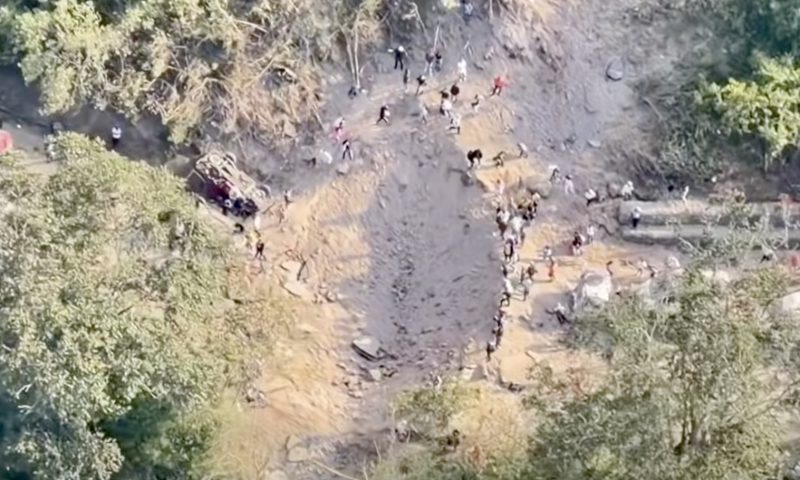
Aerial view of the crater caused by the explosion on the Pan-American Highway. Photo courtesy of Colombia’s Ministry of Defense.

Aerial view of the crater caused by the explosion on the Pan-American Highway. Photo courtesy of Colombia’s Ministry of Defense.

Cauca Governor Octavio Guzmán described the incident as one of the most serious attacks in the region in decades. “What happened on April 25 constitutes the most brutal and ruthless attack against civilians in decades,” he said.

The attack comes amid a resurgence of violence in southwestern Colombia, where illegal armed groups linked to drug trafficking, illegal mining and other illicit economies operate. Authorities continue operations in the area as investigations proceed to clarify the circumstances of the attack and determine responsibility.

According to reports by BBC Mundo, alias “Marlon” is a dissident FARC leader identified as Iván Jacobo Idrobo Arredondo, “the alleged head of the Jaime Martínez structure, part of the Estado Mayor Central (EMC),” one of the country’s most powerful illegal armed groups.

Operations and arrests

As part of response operations, the National Police reported the capture of José Alex Bitoco, alias “David” or “Mi Pez,” identified as the leader of the Dagoberto Ramos structure, another illegal armed faction, who is believed to have acted under orders from alias “Marlon”.

National Police Director Gen. William Rincón Zambrano said the detainee “will have to answer for the wave of terrorist activity” and linked him directly to the attack, stating that “he is responsible for what happened on April 25 in the El Túnel sector on the Pan-American Highway.”

The Defense Ministry reiterated that alias “Marlon” remains a priority target. “He is a high-value target, and we are searching for him with all the capabilities of the state. We have deployed a dedicated intelligence task force to locate him,” Sánchez said, confirming a reward of up to $1.4 million USD for information leading to his capture.

Context: criticism of “Paz Total” policy (Total Peace)

The attack comes amid growing security deterioration in Colombia, intensifying criticism of President Gustavo Petro’sTotal Peace” policy. The Ideas for Peace Foundation (FIP) has warned of a possible failure of the strategy, noting that “less than four months before the end of the government, the lack of progress in peace negotiations and the deterioration of security have become one of the main points of criticism of the Petro administration.”

According to the think tank, during the current administration “the number of disputed territories between illegal actors has nearly doubled, and the number of members in these structures has increased by 85%: they now total more than 27,000 members, including armed individuals and support networks.”

This figure not only represents a significant increase but also places the country at levels similar to, and even higher than, those seen before the peace process with the FARC began. Between 2011 and 2012, the estimate stood at around 26,800 members, compared with 14,600 at the end of Iván Duque’s administration in 2022.

The recent increase has also been rapid. According to the FIP, armed groups grew by 23.5% over the past year (from December 2024 to December 2025), reflecting a swift reconfiguration of these structures. At the same time, violence has intensified. Analysts such as Professor Karol Solís Menco note that over the weekend of April 25–26 alone, “26 terrorist attacks of varying magnitude” were recorded across the country.

Political analysis outlets point to a structural dynamic. According to La Silla Vacía, “Cauca is not experiencing an isolated event, but rather a phase of intensifying territorialized violence, marked by fragmentation among armed actors and a type of violence capable of producing national-level impacts.”

In this context, FARC dissident groups have once again taken center stage in the conflict. “Once again, attention is turning to FARC dissidents. Every attack, every gas cylinder bomb, every assault in Valle and Cauca ends with the same name on the table: the Jaime Martínez structure, one of the strongest groups of Iván Mordisco’s Estado Mayor Central,” El País reported.

Violence indicators also reflect sustained deterioration. “In the first four months of 2026, Colombia has already recorded 48 massacres, with 229 victims, most of them civilians, according to Indepaz. It is the highest figure in the past decade. With these numbers, which represent only a partial picture of the country’s violence, this election year is shaping up to be the most violent since the 2016 peace agreement with the now-defunct FARC guerrilla group,” the same outlet reported.

Cauca, where the attack took place, is considered one of the most sensitive regions. “Cauca is particularly complex because it combines multiple layers of conflict: the historic presence of Indigenous, peasant and Afro-descendant communities; illicit economies; Pacific corridors; disputes over drug trafficking routes; control of the Pan-American Highway; and the presence of FARC dissidents, particularly structures linked to Iván Mordisco,” El País said.

Experts agree that part of the difficulty lies in the design and implementation of the government’s strategy. “Early implementation was a valuable innovation in intent, but it failed to ensure minimum conditions of verification and institutional coherence,” said analyst Germán Valencia of the Peace and Reconciliation Foundation (Pares).

Taken together, these factors have led various sectors to conclude that the “Total Peace” policy faces serious structural limitations amid a scenario of armed fragmentation and territorial expansion by illegal groups.

  •  

Colombia Lifts Suspension of Former Intelligence Chief and Army General in Probe Over Alleged Links to FARC Dissidents

Despite the suspension being lifted, Wilmar Mejía has resigned from the intelligence agency and is set to lead the Financial Information and Analysis Unit (UIAF)

Colombia’s Inspector General’s Office (Procuraduría General de la Nación) has decided not to extend the three-month provisional suspension imposed on former Chief of the National Intelligence Agency (DNI), Wilmar Mejía, and Army General Juan Miguel Huertas, as part of a disciplinary investigation into alleged links with dissident factions of the former FARC guerrilla group.

Both officials had been temporarily removed from their positions after being mentioned in chats and documents found on devices belonging to alias “Calarcá,” one of the leaders of these illegal armed groups.

According to a document released by the Inspector General’s Office and published by the digital media La Silla Vacía, the “alleged conduct under investigation corresponds to events that occurred in 2024, when those involved were not yet public officials.” In that regard, the oversight body said it “will continue gathering evidence to determine whether such conduct extended into the period in which they held public office.”

“It is therefore necessary to continue the evidentiary process to establish whether the questioned conduct, in addition to being corroborated, extended into periods when those under investigation held public office,” the Inspector said in a statement.

Under Colombia’s legal framework, the Inspector General’s Office investigates public officials and individuals who manage public resources. If it is established that the alleged acts occurred prior to their appointment, the case would fall exclusively under the jurisdiction of the Attorney General’s Office (Fiscalía General de la Nación), which handles criminal investigations involving private citizens.

Ongoing investigation and background

The initial suspension was ordered on November 27, 2025, by the Inspector General’s Disciplinary Investigation Chamber and confirmed on December 23 of the same year, for a period of three months.

Later, at the end of March 2026, the National Intelligence Agency requested, by public communication, that the oversight body “clarify the scope of the measure,” which led to the recent decision not to extend the suspension, while the disciplinary investigation remains ongoing.

In parallel, the Attorney General’s Office continues investigations into the so-called “Calarcá case.” Attorney General Luz Adriana Camargo said there is “confirmed serious information from computers and cellphones about links between the group and a general and a DNI official,” according to statements reported by Caracol Noticias.

So far, no charges or convictions have been issued in connection with these cases.

Changes at the National Intelligence Agency

Amid the investigation, Wilmar Mejía confirmed his departure from the National Intelligence Agency on April 1, 2026, in an interview with Canal 1. “When the Inspector General’s Office lifted my suspension, I went to sign my reinstatement document and within 15 minutes I submitted my resignation. I am no longer the director of intelligence,” he said.

Following his resignation, President Gustavo Petro appointed him as director of the Financial Information and Analysis Unit (UIAF), the agency responsible for combating money laundering and terrorism financing in Colombia. The decision has drawn criticism, as Mejía remains linked to ongoing investigations by both the Inspector General’s Office and the Attorney General’s Office.

More information about the Colombia´s Intelligence Agency? Read “Colombia Intelligence Chief’s Resignation Exposes Instability and Possible Illegal Group Infiltration” by Finance Colombia.

  •  

Gunfire Incident on Putumayo River Revives Tensions Between Colombia & Peru

Despite the severity of the incident, Colombia and Peru have indicated a willingness to address it through diplomacy

 An incident on April 12, 2026, has reignited diplomatic and security tensions in the Amazon border region between Colombia and Peru, following an exchange of gunfire between a Colombian civilian vessel and the Marina de Guerra del Perú, a Peruvian Navy River unit, on the Putumayo River. The incident left one Colombian citizen dead and one person injured on each side.

The episode occurred near Marandúa (Amazonas, Colombia), across from the Peruvian town of El Estrecho. According to Colombia’s Defense Minister, Pedro Sánchez, the fatal victim was identified “as José Miguel Gutiérrez Baquero, owner of the cargo vessel involved in the incident, and one of his sons was injured,” while two other crew members were detained by Peruvian authorities.

Conflicting accounts of the operation

According to the Peruvian government statement, “the incident occurred during a patrol operation aimed at securing the electoral process,” previously coordinated between the two countries. Authorities said two Navy speedboats requested that the Colombian vessel stop for identification.

Peru’s Ministry of Foreign Affairs, which is leading the process, said that “the Colombian vessel refused to comply with the control order and opened fire on two Peruvian Navy units, which returned fire.” As a result, “a member of the Peruvian Navy was also injured, although he is out of danger.”

Colombian authorities, led by the Foreign Ministry, have requested a full clarification of the events and verification of the circumstances surrounding the exchange of gunfire.

Diplomatic channels activated

Following the incident, the governments of Colombia and Peru activated diplomatic and military channels. Colombia’s defense minister said that “preliminary measures were agreed, including prioritizing medical attention for the injured, facilitating the work of judicial authorities, and establishing a binational commission to investigate what happened.”

Colombia’s Foreign Ministry formally requested clarification of “the circumstances of time, mode and place” of the attack, while the Peruvian government expressed its “willingness to cooperate and maintain border coordination mechanisms.”

The detained individuals “remain in the custody of the Fiscalía Provincial Mixta de Putumayo, with access to consular assistance and due process guarantees.”

So far, no final responsibilities have been determined, and both countries agree on the need for a thorough investigation. Both governments said the issue will be addressed at the next High-Level Mechanism on Security and Judicial Cooperation meeting, scheduled for May 2026 in Bogotá.

Context of prior tensions

The incident comes amid sensitive bilateral relations. In recent months, Colombia and Peru have had disagreements over territorial issues in the Amazon, particularly regarding Santa Rosa de Loreto island.

The dispute dates back to August 5, 2025, when President Gustavo Petro said on X that the “government of Peru has taken over territory that belongs to Colombia” and alleged a “violation of the Rio de Janeiro Protocol, which defines the boundaries between the two countries.”

“The Rio de Janeiro Protocol established that the border is the deepest channel of the Amazon River and that any dispute must be resolved between the parties,” Petro said, referring to the emergence of new river islands “north of the current deepest channel,” which, according to his position, should belong to Colombia.

In response, Peru’s Foreign Ministry expressed its “strongest and most forceful protest,” stating that the island, home to about 3,000 residents, mostly Peruvians, is part of its territory and is key to regional river trade.

Tensions escalated days later when then-presidential pre-candidate Daniel Quintero traveled to the island and raised a Colombian flag during a campaign event broadcast on social media, saying: “I will not allow them to take the Amazon from us. Santa Rosa is Colombia.”

The Peruvian government described the act as an “unnecessary action” that “distracts from the cooperation efforts that Peru and Colombia must prioritize to jointly address urgent challenges.”

Headline photo: President Gustavo Petro, Vice President Francia Márquez and Defense Minister Pedro Sánchez at an event held in Leticia (Amazonas) to address tensions with Peru, Aug. 7, 2025. Photo courtesy of Colombia’s Ministry of Defense.

  •  

Colombia to Reinforce Border Security with Ecuador Amid Escalating Trade Tensions

Colombia’s Defense Ministry detailed a plan to bolster security along the Ecuador border

Colombia’s government has announced a package of measures to strengthen security in municipalities along the border with Ecuador, amid escalating tensions between the two countries over security and trade issues.

According to a statement released by the presidency, the actions include “the deployment of 200 additional National Police officers and 270 soldiers, as well as enhanced maritime and riverine capabilities for territorial control and the fight against drug trafficking.”

The plan also includes technical support for surveillance systems, the deployment of two armored platoons to ensure troop mobility, and meetings aimed at strengthening joint operations by security forces and control at border crossings.

Defense Minister Pedro Sánchez announced the measures, stating that “we will not allow criminal groups seeking to profit from illegal activities such as drug trafficking, illegal mining, extortion and smuggling to affect security indicators.”

He added that security forces have already seized 2.4 tons of drugs and remain deployed in the region “to protect our seas and critically disrupt drug trafficking.”

Context: security and trade tensions

The measures come days before Ecuador’s tariff increase takes effect, raising the so-called “security tariff” on Colombian goods from 50% to 100% starting May 1, 2026.

Ecuadorian President Daniel Noboa told Revista Semana magazine that the decision is not part of a “trade war” with Colombia but rather reflects the costs of reinforcing border security. “We have to spend twice as much, and it costs $400 million USD more per year to keep our armed forces deployed at the border,” he said.

For its part, Colombia’s government has rejected claims of insufficient action on border security. Minister of Commerce, Industry and Tourism Diana Marcela Morales Rojas said Colombia has kept diplomatic channels open.

“We have exhausted all diplomatic efforts and maintained open dialogue channels with the Government of Ecuador, seeking a solution that benefits both countries, businesses and, above all, communities on both sides of the border. However, we have not received a positive response,” she said in a statement.

At the same time, Colombia is evaluating its tariff response. Although President Gustavo Petro previously said he would not impose 100% tariffs on Ecuador, a draft update to Decree 170 of 2026 has recently emerged proposing differentiated tariffs of 35%, 50% and 75% on imports from the neighboring country. So far, the proposal has not been signed or officially published.

More information on the trade dispute between Colombia and Ecuador? Read Trade War Between Colombia And Ecuador Escalates, With 50% Tariffs Threatened by Finance Colombia.

  •  

Colombia and Ecuador Escalate Trade Tensions with Tariffs Raised to 100%

President Gustavo Petro recalls Colombia’s ambassador and signals a potential withdrawal from the Andean Community of Nations (CAN)

Ecuador’s government announced an increase in the so-called “security tariff” applied to imports from Colombia, raising it from 50% to 100%, a move that has intensified trade tensions between the two countries.

In response, the Colombian government, through its Ministry of Commerce, Industry and Tourism, said it will match Ecuador’s measure by adjusting its tariffs to the same level, arguing the need to “maintain balance in bilateral trade conditions.”

The Ecuadorian decision was formalized through a resolution issued by the National Customs Service of Ecuador (Servicio Nacional de Aduana del Ecuador), which establishes that the new tariff will take effect on May 1, 2026.

According to Ecuador’s government, led by President Daniel Noboa, the measure is driven by concerns over border security. In an official statement, authorities said that “after confirming the lack of implementation of concrete and effective border security measures by Colombia, Ecuador is obliged to adopt sovereign actions.”

Colombia’s response and diplomatic measures

Amid the escalation, President Gustavo Petro announced immediate diplomatic actions, including recalling Colombia’s ambassador to Ecuador, María Antonia Velasco, whom he said “must return immediately” to Colombia. He also stated that “the next cabinet meeting will be held at a location along the border with Ecuador,” in a message posted on X.

Petro also criticized statements from Ecuador’s government, saying that “the president of Ecuador insults the Colombian government, which has seized more cocaine than at any point in world history.”

For her part, Minister of Commerce, Industry and Tourism, Diana Marcela Morales Rojas said Colombia “had maintained open diplomatic channels prior to Ecuador’s decision.”

“We have exhausted all diplomatic efforts and kept dialogue channels open with the Government of Ecuador, seeking a solution that benefits both countries, businesses, and above all, communities on both sides of the border. However, we have not received a positive response,” she said in a statement.

Economic impact and trade response

Colombia’s government, led by the Ministry of Commerce, Industry and Tourism, also announced it will amend Decree 170 to raise tariffs to 100%, in line with Ecuador’s measure. The proposal will be submitted to the Committee on Customs, Tariff and Foreign Trade Affairs (Triple A) for review, meaning that details and the effective date of the increase have yet to be determined.

According to the statement, Ecuador’s tariff hike distorts competitive conditions in the Andean market, negatively affecting Colombian producers competing with Ecuadorian goods.

The government also announced relief measures aimed at mitigating the impact on the productive sector, including favorable credit lines, expanded access to financing, and mechanisms to preserve employment.

Political escalation and questions over the Andean system

Amid the growing trade dispute, President Petro also signaled a potential shift in Colombia’s economic foreign policy, stating that Ecuador’s actions “mark the end of the Andean Pact for Colombia.”

“We have nothing left to do there. The foreign minister must begin the process of joining Mercosur as a full member and redirect our efforts toward the Caribbean and Central America,” he said.

The Andean Pact, also known as the Andean Community of Nations (CAN), established in 1969 by Colombia, Ecuador, Peru and Bolivia, has historically been a cornerstone of regional economic integration.

Both governments have filed formal complaints with the CAN, which will assess the admissibility of the claims and may mediate the dispute.

More information on the trade dispute between Colombia and Ecuador? Read Trade War Between Colombia And Ecuador Escalates, With 50% Tariffs Threatened by Finance Colombia.

Above photo: President Gustavo Petro of Colombia with President Daniel Noboa of Ecuador (photo courtesy Presidencia of Ecuador)

  •  

Ecopetrol Announces Temporary Leave for President Ricardo Roa Amid Investigations by Colombia’s Attorney General’s Office

Ecopetrol’s board has approved a temporary leave for Ricardo Roa, keeping him out of office until Colombia’s presidential elections wrap up at the end of June 2026

Ecopetrol’s board of directors has approved an unpaid leave of absence for its president, Ricardo Roa Barragán, amid ongoing judicial investigations and growing pressure from unions, minority shareholders and political sectors.

In an official statement, the company said Roa “requested to use his accrued vacation days from April 7 to May 27, 2026,” and that the board also approved an unpaid leave requested by himself, “beginning on May 28 and lasting 30 calendar days.” This means he will be away from his duties for a continuous period extending through the end of June, after Colombia’s presidential elections scheduled for May 31 and June 21, if a runoff is required.

The decision comes in a context marked by two investigations led by the Attorney General’s Office. The first relates to an alleged case of influence peddling involving the purchase of an apartment in northern Bogotá, for which Roa has already been formally charged, although he has pleaded not guilty. The second concerns a possible breach of campaign finance limits during President Gustavo Petro’s 2022 presidential campaign, which Roa managed.

Both cases remain under review by judicial authorities, who will assess the evidence and issue a ruling (Colombia’s Top Prosecutor Charges Ecopetrol President in Alleged Influence-Peddling Case).

Roa’s temporary departure also follows pressure from some of the company’s main labor unions (Strike Threat Looms as Colombia Oil and Gas Union Calls for Ecopetrol President’s Removal), as well as minority shareholders (Ecopetrol Shareholders Loudly Heckle CEO Ricardo Roa at Annual Meeting as Leadership Dispute & Corruption Scandal Roils The Petroleum Company), and opposition political groups.

If this timeline holds, his potential return will coincide with the post-election period, ahead of the transition process with the new government set to take office on August 7, which is expected to appoint a new board and select a new president for the state-controlled oil and gas company.

Acting president appointed

Photo 2: Juan Carlos Hurtado Parra, Acting President of Ecopetrol. Photo courtesy of Ecopetrol.

Juan Carlos Hurtado Parra, Acting President of Ecopetrol. Photo by of Ecopetrol.

During Roa’s absence, the board appointed Juan Carlos Hurtado Parra as acting president of Ecopetrol. According to the statement, Hurtado currently serves as executive vice president of hydrocarbons and has been the first alternate to the presidency since November 16, 2025.

He has “more than 28 years of experience in the energy sector, including roles as vice president of exploration, development, and production at Ecopetrol and has held executive positions focused on resource management and coordination. He is an electrical engineer, holds a specialization in Project Evaluation and Development, and has a Master of Business Administration (MBA) in International Oil and Gas.”

  •  

Colombia Intelligence Chief’s Resignation Exposes Instability and Possible Illegal Group Infiltration

Since the start of President Gustavo Petro’s administration, the intelligence agency has had four directors, highlighting instability within one of the institutions responsible for state security.

The resignation of Wilmar Mejía as chief of Colombia’s National Intelligence Agency has highlighted instability within the country’s main intelligence agency under the government of President Gustavo Petro, which has seen four leadership changes over the past three years.

Mejía confirmed his departure on April 1 in an interview with Canal 1. “When the Inspector General’s Office lifted my suspension, I went to sign my reinstatement document and within 15 minutes I submitted my resignation. I am no longer the director of intelligence,” he said.

The official had been suspended since December 23, 2025, by the Inspector General’s Office as part of a disciplinary investigation “for alleged links to and the provision of information to members of dissident factions of the former Revolutionary Armed Forces of Colombia (FARC).” The Inspector Office said at the time that the measure aimed to prevent possible interference with the process.

Investigation into alleged links to guerrilla dissidents

The case is related to the seizure of digital files belonging to Alexander Díaz Mendoza, known as “Calarcá Córdoba,” a leader of one of the dissident structures grouped under the Estado Mayor de Bloques y Frente (EMBF). Authorities say the documents point to possible contacts with the former intelligence chief.

Mejía has denied any involvement and has argued that the accusations are part of alleged “setups aimed at silencing reports of internal corruption.”

According to the Inspector Office, the investigation “includes possible acts such as the disclosure of military force communication frequency codes and support in the creation of security companies that could facilitate the legalization of weapons in the event of a breakdown in peace talks with the government.”

So far, neither the Inspector General’s Office nor the Attorney General’s Office has concluded its investigations, and no determination of responsibility has been made.

The case has raised concerns about state security and the institutional stability of the agency, considered a key body for the country’s strategic intelligence.

Local media outlets such as El Colombiano have reported that the situation has affected trust among international intelligence partners, suggesting that agencies such as the CIA (United States), MI6 (United Kingdom), and Mossad (Israel) have restricted the sharing of strategic information with Colombia.

Four directors in just over three years

Since Petro took office, the agency has had four directors, all of them close to the president through their past involvement in the M-19 guerrilla group, which signed a peace agreement in 1990.

The instability dates back to the beginning of Petro’s administration. Since August 2022, when Manuel Alberto Casanova Guzmán was appointed, the agency has undergone repeated leadership changes.

Casanova, who faced criticism over his lack of intelligence experience and background as a philosopher, was removed following allegations of involvement in a false extortion case linked to then-Foreign Minister Álvaro Leyva, as reported by Infobae.

He was succeeded by Carlos Ramón González, who later left the post amid investigations into his alleged role in the corruption scandal involving Unidad Nacional de Gestión de Riesgo y Desastres (UNGRD). He is currently in Nicaragua under political asylum, while Colombia has requested his extradition and Interpol has issued a red notice.

Finally, just before Mejía, the agency was led by Jorge Lemus, who served for nearly a year before resigning. He was subsequently appointed by Petro as director of the Unidad de Información y Análisis Financiero (UIAF), amid growing allegations of possible infiltration within the country’s security institutions.

  •  

Colombia’s Finance Minister Leaves Central Bank Meeting Over Rate Increase, Fueling Tensions

Finance Minister Germán Ávila walked out of a central bank board meeting, accusing it of going against Colombia’s national interests and deepening institutional tensions.

Colombia’s Finance Minister Germán Ávila abandoned a meeting of the board of the central bank (Banco de la República), on April 1 in protest over two decisions by the institution: the release of an internal document without prior consultation, and a 100-basis-point increase in the benchmark interest rate, which was raised to 11.25%.

According to the finance minister, the disclosure of the document, which involved both institutions and was linked to a draft government decree, constituted an “abuse.”

He also described the rate hike, the second so far this year, as “irresponsible and inconvenient,” arguing that it contradicts the government’s economic growth strategy.

The central bank said the decision was approved by a majority of its board: “four members voted in favor of the increase, two supported a 50-basis-point cut, and one proposed keeping the rate unchanged.”

The bank justified the move by noting that inflation stood at 5.4% in January and 5.3% in February, above the 5.1% recorded at the end of 2025. It also warned of external risks, including the impact of the conflict in Iran on the global economy, which could increase the cost of key imports such as gas and fertilizers and add to inflationary pressures later this year.

It remains unclear whether Ávila’s withdrawal from the board will be temporary or permanent, but the episode marks a new point of institutional tension that could influence the direction of monetary policy in Colombia in the coming months.

Clash between monetary policy and government strategy

Ávila criticized the decision, saying the central bank is overlooking the country’s economic progress. “The decision taken by the central bank is repetitive and continues to ignore the national government’s efforts to ensure fiscal stability and sustained economic growth,” he said.

He also argued that the increase is disproportionate compared with global trends. “There is not a single economy in the world proposing a 200-basis-point increase in the benchmark rate in the current global context,” he said, referring to the fact that the bank had already raised rates by 100 basis points in February, meaning a total increase of 200 basis points in just four months.

The government maintains that macroeconomic conditions remain stable, pointing to controlled inflation, a relatively stable Colombian peso (COP) against the dollar, declining unemployment and solid productive growth, and argues that tighter monetary policy is unnecessary.

Debate over central bank independence

The Finance Ministry said the minister’s decision to leave the meeting does not seek to challenge the independence of the central bank, but rather to highlight the need for its decisions to align with the country’s economic and social reality.

However, the move has raised legal and institutional concerns. Central bank chairman of the board, Leonardo Villar noted that the finance minister has a constitutional obligation to attend board meetings, as he “not only represents the government but also lead the meetings” said in a public interview broadcasted by media outlet like La República.

He warned that an indefinite absence could amount to a breach of legal duties and urged President Gustavo Petro to appoint an “ad hoc” delegate if the minister decides not to attend future meetings.

Experts say the minister’s absence could affect the board’s ability to make decisions. According to Andrés Pardo, former deputy finance minister and head of Latin America macro strategy at XP Investments, in an interview with Valora Analitik, “current regulations require at least five members, including the finance minister or a delegate, for the board to deliberate and decide”.

This could mean that, without his presence, the central bank may be legally unable to adopt monetary policy decisions.

Economic impact

The rate increase could have significant effects on the real economy. According to the Finance Ministry, a move of this magnitude could slow economic recovery, increase borrowing costs for households and businesses, and raise debt servicing costs.

Small and medium-sized companies, construction, retail and tourism are expected to be among the most affected sectors, along with households holding variable-rate loans.

Lower-income groups could face the greatest impact, as reduced purchasing power and tighter access to credit may deepen economic inequality.

  •  

Colombia Unemployment Drops to 9.2% in February, Lowest Since 2001

Colombia’s unemployment rate dropped to 9.2% in February from 10.3% a year earlier, marking the lowest level for the month since 2001, according to official data.

In February 2026, Colombia’s unemployment rate stood at 9.2%, a decrease of 1.1 percentage points compared with the same month in 2025 and the lowest figure for a February since 2001, according to the government through the National Administrative Department of Statistics (DANE).

According to the report, “at the national level, the employed population increased by 624,000 people compared with the previous year.” The sectors that contributed most to job creation were professional, scientific and technical activities, with 250,000 new positions, and the public sector (administration, education and health), with 244,000. In contrast, agriculture lost 363,000 jobs and the transportation sector 86,000 compared with February 2025.

President Gustavo Petro highlighted the result on his X account, stating that “we return to a single-digit unemployment rate, 9.2%, the lowest since 2018. More reasons not to accept the mistake of the right parties in claiming that raising the minimum wage to a living wage would bring an employment catastrophe. That was not true: we have the lowest unemployment of this century for the month of February.” The president also defended the minimum wage increase, which reached 23.7%, the highest recorded in the country.

Volvemos a un dígito de tasa de desocupación, 9,2%, la más baja desde el 2018.

Más razones para no aceptar la equivocación de la derecha al afirmar que el subir el salario mínimo al nivel del salario vital traería una catástrofe del empleo.

No fue cierto, tenemos el menor… https://t.co/vXz7Muv3f0 pic.twitter.com/Jx7RBeIWLb

— Gustavo Petro (@petrogustavo) March 30, 2026

Downward trend in unemployment

When analyzing the December–February rolling quarter, the unemployment rate stands at its lowest level in the past ten years, according to DANE reports. The figure rose from an average of 10.7% in 2017–2018 to a peak of 15.7% in 2020–2021, a period marked by the impact of the COVID-19 pandemic, before declining steadily to 9.2% in February 2026.

For the same period in 2025, the rate stood at 10.4%, representing a reduction of more than one percentage point.

These figures are consistent with estimates by the International Labour Organization (ILO) in Colombia, which had projected a gradual decline in unemployment from around 16% in 2020 to an estimated 8.3% for the previous year.

Chart showing unemployment in Colombia from February 2016 to February 2021, including the presidents in office during that period. Image shared by Pacto Histórico Representative David Racero.

Chart showing unemployment in Colombia from February 2016 to February 2021, including the presidents in office during that period. Image shared by Pacto Histórico Representative David Racero.

Gaps and challenges in the labor market

Despite the overall improvement, the DANE report also highlights challenges in terms of labor inclusion. In February 2026, the unemployment rate for men was 7.4%, while for women it reached 11.7%, representing a gender gap of 4.3 percentage points.

However, the government noted that this gap has been narrowing, as it stood at 5.2 percentage points in the previous month.

The data come from “The Great Integrated Household Survey” (La Gran Ecuesta Integrada de Hogares – GEIH), DANE’s statistical instrument that provides information on the labor market, income, monetary poverty and the sociodemographic characteristics of Colombia’s population.

  •  
❌