Reading view

New Version of Siri to 'Lean' on Google Gemini

In his "Power On" newsletter, Bloomberg's Mark Gurman today provided an update on the status of Apple Intelligence and the plans for it in 2026.

Apple is still planning to roll out its revamped version of Siri around March of next year. The release should be accompanied by the release of a new smart home display product with speaker-base and wall-mount options. A new Apple TV and HomePod mini, which are set for launch soon, will also "help showcase" next year's new ‌Siri‌ and ‌Apple Intelligence‌ features.

The new version of ‌Siri‌ will apparently "lean" on Google's Gemini and include an AI-powered web search feature. Gurman warned "there's no guarantee users will embrace it, that it will work seamlessly or that it can undo years of damage to the ‌Siri‌ brand."

Apple is said to be paying Google to create a custom Gemini-based model that can run on its Private Cloud Compute servers to power ‌Siri‌. Gurman clarified that this doesn't mean ‌Siri‌ will include Google services or Gemini features. Instead, ‌Siri‌ will simply be powered by a Gemini model in the background, enabling it to deliver the features that users expect with an Apple user interface.

Apple will preview iOS 27, macOS 27, watchOS 27 and other operating systems at its annual Worldwide Developers Conference in June. The updates will apparently focus on major updates to ‌Apple Intelligence‌ and the company's broader AI strategy.

The company is also apparently still running into problems with the launch of ‌Apple Intelligence‌ in China. Despite partnerships with Chinese companies, ‌Apple Intelligence‌ in China is still mired by regulatory issues and the launch is now a "rolling target."


This article, "New Version of Siri to 'Lean' on Google Gemini" first appeared on MacRumors.com

Discuss this article in our forums
  •  

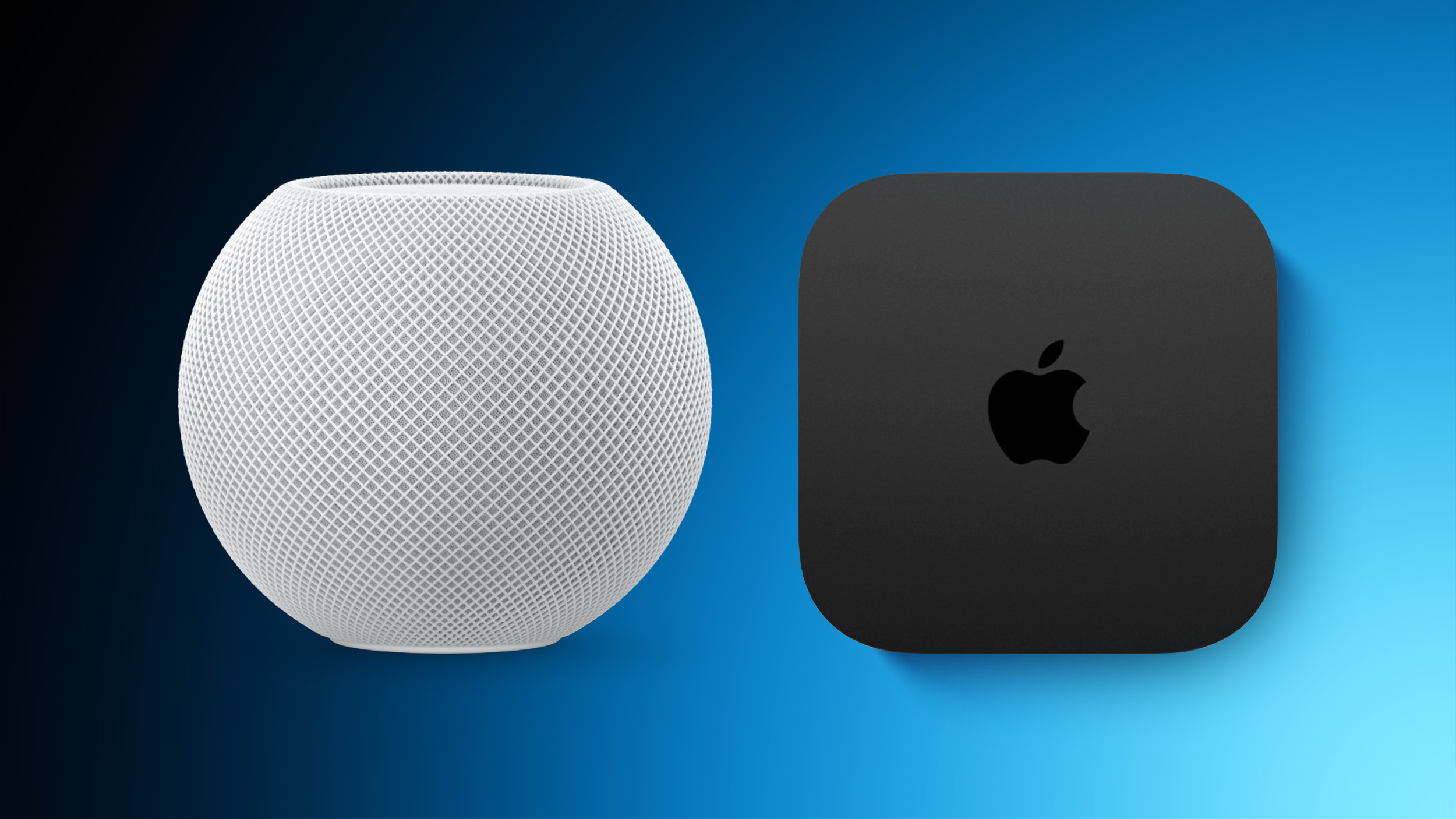
New Apple TV and HomePod Mini Likely Launching Soon

A new Apple TV and HomePod mini could launch as soon as this month, Bloomberg's Mark Gurman today suggested.


In today's "Power On" newsletter, Gurman said that Apple retail stores are planning an overnight refresh on the evening of November 11, where changes will be made after closing, such as refreshing displays and placing new products for the following day.

The timing of the overnight refresh could simply be related to the holiday season, but there is a possibility that it relates to the launch of new ‌Apple TV‌ and ‌HomePod mini‌ models. Gurman notes that inventory of current models has become tight, likely signaling that new versions are on the way. He added that even if they do not launch by the end of 2025, they "shouldn't be far off."

The new ‌Apple TV‌ and ‌HomePod mini‌ will apparently "help showcase the new Siri and Apple Intelligence features planned for next year." During its earnings call earlier this week, Apple seemingly suggested that any more new Macs are off the table for the rest of 2026, making the new ‌Apple TV‌ and ‌HomePod mini‌ the most likely candidates for any remaining Apple product releases this year.

Related Roundups: Apple TV, HomePod mini

This article, "New Apple TV and HomePod Mini Likely Launching Soon" first appeared on MacRumors.com

Discuss this article in our forums

  •  

Report: Apple to Launch These New Products in 2026

Apple is planning to launch at least 15 new products in 2026, according to Bloomberg's Mark Gurman.


Gurman outlined what to expect from Apple in 2026 in the latest edition of his "Power On" newsletter. He said the company is heading "into one of its most pivotal years in recent memory," with the rollout of major new Apple Intelligence features, intense regulatory pressure on the App Store, and the risk of new tariffs.

The "early portion of the year" should see the release of the iPhone 17e, iPad (12th-generation) with A18 chip, iPad Air with M4 chip, MacBook Air with M5 chip, MacBook Pro with M5 Pro and M5 Max chips, and new external displays. Around March to April, Apple should roll out the long-awaited revamped version of Siri alongside a new smart home display with speaker-base and wall-mount options.

In the fall, the company will release new Apple Watches and iPhones as usual. The iPhone 18 Pro models will drop Qualcommm modems for Apple's own C1 chip. The first foldable ‌iPhone‌ is also expected to launch.

The company is likely to debut smart home security products such as a camera in 2026. A new Mac mini with the M5 chip is also expected, along with a new Mac Studio. A new iPad mini with an OLED display should also arrive, but an update to the iPad Pro is not due until 2027.

Before the end of the year, the company could unveil redesigned ‌MacBook Pro‌ models with M6 Pro and M6 Max chips, thinner chassis, touchscreens, and OLED displays. Apple could also preview its smart glasses product before the end of 2026, with suppliers already producing small quantities.


This article, "Report: Apple to Launch These New Products in 2026" first appeared on MacRumors.com

Discuss this article in our forums
  •  

Head of Apple's AI Search Project Leaves to Join Meta

Apple's artificial intelligence division has lost another senior executive, with Ke Yang, who was recently appointed to lead the company's AI-driven web search effort, departing for Meta, according to Bloomberg's Mark Gurman.


Yang had only recently taken over Apple's newly created Answers, Knowledge, and Information group, known internally as "AKI." The team is responsible for developing technology to make Siri more ChatGPT-like, including the ability to retrieve live information from the web. The AKI project is said to be a central component of Apple's planned ‌Siri‌ overhaul, which is currently scheduled for release in March 2026. The update is said to include features that were delayed from earlier this year, such as allowing ‌Siri‌ to access personal data and handle more complex, multi-step requests.

Yang's promotion to head of AKI came just weeks ago following the departure of Robby Walker, another longtime Apple executive who had been leading the group. Yang had previously overseen the search-focused portion of AKI before being elevated to lead the division in full, reporting directly to John Giannandrea, Apple's senior vice president of machine learning and AI strategy. With Yang's exit, the AKI team will now report to Benoit Dupin, one of Giannandrea's deputies responsible for Apple's machine learning infrastructure.

The AKI project has reportedly become a major element of Apple's efforts to close the gap with rivals such as OpenAI, Perplexity, and Google Gemini, all of which have made rapid advances in AI-powered search and conversational interfaces. Gurman describes the Answers feature as a new layer of ‌Siri‌ designed to synthesize responses from live internet data, allowing it to deliver up-to-date answers and contextual information.

Yang's departure is the latest in a growing series of exits from Apple's artificial intelligence division, which has reportedly seen more than a dozen senior researchers and engineers leave this year alone. Many of those departures were from the company's Foundation Models team, which is tasked with developing Apple's core generative AI models. That unit was led by Ruoming Pang, who also left for Meta earlier this year to help establish a new research division known as Superintelligence Labs.


This article, "Head of Apple's AI Search Project Leaves to Join Meta" first appeared on MacRumors.com

Discuss this article in our forums

  •  

Apple Stops Work on Lighter Vision Pro to Fast-Track AI Smart Glasses

Apple has decided to stop work on a cheaper, lighter version of the $3,499 Vision Pro to instead focus its resources on smart glasses, reports Bloomberg. Apple wants to speed up development on a glasses product to better compete with Meta.


There were rumors that Apple was developing a a much lighter, more affordable "Vision Air" for launch in 2027, but Apple is now transitioning engineers from that project to its smart glasses project.

Apple is working on a set of smart glasses that will rival Meta's AI-equipped Ray-Bans. The glasses will include cameras, microphones, and AI capabilities. Apple could introduce the glasses as soon as next year, and then launch them in 2027.

There won't be a display in the first version of the glasses, but Apple is developing another model that will include an integrated display. Apple wanted to debut the version with a display in 2028, but it is now aiming to speed up development because Meta just recently announced the Meta Ray-Ban Display AI glasses.

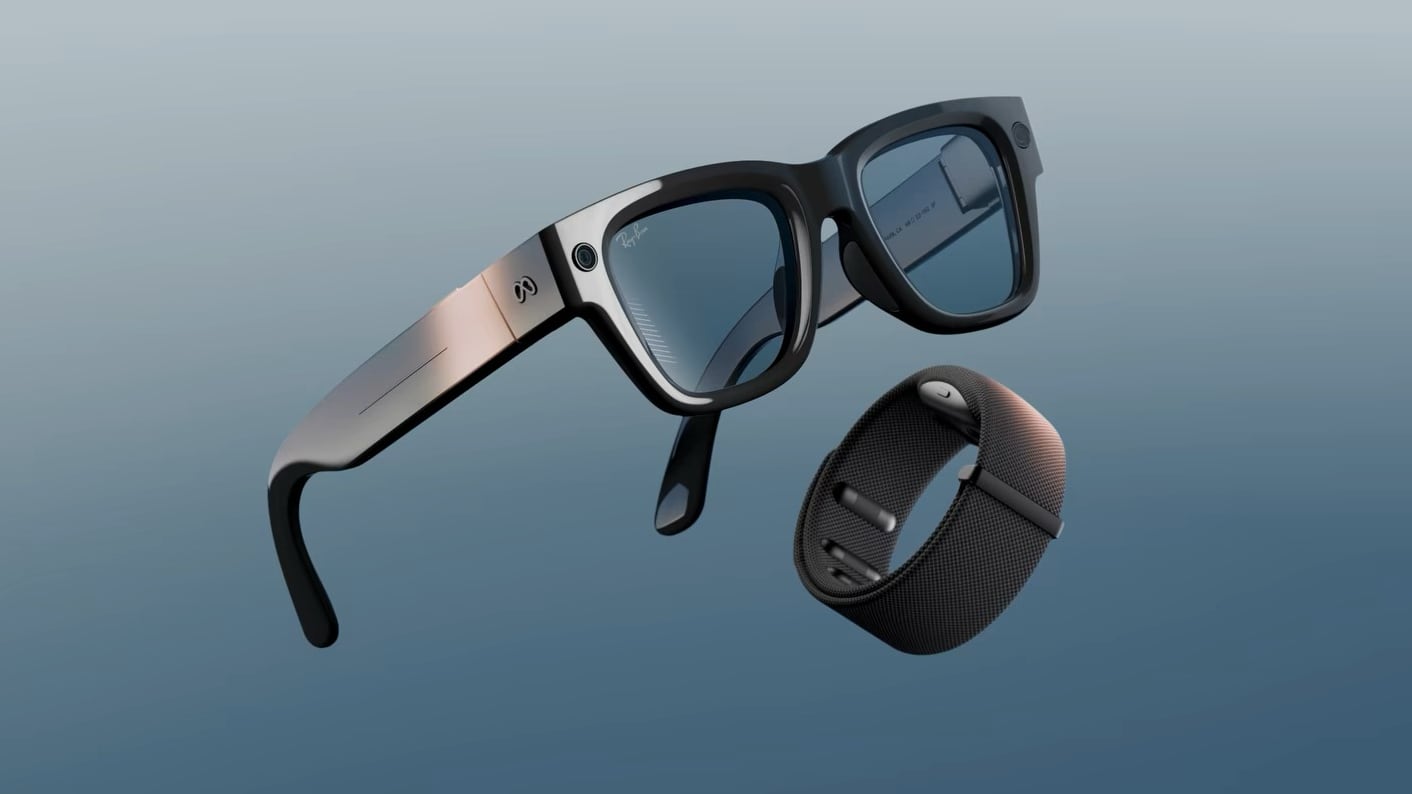
The Meta-Ray Ban Display glasses include a full-color, high-resolution display in one of the lenses. The display is able to display messages, photos, and information from Meta AI. Meta's glasses look similar to regular glasses despite the added screen, and they are the first step toward Meta's "Orion" augmented reality glasses. Meta unveiled its AR glasses last year, showing off thick pair of glasses with dual AR displays. Both Apple and Meta are aiming to launch lightweight augmented reality glasses in the future.

Meta's Ray-Ban Display

Meta has come out with several variations of the Meta Ray-Bans since 2023, and the company has a more advanced AI product than Apple does. Apple's smart glasses will rely on AI and voice-based commands, which will require the next-generation version of Siri.

Apple delayed ‌Siri‌ after the assistant didn't meet expectations for promised Apple Intelligence features in iOS 18, but an updated version of ‌Siri‌ built on new architecture is expected in spring 2026.

Apple plans to release its first smart glasses with multiple material and frame options, turning them into a fashion accessory. Buyers will be able to choose their preferred color and frame style. The glasses will have an Apple-designed chip inside, but will still be reliant on a connected iPhone. Other features will include cameras, microphones, and health tracking capabilities.

While work on a lighter version of the Vision Pro has been paused for now, Apple still plans to refresh the current model with an M5 chip later this year.
This article, "Apple Stops Work on Lighter Vision Pro to Fast-Track AI Smart Glasses" first appeared on MacRumors.com

Discuss this article in our forums

  •  

Apple Loses Another Key AI Leader to Meta's Superintelligence Labs

Apple has had yet another AI executive poached by Meta, despite reports that the social networking company is slowing hiring (via Bloomberg).


Frank Chu, one of Apple's team leaders focused on cloud infrastructure, training, and search, will join Meta's Superintelligence Labs, a division tasked with building advanced AI systems capable of performing at or beyond human-level intelligence.

Chu was involved with managing Apple's cloud-based large language models (LLMs), and was also influential in developing search features for Siri and Apple's entertainment services. For Meta, Chu will work on a new team called MSL Infra, responsible for AI infrastructure development.

Meta has spent billions of dollars on recruitment for its Superintelligence group in recent months, but the company is said to be slowing down hiring over concerns of an overheated market. The pause went into effect last week amid a broader restructuring of the group.

Fears that investments in AI are moving too fast weren't helped by reports earlier this week that OpenAI CEO Sam Altman told a group of journalists that he believes AI is in a bubble. There was a broader sell-off of U.S. technology stocks following the news.

Apple has hemorrhaged around a dozen artificial intelligence staff to rivals since January. The exodus of staff from Apple's AI team over the last seven months has seen senior researchers leave variously for Meta, OpenAI, xAI, Cohere, and others.

One of the most notable recent departures was Ruoming Pang, head of Apple's Foundational Models team, who joined Meta last month after being lured by CEO Mark Zuckerberg with a $200 million pay package.

The talent drain coincides with Apple's struggle to update Siri by integrating LLMs. A chatbot-like version of the virtual assistant was one of the key Apple Intelligence features that Apple promoted at last year's WWWDC, but it has yet to arrive.

Apple is said to be considering using third-party AI models for Siri rather than its in-house technology, following an executive restructuring. During Apple's recent earnings call, Apple CEO Tim Cook said the company is "making good progress on a more personalized Siri" that is powered by Apple Intelligence, and he reiterated that the features will be available next year.
This article, "Apple Loses Another Key AI Leader to Meta's Superintelligence Labs" first appeared on MacRumors.com

Discuss this article in our forums
  •