A Beechcraft 1900 aircraft operating a domestic flight for Colombia’s state-owned airline SATENA lost contact with air traffic control on Wednesday while flying over the Catatumbo region in the northeastern department of Norte de Santander, an area heavily affected by armed conflict and the presence of illegal armed groups.
In an official statement, SATENA said Flight NSE 8849/ 9R-8895, covering the Cúcuta–Ocaña route, departed from Camilo Daza Airport in Cúcuta at 11:42 a.m. local time and was scheduled to land in Ocaña at around 12:05 p.m. The airline said the aircraft made its last radio contact at 11:54 a.m., while flying at an altitude of 7,900 feet.
The aircraft, a Beechcraft 1900 with registration HK-4709, was operated by the company SEARCA on behalf of SATENA. It was carrying 13 passengers and two crew members, SATENA said. Among those on board were Congressman Diógenes Quintero and Carlos Salcedo, a candidate for Colombia’s House of Representatives, according to official information.
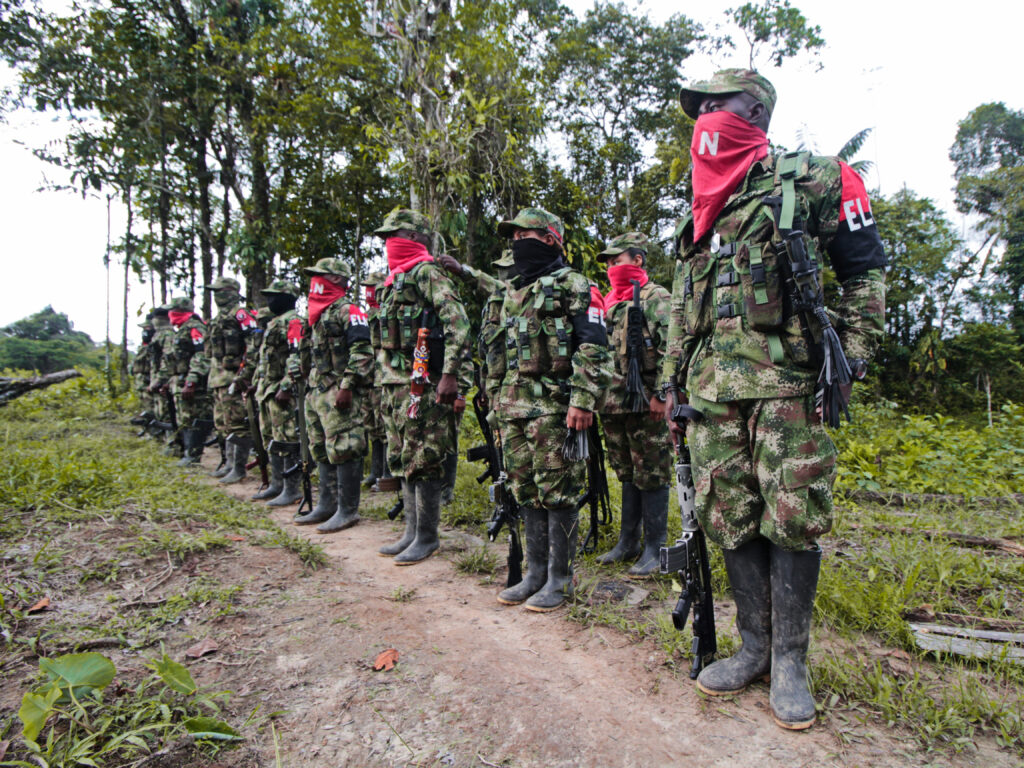
The plane was last tracked between the municipalities of Ábrego and Hacarí, in a mountainous zone of Catatumbo known for ongoing clashes between the ELN guerrilla group and FARC dissidents, as well as for drug trafficking routes and other illicit economies that have fueled violence in the region for decades. The rugged terrain and persistent insecurity could complicate both civilian movement and emergency response operations.
SATENA said it had activated all available resources to locate the aircraft and was coordinating search and rescue efforts with the Colombian Aerospace Force’s Command and Control Center and the Civil Aviation Authority’s Technical Accident Investigation Directorate. The airline did not comment on possible causes for the loss of contact.
Colombia’s Civil Aviation Authority said emergency protocols had been triggered shortly after communication was lost, while military and civilian aircraft were deployed to assist in the search. Local authorities said ground teams were also being mobilized, though access to parts of the region remains limited.
There was no immediate confirmation of the aircraft’s location or the condition of those on board. SATENA said it would continue to issue official updates as information becomes available and urged the public to rely on verified sources while search operations continue.
UPDATE: At 4:26 Colombian authorities confirmed that SATENA flight NSE 8849/ 9R-8895 covering the Cúcuta–Ocaña route, crashed near Curasica, Playa de Belén, Norte de Santander. No survivors have been found among the wreckage.
ELN guerrillas have announced the recovery of iconic revolutionary Camilo Torres. They now want his body returned to Bogotá’s National University.
Mural of priest and professor Camilo Torres at the Universidad Nacional. Photo: Steve Hide
Colombia’s largest rebel army, the ELN – at war with the state since 1964 – have alerted the world to the likely discovery of the long-lost remains of Camilo Torres.
The fighting priest, killed in combat with the army 60 years ago, has been found by government forensic teams in the department of Santander, the ELN said in a press statement this week.
The ELN leaked the news before the Unidad de Búsqueda de Personas Dadas por Desaparecidas (UBPD) could finalize technical tests, but it was widely expected that the search is now ended for the respected cura and university professor who became a revolutionary martyr.
The ELN said they hoped his remains “would be respected and returned to the Bogotá campus of the National University”.
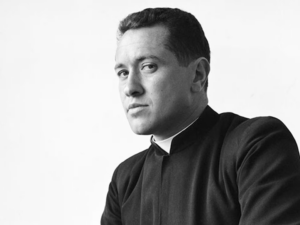
In the early 1960s, the young Torres was a chaplain, professor and founder of the faculty of sociology at the tempestuousUniversidad Nacional. Today, the charismatic priest still figures strongly in campus iconography with his image and quotes decorating many walls.
From priest to combatant
An exponent of liberation theology – a strand of Catholicism calling for social justice in an era of extreme poverty in Latin American – Torres took to the hills in 1965 with the ELN, then a fledgling guerrilla group aligning itself with Marxist ideology.
Camilo Torres. Photo: National Archive
Calling himself Argemiro, the priest quickly became an influential link between the rebels and the church, respected across the political spectrum, and a spiritual influence on socialist movements across the continent.
His most famous quote, still echoing through liberation theology, was: “If Jesus were alive today, he would be a guerrillero”.
A photo of Torres appeared in a flyer printed by the ELN in January 1966, with the academic pictured in uniform clutching a rifle alongside the words: “From the mountains of Colombia, I intend to continue the fight, weapons in hand, until I achieve power for the people. Not one step back! Liberation or death!”.
Friends divided
The latter came quicker than expected. Torres was killed in combat aged 37 on February 15, 1966, in his first action against state forces. The firefight took place in the rugged terrain around El Carmen de Chucurí, Santander.
Ironically, the army operation that killed Torres was led by General Álvaro Valencia Tovar, a childhood friend of the rebel priest. In an old article on Las 2 Orillas, the general described the pair’s friendship over many years, even while taking separate political paths; a potent reminder of personal ties tested by Colombia’s civil conflict.
According to Valencia Tovar, the ELN had prepared a deadly ambush in a jungle gorge with 35 fighters – including Torres – lying in wait for an army patrol. But the soldiers, even while taking heavy fire, outflanked the guerrillas and killed five of the ELN fighters. Torres was among the dead.
Thereafter the story was muddled: according to Valencia Tovar, the general himself took Torres’ remains to a military pantheon close to Bucaramanga, the regional capital of Santander, perhaps a form of honour for his former friend. But the exact location was never disclosed, a bone of contention with the guerrilla group who wanted to mourn their martyr.
In another historical twist, years later a video emerged of a young Juan Manual Santos – the future centre-right president of Colombia – declaring he was an “acolyte” of Torres, who was in fact his uncle.
In 2016, the then president Santos, perhaps as a gesture towards his own deceased uncle, but also as a signg of good faith during a peace process with the ELN, promised a state search for the remains of his fallen uncle. That peace process failed, like many others.
Playing for time
Over 70 years of conflict the Ejército de Liberación Nacional has proved hard to pin down: the on-off negotiations with the current Petro government mark the seventh cycle of peace talks spanning seven presidential terms since 1992, with the guerrillas still fighting.
Today, many observers see these negotiation cycles as cynical ploys by the Marxist-Leninist rebels to hold off military pressure while expanding their own territory and illicit activities, which today extends to cocaine production, illegal gold mining, extortion, kidnapping and human trafficking.
According to a profile by thinktank InsightCrime, in the last 20 years the ELN have become increasingly active in neighbouring Venezuela where they act as a mercenary army for the Chavista regime with a strong role on controlling the borders.
That dynamic shifted after the U.S. military operation in early January in Venezuela to detain autocratic leader Nicólas Maduro.
Now less welcome in Venezuela, and facing an increasingly hostile Petro government, even while entangled in a turf war with dissident FARC groups in northeast Colombia, the ELN fighters are feeling the pressure.
Blood and fire
On January 12 this year, the ELN proposed another bite at the peace apple with a new ‘national accord’. This though was quickly rejected by President Petro, who wrote on X that the guerrillas had to renounce their illicit activities – primarily gold and cocaine – before coming to the table.
During the first three years of his term, Petro suffered several perfidies by the ELN such as their surprise attacks on rival groups in the coca enclave of Catatumbo last year that left hundreds dead and thousands displaced.
Responding to the ELN offer Petro, said he had “already offered an agreement, but they destroyed it with blood and fire, and by killing humble peasants”.
It is likely the Colombian president is now holding off until after his meeting with the Trump administration in Washington scheduled for February 3. Any reconciliation between Petro and the U.S. president – their relationship has been rocky – could open the door for increased military support to combat the ELN, designated as a terrorist organization by the U.S. State Department since 1997.
Colombia’s ‘Che‘
Such a deal, combined with changes in Venezuela, could tilt the conflict in favour of Colombian state forces. And while still a potent fighting force, the ELN could prefer an escape route via the negotiation table in 2026 if talks open up with Petro or his successor.
Evolution of an icon: mural of Torres at Bogotá’s Universidad Nacional.
With that in mind, it is probable that finding of Camilo Torres – miraculously close to the 60th anniversary of his death – is no coincidence, but rather a strategy in the poker game between state and guerrillas.
The wait now is for final confirmation of the remains by the UBPD. Meanwhile the search unit is keeping mum on how, where, and when the body was found.
And if the ELN are claiming Torres as their own, then so is Petro: “The body of Father Camilo Torres Restrepo will be respected and laid to rest with honours,” he said on X this week, painting the priest as a national hero.
Perhaps putting him in the spotlight is a nod to Petro’s own rebel credentials as a former member of M-19 guerrilla group. And Torres is a timely reminder of how the ELN rebels – recently accused of human slavery in illicit mining camps – are far removed from their ideological roots.
Where both sides agree is that his final resting place should be the National University campus in Bogotá. That´s a start. Sixty years after his death the fighting priest, seen by some as Colombia’s Che Guevara, could have a new role in bringing peace.
Colombian army officers frustrate an ELN cylinder bomb attack in Antioquia. Image credit: @COL_EJERCITO via X
The National Liberation Army (ELN), a Colombian guerrilla group, concluded its 72-hour armed strike this morning, putting an end to days of tension in many parts of the country.
The action –a common tactic in Colombia which aims at paralyzing movement by threatening violence against those who do not stay home – left at least three people dead, with incidents registered in 13 departments across the country.
The ELN declared the strike to oppose United States “imperialism” and military threats in the region, with analysts warning White House aggression in the region could empower the guerrillas.
What happened during the strike?
Police attributed various violent actions over the weekend to the ELN. Shortly after the strike began on Sunday, cylinder bombs appeared on key roadways across the country, disrupting land travel.
While over a dozen departments registered incidents, transport in Norte de Santander was particularly affected, with the main road from the capital, Cúcuta, to Pamplona closed due to a bomb.
An attack on a police station in Norte de Santander also claimed the life of an ambulance driver, who reportedly got caught in the crossfire. Two more corpses were found in a Cúcuta neighborhood near the Venezuelan border, which are being investigated as linked to the strike.
In addition to police stations, the rebels attacked other government installations, blowing up a toll booth in Barrancabermeja, Santander, and injuring a worker.
In a particularly grim incident, two policemen in Cali, Colombia’s third city, were killed in a bomb attack on Tuesday morning.
The ELN also burned an intercity bus in the Antioquia department.
‘On the offensive’
The ELN’s actions over the weekend marked the group’s first national-level armed strike since early 2022.
While its leaders signalled an openness to resume peace talks with the state just months ago, the rebels’ actions this week suggest a renewed aggression towards the government.
“The ELN is quite literally on the offensive. It is difficult to know what they want at this time,” said Laura Bonilla, deputy director of the Colombian Peace and Reconciliation Foundation (Pares).
The analyst explained that the actions highlighted a shift in the methods used by the ELN, notably an increase in the use of indiscriminate explosives like cylinder bombs and drones.
“The implication of this is that these are weapons that produce a greater effect on civilians,” Bonilla told The Bogotá Post.
In 2024, there was an 89% increase in the number of victims of explosive attacks in Colombia, according to the International Committee for the Red Cross.
Bonilla also noted that the ELN is growing more aggressive as the White House ramps up pressure in the region.
The group declared the strike to “protest the threat of imperialist intervention in our country as a new phase of Trump’s neo-colonial plan.”
According to Bonilla, the ELN has been “paradoxically empowered” by Washington’s growing militancy, as it fuels their claims to be an anti-imperialist bastion. As Trump promises land strikes on Venezuela, where the ELN has a stronghold, the group may grow more active and more aggressive in Colombia.
ELN fighters. Image credit: Brasil de Fato via Flickr
The Colombian National Liberation Army (ELN) has declared a 72-hour nationwide armed strike beginning on Sunday in protest against increased US military activity in Latin America.
In a statement, the group warned Colombians not to travel via the country’s roadways or navigable rivers during the three day window; while the group said it would not harm civilians, armed strikes are enforced through violence, with previous iterations involving vehicle burnings and civilian casualties.
The action will be the first national-level armed strike since 2022 and comes amid an ongoing U.S. boat bombing campaign – which the Pentagon says has targeted ELN members – as well as White House threats of further intervention, including land strikes in Colombia.
“We, the peoples’ forces of Colombia, protest the threat of imperialist intervention in our country as a new phase of Trump’s neo-colonial plan, which aims to sink its claws even deeper into Latin American and Caribbean territories,” read a decree emitted on Friday by the ELN.
On multiple occasions, U.S. President Donald Trump has floated the idea of striking drug production targets within Colombian borders; Colombia is the world’s largest producer of cocaine and the ELN is known to be a key actor in the drug trade.
The communiqué said the strike would begin at 6:00 AM on Sunday, December 14 and last until the same time on Wednesday.
While it instructed civilians not to travel by road or river during the three day window, it maintained that its “road control units will respect civilians and their property,” but advised regular people not to mix with soldiers in order to “avoid accidents.”
Although the measures are purportedly national, analysts say they are unlikely to affect the whole country.
“In practical terms, this is a national announcement, but it has a limited impact because the ELN does not have a national presence,” Gerson Arias, investigator at the Ideas for Peace Foundation (FIP), a Colombian think-tank, told The Bogotá Post.
Arias said the bulk of the effect will be seen in areas of ELN control, especially in Colombia’s northeast and in the western departments of Cauca, Nariño and Chocó.
The last time the ELN implemented a nationwide armed strike was in 2022, with incidents across 17 departments including vehicle burnings and road blockages intended to protest the Ivan Duque administration (2018-2022).
But the ELN regularly uses smaller scale armed strikes to exert control over specific areas, usually in rural regions. Experts say that the guerrillas often use the actions as a guise to secure drug transit corridors and facilitate the movement of soldiers and contraband.
Rights groups criticize armed strikes for producing a host of deleterious effects on affected populations, with forced confinement impeding access to education, food, and healthcare.
While the ELN’s decree did not explicitly mention U.S. threats against Venezuela, the group is known to have a presence in the country and has recorded ties with the Nicolás Maduro regime.
Much of the guerrilla group’s territory lies on the border with Venezuela and any U.S. attack on Colombia’s neighbor would also threaten the ELN, according to FIP’s Arias.
“The ELN is well aware that it may be affected by some of the measures taken by the United States,” said the analyst.
The group has already been directly impacted by Trump’s boat bombing campaign, with U.S. Secretary of War Pete Hegseth saying an October 17 strike on an alleged drug vessel had killed three ELN members. The rebels denied the claim, insisting they do not smuggle drugs.
The ELN’s armed strike declaration underscores the complex panorama of armed groups in the region and their ties to government, drug trafficking, and border zones. While the impact of the action is yet to be seen, the announcement shows the far-reaching consequences of the White House’s mounting military pressure in the region.
Colombia has recorded 40,663 homicides during the first three years of President Gustavo Petro’s government, surpassing the totals reported under the administrations of Iván Duque and Juan Manuel Santos, according to a report published Tuesday by the Centro de Paz y Seguridad of Universidad Externado. The report documents killings between August 2022 and August 2025, a period that encompasses Petro’s “Total Peace” agenda with illegal armed groups. According to the data, Colombia registered a 7.59% increase in homicides compared with the same timeframe under Duque, who reported 37,795 cases, while Santos’ second term saw 36,646.
“During the first three years of Gustavo Petro’s administration, violence did not decrease under the banner of ‘Paz Total’. On the contrary, homicides continued to rise,” the study states. Petro’s annual average now stands at 13,554 murders per year, compared with 12,598 under Duque and 12,215 under Santos. Nationally, investigators estimate one person is killed every 39 minutes, a faster rate than during the two previous governments.
The findings, compiled by researchers Andrés González Díaz, Diego Rodríguez Pinzón and Carolina Saldaña, present a wide set of indicators showing the acceleration of lethal violence. Monthly murders during Petro’s term average 1,130 cases — compared with 1,050 under Duque — while daily homicides rose from 34.5 to 37 per day.
The authors also document a territorial reconfiguration of violence. Their analysis identifies rapidly shifting hotspots driven by disputes among armed groups, expanding drug economies and the weakening of state authority in several regions.
The study found the Caribbean region registered the steepest increases, displacing historically violent departments in the southwest. Six departments account for the largest share of the national rise when compared with Duque’s tenure, including Bolívar with 870 homicides, Magdalena: (811), Atlántico: (803) and Santander (530).
Researchers said these spikes coincide with the emergence of new criminal alliances, intensified disputes over drug-trafficking corridors and the collapse of informal ceasefires amid the government’s stalled negotiations with armed groups.
In Catatumbo, one of Colombia’s most unstable border regions, killings rose sharply due to clashes between the National Liberation Army (ELN) and FARC dissidents. “The increase in violence in Norte de Santander — 141 additional homicides — reflects escalating confrontations, particularly in Tibú, Ocaña, El Tarra and Cúcuta,” the report said. Rising attacks on social leaders and former FARC peace signatories further contributed to what analysts describe as an “acute humanitarian risk.”
Bogotá becomes a “critical node”
Despite being the country’s most heavily policed territory, Bogotá recorded one of the most significant increases in homicide volume. Murders rose from 3,198 to 3,427, an increase of 229 cases (7.16%), making the capital the single largest contributor to the regional rise in central Colombia.
The department of Cundinamarca added 139 cases, rising from 1,111 to 1,250 homicides (+12.51%), while Boyacá registered the steepest proportional jump in the region — +17%, from 247 to 289 cases — despite being one of the country’s historically safest departments.
The report concludes that identifying and intervening in these “critical territorial nodes” is essential to reversing the national upward trend. It also adds that the shifting geography of violence reflects a broader proliferation of armed groups and illicit economies fueled by kidnapping, drug trafficking and illegal mining, during Petro’s final months in office.
Every 20 hours, somewhere in Colombia, a child vanishes into the ranks of an illegal armed group. That is the grim calculation released this week by UNICEF and the United Nations, which warn that the forced recruitment of minors has surged to levels not seen in decades, undermining Colombia’s efforts to contain its internal conflict.
The report, published on World Children’s Day and marking the anniversary of the 1989 Convention on the Rights of the Child, claims that more than 1,200 children and adolescents have been recruited in the last five years. According to the U.N., the practice has risen 300 percent since 2019, with a steep 64 percent jump between 2023 and 2024 alone. In the first ten months of 2025, Colombia’s Ombudsman’s Office registered 162 new cases – though the numbers is likely much higher.
“These numbers should horrify us,” said Tanya Chapuisat, UNICEF’s representative in Colombia. “They are not just statistics. They are children taken from their homes, their schools, their communities — used to carry weapons, gather intelligence, or exploited in ways no child should ever face.”
For many families, reporting a child’s disappearance is unthinkable. Fear of retaliation is overwhelming, particularly in remote Indigenous and Afro-Colombian territories where state institutions are scarce and illegal armed groups exert full control. “What is happening is extremely serious,” said Iris Marín, Colombia’s national ombudsman. “Parents tell us, ‘If I report it, they will come back for my other children.’ How can any mother step forward under such threats?”
That silence means most cases remain unrecorded – one reason the United Nations insists its figure of 1,200 children over five years represents only “a fraction” of a crisis spreading across some of Colombia’s most isolated and neglected regions.
At the center of the surge is the Estado Mayor Central (EMC), the largest faction of FARC dissidents, under command of alias ‘Iván Mordisco’. The EMC controls drug-trafficking corridors in the southwest and along of the porous 1,800-kilometer border with Venezuela. According to the U.N., the group is responsible for roughly 40 percent of all verified child recruitment cases, using minors to transport weapons, staff checkpoints, cultivate coca crops, and, increasingly, to fight. Girls face even greater risks: many are subjected to sexual violence or forced relationships with combatants. Others are killed for attempting to flee.
Unlike earlier periods of the conflict, today’s recruitment crisis is driven less by ideology than by the expansion of lucrative criminal economies – cocaine trafficking, illegal mining, extortion – that demand a steady supply of young, disposable labor. Children living in deep poverty are easily coerced with promises of money, food, or protection. Others are abducted outright.
The departments with the highest number of cases – Cauca, Nariño, Chocó, Arauca and Norte de Santander – are also those where the state is weakest and armed groups have consolidated territorial control. The Pacific coast, plagued by violent disputes between the National Liberation Army (ELN) guerrilla and Gulf Clan cartel, has seen a particularly sharp spike. In Cauca alone, authorities have recorded 37 minors forcibly recruited this year. Antioquia registered 20 cases; Chocó 16; Nariño 13; Huila 11; and Norte de Santander 8. Indigenous and Afro-Colombian communities account for more than half of all victims in the last two years.
UNICEF and the Canadian Government, which co-sponsored this year’s report, called for urgent action not only from the state but from schools, civil society and the private sector. “The State must strengthen prevention and protection,” Ms. Chapuisat said. “Schools and employers must create more opportunities. The best way to prevent recruitment is to allow children to enjoy their rights.”
Canada’s Ambassador to Colombia, Elizabeth Williams, said the rising figures reflect a crisis too often hidden from national debate. “No child should be forced into war – not for ideology, not for economics,” she said. “We cannot allow this to remain invisible.”
To pierce that silence, UNICEF and the Canadian Embassy launched a new campaign, “Desarma tu Indiferencia” – “Disarm Your Indifference.” The initiative highlights what recruitment leaves behind: the empty desk in a classroom, the bed that stays cold at dawn, the household routines quietly abandoned. The campaign’s message is blunt: child recruitment is neither inevitable nor distant, and ending it requires collective and sustained attention.
For thousands of families in some of Colombia’s hardest-hit conflict zones, the suffering remains intensely personal. “Parents live in permanent uncertainty,” Ms. Chapuisat said. “They do not know if their children are alive, if they have eaten, if they will ever return home.”

 Login
Login