Normal view

Bogotá’s murder mosaic

2 February 2026 at 23:16

We analyse recent homicide figures in Colombia’s capital.

Anti-extortion police arrest a suspected member of las Satanás crime gang. Photo. Sec. de Seguridad.
Anti-extortion police arrest a suspected member of the Satanás crime gang, linked to a rash of extortion and killings in Bogotá during 2025. Photo. Secretaria de Seguridad.

Last month we looked at the latest homicide data for the city: in 2025 violent deaths went down 3.4% on the previous year. These 1,165 killings gave Bogotá – with a population of around 8 million – a homicide rate of 14.8 deaths per 100,000 of the population.

This month we look deeper into this statistic.  Why homicides? Though an imperfect indicator, murder rates do give an insight into insecurity in a zone as they are often the extreme outcome of robberies gone wrong, gang feuds, political violence, domestic violence, fights, targeted killings, drugging of victims and bungled kidnappings. Put simply, the number of bodies means the amount of crime.  

Crime patchwork

Where are homicides happening? In our own analysis of Bogotá’s 20 districts (see map below) the gritty downtown area of Sant Fe has the highest rate of 54 killings per 100,000 inhabitants, followed by nearby Los Martíres with 47, and Ciudad Bolívar with 33.

Sant Fe, like many Bogotá districts, is a patchwork of agreeable barrios, such as the touristy Las Aguas for example, and historic La Candelaria (with just three homicides last year) juxtaposed with crime-ridden neighborhoods.

Heat map of current homicide rates adjusted for population size in Bogotá districts. Graphic: S. Hide

But in the southwest corner of Santa Fe lies San Bernardo, or ‘Samber’ as it is known locally, generally recognized as the most dangerous barrio in Bogotá, a hub for gangs selling drugs to street people and the scene of several fatal grenade attacks in 2025.

Santa Fe is a reminder that in Bogotá safer streets are often just a block away from no-go zones. Rolos and long-term residentslearn to navigate these invisible barriers.

To emphasize this point, Santa Fe, statistically the most dangerous district in the city, lies adjacent to the leafy district of Teusaquillo with a homicide rate of 5 per 100,000 in 2025 (amounting to nine deaths), which according to this metric makes it the safest district in Bogotá.

Less grim up north

Other districts registering less than 10 killings per 100,000 in 2025 are the more upmarket northern districts of the city: Chapinero, Usaquén, Suba, Fontibón and Engativá. And as in most years, there is a gradient towards safer barrios in the north, with the dividing line running roughly along the Avenida El Dorado (Av Calle 26).

But in terms of reducing crime, there are success stories in the south. While still the most dangerous district, Santa Fe has reduced its homicide rate by 28 per cent in 2025 alongside Bosa, Usme and Antonio Nariño, all with reductions in double digits.

These results are hard to assess; organized criminal gangs are present in all these areas, so the peace could be transitory and a result of rival gangs declaring a truce, or one gang leveraging control, rather than societal shifts or better policing.

Ciudad Bolívar, a southern city district with high rates of poverty and crime. There were 218 homicides reported in this sector of the city during 2025. Photo: S. Hide

In some cases, large-scale operations have had an impact, combing security and social services in a carrot and stick approach called megatomas. In Santa Fe, for example, following the grenade attacks, the Bogotá administration both militarized the barrio and flooded it with development programs to support the huge homeless population there. This approach seems to have worked, at least temporarily.

On the negative side, three central districts (Puente Aranda, San Cristóbal and Rafael Uribe Uribe) have seen a spike in killings, a reminder of the balloon effect; pushing down on crime in one zone just forces it to pop up somewhere else.

Sicario scenarios

What’s behind the killings? Police databases do not reveal motives, but media coverage and occasional analyses by Bogotá’s Secretaría de Seguridad give insights into the city’s mean streets. 

Targeted killings, usually carried out by paid hitmen (sicarios), are for the city the visible tip of an underworld iceberg of organized crime. Hits are carried out often on the street or public spaces against identified victims by professional gunslingers sometimes recruited specifically for the job with promises of cash.

Clear-up rates are low: in June last year city councilors complained that in the first half of 2025 out of 521 homicides, 156 were targeted hits, for which only 16 people had been arrested. “In other words, 90 per cent of assassinations on Bogotá go unpunished,” pointed out councilor Julián Espinosa in one debate.

This was despite the city police’s vaunted Plan Candado – Padlock Strategy – of mobile rapid response teams and drones to quickly catch perpetrators by locking down zones within minutes of a major crime.

Vigil for Miguel Uribe, the young politician shot by a 15-year-old hitman in a Bogotá park in June 2025. He survived the initial attack but died from his wounds two months later. Photo: S. Hide.

The most high-profile killing was the gunning down of senator and presidential candidate Miguel Uribe, shot in the head during a walkabout in a Bogotá park. The police quickly apprehended the small-time gangsters behind the shooting in June 2025, including the 15-year-old shooter, but today despite nine arrests are no closer to revealing the paymasters behind the hit.

Another unsolved assassination was the targeted killing of emerald czar Hernando Sánchez, shot dead while walking with his family in a leafy northern suburb of Usaquén in April last year. The military-style killing, by a sniper hiding in nearby woodlands, was identical to the mysterious murder nine months before of a fellow emerald baron, known as Pedro Pechuga, also unresolved.

Weapons of choice

Despite Colombia having restrictions for private ownership of firearms, the majority of 2025 killings were with guns, at 703, according to the police database. Other weapons recorded were knives (304), blunt objects (84) and grenades (6).

This pattern has persisted for decades; Colombia, and its capital, are flooded with illegal firearms, many of them from the estimated 600,000 guns smuggled south across the border from the U.S. each year.  Just in the first four months of 2025, police confiscated 8,466 illegal weapons across the country

According to Carolina Ortega, a political scientist at the National University, and quoted by  UPI, illegal guns were used in 78 per cent of killings in Colombia.

Easy access to guns also raised the risk of spontaneous killings, according to data from the Secretaria de Seguridad which showed that40 per cent of Bogotá homicides followed a dispute, argument or scuffle.

Most of these happened outside on the street, late in the evening, and “amidst scenes of revelry and excessive alcohol consumption”, said the report, released as part of a media campaign called “Take a second before you shoot…”.

Violent machismo

Femicides went down on 2025, both in Bogotá and at national level, according to data released this week by the Observatorio de Mujeres y Equidad de Género de Bogotá.

In Bogotá during 2025 there were 97 females killed, around 8% of total violent deaths. Of these, 20 were classified as femicides. This was slightly less than in 2024 (22 deaths) and mirrored a similar reduction (7%) nationally. Nationally, approximately one killing in five of a female was later classified as a femicide, the “violent expression of machismo”, said the study.  

A study by Bogotá’s Secretaria de la Mujer found that in 49 per cent of cases in the capital, the women had suffered physical violence in the weeks before the murder, and 40 per cent had previously sought help from the police.

According to observatory data, last year Secretaria staff supported 142,688 women, of which 48% were facing violence, a slight reduction on the previous years. The 2025 figures were a reminder that although more warning signs were being detected, timely intervention was not always possible, said the report.

“Femicide does not arise from nothing: it is foreshadowed, repeated, and often normalized before reaching its most tragic outcome,” it concluded.

Pay up – or pay the price

In 2025 many Bogotá murders were linked to extortion demands, with gangs ruthlessly gunning down small business owners if they failed to pay protection money. Sometimes shop staff or a passerby were also killed or injured, in some case with grenades or explosives.

Protection rackets are nothing new in the city, but cases and killings skyrocketed post-pandemic partly because of turf wars between gangs diversifying from the drug trade and Venezuelan gangs linked to the transnational group Tren de Aragua with names like Las Satanás and Los Coyotes.

Extortion reached epidemic proportions in 2024, with an average of 200 cases a month, and continued into 2025 with a rash of crimes such as the killings of informal minibus drivers in the south of Bogotá.

Overall, Bogotá in 2025 saw extortion go down by 20 per cent compared to 2024, though it was still higher than any year during the previous decade. And already in the first month of 2026 there have been several murders linked to extortion demands including a grenade attack on a nightclub in Los Mártires last week which killed one and injured a dozen more.

Millionaire’s ride

Another death last week, that of a university professor found dead and incinerated on the outskirts of the city, highlighted increased cases of Bogotá’s infamous Paseo Millonario, where armed gangs working with taxi drivers attack and extort passengers, often torturing them to reveal bank details while they empty their accounts.

Victims are often targeted late at night leaving bars or restaurants. In a chilling twist, recent cases pointed to victims being subdued with ketamine, with the drug either killing or severely incapacitating the victim.

According to data from the GAULA (Anti-Kidnapping and Extortion Group), 40 Paseo Millonario cases were reported in 2025, a rise of 207 per cent on the previous year. Even that figure was thought to be a huge underestimate since many victims were too scared to come forward. Hotspots were in Chapinero, Kennedy, Bosa, Ciudad Bolívar, and Fontibón.

In one case a taxi gang held a victim for 19 hours, prompting the Attorney General’s Office to reclassify such crimes as “kidnapping” with a potential 42-year prison sentence. In theory this prompted the police to start responding more robustly to a crime that has plagued Bogotá for decades.

Perpetrators of these high-impact crimes were also more likely now to get locked up, with 47 imprisoned last year out of the 52 captured, which was way above average jailing rate of 6 percent of criminals arrested, according to Bogotá police chief Giovanni Cristancho, talking to RCN News last week.

But he also admitted that the understaffed police force was struggling to keep up with constantly emerging kidnap gangs, usually small teams of four or five people which could easily move around the city.

“As soon as we reinforce one area, such as around Calle 85, the modus operandi shifts to other zones,” he told RCN.

It’s that randomness, and the risk of being drugged – or worse – that makes the Paseo Millonario one of the most feared crimes in Bogotá. And for 2026, the one to watch.

The post Bogotá’s murder mosaic appeared first on The Bogotá Post.

Mr Petro goes to Washington

2 February 2026 at 19:09

Colombian president Gustavo Petro is in the US capital for a crunch summit on bilateral relations. What’s behind it and what could happen?

After months of extremely strained relations with the US, Colombian president Gustavo Petro is now in Washington to meet his counterpart Donald Trump. The actual head-to-head is scheduled for tomorrow, Tuesday February 3rd. The Colombian team also includes key advisors such as the Canciller, Interior Minister, the USA business envoy and the Defense Minister.

While both sides have cooled their rhetoric, there’s plenty of unpredictability in both camps and past relations have been rocky to say the least. Petro and other members of his delegation had to be issued temporary visas just for the diplomatic visit, as Trump had previously cancelled his visa in September. 

That also applied to highly controversial Interior Minister Armando Benedetti, as well as members of Petro’s family. Before leaving, the president tweeted a particularly unusual post on X specifying that he’d visited his mother before leaving in a mildly ominous tone. He then expounded on love and sex in a non-sequiter.

Empiezo mi jornada de comunicación intensa con el gobierno de los EEUU, con mi entrevista con el representante de negocios de los EEUU en Colombia McNamara.

Antes de esta reunión he visitado a mi mamá para despedirme.

Les dejo la foto de mi mamá antes de casarse y de su amor… pic.twitter.com/7GmkV0hVwd

— Gustavo Petro (@petrogustavo) February 1, 2026
A highly unusual tweet by Colombian president Gustavo Petro

Petro is also somewhat predictably calling for protesters to fill the Bolívar square (as long it’s not raining) to defend the minimum wage increase, democracy and peace in Colombia. The first two have nothing to do with the Washington summit, while the latter isn’t seriously under threat from the US at this point.

Why is the Colombian president visiting Washington this week?

This was Trump’s offer after the war of words following Nicolás Maduro’s capture in early January. He initially suggested a phone call, after which a follow-up invitation to meet face to face in the White House was offered. 

While Trump and Petro are on better terms, not everyone is happy with the USA

After that initial call, the pair appeared to have ended up on relatively good terms, and for now there appears to be a wary calm between the Palacio Nariño and the White House. It’s too early to talk of a bromance, but there was certainly a rapid de-escalation.

The US president pointedly praised Petro’s tone in his tweet after they spoke over the phone, indicating that the Colombian president had been rather less bullish one on one compared to his public speeches and tweets. That hasn’t changed much in recent weeks.

Petro appears to have struck a far more conciliatory note when actually talking to the US president on Wednesday. For his part, Donald Trump also turned down the heat, saying it was a great honour to speak with the Colombian president and reaffirming his respect for the Colombian people.

The Colombian president went on to say that he had cleared the air and underlined that he is not connected to the illegal drug trade. He pointed out that he has stepped up seizures of drugs and has in fact been threatened various times over his life by drug cartels.

He’s gone further over the past week or so, claiming that estimates of Colombian coca crop capability in production are wildly inaccurate, especially when they come from foreign observers. He hasn’t helped matters by refusing to publish his own figures, but a recent high-profile seizure off the coast of Portugal won’t have hurt.

Petro was highly critical of Trump’s actions in the Caribbean from the outset. He warned Trump “not to wake the jaguar”, denounced his strikes on boats in international waters and convened an emergency meeting of the UN security council to investigate the Maduro affair.

Bad blood between the pair goes back a long way, with Trump’s grandstanding over deportations of Colombian nationals being met with strong pushback from Petro. Although the Colombian president eventually backed down from initial threats to not let the planes in, he met the deportees upon landing and symbolically undid their handcuffs.

Petro’s fierce criticism of the military build up in the Caribbean and Trump’s position on migration in terms of ICE and so forth had led to him and his estranged wife Veronica Alcócer being stuck on the Clinton List along with advisor and Interior Minister, Armando Benedetti.

The truth is that antagonistic public rhetoric plays well for both Petro and Trump, regardless of how much damage it may do to the reputation of either country. They both get to play the big man and impress their base, which both need right now in the face of domestic woes.

It’s entirely possible that both sides will have a relatively amiable meeting in which progress is made, before going back to lightly criticising one another in order to please their local audiences. Trump seems not to mind people doing that, even going so far as to encourage NYC mayor Zohran Mamdani to call him a fascist in a recent meeting. 

What can Petro’s team come back with?

There are a number of points to cover and a range of different outcomes on each. Military and security cooperation and guarantees are perhaps most important, with drug exportation, migration, ICE, visas and tariffs also on the table.

Much will depend on whether the meeting is televised or behind closed doors. Petro will by far prefer the latter and likely want to avoid as much as possible the media bearpit that Trump often sets up for visiting politicians.

Colombia is looking to avoid anything remotely similar to the Maduro operation

Colombia will be looking for guarantees and assurances that US military action won’t happen on local soil. There’s no suggestion that Trump is looking to do that in the short term anyway, but it’s not hard to believe that could change, for example making a strike on cartel leaders within Colombian borders.

The USA might refuse to give an official guarantee but indicate that the option is currently off the table, which would still calm tensions significantly. Petro has made it clear he considers US military action a real danger. There’s also the possibility that the countries could agree to work together and cooperate. Again, this is likely to be far more palatable to the Colombian public.

Information sharing and support in terms of hardware and technology would be of great use to the Colombian military, after all, and both countries share a common interest in cracking down on the cartels, at least on paper.

Trump might demand a greater show of good faith from Petro in terms of action taken to combat the cartels, which is tricky. The Colombian state has been relatively efficient over the last three years at capturing drug smugglers and received little credit for it from Washington.

Colombian governments of all hues have struggled to deal with the problems of armed non-state actors, whether paramilitaries, cartels, guerillas or any mix of the above. Trump has little patience for this sort of thing and is results-oriented. That could be an excuse for unilateral action or could lead to an offer of help. Colombia will want the second of those options.

No economic instrument is more beloved by Donald Trump than tariffs, his self-declared ‘favourite word in the language’. Colombia is currently still at the global standard of 10% and won’t want that to change. That means it could be a powerful negotiating tool and Trump has threatened an increase in tariff rates at various points, as he does with many countries.

Colombia has turned more and more towards China in recent years, with Beijing helping guide construction of the Metro project in Bogotá. Trump may be looking to try and keep Colombia closer to the US economically, as fewer and fewer Latin countries treat their northern neighbour as the most important part of their trade network.

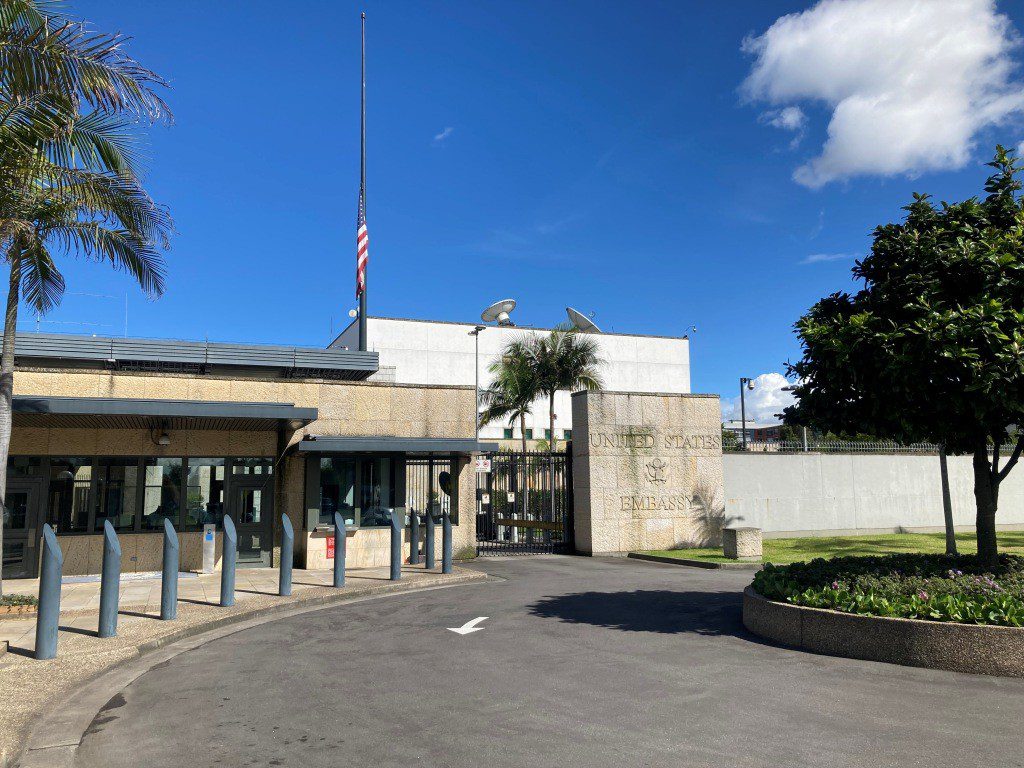
Visas, too, have been contentious. Waiting times at the US embassy were getting better but often involve months of waiting time. That hasn’t been helped by the recent freeze on residency visas for a swathe of countries including Colombia.

Speeding up processing times in Bogotá for basic American tourist and business visas would be relatively low-hanging fruit in negotiations. If both sides could agree, that would make a lot of people’s lives a lot easier and be popular in Colombia. 

In the best case scenario, Colombians can hope for no additional tariffs, military guarantees and cooperation and an easing on visas. In the worst case, Trump will impose drastic new economic measures, cancel a load of visas and keep a strong military presence in the Caribbean with eyes towards Colombia.

The end result will probably be somewhere in the middle of all that. Given the relatively calm immediate build-up to the trip, it’s most likely that an accord can be reached that both sides can present as positive if not perfect. It doesn’t suit either side to have a massive bust-up at this point, but we are talking about two politicians with a reputation for fits of pique.

More cynically-minded people may wonder if a more personal deal may be struck as well – Petro off the Clinton list and his US visa reinstated. He’s talked before about wanting to tour the world as a public speaker on social and environmental issues and this would make that easier.

Whatever does happen in the meeting, it will be pivotal for relations between the US and Colombia. With the country being one of the last in Latin America to have the USA as their biggest trade partner, that affects many ordinary people.

For the business community, the impact of potential tariffs or restrictions could be huge. For NGOs and rights workers, re-establishing foreign aid would be very useful. For ordinary folk, further controls or freezes on visas would be a real pain. For everyone, a sense that military action was definitely off the table would bring much-needed peace of mind.

The post Mr Petro goes to Washington appeared first on The Bogotá Post.

2026 in Colombia: Uncertainty Reigns

1 February 2026 at 14:51

What’s coming for Colombia in 2026? A new president, a return to the world cup and all the usual sports, music and culture are ahead. There’s also plenty of uncertainty for now.

A river flowing under a high mountain in Cauca, Colombia in 2026
Just like the high mountains, Colombia’s future is clouded in fog

It had seemed that the only big political news of the year would be the election cycle and incoming president. However, all that changed on the first weekend of the year as the US military captured Nicolás Maduro in Venezuela and brought him to face charges in New York.

Then at the end of January, the Corte Constitucional blocked president Petro’s economic emergency declaration, plunging the country into another round of uncertainty. While the court deliberates, the country’s businesses will have to wait to see what’s ahead. Meanwhile, minimum salary workers can celebrate their first COP$2,000,000 paychecks.

#LaCorteInforma | La Corte suspende provisionalmente el Decreto 1390 de 2025 “Por el cual se declara el Estado de Emergencia Económica y Social en todo el territorio nacional”, mientras se profiere una decisión de fondo.

Comunicado: pic.twitter.com/Ow6rC40Ixb

— Corte Constitucional (@CConstitucional) January 29, 2026
An unprecedented move from the court

February won’t let up as Petro’s off to Washington at the start of the month to meet Donald Trump in what could be a tense meeting. While both sides have cooled their rhetoric, there’s plenty of unpredictability in both camps. This is perhaps best illustrated by Petro having to be granted a 5-day visa just to visit, Trump having cancelled his last one.

It’s anyone’s guess how that might end, with Petro currently blocking the release of coca growing figures and denying the reliability of foreign sources. In the best case scenario, Colombians can hope for no additional tariffs, military guarantees and cooperation and an easing on visas.

This is a year with big events set to dominate after a relatively quiet 2025 still managed to contain plenty of shocks and surprises. As ever, Colombia seems set to live in interesting times. We’ll be here throughout the year to keep you up to speed on what’s going on and why, from entertainment to hard news.

Another big election

Expect Colombians to grumble as they are called up for compulsory vote counting duty. There will be two sets of elections this year, with voting for the Senate and House of Representatives taking place first on the 8th of March. There will also be voting for candidates in blocks on that day.

The estrecho de Magdalena in Huila, Colombia in 2026
The election is tighter than the estrecho de Magdalena

After that, it’s the presidential race on the 31st of May with a likely run off between the top two candidates around three weeks later. The last four elections have all featured second rounds and no candidate looks capable of registering more than half the initial vote.

As with many presidential systems, there’s an enormous gap between winners being declared and them arriving in office. Pleasingly, this takes place on national days: the Senators and Representatives won’t arrive until Colombian Independence (20th July) and the president takes over on the anniversary of the Batalla de Boyacá (7th August).

The presidential runners and riders are in a very crowded field right now, but that will thin out until the 13th March, the final deadline for candidacies. The 8th March vote for various lists of candidates is especially important for this. The race remains wide open at the moment, with no clear leader and a very good opportunity for someone to come out of nowhere. 

Interestingly, there’s a good chance that Colombia will elect its first ever female and/or LGBTQI president, with Vicky Dávila, Paloma Valencia, Daniel Oviedo and Claudia López all potentially already in the mix or capable of putting together a big surge.

On the loosely defined left, Iván Cepeda is the official candidate for Pacto, having won out in the internal poll. Luis Murillo is also in the hunt, with Roy Barreras and the formerly-discredited Medellín mayor Daniel Quintero as outsiders. Cepeda will absolutely dominate the leftist vote and is very likely to make the second round as a result.

A rally by Iván Cepeda in Neiva, Huila in Colombia in 2026
A rally by presidential candidate Iván Cepeda in Neiva, Huila

A host of candidates on the nominal right are standing, with former journalist Dávila and Centro Democrático heavyweight Valencia in the ‘Gran Consulta’ block which defines itself as centrist but would be considered by many to be at least right-leaning. 

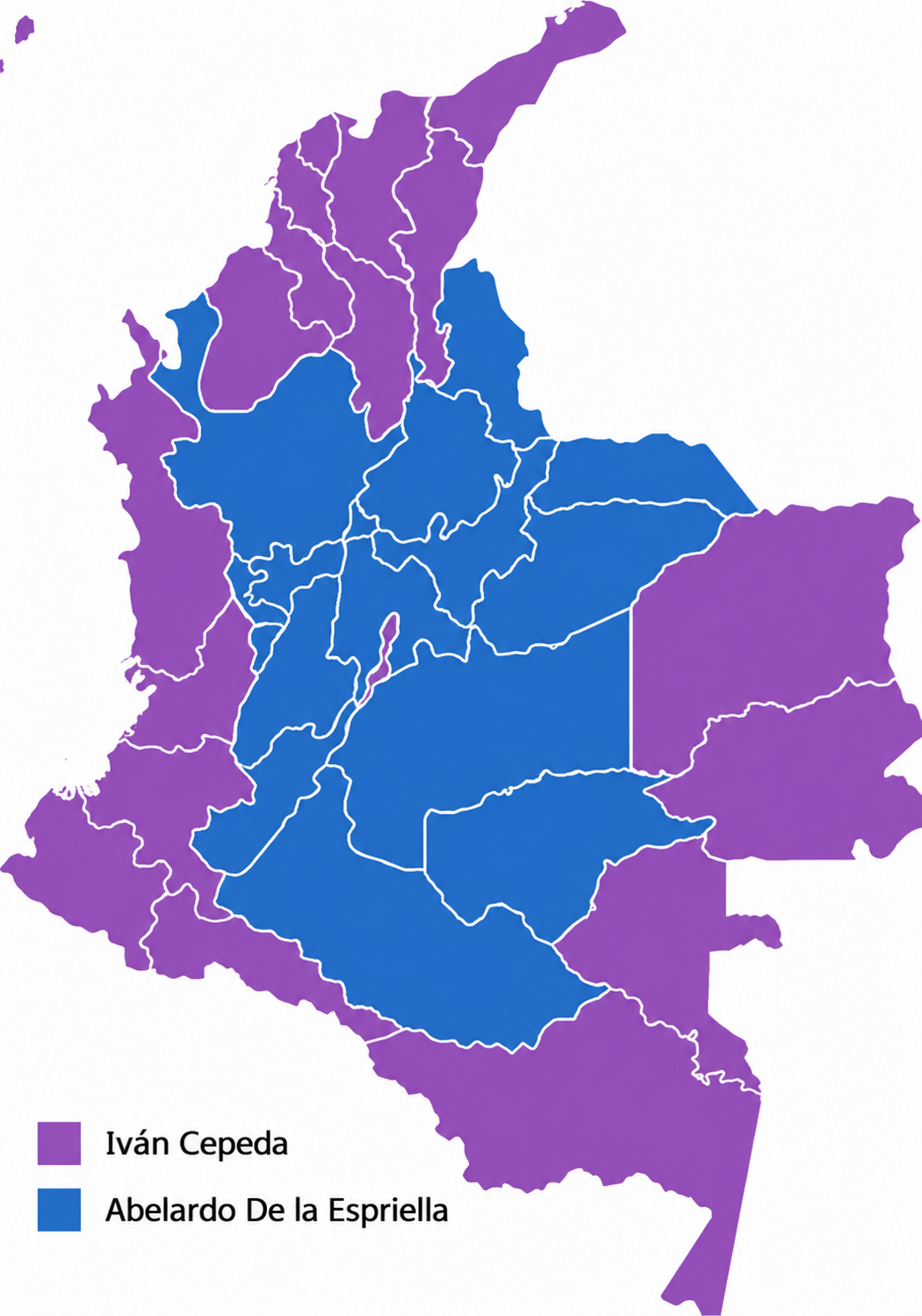
The wildcards here are Abelardo de la Espriella, a tough on crime former lawyer who led the field in gathering public nominations at over 5 million and serial candidate and former Medellín mayor Sergio Fajardo who narrowly failed to make the second round last time around.

Harder to pin down are candidates such as Claudia López and Juan Daniel Oviedo. They could surprise some people with a strong spring surge, especially if they can channel a dislike of established parties. However, López has baggage from her time as Bogotá mayor and Oviedo is in the ‘Gran Consulta’, meaning he’ll struggle to stay in the race.

Tying up loose ends

Elsewhere in the political landscape are other issues that could do with being resolved before the change in head of state. Paz Total is nowhere near happening, with a number of talks deadlocked or non-existent, the economic emergency is currently frozen and Venezuelan relations remain unclear.

Sunset over Paipa, Boyacá, Colombia
The sun is setting on Petro’s presidency

If the economic emergency goes ahead, there will be increased IVA (VAT or Sales Tax) on a range of things including online gambling, liquor and wine. There will also be a dramatic change in importation limits, with a limit of USD$50 for tax-exempt gifts.  

The ELN have asked to get back to the table, perhaps sensing that a possible right-wing government might not be quite so favourably disposed to their antics. Petro himself seems to have lost patience though, dismissing the request out of hand due to their recent attacks on Colombian army members.

Inflation will probably remain high and base interest rates are now in double digits as a result. However, the economy is chugging along decently and consumer spending remains strong. The minimum wage increase will likely help that continue and with a weakening dollar, prices may start to stabilise.

Whatever happens in Venezuela will have a big impact in Colombia. If the country opens up again, it’s entirely possible that some of the three million or so Venezuelans in the country may return. That will ease pressure in the labour market, increase trade flows and please a certain type of politician.

If Delcy Rodríguez stays in office with US support, things may be a lot more complicated. There’s not much love for the Venezuelan regime in Colombian political circles, meaning trade may not take off and there is likely to be limited cooperation on regional matters.

Ecuadorian relations also are heading in a downward spiral, with Noboa and Petro currently engaged in a tit-for-tat trade war and imposing hefty tariffs on each other. That’s choking trade across the border and affecting cooperation on cross-border security issues.

If there is a change in government, there might be more serious attempts to investigate a range of overhanging scandals such as the peculiar case of Laura Sarabia, currently ambassador to the UK and Juliana Guerrero’s and others’ mysterious qualifications.

With six months more in office, Petro has plenty of time to address these scandals or start new ones. Expect his twitter account to get even more heated between March and June as he gets involved in the election. He’s also likely to continue the ministerial merry-go-round which is past 60 changes already.

His approval ratings upon leaving office are likely to be higher than either of his two immediate predecessors. After a sharp post-election fall, he’s stayed consistently relatively popular by Colombian presidential standards and showing an uptick in recent months. For all the mutterings of doom when he came in, he’ll leave office in a relatively good position.

Big issues in Bogotá

Mayor Gálan is halfway through his tenure and has little to show for it so far. He’s managed to keep things ticking over but has not made big changes, nor has much of a legacy as things stand. The Metro was his inheritance and will be inaugurated under the next mayor, so he could do with something big this year. Trouble is, there’s nothing on his books for now.

A long-term boon but short-term disruption

Transport is perhaps the biggest issue, with the Metro still firmly on track. Gálan deserves credit for this, as the project has not been without problems and has endured meddling from the Palacio Nariño. Regiotram to the westerly satellite towns is also still on the way.

On the other hand, there will be even more disruption in the short term thanks to the Metro works, and road quality is awful. Road traffic incidents are stubbornly high, with nearly 500 deaths predicted over 2026.

Prices have been hiked to COP$3,550 on the Transmilenio and SITP for 2026, despite Gálan’s earlier pledge not to do so. The mayor says it’s unavoidable due to the minimum wage rise. Petro has responded by refusing to fund a new fleet of electric buses.

Water rationing was an issue this time last year, but it seems unlikely to return for the short term, thanks to the unseasonal levels of rain we’ve had over the holiday period. An El Niño event is predicted for the year but there’s little sign of it so far. 

Crime is nominally coming down, but few believe the official figures. Perceptions of crime remain high and most Bogotanos feel unsafe in the city. It’s not hard to see why – it feels like there are more and more chirretes around and fewer police.

One thing that is always in view is rubbish, with big piles over much of the city. Some of this is from an increase in fly-tipping, some from a faulty collection system struggling to keep up and others from a simple breakdown in civic values. 

A succession of Bogotá mayors have avoided the issue after Petro got into hot water in his time in office, but things are coming to a head now. It’s becoming a public health problem with rats frequently seen even in midday as well as a simple blight on the city. 

Entertainment

Peso Pluma has pulled out of Festival Estéreo Picnic 2026, but la Tigresa del Oriente has joined, which is probably a win. The best event in Bogotá, and by extension Colombia, remains a top-drawer festival with genuine international heavyweights which is well worth getting tickets for if you’re in town.

With a lineup boasting Tyler, The Creator, The Killers and Deftones, the festival is a viable cultural tourism draw if you’re visiting. Prices are competitive with North American and European fests and experiencing a Latin American festival environment is something most music fans should relish.

FEP2026 is the bigger event, but little sister Cordillera offers a more Latin experience

Balancing FEP2026 is Festival Cordillera 2026 in September, which offers a different attraction: the chance to see what (loosely defined) contemporary Latin music sounds like. The event focuses almost exclusively on Latin talent from across the musical spectrum, giving you the opportunity to explore a soundscape you may not know too much about.

Sadly, those two mega-festivals are helping sound the death knell for Rock al Parque. It hasn’t really recovered post-COVID and has been poorly managed by the alcaldía. Hopefully it can find its feet again, and the offshoots (salsa al parque, rap al parque etc) are all still strong and accessible.

Flying under the radar last year was Colombia’s first ever board games convention, Ludotopia. Given the enormous success of the event, it’s likely to run again. In other boardgaming news, Wingspan will launch an Americas expansion featuring a bevy of local aves, illustrated by Colombian lead designers Ana Maria Martínez and Natalia Rojas.

Filbo from 21 April- 5 May is the nation’s keystone for literary events, accessible and open to all with a strong focus on education as usual. The country of invitation this year is India, a welcome departure from the usual Latin or European focus and sure to open up exciting new possibilities.

Ludotopia event in Bogotá, Colombia 2025. Picture shows a giant meeple and Devir branding in the background
Ludotopia was a smash hit in 2025

Geekfest SOFA will be in October, which has turned into an absolute juggernaut of an event. Crowds will be intense in the daytime weekends, so try and make it there on weekdays or in the evenings if you’re going. Comic Con is much quieter but lacks the joyfulness of SOFA, being much more commercial in nature.

Colombian sporting specials in 2026

Colombia have a reasonably straightforward World Cup group and will be aiming high. Head coach Nestor Lorenzo has turned dressing room morale around 180° and taken los cafeteros to a runner’s up spot in the last Copa América.

With Colombia currently ranked 13th by FIFA, they are expected to do well and will be seen as a team to beat. Matching the 2014 run to the quarter-finals will be no easy task, but achievable. Surpassing it would be a real upset but it’s a funny old game and anything could happen. The squad is well built for tournament football, with key players such as James capable of burning bright for a few weeks.

A hotly contested capitalino derby on the way to Santa Fe’s championship

There’s also plenty to keep an eye on in domestic football, with Falcao returning to Millonarios. That didn’t go fantastically well in the 2024 apertura, as city rivals Santa Fe knocked them out and went to lift the trophy. El Tigre didn’t take that well at all, throwing his toys out of the pram in a charged presser after the match. Santa Fe went on to win the Supercup at the start of this year.

After working wonders with Wrexham, Hollywood superstar Ryan Reynolds will be hoping to do similar for Inter de Bogotá. Previously known as La Equidad, the team changed name after being acquired by Reynolds’ investment vehicle. The actor has already donned the jersey and may appear at games in 2026.

In non-traditional sport, Cricket Colombia are celebrating their recent designation as an official sport in the country. They’re getting things kicked off with the Barranquilla Cricket tournament from February 20-22 seeing regional teams from Santa Marta, Bogotá, Cali and Medellín fighting it out to decide national supremacy. Cartagena, Santa Marta and Barranquilla are also hosting a women’s competition as the sport grows in the country.

Egg-chasers are spoilt for choice with Gaelic football in the capital as well as Aussie Rules, American football and rugby across the country. With the Superbowl coming up, if you are inspired, get in touch with the American football leagues across the country.

The Colombian women’s sevens are currently competing in the SVNS championship in Dubai and making a good account of themselves. The Toucans are punching above their weight with limited resources available to them.

AFL in Colombia continues to build momentum, and Gaelic football is becoming a bigger deal as well, with the Bogotá Beithigh practising on a more consistent basis in partnership with Colombia rugby to help build their profile.

What’s most likely to happen in Colombia in 2026?

Well, frankly put, the most likely thing is a big surprise in Colombia in 2026. Unexpected events seem to happen with regularity, so there’s every chance something comes out of leftfield. Plenty of things popped up in 2025 that we hadn’t seen coming this time last year.

Macizo colombiano in Huila, Colombia in 2026
The news rolls like the mountains of the macizo colombiano

Having said that, there are some good bets to lay: the economy should continue strengthening and the dollar exchange should ease back in the direction of COP$3,000 (which remains a long way off). There definitely will be a new president, even if it’s a continuity candidate and we will see changes in the Senate.

The big cultural events of 2026 in Colombia look like they’ll all be roaring successes as usual, as the country shows no sign of slowing down.

It’s unlikely that any of the peace processes will come to a conclusion and depressingly likely that they will face more turmoil if certain candidates take over in the Palacio de Nariño. While we can all hope that things will improve in the capital, there’s currently no sign that will happen. On the other hand, steady progress will continue on existing projects.

En fin, it’s likely to be six months of the usual turmoil and drama, culminating in two huge events: May-June’s presidential elections and the fortunes of the footballers in North America at the World Cup in July. Then we’ll face the remainder of the year watching what the president does in his or her first months. Whatever happens, there’ll be plenty going on in Colombia in 2026.

The post 2026 in Colombia: Uncertainty Reigns appeared first on The Bogotá Post.

Colombia in a Breath: Wind Instruments That Tell the Story of a Nation

29 January 2026 at 21:40

Musical instruments are far more than tools for producing sound: they embody the cultural identity of a territory, carrying spiritual meanings, collective memory, and the deep-rooted expressions that shape a community’s history. Colombia en un Aliento 2026 (Colombia in a Breath 2026) invites audiences on a sonic journey through the country’s wind instruments, encouraging reflection on how human breath and aerophones have shaped identities, spiritual practices, and spaces of encounter from pre-Hispanic times to the present day.

Conceived as a national cultural project, Colombia en un aliento: instrumentos de viento que narran un país (Wind Instruments That Tell the Story of a Nation) brings together ancestral knowledge, popular traditions, and contemporary artistic creation. Through an interdisciplinary approach, the initiative connects past, present, and future via a wide-ranging cultural program structured around four thematic lines.

El soplo como rito de la vida (Breath as a Rite of Life) explores the symbolic and ritual significance of wind instruments among Indigenous and Afro-Colombian cultures, where blowing air through wood is understood as an act of vitality, spirituality, and connection with the natural world. In these traditions, breath is not merely physical – it is a force that sustains life, memory, and the sacred.

El viento del encuentro (The Wind of Encounter) focuses on the social and communal role of wind instruments in fiestas, carnivals, and collective celebrations. From village plazas to major public gatherings, these instruments create shared rhythms, reinforce bonds of belonging, and transform music into a space for encounter and social cohesion.

Alientos universales, músicas locales (Universal Breaths, Local Music) examines historical processes of cultural exchange, mestizaje, and adaptation. It traces how wind instruments introduced from other parts of the world were reinterpreted across Colombia’s diverse regions, giving rise to musical expressions deeply rooted in local landscapes, histories, and identities.

Respirar el future (Breathing the Future) looks toward contemporary creation techniques, from experimentation with digital technologies to new sonic languages. The section reflects on current artistic practices in which tradition and innovation coexist, opening pathways for composition, teaching, and cultural narratives.

Together, these four thematic pillars support spaces for reflection and research, that strengthen Colombia’s sound identity. From making local knowledge visible and fostering cultural innovation, more than a series, Colombia en un Aliento / Colombia in a Breath proposes a collective experience – an invitation to understand wind instruments as symbols of life, resistance, and social cohesion.

As a year-long project by the Cultural Subdirectorate of the Banco de la República – Central Bank – this initiative will continue in 2027 with a new thematic focus on the human voice as a sonic element, expanding its exploration of sound as a carrier of memory and meaning.

The initiative will be officially launched with the public conversation “El soplo y los instrumentos: sonidos que cuentan historias / Breath and Instruments: Sounds That Tell Stories” on Tuesday, February 3 at 5:00 p.m. in the Audiovisual Hall of the Luis Ángel Arango Library (BLAA) in Bogotá.

The event will feature José Pérez de Arce, Chilean musicologist and leading authority on ancestral aerophones; Humberto Galindo, Colombian researcher and director of the Museo Mundo Sonoro; and Luis Fernando Franco, composer and co-founder of Guana Récords with more than four decades dedicated to musical research and creation.

The conversation will also be streamed live on Banrepcultural’s YouTube channel, opening this shared reflection on breath, sound, and identity to audiences in Colombia and internationally.

For more information visit the cultural page of the Central Bank: https://www.banrepcultural.org/noticias/instrumentos-de-viento-en-colombia-en-un-aliento-2026

Bogotá’s No Car and Motorcycle Day Returns on 5 February

29 January 2026 at 17:49

On Thursday 5 February, Bogotá will once again ask its citizens to imagine the city differently. For 16 hours, from 5.00 a.m to 9.00 p.m., private cars and motorcycles will largely disappear from the streets as Colombia’s capital marks the 28th edition of its Día Sin Carro y Sin Moto. The annual pause, approved by popular vote in 2000, is less a traffic restriction than a civic experiment — one that Bogotá has been refining for decades.

Unlike many cities that frame “car-free days” as environmental emergencies or symbolic gestures, Bogotá treats the occasion as an exercise in everyday urban life. The message is simple: this is not an exception, but a reminder. For the majority of residents – around 70 per cent, according to city officials – daily mobility already depends on walking, cycling or public transport. On this day, those who normally rely on private vehicles are invited to join them.

The scale of the operation reflects Bogotá’s long-standing commitment to sustainable mobility. Throughout the day, the city’s Integrated Public Transport System (SITP) will operate at full capacity, deploying more than 10,000 buses across trunk, zonal, feeder and dual routes, alongside TransMiCable’s aerial service in the hills of Ciudad Bolívar. Nearly 37,000 taxis will circulate without restriction, while more than 8,000 bicycle-parking spaces at TransMilenio stations will encourage commuters to mix modular mobility.

Cyclists, meanwhile, will have the run of 683 kilometres of dedicated bike lanes, supported by pedestrian infrastructure that stretches across more than 9,500 kilometres of pavements. Additional car-free corridors, overseen by the city’s sports and recreation authority, will open during daylight hours, reinforcing the idea that streets can be social spaces as much as conduits for traffic.

Bogotá’s confidence in pulling off such a city-wide shift did not emerge overnight. The capital is widely regarded as a pioneer of sustainable urban mobility, a reputation rooted in an idea so simple that it has been copied from Paris to Mexico City: the Ciclovía. Every Sunday and public holiday, more than 120 kilometres of major roads are closed to cars, transforming the city into a vast open-air promenade for cyclists, runners and families.

In 2025, Bogotá marked the 50th anniversary of the Ciclovía — a milestone that underscored how deeply the initiative has become embedded in the city’s identity. What began in the 1970s as a modest protest against car dominance has evolved into a weekly ritual, drawing millions of participants and reshaping how residents relate to their streets. Urban planners and mayors from around the world have studied the model, adapting it to their own contexts, but few have matched its scale or longevity.

The Day Without Cars follows the same philosophy, but with a weekday twist. Schools, offices and universities remain open; life goes on. The difference lies in how people get there. During the day, private cars and motorcycles are prohibited from circulating, including vehicles with special “pico y placa solidario” permits, hybrid or gas-powered cars, driving-school vehicles and most media vehicles with yellow plates. Taxis and special transport vehicles with licence plates ending in 7 or 8 are also restricted.

Exceptions apply. Public transport, emergency vehicles, school transport, vehicles for people with disabilities and essential public services continue to operate. Electric and zero-emission vehicles — including motorcycles — are permitted, as are delivery motorcycles linked to courier and food Apps, transport of valuables, funeral vehicles and official vehicles assigned to security, traffic control and infrastructure maintenance.

There is, inevitably, an enforcement side. Drivers who ignore the restrictions face a fine of COP$633,000 pesos and the immobilisation of their vehicle. Yet the city’s tone is notably less punitive than pedagogical. Street-level activities and public messaging emphasise behaviour change over compliance, encouraging residents to see the day as an invitation rather than an imposition.

For those navigating the city, a little foresight helps. Travellers heading to El Dorado International Airport are advised to allow extra time, particularly during the morning and evening rush, as major arteries are repurposed for pedestrians, cyclists and electric-only vehicles. Public transport will run at full capacity, but peak hours on TransMilenio – roughly between 6.00 a.m and 9.00 a.m., and again from late afternoon – can be crowded, making off-peak travel a calmer option.

For one day in February – and every Sunday of the year – Bogotá does more than reduce emissions or noise. It rehearses a version of the city that many places are still struggling to imagine: one where movement is slower, more deliberate and shared, and where the street is not just a means of getting somewhere, but a place worth inhabiting.

Remains of rebel priest set to return to Bogotá

27 January 2026 at 03:24

ELN guerrillas have announced the recovery of iconic revolutionary Camilo Torres. They now want his body returned to Bogotá’s National University.

Camilo Torres mural at the Universidad Nacional. Photo: Steve Hide
Mural of priest and professor Camilo Torres at the Universidad Nacional. Photo: Steve Hide

Colombia’s largest rebel army, the ELN – at war with the state since 1964 – have alerted the world to the likely discovery of the long-lost remains of Camilo Torres.

The fighting priest, killed in combat with the army 60 years ago, has been found by government forensic teams in the department of Santander, the ELN said in a press statement this week.

The ELN leaked the news before the Unidad de Búsqueda de Personas Dadas por Desaparecidas (UBPD) could finalize technical tests, but it was widely expected that the search is now ended for the respected cura and university professor who became a revolutionary martyr.

The ELN said they hoped his remains “would be respected and returned to the Bogotá campus of the National University”.

In the early 1960s, the young Torres was a chaplain, professor and founder of the faculty of sociology at the tempestuous Universidad Nacional. Today, the charismatic priest still figures strongly in campus iconography with his image and quotes decorating many walls.

From priest to combatant

An exponent of liberation theology – a strand of Catholicism calling for social justice in an era of extreme poverty in Latin American – Torres took to the hills in 1965 with the ELN, then a fledgling guerrilla group aligning itself with Marxist ideology.

Camilo Torres as a priest. Photo: National Archive
Camilo Torres. Photo: National Archive

Calling himself Argemiro, the priest quickly became an influential link between the rebels and the church, respected across the political spectrum, and a spiritual influence on socialist movements across the continent.

His most famous quote, still echoing through liberation theology, was: “If Jesus were alive today, he would be a guerrillero”.

A photo of Torres appeared in a flyer printed by the ELN in January 1966, with the academic pictured in uniform clutching a rifle alongside the words: “From the mountains of Colombia, I intend to continue the fight, weapons in hand, until I achieve power for the people. Not one step back! Liberation or death!”.

Friends divided

The latter came quicker than expected. Torres was killed in combat aged 37 on February 15, 1966, in his first action against state forces. The firefight took place in the rugged terrain around El Carmen de Chucurí, Santander.

Ironically, the army operation that killed Torres was led by General Álvaro Valencia Tovar, a childhood friend of the rebel priest. In an old article on Las 2 Orillas, the general described the pair’s friendship over many years, even while taking separate political paths; a potent reminder of personal ties tested by Colombia’s civil conflict.

According to Valencia Tovar, the ELN had prepared a deadly ambush in a jungle gorge with 35 fighters – including Torres – lying in wait for an army patrol. But the soldiers, even while taking heavy fire, outflanked the guerrillas and killed five of the ELN fighters. Torres was among the dead.

Thereafter the story was muddled: according to Valencia Tovar, the general himself took Torres’ remains to a military pantheon close to Bucaramanga, the regional capital of Santander, perhaps a form of honour for his former friend. But the exact location was never disclosed, a bone of contention with the guerrilla group who wanted to mourn their martyr.

In another historical twist, years later a video emerged of a young Juan Manual Santos – the future centre-right president of Colombia – declaring he was an “acolyte” of Torres, who was in fact his uncle.

In 2016, the then president Santos, perhaps as a gesture towards his own deceased uncle, but also as a signg of good faith during a peace process with the ELN, promised a state search for the remains of his fallen uncle. That peace process failed, like many others.

Playing for time

Over 70 years of conflict the Ejército de Liberación Nacional has proved hard to pin down: the on-off negotiations with the current Petro government mark the seventh cycle of peace talks spanning seven presidential terms since 1992, with the guerrillas still fighting.

Today, many observers see these negotiation cycles as cynical ploys by the Marxist-Leninist rebels to hold off military pressure while expanding their own territory and illicit activities, which today extends to cocaine production, illegal gold mining, extortion, kidnapping and human trafficking.

According to a profile by thinktank InsightCrime, in the last 20 years the ELN have become increasingly active in neighbouring Venezuela where they act as a mercenary army for the Chavista regime with a strong role on controlling the borders.

That dynamic shifted after the U.S. military operation in early January in Venezuela to detain autocratic leader Nicólas Maduro.

Now less welcome in Venezuela, and facing an increasingly hostile Petro government, even while entangled in a turf war with dissident FARC groups in northeast Colombia, the ELN fighters are feeling the pressure.

Blood and fire

On January 12 this year, the ELN proposed another bite at the peace apple with a new ‘national accord’. This though was quickly rejected by President Petro, who wrote on X that the guerrillas had to renounce their illicit activities – primarily gold and cocaine – before coming to the table.

During the first three years of his term, Petro suffered several perfidies by the ELN such as their surprise attacks on rival groups in the coca enclave of Catatumbo last year that left hundreds dead and thousands displaced.

Responding to the ELN offer Petro, said he had “already offered an agreement, but they destroyed it with blood and fire, and by killing humble peasants”.

It is likely the Colombian president is now holding off until after his meeting with the Trump administration in Washington scheduled for February 3.  Any reconciliation between Petro and the U.S. president – their relationship has been rocky – could open the door for increased military support to combat the ELN, designated as a terrorist organization by the U.S. State Department since 1997.

Colombia’s ‘Che

Such a deal, combined with changes in Venezuela, could tilt the conflict in favour of Colombian state forces. And while still a potent fighting force, the ELN could prefer an escape route via the negotiation table in 2026 if talks open up with Petro or his successor.

Evolution of an icon: mural of Torres at Bogotá's Universidad Nacional.
Evolution of an icon: mural of Torres at Bogotá’s Universidad Nacional.

With that in mind, it is probable that finding of Camilo Torres – miraculously close to the 60th anniversary of his death – is no coincidence, but rather a strategy in the poker game between state and guerrillas.

The wait now is for final confirmation of the remains by the UBPD.  Meanwhile the search unit is keeping mum on how, where, and when the body was found.

And if the ELN are claiming Torres as their own, then so is Petro: “The body of Father Camilo Torres Restrepo will be respected and laid to rest with honours,” he said on X this week, painting the priest as a national hero.

Perhaps putting him in the spotlight is a nod to Petro’s own rebel credentials as a former member of M-19 guerrilla group. And Torres is a timely reminder of how the ELN rebels – recently accused of human slavery in illicit mining camps  – are far removed from their ideological roots.

Where both sides agree is that his final resting place should be the National University campus in Bogotá. That´s a start. Sixty years after his death the fighting priest, seen by some as Colombia’s Che Guevara, could have a new role in bringing peace.

The post Remains of rebel priest set to return to Bogotá appeared first on The Bogotá Post.

Petro under fire in ‘cash for diplomas’ scandal

23 January 2026 at 23:47
Representative Catherine Juvinoa at a press conference in Bogotá this week. Photo: X

A simmering spat over candidates for government posts boiled up this week with revelations that a Bogotá university was faking professional titles for workers in Petro’s administration.

According to congress members revealing the scandal, 24 public servants got top contracts using dodgy titles from Universidad Fundación San José, a mold-breaking higher education institute once famed for accessible courses, but now under scrutiny for selling degrees.

They also accused Petro and his education chiefs of dragging their feet in investigating the university for the suspected fraud case.  

“Petro’s promises for education come to nothing,” said house representative Catherine Juvinao after she claimed to have identified 24 cases where officials and contractors in top government entities appeared to have been hired with diplomas from the Univerisity Foundation San José without all the tests.

One stand-out case was a government functionary who, according to university records, graduated in four quite different degrees – Business Administration, Industrial Engineering, Public Accounting and International Marketing – on the same day.

“This is one of the most serious cases. Who graduates with four degrees on the same day?,” the representative said in an interview with Semana magazine.

According to Juvinoa, the university handed out diplomas to students who had failed to complete the independent technical tests, known as PruebaPro, and in some cases had not studied at all.

Fake titles for plum jobs?

Although academic fraud has occured regularly in Colombia – and similar scandals have rocked previous governments – the investigations by Juvinao and her team are targeting an administration that promised to turn its back on corruption.

This week’s revelations followed last year’s political dogfight over the proposed appointment of 23-year-old Juliana Guerrero as vice-minister of youth. The candidate, who was close to both Petro and his education minister, was already embroiled in controversies over private use of police planes. Then in September she was found to have falsified her accounting qualifications at the university.

After public pressure the university rescinded the degree, and Guerrero herself told Caracol news that she intended to take the independent exams to regain her title in November.

Juliana Guerrero, the candidate accused of faking her qualifications. Photo: Interior Ministry

Further investigations revealed a bigger suspicion: that the Petro government was routinely using the university – with which it had contracts – to fudge academic requirements for candidates favoured for plum jobs.

This week Juvinao accused  Petro government or running a “Cartel of Dodgy Diplomas” in cahoots with the San José university. “It’s bad news that our first left-wing government ended up being a monument to mediocrity, captured by an institution,” she said.

The state was “closing the door to those who studied hard by merit,” she said, while calling for a probe by the Attorney General’s office, adding that: “we have all the evidence to support any investigation”.

Political Attacks

For its part, the Ministry of Education announced this week it was investigating the University Foundation San José related to the case of Guerrero, Petro’s preferred candidate for the Ministry of Youth.

In the same communication, the ministry strongly denied it had any link to “illicit activities related to the expedition of academic titles”.

The Colombian president repeatedly defended Guerrero’s nomination for the post last year even after her degree was pulled by the university. Her only error was to claim her title before taking the final exam, he said, suggesting a storm in a teacup. The attacks were personal and political, he added.

“So, Juliana’s graduation exam, after completing her studies, was registered for in July and is scheduled for next November. Is that the summary of this scandal?” he wrote on X.

At first view Petro’s gesture seemed on target; young candidates, particularly female, get torrents of abuse in the rough-and-tumble of Colombian politics, often facing a public scrutiny less applied to old-school politicos.

But looking back that defence now seems misplaced: financial data revealed this month showed Guerrero had paid for her degree course long after receiving her diploma – almost unheard of in Colombia – while the university itself confirmed that she “never went to classes or presented exams nor complied with the accounting program”.

Doubling down

This week Petro doubled down on his defense of the University Foundation San José, claiming the accusations by the opposition unfairly focused on “poor single mothers” trying to get ahead.

“Private universities…allow these working women to study faster,” he said. “[Politicians] to gain votes shouldn’t destroy working women. I expect a public apology from these congresswomen to the working women of Colombia.”

To complicate the president’s narrative, referring to the Guerrero case, the university announced it had “detected and denounced a fraud” and had itself requested the attorney general’s office to investigate. It also promised to “stregthen internal audits” to prevent future cheating.

Representative Juvinao told Semana told Semana magazine that the Guerrero case suggested corruption in the form of cash for qualifications, and was likely “the tip off an iceberg”.

“There is a deliberate strategy to fabricate qualifications to fit the needs of Petro’s government departments,” she said.

In a country where people struggle for further education – and value highly their hard-earned academic qualifications – what started as an online spat over a youth representative is becoming a scandal with much more scope.

The post Petro under fire in ‘cash for diplomas’ scandal appeared first on The Bogotá Post.

Bogotá declares Metro Line 2 tender void after no bids received

21 January 2026 at 20:36

The Bogotá mayoralty has declared the tender process for the construction of the capital’s second metro line void after no bids were submitted by the deadline, Mayor Carlos Fernando Galán said on Tuesday, highlighting ongoing challenges facing Colombia’s most ambitious infrastructure project.

Galán said none of the prequalified consortia presented final offers before the cutoff time on Jan. 20, forcing the city to restart the process. He stressed, however, that the decision does not jeopardize the continuation of the project, which is expected to be re-tendered through a new international bidding process beginning in February. “We must inform the public that no proposals were received from the consortia that were prequalified to submit offers,” Galán told a press conference. “This does not mean that Metro Line 2 will not go ahead. Metro Line 2 continues.”

Bogotá’s second metro line, a 15.5-kilometre underground system designed to connect the city’s northern and western districts with the centre, is a key component of efforts to modernize public transport in a city of more than 8 million residents.

The project is expected to include 11 stations, most of them underground, and carry up to 50,000 passengers per hour in each direction.

The Mayor said the new tender would benefit from a more mature technical and financial structure, as well as continued backing from multilateral lenders and Colombia’s national government through existing co-financing agreements. Authorities aim to award the contract in the first quarter of 2027.

The failed bidding process follows a lengthy prequalification phase that began under the previous city administration led by former mayor Claudia López. Four consortia were initially prequalified in August 2023, after which the project moved into the public tender stage in September of that year.

According to Galán, two of those groups were excluded in October 2024 due to conflicts of interest raised by competing bidders. That reduced the field to two consortia, one Chinese and one Spanish.

In October 2025, the Chinese-led consortium withdrew from the process, citing concerns over Colombia’s exchange rate volatility and associated financial risks. This left the Spanish consortium as the sole remaining bidder. That group later requested an extension to the submission deadline, which city authorities declined to grant.

Galán said the Spanish consortium ultimately failed to submit a proposal after one of its key partners, infrastructure firm Acciona, withdrew from the group, rendering the bid unviable. The formal notification of withdrawal was filed on the same day the tender closed.

The City claims to have taken steps to encourage competition, including issuing addenda and extending deadlines, but were ultimately unable to secure a binding offer.

The announcement comes as construction of Bogotá’s first metro line – an elevated system being built by the Chinese consortium China Harbour Engineering Company Limited (CHEC) – has reached approximately 70% completion, according to the mayoralty. Line 1 is scheduled to begin operations in 2028 and is seen as a test case for future rail projects in the capital.

Metro Line 2 is expected to cost approximately 34.9 trillion Colombian pesos (USD$8.9 billion) and will be fully automated, according to the Bogotá Metro Company. The line will operate 25 trains, each measuring 140 metres in length, and is projected to add around 800,000 daily trips to the city’s public transport network once operational.

Leonidas Narváez, general manager of the Enpresa Metro de Bogotá (EMB) said the city would launch an expanded global outreach campaign to attract new bidders when the tender reopens. “We will carry out a broad international invitation to firms around the world so that they can once again participate,” Narváez said.

Political reactions to the failed tender were swift. Daniel Briceño, a former city councillor from the  Centro Democrático party, and Senatorial candidate, blamed the López administration for what he described as structural flaws in the project’s design. “This process was left poorly prepared and with serious errors,” Briceño said in a statement.

City councillor Juan David Quintero, meanwhile, attributed the lack of bids in part to global geopolitical tensions, pointing to the trade disputes between the United States and China as a factor influencing risk perceptions among major infrastructure firms.

Galán rejected claims that the project was at risk, saying the revised timeline preserves the city’s broader metro expansion plans. Under the new schedule, authorities expect to receive bids in September 2026, following additional technical and financial adjustments. “We have secured financing, multilateral support and a valid co-financing agreement,” he said. “The project remains on track.”

Bogotá officials said the restart of the tender process was intended to provide greater certainty to potential bidders while safeguarding public resources and long-term project viability.

Trump and Petro: Eagle Vs Jaguar

10 January 2026 at 17:11

A week on from the extraordinary events of the third of January, where does Colombia stand, what happens next and what do people think?

Despite aggressive rhetoric, Colombian president Gustavo Petro and US president Donald Trump have ended up on relatively good terms over the last week after Maduro’s capture, and for now there appears to be a wary calm between the Palacio Nariño and the White House. It’s too early to talk of a bromance, but there’s certainly been a rapid de-escalation.

The US president pointedly praised Petro’s tone in his tweet after they spoke over the phone on Wednesday, indicating that the Colombian president had been rather less bullish one on one compared to his public speeches and tweets.

Petro also seems happy with the conversation, saying that he had cleared the air and underlining that he is not connected to the illegal drug trade. He pointed out that he has stepped up seizures of drugs and has in fact been threatened various times over his life by drug cartels.

Esto es Histórico.

Hablaremos con Trump, de la Paz del Continente, de la soberanía , de un Pacto por la Vida basado en las energías limpias. Se puede descarbonizar la matriz de EEUU si se vuelve real el potencial de energías limpias de Suramérica pic.twitter.com/0bqPP2lAYe

— Gustavo Petro (@petrogustavo) January 8, 2026

Petro had criticised his counterpart in the White House all week, convened protests against the US military’s actions in Venezuela and called an emergency meeting of the UN Security Council, of which Colombia is a temporary member.

However, Petro appears to have struck a far more conciliatory note when actually talking to the US president on Wednesday. For his part, Donald Trump also turned down the heat, saying it was a great honour to speak with the Colombian president and that they would talk further in person at the White House.

Petro has confirmed that this will take place in the first week of February. He’s also invited interim Venezuelan president Delcy Rodríguez to visit the Palacio Nariño for talks.

Alongside his usual flurry of tweets, Petro had been setting this in motion, with his Interior Minister (and former ambassador to Venezuela) Armando Benedetti sending a memo to the US underlining their commitment to fighting drug production.

Antagonism serves both sides

Petro has been highly critical of Trump’s actions in the Caribbean from the outset. He has warned Trump “not to wake the jaguar” and denounced his strikes on boats over the last few months.

Bad blood between the pair goes back a long way, but has really ramped up in recent weeks. Even before the extraordinary events of last weekend, Petro’s fierce criticism of the military build up in the Caribbean had led to him and his estranged wife Veronica Alcócer being stuck on the Clinton List.

The truth is that antagonistic public rhetoric plays well for both Petro and Trump, regardless of how much damage it may do to the reputation of either country. They both get to play the big man and impress their base, which both need right now in the face of domestic woes.

Presidente Donald J. Trump sobre la llamada con el Presidente Gustavo Petro: https://t.co/1lTgSYF8hb

— US Embassy Bogota (@USEmbassyBogota) January 8, 2026

Trump doesn’t seem to mind Petro’s words, as long as he gets his way. That fits with his previous actions, including his fallout when running against current Secretary of State Marco Rubio. He says Petro’s been very hostile, but that’s all in the past.

For Petro, this also sets him up nicely for his post-presidential life. In an interview this week he expressed a desire to tour the world speaking at conferences and the international exposure this week has been good for that. On top of that, Trump will likely lift the restrictions on him and his family as a reward for toeing the US line.

What’s the feeling in the calles?

One could have been forgiven for not noticing the midweek protests. Despite the best efforts of hyperbolic foreign journos, Bogotá has been far from a seething cauldron of dissent. In reality, a few hundred Petro diehards trooped out as expected.

Most Colombians are well aware of the reality of Maduro’s rule and the abuses carried out in its name. Apart from a very few outliers, there is no love lost for Nicolás Maduro and an overwhelming satisfaction that he’s no longer Venezuelan president.

Not the most welcoming sign in Chapinero

That’s not to say, though, that Colombians are wildly happy about the current situation. Colombia is a very different country to her neighbour, but there remains a relatively well-founded concern among many that there may be attacks on Colombian territory.

Anti-American sentiment is not exactly thriving, but graffiti and the like is already going up in certain parts of the city. There’s little to no appetite in the country for any US military activity in Colombia, even against cartels or guerrillas.

Worries still linger over the possibility of other repercussions. The waits for American visas have only just started to come down, with new appointments a year hence. Many worry that will increase again and that extant visas for expat Colombians may be affected too.

Tariffs, too, are never far from people’s minds, although Trump’s current position towards Colombia seems to be benign. Tourism will possibly be affected, both in the short and medium term.

Of course, Bogotá has a thriving Venezuelan expat community as well. While there is general delight at Maduro being arrested, there remain justifiable fears over what comes next. Delcy Rodríguez is seemingly no-one’s first choice and most hope for the promise of free and fair elections.

The Plaza de Bolívar and many others around both Bogotá and Colombia have seen large groups of Venezuelans gathering both to celebrate Maduro’s fall and to call for a transition towards a proper democracy. Most, however, are just getting on with life and wary of reading too much into things at present.

A particular trend has been for exiled Venezuelans to take to social media in order to decry what they often see as ‘Venezuelasplaining’. Many accounts are keen to point out that while the US might only be interested in oil, neither were China, Russia and Iran after arepa recipes.

Venezuelan man:

“Those who say that the U.S. is only interested in our oil, I ask you: What do you think the Russians and the Chinese wanted here?

The recipe for arepas?" pic.twitter.com/BWpCmCxFGI

— Visegrád 24 (@visegrad24) January 4, 2026
Obviously they’d go to Boyacá for arepa recipes

As for other Colombian politicians, there’s been a mixed reaction. The Centro Democrático has had a well-coordinated and fierce response, aggressively trying to connect Petro and his allies to Maduro, with some success.

Others are resisting the temptation to use Venezuela as a political football, preferring to cautiously celebrate Maduro’s capture while expressing concern both about the manner it was done and the current political inclarity in the country.

What happens next?

For now, Delcy Rodríguez appears to be in control of Venezuela. She’s been sworn in as president and Trump says she’s committed to working with Washington. That means allowing US oil companies in, buying American goods and stopping shadow fleet sales.

While Trump had initially been dismissive of Maria Corina Machado, saying she had little support or respect in Venezuela, he’s changed his position a little and has a meeting lined up with her soon. This may be connected to her apparent offer to share her Nobel Peace Prize with him.

Regime enforcers have been on maneuvers throughout the past week to quieten internal dissent and quell momentum towards thoughts of a full democratic transition. The ELN has stepped up operations near to the Venezuelan border and Iván Mordisco has suggested a coalition of guerrillas to fight interventionism.

Plenty remains unclear about the whole situation. Trump has expressed a lot of opinions and thoughts but hasn’t elaborated on what the details behind any of it might be. There’s also a worrying lack of corroboration from other players. 

Rodríguez and Petro haven’t really confirmed his takes on their talks, nor have oil companies definitively committed to full investment. At the moment, it seems like all parties are reasonably happy with the state of play but keeping options open. 

Petro gets to play the plucky leader standing up to US imperialism, shoring up his party’s base at home ahead of coming elections while burnishing his reputation overseas. Trump gets to be the decisive commander in chief that took out a rival, while Rodríguez has received a promotion.

For now, it really could go in a number of different directions and small actions might be the things that push the country in certain directions. There are lots of cards on the table and plenty of big decisions to be taken.

Worryingly, the most likely scenario at the moment seems to be that the regime continues in power, just with a new leader and a new-found willingness, however reluctant, to work with the USA. For the ordinary Venezuelan, tragically, little much has changed as things stand.

The post Trump and Petro: Eagle Vs Jaguar appeared first on The Bogotá Post.

Thousands rally in Colombia’s Plaza de Bolívar following President Petro’s call with Trump

9 January 2026 at 18:14

Bogotá, Colombia — Thousands gathered in Plaza de Bolívar after answering Colombian President Gustavo Petro’s call to mobilize against threats to Colombia’s national sovereignty from the United States.

Petro called for people to take to the streets in every public square across the country after Trump said military action in Colombia “sounds good” on Sunday, January 4,, just a day after removing Nicolás Maduro from power in neighboring Venezuela.

While Petro was expected to deliver a rousing speech against U.S. intervention, he told the crowd that he had to make his remarks less “harsh” after a conciliatory call with Trump just minutes before addressing demonstrators.

Plaza de Bolívar, located in central Bogotá near Congress and the Casa de Nariño presidential residence and office, hosted over 20,000 demonstrators and was adorned with flags and protest signs from the afternoon into the night of January 7.

“And no, no, I do not feel like being a North American colony. And yes, yes, I do feel like being a free and sovereign Colombia,” protesters chanted.

Image Source: Cristina Dorado Suaza

Many participants also used the demonstration to voice opposition to related issues, such as the exploitation of natural resources and the presence of foreign military bases.

“If we don’t defend our country, who will do it for us?” said one demonstrator. Other attendees stressed that the mobilization was not only about Colombia, but about Latin America as a whole.

Throughout the day, the rally featured musical performances and included the presence of labor and union representatives, public institutions, and a large portion of the presidential cabinet. The president and several ministers delivered speeches from the main stage.

President Petro presented some official data and concrete results from three years of his administration — including his fight against drug trafficking — many of them in comparison with the previous government. Among the achievements cited was the seizure of 2,800 tons of illegal substances by December 31, 2025. 

“My goal was zero blows against Colombia’s peasantry, voluntary crop substitution; we are now at 30,000 hectares registered,” he explained.

Image Source: Cristina Dorado Suaza

Petro publicly accused the U.S. far right and Colombian politicians of having convinced Trump that he “ran cocaine factories” and was a “front man for Maduro.” “We are not enemies of any people in the world,” he stated during his speech. Petro also said he spoke with Delcy Rodríguez, Interim President of Venezuela.

The phone call was later confirmed by Trump through his Truth Social account: “It was a great Honor to speak with the President of Colombia, Gustavo Petro, who called to explain the situation of drugs and other disagreements that we had. I appreciated his call and tone, and look forward to meeting him in the near future. Arrangements are being made between Secretary of State Marco Rubio and the Foreign Minister of Colombia. This meeting will take place in the White House in Washington, D.C..” 

In closing, the Colombian leader reaffirmed his stance on national sovereignty, as well as his differences with Trump over events in Venezuela — which he described as “illegal” — and other issues.

“To the mothers of Colombia, I say that the country clearly stands up for the defense of national sovereignty, because [Álvaro] Uribe is wrong. If they touch Petro, they touch Colombia. And if they touch Colombia, Colombia responds as its history has taught it—plain and simple.”

Featured image: Demonstrators at Plaza de Bolívar in central Bogotá
Author: Cristina Dorado Suaza

This article originally appeared on Latin America Reports and was re-published with permission.

The post Thousands rally in Colombia’s Plaza de Bolívar following President Petro’s call with Trump appeared first on The Bogotá Post.

Trump floats U.S. military action against Colombia after Maduro capture

5 January 2026 at 17:52

U.S. President Donald Trump escalated rhetoric toward Colombia on Sunday, suggesting that a U.S. military operation against the country — which he said could be dubbed “Operation Colombia” — was a possibility following Washington’s capture of Venezuelan dictator Nicolás Maduro.

Speaking to reporters aboard Air Force One, Trump described Colombian President Gustavo Petro as “a sick man” and accused him of overseeing cocaine production destined for the United States.

“Colombia is run by a sick man who likes making cocaine and selling it to the United States,” Trump said. “And he’s not going to be doing it very long. Let me tell you.”

When asked directly whether he meant a U.S. military operation against Colombia, Trump replied: “Sounds good to me.”

Trump’s remarks came a day after the United States announced it had captured Maduro in a military operation in Caracas, an unprecedented move that has sent shockwaves across Latin America and raised fears of further U.S. interventions in the region.

Trump said the United States could also consider military action against Mexico if it failed to curb the flow of illicit drugs into the country. He added that Venezuelan migrants in the United States were among the factors considered in the raid against Maduro.

Trump also warned that Cuba, a close ally of Venezuela, was “a failing nation” and said its political future was “something we’ll end up talking about.”

Maduro is currently being held in a New York detention center and is expected to appear in court on Monday on drug trafficking charges. Trump said his administration would seek to work with remaining members of the Venezuelan government to crack down on drug trafficking and overhaul the country’s oil sector, rather than push immediately for elections.

Despite Maduro’s capture, Venezuela’s Vice President and oil minister, Delcy Rodríguez, has assumed interim leadership with the backing of the country’s top court. Rodríguez has insisted that Maduro remains Venezuela’s legitimate president and has denied Trump’s claim that she is willing to cooperate with Washington.

In an interview published by The Atlantic on Sunday, Trump warned that Rodríguez could “pay a bigger price than Maduro” if she failed to cooperate with the United States. Venezuela’s communications ministry did not immediately respond to a request for comment.

Petro denounces U.S. threats

Trump’s comments prompted an immediate and forceful response from Petro, who accused the U.S. president of slander and warned that Latin America risked being treated as “servants and slaves” unless it united.

“Stop slandering me,” Petro said, calling on regional leaders to close ranks in the face of what he described as renewed U.S. imperial aggression.

In a series of lengthy posts on X, Petro said the United States had crossed a historic line by bombing Caracas during the operation to capture Maduro.

“The United States is the first country in the world to bomb a South American capital in all of human history,” Petro wrote. “Neither Netanyahu, nor Hitler, nor Franco, nor Salazar did it. That is a terrible medal, one that South Americans will not forget for generations.”

Petro said revenge was not the answer but warned that the damage would be long-lasting.

“Friends do not bomb each other,” he said, likening the attack on Caracas to the Nazi bombing of Guernica during the Spanish Civil War.

Instead, Petro urged deeper regional integration, arguing that Latin America must look beyond alignment with global powers.

“We do not look only to the north, but in all directions,” he said. “Latin America must unite or it will be treated as a servant and not as the vital center of the world.”

In a separate post, Petro issued a stark message to Colombia’s armed forces, ordering commanders to immediately remove any officer who showed loyalty to the United States over Colombia.

“Every Colombian soldier has an order from now on,” Petro wrote. “Any commander of the public forces who prefers the U.S. flag over the Colombian flag must immediately leave the institution.”

Petro said the armed forces were under orders not to fire on civilians but to defend Colombia’s sovereignty against any foreign invasion.

“I am not illegitimate. I am not a narco,” Petro wrote, rejecting Trump’s accusations. “I trust my people and the history of Colombia.”

Colombia’s first leftist president and a former member of the M-19 guerrilla movement also raised the spectre of a return to armed struggle, saying that while he had sworn under the 1989 peace pact never to take up weapons again, he would do so if Colombia’s sovereignty were threatened.

“I am not a military man, but I know war and clandestinity,” Petro wrote. “I swore never to touch a weapon again, but for the homeland I would take up arms once more, even though I do not want to.”

Rising fears of wider intervention

Trump’s warnings to Colombia were not his first. In the immediate aftermath of Maduro’s capture, he said Petro needed to “watch his ass” and suggested that Cuba’s political collapse was imminent.

The comments have heightened anxiety across the region, where governments are closely watching Washington’s next moves following the Caracas operation.

In Venezuela, a state of emergency has been in force since Saturday. A decree published on Monday ordered police to “immediately begin the national search and capture of everyone involved in the promotion or support for the armed attack by the United States,” according to the text.

Caracas remained largely quiet on Sunday, though residents reported a tense atmosphere as uncertainty mounted over the country’s political future and the possibility of further U.S. action.

For Colombia – a key U.S. ally that shares a 2,000-kilometre border with Venezuela, a country the Trump administration has said it will “run” in the aftermath of Saturday’s seizure of Maduro – the remarks mark the most explicit threat of U.S. military action in more than two centuries of diplomatic relations, and an ominous deterioration in already strained ties between Washington and Bogotá.

Trump praises “brilliant” military operation against Venezuela’s Nicolás Maduro

3 January 2026 at 15:19

U.S. President Donald Trump has hailed as “brilliant” the U.S. military operation that resulted in the capture of Venezuelan dictator Nicolás Maduro, as explosions were reported in Caracas early Saturday. Governments across the Americas and Europe are reacting to the arrest of the Maduro and his wife Cilia Flores.

In a brief telephone interview with The New York Times hours after the strikes, Trump praised the planning and execution of the operation. “A lot of good planning and a lot of great, great troops and people,” Trump said. “It was a brilliant operation, actually.”

Trump said U.S. forces carried out a large-scale strike against military targets in Venezuela and captured Maduro and his wife, Cilia Flores, who were flown out of the country. He has not disclosed where they are being held. The U.S. administration claims there were no American casualties in the operation but declined to comment on Venezuelan casualties.

Venezuelan authorities have yet to confirm Maduro’s capture. Vice President Delcy Rodríguez said on state television that the whereabouts of Maduro and Flores were unknown and demanded “proof of life” from Washington.

Interior Minister and the regime’s henchman Diosdado Cabello urged calm, telling Venezuelans not to “make things easier for the invading enemy,” and alleged without evidence that civilian buildings had been hit.

In a separate statement broadcast on state television VTV, Venezuela’s Attorney General Tarek William Saab formally requested proof of life for Maduro and Flores. Saab condemned the U.S. action as a shift “from rhetoric to direct violence” and described the strikes as a premeditated act of terrorism. He said the operation left an unspecified number of people injured and killed, without providing figures or evidence.

Explosions were reported across Caracas in the early hours of Saturday, with power outages affecting several districts, according to witnesses and local media. Venezuelan state outlets reported strikes on major military and government sites, including Fuerte Tiuna, the country’s largest military base, and the La Carlota air base in heart of the capital.

According to sources inside Venezuela, pro-opposition supporters aligned with Venezuela’s legitimate president-elect Edmundo González and Nobel Peace Prize laureate María Corina Machado have begun mobilizing to secure government buildings and institutions and are preparing steps toward a political transition. Sources claim to be preparing the groundwork for what they describe as a interim administration, though no formal announcement has been made.

The U.S. embassy in Bogotá issued a security alert urging American citizens in Venezuela to shelter in place, citing “reports of explosions in and around” Caracas. The United States suspended operations at its embassy in Caracas in 2019.

Bogotá Mayor Carlos Fernando Galán called for calm and announced increased security measures near the U.S. and Venezuelan diplomatic missions in the Colombian capital.  “It is clear that a new stage is opening today for Venezuela, which should be oriented toward the return of democracy. That process must be peaceful and with full respect for the civilian population and international law. At this moment, the protection of Venezuelan citizens, both within their country and abroad, is a priority. Bogotá is home to hundreds of thousands of Venezuelan citizens, and our responsibility is to ensure their safety, their rights, and coexistence in the city,” he said.

Maduro was indicted in the United States in 2020 on corruption and drug trafficking charges, which he has repeatedly denied. The U.S. State Department has offered a $50 million reward for information leading to his arrest or conviction.

U.S. Attorney General Pamela Bondi said Maduro and Flores had been indicted in the Southern District of New York on charges including narco-terrorism conspiracy and cocaine importation conspiracy, adding that both would face U.S. justice.

Republicans react to Venezuela strikes

U.S House Representative María Elvira Salazar, a Florida Republican and outspoken critic of the Maduro government, said the strikes represented “the fall of a criminal structure masquerading as a government.” She said Maduro’s removal opened the door for “a real democratic transition led by Venezuelans who have resisted tyranny for years.”

Republican Senator Carlos Gimenez affirmed that “President Trump has changed the course of history in our hemisphere. Our country and the world are safer for it. Today’s decisive action is this hemisphere’s equivalent to the Fall of the Berlin Wall.”

Senator Rick Scott announced “A new day for Venezuela and Latin America. The United States and our hemisphere are safer because of President Trump’s leadership!”

U.S. Deputy Secretary of State Christopher Landau said in a social media post that Maduro had been removed from power and would be put on trial or punished, without providing further details.

Reactions from Latin America

Former Colombian President Álvaro Uribe Vélez defended the U.S. action as legitimate self-defense, arguing that Venezuela had for years harbored armed groups and facilitated drug trafficking. Uribe said that when a country becomes “a sanctuary for narco-terrorism,” it inevitably triggers consequences. He accused Venezuela’s leadership of destroying democratic institutions and fueling an exodus of millions across the region, urging Venezuelans to pursue freedom and institutional reconstruction.

Former Colombian President Iván Duque also welcomed the development, calling Maduro’s capture “the beginning of the end of the narco-dictatorship in Venezuela.” Duque said the moment opened a path toward democratic reconstruction with international support, while emphasizing the need to protect regional security.

Colombia’s current President Gustavo Petro took a sharply different view, rejecting what he called aggression against Venezuela’s sovereignty. Petro said Colombia had deployed security forces to its border and activated contingency plans in case of a mass influx of refugees, while seeking to convene the United Nations Security Council. “Internal conflicts between peoples are resolved by those same peoples in peace,” Petro said.

Argentina’s President Javier Milei struck a celebratory tone, posting on “X”: “Long live freedom, carajo!”

Ecuador’s President Daniel Noboa voiced support for Venezuela and the opposition. “To María Corina Machado, Edmundo González and the Venezuelan people, it is time to recover your country,” Noboa wrote, adding that what he called “narco-Chavista criminal structures” would continue to fall across the continent.

Colombian presidential candidate Paloma Valencia of the Centro Democrático party was among the first to react to the breaking news, stating: “Free Venezuela. The illegitimate dictator who usurped power, and subjugated Venezuela and the Venezuelans, has fallen. Democrats yearned for an opportunity for the return of democracy and freedom.”

Medellin Mayor Federico Gutiérrez also celebrated the arrest of the regime leader, saying: “Dictator Nicolás Maduro has been captured. Every tyrant’s time comes. Venezuela Free.”

Spain’s Prime Minister Pedro Sánchez has urged restraint and respect for international law, while Cuba’s President Miguel Díaz-Canel condemned the  “criminal attack” by the United States.

As of Saturday morning, no senior Venezuelan military official, including Defense Minister Vladimir Padrino, had appeared publicly, and it remained unclear who controlled key state institutions or how Venezuela’s armed forces would respond as the crisis continued to unfold.

Screen capture from television shows DEA agents escorting Venezuela’s Nicolás Maduro.

Avianca Group International Limited Reports $411 Million USD EBITDAR in Q3 2025

3 December 2025 at 14:33

Avianca Group International Limited (AGIL) yesterday reported its consolidated financial results for the third quarter of 2025. The company achieved $411 million USD in Earnings Before Interest, Taxes, Depreciation, Amortization, and Rent (EBITDAR), resulting in a 27.2% margin for the period.

The third-quarter EBITDAR represents a 15.5% year-over-year increase from the $356 million USD reported in Q3 2024. Total operating revenues reached $1,509 million USD, marking a 12.8% increase compared to the $1,338 million USD recorded in the same period of the prior year. Total operating costs increased by 13.3% year-over-year, settling at $1,290 million USD. Net income for the quarter was $101 million USD, an improvement from $72 million USD in Q3 2024.

Operational and Capacity Metrics

Capacity, measured in Available Seat Kilometers (ASKs), reached 18,284 million, denoting a 6.8% increase compared to Q3 2024. This growth was attributed primarily to a 6.2% year-over-year increase in Stage Length. Passenger departures increased 1.0% year-over-year. The company transported 9.7 million passengers, consistent with the volume in the comparable period of 2024. The network encompassed 169 routes serving 83 destinations across 28 countries. Subsequent to the quarter’s close, Avianca introduced three new international routes, which included Belém (Brazil) and Monterrey (Mexico).

Cost performance for the quarter indicated a reduction in overall per-unit costs. Total Passenger CASK (Cost per Available Seat Kilometer) was 5.7 cents, a 1.9% decrease relative to Q3 2024. This decline was largely driven by Passenger Fuel CASK, which decreased 9.9% to 1.7 cents, resulting from lower fuel prices and increased fuel efficiency. Passenger CASK excluding fuel increased 2.1% year-over-year to 3.9 cents.

Balance Sheet and Credit Rating Actions

As of September 30, 2025, Avianca reported liquidity totaling $1,361 million USD, which represented 24.2% of last-twelve-month revenue. This total includes a cash balance of $1,161 million USD and $200 million USD available through an undrawn Revolving Credit Facility. The Net Debt to last-twelve-month EBITDAR ratio improved sequentially to 2.8x from 2.9x reported on June 30, 2025.

Rating agencies Moody’s and Fitch  upgraded Avianca’s credit ratings to B1 and B+ respectively. Both rating actions were assigned a stable outlook.

Business Unit Performance and Network Development

The cargo division, Avianca Cargo, recorded $157 million USD in revenue during Q3 2025, representing a 14.1% year-over-year increase. The operating freighter fleet currently consists of nine Airbus A330s, following the integration of two additional P2F aircraft during the quarter.

The loyalty program, LifeMiles, reported a 72% year-over-year increase in Q3 2025 Third-Party Cash EBITDA, reaching $77 million USD.

In network strategy, AGIL expanded its Business Class service to 54 additional routes from key operational centers including Bogotá (Colombia), Medellín (Colombia), San Salvador (El Salvador), Quito, and Guayaquil (Ecuador). The company’s passenger operating fleet totaled 161 aircraft as of September 2025, including 134 Airbus A320 family aircraft, 15 Boeing 787s, and 12 Airbus A330s.

Avianca is a member of Star Alliance  and is part of the Abra Group. The Abra Group also controls Gol Linhas Aéreas Inteligentes S.A.   and holds a strategic investment in Wamos Air .

Above photo: Avianca A330F cargo jet (photo courtesy Avianca)

El Chato Tops List of Latin America’s 50 Best Restaurants 2025 as Colombian Gastronomy Gains Regional Prominence

3 December 2025 at 14:16

The Latin American culinary sector convened in Antigua, Guatemala, for the 13th edition of Latin America’s 50 Best Restaurants 2025, an event sponsored by S.Pellegrino & Acqua Panna (SIX: NESN, OTC: NSRGY). The ceremony, held at Santo Domingo del Cerro, highlighted establishments from 21 cities across the region, with Bogotá’s El Chato securing the No. 1 position.

Led by Chef Álvaro Clavijo, El Chato ascended from the No. 3 spot in 2024 to be named “The Best Restaurant in Latin America” and “The Best Restaurant in Colombia.” The contemporary bistro is noted for its engagement with local producers and its interpretation of Colombian ingredients. Clavijo founded the restaurant with the objective of positioning Colombian gastronomy globally by utilizing regional products.

“We are truly delighted to celebrate El Chato as The Best Restaurant in Latin America 2025,” stated Craig Hawtin-Butcher, Managing Director for 50 Best. “This achievement reflects the energy, talent and authenticity that make Latin American gastronomy unique in the world.”

Colombia’s Culinary Footprint

Beyond the top spot, Colombian restaurants maintained a significant presence on the list. Celele in Cartagena, known for its research into Caribbean biodiversity, ranked No. 5. In Bogotá, Chef Leonor Espinosa’s Leo placed at No. 23.

Several new entries and recognitions for Colombia were announced. Afluente, located in Bogotá, debuted on the list at No. 34. Humo Negro, also in the capital, appeared at No. 41. Manuel, a restaurant in Barranquilla, was ranked No. 46.

Specific accolades were awarded to Colombian venues. Oda, a Bogotá-based restaurant situated within the G Lounge, received the Sustainable Restaurant Award. The establishment focuses on ingredients sourced from urban gardens and local producers.

Regional Rankings and Awards

Buenos Aires led the city rankings with eight restaurants in the top 50, followed by Lima with seven and Santiago with five. Kjolle (No. 2) in Lima was named “The Best Restaurant in Peru,” while Don Julio (No. 3) in Buenos Aires took the title of “The Best Restaurant in Argentina.”

Other notable awards included:

  • Highest New Entry: Casa Las Cujas (No. 14) in Santiago.

  • Highest Climber: Cosme (No. 9) in Lima, sponsored by Lee Kum Kee.

  • Icon Award: Rodolfo Guzmán of Boragó (No. 6) in Santiago.

  • Best Pastry Chef: Bianca Mirabili of Evvai (No. 20), sponsored by República del Cacao.

  • Chefs’ Choice Award: Alejandro Chamorro of Nuema (No. 10), sponsored by Estrella Damm (BME: DAMM).

  • Best Sommelier: Maximiliano Pérez, sponsored by Vik.

  • Best Female Chef: Tássia Magalhães.

The voting process is audited by professional services consultancy Deloitte, utilizing a panel of 300 regional experts including journalists, food critics, and chefs to determine the rankings.

Tourism and Partnerships

The event was hosted in partnership with the Guatemalan Institute of Tourism (INGUAT), which aims to position Guatemala as a competitive destination. Other partners included American Express (NYSE: AXP), Buchanan’s (LSE: DGE, NYSE: DEO), and Ron Zacapa (LSE: DGE, NYSE: DEO).

Above photo: El Chato in Bogotá takes the No.1 spot in Latin America’s 50 Best Restaurants 2025, sponsored by S.Pellegrino & Acqua Panna (PRNewsfoto/50 Best)

Bogotá Switches On a Season of Lights, Art, and Night Cycling

11 December 2025 at 17:02

Every December, Bogotá transforms. Streets glow with constellations of LED lights, plazas turn into theatrical stages, and entire neighborhoods feel suspended somewhere between festive nostalgia and big-city spectacle. But this year’s celebration, dubbed Navidad es Cultura, is bigger, brighter, and more imaginative than ever before. Running from December 5 to 23, it invites locals and travelers alike to explore a holiday season built around creativity, community, and a forward-looking vision of the capital.

“This year, Christmas in Bogotá asks us to imagine and build the future we deserve,” says Mayor Carlos Fernando Galán, who unveiled a lineup of 670 activities and more than 4,300 artists. The result is a citywide cultural takeover – part art festival, part family tradition, and always a playground for the young and young-at-heart.

Following the Christmas Trail

For many visitors, the gateway into Bogotá’s holiday spirit begins with La Ruta de la Navidad, a curated trail of illuminated landmarks running through three major sectors: the historic downtown corridor, the sprawling Parque El Tunal in the south, and the bustling districts of the city’s north. This isn’t a gentle dusting of fairy lights. The 2025 installation includes 114 LED Christmas trees, more than 54 kilometers of miniature lights, and 1,655 decorative elements that dazzle both day and night. All of it is powered with a dramatically reduced energy load thanks to the city’s commitment to efficient, sustainable LED technology.

The season’s tallest marvel rises in Parque El Tunal, where Bogotá has erected its highest Christmas tree to date – a shimmering 56-meter-high tower of light with a 20-meter base. Surrounding it, the park becomes a walk-through holiday storybook. More than 1.3 kilometers of illuminated trails lead visitors through a world of giant glowing reindeer, oversized ornaments, a whimsical Santa’s garden, a luminous gift zone, and a charming Postal Navideña designed for festive snapshots.

At night, the park’s central plaza turns into a stage for a 360-degree laser and music show, performed every half hour from December 5 to 28. And this year, two colossal LED matrices – stretching more than 300 meters and totaling 200,000 programmable bulbs – transform the façades of the Palacio Liévano downtown and the Parque El Tunal cultural center, splashing them with color and geometric patterns that ripple like digital brushstrokes.

The Imagined City

The heartbeat of Navidad es Cultura pulses strongest at two iconic venues: Plaza de Bolívar and La Santamaría.

In Plaza de Bolívar, “Una Ciudad Imaginada” steals the show. This high-tech production blends projection mapping, live performance, soundscapes, and more than 50 artists to create a vivid dreamscape. Running December 13–14 and 17–23, the 35-minute performances—three each evening—draw thousands to the capital’s political and cultural heart. Here, Bogotá’s imagined future is cast across historic stone façades, offering a sensory journey through light, architecture, and shared aspiration.

Just a short walk away, Plaza Cultural La Santamaría will host “Más Allá de las Nubes,” a tender 35-minute theatrical piece performed by 80 artists. It tells the poetic story of a young girl and her cat traveling through Bogotá’s neighborhoods – an enchanting family-friendly work that blends dance, acrobatics, immersive staging, and soaring visual elements. With capacity for 10,000 spectators per show, it is one of the season’s most endearing offerings for visitors with children in tow.

Bogotá Belongs to the Night

No Bogotá Christmas is complete without the city’s most beloved holiday tradition: the Ciclovía Nocturna, an annual nighttime cycling celebration when Bogotá hands its streets back to the public.

The edition 48 takes place on Thursday, December 11, from 6 p.m. to midnight, drawing an estimated 2.5 million participants onto 95 kilometers of car-free avenues. Whether you’re pedaling a bike, cruising on a skateboard, or strolling with a cup of hot chocolate, the Ciclovía reveals Bogotá’s electrifying nighttime personality: impromptu music groups, couples on tandem bikes, toddlers being towed in light-strung trailers, and streams of cyclists coasting down Avenida Boyacá or Carrera Séptima under illuminated tunnels of color.

“The Ciclovía is a symbol of Bogotá – of encounter, health, and coexistence,” says IDRD director Daniel García Cañón. This year’s celebration also marks 50 years of Bogotá’s pioneering Ciclovía, now replicated by cities around the world. Fittingly, Bogotá will also host the 15th International Congress of Recreational Ciclovías of the Americas on December 11 and 12, welcoming global leaders for conversations on urban recreation, mobility, and community health.

More than a display of lights, Bogotá’s Christmas season feels like a cultural manifesto—an invitation to imagine a brighter city through shared art, open spaces, and collective celebration. From the sensory wonder of Plaza de Bolívar to the poetic warmth of La Santamaría and the joyful nighttime takeover during Ciclovía Nocturna, Navidad es Cultura positions Bogotá as one of Latin America’s most compelling December destinations.

As Mayor Galán puts it, “I invite everyone to enjoy this year’s Christmas programming and celebrate the end of the year in peace.” This season, Bogotá shines brighter—not only with a constellation of LEDs, but with imagination beyond the clouds.

Colombia records 40,663 murders under Petro, surpassing Santos and Duque

9 December 2025 at 22:00

Colombia has recorded 40,663 homicides during the first three years of President Gustavo Petro’s government, surpassing the totals reported under the administrations of Iván Duque and Juan Manuel Santos, according to a report published Tuesday by the Centro de Paz y Seguridad of Universidad Externado. The report documents killings between August 2022 and August 2025, a period that encompasses Petro’s “Total Peace” agenda with illegal armed groups. According to the data, Colombia registered a 7.59% increase in homicides compared with the same timeframe under Duque, who reported 37,795 cases, while Santos’ second term saw 36,646.

“During the first three years of Gustavo Petro’s administration, violence did not decrease under the banner of ‘Paz Total’. On the contrary, homicides continued to rise,” the study states. Petro’s annual average now stands at 13,554 murders per year, compared with 12,598 under Duque and 12,215 under Santos. Nationally, investigators estimate one person is killed every 39 minutes, a faster rate than during the two previous governments.

The findings, compiled by researchers Andrés González Díaz, Diego Rodríguez Pinzón and Carolina Saldaña, present a wide set of indicators showing the acceleration of lethal violence. Monthly murders during Petro’s term average 1,130 cases — compared with 1,050 under Duque — while daily homicides rose from 34.5 to 37 per day.

The authors also document a territorial reconfiguration of violence. Their analysis identifies rapidly shifting hotspots driven by disputes among armed groups, expanding drug economies and the weakening of state authority in several regions.

The study found the Caribbean region registered the steepest increases, displacing historically violent departments in the southwest. Six departments account for the largest share of the national rise when compared with Duque’s tenure, including Bolívar with 870 homicides, Magdalena: (811), Atlántico: (803) and Santander (530).

Researchers said these spikes coincide with the emergence of new criminal alliances, intensified disputes over drug-trafficking corridors and the collapse of informal ceasefires amid the government’s stalled negotiations with armed groups.

In Catatumbo, one of Colombia’s most unstable border regions, killings rose sharply due to clashes between the National Liberation Army (ELN) and FARC dissidents. “The increase in violence in Norte de Santander — 141 additional homicides — reflects escalating confrontations, particularly in Tibú, Ocaña, El Tarra and Cúcuta,” the report said. Rising attacks on social leaders and former FARC peace signatories further contributed to what analysts describe as an “acute humanitarian risk.”

Bogotá becomes a “critical node”

Despite being the country’s most heavily policed territory, Bogotá recorded one of the most significant increases in homicide volume. Murders rose from 3,198 to 3,427, an increase of 229 cases (7.16%), making the capital the single largest contributor to the regional rise in central Colombia.

The department of Cundinamarca added 139 cases, rising from 1,111 to 1,250 homicides (+12.51%), while Boyacá registered the steepest proportional jump in the region — +17%, from 247 to 289 cases — despite being one of the country’s historically safest departments.

The report concludes that identifying and intervening in these “critical territorial nodes” is essential to reversing the national upward trend. It also adds that the shifting geography of violence reflects a broader proliferation of armed groups and illicit economies fueled by kidnapping, drug trafficking and illegal mining, during Petro’s final months in office.

Álvaro Clavijo Wins 2025 Best Restaurant in Latin America with El Chato

5 December 2025 at 13:23

Before he became Latin America’s most celebrated chef, Álvaro Clavijo spent years doing what few aspiring cooks romantically imagine: scrubbing plates in the basements of Parisian kitchens. He had left Bogotá after a brief, unsatisfying year studying architecture at Los Andes University. In Paris he dabbled in photography, learned impeccable French, and quickly discovered that the underbelly of a culinary capital is more grit than glamour.

But something in the rhythm of kitchens – heat, repetition, precision – anchored him. Despite his mother’s skepticism that he could make a living cooking (“She couldn’t even fry an egg,” he jokes), he enrolled at Barcelona’s prestigious Hofmann School, known for turning students into chefs ready for the academy’s own Michelin-starred restaurant.

Three years in Barcelona, five in France, and still, Colombia tugged at him. Yet just as he considered returning home, another city intervened – New York, home to the temples of modern gastronomy. He landed at Thomas Keller’s Per Se, where the immaculate choreography of haute cuisine shaped him indelibly. “My cooking is French, my ingredients are Colombian, and my organization is American,” he says today, seated in the dining room of El Chato, the Bogotá restaurant that has now been named Latin America’s Best Restaurant 2025 by Latin America’s 50 Best Restaurants.

Clavijo returned to Bogotá in 2013 to open the first incarnation of El Chato in Quinta Camacho. The menu – slow-cooked meats, obsessive technique, and elegant, deeply flavored dishes – won over small but devoted crowds. Still, it was removed from the city’s emerging gastrosphere. When a more neighborhood-friendly house became available in Chapinero Alto, he moved the restaurant, unaware that the next decade would transform it into one of the continent’s most influential kitchens.

Today, El Chato is a study in unpretentious sophistication. The 80-seat dining room blends the familiar with the eccentric: a 1970s rotary telephone, faded high-school portraits, and stacks of old medical encyclopedias donated by friends. Bare brick walls glow under soft lighting. The décor is tongue-in-cheek, but the menu – one page, clean, unfussy –  reveals Clavijo’s philosophy: dining should thrill, not intimidate.

A meal begins with the restaurant’s signature “mule,” part Moscow classic, part tribute to the Colombian countryside’s icon. Infused with herbs and tropical fruits, the drink sets the tone for a night driven by local ingredients elevated through global technique. Upstairs, the kitchen team moves like monks—quiet, deliberate, wholly focused.

Clavijo’s signature dishes have become objects of devotion. A roast lamb, equal parts Boyacá and Provence, is tender, perfumed, and blanketed with a buttery cream sauce. The crab in avocado purée, studded with mango, foraged greens, and blackened-rice chips, is the kind of dish entire essays could be written about. Beef tartare arrives garnished with rose vinaigrette, mini croutons, and kale mayonnaise. Even the lunch menu—Cuban pulled pork sandwiches, bright shrimp buns—shows a level of refinement that belies its casual delivery.

Temperature, he insists, is everything. He pushes heat to its limits, and his meat cuts are never simply slapped onto a grill; they are cured in-house for weeks, allowing “alchemy,” as he calls it, to work. Rarely leaving the kitchen, he has built a culinary identity rooted in mastery of technique and reverence for Colombian produce, from the high Andes wetlands to the Amazon lowlands.

What distinguishes El Chato – and how it ascended from No. 3 in 2024 to No. 1 in 2025 – is its role as an ambassador for Colombian biodiversity. Working closely with small growers and horticulturists in the Sabana de Bogotá, people whose crops rarely reach high-end kitchens, Clavijo’s dishes are not recreations of Colombian cuisine but reinterpretations – rooted in memory, informed by travel, and executed with discipline.

On a typical night, the dining room hums with locals and international travelers alike. Bogotá’s restaurant scene is fiercely competitive; many places don’t survive their first year. El Chato did more than survive. It set a new standard, one that the world has now recognized by awarding it the top spot in Latin America’s 50 Best Restaurants.

For Clavijo, the accolade is gratifying but not defining. The work continues. The flavors deepen. The relationships with farmers strengthen. And every night, in that Chapinero house where mountain meets sea and garden meets homestead, his team quietly reshapes what Colombian cuisine can be.

The 2025 Latin America’s 50 Best list highlighted restaurants from 21 cities, including seven first-time entrants, underscoring the region’s growing culinary diversity. Kjolle in Lima ranked No. 2 and was named Best Restaurant in Peru, while Don Julio in Buenos Aires placed third, securing Best Restaurant in Argentina. Boragó in Santiago took the No. 6 spot, with its chef, Rodolfo Guzmán, receiving the Icon Award for his influence on Chilean cuisine. Quintonil in Mexico City (No. 7) and Tuju in São Paulo (No. 8) were recognized as the best restaurants in Mexico and Brazil respectively.

Cartagena-based Celelé also has an impressive rank among Latin America’s 50 Best, coming in at No.5.

Casa Las Cujas in Santiago, which debuted at No. 14, won the Highest New Entry Award, while Cosme in Lima earned the Highest Climber Award after rising 19 places to No. 9. Nuema in Quito, ranked No. 10 and named Best Restaurant in Ecuador, saw chef Alejandro Chamorro win the peer-voted Estrella Damm Chefs’ Choice Award.

Bianca Mirabili of Evvai in São Paulo (No. 20) was named Latin America’s Best Pastry Chef, and Argentina’s Maximiliano Pérez received the Best Sommelier Award for his wine-driven interpretations of local terroir. Ttássia Magalhães was awarded Latin America’s Best Female Chef for her leadership of an all-women kitchen team in São Paulo.

The awards also recognized national leaders: Maito in Panama City (No. 18), Sublime in Guatemala City (No. 19), Cordero in Caracas (No. 29), and Sikwa in San José (No. 43) were named the best restaurants in their respective countries. Seven new entries joined the 2025 ranking, including Afluente in Bogotá (No. 34), El Mercado in Buenos Aires (No. 27), Arami in La Paz (No. 48), and Demo Magnolia, Yum Cha and Karai by Mitsuharu in Santiago.

Oda in Bogotá received the Sustainable Restaurant Award for its focus on hyper-local sourcing. Additional previously announced prizes included Chef Tita of the Dominican Republic winning the Champions of Change Award, Kjolle receiving the Art of Hospitality Award, and Guatemala’s Ana being named the American Express One To Watch.

In 2017, after El Chato had recently opened its doors to the public, The City Paper profiled the venue and sat down to talk with the young, dynamic chef. The restaurant’s location on Calle 65 No.3B-76 remains the same, and reservations are required.


El Chato: A Bogotá restaurant on par with the very best

Bogotá’s Teatro Mayor Presents 2026 Season, Germany Guest Nation

26 November 2025 at 17:03

The Teatro Mayor Julio Mario Santo Domingo has unveiled its 2026 programme, outlining 116 productions and 178 performances across opera, dance, theatre, music, circus and family shows. The announcement reinforces the theatre’s role as one of Bogotá’s leading cultural institutions, bringing national and international artists to audiences across the capital.

A highlight of the year will be the focus on Germany as Guest Country of Honor, with six events in music and dance that reflect that nation’s contemporary artistic landscape. The most anticipated is the arrival of the Berlin Philharmonic, which will perform in Colombia for the first time in its 186-year history. Led by Kirill Petrenko, the orchestra will offer two October concerts – its first appearance in South America in more than 25 years.

The 2026 lyric season builds on collaborations forged with cultural institutions in Colombia, Spain and Latin America, among them Madrid’s Teatro de la Zarzuela, Fundación Juan March, the Orquesta Sinfónica Nacional de Colombia, Coro Nacional de Colombia and the Orquesta Filarmónica de Bogotá.

The season includes new stagings of Wagner’s The Flying Dutchman (El holandés errante), directed musically by Stefan Lano and scenically by Marcelo Lombardero, and Puccini’s La bohème, conducted by Andrés Orozco Estrada with stage direction by Pedro Salazar. The zarzuelas La tabernera del puerto and El Vizconde will also be presented.

Audiences can expect landmark choral works: Beethoven’s Ninth Symphony, Bach’s St. Matthew Passion, Mahler’s Resurrection Symphony, and Furioso, a musical exploration of the mythical figure Orlando performed by countertenor Xavier Sabata and French ensemble Le Concert de l’Hostel Dieu.

The programming in dance, theatre and circus highlights companies working at the forefront of contemporary creation. The Budapest-based dance troupe Recirquel returns with Paradisum, while international dance companies – including Germany’s tanzmainz, Australia’s Sydney Dance Company, the Ballet Español de la Comunidad de Madrid, the Ballet Folclórico de la Universidad de Guadalajara and Chile’s Ballet Municipal de Santiago – offer a unique slate of choreographic perspectives. The latter will perform Swan Lake.

The theatre lineup brings Spanish award-winning works such as El Monstre by Josep María Miró and En mitad de tanto fuego by Alberto Conejero. Colombian companies including La Quinta del Lobo, Grupo Móvil Flotante and La Casa de Atrás will present co-productions with the theatre. 2026 will also see the premiere of Destinitos fatales, Sandro Romero Rey’s tribute to writer Andrés Caicedo ahead of the 50th anniversary of his death in 2027.

Teatro Mayor will again take part in the programming of the Festival Internacional de Artes Vivas – FIAV Bogotá during Holy Week, strengthening its links with the city’s broader cultural calendar.

In its commitment to showcasing Colombia’s artistic diversity, Teatro Mayor will host the launch events of several major national festivals, including the Festival de la Leyenda Vallenata, the Festival de Música del Pacífico Petronio Álvarez and the Festival de Música Andina “Mono Núñez.” International series such as the Festival de Fado, featuring Camané and Sara Correia, and Tango al Mayor, which will include concerts, masterclasses and a grand milonga, will complement the season.

Public-focused programmes – Teatro Digital and Cien Mil Niños al Mayor – will remain active throughout the year, expanding free access for students and encouraging arts accessibility across the nation’s capital.

Teatro Mayor operates as a public-private partnership and with its 2026 programme, reaffirms its role as a key cultural platform for Bogotá – one that connects local audiences with a broad spectrum of artistic expressions from Colombia and around the world.

❌