Reading view

2026 in Colombia: Uncertainty Reigns

What’s coming for Colombia in 2026? A new president, a return to the world cup and all the usual sports, music and culture are ahead. There’s also plenty of uncertainty for now.
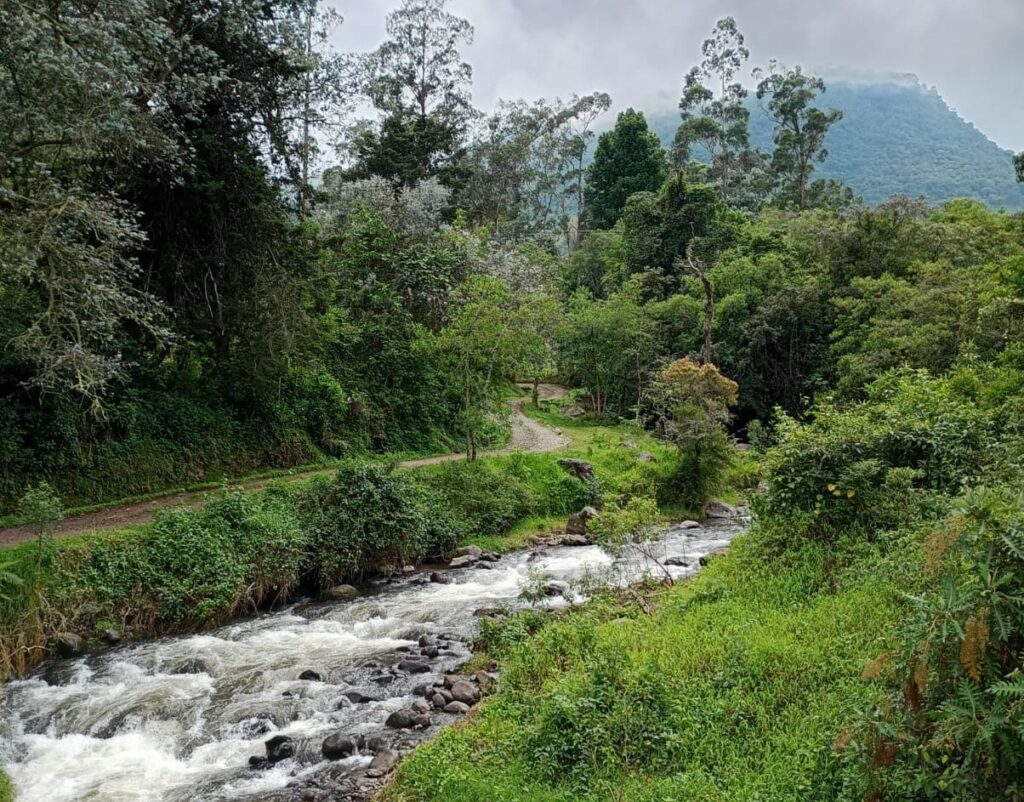
A river flowing under a high mountain in Cauca, Colombia in 2026
Just like the high mountains, Colombia’s future is clouded in fog

It had seemed that the only big political news of the year would be the election cycle and incoming president. However, all that changed on the first weekend of the year as the US military captured Nicolás Maduro in Venezuela and brought him to face charges in New York.

Then at the end of January, the Corte Constitucional blocked president Petro’s economic emergency declaration, plunging the country into another round of uncertainty. While the court deliberates, the country’s businesses will have to wait to see what’s ahead. Meanwhile, minimum salary workers can celebrate their first COP$2,000,000 paychecks.

#LaCorteInforma | La Corte suspende provisionalmente el Decreto 1390 de 2025 “Por el cual se declara el Estado de Emergencia Económica y Social en todo el territorio nacional”, mientras se profiere una decisión de fondo.

Comunicado: pic.twitter.com/Ow6rC40Ixb

— Corte Constitucional (@CConstitucional) January 29, 2026
An unprecedented move from the court

February won’t let up as Petro’s off to Washington at the start of the month to meet Donald Trump in what could be a tense meeting. While both sides have cooled their rhetoric, there’s plenty of unpredictability in both camps. This is perhaps best illustrated by Petro having to be granted a 5-day visa just to visit, Trump having cancelled his last one.

It’s anyone’s guess how that might end, with Petro currently blocking the release of coca growing figures and denying the reliability of foreign sources. In the best case scenario, Colombians can hope for no additional tariffs, military guarantees and cooperation and an easing on visas.

This is a year with big events set to dominate after a relatively quiet 2025 still managed to contain plenty of shocks and surprises. As ever, Colombia seems set to live in interesting times. We’ll be here throughout the year to keep you up to speed on what’s going on and why, from entertainment to hard news.

Another big election

Expect Colombians to grumble as they are called up for compulsory vote counting duty. There will be two sets of elections this year, with voting for the Senate and House of Representatives taking place first on the 8th of March. There will also be voting for candidates in blocks on that day.
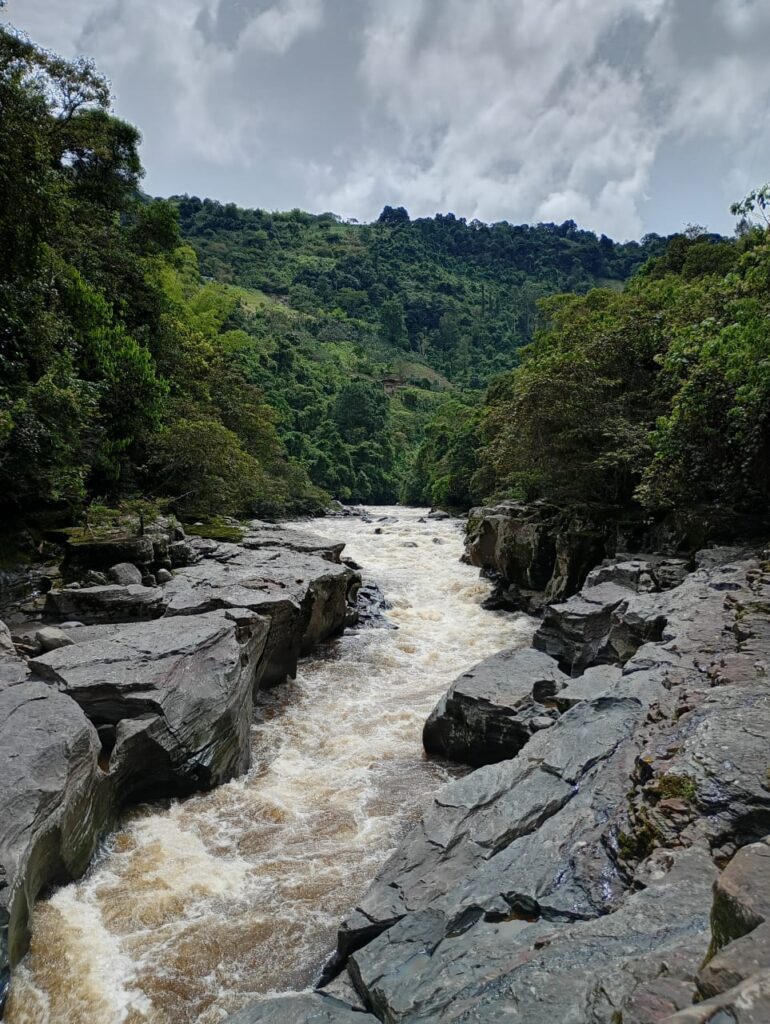
The estrecho de Magdalena in Huila, Colombia in 2026
The election is tighter than the estrecho de Magdalena

After that, it’s the presidential race on the 31st of May with a likely run off between the top two candidates around three weeks later. The last four elections have all featured second rounds and no candidate looks capable of registering more than half the initial vote.

As with many presidential systems, there’s an enormous gap between winners being declared and them arriving in office. Pleasingly, this takes place on national days: the Senators and Representatives won’t arrive until Colombian Independence (20th July) and the president takes over on the anniversary of the Batalla de Boyacá (7th August).

The presidential runners and riders are in a very crowded field right now, but that will thin out until the 13th March, the final deadline for candidacies. The 8th March vote for various lists of candidates is especially important for this. The race remains wide open at the moment, with no clear leader and a very good opportunity for someone to come out of nowhere. 

Interestingly, there’s a good chance that Colombia will elect its first ever female and/or LGBTQI president, with Vicky Dávila, Paloma Valencia, Daniel Oviedo and Claudia López all potentially already in the mix or capable of putting together a big surge.

On the loosely defined left, Iván Cepeda is the official candidate for Pacto, having won out in the internal poll. Luis Murillo is also in the hunt, with Roy Barreras and the formerly-discredited Medellín mayor Daniel Quintero as outsiders. Cepeda will absolutely dominate the leftist vote and is very likely to make the second round as a result.
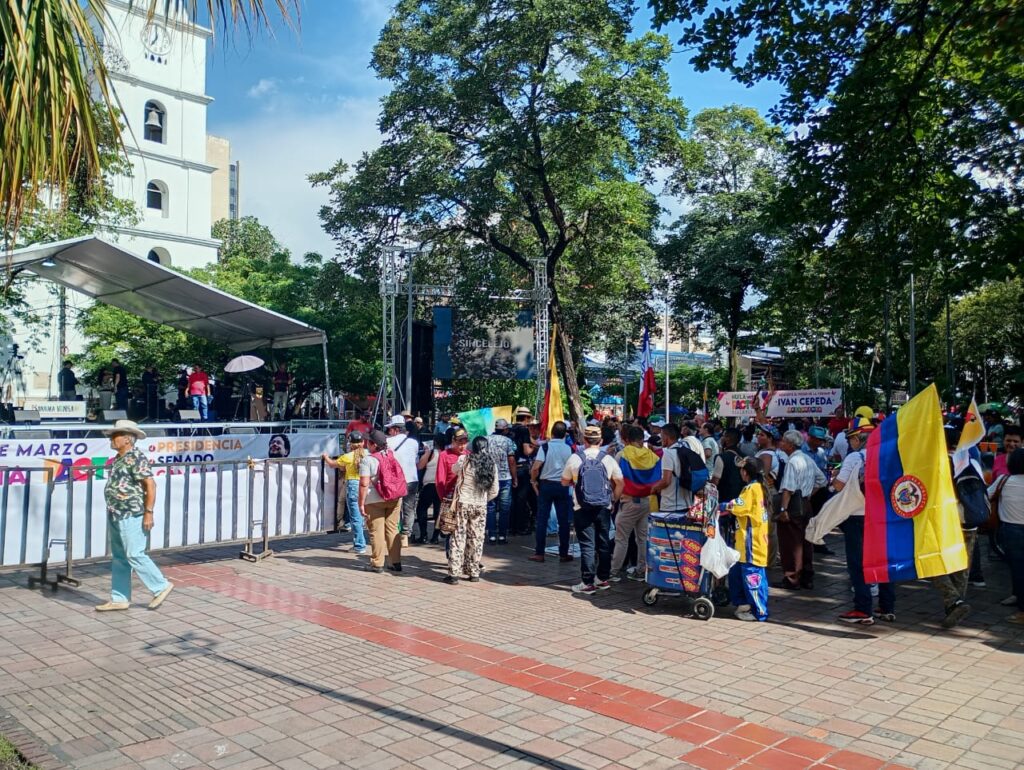
A rally by Iván Cepeda in Neiva, Huila in Colombia in 2026
A rally by presidential candidate Iván Cepeda in Neiva, Huila

A host of candidates on the nominal right are standing, with former journalist Dávila and Centro Democrático heavyweight Valencia in the ‘Gran Consulta’ block which defines itself as centrist but would be considered by many to be at least right-leaning. 

The wildcards here are Abelardo de la Espriella, a tough on crime former lawyer who led the field in gathering public nominations at over 5 million and serial candidate and former Medellín mayor Sergio Fajardo who narrowly failed to make the second round last time around.

Harder to pin down are candidates such as Claudia López and Juan Daniel Oviedo. They could surprise some people with a strong spring surge, especially if they can channel a dislike of established parties. However, López has baggage from her time as Bogotá mayor and Oviedo is in the ‘Gran Consulta’, meaning he’ll struggle to stay in the race.

Tying up loose ends

Elsewhere in the political landscape are other issues that could do with being resolved before the change in head of state. Paz Total is nowhere near happening, with a number of talks deadlocked or non-existent, the economic emergency is currently frozen and Venezuelan relations remain unclear.
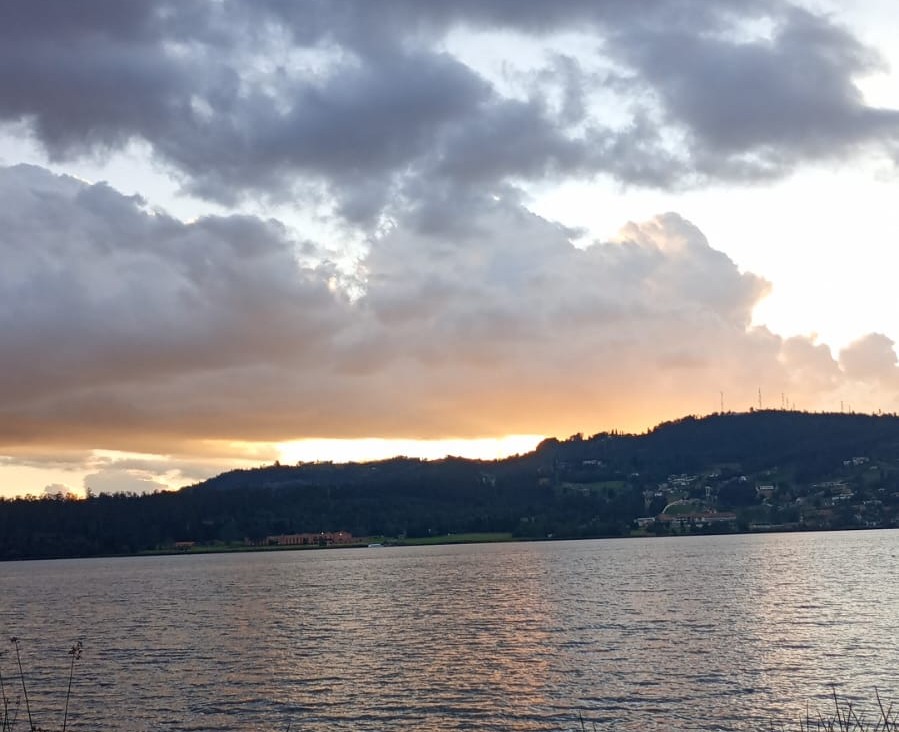
Sunset over Paipa, Boyacá, Colombia
The sun is setting on Petro’s presidency

If the economic emergency goes ahead, there will be increased IVA (VAT or Sales Tax) on a range of things including online gambling, liquor and wine. There will also be a dramatic change in importation limits, with a limit of USD$50 for tax-exempt gifts.  

The ELN have asked to get back to the table, perhaps sensing that a possible right-wing government might not be quite so favourably disposed to their antics. Petro himself seems to have lost patience though, dismissing the request out of hand due to their recent attacks on Colombian army members.

Inflation will probably remain high and base interest rates are now in double digits as a result. However, the economy is chugging along decently and consumer spending remains strong. The minimum wage increase will likely help that continue and with a weakening dollar, prices may start to stabilise.

Whatever happens in Venezuela will have a big impact in Colombia. If the country opens up again, it’s entirely possible that some of the three million or so Venezuelans in the country may return. That will ease pressure in the labour market, increase trade flows and please a certain type of politician.

If Delcy Rodríguez stays in office with US support, things may be a lot more complicated. There’s not much love for the Venezuelan regime in Colombian political circles, meaning trade may not take off and there is likely to be limited cooperation on regional matters.

Ecuadorian relations also are heading in a downward spiral, with Noboa and Petro currently engaged in a tit-for-tat trade war and imposing hefty tariffs on each other. That’s choking trade across the border and affecting cooperation on cross-border security issues.

If there is a change in government, there might be more serious attempts to investigate a range of overhanging scandals such as the peculiar case of Laura Sarabia, currently ambassador to the UK and Juliana Guerrero’s and others’ mysterious qualifications.

With six months more in office, Petro has plenty of time to address these scandals or start new ones. Expect his twitter account to get even more heated between March and June as he gets involved in the election. He’s also likely to continue the ministerial merry-go-round which is past 60 changes already.

His approval ratings upon leaving office are likely to be higher than either of his two immediate predecessors. After a sharp post-election fall, he’s stayed consistently relatively popular by Colombian presidential standards and showing an uptick in recent months. For all the mutterings of doom when he came in, he’ll leave office in a relatively good position.

Big issues in Bogotá

Mayor Gálan is halfway through his tenure and has little to show for it so far. He’s managed to keep things ticking over but has not made big changes, nor has much of a legacy as things stand. The Metro was his inheritance and will be inaugurated under the next mayor, so he could do with something big this year. Trouble is, there’s nothing on his books for now.
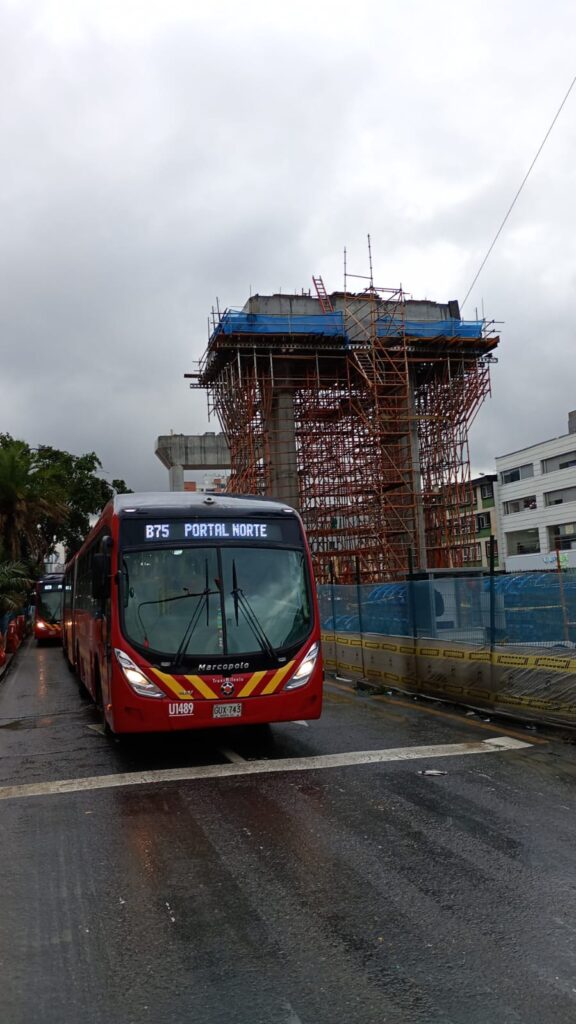
A long-term boon but short-term disruption

Transport is perhaps the biggest issue, with the Metro still firmly on track. Gálan deserves credit for this, as the project has not been without problems and has endured meddling from the Palacio Nariño. Regiotram to the westerly satellite towns is also still on the way.

On the other hand, there will be even more disruption in the short term thanks to the Metro works, and road quality is awful. Road traffic incidents are stubbornly high, with nearly 500 deaths predicted over 2026.

Prices have been hiked to COP$3,550 on the Transmilenio and SITP for 2026, despite Gálan’s earlier pledge not to do so. The mayor says it’s unavoidable due to the minimum wage rise. Petro has responded by refusing to fund a new fleet of electric buses.

Water rationing was an issue this time last year, but it seems unlikely to return for the short term, thanks to the unseasonal levels of rain we’ve had over the holiday period. An El Niño event is predicted for the year but there’s little sign of it so far. 

Crime is nominally coming down, but few believe the official figures. Perceptions of crime remain high and most Bogotanos feel unsafe in the city. It’s not hard to see why – it feels like there are more and more chirretes around and fewer police.

One thing that is always in view is rubbish, with big piles over much of the city. Some of this is from an increase in fly-tipping, some from a faulty collection system struggling to keep up and others from a simple breakdown in civic values. 

A succession of Bogotá mayors have avoided the issue after Petro got into hot water in his time in office, but things are coming to a head now. It’s becoming a public health problem with rats frequently seen even in midday as well as a simple blight on the city. 

Entertainment

Peso Pluma has pulled out of Festival Estéreo Picnic 2026, but la Tigresa del Oriente has joined, which is probably a win. The best event in Bogotá, and by extension Colombia, remains a top-drawer festival with genuine international heavyweights which is well worth getting tickets for if you’re in town.

With a lineup boasting Tyler, The Creator, The Killers and Deftones, the festival is a viable cultural tourism draw if you’re visiting. Prices are competitive with North American and European fests and experiencing a Latin American festival environment is something most music fans should relish.

FEP2026 is the bigger event, but little sister Cordillera offers a more Latin experience

Balancing FEP2026 is Festival Cordillera 2026 in September, which offers a different attraction: the chance to see what (loosely defined) contemporary Latin music sounds like. The event focuses almost exclusively on Latin talent from across the musical spectrum, giving you the opportunity to explore a soundscape you may not know too much about.

Sadly, those two mega-festivals are helping sound the death knell for Rock al Parque. It hasn’t really recovered post-COVID and has been poorly managed by the alcaldía. Hopefully it can find its feet again, and the offshoots (salsa al parque, rap al parque etc) are all still strong and accessible.

Flying under the radar last year was Colombia’s first ever board games convention, Ludotopia. Given the enormous success of the event, it’s likely to run again. In other boardgaming news, Wingspan will launch an Americas expansion featuring a bevy of local aves, illustrated by Colombian lead designers Ana Maria Martínez and Natalia Rojas.

Filbo from 21 April- 5 May is the nation’s keystone for literary events, accessible and open to all with a strong focus on education as usual. The country of invitation this year is India, a welcome departure from the usual Latin or European focus and sure to open up exciting new possibilities.

Ludotopia event in Bogotá, Colombia 2025. Picture shows a giant meeple and Devir branding in the background
Ludotopia was a smash hit in 2025

Geekfest SOFA will be in October, which has turned into an absolute juggernaut of an event. Crowds will be intense in the daytime weekends, so try and make it there on weekdays or in the evenings if you’re going. Comic Con is much quieter but lacks the joyfulness of SOFA, being much more commercial in nature.

Colombian sporting specials in 2026

Colombia have a reasonably straightforward World Cup group and will be aiming high. Head coach Nestor Lorenzo has turned dressing room morale around 180° and taken los cafeteros to a runner’s up spot in the last Copa América.

With Colombia currently ranked 13th by FIFA, they are expected to do well and will be seen as a team to beat. Matching the 2014 run to the quarter-finals will be no easy task, but achievable. Surpassing it would be a real upset but it’s a funny old game and anything could happen. The squad is well built for tournament football, with key players such as James capable of burning bright for a few weeks.
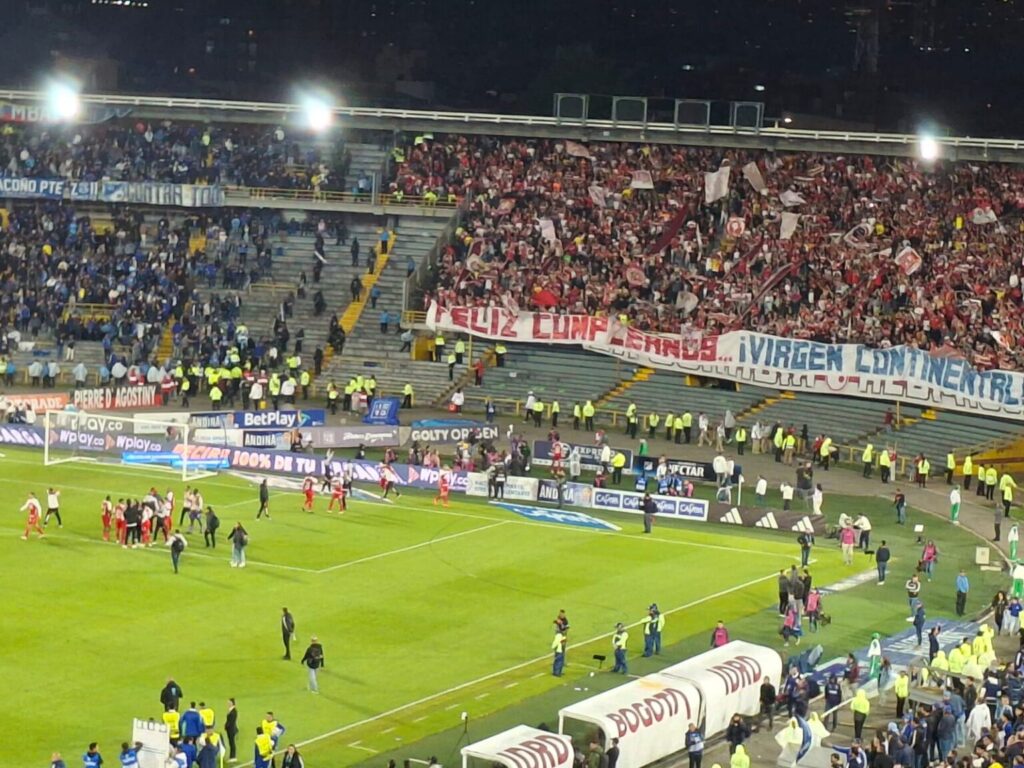
A hotly contested capitalino derby on the way to Santa Fe’s championship

There’s also plenty to keep an eye on in domestic football, with Falcao returning to Millonarios. That didn’t go fantastically well in the 2024 apertura, as city rivals Santa Fe knocked them out and went to lift the trophy. El Tigre didn’t take that well at all, throwing his toys out of the pram in a charged presser after the match. Santa Fe went on to win the Supercup at the start of this year.

After working wonders with Wrexham, Hollywood superstar Ryan Reynolds will be hoping to do similar for Inter de Bogotá. Previously known as La Equidad, the team changed name after being acquired by Reynolds’ investment vehicle. The actor has already donned the jersey and may appear at games in 2026.

In non-traditional sport, Cricket Colombia are celebrating their recent designation as an official sport in the country. They’re getting things kicked off with the Barranquilla Cricket tournament from February 20-22 seeing regional teams from Santa Marta, Bogotá, Cali and Medellín fighting it out to decide national supremacy. Cartagena, Santa Marta and Barranquilla are also hosting a women’s competition as the sport grows in the country.

Egg-chasers are spoilt for choice with Gaelic football in the capital as well as Aussie Rules, American football and rugby across the country. With the Superbowl coming up, if you are inspired, get in touch with the American football leagues across the country.

The Colombian women’s sevens are currently competing in the SVNS championship in Dubai and making a good account of themselves. The Toucans are punching above their weight with limited resources available to them.

AFL in Colombia continues to build momentum, and Gaelic football is becoming a bigger deal as well, with the Bogotá Beithigh practising on a more consistent basis in partnership with Colombia rugby to help build their profile.

What’s most likely to happen in Colombia in 2026?

Well, frankly put, the most likely thing is a big surprise in Colombia in 2026. Unexpected events seem to happen with regularity, so there’s every chance something comes out of leftfield. Plenty of things popped up in 2025 that we hadn’t seen coming this time last year.
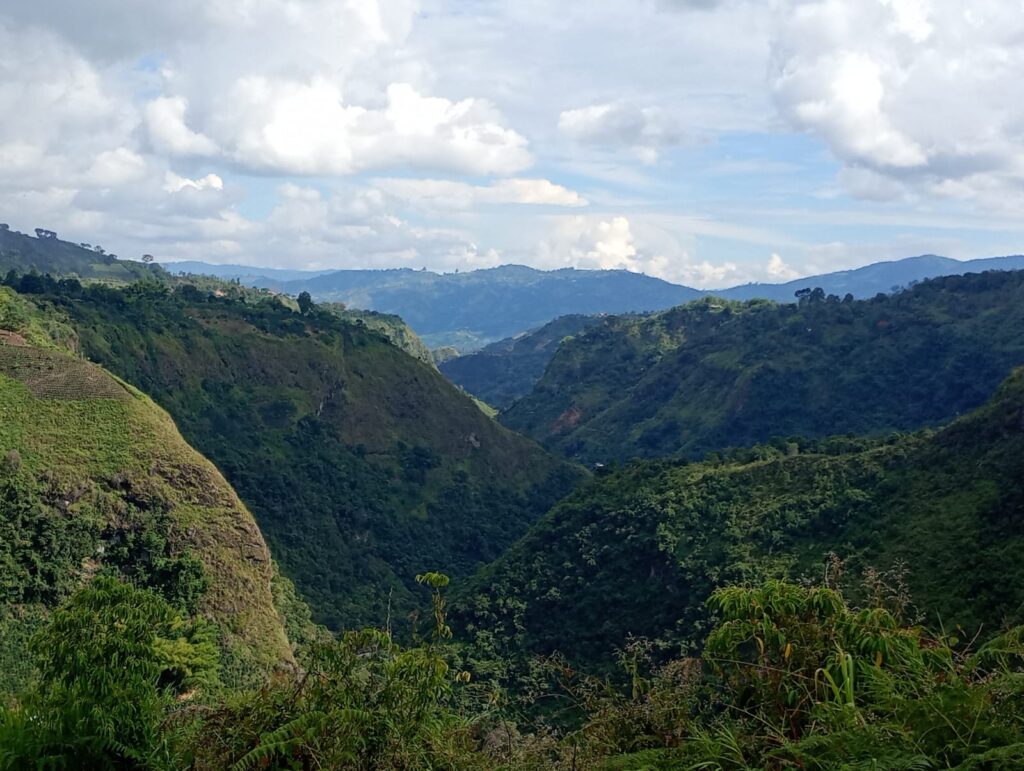
Macizo colombiano in Huila, Colombia in 2026
The news rolls like the mountains of the macizo colombiano

Having said that, there are some good bets to lay: the economy should continue strengthening and the dollar exchange should ease back in the direction of COP$3,000 (which remains a long way off). There definitely will be a new president, even if it’s a continuity candidate and we will see changes in the Senate.

The big cultural events of 2026 in Colombia look like they’ll all be roaring successes as usual, as the country shows no sign of slowing down.

It’s unlikely that any of the peace processes will come to a conclusion and depressingly likely that they will face more turmoil if certain candidates take over in the Palacio de Nariño. While we can all hope that things will improve in the capital, there’s currently no sign that will happen. On the other hand, steady progress will continue on existing projects.

En fin, it’s likely to be six months of the usual turmoil and drama, culminating in two huge events: May-June’s presidential elections and the fortunes of the footballers in North America at the World Cup in July. Then we’ll face the remainder of the year watching what the president does in his or her first months. Whatever happens, there’ll be plenty going on in Colombia in 2026.

The post 2026 in Colombia: Uncertainty Reigns appeared first on The Bogotá Post.

  •  

Colombia in a Breath: Wind Instruments That Tell the Story of a Nation

Musical instruments are far more than tools for producing sound: they embody the cultural identity of a territory, carrying spiritual meanings, collective memory, and the deep-rooted expressions that shape a community’s history. Colombia en un Aliento 2026 (Colombia in a Breath 2026) invites audiences on a sonic journey through the country’s wind instruments, encouraging reflection on how human breath and aerophones have shaped identities, spiritual practices, and spaces of encounter from pre-Hispanic times to the present day.

Conceived as a national cultural project, Colombia en un aliento: instrumentos de viento que narran un país (Wind Instruments That Tell the Story of a Nation) brings together ancestral knowledge, popular traditions, and contemporary artistic creation. Through an interdisciplinary approach, the initiative connects past, present, and future via a wide-ranging cultural program structured around four thematic lines.

El soplo como rito de la vida (Breath as a Rite of Life) explores the symbolic and ritual significance of wind instruments among Indigenous and Afro-Colombian cultures, where blowing air through wood is understood as an act of vitality, spirituality, and connection with the natural world. In these traditions, breath is not merely physical – it is a force that sustains life, memory, and the sacred.

El viento del encuentro (The Wind of Encounter) focuses on the social and communal role of wind instruments in fiestas, carnivals, and collective celebrations. From village plazas to major public gatherings, these instruments create shared rhythms, reinforce bonds of belonging, and transform music into a space for encounter and social cohesion.

Alientos universales, músicas locales (Universal Breaths, Local Music) examines historical processes of cultural exchange, mestizaje, and adaptation. It traces how wind instruments introduced from other parts of the world were reinterpreted across Colombia’s diverse regions, giving rise to musical expressions deeply rooted in local landscapes, histories, and identities.

Respirar el future (Breathing the Future) looks toward contemporary creation techniques, from experimentation with digital technologies to new sonic languages. The section reflects on current artistic practices in which tradition and innovation coexist, opening pathways for composition, teaching, and cultural narratives.

Together, these four thematic pillars support spaces for reflection and research, that strengthen Colombia’s sound identity. From making local knowledge visible and fostering cultural innovation, more than a series, Colombia en un Aliento / Colombia in a Breath proposes a collective experience – an invitation to understand wind instruments as symbols of life, resistance, and social cohesion.

As a year-long project by the Cultural Subdirectorate of the Banco de la República – Central Bank – this initiative will continue in 2027 with a new thematic focus on the human voice as a sonic element, expanding its exploration of sound as a carrier of memory and meaning.

The initiative will be officially launched with the public conversation “El soplo y los instrumentos: sonidos que cuentan historias / Breath and Instruments: Sounds That Tell Stories” on Tuesday, February 3 at 5:00 p.m. in the Audiovisual Hall of the Luis Ángel Arango Library (BLAA) in Bogotá.

The event will feature José Pérez de Arce, Chilean musicologist and leading authority on ancestral aerophones; Humberto Galindo, Colombian researcher and director of the Museo Mundo Sonoro; and Luis Fernando Franco, composer and co-founder of Guana Récords with more than four decades dedicated to musical research and creation.

The conversation will also be streamed live on Banrepcultural’s YouTube channel, opening this shared reflection on breath, sound, and identity to audiences in Colombia and internationally.

For more information visit the cultural page of the Central Bank: https://www.banrepcultural.org/noticias/instrumentos-de-viento-en-colombia-en-un-aliento-2026

  •  

Bogotá’s No Car and Motorcycle Day Returns on 5 February

On Thursday 5 February, Bogotá will once again ask its citizens to imagine the city differently. For 16 hours, from 5.00 a.m to 9.00 p.m., private cars and motorcycles will largely disappear from the streets as Colombia’s capital marks the 28th edition of its Día Sin Carro y Sin Moto. The annual pause, approved by popular vote in 2000, is less a traffic restriction than a civic experiment — one that Bogotá has been refining for decades.

Unlike many cities that frame “car-free days” as environmental emergencies or symbolic gestures, Bogotá treats the occasion as an exercise in everyday urban life. The message is simple: this is not an exception, but a reminder. For the majority of residents – around 70 per cent, according to city officials – daily mobility already depends on walking, cycling or public transport. On this day, those who normally rely on private vehicles are invited to join them.

The scale of the operation reflects Bogotá’s long-standing commitment to sustainable mobility. Throughout the day, the city’s Integrated Public Transport System (SITP) will operate at full capacity, deploying more than 10,000 buses across trunk, zonal, feeder and dual routes, alongside TransMiCable’s aerial service in the hills of Ciudad Bolívar. Nearly 37,000 taxis will circulate without restriction, while more than 8,000 bicycle-parking spaces at TransMilenio stations will encourage commuters to mix modular mobility.

Cyclists, meanwhile, will have the run of 683 kilometres of dedicated bike lanes, supported by pedestrian infrastructure that stretches across more than 9,500 kilometres of pavements. Additional car-free corridors, overseen by the city’s sports and recreation authority, will open during daylight hours, reinforcing the idea that streets can be social spaces as much as conduits for traffic.

Bogotá’s confidence in pulling off such a city-wide shift did not emerge overnight. The capital is widely regarded as a pioneer of sustainable urban mobility, a reputation rooted in an idea so simple that it has been copied from Paris to Mexico City: the Ciclovía. Every Sunday and public holiday, more than 120 kilometres of major roads are closed to cars, transforming the city into a vast open-air promenade for cyclists, runners and families.

In 2025, Bogotá marked the 50th anniversary of the Ciclovía — a milestone that underscored how deeply the initiative has become embedded in the city’s identity. What began in the 1970s as a modest protest against car dominance has evolved into a weekly ritual, drawing millions of participants and reshaping how residents relate to their streets. Urban planners and mayors from around the world have studied the model, adapting it to their own contexts, but few have matched its scale or longevity.

The Day Without Cars follows the same philosophy, but with a weekday twist. Schools, offices and universities remain open; life goes on. The difference lies in how people get there. During the day, private cars and motorcycles are prohibited from circulating, including vehicles with special “pico y placa solidario” permits, hybrid or gas-powered cars, driving-school vehicles and most media vehicles with yellow plates. Taxis and special transport vehicles with licence plates ending in 7 or 8 are also restricted.

Exceptions apply. Public transport, emergency vehicles, school transport, vehicles for people with disabilities and essential public services continue to operate. Electric and zero-emission vehicles — including motorcycles — are permitted, as are delivery motorcycles linked to courier and food Apps, transport of valuables, funeral vehicles and official vehicles assigned to security, traffic control and infrastructure maintenance.

There is, inevitably, an enforcement side. Drivers who ignore the restrictions face a fine of COP$633,000 pesos and the immobilisation of their vehicle. Yet the city’s tone is notably less punitive than pedagogical. Street-level activities and public messaging emphasise behaviour change over compliance, encouraging residents to see the day as an invitation rather than an imposition.

For those navigating the city, a little foresight helps. Travellers heading to El Dorado International Airport are advised to allow extra time, particularly during the morning and evening rush, as major arteries are repurposed for pedestrians, cyclists and electric-only vehicles. Public transport will run at full capacity, but peak hours on TransMilenio – roughly between 6.00 a.m and 9.00 a.m., and again from late afternoon – can be crowded, making off-peak travel a calmer option.

For one day in February – and every Sunday of the year – Bogotá does more than reduce emissions or noise. It rehearses a version of the city that many places are still struggling to imagine: one where movement is slower, more deliberate and shared, and where the street is not just a means of getting somewhere, but a place worth inhabiting.

  •  

Remains of rebel priest set to return to Bogotá

ELN guerrillas have announced the recovery of iconic revolutionary Camilo Torres. They now want his body returned to Bogotá’s National University.

Camilo Torres mural at the Universidad Nacional. Photo: Steve Hide
Mural of priest and professor Camilo Torres at the Universidad Nacional. Photo: Steve Hide

Colombia’s largest rebel army, the ELN – at war with the state since 1964 – have alerted the world to the likely discovery of the long-lost remains of Camilo Torres.

The fighting priest, killed in combat with the army 60 years ago, has been found by government forensic teams in the department of Santander, the ELN said in a press statement this week.

The ELN leaked the news before the Unidad de Búsqueda de Personas Dadas por Desaparecidas (UBPD) could finalize technical tests, but it was widely expected that the search is now ended for the respected cura and university professor who became a revolutionary martyr.

The ELN said they hoped his remains “would be respected and returned to the Bogotá campus of the National University”.

In the early 1960s, the young Torres was a chaplain, professor and founder of the faculty of sociology at the tempestuous Universidad Nacional. Today, the charismatic priest still figures strongly in campus iconography with his image and quotes decorating many walls.

From priest to combatant

An exponent of liberation theology – a strand of Catholicism calling for social justice in an era of extreme poverty in Latin American – Torres took to the hills in 1965 with the ELN, then a fledgling guerrilla group aligning itself with Marxist ideology.

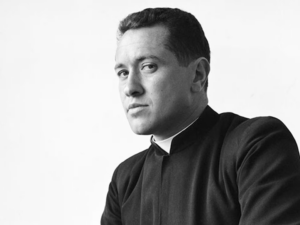
Camilo Torres as a priest. Photo: National Archive
Camilo Torres. Photo: National Archive

Calling himself Argemiro, the priest quickly became an influential link between the rebels and the church, respected across the political spectrum, and a spiritual influence on socialist movements across the continent.

His most famous quote, still echoing through liberation theology, was: “If Jesus were alive today, he would be a guerrillero”.

A photo of Torres appeared in a flyer printed by the ELN in January 1966, with the academic pictured in uniform clutching a rifle alongside the words: “From the mountains of Colombia, I intend to continue the fight, weapons in hand, until I achieve power for the people. Not one step back! Liberation or death!”.

Friends divided

The latter came quicker than expected. Torres was killed in combat aged 37 on February 15, 1966, in his first action against state forces. The firefight took place in the rugged terrain around El Carmen de Chucurí, Santander.

Ironically, the army operation that killed Torres was led by General Álvaro Valencia Tovar, a childhood friend of the rebel priest. In an old article on Las 2 Orillas, the general described the pair’s friendship over many years, even while taking separate political paths; a potent reminder of personal ties tested by Colombia’s civil conflict.

According to Valencia Tovar, the ELN had prepared a deadly ambush in a jungle gorge with 35 fighters – including Torres – lying in wait for an army patrol. But the soldiers, even while taking heavy fire, outflanked the guerrillas and killed five of the ELN fighters. Torres was among the dead.

Thereafter the story was muddled: according to Valencia Tovar, the general himself took Torres’ remains to a military pantheon close to Bucaramanga, the regional capital of Santander, perhaps a form of honour for his former friend. But the exact location was never disclosed, a bone of contention with the guerrilla group who wanted to mourn their martyr.

In another historical twist, years later a video emerged of a young Juan Manual Santos – the future centre-right president of Colombia – declaring he was an “acolyte” of Torres, who was in fact his uncle.

In 2016, the then president Santos, perhaps as a gesture towards his own deceased uncle, but also as a signg of good faith during a peace process with the ELN, promised a state search for the remains of his fallen uncle. That peace process failed, like many others.

Playing for time

Over 70 years of conflict the Ejército de Liberación Nacional has proved hard to pin down: the on-off negotiations with the current Petro government mark the seventh cycle of peace talks spanning seven presidential terms since 1992, with the guerrillas still fighting.

Today, many observers see these negotiation cycles as cynical ploys by the Marxist-Leninist rebels to hold off military pressure while expanding their own territory and illicit activities, which today extends to cocaine production, illegal gold mining, extortion, kidnapping and human trafficking.

According to a profile by thinktank InsightCrime, in the last 20 years the ELN have become increasingly active in neighbouring Venezuela where they act as a mercenary army for the Chavista regime with a strong role on controlling the borders.

That dynamic shifted after the U.S. military operation in early January in Venezuela to detain autocratic leader Nicólas Maduro.

Now less welcome in Venezuela, and facing an increasingly hostile Petro government, even while entangled in a turf war with dissident FARC groups in northeast Colombia, the ELN fighters are feeling the pressure.

Blood and fire

On January 12 this year, the ELN proposed another bite at the peace apple with a new ‘national accord’. This though was quickly rejected by President Petro, who wrote on X that the guerrillas had to renounce their illicit activities – primarily gold and cocaine – before coming to the table.

During the first three years of his term, Petro suffered several perfidies by the ELN such as their surprise attacks on rival groups in the coca enclave of Catatumbo last year that left hundreds dead and thousands displaced.

Responding to the ELN offer Petro, said he had “already offered an agreement, but they destroyed it with blood and fire, and by killing humble peasants”.

It is likely the Colombian president is now holding off until after his meeting with the Trump administration in Washington scheduled for February 3.  Any reconciliation between Petro and the U.S. president – their relationship has been rocky – could open the door for increased military support to combat the ELN, designated as a terrorist organization by the U.S. State Department since 1997.

Colombia’s ‘Che

Such a deal, combined with changes in Venezuela, could tilt the conflict in favour of Colombian state forces. And while still a potent fighting force, the ELN could prefer an escape route via the negotiation table in 2026 if talks open up with Petro or his successor.

Evolution of an icon: mural of Torres at Bogotá's Universidad Nacional.
Evolution of an icon: mural of Torres at Bogotá’s Universidad Nacional.

With that in mind, it is probable that finding of Camilo Torres – miraculously close to the 60th anniversary of his death – is no coincidence, but rather a strategy in the poker game between state and guerrillas.

The wait now is for final confirmation of the remains by the UBPD.  Meanwhile the search unit is keeping mum on how, where, and when the body was found.

And if the ELN are claiming Torres as their own, then so is Petro: “The body of Father Camilo Torres Restrepo will be respected and laid to rest with honours,” he said on X this week, painting the priest as a national hero.

Perhaps putting him in the spotlight is a nod to Petro’s own rebel credentials as a former member of M-19 guerrilla group. And Torres is a timely reminder of how the ELN rebels – recently accused of human slavery in illicit mining camps  – are far removed from their ideological roots.

Where both sides agree is that his final resting place should be the National University campus in Bogotá. That´s a start. Sixty years after his death the fighting priest, seen by some as Colombia’s Che Guevara, could have a new role in bringing peace.

The post Remains of rebel priest set to return to Bogotá appeared first on The Bogotá Post.

  •  
❌