
Reading view

From “Estrato 1” to High-Rise Hotel: Julio Jiménez Transforms Colombian Hospitality Through Faith and Service

Innovative service models strengthen Bogotá’s tourism infrastructure.

Colombia’s economic landscape is undergoing a profound transformation, driven not only by institutional shifts but by the indomitable spirit of its local entrepreneurs. The story of Julio Jiménez, founder of American Visa Hotel, serves as a powerful testament to the social mobility and resilience defining the country’s modern business narrative. From selling empanadas as a child to managing a diverse portfolio of hospitality and logistics assets, Jiménez embodies the grit that is reshaping the nation’s service sector.

Click above to watch the video!

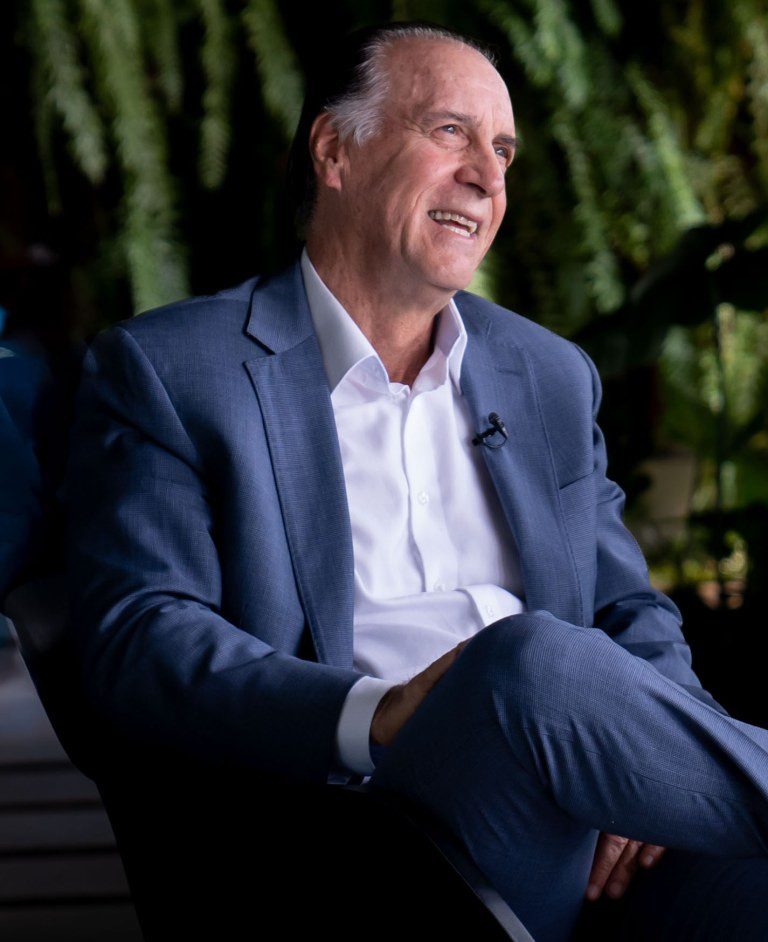
In this exclusive interview, Loren Moss of Finance Colombia sits down with Jiménez at his newest property, Destino. Their conversation covers a journey of hardship, recovery, and a radical commitment to social responsibility that challenges traditional corporate models. For the international investment community, Jiménez’s trajectory offers a window into the burgeoning mid-market hospitality segments that are being built on authentic local experience and a rigorous focus on consumer security.

This evolution is particularly evident in his recent move to professionalize the transportation industry at El Dorado International Airport. By integrating technology and hospitality standards into the taxi sector, Jiménez is working to eliminate the friction points that historically deter foreign business travelers. It is a narrative of redemption and professionalization that highlights why Colombia continues to maintain its competitive edge in the regional tourism market.

Finance Colombia: I’m here with Julio Jiménez, the founder of American Visa, and here we are in one of his American Visa hotels, ‘Destino.’ And it’s an interesting name that the company has but the most fascinating thing is your history. Tell me how you started in business. Very young, right?

Julio Jiménez: Yes, since I was 8 years old. I had a struggle, grieving when my father separated from my mother. Four brothers stayed practically in one room, in one bedroom. Five people: my mother, my four brothers; struggling a lot, because of the separation. And from there we started working, because since then I started doing business, since I was 8 years old.

Finance Colombia: Wow, and what was your first business?

Julio Jiménez: My first business was to tell the principal of the school where I studied that we didn’t have anything to eat, and she should let us sell some empanadas, we had empanadas for sale and I started selling empanadas in the Cooperative at the age of 8 years old.

Finance Colombia: And that was here in Bogotá?

Julio Jiménez: In Bogotá.

Finance Colombia: Okay, and after that you started to work at the airport, right?

Julio Jiménez: Well, the bad thing about the empanadas was that I stayed with the empanadas until I was 19 years old. I saw money; I didn’t study anymore. I wasn’t inclined to study, I left after 5th grade but I started selling empanadas at the age of 10, 12, 14 years old and I was able to develop my mind, because I had a stand of empanadas in a corner where I was serving 50 people at once.

Finance Colombia: Wow.

Julio Jiménez: Taxi drivers, regular people, would come to my empanadas stand where I had two soda cases, 300 empanadas, butter, dough and a lot of people talked to me at the same time and I didn’t write anything down. I had a mind where… I knew you ate beef, chicken, a Hawaiian and you ate, and you ate… So I talked to 50 people at once and I was able to develop my mind, a photographic memory, a unique memory. Math is adding and subtracting, just that: to add, subtract, divide and multiply, and I developed my mind. After being an empanadas vendor, at the age of 19, I got married. I started gambling, I got addicted to it. When as a child you see money, and you don’t have a guide, a guide on how to manage finances, how to save money well… Money has chased me all my life, the money, the business, but I’ve been a bad administrator. I fell into gambling since I was 12 years old. Problems with ludomania, addiction, ludomania is the game: casino, gambling.

Finance Colombia: Yes, yes.

Julio Jiménez: Only 3 years ago I recovered from gambling. But the issue here that I want to tell you about is that I had many struggles in my life: hardship, hardship and more hardship. But from hardship something good always comes out. The teachings of each mark, of each wound, of each blow. Then I became a taxi driver at 21 years old, and I drove taxis for 14 years. As a taxi driver, I understood and I knew that I was very good with numbers and with the auditory part, and so I had three radio phones in my taxi listening to where they asked for taxis.

Finance Colombia: Yes.

Julio Jiménez: One here, another here, and I went around all of Bogotá driving but also getting to know people and listening. I’ve been very good at listening. I’ve never read, now I’ve read the Bible, but I’ve never read. But I listened, I listened when people get upset, I listened when people have good energy, when people are positive, when they are negative. And all that I learned in my taxi. Until I saw the El Dorado airport. Because of the people I took to the airport. I’d get to the airport, they’d get off my taxi, but someone else would come and say, “Hey, take me to the hotel.” And the hotels I would take them to, 15 years ago… As a taxi driver, they asked me for hotels. I took them to hotels where they gave a commission to the taxi driver, a commission of, I don’t know, at that time it was 30,000 COP, it was 10 USD today. I’d get to the hotels, they gave me my commission, 2 or 3 a day. I wondered, “What do the people that stay at the airport do?” I dared to let go of my taxi, which was what I knew how to do. I know how to do 3 things in life: drive a taxi, sell empanadas and sell hotels. That’s my art, what I learned. I let go of my taxi and I started selling hotels at the airport. I went from a taxi driver, to getting out of it, asking for permission to a hotel at that time, 15 years ago, I said, “Give me a certificate and back me up so I can be at the airport with a sign-”

“When you dedicate yourself to serve, to help, to protect. That is the motto of the American Visa company.” — Julio Jiménez, Founder of American Visa Hotel.

Finance Colombia: ‘And I’ll get you customers.’

Julio Jiménez: Lorenzo you need a hotel, I have a hotel near the airport, I’ll take you, bring you back, give you food, the entire service. And I started, and like me there were already 200 people working in different shifts, it was a closed circle, that business has been there for 40 years, at the airport. It’s called informalism, being touts. Those that when you get off, “I have the Uber, I have the Uber.” In the whole world, even in China, there are airport touts. So I started selling hotels and it turns out that they are talking to the best speaker, because my God gave me a gift to know how to express myself, to know how to convince and I started selling hotels and I sold 15 rooms daily, when I started 15 years ago, and 15 rooms with 50 percent commissions…

Finance Colombia: That’s very profitable.

Julio Jiménez: Profitable, tempting, but there is also indiscipline, because 15 years ago I wasn’t very disciplined. I was still doing drugs, gambling, alcohol, women, treachery, learning. For me it was easy to earn 500 USD a day in commissions but it was also easy to spend them in one hour.

Finance Colombia: Easy come, easy go.

Julio Jiménez: Correct.

Finance Colombia: You still didn’t have discipline to save.

Julio Jiménez: No, I was paving the road, as I always say, I always had that hardship. The ludomania, addiction management, gambling management, emotions management. I was hospitalized for 4 months in a clinic 14 years ago for gambling management. I committed myself for 4 months in a clinic for addiction management because I got obsessed with gambling.

Finance Colombia: And how did you get over that eventually?

Julio Jiménez: Look, I spent 4 months with psychology, psychiatry in the clinic, here in Bogotá, my diagnosis wasn’t bipolar, it wasn’t schizophrenic but it was compulsive gambler, and that is the worst of all.

Finance Colombia: Addicted to dopamine.

Julio Jiménez: To dopamine, serotonin, endorphins. Everything, everything, everything, has to be like this. And the compulsive gambler risks everything, he does not lose, he plays everything. Unfortunately that was almost all of my life. Many pitfalls and many defeats, since very young the money came to my life and I didn’t know how to handle it, then I met the Lord when I met Jesus Christ… 3 years ago I fell to the feet of Jesus before the pandemic. 6 years ago I had a business opportunity, I left the airport when the pandemic came, I started with a small hotel of 12 rooms, the pandemic came and everything broke. When they reopen hotels, it takes me out of the airport. At the airport they did not want to see me because of a betrayal. I set up a business in the airport before the pandemic, a special transport business of white cars (formalized, legal transportation), and the people in the airport with whom I set up the business betrayed me, he remained because he was a lawyer and I had nothing. He ran things there, and they said, “Julio, don’t call us, we will call you.” They removed me from the airport. I went to the transport terminal.

Finance Colombia: In Salitre, yes.

Julio Jiménez: That’s where I worked as a tout. “Hotel, hotel!” It wasn’t the airport but it was a terminal. We start the travel agency American Visa Tours. It still exists. It is a long story, it would take two hours to tell it because it is already edited even for a book, they already made a script of how everything happened. Because the spiritual connection with God was very big because in the terminal when it was closed for the pandemic, the people were thrown outside. A group of foreigners, of Venezuelans, of Colombians, There was no transport, they’d get here and get tossed on the ground. I had a hotel with 12 empty rooms, so what did I do? I had three trucks like this, owed 8 months’ rent. But I wanted to start again.

During that learning lesson there were nights that I went out to hustle, I loaded people from Cúcuta, I arrived and I loaded people in the terminal, “Going to Cúcuta?” in my truck. I put 11 passengers and took them to Cúcuta. I did like 10 trips. And during that time while I offered that illegal transport to Cúcuta, because it had ended, they also asked me about hotels, so I packaged hotel and transport, so I could survive, but in that time I realized that people couldn’t pay. Not for the hotel, or transport, or food. Because they are like refugees, if it’s bad here, it’s worse in Venezuela. So what did we do, what did the Lord do through me? I have an empty hotel, I have a truck to take people, it’s raining, kids are getting wet, the grandparents, the pregnant women… Let’s help them. And on several occasions we opened the hotel doors, which was broke. And we gave them free nights and gifted them a chicken or something to eat.

There, my dear Lorenzo, Heaven’s doors opened, and American Visa started. With that act of faith, of love, I don’t know what happened, God simply made a blessing here because for the past 6 years American Visa, which was born in that hardship, has not stopped receiving blessings. Today we are a hotel chain with 8 hotels. A travel agency, three agencies we own, the restaurant chain the technology company. More than 7 companies.

Finance Colombia: These hotels are beautiful. I think it’s new, it’s like international class. We went, without knowing you, we went to eat in Camelia, your restaurant in route 40, yesterday. It’s good. I’m always here in Bogotá in an event in Corferias. I remember seeing your brand in front of the embassy because you have services, packages, everything included not only for holidays but people who come for business in the embassy, people who are in Corferias because everything here is close to Corferias. What is like, the market or what is the audience or the passengers you aim for? I’m not going to say strategy, but which travelers fit best with what you do?

Julio Jiménez: I learned as a taxi driver that a tourist requires a hotel. Requires a good restaurant and requires security. When the three things are given to a tourist, it turns into an ecosystem. Why not build the ecosystem? Transport, tourism accommodation, restaurants everything they need in one place. That’s what American Visa does. And everyone who arrives at the airport, well now with technology and social media and digital media many people are getting to know us. But my true business, where I started, it was airlines. When they lose a connecting flight, when they cancel a lot of flights, what they do is call American Visa. Because we have restaurants 24 hours, transport 24 hours and everything is ready to see you. From one to a thousand people a day.

Finance Colombia: It has happened to me many times in El Dorado, going back to Rionegro. It has happened to me.

Julio Jiménez: Now with this gigantic ecosystem, here we have over 500 rooms in Bogotá, not only for airlines but also to receive the international agencies that arrive in Bogotá. We receive them 24 hours, we have service in the airport 24 hours 365 days a year in which the first thing you do is to have kind face to greet you and take you to the hotel without cost because it is included in the package. We have a restaurant that works 24 hours so whenever you get there, you’ll find food. We have our agents, language, we have our employees who work here willing to give love.

Finance Colombia: And that is the last thing I wanted to talk to you about, that this moment is my first time to meet you but I have known… We are here recording the ANATO Vitrina Turística event, the most important tourism event in Colombia, and I met people from your American Visa team, and they all have a commitment that they show but apart from that I have heard stories or cases of employees with humble beginnings, a lady whose mother had cancer and she came to you for a loan, and you were like “It’s no trouble.” And when people talk well about you behind your back, that speaks volumes.

Julio Jiménez: Look, the social aspect, when God blesses us, I met the Lord 6 years ago, when we helped those people on the ground, when we gave them shelter and food. God opens the gates of Heaven and the door opens. That also opens my heart. I have a duty, for the 35 years that I spent gambling, to help, to serve and protect. Today my debt is not with the casino nor with their people but with the people who need help. God transformed all of my illness. Because I keep praying every day. I wake up at 3:30 AM to connect with the Lord and to plan my day and I go to bed at 10 or 11 PM planning what business we are going to do. If there is no business, there is no risk. When you fail, it is cowardice. But when you don’t fail you can know for certain that God has picked you up for good. He does not fail. You are the one who fails. If you don’t fail, there will be no failure.

Every business shines, every business prospers, if you put it in God’s hands. And how? With service. thinking that the person who you help, whether good or bad, a believer or not, is a human being, who needs an opportunity. And American Visa is dedicated today to opportunities it is the company of opportunities. We receive people who have been in jail, people who have made mistakes, those who do not know how to read, those who can’t write, those that have many titles and need to be trained because the ego is killing them. Because today the biggest disease in the world is the ego, and depression, anxiety, so here we are about receiving everyone, giving them a hug and finding the wound to heal the soul. When you heal the soul you connect with God.

Finance Colombia: And I believe that also when you come from humble beginnings, you know what’s it like to go hungry, it is different from someone who is born with a silver spoon in their mouth. It is different when you know what’s it like to ask for a chance. when you know how it is to sleep on the floor, like when you were helping them. And helping them without knowing what will happen later, and look at all of this. How many hotels do you have?

Julio Jiménez: Eight hotels. We own three buildings and rent five, we own the transport agencies, American Visa has absorbed the companies that today transport to the most important airport in Colombia, they are from American Visa, of the holding.

Finance Colombia: And that is important because, I’m sorry because I know it is part of your story, but the taxi drivers here in Bogotá have a bad reputation. I wouldn’t say I’m scared, but I look for white cars, because I don’t want to be scammed, to be overcharged because it’s Sunday, or because of a foreign accent, and I look for a reliable transport, reliable people. And if you offer that, how can a traveler get in touch with you? Do you have a website?

Julio Jiménez: Right now, we have just acquired the Taxi Imperial company, who manages the airport. Taxi Imperial.

Finance Colombia: I know them, yes.

Julio Jiménez: American Visa at this moment has strategies… today is February 26, 2026. I ask you that you count 6 months. Give me 6 months my dear Lorenzo, and in 6 months, I’m putting it on the record. What image is the yellow taxi going to have? In 6 months, with the help of our Lord, we plan to transform the yellow transport. You will find the cabins where you will receive a friendly attention, “Where are you going, sir?” I offer you the yellow taxi, or the special service. But the yellow taxi will come out with the predetermined rate so you will see how much the user will pay without surprises. You will have a video camera and audio, if you wish, for security, if you forget an object, if you forget a bag or anything. This project is designed in service of the user. And to improve the image of the taxi driver. But image is improved with proof. And proof will be difficult because it’s a union, I was a taxi driver for 14 years and I charged hard, we are used to charging hard. But if the people who were overcharged paid for a bad service, when you know how much you will pay, with a good service, you will use the service again.

Finance Colombia: I pay more to have no surprises, rather than look for cheap but in the end get surprises.

Julio Jiménez: No, look, I can’t go over the speed limit but I will drive you safely. I’m not going to put reggaeton music, “What music do you want to listen?” I’m going to give you a water bottle, show you the videos that we are going to put in the back, because we are going to have corporate videos about Colombian tourism. We’ll show the hotels, restaurants, travel agencies. Everything you can do in Colombia. We will be professional drivers. Not taxi drivers. Every taxi driver at the airport will be a commercial driver. Selling services, selling a safe package, we are not going to overcharge anymore, we are going to do things well. And that client, we will call them after drop off, Lorenzo is going to his house in Cedritos, in 10 minutes we will call him, “Mr. Lorenzo, how was Mr. Camilo?” “How did he treat you? Would you use the service again?” It’s a post-sale, what we plan to do. That’s why I’m saying, give us 6 months, and you’ll hear about what we did with the yellow taxi in the airport.

Finance Colombia: So in September we are going to do another interview to see how it’s going.

Julio Jiménez: Gladly, I’ll be there to give you the numbers and the statistics of how we did it.

Finance Colombia: Excellent, it’s been an honor. Look, it is impressive what you do here, thanks for your time I know you are very busy in ANATO, we are as well, but what you have done so far is very impressive, I want to see you continue with these successes.

Julio Jiménez: It is for God’s glory, for the inspiration of people to see that all dreams can be fulfilled by faith, by the name of the Lord and in the name of helping society, which is the most important thing because the last thing you think about is in the profit, it will come later. But when you dedicate yourself to serve, to help, to protect. That is the motto of the American Visa company.

Finance Colombia: Well, American Visa, thank you very much.

Julio Jiménez: Thank you Lorenzo, God be with you.
  •  

Wingo Launches New Routes Between Medellín, Colombia & Jamaica, Guatemala

Wingo expansion strengthens Medellín as a regional aviation hub

Wingo, a subsidiary of Copa Holdings (NYSE: CPA), has announced the launch of two new direct international routes from Medellín to Guatemala City, Guatemala, and Montego Bay, Jamaica. With this expansion, the carrier becomes the only airline to operate these specific nonstop segments from José María Córdova International Airport in Rionegro, which serves the Antioquia region.

The new service increases Wingo’s international portfolio to 10 destinations from the city, complementing its existing network of five domestic routes. According to data provided by the airline, Medellín has become a primary operational base in Colombia. In 2025, approximately 35% of the carrier’s total passenger traffic, representing 1.2 million travelers, originated from or arrived in the city.

“Medellín is a strategic city for Wingo, and these two new routes reflect our confidence in the potential of the city and the response of travelers.” — Jorge Jiménez, Commercial and Planning Vice President of Wingo.

The Alcaldía de Medellín, through the Secretaría de Turismo y Entretenimiento and the Bureau de Medellín y Antioquia, coordinated with airport concessionaire Airplan to facilitate the new frequencies. The Medellín to Guatemala City route is scheduled to begin operations on June 25, 2026, with three weekly frequencies on Tuesdays, Thursdays, and Saturdays. The airline expects to offer 30,000 seats annually on this route, with one-way fares starting at $108 USD, including taxes and fees.

The connection to Montego Bay is slated for a June 23, 2026, start date, also operating three times per week on Tuesdays, Thursdays, and Saturdays. Introductory fares for the Jamaican destination are positioned at $159 USD per trayect. This move follows a 2025 pilot program where Jamaica was marketed as a high-interest destination for Colombian travelers.

Jorge Jiménez, Commercial and Planning Vice President at Wingo, stated that these routes reflect confidence in the potential of the city and the response of travelers to direct, low-cost international options. Ana María López Acosta, Secretary of Tourism and Entertainment, noted that the collaboration between the public and private sectors continues to project the city as an attractive destination for tourism and investment.

The expansion comes as the Aeropuerto Internacional José María Córdova continues to increase its capacity as a logistical platform for the country. Javier Benítez, Manager of the airport, indicated that the arrival of these routes reaffirms the facility’s potential to facilitate international business and connection for the region.

  •  

Grupo EPM Achieves $40.6 Trillion COP Revenue Amidst Regulatory and Climate Headwinds

Grupo EPM, the multi-utility conglomerate owned by the municipality of Medellin, reported consolidated revenue of $40.6 trillion COP (approx. $11 billion USD) for the full year 2025. Despite a year characterized by climate variability and increased regulatory pressure, the group saw net income rise to $5.3 trillion COP, a 9% increase compared to 2024 results. Earnings before interest, taxes, depreciation, and amortization (EBITDA) reached $11 trillion COP ($2.98 billion USD).

The Medellín utility unit, EPM, contributed $20 trillion COP in revenue and $4.9 trillion COP in net income. Management attributed the stability of these figures to a diversified portfolio. Power generation remains the primary driver of profitability, accounting for 49% of net income, followed by energy distribution at 27%. The water, sewage, and waste management sectors contributed 15%, while transmission and natural gas accounted for 3% and 1% respectively.

In 2025, Grupo EPM obtained results that confirm its ability to advance in complex scenarios, reflecting work to achieve lasting efficiencies.” — John Maya Salazar, General Manager of EPM

Financial leverage remained within contractual covenants. The debt-to-EBITDA ratio for the group closed at 2.9x, comfortably below the 3.5x threshold required by many credit agreements. For the individual EPM entity, the ratio stood at 3.5x. This solvency allows the organization to continue its capital expenditure program, which saw $5 trillion COP ($1.36 billion USD) invested in infrastructure and social programs throughout the year.

John Maya Salazar, General Manager of EPM (photo courtesy EPM)

John Maya Salazar, General Manager of EPM (photo courtesy EPM)

A significant portion of the capital budget was directed toward the Hidroituango hydroelectric project. Approximately $1 trillion COP was allocated to Stage 2 of the project, specifically turbine units 5 through 8. Beyond energy, the company continued funding the Unidos por el Agua and Unidos por el Gas initiatives, which target utility access for vulnerable populations in the department of Antioquia and other regions.

Dividend and Fiscal Transfers

During the 2025 fiscal period, EPM executed transfers totaling $2.6 trillion COP to the Distrito de Medellín. These funds, representing 55% of the utility’s 2024 net income, serve as a primary funding source for the municipal development plan. Additionally, the group generated $21.8 trillion COP in total added value across its areas of operation, including $3.7 trillion COP in taxes, fees, and contributions to the state.

The company is currently undergoing a structural reorganization intended to modernize its operating model. According to management, this transition is designed to improve strategic efficiency as the group faces future macroeconomic shifts. The group’s economic footprint in 2025 included $6.7 trillion COP paid to suppliers and the financial system, along with $3 trillion COP dedicated to direct and indirect employment costs. Total reinvestment into the group’s various subsidiaries reached $5.6 trillion COP to ensure infrastructure modernization.

Financial data and sustainability reports are routinely filed with the Superintendencia Financiera de Colombia. Interested parties can find further information on the company’s investor relations portal or through the Alcaldía de Medellín official website.

Above video: An aerial view of EPM’s Hidroituango hydroelectric dam(video © Loren Moss)

  •  

Colombia Concludes Multilateral Diplomatic Event With African Nations

New Africa initiative drives 112% growth in non-mining exports.

The Ministerio de Comercio, Industria y Turismo (Ministry of Trade, Industry, and Tourism) hosted the first Foro de Reencuentro Económico CELAC–África at the Ágora Convention Center in Bogotá on March 20, 2026. The event, held as part of a broader high-level forum, aimed to strengthen commercial and investment ties between Colombia and the African continent. During the proceedings, officials identified various sectors for potential growth, including jewelry, agricultural machinery, construction materials, software, digital marketing, and food and beverages.

Minister of Trade Diana Marcela Morales Rojas stated that the forum represents a strategic shift toward trade equity and shared economic opportunities. Over the past four years, the Colombian government has sought to diversify its market reach through economic diplomacy, trade missions, and the establishment of new logistical routes to Africa. Data from 2025 indicates that these efforts have resulted in a significant increase in non-mining and non-energy exports to the continent.

“We aim for this forum to mark the beginning of a new stage: one of strategic cooperation, trade with equity, and the construction of shared opportunities.” — Diana Marcela Morales Rojas, Minister of Trade, Industry, and Tourism.

According to ministry figures, non-mining exports to Africa reached $296.5 million USD in 2025, representing a 112% increase compared to 2024. In terms of volume, these shipments totaled 209,273 tons, a 226.8% rise over the previous year. These goods accounted for 46.6% of Colombia’s total exports to the continent, signaling a shift toward a more diversified export basket. Key products driving this growth include coffee, bananas, machinery, paper, and apparel.

The number of Colombian firms participating in this trade has also expanded. In 2025, 165 companies exported non-mining goods to Africa with values exceeding $10,000 USD, up from 145 companies in 2024. This 15.2% growth in participating firms underscores a transition toward higher value-added exports. Vice President Francia Márquez Mina noted that the economies of Latin America and Africa are complementary, offering potential for the development of new value chains and the utilization of strategic mineral reserves necessary for the global energy transition.

A central component of the forum was a business matchmaking event held on March 17 and 18. Preliminary results from the session show expected trade operations totaling $16 million USD. Nicolás Mejía, Vice President of Exports at ProColombia, characterized the results as a validation of the current market diversification plan. Since the beginning of the current administration, the government has implemented the Estrategia África 2022–2026 to strengthen socioeconomic relations with the region.

Through commercial intelligence analysis, the Colombian government has prioritized nine specific markets for its diplomatic and economic deployment: South Africa, Angola, Mozambique, Nigeria, Ghana, Senegal, Egypt, Tunisia, and Algeria. These nations serve as the primary focus for the continued implementation of the 2022–2026 strategy.

Above photo: MinCIT/Ricardo Báez.

  •  

US DEA Launches Probe of Colombian President Gustavo Petro For Alleged Cartel Ties

The investigation into Colombia’s President comes on the heels of Petro’s visit to Washington & meeting with Trump.

The Drug Enforcement Administration (DEA) has designated Colombian President Gustavo Petro as a priority target as federal prosecutors in New York investigate potential connections to narcotics trafficking organizations. Records indicate that the US Department of Justice is reviewing multiple inquiries dating back to 2022, primarily supported by information from confidential informants.

The investigations involve allegations regarding interactions with the Sinaloa cartel and the possible use of the Paz Total policy to benefit specific traffickers who reportedly contributed to the 2022 presidential campaign. Documents also mention the potential use of law enforcement assets to facilitate the transport of cocaine and fentanyl through maritime terminals. The priority target designation is applied to individuals whom the DEA identifies as having a significant influence on international narcotics distribution.

President Petro has denied any involvement with criminal organizations or the acceptance of illicit funds for his political activities. In a statement released on social media, he suggested that legal proceedings in the US would eventually disprove allegations originating from political opponents. The Embassy of Colombia in Washington stated that the reports are based on unverified and anonymous sources.

“The reported insinuations have no legal or factual basis,” stated the Embassy of Colombia in Washington.

The inquiry has expanded in recent months, with prosecutors in the Eastern and Southern Districts of New York questioning detained individuals about allegations that representatives of the administration solicited bribes in exchange for preventing extradition to the US. It has not been confirmed whether formal charges will be filed against the president, and the White House has stated it has played no role in the independent judicial process.

Portions of the DEA records cite a 2024 interview regarding allegations that former aides and officials from Ecopetrol (NYSE: EC) (BVC: ECOPETROL) were used to launder funds. Ricardo Roa, the president of Ecopetrol, has denied these claims. Simultaneously, the US Department of the Treasury previously sanctioned Petro in late 2025, citing concerns over cocaine production levels, though specific evidence was not made public at that time.

While Petro denies connections to criminal groups, it is important to note that he was a member of the homicidal M-19 guerilla group in Colombia from his teenage years until the group laid down its arms in 1987. Petro served prison time for illegal arms possession due to his activities with the M-19.

Domestic investigations in Colombia are also ongoing regarding the president’s relatives. His son, Nicolas Petro, faced charges in 2023 related to the alleged receipt of funds from a convicted trafficker. Furthermore, the president’s brother, Juan Fernando Petro, has been linked to investigations involving unauthorized negotiations with inmates at the La Picota prison regarding the Paz total framework and extradition protections.

Witnesses currently in US custody who may be relevant to the ongoing probes include former members of the Venezuelan Cartel de Los Soles and various Colombian nationals recently extradited, such as individuals associated with the La Inmaculada organization and the Clan del Golfo (Gulf Clan). Some reports suggest that sums near $500 million COP were discussed in exchange for gestores de paz (“Peace Manager”) status, though these allegations remain under judicial review.

Headline photo: Colombian President Gustavo Petro (photo César Carrión, Presidencia de Colombia)

  •  

Jaguar Uranium Initiates Rare Earth Element Assessment at Colombia’s Berlin Mining Project

Berlin has historically reported indications of Rare Earth Elements, Vanadium, Phosphate and Uranium — Positioned as Potential Non-Chinese Critical Minerals Project in the Western Hemisphere

TORONTO — Jaguar Uranium Corp. (NYSE American: JAGU) has commenced an initial rare earth element assessment program at its flagship Berlin Project in Caldas, Colombia. The site is a polymetallic sedimentary deposit containing uranium mineralization alongside associated rare earth elements (REE) and battery-related commodities such as vanadium, phosphate, nickel, molybdenum, rhenium, and yttrium.

The company plans to utilize approximately 20,000 meters of preserved historic drill core for selective re-sampling and assaying. This approach is intended to advance early-stage REE characterization without the immediate requirement for new drilling. The program represents the first dedicated effort by the company to evaluate the rare earth potential of the 9,053-hectare concession area.

“The results could be a step-change in how this project is understood and technically evaluated.” — Steven Gold, Chief Executive Officer, Jaguar Uranium Corp.

“We are now attempting to advance the recognition that Berlin could represent a relevant non-China based critical mineral deposits in the western hemisphere and specifically in Latin America,” stated Steven Gold, Chief Executive Officer of Jaguar Uranium Corp. “We believe the results could be a step-change in how this project is understood and technically evaluated.”

The strategic shift toward REE evaluation follows a period of increased global policy attention regarding critical mineral supply chains. Materials required for defense systems, electric vehicles, and clean energy infrastructure have become a priority for Western governments seeking to diversify away from Chinese-dominated markets. Gracelin Baskaran, director of the Critical Minerals Security Program at the Center for Strategic and International Studies (CSIS), has indicated that the US and the European Union are working to foster independent markets for these materials.

The Berlin Project deposit is situated within a layered sedimentary sequence of phosphate-bearing limestone. The company is employing a three-phase approach for its assessment: core logging and systematic re-sampling, multi-element geological modeling, and an evaluation of by-product economics. This modeling will integrate REE assay data with existing datasets for uranium, vanadium, and phosphate to establish a technical foundation for future resource estimates.

Infrastructure at the site includes proximity to a hydroelectric power source 12 kilometers away and access to a river port approximately 65 kilometers from the project, providing a logistical route to the Caribbean coast. The company, which completed a $25 million USD initial public offering on the NYSE American (NYSE American: JAGU) in February 2026, is also managing the Laguna Salada Project in the Argentine province of Chubut and the Huemul mine in Mendoza.

Technical information regarding the program was approved by Owen D. W. Miller, a qualified person as defined by NI 43-101. The company noted that the Berlin Project remains in the exploration stage and does not currently host mineral resources or reserves as defined under SEC Regulation S-K 1300.

Above photo: Col. John P. Kunstbeck scans uranium ore for alpha and beta radiation signatures outside of a uranium mill. (Photo Credit: U.S. Army photo by Maj. Mark S. Quint)

  •  

Cristina Zambrano Restrepo of ACI Medellin Unpacks the Colombian City’s Surge With Over $400 Million USD in Foreign Direct Investment

Medellín, Colombia’s second-largest city, is often cited globally as a textbook example of urban transformation. Central to this evolution is ACI Medellín, the city’s specialized Agency for Cooperation and Investment. By fostering a unique “triple helix” collaboration between the public sector, private enterprise, and academia, the agency has managed to maintain a stable environment for capital even during periods of national political volatility.

In this exclusive interview, Loren Moss, Executive Editor of Finance Colombia, speaks with Cristina Zambrano Restrepo, the Executive Director of ACI Medellín. They discuss how the city nearly tripled its investment attraction over the past year, reaching over $400 million USD, and the strategies used to reassure international investors during a complex electoral landscape in Colombia.

Finance Colombia: I’m here with Cristina Zambrano Restrepo, the Executive Director of ACI Medellín. It’s always a pleasure to be with you. Thank you for the invitation. I know you’re extremely busy, so thank you for making the time to speak with Finance Colombia. How have you been?

Cristina Zambrano Restrepo: Very well, thank you very much. Truly happy to be here with you. Thank you for accepting this invitation. Without a doubt, we work to bring good and positive news to this city, and thank you for being here and for sharing and conveying all of these good things.

Finance Colombia: Yes, today you talked about the successes that ACI Medellín and the city have had this year in attracting investment. Tell us a bit about some of those successes. I think it’s going to be another large business hotel, and tell us a little about how you’ve kept busy.

Cristina Zambrano Restrepo: Of course. A major focus for us is job creation through investment attraction. So, what did we achieve this year? We went from USD 150 million generated last year to more than USD 400 million this year. As I’ve mentioned, this is reflected in the creation of more than 11,500 formal, high-quality jobs generated by this investment attraction. We have major allies and players here, such as Renault-Sofasa, Rivana Business Park, SoftServe, and POMA. A great deal of companies, some already established, others newly arriving in the region. TaskUs too, which is also extremely important and has made major commitments to us. These are the companies that manage to generate that employment.

Finance Colombia: Excellent, that’s fascinating. I have a history with Colombia of about 20 years, and here in Medellín of about 11 years, and it’s truly wonderful to see how the city has grown—not only in population, but in investment and innovation. However, we’re living in a time of high uncertainty around the world—not just in Colombia, not just in the United States, but globally. Especially when we talk about the sector, not in general terms, but politically and economically. Has this made attracting investment more difficult or more challenging over the past year? How has this affected efforts to attract FDI, like, foreign investment, and what strategies have you used to overcome this challenge?

Cristina Zambrano Restrepo: Here, clearly, the political landscape affects and directly impacts confidence, right? The stability of a region, how we present ourselves to the world and to those very large capital investments, showing that we are a stable region, that we believe in them, and that we will support them. So, what strategies do we have? Without a doubt, it has been very challenging. We would like, for example, to be able to offer a range of benefits, extensions, fast-track processes in permitting and such, but in that sense we depend heavily on the national government. But we don’t stop there. We work from the regional level and have a firm commitment locally, focusing on what we ourselves can support, contribute, and manage from this area, the private sector. Which also helped sustain the region during the previous administration, and the academic sector, all the universities, and that ecosystem, which have been fundamental. And now the public sector as well, we are all working together specifically from this region to demonstrate that we are a region that inspires confidence, offers stability, and has all the right conditions for investment to continue to arrive.

Finance Colombia: One thing you’ve mentioned that’s very important, and something Medellín is known for, is the collaboration between the private and public sectors. In many other places, without naming names, it’s an endless war. But in Medellín it has always felt like it’s everybody. That’s why Medellín has always had the Metro and continues to have major projects here, because the private sector has a strong sense of civic ownership. People talk about the GEA, but from a foreign perspective, what I’ve seen is that companies like Grupo Argos, SURA, Bancolombia, and more recently Nutresa, and many smaller ones that aren’t international names, have a sense of belonging and work hand in hand with the government. Speaking of that, for example, Mayor Federico Gutiérrez has traveled to the United States and other places to maintain those good relationships, despite what may be happening in Bogotá or at the Casa de Nariño. What is the importance of the efforts made by the metropolitan government and the city government of Medellín, not only at the ACI level, but also at the level of Alpujarra? How important is this in maintaining a long-term course so that foreign investors continue to see Medellín as a destination, no matter how much may be happening 400 kilometers away?

“We went from USD 150 million generated last year to more than USD 400 million this year… reflected in the creation of more than 11,500 formal, high-quality jobs.” — Cristina Zambrano Restrepo

Cristina Zambrano Restrepo: I think what you’re pointing out is fundamental, and it’s specifically how we’ve achieved this model in Medellín. In a way, when we go out into the world and explain how we work hand in hand, as you said, there are cities and countries that react like, “Why do we need to sit at the same table? I’m very clear about my purpose, and you’re very clear about yours.” Here, the real history of what this city lived through 40 years ago made all of us sit at the same table, and we realized that the efforts of the three actors are always aligned toward the same goals. What always matters to us is citizens’ well-being, quality of life, economic and social development, many things. So when we were going through our hardest moments, we managed to set aside egos, agendas, and competing visions. We sat down, we talked, and we’ve continued to work under that model ever since.

As for what’s happening and what lies ahead in the future: clearly, having a political leader like Federico Gutiérrez, with those strategies and international connections, matters greatly. Countries trust leaders who have demonstrated stability and very clear commitments throughout their governing trajectory, and that’s what our mayor has done. Because of that, they continue to seek us out as a region and want to work with us as a region. As we were just discussing, the investment world is very accustomed to government cycles, more than people might think. They know how to manage political and public-sector issues and how to make bold bets at certain moments. We work on this, and together with the mayor we focus on those countries where we need them to keep believing in us and trusting us. The United States is Colombia’s partner par excellence, that is not going to change. It is the largest market in the world. So the mayor’s strategy of being very close to that government, of working with a binational chamber like AmCham Colombia, which always helps us continue attracting investment and fostering exchanges, is exactly how we work hand in hand.

Finance Colombia: Well, you’ve been very generous with your time. Just two more questions. One is that in the United States, we have a saying: “Nothing happens before the elections.” That big companies are always waiting to see what’s going to happen, what’s going to unfold. Is it the same here in Colombia? I know in Colombia, even more than in the U.S., there’s a law—well, speaking of public contracting, where nothing can really happen. But aside from that, not talking about selling food to a school or something like that—do investors or multinational companies see this as a challenge? Are they ready to sign contracts, or are they waiting to see what happens?

Cristina Zambrano Restrepo: Of course, without a doubt it’s a challenge. And it’s not a minor one. It’s a challenge that forces us to work even harder to demonstrate, from the regional level, just how stable we can continue to be so that investment keeps coming. There are many companies that make their decisions regardless of the electoral period we’re in, largely because, as I mentioned, they know how to manage political risk. But there are certainly many others that are on pause, waiting to see what happens in the upcoming elections. So yes, in that sense, it does present significant challenges. Even so, we are still projecting USD 400 million for next year despite the elections, and we continue to work toward and commit to that goal. And regarding what you mentioned about contracting, specifically public-sector contracting; a city cannot come to a halt just because there is a law on guarantees, right? All of that is already anticipated. Contracts need to be signed and put in motion ahead of time. Everyone here knows how to operate during a six-month guarantees-law period, so everything has to keep moving and functioning.

Finance Colombia: The last question, I’ve known ACI, even from before I was living in Colombia. I’ve now been in Colombia for 12 years, and I’ve known Juan since I was living in Miami. They were always calling me, saying, “Look, come see what we have in Medellín. Come, let us show you something beautiful we have, or an investment opportunity here.” And that was truly a big part of why, when I was living in Bogotá, I decided to move to Medellín. It was exactly like that, maybe not as a major investor, but that attitude, that paisa pride.

Cristina Zambrano Restrepo: Paisa pride, yes, I was just going to say.

Finance Colombia: Exactly, exactly. Like my wife, who’s paisa, when we’re abroad and someone asks her, “Are you Colombian?” she says, “I’m paisa.”

Cristina Zambrano Restrepo: More than Colombian, I’m paisa.

Finance Colombia: What is the “secret hogao” of ACI Medellín? Because regardless of the government in power, regardless of what happens under your leadership, and even looking at the long term, what is the secret sauce behind the success ACI has had as an investment promotion agency? You have a strong global reputation in the FDI space, Foreign Direct Investment. You, as director, as someone who knows how the internal plumbing works, what is the key to the success ACI has achieved?

Cristina Zambrano Restrepo: Well, I think without a doubt it’s our long-term planning. It’s a vision we have for the city, a vision for the territory—a clearly defined commitment. Every time we come in, there’s no need to reinvent things; we need to keep working on what already works. We have a technical team, and this is something I really want to highlight: this is a highly technical organization. While it does, of course, depend on electoral and government cycles, it has a well-trained staff that has been working in these areas for many years, and thanks to them we’ve been able to maintain the stability this institution has. So I would emphasize that, in addition to what you mentioned about paisa pride—which is an identity that characterizes all of us from Medellín. We truly like to see our city doing well; we fight for it, we defend it, we work for it. That paisa pride ensures that everyone who passes through this institution clearly understands the vision and works toward it, regardless of how long they remain here.

Finance Colombia: Yes, it’s true—you have a world-class team, so I know they make your job much easier. Thank you very much for your time; it’s always an honor to see you and to speak with you, and know you can always count on Finance Colombia for anything.

Cristina Zambrano Restrepo: Thank you as well, truly, for being here and for always supporting ACI Medellín. Indeed, you and Finance Colombia have been great partners for us in continuing to share and convey all the news that’s happening.

Finance Colombia: We will, thank you.

  •  
❌