
Reading view

Editorial: Gustavo Petro’s “Total Peace” Has Led to Total Chaos in Colombia

Colombia’s President Gustavo Petro ran for president on a campaign promising Paz Total—Total Peace. He promised to give the FARC dissidents, the vicious ELN guerillas, and mafias like the Clan del Golfo a good talking to, and with that, they will just lay down their weapons and become model citizens. Petro promised that through dialogue with bloodthirsty kidnappers and extortionists, they would be willing to stop being bloodthirsty kidnappers and extortionists; as if they are just misunderstood little muffins who only need a hug.

Nubia Carolina Córdoba, governor of Chocó, Colombia (photo from her Twitter account)

Nubia Carolina Córdoba, governor of Chocó, Colombia (photo from her Twitter account)

According to figures compiled by the Universidad Externado and reported by The City Paper Bogotá, Colombia has recorded 40,663 homicides during the first three years of the Petro presidency. Over 400 human rights defenders have been slaughtered between 2022 and 2025 according to the United Nations Office of the High Commissioner on Human Rights. Human Rights Watch reports that the ELN and FARC dissidents have expanded their territories by up to 55%. They are taking back over Colombia.

Under Gustavo Petro’s watch, Colombia has returned to the Institute for Economics and Peace’s Global Terrorism Index top ten list of countries impacted by terrorism, along with Total Peace destinations like Democratic Republic of Congo, Somalia, and Syria. Just this past week, a Clan del Golfo poster was put up within walking distance from the Aeropuerto Internacional José María Córdova just outside of Medellín. This Total Peace nonsense is a failure.

Right now, in the neglected Pacific department of Chocó, the ELN has kidnapped whole communities. Petro ran a campaign promising that he was going to embrace these historically neglected communities—places like Chocó, Nariño, La Guajira, and Norte de Santander—but insecurity is increasing. Chocó’s governor, Nubia Carolina Córdoba, says 6,047 people are trapped inside of their homes because the ELN has announced an illegal armed curfew in the municipality of Bajo Baudó. Most of these people are already poor, and now they have been kidnapped en masse by this guerilla group that operates with impunity because Gustavo Petro coddles them with “dialogue.”

According to Governor Córdoba, they attacked the police station in the village of Santa Rita using grenades attached to drones. It has gotten so bad that Colombia has restricted the entry of drones into the country. These people are calling out for help, but the president insists on talking as the ELN grows and continues to menace the police forces, the Colombian military, and, most importantly, the innocent public.

There is currently public disorder where belligerents have completely blocked the roads in the north of Antioquia, in the region called Bajo Cauca, and also in the neighboring department of Córdoba. The city of Caucasia is under curfew. Antioquia’s Governor, Andrés Rendón, has urgently called on the national government to stop the talk and take action. Groups are attacking ambulances and burning people’s motorcycles as they try to get by the roadblocks, regardless of the emergency.

Governor Rendón stated: “There can be no dialogue amidst blockades and human rights violations. It’s been seven days now with the Bajo Cauca region paralyzed and the country held hostage by chaos.” He called on the Fiscalía General de la Nación to bring those responsible to justice and challenged the Minister of Defense, Pedro Sánchez, to order the immediate reopening of the roads. “We’re not talking about small-scale miners here; behind this are criminal structures, as everyone knows, that finance themselves through illegal mining and move billions of pesos,” Rendón added, demanding full authority against the criminals who use communities as a shield.

El gobernador de Antioquia, @AndresJRendonC, se pronunció sobre la situación de orden público en el Bajo Cauca, en medio de los bloqueos que ya completan varios días y afectan la movilidad y la seguridad en la región. @GobAntioquia pic.twitter.com/4SPQgTa68r

— MiOriente (@MiOriente) March 22, 2026

The current situation with these organized criminal groups—whether regular mafias like the Clan del Golfo or murderous Marxist guerillas like the ELN and the FARC dissidents—is reminiscent of a classroom where a substitute teacher has lost all control. Petro promised Total Peace, but the result has been Total Chaos. Investors do not want to deal with this mess. While the Petro government claims they want tourism to be a major economic driver, road blocks make many areas look like scenes out of Mad Max: Road Warrior. Whole zones of the Pacific coast are unsafe even for residents, met with pure impotence from the regime.

Ten years ago, it was safe to drive from Medellín to the beachside town of Coveñas in Sucre, but that is no longer the case. While it remains safe to visit Colombia for business or tourism in major hubs like Bogotá, Medellín, Santa Marta, or the San Andrés islands, the long-term outlook is concerning. My hope is that Colombians choose a future leader serious about law and order as a prerequisite for human rights. It is not only the government that we need to protect human rights from; those who kill, steal, kidnap, and forcibly recruit children are violating those rights as well.

Colombian anti-explosives experts inspect propaganda by the Clan del Golfo mafia group just minutes away from Medellin's international airport in March, 2026 (image from Facebook).

Colombian anti-explosives experts inspect propaganda by the Clan del Golfo mafia group just minutes away from Medellin’s international airport in March, 2026 (image from Facebook).
 

  •  

Indigenous communities caught in armed clashes in Colombia’s Sierra Nevada

Colombia’s high-altitude Sierra Nevada de Santa Marta has become the latest flashpoint in the country’s worsening rural security crisis, after armed clashes between illegal groups left Indigenous communities trapped in the crossfire and triggered a humanitarian evacuation mission.

Authorities confirmed that at least nine wounded civilians, including two minors, were evacuated following heavy fighting between the Clan del Golfo (Gulf Clan) and paramilitary group Autodefensas Conquistadoras de la Sierra Nevada, which are battling for territorial control in the mountainous region.

The fighting first broke out in the foothills near Aracataca, department of Magdalena, and birthplace of Literature Nobel Laurate Gabriel García Márquez. According to local news sources, several indigenous Arhuaco communities reported being trapped by gunfire, and in some cases, used as human shields during the armed confrontations.

Colombia’s human rights ombudsman, the Defensoría del Pueblo, deployed a humanitarian mission to monitor the deteriorating situation and coordinate assistance with Indigenous authorities, regional officials and the armed forces.

The operation succeeded in evacuating nine injured people who had been confined in areas affected by the fighting. Among the wounded are two children, highlighting the vulnerability of civilian populations in the isolated highlands.

The mission was carried out in the Indigenous community of Gunmaku, where Arhuaco traditional authorities accompanied humanitarian teams in assessing the impact of the violence and assisting those affected.

Officials said both armed groups agreed to temporarily respect a humanitarian corridor, allowing rescue teams to reach the injured and transport them to safety.

Despite the evacuation, the Defensoría warned that the situation remains critical.

Preliminary humanitarian reports indicate the disappearance of two women, the killing of a man, and the injury of a child, while many residents remain confined in their communities due to the ongoing clashes.

“We are deeply concerned about the population in Serankua and nearby rural settlements,” stated the ombudsman’s office, referring to communities located high in the Sierra Nevada where access is extremely difficult.

The entity added that the confrontation had been anticipated in earlier early-warning alerts, but the national government failed to fully prevent the escalation.

Rescue operations have been complicated by the region’s extreme geography.

Much of the affected territory lies more than 2,800 metres above sea level, accessible only by footpaths and rugged mountain trails. Helicopter evacuations carried out by the Colombian Army involved considerable risk due to the altitude and lack of landing zones.

Magdalena governor Margarita Guerra Zúñiga confirmed that the military conducted what she described as a “humanitarian extraction” operation, transporting injured civilians to Santa Marta for treatment.

Several evacuees are receiving medical attention and are in stable condition, except for one child who required emergency surgery.

Indigenous leaders are now warning of forced displacement, similar to the humanitarian crisis last year in the mountainous Catatumbo region, Norte de Santander, close to the Venezuelan border.

Protection agencies, such as the Childrens Welfare Agency (ICBF) are calling on armed groups to respect international humanitarian law, particularly the principles of distinction and precaution, which prohibit attacks against civilians or the use of non-combatants as human shields.

Human rights monitors also called for stronger state presence in the Sierra Nevada, warning that ancestral communities remain highly vulnerable to violence and coercion from criminals.

Security analysts claim the clashes are part of a broader territorial struggle for control of drug trafficking routes that extend from La Guajira to the Uraba Gulf, as well as expanding extortion networks along Colombia’s Caribbean coast.

The Clan del Golfo, Colombia’s largest drugs cartel, has expanded operations across the Caribbean in recent years. The group is now competing for more territorial control with the Autodefensas Conquistadoras de la Sierra Nevada,  also known as “Los Pachenca”.

The Sierra Nevada — a vast mountainous ecosystem rising from the Caribbean coast to snow-capped peaks — is the spiritual and ancestral home for the Arhuaco, Kogui, Wiwa and Kankuamo peoples.

Community leaders warn that the expansion of armed groups threatens not only civilian lives but also the ecological and cultural balance of the mountain range, which Indigenous “elders” – mamos – regard as the “Heart of the World”.

Humanitarian agencies have urged Colombia’s government to convene the Intersectoral Commission for Rapid Response to Early Warnings (CIPRAT) and strengthen coordination between the Interior Ministry, regional authorities and the Victims’ Unit.

While more army units are being deployed to the area, Indigenous leaders warn that unless the government of President Petro establishes a permanent security and humanitarian presence, the remote communities inside the world’s highest coastal mountain range will find themselves trapped in a conflict that engulfs not only their ancient territories, but also, one of the country’s most recognized tourism destinations.

  •  

Drone attack on home in Colombia kills three, injures one

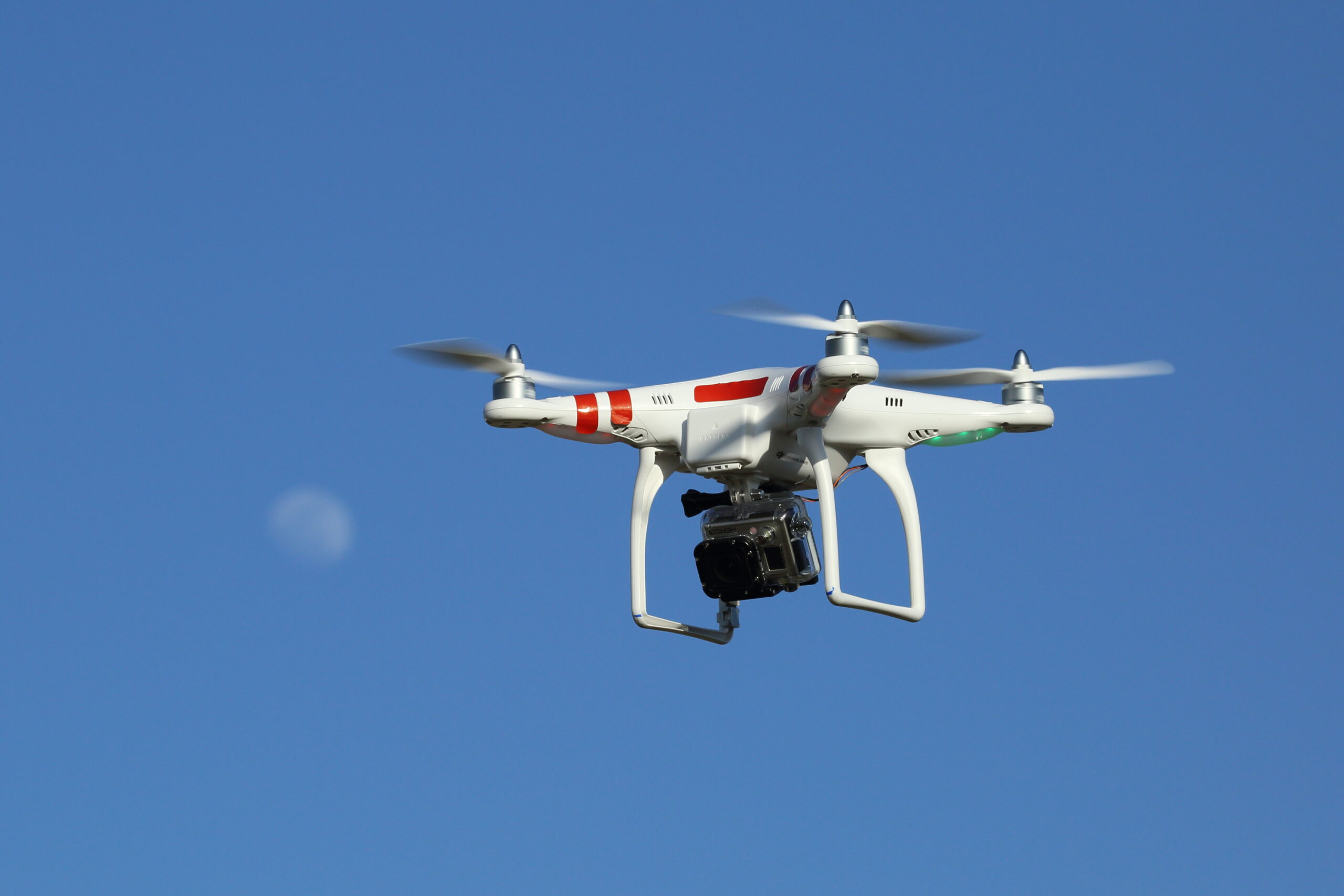
Drone with GoPro digital camera mounted. Credit: Don McCullough, Wikimedia Commons

Medellín, Colombia – On Thursday morning, a drone dropped a mortar shell on a home in Segovia, a town in the northeast of the Antioquia department, killing three occupants of the house and leaving one critically injured.

The police identified the victims as María Cecilia Silva Silva and her two adult children, Yalusan Cano Silva and Alsonso de Jesús Silva. Silva’s other son was also wounded in the attack.

Segovia is a key center for illegal gold mining and is being contested by multiple armed groups, including the Gaitanist Army of Colombia (EGC), also known as the Clan del Golfo, and dissident groups of the now-defunct FARC rebels.

Authorities are still working to establish if the attack was directed at the family or if it was an error by the drone operators, an increasingly common occurrence as drones become the latest technology used in Colombia’s internal armed conflict. 

According to the Secretary of Security of Antioquia, General Luis Eduardo Martínez Gúzman, the victims were “a family who have nothing to do with the conflict, who were simply attacked by a drone.” 

Martínez highlighted the danger of these devices, suggesting that the explosive device was detached from the drone, which means the mortar could “fall anywhere.”

The Director of the National Police in Colombia, General William Oswaldo Rincón Zambrano, released a statement of condemnation: “[we] categorically reject this criminal act which plunges a Colombian family into mourning and demonstrates the contempt of illegal armed groups for human life and dignity.” 

He also reported that state security forces have headed to the area where the attack took place in order to verify what happened and assist in locating and capturing those responsible. He also expressed solidarity with the victims and their families.

The Governor of Antioquia, Andrés Julián Rendón took to social media to blame the security policies of the national government for the attack: “Who in their right mind could consider that this government has achieved transformations for Colombia?”

Rendón criticized President Gustavo Petro for negotiating with the armed groups involved in the conflict in Segovia, part of the leftist leader’s “total peace” policy. 

“This is the so-called ‘total peace’: concessions for criminals and burials for civilians. Antioquia demands an unwavering military offensive, full backing for the security forces, and zero leniency towards the criminals,” said Rendón. 

Drone attacks, both against armed groups as well as against security forces and the civilian population, have become widespread in Colombia. Between April 2024 and February 2026, the government recorded 418 attacks using drones. 

Tackling the mounting security crisis is a key issue in upcoming elections, which the United Nations warns may be undermined by the armed conflict.


Featured image description: Drone with GoPro digital camera mounted

Featured image credit: Don McCullough, Wikimedia Commons

The post Drone attack on home in Colombia kills three, injures one appeared first on The Bogotá Post.

  •  

Washington designated Colombia’s EGC a terrorist organization: what now?

EGC soldiers. Credit: EGC via elgaitanista.org

The United States today classified the Gaitanist Army of Colombia (EGC), Colombia’s most powerful armed group, a foreign terrorist organization (FTO).

The EGC, or Clan del Golfo, has expanded its criminal enterprise in Colombia in recent years, consolidating control over lucrative illicit economies like cocaine and illegal gold mining, as well as extorting large-scale enterprise.

While its designation as an FTO could assist authorities in unravelling the organization’s financial structure, analysts say it may threaten ongoing peace talks in Qatar between the EGC and the Colombian government.

“Today, the Department of State is designating Clan del Golfo as a Foreign Terrorist Organization (FTO) and a Specially Designated Global Terrorist (SDGT),” wrote Secretary of State Marco Rubio in a statement on Tuesday morning. 

“Based in Colombia, Clan del Golfo is a violent and powerful criminal organization with thousands of members. The group’s primary source of income is cocaine trafficking, which it uses to fund its violent activities,” continued the memo.

Who are the EGC?

The EGC was born from the remnants of the United Self-Defense Forces of Colombia (AUC), a paramilitary group responsible for grave human rights abuses in the late 1990s and early 2000s.

Since then, it has re-branded itself several times; for a time it called itself the Urabeños, then the Clan del Golfo, honoring its heartland in the Gulf of Urabá in northern Colombia; it later changed its name to the Gaitanist Self-Defense Forces of Colombia (AGC); most recently, the group adopted the EGC moniker. 

In recent years, the group has argued that it is a political actor in Colombia’s decades-long internal conflict, but its origins were strictly focused on making money illicitly. 

In the past decade, the organization has rapidly expanded beyond northern Colombia into as many as 20 departments across the country, exerting control in both rural and urban areas. 

“On the one hand, the group is an organized crime structure that manages various legal and illegal businesses and, on the other hand, it has also formed a uniformed army,” explained Gerson Arias, conflict and security investigator at the Ideas for Peace Foundation (FIP), a Colombian think tank.

Today, the group counts between 3,000 and 3,500 uniformed troops among its ranks while it has a further 6,000 members who form part of its broader crime structure of extorting businesses, according to Arias. 

“The main threat facing Colombia today is represented by the Clan del Golfo and its military and economic structure, both legal and illegal,” the analyst told The Bogotá Post.

What does the FTO designation change?

Following Washington’s sanctions, anyone deemed to be providing material support to the EGC can be brought to trial in a U.S. court. 

“Not only could cases be brought against members of the Clan del Golfo, but against any businessmen, facilitators, logistics operators, or anyone who provides even something as simple as buying them a meal,” explained Elizabeth Dickinson, Deputy Director for Latin America at International Crisis Group.

She told The Bogotá Post that the FTO designation could therefore “open some interesting doors” by exposing links between the EGC and legal enterprise, adding “this is an organization that has deep tentacles in the business world.”

The move could also provide a pretext for military action against the EGC in Colombia, with the Trump administration saying in recent weeks that drug production in any country is a legitimate target.

“An FTO in and of itself is not a justification for military action. However, it has historically been a step along the road to paving a narrative politically that could lead to the U.S. considering military action,” said Dickinson.

Impact on peace negotiations

In September, the first round of negotiations took place between EGC and Colombian state negotiators in Doha, mediated by the Qatari government.

A second round in December led to the signing of a “commitment to peace”, with the first step towards demobilization planned for March 2026. 

But the State Department’s FTO designation threatens to derail talks, according to analysts.

“I think there’s a lot of pending questions right now about the future of negotiations with this group,” said Dickinson. 

She stressed the progress made in talks so far, including a commitment to take a census of children fighting in the ranks of armed groups and return them to the state.

FIP’s Arias warned that the FTO classification will complicate both the subject of talks and the logistics of engaging in negotiations.

He noted that EGC negotiators will struggle to attend talks safely outside of Colombia and that Colombian authorities will be unable to provide credible non-extradition guarantees to the group’s leaders.

But Dickinson warned of the dangers of ending negotiations: “This organization is the largest threat to peace and security in Colombia. I think it will be important for the Colombian authorities and their country partners in mediation to consider what could be the implications of if peace talks were to end.”

The post Washington designated Colombia’s EGC a terrorist organization: what now? appeared first on The Bogotá Post.

  •  
❌