Login
Login
In the shadow of the Metro
We take a quick dive down Avenida Caracas where the raised railway is both a wonder and worry.

For citizens used to the snail’s pace of work on their city’s infrastructure, the rapid rising of the Bogota’s Metro over their heads is something to behold.
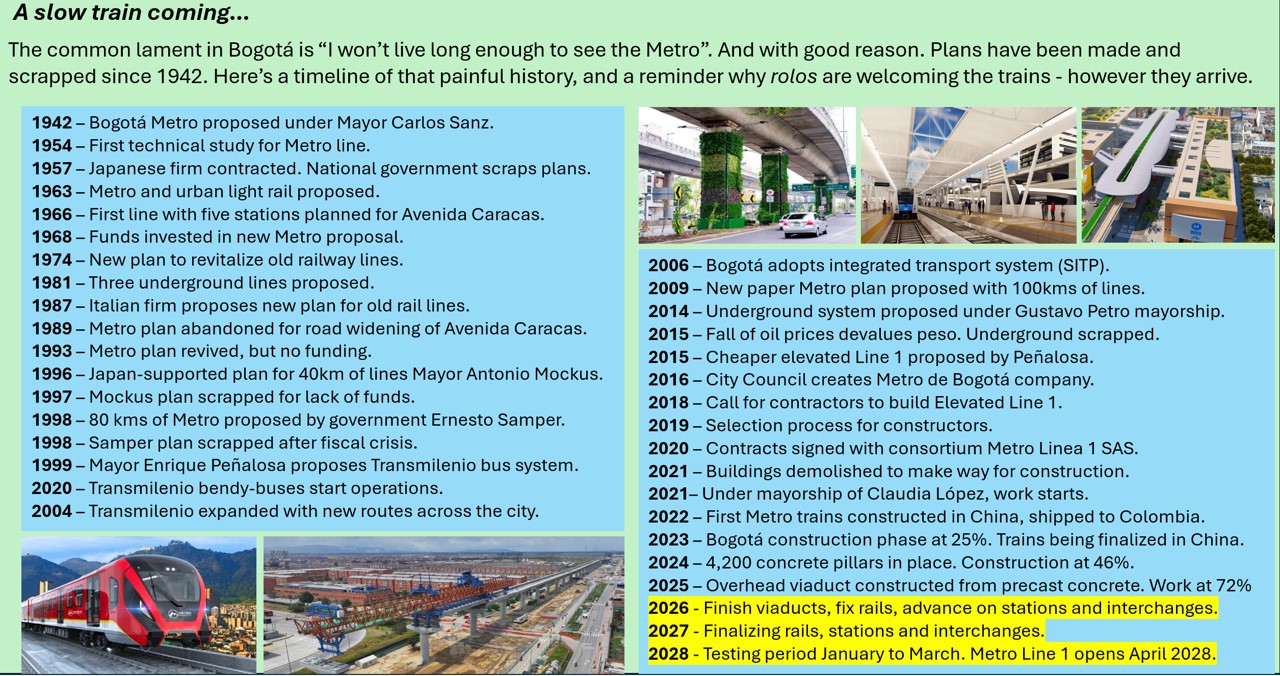
With 11 kilometers of concrete viaduct completed, and many more clicks of columns in place, not to mention stations and interchanges emerging from the rubble, the megaobra is officially at 73% completion.
For rolos who have waited three generations for a train – the first Metro plan was made in 1942 – this advance is nothing short of a miracle.
Not everyone is happy. Last week small business owners along Avenida Caracas, the last south-north sector of the construction, took to the streets to protest the “destruction and insecurity” of their neighborhoods.
“The Metro advances. The community recedes,” said the banners the protesters hung across the formerly busy throughfare now converted into a construction site.
As is typical in Bogotá protests, it was public transport in the form of Transmilenio buses that were blocked forcing thousands of commuters to walk sections of their journey home.
Hanging on by a thread
The protests ended, but the problems continued for Avenida Caracas.
This week the central section of the wide avenue was taken up by construction teams supporting the massive overhead beam launcher that dropped the pre-cast viaduct sections into place 15 meters above the street.
Meanwhile, car traffic was banned from the main artery while Transmilenio buses threaded their way past graffitied concrete columns. Pedestrians scurried out of the temporary bus stations and fast away from the apocalyptic scenes, more Blade Runner than Springtime in Paris.
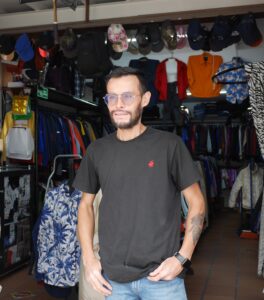
Local shopkeepers told The Bogotá Post this week that business had never been bleaker.
“We’re hanging on by a thread,” said Carlos Torres of clothes store 80’s American World, on the corner of Calle 60. “We’ve had no financial help from the district, and takings are down by 80 per cent.”
He had been forced to suspend their health insurance payments for the last year and were struggling to pay the rent, he said.
Danger down below
Footfall had “fallen massively” said Angela Cruz on her way to a hair salon across the road, with people avoiding the dusty streets, partly from fear of robberies.
Avenida Caracas was “always a bid dodgy”, she said, but the attraction for thieves of the building works, with materials and machinery to pilfer, had increased insecurity.
“We’re worried when it’s finished the support columns and dark areas under the Metro will become full of attackers.”
That the Metro would shelter criminals was a recurring concern for residents. Concept drawings of the finished line depicted idyllic leafy walkways with pedestrians pushing prams.
But as every resident of the city already knows, any tunnel, underpass or covered area becomes a hotspot for crime.
And whereas the Metro planners had robust plans to control access to the overhead trains to ensure commuters travel in peace – in contrast to the Transmilenio where anyone can jump on or off – there were no clear plans to protect open spaces below.
“Walking home just got harder,” said Cruz.

Bogotá’s ‘Berlin Wall’
Similar concerns were raised recently in a speech by President Gustavo Petro when he railed against the elevated Metro plan – now near completion – as a boondoggle for property speculators and claimed that Avenida Caracas was being “destroyed by the oligarchy”.
He further suggested that the raised railway would become a “Berlin Wall, separating the rich from poor”.
Such rhetoric was not unexpected from the mandate who long championed an underground Metro, though failed to get it moving during his own term as Bogotá’s mayor (2012 to 2015). He might yet get his way; plans for Line 2, currently on the drawing board, are for an underground Metro running east west beneath the city’s wealthier northern barrios.
See also: Going Underground, Petro threatens to derail Metro.
The final plan to build Line 1 overhead, while controversial, was taken for economic reasons and speed of construction during the second mayorship of Enrique Penalosa – the founder of Bogotá Transmilenio bus system and implacable political opponent of Petro – in 2016.
The elevated Line 1 of the Metro will be 24 kilometers – one of the longest urban light rails on the continent – and have 16 stations including 10 interchanges with the Transmilenio bendy-bus network.
Much of the line runs through poorer barrios in the south-west of the city where, even with the work unfinished, some economic benefits were being proclaimed.
Just get it done
Thinktank ProBogotá, in a study with the Unversidad de los Andes, reported a rise in residential property values of 11 per cent in areas around Line 1. Such increases could generate investment in undeveloped pockets of the city.
In the long term, Avenida Caracas businesses were also predicting a boost from the Metro. Just not yet.
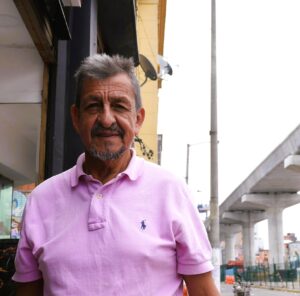
“Right now, times are hard,” said business owner Adenay Flores. He had seen profits plunge in the 18 months since construction began, he said, while painting the entrance to his Moscu pawnbrokers.
But he also recognized that the Metro was vital to the mobility of the city and could transform lives of people living in less accessible areas.
“Yes, we’ve had hardships. But this is the evolution of the city, I totally support the Metro. Once finished it will bring people back to Avenida Caracas,” he said. “But they need to get it done.”
It was a sentiment echoed by many business owners we talked to in the shadow of the concrete viaduct: torn between welcoming the future mass transit system while keeping their financial heads above water.
“We’re suffering, but we still want the Metro. It will bring better times,” Carlos Torres from the clothes shop told The Bogotá Post. “Until then, we just have to hang on.”
The post In the shadow of the Metro appeared first on The Bogotá Post.