Reading view

Dining in the dark: Inside Latin America’s only restaurant run by blind people

Staff at Sombras. Credit: Seratta Group.

In the north of Bogotá, a new restaurant offers an experience that exists nowhere else in Latin America. 

Sombras, or ‘shadows’, is a high-end eatery run entirely by blind people, offering a unique experience that aims to raise awareness about sight loss and the challenges faced by those living with this condition.

For 90 minutes, diners are provided a sensory experience through a six-course menu while sitting in complete darkness

This project, part of the Seratta Group, costs approximately 325,000 COP (around US$88) and seats around 20 people at a time.

According to the DANE (National Administrative Department of Statistics), in 2025, the labor gap for people with disabilities was critical: roughly 80% of the population was unemployed. Of the 20% who are employed, many relied on informal work as a way of living.

Accordingly, Sombra’s primary goal is to increase job opportunities for people with visual impairment, even offering a ‘BLINDKEDIN’ on their website to promote inclusion in workspaces and bridge the gap between companies and workers.

Into the unknown

Entering the restaurant, guests are asked to place their belongings in lockers as one of the hosts voice announces, “The main ingredient is trust.” Cellphones, smartwatches, or any other distracting items are forbidden from being used in Sombras. Bags are stored as well, so as not to create obstacles as the staff move around the room unassisted. 

Right ahead is the path to darkness; the atmosphere is filled with fear, expectation, curiosity, and excitement. Not knowing what lies inside, guests must simply walk into the unknown.

Taking small steps, hands over the shoulders of a man simply identified as ‘Agent X,’ diners are shown to their seat. Finally, they are left alone at a table that can only be perceived through touch.

A mix of music, played by a blind DJ, is the perfect accompaniment to the dishes and cocktails placed down one by one. 

Each course is served while a voice guides the guests through the dark: “Take this, move your hand to the left.” 

Scenarios described over speakers guide guests through different worlds, prompting them to reflect on how they perceive the dark. Some courses are designed to evoke childhood memories; as diners eat, the flavors, aromas, and narrations conjure up images of their grandmother’s warm soup or the salty smell of seaside holidays. 

Without the visual cue of the food, flavors meld in novel ways, and everything tastes more intense.  

Between courses, a sense of emptiness can settle in. While the mind tries to imagine colors, dimensions, and even the appearance of fellow diners, the silence and darkness produce a feeling of loneliness and a sense of nothingness. Time passes, but without a watch, it is impossible to measure. 

One cycles through intense feelings and emotions as the brain fights to understand what is happening around it. Placed in the shoes of those who live in darkness every day, guests soon realize they can effortlessly perform the ritual of eating without opening their eyes.

Beyond sight

Following the experience, the hosts revealed themselves. 

John Jairo García and Jonathan Benavides (who is responsible for personalizing the ‘Agent X’ character) are in charge of guiding guests through the journey; both men are blind and were trained to lead visitors through an immersive experience of self-reflection, self-knowledge, and incredible food.

“I am here because God gave me the opportunity. Before this, I used to work on the streets… I sang on buses, and I was also an informal street vendor,” García told The Bogotá Post after the experience. Benavides added that before joining the team, he worked as an informal door-to-door salesman.

“We try not only to serve food but to move hearts and emotions. The social perspective in our country toward people with disabilities. In this case, visual impairment is very biased,” confirmed Jonathan during the interview.

At the end, the staff arrives with a message, they invite you to be thankful for seeing colors, for seeing the world that surrounds you. As some tears begin to fall, the last reflection is a call to empathy: “Change your way of thinking and your whole life will change”.

In fact, the blind dining experience at Sombras forces more than self-reflection; it triggers a biological change in the visitor. According to research hosted by the National Library of Medicine, the adult brain has a “rapid plasticity” that triggers almost immediately when vision is blocked. In the 90 minutes spent at Sombras, diners begin to perceive the world through their other senses, assigning “visual power” to taste and touch.

Through this experience, guests can truly empathize – if only for a brief moment – with what it means to lose vision. 

“We try to make the people who visit our restaurant understand that we, even with a disability, can also be useful to society,” concluded Jonathan.

The post Dining in the dark: Inside Latin America’s only restaurant run by blind people appeared first on The Bogotá Post.
  •  

Día Sin Carro 2026: What is it and what to do?

Cars are off the road for día sin carro 2026 in Bogotá. We explain why the city does this and how to get about today.

Expect to see few cars and motos on the roads of la nevera today. Once or twice a year, Bogotá bans personal car and motorbike use for the vast majority of the city for most of the day – known as Día sin Carro y Moto. The first is scheduled for the first Thursday in February (the fifth) and there’s sometimes a second in autumn, around September.

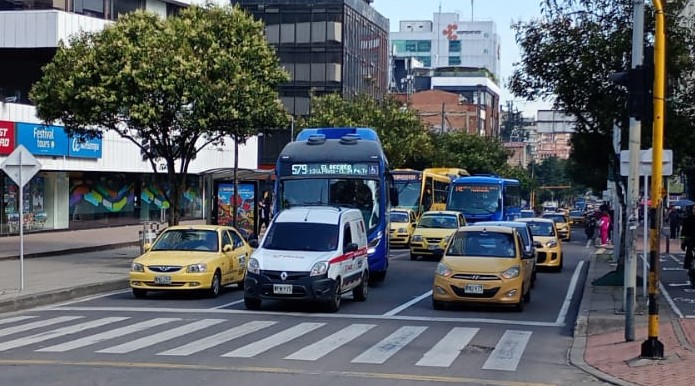
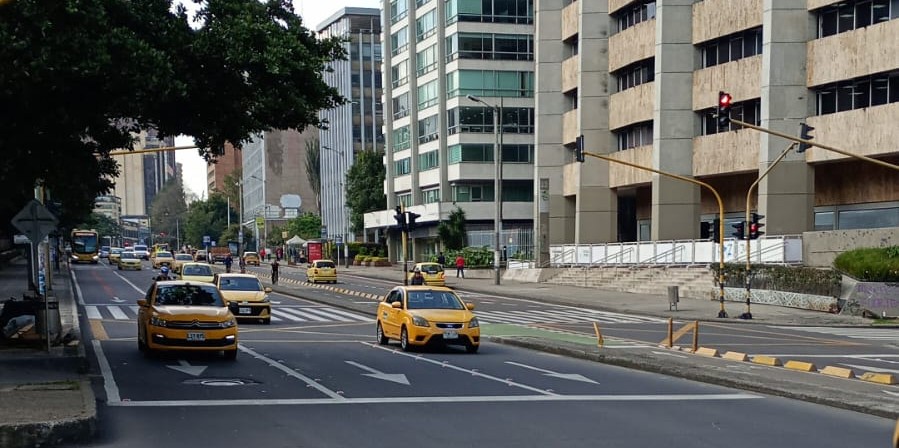
Traffic parked in Carrera 13 in Bogotá. it is día sin carro 2026 in Bogotá, so there are no private cars, just taxis, a van and some buses.
Día sin Carro 2026 in Bogotá. Photo courtesy of Oliver Pritchard

It’s a lot more extreme than the normal Sunday and holiday ciclovía schemes, as almost all regular cars and motorbikes are banned from all roads. Obvious exceptions exist for taxis, buses, emergency vehicles, and certain key workers such as doctors.

However, expect to see streets much emptier than normal and predominately yellow with taxis and buses. Remember that there are also the white servicio especial taxis and a surprising number of exempted people travelling around, especially in central and downtown Bogotá.

The policy has been quite controversial, to say the least. Every year it leads to much wailing and gnashing of teeth from a whole host of sectors. Of course, people who usually use their cars to commute are furious, but it’s worth remembering that they are by no means the majority of the city’s commuters

Post-pandemic, that’s changed a lot. With the rise of remote working and home offices, it’s become much more viable for big swathes of the city to just tell people not to come in. Many schools are shut, universities are giving virtual classes and employees citywide are logging in.

A lot of people won’t even attempt to travel today, despite the fact that most Bogotanos don’t even use cars as primary transport. This reflects the growing acceptance of remote and hybrid working in Colombia, and points to a possible future with fewer commuters.

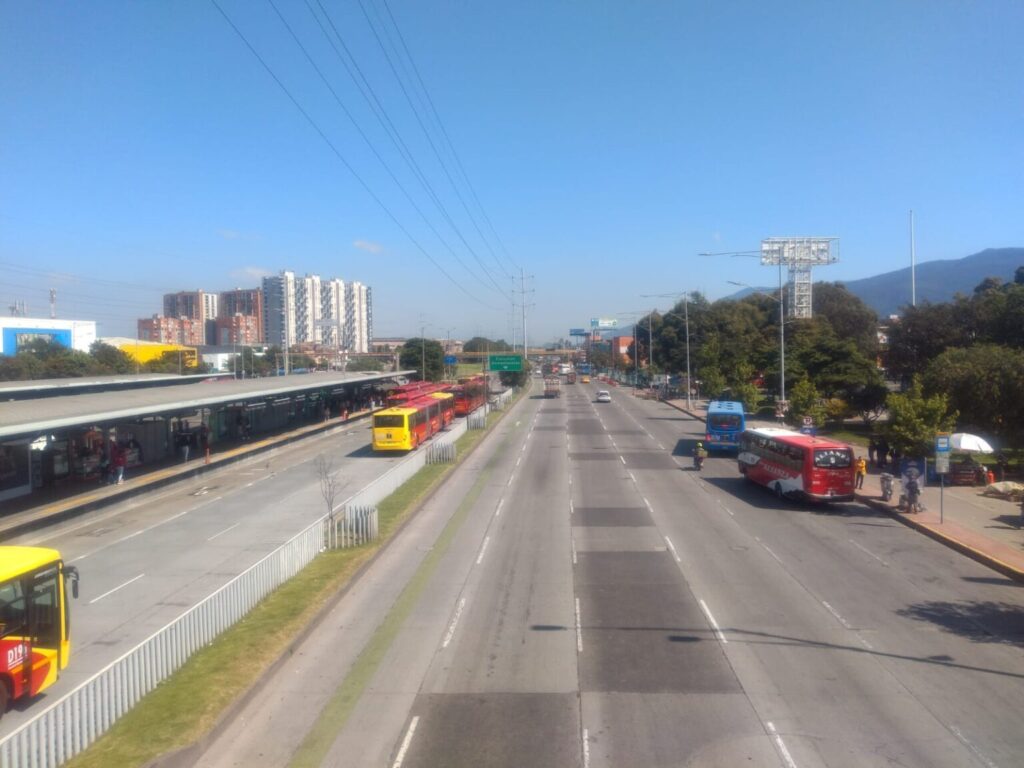
Portal Norte in Bogotá clear of traffic in 2023. Photo courtesy of Brendan Corrigan

After all, Bogotá is a much nicer city if you don’t have to move around too much in it. Cities should be designed for people, not cars and motorbikes. Much of the city is still very much accessible by foot and bike, even if there are significant holes in the bus network.

So what’s the point of all of this? Well, the reason is above – Bogotá is so much more liveable without traffic jams, fumes, noise, delays and chaos. Bogotá might not be as bad as some Asian cities in terms of air pollution, but it’s certainly not a shining ecological star.

Día sin carro reduces this significantly, according to the city’s environmental department. Commute times are laughably inefficient, which leads to a lot of wasted time, lowering productivity and quality of life. And just have a listen to the quieter streets with fewer badly-tuned motorbikes.

So, what can you do on Día sin Carro 2026 in Bogotá?

If you’re out and about during Día sin Carro 2026 in Bogotá, you have several transport options.

Buses

Most people will be hopping on some type of bus, as indeed most commuters do every day. Whether it’s TransMilenio rapid bus transit, SITP buses in their rainbow of assorted colours or regular colectivos, they’re the transport lifeblood of la nevera

There might be a bit more crowding than usual, but off-peak it’s unlikely to be too bad. Also, there are more buses in circulation today, and they don’t have anywhere near as much traffic to navigate. You might think that in the case of the TransMi that’s not an issue, but remember that cars often get stuck crossing TransMi lanes.

Bikes 

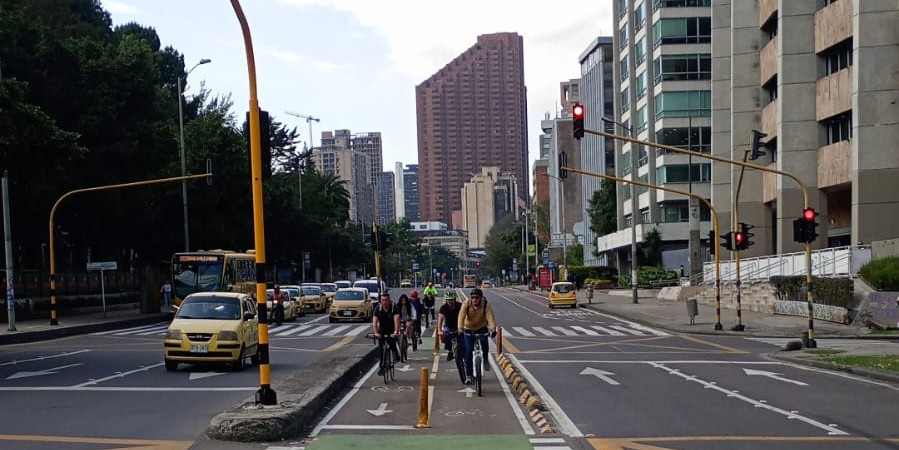
Bicycles on the septima in Bogotá. It is día sin carro 2026, so there is limited traffic and more bicycles
Almost a peloton on Séptima this morning

Remember, you can always get on your bike in Bogotá. We’ve criticised the self-aggrandising capital mundial de bici posturing from the alcaldía before, but it’s still an excellent city (and country) to ride in. The bike lanes will be busier than normal, but there are plenty of them and they’re far less stressful than normal traffic.

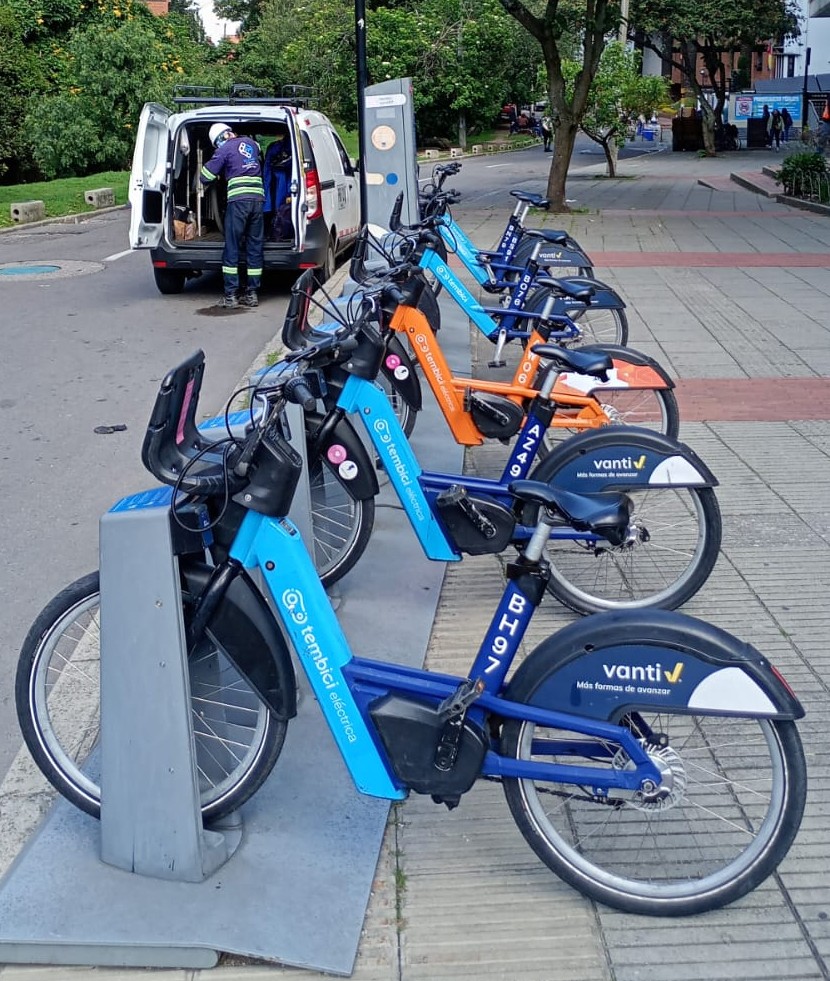
No bike? No problem! Bogotá has a bikeshare scheme with a Brazilian company called Tembici. The system has had a few wobbles, but comes into its own on days like this. You will need to download the app to be able to use the scheme and it is relatively pricey for short term work.

A tembici stand in Bogotá
This is what tembici stands look like.

Taxis

You may have trouble moving about with some rideshare apps, but the regular yellow taxis are most definitely buzzing about the city today. Apps such as easytaxi, tappsi, taxis libres et al should work as normal, just with high demand. Expect to wait a little while longer for a connection.

Hopefully, they’ll be on their best behaviour today and not taking advantage of the situation. Despite copping a lot of flak, rolo taxis aren’t nearly as bad as they’re often made out to be and have a big incentive to play nicely right now.

Taxis on the Septima in Bogotá, Colombia
Taxis dominate on a day like diá sin carro 2026

Walk! 

It’s a nice warm Bogotá day with fewer fumes in the air, which have been few and far between in recent weeks. Perfect conditions for a stroll in the sunshine. Most of the city is very flat and walkable, and you’re never far from a decent café to keep yourself safe from sunburn and rehydrate. Our top tip for a day like today is a limonada de coco!

The post Día Sin Carro 2026: What is it and what to do? appeared first on The Bogotá Post.
  •  
❌