
Reading view

Colombia’s Foreign Ministry Presents Coffee and Cacao Export Strategy to Bogotá Diplomatic Corps

Colombia’s coffee-cacao export push generates 100+ tons in foreign sales

Colombia’s Ministerio de Relaciones Exteriores convened ambassadors, international organizations, agricultural producers, and strategic partners in Bogotá on May 15, 2026, to present the Ruta del Café y Cacao, a government-led strategy that uses the diplomatic network to connect Colombian specialty coffee and cacao producers directly with international buyers, importers, and distributors. The session was organized in coordination with the Departamento Nacional de Planeación (DNP), Colombia Compra Eficiente, and the Servicio Nacional de Aprendizaje (SENA), with additional participation from the Agencia de Desarrollo Rural and the Unidad de Implementación del Acuerdo de Paz.

Between 2025 and 2026, the Ruta del Café y Cacao has participated in international trade fairs and multilateral venues in Asia, the Americas, and Europe, generating more than 1,200 commercial contacts and exports exceeding 100 tons. The strategy is coordinated through Colombia Nos Une, a directorate within the Ministerio de Relaciones Exteriores that oversees relations with Colombian communities and commercial networks abroad.

“This strategy is not limited to the promotion of a product. It is a tool of economic diplomacy, productive inclusion, rural development, and peacebuilding.” — Rosa Yolanda Villavicencio Mapy, Minister of Foreign Relations of Colombia

Foreign Minister Rosa Yolanda Villavicencio Mapy used the event to outline the government’s rationale for embedding agricultural trade promotion into foreign policy. “From the Ministry of Foreign Relations, we want economic diplomacy to translate into concrete results for the territories,” she said. “Foreign policy must have the capacity to open opportunities, connect markets, and contribute to the productive development of our communities.” She added that the strategy extends beyond product promotion: “It is a tool of economic diplomacy, productive inclusion, rural development, and peacebuilding.”

Natalia Irene Molina Posso, director general of the Departamento Nacional de Planeación, presented the Café Social program as a related mechanism designed to strengthen small agricultural producers. The initiative links public procurement policy with territorial development and small-scale coffee farming, creating demand channels within Colombia’s public sector for domestically produced specialty coffee.

Gloria Cuartas Montoya, director of the Unidad de Implementación del Acuerdo de Paz, addressed the relationship between coffee and cacao production and post-conflict territorial transformation. “You have all the entities that have been working on the implementation of the Peace Agreement and in the new processes being carried out, so that territorial peace finds in these two [commodity] lines paths of enormous value and projection,” she said. Cuartas also referenced recent engagement in Barcelona, where business operators and organizations expressed interest in awareness-building activities around Colombian coffee and cacao, citing the social and community dimensions behind those products.

A central element of the event was the participation of producers and associations from multiple regions of Colombia, convened by the Ministerio de Relaciones Exteriores through the Colombia Nos Une directorate. The participants included cooperatives and producer groups led by women, former combatants who signed the 2016 Peace Agreement, ethnic communities, and victims of the armed conflict. These groups presented their productive and commercial operations directly to diplomatic delegations attending the event.

The session also included a guided coffee tasting led by SENA’s Escuela Nacional del Café, during which attendees sampled specialty coffee varieties and received information on production processes and the characteristics that differentiate Colombian coffees participating in the Ruta del Café y Cacao. The tasting segment was designed to give diplomatic representatives direct exposure to the product profiles of the producers involved in the strategy.

Photo courtesy of Ministry of Foreign Relations of Colombia
  •  

Former Medellín Mayor Daniel Quintero Appointed Colombia’s Health Superintendent Amid Political and Legal Scrutiny


National Health Superintendence oversees patients’ rights and regulates EPS insurers, a key pillar of the system that President Petro has sought to eliminate in his reform efforts

Former Medellín mayor and former presidential pre-candidate Daniel Quintero has been appointed as Colombia’s new National Superintendent of Health, a decision that has sparked controversy across political and social sectors due to ongoing judicial and disciplinary investigations against him.

The National Health Superintendence is responsible for safeguarding the rights of users within the health system, overseeing Health Promoting Entities (also called EPS) and Health Service Providers (IPS), and monitoring the use of public finances allocated to the sector, areas that President Gustavo Petro has sought to reform during his administration.

The appointment comes amid a complex situation in Colombia’s health system. During his administration, President Petro presented two structural reform proposals aimed at reshaping the system, including major changes to the role of EPS. Both initiatives were rejected by Congress.

Following these legislative setbacks, the government has pursued reforms through administrative measures and decrees, including the intervention of several of the country’s largest EPS, which together serve more than 23 million affiliates (More information: Colombian President Gustavo Petro Seeks To Restructure Colombian Health Care Despite Congressional Rejection by Finance Colombia).

During his swearing-in, Quintero said his administration would strengthen oversight of the system. “It is time to put an end to abuses by the EPS,” he said.

Criticism over qualifications and legal cases

The appointment has drawn criticism from organizations and political figures who question both his background as an electronic engineer and his legal situation. Transparency for Colombia said the designation “is inappropriate because it places a political figure widely questioned for using public office to favor private interests in charge of addressing the health crisis, instead of appointing individuals with the training, knowledge, and experience required to resolve it.”

The organization also called on the Attorney General’s Office to expedite ongoing investigations. “We respectfully call on the Attorney General’s Office (FGN) to ensure that cases involving Daniel Quintero move forward swiftly, respecting due process guarantees while delivering results in light of the seriousness of the allegations,” it said.

Quintero, who served as mayor of Medellín from 2020 to 2023, faces more than 40 criminal and disciplinary complaints related to alleged corruption during his administration. Among them is the “Aguas Vivas” case, involving the sale of a forest reserve land plot exceeding 140,000 square meters. In that case, prosecutors have already filed charges for alleged embezzlement, undue interest in public contracts, and misconduct in office, although no conviction has been issued.

Criticism has also emerged from within the government. Carlos Carrillo, head of Colombia’s National Unit for Disaster Risk Management, said that “Quintero is currently on trial for crimes against public administration. He has the right to defend himself, but the Pacto Histórico has no reason to bear the political cost of his legal troubles; we owe him nothing and he brings us nothing.”

Quintero will be the fifth health superintendent appointed during Petro’s administration. His tenure is expected to be temporary, as a new president will take office on August 7, 2026, and will have the authority to appoint a new head of the agency.

  •  

El Niño Warming Patterns Signal Operational Risks for Colombian Power and Agriculture

Escalating drought risk is potential bad news for rural communities, power consumers.

The National Oceanic and Atmospheric Administration (NOAA) and the Climate Prediction Center (CPC) have confirmed that ENSO-neutral conditions are currently present in the equatorial Pacific Ocean. However, technical indicators suggest a rapid transition, with a 61% probability of El Niño emerging between May and July 2026. For international investors and executives operating in Colombia, this shift indicates a looming period of increased operational costs, specifically within the energy and agricultural sectors.

The El Niño Southern Oscillation (ENSO) is a recurring climate pattern involving changes in the temperature of waters in the central and eastern tropical Pacific Ocean. During El Niño, trade winds weaken, allowing warm water to move toward the west coast of South America. Conversely, La Niña is characterized by stronger trade winds and cooler ocean temperatures. These fluctuations disrupt global atmospheric circulation, altering rainfall and temperature patterns across the planet.

In Colombia, the effects of these phenomena are distinct and significant. El Niño typically results in a sharp decrease in precipitation and a rise in average temperatures. Because Colombia relies on hydroelectricity for more than 60% of its total power generation, extended dry periods lead to lower reservoir levels. This forces the grid to rely on more expensive thermal generation fueled by natural gas and coal, which historically drives up spot market electricity prices for industrial and residential consumers.

“There is a 25% probability that the index reaches or exceeds +2.0°C during the Northern Hemisphere winter,” according to the National Oceanic and Atmospheric Administration.

The current technical diagnostic from NOAA shows that while the sea surface temperature index in the Niño-3.4 region was recently -0.2°C, the easternmost indices have already moved into positive territory. Furthermore, the equatorial subsurface temperature index has increased for five consecutive months. This accumulation of ocean heat is a primary driver behind the high probability of El Niño persistence through the end of 2026. Some models, including those from the European Centre for Medium-Range Weather Forecasts (ECMWF), suggest a 25% chance of a “strong” or “very strong” event, where temperatures exceed the 2.0°C anomaly threshold.

The Ministerio de Minas y Energía and the Comisión de Regulación de Energía y Gas (CREG) are monitoring these developments closely. A strong El Niño would place additional stress on a natural gas system already facing structural supply constraints. Reduced hydroelectric output coupled with a potential deficit in gas supply could lead to significant energy price volatility. In past events, such as the 2015-2016 cycle, these conditions resulted in substantial financial pressure on the national utility system and necessitated emergency conservation measures.

Agricultural productivity is equally at risk. The Instituto de Hidrología, Meteorología y Estudios Ambientales (IDEAM) has identified the Caribbean and Andean regions—including departments such as La Guajira, Magdalena, and Antioquia—as highly vulnerable. During El Niño, these areas face increased risks of forest fires, water scarcity, and crop failure. For agribusinesses and exporters, this translates to disrupted planting cycles and higher production costs for staples like corn, potatoes, and vegetables, which can fuel domestic food inflation.

Conversely, when La Niña is in effect, Colombia faces the opposite extreme. The cooling of the Pacific leads to excessive rainfall, which can cause devastating landslides and flooding in mountainous terrain. While La Niña can replenish reservoirs, it often damages infrastructure and logistics networks, complicating the transport of goods to port. The current transition out of a La Niña phase provides a brief window of ENSO-neutral stability, which the CPC estimates has an 80% chance of lasting through June 2026.

For the international business community, the significance of these weather cycles extends to macro-economic stability. Persistent dry weather can impact GDP growth by raising the cost of basic services and reducing agricultural output. Strategic planning for 2026 and 2027 must account for these climatic variables. Meteorologists at Colorado State University note that El Niño also tends to reduce hurricane activity in the Atlantic, which may provide some relief for coastal logistics, but the primary threat remains the inland hydrological deficit.

As the Ministerio de Ambiente y Desarrollo Sostenible activates preventive mechanisms, companies are encouraged to review their energy procurement strategies and water management protocols. The next comprehensive diagnostic update from NOAA is scheduled for May 14, 2026, which will provide further clarity on the intensity of the projected warming trend. Understanding the mechanics of the ENSO cycle is no longer a matter of environmental interest but a necessity for risk mitigation in the Colombian market.

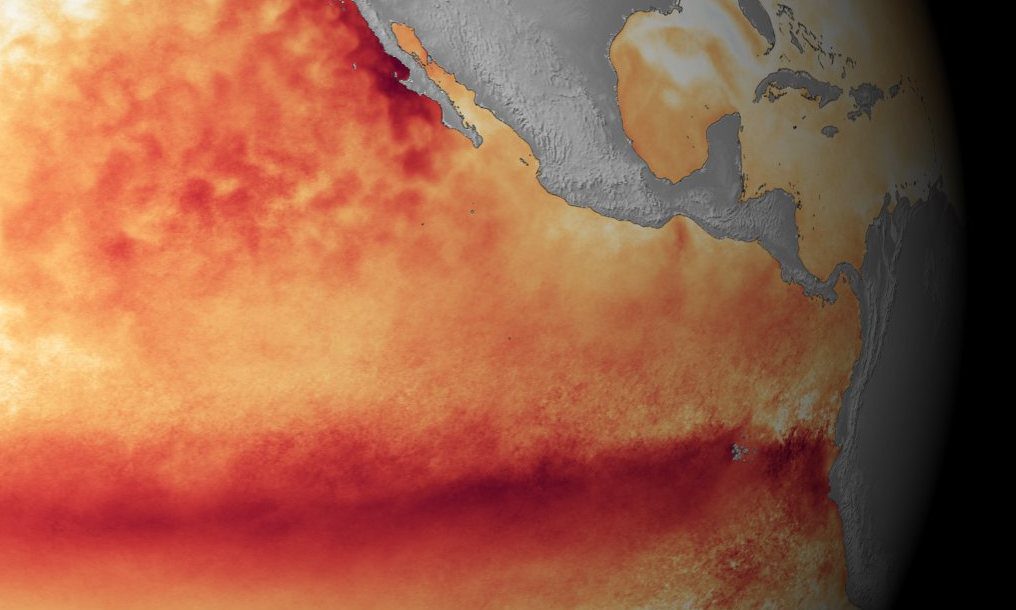
Satellite sea surface temperature departure in the Pacific Ocean for the month of October 2015, where darker orange-red colors are above normal temperatures and are indicative of El Niño. (Image credit: NOAA)

Satellite sea surface temperature departure in the Pacific Ocean for the month of October 2015, where darker orange-red colors are above normal temperatures and are indicative of El Niño. (Image credit: NOAA)

Headline photo: the Pacific Ocean from Guachalito Beach, Chocó, Colombia (photo © Loren Moss)

  •  

Colombia Seeks EU Market Access for Amazonian Cacay Flour

The move targets a high-value niche in the European bioeconomy, offering a scalable model for sustainable Amazonian exports.

The Colombian government has formally submitted a technical and scientific dossier to the European Union seeking authorization to market cacay flour as a “Novel Food.” This regulatory category governs the entry of non-traditional food products into the European market.

The submission is the first of its kind for an Amazonian product from Colombia. It follows a 2024 initiative involving the Ministry of Commerce, Industry, and Tourism and the [suspicious link removed]. The process was supported by the Sustainable Forest Territories (Territorios Forestales Sostenibles or TEFOS 3) project, a program funded by the British Embassy and the German Cooperation GIZ.

Diana Marcela Morales Rojas, the Minister of Commerce, Industry, and Tourism, stated that the application positions cacay as a strategic component of the national portfolio of high-value natural ingredients. The technical dossier was structured according to the guidelines of the European Food Safety Authority (EFSA). To meet these standards, Colombia provided evidence of safe historical consumption for at least 25 years, alongside data on nutritional profiles, safety, traceability, and sustainable production processes.

The administrative validation phase is expected to take one month, followed by a technical and scientific evaluation by EFSA that may last up to nine months. Six Colombian companies participated in the drafting of the expediente, providing technical data and validating industrial processes to demonstrate the feasibility of large-scale production under international standards.

“This step positions the cacay as a strategic ingredient within the Colombian portfolio of high-value-added natural products.” — Diana Marcela Morales Rojas, Minister of Commerce, Industry, and Tourism.

The cacay nut, native to the Amazon and Orinoquia regions, produces a seed containing up to 60% oil rich in omega-6 and omega-9. The flour, a byproduct of the oil extraction process, contains approximately 40% protein and high fiber content. Beyond its nutritional applications, the crop is integrated into agroforestry systems aimed at restoring degraded lands and promoting biodiversity.

Currently, the cacay value chain involves more than 500 peasant and indigenous families. If approved, the flour would join Colombia’s non-traditional export basket to Europe, reinforcing a bioeconomy model based on fair trade and the sustainable use of biodiversity.

  •  

Colombian President Gustavo Petro Seeks To Restructure Colombian Health Care Despite Congressional Rejection

Colombian President Gustavo Petro is continuing to make changes to Colombia’s health system through administrative measures, after two attempts to pass a legislative reform were rejected by Congress.

The latest decision is Decree 0182 of 2026, which centralizes the provision of health services in approximately 45% of the country under the administration of Nueva EPS, a mixed public-private company currently under government intervention. As part of the measure, the insurer would receive 2,84 million reassigned members.

According to the government, the decree seeks to modify the flow of resources within the system so that funds would be paid from the government directly to healthcare providers, such as hospitals and clinics. This change would limit the traditional role of the Entidades Prestadoras de Salud (EPS), the system’s intermediaries, whose reduction has been one of the Petro administration’s key policy goals.

President Petro has publicly defended this approach. In a message posted on the social media platform X, he said that EPS entities “devour 70 trillion pesos annually and demonstrably benefit the wealth of their owners.” The president has also blamed these institutions for the crisis affecting the health sector over the past decade, arguing that during that time “the theft of health resources multiplied, and 117 EPS were liquidated to avoid paying their debts.”

The decree has sparked debate in the media. Some reports, including those published by the outlet Infobae after reviewing the official document, described the measure as a “mass transfer of patients and territorial reorganization of the health system.” However, the Ministry of Health rejected that interpretation and clarified that the measure “does not involve an arbitrary transfer of users, but rather a technical step aimed at correcting structural failures in the insurance model”.

In a statement, the ministry explained that “when an EPS lacks operational or financial capacity in a given territory, the state is authorized to adopt temporary mechanisms to ensure healthcare access for users.” The ministry also stated that the goal of the decree is to guarantee effective, fair, dignified and continuous access to healthcare services across the country, particularly in regions where geographic dispersion and low population density have historically complicated service delivery.

Political and administrative context

The debate comes amid a broader process of administrative interventions within the system. According to reports cited by the newspaper El Colombiano, “over the past three years the government, through the Superintendencia Nacional de Salud, has intervened in seven EPS,” removing their management from private owners and placing them under state-appointed administrators.

The government has used this context to justify administrative measures such as those included in the decree, arguing that several insurers have demonstrated structural operational weaknesses. At the same time, the legislative debate over a comprehensive health reform has not been completely closed. According to the same outlet, the government is still exploring the possibility of reviving the reform bill through an appeal filed by Senator Fabián Díaz. In the meantime, the administration has moved forward with changes through decrees, regulatory resolutions and decisions by the health regulator.

Despite the publication of the decree, its implementation still requires additional administrative steps. According to analysis cited by Infobae, “the transfer of members will not occur automatically, as it depends on the Superintendencia Nacional de Salud issuing administrative acts that update the territorial scope of the EPS”. This means the reorganization of the system could unfold gradually once the required regulatory procedures are completed.

  •  

US Grants Entry to Colombian Eggs for Industrial Processing

The US Animal and Plant Health Inspection Service (APHIS) has authorized the entry of Colombian shell eggs destined for industrial processing, according to an announcement made by Diana Marcela Morales Rojas, Minister of Commerce, Industry and Tourism (MinCIT). This decision expands the export capacity for Colombia’s poultry sector by allowing the product to enter the US market without requiring additional import permits or sanitary certificates from the Colombian Government.

The authorization by APHIS follows technical and commercial discussions between US and Colombian regulatory bodies. Minister Morales Rojas stated that the outcome enables the poultry industry to expand its presence in international markets and integrate into higher-standard value chains.

The regulatory modification is the result of collaboration between the Government of Colombia, the Instituto Colombiano Agropecuario (ICA), the Ministry of Commerce, Industry and Tourism, the Embassy of Colombia in the United States, and the Federación Nacional de Avicultores (Fenavi), the trade association representing the poultry sector.

Six US facilities have been designated to receive the Colombian shell eggs for processing. These plants are situated in the states of New York, Pennsylvania, New Jersey, Arkansas, and Georgia. The direct entry authorization for industrial use simplifies the logistics and required sanitary compliance for the export of the product.

Above photo: Colombia’s Minister of Commerce, Industry and Trade, Diana Marcela Morales (courtesy MinCIT)

  •  
❌