Reading view

Colombia’s Three Presidential Front-Runners Draw Divergent Maps for Foreign Capital, Security, and Rule of Law

Colombians face three sharply different futures in May 31 vote

Colombia votes on May 31 with its presidential race concentrated around three candidates whose platforms diverge on nearly every dimension of economic and security policy relevant to foreign investors. For corporate executives, institutional investors, and multinational operations with Colombian exposure, the choice between senator Iván Cepeda, senator Paloma Valencia, and defense attorney Abelardo de la Espriella carries direct, measurable implications for the regulatory environment, foreign direct investment (FDI) conditions, energy sector licensing, and geopolitical alignment through at least 2030.

No candidate is projected to clear the 50%-plus-one threshold required to win outright on May 31, making a runoff election on June 21 the expected outcome. The question that will determine the direction of that runoff — and by extension the next administration — is which of the two opposition candidates finishes second.

Click above to play the video!

A Race Reshaped by Late Polling

The final-week polling picture shifted substantially, and the trajectory matters as much as the snapshot. The CONDOR weighted aggregate — which incorporates surveys from six polling firms and applies greater weight to more recent data — placed the race as of May 23 at: Cepeda 36.3%, De la Espriella 29.1%, Valencia 16.7%.

Invamer, one of Colombia’s most established polling firms, surveyed 3,800 respondents across 152 municipalities between May 13 and May 20, registering Cepeda at 44.6%, De la Espriella at 31.6%, and Valencia at 14.0%. The Centro Nacional de Consultoría (CNC) published a survey conducted May 22 and 23 showing Cepeda at 33.4%, De la Espriella at 30.9%, and Valencia at 12.6%.

Comparing those figures to the Fundación Génesis Crea survey from May 4 through May 11 — which placed Cepeda at 35.1%, Valencia at 25.4%, and De la Espriella at 21.6% — indicates a multi-poll trend of De la Espriella gaining approximately nine to ten percentage points in three weeks while Valencia shed a comparable share. AS/COA’s poll tracker confirms the directional consistency across firms.

Atlas Intel, which published figures more favorable to De la Espriella, is currently under investigation by Colombia’s Consejo Nacional Electoral (CNE) for potential methodology violations and could face suspension of its operations. Those figures are treated with caution in this analysis.

Runoff modeling diverges between firms. Fundación Génesis Crea showed Valencia defeating Cepeda 49.1% to 44.7% in a second-round matchup — meaning she was the stronger opposition candidate in that scenario. The Guarumo/Ecoanalítica survey found Cepeda losing all hypothetical runoff scenarios, including against De la Espriella. Two minor candidates — former senator Clara López and former Chocó governor Luis Gilberto Murillo — withdrew and endorsed Cepeda before the first round, a consolidation that appears to have had limited effect on his polling numbers.

Finance Colombia reported in May that the campaign has been marked by an unusual absence of traditional televised debates. Cepeda declined to participate in events organized by major media outlets, stating that proposed formats lacked neutrality. Former Bogotá Mayor Claudia López, herself a candidate, said publicly that Cepeda’s refusal was motivated by an unwillingness to defend his record as the architect of President Gustavo Petro‘s Paz Total security negotiation strategy.

Security Policy: The Three Approaches to Armed Groups

Public security is the top voter concern heading into the election. InSight Crime documented that the Ejército de Liberación Nacional (ELN) launched a major offensive against FARC dissident factions in Norte de Santander in early 2025, resulting in mass civilian casualties in the Catatumbo region. In Chocó and Antioquia, the ELN and the Autodefensas Gaitanistas de Colombia (AGC), commonly known as the Clan del Golfo, are competing for control of illegal gold mining corridors and drug trafficking routes. In Cauca, FARC dissident factions have established territorial control in areas where state presence has collapsed.
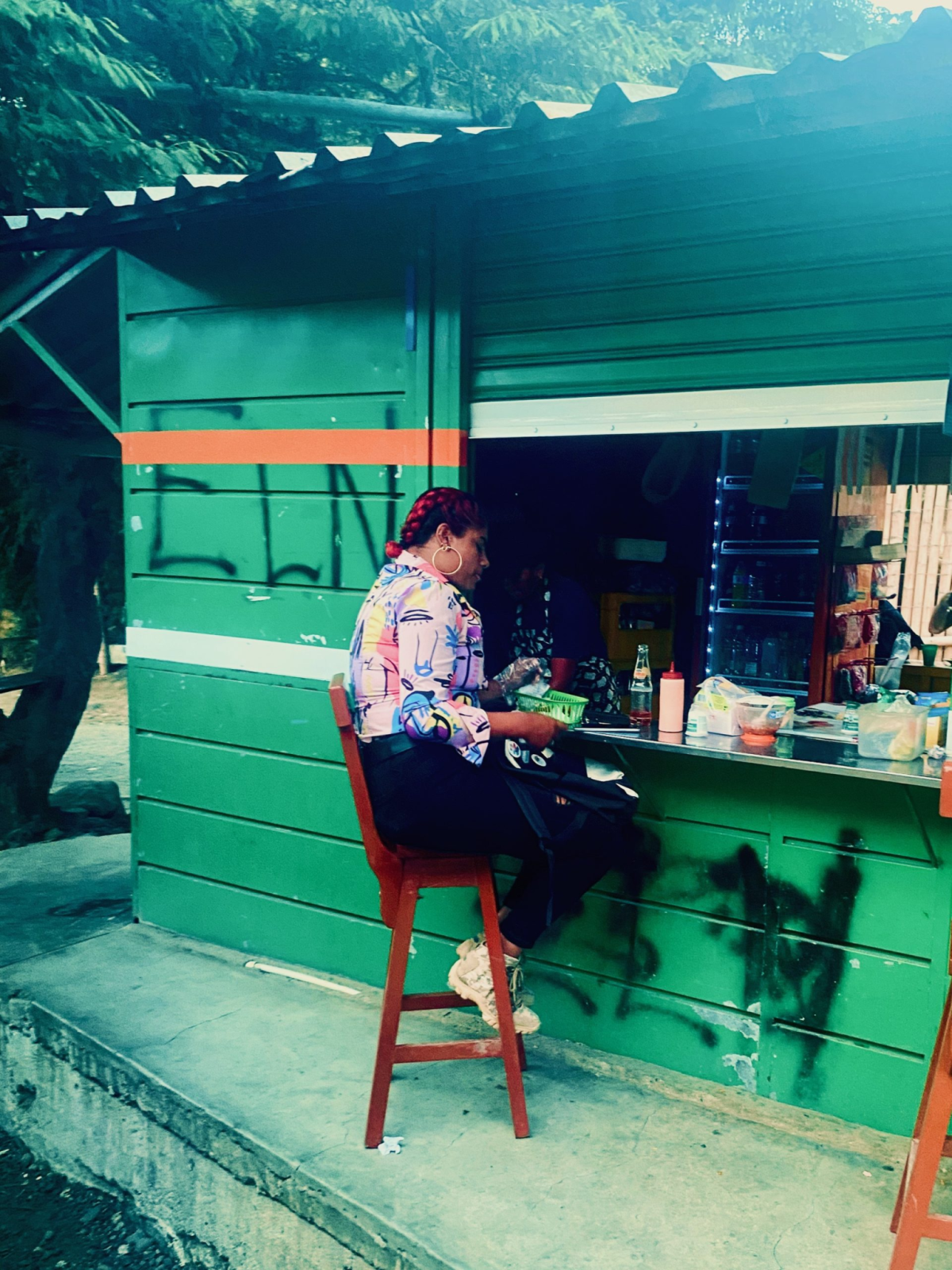
Grafiti of the ELN and ex-FARC Mafia near Corinto, Cauca (Credit: Henry Shuldiner)Cepeda’s approach to security is defined by his role as the principal legislative architect of Paz Total. As chair of the Senate‘s peace commission, he designed the framework that extended negotiating status to the ELN, FARC dissident groups, and the Clan del Golfo. His stated rationale is that targeting the financial leadership of drug networks rather than foot soldiers produces more durable results — a position that has academic backing in narcotics policy literature. In practice, Paz Total produced ceasefires that were repeatedly violated, and security indicators in conflict-affected departments deteriorated during the Petro administration. A Cepeda presidency is expected to continue the negotiated settlement model, with the military operating under political constraints.

Valencia’s security platform is based on reinstating Seguridad Democrática, the doctrine associated with former president Álvaro Uribe’s administrations from 2002 to 2010. The core elements are expanded military presence in rural conflict zones, dismantling of rural criminal networks, and resumption of extradition agreements with the United States — which Petro suspended, effectively shielding cartel leadership from US federal prosecution. The Uribe-era approach resulted in measurable reductions in homicide rates, forced displacement, and ELN and FARC territorial control, though human rights organizations documented serious abuses by security forces during that period.

De la Espriella has stated explicitly that his government would have no peace process. He advocates for a model similar to El Salvador’s under President Nayib Bukele: mass incarceration, construction of high-security prison facilities, classification of guerrilla and cartel organizations as foreign terrorist organizations, and broad military offensives. He has not detailed how such operations would be financed or how the mass detention model would interact with Colombia’s Constitutional Court, which has repeatedly constrained executive security powers.

For the armed groups operating in Norte de Santander and Cauca, the historical record indicates that Colombia’s criminal organizations respond more acutely to sustained, institutionally grounded military pressure and functioning extradition pipelines than to political rhetoric. By that measure, Valencia’s platform — which rebuilds the institutional security apparatus incrementally — represents a more structurally credible threat to the ELN and the Estado Mayor Central (EMC) FARC dissidents. For the Clan del Golfo leadership, extradition to the United States has historically been the principal deterrent, and Valencia’s program explicitly restores it.

Business Climate and Employment Conditions

The Petro administration enacted a series of minimum wage increases totaling more than 60% over four years — including a 16% increase for 2023, the largest single-year hike in Colombian history, and a 23.78% increase for 2026 — restructured labor regulations to expand premium pay requirements for night, weekend, and holiday shifts, and raised corporate tax rates to fund social spending programs. The Asociación Nacional de Empresarios de Colombia (ANDI) characterized the regulatory environment as adverse to private investment. Finance Colombia tracked a material decline in FDI in the extractive sector over the same period.

Cepeda supported those labor and fiscal reforms throughout their legislative passage. His platform extends the Petro model: increased state social spending, continued land redistribution programs, and maintenance of the current wage and labor cost structure. For companies with established Colombian operations, the regulatory environment is manageable; for companies evaluating market entry or operational expansion, the cost structure adds friction.

Valencia’s economic program emphasizes corporate stability and private sector investment as the primary mechanisms of job creation. Her vice-presidential running mate, Juan Daniel Oviedo — former director of DANE, Colombia’s national statistics agency — represents a technocratic orientation focused on reducing structural market distortions, streamlining public procurement, and scaling back state administrative overhead. Oviedo’s appointment is a direct signal to the business community that economic management would be data-driven rather than ideologically directed. Oviedo also publicly identifies as a member of the LGBTQ+ community, a departure from the traditional social conservatism of Centro Democrático.

De la Espriella’s economic orientation is pro-business with protectionist elements. His vice-presidential candidate, José Manuel Restrepo — who served as Colombia’s Finance Minister and Commerce Minister — provides institutional credibility on fiscal and trade policy. Restrepo’s presence on the ticket signals commitment to fiscal discipline and regulatory reduction in the extractive and commercial sectors. De la Espriella’s personal style, however, introduces operational uncertainty; his campaign has generated multiple high-profile controversies, including a public altercation with Caracol Noticias journalist María Lucía Fernández during a live broadcast and a formal apology following misconduct allegations by journalist Laura Rodríguez of Piso 8 FM.

Foreign Investment, Oil, and Mining

Ecopetrol holds a 31.5% stake in the Gunflint oil field in the Gulf of Mexico.

Ecopetrol holds a 31.5% stake in the Gunflint oil field in the Gulf of Mexico.

The extractive sector is the most consequential economic policy dimension for international capital. Ecopetrol (NYSE: EC; BVC: ECOPETROL) — Colombia’s state-controlled energy company and the largest corporation in the country — has operated under exploration restrictions during the Petro administration, which has opposed new fossil fuel contracts on climate grounds.

Cepeda’s position extends the Petro framework: mandatory transition away from fossil fuels, heavy restrictions or outright prohibitions on new oil and gas exploration contracts, and stringent environmental licensing requirements for open-pit mining operations. Foreign investment would be directed by policy toward green hydrogen, ecotourism, and smallholder agriculture. For the multinational oil majors with Colombian operations and for institutional investors in the mining sector, a Cepeda presidency represents a continuation of the current constraints and, in some contract scenarios, an accelerated wind-down of Colombian portfolios.

In a related development, Finance Colombia reported in May that Ecopetrol’s president, Ricardo Roa, has been formally charged in connection with alleged campaign spending violations during Petro’s 2022 presidential campaign. The case will be inherited by whoever takes office in August.

Valencia’s position is that hydrocarbon revenues are essential to Colombia’s macroeconomic stability and that the country cannot exit the sector before alternative revenue structures exist. Her platform actively encourages FDI in petroleum exploration, is open to regulated fracking, and commits to clearing the environmental licensing backlog that has stalled multiple large-scale gold and copper mining projects. For energy and mining companies currently blocked by administrative delays, this represents the most direct path to project advancement.

De la Espriella’s position goes further: essentially deregulating the environmental licensing process for major extraction projects on the grounds that Colombia’s economic sovereignty takes precedence over environmental restrictions he characterizes as externally imposed. The practical constraint is whether a De la Espriella administration would have the institutional coherence and congressional support to deliver regulatory rollback, given that his movement has no established political party structure and entered the race through an independent signature campaign.

Foreign Policy: Washington Alignment vs. Multipolar Strategy
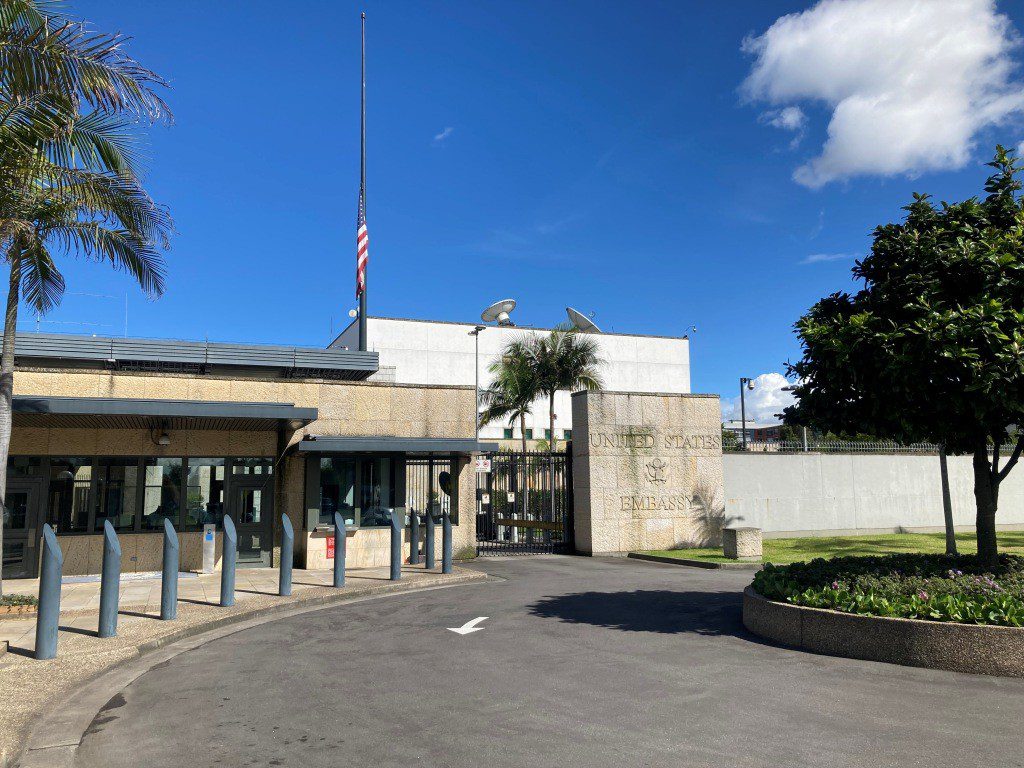
The US Embassy in Bogotá is said to be the 3rd largest US mission in the world (photo: Loren Moss)

The US Embassy in Bogotá is said to be the 3rd largest US mission in the world (photo: Loren Moss)

Colombia’s relationship with the United States deteriorated materially under Petro, who aligned Colombia with Venezuela’s Nicolás Maduro, pursued closer ties with China and Russia, and suspended extradition agreements. US counternarcotics cooperation was strained throughout the period.

Cepeda is committed to what he describes as a multipolar foreign policy — maintaining functional diplomatic channels with Washington and Brussels while deepening strategic and commercial relationships with China and Russia. His alignment with regional left-of-center governments in Mexico, Brazil, and Bolivia would position Colombia as part of a Latin American bloc that has grown increasingly skeptical of US regional leadership. For US companies operating in Colombia, this trajectory does not mean immediate operational disruption, but it reduces Colombia’s utility as a reliable counterpart on security cooperation, counter-narcotics intelligence sharing, and trade dispute resolution.

Valencia positions a return to the Western alignment as a core objective. She would prioritize restoring the US-Colombia relationship, reinforcing the bilateral Free Trade Agreement, and reestablishing intelligence-sharing mechanisms that were reduced under Petro. Her framing positions Colombia as a democratic anchor in a region experiencing authoritarian pressures.

De la Espriella takes the most explicit pro-US position in the race. La Silla Vacía reported that De la Espriella or entities linked to his campaign donated more than $90,000 USD to the US Republican Party, a fact that raises questions about the nature and expectations of those relationships. He has publicly aligned himself with the populist right in the United States, takes a hostile posture toward China, Russia, and Venezuela, and has characterized his security approach as consistent with a transactional alliance with Washington focused on counter-narcotics enforcement and cartel designation as foreign terrorist organizations.

“Ese pisco robó a 200 mil colombianos.” — Claudia López, former Mayor of Bogotá, referring to presidential candidate Abelardo de la Espriella’s legal representation of DMG pyramid scheme founder David Murcia Guzmán, during a presidential campaign event.

Corruption and Judicial Independence

All three candidates have stated commitments to fighting corruption, though their approaches and focal points differ in ways that are material to the institutional environment for business operations.

Cepeda’s legislative record includes serious, documented work investigating paramilitary infiltration of Colombia’s political institutions — the period known as parapolítica — and pursuing accountability for those cases. His blind spot, his critics argue, is corruption within the current administration. When Ecopetrol’s Ricardo Roa was formally charged in connection with Petro’s 2022 campaign, the response from the Pacto Histórico coalition was subdued. Cepeda has been Álvaro Uribe’s primary judicial antagonist in the Senate; a Cepeda administration would offer no institutional protection to Uribe and would be expected to support the full progress of judicial proceedings against him. For left-wing politicians facing legal exposure, including former Medellín mayor Daniel Quintero, a Cepeda administration would be expected to be more receptive to amnesty frameworks.

Valencia’s approach to anti-corruption is structural rather than prosecutorial: strengthening the independence of the Contraloría General de la República and the Fiscalía General de la Nación, implementing digital transparency in public procurement, and reducing informal executive influence over judicial processes. She would be expected to apply political and rhetorical pressure on behalf of Uribe — her political mentor and a close ally — though her legislative track record indicates a degree of institutional independence from Centro Democrático party orthodoxy.

De la Espriella’s anti-corruption rhetoric centers on severe criminal penalties for corrupt officials. The credibility of that position is complicated by his professional history, which is examined in detail below.

De la Espriella’s Legal Career: The Documented Record

De la Espriella’s campaign has faced sustained scrutiny over his client history as one of Colombia’s highest-profile criminal defense attorneys. The record is documented in reporting by El Colombiano, El Espectador, and the investigative outlet Corrupción al Día.
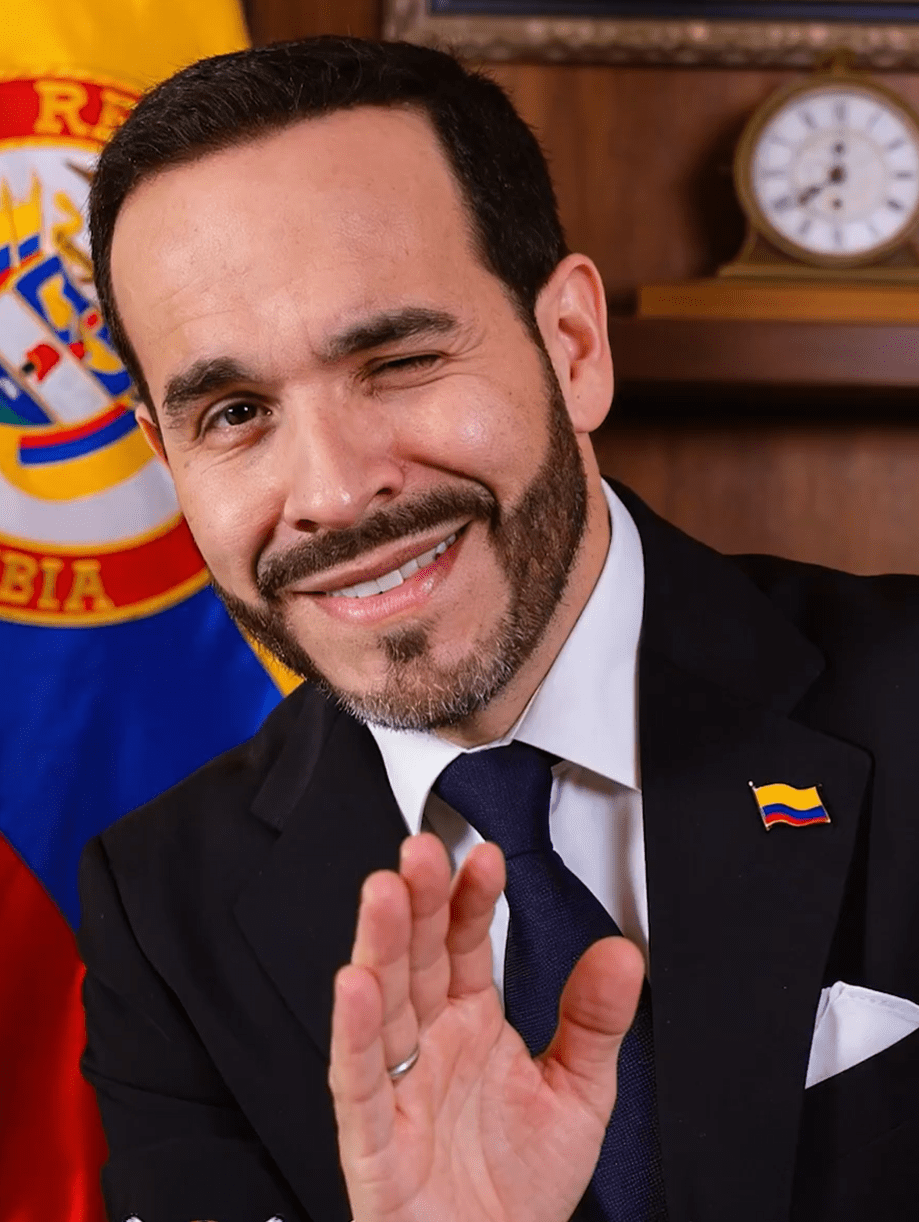
Abelardo de la Espriella (screen capture from Twitter video)

Abelardo de la Espriella (screen capture from Twitter video)

His documented client roster includes Salvatore Mancuso, the former supreme commander of the Autodefensas Unidas de Colombia (AUC) paramilitary network; multiple legislators convicted in the parapolítica scandal, which established systematic infiltration of Colombia’s congress by paramilitary organizations; David Murcia Guzmán, the operator of the DMG pyramid scheme that defrauded an estimated 200,000 Colombian investors; the Nule Primos, convicted of large-scale public contract fraud; and Álex Saab, the Colombian businessman extradited to the United States on charges of acting as the primary money launderer for the Maduro government in Venezuela. According to Corrupción al Día, De la Espriella’s legal fees from Saab reportedly reached $12 million USD and included private aircraft travel.

De la Espriella’s response to this line of criticism rests on due process principles: that every accused person is entitled to vigorous legal defense regardless of the charges, and that his ability to navigate Colombia’s criminal code at its most complex levels demonstrates the expertise required to enforce the law from the executive branch. The argument has legal validity as a principle. The specific issue for foreign compliance officers and US government counterparts is the Saab representation: the same Nicolás Maduro whose regime De la Espriella’s campaign now characterizes as an ideological enemy received legal services from De la Espriella’s firm when the representation was commercially available.

The Fiscalía investigated De la Espriella in connection with alleged paramilitary links in 2009 and again in 2012; both investigations were dismissed for insufficient evidence, and he carries no convictions or active investigations on those matters.

Cepeda’s Family History and Ideological Background
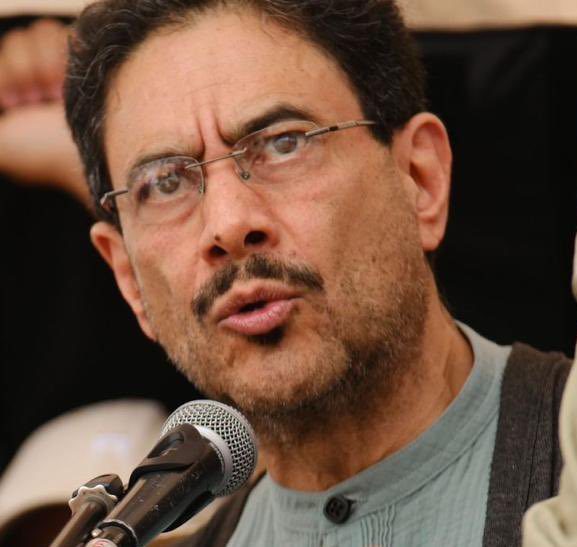
Iván Cepeda (from Twitter)

Iván Cepeda (from Twitter)

Critics of Iván Cepeda, including Enrique Gómez of the Salvación Nacional party, have argued that his family background constitutes evidence of structural alignment with guerrilla movements. The record on this point merits examination.

Cepeda is the son of Manuel Cepeda Vargas, who served as Secretary-General of the Colombian Communist Party and as a senator for the Unión Patriótica (UP), a left-wing political movement that was systematically exterminated by a combination of state actors and paramilitary organizations during the 1980s and 1990s. Manuel Cepeda Vargas was assassinated on August 9, 1994. The Inter-American Court of Human Rights subsequently found the Colombian state responsible for his murder. The FARC-EP named its Frente Urbano Manuel Cepeda Vargas — an urban front operating within the Bloque Occidental — in the elder Cepeda’s honor.

The Fundación Paz y Reconciliación (PARES) has documented that Iván Cepeda’s relationship with his father’s political positions was more complex than the family lineage alone suggests. After studying in Bulgaria in 1981, Cepeda broke from his father’s Soviet-oriented communist framework and aligned with democratic leftists including Bernardo Jaramillo Ossa, who publicly rejected the FARC’s armed strategy. Cepeda has repeatedly stated his repudiation of the FARC’s use of his father’s name. No documented evidence connects him to operational coordination with current armed groups.

What the family history does establish is the ideological framework through which Cepeda processes security policy: a belief, grounded in personal and political experience, that the Colombian state’s institutional violence has been as destructive as guerrilla violence, and that negotiated settlements are structurally preferable to military solutions. That framework generates Paz Total. It also generates a posture toward ELN and FARC dissident negotiators that prioritizes process continuity over verified compliance — a disposition that armed groups have demonstrably exploited to maintain territorial and operational positions while negotiation frameworks provided legal cover.

Paloma Valencia (image Twitter)

Paloma Valencia (image Twitter)

Valencia and the Uribe Question

The comparison to former president Iván Duque (2018–2022) comes up regularly in discussions of Valencia’s political independence. Duque, who had limited independent political standing before Uribe selected him, was perceived throughout his term as governing within constraints set by his patron — a dynamic that Colombian political cartoonists characterized as ventriloquism.

Valencia’s profile differs materially. She is the granddaughter of former Colombian president Guillermo León Valencia, carries her own political lineage, and has served in the Senate for over a decade, building positions on agrarian reform, judicial modernization, and indigenous land rights that have placed her at variance with standard Centro Democrático positions on those issues. She won the Gran Consulta por Colombia primary on March 8 with more than 45% of the vote — over 3.2 million Colombians — establishing a democratic mandate distinct from any party endorsement.

She would be expected to use institutional and rhetorical channels to support Uribe in the ongoing judicial proceedings against him, and to apply pressure on the trajectory of those cases. Whether that constitutes political interference with judicial independence or normal advocacy within democratic norms is a question on which observers disagree. What the legislative record does not support is the characterization of Valencia as incapable of independent governance.

Press Freedom and the Media Environment

Press freedom carries an indirect but measurable correlation with rule-of-law quality, which in turn affects operational risk for companies that rely on regulatory predictability and transparent legal processes.

Cepeda has maintained a posture toward critical media that mirrors President Petro’s practice of characterizing adversarial outlets as acting in the interests of economic elites. Under Petro, this produced a systematic exclusion of critical media from official information flows and persistent rhetorical delegitimization of independent journalism, though the press remained legally free to operate. A Cepeda administration would be expected to continue this pattern.

Valencia’s background in Colombia’s traditional political and intellectual establishment, combined with a decade in a party that has faced sustained critical coverage from Colombia’s major outlets, points toward a conventional institutional relationship with the press — adversarial at times, but within professional norms.

De la Espriella’s conduct during the campaign provides direct evidence of his approach. He publicly called Caracol Noticias journalist María Lucía Fernández “ignorant” in a live interview. He issued a formal apology after journalist Laura Rodríguez of Piso 8 FM made allegations of inappropriate conduct. His campaign strategy has drawn comparisons to the approach of Argentine president Javier Milei and US president Donald Trump in its use of direct digital channels to circumvent traditional media while publicly attacking outlets that publish critical coverage. The press would remain legally protected under a De la Espriella administration, but the operational environment for investigative journalism would be hostile.

The Ideological Spectrum: Market Liberalism to State Direction

The question of which candidate is most aligned with free-market principles requires a distinction that the international business press frequently elides: the difference between economic deregulation and political authoritarianism. These can, and in this election do, exist independently.

De la Espriella’s platform is often described in international coverage as the most pro-market. His deregulation proposals for the extractive sector and his corporate tax rhetoric support that reading in the economic domain. His security platform, however, involves a substantial expansion of state coercive power: mass detention operations, a mega-prison construction program, and the suspension of standard due process protections to facilitate rapid incarceration of criminal suspects. The Cato Institute‘s framework of economic freedom as inseparable from civil liberties would categorize a state powerful enough to detain people without standard procedural protections as a state that represents an institutional risk to property rights and contract enforcement as well.

Valencia’s platform, anchored by Oviedo’s technocratic program of structural market reform — reduced administrative barriers, streamlined procurement, smaller state overhead, maintained civil liberties — represents the closest approximation to coherent market liberalism available in this field. It does not carry the rhetorical force of De la Espriella’s deregulation proposals, but it has more institutional grounding.

Cepeda’s platform is the furthest from market liberalism by any standard measure: state-directed investment allocation, wealth redistribution through tax and transfer mechanisms, state expansion in healthcare and pension administration, and agrarian land redistribution. His program is continuous with the Petro administration’s economic framework.

Minor Candidates: The Rest of the Ballot

Claudia López, senator of Colombia. (Credit: Patty Suescún)

Claudia López, senator of Colombia. (Credit: Patty Suescún)

Several other candidates remain on the ballot and are drawing small but potentially consequential vote shares in a first round where the margin between second and third place could be narrow.

Claudia López, former mayor of Bogotá running under the Con Claudia Imparables coalition, positions herself as a progressive centrist with a documented anti-corruption record. Her polling has not broken 3.5% in major surveys, and her high polarization ratings from her mayoral term limit her growth ceiling. Her attacks on De la Espriella during the campaign — she publicly called him a “defender of the mafia” in reference to his client history — have been among the most pointed in the race, and factually grounded on the public record.

Sergio Fajardo, making his third consecutive presidential run under Dignidad y Compromiso, continues to represent a technocratic, education-focused centrism grounded in his work transforming Medellín in the early 2000s. He has not broken 3.5% in any major poll in this cycle.

Roy Barreras, running under La Fuerza de la Paz following his Frente por la Vida primary victory, is one of the most experienced political operatives in Colombia, having been part of multiple coalition governments across ideological lines over two decades. He polls below the threshold for meaningful first-round impact.

Miguel Uribe Londoño, running under Partido Demócrata, represents a younger-generation conservative platform emphasizing fiscal discipline and private sector growth, broadly consistent with Valencia’s program. He also polls below 3.5%.

Carlos Caicedo, running on a regionalist platform emphasizing decentralization away from Bogotá, draws support primarily from the Costa Caribe. His structural argument about Colombia’s administrative over-centralization is substantively grounded, though his national profile is insufficient to affect the first-round outcome.

Investment Implications

For international capital with Colombian exposure, the three-way race produces three materially different operational scenarios.

A Cepeda victory — which remains the single most likely first-round outcome based on available polling — would signal continuity of the Petro-era regulatory framework: sustained capital outflow pressure, high corporate tax rates, no new fossil fuel exploration contracts for Ecopetrol (NYSE: EC; BVC: ECOPETROL) or private operators, continued labor cost escalation, and a foreign policy trajectory away from Washington. Colombian equity valuations would be expected to remain under pressure. The mining licensing backlog would continue to accumulate. A Cepeda administration would not replicate Venezuela’s economic trajectory — Colombia’s independent central bank, Banco de la República, its functioning constitutional court, and its institutional depth provide meaningful buffers — but the investment headwinds would be structural rather than cyclical.

A Valencia victory would represent the sharpest regulatory reversal available in this field. Ecopetrol exploration contracts would be expected to advance. The mining licensing backlog would be addressed. US bilateral relations would be restored, reactivating security intelligence cooperation and trade facilitation mechanisms. The Colombian peso would be expected to strengthen as country risk premium declined. The path to that outcome now requires her to either close the gap significantly on De la Espriella in the first round or rely on runoff polling that showed her as the stronger second-round candidate — data that predates the most recent polling shift.

A De la Espriella victory introduces the widest distribution of possible outcomes. The upside scenario involves Restrepo managing fiscal and trade policy competently, genuine regulatory rollback in the extractive sector, aggressive extradition resumption, and security operations that reduce the physical risk premium in conflict-affected departments including Cauca, Norte de Santander, and Chocó. The downside scenario involves recurring crises generated by De la Espriella’s personal conduct, conflicts of interest arising from his former client relationships, and authoritarian security measures that attract international human rights attention and complicate bilateral relationships. Restrepo’s presence on the ticket reduces the probability of the downside scenario but does not eliminate it.

The current polling trend indicates that right-wing voters are consolidating around De la Espriella at Valencia’s expense. Whether that consolidation produces a runoff between De la Espriella and Cepeda — and whether the runoff produces a left or right-wing government — remains uncertain. What the polling data does not support is the scenario, widely assumed until recently, of a Cepeda-Valencia runoff in which Valencia was positioned as the structurally stronger opposition candidate.

Subscribe to Finance Colombia to remain updated on key developments and impartial analysis.

  •  

Ecopetrol Posts Q1 EBITDA Gain as Refining Margins Surge, But Governance Crisis and Tax Headwinds Weigh on Net Income

Refining margin surge cushions revenue drop amid leadership void

Ecopetrol S.A. (NYSE: EC, BVC: ECOPETROL) reported first-quarter 2026 consolidated revenues of 28.6 trillion COP, a decline of 8.7% from 31.4 trillion COP in the year-earlier period, as lower crude oil prices and reduced hydrocarbon production compressed the top line for Colombia’s state-controlled oil and gas company. Against that backdrop, a marked recovery in refining margins and disciplined cost management lifted EBITDA by 1.5% to 13.5 trillion COP, yielding a 47% EBITDA margin and partially offsetting the revenue headwind. At the Q1 2026 average exchange rate of approximately 3,700 COP per USD, the quarter’s revenues translate to roughly $7.73 billion USD and EBITDA to approximately $3.65 billion USD.

Embattled Ecopetrol CEO Ricardo Roa was appointed to the position by Colombian President Gustavo Petro after managing his political campaign. (photo: Ecopetrol)

Embattled Ecopetrol CEO Ricardo Roa was appointed to the position by Colombian President Gustavo Petro after managing his political campaign. (photo: Ecopetrol)

Net income for the quarter reached 2.9 trillion COP (approximately $784 million USD), down 7.7% year-over-year, reflecting the combined drag of lower revenues, a sharply elevated effective tax rate of 37.1%, and a one-time charge of 1.2 trillion COP for the impuesto al patrimonio — Colombia’s government-mandated wealth levy on large corporations established to fund post-disaster reconstruction measures. The company is also subject to a 10% income tax surcharge applicable for fiscal year 2026, which is embedded in the reported effective rate. The aggregate tax burden absorbed a disproportionate share of operating improvement relative to prior periods, limiting the flow-through of refining gains to the net income line.

Total hydrocarbon production averaged 725.2 thousand barrels of oil equivalent per day (kboed) in Q1 2026, below the 745 kboed recorded in the 2025 annual average cited by management during the March 2026 general shareholders’ meeting. Domestic crude output represented the largest component at approximately 520 thousand barrels per day (kbd). Ecopetrol’s Permian Basin operations in the United States contributed 91.8 kbd, underscoring the continued strategic importance of the international segment. Gas production continued a multi-year declining trend that poses a medium-term domestic supply challenge; management has sought to address this partially through regasification capacity additions at Puerto Bahía and on the Pacific coast, expected to come online in the second half of 2026 with a combined contribution of up to 430 billion BTU per day.

The refining segment delivered the quarter’s most pronounced operational outperformance. Ecopetrol’s domestic refineries, led by Refinería de Cartagena, processed 417.5 kbd of crude throughput. The integrated refining margin rose to $17.3 USD per barrel, a 60% improvement over the same quarter of 2025, driven by favorable differential pricing between domestic crude benchmarks and refined product values alongside ongoing operational efficiency improvements. The Comisión de Regulación de Energía y Gas (CREG) and the Ministerio de Minas y Energía remain central to the regulatory framework governing downstream margins over the medium term.

The balance sheet carries significant structural and contingent risk items of direct relevance to institutional credit and equity holders. Gross debt stood at 108.1 trillion COP (approximately $29.2 billion USD), representing a leverage ratio of 2.3 times trailing EBITDA — a level that leaves limited room for further deterioration before debt covenants or rating agency thresholds become binding. Ecopetrol holds a receivable of 4.2 trillion COP (approximately $1.14 billion USD) from the Fondo de Estabilización de Precios de los Combustibles (FEPC), a government fuel price stabilization mechanism that represents a claim on the Colombian treasury with timing and recovery risk. A dispute with the Dirección de Impuestos y Aduanas Nacionales (DIAN) over value-added tax assessments totals 12.26 trillion COP (approximately $3.31 billion USD) in aggregate, of which 10.22 trillion COP relates to Ecopetrol’s consolidated operations and 2.04 trillion COP to Refinería de Cartagena. Both cases are under administrative and judicial review; no provisions have been recognized in the financial statements pending resolution, but the potential liability represents a material contingency relative to the company’s quarterly net income.

On the corporate development front, Ecopetrol disclosed three significant transactions during or following the quarter. The company agreed to acquire producing assets from Gran Tierra Energy (NYSE: GTE, TSX: GTE) for $92.4 million USD, adding Colombian upstream production inventory in basins where both companies have operated. In Brazil, Ecopetrol launched a tender offer for shares of Brava Energia (BVMF: BRAV3) at 23 BRL per share, seeking to expand its footprint in that country’s oil and gas sector. And in a transaction that would reshape the mid-size independent landscape in Colombia, the company reached an agreement to acquire Parex Resources (TSX: PXT) for $250 million USD; Parex is a Colombia-focused producer with a complementary asset base across the Llanos and other producing basins. Collectively, the three transactions signal that Ecopetrol’s capital allocation strategy under the current government continues to favor upstream consolidation despite the elevated leverage profile.

The exploration portfolio generated positive news announcements. The Copoazú-1 exploratory well, drilled in Colombia’s Llanos foothills region, was confirmed as a commercial discovery, adding to the domestic reserve base. The Sirius offshore project advanced through the Consulta Previa process — a legally mandated prior consultation with indigenous and Afro-Colombian communities required before development of projects in or near their territories — reaching a milestone in community engagement that brings the project closer to formal development sanction. The Agencia Nacional de Hidrocarburos (ANH) oversees the licensing framework within which both projects operate.

“Ecopetrol is listed on the New York Stock Exchange; we are governed by the strict regulations of US federal agencies. Agencies like OFAC and the SEC could intervene in the company and could even accelerate the payment of financial obligations, which would be extremely grave for Ecopetrol.” — Martín Ravelo, President, Unión Sindical Obrera (USO)

The ISA transmission segment, managed through Ecopetrol’s majority stake in ISA — Interconexión Eléctrica S.A., contributed stable regulated cash flows during the quarter. ISA completed 46 transmission reinforcement works across its Latin American concession portfolio. The segment also completed the acquisition of 100% of IE Madeira in Brazil, consolidating its position in that country’s power grid interconnection infrastructure. ISA further submitted a competitive bid for the Río Bueno–Puerto Montt high-voltage transmission line concession in Chile, demonstrating the group’s appetite for long-duration, inflation-linked infrastructure assets across the Andes region. For institutional investors evaluating Ecopetrol as a blended hydrocarbons-and-infrastructure holding, ISA’s consistent cash generation provides partial diversification from crude price volatility, though it does not insulate the consolidated entity from headline governance risk.

The most consequential variable for the investment thesis over the near term is Ecopetrol’s prolonged governance crisis. At the company’s general shareholders’ meeting on March 27, 2026, held at the Corferias convention center in Bogotá, minority shareholders loudly heckled president Ricardo Roa — with audible shouts of “¡Fuera, fuera!” reverberating through the hall — as debate over his leadership erupted into open confrontation. The meeting approved a dividend of 121 COP per share for minority holders and a 4 trillion COP distribution to the Colombian government as majority shareholder, payable in two installments by June 30, 2026. Despite the financial business conducted, governance overshadowed the proceedings.

Roa faces two separate judicial proceedings. The Fiscalía General de la Nación formally charged him in connection with alleged influence peddling related to the purchase of an apartment in northern Bogotá — charges he has denied. Separately, the Consejo Nacional Electoral (CNE) is examining whether campaign spending limits were violated during President Gustavo Petro’s 2022 presidential campaign, which Roa managed — an investigation that Finance Colombia has covered in detail. Angela Maria Robledo, Chair of the Board of Directors, defended the board’s decision to retain Roa at the March assembly, citing the constitutional presumption of innocence. However, four of the nine board members had already formally recorded their support for his removal at that point, exposing a divided governance structure at a time when strategic and operational decisions require unified leadership.

The Unión Sindical Obrera (USO), which represents approximately one-third of Ecopetrol’s workforce, issued a production strike ultimatum timed to a March 30 board meeting. Martín Ravelo, president of the USO, framed the leadership crisis explicitly in terms of US regulatory risk: “Ecopetrol is listed on the New York Stock Exchange; we are governed by the strict regulations of US federal agencies. Agencies like OFAC and the SEC could intervene in the company and could even accelerate the payment of financial obligations, which would be extremely grave for Ecopetrol.” Ravelo further warned that the company’s outstanding international debt — which he placed at approximately $30 billion USD and which is exacerbated by elevated interest rates — left Ecopetrol exposed to potential covenant triggers or early repayment demands in a scenario where the Securities and Exchange Commission (SEC) or the Office of Foreign Assets Control were to take enforcement action.

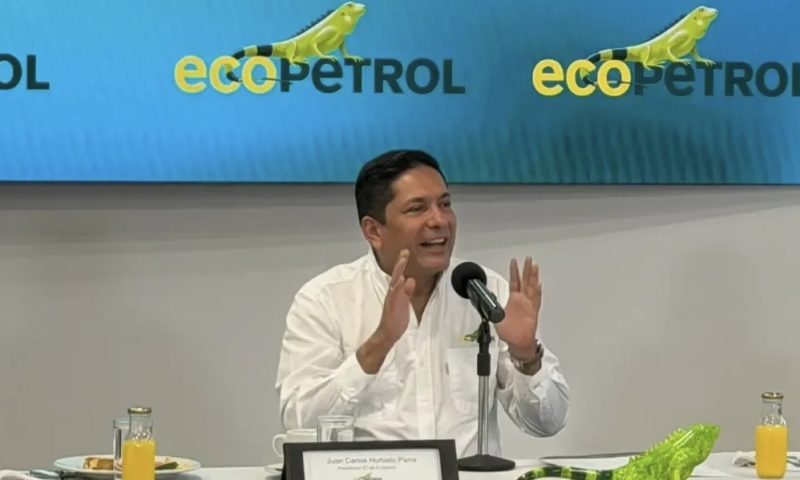
Following sustained pressure from the USO, minority shareholders, and opposition political figures, Ecopetrol’s board approved an extended leave of absence for Roa beginning April 7, 2026. Under the arrangement, Roa used accrued vacation through May 27, followed by 30 calendar days of unpaid leave beginning May 28, extending his absence through the end of June — a period encompassing Colombia’s presidential first round on May 31 and a potential runoff on June 21. Juan Carlos Hurtado Parra, the company’s executive vice president of hydrocarbons and designated first alternate to the presidency since November 2025, was appointed acting president. Hurtado Parra holds an MBA in International Oil and Gas and brings more than 28 years of energy sector experience to the acting role, having previously served as vice president of exploration, development, and production.

The political calendar creates a structural transition risk that sits above the operational and financial results as the primary concern for long-duration investors. Colombia’s incoming government, to be inaugurated August 7, 2026, is widely expected to appoint a new Ecopetrol board and select a new company president. That transition may bring material shifts in strategic priorities — including the pace of upstream investment, the approach to the FEPC receivable recovery, the trajectory of energy transition spending, and the capital allocation balance between the hydrocarbons segment and the ISA infrastructure platform. The Ministerio de Hacienda y Crédito Público and the Ministerio de Minas y Energía will both play key roles in establishing the post-election policy framework under which Ecopetrol operates. Institutional investors holding exposure to Ecopetrol via NYSE: EC or BVC: ECOPETROL must weigh Q1’s genuine operational improvement — most visibly in refining margins and EBITDA stability — against a governance and policy transition risk profile that is unlikely to be resolved before the August handover.

Ecopetrol’s Cartagena refinery (photo courtesy Ecopetrol)

  •  

Ecopetrol President Ricardo Roa Charged Over Alleged Campaign Spending Violations in Petro’s Presidential Campaign

Roa had already been administratively sanctioned by Colombia’s electoral authority over campaign spending violations, with the case now advancing in the Attorney General’s Office

Ricardo Roa Barragán, president of Colombia’s state-owned oil and energy company Ecopetrol, has been formally charged by the Attorney General’s Office (FGN) over his alleged responsibility in a case involving violations of campaign spending limits tied to President Gustavo Petro’s 2022 presidential campaign, which Roa managed.

The charging hearing took place Monday, May 11, during which Roa pleaded not guilty. The case will continue through the investigative stage, and no conviction has been issued against him.

This marks the second criminal case facing the executive. On March 11, 2026, prosecutors also charged Roa with alleged influence peddling involving a public official. Both investigations remain ongoing.

Read: The charge adds to a separate investigation over alleged violations of campaign finance limits during President Gustavo Petro’s 2022 presidential campaign.

The latest charges come weeks after Ecopetrol’s board authorized Roa to take vacation leave followed by unpaid leave through June 28, 2026, after Colombia’s presidential elections conclude.

The decision means Roa would return to the company only to participate in the transition process with the team designated by Colombia’s next president, who will take office on August 7, 2026.

Read: Ecopetrol Announces Temporary Leave for President Ricardo Roa Amid Investigations by Colombia’s Attorney General’s Office” by Finance Colombia.

Under Articles 396A and 396B of Colombia’s Criminal Law, individuals found responsible for receiving, administering or allowing prohibited campaign funds may face prison sentences ranging from four to eight years, in addition to fines and disqualification from holding public office if convicted.

Roa, however, retains the presumption of innocence while the judicial process continues.

Investigation into campaign financing

The case stems from the 2022 “Petro Presidente” campaign, which Roa Barragán managed. The matter had already resulted in administrative sanctions from Colombia’s National Electoral Council (CNE), which concluded that the campaign exceeded legal financing limits.

The Attorney General’s Office also said it identified alleged inconsistencies in the campaign’s financial reporting, claiming that first-round expenses were reported during the second round and vice versa.

As a result of that administrative investigation, the CNE referred the case to the Attorney General’s Office, which is responsible for conducting criminal investigations.

According to a statement from prosecutors, collected evidence suggests that campaign spending limits “were exceeded by $1.388 billion COP (around $370,000 USD) during the first presidential round and by $276 million COP ($73,000 USD) during the runoff.”

Prosecutors said the allegedly unreported or improperly reported expenses were linked to “hotel press conferences, breakfasts, loans, transportation, logistics, food services, financing for campaign-closing events, advertising materials and union contributions.

The investigation formally began in 2025 after the CNE determined there were possible irregularities involving campaign spending caps.

Petro defends Roa

President Gustavo Petro again defended Roa and questioned the basis of the judicial investigation.

“The Attorney General’s Office is repeating the same thing as the compromised CNE: that expenses incurred after the legal campaign period ended, such as the costs parties incur for election monitors to protect votes (…) are campaign expenses. Their so-called overspending is not overspending,” Petro wrote on X.

The president argued that several of the questioned expenditures took place after election day, when, according to his interpretation, the campaign had already formally concluded.

  •  

Ecopetrol Announces Temporary Leave for President Ricardo Roa Amid Investigations by Colombia’s Attorney General’s Office

Ecopetrol’s board has approved a temporary leave for Ricardo Roa, keeping him out of office until Colombia’s presidential elections wrap up at the end of June 2026

Ecopetrol’s board of directors has approved an unpaid leave of absence for its president, Ricardo Roa Barragán, amid ongoing judicial investigations and growing pressure from unions, minority shareholders and political sectors.

In an official statement, the company said Roa “requested to use his accrued vacation days from April 7 to May 27, 2026,” and that the board also approved an unpaid leave requested by himself, “beginning on May 28 and lasting 30 calendar days.” This means he will be away from his duties for a continuous period extending through the end of June, after Colombia’s presidential elections scheduled for May 31 and June 21, if a runoff is required.

The decision comes in a context marked by two investigations led by the Attorney General’s Office. The first relates to an alleged case of influence peddling involving the purchase of an apartment in northern Bogotá, for which Roa has already been formally charged, although he has pleaded not guilty. The second concerns a possible breach of campaign finance limits during President Gustavo Petro’s 2022 presidential campaign, which Roa managed.

Both cases remain under review by judicial authorities, who will assess the evidence and issue a ruling (Colombia’s Top Prosecutor Charges Ecopetrol President in Alleged Influence-Peddling Case).

Roa’s temporary departure also follows pressure from some of the company’s main labor unions (Strike Threat Looms as Colombia Oil and Gas Union Calls for Ecopetrol President’s Removal), as well as minority shareholders (Ecopetrol Shareholders Loudly Heckle CEO Ricardo Roa at Annual Meeting as Leadership Dispute & Corruption Scandal Roils The Petroleum Company), and opposition political groups.

If this timeline holds, his potential return will coincide with the post-election period, ahead of the transition process with the new government set to take office on August 7, which is expected to appoint a new board and select a new president for the state-controlled oil and gas company.

Acting president appointed

Photo 2: Juan Carlos Hurtado Parra, Acting President of Ecopetrol. Photo courtesy of Ecopetrol.

Juan Carlos Hurtado Parra, Acting President of Ecopetrol. Photo by of Ecopetrol.

During Roa’s absence, the board appointed Juan Carlos Hurtado Parra as acting president of Ecopetrol. According to the statement, Hurtado currently serves as executive vice president of hydrocarbons and has been the first alternate to the presidency since November 16, 2025.

He has “more than 28 years of experience in the energy sector, including roles as vice president of exploration, development, and production at Ecopetrol and has held executive positions focused on resource management and coordination. He is an electrical engineer, holds a specialization in Project Evaluation and Development, and has a Master of Business Administration (MBA) in International Oil and Gas.”

  •  

Ecopetrol Shareholders Loudly Heckle CEO Ricardo Roa at Annual Meeting as Leadership Dispute & Corruption Scandal Roils The Petroleum Company

Governance concerns and profit drops dominate shareholder assembly.

The Ecopetrol (NYSE: EC, BVC: ECOPETROL) General Shareholders’ Meeting concluded at the Corferias convention center in Bogotá, marked by a decline in annual profits and an intensifying debate regarding the continuity of the company’s president, Ricardo Roa. During the assembly, shareholders approved a dividend of $121 COP per share for minority holders and a total payment of $4 trillion COP to the Colombian government, which serves as the majority shareholder. The government’s payout is scheduled for distribution in two installments, to be completed by June 30, 2026.

Click on above image to view shareholder meeting
Embattled Ecopetrol CEO Ricardo Roa was appointed to the position by Colombian President Gustavo Petro after managing his political campaign. (photo: Ecopetrol)

The financial results for the 2025 fiscal year revealed a significant contraction in net income, which fell to $9 trillion COP from the $14.9 trillion COP reported in 2024. Roa attributed this decline primarily to the volatility of international crude prices. He noted that the average price of Brent crude dropped from $80 USD per barrel to $68 USD per barrel over the period. According to company data, every $1 USD drop in the price of Brent corresponds to a reduction of approximately $500 billion COP in net profit and $700 billion COP in EBITDA. Despite the lower earnings, the company maintained a production level of 745,000 barrels per day and achieved a reserve replacement rate of 121%, the highest in five years.

Governance issues remained the primary focus of the assembly. Minority shareholders expressed concern over the legal challenges facing Roa, who is currently under investigation by the Fiscalía General de la Nación for alleged influence peddling. Additionally, the Consejo Nacional Electoral (CNE) has raised accusations regarding the alleged violation of spending caps during the presidential campaign of Gustavo Petro, which Roa managed. Angela Maria Robledo, Chair of the Board of Directors, defended the decision to retain Roa, stating that the board has activated a evaluation protocol while respecting the constitutional principle of the presumption of innocence.

Shareholders Erupt In Anger At CEO Ricardo Roa:

🚨Abuchean a Ricardo Roa en asamblea de Ecopetrol

“¡Fuera, fuera!”: Este es el momento del tenso abucheo de los accionistas al presidente de la empresa 🔽

Videos: Néstor Gómez pic.twitter.com/uyjh4chpl2

— EL TIEMPO (@ELTIEMPO) March 27, 2026

“Ecopetrol is listed on the New York Stock Exchange; we are governed by the strict regulations of US federal agencies. Agencies like OFAC and the SEC could intervene in the company and could even accelerate the payment of financial obligations, which would be extremely grave for Ecopetrol,” stated Martín Ravelo, President of the USO.

The Unión Sindical Obrera (USO), the primary labor union representing nearly one-third of the company’s workforce, has issued an ultimatum for Roa’s removal. Martin Ravelo, president of the USO, warned that the union will initiate a national strike and affect crude production if Roa is not aparted from his position by Monday, March 30. Ravelo expressed concern that Ecopetrol, which is subject to the regulations of the Securities and Exchange Commission (SEC) and the Office of Foreign Assets Control (OFAC), could face federal intervention. He highlighted that Ecopetrol’s current debt has reached $30 billion USD, exacerbated by rising interest rates, and warned that the company lacks the cash flow to respond to potential demands for early repayment of international obligations.

President Gustavo Petro responded to the union’s concerns via social media, stating that the executive branch will take measures to shield the company’s financial future. Petro emphasized the importance of maintaining investment during periods of high oil prices to prepare for future market downturns. He also criticized past administrations for failing to invest sufficiently in clean energy during previous price cycles. In contrast, Ravelo called for the board to maintain its independence from political influence, noting that four of the nine board members have already left formal records supporting Roa’s departure.

Ecopetrol also addressed the national gas supply, with Roa announcing that new regasification alternatives at Puerto Bahía and on the Pacific coast are expected to begin operations in the second half of 2026. These projects are intended to contribute between 186 and 430 Gbtud to the national grid. A third regasification facility in Coveñas is projected to start operations in 2029 with a capacity of 400 Gbtud. Despite these operational plans, the immediate focus of the international investment community remains fixed on the board’s upcoming meeting on Monday, where the leadership deadlock must be resolved to avoid a potential halt in national production.

Headline photo: Former Senator Jorge Robledo admonishes the Ecopetrol board of directors at the March 2026 shareholders’ meeting.

  •  

Strike Threat Looms as Colombia Oil and Gas Union Calls for Ecopetrol President’s Removal

The petroleum workers called for Ricardo Roa’s head following formal influence-peddling charges filed by Colombia’s Attorney General’s Office.

One of Colombia’s principal petroleum worker’s unions, the Unión Sindical Obrera (USO), has formally requested that Ecopetrol’s board of directors remove Ricardo Roa Barragán as president of the state-controlled oil company, amid ongoing investigations against him by the Attorney General’s Office. The union warned that it will call a nationwide strike if the request is not addressed.

The request was made in a letter dated March 24, sent after a meeting between union representatives and the company’s board. In the document, the USO stated that, “understanding the feelings of the Colombian people as reflected by the thousands of Ecopetrol workers, we immediately request that, within the framework of due diligence, the board of directors adopt the necessary measures to remove Dr. Ricardo Roa Barragán from his position as president of Ecopetrol.”

The union added that, if the request is not met, “this union will call for nationwide mobilization in defense of the most important asset of the Colombian people.”

On the same day, March 24, Ecopetrol’s board issued a public response, reported by outlets such as Caracol Radio, stating that it had reviewed requests from employees, the union and some minority shareholders.

In its statement, the board said it is “aware of its responsibilities within the framework of due diligence” and has been assessing the risks to the company stemming from reports related to Roa. However, it confirmed that Roa will remain in his position while the evaluation process continues.

The union’s request follows charges filed by the Attorney General’s Office on March 11 against Roa for alleged influence peddling. According to prosecutors, Roa is accused of favoring a third party in the allocation of a project in exchange for a reduction in the price of an apartment he purchased in 2023.

More details on the case can be found in the article “Colombia’s Top Prosecutor Charges Ecopetrol President in Alleged Influence-Peddling Case,” published by Finance Colombia.

At this stage, although the information has been publicly reported, judicial decisions remain under the authority of the Attorney General’s Office, which is leading the proceedings.

Roa’s legal situation is also linked to another investigation involving alleged irregularities in the financing of the Pacto Histórico presidential campaign in 2022, which he managed and which resulted in Gustavo Petro’s election as president.

In February, the Attorney General’s Office said investigators found indications that the campaign may have exceeded legal spending limits. A similar case had already been reviewed by Colombia’s elections authority, the National Electoral Council, which fined those responsible more than $5 billion Colombian pesos (over $1.4 million USD).

Photo by Ecopetrol.

  •  

Leaked Internal Documents Point to Possible $42 Million USD Corrupt Deal Inside Ecopetrol

Ricardo Roa was appointed CEO of Ecopetrol after serving as Colombian President Gustavo Petro’s campaign manager. The Presidential campaign is also under investigation for campaign finance violations.

The controversy surrounding the filing of charges against Ricardo Roa Barragán, president of Colombia´s oil and energy company, Ecopetrol, has taken a new turn following the leak of an internal report suggesting that more than $42 million USD may have been transferred to a private company based in the British Virgin Islands.

According to disclosed information, “the media outlet 6AM W obtained documents showing the link between the USD 42 million payment made by Ecopetrol and a company connected to Serafino Iácono,” as stated by the outlet itself.

It is important to recall that on March 11, Colombia’s Attorney General’s Office (Fiscalía General de la Nación – FGN) formally charged Ricardo Roa Barragán with the alleged crime of influence peddling by a public official. According to the accusation, the executive allegedly intervened to favor a third party (Serafino Iácono) in the assignment of a gasification project in exchange for personal benefits. The FGN stated that Roa “ordered that a specific person be assigned to a gasification project in exchange for a reduction in the price of an apartment” located in northern Bogotá. During the hearing, the executive did not accept the charges.

Regarding the leaked documents, 6AM W reports that the published material “is a memorandum produced following a communication between the lawyers of Miller & Chevallier, hired by Ecopetrol, and Charles Cain, head of the Anti-Corruption Unit for Foreign Operators at the US Securities Exchange Commission (SEC).” This suggests that the document is an internal Ecopetrol report produced in 2024.

Additionally, the report includes references to an “audit commissioned by Ecopetrol to Control Risks, which identifies Iácono as a possible beneficiary of the alleged irregular payment of $42 million USD made through a purchase option” of power generation plants linked to the company Genser, associated with the businessman.

The leaked documents can be accessed through the Caracol Radio website via “Las contradicciones de Ecopetrol y Serafino Iácono en el caso del apartamento de Roa y Termomorichal.”

For his part, Serafino Iácono issued a statement, published by La República via the social network X, in which he affirms that since April 7, 2017, he has had no relationship with the company and that the transaction in question took place in 2023, after his departure.

At this stage, although the information has been reported by the media, judicial decisions remain under the authority of Colombia’s Attorney General’s Office, which is leading the proceedings against Ricardo Roa. Iacono said that he would be filing suit against Control Risks, and hired well-known Colombian lawyer Jaime Lombana Villalba to begin the process.

For further context, readers are encouraged to consult the article “Colombia’s Top Prosecutor Charges Ecopetrol President in Alleged Influence-peddling Case,” published by Finance Colombia.

Beyond the communications previously issued and reported by Finance Colombia in the aforementioned article, no new official statements have been released by Ecopetrol’s board of directors since March 12, prior to the information leak. Finance Colombia has reached out to Iacono for comment and will report any additional information.

  •  

US DEA Launches Probe of Colombian President Gustavo Petro For Alleged Cartel Ties

The investigation into Colombia’s President comes on the heels of Petro’s visit to Washington & meeting with Trump.

The Drug Enforcement Administration (DEA) has designated Colombian President Gustavo Petro as a priority target as federal prosecutors in New York investigate potential connections to narcotics trafficking organizations. Records indicate that the US Department of Justice is reviewing multiple inquiries dating back to 2022, primarily supported by information from confidential informants.

The investigations involve allegations regarding interactions with the Sinaloa cartel and the possible use of the Paz Total policy to benefit specific traffickers who reportedly contributed to the 2022 presidential campaign. Documents also mention the potential use of law enforcement assets to facilitate the transport of cocaine and fentanyl through maritime terminals. The priority target designation is applied to individuals whom the DEA identifies as having a significant influence on international narcotics distribution.

President Petro has denied any involvement with criminal organizations or the acceptance of illicit funds for his political activities. In a statement released on social media, he suggested that legal proceedings in the US would eventually disprove allegations originating from political opponents. The Embassy of Colombia in Washington stated that the reports are based on unverified and anonymous sources.

“The reported insinuations have no legal or factual basis,” stated the Embassy of Colombia in Washington.

The inquiry has expanded in recent months, with prosecutors in the Eastern and Southern Districts of New York questioning detained individuals about allegations that representatives of the administration solicited bribes in exchange for preventing extradition to the US. It has not been confirmed whether formal charges will be filed against the president, and the White House has stated it has played no role in the independent judicial process.

Portions of the DEA records cite a 2024 interview regarding allegations that former aides and officials from Ecopetrol (NYSE: EC) (BVC: ECOPETROL) were used to launder funds. Ricardo Roa, the president of Ecopetrol, has denied these claims. Simultaneously, the US Department of the Treasury previously sanctioned Petro in late 2025, citing concerns over cocaine production levels, though specific evidence was not made public at that time.

While Petro denies connections to criminal groups, it is important to note that he was a member of the homicidal M-19 guerilla group in Colombia from his teenage years until the group laid down its arms in 1987. Petro served prison time for illegal arms possession due to his activities with the M-19.

Domestic investigations in Colombia are also ongoing regarding the president’s relatives. His son, Nicolas Petro, faced charges in 2023 related to the alleged receipt of funds from a convicted trafficker. Furthermore, the president’s brother, Juan Fernando Petro, has been linked to investigations involving unauthorized negotiations with inmates at the La Picota prison regarding the Paz total framework and extradition protections.

Witnesses currently in US custody who may be relevant to the ongoing probes include former members of the Venezuelan Cartel de Los Soles and various Colombian nationals recently extradited, such as individuals associated with the La Inmaculada organization and the Clan del Golfo (Gulf Clan). Some reports suggest that sums near $500 million COP were discussed in exchange for gestores de paz (“Peace Manager”) status, though these allegations remain under judicial review.

Headline photo: Colombian President Gustavo Petro (photo César Carrión, Presidencia de Colombia)

  •  

Colombia’s Top Prosecutor Charges Ecopetrol President in Alleged Influence-Peddling Case

The charge adds to a separate investigation over alleged violations of campaign finance limits during President Gustavo Petro’s 2022 presidential campaign

Colombia’s Attorney General’s Office (Fiscalía General de la Nación – FGN) charged the president of the country’s state-controlled oil and energy company Ecopetrol (NYSE: EC’, BVC: ECOPETROL), Ricardo Roa Barragán, with the alleged crime of influence peddling by a public official. The charge was formally presented on March 11 during a public hearing.

According to the prosecutors press release, Roa “ordered that a specific person be assigned to a gasification project in exchange for a reduction in the price of an apartment” located in northern Bogotá. The Attorney General’s Office said the alleged intervention was related to the executive’s interest in acquiring the property below market value.

During the hearing, a prosecutor from the Specialized Anti-Corruption Directorate formally presented the charge. However, Roa did not accept the accusation.

The newspaper El Colombiano explained that “the filing of charges is a formal act within the criminal process through which the person under investigation is officially notified of their link to a judicial case and the facts attributed to them. However, this step does not imply a conviction or a final decision and maintains the presumption of innocence that protects the executive.”

After the judicial decision became public, Ecopetrol’s Board of Directors said Roa will remain in his position as president of the company. In a public statement, the company’s highest governing body said it respects “Ricardo Roa’s presumption of innocence and his right to due process.” It also said it will continue acting according to the company’s established protocols for evaluating this type of situation.

Roa pled innocent to the influence trafficking charges.

Context: political, legal, and corporate challenges

Ecopetrol is currently facing several political and economic challenges. These include judicial and disciplinary proceedings involving its president, as well as questions about the company’s institutional and financial stability.

For example, the company’s 2025 annual report sparked public debate after reporting the highest reserve replacement ratio in the last four years (121%). According to the document, “300 million barrels of oil equivalent (BOE) were added, guaranteeing an average reserve life of 7.8 years.”

The report also said, “net proven reserves reached 1.944 billion barrels of oil equivalent.” However, private firms such as the independent investment bank BTG Pactual questioned those figures due to a change in the methodology used to calculate them.

Another point of debate has been the presidency of the Board of Directors, currently headed by Ángela María Robledo Gómez, a psychologist and former member of Colombia’s House of Representatives for Bogotá. Robledo was a member of the Partido Alianza Verde between 2010 and 2018 and later ran as vice presidential candidate alongside Gustavo Petro in the 2018 elections.

Roa’s legal situation is also linked to another investigation related to alleged irregularities in the financing of the Pacto Histórico presidential campaign in 2022, which he managed and which resulted in Petro becoming president.

In February, the Attorney General’s Office said investigators had found evidence suggesting that the campaign exceeded the legal spending limits. A similar case had already been examined by Colombia’s elections regulator Consejo Nacional Electoral, which fined those responsible more than $5 billion Colombian pesos (over $1.4 million USD).

For his part, Colombian President Gustavo Petro has publicly defended Roa. During a public event broadcast by media outlets such as Blue Radio, the president said the accusations are politically motivated. “We did not exceed spending limits; I have reviewed that accounting up and down,” he said. He also argued that the opening of criminal proceedings could be interpreted as an attempt to politically target his government.

Headline photo: Colombian President Gustavo petro (left) with former campaign manager and current Ecopetrol CEO Ricardo Roa (photo courtesy Ecopetrol).

  •  
❌