Reading view

“Andrew Tate Wannabe” Casey Brown Kicked Out of Colombia Over Sex Tourism Allegations

Colombia’s 2026 vice-tourism inadmissions outpace all of 2025

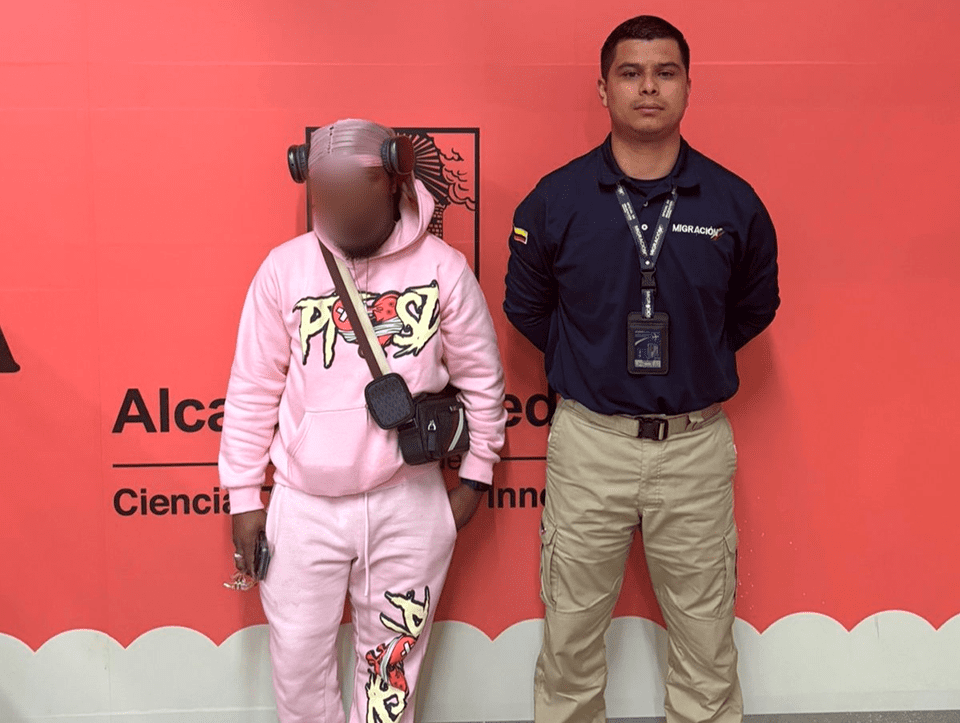
Migración Colombia denied entry to an American known on social media as Casey Red Beard at Aeropuerto Internacional El Dorado in Bogotá on Saturday, May 23, returning him on an immediate flight to Miami after officials confirmed prior alerts linking him to the alleged promotion of sex tourism and private gatherings in Medellín. The traveler has been barred from entering Colombia for 10 years.

The decision drew on existing anotaciones registered by the agency’s Regional Antioquia-Chocó office, derived from public denouncements made in earlier years. According to Migración Colombia, the man had used social media to promote private gatherings in apartments in Medellín aimed at foreign visitors, marketed under the name Programa de Inmersión en Medellín. The agency described packages priced in US dollars that included private dinners, exclusive parties, excursions, and food and transport for women attending the events.

A message attributed by Migración Colombia to the organizers of the parties read: “Mis clientes son millonarios y me pagan muy bien para lanzar fiestas donde solo haya chicas educadas (…) ellos no quieren conocer las chicas que están en el Lleras a las 2 a.m.” (“My clients are millionaires and they pay me very well to throw parties where there are only educated girls (…) they don’t want to meet the girls who are at Lleras at 2 a.m.”)

“In several posts, he brags that his “white advantage” helps him attract Latin American women and urges men to get their passports.” – Jessica Van Meir in The Baffler #77, January 2025

Statements from Bogotá and Medellín

The Director General of Migración Colombia, Gloria Esperanza Arriero, said the agency “no solo tiene rigor en el control migratorio, sino también capacidad en las verificaciones y en la toma de decisiones para combatir la trata de personas y la explotación sexual de niños, niñas y adolescentes con todos los elementos posibles” (“not only enforces migration controls rigorously, but also has the verification and decision-making capacity to combat human trafficking and the sexual exploitation of children and adolescents with every available element”). Arriero added that the agency would continue strengthening control mechanisms to prevent the entry of persons it determines pose risks to communities.

The Mayor of Medellín, Federico Gutiérrez, addressed the case on his X account: “Otro más. Go Home‼ Un estadounidense conocido en redes sociales como Casey Red Beard llegó a Bogotá en un vuelo desde Miami y fue devuelto a su país por Migración Colombia, luego de confirmarse que estaba en la lista Alertas Medellín, por promoción explícita de turismo con fines de explotación sexual, organizando fiestas en apartamentos de la ciudad.” (“Another one. Go Home‼ An American known on social media as Casey Red Beard arrived in Bogotá on a flight from Miami and was returned to his country by Migración Colombia, after it was confirmed he was on the Alertas Medellín list for the explicit promotion of tourism for the purposes of sexual exploitation, organizing parties in apartments in the city.”)

“Let it be clear: there is no place here for foreigners who come to promote disorder and skirt the law.”— Federico Gutiérrez, Mayor of Medellín

The Alertas Medellín list cited by Gutiérrez is a municipal mechanism maintained by the Alcaldía de Medellín that flags foreign nationals associated with criminal activity, security risks, or conduct authorities consider incompatible with public coexistence. The list is shared with Migración Colombia for use at points of entry.

Identifying the Subject

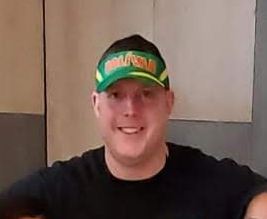
Authorities publicly identified the man only by his social-media handle, Casey Red Beard, and the affiliated X account @RedBeardRants1. The individual operating under the handle is Casey Brown, an American previously identified by name in a January 2025 essay in The Baffler by journalist Jessica Van Meir, who described him as “a self-proclaimed red-pilled dating coach” who advertised “gringo parties” in Medellín “for American tourists to meet Colombian women.” Van Meir cited a 2023 report in the Colombian feminist outlet Manifiesta alleging that Red Beard and an accomplice had engaged in sex trafficking. A LinkedIn profile consistent with the same identification also presents him under the name Casey Brown. Migración Colombia has not commented on legal-name identification.

Self-Styled ‘Red-Pilled’ Dating Coach

The public profile cultivated by the subject sits squarely within the so-called “red pill” or “manosphere” online community — a network of self-styled male-dating influencers whose best-known international figure is the British-American social-media personality Andrew Tate, currently under indictment in Romania on charges including human trafficking and rape. On his YouTube channel, which operates under the handle @redbeardrants, and in his publicly indexed marketing materials, Red Beard describes his stated mission as one to “destroy loneliness in men” and promotes a method built around mass online-dating outreach, paid virtual assistants, and copy-paste messaging “funnels.” His published guidance to clients includes an explicit recommendation to “leave the west (USA, Canada, UK, etc.). Go to a more favorable dating market like Eastern Europe, South America, Asia, etc. where the women are more feminine, beautiful, cooperative, and easier to obtain.” His listed past collaborations include Myron Gaines and the Fresh and Fit Podcast, a manosphere-adjacent program in the same broader subculture.

Investigators reviewing his social-media output cited the same framing in their internal alerts. Beyond the “chicas educadas” message attributed to the organizers by Migración Colombia, the agency noted that Red Beard’s published content has historically marketed Medellín itself as the destination commodity, with the city’s Parque Lleras nightlife district and surrounding El Poblado sector positioned as the operational base for his promoted experiences.

Mayor’s Office Has Made Vice and Sex Tourism a Signature Enforcement Priority

Federico Gutiérrez has positioned the protection of women and children from sexual exploitation as a defining priority of his second, non-consecutive mayoral term, treating the suppression of vice tourism as both a public-safety obligation and a city-brand imperative. The May 23 Casey Red Beard inadmission fits a sustained two-year enforcement push that began in his first weeks back in office in early 2024. Within weeks of taking office, the administration imposed a curfew restricting unaccompanied minors from designated zones — including La 33, La Candelaria, and the Corredor de la 70 — to combat commercial sexual exploitation of children. In April 2024 the mayor used emergency powers to outlaw prostitution in the El Poblado sector, including the Parque Lleras zone, and authorities sealed a guesthouse called Gotham marketed through Airbnb on grounds related to alleged organized criminal activity, with extinción de dominio (asset forfeiture) proceedings sought against the property.

The enforcement push has been backed by explicit US support. In April 2024 the US Ambassador to Colombia, Francisco Palmieri, met with Gutiérrez in Bogotá and pledged the “total cooperation of the US government and its resources” to support Colombian law enforcement against sexual exploitation and human trafficking, including the extradition of US citizens to Colombia where applicable. A bilateral operational pattern was already visible in March 2024, when two US citizens were arrested for the sexual exploitation of minors in Colombia following coordinated raids. Subsequent arrests in August 2024 involved direct coordination with the US Department of Homeland Security’s Homeland Security Investigations (HSI) on a transnational case involving a Mexican operator and routes through El Poblado, Belén, Cancún, and Mérida.

Municipal prevention has run alongside enforcement and has been framed around the protection of minors and women in conditions of economic vulnerability. The Secretary of Security and Coexistence of Medellín, Manuel Villa Mejía, has overseen periodic mega-operativos involving more than 300 agents drawn from the Policía Nacional, the army, Migración Colombia, and municipal agencies, targeting establishments and accommodations linked to alleged exploitation. In October 2025 the Alcaldía launched training for owners and administrators of tourist accommodations in coordination with Fundación Renacer, a Colombian non-governmental organization specializing in the prevention of commercial sexual exploitation of children. City-government figures from October 2024 reported a 160% increase in arrests for sexual violence against minors and 22,000 calls to the city’s 123 emergency line for child and adolescent protection requests during that year, even as overall foreign tourist arrivals rose 26% — a data pairing the Alcaldía has used to argue that brand recovery and enforcement are complementary rather than competing objectives.

The broader foreigner-safety beat in Medellín has continued to draw international attention. In March 2026, the death of an American Airlines (NASDAQ: AAL) flight attendant in Antioquia following her disappearance focused renewed attention on escopolamina-related crime targeting foreigners and locals in the city.

Otro más. Go Home‼

Un estadounidense conocido en redes sociales como Casey Red Beard llegó a Bogotá en un vuelo desde Miami y fue devuelto a su país por Migración Colombia, luego de confirmarse que estaba en la lista Alertas Medellín, por promoción explícita de turismo con… https://t.co/EWBfr9qwdK

— Fico Gutiérrez (@FicoGutierrez) May 23, 2026

Enforcement Numbers for 2026

In what has elapsed of 2026, Migración Colombia has inadmitted approximately 90 foreign nationals nationwide for risks associated with sexual exploitation and conduct linked to trata de personas (human trafficking), a figure already approaching the 110 cases recorded for all of 2025. In Medellín alone, more than 60 inadmission procedures have been carried out so far this year, compared to 80 for all of 2025. The agency’s Regional Antioquia-Chocó office accounts for 63 of the 2026 cases.

Broader expulsion and deportation activity is running at a pace comparable to the previous year. Through May 23, the agency reported 310 expulsions or deportations of foreign citizens in 2026, comprising 157 deportations and 153 expulsions, compared to 1,652 cases recorded during all of 2025. Deportations were concentrated in the agency’s Nariño, Oriente, Atlántico, Eje Cafetero, Antioquia, and Andina regional offices, while expulsions were most frequent in Oriente, Andina, Antioquia, Nariño, and at the El Dorado station.

According to Arriero, expulsion and deportation decisions are taken in accordance with the Constitución Política de Colombia and applicable law, with due-process considerations, and respond to immigration violations, threats to public order or national security, judicial orders, and requirements from international organizations including the International Criminal Police Organization (INTERPOL). Migración Colombia retains discretionary authority under Decreto 2136 de 2021 to deny entry to or order the return of foreign citizens it determines pose risks to national security or public order.

Pattern of Recent Cases

The Casey Red Beard inadmission follows several high-profile expulsions earlier in 2026. In April, Migración Colombia expelled Steve Newland, a US citizen and social media operator known as “Chill Capo,” accused of promoting party experiences with alleged ties to sexual exploitation and of publishing content advising visitors on how to evade migration controls. The same month, the agency expelled Samuel McVey, a former teacher from New Rochelle, New York, following incidents at schools in the eastern Antioquia municipality of Rionegro and in the Las Palmas sector of Medellín. Migración Colombia also detected and again removed Russian citizen George Laevsky after he attempted to re-enter the country following an April expulsion linked to repeated disturbances at an apartment in the El Poblado sector.

Colombian authorities have framed the escalating enforcement as targeting precisely the use of social media and digital platforms to market tourism packages that allegedly conceal sexual exploitation, with women in conditions of economic vulnerability described as the principal victims. The agency has previously stated that prevention of Explotación Sexual Comercial de Niños, Niñas y Adolescentes (ESCNNA) is a particular priority, citing cooperation with international intelligence agencies and the Angel Watch program, which has resulted in more than 470 entry denials since 2016 for reasons associated with sexual offenses.
  •  

“Before They Touch My Family, They’ll Have to Kill Me”: Uribe Warns Protest Outside Antioquia Estate

Former Colombian President Álvaro Uribe Vélez confronted a group of protesters outside his residence in Rionegro, Antioquia, on Wednesday after activists began painting a mural referencing victims of Colombia’s “false positives” scandal.

Videos and images shared widely on social media showed Uribe surrounded by security personnel while holding a paint roller near the wall where the mural was being painted. Wearing a light field jacket and broad-brimmed hat, the former president appeared visibly upset as tensions rose between demonstrators, supporters and members of his security team.

The incident quickly became one of Colombia’s most discussed political flashpoints this week, exposing deep divisions surrounding the country’s internal armed conflict with ex-FARC, the transitional justice system, and the increasingly polarized 2026 presidential race. The official candidate of Uribe’s Centro Democrático party, Paloma Valencia, is considered Cepeda’s strongest rival in the event of a run-off election on June 21.

Uribe later said he had interrupted a political meeting in Medellín after receiving a call informing him that a large group had gathered near the entrance to his property while his wife was home alone.

“Cowardly Cepeda, stop sending people to my house where my lady was alone,” Uribe wrote on X Wednesday, referring his political foe and presidential frontrunner Iván Cepeda.

In a separate statement, Uribe accused the hard-leftist senator and Hernán Muriel, a congressman from the governing Historic Pact coalition, of promoting what he described as “acts of provocation and intimidation” against his family.

According to Uribe, the protesters arrived in three buses and gathered close to the entrance of the estate while artists painted the mural. He claimed one of his supporters was injured with a knife during the confrontation and said a member of his security detail was also hurt.

“I told them that I was going to erase the mural,” Uribe wrote. “Before provoking violence against my family and our home, they would have to kill me.”

Later footage showed Uribe personally covering the painted wall with a roller while supporters and security personnel stood guard nearby.

The mural referenced the latest figures released by Colombia’s Special Jurisdiction for Peace (JEP), the transitional tribunal created following the 2016 peace accord with FARC. The tribunal recently updated estimates tied to the “false positives” scandal, in which civilians were allegedly killed by members of the armed forces and falsely presented as combat casualties during more than four decades of Colombia’s internal conflict.

Muriel, who organized the demonstration, rejected accusations that the protest was intended to threaten Uribe or his family. He described the gathering “as a peaceful act” organized by victims’ organizations, social movements and human rights defenders seeking to highlight the revised JEP findings.

“We are carrying out an act of social mobilization and memory pedagogy,” Muriel said in remarks shared online. “We are here with social organizations, victims and human rights defenders following the new figure of 7,837 false positives announced by the JEP.”

According to Muriel, the mural was painted on public property near the residence and was intended to commemorate victims of the conflict.

The confrontation prompted swift reactions from political allies of the former president in Antioquia, one of Colombia’s most conservative regions and a longtime bastion of Uribe’s “democratic security” agenda.

Medellín Mayor Federico Gutiérrez criticized the protest and accused supporters of President Gustavo Petro of fostering political hostility toward opposition figures. “It’s the same method used during the last mayoral campaign in Medellín,” he wrote on social media, adding that political tensions in the country were continuing to escalate.

Antioquia Governor Andrés Julián Rendón also condemned the incident and called for respect toward Uribe and his family.

The episode underscores how historical revisionism spread on social media continues to discredit the legacy of the country’s two-term president (2002-2010), and leading opposition leaders. By Thursday morning, the images from Rionegro — showing Uribe beside the mural with a paint roller in hand — had spread across Colombian media and social networks, becoming the latest symbol of how the left justifies ideologically-fueled protests to vandalize public space and infrastructure.

  •  

Ugly Americans? Colombia Expels Americans, Others Deemed Undesirable For Behavior & Vice Accusations

Enhanced enforcement seeks to promote family-friendly tourism & unwelcome sex & vice-oriented tourism.

Migración Colombia, Colombia’s immigration agency, has executed the expulsion of two US citizens from Medellín following separate investigations into activities deemed a risk to public security and peaceful coexistence. The administrative measures targeted Steve Newland, a digital content creator known as “Chill Capo,” and Samuel McVey, a former teacher from New York. Both individuals were transported to the Aeropuerto Internacional José María Córdova in Rionegro and placed on a flight to Miami, Florida.

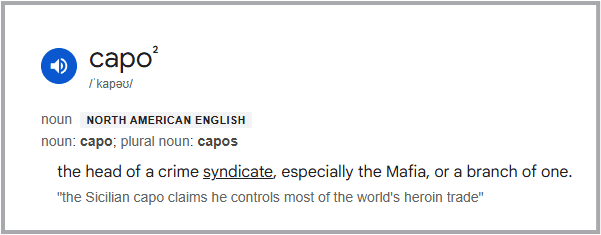
Definition of "Capo" according to Google.

Definition of “Capo” according to Google.

The actions come amid a broader strategy by the Colombian government to address concerns regarding sex tourism and the presence of foreign nationals with outstanding legal issues in their home countries. According to Paola Salazar, the Regional Director of Migración Colombia, the agency has adopted a stricter posture to ensure that Colombia is not utilized as a refuge for individuals linked to fraudulent or illicit activities.

The Case of Steve “Chill Capo”Newland

Steve Newland, a 42-year-old US citizen born in Willingboro, New Jersey, had been residing in Medellín since 2022. Operating under the digital brand “Chill Capo,” Newland promoted luxury lifestyle experiences and nightlife events. However, an investigation by Migración Colombia determined that Newland used his digital platforms to promote encounters with alleged purposes of sexual exploitation.

“Lo están esperando y lo capturan, (they are waiting for them and they will capture them)” stated Federico Gutiérrez, the Mayor of Medellín, referring to the coordination with US authorities regarding the return of the individuals.

The agency reported that Newland’s content included advice on how to evade immigration controls at the airport, such as using false medical certificates or simulating injuries to bypass rigorous inspections. His publications also mentioned accommodations linked to historical criminal figures, specifically the penthouses de Pablo Escobar, and provided instructions on how to avoid being targeted with escopolamina during social outings. Following the investigation, authorities confirmed Newland was in an irregular migration status. He has been banned from reentering Colombia for a minimum of five years.

Newland has publicly denied the allegations via his social media channels. He asserted that his primary objective was to educate visitors on safety and help them avoid dangerous situations. Newland claimed that his events were legal, safe, and conducted in collaboration with established Colombian businesses in the Parque Lleras district. He further contended that his visa had been renewed multiple times since 2022, suggesting that any illegal activity would have prevented such renewals. Newland challenged authorities to present specific evidence or identify victims related to the claims of exploitation.

🔴 #Noticia | Influenciador estadounidense que promovía turismo con fines de explotación sexual en Medellín, fue deportado por Migración Colombia.
El extranjero no podrá ingresar al país en los próximos cinco años, luego de este tiempo tendrá que solicitar una visa. pic.twitter.com/9QhZKJ7C8X

— Migración Colombia (@MigracionCol) April 11, 2026

Samuel McVey: School Incidents and US Warrants

Samuel McVey crazy man

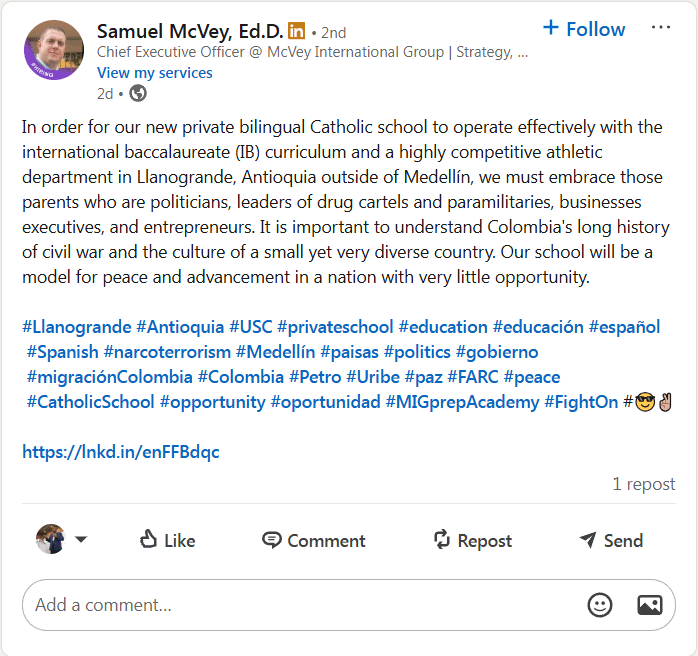
On LinkedIn, McVey claims to have a new private school in Llanogrande, Antioquia, that embraces “leaders of drug cartels and paramilitaries” among others.

In a separate incident, 46-year-old Samuel McVey, who was fired as a primary school teacher but styles himself as “Chief Executive Officer @ McVey International Group” on LinkedIn, was expelled following a series of disturbances at educational institutions in the Valle de Aburrá (Metro Medellín) and the city’s eastern Antioquia bedroom community of Rionegro. On April 8, 2026, McVey reportedly entered at least three schools in the wealthy Las Palmas sector of Medellín, where he allegedly initiated confrontations and made threats against staff and students. He subsequently traveled to Rionegro, where he attempted to gain entry to the Colegio Monteluna in Llanogrande by posing as an English language instructor.

When denied access, McVey reportedly directed threats toward students, prompting school officials to contact the Policía Nacional. He was apprehended by units from the Estación Llanogrande near a local strip mall. Manuel Villa Mejía, the Secretary of Security and Coexistence of Medellín, described McVey as a risk to the community and confirmed that the individual was in a state of high agitation upon his detention.Samuel McVey (photo from LinkedIn)

Investigation into McVey’s background revealed that he is a fugitive from New Rochelle, New York. In the United States, McVey faces charges of aggravated harassment in the second degree, a misdemeanor. The charges stem from an investigation by the New Rochelle Police Department involving threats made against Dr. Corey W. Reynolds, the Superintendent of the City School District of New Rochelle. McVey, a former Spanish teacher at Isaac E. Young Middle School, was terminated in early 2026. New Rochelle authorities had issued two bench warrants for his arrest after he failed to appear for court proceedings on March 26 and April 1, 2026.

Despite the outstanding warrants, the New Rochelle Police Department noted that they do not typically extradite individuals for misdemeanor offenses. Consequently, Colombian authorities processed his departure as an immediate expulsion based on his conduct within Colombia. McVey has been prohibited from entering Colombia for ten years.

Regional Enforcement Trends and Peak Travel Season Operations

The expulsions of Newland and McVey come after a larger enforcement effort during the 2026 Semana Santa (Easter Week) season. Migración Colombia reported that enhanced controls at airports and land borders resulted in the detection of numerous foreign nationals with irregular status or criminal backgrounds.

Specific cases identified by the agency during this period include:

  • In Leticia, Amazonas, a Peruvian citizen was detained at a hotel; the individual was the subject of an Interpol Red Notice for alleged crimes against public health.
  • In Ibagué, a Venezuelan citizen wanted by Peruvian authorities under an Interpol Red Notice for aggravated theft was arrested in a joint operation with the Policía Nacional.
  • In Facatativá, another Venezuelan national was apprehended for an Interpol Red Notice involving charges of human trafficking for sexual exploitation and membership in criminal organizations.
  • In Bogotá, two Dominican citizens were expelled after attempting to fraudulently obtain Colombian passports to travel to Europe.
  • At the Aeropuerto Internacional José María Córdova, a man and a woman from the Dominican Republic were intercepted while attempting to travel to Peru and Argentina using fraudulent Colombian documentation.

    Inadmitted (photo courtesy Migración Colombia)

    Inadmitted (photo courtesy Migración Colombia)

Statistical Overview of Inadmissibility in 2026

In the first quarter of 2026, Migración Colombia has denied entry to over 600 foreign nationals. The primary reasons for inadmissibility include state sovereignty and security risks (153 cases), lack of required visas (133 cases), and insufficient documentation (104 cases). Additionally, 89 individuals were rejected for providing false information during immigration interviews, while 34 had documented criminal records.

The agency also noted a specific focus on preventing the Explotación Sexual Comercial de Niños, Niñas y Adolescentes (ESCNNA). Through cooperation with international intelligence agencies and the Angel Watch platform, 471 individuals have been denied entry since 2016 for reasons associated with sexual offenses. At the Rionegro terminal alone, 31 inadmissibility cases have been recorded so far in 2026 related to potential sex tourism risks.
The Director General of Migración Colombia, Gloria Esperanza Arriero, emphasized that while the country remains open to international travel and investment, visitors are required to comply with the Constitución Política de Colombia and national laws. Under Decreto 2136 de 2021, the immigration authority maintains the power to deny entry or order the immediate return of any foreign citizen who poses a risk to national security or public order.

The main nationalities of those denied entry in early 2026 include citizens from the United States (76), the Dominican Republic (64), Ecuador (55), and Venezuela (52).

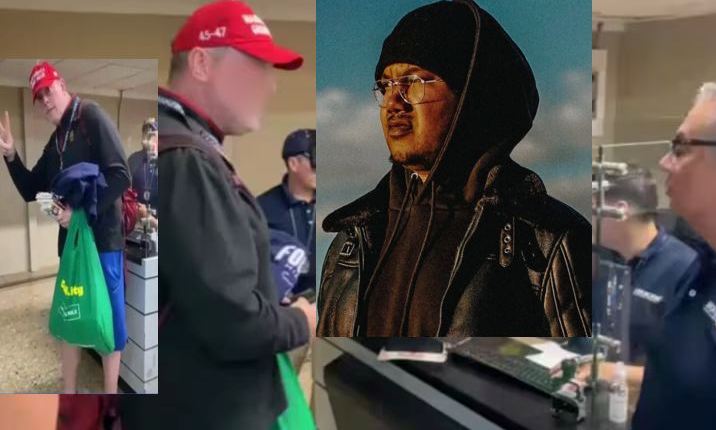
Montage of deportees Samuel McVey and Steven “Chill Capo” Newland

Video footage courtesy Migración Colombia

  •  

Wingo Launches New Routes Between Medellín, Colombia & Jamaica, Guatemala

Wingo expansion strengthens Medellín as a regional aviation hub

Wingo, a subsidiary of Copa Holdings (NYSE: CPA), has announced the launch of two new direct international routes from Medellín to Guatemala City, Guatemala, and Montego Bay, Jamaica. With this expansion, the carrier becomes the only airline to operate these specific nonstop segments from José María Córdova International Airport in Rionegro, which serves the Antioquia region.

The new service increases Wingo’s international portfolio to 10 destinations from the city, complementing its existing network of five domestic routes. According to data provided by the airline, Medellín has become a primary operational base in Colombia. In 2025, approximately 35% of the carrier’s total passenger traffic, representing 1.2 million travelers, originated from or arrived in the city.

“Medellín is a strategic city for Wingo, and these two new routes reflect our confidence in the potential of the city and the response of travelers.” — Jorge Jiménez, Commercial and Planning Vice President of Wingo.

The Alcaldía de Medellín, through the Secretaría de Turismo y Entretenimiento and the Bureau de Medellín y Antioquia, coordinated with airport concessionaire Airplan to facilitate the new frequencies. The Medellín to Guatemala City route is scheduled to begin operations on June 25, 2026, with three weekly frequencies on Tuesdays, Thursdays, and Saturdays. The airline expects to offer 30,000 seats annually on this route, with one-way fares starting at $108 USD, including taxes and fees.

The connection to Montego Bay is slated for a June 23, 2026, start date, also operating three times per week on Tuesdays, Thursdays, and Saturdays. Introductory fares for the Jamaican destination are positioned at $159 USD per trayect. This move follows a 2025 pilot program where Jamaica was marketed as a high-interest destination for Colombian travelers.

Jorge Jiménez, Commercial and Planning Vice President at Wingo, stated that these routes reflect confidence in the potential of the city and the response of travelers to direct, low-cost international options. Ana María López Acosta, Secretary of Tourism and Entertainment, noted that the collaboration between the public and private sectors continues to project the city as an attractive destination for tourism and investment.

The expansion comes as the Aeropuerto Internacional José María Córdova continues to increase its capacity as a logistical platform for the country. Javier Benítez, Manager of the airport, indicated that the arrival of these routes reaffirms the facility’s potential to facilitate international business and connection for the region.

  •  
❌