Reading view

Colombia’s Three Presidential Front-Runners Draw Divergent Maps for Foreign Capital, Security, and Rule of Law

Colombians face three sharply different futures in May 31 vote

Colombia votes on May 31 with its presidential race concentrated around three candidates whose platforms diverge on nearly every dimension of economic and security policy relevant to foreign investors. For corporate executives, institutional investors, and multinational operations with Colombian exposure, the choice between senator Iván Cepeda, senator Paloma Valencia, and defense attorney Abelardo de la Espriella carries direct, measurable implications for the regulatory environment, foreign direct investment (FDI) conditions, energy sector licensing, and geopolitical alignment through at least 2030.

No candidate is projected to clear the 50%-plus-one threshold required to win outright on May 31, making a runoff election on June 21 the expected outcome. The question that will determine the direction of that runoff — and by extension the next administration — is which of the two opposition candidates finishes second.

Click above to play the video!

A Race Reshaped by Late Polling

The final-week polling picture shifted substantially, and the trajectory matters as much as the snapshot. The CONDOR weighted aggregate — which incorporates surveys from six polling firms and applies greater weight to more recent data — placed the race as of May 23 at: Cepeda 36.3%, De la Espriella 29.1%, Valencia 16.7%.

Invamer, one of Colombia’s most established polling firms, surveyed 3,800 respondents across 152 municipalities between May 13 and May 20, registering Cepeda at 44.6%, De la Espriella at 31.6%, and Valencia at 14.0%. The Centro Nacional de Consultoría (CNC) published a survey conducted May 22 and 23 showing Cepeda at 33.4%, De la Espriella at 30.9%, and Valencia at 12.6%.

Comparing those figures to the Fundación Génesis Crea survey from May 4 through May 11 — which placed Cepeda at 35.1%, Valencia at 25.4%, and De la Espriella at 21.6% — indicates a multi-poll trend of De la Espriella gaining approximately nine to ten percentage points in three weeks while Valencia shed a comparable share. AS/COA’s poll tracker confirms the directional consistency across firms.

Atlas Intel, which published figures more favorable to De la Espriella, is currently under investigation by Colombia’s Consejo Nacional Electoral (CNE) for potential methodology violations and could face suspension of its operations. Those figures are treated with caution in this analysis.

Runoff modeling diverges between firms. Fundación Génesis Crea showed Valencia defeating Cepeda 49.1% to 44.7% in a second-round matchup — meaning she was the stronger opposition candidate in that scenario. The Guarumo/Ecoanalítica survey found Cepeda losing all hypothetical runoff scenarios, including against De la Espriella. Two minor candidates — former senator Clara López and former Chocó governor Luis Gilberto Murillo — withdrew and endorsed Cepeda before the first round, a consolidation that appears to have had limited effect on his polling numbers.

Finance Colombia reported in May that the campaign has been marked by an unusual absence of traditional televised debates. Cepeda declined to participate in events organized by major media outlets, stating that proposed formats lacked neutrality. Former Bogotá Mayor Claudia López, herself a candidate, said publicly that Cepeda’s refusal was motivated by an unwillingness to defend his record as the architect of President Gustavo Petro‘s Paz Total security negotiation strategy.

Security Policy: The Three Approaches to Armed Groups

Public security is the top voter concern heading into the election. InSight Crime documented that the Ejército de Liberación Nacional (ELN) launched a major offensive against FARC dissident factions in Norte de Santander in early 2025, resulting in mass civilian casualties in the Catatumbo region. In Chocó and Antioquia, the ELN and the Autodefensas Gaitanistas de Colombia (AGC), commonly known as the Clan del Golfo, are competing for control of illegal gold mining corridors and drug trafficking routes. In Cauca, FARC dissident factions have established territorial control in areas where state presence has collapsed.
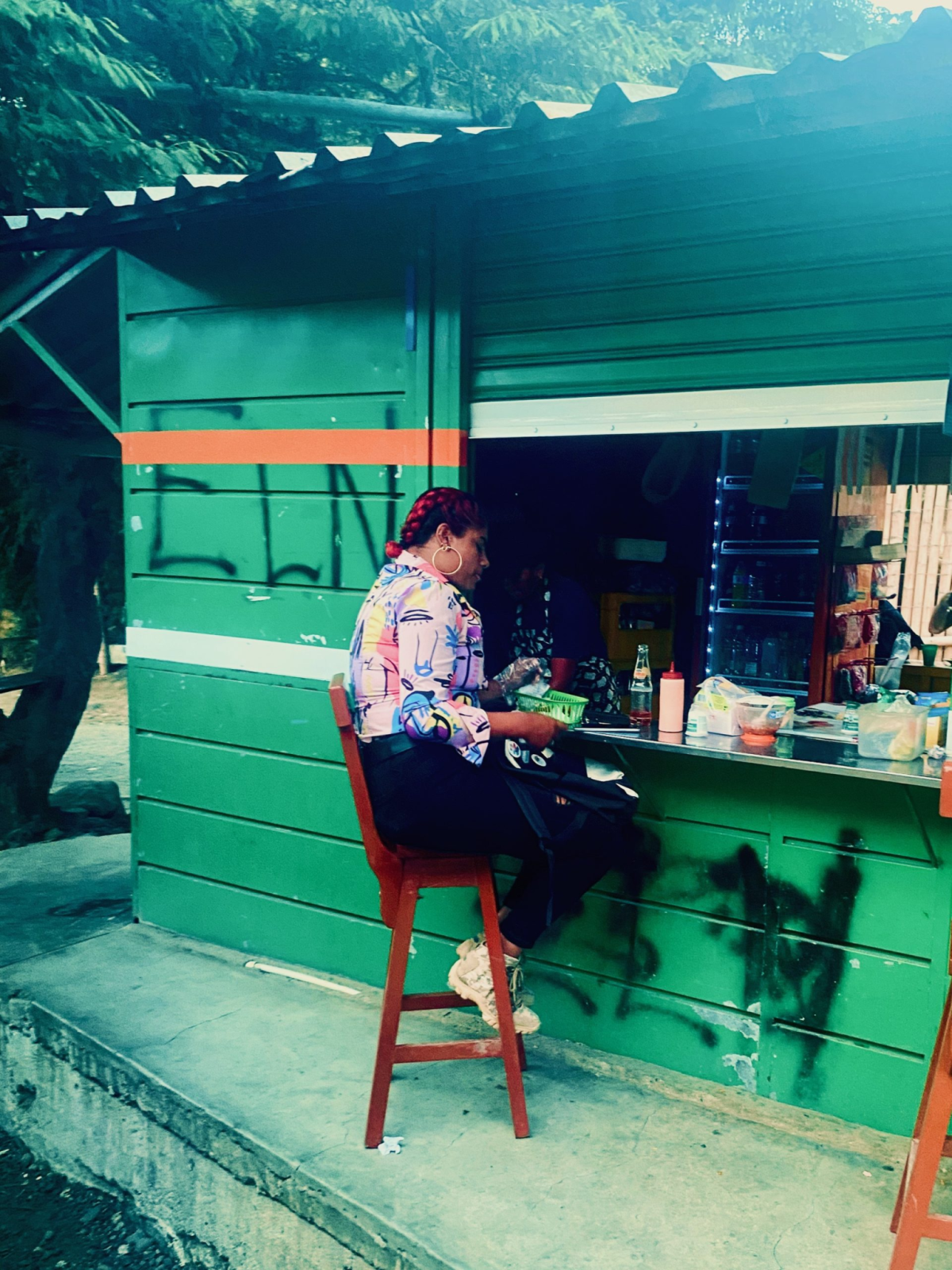
Grafiti of the ELN and ex-FARC Mafia near Corinto, Cauca (Credit: Henry Shuldiner)Cepeda’s approach to security is defined by his role as the principal legislative architect of Paz Total. As chair of the Senate‘s peace commission, he designed the framework that extended negotiating status to the ELN, FARC dissident groups, and the Clan del Golfo. His stated rationale is that targeting the financial leadership of drug networks rather than foot soldiers produces more durable results — a position that has academic backing in narcotics policy literature. In practice, Paz Total produced ceasefires that were repeatedly violated, and security indicators in conflict-affected departments deteriorated during the Petro administration. A Cepeda presidency is expected to continue the negotiated settlement model, with the military operating under political constraints.

Valencia’s security platform is based on reinstating Seguridad Democrática, the doctrine associated with former president Álvaro Uribe’s administrations from 2002 to 2010. The core elements are expanded military presence in rural conflict zones, dismantling of rural criminal networks, and resumption of extradition agreements with the United States — which Petro suspended, effectively shielding cartel leadership from US federal prosecution. The Uribe-era approach resulted in measurable reductions in homicide rates, forced displacement, and ELN and FARC territorial control, though human rights organizations documented serious abuses by security forces during that period.

De la Espriella has stated explicitly that his government would have no peace process. He advocates for a model similar to El Salvador’s under President Nayib Bukele: mass incarceration, construction of high-security prison facilities, classification of guerrilla and cartel organizations as foreign terrorist organizations, and broad military offensives. He has not detailed how such operations would be financed or how the mass detention model would interact with Colombia’s Constitutional Court, which has repeatedly constrained executive security powers.

For the armed groups operating in Norte de Santander and Cauca, the historical record indicates that Colombia’s criminal organizations respond more acutely to sustained, institutionally grounded military pressure and functioning extradition pipelines than to political rhetoric. By that measure, Valencia’s platform — which rebuilds the institutional security apparatus incrementally — represents a more structurally credible threat to the ELN and the Estado Mayor Central (EMC) FARC dissidents. For the Clan del Golfo leadership, extradition to the United States has historically been the principal deterrent, and Valencia’s program explicitly restores it.

Business Climate and Employment Conditions

The Petro administration enacted a series of minimum wage increases totaling more than 60% over four years — including a 16% increase for 2023, the largest single-year hike in Colombian history, and a 23.78% increase for 2026 — restructured labor regulations to expand premium pay requirements for night, weekend, and holiday shifts, and raised corporate tax rates to fund social spending programs. The Asociación Nacional de Empresarios de Colombia (ANDI) characterized the regulatory environment as adverse to private investment. Finance Colombia tracked a material decline in FDI in the extractive sector over the same period.

Cepeda supported those labor and fiscal reforms throughout their legislative passage. His platform extends the Petro model: increased state social spending, continued land redistribution programs, and maintenance of the current wage and labor cost structure. For companies with established Colombian operations, the regulatory environment is manageable; for companies evaluating market entry or operational expansion, the cost structure adds friction.

Valencia’s economic program emphasizes corporate stability and private sector investment as the primary mechanisms of job creation. Her vice-presidential running mate, Juan Daniel Oviedo — former director of DANE, Colombia’s national statistics agency — represents a technocratic orientation focused on reducing structural market distortions, streamlining public procurement, and scaling back state administrative overhead. Oviedo’s appointment is a direct signal to the business community that economic management would be data-driven rather than ideologically directed. Oviedo also publicly identifies as a member of the LGBTQ+ community, a departure from the traditional social conservatism of Centro Democrático.

De la Espriella’s economic orientation is pro-business with protectionist elements. His vice-presidential candidate, José Manuel Restrepo — who served as Colombia’s Finance Minister and Commerce Minister — provides institutional credibility on fiscal and trade policy. Restrepo’s presence on the ticket signals commitment to fiscal discipline and regulatory reduction in the extractive and commercial sectors. De la Espriella’s personal style, however, introduces operational uncertainty; his campaign has generated multiple high-profile controversies, including a public altercation with Caracol Noticias journalist María Lucía Fernández during a live broadcast and a formal apology following misconduct allegations by journalist Laura Rodríguez of Piso 8 FM.

Foreign Investment, Oil, and Mining

Ecopetrol holds a 31.5% stake in the Gunflint oil field in the Gulf of Mexico.

Ecopetrol holds a 31.5% stake in the Gunflint oil field in the Gulf of Mexico.

The extractive sector is the most consequential economic policy dimension for international capital. Ecopetrol (NYSE: EC; BVC: ECOPETROL) — Colombia’s state-controlled energy company and the largest corporation in the country — has operated under exploration restrictions during the Petro administration, which has opposed new fossil fuel contracts on climate grounds.

Cepeda’s position extends the Petro framework: mandatory transition away from fossil fuels, heavy restrictions or outright prohibitions on new oil and gas exploration contracts, and stringent environmental licensing requirements for open-pit mining operations. Foreign investment would be directed by policy toward green hydrogen, ecotourism, and smallholder agriculture. For the multinational oil majors with Colombian operations and for institutional investors in the mining sector, a Cepeda presidency represents a continuation of the current constraints and, in some contract scenarios, an accelerated wind-down of Colombian portfolios.

In a related development, Finance Colombia reported in May that Ecopetrol’s president, Ricardo Roa, has been formally charged in connection with alleged campaign spending violations during Petro’s 2022 presidential campaign. The case will be inherited by whoever takes office in August.

Valencia’s position is that hydrocarbon revenues are essential to Colombia’s macroeconomic stability and that the country cannot exit the sector before alternative revenue structures exist. Her platform actively encourages FDI in petroleum exploration, is open to regulated fracking, and commits to clearing the environmental licensing backlog that has stalled multiple large-scale gold and copper mining projects. For energy and mining companies currently blocked by administrative delays, this represents the most direct path to project advancement.

De la Espriella’s position goes further: essentially deregulating the environmental licensing process for major extraction projects on the grounds that Colombia’s economic sovereignty takes precedence over environmental restrictions he characterizes as externally imposed. The practical constraint is whether a De la Espriella administration would have the institutional coherence and congressional support to deliver regulatory rollback, given that his movement has no established political party structure and entered the race through an independent signature campaign.

Foreign Policy: Washington Alignment vs. Multipolar Strategy
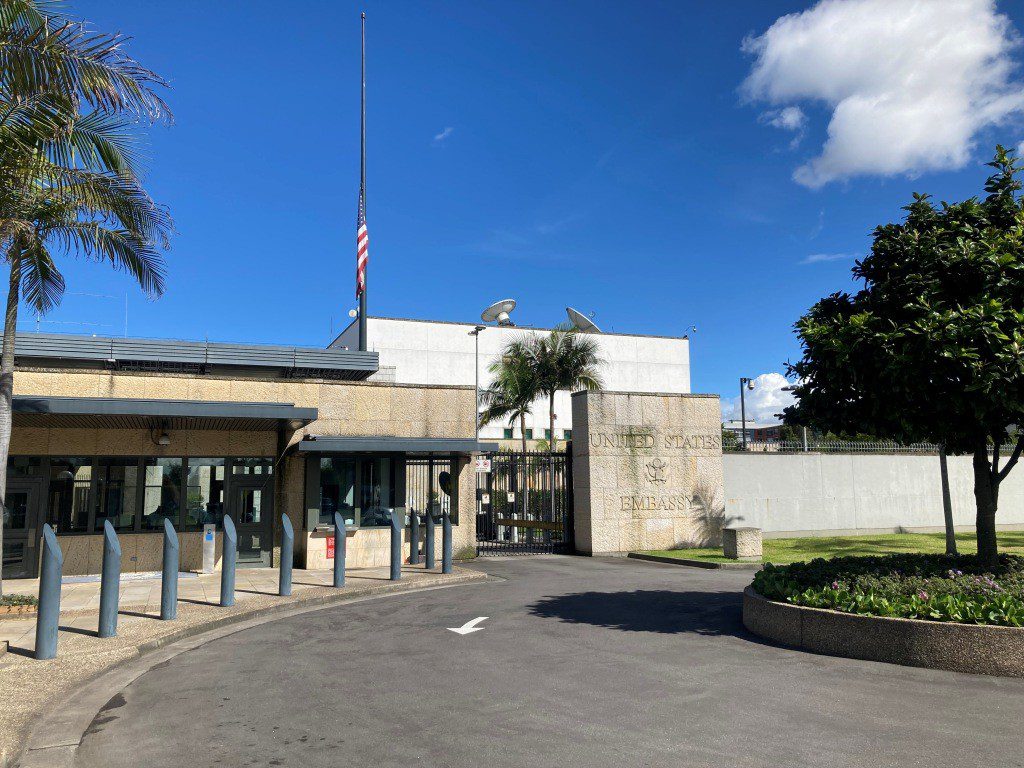
The US Embassy in Bogotá is said to be the 3rd largest US mission in the world (photo: Loren Moss)

The US Embassy in Bogotá is said to be the 3rd largest US mission in the world (photo: Loren Moss)

Colombia’s relationship with the United States deteriorated materially under Petro, who aligned Colombia with Venezuela’s Nicolás Maduro, pursued closer ties with China and Russia, and suspended extradition agreements. US counternarcotics cooperation was strained throughout the period.

Cepeda is committed to what he describes as a multipolar foreign policy — maintaining functional diplomatic channels with Washington and Brussels while deepening strategic and commercial relationships with China and Russia. His alignment with regional left-of-center governments in Mexico, Brazil, and Bolivia would position Colombia as part of a Latin American bloc that has grown increasingly skeptical of US regional leadership. For US companies operating in Colombia, this trajectory does not mean immediate operational disruption, but it reduces Colombia’s utility as a reliable counterpart on security cooperation, counter-narcotics intelligence sharing, and trade dispute resolution.

Valencia positions a return to the Western alignment as a core objective. She would prioritize restoring the US-Colombia relationship, reinforcing the bilateral Free Trade Agreement, and reestablishing intelligence-sharing mechanisms that were reduced under Petro. Her framing positions Colombia as a democratic anchor in a region experiencing authoritarian pressures.

De la Espriella takes the most explicit pro-US position in the race. La Silla Vacía reported that De la Espriella or entities linked to his campaign donated more than $90,000 USD to the US Republican Party, a fact that raises questions about the nature and expectations of those relationships. He has publicly aligned himself with the populist right in the United States, takes a hostile posture toward China, Russia, and Venezuela, and has characterized his security approach as consistent with a transactional alliance with Washington focused on counter-narcotics enforcement and cartel designation as foreign terrorist organizations.

“Ese pisco robó a 200 mil colombianos.” — Claudia López, former Mayor of Bogotá, referring to presidential candidate Abelardo de la Espriella’s legal representation of DMG pyramid scheme founder David Murcia Guzmán, during a presidential campaign event.

Corruption and Judicial Independence

All three candidates have stated commitments to fighting corruption, though their approaches and focal points differ in ways that are material to the institutional environment for business operations.

Cepeda’s legislative record includes serious, documented work investigating paramilitary infiltration of Colombia’s political institutions — the period known as parapolítica — and pursuing accountability for those cases. His blind spot, his critics argue, is corruption within the current administration. When Ecopetrol’s Ricardo Roa was formally charged in connection with Petro’s 2022 campaign, the response from the Pacto Histórico coalition was subdued. Cepeda has been Álvaro Uribe’s primary judicial antagonist in the Senate; a Cepeda administration would offer no institutional protection to Uribe and would be expected to support the full progress of judicial proceedings against him. For left-wing politicians facing legal exposure, including former Medellín mayor Daniel Quintero, a Cepeda administration would be expected to be more receptive to amnesty frameworks.

Valencia’s approach to anti-corruption is structural rather than prosecutorial: strengthening the independence of the Contraloría General de la República and the Fiscalía General de la Nación, implementing digital transparency in public procurement, and reducing informal executive influence over judicial processes. She would be expected to apply political and rhetorical pressure on behalf of Uribe — her political mentor and a close ally — though her legislative track record indicates a degree of institutional independence from Centro Democrático party orthodoxy.

De la Espriella’s anti-corruption rhetoric centers on severe criminal penalties for corrupt officials. The credibility of that position is complicated by his professional history, which is examined in detail below.

De la Espriella’s Legal Career: The Documented Record

De la Espriella’s campaign has faced sustained scrutiny over his client history as one of Colombia’s highest-profile criminal defense attorneys. The record is documented in reporting by El Colombiano, El Espectador, and the investigative outlet Corrupción al Día.
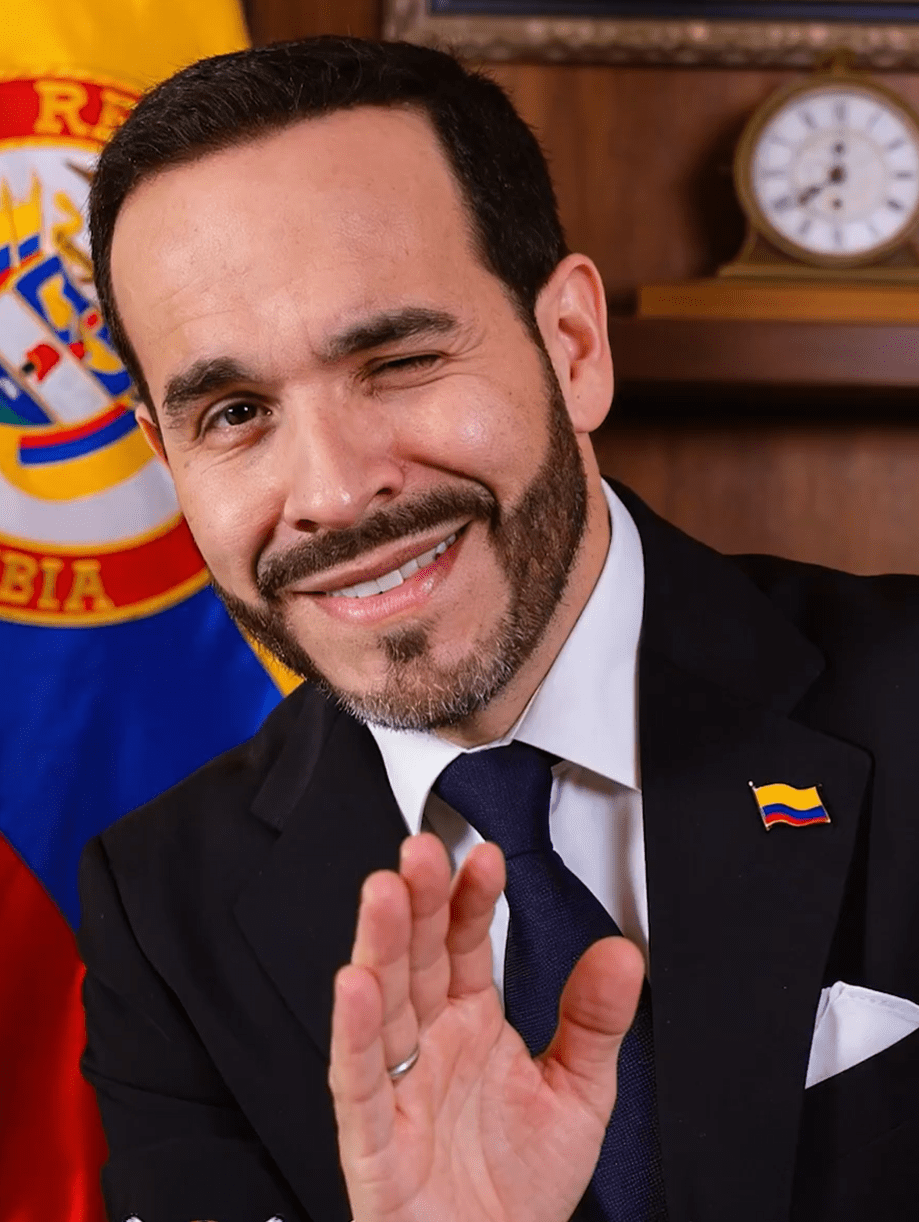
Abelardo de la Espriella (screen capture from Twitter video)

Abelardo de la Espriella (screen capture from Twitter video)

His documented client roster includes Salvatore Mancuso, the former supreme commander of the Autodefensas Unidas de Colombia (AUC) paramilitary network; multiple legislators convicted in the parapolítica scandal, which established systematic infiltration of Colombia’s congress by paramilitary organizations; David Murcia Guzmán, the operator of the DMG pyramid scheme that defrauded an estimated 200,000 Colombian investors; the Nule Primos, convicted of large-scale public contract fraud; and Álex Saab, the Colombian businessman extradited to the United States on charges of acting as the primary money launderer for the Maduro government in Venezuela. According to Corrupción al Día, De la Espriella’s legal fees from Saab reportedly reached $12 million USD and included private aircraft travel.

De la Espriella’s response to this line of criticism rests on due process principles: that every accused person is entitled to vigorous legal defense regardless of the charges, and that his ability to navigate Colombia’s criminal code at its most complex levels demonstrates the expertise required to enforce the law from the executive branch. The argument has legal validity as a principle. The specific issue for foreign compliance officers and US government counterparts is the Saab representation: the same Nicolás Maduro whose regime De la Espriella’s campaign now characterizes as an ideological enemy received legal services from De la Espriella’s firm when the representation was commercially available.

The Fiscalía investigated De la Espriella in connection with alleged paramilitary links in 2009 and again in 2012; both investigations were dismissed for insufficient evidence, and he carries no convictions or active investigations on those matters.

Cepeda’s Family History and Ideological Background
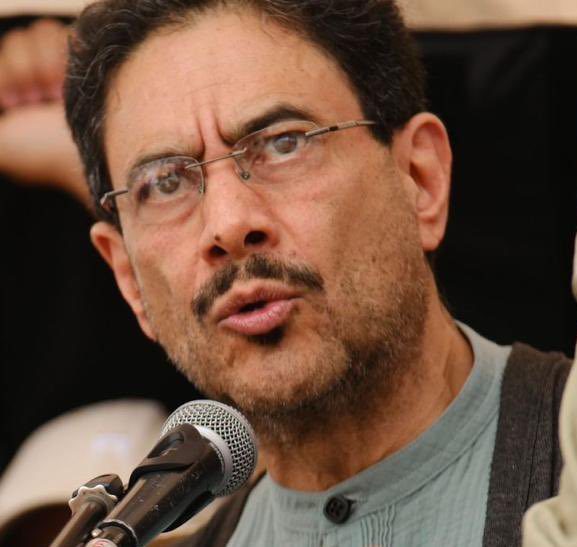
Iván Cepeda (from Twitter)

Iván Cepeda (from Twitter)

Critics of Iván Cepeda, including Enrique Gómez of the Salvación Nacional party, have argued that his family background constitutes evidence of structural alignment with guerrilla movements. The record on this point merits examination.

Cepeda is the son of Manuel Cepeda Vargas, who served as Secretary-General of the Colombian Communist Party and as a senator for the Unión Patriótica (UP), a left-wing political movement that was systematically exterminated by a combination of state actors and paramilitary organizations during the 1980s and 1990s. Manuel Cepeda Vargas was assassinated on August 9, 1994. The Inter-American Court of Human Rights subsequently found the Colombian state responsible for his murder. The FARC-EP named its Frente Urbano Manuel Cepeda Vargas — an urban front operating within the Bloque Occidental — in the elder Cepeda’s honor.

The Fundación Paz y Reconciliación (PARES) has documented that Iván Cepeda’s relationship with his father’s political positions was more complex than the family lineage alone suggests. After studying in Bulgaria in 1981, Cepeda broke from his father’s Soviet-oriented communist framework and aligned with democratic leftists including Bernardo Jaramillo Ossa, who publicly rejected the FARC’s armed strategy. Cepeda has repeatedly stated his repudiation of the FARC’s use of his father’s name. No documented evidence connects him to operational coordination with current armed groups.

What the family history does establish is the ideological framework through which Cepeda processes security policy: a belief, grounded in personal and political experience, that the Colombian state’s institutional violence has been as destructive as guerrilla violence, and that negotiated settlements are structurally preferable to military solutions. That framework generates Paz Total. It also generates a posture toward ELN and FARC dissident negotiators that prioritizes process continuity over verified compliance — a disposition that armed groups have demonstrably exploited to maintain territorial and operational positions while negotiation frameworks provided legal cover.

Paloma Valencia (image Twitter)

Paloma Valencia (image Twitter)

Valencia and the Uribe Question

The comparison to former president Iván Duque (2018–2022) comes up regularly in discussions of Valencia’s political independence. Duque, who had limited independent political standing before Uribe selected him, was perceived throughout his term as governing within constraints set by his patron — a dynamic that Colombian political cartoonists characterized as ventriloquism.

Valencia’s profile differs materially. She is the granddaughter of former Colombian president Guillermo León Valencia, carries her own political lineage, and has served in the Senate for over a decade, building positions on agrarian reform, judicial modernization, and indigenous land rights that have placed her at variance with standard Centro Democrático positions on those issues. She won the Gran Consulta por Colombia primary on March 8 with more than 45% of the vote — over 3.2 million Colombians — establishing a democratic mandate distinct from any party endorsement.

She would be expected to use institutional and rhetorical channels to support Uribe in the ongoing judicial proceedings against him, and to apply pressure on the trajectory of those cases. Whether that constitutes political interference with judicial independence or normal advocacy within democratic norms is a question on which observers disagree. What the legislative record does not support is the characterization of Valencia as incapable of independent governance.

Press Freedom and the Media Environment

Press freedom carries an indirect but measurable correlation with rule-of-law quality, which in turn affects operational risk for companies that rely on regulatory predictability and transparent legal processes.

Cepeda has maintained a posture toward critical media that mirrors President Petro’s practice of characterizing adversarial outlets as acting in the interests of economic elites. Under Petro, this produced a systematic exclusion of critical media from official information flows and persistent rhetorical delegitimization of independent journalism, though the press remained legally free to operate. A Cepeda administration would be expected to continue this pattern.

Valencia’s background in Colombia’s traditional political and intellectual establishment, combined with a decade in a party that has faced sustained critical coverage from Colombia’s major outlets, points toward a conventional institutional relationship with the press — adversarial at times, but within professional norms.

De la Espriella’s conduct during the campaign provides direct evidence of his approach. He publicly called Caracol Noticias journalist María Lucía Fernández “ignorant” in a live interview. He issued a formal apology after journalist Laura Rodríguez of Piso 8 FM made allegations of inappropriate conduct. His campaign strategy has drawn comparisons to the approach of Argentine president Javier Milei and US president Donald Trump in its use of direct digital channels to circumvent traditional media while publicly attacking outlets that publish critical coverage. The press would remain legally protected under a De la Espriella administration, but the operational environment for investigative journalism would be hostile.

The Ideological Spectrum: Market Liberalism to State Direction

The question of which candidate is most aligned with free-market principles requires a distinction that the international business press frequently elides: the difference between economic deregulation and political authoritarianism. These can, and in this election do, exist independently.

De la Espriella’s platform is often described in international coverage as the most pro-market. His deregulation proposals for the extractive sector and his corporate tax rhetoric support that reading in the economic domain. His security platform, however, involves a substantial expansion of state coercive power: mass detention operations, a mega-prison construction program, and the suspension of standard due process protections to facilitate rapid incarceration of criminal suspects. The Cato Institute‘s framework of economic freedom as inseparable from civil liberties would categorize a state powerful enough to detain people without standard procedural protections as a state that represents an institutional risk to property rights and contract enforcement as well.

Valencia’s platform, anchored by Oviedo’s technocratic program of structural market reform — reduced administrative barriers, streamlined procurement, smaller state overhead, maintained civil liberties — represents the closest approximation to coherent market liberalism available in this field. It does not carry the rhetorical force of De la Espriella’s deregulation proposals, but it has more institutional grounding.

Cepeda’s platform is the furthest from market liberalism by any standard measure: state-directed investment allocation, wealth redistribution through tax and transfer mechanisms, state expansion in healthcare and pension administration, and agrarian land redistribution. His program is continuous with the Petro administration’s economic framework.

Minor Candidates: The Rest of the Ballot

Claudia López, senator of Colombia. (Credit: Patty Suescún)

Claudia López, senator of Colombia. (Credit: Patty Suescún)

Several other candidates remain on the ballot and are drawing small but potentially consequential vote shares in a first round where the margin between second and third place could be narrow.

Claudia López, former mayor of Bogotá running under the Con Claudia Imparables coalition, positions herself as a progressive centrist with a documented anti-corruption record. Her polling has not broken 3.5% in major surveys, and her high polarization ratings from her mayoral term limit her growth ceiling. Her attacks on De la Espriella during the campaign — she publicly called him a “defender of the mafia” in reference to his client history — have been among the most pointed in the race, and factually grounded on the public record.

Sergio Fajardo, making his third consecutive presidential run under Dignidad y Compromiso, continues to represent a technocratic, education-focused centrism grounded in his work transforming Medellín in the early 2000s. He has not broken 3.5% in any major poll in this cycle.

Roy Barreras, running under La Fuerza de la Paz following his Frente por la Vida primary victory, is one of the most experienced political operatives in Colombia, having been part of multiple coalition governments across ideological lines over two decades. He polls below the threshold for meaningful first-round impact.

Miguel Uribe Londoño, running under Partido Demócrata, represents a younger-generation conservative platform emphasizing fiscal discipline and private sector growth, broadly consistent with Valencia’s program. He also polls below 3.5%.

Carlos Caicedo, running on a regionalist platform emphasizing decentralization away from Bogotá, draws support primarily from the Costa Caribe. His structural argument about Colombia’s administrative over-centralization is substantively grounded, though his national profile is insufficient to affect the first-round outcome.

Investment Implications

For international capital with Colombian exposure, the three-way race produces three materially different operational scenarios.

A Cepeda victory — which remains the single most likely first-round outcome based on available polling — would signal continuity of the Petro-era regulatory framework: sustained capital outflow pressure, high corporate tax rates, no new fossil fuel exploration contracts for Ecopetrol (NYSE: EC; BVC: ECOPETROL) or private operators, continued labor cost escalation, and a foreign policy trajectory away from Washington. Colombian equity valuations would be expected to remain under pressure. The mining licensing backlog would continue to accumulate. A Cepeda administration would not replicate Venezuela’s economic trajectory — Colombia’s independent central bank, Banco de la República, its functioning constitutional court, and its institutional depth provide meaningful buffers — but the investment headwinds would be structural rather than cyclical.

A Valencia victory would represent the sharpest regulatory reversal available in this field. Ecopetrol exploration contracts would be expected to advance. The mining licensing backlog would be addressed. US bilateral relations would be restored, reactivating security intelligence cooperation and trade facilitation mechanisms. The Colombian peso would be expected to strengthen as country risk premium declined. The path to that outcome now requires her to either close the gap significantly on De la Espriella in the first round or rely on runoff polling that showed her as the stronger second-round candidate — data that predates the most recent polling shift.

A De la Espriella victory introduces the widest distribution of possible outcomes. The upside scenario involves Restrepo managing fiscal and trade policy competently, genuine regulatory rollback in the extractive sector, aggressive extradition resumption, and security operations that reduce the physical risk premium in conflict-affected departments including Cauca, Norte de Santander, and Chocó. The downside scenario involves recurring crises generated by De la Espriella’s personal conduct, conflicts of interest arising from his former client relationships, and authoritarian security measures that attract international human rights attention and complicate bilateral relationships. Restrepo’s presence on the ticket reduces the probability of the downside scenario but does not eliminate it.

The current polling trend indicates that right-wing voters are consolidating around De la Espriella at Valencia’s expense. Whether that consolidation produces a runoff between De la Espriella and Cepeda — and whether the runoff produces a left or right-wing government — remains uncertain. What the polling data does not support is the scenario, widely assumed until recently, of a Cepeda-Valencia runoff in which Valencia was positioned as the structurally stronger opposition candidate.

Subscribe to Finance Colombia to remain updated on key developments and impartial analysis.

  •  

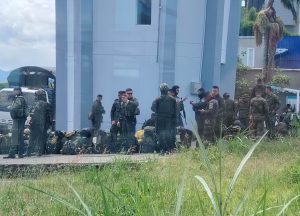
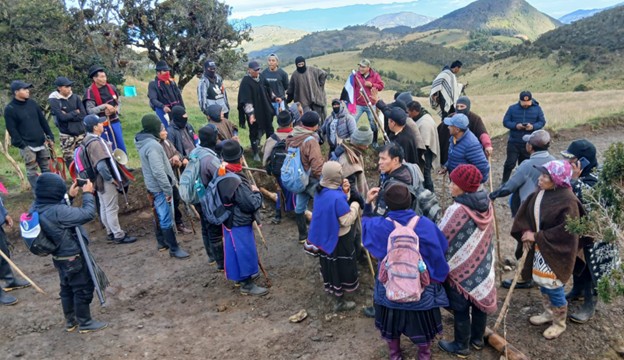
Troops arrive in Cauca to calm clashes between indigenous communities.

Misak community meeting in the Cauca hills during clashes on Thursday. Photo: X

A large military contingent has been sent to Cauca today to halt clashes between members of the Nasa and Misak communities fighting over ancestral territory.

The first of 500 troops arrived in Popayán, the department capital, to be ferried by helicopters to the hills around Sylvia in northern Cauca where members of both indigenous groups were fighting on Thursday. The violent confrontation led to seven deaths and more than 100 people injured, some seriously, according to latest reports.

Colombia’s minister of defence Pedro Sánchez, announcing the troop deployment, said the death toll was likely to rise as both military and state institutions gained access to the zone.

Videos posted online showed people from both communities fighting with machetes, spears and home-made explosives. But many dead and injured had gunshot wounds, suggesting firearms were being used, said Sánchez.

Leaders called for calm today, and Colombia’s president Gustavo Petro appealed to both sides to re-start talks over the contested land.

Troops arriving in Cauca Friday.
Troops arriving in Cauca on Friday.

“I have requested a meeting with the highest authorities of the Misak and Nasa peoples to guarantee peaceful coexistence,” tweeted Petro. He offered to broker talks next week.

Petro’s government has been attempting to resolve historical territorial issues with indigenous communities who often lack legal land titles through the Agencia Nacional de Tierras (ANT), the national land agency.

An “interethnic pact” was urgently needed in Cauca to return fertile land to original communities for agricultural crops, said Petro. The expertise of indigenous farmers could turn the tide of drug trafficking in the region, he added.

Conflict hotspot

Cauca, in southwest Colombia, is one of the country’s most conflicted regions with multiple armed groups in conflict with the state.

It is also home to some of Colombia’s largest indigenous communities, such as Nasa that inhabit large tracts of highlands that span the Andean massif and defend their land with both political bodies – powerful lobbies such as the CRIC or Consejo Regional Indigena del Cauca – and self-defense forces known as Guardia Indigena.

In Cauca, the Guardia Indigena are frequently targeted by armed groups and members of CRIC are victims of kidnap or assassination.

See also – Cauca bombs: What’s Going On?

Vice-presidential candidate Aida Quilcué, herself Nasa, survived an abduction attempt in February this year when armed men intercepted her vehicle in the highlands of Cauca. She was rescued by Guardia Indigena who trailed her into the mountains.

This week’s clashes erupted after simmering dispute over 800 hectares (2,000 acres) of páramo highlands bordering the Pitayó Reserve, belonging to Nasa, and Guambia territory of the Misak.

RIC indigenous guards marching in Bogotá during the 2019 protests. Photo: Steve Hide
CRIC indigenous guards from Cauca marching in Bogotá during the 2019 protests. Photo: S. Hide

Political twist

According to members of the communities, the plot of land had three springs and was of cultural and spiritual significance to both groups. But in 2023 the ANT appeared to award titles to Nasa based on colonial maps from the colonial era of the 1750s, and act that infuriated Misak who also claimed it as their ancestral territory.

In the aftermath of Thursday’s clashes, opposition politicians were quick to blame the Petro government for fomenting the violence, accusing the ANT of favoring the Nasa reserve and CRIC – widely seen as allied with Petro’s Pacto Historico party – of using the ANT judgment to invade Misak territory.

In a Facebook post right-wing presidential candidate Paloma Valencia accused Nasa’s community in the Pitayó reserve of breaking negotiations to take the disputed territory by force.

In a further twist, Valencia implicated Quilcué, the running mate of her main political rival Iván Cepeda in this month’s presidential elections. Quilcué, who previously led CRIC and was openly supported by the organization in her vice-presidential bid, had pushed the dispute, claimed Valencia.

“Instead of deciding to resolve the issues, the Nasa then decided to advance and invade the Misak territory,” she added.

Allowed to fester

According to an analysis by El Espectador, the conflict stemmed from a misunderstanding of 2023’s ANT declaration, which was an interim finding leaving a “wide margin of interpretation” for who owned the land.

Nasa interpreted the finding as an excuse to use the land traditionally inhabited by Misak, and in return the Misak community blocked access roads.

In March this year the governor of the Pitayó reserve Edinson Pacho condemned the Misak for causing economic damage to farmers unable to take their products to market.

In turn, this week Misak representative Liliana Pechenche accused the “armed forces of the CRIC” – the Guardia Indigena – of killing at least two Misak men and kidnapped 10 more of the Guambia community during the escalation.

She also denied the Misak were armed, claiming this was false information spread by the Nasa to justify their armed incursion: “We are at risk of physical extermination through persecution; we are a peaceful people.”

Both sides agreed on one thing: that the government and its ANT agency had allowed the misunderstanding to fester for several years despite warning signs that violence was brewing.

CRIC, which according to its website represents many indigenous groups including Misak in Cauca, rejected the appropriation of the conflict by national politicians.

“These situations cannot be used to deepen the division between fraternal communities,” it said in a statement.

“These conflicts…are the result of historical decisions and institutional omissions …to generate disputes, confusion, fragmentation and confrontations between indigenous groups,” it concluded.

By Friday a tense calm had settled on the area according to observers, with hopes for a quiet weekend before talks planned for next week.

The post Troops arrive in Cauca to calm clashes between indigenous communities. appeared first on The Bogotá Post.

  •  

Colombia mother searching for missing daughter since 2021 killed in Valle del Cauca

Clarito Moreno holds a picture of her missing daughter. Image credit: @clarita_moreno23 via instagram

On May 13, Claribel Moreno was found dead in a rural area of Jamundí, Valle del Cauca, after spending almost five years dedicated to searching for her daughter demanding truth, justice, and reparations. 

Moreno was shot four times while riding a motorcycle, according to authorities, who added that investigations into who the shooting are ongoing. 

Activist groups say the killing highlights the pattern of violence against women in Colombia and the perils of seeking truth and justice. 

Moreno’s daughter, Natalia Buitrago, was 22 when she disappeared in Cartagena on August 18, 2021, after reportedly traveling with friends and her husband to celebrate her birthday.

Moreno accused Natalia’s husband, Hernán Darío Jiménez, of being behind her disappearance, citing a history of domestic violence. She highlighted alleged inconsistencies and contradictions in his testimony and said that years earlier he had been arrested in Mexico City for involvement in a drug trafficking network. 

According to a statement from feminist collectives supporting Moreno’s search for justice, there is evidence that plane tickets were purchased in Natalia’s name and that she had left the country. It also alleged thauit immigration authorities and other state entities have not responded to this matter.

Moreno conducted her own investigation: she traveled to Cartagena, Bogotá, and Pereira to gather testimonies and information in the hope of clarifying what happened and finding her daughter. She always stressed that she believed her daughter had been a victim of human trafficking for the purpose of sexual exploitation.

Following that, she said she faced threats and physical attacks, which forced her other daughter to leave the country. Moreno denounced this harassment to the media and in congressional hearings, as well as criticizing what she described as failures in the investigations, as well as institutional and state abandonment and revictimization.

“I feel that the Colombian State abandoned me throughout this process, in this search. Today I call on all of you who are present here to help me in this search and not to leave all the mothers forgotten, nor our daughters. My daughter Natalia deserves to be searched for, she deserves to be found,” she said in a congressional hearing.

As part of the search for her daughter, Moreno created social media accounts such as TikTok and Instagram to raise awareness about the case. She danced like her daughter in videos explaining the case and embraced youthful audiovisual languages to help the message reach more people. Moreno became known online and among victims groups for leading the search for her daughter ever since.

“She tried to raise awareness about the case through digital media; she more or less understood how public opinion works. Women searching for their loved ones instinctively understand what they need to do to make noise,” said Isabella Vargas, activist with the Olga Castillo collective – a feminist collective that accompanied Castillo, another mother who sought justice for her daughter, who was sexually abused by U.S. military personnel.

Feminist and women’s collectives in Bogotá that knew Moreno organized a gathering at the Pola monument on May 15 to commemorate her. Claribel was close to the feminist movement and attended its gatherings carrying her purple and pink sign demanding justice for her daughter: “Not all of us are here, Natalia is missing.”

“She was a woman who found refuge in the feminist movement. She reached out to us on several occasions, participated in our sit-ins and marches, and we embraced her in her struggle… It deeply pains us because this struggle has been about finding justice for all of us. It hurts us greatly that another mother is gone and that the State left her unprotected. We hold the State responsible,” Vargas said.

With an altar, candles, flowers, a bonfire, and a speech about conscientious objection to sexual exploitation, the tribute demanded justice for both Moreno and her daughter.

The post Colombia mother searching for missing daughter since 2021 killed in Valle del Cauca appeared first on The Bogotá Post.

  •  

Who are the Five Candidates Most Likely to Become Colombia’s Next Vice President After the Upcoming Elections?

Despite 13 campaigns underway, only five candidates’ poll above 2.5% in voter intention

Colombia is heading toward the first round of presidential elections on May 31, 2026, with 13 candidates in the race, in a scenario marked by political fragmentation and a strong concentration of voter support among a few contenders.

The next president will take office on August 7, following the end of President Gustavo Petro’s term, marking the transition from the country’s first left-wing government in recent history.

According to pre-election polls, only five candidates exceed 2% in voter intention, leaving most with limited chances of reaching the presidential palace. Among the leading contenders are Iván Cepeda, the candidate of the ruling Pacto Histórico, who leads polls with between 35% and 43% support; right-wing candidate Abelardo de la Espriella, with between 16% and 24%; and Paloma Valencia of the Centro Democrático party, with between 14% and 21%.

A second group includes centrist candidates Claudia López, polling between 3% and 4%, and Sergio Fajardo, at around 2.5%, reflecting a fragmented vote within that political segment.

Vice presidential picks shape campaign strategies

As the campaign unfolds, candidates have selected their running partners as a key strategy to broaden their electoral appeal.

Iván Cepeda has chosen Aida Quilcué, an Indigenous Nasa leader from southwestern Colombia, reinforcing the campaign’s leftist profile and its emphasis on including historically marginalized communities in political decision-making.

Quilcué has served as a governor and Indigenous authority in her community and, like Cepeda, is a victim of Colombia’s armed conflict: her husband was killed by state agents in 2008. She has been affiliated with the Regional Indigenous Council of Cauca (CRIC) and the National Indigenous Organization of Colombia (ONIC). She presents herself publicly as an Indigenous leader, human rights defender and senator (2022–2026), without reporting formal higher education credentials.

Abelardo de la Espriella has selected former Finance, and Commerce, Industry and Tourism Minister, Juan Manuel Restrepo, as his running mate, forming a ticket focused on security and economic strengthening. “That is a capability I have because I understand productivity, competitiveness and economic development,” Restrepo told La Silla Vacía during his registration.

Restrepo is an economist with a specialization in finance from Rosario University, a master’s degree in economics from the London School of Economics, a specialization in senior management from INALDE Business School, and a doctorate in higher education leadership from the University of Bath. He has also served as rector of three major universities in Colombia.

Juan Daniel Oviedo, a former Bogotá city councilor, is running alongside Paloma Valencia of the Centro Democrático party. As economist from Universidad del Rosario, Oviedo holds a master’s degree in mathematical economics and econometrics and a Ph.D. in economics from the University of Toulouse in France.

He previously served as head of Colombia’s National Statistics Agency (DANE) during the Iván Duque administration and ran for mayor of Bogotá in 2023.

His vice presidential bid gained momentum after securing more than 1.2 million votes in the March 8 inter-party primary, finishing second. His selection aims to attract centrist and center-right voters and strengthen Valencia’s chances of advancing to a potential runoff.

However, his nomination has sparked controversy, as it marks the first time the right-wing party has chosen a candidate with liberal positions on issues such as women’s rights and LGBTQ+ rights.

Claudia López selected Leonardo Huerta, a university professor of law and philosophy, as her running mate. According to Spain’s El País, he comes from “a working middle-class family,” is the youngest of four siblings, and is married with two children.

Huerta is a lawyer from Universidad Libre and holds a degree in philosophy from the Technological University of Pereira. He has a master’s degree in administrative law and is a doctoral candidate in law. His public sector experience includes serving as education secretary in Pereira and as a deputy ombudsman for health issues during the COVID-19 pandemic in 2020.

Sergio Fajardo selected Edna Bonilla as his running mate, reinforcing a campaign centered on education and dialogue. Bonilla previously served as Bogotá’s education secretary during Claudia López’s administration (2020–2023).

She is a public accountant from the National University of Colombia, holds a tax specialization from Externado University and a doctorate in political studies. During the campaign launch, Fajardo said: “We will work together to deliver the serious and safe change Colombia needs. To move beyond polarization and build bridges instead of trenches.”

Voter participation

According to Registraduría Nacional del Estado Civil, which oversees elections, a total of 41,421,973 citizens are eligible to vote in Colombia and abroad in the first round of the presidential election. Of these, 21,298,492 are women and 20,123,481 are men.

If no candidate secures more than 50% of the vote, a runoff election will be held on June 21, 2026, between the top two candidates.

  •  

Cauca bombs: what’s going on?

As the civilian death toll rises to 21, here’s a closer look at conflict in southwest Colombia.

Police anti-explosives experts remove half a tonne of explosives from a drainage channel in Cauca last week. The find follows a deadly attack by dissidents that killed 21 bus passengers. Photo: police.
Police anti-explosives experts remove half a tonne of explosives from a drainage channel in Cauca last week. The find follows a deadly attack by dissidents that killed 21 travelers. Photo: Policia Nacional

Colombian armed group the Estado Mayor Central (EMC) has admitted its role in the massive roadside bomb near the small town of Cajibío that killed 21 civilians and injured 60 others in Cauca on April 25, the worst such attack in the country’s recent history.

In a message, the EMC said “we cannot hide or justify the error” which resulted from buried explosives aimed at military targets but which they detonated in a queue of vehicles held at a roadblock.

See also: Dissident bomb kills 20 civilians at roadblock in southwest Colombia

Cajibío was one of 37 coordinated attacks over five days in Cauca and the neighboring Valle department, conflict analyst Gerson Arias of Fundacion Ideas para la Paz (FIP) told The Bogotá Post.

“This was a message of terror from the EMC who wanted to show their military superiority in the region,” he maintained.

And despite admitting its error, the EMC showed no signs of slowing its offensive in recent days. On Thursday police experts defused 600 kilos of explosives found wedged in a drainage tunnel near Piendamó, Cauca, potentially avoiding a fresh tragedy.

Civilian targets

Military sources told news media after the Cajibío bomb that the EMC fighters had likely set a trap on the Via Panamericana, the main route linking Cali and Popayán. They buried the massive bomb then forced trucks to block the highway before retreating to the wooded hillsides as a long queue of traffic formed on the busy road.

When troops arrived in their heavily armored tanquetas – fortified troop carriers with turret guns – they sensed a trap and parked several hundred meters from the blocked road, then moved on foot through the wooded hillside to engage the guerrillas.

An EMC fighter then remotely detonated the roadside bomb striking 15 civilian vehicles, killing 21 people and injuring 60. The combatants escaped in the aftermath.

Arias believes that despite their original plan to kill military targets, the EMC fighters chose to blow up civilian vehicles: “They decided to detonate; it was a decision by the EMC.”

Vehicles damaged by the roadside bomb at El Tunel, Cajibío, Cauca last April 25. Photo: X.

The resulting carnage was one of the highest civilian death tolls from a single incident in Colombian history, last seen on this scale in 2002 when a gas cylinder packed with high explosives detonated in a church in Bojayá, Chocó, killing 79 local people.

The deadly nature of homemade bombs, or ‘IEDs’ as they are called in military parlance (Improvised Explosive Devices), was shown again in August last year when 13 policemen were killed in Antioquia by a buried cylinder bomb that destroyed a helicopter.

Armed groups growing

Who was behind the Cajibío bomb? The EMC are remnants of the FARC’s 6th Front, formed by guerrillas that rejected the 2016 peace process, now called ‘disidencias’, or dissidents.

The EMC still uses the FARC name, uniforms and logo, and its leaders mimic the ideology of former FARC icons such as ‘Tirofijo’ insisting it is a “political insurgent force”.

Last week Colombia’s defense minister was swift to blame the EMC’s Frente Jaime Martínez which is under the command of alias Marlon, a former FARC commander freed from jail in 2016 as a signatory to the peace deal but who returned to the fray.

The Cauca-based Frente Jaime Martínez numbered around 600 combatants, one of the most powerful units in the Bloque Occidental of the EMC, explained Arias. FIP data showed the EMC numbering around 3,300 fighters spread across southern Colombia, an estimated growth of 23% during 2025. Around 60% of those were concentrated in southwest Colombia.

“Cauca is a strategic point for illicit mining and narcotrafficking, all the armed groups are seeking dominance, and this means intensive recruitment of young people into their ranks,” said Arias.

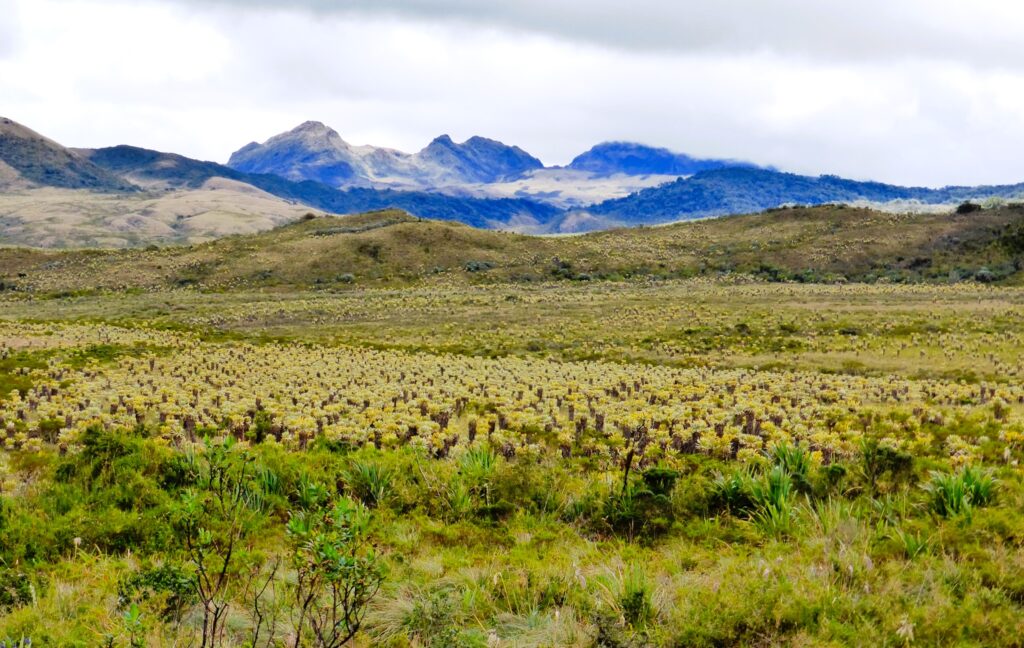
Cauca's Andean massif, rugged highlands that provide shelter for armed groups. Photo: S. Hide.
Cauca’s Andean massif, rugged highlands that provide shelter for armed groups. Photo: S. Hide.

The mountainous department is a heartland of Colombia’s illicit economies, straddling both the Andean cordillera and the Pacific lowlands with topography perfect for both hiding rebel armies and providing lush hillsides for coca crops and marijuana.

Cocaine production needs large cropping areas, 32,000 hectares of coca bushes covered the Cauca hillsides by the last count (Indepaz, 2024).  And since Spanish colonial times the lowland riverbeds have provided a source of gold, today mined illegally with destructive heavy machinery paid for by cocaine profits.

Inland links

Cauca has no proper roads linking the highlands coast, though there are numerous clandestine ‘conflict tracks’, mule trails and navigable rivers to the Pacific.  A labyrinth of mangrove swamps provides cover for boats running an estimated 70% of Colombia’s cocaine product to central America and beyond.

The department’s east is formed by the ‘Cauca Boot’, a foot-shaped chunk of mountainous terrain long held by rebel groups which penetrates as far as the Caquetá jungle linking the eastern Llanos plains and Amazon region to the Pacific coast.

This corridor created a vital link between the interior of the country and the EMC’s Bloque Oriental, in the eastern plains and jungles, Arias told The Bogotá Post.

Map of Cauca and neighbouring departments, and recent conflict events.
Map of Cauca and neighboring departments, and recent conflict events.

Cauca was also bisected by the Via Panamericana, the highway running down the mountain and linking three main cities – Cali, Popayán, Pasto – and on to Ecuador to the south. This neuralgic route was easily blocked or attacked by armed groups, he said.

Combat units like the Frente Jaime Martínez would likely have autonomy from the top leadership of the EMC and could plan and execute their own actions, explained Arias.

“They articulate and communicate with the EMC structure, but are not necessarily subordinate,” he said.

Failed peace plan

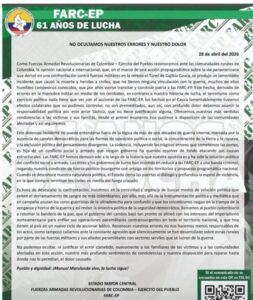
EMC message. They still use the FARC logo.

The EMC was originally included in Petro’s sweeping Paz Total (Total Peace) initiative in 2022, but after repeated infractions by the armed group – including murdering four indigenous children the group had forcibly recruited – talks broke down in 2024.

In October that year Petro called off the talks and ordered the military to attack EMC heartlands in Cauca. The ensuing Operation Perseus sparked intense combat around the town of El Plateado in the Micay Canyon, historically a hideout for the FARC and now an EMC stronghold.

FIP has been critical of Paz Total and in February this year published data showing that armed groups had used the façade of peace talks to expand both their ranks and territory.

See also: Peace plan has caused more conflict, says thinktank.

According to Arias, Petro’s government failed to understand the strategic importance Cauca had to the armed groups, as well as underestimating the control the EMC had over local communities.

Many rural families were reliant on coca growing and gold mining in a region lacking state presence: “There’s been a historical process of armed groups coopting civilian and ethnic communities,” said Arias.

This was evident in the civilian uprisings – asonadas – against state forces leading to incidents such as the 57 soldiers forcibly detained by a community in El Tambo in June 2025.

But the armed groups also preyed on the host population, he said, particularly victimizing the indigenous communities which make up 20% of Cauca’s population. EMC commanders frequently forced indigenous youth to join their ranks, creating conflict with the Nasa and Misak people of the area.

Contacts ofThe Bogotá Post living in rural Cauca – who declined to be named – said that armed groups controlled communities with networks of spies and even used surveillance drones to monitor movements.

A person needing to travel in or out of the zone controlled by a particular armed group needed permission and had to carry ID cards issued by community councils under orders of the armed group.

Anyone rejecting these restrictions was threatened and displaced, and particularly social leaders who spoke out against the armed groups risked being assassinated: 12 in Cauca so far in 2026.

The Cauca cauldron

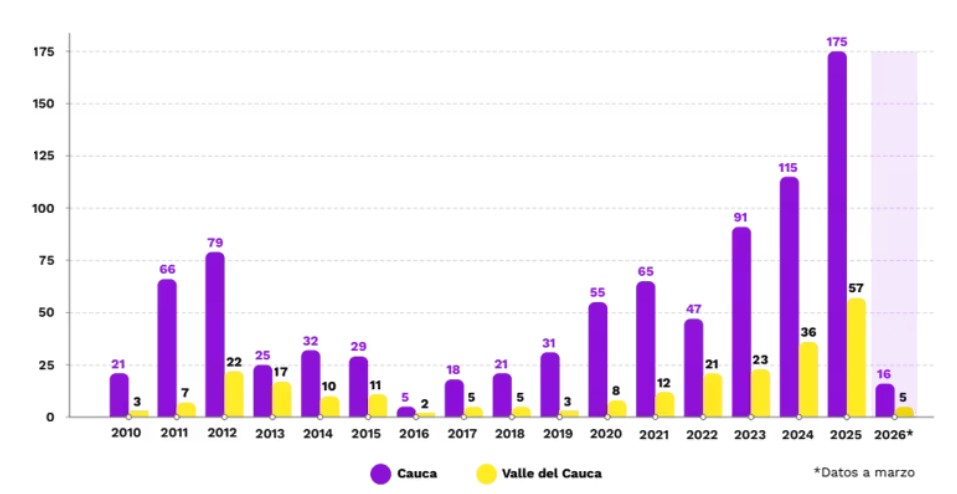
Strength in numbers was a contributing factor to EMC aggression in the region, said Arias. FIP data showed a steady increase in armed attacks against both civilian structures and military targets since 2016, peaking at 175 recorded incidents last year (see graph below).

Year on increase in coflict events, Cauca and Valle, 2010-2026. Source: FIP

Not all events involved state forces; the EMC was under pressure from rival groups such as the ELN, Segunda Marquetalia and EMBF dissidents. All want a share of Cauca’s illicit economies.

And while waging a conflict of asymmetric warfare, often resorting to terror tactics, the EMC was also demonstrating military dominance with armed drones that put the Colombian military on the back foot.

“Out of 500 attacks, 408 were using drones,” said Arias. “The conflict is changing direction, but state strategies are not adapting to respond to this new technology.”

But beyond a military response, the state needed to implement a strategy of well-planned and sustainable social interventions to stem the resurgence of the armed groups.

In Cauca, this was a huge challenge, said Arias. For now, groups like the EMC were sticking to illicit gold and narcotrafficking, even if it meant constant conflict to deter and weaken state forces.

“They are on the attack to show they are the bosses,” he said.

The post Cauca bombs: what’s going on? appeared first on The Bogotá Post.

  •  

Rising Violence in Colombia: Highway Explosion Leaves 21 Dead, Dozens Injured

Petro’s “Total Peace” strategy is under pressure ahead of presidential elections as violence by armed groups escalates

An explosive attack on the Pan-American Highway near the municipality of Cajibío, in Colombia’s Cauca department, left at least 21 people dead and 56 injured, Defense Minister Pedro Sánchez Suárez confirmed.

The attack occurred Saturday, April 25, on one of the main roads in the country’s southwest, an area historically affected by the presence of illegal armed groups.

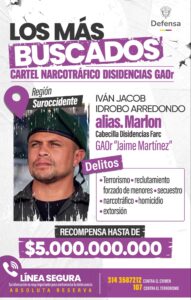
The minister attributed the attack to alias “Marlon,” described as one of the most wanted leaders in the region, “for whom we are offering a reward of up to $1.4 million USD,” he said.

According to local media reports cited by El Tiempo, “the attack was initially intended to target army troops. However, a change in military plans reportedly led to the explosive being detonated while civilians were passing through the area.”

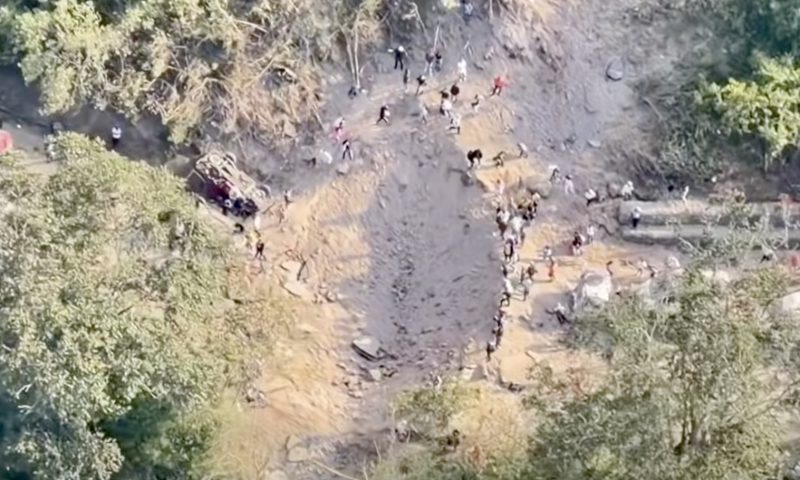
The impact of the attack was significant. Spain’s El País reported “that the explosion created a large crater, left the road covered in debris, and forced rescue operations that lasted several hours due to difficult access conditions.”

Aerial view of the crater caused by the explosion on the Pan-American Highway. Photo courtesy of Colombia’s Ministry of Defense.

Aerial view of the crater caused by the explosion on the Pan-American Highway. Photo courtesy of Colombia’s Ministry of Defense.

Cauca Governor Octavio Guzmán described the incident as one of the most serious attacks in the region in decades. “What happened on April 25 constitutes the most brutal and ruthless attack against civilians in decades,” he said.

The attack comes amid a resurgence of violence in southwestern Colombia, where illegal armed groups linked to drug trafficking, illegal mining and other illicit economies operate. Authorities continue operations in the area as investigations proceed to clarify the circumstances of the attack and determine responsibility.

According to reports by BBC Mundo, alias “Marlon” is a dissident FARC leader identified as Iván Jacobo Idrobo Arredondo, “the alleged head of the Jaime Martínez structure, part of the Estado Mayor Central (EMC),” one of the country’s most powerful illegal armed groups.

Operations and arrests

As part of response operations, the National Police reported the capture of José Alex Bitoco, alias “David” or “Mi Pez,” identified as the leader of the Dagoberto Ramos structure, another illegal armed faction, who is believed to have acted under orders from alias “Marlon”.

National Police Director Gen. William Rincón Zambrano said the detainee “will have to answer for the wave of terrorist activity” and linked him directly to the attack, stating that “he is responsible for what happened on April 25 in the El Túnel sector on the Pan-American Highway.”

The Defense Ministry reiterated that alias “Marlon” remains a priority target. “He is a high-value target, and we are searching for him with all the capabilities of the state. We have deployed a dedicated intelligence task force to locate him,” Sánchez said, confirming a reward of up to $1.4 million USD for information leading to his capture.

Context: criticism of “Paz Total” policy (Total Peace)

The attack comes amid growing security deterioration in Colombia, intensifying criticism of President Gustavo Petro’sTotal Peace” policy. The Ideas for Peace Foundation (FIP) has warned of a possible failure of the strategy, noting that “less than four months before the end of the government, the lack of progress in peace negotiations and the deterioration of security have become one of the main points of criticism of the Petro administration.”

According to the think tank, during the current administration “the number of disputed territories between illegal actors has nearly doubled, and the number of members in these structures has increased by 85%: they now total more than 27,000 members, including armed individuals and support networks.”

This figure not only represents a significant increase but also places the country at levels similar to, and even higher than, those seen before the peace process with the FARC began. Between 2011 and 2012, the estimate stood at around 26,800 members, compared with 14,600 at the end of Iván Duque’s administration in 2022.

The recent increase has also been rapid. According to the FIP, armed groups grew by 23.5% over the past year (from December 2024 to December 2025), reflecting a swift reconfiguration of these structures. At the same time, violence has intensified. Analysts such as Professor Karol Solís Menco note that over the weekend of April 25–26 alone, “26 terrorist attacks of varying magnitude” were recorded across the country.

Political analysis outlets point to a structural dynamic. According to La Silla Vacía, “Cauca is not experiencing an isolated event, but rather a phase of intensifying territorialized violence, marked by fragmentation among armed actors and a type of violence capable of producing national-level impacts.”

In this context, FARC dissident groups have once again taken center stage in the conflict. “Once again, attention is turning to FARC dissidents. Every attack, every gas cylinder bomb, every assault in Valle and Cauca ends with the same name on the table: the Jaime Martínez structure, one of the strongest groups of Iván Mordisco’s Estado Mayor Central,” El País reported.

Violence indicators also reflect sustained deterioration. “In the first four months of 2026, Colombia has already recorded 48 massacres, with 229 victims, most of them civilians, according to Indepaz. It is the highest figure in the past decade. With these numbers, which represent only a partial picture of the country’s violence, this election year is shaping up to be the most violent since the 2016 peace agreement with the now-defunct FARC guerrilla group,” the same outlet reported.

Cauca, where the attack took place, is considered one of the most sensitive regions. “Cauca is particularly complex because it combines multiple layers of conflict: the historic presence of Indigenous, peasant and Afro-descendant communities; illicit economies; Pacific corridors; disputes over drug trafficking routes; control of the Pan-American Highway; and the presence of FARC dissidents, particularly structures linked to Iván Mordisco,” El País said.

Experts agree that part of the difficulty lies in the design and implementation of the government’s strategy. “Early implementation was a valuable innovation in intent, but it failed to ensure minimum conditions of verification and institutional coherence,” said analyst Germán Valencia of the Peace and Reconciliation Foundation (Pares).

Taken together, these factors have led various sectors to conclude that the “Total Peace” policy faces serious structural limitations amid a scenario of armed fragmentation and territorial expansion by illegal groups.

  •  

U.S. Issues Strong “Do Not Travel” Advisory for Southwestern Colombia

The United States has updated a “do not travel” warning for large parts of southwestern Colombia after a wave of terrorist attacks have left over 20 people dead, underscoring growing international concern over the country’s deteriorating security situation and prompting regional authorities to demand stronger support from the leftist government of President Gustavo Petro.

The U.S. Department of State maintained most of Colombia at Level 3 – “Reconsider Travel” – citing crime, terrorism, civil unrest, kidnapping and natural disasters, but reinforced its Level 4 advisory for several conflict-hit regions, including the departments of Arauca, Cauca, Valle del Cauca and Norte de Santander.

Under the latest guidance, Americans are advised not to travel to Cauca, excluding the departmental capital Popayán, and Valle del Cauca, excluding Cali, due to crime and terrorism.

Norte de Santander and Arauca remain under the same highest warning level, while travel within 10 kilometers of the Colombia-Venezuela border is also strongly discouraged because of kidnapping risks, armed conflict and the possibility of detention.

“Do not travel to these areas for any reason,” the State Department said in its advisory, adding that violent crime, armed robbery and murder remain common, while terrorist groups continue to operate in remote and rural zones.

The warning was reinforced by a U.S. Embassy security alert issued in Bogotá on April 27, following 26 separate attacks across southwestern Colombia during the weekend of April 25. The attacks targeted transportation corridors, military installations and police stations, with authorities confirming at least 20 deaths and dozens of injuries.

Police and military facilities are frequent targets of armed groups, and the State Department warned that attacks in Colombia have included car bombs, grenades, truck bombs, explosive devices placed on roads and buildings, and even drones carrying explosives.

Illegal armed groups, including dissident factions of the former Revolutionary Armed Forces of Colombia (FARC), narcotrafficking organizations and other insurgent groups, have expanded their territorial presence in recent years, particularly in remote areas where coca cultivation, illegal mining and strategic trafficking corridors overlap.

The deadliest recent attack occurred near the El Túnel sector in Cajibío, Cauca, along the Pan-American Highway, where an explosive device detonated against civilian vehicles, killing 20 civilians and injuring over 50 more. Authorities attributed the bombing to FARC dissidents under command of alias “Iván Mordisco”.

The attack shocked the country and intensified criticism of President Gustavo Petro’s “Total Peace” policy, which seeks negotiated settlements with illegal armed groups but has faced mounting scrutiny as violence worsens in several regions.

In response, the Cauca governor’s office declared three days of official mourning. Authorities described the bombing as an “atrocious and unjustifiable” act and ordered flags to be flown at half-mast across public institutions and schools as a tribute to the victims.
The government also called for national unity and a stronger institutional response to confront armed violence in one of Colombia’s most volatile departments.

In neighboring Valle del Cauca, Governor Dilian Francisca Toro said she respected the U.S. warning but urged foreign governments and the media not to define the entire region by recent attacks.
“We ask that our region not be stigmatized,” Toro said, insisting that Valle del Cauca remains open to visitors and that violence does not represent the department’s cultural, economic and social identity.
At the same time, she sharply criticized the national government’s security response after attacks in Cali and Palmira, calling for “real, sustained and effective support” through more troops, stronger intelligence operations and direct action against criminal structures operating in the region.

Following an explosion near the Agustín Codazzi Engineers Battalion in Palmira, Toro announced an investment of nearly 70 billion pesos ($17 million) to strengthen police communications infrastructure, expand surveillance camera networks and improve secure transport corridors across municipalities.

In Cali, Mayor Alejandro Eder said an attempted attack against the Pichincha Battalion involved explosive gas cylinders, one of which failed to detonate while another exploded inside a minibus.

Authorities activated a citywide security operation and Eder offered a reward of up to 50 million pesos for information leading to the capture of those responsible. “We cannot allow terrorism to regain ground in our city,” Eder said.

  •  

Colombia reels from worst terrorist attack in decades as Petro celebrates birthday

Colombians are expressing outrage and grief after a bombing attributed to dissident factions of the former FARC killed 20 people and left injured 46, marking the country’s deadliest attack in over a decade.

The blast on Saturday afternoon tore through a stretch of the Pan-American Highway near Cajibío, in the southwestern department of Cauca, leaving mangled vehicles, a massive crater, and scenes of devastation that authorities described as among the most brutal assaults on civilians in recent memory.

Departmental governor Octavio Guzmán said the explosion, which injured at least 36 people, including children, was the “most ruthless attack against the civilian population in decades,” adding that several vehicles were overturned by the force of the blast.

Military officials said attackers blocked traffic with a bus and another vehicle before detonating explosives as cars and buses were stranded along the highway, a vital artery linking Colombia’s southwest with the cities of Popayán and Cali.

The attack, attributed to a FARC dissident faction led by Iván Mordisco, came amid a surge of violence across southwestern Colombia, with authorities reporting at least 26 attacks over a two-day period in Cauca and neighbouring Valle del Cauca. Incidents included explosions, arson attacks on vehicles, and assaults on security forces in cities such as Cali, Palmira, and Jamundí.

But as the country mourns, President Gustavo Petro faced mounting criticism after posting images of himself celebrating his birthday, prompting accusations of insensitivity and a lack of leadership during a national crisis.

Late on Saturday evening, Petro shared a photograph on social media showing himself alongside three friends, all wearing Hawaiian-style flower garland necklaces, accompanied by a message marking his birthday on April 19. “Surrounded by love and bonds of affection,” Petro wrote. “We are an army of Quixotes doing the impossible and achieving the impossible.”

The post, which appeared hours after reports of the deadly attack emerged, sparked immediate backlash from political leaders and the public, many of whom questioned the president’s priorities at a moment of national mourning.

Senator Juan Manuel Galán criticized the timing of the message, writing on social media: “19 people murdered in Cajibío, Cauca, the country bleeding, the Pan-American highway turned into tragedy… but the priorities of Gustavo Petro were clear: the country in mourning and he showing us how he celebrated his birthday.”

Presidential hopeful Paloma Valencia travelled to Palmira to meet with victims’ families and express solidarity. “We are with the people who are afraid, who are mourning their loved ones, who need to feel safe again. Petro should be here,” she said.

The criticism underscores deep tensions surrounding Petro’s security strategy, particularly his “Total Peace” policy aimed at negotiating with illegal armed groups. Critics argue the approach has failed to contain violence in regions such as Cauca, where armed groups linked to narcotics trafficking and illegal mining continue to operate with increasing intensity.

Saturday’s bombing, one of the most lethal attacks since the 2016 peace accord with the FARC, has renewed fears about Colombia’s security trajectory and the resilience of dissident factions that refused to demobilise.

Images from the scene showed debris scattered across the highway, shattered vehicles, and a large crater where the explosion occurred. Authorities confirmed that 15 women and five men were among the dead, while several of the injured remained in critical condition.

For residents of the region, the attack has deepened a sense of vulnerability and abandonment.

“Cauca cannot continue to face this barbarity alone,” Governor Guzmán said, calling for greater national support and a stronger security response.

As Colombia approaches a general election on May 31, the attack also reveals the extent to which  the state remains unable to protect civilians, let alone presidential candidates opposed to the failed security policies of the country’s first leftist administration. “Petro: You are simply a disgrace. Show some empathy. Show some respect,” noted Paloma Valencia from Palmira.


  •  

Dissident bomb kills 20 civilians at roadblock in southwest Colombia

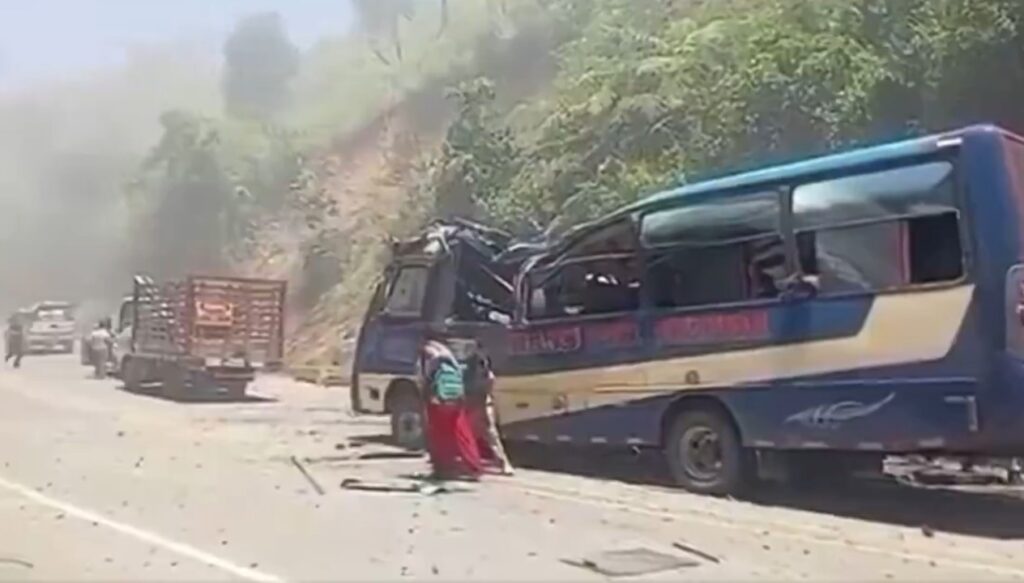
A bus damaged by the huge explosion n Saturday 30kms north of Popayán. Photo: X
A bus damaged by the huge explosion on Saturday 30kms north of Popayán. Photo: X

A bomb attack attributed to fighters from the EMC armed group killed 20 travelers trapped on the busy highway connecting Colombia’s southwestern cities on Saturday.

The tragic events in the El Tunel sector, close to the town of Cajibío, unfolded after the dissidents mounted a checkpoint on the main Via Panamericana south of Cali and 30 kilometers (20 miles) before Popayán.

The busy road runs through a mountainous region dominated by gangs run by the former guerrillas dedicated to a booming cocaine industry in hidden canyons beyond state control. At the illegal checkpoint the fighters forced truck drivers to block the road and abandon their vehicles, causing a long queue of traffic.

According to video posted online, soon after a midday the huge explosion rocked the valley mangling around 15 vehicles caught blockade including two minibuses with civilian passengers.

The governor of Cauca, Octavio Guzmán, confirmed the 20 dead civilians caught in the blast were 15 women and five men, all adults. A further 47 people were injured, of whom three were critical. Five children were recovering in hospital. Eleven of the affected persons came from the same village of Pedregosa, close to Cajibío, he added.

“What happened on April 25th constitutes the most brutal and ruthless attack against the civilian population in decades in the department of Cauca,” the governor later announced.

The bomb had displaced 200 cubic meters of soil, he said, creating a crater five meters deep in the Panamericana highway, the main route linking Cali to Popayan and on to Ecuador. Despite the damage, road crews were able to partially reopen the road six hours after the blast.

Saturday’s attack, one of the worst atrocities in recent years, comes against a background of rising conflict between state forces and dissident armed groups in the southwest of Colombia.

#ULTIMAHORA

A nuestro medio de comunicación llega video #PRIMICIA del momento exacto donde explota el artefacto explosivo 🧨 en el sector conocido como el TÚNEL CAJIBIO CAUCA entre popayan y piendamo @Noti90Minutos @DELAESPRIELLAE
Noticia en desarrollo pic.twitter.com/g4KEcSroYd

— SARCASTICO DE DERECHA (@esco27438) April 25, 2026

Terrorist tactics

Just in the last four days communities across three departments – Valle, Cauca and Nariño – reported a series of what appear to be coordinated attacks against civilian and military targets. These included:

  • 24 April – A bus bomb exploded close to base of the Pichincha Battalion in the south of Cali, causing damage and three injuries.
  • 24 April – In the nearby town of Palmira, Valle, an army base came under attack from cylinder bombs launched from a passing vehicle, no injuries were reported.
  • 25 April – Two attackers launched grenades at a petrol station in Rozo, Valle, damaging vehicles.
  • 25 April – A police station in the rural community of Potrerito, close to Jamundí, came under gunfire attack in the early hours of the morning.
  • 25 April – In another morning attack, Aeronáutica Civil reported drones launching explosives against a hilltop air traffic station close to El Tambo (Cauca), damaging antennas and leaving the radar inoperative.
  • 25 April – a chiva rural bus was hit by explosive charges while traveling on Route 25 near to Mercaderes, south of Popayan. Police reported several injured including a child but no deaths
  • 26 April – four men were gunned down in a bar in Toro, Valle, between Cali and Pereira.

According to a tally by thinktank Indepaz, the Toro deaths were the 48th massacre recorded in 2026. In Colombia a ‘massacre’ is defined by the intentional killing of three or more people at the same time.

This weekend’s attacks were typical of a return to terrorist tactics such as car bombs, motorbike bombs, drones dropping home-made explosives and other artisanal artefacts.

Cauca governor Octavio Guzmán visiting the scent of the explosion this weekend. Photo: Social Media

Saturday’s Cajibío attack was initially reported as a boobytrap bomb, or “IED” (Improvised Explosive Device) which are caches of high explosives buried by the roadside by rebel groups, usually aimed at passing military patrols

But later reports suggested the civilian vehicles were struck by a pipeta mortar. These are fashioned from household gas bottles and clumsily launched from mortars made of industrial piping.

Notoriously inaccurate, a pipetas have claimed many civilian lives in the Colombian conflict, most notably in the Chocó town of Bojayá in 2002 when a charge launched by FARC guerrillas struck a church killing 79 civilians sheltering inside.

Behind Saturday’s atrocity was alias ‘Marlon’ of the Estado Mayor Central (EMC), said Colombia’s defence minister of defence Pedro Sanchez. The state offered a reward of US$140,000 for information leading to his capture.

Original dissidents


Most Wanted...
Most Wanted…

Marlon, whose real name is Iván Idrobo, was formerly in the ranks of the FARC guerrillas where he trained as a bomb maker. He is now thought to lead the EMC’s Frente Jaime Martínez which according to the Defensoria del Pueblo controls the cocaine trade, illegal gold mining and extortion rackets around the town of Suárez in the northwest of Cauca.

The EMC, lead by former FARC chief Iván Mordico, has proven to be the most intransigent of the myriad of armed groups which the current Petro government has tried to broker peace with under his controversial Paz Total policy.

See also: Peace Plan has Caused more Conflict, says Thinktank

Seen as the “original” dissidents that rejected the partly successful peace process under former president Manual Santos in 2016, the EMC initially agreed to negotiate when Gustavo Petro came to power in 2022 but soon engaged in bitter infighting with rival armed groups creating a rupture with Paz Total.

For his part, Petro tweeted his disgust at the Cajibío attack and the EMC “narco-terrorists” behind it.

“The groups led by Iván Mordisco in Cauca are criminals who have committed crimes against humanity and must be treated as such,” he said.

Some pundits commented that Petro’s early treatment of the EMC as a political actor had given the armed group room to expand, contributing to the current security crisis. In the heat of next month’s elections, others turned their ire on presidential candidate Iván Cepeda, seen as an architect of Petro’s struggling peace plans.

Rival right-wing candidate Paloma Valencia accused Cepeda of his role in “tying the hands of state forces, the rampant increase in illicit crops, the historic numbers of massacres, and waves of violence like today’s”.

Valencia also rounded on Petro for posting photos of his birthday celebrations even as the country was reeling from the horrific footage of the Cauca bombing. “Show some respect,” she messaged.

The post Dissident bomb kills 20 civilians at roadblock in southwest Colombia appeared first on The Bogotá Post.

  •  

Colombia presidential candidates appear in Governors’ Summit

Governors’ Summit 2026. Image credit: National Federation of Departments.

On Wednesday, the Universidad de la Sabana and the National Federation of Departments (FND) hosted the Governors’ Summit, a rare event that convened almost all of the frontrunners in Colombia’s presidential race.

Paloma Valencia, Abelardo de la Espriella, Sergio Fajardo, Roy Barreras, and Claudia López fielded questions from regional authorities about how they planned to tackle problems in Colombia’s provinces.

While Iván Cepeda, the leftist favorite, was scheduled to attend, his team pulled out at the last minute, fuelling the candidate’s reputation for being media-shy.

Early on Wednesday morning, governors and their aides began filtering into the heavily policed event in Chía, a municipality north of Bogotá.

The FND selected questions from governors which were then posed to candidates by the two moderators: El Tiempo Director Andrés Mompotes and his counterpart at radio station La FM, Juan Lozano.

The main themes of the day were tackling insecurity and armed groups, investing in regional development, and mechanisms to improve provincial representation.

For some governors, the event was an opportunity to redress an acute crisis; Erasmo Zuleta, who heads the local government in Córdoba, used the forum to highlight the ongoing effects of disastrous floods which began earlier this year.

“The emergency didn’t pass, nor did the tragedy. The floodwaters receded, leaving behind widespread damage; they took lives, homes, crops, and material possessions,” Zuleta told The Bogotá Post.

“Now more than ever, we need greater solidarity to recover from the damage,” continued the Governor, in a bid for help from the national government.

Another recurring theme was prison reform, following a recent scandal over a concert that took place in the Itagüí prison in Antioquia.

Abelardo de la Espriella, the firebrand criminal defense attorney and right-wing frontrunner, used the opportunity to push his tough-on-crime proposal.

“In Colombia, there are no prisons—there are universities of crime,” said de la Espriella, who took aim at the National Penitentiary and Prison Institute (INPEC), which he described as “a den of thieves.”

Abelardo de la Espriella talks at the summit. Image credit: National Federation of Departments.

The candidate added that Colombia should look to El Salvador to develop its incarceration model, praising dictator Nayib Bukele’s draconian mass imprisonment efforts that have dramatically reduced crime and drawn condemnation from rights’ groups.

Security, more broadly, was also high on the agenda, as Colombia grapples with a surge in violence related to illegal armed groups.

“Today we are living in the grip of insecurity. They want to drag us back into the abyss we thought we had left behind,” railed Paloma Valencia, the candidate for the right-wing Centro Democrático (Democratic Center) party. 

Fears of insecurity affecting democratic processes have overshadowed the elections, with the United Nations issuing a warning earlier this year that armed groups could disrupt the vote.

The Valle del Cauca department has been one of the most heavily affected by the armed conflict, with its capital, Cali, rocked by a wave of bomb attacks by rebel groups in the past year. 

But its Governor, Dilian Francisca Toro, offered reassurances in conversation with The Bogotá Post: “We ensure that in every municipality and across all regions, law enforcement is present so that we can have free, democratic elections where there is no restriction whatsoever on the ability to vote.”

Toro also cited the elections on March 8 as an example of the success of security planning: “In Valle del Cauca we really had very peaceful elections, and now, God willing, we will have them again.”

Amid the mounting threat by armed groups, candidates De la Espriella and Valencia vow an iron fist, using military force to crush rebel forces. They model themselves after former right-wing President Álvaro Uribe (2002-2010), who teamed up with the U.S. to launch a total war on the Revolutionary Armed Forces of Colombia (FARC). 

But leftist Iván Cepeda highlights the human rights abuses perpetrated by the government during that period, in which thousands of innocent civilians lost their lives. He proposes to continue the current administration’s Paz Total – or Total Peace – policy of negotiating with armed groups.

But Cepeda missed the opportunity to make his case to the public, fuelling criticism by his opponents.

De la Espriella has repeatedly called on Cepeda to agree to a debate, but the leftist candidate has yet to accept.

With less than two months before the May 31st election, there are increasingly few opportunities for the candidates to make their case before the public.

The post Colombia presidential candidates appear in Governors’ Summit appeared first on The Bogotá Post.

  •  

Editorial: Gustavo Petro’s “Total Peace” Has Led to Total Chaos in Colombia

Colombia’s President Gustavo Petro ran for president on a campaign promising Paz Total—Total Peace. He promised to give the FARC dissidents, the vicious ELN guerillas, and mafias like the Clan del Golfo a good talking to, and with that, they will just lay down their weapons and become model citizens. Petro promised that through dialogue with bloodthirsty kidnappers and extortionists, they would be willing to stop being bloodthirsty kidnappers and extortionists; as if they are just misunderstood little muffins who only need a hug.

Nubia Carolina Córdoba, governor of Chocó, Colombia (photo from her Twitter account)

Nubia Carolina Córdoba, governor of Chocó, Colombia (photo from her Twitter account)

According to figures compiled by the Universidad Externado and reported by The City Paper Bogotá, Colombia has recorded 40,663 homicides during the first three years of the Petro presidency. Over 400 human rights defenders have been slaughtered between 2022 and 2025 according to the United Nations Office of the High Commissioner on Human Rights. Human Rights Watch reports that the ELN and FARC dissidents have expanded their territories by up to 55%. They are taking back over Colombia.

Under Gustavo Petro’s watch, Colombia has returned to the Institute for Economics and Peace’s Global Terrorism Index top ten list of countries impacted by terrorism, along with Total Peace destinations like Democratic Republic of Congo, Somalia, and Syria. Just this past week, a Clan del Golfo poster was put up within walking distance from the Aeropuerto Internacional José María Córdova just outside of Medellín. This Total Peace nonsense is a failure.

Right now, in the neglected Pacific department of Chocó, the ELN has kidnapped whole communities. Petro ran a campaign promising that he was going to embrace these historically neglected communities—places like Chocó, Nariño, La Guajira, and Norte de Santander—but insecurity is increasing. Chocó’s governor, Nubia Carolina Córdoba, says 6,047 people are trapped inside of their homes because the ELN has announced an illegal armed curfew in the municipality of Bajo Baudó. Most of these people are already poor, and now they have been kidnapped en masse by this guerilla group that operates with impunity because Gustavo Petro coddles them with “dialogue.”

According to Governor Córdoba, they attacked the police station in the village of Santa Rita using grenades attached to drones. It has gotten so bad that Colombia has restricted the entry of drones into the country. These people are calling out for help, but the president insists on talking as the ELN grows and continues to menace the police forces, the Colombian military, and, most importantly, the innocent public.

There is currently public disorder where belligerents have completely blocked the roads in the north of Antioquia, in the region called Bajo Cauca, and also in the neighboring department of Córdoba. The city of Caucasia is under curfew. Antioquia’s Governor, Andrés Rendón, has urgently called on the national government to stop the talk and take action. Groups are attacking ambulances and burning people’s motorcycles as they try to get by the roadblocks, regardless of the emergency.

Governor Rendón stated: “There can be no dialogue amidst blockades and human rights violations. It’s been seven days now with the Bajo Cauca region paralyzed and the country held hostage by chaos.” He called on the Fiscalía General de la Nación to bring those responsible to justice and challenged the Minister of Defense, Pedro Sánchez, to order the immediate reopening of the roads. “We’re not talking about small-scale miners here; behind this are criminal structures, as everyone knows, that finance themselves through illegal mining and move billions of pesos,” Rendón added, demanding full authority against the criminals who use communities as a shield.

El gobernador de Antioquia, @AndresJRendonC, se pronunció sobre la situación de orden público en el Bajo Cauca, en medio de los bloqueos que ya completan varios días y afectan la movilidad y la seguridad en la región. @GobAntioquia pic.twitter.com/4SPQgTa68r

— MiOriente (@MiOriente) March 22, 2026

The current situation with these organized criminal groups—whether regular mafias like the Clan del Golfo or murderous Marxist guerillas like the ELN and the FARC dissidents—is reminiscent of a classroom where a substitute teacher has lost all control. Petro promised Total Peace, but the result has been Total Chaos. Investors do not want to deal with this mess. While the Petro government claims they want tourism to be a major economic driver, road blocks make many areas look like scenes out of Mad Max: Road Warrior. Whole zones of the Pacific coast are unsafe even for residents, met with pure impotence from the regime.

Ten years ago, it was safe to drive from Medellín to the beachside town of Coveñas in Sucre, but that is no longer the case. While it remains safe to visit Colombia for business or tourism in major hubs like Bogotá, Medellín, Santa Marta, or the San Andrés islands, the long-term outlook is concerning. My hope is that Colombians choose a future leader serious about law and order as a prerequisite for human rights. It is not only the government that we need to protect human rights from; those who kill, steal, kidnap, and forcibly recruit children are violating those rights as well.

Colombian anti-explosives experts inspect propaganda by the Clan del Golfo mafia group just minutes away from Medellin's international airport in March, 2026 (image from Facebook).

Colombian anti-explosives experts inspect propaganda by the Clan del Golfo mafia group just minutes away from Medellin’s international airport in March, 2026 (image from Facebook).


  •  

UN report warns Colombia faces worsening human rights crisis

Colombia is at risk of sliding back into one of the darkest chapters of its recent history, according to a stark new report by the United Nations, which warns that escalating violence, territorial control by illegal armed groups and political instability are eroding hard-won human rights gains.

The annual assessment by the Office of the High Commissioner for Human Rights paints a troubling picture of 2025: a country where armed actors have deepened their grip over rural regions, civilians are increasingly trapped in conflict zones, and the implementation of the 2016 peace accord is under growing strain.

At the heart of the report lies a central warning — Colombia faces the “possibility of reverting” to pre-peace agreement levels of violence, particularly in territories where the state remains weak or absent.

Armed groups expand control

Across large swathes of the country — from the Catatumbo in Norte de Santander to the Pacific coast — non-state armed groups and criminal organizations have consolidated control over vulnerable populations, imposing what the report describes as “illegal armed governance”.

The criminal groups mentioned- Clan del Golfo, ELN, FARC dissidents – are responsible for a wide range of abuses: forced displacement, confinement, selective killings, sexual violence and the recruitment of children. Entire communities, especially Indigenous and Afro-Colombian populations, are subjected to coercion and forced participation in illicit economies. “Afro-descendant communities, particularly in regions such as Chocó, continue to face severe human rights violations due to the presence and social control exercised by non-state armed groups,” claims the report.

Even in areas where a single armed group dominates and overt violence is less visible, the UN notes that civilians live under strict systems of control, with basic freedoms curtailed and fear pervasive.

The UN documented 53 verified massacres in 2025, leaving 174 victims, the vast majority attributed to armed groups fighting over control of illegal economies such as drug trafficking.

The report also highlights a disturbing increase in indiscriminate attacks, including the use of explosives and drones in populated areas. Cities such as Cali were directly affected, with civilian casualties mounting as conflict spills into urban spaces.

In one incident in the southern department of Huila, a motorcycle bomb targeting a police station killed civilians and injured dozens, underscoring the growing risks faced by ordinary Colombians.

Child Recruitment

One of the report’s most alarming findings is the worsening situation for children.

The UN verified 150 cases of child recruitment in 2025, though it warns this represents only a fraction of the true scale due to underreporting and fear of retaliation. Armed groups are increasingly using social media platforms to lure minors, glamorising violence and illegal economies.

In some cases, children recruited into armed groups were later killed during military operations, raising further concerns about protection mechanisms.

Schools have also become battlegrounds. Armed groups have occupied educational spaces, disrupted classes and used them as recruitment grounds, particularly among Indigenous communities at risk of cultural and physical extinction.

Gender-based violence

The report details systematic patterns of sexual violence, exploitation and coercion, particularly against women and girls in conflict zones.

Armed groups have imposed control over reproductive rights, restricted access to healthcare and, in some cases, forced pregnancies. Girls are often recruited through manipulation and emotional coercion, only to face abuse, forced labour and sexual violence once under the control of armed actors.

Indigenous, Afro-descendant and migrant women are disproportionately affected, facing layered vulnerabilities exacerbated by institutional absence.

Pre-Election violence

As Colombia moves through a politically sensitive period, the report identifies a sharp rise in preelectoral violence.

The killing of the right-wing presidential candidate Miguel Uribe Turbay in August 2025 marked a dramatic escalation, while the UN recorded 18 assassinations and 126 attacks or threats against political leaders and candidates.

Nearly 650 municipalities were classified as high-risk zones by Colombia’s Ombudsman, raising concerns about the integrity of democratic participation.

The report also points to a surge in digital harassment. “Violence has also extended into the digital space, with an increase in hate speech and discriminatory discourse on social media platforms.”

Humanitarian conditions have deteriorated significantly. According to UN data, mass forced displacement rose by 85% compared with 2024, driven largely by clashes between armed groups. In Catatumbo alone, nearly 90,000 people were displaced, alongside a wave of killings, kidnappings and child recruitment.

Confinement — where communities are effectively trapped by armed actors — has also increased, restricting access to food, healthcare and livelihoods, particularly in departments such as Chocó and Cauca.

Despite these challenges, the report acknowledges partial progress in implementing the 2016 Final Accord with the ex-Revolutionary Armed Forces of Colombia (FARC) guerrilla.

While land reform initiatives have advanced, delays in formal land titling and uneven territorial implementation continue to limit impact of the 2016 agreement. The killing of 45 former FARC combatants in 2025 — a 36% increase from the previous year — highlights ongoing security gaps in reintegration efforts. “The United Nations Verification Mission documented the continued killing of former FARC, underscoring persistent security risks despite a peace agreement.”

A recurring theme throughout the United Nations report is the insufficient presence of the state in conflict-affected regions. It warns that weak institutional reach continues to limit protection for civilians and the effective implementation of security and development policies. The report also notes that “coca cultivation rose by 3% to 262,000 hectares in 2024,” although growth has slowed for a third consecutive year, cautioning that underfunded substitution programmes risk undermining efforts to transition to legal economies.

In many cases, responses by security forces have been too slow or insufficient to prevent abuses or protect communities.

A critical moment for Colombia

The UN concludes that Colombia stands at a pivotal juncture.

Without stronger coordination, sustained investment and a renewed focus on protecting civilians, the country risks undermining nearly a decade of peacebuilding.

“The persistence of violence and the strengthening of armed groups continue to gravely affect the civilian population,” the United Nations warns — a stark signal that security conditions are deteriorating across Colombia. As the country enters a polarised election season, the report suggests the stakes are no longer confined to preserving the 2016 peace accord, but to preventing a broader erosion of state authority and civilian protections in territories most at risk.

  •  

As Fighting Engulfs Briceño, Colombia, Schools Forced to Close

The school year had barely begun when gunfire forced children in rural northern Colombia to cower under their desks in fear and silence.

On the same day students were returning to classrooms after the Christmas and New Year holidays, fighting between illegal armed groups erupted near Briceño, in the northeast of Antioquia. By nightfall, schools were shut, a rural health post had closed, and families were sheltering under their beds as rifle fire echoed through nearby hills.

Local authorities say at least 28 rural school sites have been forced to close, cutting off education for some 375 children who now remain at home under a temporary non-attendance model. In several villages, students had already arrived at their classrooms when the clashes began, leaving teachers scrambling to keep children indoors and away from windows as shots rang out nearby.

“For these children, school should be a place of safety,” said Mayor Noé de Jesús Espinosa. “Instead, it has become another place of fear.”

Fighting between Clan del Golfo (Gulf Clan) and the 36th Front of FARC dissidents has now drawn-in the state’s security forces. The violence has also shut down the health center in the village of El Roblal, leaving residents without medical care at a time when movement between villages has become too dangerous.

Across at least ten rural communities, daily life has ground to a halt. Public transport and cargo services have been suspended, cutting off supplies of food and medicine. Roughly 500 people are now confined to their homes, many lying on the floor or hiding beneath their beds to protect themselves from bullets and explosive shockwaves.

“In some houses, entire families are sleeping under their beds,” Espinosa said. “They don’t know when the shooting will start again.”

Fear has already driven at least 23 families to flee their homes. Carrying only what they could gather in minutes, they arrived in Briceño’s town center seeking refuge with relatives and friends. Municipal officials are now coordinating emergency aid, while warning that more displacement is likely if the fighting continues.

The violence is rooted in a territorial dispute over the Cauca River canyon, a strategic corridor connecting Antioquia’s Bajo Cauca region with the west of the department. Military intelligence and local sources say the escalation follows an order by alias “Gonzalito,” identified as a senior commander of the Clan del Golfo, to eliminate alias “Primo Gay,” leader of the dissident 36th Front, and seize control of the area.

For residents, however, the strategic calculations of armed groups mean little. What they feel is the constant fear — the uncertainty of whether children can return to school, whether the sick can reach a clinic, and whether families will be forced to flee again.

Army units from the Fourth Brigade are advancing cautiously toward villages such as El Roblal, slowed by the presence of improvised explosive devices and suspected minefields planted along rural paths. The risk has made it difficult for troops — and humanitarian assistance — to reach many isolated communities.

Antioquia Governor Andrés Julián Rendón has urged the national government to maintain a permanent military presence in the area, warning against further troop withdrawals.

“Peasant communities in Antioquia’s most remote regions deserve to live without fear,” Rendón said, recalling that promises made last year to keep troops in Briceño were later reversed.

The trauma is not new. In October, more than 2,000 people — roughly a quarter of Briceño’s population — were forced to flee 18 rural villages after threats from armed groups. Many slept for days in the town’s main square and urban school, unsure if they would ever return home.

As indiscriminate violence once again targets the country’s most vulnerable and forces families to lock themselves inside their homes, residents fear the humanitarian crisis will deepen across Antioquia, just months before Colombians are due to cast their votes in the May 31 presidential election.

  •  

Puracé Volcano in Southwest Colombia Shows Increased Seismic Activity

The Puracé volcano in southwest Colombia has registered a noticeable uptick in seismic and gas-emission activity over the last 24-hours, prompting authorities to maintain heightened monitoring of one of the country’s most active volcanic systems.

The Colombian Geological Service, known as the SGC, said the latest measurements indicate an increase in seismic signals associated with the movement of fluids beneath the crater. Those signals — including continuous volcanic tremor and distinct long-period events — are typically generated as gases, hot water or small amounts of magma shift through fractures inside the volcanic edifice.

The changes have been visible at the surface. According to a bulletin released by the agency, the volcano has produced columns of gas reaching up to 1.6 kilometers, drifting mostly toward the southwest, sometimes carrying small quantities of ash. While limited in scope, those ash emissions qualify technically as minor eruptions.

Cristian Santacoloma, a volcanologist at the Popayán Volcanological and Seismological Observatory, said the most significant variations occurred on Tuesday, November 25. “We have seen an increase in the constant flow of gases to the surface,” he said, noting that the greyish plume observed during the morning hours contained particulate material consistent with ash. The tremor signals, he added, point to “sustained mobility of fluids within the volcano.”

The Puracé’s summit reaches 4,650 meters (15,256 feet) and sits at the northern end of the Los Coconucos volcanic chain, a line of 15 eruptive centers aligned across the highland terrain of the department of Cauca. Its structure includes two concentric craters and an active fumarolic field on the northern flank known as the Fumarola Lateral. Much of its surface is stained yellow and white from chemical deposits carried by persistent gas discharges.

The region surrounding Puracé is shaped by a long geological history: the volcano rests on an older formation known as Pre-Puracé, which itself developed along the rim of the ancient Chagartón caldera. Its eruptive products include layers of pyroclastic material and andesitic lava flows — evidence of repeated cycles of explosive and effusive activity.

The volcano remains under a Yellow Alert, a mid-tier warning that indicates changes in activity but no immediate threat to surrounding communities. In this state, specialists say, Puracé may produce sporadic ash emissions, small explosions inside the crater, localized sulfur precipitation and, under certain conditions, minor lahars.

The SGC has maintained continuous monitoring of the volcano since 1986. In recent years, its surveillance network has expanded to 32 stations equipped with 65 sensors measuring seismicity, ground deformation, gas composition, temperature and other variables that help scientists detect early signs of escalation.

Authorities have urged residents of Popayán, the departmental capital of Cauca, as well as nearby Indigenous and rural communities to follow official updates and respect any restrictions put in place by park administrators or the National Disaster-Risk Agency (UNGRD). While the current activity is not unusual for Puracé, experts say that sustained changes in seismic patterns requires careful attention.

  •  
❌