Reading view

Report: Apple Considers Adding Second Camera to Delayed iPhone Air 2

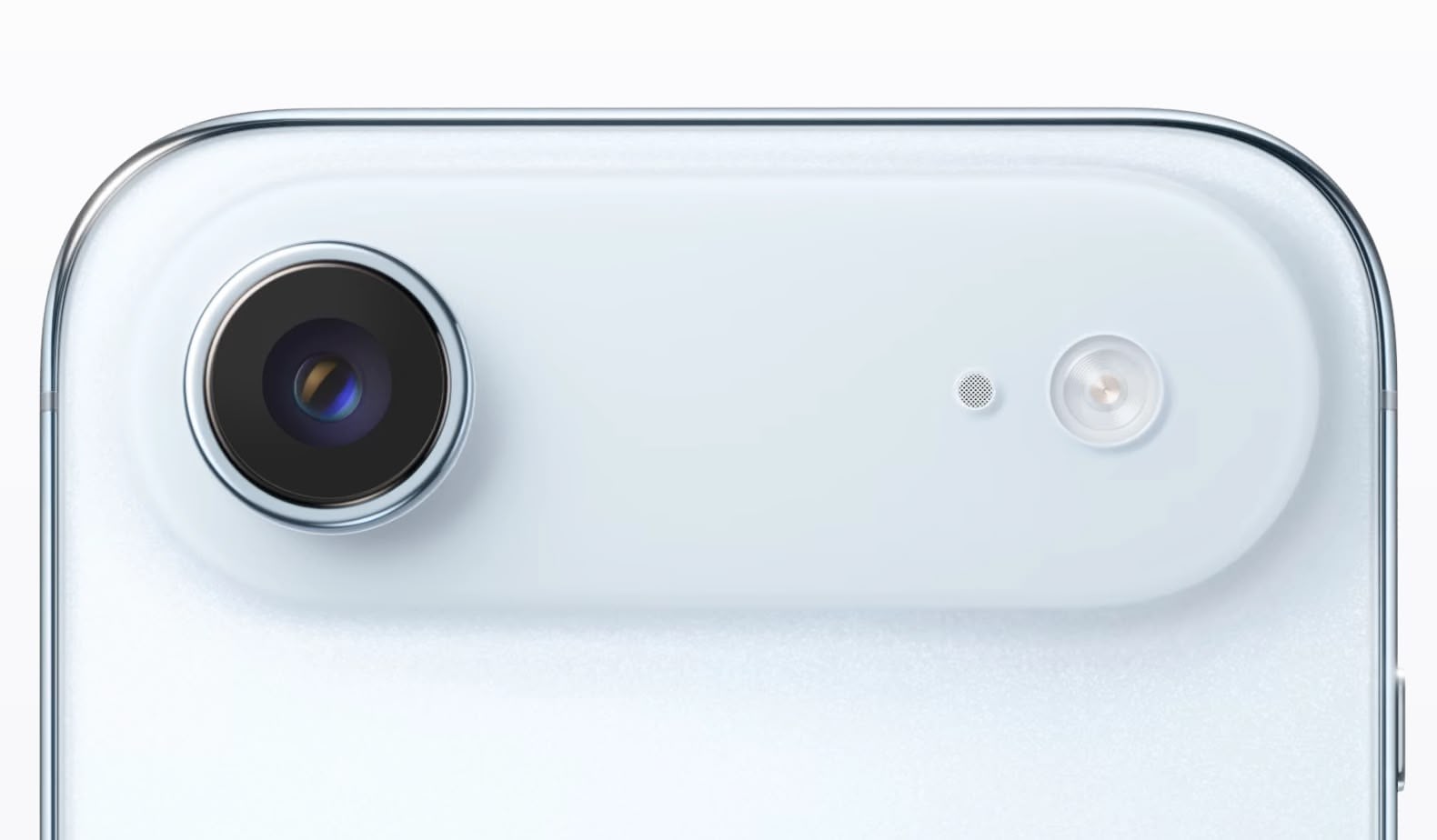
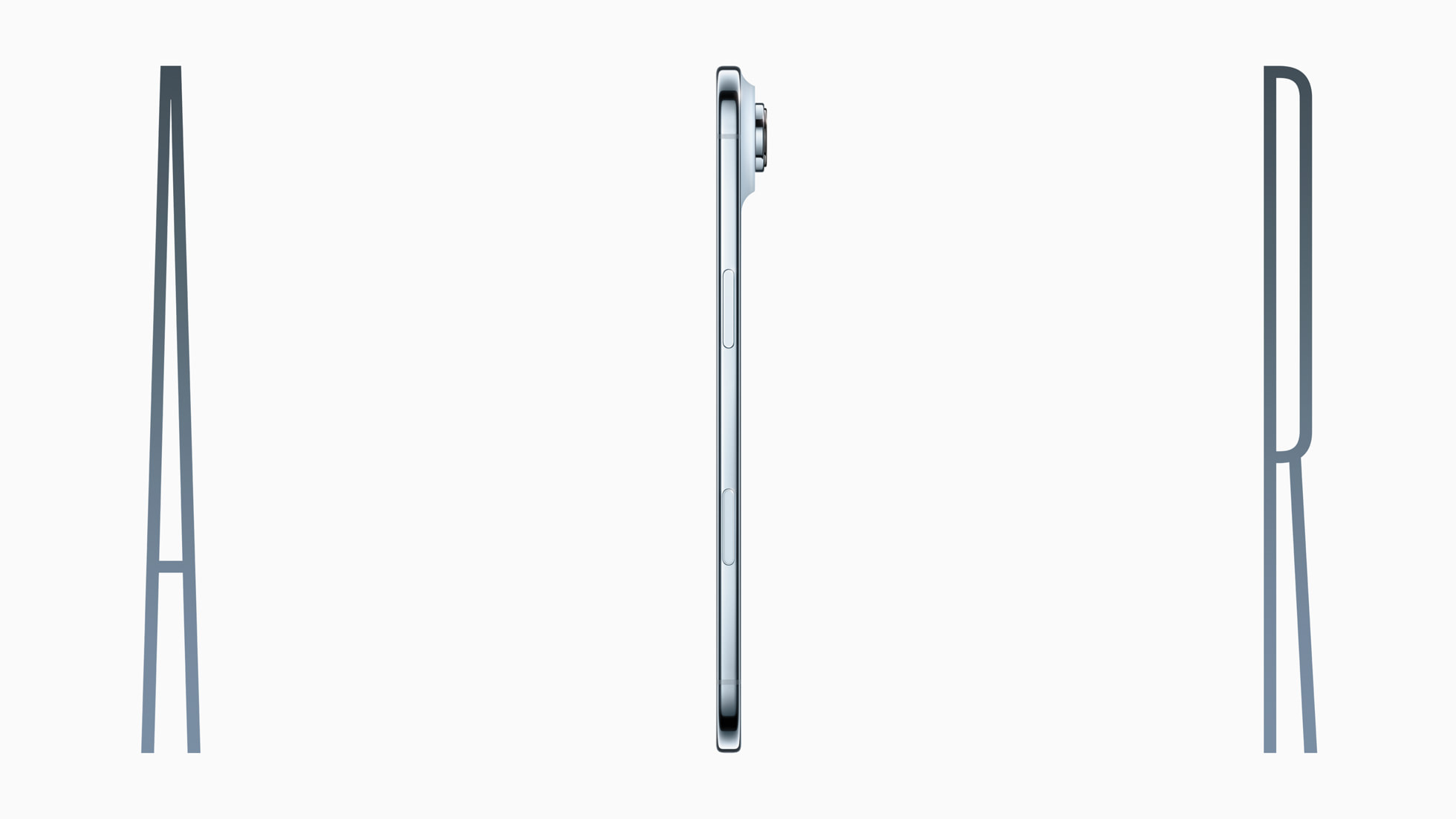
Apple's reported delay of the second-generation iPhone Air will be used to work on a redesign of the device that could include a second rear camera, according to a news brief from The Information.


A redesign that includes a second camera is said to be one way that Apple thinks it can address user complaints that the iPhone Air, while an impressive design feat, has led to too many hardware compromises, especially given the high price tag.

Apple priced it starting at $999, and that appears to have put off customers, leading to reports of poor sales and manufacturing cuts. The ‌iPhone Air‌ is only $100 cheaper than the $1,099 iPhone 17 Pro, which has a triple-lens rear camera and much better battery life. Adding a second camera to the ultra-slim device would also make it look more feature-equivalent to the standard iPhone 18 and therefore more appealing to consumers.

Citing people with knowledge of the matter, the report claims that some Apple engineers want to release the redesigned version with a second camera in spring 2027, which is when Apple is expected to release the regular iPhone 18 and iPhone 18e, as part of a new split launch cycle. The iPhone 18 Pro, iPhone 18 Pro Max, and an all-new foldable iPhone are expected to launch in fall 2026, which was when the iPhone Air 2 was originally expected. The Information reported on the delay earlier this week.

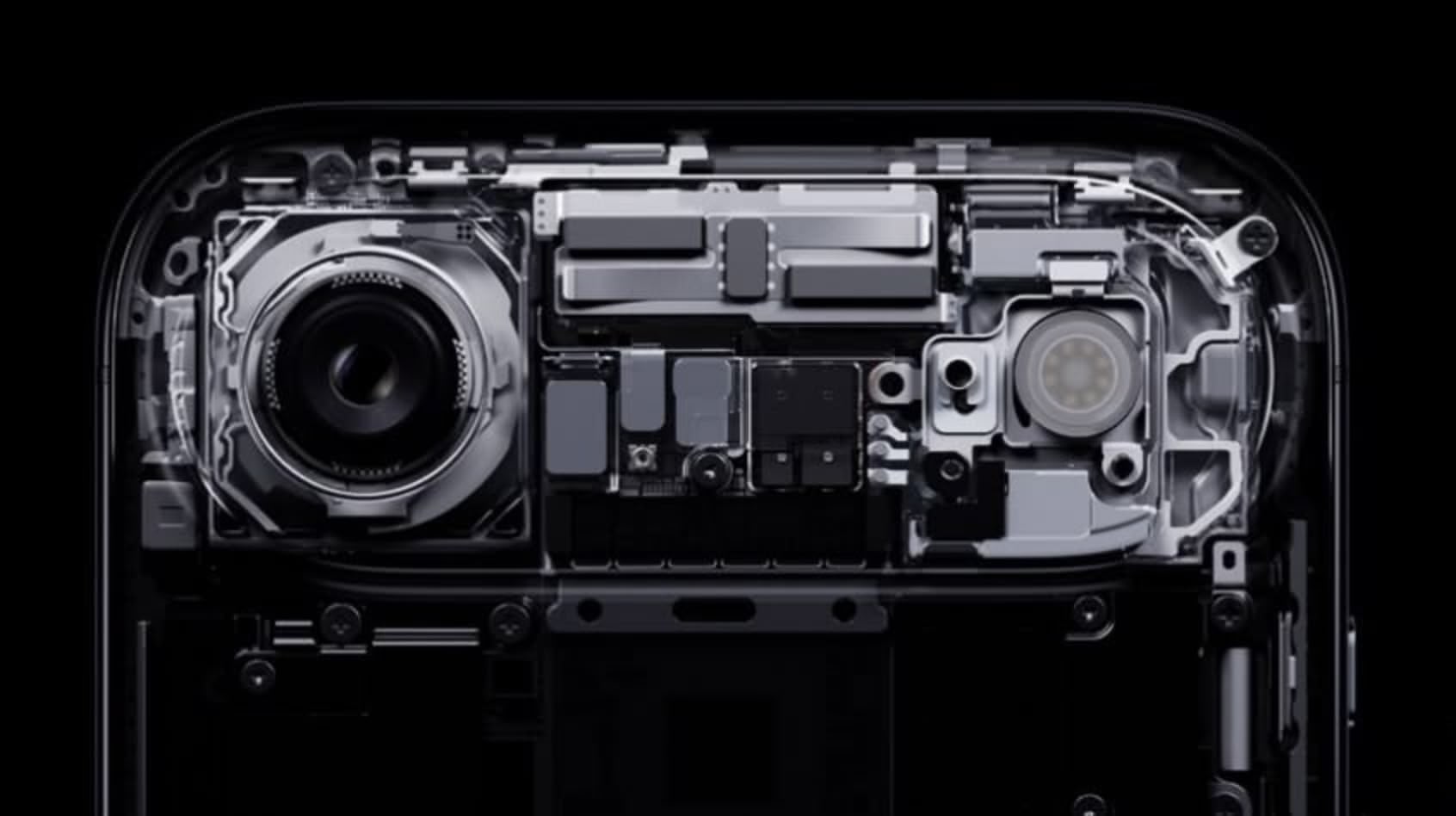
The report seemingly corroborates a leak out of China last week that claimed Apple's second iPhone Air model is in development and could feature two rear cameras instead of one, with a 48MP Fusion Ultra Wide camera joining the existing 48MP Fusion Main camera. Multiple technologies are housed in the plateau of the iPhone Air to maximize space for the battery, so Apple would presumably need to redesign the internals considerably to fit in another camera.

Previous reports have said Apple's work on a second-generation version of the ‌iPhone Air‌ is aimed at reducing the weight, adding vapor chamber cooling, and improving the battery capacity.
Related Roundup: iPhone Air
Buyer's Guide: iPhone Air (Buy Now)

This article, "Report: Apple Considers Adding Second Camera to Delayed iPhone Air 2" first appeared on MacRumors.com

Discuss this article in our forums

  •  

Happy 24th Anniversary, iPod

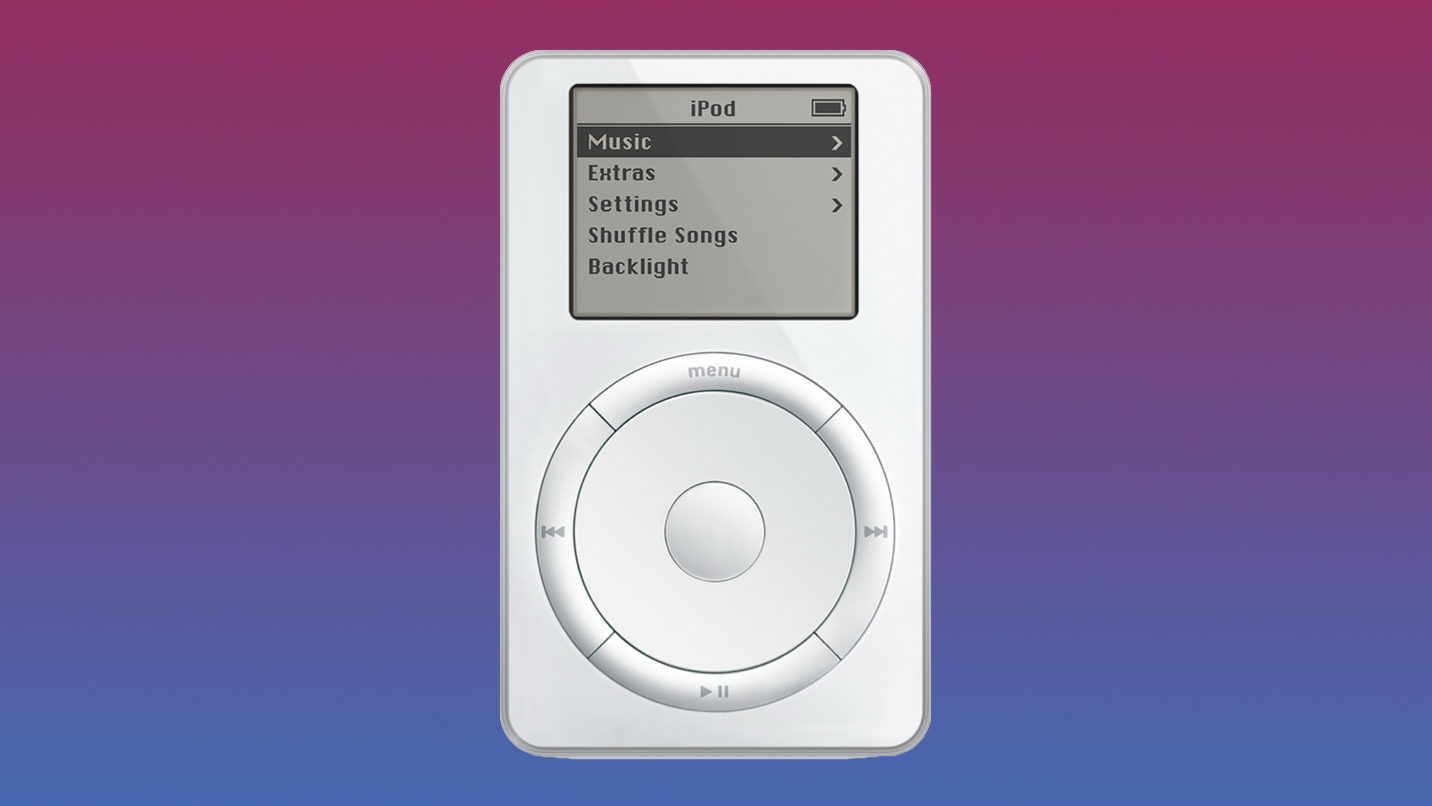
The first-generation iPod came out on November 10, 2001, making today the 24th anniversary of the device's launch. Apple announced it in late October, but November 10 was the first day customers were able to get their hands on it.


Even way back in 2001, there were leaks and fake leaks before the iPod launched. In one rumor article, Apple's upcoming device was dubbed the "iWalk" and described as a PDA with a high-color TFT-screen with handwriting recognition, which did not prove to be true. CNET suggested that it was too sophisticated to be an MP3 player, and was instead a component for a home digital stereo system, while a German website said it was "like a standalone CD-writer" that looks like "a Hifi component." The site did accurately predict that it would make it possible to "have all the music in the house stored on one place," but described it as a sort of AirPlay-enabled speaker.

More reliable rumors accurately pegged it as a digital music device able to sync with a computer, and in the days leading up to the launch, the iPod name leaked. Even with the info that came out, much of the iPod's introduction was a surprise because 2001 leaks were much less detailed than 2025 leaks.

Some MacRumors readers lined up to buy one on launch day, kicking off a tradition of long lines at Apple Stores that continued well into the iPhone launch days. As with any Apple product launch, there were some mixed reactions to the iPod, and of course a slew of early complaints. Here's what the forums had to say:

There were plenty of MacRumors readers thrilled with the iPod, and as we well know, it was a wildly popular device that spurred several subsequent models and eventually led to the launch of the ‌iPhone‌.

It was impressive to be able to have a 5GB FireWire drive in your pocket at the time, and iPod owners used it as a hard drive for file transfers. MP3 players existed, but nothing with the storage capacity and design of the iPod.

With the ‌iPhone‌ that does everything an iPod does, there's no longer a need for the iPod. The very last iPod was the iPod touch, which Apple updated sporadically and then didn't touch after 2019. It was officially discontinued in 2022, marking the end of the iPod line. Apple almost never announces when a product has been discontinued, but the iPod was an exception given its history.

In a statement, Apple's marketing chief Greg Joswiak said that the "Spirit of the iPod lives on" across all of the company's products, from the ‌iPhone‌ to Apple Watch to HomePod.

The iPod will celebrate its 25th anniversary next year. Apple has revived old products in the past, but people have little use for a music-only device in 2025. Apple is, however, working on a home hub that can play music, run apps, and control smart home products, and it's described as a small, square device with a display. It's possible Apple could reference the iPod when unveiling the device, or even borrow a part of its name like it did when naming the ‌HomePod‌.
This article, "Happy 24th Anniversary, iPod" first appeared on MacRumors.com

Discuss this article in our forums

  •  

B&H Lists HomePod Mini as Discontinued Amid Refresh Rumors

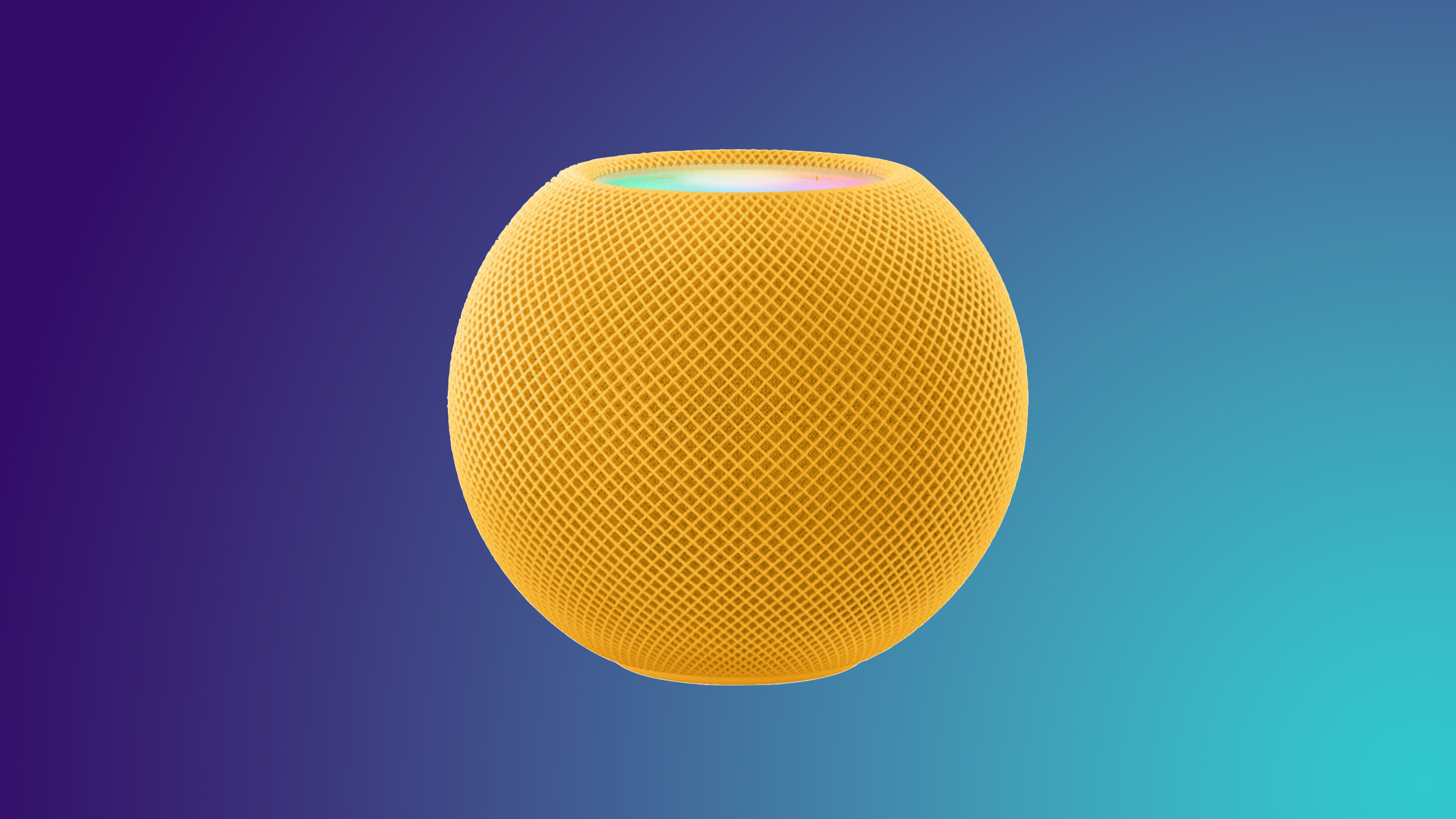
Apple product retailer B&H is listing all HomePod mini models as discontinued, and no longer offering them for sale. Some other retailers are also listing the HomePod mini as out of stock or on backorder, which suggests that an update isn't too far off.


Adorama lists the ‌HomePod mini‌ as backordered, and select colors are out of stock at Target. Walmart doesn't have any stock that's not from resellers, Staples has no HomePod minis available online, and at least one color is sold out from Verizon. The Midnight color option is unavailable for shipping from Best Buy, though other colors are in stock. Apple is still selling all colors of the speaker, with options available for both immediate shipping and pick up.

Apple is rumored to be working on a new version of the ‌HomePod mini‌, and Bloomberg said it could come as soon as this month. It's possible that the waning stock at third-party retailers is a sign that we'll get a new version of the ‌HomePod mini‌ before the end of 2025.

Apple held an event in September and did a series of product releases in October, casting some doubt that a new model is still on the immediate horizon.

The next ‌HomePod mini‌ is expected to have an upgraded S-series chip inside and Apple's N1 networking chip, but there are no design changes rumored except for refreshed color options.
This article, "B&H Lists HomePod Mini as Discontinued Amid Refresh Rumors" first appeared on MacRumors.com

Discuss this article in our forums

  •  

iPhone Air Sales Are So Bad That Apple's Delaying the Next-Generation Version

The thin, light iPhone Air sold so poorly that Apple has decided to delay the launch of the next-generation ‌iPhone Air‌ that was scheduled to come out alongside the iPhone 18 Pro, reports The Information.


Apple initially planned to release a new ‌iPhone Air‌ in fall 2026, but now that's not going to happen.

Since the ‌iPhone Air‌ launched in September, there have been reports of poor sales and manufacturing cuts. Apple's supply chain has scaled back shipments and production. Apple supplier Foxconn has reportedly dismantled all but one and a half of its production lines for the ‌iPhone Air‌, and all production is expected to be stopped at the end of the month. Luxshare, another supplier, stopped production at the end of October.

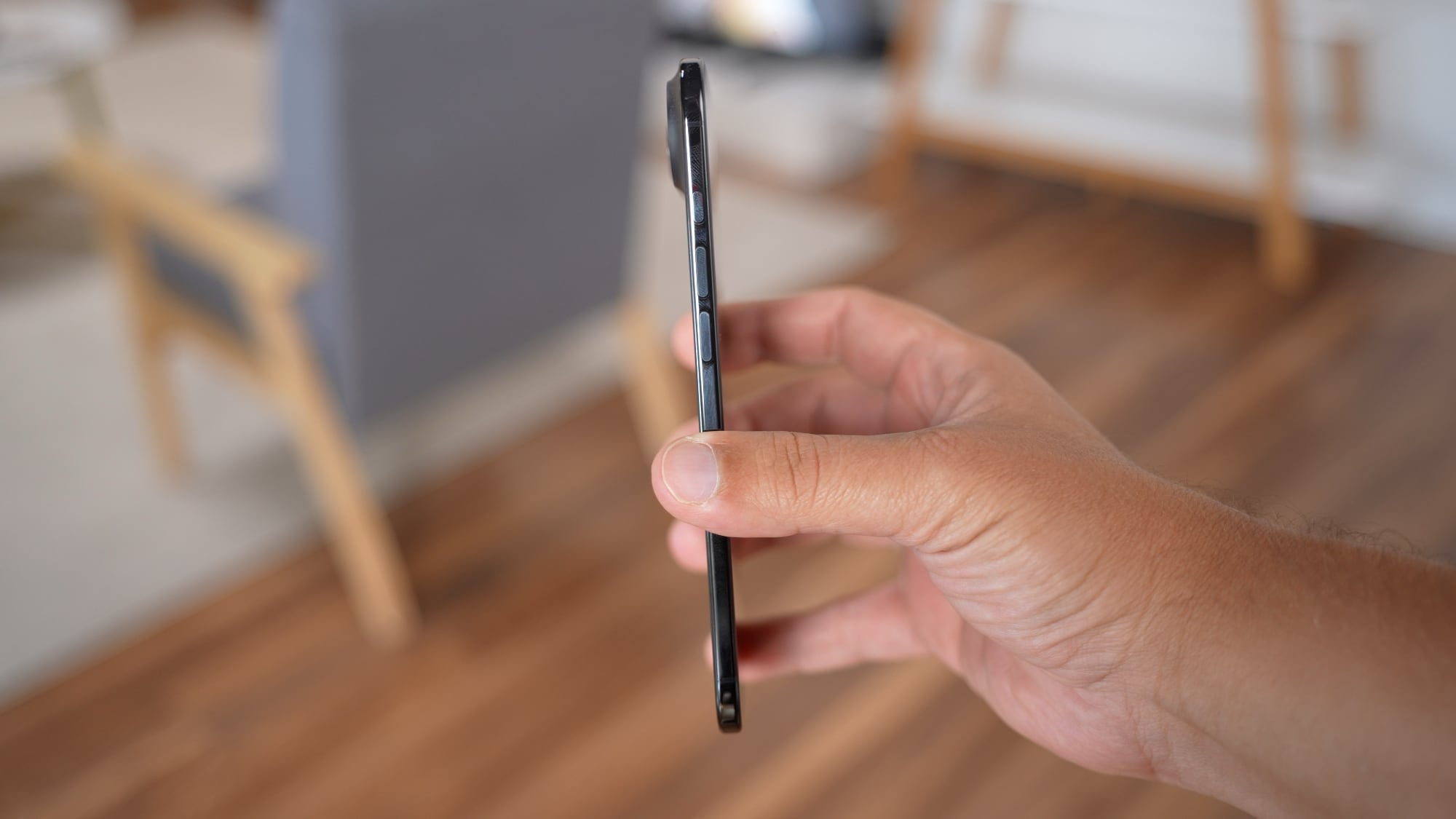
Apple was counting on the novel look of the device to spark interest, because it features the first substantial design update that we've seen to the iPhone lineup since the ‌iPhone‌ X added Face ID and an all-display design in 2017. Creating a super thin 5.6mm ‌iPhone‌ required compromises, so the ‌iPhone Air‌ has a smaller battery and a single-lens rear camera, but it still has a high price tag. Apple priced it starting at $999, and that appears to be more than customers are willing to pay for style without substance. The ‌iPhone Air‌ is only $100 cheaper than the $1,099 iPhone 17 Pro, which has a triple-lens rear camera and much better battery life.

Apple has not been able to land on a fourth ‌iPhone‌ that will sell well alongside the standard ‌iPhone‌ and Pro ‌iPhone‌ models. Apple experimented with a smaller 5.4-inch ‌iPhone‌ mini that suffered from disappointing sales, then moved on to the larger "Plus" ‌iPhone‌ that served as a more affordable version of the Pro Max. Plus models also failed, leading to the ‌iPhone Air‌.

Apple has already been planning for a split launch for the ‌iPhone‌ starting with the ‌iPhone 18‌ models. The ‌iPhone 18‌ Pro, ‌iPhone 18‌ Pro Max, and foldable ‌iPhone‌ are planned for fall 2026, while the ‌iPhone 18‌ and ‌iPhone‌ 18e will be held until early 2027. It's possible that the next-generation ‌iPhone Air‌ will come out alongside the ‌iPhone 18‌ in the spring.

Apple has been working on a second-generation version of the ‌iPhone Air‌ with a lighter weight, vapor chamber cooling, and a larger battery capacity, but Apple could rethink the design.
Related Roundup: iPhone Air
Buyer's Guide: iPhone Air (Buy Now)

This article, "iPhone Air Sales Are So Bad That Apple's Delaying the Next-Generation Version" first appeared on MacRumors.com

Discuss this article in our forums

  •  

M3 iPad Air vs. M5 iPad Pro Buyer's Guide: All Differences Compared

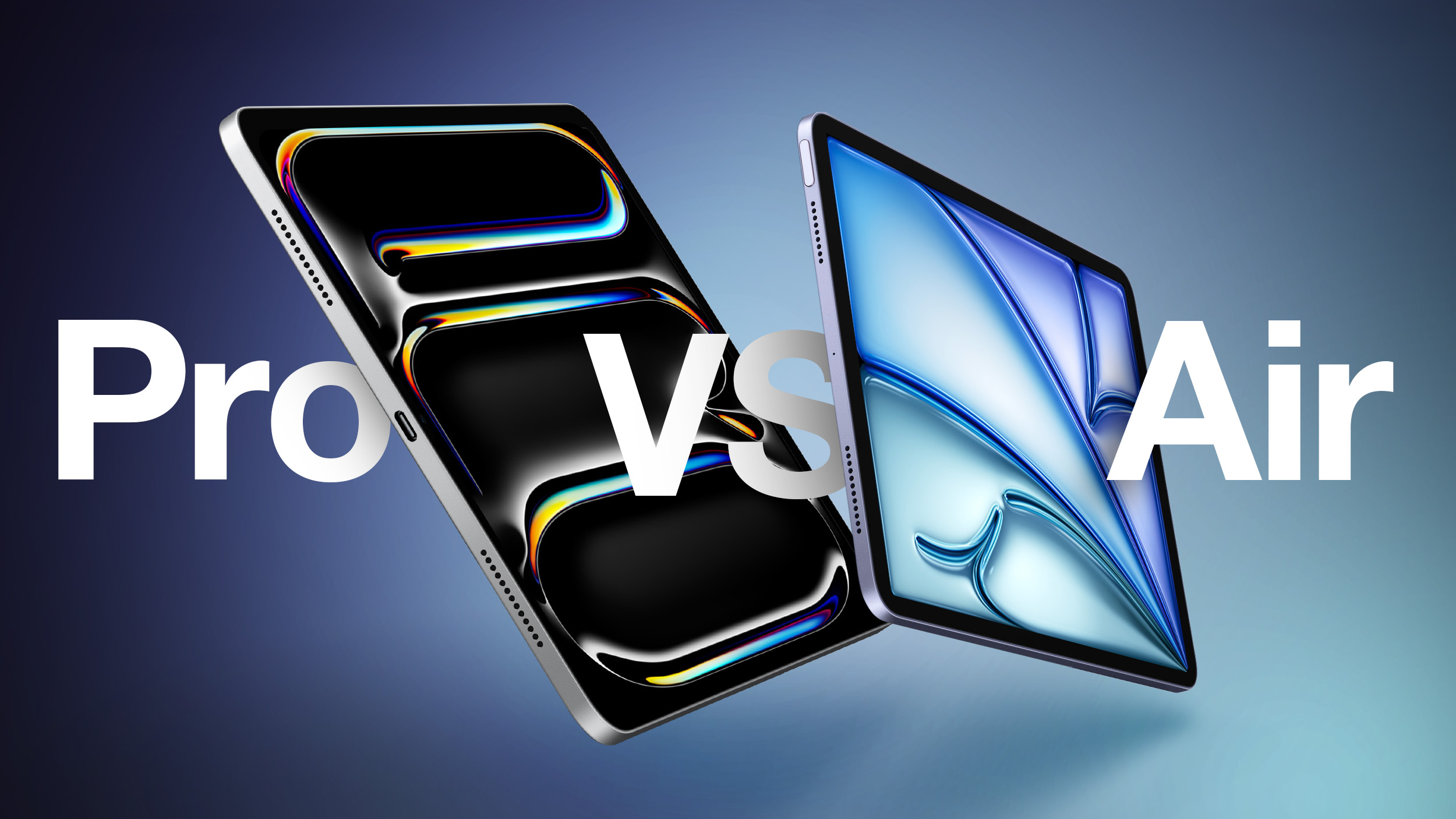
Apple recently updated the iPad Pro, widening the gap with the iPad Air, but how different are the two product lines and which should you buy?


Earlier this year, Apple refreshed the ‌iPad Air‌ with the M3 chip—a minor update over the previous model from 2024 which added the M2 chip and Apple Pencil hover. The latest ‌iPad Pro‌ models introduced the M5 chip alongside a small number of changes after last year's major redesign, which saw the debut of a thinner design with OLED displays.

Should you consider purchasing the ‌iPad Air‌ to save money, or do you need the high-end features of the ‌iPad Pro‌? Our guide answers the question of how to decide which of these two iPads is best for you.


‌iPad Air‌ (M3, 2025) ‌iPad Pro‌ (M5, 2025)
Liquid Retina display (LED backlit display with IPS technology) Ultra Retina XDR display (Tandem OLED)
ProMotion technology for refresh rates up to 120Hz
11-inch model SDR brightness: 500 nits max
13-inch model SDR brightness: 600 nits max
SDR brightness: 1,000 nits max
XDR brightness: 1,000 nits max full screen, 1,600 nits peak (HDR content only)
Nano-texture display glass option on 1TB and 2TB models
Drive external displays at 60Hz Drive external displays at up to 120Hz
Adaptive Sync support
‌M3‌ chip M5 chip
Made using TSMC's first-generation 3nm technology (N3) Made using TSMC's third-generation ‌3nm‌ process (N3P)
Based on A17 Pro chip from iPhone 15 Pro (2023) Based on A19 Pro chip from iPhone 17 Pro (2025)
8-core CPU (4 performance + 4 efficiency cores) Up to 10 CPU cores (4 performance + 6 efficiency cores)
9-core GPU 10-core GPU
Integrated Neural Accelerator in every GPU core
Metal 4 developer APIs Metal 4 developer APIs with Tensor APIs to program GPU Neural Accelerators
LPDDR5 memory LPDDR5X memory
8GB of memory 256GB and 512GB models: 12GB memory
1TB and 2TB models: 16GB memory
100 GB/s memory bandwidth 153 GB/s unified memory bandwidth
Dedicated display engine
First-generation ray tracing engine Third-generation ray tracing engine
First-generation dynamic caching Second-generation dynamic caching
Shader cores Enhanced shader cores
GPU with standard power efficiency More power-efficient GPU: Maintains performance with significantly less power
Improved thermal design with graphite sheets and copper
Broadcom Wi-Fi and Bluetooth chip N1 chip
Bluetooth 5.3 Bluetooth 6
Wi-Fi 6E connectivity Wi-Fi 7 connectivity
Qualcomm Snapdragon 5G modem (cellular models only) C1X chip (cellular models only)
Touch ID in top button TrueDepth camera system for Face ID
Portrait mode with advanced bokeh and Depth Control
Portrait Lighting with six effects (Natural, Studio, Contour, Stage, Stage Mono, High-Key Mono)
Animoji and Memoji
LiDAR scanner
Adaptive True Tone flash
Rear ambient light sensor
ProRes video recording up to 4K at 30 fps (1080p at 30 fps for 256GB capacity)
ProRes video recording up to 4K at 60 fps with external recording
Two microphones Four studio-quality microphones
Audio zoom
Stereo recording
Landscape stereo speakers Four speaker audio
Weight: 462 grams or 617 grams Weight 444 grams or 579 grams
Depth: 6.1 mm Depth: 5.3 mm or 5.1 mm
Fast-charge capable (Up to 50% charge using a 60W adapter or higher in 30 minutes with the 11-inch model or 35 minutes with the 13-inch model)
USB‑C connector USB‑C connector with support for Thunderbolt/USB 4
Supports Magic Keyboard for ‌iPad Air‌ Supports Magic Keyboard for ‌iPad Pro‌
128GB, 256GB, 512GB, or 1TB storage 256GB, 512GB, 1TB, or 2TB storage
Up to 2× faster SSD read and write speeds
Available in Space Gray, Starlight, Purple, and Blue Available in Space Black and Silver
Price starting at $599 Price starting at $999


Overall, the ‌iPad Air‌ is the better option for the majority of users, simply on the basis of value for money. For most people, the additional $400+ needed to buy the ‌iPad Pro‌ is not justified to get the likes of ‌Face ID‌, a thinner design, four-speaker audio, and a ProMotion OLED display with refresh rates up to 120Hz.

Some ‌iPad Pro‌ features, such as LiDAR, up to 16GB of memory, and Thunderbolt connectivity are only practically useful to a small niche of users and most will never use some of these high-end capabilities. Many features, such as Adaptive Sync and Audio zoom, will not be meaningfully utilized by many users.

Professionals who have a clear use case for needing larger amounts of RAM and storage, a matte display, Thunderbolt connectivity, and OLED for HDR content will clearly benefit from buying the ‌iPad Pro‌. That being said, "prosumer"-style customers who simply want the best iPad will enjoy features such as 120Hz ProMotion for smoother scrolling and gaming, a thinner design, deeper blacks and more vivid colors with the OLED display, and the Adaptive True Tone flash for document scanning, even if they are not necessary.

Beyond these individual circumstances, the ‌iPad Air‌ is the best value for money and will be more than ample for most users' needs. With the ‌iPad Air‌, users can get a modern all-screen design, the M3 chip, practical features like USB-C and 5G connectivity, and compatibility with the core Apple accessories for a price well below that of the ‌iPad Pro‌.

A new ‌iPad Air‌ with the M4 chip is in development and will likely launch in the first half of 2026, which may be worth bearing in mind if you aren't in a hurry to make a purchase. The new chip is expected to be the main upgrade, with few other new features or enhancements expected.
Related Roundups: iPad Air , iPad Pro
Related Forum: iPad

This article, "M3 iPad Air vs. M5 iPad Pro Buyer's Guide: All Differences Compared" first appeared on MacRumors.com

Discuss this article in our forums

  •  

tvOS 26.2 Lets You Create Apple TV Profiles Without an Account, Adds Dedicated Kids Mode

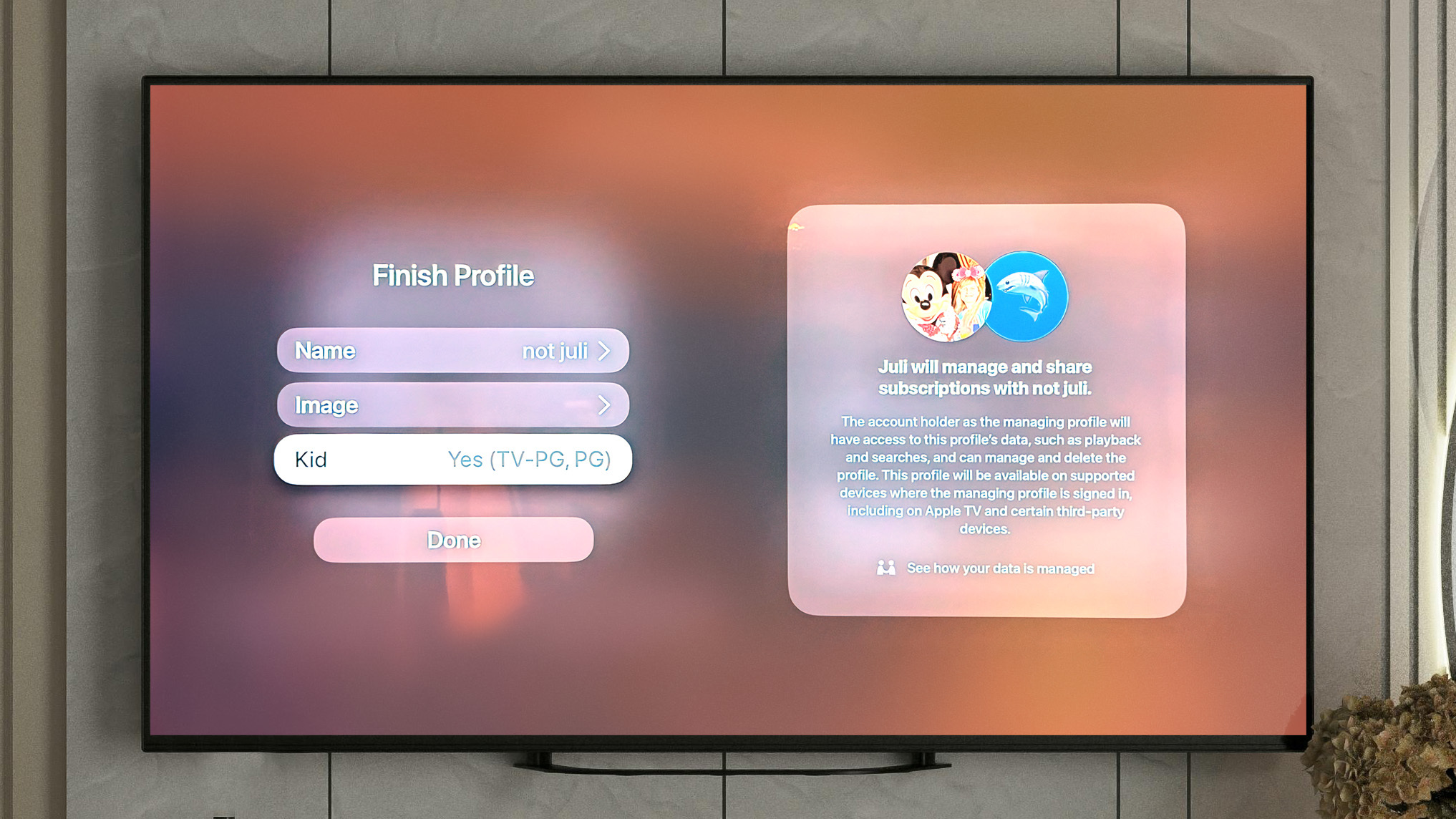
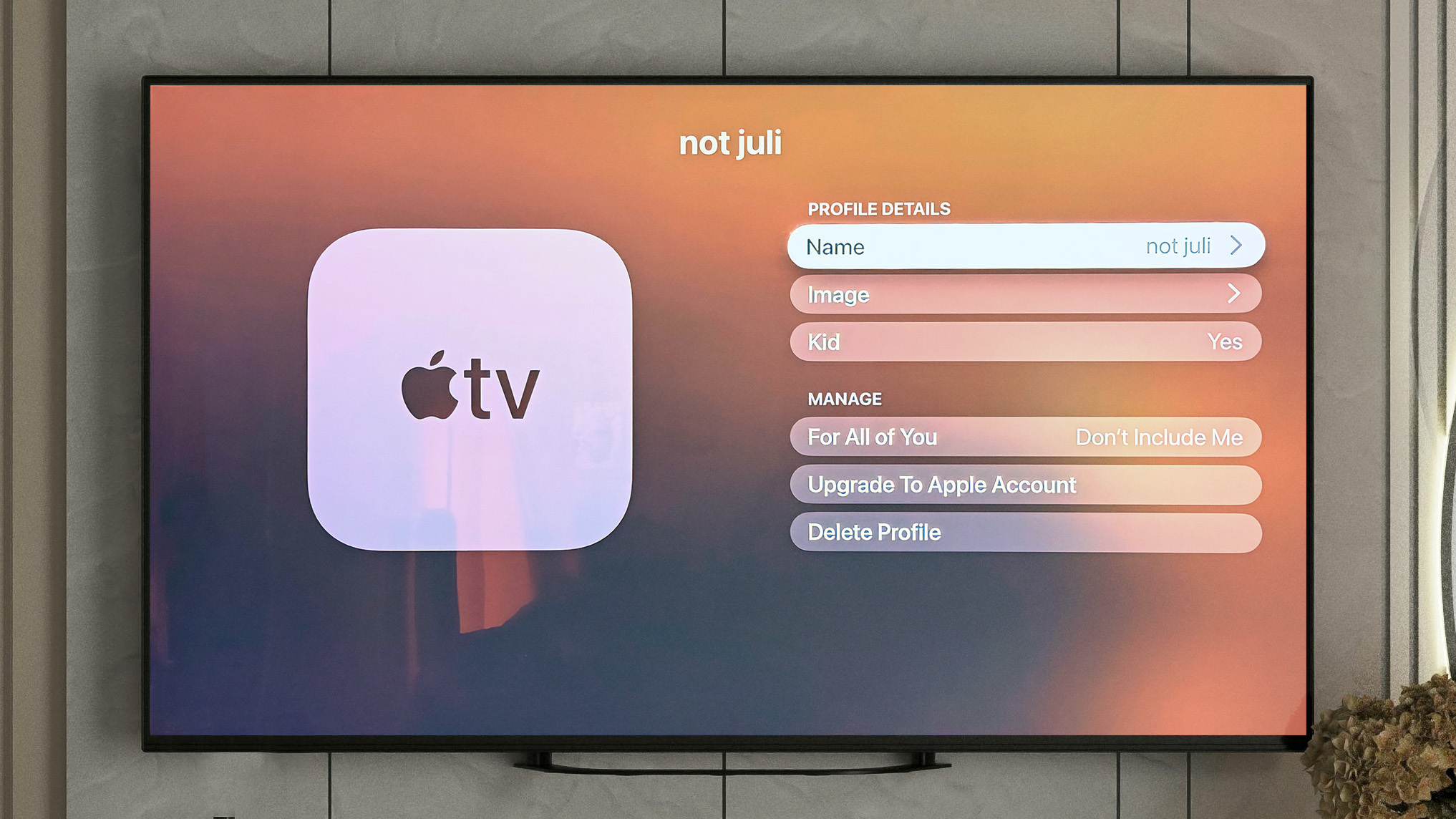
With tvOS 26.2, Apple is changing the way that profiles work on the Apple TV. It's now possible to create a profile without an Apple Account, which is particularly useful for guest profiles and profiles for children.


In the ‌Apple TV‌ Settings app's profiles section, the "Add New Profile" option no longer requests that users sign in with an Apple device or manually with an Apple Account.

Alongside the Apple Account sign in, there is a "Create Profile" option that only requires a name, a profile rating, and a yes or no question about whether the new user is a child.


Selecting yes limits content to a PG rating by default, but there is a customize option for more granular control. Users can select ratings for TV shows and movies that are appropriate for the child based on their age. All of the standard TV show and movie ratings are available to select. Creating a child account and choosing a rating changes the ‌Apple TV‌ content that is available to the child. The ‌Apple TV‌ app will only show content that is appropriate for the limits that have been established for the account.


In tvOS 26.1, the latest public version of tvOS, profiles require an Apple Account. The TV app has a dedicated children's section and parents can set up parental controls to limit access, but it is not the full kids-only ‌Apple TV‌ view that's in tvOS 26.2.


The ‌Apple TV‌ app in tvOS 26.2 does not show any adult content when a child's profile is signed in, including in the Store and Library sections of the app. Only kids shows and movies are available to watch or purchase.

Years ago prior to the launch of tvOS 14, there were rumors of a dedicated kids mode for the ‌Apple TV‌, but that didn't materialize. The changes in tvOS 26.2 are the closest Apple has come to an ‌Apple TV‌ experience just for children.

When a kids profile is active, it only applies to the ‌Apple TV‌ app. All other apps are visible and accessible to the user, and any app can be downloaded from the App Store. Parental controls still need to be used to limit access to content outside of the ‌Apple TV‌ app.

Setting up an adult profile allows for unrestricted access to the content on the ‌Apple TV‌, so adults in the home that don't have an Apple Account can also now have their own profiles with their own content recommendations. Any account that is created without an Apple Account can be deleted or can be upgraded to add an Apple Account at a later time.

Profiles on tvOS 26.2 say that they may also show up on certain third-party devices, so accounts for children may also be accessible on devices with the ‌Apple TV‌ app, like smart TVs.

tvOS 26.2 is available for developers and public beta testers at the current time, and it is expected to launch sometime around the middle of December.
Related Roundup: Apple TV
Buyer's Guide: Apple TV (Don't Buy)

This article, "tvOS 26.2 Lets You Create Apple TV Profiles Without an Account, Adds Dedicated Kids Mode" first appeared on MacRumors.com

Discuss this article in our forums

  •  

Ecovacs Deebot X11 Omnicyclone Review: HomeKit Robot Vacuum With Bagless Design and Fast Charging

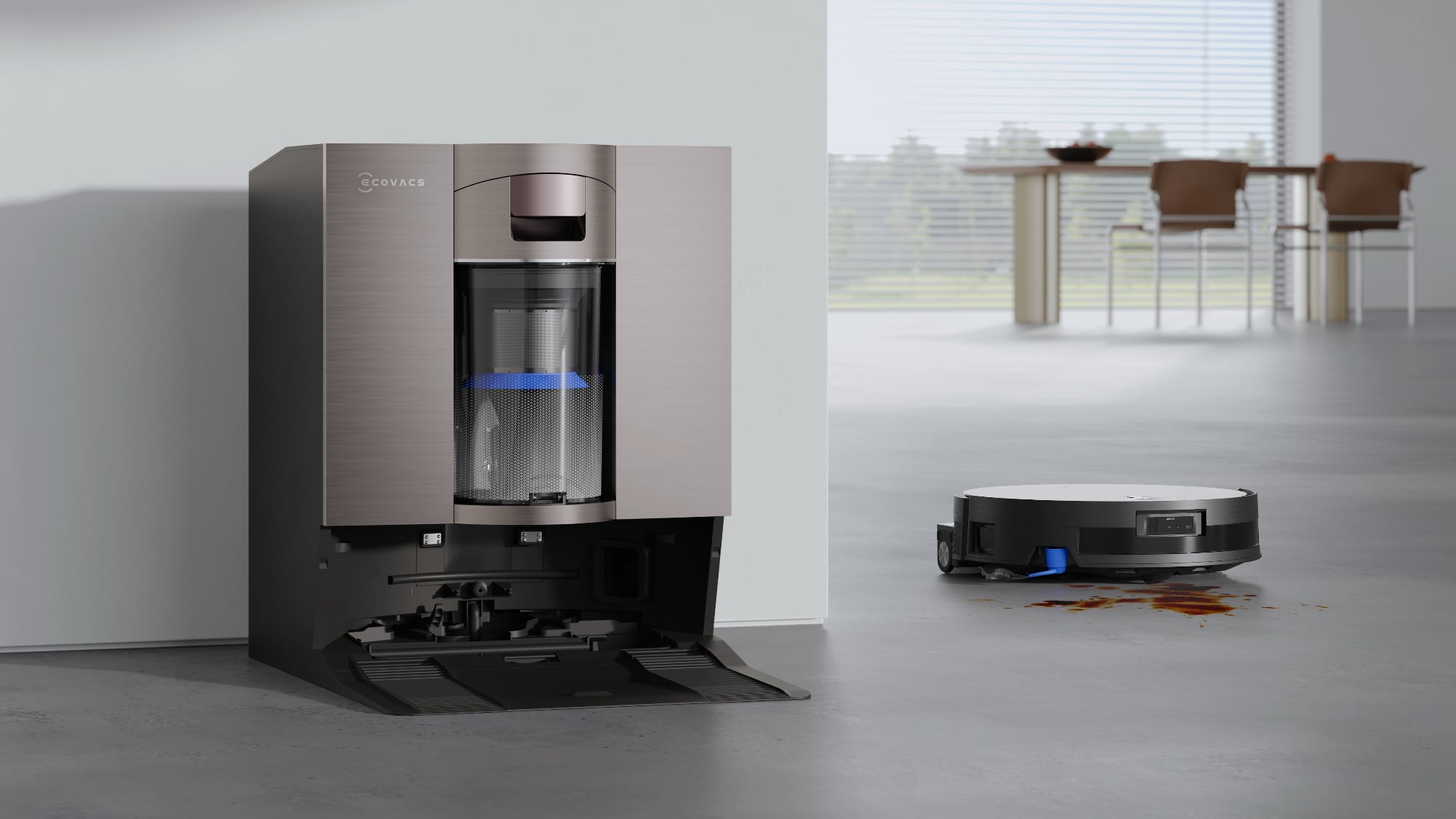
Ecovacs recently came out with its newest robot vacuum, the Deebot X11 Omnicyclone. Like the last couple of models, this new vacuum has Matter integration and it's able to connect to HomeKit so it can be sent off to clean the floor with Siri voice commands.

Design


The X11 is the same size as the prior-generation X9, coming in at 3.86 inches tall. I've tested several robot vacuums now, and that's on the thinner side. It can get under almost all of my furniture, including my stove, to vacuum in areas that are often untouched.

Height is the most important metric when it comes to robot vacuums, but if you have a lot of tightly spaced furniture, you also need to consider width. The X11 is about 13.8 inches across, and it could be too large for smaller apartments.
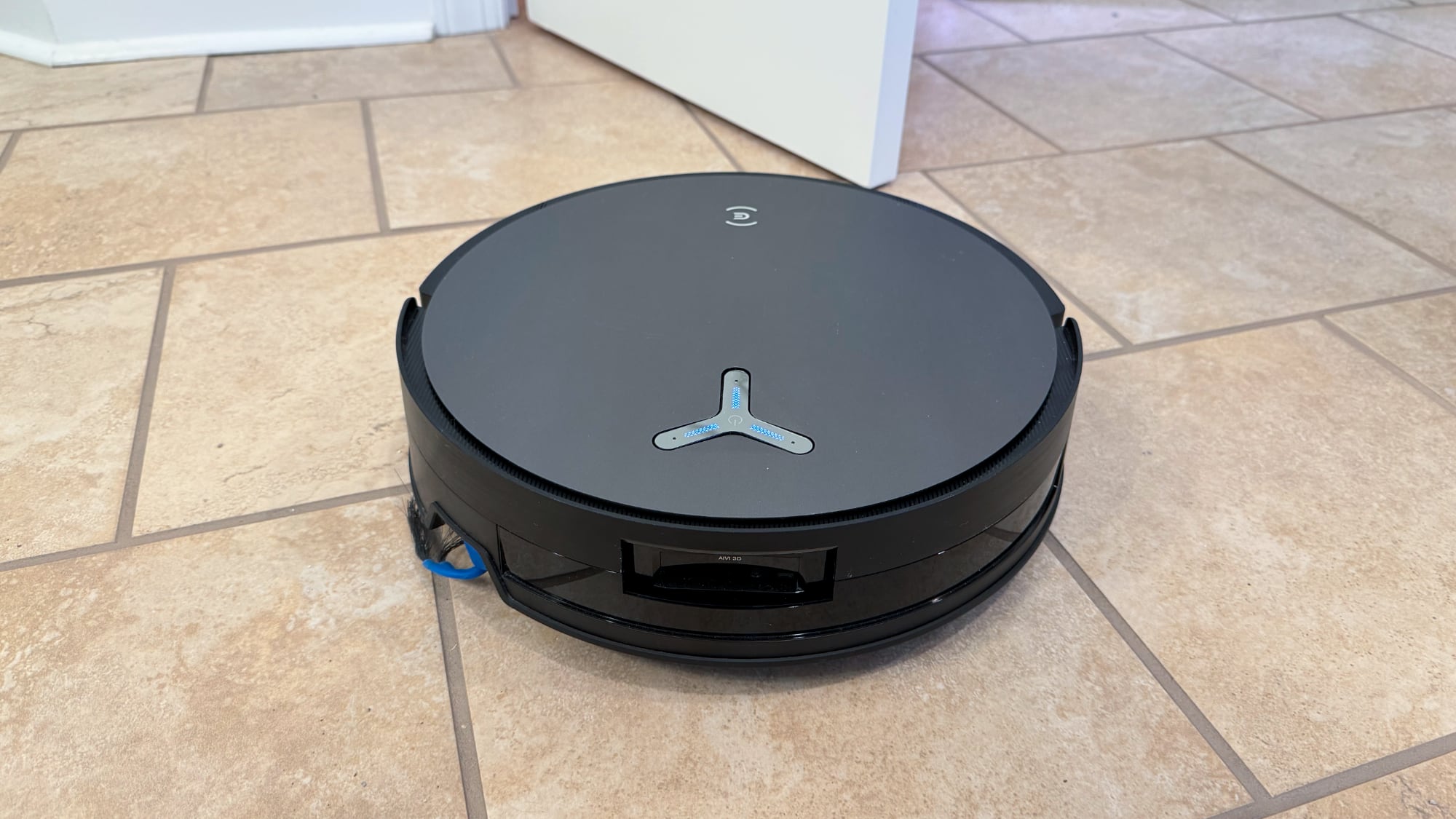

Underneath the vacuum, there's a roller bar, a mop, a brush that gets into nooks and crannies along baseboards, a canister for dust and debris, and internal areas for clean and dirty water for mop washing and cleaning. You can access the dust canister by removing the top plate of the robot and undoing the latch.
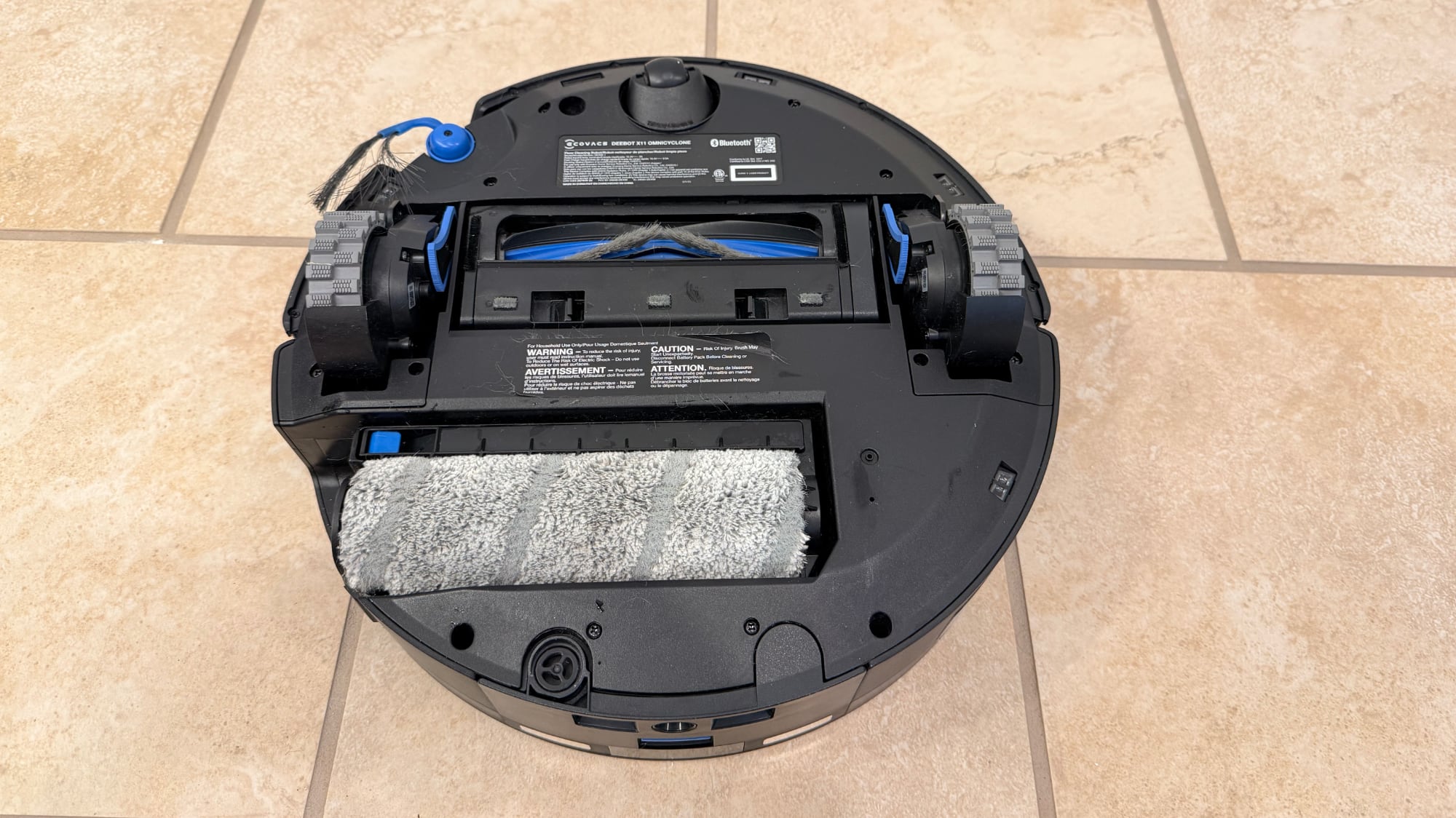

Exterior vacuum design didn't change much between the X9 and the X11, but the X11's base station is entirely different. It's significantly larger than before because it includes a reusable canister for dust instead of a bag.

The canister is why the X11 has its "Omnicyclone" name. It reminds me of a Dyson-style vacuum canister, and it's built right into the middle of the base station. You can pop it out and empty it into the trash, then stick it right back in. Large chunks of debris can get stuck, so as with a Dyson, the canister can need cleaning at times. There is no need to buy bags with the X11, which does make it stand out from other robot vacuums on the market.
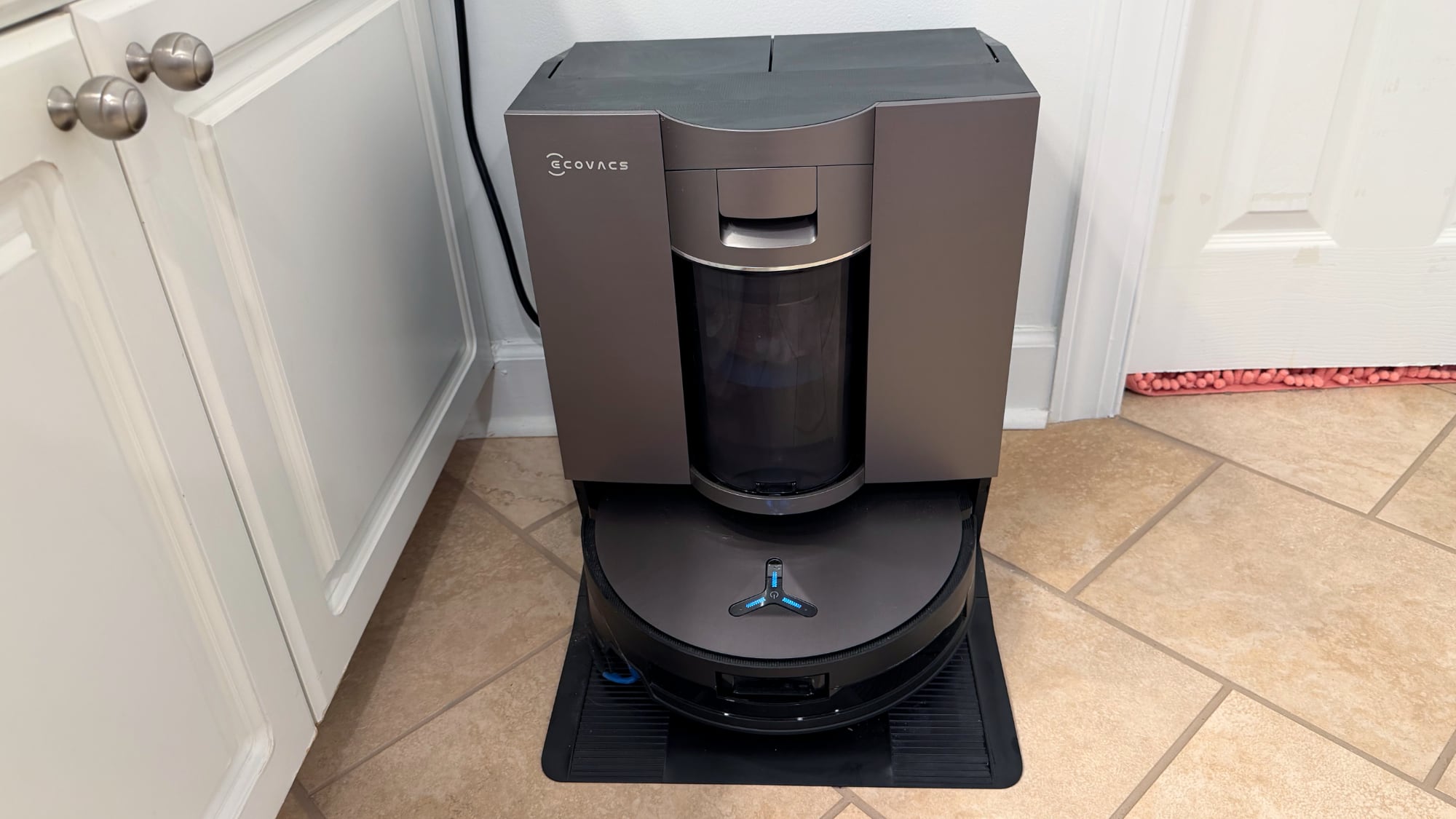

Along with the vacuum canister, the base station houses a 2.7-liter dirty water tank and a 3.2-liter clean water tank. The water tanks are larger than the tanks in the X9, which means less maintenance. I fill the clean water tank less, and I try to remember to empty the dirty water tank regularly because it can get smelly if it sits.
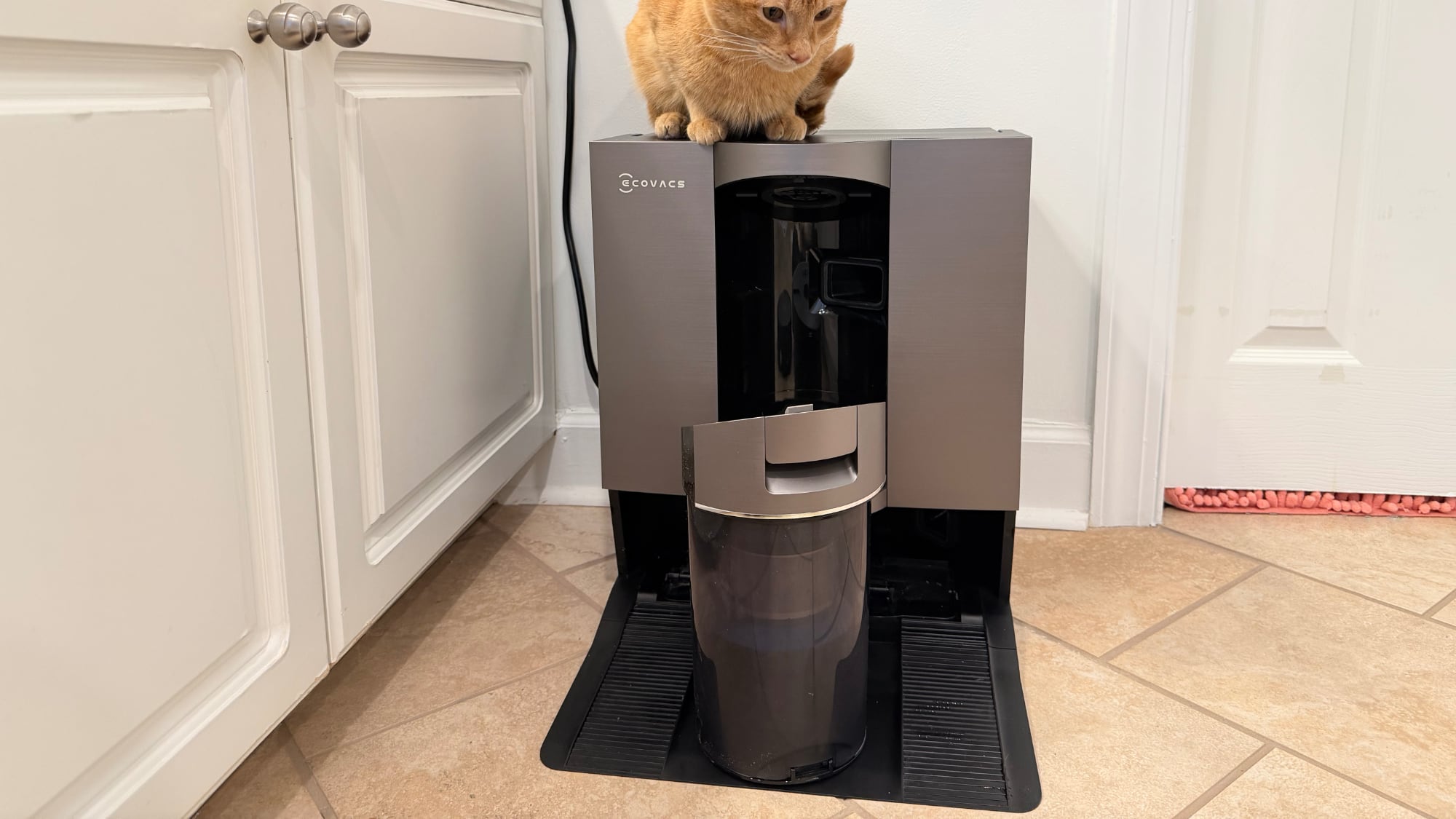

Inside the base station, there's a spot to add cleaning fluid. The X11 supports two kinds of cleaning fluid, one for standard cleaning and one for deep cleaning. Two cleaning fluid options are more expensive and more of a hassle, so I'm not a fan of the dual cleaning. Ecovacs recommends that you use Ecovacs cleaning fluid, and it sells the two variants.

Setup and Maintenance


Setting up the X11 is straightforward enough that anyone can do it. There's a single-page startup guide that has easy instructions on putting the base station components together, then it's just a matter of filling the water tank, downloading the app, turning on the robot, and following the app steps for pairing.

The X11 is simple enough that someone not technologically inclined could operate it, but the number of app settings and complicated features like voice activation could be confusing. None of those features are required, and it can clean on default settings, but if you have older parents who struggle with electronics and buy this (or any robot vacuum) for them, you're going to get calls for troubleshooting.

There is maintenance to take care of, like occasionally replacing the rollers and brush with parts purchased from Ecovacs. The site sells a bundle that includes a new roller brush, three filters and two side brushes for $60, and a new roller mop is $35.

Vacuuming


The X11 has the strongest suction of any robot vacuum that I've tried. It is excellent at picking up pet hair, dust, and debris on my hardwood and tile floors. I started tossing a handful or two of dirt on the floor to see how much robot vacuums can clean up, and the X11 got almost all of it in the first pass.

Robot vacuums are meant to clean regularly rather than deeply, which is why it's not an ideal test, but it does give me a clear metric to compare by.


According to Ecovacs, the X11 has 19,000 Pa suction and it uses the same Blast system (multi-stage suction and airflow) from prior Ecovacs robots. It's more suction than the X9, which I already thought worked well, and more suction than the Roborock vacuum I use regularly. If you have hard floors and pets or kids, it's good at getting up even trace amounts of pet hair, and it doesn't miss crumbs in the kitchen.

There's a side brush for sweeping along baseboards and in corners, and it's able to get most dirt and fur up. You'll want to manually vacuum in corners every so often, but it's not a situation where the X11 is vacuuming the main area of a room and pushing dust to the sides. It is able to use the added side brush and the improved suction to do a passable job keeping hard to reach areas clean.

Ecovacs' robots have a ZeroTangle brush, and it works. I have long hair, my partner has long hair, and we have two cats. I haven't seen the brush get tangled up with hair, and I've never had to fuss with it.
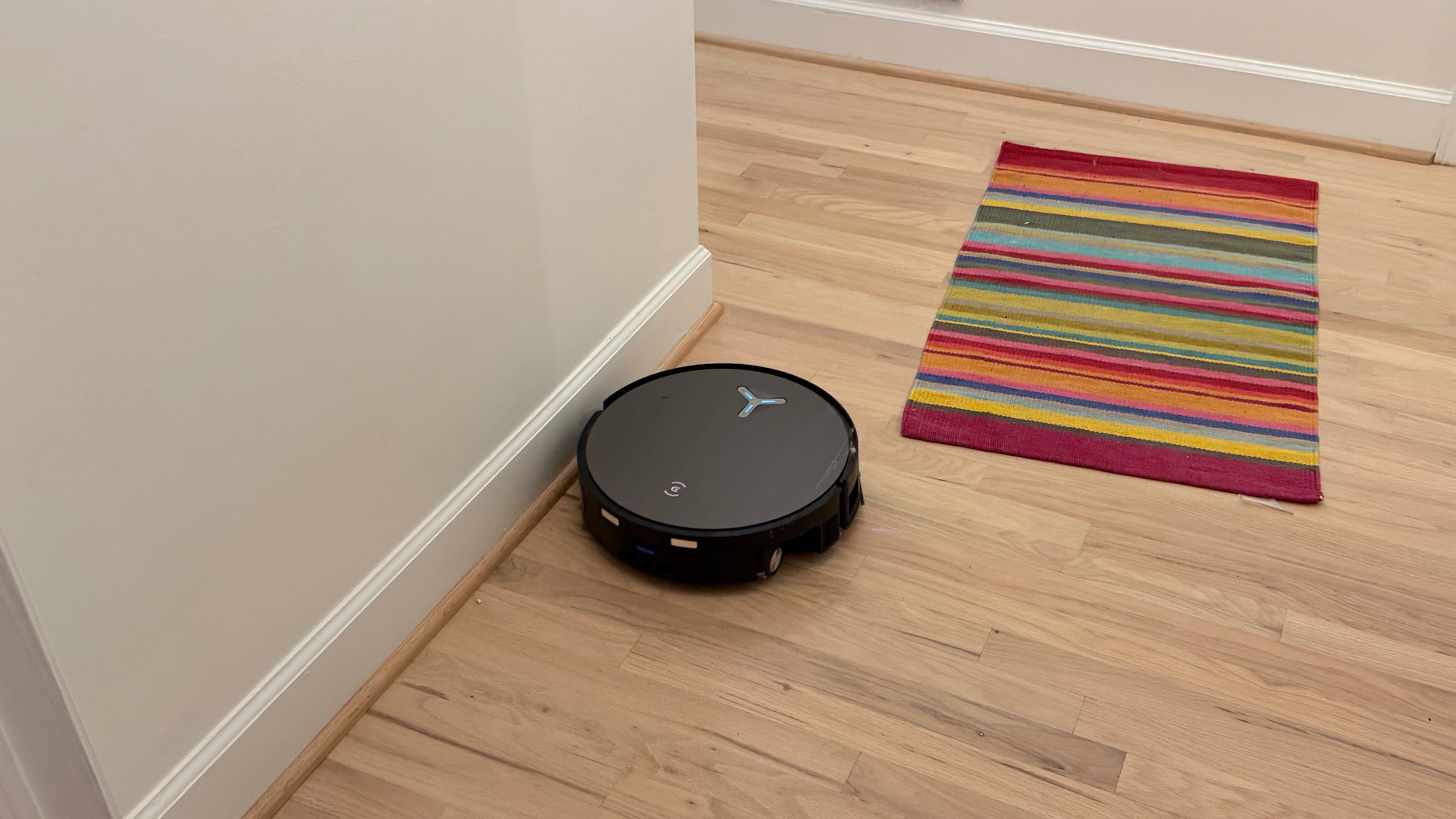

The X11 is able to get over higher thresholds than prior Ecovacs robots, so if you have a tall threshold that other robots can't handle, the X11 might be able to navigate it. It can go over thresholds as high as 2.4cm (0.95 inches). It can get into a bathroom that has a higher than average threshold, but another room with a baby gate has a threshold too high for it to overcome. I definitely notice a difference between the X11 and the older X9 when it comes to threshold navigation.

Despite stronger suction, the X11 isn't louder than prior models, measuring in at around 62 dBA in tests. I wouldn't want to sleep while the X11 is running, but I can work while it's on if I put in my AirPods Pro to block out the noise. Emptying the vacuum into the canister at the base station is the loudest action that it performs (close to 80 dBA), so keep that in mind when positioning the base station.

The X11 is one of the quieter robot vacuums that I've tried in terms of straight vacuuming and operation sound, and it has a mode that makes it even quieter. Turning down the suction level will also help.

Mopping


Like Ecovacs' prior-generation high-end robots, the X11 has a roller mop rather than two rotating mopping pads. I am a fan of this design because it continually removes dirty water, so it's washing the floor with clean water.
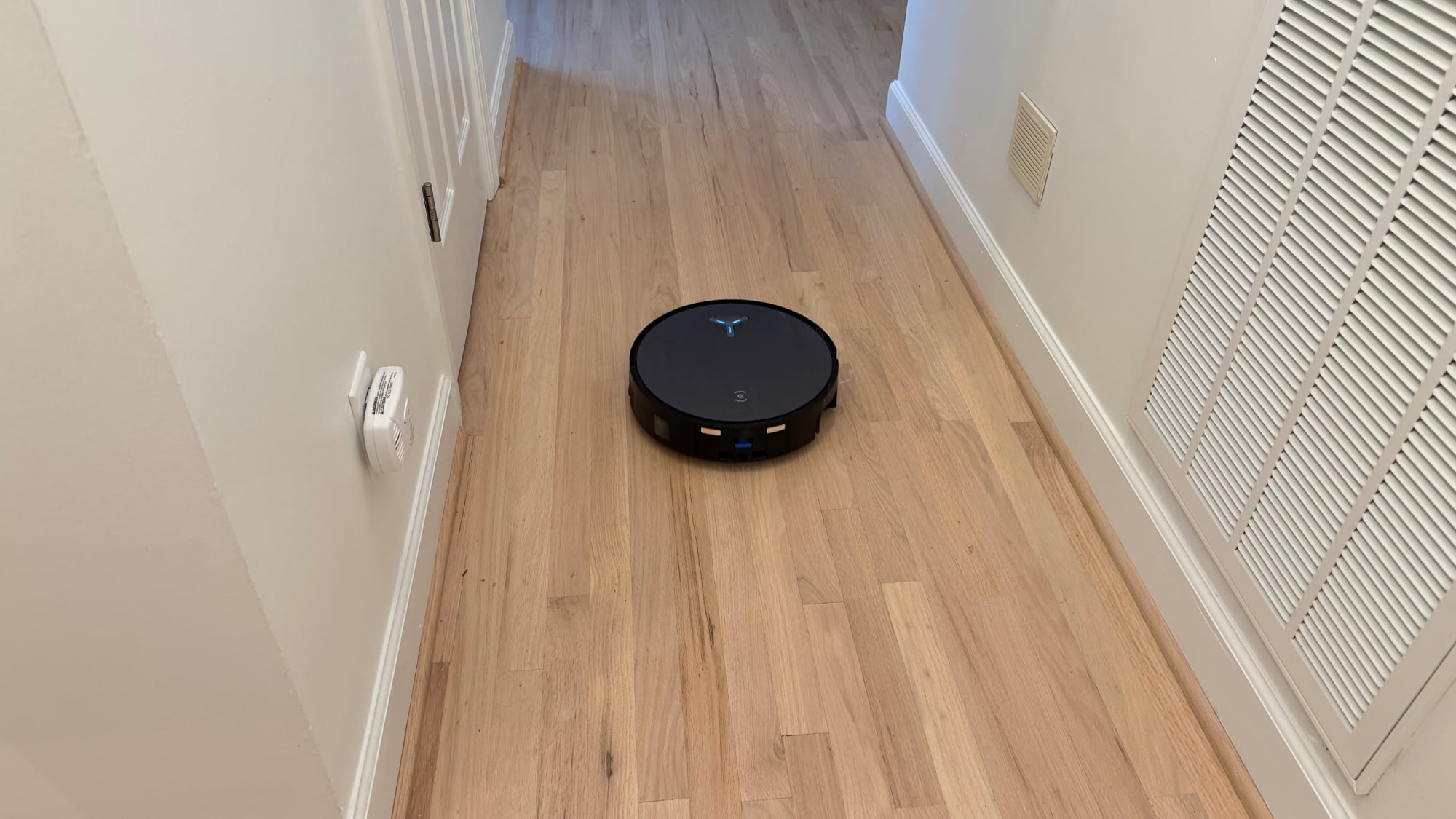

It sprays water onto the mop, cleans the floor, and squeezes the dirty water into a collection tank before starting the process over again. With this version, the roller extends out further, so it can get into corners. It's also supposed to have stain-detecting AI to go over a dirty area again, and I've seen this work as long as certain AI cleaning modes are enabled.

With wet stains, the X11 can get a mess in one go. A squirt of ketchup on the floor, for example, gets wiped up with a single cleaning. With dried-on stains, it can take a few passes. I tested dried ketchup, and needed to have the robot go over it three times to get every speck up. Anecdotally, the X11 seems to be better at getting up things like dried up cat food in fewer passes than prior Ecovacs robots.

Every so often, the X11 returns to the base station to wash the mop with hot water, and when a cleaning is finished, it's dried with hot air.

I wouldn't expect any robot vacuum to get a floor entirely spotless in one cleaning, but weekly cleanings paired with daily cleanings in specific areas like the kitchen keep the floors clean.

Time


Cleaning 2,000 square feet takes the X11 approximately five hours on the standard setting with one pass, though that can vary depending on the number of passes that it's instructed to make when mopping, how often it empties the vacuum and washes the mop, and how far it is from the base station. That time is fairly standard for the robot vacuums that I've tested, though some will take longer because of long periods for charging.

I find it useful to set up scheduled cleanings with the Ecovacs app or the Home app. I schedule the X11 to clean one area of the house per day, which keeps the floor clean but doesn't subject me to listening to a vacuum run for hours on end. It can be set to clean after meal times or more frequently just in high traffic areas, which is helpful.

Navigation and AI


When you set up the X11 for the first time, it maps each room in your house prior to cleaning. You can see the map as it goes, and it's clear that the lidar sensor at the front works well. It made a perfect map of my house, though unlike some other robot vacuums, it doesn't detect furniture and add those items to the map automatically, nor is it great at labeling rooms.

It can detect some thresholds, but it's best to go in and edit the map to make changes. My house has an open-concept main area, and it wasn't able to distinguish between the kitchen, dining room, and living room, and it also merged one bedroom with those areas. In my office, it wasn't able to tell the bathroom from the main office area, I suppose because it didn't detect the door.


The X11 is good at obstacle avoidance, using a camera-based sensor system for object detection. It hasn't run directly into anything, and it is better at not getting trapped by furniture. It knows where walls are, where furniture legs are, and it can detect and avoid items on the floor like cables, socks, pets, and more. It doesn't see smaller items like LEGO bricks, and it can suck those up.

Some vacuums will label the in-app map with items that have been detected so you can go in and tell them whether to avoid that item in the future. The X11's object detection is more behind-the-scenes, so I don't get a readout of what it's avoiding.

It's good at navigating the house, though I did see it get inexplicably lost one time. It might have been that the hallway was too dark, but it couldn't find its way back to the dock in another room.

The AI in the X11 is more transparent than in prior models, and I can better keep track of what the robot is doing, why it's doing it, where it's cleaned, where it hasn't cleaned, and where access was blocked by a closed door or another obstacle.

Rugs


I've been frustrated with the way the Ecovacs robots handle small rugs, and there's no change with the X11 Omnicyclone. It regularly gets trapped on the rugs in bathrooms and thin, soft-backed rugs on my wood floors that don't have grip. It also cannot handle tassels. By "trapped," I mean that the roller vacuum sucks up the rug and can't release it, so I'm forced to go pull it out and set the vacuum to continue cleaning.
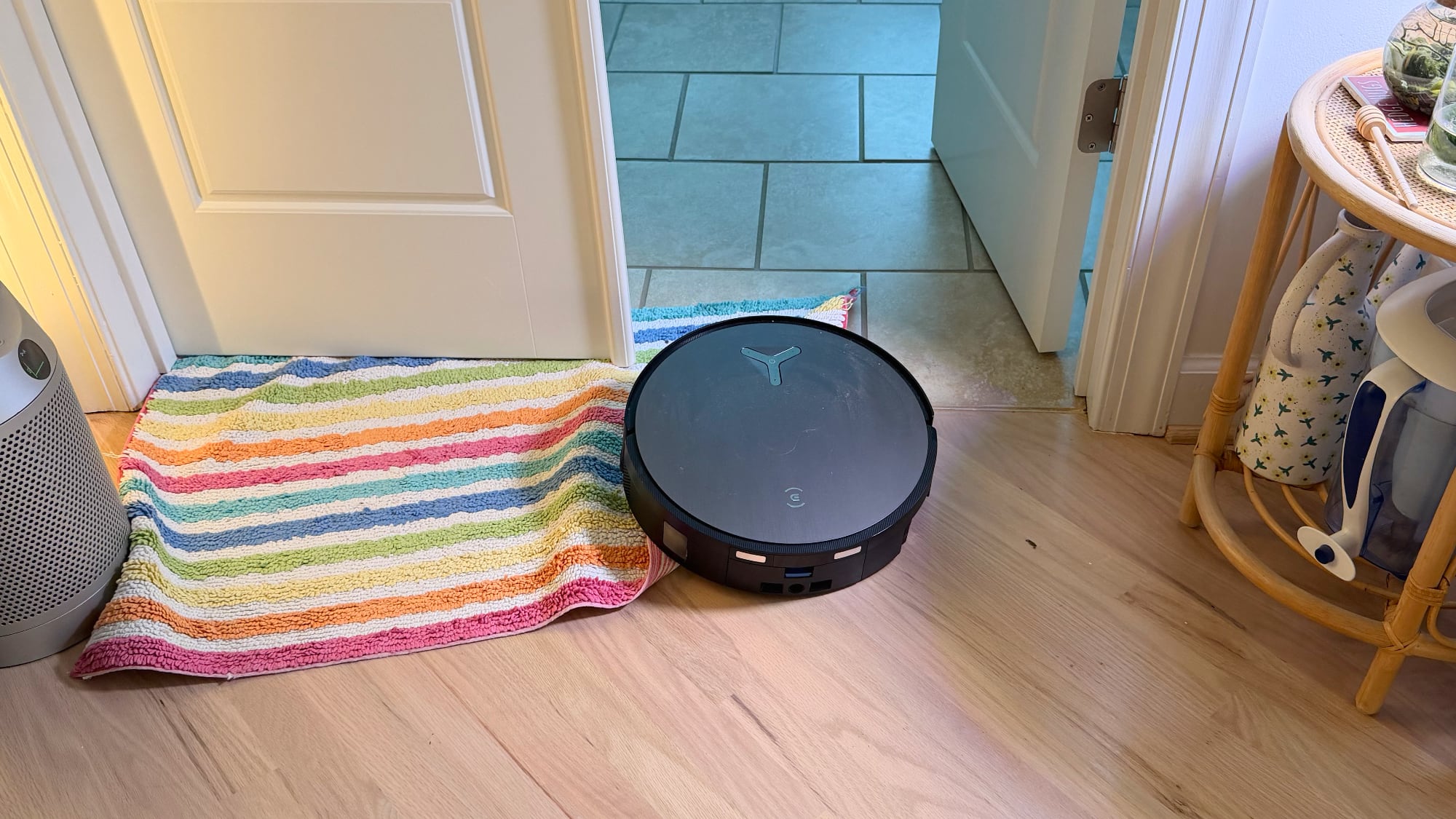

To be fair, Ecovacs does recommend picking up smaller rugs and tucking tassels away underneath the rug to avoid these issues, but that's a hassle. It's annoying to have to fix the vacuum when it sucks up a rug, and it's annoying to have to take the time to move everything out of the way every time it's running. Having to regularly move rugs makes it more difficult to automate and schedule cleanings.

With bigger, thicker rugs anchored by furniture, the X11 works with no issue. I have one rug that sheds like crazy even two years after I bought it. Sometimes the X11 will leave behind a big ball of rug fuzz, but all of my vacuums do that. My Dyson can't even clean that rug without getting clogged.


There is another rug in my laundry room that is an absolute dirt and lint magnet, and the X11 can get every speck of dust off of it. I'm satisfied with how well it cleans rugs, but it needs to be better about not getting stuck.

Battery


The X11 has a fast-charging feature where the robot can go back to the base station and quick charge for about 10 minutes. For a large home, this means that there's no multi-hour pause in cleaning.
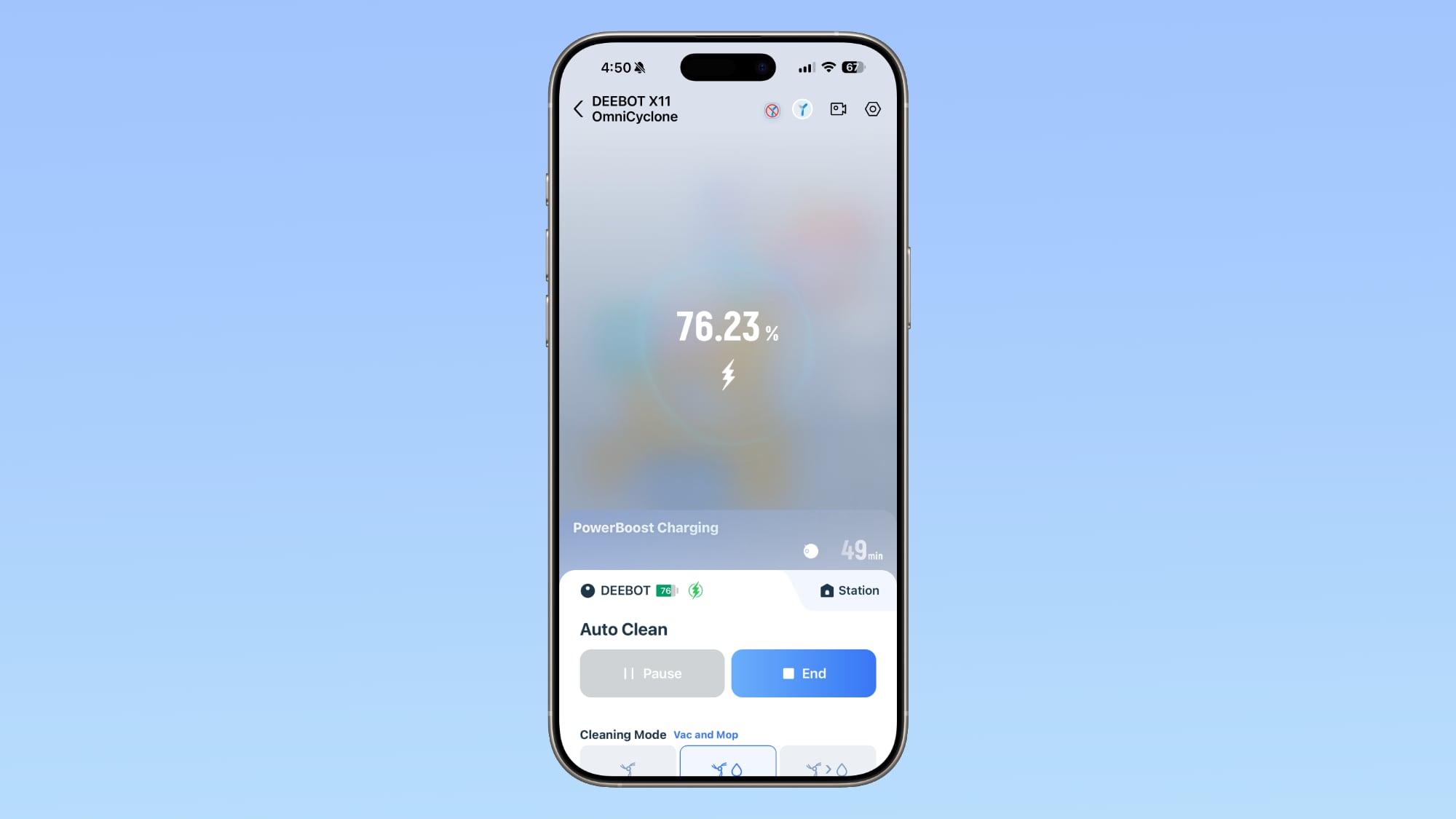

With prior Ecovacs robots, there would be a long break for charging in the middle of a cleaning. With the X11, it cleaned for six hours straight with only brief stops to quick charge.

Ecovacs recommends the fast charge system for homes that are over 2,000 square feet, and there is an option to turn it off for smaller homes. Faster charging works well, and it sets the X11 apart from other vacuums. If you have a large home, it's a reason to consider this model over other options.

Ecovacs App


Even if you're planning to use the X11 with the Home app and through ‌Siri‌ voice commands, you need the Ecovacs app. It's the only place to manage the many, many settings that are available for the vacuum, and it houses the map the robot uses for navigation.
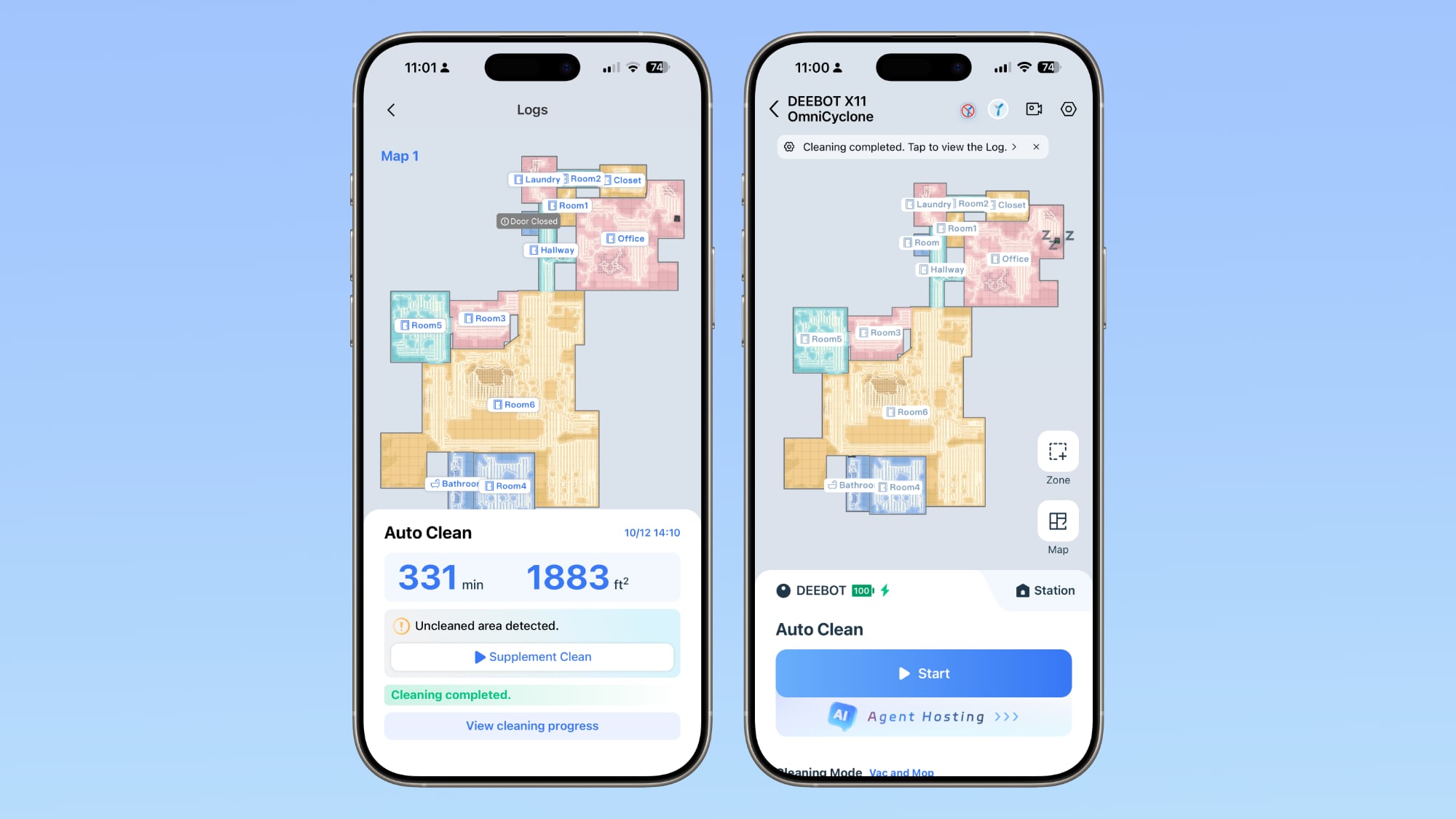

There are settings to adjust the vacuum suction, mopping water level, noise, and set up different types of cleaning such as after-meal cleaning, daily cleaning, and deep cleaning. You can set up custom scenarios for future one-touch cleanings, customize charging and station settings, adjust settings for carpet, view cleaning logs, and more. There's more than I can go over in a review, but if you get an Ecovacs robot, expect to spend a half-hour or so going through the options selecting your preferred parameters.

The X11 has an AI cleaning mode that incorporates cleaning history and preferences that you set. You can customize it with natural language commands, and it's meant to learn over time. It's new to this model, and it wasn't a feature that was available in prior Ecovacs robots I've reviewed.

The AI mode is listed in the app as "Agent Hosting," and you can tap on it instead of "Start" when beginning a cleaning. The AI will analyze your prior cleaning, take into account your app settings and preferences you've provided, and then adjust its settings on its own to clean the house.
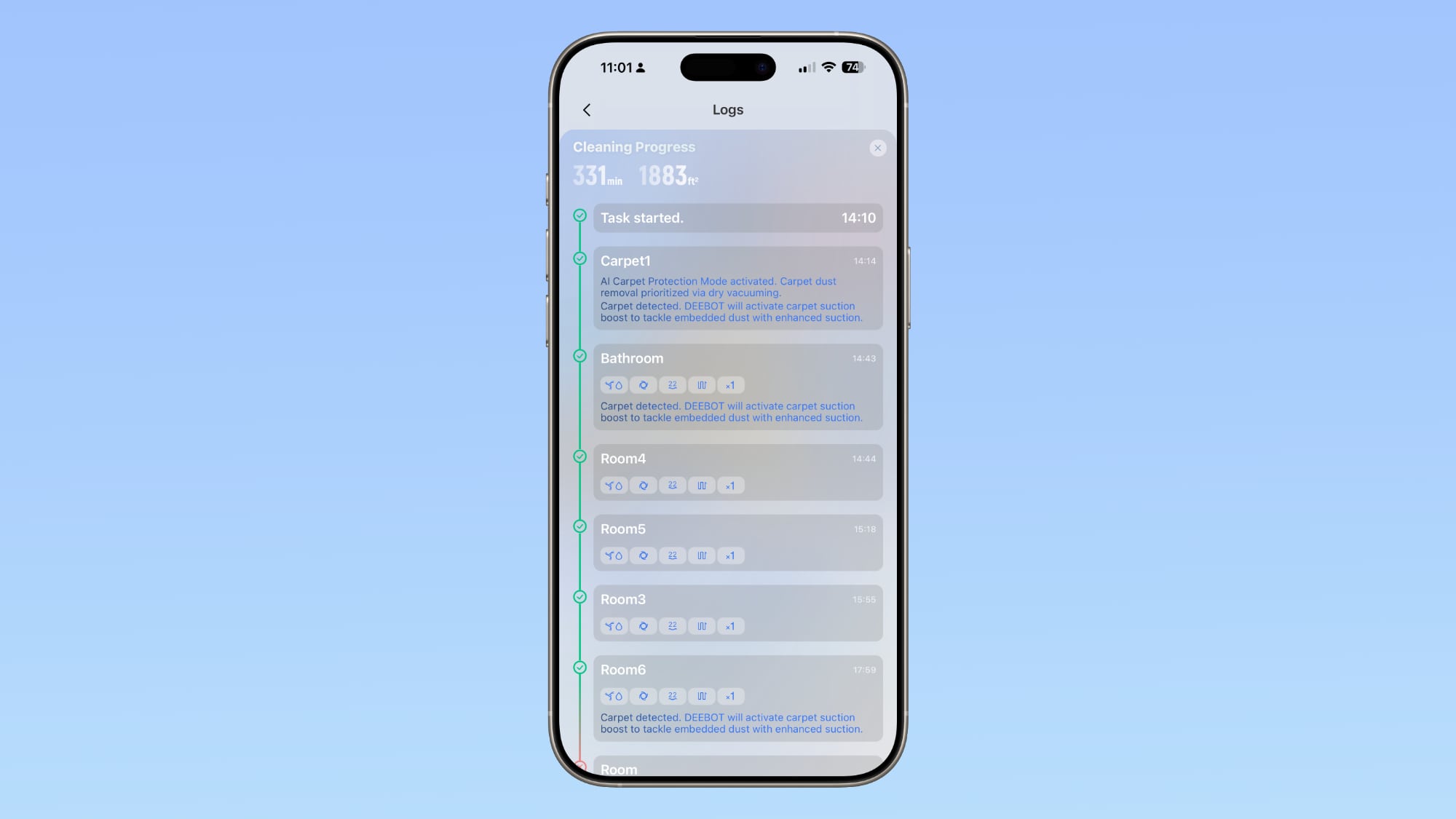

I've had mixed results with it, but I'm still working on customization. The first time I used it, it determined that the living room hadn't been cleaned for seven days, so it proceeded to clean it for like three hours (two passes) even though it wasn't dirty (the X11 hadn't vacuumed the floor in a week because I had). There is an AI feature that's supposed to notice messes and do another pass, but it clearly wasn't using that when evaluating how to clean.

The AI cleaned for 5.5 hours, and because it was doing double passes everywhere, it didn't get the task finished. I had to turn it off at around 11 p.m., and I wasn't able to resume the cleaning the next day because it can't pick up a task if the pause is more than a few hours.

In other tests, the AI performed better and selected reasonable cleaning parameters for various rooms, successfully executing a cleaning. I like that I can see what the AI is thinking and follow along as it completes each task, but there is a major issue I've run into. For some reason, the X11 has the wrong time. I started a clean at 2:30 p.m., and it thought it was 2:30 a.m. Another time, it was around 11:00 a.m., and it thought it was 11:00 p.m. The time is an issue because it will adjust suction to avoid being too loud if it's late at night.

The AI cleaning option is useful overall if you don't want to mess with settings for every clean, but it also takes time and effort to train it with your preferences. Luckily, plain old "Start" launches a standard clean where you can select the options that you want.

There's also a "Yiko" voice assistant that you can use to direct the X11 to clean. It's been present in the last several Ecovacs robots, but I don't use it often. Yiko isn't super responsive when I attempt to activate it, doesn't understand some simple commands, and doesn't do enough where I can use it instead of the app.

Home App


The X11 has Matter integration, so it connects to the Home app. You only get a few controls in the Home app, but it's enough to operate it on a basic level.

You can have the robot vacuum or vacuum and mop, selecting the entire house or just a single room. You can also choose from a standard clean or a deep clean for two mopping passes instead of one. The app will let you know if there's an error, such as when the water tank needs to be filled up. You can also play a sound so you can locate the robot if it gets itself stuck somewhere in the house.


Matter integration is useful for the ‌Siri‌ voice commands and for automations. You can use the Ecovacs app for setting schedules, or do it through the Home app if you want to use geofencing (such as having the robot clean when you leave home) or pair it with other ‌HomeKit‌ accessories.

Siri


I don't often use the Home app with robot vacuums, but I like being able to use ‌Siri‌. There are HomePods in the main areas of my house, so I can say something like "Hey ‌Siri‌, clean the kitchen" if I happen to be in the kitchen and notice crumbs on the floor.

When I first used a robot vacuum with ‌HomeKit‌, I was skeptical that it would be useful, but it's been a convenience. I wouldn't necessarily buy a robot vacuum just for the Matter integration, but if there are two robots with similar features and only one has Matter, I'm going to choose the Matter version.

I am hoping that Matter integration with products like the Omnicyclone X11 gets even better when Apple introduces the new version of ‌Siri‌ that it's been working on, and when the rumored home hub comes out.

Bottom Line


The X11 has the strongest AI functionality of a robot vacuum that I've tested, and aside from its poor performance with thin rugs, it's the best vacuum that I've tried so far. I appreciate that the X11's AI can learn my cleaning preferences and adjust, but sometimes a simple scheduled cleaning with pre-set parameters is better than AI. There's a lot of redundancy in the Ecovacs app with the option to use AI, standard settings, or the Yiko voice assistant, and it can be confusing. I'd like to see streamlining in the future.


Matter integration isn't necessarily a reason to buy one robot vacuum over another, but it is useful if you have a lot of Apple devices and tend to use ‌Siri‌ voice commands for smart home devices.

The X11 isn't leagues ahead of the X8 and X9 when it comes to cleaning performance, but there are a few features that could be a reason to consider it instead of another robot vacuum. If there's a threshold in your house that other vacuums can't climb, there's a good chance the X11 can navigate it. It's the only robot vacuum I've tested that has a vacuum chamber you can empty, eliminating the need for vacuum bags.

For larger homes, the change to charging makes a difference in how quickly cleaning gets done, and it prevents frustrating multi-hour pauses. Fast charging could be worth the cost if you have a home larger than 2,000 square feet.

If you don't need those features, Ecovacs' X8 and X9 robots clean well too, and are available at a lower price.

How to Buy


The X11 Omnicyclone can be purchased from the Ecovacs website or from Amazon for $1,499.99, but there is a promo code for $200 off at the current time, which is listed on the website. There are regular sales on Ecovacs vacuums, so don't buy one at full price.

Note: Ecovacs provided MacRumors with an X11 for the purpose of this review. No other compensation was received.
This article, "Ecovacs Deebot X11 Omnicyclone Review: HomeKit Robot Vacuum With Bagless Design and Fast Charging" first appeared on MacRumors.com

Discuss this article in our forums

  •  

OpenProject 16.6: Project evaluation and scoring

OpenProject 16.6 has been released and this version introduces new features and improvements again. Please take a few minutes to learn what changes for you. We will summarize the most important changes in this blog article and, as always, please see our release notes that contain all changes, features and bug fixes.

Project evaluation and scoring (Enterprise add-on)

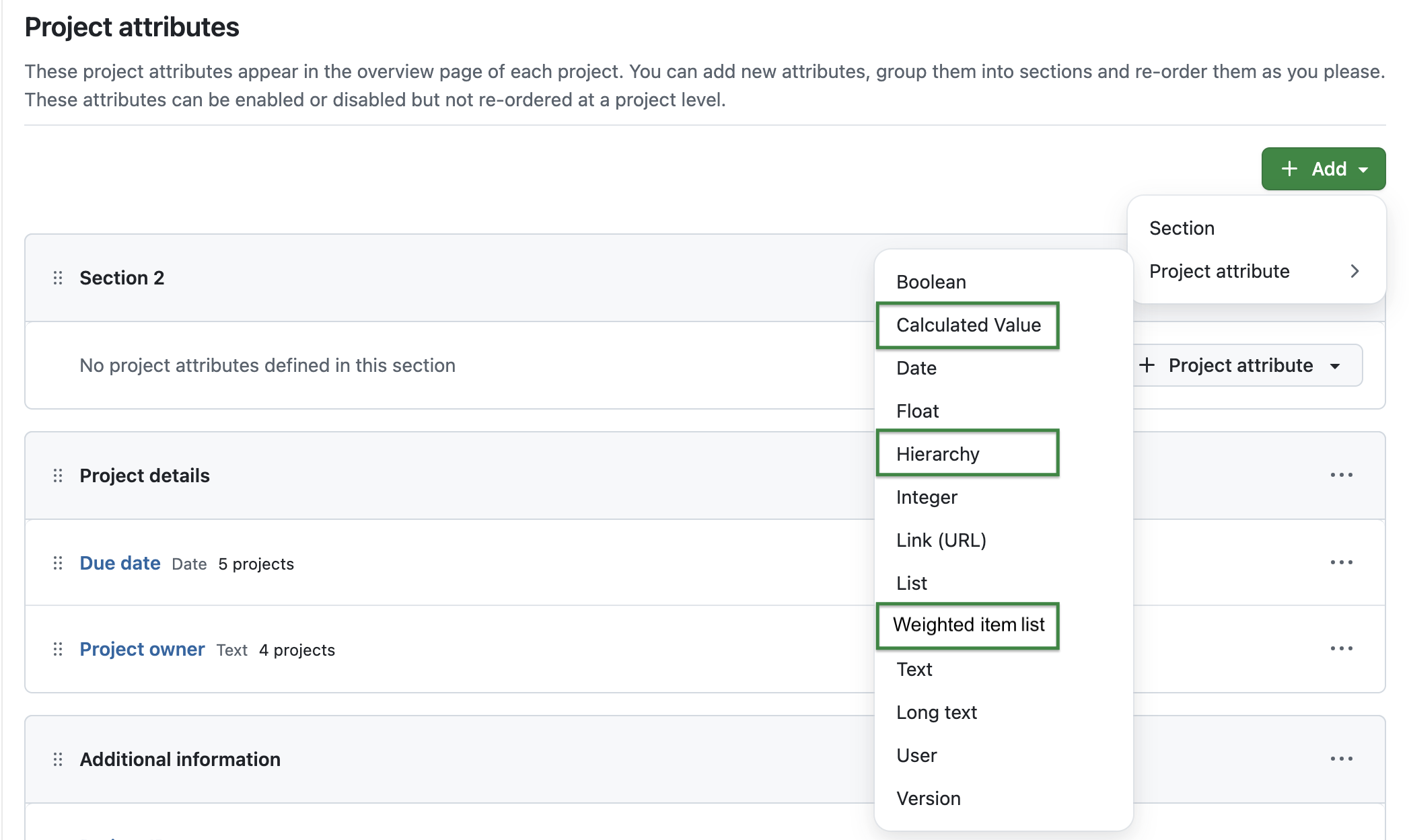
With OpenProject 16.6, project portfolio managers gain new ways to make their work more measurable and transparent. The release introduces three new project attribute types: Hierarchy, Weighted item lists, and Calculated value. They can be combined to evaluate and compare projects based on consistent criteria.

OpenProject administration with new types of project attributes: Calculated value, Hierarchy and Weighted item lists are highlighted.

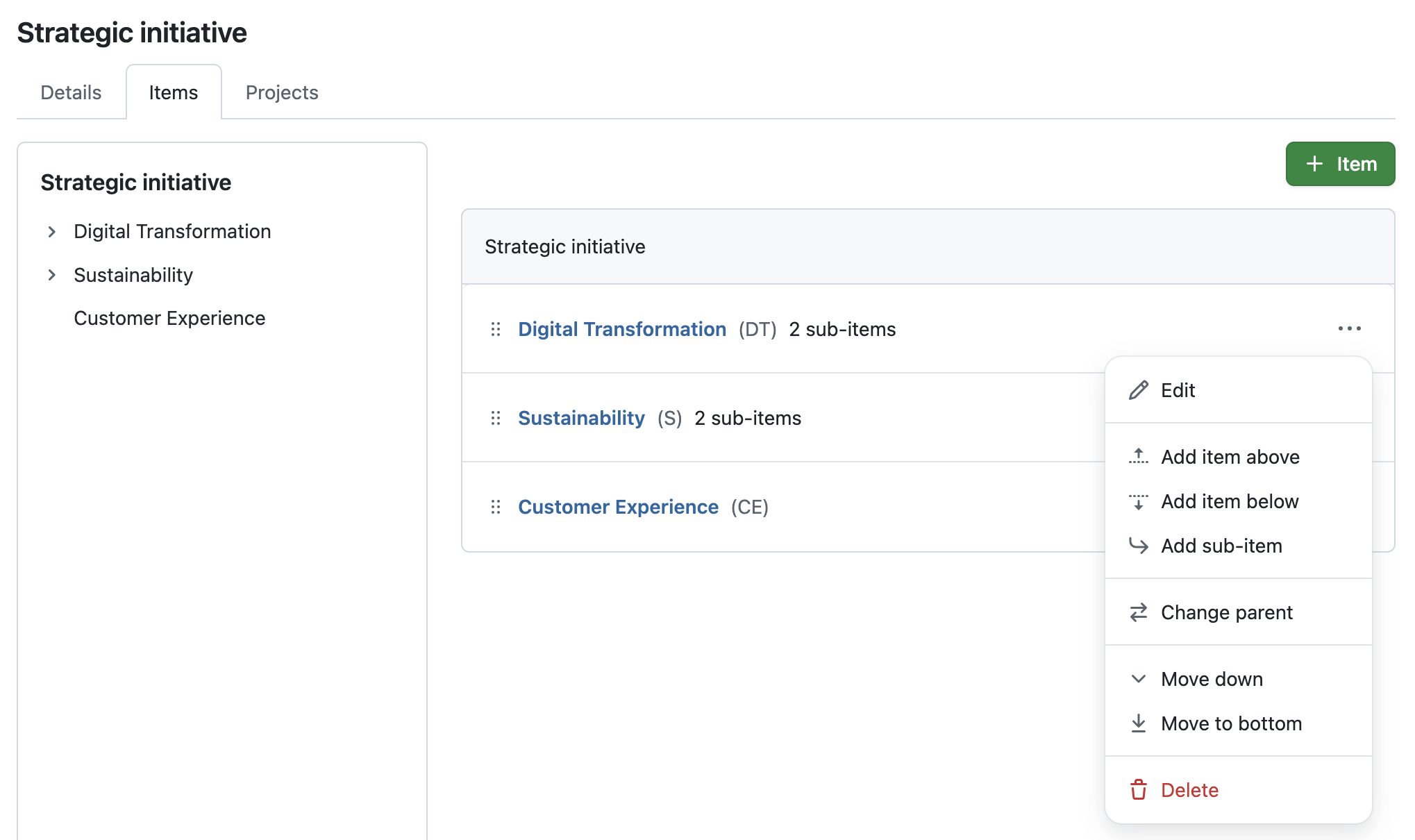
These attributes allow organizations to build their own evaluation models. Hierarchy project attributes let you organize information in a structured, nested way — for example, grouping initiatives by region, department, or program.

OpenProject administration shows a project attribute type hierarchy: The name is ‘Strategic initiative’ and it shows 3 items with sub-items, e.g. ‘Digital transformation’, and the options to edit, add sub-items, change parent and more.

Weighted item lists extend this concept by assigning numeric scores to list options, such as effort levels or risk ratings. These values can then be used as input for automated calculations.

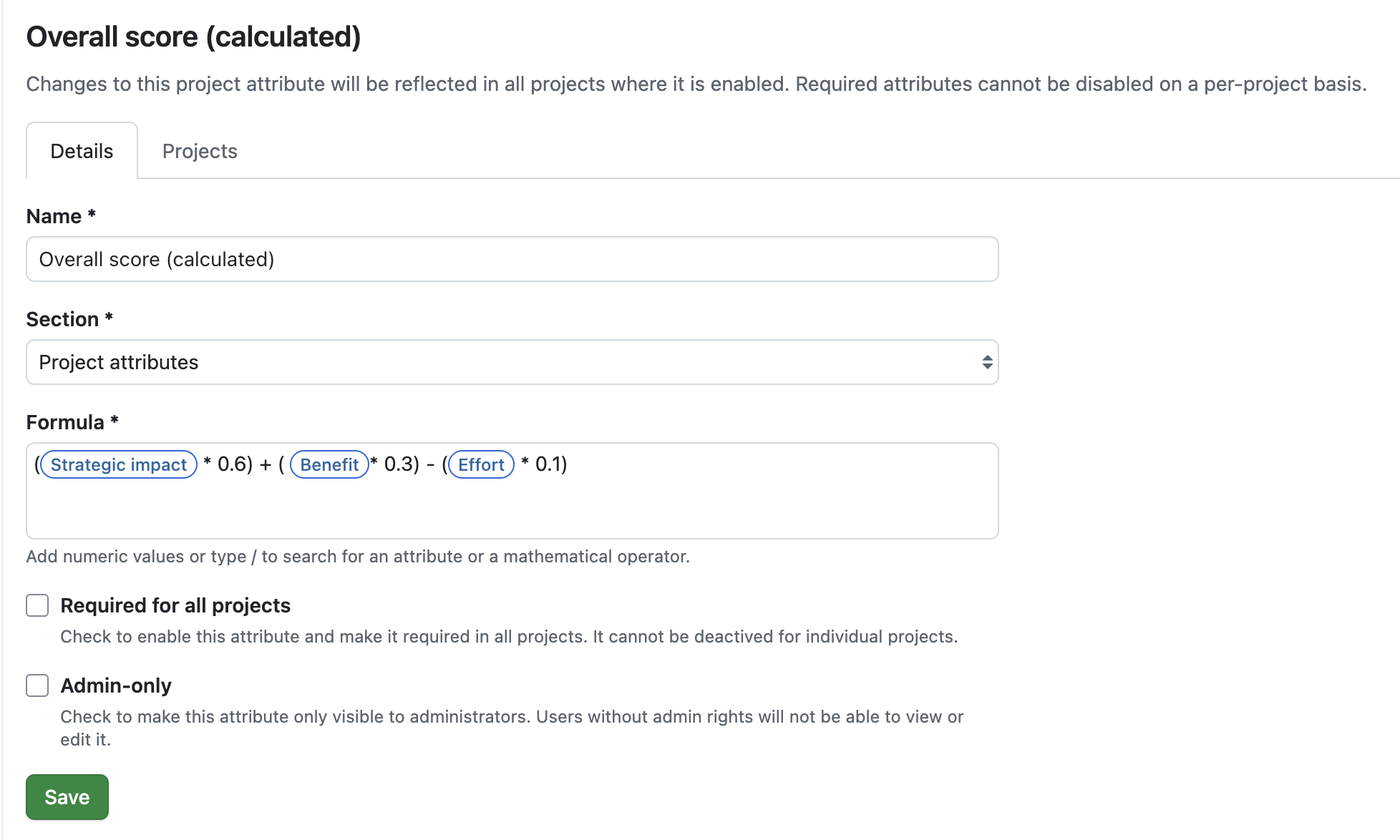
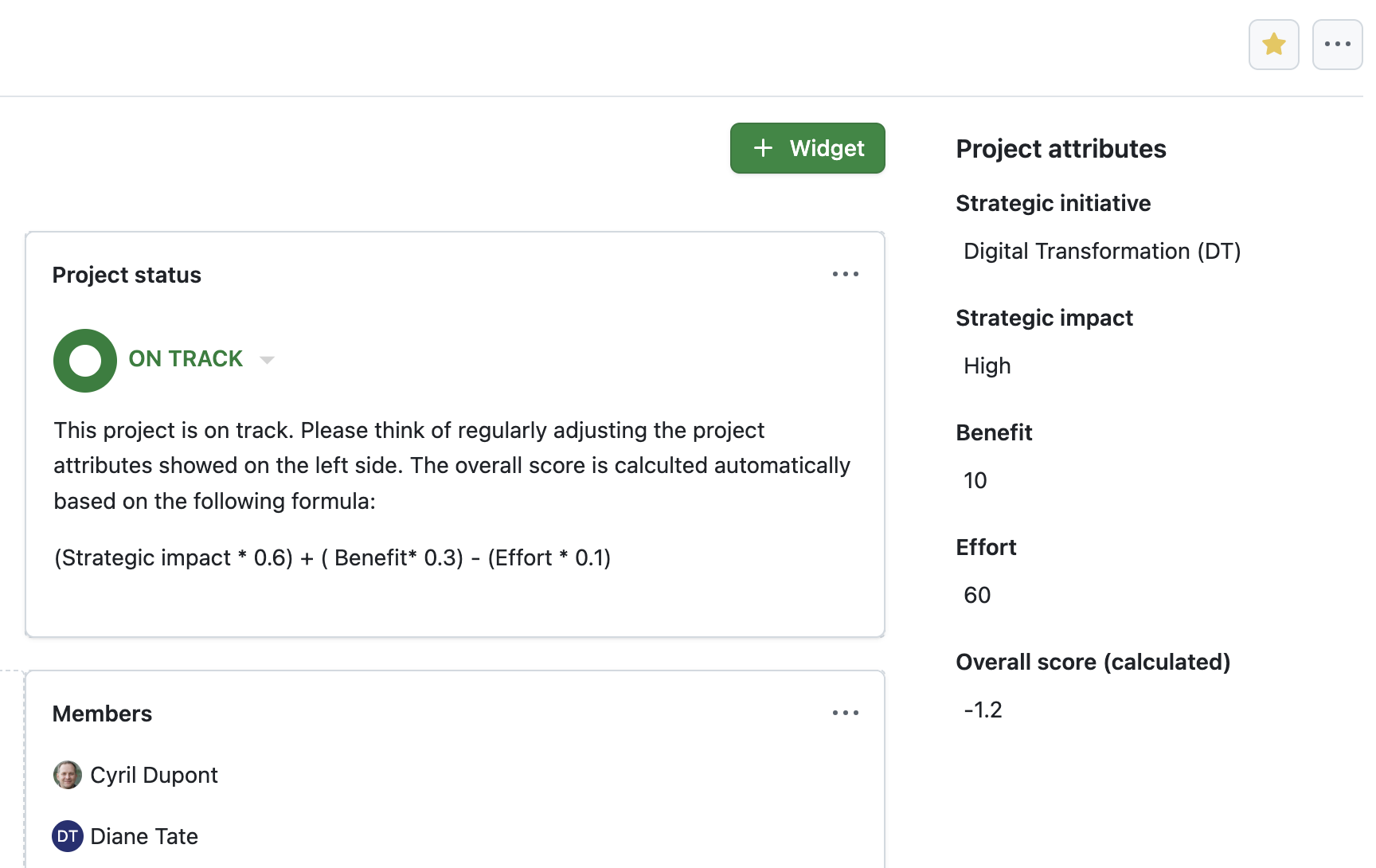
Calculated values enable automatic computations based on formulas using numeric project attributes, including scores from Weighted item lists or even other calculated values. The computed result is displayed directly on the project overview and in the project list. It automatically updates whenever one of its source attributes (e.g., Benefit or Effort in the example below) changes.

Here’s an example of a calculated value called ‘Overall score (calculated)’ with the following formula: (Strategic impact * 0.6) + ( Benefit * 0.3) - (Effort * 0.1)

Formula example for a project attribute called ‘Calculated Project Score’: (Strategic impact * 0.6) + ( Benefit * 0.3) - (Effort * 0.1)

These new attribute types open up flexible ways to work with project data. Scoring is just one typical example — the same structure can be used to represent strategic priorities, aggregate indicators, or define your own evaluation framework that fits your organization’s needs.

Note

Please note that these new project attributes are part of our Enterprise add-ons in the Enterprise Premium plan.

OpenProject 16.6: Project overview page showing three project attributes: Benefit = 10, Effort = 60, Overall Score (calculated) = automatically set to -1,2

Significant performance improvements

Working with large projects and complex portfolios can be challenging when pages take too long to load or filters lag behind. That’s why OpenProject 16.6 focuses on improving performance, ensuring that even large-scale installations with thousands of projects and millions of work packages remain fast and reliable.

To achieve this, several backend processes have been improved. Database queries and API responses have been refined to avoid unnecessary counting operations, and the autocompleter for adding work package relations now only retrieves the data it actually needs. These changes reduce query load and make the application more efficient overall.

As a result, users will notice faster response times, smoother navigation, and more responsive filtering — even in the largest environments.

New index page for Documents module

Managing project documents efficiently is key to keeping everyone aligned. But as projects grow, finding the right file can become a challenge. To make this easier, OpenProject 16.6 introduces the first step toward a more powerful and collaborative Documents module.

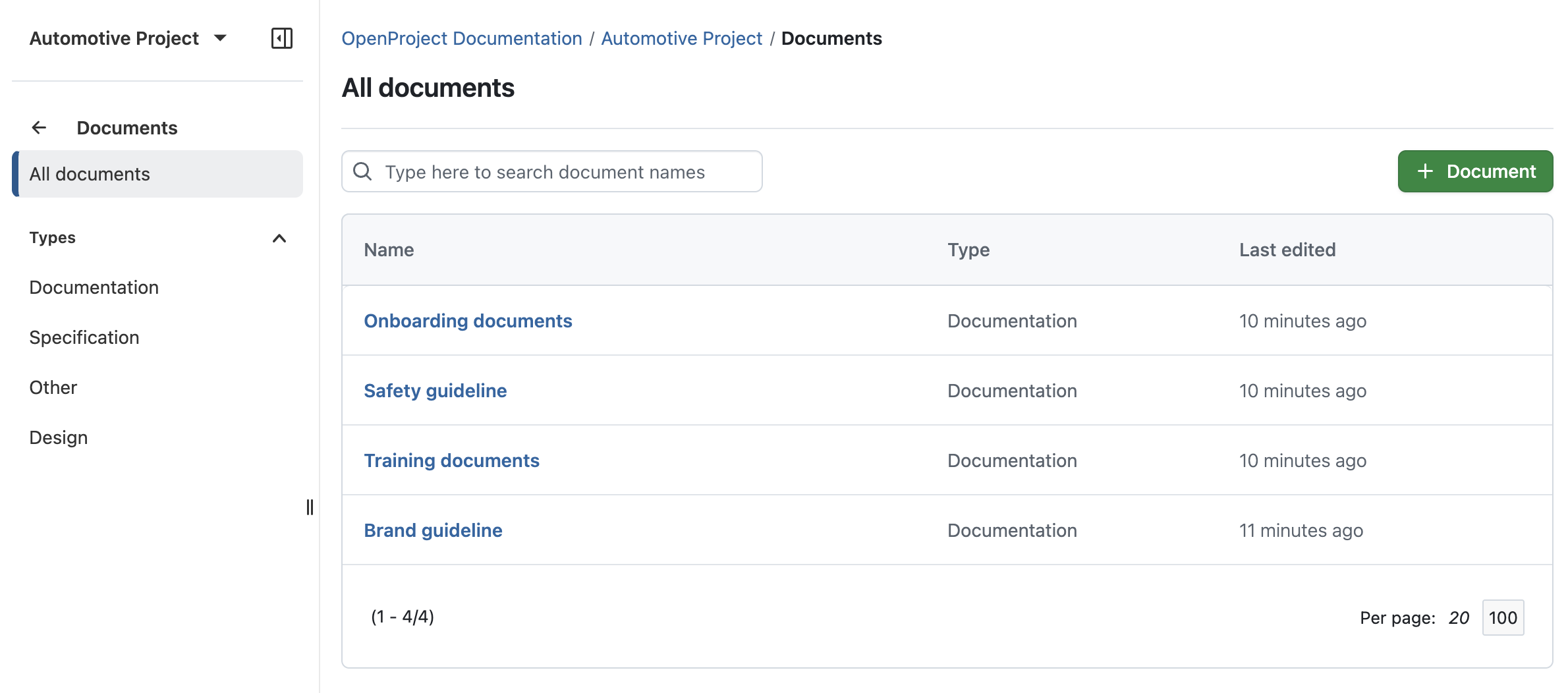
The new index page provides a structured overview of all project documents, showing each file’s Name, Type (the category), and Last edited date. The most recently updated items are always on top. A quick filter helps you search by title, and the navigation menu on the left lets you narrow the list by Type (previously called Category). Both terms are used synonymously in this first step, as Type will gradually replace Category in future updates.

A new + Document button makes adding content straightforward, and on mobile devices, the view adapts to show only the most relevant details.

While this is a smaller change on its own, it marks the beginning of a broader improvement to how teams will work with documents in OpenProject. We are excited about the upcoming changes that will make document management and live collaboration easier and more intuitive.

See our roadmap for more information.

OpenProject 16.6: Redesigned index page for the Documents module, showing a table with clickable name, type and last edited.

Further usability updates

Small usability enhancements can make a big difference in everyday work. OpenProject 16.6 brings several refinements that make managing information smoother, meetings more efficient, and administration tasks easier to navigate.

Change parent of a custom field item or project attribute (Enterprise add-on)

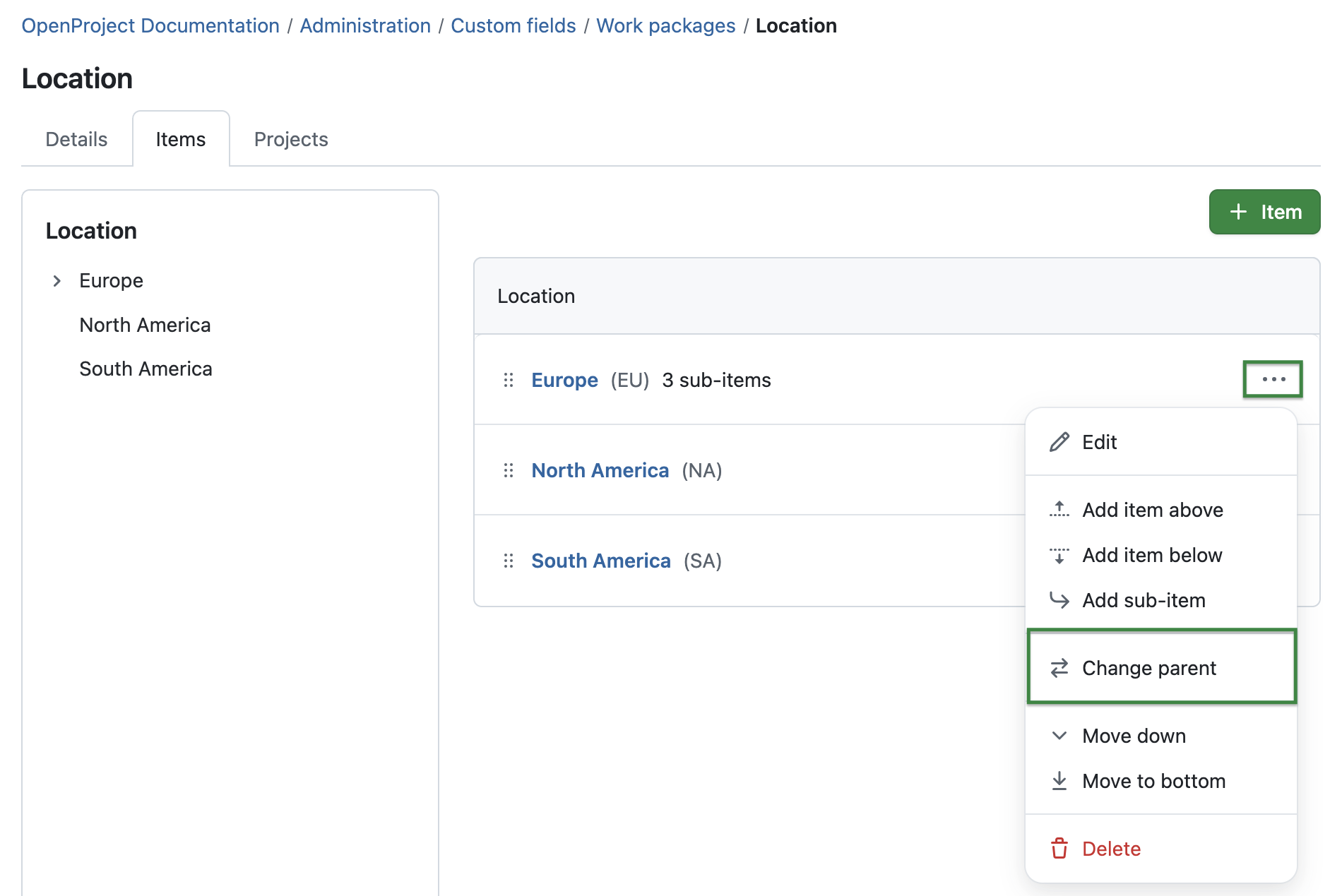
Administrators can now rearrange items within hierarchical custom fields (Enterprise add-on) or project attributes without having to recreate them. A new Change parent option opens a dialog showing the hierarchy tree, allowing quick reorganization through search and selection.

OpenProject 16.6: Custom field type hierarchy in the administration, tab ‘Items’, one item is selected with the ‘More’ menu and the option to change parent is highlighted

Updated “More” menu in meetings

In the Meetings module, moderators can now move agenda items directly between sections using the new Move to section action. This saves time in meetings with multiple sections or longer agendas and helps keep discussions better structured.

Learn more about meeting management with OpenProject.

OpenProject 16.6: Meetings module showing the options when clicking on the More menu on an agenda item

Editing individual attributes even if other fields are invalid

Users can now edit visible fields even if other required fields are missing or invalid. This prevents unnecessary validation errors — for example, when a required field was added later — and lets users continue their work without interruption.

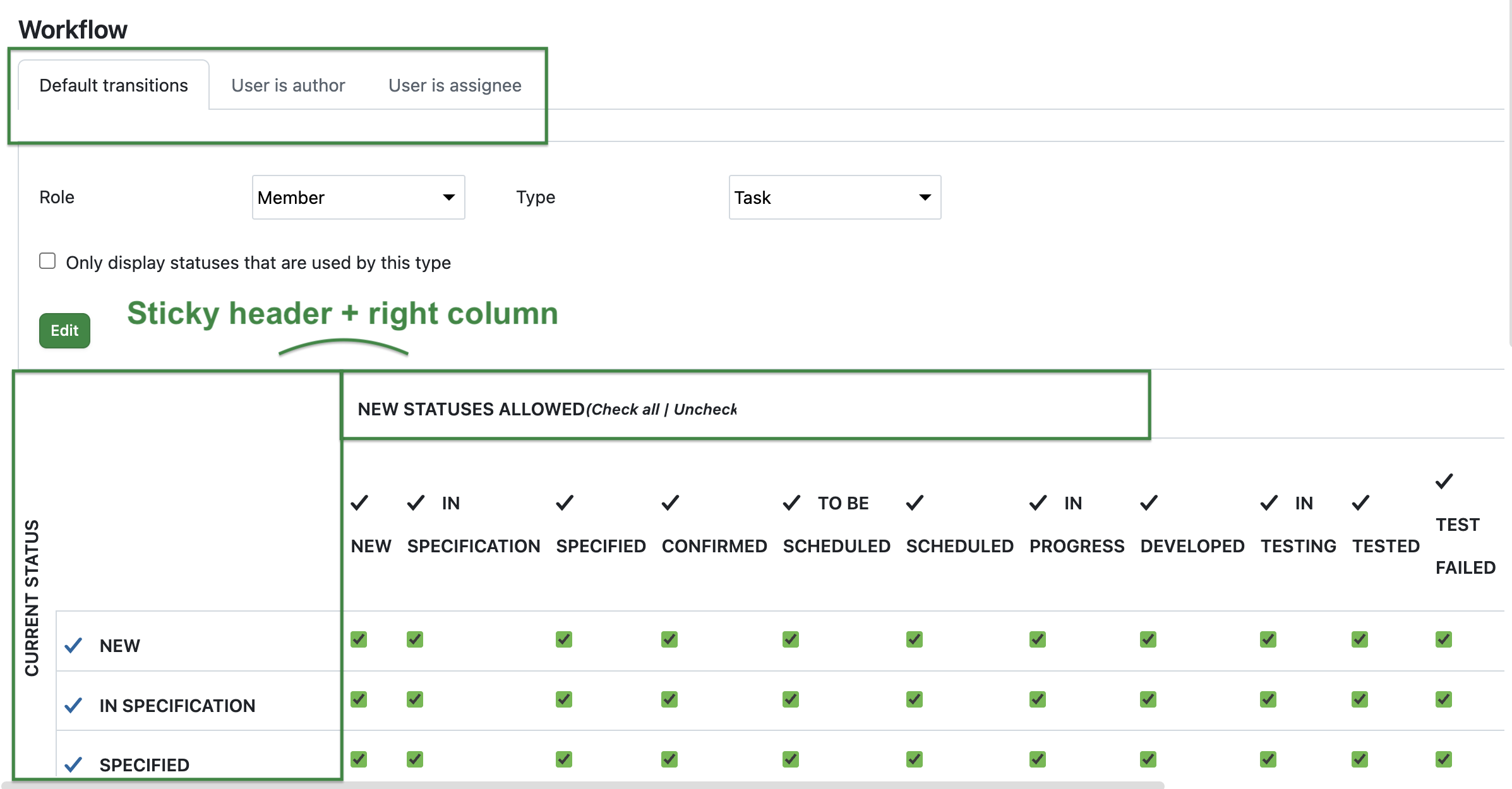
Sticky header and first column in workflows

In Administration → Work packages → Workflow, the table now has a sticky header and sticky first column. This makes it easier for administrators to keep an overview of transitions when scrolling through large workflow tables.

Read more about managing work package workflows in OpenProject.

OpenProject 16.6: Administration for work package workflows highlighting the new tabs and that the header and right column are sticky when scrolling

Mini calendar re-added on mobile

On mobile devices, the date picker once again includes a mini calendar view for selecting start and finish dates. This makes it easier to see weekdays and working days at a glance, improving usability when managing tasks on the go.

OpenProject 16.6: Migration, installation, updates and support

Follow the upgrade guide for the packaged installation or Docker installation to update your OpenProject installation to OpenProject 16.6. We update your hosted OpenProject environments (Enterprise cloud) today, November 5, 2025.

You will find more information about all new features and changes in our Release notes or in the OpenProject Documentation.

If you need support, you can post your questions in the Community Forum, or if you are eligible for Enterprise support, please contact us and we are happy to support you personally.

Credits

A very special thank you goes to Helmholtz-Zentrum Berlin, City of Cologne, Deutsche Bahn and ZenDiS for sponsoring released or upcoming features. Your support, alongside the efforts of our amazing Community, helps drive these innovations. Also a big thanks to our Community members for reporting bugs and helping us identify and provide fixes. Special thanks for reporting and finding bugs go to Sven Kunze, Stefan Weiberg, Gábor Alexovics, Alexander Aleschenko, and Tobias Nowakow.

This release, we specifically want to thank Emon for reporting a security vulnerability on our website. Reports and feedback like this are one of the reasons we love OSS and appreciate being part of such an amazing community.

Last but not least, we are very grateful for our very engaged translation contributors on Crowdin, who translated quite a few OpenProject strings! This release we would like to particularly thank the following users:

  • William, for a great number of translations into Chinese Traditional.
  • Pickart, for a great number of translations into Catalan.
  • Maxime77, for a great number of translations into French. Would you like to help out with translations yourself? Then take a look at our translation guide and find out exactly how you can contribute. It is very much appreciated!

As always, we welcome any feedback on this release. 💙

  •  

2026 iPhone Air Could Feature Two Rear Cameras, Says Leaker

Apple's second iPhone Air model is in development and could feature two rear cameras instead of one, according to a Chinese leaker with sources within Apple's supply chain.


The Weibo-based account "Digital Chat Station" claims that Apple is evaluating a dual-lens setup for the next version of its ultra-thin iPhone, with a 48MP Fusion Ultra Wide camera joining the existing 48MP Fusion Main camera, similar to the base iPhone 17.

However, the leaker says that the second-generation device will keep the distinctive horizontal camera plateau, suggesting the second lens will sit alongside the existing one, unlike the dual-lens vertical arrangement on the iPhone 17.

Multiple technologies are housed in the plateau of the iPhone Air to maximize space for the battery, so Apple would presumably need to redesign the internals considerably to fit in another camera. Apple will reportedly continue to focus on making the device ultra-thin and lightweight.


Apple will release a second-generation iPhone Air alongside the iPhone 18 Pro, iPhone 18 Pro Max, and its first foldable iPhone in the second half of 2026, according to industry analyst Ming-Chi Kuo. Apple also plans to launch a third iPhone Air model with a larger display in the second half of 2027. That said, the first-generation device has apparently not been selling well outside of China, so Apple's plans could change.

Digital Chat Station has a decent track record for Apple rumors. They accurately revealed that the ‌iPhone‌ 15 and ‌iPhone‌ 15 Plus would feature a slightly smaller 48-megapixel sensor than the ‌iPhone‌ 15 Pro and ‌iPhone‌ 15 Pro Max, as well as the display panel design of the ‌iPhone‌ 12 back in 2020.
Related Roundup: iPhone Air
Buyer's Guide: iPhone Air (Buy Now)

This article, "2026 iPhone Air Could Feature Two Rear Cameras, Says Leaker" first appeared on MacRumors.com

Discuss this article in our forums

  •  

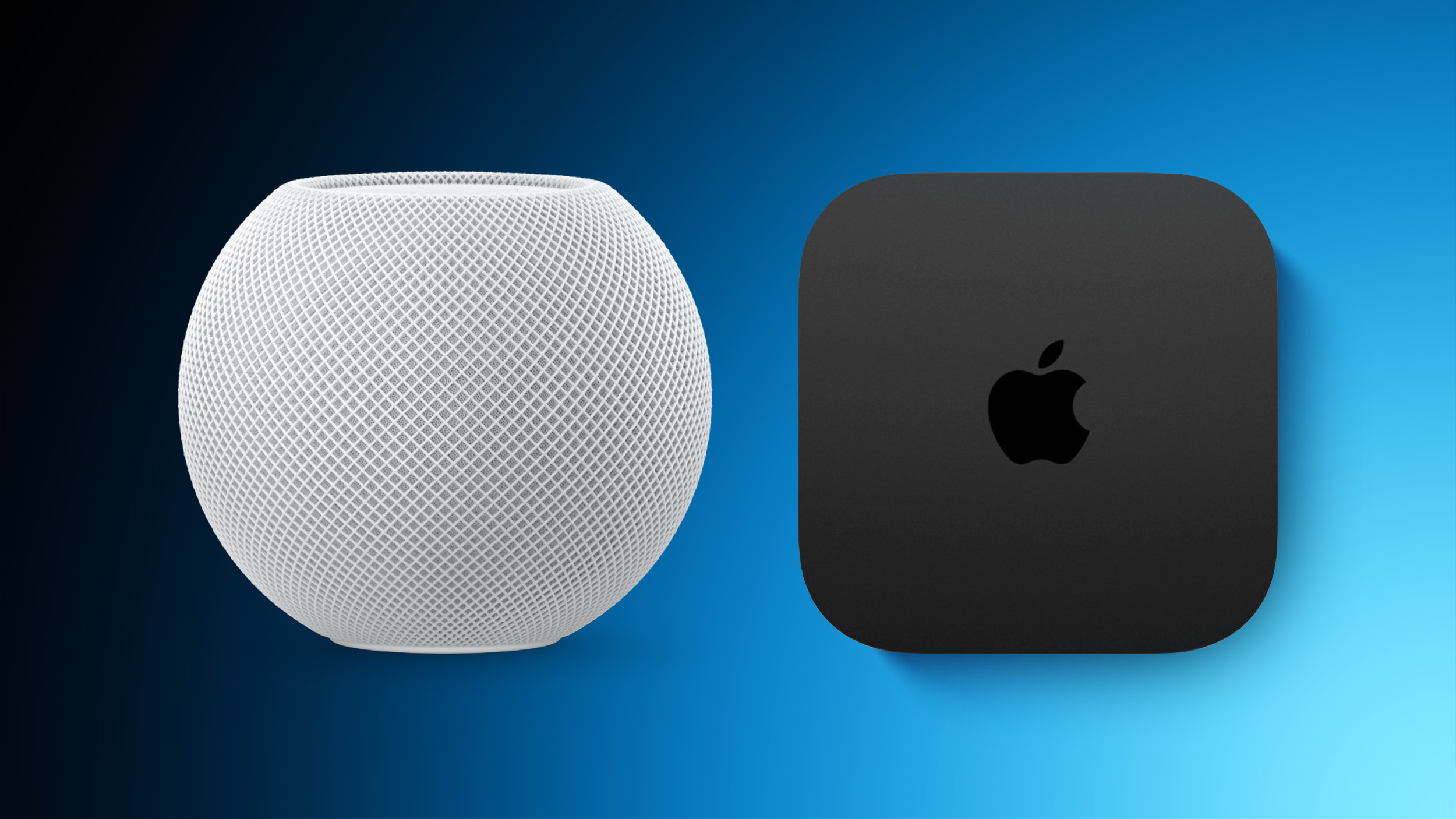
New Apple TV and HomePod Mini Likely Launching Soon

A new Apple TV and HomePod mini could launch as soon as this month, Bloomberg's Mark Gurman today suggested.


In today's "Power On" newsletter, Gurman said that Apple retail stores are planning an overnight refresh on the evening of November 11, where changes will be made after closing, such as refreshing displays and placing new products for the following day.

The timing of the overnight refresh could simply be related to the holiday season, but there is a possibility that it relates to the launch of new ‌Apple TV‌ and ‌HomePod mini‌ models. Gurman notes that inventory of current models has become tight, likely signaling that new versions are on the way. He added that even if they do not launch by the end of 2025, they "shouldn't be far off."

The new ‌Apple TV‌ and ‌HomePod mini‌ will apparently "help showcase the new Siri and Apple Intelligence features planned for next year." During its earnings call earlier this week, Apple seemingly suggested that any more new Macs are off the table for the rest of 2026, making the new ‌Apple TV‌ and ‌HomePod mini‌ the most likely candidates for any remaining Apple product releases this year.

Related Roundups: Apple TV, HomePod mini

This article, "New Apple TV and HomePod Mini Likely Launching Soon" first appeared on MacRumors.com

Discuss this article in our forums

  •  

Waiting for New Macs? Apple Just Shared Bad News

Apple has just given a strong indication that it will not be releasing any additional new Macs for the remainder of the year.


Apple's CFO Kevan Parekh dropped the hint during the company's earnings call on Thursday:
On Mac, keep in mind, we expect to face a very difficult compare against the M4 MacBook Pro, Mac mini, and iMac launches in the year-ago quarter.
Parekh essentially gave a heads up that Apple's Mac revenue in the fourth quarter of 2025 might not grow significantly compared to the fourth quarter of 2024, likely because there will be fewer new Macs released this quarter than in the year-ago quarter.

In other words, he implicitly suggested that Apple has no further Mac releases planned for 2025.

Earlier this month, Apple updated the lowest-end 14-inch MacBook Pro with the M5 chip, but it did not release any MacBook Pro models with M5 Pro or M5 Max chips, and the Mac mini and iMac did not receive any hardware updates.

AppleInsider previously reported that MacBook Pro models with M5 Pro and M5 Max chips would launch in 2026, and Parekh's comment seems to support that. Mac mini and iMac models with M5 chips also appear to be slated for 2026, while the MacBook Air, Mac Studio, and Mac Pro were always rumored to be updated next year.

A lower-cost MacBook with an A18 Pro or A19 Pro chip is also rumored to launch in late 2025 or early 2026, but given Parekh's comment, early 2026 sounds more likely. This model is expected to be the spiritual successor to the MacBook Air with an M1 chip, which is still sold exclusively by Walmart for $599 in the United States.
Related Roundups: iMac, MacBook Pro, Mac mini
Related Forums: iMac, MacBook Pro, Mac mini

This article, "Waiting for New Macs? Apple Just Shared Bad News" first appeared on MacRumors.com

Discuss this article in our forums

  •  

Video: Testing the New M5 Apple Vision Pro

Apple recently refreshed the Apple Vision Pro, adding a new M5 chip for improved performance. There aren't design changes, but Apple did introduce a new Dual Knit Band that's supposed to be more comfortable. MacRumors videographer Dan Barbera picked up one of the new Vision Pro headsets to see how it compares to the prior-generation M2 versions.


Software and hardware are the same if you've been using visionOS 26, but with the M5 chip, performance is noticeably improved. Creating a Persona, generating spatial photos, and using multiple apps at once are all tasks that are quicker.

Apple didn't update the micro-OLED displays in the Vision Pro, but the M5 is able to render 10 percent more pixels and it supports a 120Hz refresh rate, so things look smoother than before. Mac Virtual Display, where the Vision Pro works as a screen for your Mac, looks like two sharp 5K displays side-by-side. Personalized Spatial Audio support adds more accurate directionality for more immersive audio.

To improve the wearing experience, the Vision Pro ships with a Dual Knit Band that replaces the prior Solo Knit Band and Dual Loop that came with the ‌M2‌ model. The Dual Knit Band has a strap that goes over the top of the head and one at the back of the head, which allows for better weight distribution. The back band has weights inside for counterbalance, and it does make a difference in how it feels.

The top and bottom straps can be adjusted using an updated Fit Dial, so each Vision Pro wearer can get an ideal fit. The Dual Knit Band isn't a miracle fix, so while it does make the Vision Pro a little more comfortable to wear, it's still a heavy headset. The M5 Vision Pro continues to be priced at $3,499, and it can be purchased from Apple. ‌M2‌ Vision Pro owners can buy the Dual Knit Band standalone for $99.
Related Roundup: Apple Vision Pro
Buyer's Guide: Vision Pro (Buy Now)
Related Forum: Apple Vision Pro

This article, "Video: Testing the New M5 Apple Vision Pro" first appeared on MacRumors.com

Discuss this article in our forums

  •  

Software alternatives to Atlassian – free and open source

With the end of Jira Data Center announced and prices rising year after year, vendor lock-in is no longer just an abstract risk, it has already become reality. Many organizations now face a costly migration to the cloud, whether they want it or not.

But there’s another way. Open source software gives you back control: over your data, your infrastructure, and your budget. It’s built on transparency, community, and long-term reliability, without locking you into a single company’s roadmap or pricing. And while Atlassian has been steadily raising prices, open source has grown into a powerful, future-ready alternative.

OpenProject is your secure, self-managed alternative to Jira, and it’s only one piece of the puzzle. Whether you also rely on Confluence, Bitbucket, or other parts of the Atlassian stack, there are strong open source options ready to support your team. You’re not stuck. You’ve got choices. And we’re here to help.

Migrating away from Atlassian: We know it’s not easy

If you’re looking for an alternative to Atlassian, you’re not alone. Many organizations are now preparing to move away from Jira Data Center and Confluence. Not because they want to, but because they have to. With Atlassian ending support for self-managed hosting and pushing users toward the cloud, the pressure is mounting.

Still, switching tools isn’t a decision you make lightly. You’ve built entire workflows around Jira and Confluence. You’ve got hundreds of users, complex integrations, and a mountain of project data to manage. The idea of replacing your Atlassian stack can feel overwhelming, and we understand that.

But here’s the good news: there is a way forward. With powerful, professional open source software, you can migrate from Atlassian on your own terms, without compromising on functionality, security, or support. Whether you’re seeking a Jira replacement, a Confluence alternative, or a complete open source stack, we’re here to support you during this journey.

Tip

Why open source? Open source software means no vendor lock-in, giving you full control over your infrastructure, updates, and data, with affordable pricing. It offers transparency, letting you inspect the source code and know exactly how your tools work. And with Community-driven development, features evolve based on real need, not shareholder interests. And these are just some of at least 8 reasons to choose an open source software.

The open source ecosystem is ready for you

You don’t have to give up powerful workflows just because you’re moving away from Atlassian. Today’s open source tools are mature, well-integrated, and ready to replace the full Atlassian stack, from project management and documentation to team chat and file sharing.

Niels Lindenthal, CEO of OpenProject, in front of a building with “The future is Europe” written on it, together with a symbol for open source

OpenProject as alternative to Jira

OpenProject provides issue tracking, agile boards, Gantt charts for project timelines, cost and time tracking, and much more — fully self-managed or hosted, with a strong focus on data sovereignty. You decide if you want to host your data in the cloud or on your own servers. So if you’re looking for a Jira Data Center alternative, OpenProject is built for you.

Learn more about migrating to OpenProject as a Jira alternative.

XWiki as alternative to Confluence

XWiki is a powerful and extensible open source wiki platform. It enables collaborative documentation, structured content management, and fine-grained access control, making it a flexible alternative to Atlassian Confluence. And: Since July 2025, XWiki and OpenProject are officially partners to offer a strong alternative to Confluence and Jira.

Learn more about XWiki as Confluence alternative.

Element as alternative to Atlassian Team Chat

Element, based on the Matrix protocol, offers secure, end-to-end encrypted messaging and collaboration. It’s perfect for teams looking for a self-hosted alternative to Atlassian’s chat tools or Slack.

Learn more about Element as Atlassian team chat alternative.

Nextcloud as alternative to Atlassian’s file management tools

Nextcloud is the most popular self-hosted open source platform for file sharing and collaboration. With advanced access control, integration options, and European data protection standards, it’s a strong alternative to proprietary cloud file systems. And: Nextcloud integrates with OpenProject and vice versa.

Learn more about Nextcloud as Atlassian’s file management alternative.

Collabora as alternative to Microsoft 365

Collabora Online is a powerful open source office suite for editing documents, spreadsheets, and presentations in real time. It’s a great choice for teams looking to replace Confluence and Microsoft 365 with a self-hosted solution.

Learn more about Collabora as Atlassian Office alternative.

Frequently asked questions about Atlassian alternatives

Switching away from Atlassian isn’t just a technical decision, it’s a strategic one. If you’re considering alternatives to Jira, Confluence, or other Atlassian tools, you likely have questions about features, pricing, migration, and the open source ecosystem. Here are some answers to help you navigate the transition with confidence.

Why is open source software free and still costs money?

Open source doesn’t mean zero cost. It means freedom: to use, inspect, modify, and host the software yourself. Many open source vendors like OpenProject offer a free Community edition, alongside paid support and enterprise features. This ensures long-term sustainability and helps teams get professional assistance where needed. Still, open source software like OpenProject is often more affordable than proprietary tools like Atlassian. And if your budget ever becomes tight, your data stays safe, because OpenProject will always provide a cost-free Community edition.

Read more about why free open source software costs money.

I want one suite for all tools. Does that exist for open source?

Yes. In Europe, there is openDesk, your secure all in one office and collaboration suite. It brings together leading open source solutions — including OpenProject, XWiki, Nextcloud, and more — to create a fully sovereign digital workplace. The tools are interoperable, user-friendly, and developed with long-term public and enterprise use in mind.

Does OpenProject include the features I currently use in Jira, or do I need plugins?

OpenProject comes feature-rich out of the box. Unlike Jira, which often requires multiple plugins for core functionality, OpenProject includes agile boards, Gantt charts, cost tracking, time logging, custom workflows, and more — all in one system. This makes it especially attractive for teams moving away from Jira Data Center or self-managed Jira installations.

Of course, OpenProject is not exactly the same product as Jira, and users will need to adapt to some differences in workflows. However, OpenProject customers value its personalized and responsive support, as well as documentation available in English, German, French, Spanish and Portuguese.

How can I migrate my data from Atlassian / Jira or Confluence?

You have several options for migrating your data, whether you’re switching from Jira, Confluence, or both. Here’s what we recommend:

For a fully supported migration, we recommend contacting ALM Toolbox, an experienced migration partner that specializes in Atlassian to OpenProject transitions.

Need help deciding? Contact us, we’ll help you find the right path. More information on: https://migration.openproject.org/

  •  

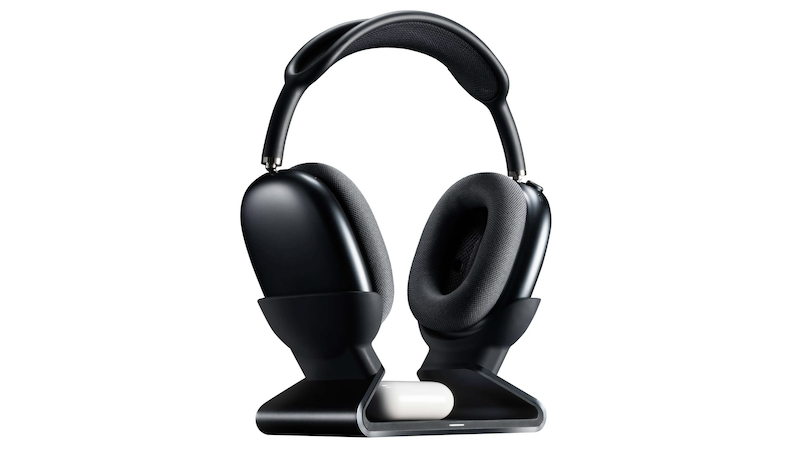
Review: Mophie's Max Charging Stand for AirPods Max is Pricey but Good

Last month, Mophie announced the launch of its Max Charging Stand. Aimed squarely at those with multiple sets of Apple's headphones, it can charge AirPods Max headphones plus a pair of AirPods or AirPods Pro at the same time.


Priced at $150, it immediately garnered criticism in our forum, largely over its price point compared to its functionality. But is it actually worth it? I've spent a few weeks with it to see.

Design and Build


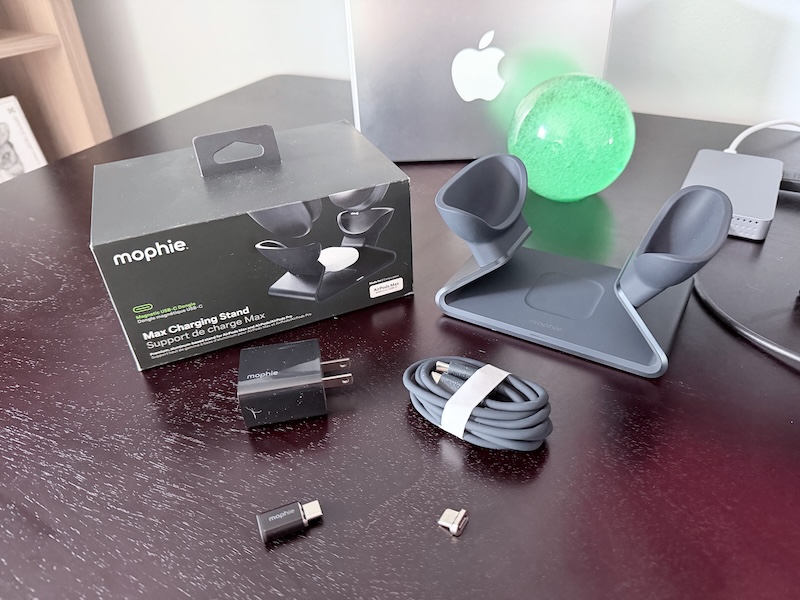
The charging base is aluminum lined with smooth silicone along every surface that comes into contact with your devices. The bottom also has a large rectangular pad of this same silicone so that it doesn't slide easily on your desk. The Mophie logo is subtly stamped on the top just under the square indentation that shows you where to place your AirPods (or other Qi-enabled device) for charging.

At 15.7 ounces (445 g) on my kitchen scale, it's weighty enough to hold my ‌AirPods Max‌ without wobbling. But more on this later...

It comes with a decently long 5-foot USB-C cable coated with the same silicone that covers the stand, a 20W wall adapter, two magnetic charging dongles, and a pass-through adapter.


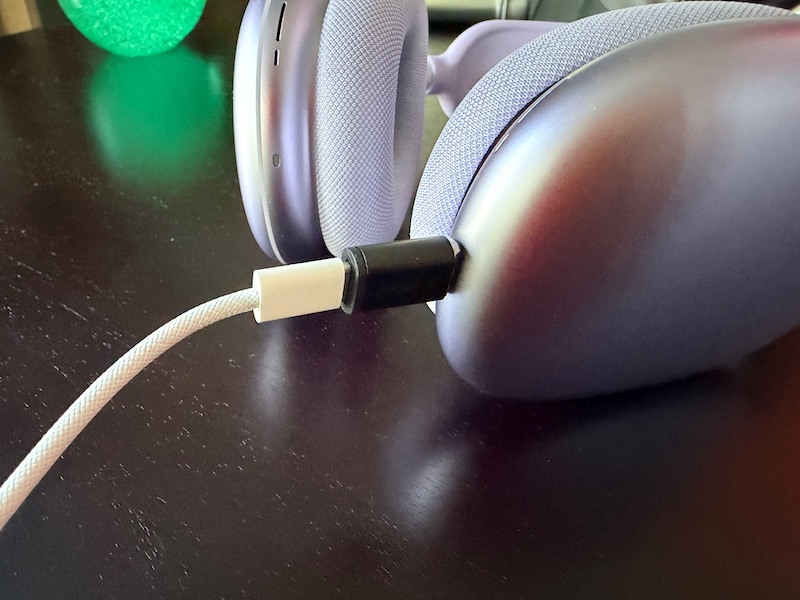
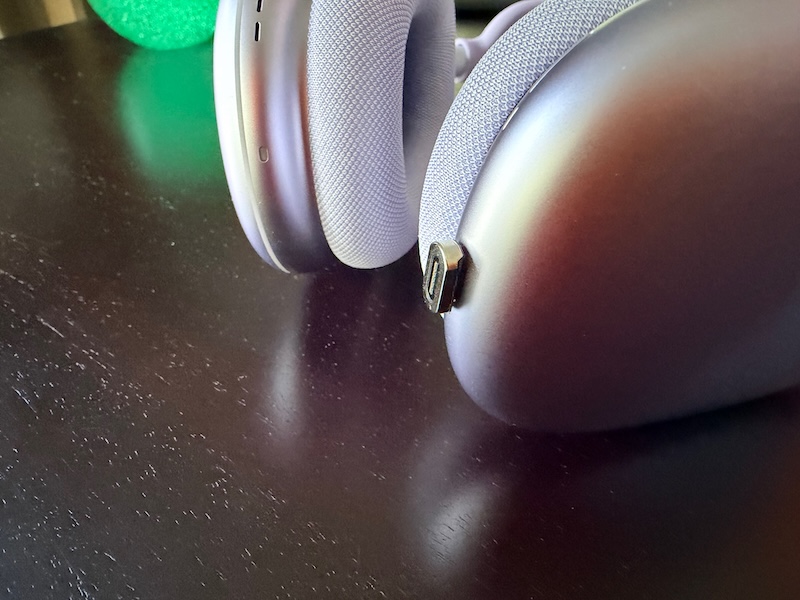
To use the stand, you insert one of the magnetic dongles into the USB-C port of the ‌AirPods Max‌. This dongle then connects automatically to the charging port in the stand thanks to its magnetism. The second magnetic dongle included is a spare which is a nice touch, especially at this price point.

The pass-through adapter allows you to leave a charging dongle in the Max's charging port at all times so you can still charge it with a standard USB-C cable, avoiding wear and tear on the port with frequent removals and insertions. But on the other hand, this is another adapter to carry around and avoid losing. The pro tip here is to just leave this dongle attached to a USB-C cable you use to charge the headphones when you're away from home.

Using the included pass-through adapter to a USB-C cable
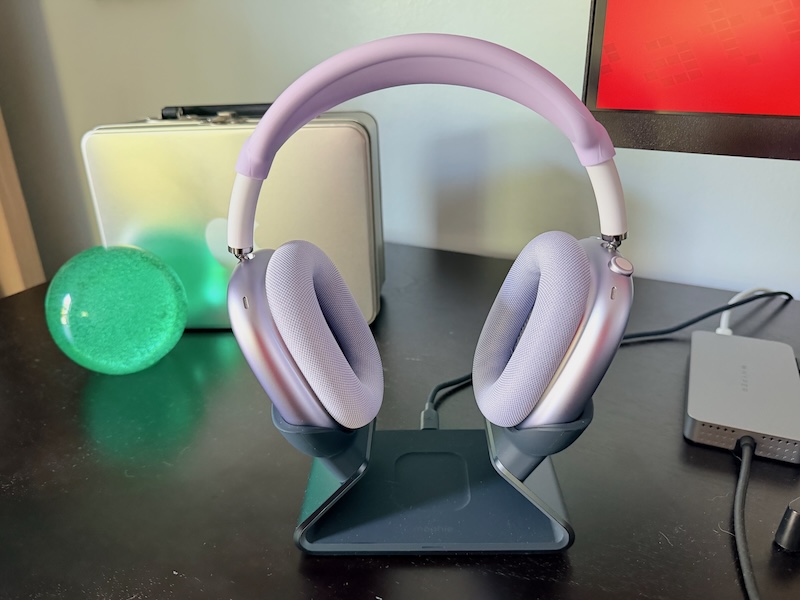
The charging dongle does not pass through audio, so if you use your ‌AirPods Max‌ with a cable for lossless audio or to connect to a 3.5mm analog device, you'll have to remove the dongle each time.

The magnetic dongle is the key feature of the stand and it isn't a new concept—charging stands that make use of a magnetic dongle have been released by smaller companies over the years (e.g., the Max Stand a few years ago) and Mophie's is a premium entry by one of the larger Apple accessory makers.

How It Works


When you place the ‌AirPods Max‌ on the stand, the white LED on the front of the stand illuminates for a few seconds and then turns off. Since you can't see the status light next to the USB-C port on the headphones themselves to verify charging while it's in the stand, it's a bit frustrating to not be able to see charging status after the stand's light turns off.

Additionally, since the stand places the headphones in sleep mode using magnets built into the ear cup holders, you can't even see its charge level on another Apple device in Control Center or the Battery widget unless you remove it from the stand. I'd rather this light stay on or pulse while the headphones are charging.


Removing the ‌AirPods Max‌ requires two hands since the stand, while weighing in at nearly a pound, is not heavy enough to overcome the magnetic force from the charging dongle. You must also use two hands to place the headphones into the stand since the ear cup holders are placed far enough apart that you need to stretch the headband wider.

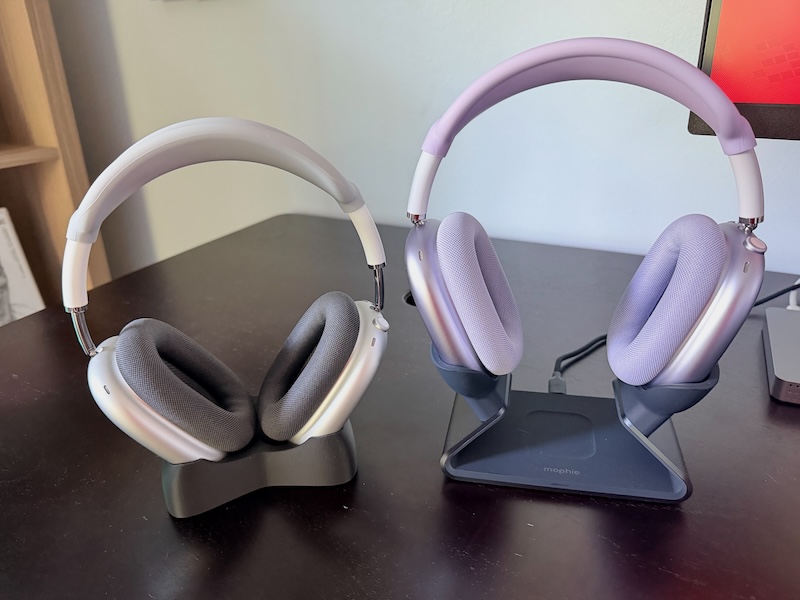
This ear cup holder placement does, however, allow the stand to accommodate AirPods or another Qi-enabled device in the center. I'd been using a simple 3D-printed ‌AirPods Max‌ stand with no charging capability where the ear cup holders are close enough together that it's easy to drop in and remove the ‌AirPods Max‌ with one hand, so this was an adjustment for me.

The center charger fits an AirPods Pro case easily and the indentation makes it easy to target where it should go. It's even large enough to accommodate the large case cover I use on mine. It also charged my iPhone 17 Pro although it takes a few seconds to line it up in the right spot.

The center charger is nice to have but seems like an addition meant to add value to the stand to justify the price. I'd like to see a version at a lower price point without this center charger that would also allow a narrower placement of the holders for the ear cups.

Next to my (non-charging) 3D-printed stand
In my charging tests, I saw no significant differences between charging my ‌AirPods Max‌ directly with Apple's USB-C cable to a 20W wall adapter, using the Max Stand, or using the USB-C cable with the pass-through adapter that Mophie includes. Apple states that a 5-minute charge adds 1.5 hours of listening but does not claim any fast-charging features beyond this, nor does Apple specifically recommend using a high-wattage wall adapter.

Per iFixit, the USB-C ‌AirPods Max‌ has the same battery cells as the original model released in 2020 with a total capacity of 664 mAh. ‌AirPods Max‌ automatically limits the amount of power drawn during charging and using a higher-wattage wall adapter doesn't increase charging speeds.

With this stand on my desk, I noticed that I was no longer ultra-careful about taking every opportunity to put my headphones into sleep mode to avoid draining the battery. I started leaving my ‌AirPods Max‌ around the house willy-nilly without a charging care in the world since I knew I could easily pop them on the stand for a quick charge anytime. Using a USB-C cable to charge them is not hard of course, but it takes more steps than just dropping the headphones into a stand.

The Big Question


Will Mophie offer a Lightning dongle that will allow the stand to work with older ‌AirPods Max‌ models that have Lightning ports? It seems like this would be an easy thing to do since the stand is only handling low power to the headphones and no data, and it would open up the consumer base greatly for Mophie to sell more of these. This is the most commonly-asked question on the stand's product page and there's no official answer from Mophie there at the time of this review, though there is someone who claims that Mophie responded to them directly and said no. We asked Mophie directly and they did not respond prior to publication of this review.

A closer view of the magnetic dongle
We presume that the official answer to this question is no. While disappointing, it's likely a licensing issue that's preventing a Lightning dongle. The Lightning connector is a proprietary one and Apple offers licensing of its use through its MFi program, while USB-C is not proprietary. If Mophie has done the math here, it must be that licensing a Lightning dongle is more costly than offering it, even if it means missing out on a potentially large user base of Lightning ‌AirPods Max‌ owners.

Who It's For


You use your ‌AirPods Max‌ frequently throughout the day at or near a desk and want an easy and quick way to charge them. Or you are out and about all day and want to drop your ‌AirPods Max‌ in a dock near the door when you get home to charge fully overnight before you grab them and go in the morning. And you have $150 to burn.

I was salty about the price when this was first announced, but I have appreciated this dock more and more and even find myself using my ‌AirPods Max‌ more because of it. Like much in life, making something easier has a large impact on how often it's used or done. So is it worth it? For me, the answer is yes.

Pros:


  • Solid, quality build

  • Aesthetically pleasing

  • Can charge two devices at once

  • Easy and convenient charging


Cons:


  • No at-a-glance charging status indicator

  • Need two hands to place and remove headphones

  • Stretches headband

  • Pass-through adapter is another thing to lose

  • Price


Note: Mophie provided MacRumors with a Max Stand for the purpose of this review. No other compensation was received. MacRumors is an affiliate partner with Mophie. When you click a link and make a purchase, we may receive a small payment, which helps us keep the site running.
Related Roundup: AirPods Max
Tag: Mophie
Buyer's Guide: AirPods Max (Buy Now)
Related Forum: AirPods

This article, "Review: Mophie's Max Charging Stand for AirPods Max is Pricey but Good" first appeared on MacRumors.com

Discuss this article in our forums

  •  

Apple Said to Cut iPhone Air Production Amid Underwhelming Sales

Apple plans to cut production of the iPhone Air amid underwhelming sales performance, Japan's Mizuho Securities believes (via The Elec).


The Japanese investment banking and securities firm claims that the iPhone 17 Pro and ‌iPhone 17 Pro‌ Max are seeing higher sales than their predecessors during the same period last year, while the standard iPhone 17 is a major success, performing significantly better than the iPhone 16.

The ‌iPhone Air‌ is apparently the outlier; Apple plans to reduce production by one million units this year. Meanwhile, Apple plans to increase production of all other models by two million units. The overall production forecast of the ‌iPhone 17‌ series this year has also been increased from 88 million units to 94 million units for the start of 2026.

A separate report earlier today claimed that Samsung has canceled plans to release a successor to its own ‌iPhone Air‌ rival, the Galaxy S25 Edge, due to low sales. Nevertheless, the ‌iPhone Air‌ reportedly sold out within hours in China, despite lower than expected sales in western countries last month.

The same report from Mizuho Securities today revealed details about Apple's first foldable iPhone and other future devices.
Related Roundup: iPhone Air
Tag: Mizuho
Buyer's Guide: iPhone Air (Buy Now)

This article, "Apple Said to Cut iPhone Air Production Amid Underwhelming Sales" first appeared on MacRumors.com

Discuss this article in our forums

  •  

M5 Chip Achieves Impressive Feat in 14-Inch MacBook Pro Speed Test

The first alleged benchmark result for the M5 chip in the new 14-inch MacBook Pro has surfaced, allowing for some performance comparisons.


Based on a single unconfirmed result uploaded to the Geekbench 6 database today, the M5 chip has pulled off an impressive feat. Specifically, the chip achieved a score of 4,263 for single-core CPU performance, which is the highest single-core score that has ever been recorded in the Geekbench 6 database for any Mac or PC processor.

In the 14-inch MacBook Pro, the M5 chip has a 10-core CPU, with four performance cores and six efficiency cores. The single-core score on Geekbench 6 refers to the performance achieved by just one of the performance cores, whereas the multi-core score refers to the maximum performance achieved by all 10 of the CPU cores combined.

A chip's multi-core score reflects the maximum CPU performance for multi-threaded tasks, but single-core performance remains important for certain games and apps, and it plays a key role in overall system responsiveness and snappiness.

The top five single-core scores for Mac and PC processors in the Geekbench 6 database:

  • M5 (14-inch MacBook Pro): 4,263

  • M4 Max (16-inch MacBook Pro): 3,914

  • M4 Pro (16-inch MacBook Pro): 3,871

  • M4 (Mac mini): 3,784

  • AMD Ryzen 9950X3D: 3,399
Unsurprisingly, the M5 chip in the new iPad Pro achieved a similar single-core score of 4,175, based on Geekbench 6 results available so far.


As for multi-core performance, the M5 chip in the 14-inch MacBook Pro achieved a score of 17,862 in the single result, which makes it up to 20% faster than the M4 chip in the previous-generation 14-inch MacBook Pro. The standard M5 chip is faster than the M3 Pro chip, and nearly on par with the M1 Ultra chip.

A selection of multi-core scores for Mac chips:

  • M4 Max (16-inch MacBook Pro): 25,645

  • M1 Ultra (Mac Studio): 18,405

  • M5 (14-inch MacBook Pro): 17,862

  • M3 Pro (14-inch MacBook Pro): 15,257

  • M4 (14-inch MacBook Pro): 14,726
The new 14-inch MacBook Pro is available to pre-order now, and it launches on Wednesday.

Higher-end 14-inch and 16-inch MacBook Pro models with M5 Pro and M5 Max chips are rumored to launch in early 2026, but the regular M5 chip is clearly no slouch.
Related Roundup: MacBook Pro
Buyer's Guide: MacBook Pro (Buy Now)
Related Forum: MacBook Pro

This article, "M5 Chip Achieves Impressive Feat in 14-Inch MacBook Pro Speed Test" first appeared on MacRumors.com

Discuss this article in our forums

  •  

EU Didn't Stop Apple From Including Charger With M5 MacBook Pro

Apple's new M5 MacBook Pro will ship without a power adapter in the box in the United Kingdom and European Union, prompting online confusion that the change was mandated by EU law — a claim that is incorrect.


Apple quietly updated its online store following the launch of the M5 ‌MacBook Pro‌ to note that customers in the UK and EU who purchase the new 14-inch model will no longer receive a charging brick by default. The laptop still includes a MagSafe 3 cable, but buyers must purchase a compatible USB-C power adapter separately. The change does not apply to other markets such as the United States, where a 70W USB-C Power Adapter remains included at no extra cost.

The omission led some observers to suggest that the decision was required under new European environmental regulations. Some claimed that the European Union had banned manufacturers from including power adapters with new electronics in order to reduce electronic waste, but this is not the case.

The confusion appears to stem from the EU's 2022 Common Charger Directive, legislation designed to standardize charging ports and give consumers flexibility when purchasing new devices. The directive requires that all smartphones, tablets, and laptops sold within the EU use USB-C for wired charging. It also stipulates that consumers must be offered the option to buy a device without a charger to limit unnecessary e-waste.

The law "ensures that consumers will be able to purchase new electronic devices without having to obtain a new charger each time," but it does not prevent manufacturers from supplying one. In practice, this means companies must provide a version of each product that can be purchased without an adapter, while retaining the freedom to include a charger or offer it free of charge.

Apple's decision to remove the charger entirely from the EU boxes therefore goes beyond what the law requires. The company could, for example, offer customers the option to include a charger at checkout for no additional cost, as long as it also sells a version without one. The lack of charger in the UK is even more unnecessary, since it is not part of the European Union.

The move to charge separately for adapters is therefore a business choice by Apple, not a legal necessity. The company's approach simplifies logistics and packaging, avoiding the need for separate SKUs in Europe, but it also shifts the cost to customers who do not already own a compatible charger.

Apple has historically argued that omitting power bricks from its packaging is part of a wider environmental effort. The company first removed the charger from iPhone boxes in 2020, citing the environmental benefits of smaller packaging and fewer redundant accessories. Similar reasoning has since extended to other product lines. By reducing the size and weight of shipments, Apple says it can cut carbon emissions and limit use of resources across its supply chain.

The M5 ‌MacBook Pro‌ continues to support both ‌MagSafe‌ and USB-C charging. Customers can use existing 67W, 96W, or 140W USB-C adapters to charge the device, depending on the configuration. Apple sells its own USB-C power adapters separately, and the company's online product pages now prominently note that "power adapter sold separately" for the affected regions.

Pricing adjustments partly offset the omission in some regions, although shifts in currency exchange rates likely also factored into Apple's pricing changes as is common. In several European countries, the new 14-inch ‌MacBook Pro‌ is approximately €100 cheaper than its predecessor, but the UK model retains the same starting price.
Related Roundup: MacBook Pro
Buyer's Guide: MacBook Pro (Buy Now)
Related Forum: MacBook Pro

This article, "EU Didn't Stop Apple From Including Charger With M5 MacBook Pro" first appeared on MacRumors.com

Discuss this article in our forums

  •  

iPhone Air Sells Out in China

Apple's iPhone Air sold out across online stores in China within hours of pre-orders opening on Friday, the South China Morning Post reports.


Demand for the ‌iPhone Air‌ reportedly surged immediately after pre-orders opened. Apple's online store and the official Tmall flagship both listed multiple color and storage configurations as unavailable within the first two hours of availability, reflecting even higher demand than the device saw in western markets last month. Prices begin at 7,999 yuan (approximately $1,122).

The ‌iPhone Air‌ was introduced globally in September but delayed in mainland China pending government approval for eSIM, which replaces physical SIM cards and enables slimmer smartphone designs.

The launch coincides with the Ministry of Industry and Information Technology's decision to authorize eSIM trials for smartphones, marking the first time Chinese users can activate a mobile number without a physical SIM card. China Mobile, China Unicom, and China Telecom confirmed this week that they had received approval to begin commercial operations, paving the way for the ‌iPhone Air‌ to launch without regulatory restrictions.
Related Roundup: iPhone Air
Buyer's Guide: iPhone Air (Buy Now)

This article, "iPhone Air Sells Out in China" first appeared on MacRumors.com

Discuss this article in our forums

  •  

MacBook Pro With OLED Touch Screen Launching as Soon as 2026

Apple is working on a new version of the MacBook Pro with an OLED display, a hole punch camera, and touch screen functionality, Bloomberg's Mark Gurman said today. The updated ‌MacBook Pro‌ is set to launch sometime between late 2026 and early 2027.


Apple hasn't redesigned the ‌MacBook Pro‌ since the launch of the M1 Pro and M1 Max machines in 2021, but that is set to change with the launch of the OLED models. Along with new display capabilities, there will be a hole-punch camera and no notch, plus a thinner and lighter design. Apple is also adding a reinforced hinge and an updated screen design that will ensure the display does not move when it is touched.

While Apple plans to add a touch screen, the MacBook will continue to have a trackpad and a keyboard, with touch gestures augmenting existing functionality.

With an OLED display and touch integration, the upcoming 2026/2027 ‌MacBook Pro‌ models will likely be more expensive than the current higher-end ‌MacBook Pro‌ models that are priced starting at $1,999 for the 14-inch model and $2,499 for the 16-inch model.

The touch screen ‌MacBook Pro‌ models will be equipped with Apple's next-generation M6 chips. Apple just this week debuted the M5 Apple silicon chip, so the M6 is a ways off. Apple won't have M5 Pro and M5 Max chips ready until early 2026, which means it is increasingly likely the M6 variants will come in 2027.

It is possible that Apple will introduce two ‌MacBook Pro‌ refreshes in the same year, but it would be unusual.

Apple plans to test touch screen Macs with the ‌MacBook Pro‌ line, and the technology won't come to other Macs until Apple learns how it fares with consumers. Apple's last attempt at touch-based functionality in the Mac did not go well. The Touch Bar that was added to the ‌MacBook Pro‌ in 2016 did not prove popular with customers, and Apple ended up phasing it out starting with the 2021 ‌MacBook Pro‌ refresh.

Rumors about a touch screen Mac surfaced earlier this year when Apple analyst Ming-Chi Kuo said that Apple would incorporate on-cell touch technology in the OLED ‌MacBook Pro‌. Kuo said that Apple decided to give the Mac a touch screen after "long-term observation of iPad user behavior" that suggested touch controls can enhance productivity and user experience in certain scenarios.
Related Roundup: MacBook Pro
Buyer's Guide: MacBook Pro (Buy Now)
Related Forum: MacBook Pro

This article, "MacBook Pro With OLED Touch Screen Launching as Soon as 2026" first appeared on MacRumors.com

Discuss this article in our forums

  •  
❌