Reading view

Colombia Elections: Cepeda Leads, Valencia Doubles in Race Down to Three

With just over a month to go before Colombia’s May 31 presidential election, a new Invamer poll suggests the race has narrowed to three viable contenders, as left-wing senator Iván Cepeda strengthens his lead and two right-wing rivals battle for a place in the runoff.

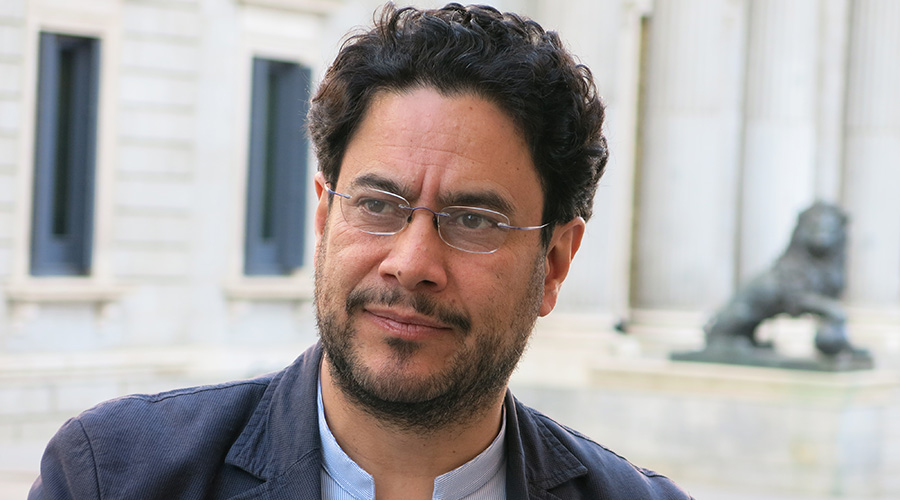
The survey, conducted for Noticias Caracol and Blu Radio, shows Cepeda commanding 44.3% of voting intention, a significant jump from 37.1% in February. The Pacto Histórico candidate has not only consolidated support among core voters but expanded his appeal across all regions, with particularly strong gains among younger voters aged 20 to 30.

Trailing behind, but still within striking distance of a second-round berth, are Abelardo de la Espriella with 21.5% and Paloma Valencia with 19.8%. While De la Espriella has posted modest gains since February, Valencia has emerged as the fastest-rising candidate, nearly doubling her support from 10% in the previous poll.

The data underscores a central dynamic shaping the race: a fragmented right competing for a single runoff slot, even as the left coalesces behind a dominant frontrunner. According to the data, as long as the right remains divided, any division among the pro-Uribe camps will continue to benefit Cepeda. Unless there is a clear consolidation after May 31, the numbers suggest the second round will be a contest over who faces the hard-leftist and not whether he gets to the final run-off.

The collapse of Colombia’s political center has been equally striking. Former Bogotá mayor Claudia López has seen her support plunge from 11.7% to 3.6%, while former Medellín mayor Sergio Fajardo has dropped from 6.6% to just 2.5%. Both candidates have lost more than half of their previous backing and now poll well below the 4% threshold required for state reimbursement of campaign expenses.

López’s decline appears particularly acute in urban constituencies, where she previously drew strong support, including among progressive and LGBTQ voters, pointing to a broader erosion of her core base. Fajardo, meanwhile, continues to struggle to regain traction, reflecting persistent voter dissatisfaction with centrist alternatives.

Analysts are also seeing how centrist voters are shifting toward Valencia, whose ticket includes former DANE statistics chief Juan Daniel Oviedo as the vice-presidential option. Oviedo appears to be decisive in broadening Valencia’s appeal beyond the Centro Democrático base.

Despite Cepeda’s commanding first-round lead, runoff scenarios suggest a more competitive contest – particularly if Valencia secures the second spot. In a hypothetical second round between Cepeda and De la Espriella, the left-wing candidate would win with 54.6% against 42.6%. However, against Valencia, the margin narrows significantly to 51.2% versus 46.6%.

That tightening gap reflects Valencia’s growing ability to attract support beyond her base, including voters from the political center and segments of the undecided electorate. According to the poll, she outperforms De la Espriella in capturing second-choice preferences, positioning her as the more competitive challenger in a potential runoff.

When respondents were asked who they would support if their first-choice candidate failed to advance, Cepeda led with 26.7%, followed closely by Valencia at 25.7%, with De la Espriella trailing at 19.8%. López and Fajardo lagged further behind, reinforcing their diminished relevance in the race.

Cepeda’s dominance, however, is not without warning signs. While he continues to lead comfortably, his projected runoff margins have narrowed compared to earlier surveys, particularly against Valencia. The erosion suggests that while his base remains solid, opposition voters may be coalescing more effectively than before.

For now, the trajectory is clear. Cepeda has gained ground nationally despite a worsening security situation and poll conducted before the terrorist bomb on Saturday, April 25 by FARC dissidents along the Pan-American highway in which 20 persons were killed.

With less than a month until Colombians head to the polls, the race appears increasingly defined not by a crowded field, but by a three-way struggle – one frontrunner and two challengers vying for the chance to stop him.
  •  

Colombia reels from worst terrorist attack in decades as Petro celebrates birthday

Colombians are expressing outrage and grief after a bombing attributed to dissident factions of the former FARC killed 20 people and left injured 46, marking the country’s deadliest attack in over a decade.

The blast on Saturday afternoon tore through a stretch of the Pan-American Highway near Cajibío, in the southwestern department of Cauca, leaving mangled vehicles, a massive crater, and scenes of devastation that authorities described as among the most brutal assaults on civilians in recent memory.

Departmental governor Octavio Guzmán said the explosion, which injured at least 36 people, including children, was the “most ruthless attack against the civilian population in decades,” adding that several vehicles were overturned by the force of the blast.

Military officials said attackers blocked traffic with a bus and another vehicle before detonating explosives as cars and buses were stranded along the highway, a vital artery linking Colombia’s southwest with the cities of Popayán and Cali.

The attack, attributed to a FARC dissident faction led by Iván Mordisco, came amid a surge of violence across southwestern Colombia, with authorities reporting at least 26 attacks over a two-day period in Cauca and neighbouring Valle del Cauca. Incidents included explosions, arson attacks on vehicles, and assaults on security forces in cities such as Cali, Palmira, and Jamundí.

But as the country mourns, President Gustavo Petro faced mounting criticism after posting images of himself celebrating his birthday, prompting accusations of insensitivity and a lack of leadership during a national crisis.

Late on Saturday evening, Petro shared a photograph on social media showing himself alongside three friends, all wearing Hawaiian-style flower garland necklaces, accompanied by a message marking his birthday on April 19. “Surrounded by love and bonds of affection,” Petro wrote. “We are an army of Quixotes doing the impossible and achieving the impossible.”

The post, which appeared hours after reports of the deadly attack emerged, sparked immediate backlash from political leaders and the public, many of whom questioned the president’s priorities at a moment of national mourning.

Senator Juan Manuel Galán criticized the timing of the message, writing on social media: “19 people murdered in Cajibío, Cauca, the country bleeding, the Pan-American highway turned into tragedy… but the priorities of Gustavo Petro were clear: the country in mourning and he showing us how he celebrated his birthday.”

Presidential hopeful Paloma Valencia travelled to Palmira to meet with victims’ families and express solidarity. “We are with the people who are afraid, who are mourning their loved ones, who need to feel safe again. Petro should be here,” she said.

The criticism underscores deep tensions surrounding Petro’s security strategy, particularly his “Total Peace” policy aimed at negotiating with illegal armed groups. Critics argue the approach has failed to contain violence in regions such as Cauca, where armed groups linked to narcotics trafficking and illegal mining continue to operate with increasing intensity.

Saturday’s bombing, one of the most lethal attacks since the 2016 peace accord with the FARC, has renewed fears about Colombia’s security trajectory and the resilience of dissident factions that refused to demobilise.

Images from the scene showed debris scattered across the highway, shattered vehicles, and a large crater where the explosion occurred. Authorities confirmed that 15 women and five men were among the dead, while several of the injured remained in critical condition.

For residents of the region, the attack has deepened a sense of vulnerability and abandonment.

“Cauca cannot continue to face this barbarity alone,” Governor Guzmán said, calling for greater national support and a stronger security response.

As Colombia approaches a general election on May 31, the attack also reveals the extent to which  the state remains unable to protect civilians, let alone presidential candidates opposed to the failed security policies of the country’s first leftist administration. “Petro: You are simply a disgrace. Show some empathy. Show some respect,” noted Paloma Valencia from Palmira.


  •  

Dissident bomb kills 20 civilians at roadblock in southwest Colombia

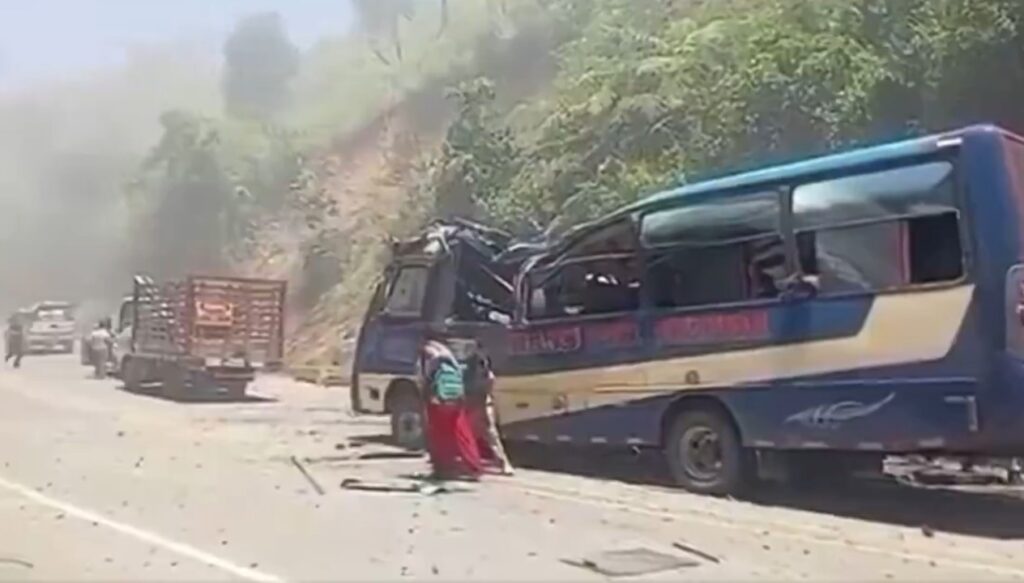
A bus damaged by the huge explosion n Saturday 30kms north of Popayán. Photo: X
A bus damaged by the huge explosion on Saturday 30kms north of Popayán. Photo: X

A bomb attack attributed to fighters from the EMC armed group killed 20 travelers trapped on the busy highway connecting Colombia’s southwestern cities on Saturday.

The tragic events in the El Tunel sector, close to the town of Cajibío, unfolded after the dissidents mounted a checkpoint on the main Via Panamericana south of Cali and 30 kilometers (20 miles) before Popayán.

The busy road runs through a mountainous region dominated by gangs run by the former guerrillas dedicated to a booming cocaine industry in hidden canyons beyond state control. At the illegal checkpoint the fighters forced truck drivers to block the road and abandon their vehicles, causing a long queue of traffic.

According to video posted online, soon after a midday the huge explosion rocked the valley mangling around 15 vehicles caught blockade including two minibuses with civilian passengers.

The governor of Cauca, Octavio Guzmán, confirmed the 20 dead civilians caught in the blast were 15 women and five men, all adults. A further 47 people were injured, of whom three were critical. Five children were recovering in hospital. Eleven of the affected persons came from the same village of Pedregosa, close to Cajibío, he added.

“What happened on April 25th constitutes the most brutal and ruthless attack against the civilian population in decades in the department of Cauca,” the governor later announced.

The bomb had displaced 200 cubic meters of soil, he said, creating a crater five meters deep in the Panamericana highway, the main route linking Cali to Popayan and on to Ecuador. Despite the damage, road crews were able to partially reopen the road six hours after the blast.

Saturday’s attack, one of the worst atrocities in recent years, comes against a background of rising conflict between state forces and dissident armed groups in the southwest of Colombia.

#ULTIMAHORA

A nuestro medio de comunicación llega video #PRIMICIA del momento exacto donde explota el artefacto explosivo 🧨 en el sector conocido como el TÚNEL CAJIBIO CAUCA entre popayan y piendamo @Noti90Minutos @DELAESPRIELLAE

Noticia en desarrollo pic.twitter.com/g4KEcSroYd

— SARCASTICO DE DERECHA (@esco27438) April 25, 2026

Terrorist tactics

Just in the last four days communities across three departments – Valle, Cauca and Nariño – reported a series of what appear to be coordinated attacks against civilian and military targets. These included:

  • 24 April – A bus bomb exploded close to base of the Pichincha Battalion in the south of Cali, causing damage and three injuries.
  • 24 April – In the nearby town of Palmira, Valle, an army base came under attack from cylinder bombs launched from a passing vehicle, no injuries were reported.
  • 25 April – Two attackers launched grenades at a petrol station in Rozo, Valle, damaging vehicles.
  • 25 April – A police station in the rural community of Potrerito, close to Jamundí, came under gunfire attack in the early hours of the morning.
  • 25 April – In another morning attack, Aeronáutica Civil reported drones launching explosives against a hilltop air traffic station close to El Tambo (Cauca), damaging antennas and leaving the radar inoperative.
  • 25 April – a chiva rural bus was hit by explosive charges while traveling on Route 25 near to Mercaderes, south of Popayan. Police reported several injured including a child but no deaths
  • 26 April – four men were gunned down in a bar in Toro, Valle, between Cali and Pereira.

According to a tally by thinktank Indepaz, the Toro deaths were the 48th massacre recorded in 2026. In Colombia a ‘massacre’ is defined by the intentional killing of three or more people at the same time.

This weekend’s attacks were typical of a return to terrorist tactics such as car bombs, motorbike bombs, drones dropping home-made explosives and other artisanal artefacts.

Cauca governor Octavio Guzmán visiting the scent of the explosion this weekend. Photo: Social Media

Saturday’s Cajibío attack was initially reported as a boobytrap bomb, or “IED” (Improvised Explosive Device) which are caches of high explosives buried by the roadside by rebel groups, usually aimed at passing military patrols

But later reports suggested the civilian vehicles were struck by a pipeta mortar. These are fashioned from household gas bottles and clumsily launched from mortars made of industrial piping.

Notoriously inaccurate, a pipetas have claimed many civilian lives in the Colombian conflict, most notably in the Chocó town of Bojayá in 2002 when a charge launched by FARC guerrillas struck a church killing 79 civilians sheltering inside.

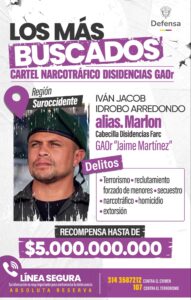
Behind Saturday’s atrocity was alias ‘Marlon’ of the Estado Mayor Central (EMC), said Colombia’s defence minister of defence Pedro Sanchez. The state offered a reward of US$140,000 for information leading to his capture.

Original dissidents


Most Wanted...
Most Wanted…

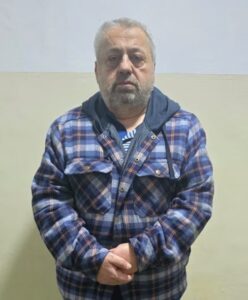
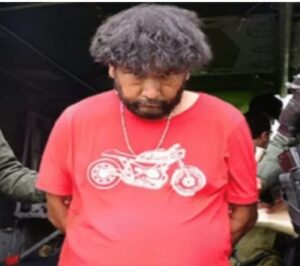
Marlon, whose real name is Iván Idrobo, was formerly in the ranks of the FARC guerrillas where he trained as a bomb maker. He is now thought to lead the EMC’s Frente Jaime Martínez which according to the Defensoria del Pueblo controls the cocaine trade, illegal gold mining and extortion rackets around the town of Suárez in the northwest of Cauca.

The EMC, lead by former FARC chief Iván Mordico, has proven to be the most intransigent of the myriad of armed groups which the current Petro government has tried to broker peace with under his controversial Paz Total policy.

See also: Peace Plan has Caused more Conflict, says Thinktank

Seen as the “original” dissidents that rejected the partly successful peace process under former president Manual Santos in 2016, the EMC initially agreed to negotiate when Gustavo Petro came to power in 2022 but soon engaged in bitter infighting with rival armed groups creating a rupture with Paz Total.

For his part, Petro tweeted his disgust at the Cajibío attack and the EMC “narco-terrorists” behind it.

“The groups led by Iván Mordisco in Cauca are criminals who have committed crimes against humanity and must be treated as such,” he said.

Some pundits commented that Petro’s early treatment of the EMC as a political actor had given the armed group room to expand, contributing to the current security crisis. In the heat of next month’s elections, others turned their ire on presidential candidate Iván Cepeda, seen as an architect of Petro’s struggling peace plans.

Rival right-wing candidate Paloma Valencia accused Cepeda of his role in “tying the hands of state forces, the rampant increase in illicit crops, the historic numbers of massacres, and waves of violence like today’s”.

Valencia also rounded on Petro for posting photos of his birthday celebrations even as the country was reeling from the horrific footage of the Cauca bombing. “Show some respect,” she messaged.

The post Dissident bomb kills 20 civilians at roadblock in southwest Colombia appeared first on The Bogotá Post.

  •  

Petro to meet Venezuela’s Delcy Rodríguez in Caracas, focus on border security

Colombian President Gustavo Petro will meet Venezuela’s interim leader Delcy Rodríguez in Caracas on Friday to address security challenges along the shared border, marking their first official encounter since Nicolás Maduro was captured by U.S special forces on January 3, 2026.

The meeting, to be held at the Miraflores presidential palace, is expected to center on coordination between the two countries to tackle armed groups, drug trafficking and other cross-border threats that have long destabilized frontier regions.

Colombia’s presidency said the talks aim to “strengthen bilateral cooperation, territorial control and coordination on security matters,” following the cancellation of a previous meeting scheduled for March 13 at the border due to security concerns cited by Caracas.

Friday’s talks come after Rodríguez assumed power earlier this year following the capture of former Venezuelan dictator Nicolás Maduro during Operation Absolute Resolve.

Petro is expected to travel to Caracas after holding meetings earlier in Bogotá. The leaders will first hold a private discussion to outline joint actions addressing border instability, followed by a broader metting between their respective delegations aimed at formalizing institutional commitments.

Officials from both countries are also expected to sign the final act of the III Commission on Neighborhood and Integration, with foreign ministers participating, before delivering statements to the media.

The Colombia–Venezuela border stretches more than 2,200 kilometers (1,367 miles) from the Caribbean coast to the Amazon basin and has long been a hotspot for illegal activity, including the presence of the National Liberation Army (ELN) guerrilla, as well as drug trafficking and smuggling networks.

Petro said earlier this week that the talks would place particular emphasis on the Catatumbo region, one of the most volatile areas along the frontier, where violence linked to armed groups and illicit economies has intensified.

“If we go, Catatumbo is a key issue to discuss with President Delcy,” Petro said during a cabinet meeting on April 21, adding that his delegation would include military and police officials to coordinate security strategies.

He said the goal is to develop a joint security plan, improve coordination between the two countries’ armed forces and police, and deepen intelligence-sharing, warning that a lack of cooperation could lead to operations that harm civilian populations.

The meeting also comes against the backdrop of a rebound in bilateral trade between the two countries following years of strained relations.

Trade flows have increased significantly in recent years, rising from around US$200 million three years ago to more than $1 billion, representing an increase of roughly 600%, according to official figures.

Colombia recorded a trade surplus of US$1 billion with Venezuela in 2025, underscoring the economic incentives for both governments to maintain stable ties despite ongoing political uncertainties.

Petro first announced the trip last week during an interview in Spain, referencing the earlier failed meeting and signaling his willingness to travel to Caracas to advance talks.

The visit marks a key test of Colombia’s role in engaging with Venezuela’s transitional leadership, as both countries seek to stabilize their shared border while cautiously rebuilding diplomatic and economic relations in the post-Maduro era.

  •  

Colombia Indigenous groups have key role in transition to renewable energy

Crucial Santa Marta conference will include voices of communities long opposed to the exploitation of fossil fuels.

ndigenous campaigners against oil drilling in the Amazon. Photo: courtesy Amazon Watch.
Indigenous campaigners against oil drilling in the Amazon. Photo: courtesy Amazon Watch.

Thirty years ago, Colombia’s U’wa people were ready to commit mass suicide by jumping off a 500-meter cliff. The close-knit indigenous community would rather die with dignity than succumb to oil exploration on their ancestral land.

The U’wa announced their dilemma in 1995 in an open letter that ricocheted around the world. It was no empty threat: 400 years before their ancestors had jumped from the Alto de los Infieles (Cliff of the Infidels) rather than submit to the Spanish colonial yoke.

“The U’wa were the first to call oil the ‘blood of the earth’,” explains Kevin Koenig, director of climate and energy at Amazon Watch, a U.S.-based non-profit. “The U’wa were the first to say that oil needs to stay in the ground. They warned against its extraction and its impact on the world.”

Amazon Watch has supported the U’wa to resist extractive industries over the same three decades, along with dozens of other at-risk communities in Latin America.

This week, in a ground-breaking conference in Santa Marta, some of those efforts will come full circle at the first global summit on “Transitioning away from Fossil Fuels”.

The six-day conference, starting April 24, will host 50 country delegations plus dozens of civil society organizations.

This “road map towards renewable energy” is backed by the Fossil Fuel Treaty Initiative, an alliance of nation states, technical bodies, communities and individuals working to secure a “global just transition from coal, oil and gas”.

For the organizers the timing is critical with climate upset, fuel shortages, war in the Middle East and big oil’s sticky grip on geopolitics more exposed than ever. There’s never been a better moment to move to renewable energy.

A key part of the conference will be representation from indigenous communities; the U’wa, along with many others, will have a voice at the table.

Glacier gone

For Koenig, it is also significant that the inaugural meeting is in Colombia, one of the world’s most biodiverse countries, but also an oil producer moving to curb fossil fuels and embrace renewables.

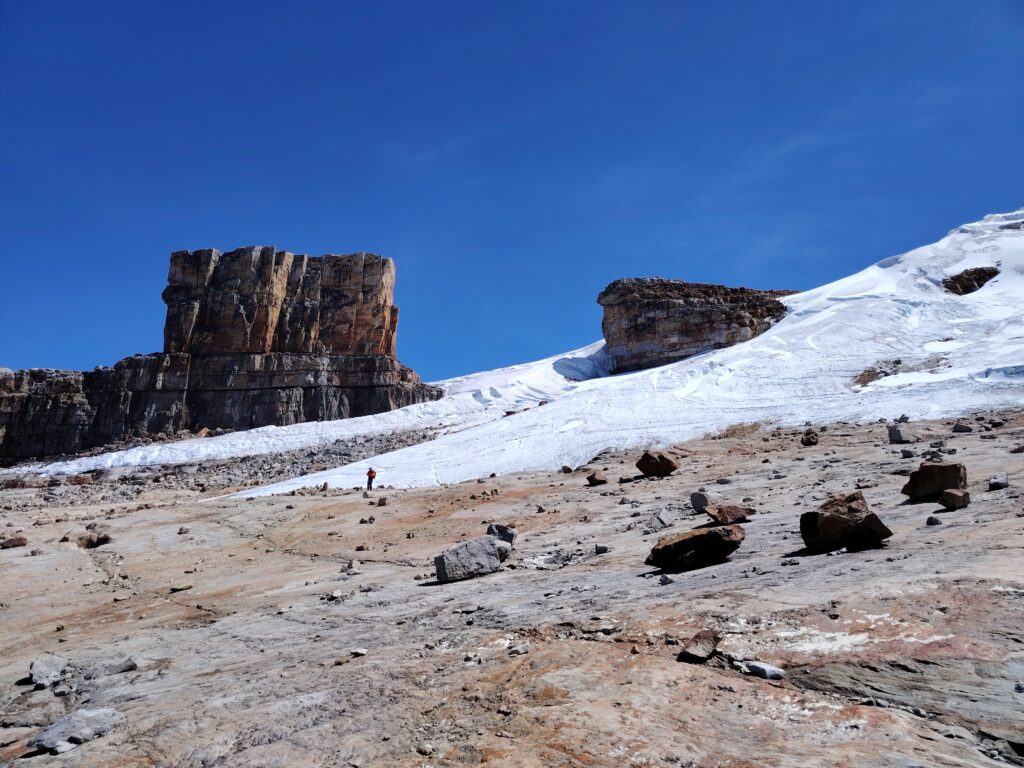
There is further symmetry in the location: the small coastal city of Santa Marta is “just over the hill” from the U’wa territory which straddles the tropical glaciers of the El Cocuy mountain range, Koenig tells The Bogotá Post.

A hiking route over the same mountains is known as Colombia’s climate change trail – see the ice before it melts.

Prophetically, just three weeks before the conference’s kick-off, the IDEAM climate agency reported that a glacier in the heart of U’wa territory had melted for good.

“Satellite monitoring confirms that Los Cerros de la Plaza glacier coverage is today at zero square kilometers,” it announced matter-of-factly.

Living these realities gives indigenous communities such as the U’wa, wedded to nature and geography, a powerful voice in the transition from fossil fuels.

This experience has often come at a high cost, says Koenig. In countries like Colombia, particularly in the Amazon, oil companies are an existential threat to both the natural environment and the communities it supports. Drilling is invariably a catalyst for violence.

“Some countries use oil extraction as a reason to open areas, saying ‘we can militarize it and it will be safer’. In fact, oil and energy infrastructures are a magnet for armed groups, for political attacks or blackmail,” he explains.

Amazon Watch has supported many indigenous communities to resist oil companies in the Amazon regions of southern Colombia, Peru and Ecuador, often through practical means such as providing solar power and communications equipment, trainings and legal resources, but also by raising their voices to the outside world.

The organization’s latest report, The Amazon Under Siege, highlights how extractive industries and the armed groups that trail in their wake are putting Amazon communities in the crossfire.

U'wa sacred territory includes El Cocuy glaciers which are melting with global warming. Photo: S. Hide.
U’wa sacred territory includes El Cocuy glaciers which are melting with global warming. Photo: S. Hide.

Oil addiction

Colombia might have turned a corner with its oil moratorium in Amazon regions but neighboring countries are on a different path, one that might be summed up by U.S. president Donald Trump’s call to “drill, baby, drill”.

“Ecuador is going in the opposite direction with new oil auctions, and two new exploration blocks in remote rainforest,” says Koenig. Peru is following suit in jungle areas hitherto untouched. Perhaps not surprisingly, neither of the Andean countries is attending the Santa Marta transition conference.

According to Koenig, Peru and Ecuador are already in the throes of social violence but now risk replicating Colombia’s conflict with its rural oil pipelines that are constantly attacked or bombed, or oil lines tapped by fuel thieves, creating spills in biodiverse hotspots.

Added to that, drilling new wells makes little economic sense, he says. Current markets are signalling peak oil demand by 2030 even while wind and solar are taking a bigger share of energy output.

By doubling down on oil extraction both countries are “gambling with their future.” Aside from the moral and ethical issues of drilling in remote rainforest with indigenous peoples, getting banks to fund these ventures against the headwinds of renewables is not guaranteed.

“This is the moment where we are seeing both wars linked to fossil fuels politics and dependencies, but also for the first time renewables energies are not just theoretical, they are real, and decision-makers know they are scalable,” notes Koenig.

Inga indigenous guards in Putumayo. The community resists oil extraction on its lands. Photo: S.Hide

Fresh air

This seismic shift is reflected in the sassy subtext of the Santa Marta conference: climate deniers not invited. Meetings are reserved for a “coalition of the willing”, Colombian environment minister Irene Vélez, a key organizer of the event, told the Guardian this week..

For campaigners like Kevin Koenig this attitude is a breath of fresh air. Previous climate change conferences, run by the UN, have failed to pin global warming on big oil, he says.

“We know that fossil fuels are the number one source of carbon emissions but that’s nowhere to be found in the Paris [climate change] agreement. That’s due largely to the influence of the oil industry and lobbyists,” says Koenig.

Changing the narrative requires an alignment between traditional knowledge and science, he says. Indigenous communities, the original resisters, are now part of that with their wealth of experience.

The post Colombia Indigenous groups have key role in transition to renewable energy appeared first on The Bogotá Post.

  •  

Bogotá Mayor Galán calls for 8,000 more police after deadly film set attack

Bogotá’s mayor has called for a major expansion of the city’s police force following a deadly knife attack on a television production set and a separate killing at a public transport station, as authorities warn of shifting patterns of urban crime in Colombia’s capital.

Carlos Fernando Galán said the city requires at least 8,000 additional police officers to effectively confront rising insecurity, after convening an extraordinary security council on Monday with senior officials from law enforcement, the military and prosecutors.

The move follows a shocking outbreak of violence on April 18 during the filming of the television series Sin senos sí hay paraíso in the central Santa Fe locality — an incident that left three people dead and several others injured.

“This is an extremely serious and senseless act of violence that hurts all of Bogotá,” Galán said, expressing solidarity with the victims’ families and the country’s audiovisual sector. “To respond effectively, we must strengthen the police, improve investigations, expand technological capabilities and increase personnel.”

The attack unfolded at approximately 3:30 p.m. in the Los Laches neighborhood, near the eastern edge of Parque Nacional, where a production crew had been filming in a public street close to the Instituto Roosevelt.

According to preliminary findings, a man not affiliated with the production approached the set and, without any prior interaction, attacked a crew member with a sharp weapon.

The sudden assault triggered panic and a rapid escalation of violence. Witnesses said several people at the scene intervened in an attempt to stop the attacker, leading to a chaotic street fight in which multiple individuals were stabbed.

In the ensuing struggle, the assailant managed to inflict severe injuries on several people before being subdued. Three individuals — including the attacker and two members of the production team — were transported to Hospital La Samaritana, where they later died from their wounds.

A fourth person injured in the confrontation was taken to Hospital Universitario San Ignacio. Authorities have not released further details regarding that individual’s condition.

The victims from the audiovisual team were identified as Henry Alberto Benavides Cárdenas, 45, and Nicolás Francisco Perdomo Corrales, 18.

Officials have stressed that the attack does not appear to be linked to robbery or organized crime. Instead, investigators are examining the background of the alleged assailant, who had previously been reported for threats and is believed to have a history of mental health issues — factors now under review by judicial and medical authorities.

The case has rattled Colombia’s cultural sector, which have grown steadily in recent years as Bogotá has positioned itself as a regional hub for film and television production. For many in the sector, the attack represents a deeply unsettling breach of safety for the industry.

Monday’s security meeting also addressed a separate killing that occurred in the city’s public transport system. A 19-year-old man, identified as Freddy Santiago Guzmán, died after being attacked during a robbery at the Minuto de Dios TransMilenio station.

Galán said the two incidents, while distinct, highlight the need for a more robust and coordinated security strategy across the capital. He called on the national government to provide greater support in terms of funding, personnel and institutional backing.

“We will not step back in the fight against crime,” he said. “But Bogotá cannot face this challenge alone.”

Security Secretary César Restrepo warned of what he described as a structural weakness in controlling the circulation of weapons, particularly knives and other bladed instruments.

“More than 10,000 bladed weapons have been seized so far this year,” Restrepo said, adding that the continued flow of such weapons into the city remains a critical concern for authorities.

Officials also pointed to evolving criminal dynamics that are complicating law enforcement efforts. Galán described the emergence of more fluid and decentralized forms of criminal activity, in which individuals come together temporarily to commit specific acts before dispersing.

“We are seeing a kind of ‘freelance’ crime,” he said. “This creates new challenges for intelligence work and policing.”

The extraordinary security council brought together representatives from the police, the army’s 13th Brigade of the Colombian Army and the Fiscalía General de la Nación, as authorities seek to strengthen coordination in response to recent violence.

Police commander Giovanni Cristancho Zambrano said officers had recovered eight stolen vehicles in the past week and urged citizens to report suspicious behaviour, particularly involving occupants of private vehicles, to support preventive action.

The rash of incidents during one weekend in the capital have sharpened concerns over public safety, especially in central districts where commercial, residential and cultural life converge in densely populated areas.

For the city’s growing audiovisual sector, the killings have raised urgent questions about security protocols for productions operating in open urban environments. Messages of mourning circulated widely among industry professionals, reflecting both grief and frustration over the circumstances surrounding the attack.

While city authorities have pledged to reinforce measures across key areas, Galán’s call for thousands more officers reveals the scale of Bogotá’s security needs as it grapples with entrenched crime from micro-trafficking groups and rapidly evolving new forms of urban violence.

Investigations into both incidents remain ongoing, with authorities working to establish the full sequence of events and any underlying factors that may have contributed to the attacks.

  •  

iOS 26.4.2 for iPhone & iPad Released with Bug & Security Fixes

iOS 26.4.2 has been released by Apple for iPhone, along with ipadOS 26.4.2 for iPad. Both updates include important security fixes, as well as unspecified bug fixes, for the iPhone and iPad. The security patch apparently addresses an issue with data being retained in notifications, which had allowed extraction of deleted Signal messages from notifications ... Read More
  •  

Tim Cook to Step Down as Apple CEO, John Ternus to Lead Next Era

Apple has announced that longtime Apple CEO Tim Cook will be stepping down from his role on September 1, 2026, concluding a 15 year tenure that has coincided with Apple become one of the largest and most influential companies in the world. Tim Cook will transition to the role of executive chairman of the Apple ... Read More
  •  

3rd Beta of iOS 26.5 & macOS Tahoe 26.5 Available for Testing

The third developer beta versions of iOS 26.5, iPadOS 26.5, and MacOS Tahoe 26.5, are now available to those engaging in the beta testing programs for Apple system software. The new beta build is initially available to developers but typically soon followed by public beta access. The new beta versions of system software continue to ... Read More
  •  

Colombia elections: candidates set for debate after Cepeda backtracks

Bogotá, Colombia – Leftist presidential candidate Iván Cepeda challenged his opponents to a debate on Saturday after turning down previous proposals to face-off with his rivals.

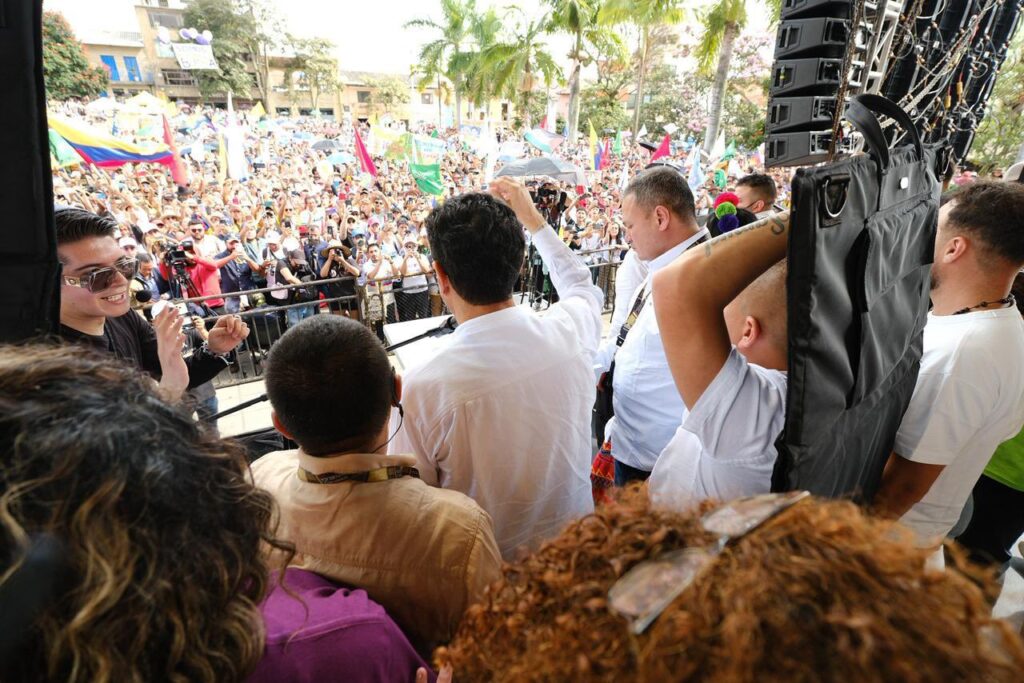
“I challenge the far right, its two candidates – Senator Paloma Valencia and lawyer Abelardo de la Espriella – to a debate,” Cepeda told a crowd at a rally in Fusagasugá, a city near Bogotá. 

His opponents responded by accepting the proposal, while also highlighting that they had been calling for a debate for months.

The possibility of a live face-off between candidates has been a recurring theme ahead of first-round presidential elections on May 31.

Shortly after beginning his candidacy last year, Cepeda dismissed the idea of participating in a debate: “I’m not going to take part in debates—let me make this clear from the outset—to exchange insults with other candidates, or to threaten one another, or to denigrate one another.”

Iván Cepeda addressed a crowd of supporters on Saturday in Fusagasugá.

Cepeda’s rivals have repeatedly criticized him for refusing to spar with them on the public stage, something they highlighted following the leftist candidate’s U-turn on Saturday.

“Allow me to correct you: you’re not issuing a challenge; you’re accepting the challenge you were invited to take up months ago,” said criminal defense attorney de la Espriella.

Valencia, the candidate for the Centro Democrático (Democratic Center) party, also seized the opportunity to pounce on Cepeda: “A few weeks ago, it was I who challenged Iván Cepeda several times to a face-to-face debate, yet you chose to hide away in the Senate with a controlled microphone.”

She suggested that Cepeda’s U-turn owes to a worsening performance in recent polls: “Now that the polls are tightening, you’re coming out of Fusagasugá with this challenge.”

Analysts agreed with Valencia’s suggestion, saying that Cepeda’s debate proposal is an attempt to inject life into a stagnating campaign. 

“Cepeda has offered to debate because of his campaign’s inherent lack of momentum and general weakness. He is not captivating any new voters or finding a tangible way of changing the narrative in his favor,” Sergio Guzmán, Director at Colombia Risk Analysis, a political risk consultancy, told Latin America Reports

Internal party polls reportedly show sluggish growth in Cepeda’s polling numbers since he became the official candidate for the Pacto Histórico (Historic Pact) in October. 

Meanwhile, Valencia has been soaring in the polls following her victory in presidential primaries in March; Cepeda and de la Espriella did not partake.

But the debate is not without risk for Cepeda, according to Guzmán: “Cepeda runs the risk of having to go on the defensive of Petro and his administration.”

Others believe that Cepeda’s oratory style does not lend itself to the televised debate format.

“He has a much more academic tendency, which is not so typical in politics, let alone in modern politics,” noted Miguel Jaramillo Luján, a Colombian political strategist. In contrast, he noted that de la Espriella and Valencia have a more media-savvy communication style.

Nevertheless, the analyst told Latin America Reports that Cepeda’s debate style could give him the chance to woo crucial centrist voters: “I believe he can inspire confidence and credibility among his target audience and even among the centre, particularly when it comes to dispelling certain myths and lies that have been spread by the centre and the right.”

With the leading candidates agreeing to debate, the battle over the specifics – including moderators, questions, and location – begins. 

The post Colombia elections: candidates set for debate after Cepeda backtracks appeared first on The Bogotá Post.

  •  

Petro says he will sue Noboa for slander

Presidential spat intensifies after Ecuadorian leader revisits old rumors that Petro met with drug gang during state visit.

Relations between Noboa, left, and Petro, right, have hit rock bottom after a visit to Manta.

President Petro says he will sue Daniel Noboa over an interview in which the Ecuadorian president accused his Colombian counterpart of associating with feared drug baron Adolfo Macías Villamar, alias ‘Fito’, during a state visit to Ecuador.

“I have decided to file a criminal complaint against President Noboa for his slander,” wrote Petro on his X account, following statements made by Ecuador’s leader to Semana News.

In Sunday’s interview Noboa made references to Petro’s visit to Ecuador in May, 2025, as part of a state visit to attend the right-wing president’s own inauguration.

After the event Petro took a three-day visit to the coastal city of Manta to rest and write his book, the Colombian president later explained.

But this hiatus from the public eye – Petro is rarely out of the spotlight – and his choice of destination sparked rumors that the Colombian president was holding secret meetings with underworld figures. Manta is both a tourist destination with Pacific beaches and the ground zero for violent armed gangs that control Ecuador’s drug trafficking.

Rumors started with unfounded comments by Ecuadorian politicians that Petro was “holed up” in a luxury house on the coast, adding tantalizing details that officials “could not confirm or deny” that Fito or persons related to the gang leader were present.

“What we know is that Gustavo Petro was in Manta inside a house for his entire stay. We can’t confirm whether Fito was there. It’s been said that certain political figures were with him,” Ecuador’s Interior Minister John Reimberg stated to news media at the time.

“He arrived at a luxury house and stayed there for two days. He never left, not even to eat. He was locked inside. I can’t say who he met with.”

Manta on his mind

Noboa reinforced the slurs this week, stating without evidence that the house rented in Manta was “directly or indirectly linked to drug trafficking”.

The Colombian president “never has any real explanations for his actions”, pressed Noboa, suggesting the book writing was a cover for more suspicious motives. But he failed to provide any motive as to why Petro would want to meet with Fito or his associates from Los Choneros gang, Ecuador’s most violent armed group.

Fito has been likened to Mexico’s El Chapo, with a history of repeated prison breaks. The career criminal was re-arrested again in Manta in June last year – a month after Petro’s visit – hiding in a bunker, and has since been extradited to the U.S.

For his part, Petro hit back claiming the Ecuadorian president had been himself been well aware of his plans to holiday in Manta, a visit accompanied by the Ecuadorian army and a Colombian security detail. These and other witnesses could vouch for his book writing, he said.

“I don’t know if going anywhere in Ecuador raises suspicions of shady dealings. Manta is a beautiful place worth visiting.”

Petro stayed in a “wooden cabin with a sea view”, he said, and not the luxury condominium conjured up by Noboa.  

Petro linked Noboa’s verbal attacks on the recent trade war between Colombia and Ecuador and Petro’s request that Noboa released former Ecuadorian vice president Jorge Glas currently jailed for corruption.

See also: Ecuador doubles trade tariffs on Colombia to 100 per cent.

Both disputes have put relations between the two countries at rock bottom.

Behind those disagreements lie long-standing accusations by Ecuador that Colombia has exported violence and criminality over the shared border during Petro’s tenure, a claim supported by a recent report by Amazon Underworld.

Illegal drugs passing through Ecuador came mostly from Colombia, said the report, and Colombian armed groups like the Comandos de La Frontera had established a permanent presence on the Ecuadorian side of the border.

An abandoned Ecuadorian military post close to the Putumayo River. Cross-border incursions by Colombian armed groups have increased insecurity in a country once considered safe
An abandoned Ecuadorian military post close to the Putumayo River. Cross-border incursions by Colombian armed groups have increased insecurity in a country once considered safe.

Political prisoner

The high tariffs imposed by Ecuador, which seem out of U.S. President Trump’s playbook, seem designed to punish Colombia for its internal security policies and Petro’s left-wing government at political poles from the Noboa administration.

The spat over Jorge Glas stems from the former vice-president’s jailing after being found guilty of corruption in public office.

Glas was VP to left-wing leader and former president Rafael Correa, and accused of corruption in contracting cases. In 2017 he was jailed for six years. After his release was again accused of fresh crimes related to corruption.

Faced with these new accusations, in 2024 the politician took refuge in the Mexican Embassy in Quito but was quickly captured by Ecuadorian state forces who violated international protocols by invading the protected site, creating a diplomatic crisis with Mexico.

For his part, Petro conferred Colombian citizenship on Glas, declared him a ‘political prisoner’, and demanded his extradition to Colombia. Meanwhile Petro has been highlighting the former VPs stark prison conditions on social media.

“Just as I demanded the freedom of political prisoners in Venezuela and Nicaragua, I believe that Jorge Glas should be released,” he wrote, angering Noboa who recalled his ambassador from Bogotá earlier this month.

The rift between the two leaders also widened after announcements of joint military operations between the U.S. and Ecuador, with tension mounting after an air bombardment of the border left an unexploded bomb on Colombian territory.

In Sunday’s message Petro alluded to coordinated plots by political opponents in Ecuador, Colombia and “the extreme right in Florida” to drag up dirt from his Mantra trip.

Events this week should clarify if Petro has grounds to sue his Ecuadorian counterpart in a court of law, or if the battle continues on social media.

The post Petro says he will sue Noboa for slander appeared first on The Bogotá Post.

  •  

Lufthansa and Qatar Airways Narrowly Avert Air Collision Over Bogotá

A Qatar Airways cargo jet and a Lufthansa passenger plane came within an estimated 200 meters of each other on final approach to Bogotá on Sunday evening, in a near miss that could have resulted in a major airline catastrophe.

The incident unfolded near El Dorado International Airport as both aircraft were being guided toward runway 32L during a late-evening arrival window. According to preliminary information, Qatar Airways cargo flight QTR 8174, operated by a Boeing 777 from São Paulo, was descending to approximately 9,600 feet when it converged with Lufthansa flight DLH 542.

The Lufthansa flight from Frankfurt Airport, operated by a Boeing 787 -900 ‘Dreamliner’ carrying some 270 passengers, had departed at 3:08 p.m. local time and was scheduled to land in Bogotá at 11:51 p.m. local time. As it approached the Colombian capital, the aircraft turning at roughly 9,700 feet, placing it on a dangerously converging path with the Qatar Airways freighter.

The two wide-body aircraft, each spanning more than 60 metres in length, were both landing from the East, and were above the residential neighbourhood of Modelia, according to late-night eyewitness reports.

Under standard air traffic control procedures, aircraft must maintain a minimum vertical separation of 1,000 feet, 0r 300 metres. The apparent compression of that buffer to an estimated 600 feet suggests a significant breakdown in sequencing or communication during the critical end-phase of a flight.

Disaster was averted when the Lufthansa aircraft abruptly climbed to over 12,000 feet, executing what appears to have been an emergency “Go-Around” avoidance manoeuvre. Such actions are typically triggered by onboard collision avoidance systems, which issue automated instructions to pilots when another aircraft is detected at dangerously close range. The manoeuvre forced the passenger flight to abort its initial landing approach before safely completing a second descent into Bogotá. No injuries were reported.

However, the near miss has renewed scrutiny over air traffic control operations in the Colombian capital, following another serious safety incident just two months earlier.

On February 20, a LATAM Airlines flight operated by an Airbus A320 carrying 157 passengers was forced to abort take-off after a military helicopter appeared unexpectedly near the runway at El Dorado International Airport.

According to Colombia’s civil aviation authority, Aerocivil, the aircraft—bound for San Andrés—had been cleared for departure after routine taxi procedures. At 17:04 local time, the plane was authorized for pushback from position C5, and by 17:13 it had been instructed to taxi toward runway 14R.

At 17:36, after receiving clearance for take-off, the crew initiated the departure roll. Moments later, pilots detected a rotary-wing aircraft flying on a parallel trajectory and approaching the runway environment. The unexpected presence of the helicopter forced the crew to execute an aborted take-off, a high-risk manoeuvre at speed, in order to avoid a potential collision.

Aerocivil attributed the incident to interference in the communication frequency of the airport’s north control tower, raising concerns about coordination between different air traffic control sectors. The episode, involving a commercial jet accelerating for departure and an unauthorized or mis-coordinated helicopter movement, has been classified as a serious operational safety event.

Together, the two incidents have cast a spotlight on the operational pressures facing El Dorado International Airport (SKBO), which handles hundreds of daily movements and serves as one of the busiest aviation hubs in Latin America. Bogotá’s high-altitude location—more than 2,600 metres above sea level—combined with surrounding mountainous terrain, requires tightly managed flight paths and precise coordination between controllers and pilots.

Sunday’s late evening incident involving two long-range aircraft is expected to undergo a detailed investigation, including analysis of radar data, cockpit voice recordings and air traffic communications.

On Monday, Colombia’s Aerocivil, affirmed that the event did not constitute a critical safety risk. In an official statement, the authority said runway 32 Right had been temporarily unavailable due to a third aircraft blocking the strip, prompting controllers to redirect incoming traffic—including the Qatar Airways and Lufthansa flights—to runway 32 Left.

Aerocivil said the change in instructions led to a reduction in speed that decreased horizontal separation between the two aircraft during the approach phase. However, it stressed that “controlled and safe vertical separation was maintained at all times.”

According to Aerocivil , the Lufthansa crew’s decision to abort the landing was carried out “independently” and in line with standard global aviation protocols. “This is a normal and standardised procedure in aviation, designed precisely to guarantee safety when visual or distance parameters so require,” the statement said.

The technical analysis, Aerocivil added, confirms that the situation was “an operational event managed under control” and “at no time represented a critical situation or a real risk to air safety for passengers or crew.”

The authority also urged the public and political actors not to “exaggerate or politicise” what it described as a strictly technical matter, warning that reliance on unofficial sources could generate unfounded alarm and affect confidence in Colombia’s aviation sector.

  •  

ELN planned to send cocaine to Syria in exchange for military-grade guns

The ELN, Colombia's oldest rebel group, has been trying to source weapons from Syria. Photo: Youtube screenshot.
The ELN, Colombia’s oldest rebel group, has been trying to source weapons from Syria. Photo: Youtube screenshot.

A plan to swap Colombian cocaine for guns was exposed last week when a Lebanese-Syrian smuggler Antoine Kassis – a cousin of deposed Syrian dictator Bashir al-Assad – faced trial for his attempt to send Russian-made armaments to ELN guerrillas.

The failed plot, which played out in a U.S. federal courtroom last week but seemed more suited to a Hollywood movie, risked putting military-grade weapons sourced from Syrian arsenals in the hands of the Colombian rebels.

In exchange, the ELN planned to send 500 kilos of cocaine disguised in a cargo container of Colombian fruit, according to U.S. Justice Department documents.

A federal jury convicted Antoine Kassis on charges of narco-terrorism conspiracy and conspiracy to provide material support to a designated foreign terrorist organization after a five day hearing. He now faces at least 20 years in a U.S. prison.

Kassis, 59, who had links to proscribed organizations such as Hamas and Hezbollah, offered the ELN drones, grenades, assault rifles, missiles, mortars and heavy machine guns in exchange for the cocaine smuggled to a Syrian port.

He eventually hoped to sell the Colombian-supplied narcotics throughout the Middle East.

Captured in Kenya

The deal was initially brokered in 2024 before the fall of al-Assad but unraveled after a sting operation mounted by the U.S. Drug Enforcement Administration (DEA) in 2025.

As court documents revealed, Kassis traveled to Africa in February last year after reassuring the Colombian guerrillas that the cocaine swap was still on – even after the unexpected fall of his cousin’s brutal dictatorship in Syria at the end of 2024.

Kassis claimed he could bribe Syrian port staff US$10,000 per kilo of cocaine to import the illicit drug through Latakia, a well-known route for drugs in and out of the eastern Mediterranean.

Despite the fall of al-Assad, he could still access “all the toys”, he told the Colombians, referring to the military-grade weapons.

Unknown to Kassis, DEA investigators had already infiltrated the Colombian end of the deal and sent an undercover agent posing as an ELN weapons expert to the crucial meeting in Nairobi, Kenya.

Kassis was arrested with the help of Kenyan police and extradited weeks later to the U.S.

Meanwhile the suspected ELN counterparts, named by news website Infobae as Alirio Rafael Quintero and Wisam Kherfan Okde, were arrested in Colombia. They are currently detained in Bogotá’s La Picota prison pending extradition requests from the U.S.

Missed missiles

Evidence from the Kassis investigation pointed to a vast money-laundering operation based in Colombia that shifted million-dollar drug profits in cryptocurrencies across four continents. According to court documents, the plot roped in Palestine’s Hamas, Lebanon’s Hezbollah and Mexico’s Sinaloa drug cartel.

Syrian-Lebanese smuggler Antoine Kassis. Photo: Kenya Police.

The Kassis case also showed that the ELN was attempting to upgrade its weapons arsenal even as the armed group was engaged in on-off peace negotiations with Colombia’s Petro government. Talks are currently on hold.

The Marxist rebel group, properly known as the Ejército de Liberación Nacional, has been fighting the Colombian state since 1964 and is currently said to have 3,600 armed combatants, many based in neighboring Venezuela where it controls drug routes and illegal mining camps.

The latest round of peace talks, under Petro’s controversial Paz Total initiative, has seen the ELN expand in both territory and numbers within Colombia, with an estimated growth of 9 per cent in the last two years. Attempts to obtain Russian-made weapons via Syria are likely linked to that expansion.

See also: Peace Plan has caused more conflict, says thinktank.

Of note was the missiles included in the thwarted Syrian cargo. Though exact details were not given in the court documents, these could refer the portable shoulder-fired anti-aircraft weapons, highly coveted by Colombia’s armed groups for their ability to down helicopters and small attack aircraft used by state forces against insurgent groups.

In recent months Colombian armed forces have returned to aerial bombing of suspected guerrilla camps, a controversial practice that risks killing or injuring civilians and children. Bombing campaigns against dissident FARC groups in Guaviare late last year left at least 15 minors dead, according to news reports from the time.

And on February 4 this year, an air attack ordered by President Petro on an ELN camp in the Catutumbo region left seven ELN fighters dead, with no reports of child victims.

The ELN have in the past experimented with home-made anti-aircraft missiles, such as found in a hidden cache in Cauca in 2018, and some of their combatants are thought to have been trained in the use of Russian-made Igla-S missiles, of which 5,000 are used by state forces in Venezuela.

Hezbollah’s Latin American hubs

The Kassis case highlighted links between Colombian armed groups and the Middle East that include designated terror groups such as Lebanon-based Hezbollah.

According to expert testimony at a U.S. senate caucus on narcotics in October last year, groups like Hezbollah received funds via drug trafficking and money laundering in Latin America, with hubs in Brazil, Paraguay, Venezuela and Colombia.

“Hezbollah capitalized on a combination of weak local governance, corruption, and the presence of sympathetic diaspora communities to create cells and recruit financial facilitators,” former treasury official Marshall Billingslea told the caucus in October last year.

Billingslea suggested that Hezbollah could source up to a third of its income from Latin America, and until recently had close links through its Iranian backers Venezuela, now in flux with the forced removal of former president Nicolás Maduro to the U.S. in January this year.

Hard pivot to Colombia

But while its Venezuelan ties were more often reported, the Lebanese Shi’ite group had also made inroads into Colombian crime circles with a long history of deals, such as cocaine shipments sent by the Oficina de Envigado cartel, and drugs-for-weapons swaps with the former FARC guerrillas, he said.

In 2016, U.S. prosecutors brought charges against a Hezbollah laundering ring based in Medellín, according to reports in the Miami Herald at the time. Funds were connected to jailed Mexican kingpin Joaquín “El Chapo” Guzmán.

Billingslea explained that groups like Hezbollah also saw Colombia as a refuge for foreign operatives who obtained fake passports and ID cards. Recent turmoil in the Middle East could stimulate armed groups there to increase their interests in countries like Colombia, he said.

 “Now, with their Lebanese infrastructure in shambles, and with robust financing from Iran again in doubt, I believe Hezbollah will make a hard pivot to Latin America and to the drug trade in particular.”

The post ELN planned to send cocaine to Syria in exchange for military-grade guns appeared first on The Bogotá Post.

  •  

ARTBO Weekend turns 10: Bogotá’s Art Circuits Come of Age

ARTBO Weekend returns to Bogotá this week with a milestone worth noting – and a programme that suggests the event is no longer content with staying within its traditional comfort zones.

Celebrating its tenth edition from April 16 to 19, the city-wide initiative organized by the Bogotá Chamber of Commerce (CCB) arrives bigger, more dispersed and arguably more ambitious than ever. With over 160 free activities, 86 participating spaces and 280 artists from 27 countries, the numbers alone tell a story of steady expansion. But the real shift this year is geographic.

For the first time, ARTBO Weekend – Fin de Semana – pushes decisively into new territory. The addition of Kennedy, Nogal and Chicó as official circuits marks a deliberate move away from the event’s familiar enclaves. It is, in many ways, a statement about where Bogotá’s art scene is headed – or where it wants to go.

Kennedy stands out. Historically on the fringes of the city’s cultural programming, the district’s inclusion is more than symbolic. The reopening of the Chamber of Commerce’s exhibition space in the area signals a longer-term investment in decentralising Bogotá’s art ecosystem. It also raises a question that has hovered over ARTBO Weekend in recent years: who, exactly, is the event for?

For organisers, the answer has consistently been “everyone.” And, on paper, that commitment holds. Entry remains free across all venues, and the programme spans everything from gallery exhibitions and museum shows to performances, workshops, talks and editorial launches. The addition of complimentary transport routes – the Bus ARTBO – helps bridge the distances between circuits, turning what could be a logistical challenge into something closer to an urban stroll.

Still, navigating ARTBO Weekend requires a degree of planning. Bogotá is not compact, and its art circuits are spread across distinct neighbourhoods, each with its own pace and character. San Felipe, long considered the epicentre of the contemporary gallery scene, remains a reliable starting point, particularly for first-time visitors. Chapinero offers a more eclectic mix, where independent spaces sit alongside institutional venues, while the Centro Histórico provides a slower, more contemplative route through museums and heritage sites.

This year, however, the draw may well lie in the unfamiliar. Kennedy’s circuit promises a different rhythm – less polished, perhaps, but more reflective of the city’s broader social fabric. Chicó and Nogal, by contrast, introduce a more polished, design-forward dimension to the programme, expanding the conversation beyond traditional gallery spaces.

What distinguishes ARTBO Weekend from its larger counterpart, ARTBO, is precisely this sense of movement. There are no booths, no central venue, no singular point of focus. Instead, the city itself becomes the exhibition space, and the act of moving between circuits becomes part of the experience.

That experience is not purely visual. The “Conversaciones” series, curated by Raphael Fonseca of the Denver Art Museum, brings together artists, curators and academics for a series of panel discussions that aim to unpack the themes shaping contemporary art today. With free entry and simultaneous translation, the talks offer a point of entry for audiences looking to engage more deeply with the works on display.

Equally, the Encuentro Editorial continues to carve out a niche within the programme. Focused on independent publishing and the book as an artistic medium, it provides a quieter counterpoint to the busier exhibition circuits. For many, it is here – among the artist books and experimental print projects – that the creative pulse is most tangible.

After a decade, ARTBO Weekend has settled into a rhythm that feels both established and open-ended. It has succeeded in building audiences, supporting local galleries and positioning Bogotá within a wider Latin American art conversation. At the same time, it continues to grapple with the challenges of scale, access and representation that come with growth.

For visitors, the best approach may be to resist the urge to see everything. Pick two or three circuits per day. Use the Bus ARTBO, but don’t be afraid to walk, and take an umbrella for the inclement April weather. Allow time for the unexpected – a performance that spills into the street, a conversation that runs longer than planned, a small space that wasn’t on the map.

Because if ARTBO Weekend has proven anything over the past ten years, it is that Bogotá’s art scene is not confined to a single district, or a single idea of what art should be. It is scattered, evolving and, at its best, deeply connected to the city.

  •  

Bogotá mayor furious at gang leader’s role as ‘peace negotiator’

La Mesa gang rounded up in Bogotá this week. Members are accused of murders and drug trafficking. Photo: Secretary of Security
La Mesa gang rounded up in Bogotá last week. Members are accused of murders and drug trafficking. Photo: Secretary of Security

The dismantling of a major crime gang which operated in Bogotá caused controversy last week after it emerged its leader was declared a peace negotiator under President Petro’s controversial Paz Total, or Total Peace, plan.

National police rounded up 23 members of the La Mesa gang in simultaneous operations in Tolima, Cesar and Bogotá. According to police reports, the gang was involved in serious crimes across the capital since 2012, including drug trafficking and murders.

News of the arrests was tainted by the fact that under the Paz Total process – the Petro government’s wide-ranging negotiations with armed groups – gang leader Gustavo Adolfo Pérez Peña, alias El Montañero, had his arrest warrant suspended under his role as gestor de paz, or ‘peace facilitator’.

The kingpin’s release sparked a furious response from Bogotá mayor Carlos Galán, who accused Petro of undermining the city’s efforts to curb crime.

Hoy en Bogotá anunciamos que, gracias a la Dijín, a la Fiscalía y a la @PoliciaBogota, fueron capturados 23 miembros de la banda “El Mesa”, entre ellos 8 sicarios. Mientras tanto, el Gobierno Nacional nombra al cabecilla de esa banda como gestor de paz y le levantó la orden de… pic.twitter.com/qiSmSoHgh7

— Carlos F. Galán (@CarlosFGalan) April 6, 2026

“While in Bogotá,…the prosecutor’s office and the police, with the support of the Bogotá mayor’s office, are working to capture and dismantle a criminal gang dedicated to serious crimes, the national government appoints the leader of that gang as a peace facilitator and lifts the arrest warrant for him,” he railed.

The gang was also suspected of being behind last year’s gruesome killings where pieces of the bodies of victims were wrapped in plastic bags and dumped on the city’s highways.

A free pass for career criminals like Pérez Peña makes fighting crime “incredibly difficult,” added Galán.

Dodging a warrant

Alias El Montañero during his capture in 2019.

Details of La Mesa’s criminal activities released by the prosecutor’s office this week showed the gang originated in Bello, Antioquia, but spread to Bogotá in 2012.

Court documents reported in local news outlet El Colombiano paint Pérez Peña as a hardened criminal; he has been imprisoned four times, including for armed robbery, homicide and illegal possession of firearms, but was freed before serving his full sentences.

His rap sheet includes attacks on armored trucks, notably a cash heist in Bogotá in 2003 where a policeman was shot dead.

Pérez Peña’s most recent jailing was in 2019 when he was sentenced to eight years for conspiracy to commit a crime and illegal possession of firearms. It was during this stint that he was freed as a peace facilitator.

And even while the La Mesa gang has been rounded up this week with members facing multiple charges and long prison sentences, its leader and founder continues at liberty.

Get out of jail free?

Inclusion of criminal gangs in the Paz Total process has proved one of the thorniest aspects of Petro’s flagship policies and a political hot potato in the run-up to next month’s presidential elections.

Since its inception in 2022, the government’s peace negotiators have tried to include some of Colombia’s most embedded crime dynasties under the acronym Estructuras Armadas Organizadas del Crimen de Alto Impacto (EAOCAI).

This Paz Urbana, or urban peace, initiative is based on the reality that in Colombia today lines are blurred between organized armed groups and engrained criminal structures.  Much of its effort has focused on Antioquia’s Valle de Aburrá, around Medellín, where many crime gangs took root after the fragmentation of the 1980s cocaine cartels.

The president’s office recently declared the process a partial success, claiming that the nominated peace spokespersons – many feared capos with violent histories – were now in a dialogue process which could “prevent further violence and prevent the resurgence of these structures”.

Many critics have predicted that – similar to the Paz Total process with large guerrilla groups – criminal gangs will leverage the negotiations to their own interests to gain time and territory or a get-out-of-jail-free card.

This week Medellín’s mayor Fico Gutíerez welcomed a resolution by the attorney general’s office to overturn many of the 23 nominations of local crime bosses as peace facilitators.

“The resolution removes 16 criminals currently serving sentences for serious crimes from the program. Seven remain eligible for the benefit,” he posted on X.

He also echoed Galán’s complaint that hardened criminals were being included in the peace process. “It is unacceptable that the Petro government has asked the prosecutor’s office to lift the current arrest warrant for homicide.”

Peace as a right

Defenders of Petro’s agenda hit back reminding that Paz Urbana was part of a constitutional process protected by Colombian law.

“Peace is a right, not a political strategy,” said Isabel Zuleta, a senator and key player in the Paz Total process.

The senator, who represents the government at the negotiating table with representatives of criminal gangs, accused the media and politicians of misreporting the negotiations.

“For nearly three years, a serious path toward de-escalating urban violence in Medellín and the Aburrá Valley has been painstakingly forged. Today, that work is being exploited by right-wing sectors that prefer to sabotage urban peace rather than acknowledge progress that is not electorally advantageous to them,” she said.

Zuleta also pointed out suspension of arrest warrants for gang leaders seeking peace did not free them of responsibilities for crimes they committed, nor would it stop judicial investigations.   

Meanwhile, a mix-up between Petro’s government and Attorney General’s Office emerged over Antioquia’s urban peace process: 16 of the 23 capos named as peace negotiators were already in prison, so suspending their “arrest warrants” was nonsensical as they were already detained in the high-security Itagüí Prison.

“We truly never imagined that a request would be made to suspend arrest warrants for people already serving sentences,” chief prosecutor Luz Adriana Camargo told Caracol Radio.

Senator Isabel Zuleta with crime bosses in Itagüí Prison. Photo: Paz Urbana

Prison party

For this judicial – rather than political – reason, Camargo revoked the suspension orders for the 16 capos already doing time.

“We are talking about dialogues inside a prison with convicted individuals,” she said.

The Attorney General’s office also corrected widespread fake news – amplified by right-wing presidential candidates Paloma Valencia and Abelardo de la Espriella – that the 16 jailed crime chiefs would be freed as part of the Paz Urbana negotiations.

In fact, there were no plans to release the IItagüí peace facilitators, clarified Camargo’s office.

But in a further twist this week the government froze the peace talks in the Itagüí Prison after revelations that the jailed capos mounted an unauthorized vallenato concert by popular singer Nelson Velásquez, reportedly costing 500 million pesos (US$140,000).

Parranda con Nelson Velásquez en cárcel de Itagüí no fue autorizada: Inpec investiga 7 funcionarios #LoMásBlu #MañanasBlu pic.twitter.com/FTU3exTVuF

— BluRadio Colombia (@BluRadioCo) April 9, 2026

For many commentators, the partying in the prison brought back painful memories of drug baron Pablo Escobar’s luxury lifestyle while supposedly imprisoned by the state in the 1990s.

Meanwhile the chief prosecutor Camargo came under fire for her decision to suspend warrants for seven other gang leaders currently on the run – including that of Pérez Peña of La Mesa.

This week the exact whereabouts of Pérez Peña was unknown, as was his willingness to engage in any peace process. According to a report by TV station Teleantioquia, the La Mesa gang leader was based in Madrid, Spain, while “moving around Europe as a sophisticated tourist”.

For El Montañero, coming home to Colombia, even under the guise of a peace facilitator, could be less of a holiday.

The post Bogotá mayor furious at gang leader’s role as ‘peace negotiator’ appeared first on The Bogotá Post.

  •  

Report: iPad Air to Gain OLED Display Early Next Year

Apple will bring OLED displays to its iPad Air models next year, according to a new report from Korea's ET News.


Citing industry sources, the outlet says Samsung Display will begin mass production of OLED panels around the end of 2026 or January next year, with a view to supplying panels for Apple's next iPad Air, expected to be released in early 2027. Apple last updated the iPad Air in March 2026 with an M4 chip.

Apple's iPad Pro models already have OLED displays, but the iPad Air models still use more affordable LCD displays that Apple calls Liquid Retina. The Liquid Retina displays do not support 120Hz ProMotion display technology, and are limited to 60Hz refresh rates.

OLED panels individually control each pixel, resulting in more precise color reproduction and deeper blacks compared to LCD. They also provide superior contrast, faster response times, better viewing angles, and greater design flexibility.

That said, unlike Apple's ‌iPad Pro‌ models, which feature two-stack low-temperature polycrystalline oxide (LTPO) OLED panels‌, the iPad Air‌ is expected to use single-stack low-temperature polycrystalline silicon (LTPS) panels, meaning that they may be dimmer and continue to lack ProMotion.

Apple's plan to transition the ‌‌iPad mini‌‌ from an LCD to an OLED display is already widely rumored, with reports suggesting the iPad mini 8 will adopt OLED later this year, albeit using the same cheaper single-stack LTPS panel.

Once the iPad mini and iPad Air receive the display upgrade, the entry-level iPad will be the only model in Apple's tablet lineup without an OLED panel.
Related Roundup: iPad Air
Tags: ETNews, OLED
Buyer's Guide: iPad Air (Buy Now)
Related Forum: iPad

This article, "Report: iPad Air to Gain OLED Display Early Next Year" first appeared on MacRumors.com

Discuss this article in our forums

  •  

Colombia to cull wild hippos as population threatens Magdalena River ecosystems

Colombia will cull dozens of invasive hippopotamuses descended from animals illegally imported by Pablo Escobar, as authorities warn the rapidly growing population is endangering ecosystems and local communities.

Environment Minister Irene Vélez Torres said the government has authorized the euthanasia of up to 80 animals as part of a broader strategy to control the herd, which now numbers around 200 across the Magdalena River basin.

“We must act to reduce the hippopotamus population,” Vélez said, describing the cull as a “technical recommendation” following years of failed attempts to contain the species through sterilization and relocation.

The hippos — descendants of four animals brought to Colombia in the 1980s for Escobar’s private zoo at Hacienda Nápoles — have flourished in the country’s tropical lowlands, where a lack of natural predators and abundant water sources have enabled unchecked reproduction.

Scientists warn that without intervention, the population could surge to between 500 and 1,000 animals within the next decade, placing increasing strain on fragile river ecosystems.

The large herbivores consume vast quantities of vegetation and deposit significant organic waste into waterways, altering water chemistry and threatening native species, including manatees and turtles. Officials also cite rising risks to rural communities, with reports of hippos damaging farmland and attacking livestock and people.

The government’s plan, backed by a 2022 technical report from the Humboldt Institute and the National University, includes euthanasia, confinement and possible relocation. The program carries a budget of 7.2 billion pesos and is set to begin in the second half of 2026, targeting key hotspots near Puerto Triunfo and along the Magdalena River.

Previous efforts to manage the population — including sterilization campaigns in 2022 and 2023 and talks with countries such as India and Mexico to relocate animals — yielded limited results. Authorities say international transfers are unlikely, citing logistical challenges and genetic concerns linked to inbreeding.

Animal welfare advocates have condemned the cull. Senator Andrea Padilla, an outspoken animal rights campaigner, described the plan as “cruel” and accused the government of opting for the “easy way out.”

“Killings and massacres will never be acceptable,” Padilla wrote on social media, arguing the animals are victims of decades of state neglect.

But officials insist the risks posed by the species — considered among the world’s most dangerous large mammals — leave little alternative. In Africa, hippos are responsible for hundreds of human deaths each year, and Colombian authorities report increasing “hippo-human interactions,” including road accidents and attacks along riverbanks.

Escobar, who built his sprawling Napoles estate was killed in 1993, but the legacy of his private zoo has endured in unexpected ways. After his death, some animals were relocated, while others — including the hippos — escaped into the swamps.

Decades later, what began as a curiosity has become one of Colombia’s most unusual environmental dilemmas, forcing authorities to weigh animal welfare against the protection of native ecosystems.

  •  

Colombia’s #MeToo movement advances with questions for presidential candidates

International Women’s Day 2024 in Bogotá. Image credit: Juan Vargas via Wikimedia Commons

The more than 100 female Colombian journalists who signed the ‘No to the pact of silence’ – a petition calling for answers about former president Andrés Pastrana’s appearance in the Jeffrey Epstein files –have posed 10 questions to candidates in the upcoming presidential elections.

The questions, shared on X last Sunday, intend to make the candidates take a clear position before the public on key women’s issues, including the mentions of Pastrana in the Epstein files. 

So far, only two candidates – Roy Barreras and Sondra Macollins – have responded publicly to the questions, which come amid what some have described as Colombia’s #MeToo movement.

“We asked 10 questions to those seeking the presidency,” wrote Ana Cristina Restrepo, one of the women leading the ‘No to the pact of silence’, in an X post on April 12.

The questions addressed the preservation of abortion rights, equal representation in positions of high power, protocols to address violence against women, and the commitment to the continuation, protection, and strengthening of related public policies in support of women’s rights. 

Among the 102 women behind the questions are public figures like: María Elvira Samper, a writer, journalist and philosopher; Patricia Nieto, professor at the University of Antioquia and journalist; and Maria Teresa Ronderos, Director of the Ibero-American Center for Journalistic Investigation (CLIP).

The list also includes Jineth Bedoya Lima, a pioneer of #NoEsHoraDeCallar (it is not the time to be quiet) a campaign that denounces sexual violence and urges survivors to speak out against gender-based violence. Bedoya is herself a survivor of kidnapping, torture and sexual violence by paramilitaries in 2000, with her case going to the Inter-American Commission on Human Rights.

The first candidate to respond to the questions was center-left presidential hopeful Roy Barreras of the La Fuerza Party. “101 women signatories of #NoAlPactoDeSilencio, representing thousands of others, have put these 10 questions to the presidential candidates. Here, in this thread, are my answers,” he wrote on X on April 13.

Sondra Macollins, an independent candidate for the Digital Party, also answered in an X post on April 14.“I want to respond to what has been raised by #NoAlPactoDeSilencio because the truth is not negotiable,” she said.

“The time of the ‘untouchables’ and complicit silence is over. If there are names linked to Andrés Pastrana and Epstein, the country demands clear answers,” added Macollins.

The questions are seen as part of a new women’s rights movement which started in Colombia following the appearance of former president Andrés Pastrana in the Epstein files.

The materials included a photo of Pastrana and Ghislaine Maxwell wearing Colombian Air Force uniforms, alleged compromising emails, and testimonies where Maxwell described the two as friends and claimed to have flown a Black Hawk in Colombia. There were also reports that Pastrana flew on a private jet with Epstein and disgraced agent Jean-Luc Brunel, accused of recruiting minors for the late financier.

Later, #MeTooColombia was brought into focus following allegations by female journalists of sexual harassment in media outlets such as RTVC and Caracol.

According to the official ballot issued by Colombia’s National Civil Registry, there are 14 presidential candidates for the first round, which will take place on May 31. Four of them are women.

The post Colombia’s #MeToo movement advances with questions for presidential candidates appeared first on The Bogotá Post.

  •  

Colombia to cull its wild hippo population

Euthanasia planned for the numerous offspring of “cocaine hippos” originally smuggled in by Pablo Escobar. Not everyone is happy.

A hippo in Hacienda Napolés, the ranch where Pablo Escobar first introduced them. Photo: S. Hide
A hippo in Hacienda Nápoles, the ranch where Pablo Escobar first introduced them. Photo: S. Hide.

After years of debate over the fate of Colombia’s wild hippos – during which the feral beasts have multiplied in lush tropical rivers – the ministry of the environment has announced a plan to kill at least 80 of the African imports.

The non-native species was smuggled into Colombia by drug baron Pablo Escobar in 1980 as part of his collection of exotic animals – including rhinos and lions – which he kept at his ranch, Hacienda Napoles.

The infamous drug trafficker died in a rooftop battle in Medellín in1993, but a few hippos escaped his lowland ranch to find what biologists would later describe as “perfect conditions” in the nearby Magdalena River.

In the decades since around 200 offspring have spread over 100 kilometers (60 miles) of river and swamps bordering departments of Antioquia, Bolívar, Santander and Sucre.

But after years of procrastination over what to do with the wayward Hippopotamus amphibius – with various schemes to sterilize them or ship them to zoos and sanctuaries around the world – Colombia’s environment minister Irene Vélez said this week a cull was the only option.

“We’re talking of a process of euthanasia, which is the technical recommendation,” she told Blu Radio.

The plan was initially to reduce the population by 80 breeding individuals, then cull around 30 beasts per year which would systematically reduce the population.

The hippo range in Colombia, covering 100 kilometers of the Magdalena River Valley.

Hippo boom

The controversial decision is based on a 170-page technical report by the Humboldt Institute and Universidad Nacional in 2022.

The report concluded that the hippos were damaging the tropical ecosystem of the Magdalena river valley by spreading disease and overloading their watery habitat with nitrates: the amphibious herbivores grazed the riverbanks to each munch 50 kilos of grass a day – but then pooped the waste out into rivers and lakes.

Without an urgent cull the population “could increase to 500 hippopotamuses affecting our ecosystem by 2030,” Vélez told a press conference this week. This boom would further put at risk native populations of turtles and manatees.

See also: Hippos need culling, says report

Then there what the report referred to as “hippo – human interactions”, such as a car hitting a two-ton creatures on the main Bogotá – Medellín highway – which runs close to their main hangout near Puerto Triunfo – and even cases of locals trying to keep young ones as pets.

The report also pointed out that hippos were aggressive and territorial and officially the deadliest large mammal – they kill on average 500 people in Africa every year – and attacked boats and canoes on the river aswell as people, cattle and horses around the River Magdalena.

In other videos posted online people are seen chasing them down the highstreet in the town of Doradal.

Hippo takeover

To justify the cull, Vélez said reduction methods such as sterilization were too difficult – anaesthetizing wild hippos is no easy task – and none of the seven nations initially interesting in receiving live hippos for zoos and wildlife parks had followed through.

Watch out for hippos. Sign in Puerto Triunfo.

The cull would start in the second half of the 2026 around hippo hotspots close to Hacienda Nápoles in Puerto Triunfo and Isla del Silencio, a river island near to Puerto Boyacá, she said.

This island is home to a large group one of which attacked and severely injured a farmer collecting water from the riverbank in 2020, according to a news report.  Colombia’s wet lowlands had perfect conditions for hippos, biologist Katerine Corrales told a Caracol news crew visiting the island this week.  

“Africa has droughts and adverse weather patterns. Here we have a constant climate with abundant water and resources which generates a faster reproduction rate,” she said.

In the same report local villagers complained that the hippos had “taken over the island” and restricted commercial fishing.

Poor Pepe

Not everyone welcomed news of the cull. Hippo protection group Comisión Protectora de la Vida de los Hipopótamos – founded in the town of Puerto Triunfo close to Hacienda Nápoles and which benefits from hippo tourism –  rejected the “terrible decision of the national government to authorize a hippo hunt”.

“In our municipality, we are committed to the protection and conservation of these incredible living beings. Hippos are an important part of our identity, and we must live in harmony with them,” said the group on its Facebook page this week.

It called a meeting in Bogotá to seek “non-violent” alternatives to the cull, such as a return to the plan of transferring live hippos to other countries.

Previous attempts to shoot hippos have ended in public relations disasters, such as the killing of Pepe in 2009. The large male hippo was slated for transfer to a zoo in Costa Rica after rampaging around Puerto Berrio.

But he was shot after a bungled attempt to capture him, and photos of an army platoon posing with his remains caused public revulsion, and a court ban on hunting hippos.

Pepe also highlighted the affection local communities had for “Pablo’s hippos”. For some folk the state persecution of the mammals was synonymous with the hunt for Pablo Escobar, still a popular figure among communities that benefitted from his largesse in the 1980s.

In fact, in the drug baron’s heyday the original hippos were kept at his Hacienda Nápoles in a public zoo and safari park where local families could tour for free. Today the hacienda and zoo is still there but managed by the state as part of a huge amusement park.


A captive hippo in Colombia. Escapees have multiplied in the wild. Photo: S Hide.

A grave in Colombia

This week, Minister Vélez was adamant that culling must form part of any population control.

It was global restrictions on wildlife trafficking – the CITES agreements – that had condemned the hippos in Colombia by preventing them being easily shipped abroad, she explained.

“It’s not enough for a zoo to raise its hand; the country must authorize their entry. Unfortunately, no country has given the green light. This administrative silence indicates that there is no interest in receiving them”.

It seems that putting Pablo’s hippos in overseas zoos is proving as difficult as extraditing the cartel kingpin himself. Like their progenitor, the big beasts face a violent end in Colombia rather than a cage in a foreign land.

The post Colombia to cull its wild hippo population appeared first on The Bogotá Post.

  •  

2nd Beta of macOS Tahoe 26.5 & iOS 26.5 Available for Testing

Apple has released the second beta versions iOS 26.5, MacOS Tahoe 26.5, and iPadOS 26.5, to those who are participating in the beta testing programs of Apple system software. The latest betas continue to work on RCS messaging support for encrypted text messages (this is a separate feature from iMessage, which is already encrypted), and ... Read More
  •  
❌