A second release canndidate build has been released for iOS 26.5 and iPadOS 26.5 (but not for MacOS 26.5 which is still the original 26.5 RC build). Participating beta testers can find the latest RC build to download on their enrolled devices. Typically a second RC build is issued if there was a last minute ... Read More
The Apple laptop lineup recently expanded with the all new MacBook Neo, an entry-level Mac laptop aimed at students and more casual everyday users, while the MacBook Air recently got upgraded with the powerful M5 chip, making it more capable than ever before. This is leading many Mac shoppers to ask the obvious shoppers question; ... Read More
Update: Apparently NotePad++ for Mac is unofficial and not associated with the Windows version or developer. According to a blog post by the Windows developer Don Ho, the Mac release has “nothing to do with Notepad++. It’s not authorized, not endorsed, and not affiliated with the project in any way. The owner is using the ... Read More
A Release Candidate build for iOS 26.5, iPadOS 26.5, and MacOS Tahoe 26.5, has been released by Apple, to users involved in the Apple system software beta testing programs. Enrolled devices can find the RC builds available now. Release Candidate (RC) builds are usually the final version of a beta test, that, absent any last ... Read More
Medellín, Colombia – Medellín Mayor Federico Gutiérrez prompted outrage last week after “censoring” a new book on M-19 guerrilla history at a public library.
Gutiérrez cancelled a talk of the book on April 21, saying that it glorifies terrorism and has no place in a public library.
The cancellation has drawn widespread criticism, with many observers citing the hypocrisy of the move one month after UNESCO designated Medellín as its 2027 World Book Capital.
Shortly before an event for the book at a public library on April 21, Gutiérrez announced on X: “This event will be cancelled. In Medellin, there will never be room for the glorification of terrorism. The M-19 was not a ‘romantic tale’: it was a terrorist armed group that left victims, pain, and death in Colombia.”
Attendants at the packed auditorium were visibly opposed to the measure, according to newspaper El País. Although staff removed microphones and speakers and the police surrounded the building, spectators remained in their seats.
“Our city respects the memory of the victims; no to propaganda for those that wielded weapons. This event has an obviously political character, and no public entity can host it,” the mayor continued.
But the book’s author, sociology professor Jaime Rafael Nieto, insisted that the government should not be able to censor events like the one last week: “This is not a space for government officials, but for writers, artists and citizens,” he told Spanish newspaper El País via phone call.
The April 19th Movement (M-19) guerrilla was founded in the early 1970s and became a violent urban actor, perpetrating kidnappings and killings in cities as well as symbolic crimes including the theft of libertador Simon Bolívar’s sword from its resting place and the Palace of Justice siege which left over 100 dead.
Incumbent leftist Colombian President Gustavo Petro – who has routinely publicly clashed with rightist Gutiérrez – was an M-19 militant, operating under the nome de guerre “Aureliano”.
He joined in the criticism of Gutiérrez’s move, writing on X: “The M-19 after making peace, was a legal movement with legal status. What you’re doing is censorship. Those who censor books end up burning them, and then they end up burning humans at stakes. Don’t censor; let minds and thoughts be free.”
Medellín’s history of books: a reformed city
Colombia’s second-largest city has seen a 542% rise in bookstores over the past seven decades, and is home to over 110 bookstores and 25 libraries – many of which were transformed from former prisons and police facilities, as per UNESCO.
“Medellín has become an international reference for urban and cultural transformation, where books and libraries play a crucial role in bringing positive social change. [Its] designation as World Book Capital 2027 is a powerful message on how culture can build peace and social cohesion,” noted Khaled El-Enany, UNESCO director-general.
The city’s literary turn is thus inseparable from its broader reinvention. Having been named the world’s “murder capital” in 1991, when 16 people were murdered daily on average, it has spent decades recasting itself through culture and education.
In 2004, then-mayor Sergio Fajardo – now a presidential candidate for the upcoming May 31, 2026 election – deployed a plan to combat structural violent patterns, investing in the city’s poorest neighborhoods. Libraries, metrocables and cultural centers were planted in the hillside of comunas, once the most dangerous neighborhoods in the Americas.
Over a 15-year period, Medellin built 60 cultural facilities in areas with the highest poverty, historic violence and population densities, and by 2024, the city recorded 300 homicides per 100,000 people – the lowest since 1942.
The result is a city that has made literary culture central to its identity. Every September, the Fiesta del Libro y la Cultura (Celebration of Books and Culture) – backed by $9 billion Colombian pesos ($2.5 million USD) from the mayor’s office – draws hundreds of national and international guests to its botanical gardens, parks and cultural centers.
The city also hosts an annual edition of the Hay Festival, the prestigious Welsh literary gathering.
Banned in the city of books
Regardless of Mayor Gutiérrez’s disapproval, the event on April 21 continued, with organizers stressing they consulted with the attendees what they believed should be done.
“There were three options: cancelling the event, going someplace different, or reaffirming our condition of citizens which occupy the city’s public space,” they said. Meanwhile, Nieto confirmed that the launch had been scheduled a month prior, and that the decision to go ahead in spite of the mayor’s outrage was an “act of civil resistance.”
“[The book is about] interpreting how the M-19 emerged and what its characteristics were. It isn’t about justifying its actions, because then the investigation would take on a partisan bias, and that’s not the case,” the M-19: From War to Politics author added.
The M-19 has become a contentious subject in Colombian politics since the election of Petro in 2022 as the country’s first leftist president, although the group demobilized in 1990.
Petro joined the urban guerrilla at 17 years old, but not as a combatant. As per Colombian news outlet La silla vacía, he was arrested by armed forces in 1985, and spent 18 months in prison, where he directed the jail library.
One of Petro’s greatest feats as an M-19 militant, in fact, was promoting the peace process that saw the group’s turn to peace and legality from 1989 to 1990. Most recently, the head of state celebrated his birthday on the anniversary of the armed group’s founding.
Nieto believes that studying M-19 history is imperative to understanding Petro’s government, and his book’s thesis: the M-19 was the Colombian armed actor that best knew how to combine war with politics.
“Every act of war produced political effects. And that made it a political actor,” he told El País.
Colombia’s busiest airport, Bogotá’s El Dorado International Airport, was forced to suspend operations early on Thursday after authorities detected a drone near the runway approach path, marking the second disruption in the same week and raising renewed concerns over aviation security at one of Latin America’s busiest air hubs.
The latest incident occurred at 5:20 a.m. local time when Colombia’s Aerospace Force confirmed the presence of an unauthorized drone in the Engativá district, near the airport’s operational perimeter, according to the Civil Aviation Authority (Aerocivil).
Authorities immediately activated emergency safety protocols, temporarily halting landings and departures while security teams assessed the airspace.
“A drone was detected near El Dorado airport in the Engativá sector. Two aircraft were forced to carry out missed approaches, a standard maneuver that guarantees operational safety,” Aerocivil said in a statement.
One of the affected aircraft was an international LATAM Airlines Boeing 787 Dreamliner arriving from Santiago, Chile, according to local media and flight tracking platform Flightradar24. The aircraft, which had departed Santiago late on Wednesday night and was scheduled to land in Bogotá around 4:30 a.m., was forced to circle above the capital before being cleared to land.
A second domestic Avianca flight also experienced disruption and was diverted to El Edén Airport in Armenia, Quindío, after it was unable to complete its descent into Bogotá.
Aerocivil said normal operations resumed at 5:44 a.m., after authorities secured the area and determined conditions were safe for aircraft movements.
“The improper use of drones near airports represents a serious risk to aviation safety,” the agency said, urging travelers to remain in contact with their airlines regarding possible schedule changes.
The incident follows a similar disruption on Tuesday night, when airport operations were suspended for approximately 45 minutes after another drone was detected flying above El Dorado’s international platform.
That alert was issued at approximately 6:36 p.m., prompting an immediate suspension of takeoffs and landings while anti-drone systems and visual inspections were deployed by aviation authorities and military personnel from CATAM, Bogotá’s military air transport command.
The airport concessionaire Opain and Aerocivil said the inspection protocols were necessary to ensure “an obstacle-free area” before flights could resume.
Defense Minister Pedro Sánchez later confirmed on social media platform X that operations had been halted due to a possible drone sighting and said military anti-drone mechanisms were activated, although no confirmed target was ultimately found.
“The situation was addressed immediately by the aeronautical authorities and the security devices in place, allowing normal operations to continue,” Sánchez said.
The repeated incidents have intensified scrutiny over security vulnerabilities surrounding El Dorado, which handles more than 35 million passengers annually and serves as Colombia’s principal international gateway.
Unauthorized drone activity near airports is prohibited under Colombian aviation regulations because of the risk of collision with commercial aircraft, particularly during takeoff and landing phases when planes are most vulnerable. Pilots and aviation experts warn that even small consumer drones can cause catastrophic damage if they strike engines, cockpits or critical control surfaces.
The back-to-back disruptions have also raised concerns over whether current detection and enforcement systems are sufficient to prevent repeat incursions near strategic infrastructure.
El Dorado has increasingly faced operational pressures in recent months, including weather-related disruptions, runway congestion and recent investigations into near-miss incident on April 19 involving two international flagship carriers.
Thursday’s early-morning shutdown caused delays for both arriving and departing passengers, with travelers reporting uncertainty inside terminals and pilots informing passengers that security protocols, rather than airline operational issues, were behind the disruptions.
Authorities have not yet identified the drone operator involved in either of this week’s incidents, and investigations remain ongoing.
Under Colombian law, unauthorized drone operations near airports can result in significant financial penalties and potential criminal investigations if public safety is endangered.
For now, aviation officials say stricter vigilance is essential.
At a time when children are increasingly indoors – absorbed by screens, separated from the street and distanced from the spontaneous rituals of neighborhood play – a new exhibition by the Banco de la República has launched at the Museo de Arte Miguel Urrutia (MAMU), and one that asks a deceptively simple question: what happened to playing outside with friends?
Having opened on April 23 at El Parqueadero and second floor of MAMU, Francis Alÿs, juegxs de niñxs 1999–2025 brings together 27 video works from the Belgian-born, Mexico-based artist’s celebrated long-running series documenting children’s games across the world.
Curated by Cuauhtémoc Medina and Virginia Roy, the exhibition proposes something more than nostalgia. It invites viewers to see play as a form of social architecture – a place where children create rules, resolve disputes and build entire worlds from whatever their environment offers.
Games, the curators suggest, are “social laboratories in miniature.”
For more than two decades, Francis Alÿs has traveled across cities, villages and conflict zones filming children at play. What began in 1999 evolved into an audiovisual archive spanning more than 50 short films across five continents, 27 of which are included in the Bogotá exhibition.
Children jump across hopscotch grids in Afghanistan, toss bones in India, spin tops in Mexico and invent rhythmic contests in narrow urban streets. One of the featured Colombian works, Trompos de semilla, Arara, Colombia, 2025, was filmed in the Amazon with support from Banco de la República’s Cultural Center in Leticia, capturing children in the Arara community playing with spinning tops made from seeds.
The games are simple, but the implications are not.
On the screen there are adults directing the action, no digital interfaces, no organized sports structures. Instead, children improvise with what is at hand – sticks, stones, crates, seeds, chalk, bottle caps – creating systems of cooperation and competition, rules and rebellion.
That act of invention lies at the center of Alÿs’s fascination.
Born in Belgium in 1959, Alÿs grew up with the image of Children’s Games (1560), the iconic painting by Pieter Bruegel the Elder depicting hundreds of children absorbed in play across a town square. According to the exhibition guide, the work became a lifelong reference point—an early visual map of how play reveals the structure of society itself.
Alÿs studied architecture at the Istituto Universitario di Architettura di Venezia before moving to Mexico in 1986 as part of an aid project to help install aqueducts in Oaxaca. He later settled in Mexico City’s historic center, where he developed the poetic and political language that would define his career.
His practice – spanning video, painting, installation and performance – often addresses borders, migration, urban fragility and the absurd mechanics of social order. Power dynamics, the commercialization of public space and the erosion of civic community remain central artistic preoccupations.
In Juegxs de niñxs those themes emerge quietly but powerfully.
Alÿs is not merely documenting childhood. He is observing how public life functions – and how children, often without adult mediation, rehearse the structures of society through play.
The exhibition reveals how games create temporary communities. They teach negotiation, competition, fairness and exclusion. They reflect both freedom and hierarchy. In some videos, the children play in ordinary neighborhoods filled with laughter and routine. In others, games unfold beside military checkpoints or in areas shaped by poverty, displacement and war.
Play persists, but never outside history.
The multi-screen installation at MAMU emphasizes these contrasts, showing both the universality of childhood and the inequalities that define it. Similar games appear across radically different geographies, suggesting what the curators describe as a kind of underground cosmopolitan culture of childhood – one that challenges the rigid identities of the adult world.
At the same time, the exhibition reflects on disappearance.
Traditional street games, some with roots stretching back to ancient Mesopotamia, are becoming less visible. Urban traffic has overtaken streets once used as playgrounds. Safety concerns have limited unsupervised outdoor play. Screens and digital entertainment increasingly dominate leisure time. Public space itself has become more regulated, commercialized and less available for improvisation.
Alÿs’s work does not romanticize the past, but it does capture transient moments of celebration.
What looks ordinary today – a spinning top, a hopscotch square, a game played with stones – may one day become a contemporary hieroglyph, evidence of how communities once formed themselves in public space.
As curator Cuauhtémoc Medina notes, games are not eternal. Their disappearance may signal something larger about the transformation of humanity itself.
If all the world’s a street, Alÿs has chosen not to place these collaborative works on the market, underscoring their documentary and communal nature. For the multi-medium storyteller, games, like art, are not commodities, but shared records of our collective experience.
This Bogotá presentation marks the exhibition’s fifth international stop following showings in Mexico City, Antwerp, Guadalajara and Santiago de Chile. In 2024, Alÿs also presented the project at the Barbican Art Gallery under the title Ricochets, marking the first time his work was shown in the United Kingdom.
At MAMU, the museum becomes more than a gallery – it becomes a space to reconsider childhood, the city and the fragile public spaces where both are formed.
Museo de Arte Miguel Urrutia. Calle 11 No.4-21.
Admission is Free.
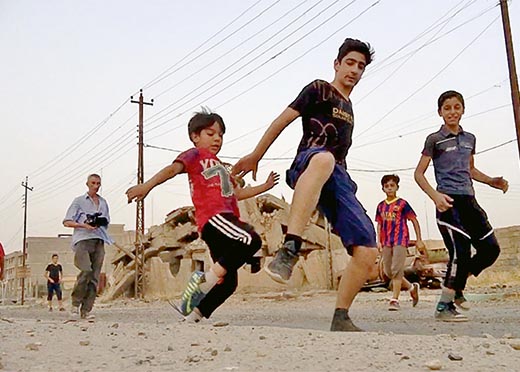
Haram football in Mosul, Iraq, 2017. Photograph: Francis Alÿs
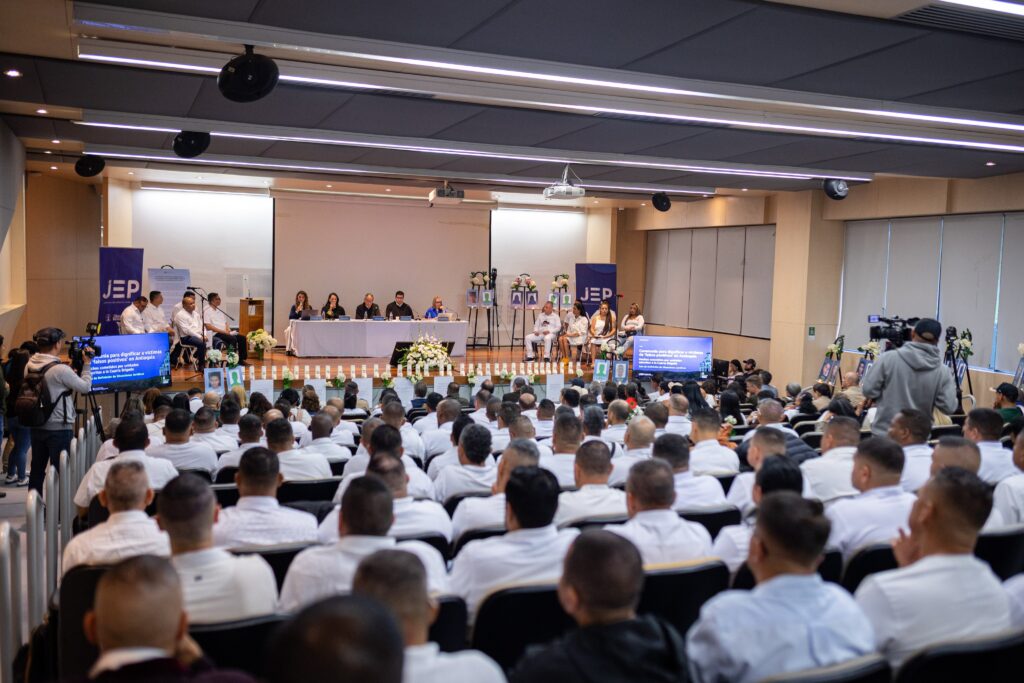
A JEP hearing about the “false positives”. Image credit: JEP
Colombia’s transitional justice mechanism, the Special Jurisdiction for Peace (JEP), announced yesterday that it had revised the official number of “false positive” killings – deaths illegitimately presented as combat casualties – from 6,402 to 7,837.
The announcement came as part of the JEP’s Macro Case 03, which is investigating extrajudicial executions between 1990 and 2016.
The country’s Truth Commission had previously established 6,402 cases of “false positive” killings but the JEP’s latest figures suggest the scale of one of the country’s largest scandals was greater than previously thought.
The information was provided by Pedro Elías Díaz on April 24, Magistrate of the Legal Situations Definition Chamber, during a hearing related to a massacre of leaders and children in San José de Apartadó, Antioquia. Díaz first revealed that 1,932 people had been killed in the department between 1990 and 2016, before disclosing the new national figure.
“The report also highlighted statistics on homicides and forced disappearances allegedly attributed to the public force between 1990 and 2016 nationwide, classified as illegitimate killings presented as combat deaths, amounting to 7,837 victims—a figure that remains dynamic as cases progress,” said Díaz.
The magistrate affirmed that in addition to the forensic identification of victims, the latest figures were based on victims’ reports submitted to the JEP since 2018 and documents from the National Center for Historical Memory, the Office of the Inspector General, and the Office of the Attorney General.
JEP President Alejandro Ramelli Arteaga later confirmed the revised figures and said that the period during which the “false positives” occurred was extended, from 2002 to 2008, to 1990 to 2016.
Ramelli added that the number is likely to increase as investigations continue: “They have been holding territorial hearings with those most responsible, who are also confessing to cases of executions and disappearances that had never been investigated. It is most likely that this new figure will continue to increase in the future.”
The “false positives”, many of which occurred during the administration of ex-President Álvaro Uribe (2002-2010) are highly politicized.
President Gustavo Petro responded to the news with thinly veiled criticism of Uribe, whose Democratic Center (CD) party won the second highest number of seats in recent congressional elections.
“There are 7,837 victims of the state due to the systematic execution of young people under the government of the so-called “Democratic Security” policy — in reality, a policy of total death… They do not want reelection for social justice; they want it for death,” wrote Petro on X.
Paloma Valencia, the CD’s presidential candidate, has pledged an iron-fisted approach to armed groups similar to that of her political mentor, Uribe, who continues to lead the party.
The United States has updated a “do not travel” warning for large parts of southwestern Colombia after a wave of terrorist attacks have left over 20 people dead, underscoring growing international concern over the country’s deteriorating security situation and prompting regional authorities to demand stronger support from the leftist government of President Gustavo Petro.
The U.S. Department of State maintained most of Colombia at Level 3 – “Reconsider Travel” – citing crime, terrorism, civil unrest, kidnapping and natural disasters, but reinforced its Level 4 advisory for several conflict-hit regions, including the departments of Arauca, Cauca, Valle del Cauca and Norte de Santander.
Under the latest guidance, Americans are advised not to travel to Cauca, excluding the departmental capital Popayán, and Valle del Cauca, excluding Cali, due to crime and terrorism.
Norte de Santander and Arauca remain under the same highest warning level, while travel within 10 kilometers of the Colombia-Venezuela border is also strongly discouraged because of kidnapping risks, armed conflict and the possibility of detention.
“Do not travel to these areas for any reason,” the State Department said in its advisory, adding that violent crime, armed robbery and murder remain common, while terrorist groups continue to operate in remote and rural zones.
The warning was reinforced by a U.S. Embassy security alert issued in Bogotá on April 27, following 26 separate attacks across southwestern Colombia during the weekend of April 25. The attacks targeted transportation corridors, military installations and police stations, with authorities confirming at least 20 deaths and dozens of injuries.
Police and military facilities are frequent targets of armed groups, and the State Department warned that attacks in Colombia have included car bombs, grenades, truck bombs, explosive devices placed on roads and buildings, and even drones carrying explosives.
Illegal armed groups, including dissident factions of the former Revolutionary Armed Forces of Colombia (FARC), narcotrafficking organizations and other insurgent groups, have expanded their territorial presence in recent years, particularly in remote areas where coca cultivation, illegal mining and strategic trafficking corridors overlap.
The deadliest recent attack occurred near the El Túnel sector in Cajibío, Cauca, along the Pan-American Highway, where an explosive device detonated against civilian vehicles, killing 20 civilians and injuring over 50 more. Authorities attributed the bombing to FARC dissidents under command of alias “Iván Mordisco”.
The attack shocked the country and intensified criticism of President Gustavo Petro’s “Total Peace” policy, which seeks negotiated settlements with illegal armed groups but has faced mounting scrutiny as violence worsens in several regions.
In response, the Cauca governor’s office declared three days of official mourning. Authorities described the bombing as an “atrocious and unjustifiable” act and ordered flags to be flown at half-mast across public institutions and schools as a tribute to the victims.
The government also called for national unity and a stronger institutional response to confront armed violence in one of Colombia’s most volatile departments.
In neighboring Valle del Cauca, Governor Dilian Francisca Toro said she respected the U.S. warning but urged foreign governments and the media not to define the entire region by recent attacks.
“We ask that our region not be stigmatized,” Toro said, insisting that Valle del Cauca remains open to visitors and that violence does not represent the department’s cultural, economic and social identity.
At the same time, she sharply criticized the national government’s security response after attacks in Cali and Palmira, calling for “real, sustained and effective support” through more troops, stronger intelligence operations and direct action against criminal structures operating in the region.
Following an explosion near the Agustín Codazzi Engineers Battalion in Palmira, Toro announced an investment of nearly 70 billion pesos ($17 million) to strengthen police communications infrastructure, expand surveillance camera networks and improve secure transport corridors across municipalities.
In Cali, Mayor Alejandro Eder said an attempted attack against the Pichincha Battalion involved explosive gas cylinders, one of which failed to detonate while another exploded inside a minibus.
Authorities activated a citywide security operation and Eder offered a reward of up to 50 million pesos for information leading to the capture of those responsible. “We cannot allow terrorism to regain ground in our city,” Eder said.
Apple is back with an accelerating beta timeline, with the fourth beta version of iOS 26.5, iPadOS 26.5, and MacOS Tahoe 26.5, now being available for developers to test. Anyone participating in the beta testing programs, developer or public, for Apple system software can get the newest beta releases on their enrolled devices. Presumably the ... Read More
Increasing numbers of travelers being denied entry after interrogations at the border.
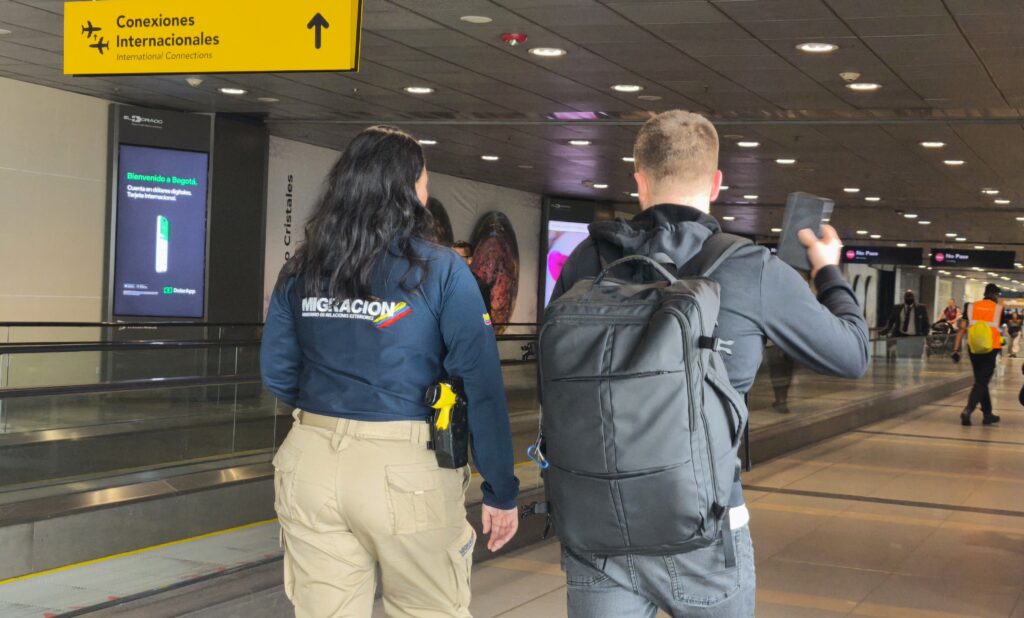
Immigration officers have powers to interrogate, detain and deny entry to travelers. Photo: Migración Colombia.
Five foreign tourists flying into Colombia were turned back at Medellín airport Tuesday last week after other passengers reported them for “conversing on the plane about their plans for sexual encounters”.
Although not clear who exactly denounced the travelers, or what other evidence was produced, immigration officers barred them entry after declaring their reasons to visit Colombia as “illegitimate”.
The case is part of a growing crackdown by immigration authorities against sex tourism in Colombia, which has been on the rise in recent years.
The five U.S. citizens were interviewed by immigration officials after arriving at José Maria Cordova airport on a United Airlines flight from Houston.
According to posts by Migración Colombia, the men were overheard during the inbound flight discussing hiring sex workers to “fulfil their fantasies”.
The cases highlighted a trend of increasing sex tourism but also stronger measures to prevent it, said immigration officials this week.
“We are focusing immigration control on detecting these types of offenders, fighting sexual exploitation, and protecting children not only in Antioquia but throughout the country,” said Gloria Arriero, director of Migración Colombia.
Data showed that 60 tourists were denied entry at airports in the first four months of 2026, compared to 110 in all of 2025.
Watching angels
The problem existed in tourist destinations like Cartagena and Bogotá, but was most evident in Medellín, the capital of Antioquia and Colombia’s second city, said Arriero, with 48 of the cases registered at the José María Córdova Airport. Of the persons barred this year 51 were U.S. citizens.
In the last week alone 15 foreign nationals, mostly U.S. nationals, were denied entry including the five passengers overheard on the plane. Many of the suspects were arriving on flights from Houston, Miami and New York, added Arriero.
The latest expulsions followed a campaign by Medellín’s mayor Fico Gutiérrez to stamp out a rise in human trafficking and sexual exploitation, particularly of children, linked to organized crime and visitors to the city.
Prostitution is legal in Colombia although immigration officers have autonomous powers to deny entry to travelers if they suspect them of sex tourism. Checks have gathered pace in recent years under the “Angel Watch” system that allows Colombian immigration to identify foreign travelers with criminal records or reports of sexual offences against minors before they enter the country.
Angel Watch, which has been running in Colombia since 2024, gives immigration officers real-time access to data from national sex offender registries and state websites in the U.S, including the Department of Homeland Security and National Center for Missing & Exploited Children (NCMEC).
The U.S.-based Angel Watch Center then alerts overseas authorities to its citizens with convictions for sexual crimes against minors. Specialized police task forces in Colombia also use international alerts from INTERPOL to intercept other nationalities.
Angel Watch alerts can catch potential offenders at points of entry or prevent undesirables from obtaining or extending visas, if they are long stayers. The system blocks around 50 travelers a year detected with a history of pedophilia or sexual aggression.
Inadmiitted: five tourists sent home after talking trash on their inbound flight. Photo: Migración
Cell phones searches
For other cases border authorities rely on old-fashioned detective work, such as the case of the five travelers hauled in for questioning after reports of their lewd talk on the plane.
In February, two men were netted after being spotted filming children during the inbound flight. On investigation, border officers found bans from multiple countries for sexual offences involving minors.
Others have been interrogated based on items detected in their luggage; in February, a Lithuanian was sent home after inspectors found a huge haul of sex toys. These were decreed “inconsistent with his declared purpose for visiting Colombia” according to a press release at the time.
Migración has also revealed cases where large numbers of condoms, lingerie, or exaggerated quantities of “potency drugs” triggered interrogations and cell-phone searches which then revealed plans for sex tourism.
Migration officers also accompanied police units in sweeps where foreigners were suspected to be involved in wrongdoing. Tactics included visiting hotels and hostels which had registered visitors with previous convictions, but also monitoring their social media profiles for incriminating material.
Disturbing the peace
Earlier in April, Migración deported in a blitz of publicity Medellín-based influencer ‘Chill Capo’ (real name Steve Newland) who was sent back to the U.S. after being detained at a party in the city’s Parque Lleras, a hotspot for sex workers.
“We found he repeatedly used his social media to invite and organize sex parties at various establishments where the main focus is on women, viewed as just another object to attract foreigners,” said director of the regional migration office Paola Salazar.
#Medellín | Ruso, con extenso historial de quejas por alteraciones al orden público, fue expulsado, por parte de la autoridad migratoria. El individuo abordó un vuelo con destino a Miami luego de que la entidad consolidara un contundente expediente basado en múltiples denuncias pic.twitter.com/wMcuQSz2zk
The 42-year-old content creator denied the accusation claiming his on-line videos of sleaze-fests were simply to encourage “a safe experience” for clients seeking the services he advertised on social media. But since Newland’s visa had expired, he was slung out anyway and banned from the country for five years.
In another recent case, a U.S-Russian citizen living in the El Poblado district was detained and deported after two years of loud music, partying, and a constant parade of bikini-clad women in and out of his flashy flat.
40-year-old George Wolfe held day-long parties on his rooftop flat and accumulated dozens of fines for disturbing the peace.
Wolfe, who claimed to be a lawyer, threatened to sue immigration authorities but they reminded him that the state “has the discretion to admit, not admit, or expel foreign citizens”.
The question circulating on social media after Wolfe’s deportation was if Colombia was now less welcoming to overseas visitors. But statistics suggest otherwise since more than nine million tourists visited last year. Instead, the message for Migración seems increasingly clear: sex tourists aren’t welcome.
With just over a month to go before Colombia’s May 31 presidential election, a new Invamer poll suggests the race has narrowed to three viable contenders, as left-wing senator Iván Cepeda strengthens his lead and two right-wing rivals battle for a place in the runoff.
The survey, conducted for Noticias Caracol and Blu Radio, shows Cepeda commanding 44.3% of voting intention, a significant jump from 37.1% in February. The Pacto Histórico candidate has not only consolidated support among core voters but expanded his appeal across all regions, with particularly strong gains among younger voters aged 20 to 30.
Trailing behind, but still within striking distance of a second-round berth, are Abelardo de la Espriella with 21.5% and Paloma Valencia with 19.8%. While De la Espriella has posted modest gains since February, Valencia has emerged as the fastest-rising candidate, nearly doubling her support from 10% in the previous poll.
The data underscores a central dynamic shaping the race: a fragmented right competing for a single runoff slot, even as the left coalesces behind a dominant frontrunner. According to the data, as long as the right remains divided, any division among the pro-Uribe camps will continue to benefit Cepeda. Unless there is a clear consolidation after May 31, the numbers suggest the second round will be a contest over who faces the hard-leftist and not whether he gets to the final run-off.
The collapse of Colombia’s political center has been equally striking. Former Bogotá mayor Claudia López has seen her support plunge from 11.7% to 3.6%, while former Medellín mayor Sergio Fajardo has dropped from 6.6% to just 2.5%. Both candidates have lost more than half of their previous backing and now poll well below the 4% threshold required for state reimbursement of campaign expenses.
López’s decline appears particularly acute in urban constituencies, where she previously drew strong support, including among progressive and LGBTQ voters, pointing to a broader erosion of her core base. Fajardo, meanwhile, continues to struggle to regain traction, reflecting persistent voter dissatisfaction with centrist alternatives.
Analysts are also seeing how centrist voters are shifting toward Valencia, whose ticket includes former DANE statistics chief Juan Daniel Oviedo as the vice-presidential option. Oviedo appears to be decisive in broadening Valencia’s appeal beyond the Centro Democrático base.
Despite Cepeda’s commanding first-round lead, runoff scenarios suggest a more competitive contest – particularly if Valencia secures the second spot. In a hypothetical second round between Cepeda and De la Espriella, the left-wing candidate would win with 54.6% against 42.6%. However, against Valencia, the margin narrows significantly to 51.2% versus 46.6%.
That tightening gap reflects Valencia’s growing ability to attract support beyond her base, including voters from the political center and segments of the undecided electorate. According to the poll, she outperforms De la Espriella in capturing second-choice preferences, positioning her as the more competitive challenger in a potential runoff.
When respondents were asked who they would support if their first-choice candidate failed to advance, Cepeda led with 26.7%, followed closely by Valencia at 25.7%, with De la Espriella trailing at 19.8%. López and Fajardo lagged further behind, reinforcing their diminished relevance in the race.
Cepeda’s dominance, however, is not without warning signs. While he continues to lead comfortably, his projected runoff margins have narrowed compared to earlier surveys, particularly against Valencia. The erosion suggests that while his base remains solid, opposition voters may be coalescing more effectively than before.
For now, the trajectory is clear. Cepeda has gained ground nationally despite a worsening security situation and poll conducted before the terrorist bomb on Saturday, April 25 by FARC dissidents along the Pan-American highway in which 20 persons were killed.
With less than a month until Colombians head to the polls, the race appears increasingly defined not by a crowded field, but by a three-way struggle – one frontrunner and two challengers vying for the chance to stop him.
Colombians are expressing outrage and grief after a bombing attributed to dissident factions of the former FARC killed 20 people and left injured 46, marking the country’s deadliest attack in over a decade.
The blast on Saturday afternoon tore through a stretch of the Pan-American Highway near Cajibío, in the southwestern department of Cauca, leaving mangled vehicles, a massive crater, and scenes of devastation that authorities described as among the most brutal assaults on civilians in recent memory.
Departmental governor Octavio Guzmán said the explosion, which injured at least 36 people, including children, was the “most ruthless attack against the civilian population in decades,” adding that several vehicles were overturned by the force of the blast.
Military officials said attackers blocked traffic with a bus and another vehicle before detonating explosives as cars and buses were stranded along the highway, a vital artery linking Colombia’s southwest with the cities of Popayán and Cali.
The attack, attributed to a FARC dissident faction led by Iván Mordisco, came amid a surge of violence across southwestern Colombia, with authorities reporting at least 26 attacks over a two-day period in Cauca and neighbouring Valle del Cauca. Incidents included explosions, arson attacks on vehicles, and assaults on security forces in cities such as Cali, Palmira, and Jamundí.
But as the country mourns, President Gustavo Petro faced mounting criticism after posting images of himself celebrating his birthday, prompting accusations of insensitivity and a lack of leadership during a national crisis.
Late on Saturday evening, Petro shared a photograph on social media showing himself alongside three friends, all wearing Hawaiian-style flower garland necklaces, accompanied by a message marking his birthday on April 19. “Surrounded by love and bonds of affection,” Petro wrote. “We are an army of Quixotes doing the impossible and achieving the impossible.”
The post, which appeared hours after reports of the deadly attack emerged, sparked immediate backlash from political leaders and the public, many of whom questioned the president’s priorities at a moment of national mourning.
Senator Juan Manuel Galán criticized the timing of the message, writing on social media: “19 people murdered in Cajibío, Cauca, the country bleeding, the Pan-American highway turned into tragedy… but the priorities of Gustavo Petro were clear: the country in mourning and he showing us how he celebrated his birthday.”
Presidential hopeful Paloma Valencia travelled to Palmira to meet with victims’ families and express solidarity. “We are with the people who are afraid, who are mourning their loved ones, who need to feel safe again. Petro should be here,” she said.
The criticism underscores deep tensions surrounding Petro’s security strategy, particularly his “Total Peace” policy aimed at negotiating with illegal armed groups. Critics argue the approach has failed to contain violence in regions such as Cauca, where armed groups linked to narcotics trafficking and illegal mining continue to operate with increasing intensity.
Saturday’s bombing, one of the most lethal attacks since the 2016 peace accord with the FARC, has renewed fears about Colombia’s security trajectory and the resilience of dissident factions that refused to demobilise.
Images from the scene showed debris scattered across the highway, shattered vehicles, and a large crater where the explosion occurred. Authorities confirmed that 15 women and five men were among the dead, while several of the injured remained in critical condition.
For residents of the region, the attack has deepened a sense of vulnerability and abandonment.
“Cauca cannot continue to face this barbarity alone,” Governor Guzmán said, calling for greater national support and a stronger security response.
As Colombia approaches a general election on May 31, the attack also reveals the extent to which the state remains unable to protect civilians, let alone presidential candidates opposed to the failed security policies of the country’s first leftist administration. “Petro: You are simply a disgrace. Show some empathy. Show some respect,” noted Paloma Valencia from Palmira.
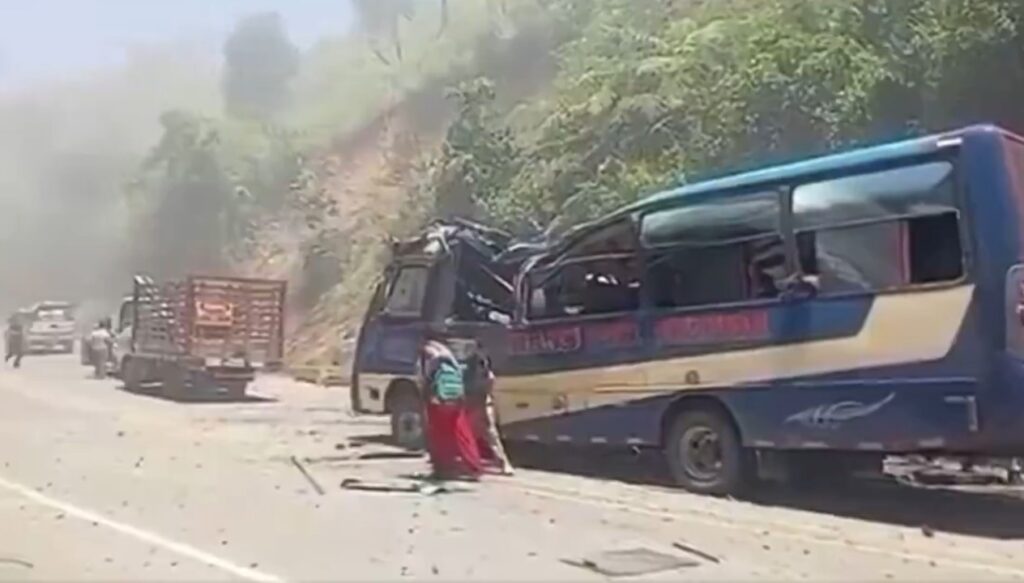
A bus damaged by the huge explosion on Saturday 30kms north of Popayán. Photo: X
A bomb attack attributed to fighters from the EMC armed group killed 20 travelers trapped on the busy highway connecting Colombia’s southwestern cities on Saturday.
The tragic events in the El Tunel sector, close to the town of Cajibío, unfolded after the dissidents mounted a checkpoint on the main Via Panamericana south of Cali and 30 kilometers (20 miles) before Popayán.
The busy road runs through a mountainous region dominated by gangs run by the former guerrillas dedicated to a booming cocaine industry in hidden canyons beyond state control. At the illegal checkpoint the fighters forced truck drivers to block the road and abandon their vehicles, causing a long queue of traffic.
According to video posted online, soon after a midday the huge explosion rocked the valley mangling around 15 vehicles caught blockade including two minibuses with civilian passengers.
The governor of Cauca, Octavio Guzmán, confirmed the 20 dead civilians caught in the blast were 15 women and five men, all adults. A further 47 people were injured, of whom three were critical. Five children were recovering in hospital. Eleven of the affected persons came from the same village of Pedregosa, close to Cajibío, he added.
“What happened on April 25th constitutes the most brutal and ruthless attack against the civilian population in decades in the department of Cauca,” the governor later announced.
The bomb had displaced 200 cubic meters of soil, he said, creating a crater five meters deep in the Panamericana highway, the main route linking Cali to Popayan and on to Ecuador. Despite the damage, road crews were able to partially reopen the road six hours after the blast.
Saturday’s attack, one of the worst atrocities in recent years, comes against a background of rising conflict between state forces and dissident armed groups in the southwest of Colombia.
A nuestro medio de comunicación llega video #PRIMICIA del momento exacto donde explota el artefacto explosivo en el sector conocido como el TÚNEL CAJIBIO CAUCA entre popayan y piendamo @Noti90Minutos@DELAESPRIELLAE
Just in the last four days communities across three departments – Valle, Cauca and Nariño – reported a series of what appear to be coordinated attacks against civilian and military targets. These included:
24 April – A bus bomb exploded close to base of the Pichincha Battalion in the south of Cali, causing damage and three injuries.
24 April – In the nearby town of Palmira, Valle, an army base came under attack from cylinder bombs launched from a passing vehicle, no injuries were reported.
25 April – Two attackers launched grenades at a petrol station in Rozo, Valle, damaging vehicles.
25 April – A police station in the rural community of Potrerito, close to Jamundí, came under gunfire attack in the early hours of the morning.
25 April – In another morning attack, Aeronáutica Civil reported drones launching explosives against a hilltop air traffic station close to El Tambo (Cauca), damaging antennas and leaving the radar inoperative.
25 April – a chiva rural bus was hit by explosive charges while traveling on Route 25 near to Mercaderes, south of Popayan. Police reported several injured including a child but no deaths
26 April – four men were gunned down in a bar in Toro, Valle, between Cali and Pereira.
According to a tally by thinktank Indepaz, the Toro deaths were the 48th massacre recorded in 2026. In Colombia a ‘massacre’ is defined by the intentional killing of three or more people at the same time.
This weekend’s attacks were typical of a return to terrorist tactics such as car bombs, motorbike bombs, drones dropping home-made explosives and other artisanal artefacts.
Cauca governor Octavio Guzmán visiting the scent of the explosion this weekend. Photo: Social Media
Saturday’s Cajibío attack was initially reported as a boobytrap bomb, or “IED” (Improvised Explosive Device) which are caches of high explosives buried by the roadside by rebel groups, usually aimed at passing military patrols
But later reports suggested the civilian vehicles were struck by a pipeta mortar. These are fashioned from household gas bottles and clumsily launched from mortars made of industrial piping.
Notoriously inaccurate, a pipetas have claimed many civilian lives in the Colombian conflict, most notably in the Chocó town of Bojayá in 2002 when a charge launched by FARC guerrillas struck a church killing 79 civilians sheltering inside.
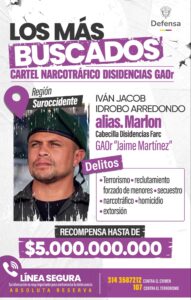
Behind Saturday’s atrocity was alias ‘Marlon’ of the Estado Mayor Central (EMC), said Colombia’s defence minister of defence Pedro Sanchez. The state offered a reward of US$140,000 for information leading to his capture.
Original dissidents
Most Wanted…
Marlon, whose real name is Iván Idrobo, was formerly in the ranks of the FARC guerrillas where he trained as a bomb maker. He is now thought to lead the EMC’s Frente Jaime Martínez which according to the Defensoria del Pueblo controls the cocaine trade, illegal gold mining and extortion rackets around the town of Suárez in the northwest of Cauca.
The EMC, lead by former FARC chief Iván Mordico, has proven to be the most intransigent of the myriad of armed groups which the current Petro government has tried to broker peace with under his controversial Paz Total policy.
Seen as the “original” dissidents that rejected the partly successful peace process under former president Manual Santos in 2016, the EMC initially agreed to negotiate when Gustavo Petro came to power in 2022 but soon engaged in bitter infighting with rival armed groups creating a rupture with Paz Total.
For his part, Petro tweeted his disgust at the Cajibío attack and the EMC “narco-terrorists” behind it.
“The groups led by Iván Mordisco in Cauca are criminals who have committed crimes against humanity and must be treated as such,” he said.
Some pundits commented that Petro’s early treatment of the EMC as a political actor had given the armed group room to expand, contributing to the current security crisis. In the heat of next month’s elections, others turned their ire on presidential candidate Iván Cepeda, seen as an architect of Petro’s struggling peace plans.
Rival right-wing candidate Paloma Valencia accused Cepeda of his role in “tying the hands of state forces, the rampant increase in illicit crops, the historic numbers of massacres, and waves of violence like today’s”.
Valencia also rounded on Petro for posting photos of his birthday celebrations even as the country was reeling from the horrific footage of the Cauca bombing. “Show some respect,” she messaged.
Colombian President Gustavo Petro will meet Venezuela’s interim leader Delcy Rodríguez in Caracas on Friday to address security challenges along the shared border, marking their first official encounter since Nicolás Maduro was captured by U.S special forces on January 3, 2026.
The meeting, to be held at the Miraflores presidential palace, is expected to center on coordination between the two countries to tackle armed groups, drug trafficking and other cross-border threats that have long destabilized frontier regions.
Colombia’s presidency said the talks aim to “strengthen bilateral cooperation, territorial control and coordination on security matters,” following the cancellation of a previous meeting scheduled for March 13 at the border due to security concerns cited by Caracas.
Friday’s talks come after Rodríguez assumed power earlier this year following the capture of former Venezuelan dictator Nicolás Maduro during Operation Absolute Resolve.
Petro is expected to travel to Caracas after holding meetings earlier in Bogotá. The leaders will first hold a private discussion to outline joint actions addressing border instability, followed by a broader metting between their respective delegations aimed at formalizing institutional commitments.
Officials from both countries are also expected to sign the final act of the III Commission on Neighborhood and Integration, with foreign ministers participating, before delivering statements to the media.
The Colombia–Venezuela border stretches more than 2,200 kilometers (1,367 miles) from the Caribbean coast to the Amazon basin and has long been a hotspot for illegal activity, including the presence of the National Liberation Army (ELN) guerrilla, as well as drug trafficking and smuggling networks.
Petro said earlier this week that the talks would place particular emphasis on the Catatumbo region, one of the most volatile areas along the frontier, where violence linked to armed groups and illicit economies has intensified.
“If we go, Catatumbo is a key issue to discuss with President Delcy,” Petro said during a cabinet meeting on April 21, adding that his delegation would include military and police officials to coordinate security strategies.
He said the goal is to develop a joint security plan, improve coordination between the two countries’ armed forces and police, and deepen intelligence-sharing, warning that a lack of cooperation could lead to operations that harm civilian populations.
The meeting also comes against the backdrop of a rebound in bilateral trade between the two countries following years of strained relations.
Trade flows have increased significantly in recent years, rising from around US$200 million three years ago to more than $1 billion, representing an increase of roughly 600%, according to official figures.
Colombia recorded a trade surplus of US$1 billion with Venezuela in 2025, underscoring the economic incentives for both governments to maintain stable ties despite ongoing political uncertainties.
Petro first announced the trip last week during an interview in Spain, referencing the earlier failed meeting and signaling his willingness to travel to Caracas to advance talks.
The visit marks a key test of Colombia’s role in engaging with Venezuela’s transitional leadership, as both countries seek to stabilize their shared border while cautiously rebuilding diplomatic and economic relations in the post-Maduro era.
Crucial Santa Marta conference will include voices of communities long opposed to the exploitation of fossil fuels.
Indigenous campaigners against oil drilling in the Amazon. Photo: courtesy Amazon Watch.
Thirty years ago, Colombia’s U’wa people were ready to commit mass suicide by jumping off a 500-meter cliff. The close-knit indigenous community would rather die with dignity than succumb to oil exploration on their ancestral land.
The U’wa announced their dilemma in 1995 in an open letter that ricocheted around the world. It was no empty threat: 400 years before their ancestors had jumped from the Alto de los Infieles (Cliff of the Infidels) rather than submit to the Spanish colonial yoke.
“The U’wa were the first to call oil the ‘blood of the earth’,” explains Kevin Koenig, director of climate and energy at Amazon Watch, a U.S.-based non-profit. “The U’wa were the first to say that oil needs to stay in the ground. They warned against its extraction and its impact on the world.”
Amazon Watch has supported the U’wa to resist extractive industries over the same three decades, along with dozens of other at-risk communities in Latin America.
This week, in a ground-breaking conference in Santa Marta, some of those efforts will come full circle at the first global summit on “Transitioning away from Fossil Fuels”.
The six-day conference, starting April 24, will host 50 country delegations plus dozens of civil society organizations.
This “road map towards renewable energy” is backed by the Fossil Fuel Treaty Initiative, an alliance of nation states, technical bodies, communities and individuals working to secure a “global just transition from coal, oil and gas”.
For the organizers the timing is critical with climate upset, fuel shortages, war in the Middle East and big oil’s sticky grip on geopolitics more exposed than ever. There’s never been a better moment to move to renewable energy.
A key part of the conference will be representation from indigenous communities; the U’wa, along with many others, will have a voice at the table.
Glacier gone
For Koenig, it is also significant that the inaugural meeting is in Colombia, one of the world’s most biodiverse countries, but also an oil producer moving to curb fossil fuels and embrace renewables.
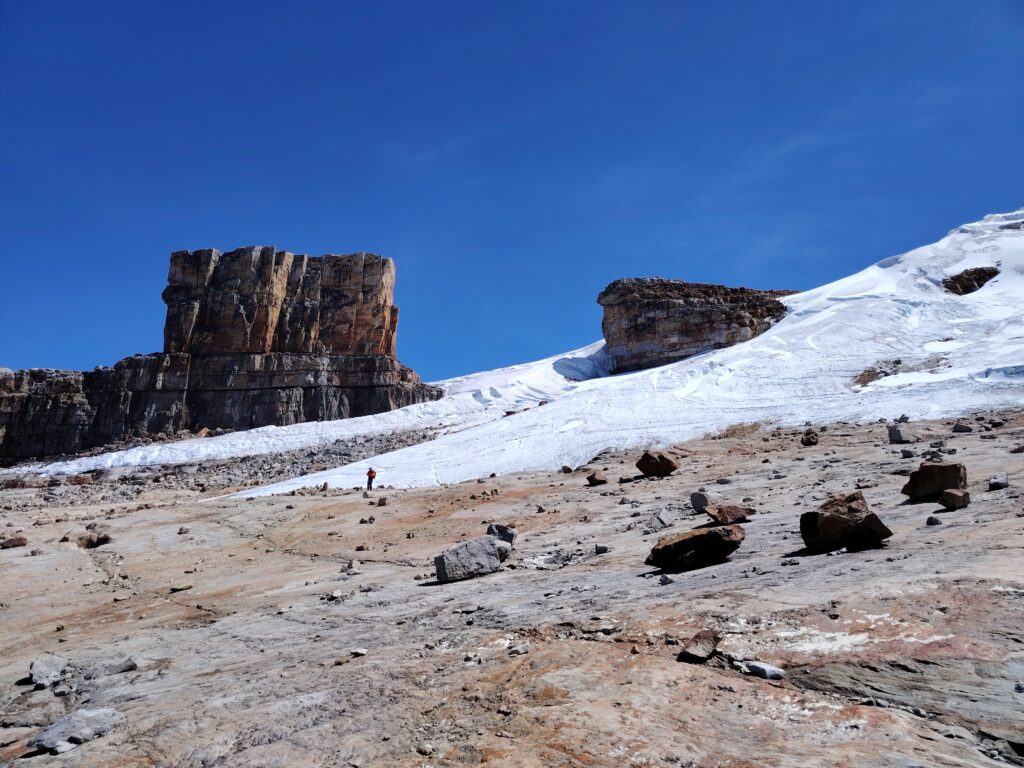
There is further symmetry in the location: the small coastal city of Santa Marta is “just over the hill” from the U’wa territory which straddles the tropical glaciers of the El Cocuy mountain range, Koenig tells The Bogotá Post.
A hiking route over the same mountains is known as Colombia’s climate change trail – see the ice before it melts.
Prophetically, just three weeks before the conference’s kick-off, the IDEAM climate agency reported that a glacier in the heart of U’wa territory had melted for good.
“Satellite monitoring confirms that Los Cerros de la Plaza glacier coverage is today at zero square kilometers,” it announced matter-of-factly.
Living these realities gives indigenous communities such as the U’wa, wedded to nature and geography, a powerful voice in the transition from fossil fuels.
This experience has often come at a high cost, says Koenig. In countries like Colombia, particularly in the Amazon, oil companies are an existential threat to both the natural environment and the communities it supports. Drilling is invariably a catalyst for violence.
“Some countries use oil extraction as a reason to open areas, saying ‘we can militarize it and it will be safer’. In fact, oil and energy infrastructures are a magnet for armed groups, for political attacks or blackmail,” he explains.
Amazon Watch has supported many indigenous communities to resist oil companies in the Amazon regions of southern Colombia, Peru and Ecuador, often through practical means such as providing solar power and communications equipment, trainings and legal resources, but also by raising their voices to the outside world.
The organization’s latest report, The Amazon Under Siege, highlights how extractive industries and the armed groups that trail in their wake are putting Amazon communities in the crossfire.
U’wa sacred territory includes El Cocuy glaciers which are melting with global warming. Photo: S. Hide.
Oil addiction
Colombia might have turned a corner with its oil moratorium in Amazon regions but neighboring countries are on a different path, one that might be summed up by U.S. president Donald Trump’s call to “drill, baby, drill”.
“Ecuador is going in the opposite direction with new oil auctions, and two new exploration blocks in remote rainforest,” says Koenig. Peru is following suit in jungle areas hitherto untouched. Perhaps not surprisingly, neither of the Andean countries is attending the Santa Marta transition conference.
According to Koenig, Peru and Ecuador are already in the throes of social violence but now risk replicating Colombia’s conflict with its rural oil pipelines that are constantly attacked or bombed, or oil lines tapped by fuel thieves, creating spills in biodiverse hotspots.
Added to that, drilling new wells makes little economic sense, he says. Current markets are signalling peak oil demand by 2030 even while wind and solar are taking a bigger share of energy output.
By doubling down on oil extraction both countries are “gambling with their future.” Aside from the moral and ethical issues of drilling in remote rainforest with indigenous peoples, getting banks to fund these ventures against the headwinds of renewables is not guaranteed.
“This is the moment where we are seeing both wars linked to fossil fuels politics and dependencies, but also for the first time renewables energies are not just theoretical, they are real, and decision-makers know they are scalable,” notes Koenig.
Inga indigenous guards in Putumayo. The community resists oil extraction on its lands. Photo: S.Hide
Fresh air
This seismic shift is reflected in the sassy subtext of the Santa Marta conference: climate deniers not invited. Meetings are reserved for a “coalition of the willing”, Colombian environment minister Irene Vélez, a key organizer of the event, told the Guardian this week..
For campaigners like Kevin Koenig this attitude is a breath of fresh air. Previous climate change conferences, run by the UN, have failed to pin global warming on big oil, he says.
“We know that fossil fuels are the number one source of carbon emissions but that’s nowhere to be found in the Paris [climate change] agreement. That’s due largely to the influence of the oil industry and lobbyists,” says Koenig.
Changing the narrative requires an alignment between traditional knowledge and science, he says. Indigenous communities, the original resisters, are now part of that with their wealth of experience.
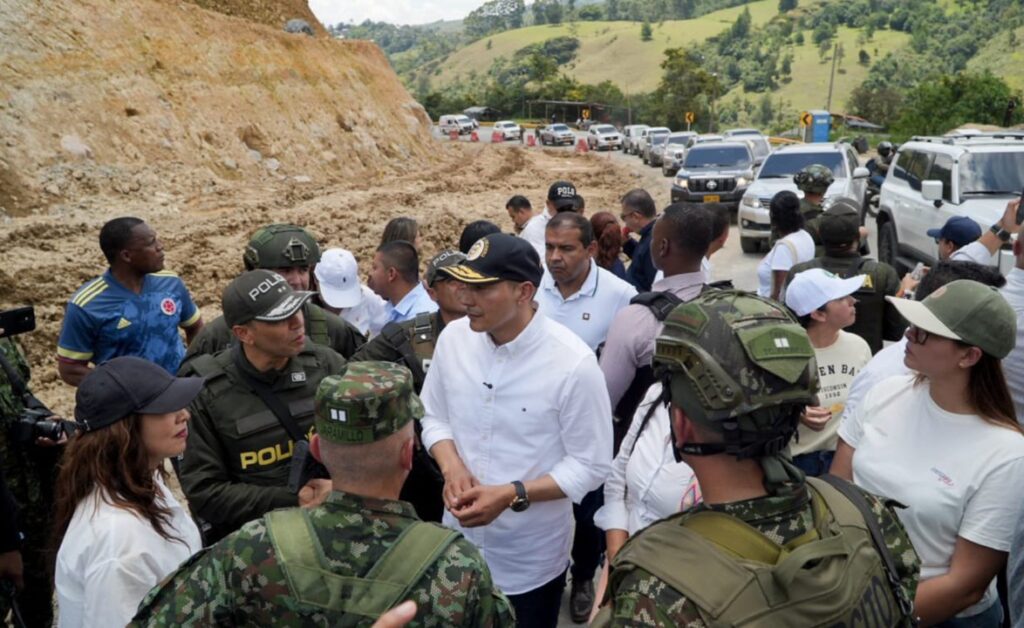
Bogotá’s mayor has called for a major expansion of the city’s police force following a deadly knife attack on a television production set and a separate killing at a public transport station, as authorities warn of shifting patterns of urban crime in Colombia’s capital.
Carlos Fernando Galán said the city requires at least 8,000 additional police officers to effectively confront rising insecurity, after convening an extraordinary security council on Monday with senior officials from law enforcement, the military and prosecutors.
The move follows a shocking outbreak of violence on April 18 during the filming of the television series Sin senos sí hay paraíso in the central Santa Fe locality — an incident that left three people dead and several others injured.
“This is an extremely serious and senseless act of violence that hurts all of Bogotá,” Galán said, expressing solidarity with the victims’ families and the country’s audiovisual sector. “To respond effectively, we must strengthen the police, improve investigations, expand technological capabilities and increase personnel.”
The attack unfolded at approximately 3:30 p.m. in the Los Laches neighborhood, near the eastern edge of Parque Nacional, where a production crew had been filming in a public street close to the Instituto Roosevelt.
According to preliminary findings, a man not affiliated with the production approached the set and, without any prior interaction, attacked a crew member with a sharp weapon.
The sudden assault triggered panic and a rapid escalation of violence. Witnesses said several people at the scene intervened in an attempt to stop the attacker, leading to a chaotic street fight in which multiple individuals were stabbed.
In the ensuing struggle, the assailant managed to inflict severe injuries on several people before being subdued. Three individuals — including the attacker and two members of the production team — were transported to Hospital La Samaritana, where they later died from their wounds.
A fourth person injured in the confrontation was taken to Hospital Universitario San Ignacio. Authorities have not released further details regarding that individual’s condition.
The victims from the audiovisual team were identified as Henry Alberto Benavides Cárdenas, 45, and Nicolás Francisco Perdomo Corrales, 18.
Officials have stressed that the attack does not appear to be linked to robbery or organized crime. Instead, investigators are examining the background of the alleged assailant, who had previously been reported for threats and is believed to have a history of mental health issues — factors now under review by judicial and medical authorities.
The case has rattled Colombia’s cultural sector, which have grown steadily in recent years as Bogotá has positioned itself as a regional hub for film and television production. For many in the sector, the attack represents a deeply unsettling breach of safety for the industry.
Monday’s security meeting also addressed a separate killing that occurred in the city’s public transport system. A 19-year-old man, identified as Freddy Santiago Guzmán, died after being attacked during a robbery at the Minuto de Dios TransMilenio station.
Galán said the two incidents, while distinct, highlight the need for a more robust and coordinated security strategy across the capital. He called on the national government to provide greater support in terms of funding, personnel and institutional backing.
“We will not step back in the fight against crime,” he said. “But Bogotá cannot face this challenge alone.”
Security Secretary César Restrepo warned of what he described as a structural weakness in controlling the circulation of weapons, particularly knives and other bladed instruments.
“More than 10,000 bladed weapons have been seized so far this year,” Restrepo said, adding that the continued flow of such weapons into the city remains a critical concern for authorities.
Officials also pointed to evolving criminal dynamics that are complicating law enforcement efforts. Galán described the emergence of more fluid and decentralized forms of criminal activity, in which individuals come together temporarily to commit specific acts before dispersing.
“We are seeing a kind of ‘freelance’ crime,” he said. “This creates new challenges for intelligence work and policing.”
The extraordinary security council brought together representatives from the police, the army’s 13th Brigade of the Colombian Army and the Fiscalía General de la Nación, as authorities seek to strengthen coordination in response to recent violence.
Police commander Giovanni Cristancho Zambrano said officers had recovered eight stolen vehicles in the past week and urged citizens to report suspicious behaviour, particularly involving occupants of private vehicles, to support preventive action.
The rash of incidents during one weekend in the capital have sharpened concerns over public safety, especially in central districts where commercial, residential and cultural life converge in densely populated areas.
For the city’s growing audiovisual sector, the killings have raised urgent questions about security protocols for productions operating in open urban environments. Messages of mourning circulated widely among industry professionals, reflecting both grief and frustration over the circumstances surrounding the attack.
While city authorities have pledged to reinforce measures across key areas, Galán’s call for thousands more officers reveals the scale of Bogotá’s security needs as it grapples with entrenched crime from micro-trafficking groups and rapidly evolving new forms of urban violence.
Investigations into both incidents remain ongoing, with authorities working to establish the full sequence of events and any underlying factors that may have contributed to the attacks.
iOS 26.4.2 has been released by Apple for iPhone, along with ipadOS 26.4.2 for iPad. Both updates include important security fixes, as well as unspecified bug fixes, for the iPhone and iPad. The security patch apparently addresses an issue with data being retained in notifications, which had allowed extraction of deleted Signal messages from notifications ... Read More
Apple has announced that longtime Apple CEO Tim Cook will be stepping down from his role on September 1, 2026, concluding a 15 year tenure that has coincided with Apple become one of the largest and most influential companies in the world. Tim Cook will transition to the role of executive chairman of the Apple ... Read More
The third developer beta versions of iOS 26.5, iPadOS 26.5, and MacOS Tahoe 26.5, are now available to those engaging in the beta testing programs for Apple system software. The new beta build is initially available to developers but typically soon followed by public beta access. The new beta versions of system software continue to ... Read More

 Login
Login

![Francis Alÿs, Children’s Game #29: La roue [The Wheel], Lubumbashi, Democratic Republic of the Congo, 2021. Courtesy Photo: © Francis Alÿs](https://thecitypaperbogota.com/wp-content/uploads/2026/04/La_roue-2021-STILL-5-1-650x464.jpg)

 en el sector conocido como el TÚNEL CAJIBIO CAUCA entre popayan y piendamo